A Daily History of Holes, Dots, Lines, Science, History, Math, Physics, Art, the Unintentional Absurd, Architecture, Maps, Data Visualization, Blank and Missing Things, and so on. |1.6 million words, 7500 images, 4.9 million hits| Press & appearances in The Times, Le Figaro, Mensa, The Economist, The Guardian, Discovery News, Slate, Le Monde, Sci American Blogs, Le Pont, and many other places… 5000+ total posts since 2008.

Category: History of Nothing

  • An Attempted Glorification of the Hexadecimal (1863)

    JF Ptak Science Books  Post 2812

    I found a very unusual paper1 in the Journal of the Franklin Institute for 1863 promoting moving from base-10 to base -16…for almost everything. It was written by John Nystrom2, an engineer who practiced across several fields and wrote textbooks about more. (Including in this very volume, where he contributes two other papers.) The paper in mind is a very early entry in the history of the application of the hexadecimal system. Nystrom’s plan included converting to a hex arithmetical system, and then expanded the idea to the calendar, musical notation, geography, time—an overall shift in metrology. His idea did not extend to calculators, and his name does not seem to be referenced by any of the modern compsci folks (with the major exception of Donald Knuth3). Probably base-16 was not employed in programming until, I guess, around the early 1960’s. All that said, this is still a remarkable paper. Also: the paper is illustrated with a beautiful color-highlighted folding plate of divider-like instruments that translated hex to denary.

    The Nystrom ideas did not take hold, and it seems that he was a bit cranky about the idea of its not being accepted, perhaps because it was left to the hands of people who just couldn’t see its value. He ends his book of 1862 with the following few observations:  “If the Arabic notation employed in our present decimal arithmetic had been suggested to Moses when he wrote the ten commandments on Mount Sinai he would surely have made similar remarks as that made on the tonal system that such curious looking characters could not be understood by his people….My manuscript on the tonal system has been sent to a great many places for publication. The Franklin Institute thought it would have a very serious effect on the number of subscribers of their journal. The Smithsonian Institute would not publish it because they had so much of the same kind before. The US Coast Survey stated they would publish it if recommended by a member of Congress. And lately the Society of Philadelphia has rejected it perhaps on the remarks herein replied to but Mr D recommended its publication.”–John William Nystrom, Project of a New System of Arithmetic, Weight, Measure and Coins: Proposed ...(1862)  

    As for me, I just don’t understand what he was driving for, or at.  

    Notes

    1. John Nystrom, “A New System of Arithmetic and Metrology, called the Tonal System”, pp 263-275, 337-348, 402-407 (concluded), and illustrated, including a folding plate. In Journal of the Franklin Institute, third series vol 46 overall vol 76, July-December 1863, 432pp.

    2. “John Williams Nystrom (Swedish: Johan Vilhelm Nyström) (1825–1885) was a Swedish born, American civil engineer, inventor, and author. He served as an assistant Secretary and Chief Engineer of the United States Navy during the American Civil War. Nystrom received many patents for inventions such as a marine steam engine, a refrigerator, and calculating machines…Nystrom is most notable for his proposal to switch from decimal to hexadecimal as defined in his 1862 publication titled . In 1859, Nystrom proposed a hexadecimal (base 16) system of notation, arithmetic, and metrology called the Tonal system. In addition to new weights and measures, his proposal included a new calendar with sixteen months, a new system of coinage, and a hexadecimal clock with sixteen hours in a day.”–Wikipedia

    3.  “…a prominent Swedish-American civil engineer named John W. Nystrom decided to carry Charles XII’s plans [radix-8 arithmetic] a step further, by devising a complete system of numeration, weights, and measures based on radix-16 arithmetic. He wrote, “I am not afraid, or do not hesitate, to advocate a binary system of arithmetic and metrology. I know I have nature on my side; if I do not succeed to impress upon you its utility and great importance to mankind, it will reflect that much less credit upon our generation, upon our scientific men and philosophers.” Nystrom devised special means for pronouncing hexadecimal numbers; for example, (C0160)16 was to be read “vybong, bysanton.” His entire system was called the Tonal System, and it is described in J. Franklin Inst. 46 (1863), 263–275, 337–348, 402–407. A similar system, but using radix 8, was worked out by Alfred B. Taylor [Proc. Amer. Pharmaceutical Assoc. 8 (1859), 115–216; Proc. Amer. Philosophical Soc. 24 (1887), 296–366].–Donald Knuth, The Art of Computer Programming section 4.1 (which is in volume 2). 

    A last note on the Nystrom calculator: “In an article of Scientific American the device was hailed as the most important one ever brought before the public. Despite all of the accolades however, it was never widely accepted, and no more than 100 devices were ever produced. This may have been because the cost (there were $10, $15, and $20 models, a huge sum in 1850s), or because the instrument was never well advertised or marketed. –history-computer.com


  • An Early Appraisal of Life at the Extreme Edges of Earth: the Oceans (1861)

    JF Ptak Science Books  Quick Post

    I just came upon an interesting article on the discovery and possibility of life at extremes on Earth. It was printed in 1861 in Journal of the Franklin Institute and addresses the existence of life at extreme depths of the oceans. The author, George C. Wallich (1815-1899) wrote in his well-reasoned paper1 that the extreme water pressure in the deep would limit the extent of life to about 400 or 500 fathoms (2400-3000′), and that “…life, whether animal or vegetable, must be extinct”. In similar language, the naturalist Edward G. Forbes wrote2 in 1859: “As we descend deeper and deeper in this region, its inhabitants become more and more modified, and fewer and fewer, indicating our approach towards an abyss where life is either extinguished, or exhibits but a few sparks to mark its lingering presence.“

    Earlier still we find this interesting statement and call to experimentation by Robert Hooke3: “Animals and Vegetables cannot be rationally supposed to live and grow under so great a Pressure, so great a Cold, and at so great a Distance from the Air, as many Parts at the Bottom of very deep Seas are liable and subject to…We have had instances enough of the Fallaciousness of such immature and hasty Conclusions…” These testimonies go back much further, at least to the time of the great classifier, Aristotle, though the possibilities of experimentation at these points were virtually non-existent.

    It would be shown just three years later by the father and son naturalists Michael and Georg Ossian Sars that life in Norwegian fjords was found at depths of 3,000 meters, and more life found deeper still (5,000 meters) in the findings of the Challenger Expedition in 1872. Discoveries of life at deep thermal vents in 1977 extended the life-bearing depths further still; currently, as of 2017 at least, rich life has been found at the bottom of the Mariana Trench, at depths of 10,600 meters.

    This was the beginning of the period of discovery of life at the extreme deep edges of Earth.

    Notes:

    1. “On the Nature of the Deep-Sea Bed, and the Presence of Animal Life at Vast depths in the Ocean”, pp 237-241, 321-325.

    2. E.G, Forbes. The Natural History of the European Seas, London, 1859.

    3. William Derham. Philosophical Experiments and Observations of the late Dr. Robert Hooke and other Eminent Virtuosos in his Time, London, 1726, p. 314. 


  • “Flying Saucers” (1952)

    JF Ptak Science Books  Quick Post

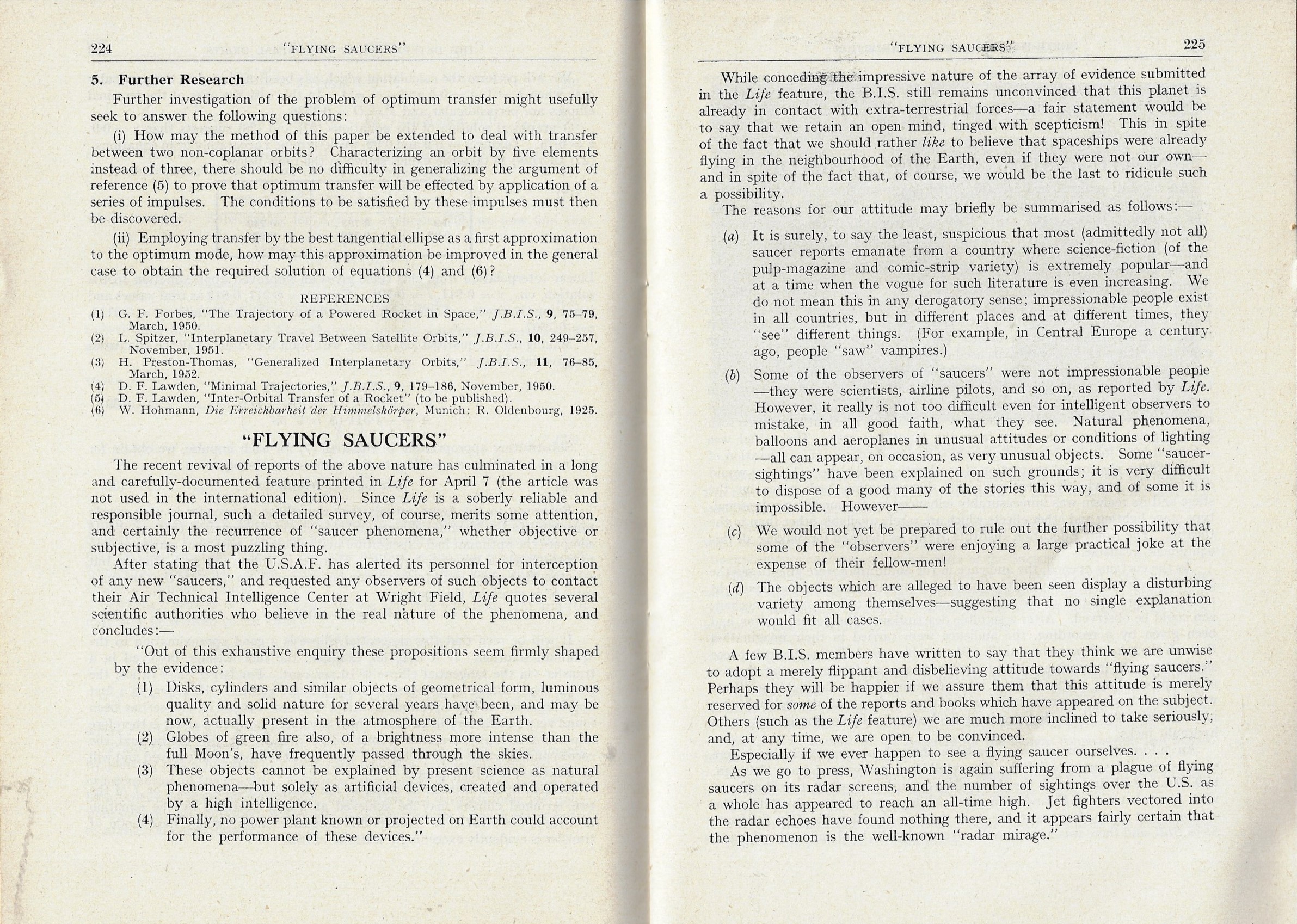
    I want to spend only a few minutes on this subject as I have just now come upon a nicely-written and logical response to the “flying saucer” issue in the pages of the Journal of the British Interplanetary Society1 for 1952.  Rather than discuss it I’m just going to reproduce the two pages of the piece below.  I did bend to curiosity a bit here and checked out “flying saucer” and “U.F.O.” in the Oxford English Dictionary, just to get a sense of how quickly they came into being following the hysteria of 1946.  Turns out that the BIS is no stranger to the term, the OED listing it second in usage back in 1948, back when the word still had its new-car-smell, though as you can see it hardly registered so with the members of the Society.

    “Flying saucer” n.: the fanciful name given to various unidentified disc- or saucer-shaped objects reported as appearing in the sky.

    • 1947   Times 8 July 4/4   During the past fortnight reports that dish-like objects, nicknamed ‘flying saucers’, have been seen travelling through the air at great speed..have come from the United States and Canada.
    • 1948   Jrnl. Brit. Interplanetary Soc. 7 199   I haven’t examined the details carefully, but the ‘flying saucers’ bear all the hall-marks of mass-suggestion.
    • 1953   D. Leslie & G. Adamski Flying Saucers have Landed i. i. 13   Ever since the cliché ‘flying saucer’ was coined, the greatest and most exciting mystery of our age has been automatically reduced to the level of a music hall joke.

    “U.F.O.”, n.: An unidentified flying object; a ‘flying saucer’.

    • 1953   D. E. Keyhoe in Air Line Pilot Oct. 9/3   The UFO was estimated to be between 12,000 and 20,000 feet above the jets.
    • 1956   E. J. Ruppelt Rep. Unidentified Flying Objects 13   UFO is the official term that I created to replace the words ‘flying saucers’.

    [Click for a cleaner and larger image]

    Flying saucers BIS 1952


  • A Dehumanizing Event with the Newly-Invented Telephone (1880)

    JF Ptak Science Books  Quick Post

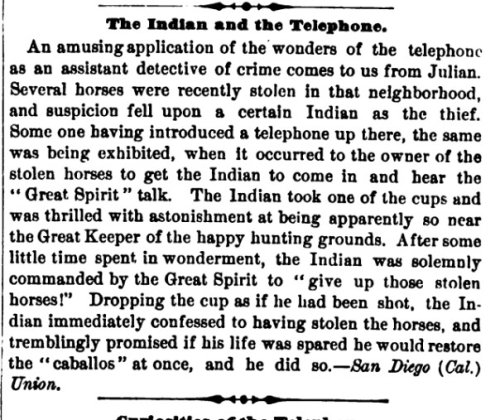
    It seems to me as though I’ve encountered other very unflattering introductions of the less-privileged to new inventions like the telephone along the lines of the following racist/Imperialist story. It isn’t very pretty, but it is worth reading to see the extent to which denominating certain people to the vast under-under class played out even in the introduction of new technologies. This appears in Scientific American, 14 February 1880, p 98.

    Sci Am 1880 Indians telephone


  • A Suggestion for Another Genre of Boundary: the Nothing Frontier, 1900.

    JF Ptak Science Books   Post 2792  Part of the History of Nothing series

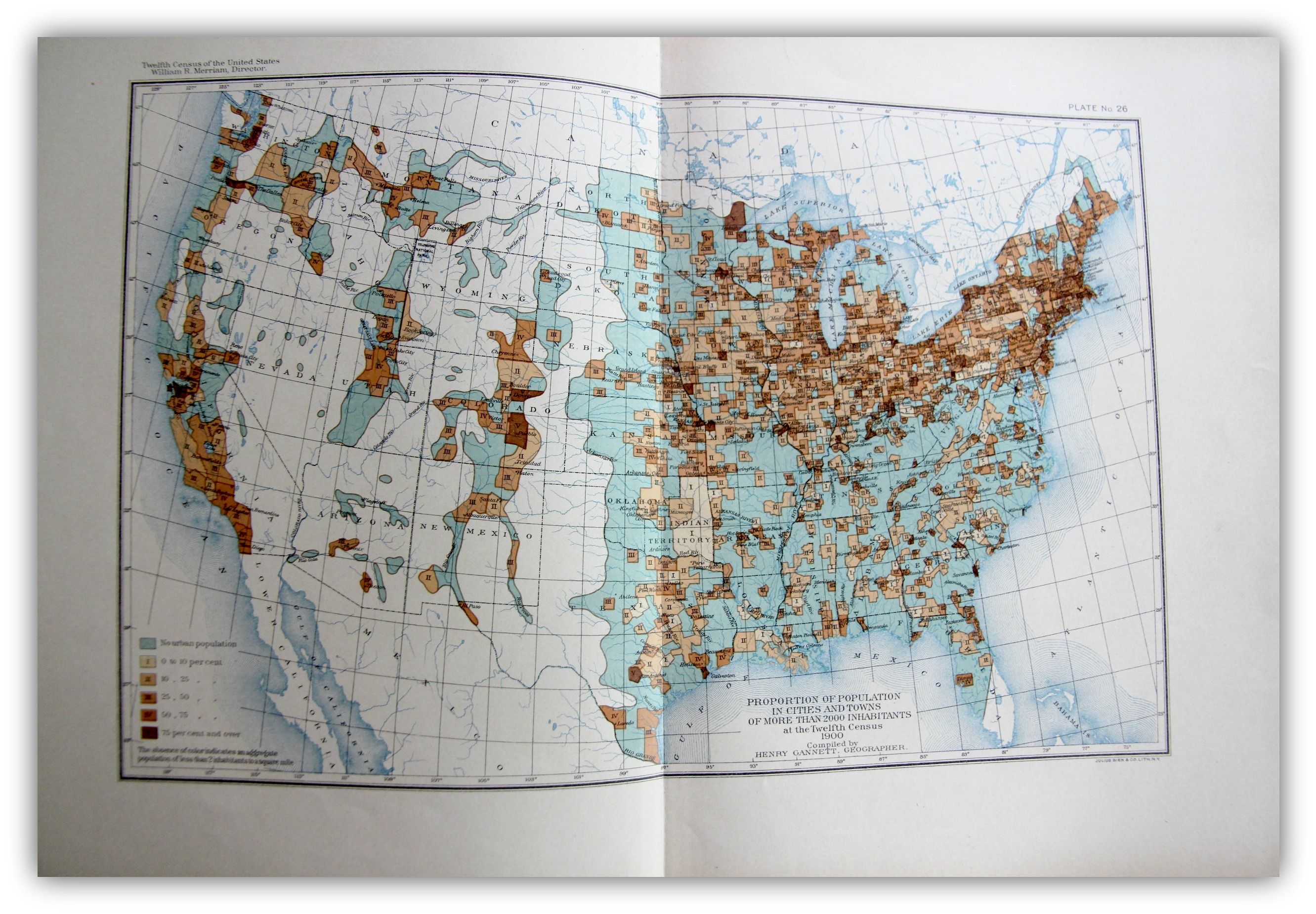
    The “frontier” in the history of the U.S. West is a pretty big deal, and old, the academic concept of  the frontier pressing its way back 13 decades, when for the most part once it was introduced it was pronounced to be “closed” by the man who reinterpreted it, Frederick Jackson Turner1.   On my shelves alone there are books on the mining frontier, the mineral frontier, the transportation frontier, the Indian frontier, the military frontier,the farming frontier, and so on, divisions allotted by wealth, nationality, numerous geographical attributes, and the like. One thing I think that I have not seen was the Nothing Frontier, where there are divisions divided by, well, sort of “nothing”. This is mostly a prosaic statement, slightly poetical, dependent on visual clues. And of course there isn’t “nothing” there because there is always “something”–there just isn’t very much of it.  And when things get colored-coded on map depending upon percentage distributions, and that object of measurement is left to a null color or no color at all, then it appears that the divisions one left to nothing.

    Maps--Census 1900 Urban

    [The image above is very expandable.]

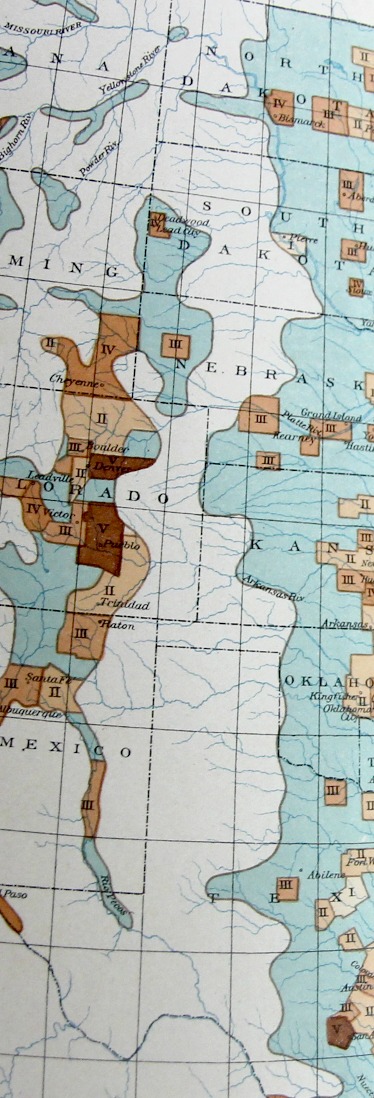
    This can be seen if you squint somewhat you can see an example of it in plate 26, “Proportion of Population in Cities and Towns of More than 2000 Inhabitants…” Statistical Atlas, prepared under the Supervision of Henry Gannett (Geographer of the the Twelfth Census), printed in Washington by the U.S. Census Bureau, 1903. This map–which is part of an historic series of atlases published with U.S. census data–shows the distribution of urban population in five shades of brown (as seen in the legend) plus a blueish color for “no urban population” as well as no color (“The allowance of color indicates an aggregate population of less than 2 inhabitants to a square mile”).

    Maps Census 1900 Urban detail

    It is that absence of color that makes it a frontier-ish sort of frontier, a part of the Made Up Frontier, this one being very straightforward north/south, Big Bend to Montana, pretty much the Lonesome Dove trail from the rough Big Bend Texas to nearly Canada.  

    I know it is just a thing I made up just now looking at the map, but given some effort, maybe the idea actually has some legs.  

    Notes

    1. Turner, Frederick Jackson. The Frontier in American History, Harvard University, 1920, full text via Project Gutenberg,  http://www.gutenberg.org/files/22994/22994-h/22994-h.htm


  • A Note on Becoming Distracted (Mass-energy Equivalence, Missing Continents, 19th C Martian Communication, and Levels)

    JF Ptak Science Books   Post 2768

    Here’s one of those languid, curling, endless river bends research stories that takes you totally away from where you wanted/needed to go. After a chat with my friend  Eric that involved conspiratorial otherworlders I had the idea of checking out some other other-minded folks who I would normally never consult for some possible angle I might have missed in a long-simmering research topic. I’ve been looking in bits and pieces for the first publication of the world’s most famous equation, E=mc^2: as it turns out this is not a trivial question. I’m not talking about the idea of mass-energy equivalence, but the appearance of equation that everyone on the planet knows. The first derivation that appeared in Einstein’s 1905 paper would not be recognizable as such by a general reader, nor would many of the others. The first appearance of E=mc^2 under Einstein’s name after some considerable digging is in 1946 (!), in the inaugural issue of Science Illustrated; withina  few months the equation appeared in the upper level of an atomic bomb mushroom cloud on the cover of Time magazine…but that all is another and more complicated story.

    Anyway my idea was to look at some anti-Einstein-relativity books to see what I might be missing, and in a short time I found a reference to the equation and Gustave Le Bon in a 1914 issue of the Comptes Rendus. Luckily I have that run, and so I checked out the paper–it did not contain the equation, of course, though it did have some references to him claiming to have had the idea of mass-energy equivalence in a series of papers published in Revue Scientifique (Rose) int eh early 1900s to 1905. I decided to check these out to because, with luck again, I have these down in the studio.

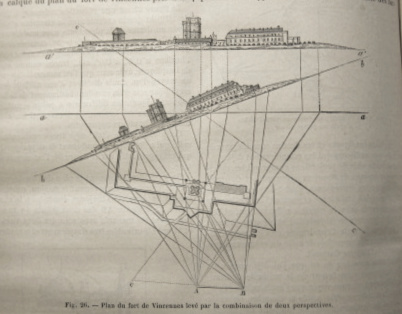
    Le Bon is an interesting/odd guy, who may or may not have been the great polymath he played in his script in life, though he was formidable enough to be considered for the Nobel Prize in 1903. So I worked from 1888 forward in the Revue (called “Rose” because the wrappers each weekly came in were rose colored) and bumped into Le Bon quite a bit. The man was interested in everything, and traveled to those ends to meet his curiosity. In one paper in 1892 he wrote on the origins of the arts of India (as he also happened to be a pioneer anthropologist), and I saw that the article proceeding it was in an area I was working in for a customer relating to the planet Mars. (This was by Norman Lockyer, editor of Nature, who wrote on Mars and it canals, canali, the “canals” part of their interpretation mightily disapproved-of by the old gent.) The Lockyer referenced something in I was actually looking for, an article by Henri Jules Perrotin (in the same journal but in 1888) who wrote of his observations of the planet, happily reporting that he did find the at-that-time-evasive canals, but also noted the disappearance of a Martian continent under what he suspected might be periodic “flooding”.  Anyway on the return to the Lockyer I went too far and with great satisfaction found the following drawing:

    LEvel camera _3_

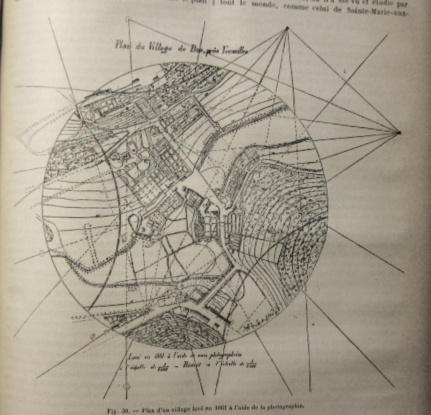
    That was quite a wide turn–anti-Einstein, where the hell is E=mc^2?, Gustave Le Bon’s 1905 A-bomb, Lockyer’s review of how to communicate with Martians, Perrotin’s disappearing continents–to get to this lovely drawing, no? It was almost worth it! This lovely thing (and oh to be able to render this in 3-D!) appeared in an article on a new application of photography to the surveying art/craft, M. Laussedat’s “Historique de l’Application de la Photographie au Lever des Plans”, November 5 1892. Its an interesting article, and two of the illustrations for are excellent pieces of art, in and out of context:


    Level camera _2_

    I know that was a long way to drag the reader to share two drawings, but I needed to get rid of the story…


  • A Small Episode in the History of Irony: On-Beyond Common Sense Rules from the Successor Company Which Built the World’s Most Fatality-Stricken Railroad

    JF Ptak Science Books   Quick Post

    The Panama Railroad was flat-out more costly in the terms of human lives than any railroad ever built in the Americas.  Probably anywhere in the world, at any time, mile-for-mile. From 1851 until it was finished in 1855 the railroad linking the oceans was a thin ribbon of red that was 47 miles long and cost perhaps 12,000 lives. The Panama Railroad Company admitted to something like 1500 deaths or some such, I forget now–it was impossibly low, particularly since the only thing they seemed to do with the bodies of non-white laborers was bury them or sell them to medical schools far and wide…they most certainly did not count them. There is no record of perhaps 10,000 dead laborers, and there never will be.  

    The railroad was being built in an impossibly bad place, with no utilizable natural resources, no laboring population to hire, and so on, all the while taking place in fantastically bad circumstances. As much as landslides and accidents took the lives of workers, they also succumbed to smallpox, dysentery, cholera, various types of fevers, and a host of other killers. Melancholia and depression also took the lives of perhaps 1000 Chinese workers, who it seems took their own lives for terrible living conditions, terrible pay, and terrible human treatment. It seems too astonishing to be so, but I’ve read a number of accounts of the so-called “Chinese Tragedy”, and it bears up. 

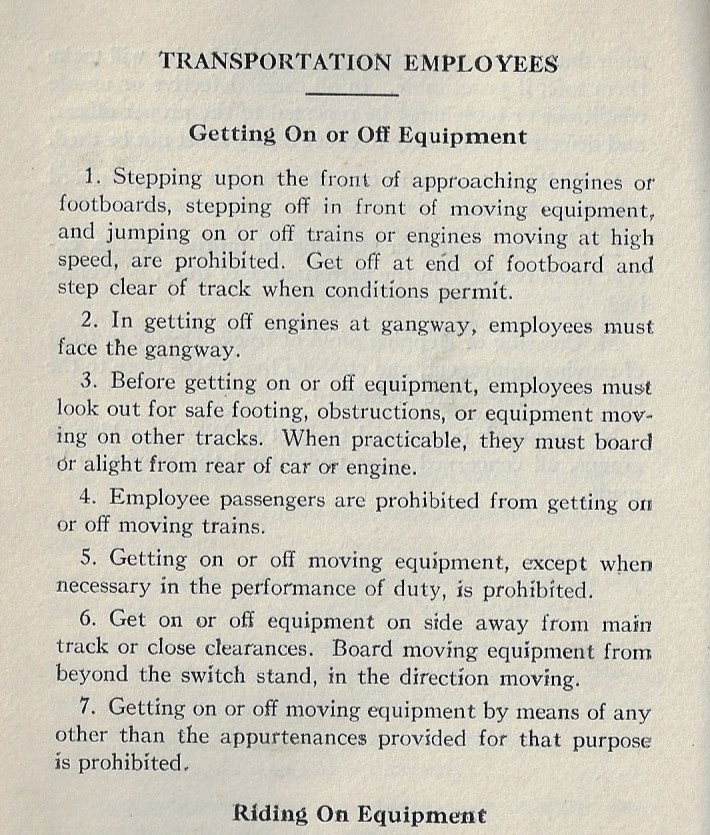
    And so all of this bubbled up when I found this very small and incredibly skinny hardback publication from the Panama Railroad Company called Safety Rules. It seemed terribly ironic. 

    Now this was not the same company though it carried the same company name as the originator, this rule book being published in the “C.Z.” (“Canal Zone”) in 1945, and 80-some years separated the two, but I couldn’t shake the terrible connection of opposites, especially given the breadth of the 255 rules in the rule book, many of which were incredibly obvious. I’ve included the first few rules in the book, #1 being not to hop off a moving train in front of it…that’s even a hard sentence fragment to write, let alone conjure why it was written in the first place.

    Panama RR

    ·Posted by :

    ·in:

    —

  • Missing the Fog for the Mist–Where was Fog in Renaissance Painting?

    JF Ptak Science Books   Post 2713

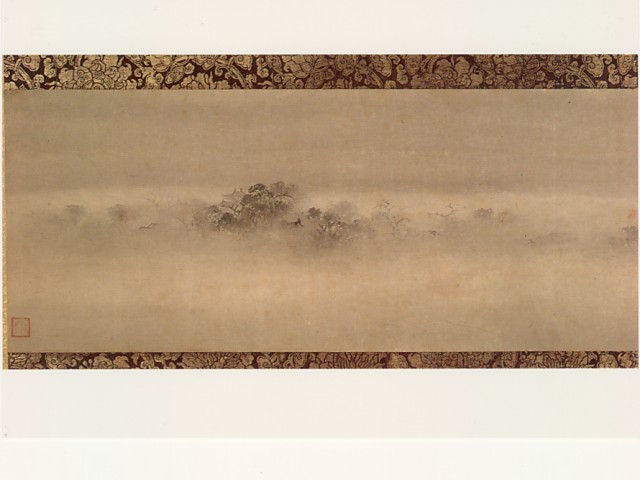
    If there is one thing that you can say about Renaissance art is that it was determined to represent nature–in form, color, perspective–as truthfully as possible.  Except–so far as I can tell–in some cases, like, say, fog.  And mist. I’m not sure why this is so, but once I started looking for examples of major and then minor cases showing fog in painting in the 1400-1550 period…and then later.  Much later.  Fog–and mist–seem to pop up regularly in the  mid-19th century, along with the new genre of Impressionism, which seems to be when people became more more comfortable with nothingness and the suggestion of things that may or may not be present or in existence. 

    There are examples of suggested forms in the Renaissance where the outlines of forms come to life without their detail, as with the great Paolo Uccello (and the solids in the horses in the Battle of San Romano, ca. 1450s), but for the most part, where detail was supposed to be, there was detail. 

    Fog _2_ evening bellLeaving elements of an artwork open to interpretation was not a problem with other cultures at this time, as in China and Japan, where fog and mist and rain and obscurity were very comfortable elements in artwork, and for centuries earlier than the Western Renaissance. The classic rendering say of a swath of fog obscuring everything but the top of a mountain was a “comfortable” mode of expression that can be seen in a number of landscapes that are listed as national treasures of Japan. For example, the “evening Bell from Mist-Shrouded Temple” and one of the Eight Views of Xiaoxiang is attributed to to Muqi Fachang (or Muxi Fachang) and was painted in the mid-13th century. 

    Another interesting example of countless others (and which like the Muqi Fachang is counted as a Japanese National Treasure) is that by  Sesshū Tōy, in a landscape with broken ink/splashed ink (“hatsubokun, evolving an abstract simplification of forms and freedom of brushwork”–Wiki), and created ca. 1495. The dreamy landscape and the sparse and (somewhat aggressive) brushwork of the “broken ink” seem more a creation of Zen and meditation than anything else.

    Like the rarity of the full-toothed, open-lipped smile, the image of fog and mist and the difficulty in representing what it is that they are mostly-hiding seems to be a not-at-all popular genre in Western art for hundreds of years. This is of course all conjecture on my part and is based mostly upon a little research and a lot of what is probably faulty memory, but it does at least seem to be an observation worth a little thought.  After all, clouds had their many champions for long periods of time, though they served mostly to frame and accentuate the subject of the painting rather than being subjects in themselves (or at least so until the 18th century).  Fog couldn’t even exist in the West as a major part of paintings even as clouds-on-the-ground until the 19th century, when painting was catching up to work done by the Chinese and Japanese in the 13th century.

    I suspect I’ve gotten a lot wrong in this speculation, and I’d like to hear about it as a form of conversation. 

     Image: https://en.wikipedia.org/wiki/List_of_National_Treasures_of_Japan_(paintings)


    ·Posted by :

    ·in:

    —

  • A Case of Pedestrian Confusion: Adam & Eve, Monkeys, and Darwin (1878)

    JF Ptak Science Books  Quick Post

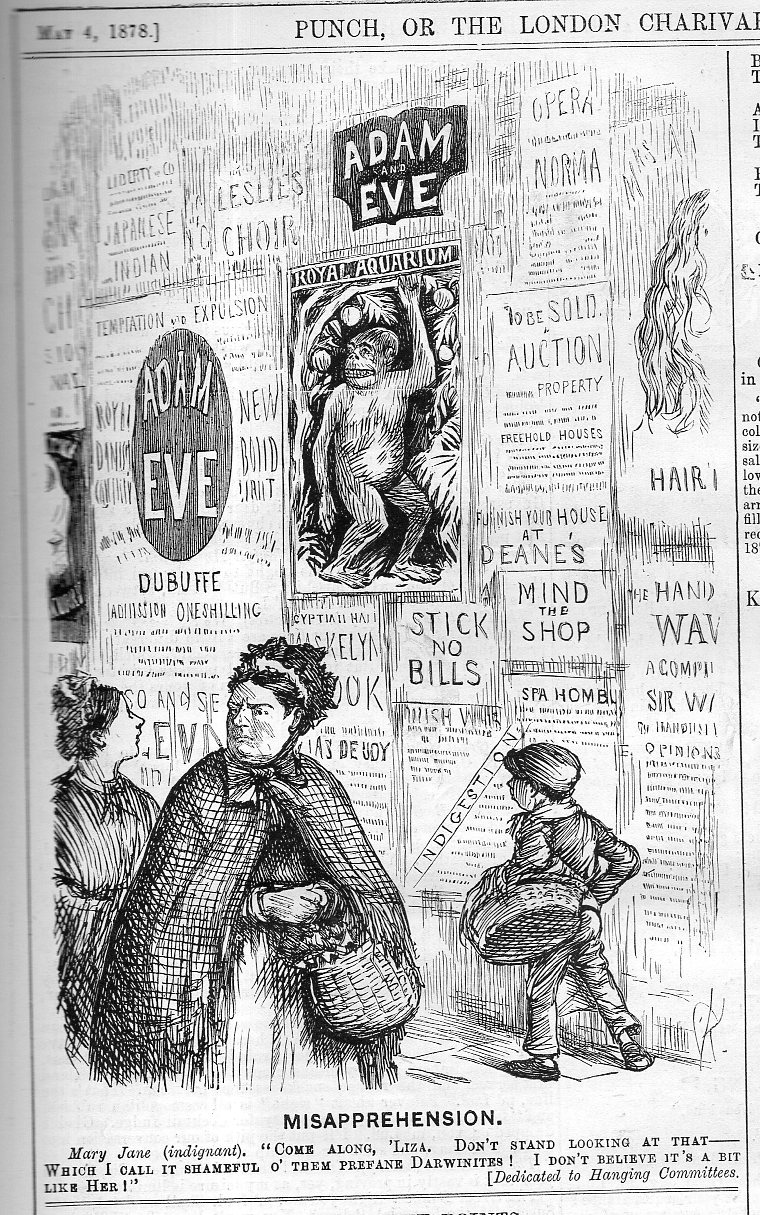
    This busy and crowded side-of-a-building display of advertising added to the confusion of these two passers-by, the older woman no doubt thinking that the younger woman was connecting the monkey and the “Adam and Eve” play, as though making a connection between Adam/monkey, when in fact they just happened to be closely-placed adverts that had nothing to do with one another. I guess the magazine that published this bit, Punch (in London on May 4, 1878, just a few years before Darwin’s death and 19 years after the Origin first edition) wanted to have a go at how easily Darwin could be misunderstood, especially those who were willing to make big leaps of faith with no foundation of understanding, equating in their creationist ways that with Darwin Adam & Eve were monkeys, or some such.. Or maybe it was something else… 

    Punch darwin adam and eve 1878813

    ·Posted by :

    ·in:


  • When There is More Text on the Cover Than in the Text–and the End Result is Nothing (1877)

    JF Ptak Science Books   Quick Post

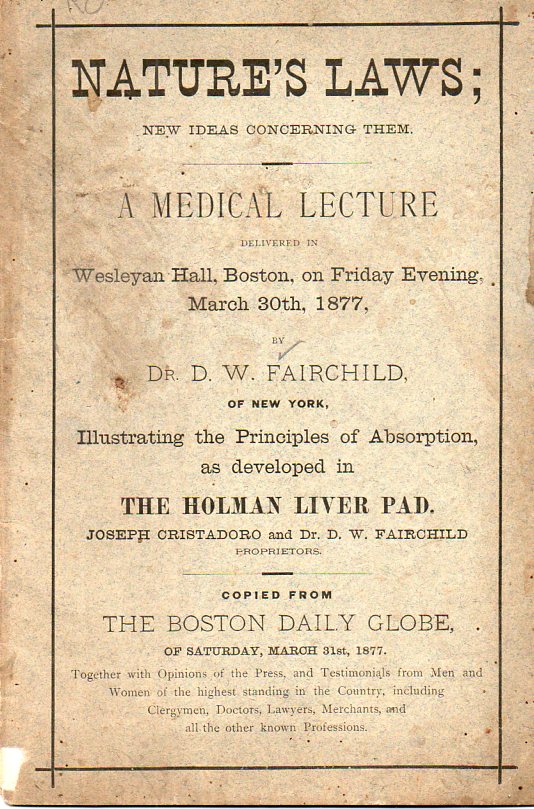
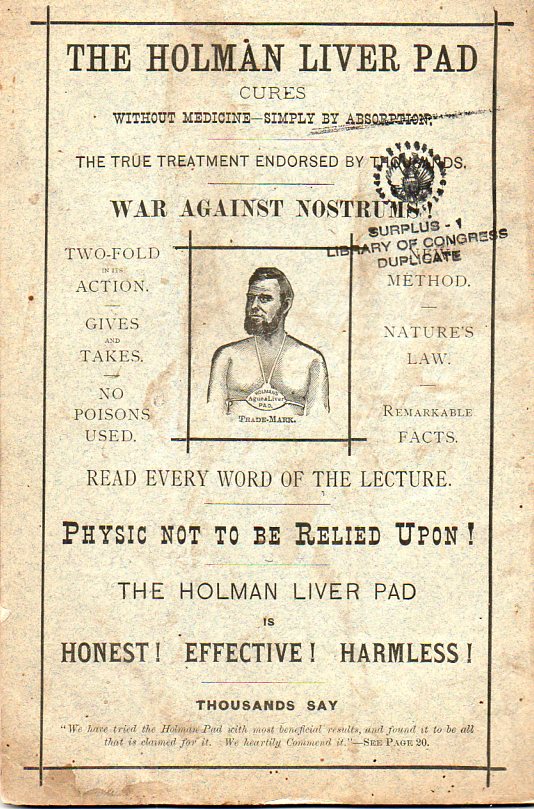
    It happens now and then that I unearth interesting bits from the pamphlet collection here that instantly create their own categorization–this in spite of already having a hundred sculpted categories. Works like this demand a deeper inspection to sustain their uncommon non-bond with other similar but not-so works. On the face of it, Fairchild’s Nature’s Laws… looks like just another quack medical remedy/cure/belief system (or suspension thereof), except that on closer inspection there is more text regarding the product on the pamphlet’s covers than in the work itself.  The thing does wind up being 36pp long, but it is most testimonial and promise–after all, you can’t say all that much abut secret ingredients for the “liver patch” that you were supposed to wear, and you couldn’t say much about the medical inventiveness and foundation behind it because there wasn’t any. So I guess you fill space with words that aren’t necessarily connected to anything and that collectively had no value, much like a year’s worth of Trumpian nothingness. Anyway, there’s a lot going on on teh covers of this pamphlet, and much like what is going on inside of it, it all adds up to chicken scratches. 

    Liver Pad508

    Liver Pad509

    D.W. Fairchild. Nature’s Laws; New Ideas Concerning Them. A Medical Lecture Delivered in Wesleyan Hall, Boston, on Friday Evening, March 30, 1877…Illustrating the Principles of Absorption, as Developed in the Holman Liver Pad…copied from the Boston Daily Globe of Saturday, March 31st, 1877. 22×14.5cm, 36pp. Printed by the Holman Liver Pad Company, 1877.  WorldCat/OCLC locates only two print copies and many others in microform.