A Daily History of Holes, Dots, Lines, Science, History, Math, Physics, Art, the Unintentional Absurd, Architecture, Maps, Data Visualization, Blank and Missing Things, and so on. |1.6 million words, 7500 images, 4.9 million hits| Press & appearances in The Times, Le Figaro, Mensa, The Economist, The Guardian, Discovery News, Slate, Le Monde, Sci American Blogs, Le Pont, and many other places… 5000+ total posts since 2008.

Category: History of Nothing

  • Secret Art in a S-E-C-R-E-T Document (1945)

    JF Ptak Science Books   Post 2610

    OSS Netherlands219 detail

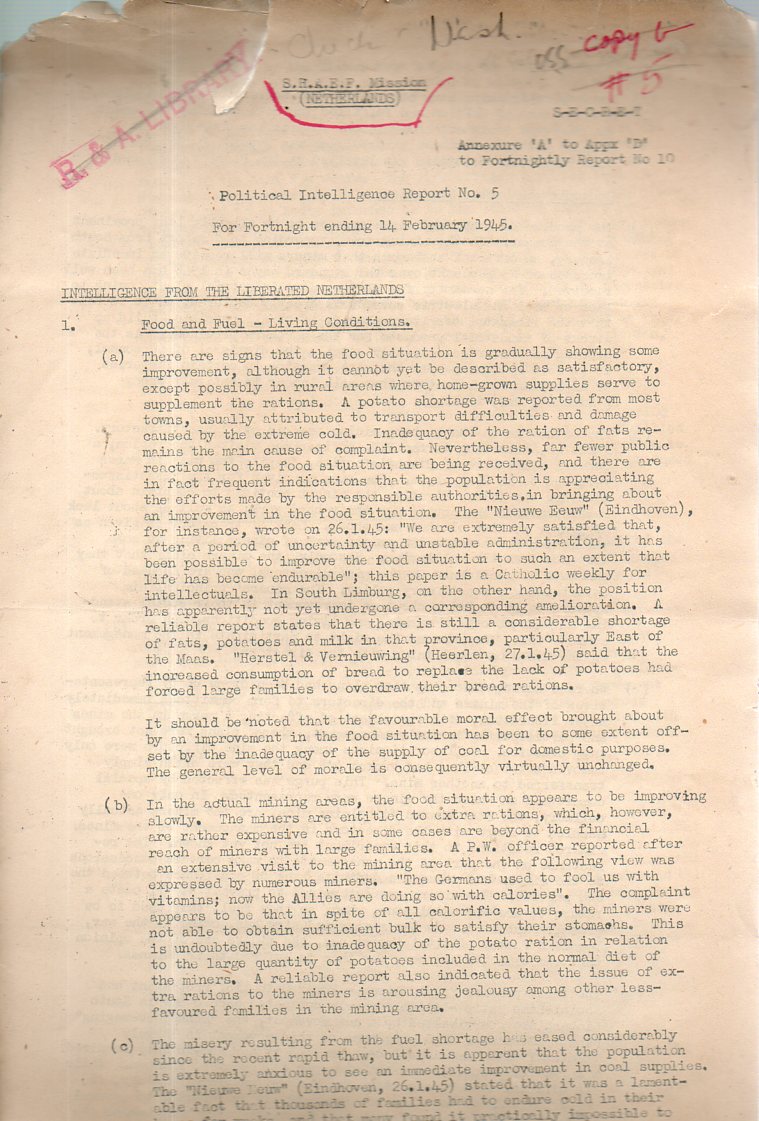
    This is a detail of 10% or so of a document here, something that was printed regarding the socio-political temper of the liberated Netherlands in February 1945. 

    And so:  “S.H.A.E.F. Mission (Netherlands) Political Intelligence Report No. 5. (For Fortnight ending 14 February 1945)  Intelligence from the Liberated Netherlands” are the running headers. And of course there’s the “S-E-C-R-E-T” part of it, no doubt necessary then but hardly now. The paper includes a report on food and fuel and living conditions, labour and employment, attitude of the population to the Netherlands government, attitude of the population to Allied troops, and so on.  What I found very interesting besides the report are the trails of where the document has been.  

    First, here’s the front page of the document in full:  
    OSS Netherlands217

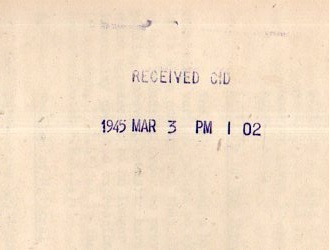
    To interpret, SHAEF was “Supreme Headquarters Allied Expeditionary Forces”–the hand annotations and stamps do say where the document has been. First off, we’ll start with the stamp on the back, which may have been the first stamp overall:
    OSS Netherlands218

    The paper was received by the CID on 1945 Mar 3–now the CID could have been a number of things but when placed in context with the notes on the front, the CID becomes the “Central Information Division”, which was the O.S.S. (Office of Strategic Services, and the precursor to the C.I.A.) and the R & D (“Research and Analysis Branch”). Underneath the hand-written “O.S.S” is a most-erased name, a Lt. Col. ________.  This is where the Found-Art comes in, because here I tried my trickery and foolery to pull out the name, but I failed, only being able to grab a couple of letters.  The result though was interesting in itself, if not for who Lt. Col. ______ was.  And so, there you have it, a little exercise that went off into the rabbit hole, producing something interesting but not useful. That happens a lot.  



  • The History of Obviousness: Book Titles Needing No Books

    JF Ptak Science Books   Quick Post               An Exciting Entry in the History of Nothing series

      blog mar 10 obvious sublime saturn679
    Sometimes publications have absolutely no pretense, stating exactly what it is that sleeps between their covers. And sometimes these titles seem more like declarative broadsides or posters and not books at all, the “book part”, or any writing furthering the cover’s statement,  being unnecessary, their contents being obvious. The first example here (and one which begs the response “Yup!”), Saturn Has Rings, written in 1944 by Donald Lee Cyr (of El Centro), should’ve stopped at the end of the title of chapter one, “A Rose has Petals”, and probably could have ended on the title page.  But no, it didn’t, and stretched itself over another fifty thin pages. 

    Frederick Blaine Humphrey’s Know Your Groceries (1931) takes an unexpected twist, spiraling into something called “biochesspathy”, “natural dianetics”, and somehow “applying the natural science of the Bible…to the philosophy of youth and health”. 

      blog mar 10 obvious sublime groceries677

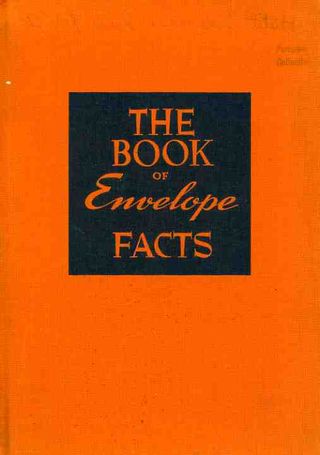
    The Book of Envelope Facts…yes.  This is actually a lovely book, in its very special way, with 55 pages of non-stop facts and semi-useless information on envelopes, and fits into a category of Deep and Repetitive Obviousness.  Chapter Two’s “Arousing Interest with Envelopes” competes wildly with Chapter Three “Attracting Attention with Envelopes” and Chapter Four’s “Creating Desire with Envelopes”.  It is completed with eight pages of a glossary of envelope terms.


      blog mar 10 obvious sublime envelope680

    This last example, Alice Mills’ Notes on Reading Aloud, really doesn’t belong, because it is mainly on acting; but the title is so lovely I just couldn’t resist. 

    There are many hundreds of pamphlets similar to these that are sleeping their sound oblivious sleep here in the studio–in a way they’d make a beautiful if somewhat perplexing exhibition, though at the end of it all one might think that absolutely nothing at all had happened.  The greatest thing about such an exhibition is that most of the stuff that would be included in it are so minor/odd/trivial/proto-uninteresting that few people would ever think of searching for them without already knowing that they existed–that might make an exhibition of value in and of itself.  


  • Dachau, 1915

    JF Ptak Science Books   Quick Post 

    Dachau228
    [Source:  Ex Libris Buchkunst und Angewandte Graphik, volume 25, 1915.]

    “On the water tower of the former gunpowder factory, visible from far away, the black, white, and red flag flutter int eh wind…a sign that new life has moved into the once desolate compound…”Dachauer Zeitung, March 1933, —

    “On Wednesday 22 March 1933 the first concentration camp will be opened in the vicinity of Dachau.  It can accommodate 5,000 people.  Here will be gathered together the entire Communist and, as much as necessary, the [left wing] Reichsbanner and Social Democratic Party functionaries who threaten the security of the state, since in the long term it is impossible and draining for the state to house them in government prisons.  It has become clear that it is not viable to leave these people free, as they continue to make trouble and disturb the peace.  We have adopted this measure, undeterred by paltry scruples, in the conviction that our action will help to restore calm to our country and is in the best interests of our people.”–Heinrich Himmler, via Music and the Holocaust, http://holocaustmusic.ort.org/places/camps/music-early-camps/dachau/

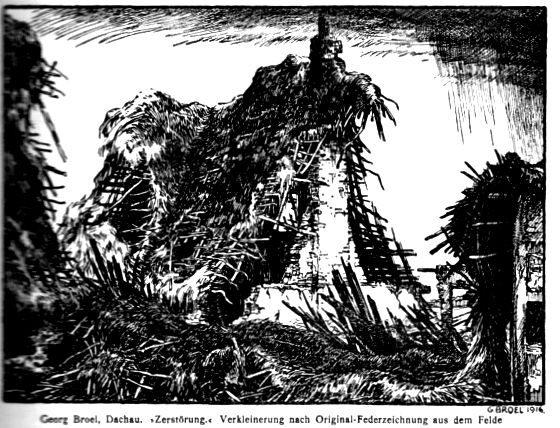
    At first glance this image looked to me to be be an image of destruction at Dachau in 1916. At this point Dachau had enjoyed some generations’-worth of beign a cultural/artistic community 18 miles or so away from Munich in Bavaria. At the beginning of the war a gunpowder/munitions factory was built there, which survived until the end of the war when the plant was closed. It seems to have been sitting vacant until the Nazis became interested in it and used the complex for a concentration camp, starting out housing political prisoners in 1933, which was the beginning of an horrific legacy. It became the longest-utilized of the KZ-Lager in the vast operation of Nazi concentration camps. 

    The image sparked these thoughts–but as it turns out, the “Dachau” part of the image identification related to the artist, Georg Broel (1886-1940), who lived in the city.  It is called “Zerstorung”, and no matter the association, once “Dachau” makes an appearance it is nothing but “destruction”. 

    • For a map of the munitions factory, 1916: http://www.hdbg.de/dachau/pdfs/07/07_26/07_26_04.PDF

    ·Posted by :

    ·in:


  • When Having Hope in Hopefulness is Helpless: Nuclear Protection, 1960

    JF Ptak Science Books     Post 2517  

    I’ve written on this blog earlier on the creation of Atomurbia–the dissemination of U.S. industry and population centers more-or-less evenly, and remotely, throughout the country to decrease targeting liability, “employing distance as defense”. There were different flavors of this plan, from the gargantuan to less-so, but no matter how this is idea is presented, on virtually any level, it was. of course, a Big Plan. It was so very big that it was even hard to talk about–the thing seemed just too big, and impossible, for discussion beyond generalities.  

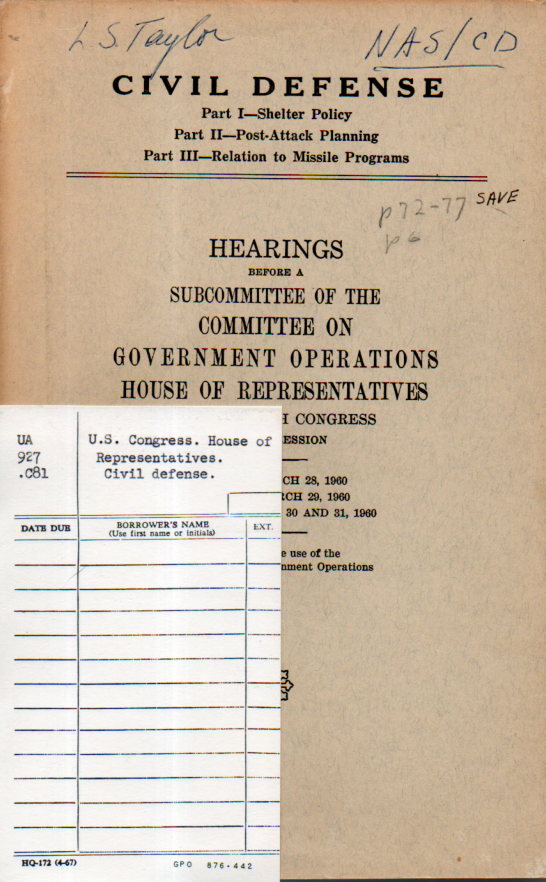
    Atomic  Taylor Atomurbia112I found some language in a Congressional hearing on civil defense for 1960 that addresses and undresses the issue of “dispersal”. In “Part II–Post Attack Planning” of these hearings1 there is a discussion of “dispersion”, and what it is and is supposed to do, but there is ultimately a monumental shrug about this Enormous Situation, and a recognition that “there is no active program of dispersion” (pg 102).  This in the face, evidently, of at least part of the dispersal plan being the Federal Government’s “responsibility of carrying out out the national policy of dispersal in locating new or major expansions of essential facilities in accordance with defense mobilization order I-19”.  

    I’ve wondered how such a plan would come into being–I mean the impossible move everyone everywhere plan–but did not know about this I-19 plan that actually made the dispersal of new national-interest industries a governmental responsibility.

    The hopelessness of implementation of such a nightmare is spelled out pretty well in this bit, on the same page 102: “The objective of industrial dispersal can only be achieved when industrial and economic factors contribute to this purpose”.   A statement like this is so large and bland and intractable that it really says nothing, except that if the effort and the money was there, then the dispersal plan could possibly be achieved.

    The report continues, “It indicates a desirable goal but there is no program here”. 

    Leo A. Hoegh (former governor of Iowa and speaking to the CD issues as the first director of the Office of Civilian and Defense Mobilization) makes the case that there is dispersal going on, but as a natural element of industries looking to “get out of the marketplace”, and brings up the growth of new industry in Iowa as an example, which was really pretty ingenuous, and he is held accountable to that thinking by Congressman Chet Hollifield (Ca.) who basically says, “Oh, come on….”

    Mr. Hoegh responds: “The thing is, we are interested in dispersal and we are urging it”.

    Mr. Holifield: “There has been no dispersal”, he said, there has just been growth. “None of your industrial centers…have decreased”. 

    Mr. Hoegh: “We are still desirous to have dispersal”. 

    According to the borrower’s card in the pocket at the rear of the book, it was never borrowed. That doesn’t mean that it wasn’t read–just that it wasn’t overnight reading.

    Notes:

    [For those keeping track of such things the “L.S. Taylor” on the front cover of this hearing was Lauriston S. Taylor,  (1902-2004), pioneer in radiation measurement, radiation protection, and health physics.)

    1. Hearings before a Subcommittee on the Committeee on Government Operations, House of Representatives, Civil Defense (Parts I-III); March 28-31, 1960, 573pp.  


  • Electropathic Pathology: the Invisible Quackhood of the Electric Brush (1884)

    JF Ptak Science Books

    Harpers A  Mistake139

    [Source: Harpers Weekly, November 4, 1882, pg 704.]

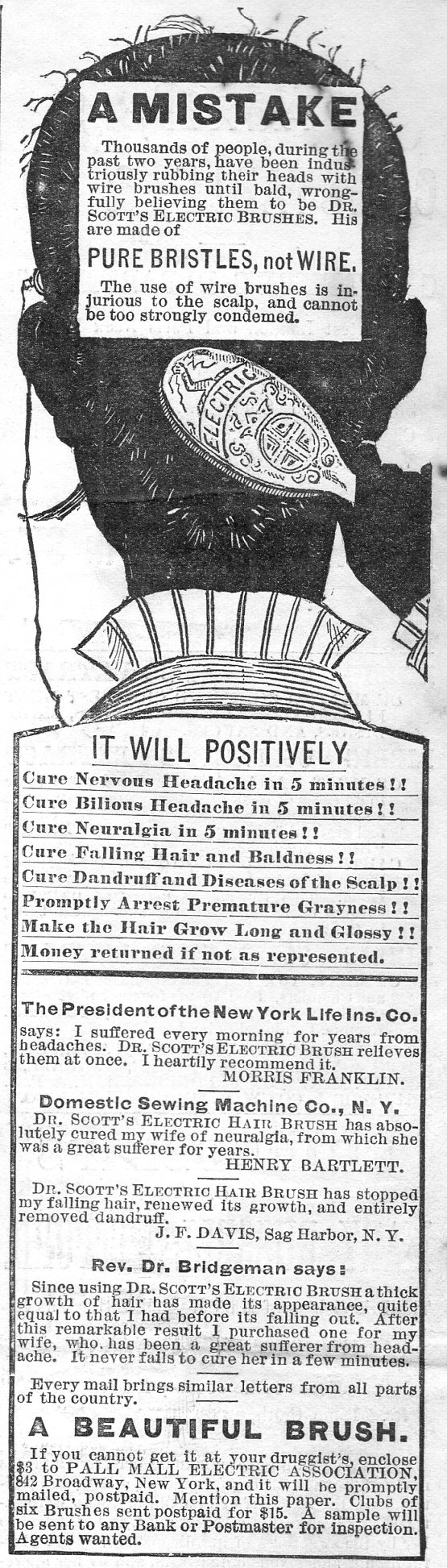
    This ad doesn’t say so, but the makers of this new electric miracle brush was competing with itself, or at least with products within it own production family.  The makers, Pall Mall Electric Association (close to “pell-mell” which would have been a more accurate description of this quack medicine outfit’s rush into the field of medical victories), claimed that their product would cure nervous and bilious headache, neuralgia, hair loss, dandruff, scalp diseases, as well as create a glowing head of long hair. There is no description of how electricity plays into this scheme–except that they are adamently saying that it does so through bristles, whereas a competitor stealing their idea for a non-existent cure-all for the head was using an electric brush with wire. 

    It turns out that the Pall Mall Electric Association also produced something called Dr. Scott’s Electric Hairbrush, which may or may not have been the same product as above, and which may or may not have competed with itself for a real clientelle buying not-real medical remedies.  “Dr. Scott” also produced an “Electric Flesh Brush”, an electric corset, an electropathic belt “for ladies”, and (among other things) an “electricpatent” sock.  

    As with other technological breakthroughs, the use of electricity in the 1880s-onward took advantage of the introduction of a new and probably not-understood technology (as with the electric lamp, phonograph, telephone, etc) in which quack businesses set up their tents in the shadows of the possibilities produced by the aura of the new tech. 


  • The Flat Earth Dumpster Fire of 1891

    JF Ptak Science Books   Quick Post     Part of the History of Nothing series

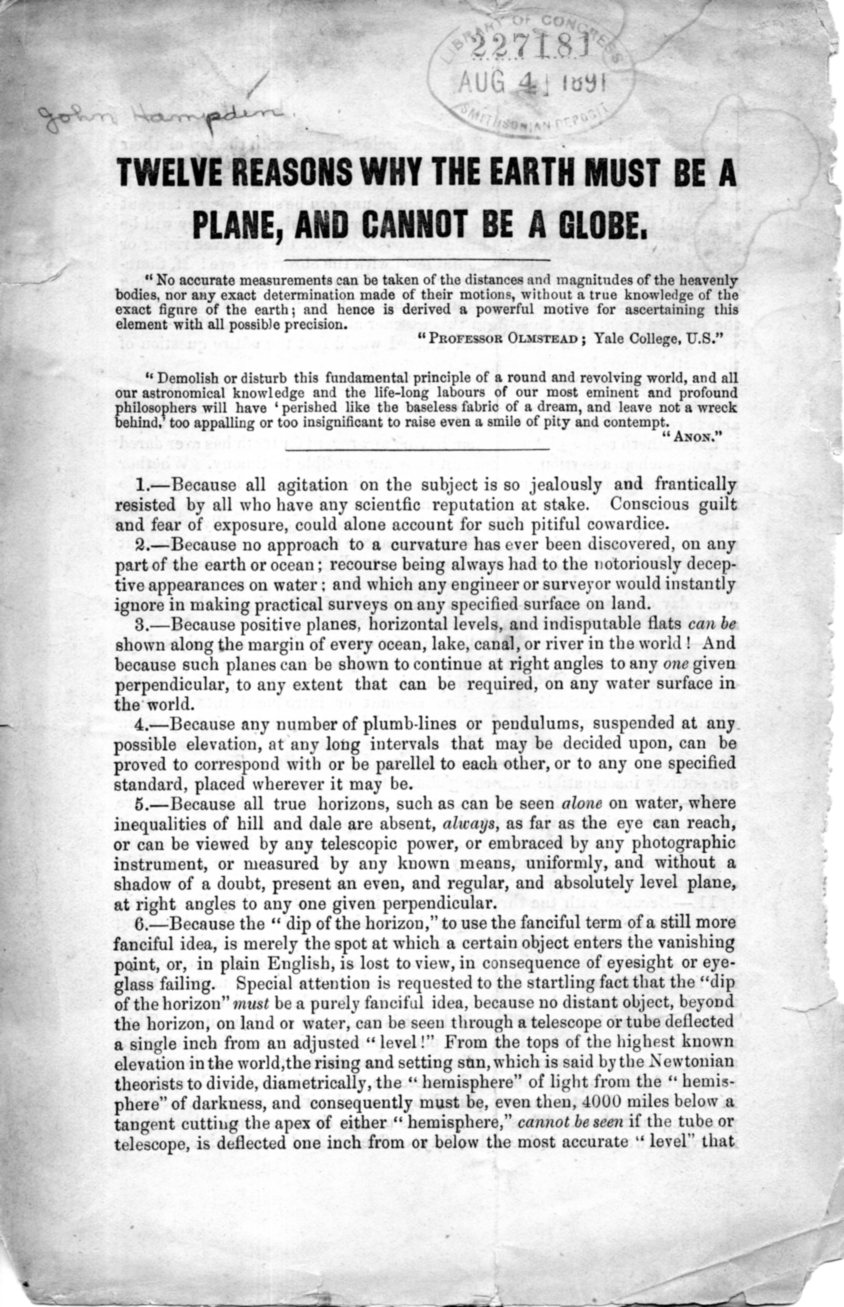
    The most disappointing thing about this tiny pamphlet is that it is not illustrated–I would have loved to see the representation of the flat Earth and its relation to the rest of the solar system.  Unfortunately, there’s nothing, only word-pictures that are not altogether descriptive in spite of liberal sprinklings of exclamation points in the midst and end of some irregular and turgid prose.  So, I’m not reporting on it, the thing being too demanding for not feasible return, but I will reproduce the thing in toto so that the curious reader may take the adventure themselves.

    The pamphlet (actually just a folded sheet of paper) was the work of John Hampden, whose name is probably recognizable to those who have read in the swollen knuckle  religious/scientific strife literature. He was a long opponent of the Earth as a sphere, basing much of his deep assertions on scripture. Hampden was that terrible mix of unctious and litigious, and fought with folks for decades, most famously with Alfred Russell Wallace, to whom he lost several libel suits costing him money and freedom over the long course of that inextinguishable dumpster fire.

    In any event, here is the text (printed I think around 1890, some 20 years after his troubles with Wallace began); this copy is the Smithsonian Institution Deposit copy via the Library of Congress, and now lives here in the studio:

    Flat Earth004


  • Roosevelt as a Proto-Fascist, 1933 (Indictment by a Far-Left Organization)

    JF Ptak Science Books   Quick Post

    Roosevelt Fascist164

    In the pamphlet collection here there are hundreds if not thousands of odd publications printed int eh 1850-1945 period that have little bits and pieces of design elements–apart from their content–that make them irresistible.

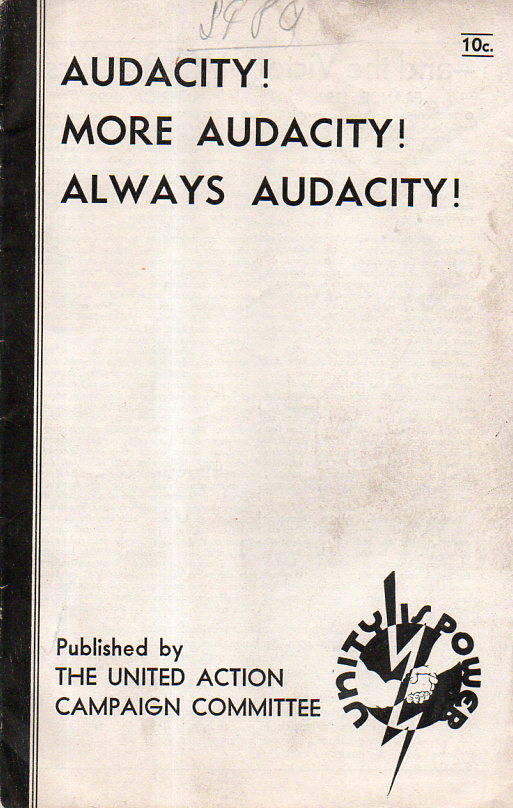
    The logo may be recognized by some of you–it belonged to the League for Independent Action  (LIPA), which was a far-left organization that last for about eight years from 1928-1936 (the last two or three being moribund). LIPA had a number of pretty heavy hitters–or at least the United Action Campaign Committee of LIPA did. The chair of this and LIPA was John Dewy, and among the others involved with the group (it seems as though there were never more than 5,000 dues-paying members) were Charles Beard, Heywood Broun, Stewart Chase, Henry Pratt Fairchild, Fiorello LaGuardia (!), Reinold Niebuhr, and dozens of others.  

    The election of FDR in 1932 seems to have sunk their boat, though in reading this pamphlet a little Roosevelt really wasn’t liberal enough for them–he did though attract a lot of their membership to the Democratic Party, and LIPA in short order shrank and drowned.

    In fact, according to the pamphlet in which this logo was found, Roosevelt was more “a threat than a promise” to American life. And, then this: that the New Deal “if carried to its logical conclusion…will introduce Fascism into the United States”. One part of this was the continued entitlements of the upper classes, “withholding the people from the blessing of security, leisure, and high living standards”. 

    And: “In truth, what President Roosevelt has been doing in Washington…will [transform the old, individualistic laissez-faire] capitalism of yesterday into the controlled capitalism of Mussolini and Hitler”.

    I’ve seen these attacks on FDR before, but  think not this early, not in the first year of his presidency.  

    I guess–given to the limited space given to this post–that it would be mostly fair to say that LIPA was a Socialist organization, at least, and the politics of the Roosevelt administration was not nearly Socialistic for them. There’s much more in this pamphlet, but it will have to wait for another time. 

    Roosevelt Fascist163


  • The Nothing Frontier, 1900

    JF Ptak Science Books   Post 2485   Part of the History of Nothing series

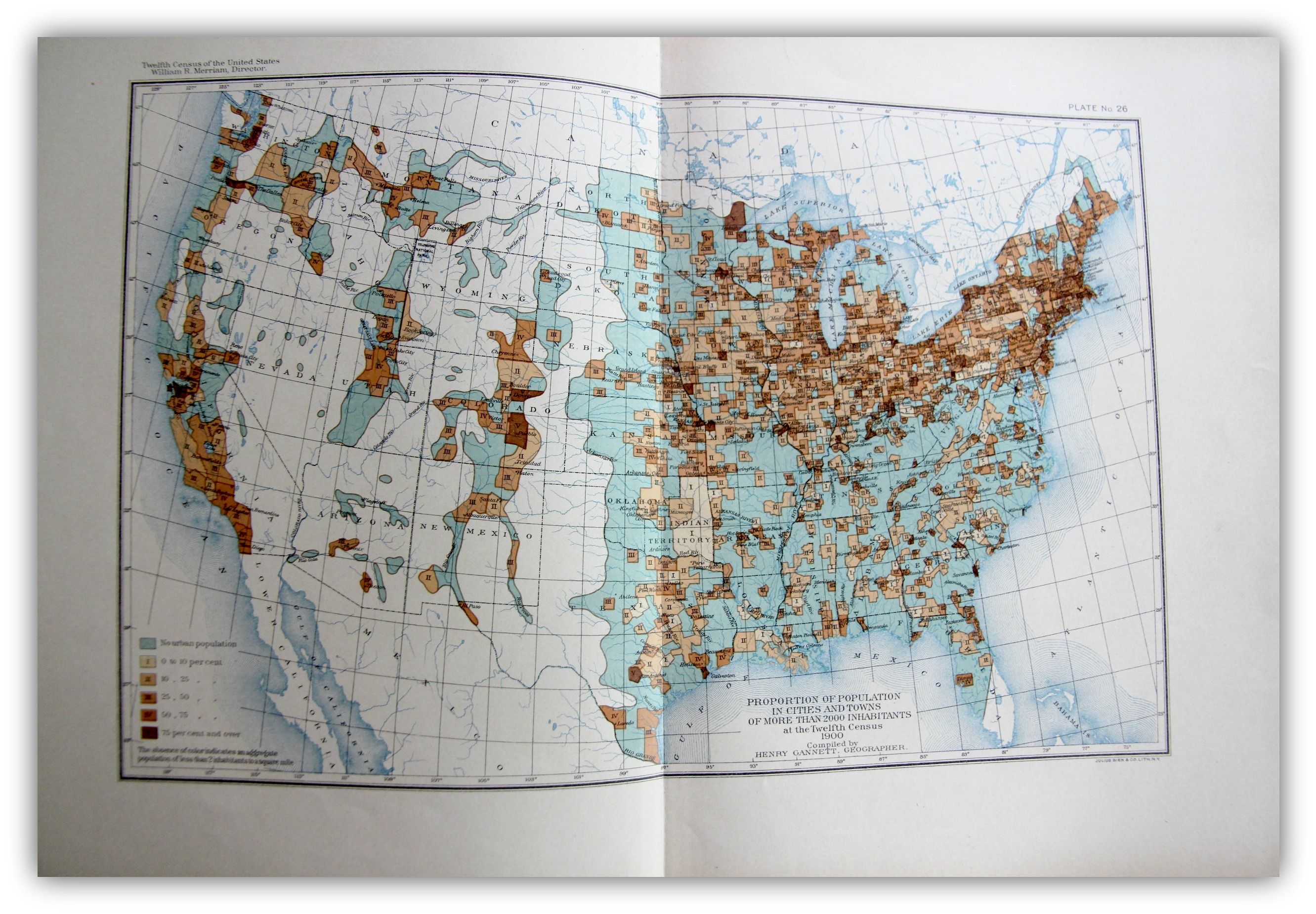
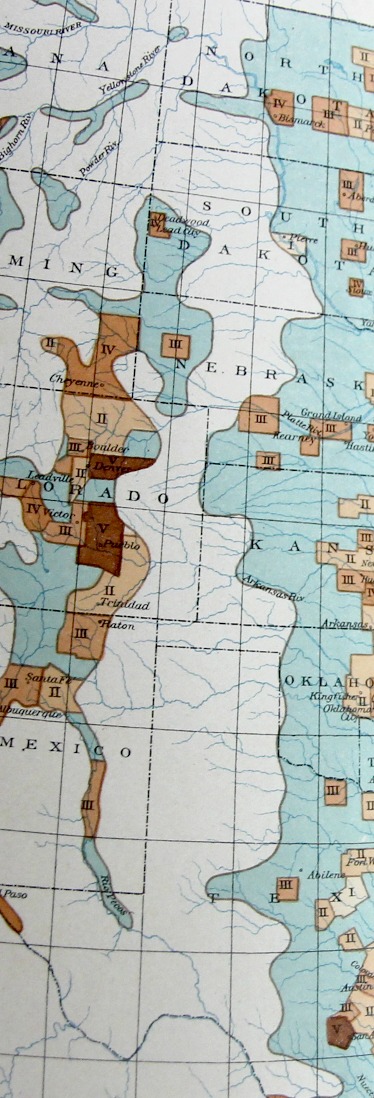
    The “frontier” in the history of the U.S. West is a pretty big deal, and old, the academic concept of  the frontier pressing its way back 13 decades, when for the most part once it was introduced it was pronounced to be “closed” by the man who reinterpreted it, Frederick Jackson Turner1.   On my shelves alone there are books on the mining frontier, the mineral frontier, the transportation frontier, the Indian frontier, the military frontier,the farming frontier, and so on, divisions allotted by wealth, nationality, numerous geographical attributes, and the like. One thing I think that I have not seen was the Nothing Frontier, where there are divisions divided by, well, sort of “nothing”. This is mostly a prosaic statement, slightly poetical, dependent on visual clues. And of course there isn’t “nothing” there because there is always “something”–there just isn’t very much of it.  And when things get colored-coded on map depending upon percentage distributions, and that object of measurement is left to a null color or no color at all, then it appears that the divisions one left to nothing.

    Maps--Census 1900 Urban

    [The image above is very expandable.]

    This can be seen if you squint somewhat you can see an example of it in plate 26, “Proportion of Population in Cities and Towns of More than 2000 Inhabitants…” Statistical Atlas, prepared under the Supervision of Henry Gannett (Geographer of the the Twelfth Census), printed in Washington by the U.S. Census Bureau, 1903. This map–which is part of an historic series of atlases published with U.S. census data–shows the distribution of urban population in five shades of brown (as seen in the legend) plus a blueish color for “no urban population” as well as no color (“The allowance of color indicates an aggregate population of less than 2 inhabitants to a square mile”).

    Maps Census 1900 Urban detail

    It is that absence of color that makes it a frontier-ish sort of frontier, a part of the Made Up Frontier, this one being very straightforward north/south, Big Bend to Montana, pretty much the Lonesome Dove trail from the rough Big Bend Texas to nearly Canada.  

    I know it is just a thing I made up just now looking at the map, but given some effort, maybe the idea actually has some legs.  

    Notes

    1. Turner, Frederick Jackson. The Frontier in American History, Harvard University, 1920, full text via Project Gutenberg,  http://www.gutenberg.org/files/22994/22994-h/22994-h.htm


  • The Incidental Absurdity of Near-Nothingness

    JF Ptak Science Books  Quick Post     Part of the Unintentional/Incidental Absurdist series

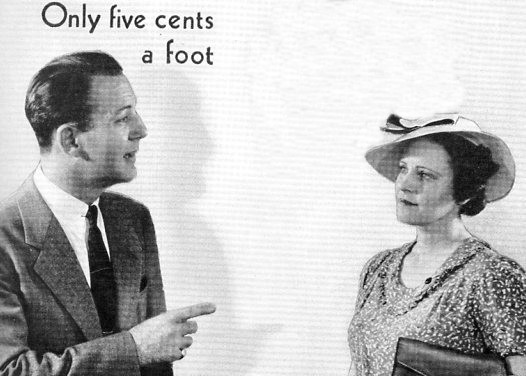
    Sometimes there’s nothing better in finding the absurdity in quiet mundane than actually finding it, rather than creating it. This is the case with the following images, all of which have a certain flat, blatant, absurd quality to them–for their conversation (or lack of it), poses, stares, direction of vision, and so on.  All of them come from “Maintaining Good Relationships” a chapter in the provocatively-named Tested Selling Methods (1939).  None of the following conversations say very much, and on the face of them (presented without their captions) most are about nothing, or seem to be.  

    Women of course are approached differently from the men, almost like children, though mostly salesmen were warned to place women in the position of making decisions for the household.

    Seems like good postcard material to me.  

    Sales822


  • Flying But Not Flying in the Theatre, 1889

    JF Science Books    Quick Post    

    Sci am flotaing theatre 2

    The Montgolfier Brothers had taken to the air more than 100 years before this image, for the first real experience of humans flying, though through the centuries there have been stories and reflections on all manner of human flight, from Daedalus’ waxed wings to de Bergerac’s bird-power ship balloons.  And of course the intonations of flight have been around for nearly just as long, though much of that was accomplish via acting and not so much by theatrical machinery.  

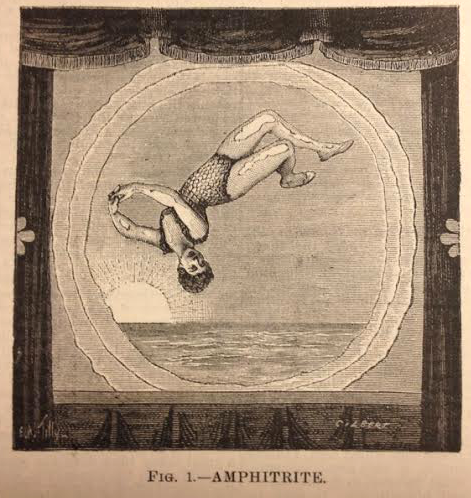
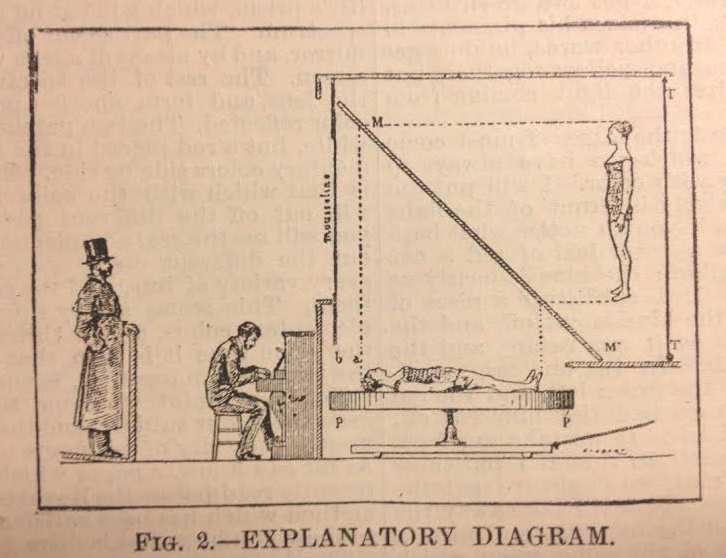
    A superior, and smallish, and elegant theatrical accomplishment in this area was tripped over by me in a browse through an 1889 volume of Scientific American Supplement while looking for an article about Tesla.  And there, in the issue of March 16, 1889 (on page 11008 (!)) was the Amphitrite.  Or at least the apparatus seems to be called by that name, I think, even though in Greek mythology it is the name of the sea-goddess and wife of Poseidon.   In any even it was an ingenious idea–the actor would be placed on a vertical rotating platform and by use of lighting and mirrors their form would be seen on a horizontal screen/background; so if the background was stationary and the actor was twirled on the platform, the effect would be a flying actor against whatever background was chosen. And so on.  That’s pretty good. 

    Sciam floating theatre

    ·Posted by :

    ·in: