A Daily History of Holes, Dots, Lines, Science, History, Math, Physics, Art, the Unintentional Absurd, Architecture, Maps, Data Visualization, Blank and Missing Things, and so on. |1.6 million words, 7500 images, 4.9 million hits| Press & appearances in The Times, Le Figaro, Mensa, The Economist, The Guardian, Discovery News, Slate, Le Monde, Sci American Blogs, Le Pont, and many other places… 5000+ total posts since 2008.

Category: History of Lines

  • History of Lines: Clouds

     JF Ptak Science Books  Post 1629  (On Clouds and Not-Clouds, Part I)

    “…and they drew all manner if things–everything that begins with an M—‘

        ‘Why with an M?’ said Alice

       ‘Why not?’, said the March Hare.” –Lewis Carroll,  from “A Mad Tea Party”, in Alice’s Adventures in   Wonderland.

    Why not, indeed?  I’ve long had an interest in clouds, and since this blog is ostensibly on the surfacing or definition of Cloud Bones, I though to spend a little time on the origins of the depictions of printed clouds in art. Not being an expert by any means on the history of art, it just seems to me that after long exposure clouds are not well-represented in woodcuts, wood engravings and other early engravings, or at least not so well depicted as their landsmen in paintings.  There seems to be no shortage of effort to reveal gorgeous clouds  through the early Renaissance–but the doesn’t seem to apply very often to their representation in prints.

    And that of course is when the detail of the sky is depicted at all. It seems that more often than not, in woodcuts printed from say 1460 through 1550, that the sky is left blank, like this image from Ovid (Accipe Studiose Lector P. Ouidij Metamorphosin...printed in Venice in 1509:
    Clouds no couds livy913

    “You could not see a cloud, because
    No cloud was in the sky:
    No birds were flying overhead —
    There were no birds to fly”.–Lewis Carroll, Through the Looking Glass. 

    I could go on with many examples of the blank sky–the white, blank, settled nothingness–but exhibiting variations of nothing at this point isn’t necessary.  But illustrating clouds is.

    And for the most part, clouds don’t look very much like themselves in prints, not really, not for more than a hundred years.  For example, Martin Schoengauer‘s spectacular  The Temptation of St. Anthony, which was printed in 1470/5, has a beautiful, fluid circularity to it, full of an earthy roundness even as the saint is pursued by demons.  But the sky in the background is populated with nothing but dashes to suggest clouds. 

    http://thewholegardenwillbow.files.wordpress.com/2008/11/schongauer-martin-anthony103.jpg

    Perhaps clouds would have taken away from the moment; but if that were the case, why bother with the dashes?

    There are considerable exceptions to this practice, with Durer and Altdorfer coming quickly to mind–but in my experience, the oddly-formed cloud seems to be the majority rule in the woodcut.  

    At this time there were of course many depictions of skies with no clouds in paintings, bare suggestions of themselves, even in some of the most famous works–Botticelli’s Birth of Venus and Michelangelo’s Fall of Man in the Sistine Chapel are fair examples.  But once you move away from the golden Sienese skies of the14th century1, clouds are given full and beautiful shapes from early periods. (Giotto’s Christ’s Entering Jerusalem, 1305/6; Simone Martin The Road to Calvary, 1340; Duccio’s Christ Entering Jerusalem, 1308-1311; Fra Angelico’s The Dposition, 1436; Masaccio’s The Tribute Money, 1424; Lippi’s Annunciation, a perfect cloud treatise, 1442, and on and on. Other examples are found in continued reading below.)

    Clouds in prints are a different matter–I’m not sure if it was just too technically difficult to create clouds in wood, or if there was some sort of languishing Byzantine sensibility inherent in woodblocks that was not so in oil. I’m really not so sure about this, and as much as anything else I’m thinking out loud about this lack of cloud definition.  I don’t have an answer for it.  But I do want to share the beginning of a timeline for undefined clouds as they appeared (or not) over the course of about one hundred years,  from 1485 to about the end of the 16th century.   As I mentioned clouds appeared beautifully in paintings from earlier periods, and there doesn’t really seem to be a substandard-cloud complement in the painting world as there was in the print world.  Of course, in western philosophy and science, clouds were pretty much left alone from inquiry, even by a series of the great natural history classifiers–they wouldn’t really be given a fully taxonomic appreciation until 1803 by Luke Howard (which I wrote about in this blog earlier, here).

    A Timeline of Clouds in Prints, 1485-1596

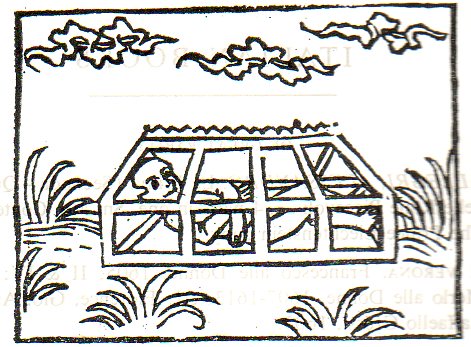
    Franciscus de Retza, De Generatione Christi, sive Defensorium Castiatis Beatae Virginis Mariae, a beautiful work in Gothic type–a picture book, really, with two illustrations of magnets.  Printed in 1485, this image depicts Isidorus in a magnetic coffin which is floating in the air:
    Clouds 1485908

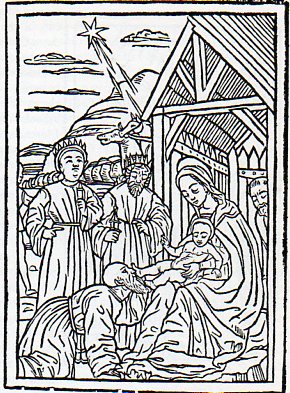
    “The Adoration of the Magi”, from Legenda Sanctorum Trium Regum, printed in Modena in 1490:
    Clouds 1490 adoration magi912
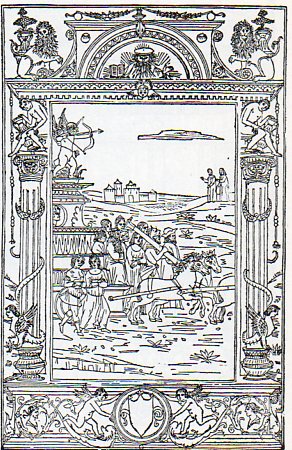
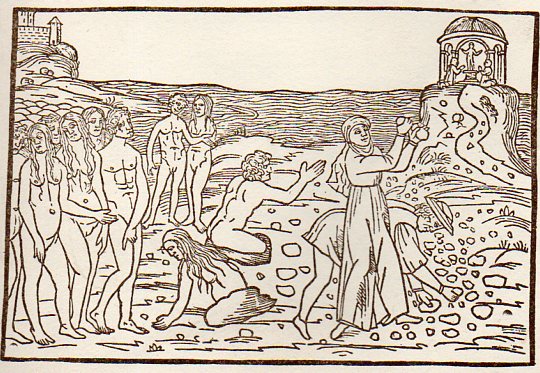
    The Triumph of Love, 1492/3:

    Clouds 1492 triumph love911


  • History of Lines: Zig and Zag, 1918

    JF Ptak Science Books   Post 1628   History of Lines Series

    SUb 1896 In the long history of lines seldom do we see such an indirect way to get safely from point A to point B than by zig-zagging through points A1 to A201. But this was definitely the case for ships in the North Atlantic in the 1914-1918 period.

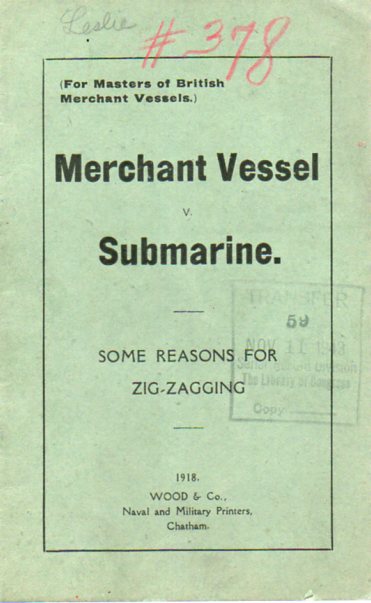
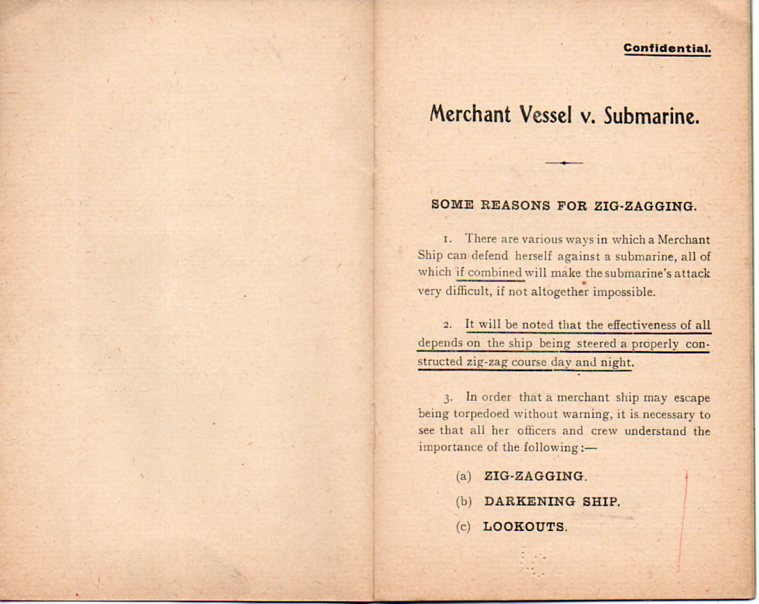
    Merhcant Vessel v. Submarine, Some Reasons for Zig-Zagging (a “Confidential” report written by Lt. Commander A.G. Leslie and published by Wood & Co. in Chatham in 1918) presents logical, simple, workable solutions to the problem of the submarine, fallible solutions to what must have seemed to be infallible treachery.  It is a pocket-sized, 5×3 inch talisman and survival guide for those (“For Masters of British Merchant Vessels”) responsible for hundreds of lives and thousands of tons of ship, all of the good information boiled down to eight pages of loose type, a way to get around the subs, and weighing in at about an ounce. 

    What it really boiled sown to was zig-zagging–plus darkening the ship, posting lookouts, painting the ship the proper color, camouflaging it, and keeping the lights and smoke down.  But over th eight pages Leslie knocks down the idea of zig-zagging over and over again.  And he was right of course, right on all of it, given the conditions of conflict and the state of development of the submarine and the torpedo.  At this point, the torpedo was a point-and-shoot affair, which means the sub commander needed to get accurate info on the speed and the course of the ship (and other stuff of course)–and the one thing that would make this very difficult for the sub was for the ship to change its course unpredictably.  That would mean longer follow time for the sub, longer time above the water line, probable multiple dives using up battery power, and so on, all very problematic for submariners.

    Once unrestricted warfare was declared on 1 February 1917 the German subs attacked any and all shipping, including American ships, which led the way for American involvement in April.  The U-boot sunk substantial part of British shipping, but, ultimately, it could not do enough against the escorted convey, and the German moment would be lost.  In the end of it all, of the 360 submarines built by Germany, 178 were lost, after having waged a campaign for four years which saw the sinking of more than 11 million tons of shipping. 

    SUb 1898

    A straight line coursed by the ship would allow the sub to gather its information, site the ship, and sink it.

    [The full text is below.  I can’t find another copy of this work in any of the likely places, including OCLC.]

    ·Posted by :

    ·in:

    —

  • The Game and Play of Chess, a Morality Play: 1474

    JF Ptak Science Books   Post 1616   (Part of the History of Lines series.)

    It turns out that one of the most famous and iconic books on chess is really not about chess at all.  Jacobus de Cessolis, (Jacopo da Cessole, c. 1250 – c. 1322) the author of  The Game and Playe of the Chesse1, found its way into print in the very highly capable hands of William Caxton in 1474 (“Fynysshid the last day of marche the yer of our lord god. a. thousand foure honderd and lxxiiiia”) and into a second edition in (about) 1483. Caxton produced a spectacular, beautiful work on moral and ethical virtue and challenge, using the game of chess as the foundation for metaphor and aliteration of the wide classical literature that it calls upon.2.  The book doesn’t tell you how to play–but it does instruct on how to live.  A great aid to the book’s power are the sixteen strong woodcuts (“repeated to make twenty-four figures”3), which mo doubt were a strong influence on their viewers.

    I have included this entry in this blog’s History of Lines series for the connection between the lines of morality and the lines of he chessboard and the movement of its pieces, which were at last the outward and symbolic basis for the ethical lessons of the work if not used in actuality. 

    Notes:

    1. The book was one of the first books ever printed in English, and was probably the first morality play printe in the language. It was reprinted many times, later under the title of Liber de moribus hominum et officiis nobilium super ludo scacchorum (‘Book of the customs of men and the duties of nobles or the Book of Chess’).

    2. Arthur Hind, An Introduction to the History of Woodcut, 1935.  Volume II, p. 708.

    3. The commentary quoted here is from the facsimile edition of the original work published in London in 1883 by Elliot Stock with notes by William E.A.Axon

    The authors named in this study include “Saint Ambrose (2 references), Anastasius (1), Avicenna (2), Saint Augustine (9), Saint Basil (1), Saint Bernard (2), Boethius (3), Cassiodorus (1), Cato (5), Cicero (6), Claudian (2), “Crete” (1), Diomedes (1), Florus (1), Galen (1), Helinand (4), Hippocrates (4), Homer (1), Saint Jerome (3), John the Monk (1), Josephus (4), Livy (2), Lucan (1), Macrobius (1), Martial (1), Ovid (6), Paulus Diaconus (1), Petrus Alphonsus (2), Plato (4), Quintilian (3), Sallust (1), Seneca (15), Sidrac (1), Solinus (1), Symmachus (1), Theophrastus (1), “Truphes of the Philosophers” (2), Turgeius Pompeius (1), Valerius Maximus (23), Valerian (7), Varro (1), Virgil (2), “Vitas Patrum” (2).”


  • History of Lines–The Mathematics of Euclidean Love & Maxwell’s Demon, 1879

    JF Ptak Science Books   Post 1603  {The History of Lines series.]

    If you give them a chance, physics and the maths will provide their own fairy tales.

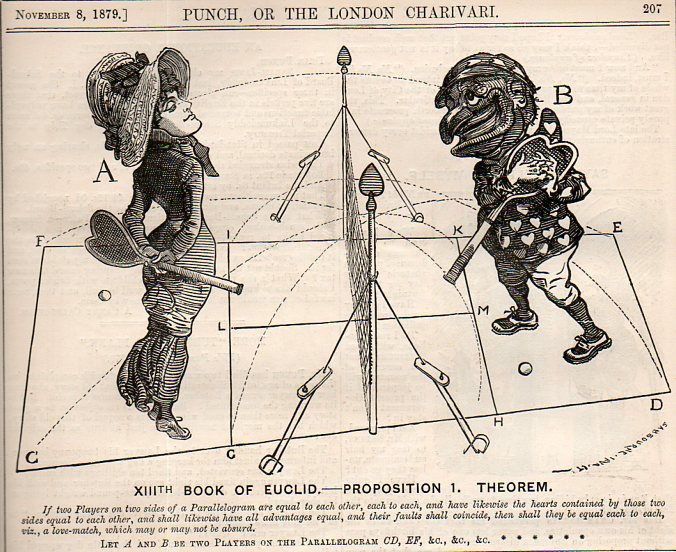
    This lovely trompe l’oeil of Euclid calls into play the play of love, in hard angles and parabolas, between Mr. Punch of Punch or the London Charivari  and the object of his affection.  The  image was published on 8 November 1879–just three days after the death of one of the greatest line-makers of the 19th century, James Clerk Maxwell.  (There is no mention of JCM anywhere in Punch, and I guess probably that there needn’t be, even if he was one of the greatest thinkers of the nineteenth (or any other) century.)

    Euclid733

              “XIIITH BOOK OF EUCLID.—PROPOSITION 1. THEOREM.

    If two Players on two sides of a Parallelogram are equal to each other, each to each, and have likewise the hearts contained by those two side» equal to each other, and shall likewise have all advantages equal, and their faulty shall coincide, then shall they be equal each to each, viz., a love-match, which may or may not be absurd.”

    Maxwell‘s really big lines come in a series of four papers called “On the Lines of Force”1, and were published in 1861 and 1862. It is in these papers that Maxwell’s famous equations are all found, and it is also the place where we’ll find the basis not only for the foundation of classical electrodynamics, but the forms for the structure of what would become the epochal/modern communication/electrical technologies. 

    File:On Physical Lines of Force.pdf
    MaxwellPhys1-10.png
    [Source:  here.]
    Maxwell’s Demon came into being as a gedankenexperiment in a series of letters–it was Maxwell not only playing devil’s advocate in trying to propose a circumstance in which the 2nd Law of Thermodynamics could be violated, but also providing the Demon, in the experiment, which he proposed as being a finite being, the contradictor.  JCM didn’t actually name this thing on his own–that appelation came via William Thomson in an article in Nature magazine3 in 1874. 
    We’ll continue this later with Faraday’s lines of force.
    2.   Maxwell stated it so:  “… if we conceive of a being whose faculties are so sharpened that he can follow every molecule in its course, such a being, whose attributes are as essentially finite as our own, would be able to do what is impossible to us. For we have seen that molecules in a vessel full of air at uniform temperature are moving with velocities by no means uniform, though the mean velocity of any great number of them, arbitrarily selected, is almost exactly uniform. Now let us suppose that such a vessel is divided into two portions, A and B, by a division in which there is a small hole, and that a being, who can see the individual molecules, opens and closes this hole, so as to allow only the swifter molecules to pass from A to B, and only the slower molecules to pass from B to A. He will thus, without expenditure of work, raise the temperature of B and lower that of A, in contradiction to the second law of thermodynamics….”
    3.  William Thomson (Lord Kelvin), “Kinetic Theory of the Dissipation of Energy,” Nature, 9 April 1874, pp. 441-444, and “The Sorting Demon Of Maxwell” (1879), Proceedings of the Royal Institution, vol. ix, p. 113.

    ·Posted by :

    ·in:

    —

  • Songs of the Streets, in Two Parts (and an Obscure Reference to an Important Anti-Darwinist)

    JF Ptak Science Books  Post 1600  {Appropriate musical accompaniment that can be listened to under the reading of this post, Carl Orff’s Gassenhauer, can be found here and minimized.]


    I found these two interesting images over the course of a hundred pages or so in the profusely illustrated weekly magazine, Punch, or the London Charivari, for early 1865.  The first image, published 18 March 1865, “A Song of the Streets”, drawn by “C.H.D.” (Charles Henry Bennett, 1828-1867), displays the general thoroughfare of sidewalk life in a place like London, people being blown about by late winds and snow.

    It is in the upper right-hand corner of the engraving that we find our “important Anti-Darwinist”, which seems like an illogical statement, except that it isn’t  The man in question is the fellow with the bellows, who seems to be the one instigating the weather, blowing so had and cold that it moves people off their feet and off the page.  The bellows is labelled “Fitzroy”, and the likeness is that of the man with the same name, Vice-Admiral Robert Fitzroy (b. 1800), who at this time was serving as the chief of a weather department for the Royal Society, the Meteorological Statist to the Board of Trade, appointed by the president of the society, and was basically a meteorologist, except that the title had yet been invented.  (It is also interesting that Fitzroy is depicted in captain’s (?) uniform, and surrounded by a floating telescope, book, thermometer and self-registering drum.) So even then, even with the first person in this position of authority, complaints for foul weather were being launched at the person “in charge”, even though that person created an extraordinary new tool for detailing the possible changes in weather.1

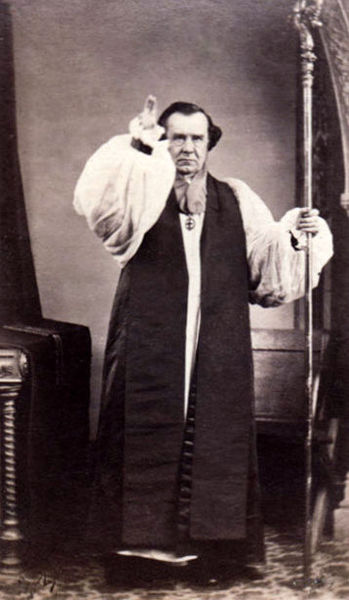
    It happens that this is the same Robert Fitzroy who was the captain of the HMS Beagle on its second voyage (1831-1836), when he approved of the addition of an added gentleman to help keep his sanity on the long adventure, a naturalist named Charles Darwin.  It was also Fitzroy who gave Darwin a copy of the first volume of Lyell’s Principles of Geology, a book integral to Darwin’s development into Charles Darwin.  The voyage was personally rocky for the two men, but ultimately highly successful.  Years later, Fitzroy was shocked and  dismayed with the result of young Darwin’s adventures–with the publication of On the Origin of Species…, Fitzroy felt a sense of personal guilt for Darwin’s theory, and felt shame and bitterness towards it, as in his mind the theory went against his bible and his religious beliefs.   Fitzroy and the Rev. Samuel Wilberforce were at the evolution debate meeting of the British Association for the Advancement of Science (1860) in which Rev. Soapy Sam challenged Darwin’s theory on “scientific” grounds, and against which Thomas Huxley (and other Darwin supporters) made his well-remembered defence2.  In the middle Samuel_Wilberforce_by_Mowbray_of_Oxfordof all of this was Robert Fitzroy, who cried for the crowd of onlookers–with his Bible held aloft–to reject man’s interpretation of nature and stay with that of God.   He was booed down.  Darwin was not in attenddance. [Image: Wilberforce, threatening.]

    So, in a way, Fitzroy proved to be important in the formation of the theory of evolution but also turned out to be an anti-Evolutionist, though not an important one.  Oddly enough this may be the last published image of Fitzroy during his lifetime, as he would die 42 days after the appearance of this issue.

    In the second image of the streets the view from the pages of Punch (for 27 May 1865), “The Banishment of the Beggars, a New Tramp Chorus”, we see a different type of street “cleaning”.  In this case, it. Charles Villiers (1802-1898, and for 63 years a sitting MP) and his Homeless Poor Bill of 1865 sweeping the “sham poor” from the city streets, the legislation designating that the capable poor actually be put to work and removed from their begging positions on the streets.  The complaints in the chorus against the highly visible poor of Metropolitania were considerable,


    finding among the beggars (“who disturb our peace”) a litany of fakes, many of who are featured in the illustration:

    “sham injured workmen (who display their wounds from door to door)”, the lame (who clap their crutches on our toes), the blind, sham paralytics, sham widows (with hired babies and brats), “artistic tramps” (who will no longer chalk on the sidewalk “I am Starving”), and the fake veterans of wars. 

    The way to salvation for these people was “the Mill”, provided by the Villiers bill, and a compulsory spot in a workhouse (work-house) where labor is exchanged for room and board. 

    London-Workhouse.jpg


    Notes

    1. Fitzroy was actually the person who coined the term “weather forecast”, or at least he was the first to use it who had any real chance of being correct or accurate, given how much data he was able to assemble and interpret. He was really a very important person in this regard, as well. 

    2. This is not the place to debate whether Huxley’s famous remarks were famnous at teh time.  In a letter to Darwin J.D. Hooker wrote this of the exchange: 

    “Well, Sam Oxon got up and spouted for half an hour with inimitable spirit, ugliness and emptiness and unfairness … Huxley answered admirably and turned the tables, but he could not throw his voice over so large an assembly nor command the audience … he did not allude to Sam’s weak points nor put the matter in a form or way that carried the audience”. ^ “Letter 2852 — Hooker, J. D. to Darwin, C. R., 2 July 1860”. Darwin Correspondence Project 

    On the other hand, another cotemporary of the exchange between WIlberforce and Huxley wrote:

    Alfred Newton wrote:

    In the Nat. Hist. Section we had another hot Darwinian debate… After [lengthy preliminaries] Huxley was called upon by Henslow to state his views at greater length, and this brought up the Bp. of Oxford… Referring to what Huxley had said two days before, about after all its not signifying to him whether he was descended from a Gorilla or not, the Bp. chafed him and asked whether he had a preference for the descent being on the father’s side or the mother’s side? This gave Huxley the opportunity of saying that he would sooner claim kindred with an Ape than with a man like the Bp. who made so ill a use of his wonderful speaking powers to try and burke, by a display of authority, a free discussion on what was, or was not, a matter of truth, and reminded him that on questions of physical science ‘authority’ had always been bowled out by investigation, as witness astronomy and geology.

    A lot of people afterwards spoke… the feeling of the meeting was very much against the Bp.” _Wiki on the 1860 debate.


  • History of Lines: the Desire Lines of William Blake

    JF Ptak Science Books   Post 1578    [Part of this blog’s History of Lines series}

     The post dedicated to Patti Digh, brilliant writer and birthday girl, who wrote a lovely, image-filled  essay on Desire Lines back in December 2005 on her award-winning blog, 37days. I think the idea of Desire Lines is one of her favorites, and so I tried to imagine my own in her honor, a small Festschrift for the birthday girl.  Happy Birthday, P.D.!

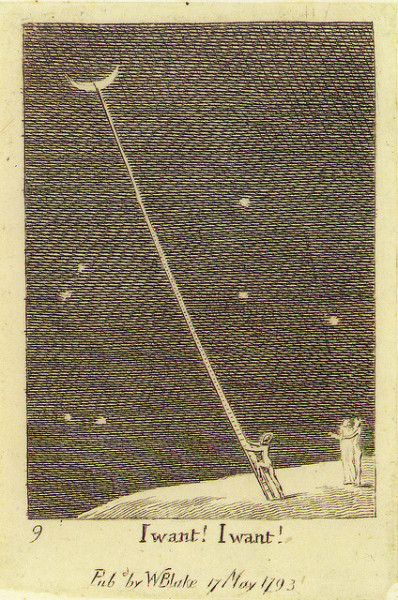
    ‘I want! I want!’ (1793) by William Blake Alastair Sooke examines Blake’s endearing engraving documenting the stages of man’s life This sweet engraving by William Blake is a vision of rudimentary space travel created centuries before Neil Armstrong was even a twinkle in his father’s eye. It isn’t hard to imagine the mystical poet and artist in his Lambeth garden, gazing at the starry sky and dreaming of a slender ladder propped up against the moon. A memorable image of aspirational zeal, I want! I want! is one of 18 tiny engravings, measuring 6cm x 5cm, that document the different stages of man’s life, published together as For Children: The Gates of Paradise in 1793. It is on show at Compton Verney in Warwickshire, part of an idiosyncratic exhibition which examines the ways in which Western artists have grappled with the cosmos since the days of Galileo. The astronomer’s Sidereus Nuncius (The Starry Messenger), published in 1610 and on loan from Corpus Christi College, Oxford, gives the exhibition its name, and can be seen alongside work by contemporary artists such as Glenn Brown, Steve McQueen and Wolfgang Tillmans.

     William Blake had a hard time of things, what with being thought of in unflattering terms of crazy vs. insane by many people rather than, say, being though of as “creative”.  He led a good and relatively long life (1757-1827), and by his artistic and poetic creations inspired generations of other creatives, though he was very little recognized during his lifetime.  He was a seeker, and was somehow able to do his art and printmaking and poetry without a substantial income, living mostly on adequate income and patrons, slowly advancing to semi-poverty as he aged , but dying without a debt to his name.

    The “line” that I site above to his unusual work, The Gates of Paradise–not the Baptistery doors by Ghiberti–, was actually a ladder and a collection of lines, but with the application of perspective becomes one combined line quicker and longer than it could ever be a ladder.   Blake’s character, as with Blake himself, wants whatever it is that he can have, conceivable or not; and som, if he wants the Moon, he just goes to get it.  This version of The Gates of Paradise, which is largely a story of pictures and a few words as legend, was intended for children, perhaps–or at least that’s what the title says.  In any event, its an interesting message to send to children whether it was actually intended for children of the chronological age, or not.  The “I Want, I Want” legend really wasn’t necessary, as the image stands on its own.

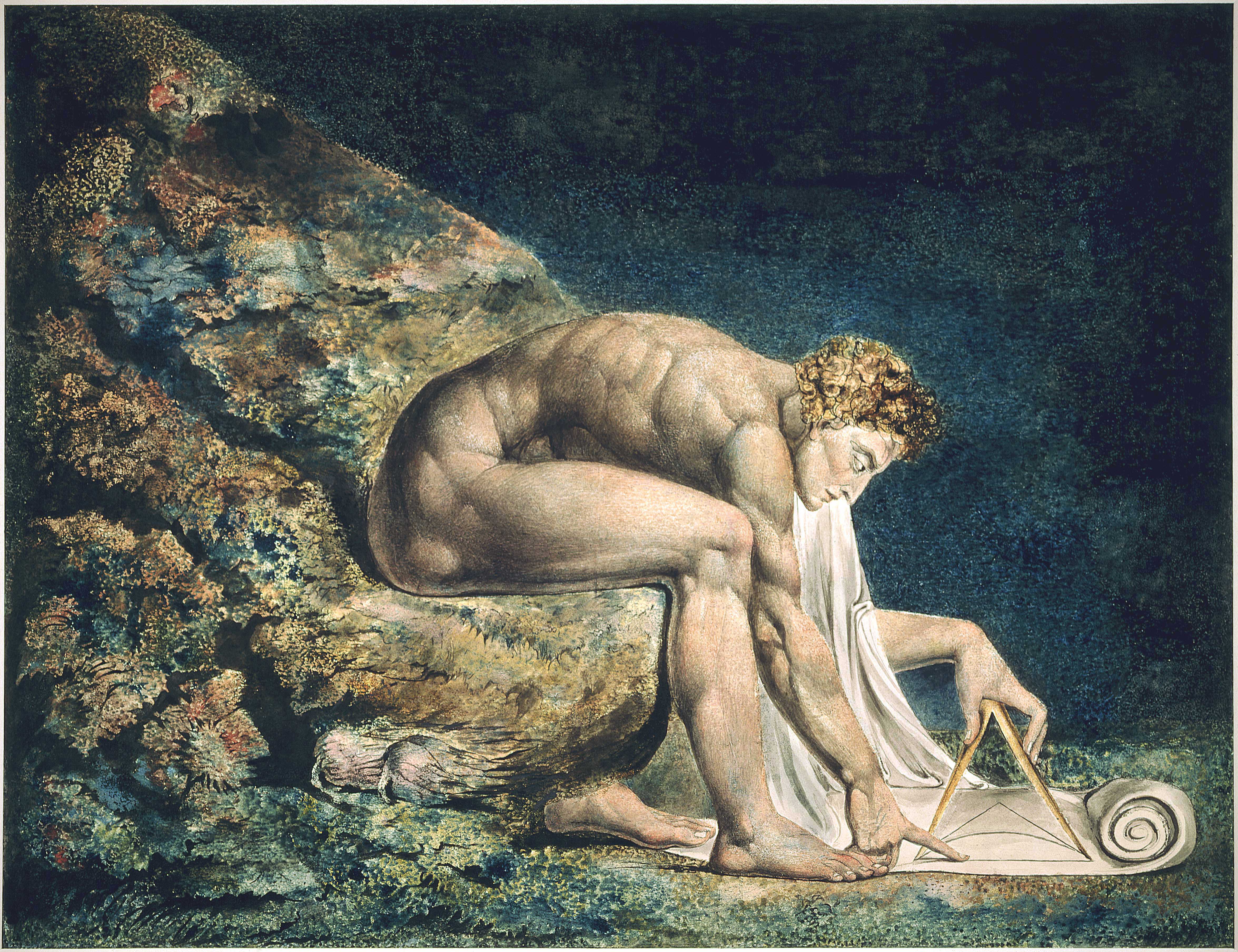
    Blake liked to tell a story with lines like this, as we see in this famous image of Newton:

    File:Newton-WilliamBlake.jpg

    Blake was an impossible anti-Newtonian–at least in my limited reading of the man–making a career of being a spectacular and beautiful anti-rationalist,  a weaver of smoke, playing with and distorting images like a theramin player of words, using language to produce dichotomies in even the most standard of sensate ideas.  Blake was the poster child for thing anti-tech, an anti-scientist out to save the world from its scientific self,  the rationalist world set to destroy imagination, the “Antichrist science” hell bent on destroying the soul of art and religion. 

    “Art is the tree of life; Science is the tree of death” wrote Blake, and so he chose the “Athesistic”  Sir Isaac to stand for the beast, depicting him in art as a naked geometer intent on subjugating the world with a compass and a keen brain, reducing glory to quantification, the work of Satan..  For most of my life I thought that this image by Blake was celebrating Newton—I knew little of the poet/artist/poet, and thought the painting a reverence.  When I understood Blake a little,  I saw that the image was intended as a mockery of Newton and the idea of science—this was an unusual sensation, because absent the unspoken intention of the artist,  you could still take the subject matter of the artwork two ways. 

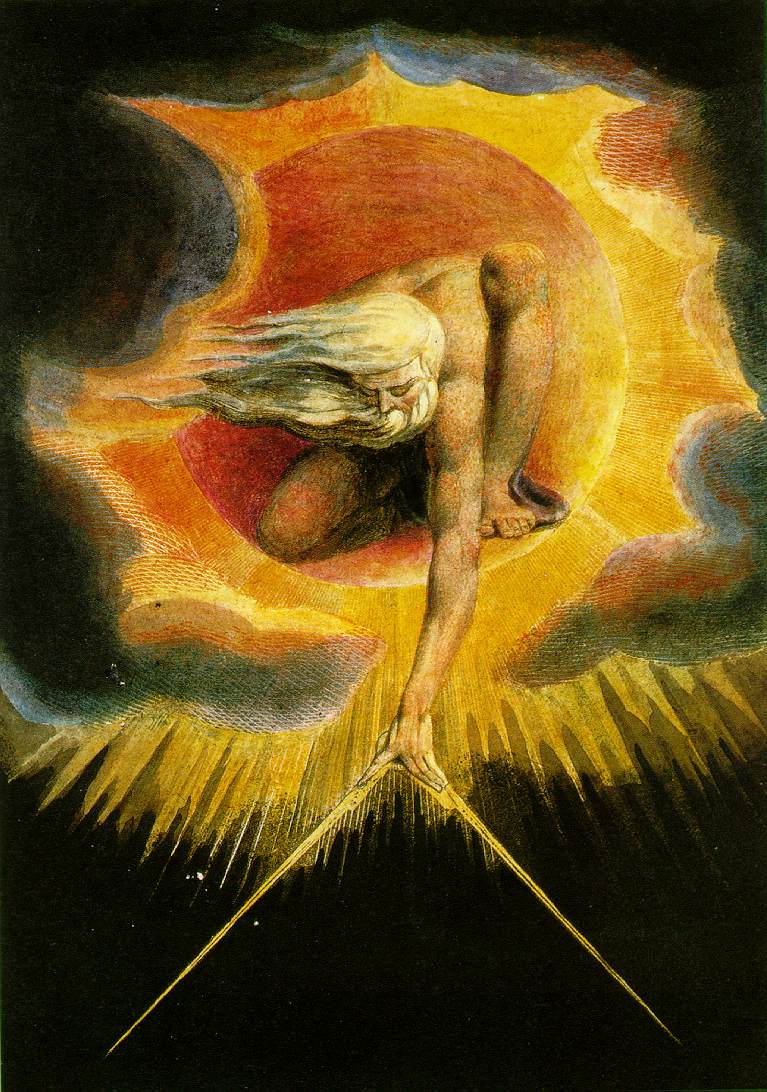
    And of course the Creator:

    http://upload.wikimedia.org/wikipedia/commons/a/ae/Blake_ancient_of_days.jpg


    God is presented as the Great Geometer, the creative power of the universe issuing forth with compass/dividers, was perhaps a kind of Greek conception of the rule of the universe and its interaction with all things on Earth. 

    But it is interesting that in the end, Blake displays the sublime reasoning powers of Heaven and Earth, in the forms of God and Newton, both with desire lines.  I think he enjoyed doing that. 

    The Series “For Children” of 1793:

    ·Posted by :

    ·in:

    — —

  • Before “Cosmos” 2012 there was “Cosmos” 1845

    JF Ptak Science Books  Post 1577    

    http://images.ha.com/lf?source=url%5Bfile%3Aimages%2Finetpub%2Fnewnames%2F300%2F5%2F2%2F6%2F7%2F5267792.jpg%5D%2Ccontinueonerror%5Btrue%5D&scale=size%5B220x350%5D%2Coptions%5Blimit%5D&source=url%5Bfile%3Aimages%2Finetpub%2Fwebuse%2Fno_image_available.gif%5D%2Cif%5B(%27global.source.error%27)%5D&sink=preservemd%5Btrue%5D

    Before the Neil deGrasse Tyson version and update of Carl Sagan’s landmark tlevision series, Cosmos, there was Alexander von Humboldt, and his enormously influential book of the same title, printed in 1845-1862.  Well, von Humboldt’s (1769-18591) book was actually Kosmos when published in German, which is where it started its life (and which von Humboldt suffered mightily for in it English translation).  Von Humboldt was enormously studied and educated and of a high scientific mind over many subjects, one of those 19th century figures who seemed as though they could know everything, a polymath of high order (along the lines of Goethe and von Helmholtz and Thomas Young and others).  He was a meteorologist and biogeographer before those sciences existed; a naturalist, geographer, archaeologist, and explorer, a natural philosopher of magnitudes.

    Kosmos reflected his lifelong interest in order, and what he did was astonishing–he attempted to unifying the complexities of nature in one book (of five volumes), binding the various branches of science together in a cohesive whole, attempting to show how the laws of the universe acted here on Earth.  It was a very influential work, very progressive, a masterwork of scientific method.  Kosmos.

    Sagan (and Tyson, soon) tried to explain what the universe was all about; 160+ years ago, so did von Humboldt, and for his time he came damned close to doing so, or as close as anyone could possibly come. 

    Notes:

    1.  von Humboldt died six months before the On the Origin of Species was born–an enormous pity. 

    Map from the atlas to accompany  Kosmos, a masterpiece of physical geography and the display of quantitative data:

    Old map by Humboldt, A. von. - Atlas zu Alexander von Humboldt's Kosmos.

    From the bibliography, Printing and the Mind of Man, which colelcted the epochal books in the history of science and medicine, we read this about Kosmos:

    ·Posted by :

    ·in:


  • History of Lines–a Note on the First Appearance of the Addition (“+”) Sign

    JF Ptak Science Books   Post 1575  [Part of the History of Lines series]

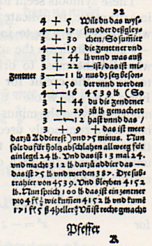
    Lines--addition sign 3 Widman det644
    The history of lines is full and rich with symbols, some of which have absolutely nothing to do with the extension of trust and belief and hope and fear–unless you’re a young student studying math or chemistry or physics.  One symbol in the maths that seems to have no exact age except to say that it is semi-ancient is the addition sign.  (It will be interesting in this series on the history of lines to address the origins of  other symbols like the sign for pi, division. multiplication, percent, inequality,  equality and so on.)

    Lines--addition sign Widman642
    I say “semi-ancient” because the symbol for addition is a hieratic form of the Egyptian hieroglyphic, looking like a capital “A” in a way, without the horizontal crossbar.  The earliest appearance of a symbol for addition in Europe was in the 13th century, with the letter “p“, appearing in various forms, as well as the word “plus”, “used in connection with the Rule of False Position”1.  The concept also appears as the word itself, as “et”, or “and”, which just so happens to closely resemble the symbol that the concept would become a few centuries later.  The earliest appearance of the symbol we would recognize instantly today as an addition sign came in the 1489 book by Wideman, the Behenunde und kuepsche Rechnung (seen above in detail and in full, from the 1532 edition of the work), while the first time the “+” appears in an algebraic equation for the first time 25 years later, in a work by Vander Hoecke.  

    It is interesting to think of the life of these symbols before they became themselves. 

    I am not certain of this, but it seems that the first “+” printed in the United States did not occur until the 20th edition of James Hodder’s2 Arithmetic3 was printed in Boston in 1719, and this at the press of James Franklin (1697-1735), the fourth child of ten in the Franklin family that included Benjamin (1706-1790).  So it is entirely possible that 13-year-old Ben helped his older brother print the first addition sign in the British Colonies. 

    Notes:

    1. D.E. Smith, The History of Mathematics, volume II, p. 397

    2. Hodder in 1672 wrote “note that a + (plus) sign doth signifie Addition, and two lines thus = Equality, or Equation, but a X thus, Multiplication,” no other symbols being used.”  (Smith p395)

    3.  In his introduction, Hodder says:


  • History of Lines–Measuring Things with People, 1522

    JF Ptak Science Books  Quick Post (Edited-and-added version of Post 1019)

      0 blog feb 20 line611det

     “My car gets forty rods to the hogshead, and that’s the way I likes it!”–Grandpa (Abe) Simpson, from The Simpsons  (That’s about 500 gallons to the mile.)

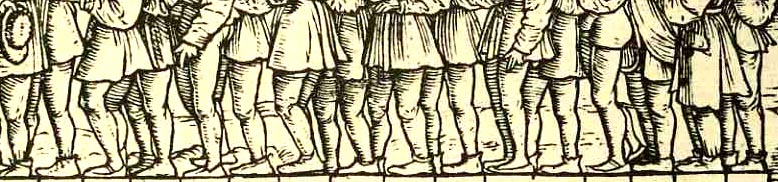
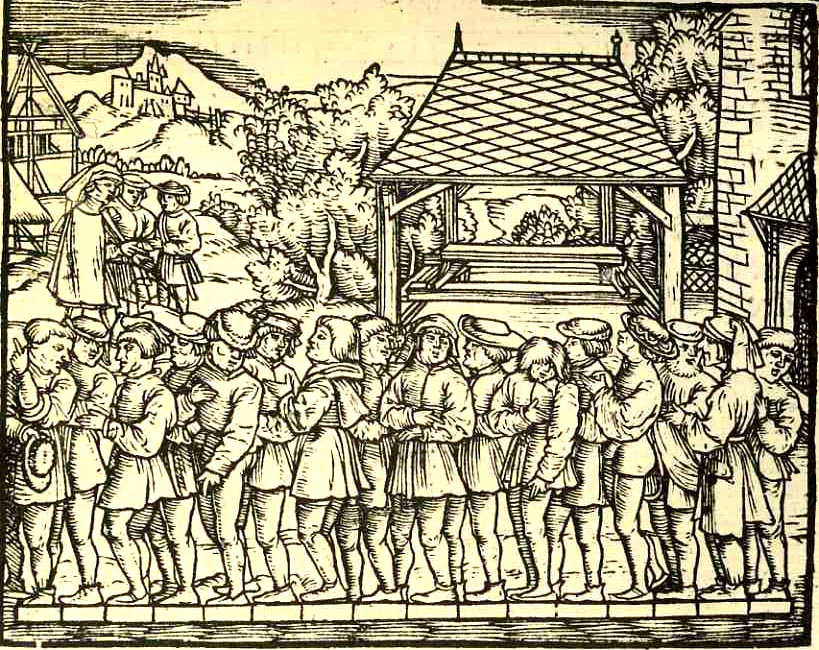
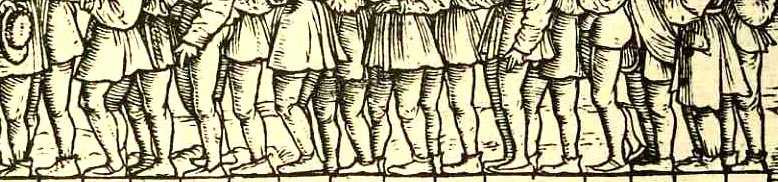
    A line, a connection of two points in space, is about as basic an imaginary thing as we have here on earth.  Humans have used these creations to build all sorts of straight things, from roads to building to ships to literature to mathematics and on and on.  What doesn’t happen very often, at least not in Western art in the last 500 years or so, is for people to be represented in art in a straight line that is not a processional (including military, religious, political venues), or that is not along a bench next to a table, or not supported by another artificial structure like a fortress wall (to give their waiting or standing a form to accommodate).   That weakens the line field considerably–after all, what else is there to line up for?  They’re not queuing up for a sale at Gimbels, and they’re not waiting patiently for a place on the bus.  There’s just not that much to form a line for, evidently. 

    0 blog feb 20 line611 There is, on the other hand, this (above and below), what I take to be rare representation of my odd requirements:  a delightful woodcut from Jacob Koebel’s 1522 Von Ursprung der Teilung, Mass und Messung dess Ertrichs, der Ecker, Wyngarten, Krautgarten und anderer Velder…, an early surveying handbook (probably the first ever printed in Germany) that could be used to measure and set out (as stated in its title) herb gardens, vineyards, farms and the like.

    I’m not 100% sure of this, but I think what is going oin in this image is the measruing of a rod (or “rute” in German), which is about 5.5 meters or 16 feet; and what we have in the picture is 16 men being positioned over a measuring device and beign overseen by the powers that be, at rear. On the other hand, maybe not:  the English rod was 16.5 feet, while the rod measurement for Saxony, Rhineland, Bavaria and Baden were different as well; Sweden also came in at 16 feet to the rod.  The other big question was:  how long was a “foot”? Since that measure also chnaged (varing between 23.51 cm in Wesel and 40.83 cm in Trier and  31.387 cm up north in the Rhineland)  the measurement of anything with variable units of measure seems to have been problematic, or at least in a post-facto measure.  [The whole issue of “absolute” units of measurement is another post for another time (and a much bigger and moire compelx story).] For right now I’m content to have found this pretty image, which in the end was probably the work of the author Koebel (1470-1533), who seems to have been a jack-of-all-trades; and while he was concerned with property and measurement, he also showed his flair with charm, as this group of men atest. 


  • History of Lines–Where is “there”? The Medieval T-O World Map

    JF Ptak Science Books   Quick Post  

    Lines--t map639

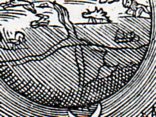
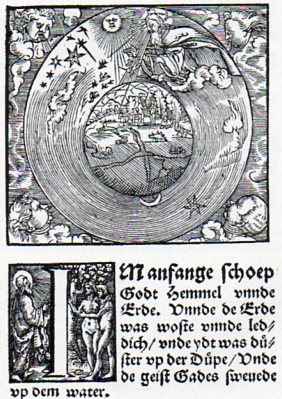
    This woodcut cosmological illustration from a 1526 Bible is a subtle and very late printed rendition of a great and classic Medieval idea.  At the center(or thereabouts)  of the globe of the Earth there is a seeming confluence of two great rivers, but what it reminds me more of is the T-O map, the orbis  terrarum, the direct descendant of the

    Lines--t map638

    Greco-Roman map making.  The T-O map makes distant and deep calls into the past, finding a home in Macrobius (around 400 CE) and Orosius (5th century )and more famously with Isidore of Seville (ca.  600), a work known to most folks today because of its appearance in Seville’s Etymologarum of 1472, which is also the first map printed in Europe (pictured below). (Why is took almost 20 years after Gutenberg to print a map is mysterious to me.)

    Generally Jerusalem would appear at the center of this sort of map, which would have appealed to the necessary people that the publication needed to have the appeal of.  The Mediterranean would separate Europe and Africa from Asia, while all of the land masses (the stuff outside of the “T” structure” were surrounded by the great “O”, the ocean(s).

    Sixteen years later a remarkable map of the world would appear in Ptolemy’s Geographia, an Ulm-printed masterpiece that appeared in 1486. 

    . Ptolemy's world map (around 140 CE);copy Ulm edition of 1486.
    But I think that the crossed lines from the Luther Bible of 1526 was really just a suggestion of the past, not meaning to lean on the Medieval world at all.  Still, though there they are.