A Daily History of Holes, Dots, Lines, Science, History, Math, Physics, Art, the Unintentional Absurd, Architecture, Maps, Data Visualization, Blank and Missing Things, and so on. |1.6 million words, 7500 images, 4.9 million hits| Press & appearances in The Times, Le Figaro, Mensa, The Economist, The Guardian, Discovery News, Slate, Le Monde, Sci American Blogs, Le Pont, and many other places… 5000+ total posts since 2008.

Category: Bad Ideas

  • Naive-Bizzare Book Title: Selecting Radio Stations Like Lining Up Pigs, 1931

    JF Ptak Science Books LLC  Post 385

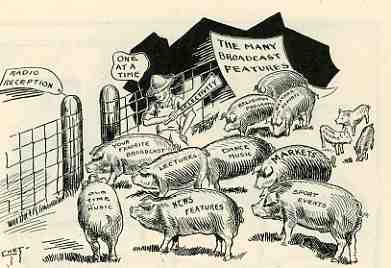
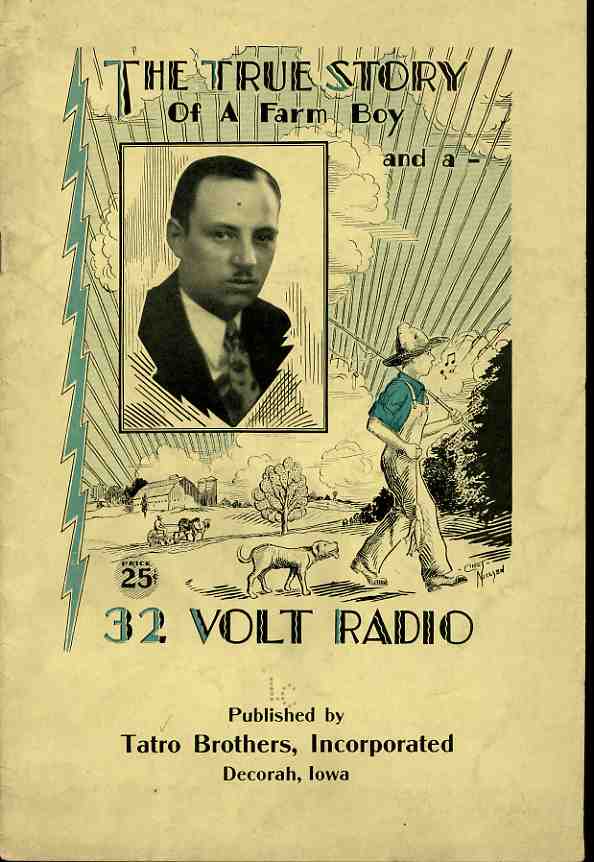
    0-blog---Nov 21 bizarre--radio091I am very attracted to the innocence and softly bizarre category of the Naive Surreal collection here, like this little pamphlet that came out of Decorah, Iowa in 1931.  The titles in this category are odd but still understandable, and the “what the ____!” response to the subtle ones isn’t quite so high and the exclamation points not so many as in the cases of the Naive Surreal titles. 

    This work was really just a sales vehicle for a radio sold by the Tatro Brothers’ store, although the pamphlet did have this wonderful cover going for it as well as some very unusual cartoon illustrations.  The cartoons related everything back to the farm community of the pamphlet’s origins–even the channel selector for the radio related the broadcast stations to pigs going through a gate. 

    0-blog---Nov 21 bizarre--radio092

    The other weird bit on this one is that it is from the Herbert Hoover collection, coming from the White House library in June 1931.  No doubt the author, J.A. Nelson, sent the President a copy of his effort, and the President(‘s staff) no doubt sent it directly to the Library of Congress. 

    ·Posted by :

    ·in:

    —

  • The Magnetic Sleep Doctor and the Shelf-Life of Dream Images

    JF Ptak Science Books LLC  Post 382
    0-blog---Nov 19 sleep082

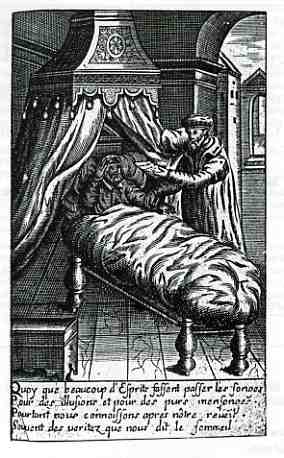
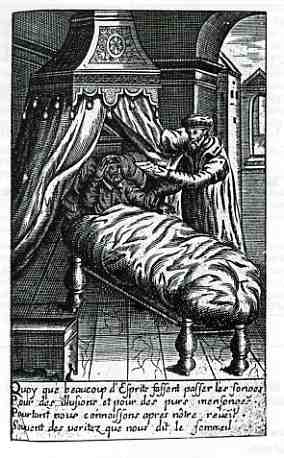
    This interesting and semi-bizarre image shows a doctor of magnetism (and necrologer and astrologer and several other things) conspiring at the edge of science and the heart of all things dark to adjust the dreams of the formerly sleeping man.  The patient is awakening and the doctor is doing, well, things that I don’t understand:  suffice to say that he was trying to assuage good dreams for the other man via the secrets of magnetism.

    The mysteries of sleep and the dreamworld were hotbeds of investigation from all sides, and there is a fairly deep publication record on the subject for the 1550-1700 period. This image comes from Le Palais du Prince du Sommeil, ou est enseignee l’Onriomancie autrement l’Art de Deviner par les Songes, printed in Lyon by Jean Pavhlhe in 1670, and written by the spectre-like M. Mirbel, whose history and biography are just about non-existent. 

    The idea of approaching sleep and dreams via magnetism is unusual even in the very unusual history of unusual ways of adjusting dreams–the interpretation of dreams is evidently closely related in mysterious and bendy ways, almost as convoluted and soft as the physical means used to induce them. 

    The history of big dreams and dreaming in general is far bigger than the issue of fixing them, and much paler, considering the vast range of imagery.  Jung (Memories, Dreams, Reflections), Havelock Ellis (World of Dreams), Freud (oy vey), Shakespeare (“we are such stuff…”), Leonardo, Joseph (and the Pharohs), William Blake, Solomon and of course Daniel, and then on and on into the night.

    Daniel’s
    dreams (as in The Book of Daniel) were gigantic and full, and there
    have been many others who have recorded their dreams in the history of
    literature and religion.  I must say though that the dream of King
    Prasenajit (the ruler of Kosala,  located on the northeast of modern
    Uttar Pradesh, India), a disciple of Buddha, had a dream in ten parts
    which troubled him greatly, and when you look at its elements you can
    see why:

    -Three jugs set in a row, one put against the other.
    The first and the last of the jugs are mutually exchanging the vapours
    of the liquids that are contained in them, vapours which never descend
    in the empty jug situated in the midst.
    -A horse that swallows the food concomitantly through the mouth and through the anus.
    -A tree full of flowers.
    -A tree full of fruits.
    -A man who is knitting a rope. Behind the man there is a sheep. The owner of the sheep eats the rope knitted by the first man.
    -A fox lying down on a bed made of gold, and eating out of golden vessels.
    -A cow suckling her own calf, against the law of nature.
    -Four
    oxen that arrive, bellowing, from the four corners of the horizon. They
    are rushing upon each other, in order to start fighting, but all of a
    sudden they vanish, right before clashing their horns together.
    -A pond surrounded by slopes. Its water is turbid in the offing, but clear near the shore.
    -A huge torrent, entirely red.

    This would give anyone pause, even more so if you were a disciple of the Buddha.  None of these images fit into my dream dictionary (especially the horse one), but perhaps they are deeply related to the times and not transferable over the centuries.  Which is an interesting way of looking at a particular time and understanding a bit of it that doesn’t normally sink into the public record–the expression of dreams might tell a little more about the time and place than about the person.  This sort of made-up historiographic (?) approach reminds me a little of snooping around old Domesday books and business/city directories, looking at the sorts of jobs that were common once upon a time and now slipped away into the tar pit.  So to with dream imagery?  Perhaps like just about everything else, dream images may well have a shelf life.  (I was going to reference Twinkies as an example contrary to this, but I understand that a new something-or-other has been added to it/them to make it so that these fine products will actually go bad after a while, rather than like before, when it could be counted on the cockroaches nibbling on them into eternity following the death of Dr. Strangelove.  Perhaps a former-chemist/librarian out there knows what this ingredient is and will share the knowledge?)

                                                                                             :
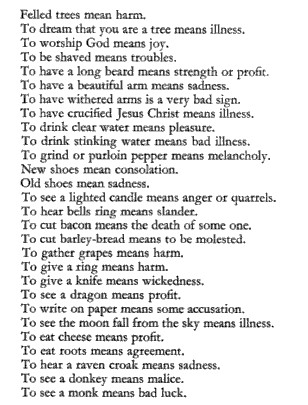
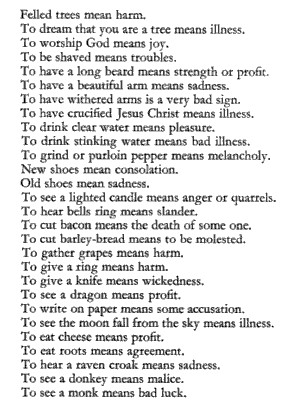
    Blog--magnetic dreamsFor example, this 18th century directory for what dream images may
    “mean” are mostly foreign to the general experience, I would say.  On the other hand, to attach meaning to the importance of dreaming about stealing pepper may be a little quixotic, but much less so than interpreting it as a harbinger f melancholy.  I know that to even mention the business of pepper theft in 1650 tells us a lot about its importance and why it would’ve been stealable and can tell us something about the foods of the time, trade, commodities and such.  Thinking about it in terms of a predictive element may not be as fruitful…

  • There was a Rubber Lady in a Rubber Kitchen in a Rubber House….

    JF Ptak Science Books LLC Post 347
                                                                                                               
    000-ebay--Oct 30 rubber floor965

    After 15 or 20 centuries of development of rubber, including merciless horrors and peonage and slavery and brothel farms and whore cities in the depths of the Amazon, and it’s the spread of its development worldwide, who among the hundreds of thousands, millions, of people would’ve foreseen the development of their precious commodity into a rubber kitchen?  Perhaps it is sort of like imagining Johnny von Neumann or Chuck Babbage reacting to the use of their precious inventions into a platform for entertaining children with judged performances of stealing cars and killing aliens? 

    000-ebay--Oct 30 rubber floor966

    Those feelings, I guess, are unknowable, though the gentle people in
    those folks might’ve given it all a “of course”, world-weary nod of
    relinquishing approval.  Or not.

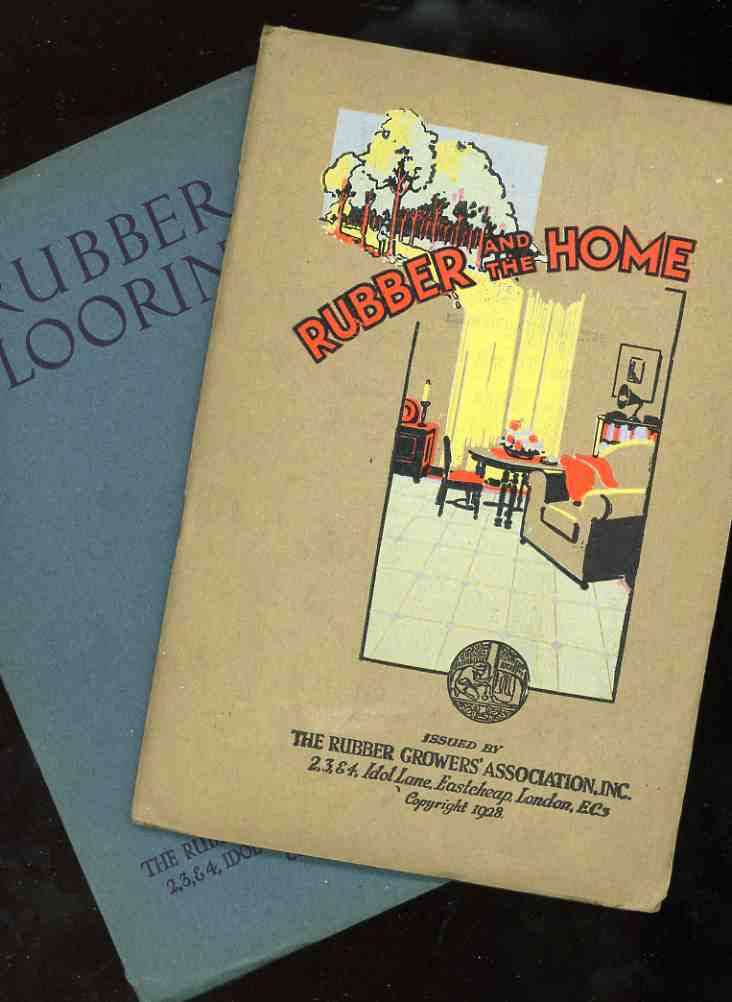
    But right before the mass of rubber was produced synthetically, and
    just as the naturally-produced rubber farms had spread far across the
    globe 9and diminishing the former leader Brazil’s share of total output
    to about 15%, the London-based Rubber Growers association produced
    these two (below) pamphlets extolling the endless uses of their
    product.  And I really mean ‘endless”, as they propose in these pages
    oh-my-rubbery-brothers the rubber house.  Not that the exterior of the
    house is made of rubber, but just about everything inside was.
                                                                                                               

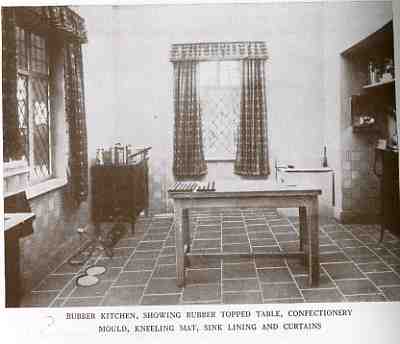
    000-ebay--Oct 30 rubber kitchen968

    The rubber house had rubber floors, and rubber floors cushioned rubber
    tables and chairs, and the rubber chairs cushioned rubber seat pads,
    and the rubber seat pads cushioned (yes) rubberized derriere’s encased
    in rubber pants. And then things spin a little out of control, like in
    the kitchen, where the floor, table top, confectionary mould, kneeling
    mat, sink lining, hardware cushions and curtains (!) were made or
    rubber.  (This is only the big-item list, which doesn’t bother with the
    rubber hoses, anti-splash nozzles, wringer rollers, ice cube trays,
    sink cozies, rubber sponges (!), brushes, mitts, teapot stands, and the
    myriad of small, loseable kitchen aids—those are on another list. The
    kitchen apron, by the way, is just one of many rubber clothing items,
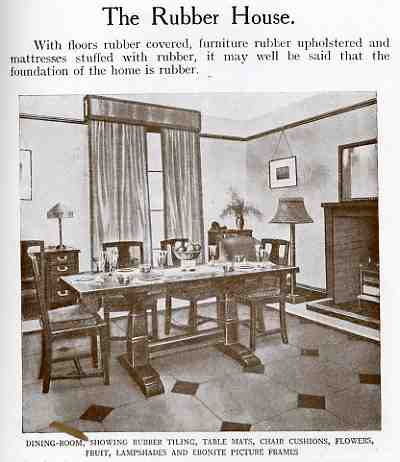
    “made so pretty and delicious that it is a delight to wear”.)  Rubber
    moves into the dining room in a big way, covering the floor, table top,
    seat covers (with cushions stuffed with rubber), lampshades, flowers,
    fruit “ebonite picture frames”, drawer pulls, fireplace implement rests
    (?), bulb bowls, egg cups and so on.  The nursery has the same sorts of
    items, with the addition of wall paneling, extra cushioning around the
    rubber crib, mattress and mattress stuffing, and, of course the toys.                                                                                              

    000-ebay--Oct 30 rubber dining room969

    And so the wish of the Rubber Growers’ rubber house is stated and soon
    passes into history, along with the stainless steel house, the elevator
    house, the wind-driven house, the house-on-wheels, and the rest.  I
    think I reached my limit pretty early on with this, but definitely
    passed the point of no return with the “chic variety” of rubber hats
    for ladies to match their “dainty rubber parasols”.

    000-ebay--Oct 30 rubber964


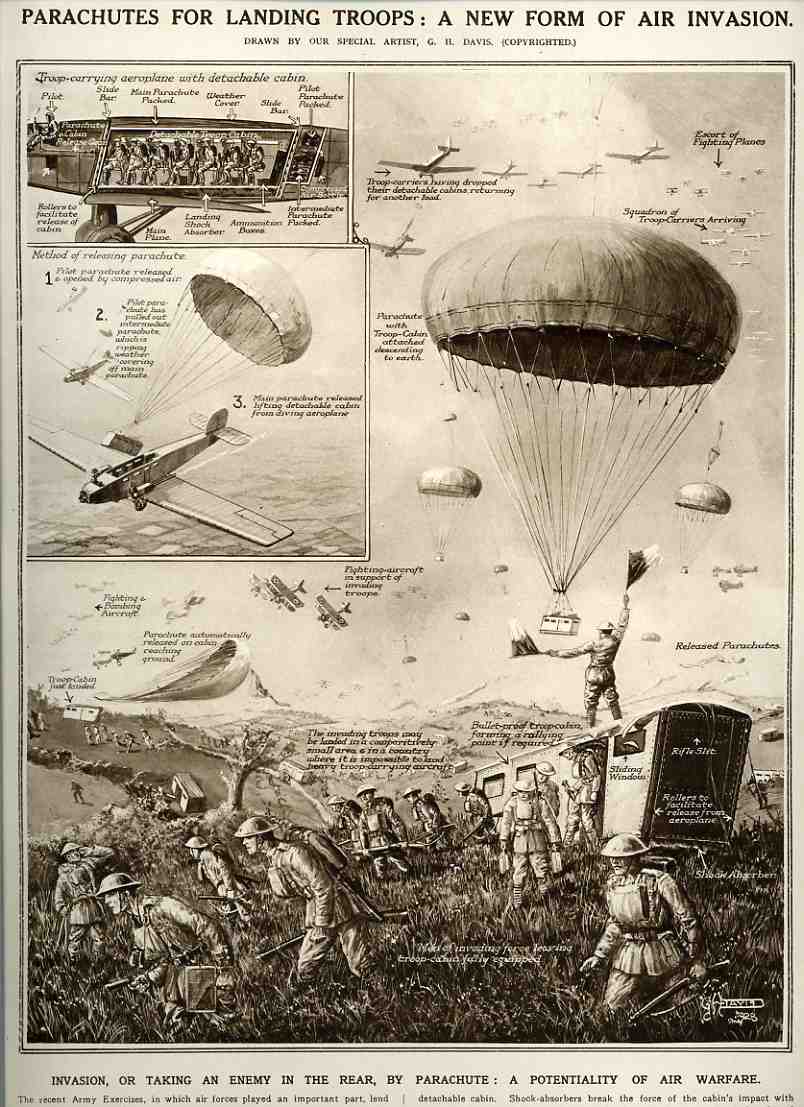
  • UPDATE: Dropping Boxes Filled With Soldiers: a Bad Technical Idea but a Great Strategic One, 1950

    JF Ptak Science Books LLC  (added content to Post for 15 September)

    00-blog--Oct 29 dropping soldiers954
    I happened on this image from the front cover of Popular Science for November 1950 and recognized the idea instantly.  I posted on an earlier version of this idea from 1928 and placed it firmly in the BAD IDEAS Department of this blog.  The update from 1950 is a little improved, but, well, not by that much.  At least this canister leaves the clutches of the plane safely, though from the look of things it seems as though it might not want to land very nicely. 

    Blog-1-sept 15paratrooper553

    ·Posted by :

    ·in:

    — —

  • Atomic Bomb Darts–Kids’ Games from the 1950’s

    JF Ptak Science Books Post 339

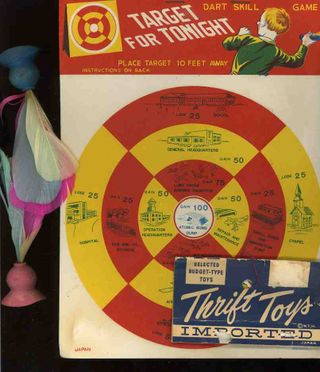
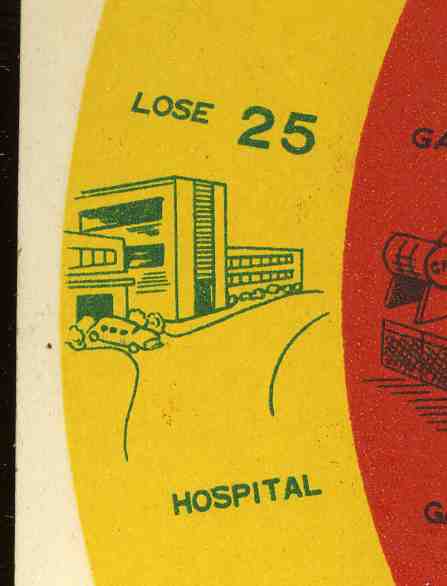
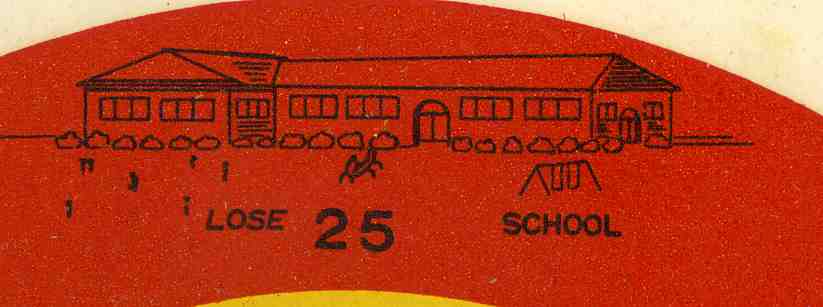
    Outside of duck-and-cover routines and other schemes for teaching children the survivability of nuclear holocaust, the approach for installing nuclear-think in the psyche of the young was through games. One such game was this cheap, affordable-by-all bombing game, “Target for Tonight” (a “Selected Budget-type Toy” by “Thrift Toys, Imported”), in which kids would use their “Atomic Darts” to reign terror over foreign lands.  But be careful!  Missing the primary targets and hitting something in the outside ring will cost you points!  If you bombed the hospital, school or chapel, you’d lose 25 points; if you hit the “civilian city” you’d get 50 points docked from your total.  Of course the game goes on no matter how many points you lose, just so long as you hit something positive and whose point add up to a total of 175. 

    00-blog-Oct 27 atomic926

    00-blog-Oct 27 atomic det hospital927

    The bullseye of the game is the “Atomic Bomb Dump” (an expression I’ve never seen before) at center.  Since it would be relatively easy to score 175–you could do it with four or five decent hits–the makers must’ve assumed that there would be plenty of collateral damage taking points from the total, otherwise the game would be over in two rounds and how much fun would that be?  So I guess that the message in this medium would be that into every winning effort some considerable unhappy rain must fall. 

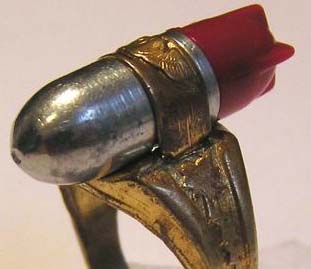
    00-blog-Oct 27 atomic det school928 I guess too that the kids playing this game could’ve been throwing their atomic darts wearing their Lone Ranger Atomic Bomb ring.  I’m no toy expert, but I cannot remember any other children’s jewelry from before 1960 (this ring is from 1946) using such a graphic depiction of The Bomb for casual wear.
      I’m also fairly positive that there must’ve been a good, causal bit to go along with “Atomic bomb” and “the Lone Ranger”, though I can’t think of what would connect the Western hero with the a-bomb.

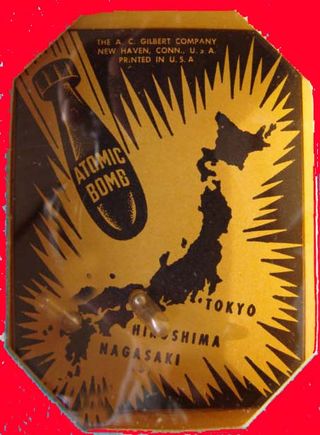
    Another no-holds-barred toy appears in the form of this manual dexterity game from the late 1940’s–the child was supposed to maneuver the three marbles into the hole/position at Hiroshima, Nagasaki and Tokyo.

    Did I mention that the “Target for Tonight” game was made in Japan?Lone_Ranger_Ring

    Atomic bomb marble


  • Oliver Byrne’s Euclid, (slightly) continued

    JF Ptak Science Books LLC

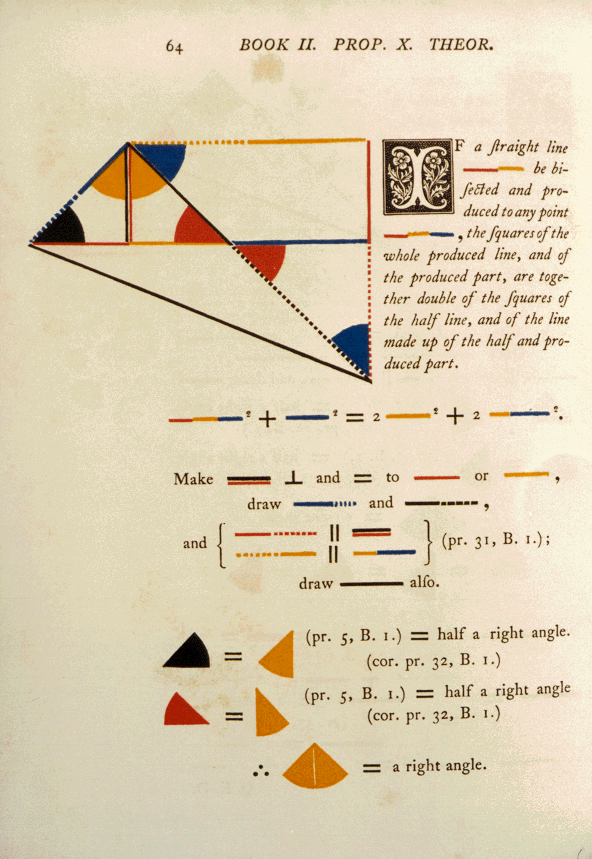
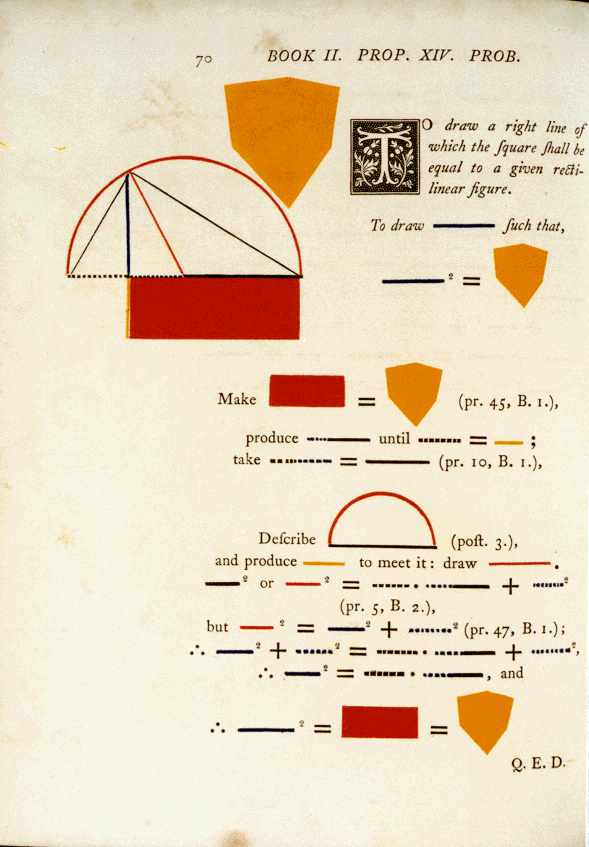
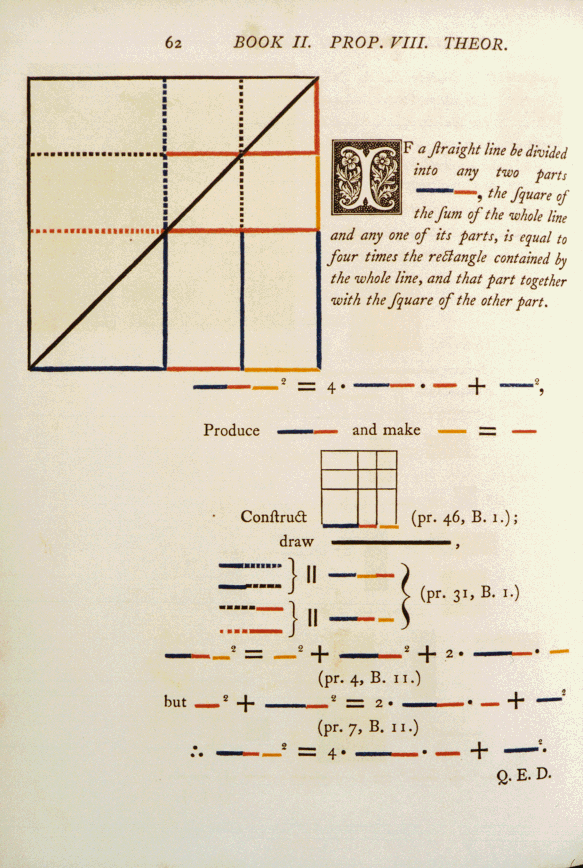
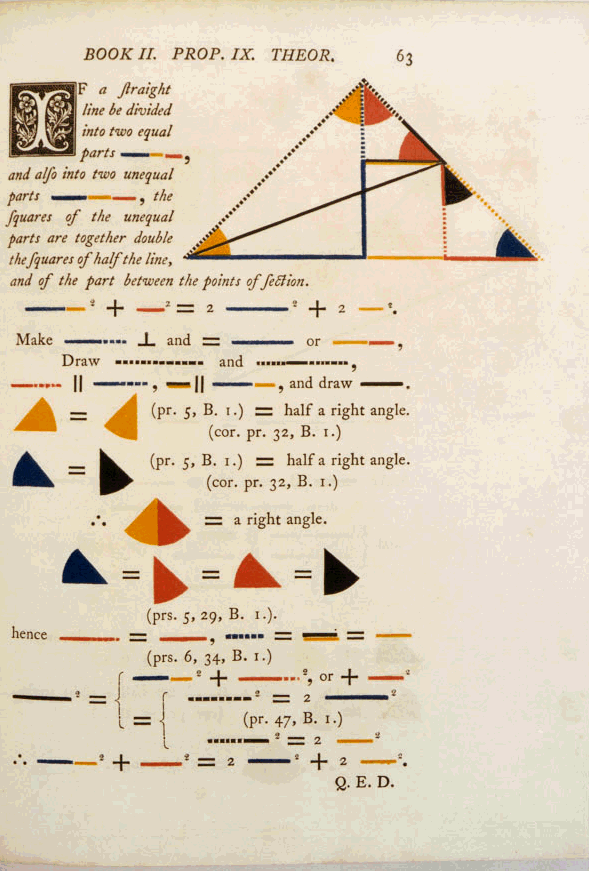
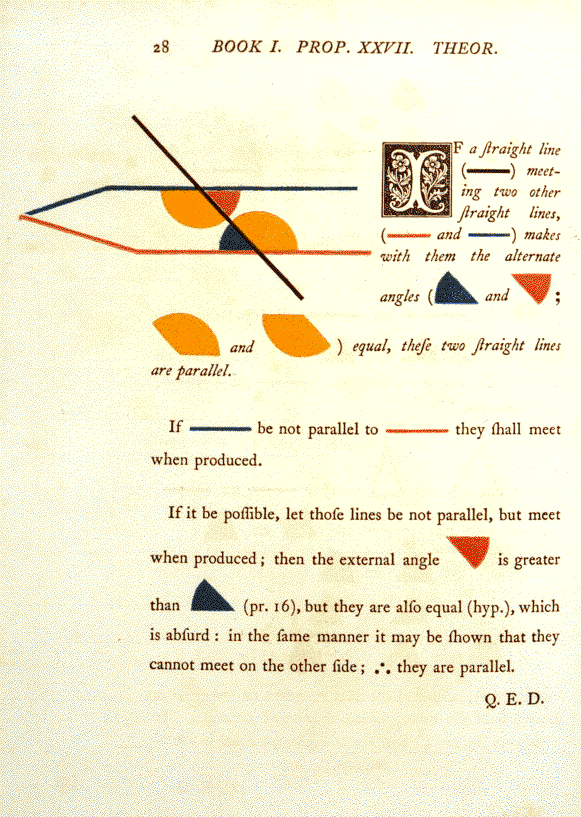
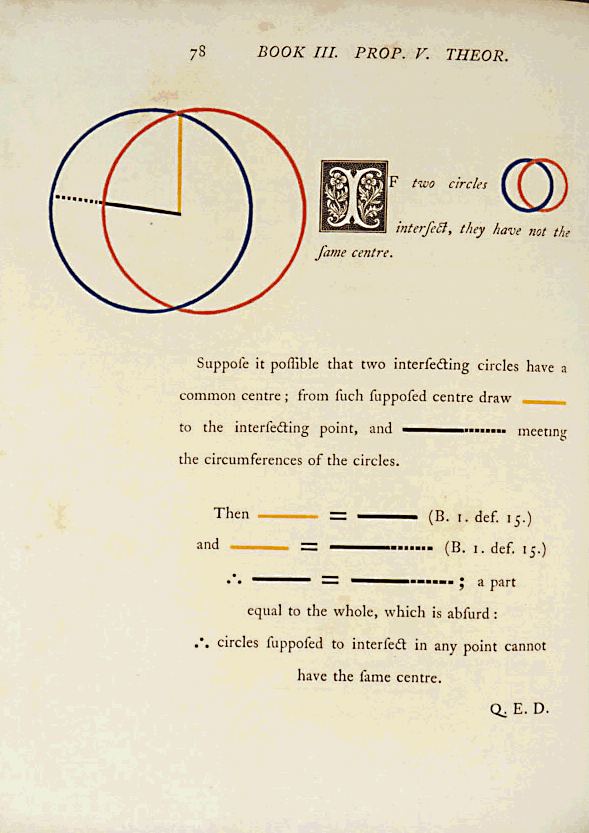
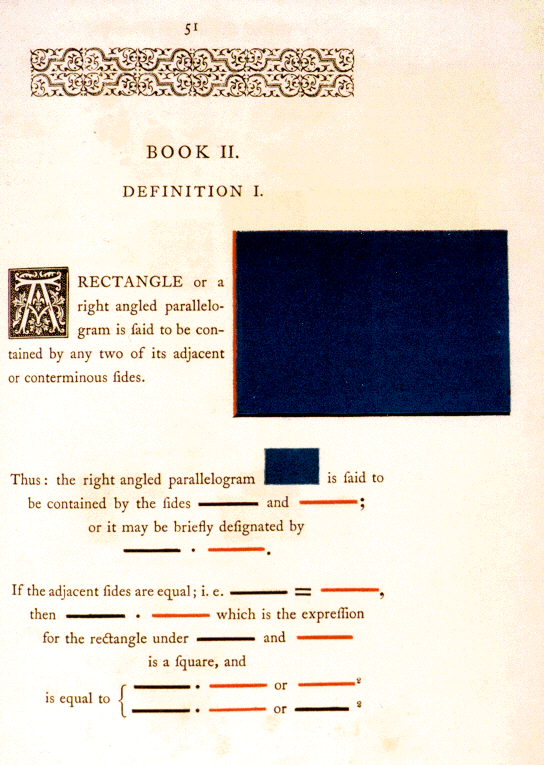
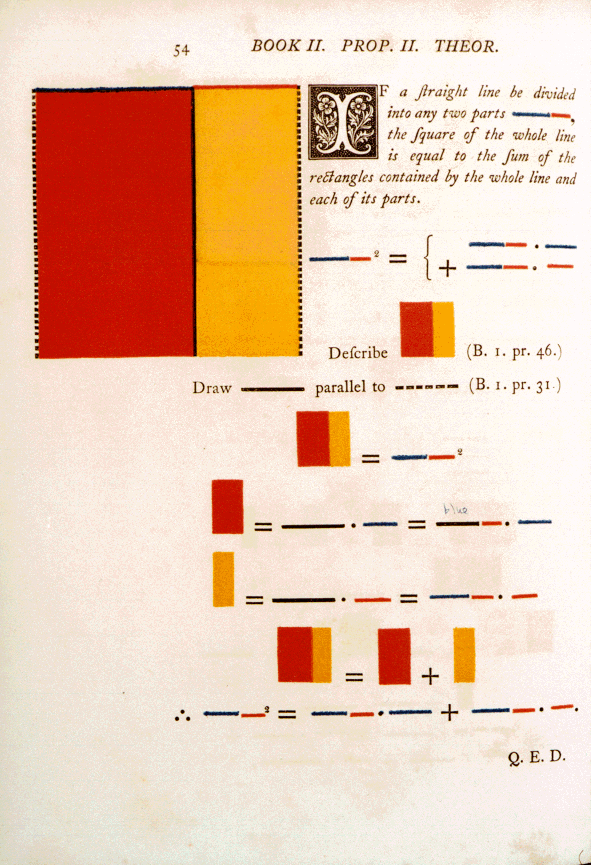
    Here’s a few more examples from Oliver Byrne’a unique attempt at transliterating the propositions of Euclid via color.  As I said in an earlier post  the attempt may not be a step in the right direction (and by “right” I mean “correct”) but it is, beyond doubt, beautiful–yet another example of Beautiful Wrongness.

    The entire work by Oliver Byrne’s may be found here

    Byrnews II.10

    Byrnes II.14

    Byrnes 11.8

    Byrnes II.9


    Bryne euclid i.27
     
    Byrne euclid iii.6

    Byrne euclid def


  • Amelia Earhart: Her Physical Disappearance vs. Lindbergh’s Moral Vanishing

    JF Ptak Science Books   Post 328

    Blog--earheart

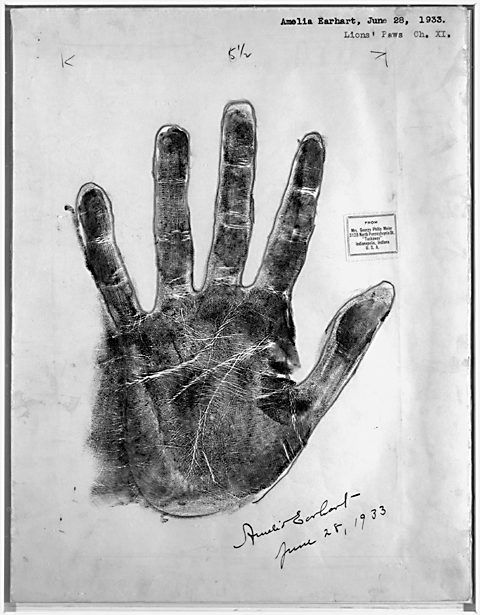
    [Image source: “Amelia Earhart’s palm print and analysis of her character prepared by Nellie Simmons Meier.” June 28, 1933. “Words and Deeds in American History: Selected Documents Celebrating the Manuscript Division’s First 100 Years”,  from the Library of Congress.]

    “KHAQQ calling Itasca. We must be on you but cannot see you…gas is running low…”

    This is I believe the last communication between Amelia Earhart and the rest of creation, as she went flying into the oblivion on low fuel, 2 July 1937.  She was 22,000 miles into her around-the-world trip with her engineer Fred Noonan in a Lockheed L10 Electra, with 7,000 more to go, almost all of which were over the Pacific. That was the last of her, forty years old and world-renowned, and then shrouded in a terrific mystery, and declared dead after massive searches two years later in 1939.  She owned many “firsts” for women in the field of aviation, but still couldn’t seemingly stake them to her own name, burdened with the sobriquet of “Lady Lindbergh”.  It was true enough that being historically coupled with Lindbergh, who was seen by many as the greatest aviator of his day, was a vast compliment; it would have been more complimentary yet to refer to Lindbergh as “Sir Earhart”.  Amelia did, after all, accomplish more overall than Mr; Lindbergh; plus Ms. Earhart did not philosophically spill over into the fascist sphere as did Lindbergh1, who was just a downright embarrassment with his opinions on the war, Hitler, National Socialism, fascism, and the like.

    But I digress.  This image2of her capable and attractive hand just has the quality of disappearing, even though it is right in front of your eyes.  Stare at it long enough and bits of it will go….

    Notes:


    1. Lindbergh’s story during the pre-war period to Pearl harbor is very problematic for people who admire the man for his aeronautical feats; I imagine that they separate his philosophy from his gained famed much in the same way that Poundians concentrate more on that fascist anti-semitic poet’s early years than his treasonous 1935-1945 decade.  It remains terribly visible though that the anti-intervention, America-Firster, race conscious, Germanophile Lindbergh had so much going on in his confused head that it lead even Franklin Roosevelt to think of him as a traitor. (
    Roosevelt said to Treasury Secretary Henry Morgenau in May 1940, “if I should die tomorrow, I want you to know this, I am absolutely convinced Lindbergh is a Nazi.” ) Once America did get into the war, finally, on 8 December 1941, Lindbergh wholeheartedly supported the war effort.  Still it is hard to forget his years of earlier actions and statements and political rallies that called for American appeasement with the Nazis and hi semi-blind admiration for the new Nazi nation.  He wasn’t a fan of Hitler’s, but he did have just very soft pre-1942 criticisms of his actions.  Kristallnacht, almost 70 years ago today, for example, brought out no condemnation from Lindbergh.   He confided to his diary: “I do not understand these riots on the part of the Germans,” he wrote. “It seems so contrary to their sense of order and intelligence. They have undoubtedly had a difficult ‘Jewish problem,’ but why is it necessary to handle it so unreasonably?”  It seems that there should have been a bit more than pursed lips coming from Lindbergh on this occasion, but there wasn’t, even to himself.  There would be another three years of anti-Jewish and other horrific and morally repugnant actions
    from the Nazis, but they all took a giant goosestep back from his principal aim of keeping  America out of the war and being strongly anti-Communist.  Pat Buchanan recently and bizarrely—even for him—defends Lindbergh’s stand during this period as being deeply patriotic.  It is a deeply unreasonable and a bloody mess of historical thinking.

    2. The photostat was made on behalf of a quack  palmist who did all sorts of interpretations of the philosophical chinks in her skin’s armor.  It isn’t worth talking about.


  • Naming Things; Names Good and Bad

    History of humans may boil all the way down to the history of
    naming things. Sometimes the naming is good, sometimes not. Moby-Dick sounds a
    whole lot better than The Whale; Ulysses and The Odyssey are not really
    inspired titles for fantastic books, nor is The Heart is a Lonely Hunter, or The
    Recongitions
    for that matter. The Bible doesn’t say much about the book, and
    Love in the Time of the Cholera does; why You Should Refrigerate Food does tell
    you what’s inside a basically empty book, and Catch-22 does not.

    Standard_model_chart

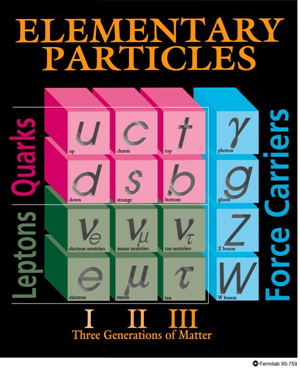
    The Standard Model (with quantum chromodynamics folded into
    it)  is a very bad name for something
    that describes the world of elementary particle physics;  Democritus’ “atom” has stood the test of 24
    centuries and is pretty, while muon (god help it) will survive by sheer fits of
    agony.  QED and ACD are good initials for
    big things, but big things like giant laboratories tend to have pretty bad acronymic
    names (SLC, CERN, DESY). 

    I just wrote a post about the creation of the binomial
    naming grid of Linnaeus, which was one of the greatest naming inventions of all
    time—it performs an organizing principle that created other organizing
    principles. 

    Sometimes the names of things outlive their usefulness, and
    come full circle, sometimes providing an unintended and ironic reminder of untimely
    pasts.  In

    India there’s   Lodhi Road,
    Mughal Gardens
    and Aurangabamnd; we have our own in this country in places like the Jefferson-Lee
    highway and Fort Myer’s
    (Virginia)
    Mosby Gate.

    The massiveness of this idea is just overwhelming—all I
    really want to do here is get to the naming of a Ford Motor car.  And the namer, in this case, was the poet
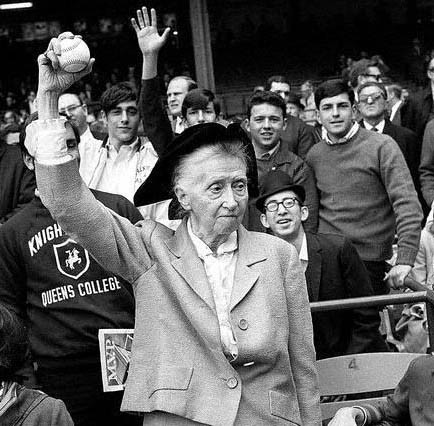
    Marianne Moore.  (I’ve always liked her,
    and her poetry, and her love for Mickey Mantle and baseball and Muhammad Ali
    and so on)  Ford found itself a little behind
    the times back there in the autumn of 1955, trying to figure out a new,
    with-it, tiger-whipping name for its new $250 million dollar car from their
    Special Products Division  They had
    something like “Firebird” in mind—unfortunately for them the name was already
    taken.  David Wallace, the head of Ford,
    wanted something elegant and fleet, and to that end contracted with the great
    poet Ms. Moore to come up with one.

     Marianne_moore

    Ms. Moore had a dry sense of humor and did submit a number
    of entries, though none were successful, and probably none were intended to
    be.    After looking at sketches and drawings of the
    new car, she came up with “The Ford Silver Sword” almost right away (named
    after a flower she said that grew only on Mt. Haleakala
    above 10,000 feet or some such thing).  She then submitted a
    number of others  including the “Patelogram”,
    the “Mongoose Civique”, and the “Utopian Turtle Top”, and then many many more.

    Mr. Wallace came to realize that Ms.Moore was having a bit of fun with his
    company, and sought to terminate their relationship, with some aplomb.
    He wrote:

     Dear Miss Moore,

    Because you were so kind to us in our early days of looking
    for a suitable name, I feel a deep obligation to report on events that have
    ensued.

    And I feel I must do so before the public announcements of
    same come Monday, November 19.

    We have chosen a name out of more than six thousand-odd
    candidates that we gathered,  It fails
    somewhat for the resonance, gaiety, and zest we were seeking.  But it has a personal dignity and meaning to
    many of us here.

    Our name, dear Miss Moore—is Edsel.

    I’m sure that Ms. Moore must’ve had a good, solid laugh on
    that one.

    ·Posted by :

    ·in:

    —

  • Gulf Stream Wealth Predictor, 1939–Outsider Logic from the Inside

    JF Ptak Science Books  Post 320

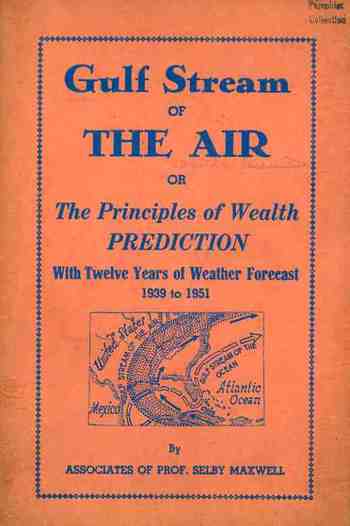
    00blogoct_15gulf_stream864 I’ve found many remarkable statements contributed by seekers and the curious whose efforts have found their way into print and then into my Naive Surreal and Outsider Logic pamphlet collections.  In the ungainly-titled Gulf Stream of the Air or the Principles of Wealth Prediction with Twelve Years of Weather Forecast 1939 to 1951 (printed in 1939), written by an unnamed group (!?) called the “associates of Prof. Selby Maxwell”, the title was good enough to guide this pamphlet to its just reward.  Just before adding it the the hoard I opened the pamphlet at random and found this sensational “what if” sentence: 
    “If the high Plateau and the Rocky Mountains did not exist there is little doubt that Mexico and our Western States would not differ appreciably…”

    Wow.

    Mr. Maxwell was indeed a real meteorologist, and perhaps this Bourbaki-like crew absconded with his good name into the bleak night of weather wealth, leaving sentence fragments like the one above in their wake.

    As bizarre as it is though this might be a fantastic way of getting the attention of a group of kids in a classroom.  Its all fine and well to classify this as “bizarre”, but what are the components that make it so?   Why is it bizarre to entertain such a thought, and how could it possibly be that it wouldn’t affect much and what would the other consequences be of not having the formation of the Rocky Mountains take place, and on and on.  It is junky in its way, thinking like this, but I’ve got to admit that I’ve  never thought about this situation before; and in its own way, the statement is fascinating in its turn-right-to-loosen-left -to-tighten way. 

    ·Posted by :

    ·in:

    —

  • When Things ARE Better in Glorious Black & White: Color Detonation and the Invention of *More* Primary Colors, 1942

    JF Ptak Science Book Post 316

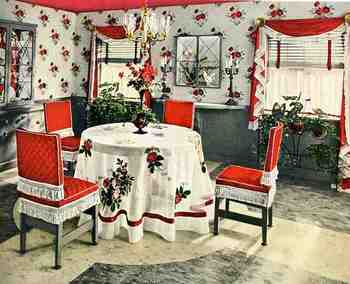
    Well: this is a variation of yesterday’s post on the two opposite edges of color in oddly-applied scientific/technical manners. In unwittingly responding to the question “when is color-use bad?”, the answers were found in these room decorations from 1942, all of which come from a pamphlet entitled Ideas for Old Rooms and New, extracted from the mind of  Hapel (?) Dell Brown.  It is a tidy book with ideas that are anything but tidy;and  as you scroll down you’ll see that the room solutions suggested by Hapel Del are anti-tidy; clutterous (no, not a word but could be).  Everything about these creations speaks to the annihilation of visual resting places; everything seems to be an affront to the concept of causal emptiness.  The weird thing is that there aren’t very many objects in these rooms at all (at least comparing these rooms from where I’m sitting)–the visual complaints seem all rocketing from the abuse of colors found in the fabric of the furniture and walls and floors and window treatments.  The eye gets no rest–and as a matter of fact, the cones of the eyeball are impaled on the rods as a result of the author/decorator  desperate attempts to invent three more primary colors. 

    00blogoct_14color848

    Believe it or not we don’t really get the full flavor of the color cacophony because the floors in these picture look sort of benign, fading away into themselves–which they are not, according to  the description in the text, because they are all high-gloss linoleum rolls or tiles (“efused [sic] with deep wondrous color”.  And that means not only are these floors adding sheen and color to the rest of the incredibly colorful–an effect fairly lost in these photos–they are also cold.

    One thing that I haven’t pointed out in this peon to syrupy/pastel-y/techno-gelatinous-chromodrama is that they were all done in response to a re-decoration of a perfectly nice-looking house, with all of the former “bland” colonial-style rooms presented in glorious black and white.  I’d rather live in Maison Noir than in this happy nightmare.