A Daily History of Holes, Dots, Lines, Science, History, Math, Physics, Art, the Unintentional Absurd, Architecture, Maps, Data Visualization, Blank and Missing Things, and so on. |1.6 million words, 7500 images, 4.9 million hits| Press & appearances in The Times, Le Figaro, Mensa, The Economist, The Guardian, Discovery News, Slate, Le Monde, Sci American Blogs, Le Pont, and many other places… 5000+ total posts since 2008.

Category: Bad Ideas

  • Blank and Empty Things XXV: Magnetizing Thought

    JF Ptak Science Books LLC Post 398

    0-blog---Nov 19blank083

    The imagines of this “empty man” (25th in a series on Blank and Empty Things in this blog)
    is taken from one of the physio-electrical works of Auguste Forel
    (1842-1931), a eugenicist, sexologist, socialist, myrmecologist,
    neuroanatomist, shrink, social moralizer and member (at the very end)
    of the Bahai’i faith…and also a man very much taken with himself.  I
    don’t much like him.  (Outside of his racist views and semi-bizarre
    socialist theories, he managed to politically opiate a four-volume work
    on ants with vague wrappings of political theory and ant behavior. 
    Freud liked him. Case closed.)

    I’m not so sure about what exactly these diagrams were supposed to
    illustrate in the real-life of Forel’s scientific experience, and I
    don’t care that much.  What I do like is the imaginative taste it
    implies, this blank-expressioned person waiting for the electricity to
    do its work, giving him/her an idea, helping whatever currents exist
    along the hemisphere of the brain to deliver its electrical-best. 
    All-in-all, if explanation was removed, the images would perfectly
    depict a person devoid of thought; or, a person whose thought was being
    directed.  Plus a myriad of other things; base of it all though is that
    there is a fair amount of blank/empty experience going on here.


  • History’s Heaviest Bad Idea: Maginot, the Million Ton Line in the Sand

    JF Ptak Science Books LLC  Post 396

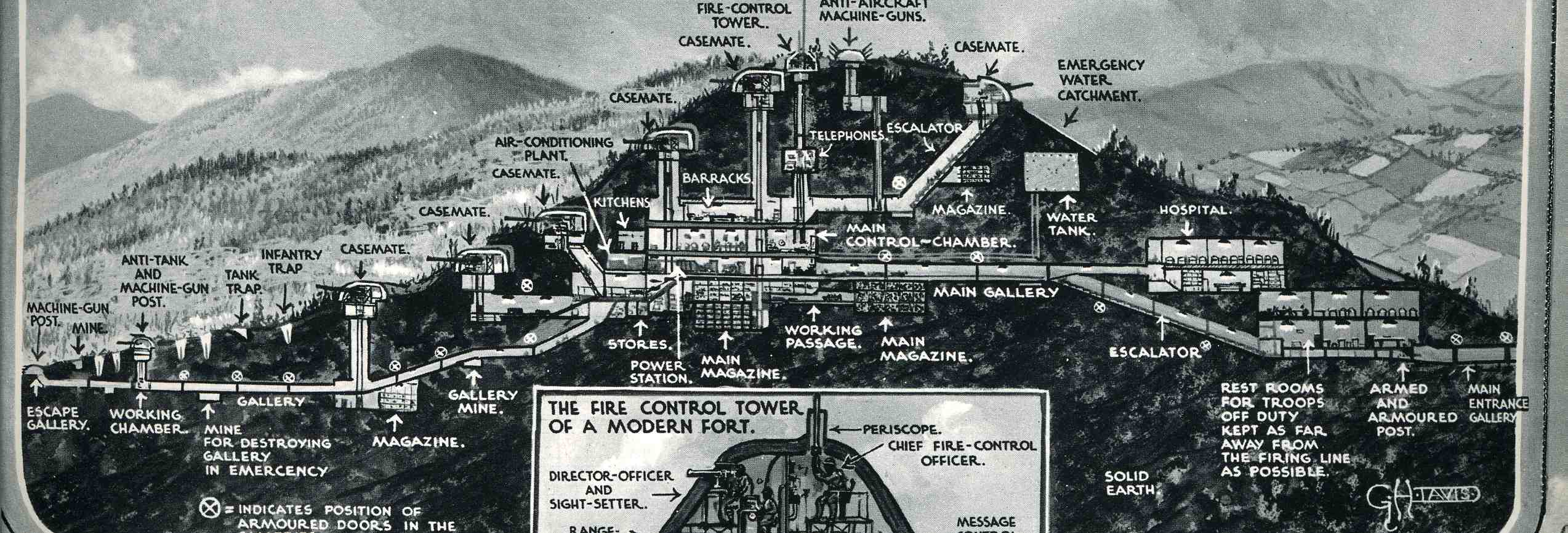
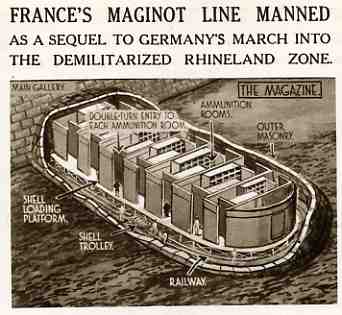
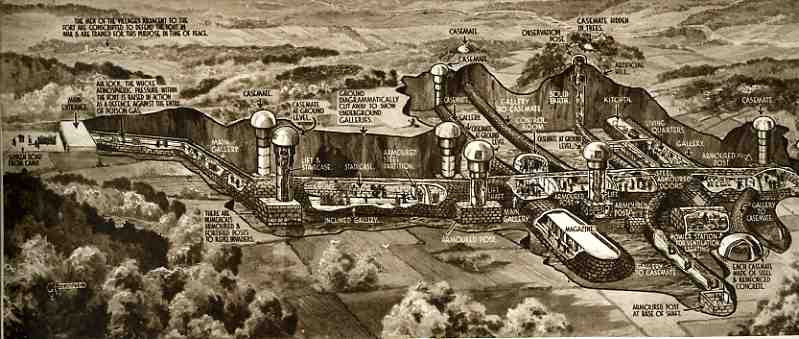
    Poor Andre Maginot–his is the name behind what must be the heaviest bad idea in history–or at least among bad ideas that can have weight.  The Ligne Maginot, or Maginot Line, was probably better referenced as the Maginot Hole, as once the advance came from the East, the “Line” was completely and totally ineffectual, and the soldiers in the miles of tunnels and fortifications became, simply, men in a hole.  The thing about the Maginot Line was that it pointed to exactly the spot where the French Army could be found; therefore, the Germans avoided it. 

    0--blog---Nov 24-maginot111 

    It is difficult to believe that when all of this concrete was being poured and tunnels being dug along the German border between Switzerland and Luxembourg between 1929 and 1936 that someone, somewhere in France wasn’t reading the Illustrirte Zeitung, watching the growth of the Luftwaffe. 

    0--blog---Nov 24-maginot112

    However, as much as that should’ve stopped this massive and insane project, it was not the airplane that buried the buried defenses–it was indeed the feared tanks.  But the Panzers of Heinz Guderin and Erwin Rommel didn’t go through the Maginot Line, they went around it, passing through the supposedly impassible  Ardennes.  Case closed.  Paris gone.

    At least someone in France should’ve been reading their Clausewitz: “If you entrench yourself behind strong fortifications you compel your enemy to seek a solution elsewhere.”

    0--blog---Nov 24-maginot109

    But the drawings are pretty.  And if you moved everything back in time 30 years the idea would’ve made more sense. 

    0--blog---Nov 24-maginot108

    ·Posted by :

    ·in:

    — —

  • The $6,000 Ham Sandwich and the Ills of Labor Unions–the Republican Failure of 1936

    JF Ptak Science Books LLC  Post 393

    0--blog---Nov 26 little weird136 

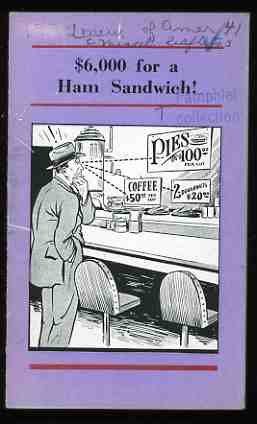
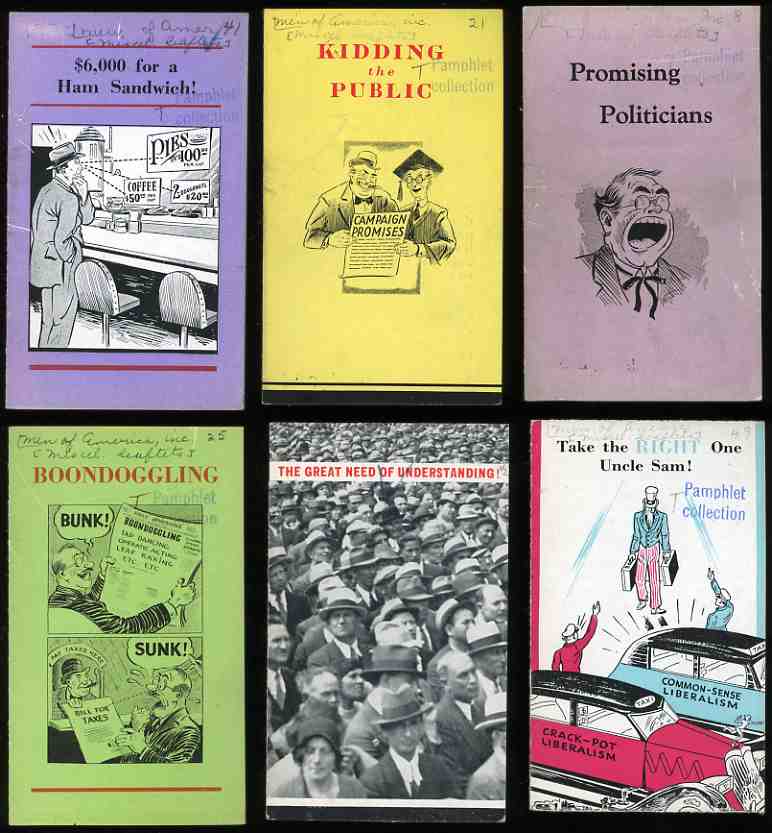
    These little (3 by 1.5 inches) pamphlets, all published in 1936 by a group called “Men of America, Inc” of Chicago,
    took a weird and dislocated aim at government (read “F.D.R.”) policies,
    supporting an anyone-but-him position for the election of 1936.  Or so
    it seems.  Its actually a little hard to discern the political needs
    and  desires of the group beyond defacing the New Deal programs and the
    vast increases in federal spending on public programs; there’s nothing
    positive that they can seem to say about advancing another platform. The little pamphlets attack the newly created broad social net of social security, and questions the efficacy of labor unions.  Allot of this sounds surprisingly like the campaign rhetoric of Alf Landon, (1897-1987) the Kansas governor (1932 and 1934), oilman, millionaire and Republican who ran against Roosevelt in the spectacularly lopsided election of 1936.  After that November Landon even lost his own shadow; Roosevelt completely and utterly defeated the republicans by an electoral landslide of 523 to 8, Landon sweeping like a cold chill wind in his victories in Maine and Vermont.  Actually to be fair Landon scored 38% or so of the popular vote, but the country wound up being almost entirely blue in the electoral map.

    I’ve included these pamphlets because of their quaint/stubby/rounded political imagery, a style once extremely popular with newspaper cartoon journalists (and baseball writers) in the 1920’s and 1930’s, and then almost completely gone (except for Gasoline Alley) by the start of the American World War II. 

    0--blog---Nov 26 little weird135


  • “Write for Dollars and for Sense”–a Bad Twist and Worse Advice for Authors, 1939

    JF Ptak Science Books LLC   Post 392

    0--blog---Nov 25write into money126

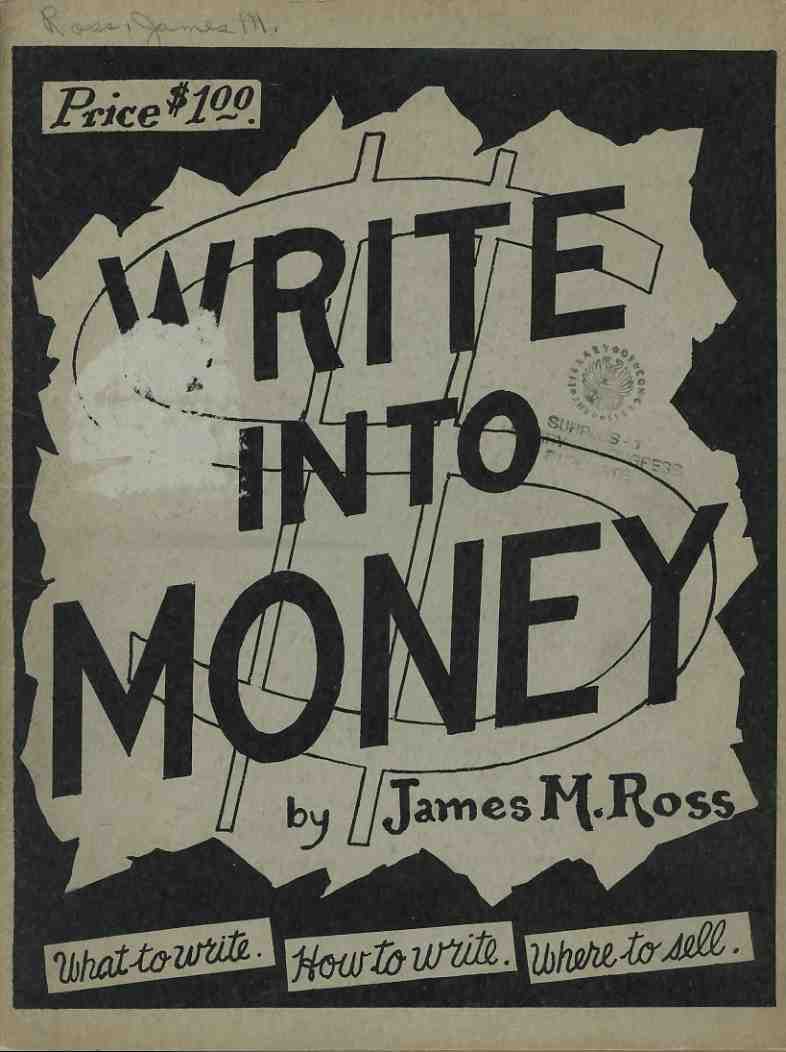
    A quickly-found pamphlet offers a rejoinder to yesterday’s post on making fistsfull of dollars selling poetry:  selling prose.  The idea is obvious, but the cover isn’t, and the ideas behind the idea of selling prose are anything but common, though they are uncommonly bad.  The very often self-referenced author of this bit, James M. Ross, writes his way towards the heart of every scribbling wanna be, offering the tines of broken plastics forks and other charitable possibilities and false hope about how and where to sell your sweaty work.  The publisher, “The House of Little Books” at 156 Fifth Avenue (a lovely 13-storey building built in 1895), brought out an oversize and skinny (and unpaginated) effort in Mr. Ross’s work, publishing the thing in 1939.  I can’t imagine that it did many people outside the author much good, though it may have made an interesting prop under-the-arm prop for the subway ride home after work. 

    Mr Ross was a writer of considerable experience–he claims, remarkably, that he was the “special correspondent” for a (listed) 50+ newspapers, plus the author of many plays and pamphlets and other tearsheets–though it really doesn’t bolster the gruelly advice that he offers to the dreaming writing reader.  Most of the advice is for selling little pieces to newspapers, or selling tips and leads to newspapers, or at least telling where reporters may find a story with the hope of reward coming at the end.  All of which doesn’t really sound like writing per se to me. Then again, the pamphlet is actually well written.   Chapter One, for example is entitled, incredibly, “Where You Live Does Not Matter”, and makes the case for fame finding the writer no matter where the writer lives.  Ross makes the case for various editors and owners of the NY Times having been small town boys–true enough, but they didn’t actually RUN their business from Chattanooga.  They moved away.  To New York City.  Ross forgets that part, and mentions a few other famous small town writers to bolster his point:  Roy Howard, Edna Ferber, Fanny Hurst, Irvin Cobb; though Edna and Fanny and Irvin didn’t stay small for long.  Ross also mentions the dramatically- and difficult-to-say-three-times-fast named Westbrook Pegler (try it!), who I think started in a small town and stayed there.  Not that there’s anything wrong with small place.  I live in Asheville NC for crying out loud, so I’m not having a poke at the small experience–its just the name of the chapter and the logic of the writer that I’m having a run at. 

    0--blog---Nov 25write into money127

    Chapter Two doesn’t get much better:  “Where is News?”.Perhaps if
    the “is” was italicized the sub might’ve made a little sense. Chapter
    Three follows close by on the heels of incredulity:  “Many Newspapers
    Pay for Tips” is a claim that I’ve not heard too often; but for Mr. Ross to make the claim that someone could make a living doing this
    stretches the truth a bit.  “As has often happened, items you telephone
    in will finally be accepted without question and your pay check will
    come along.” 

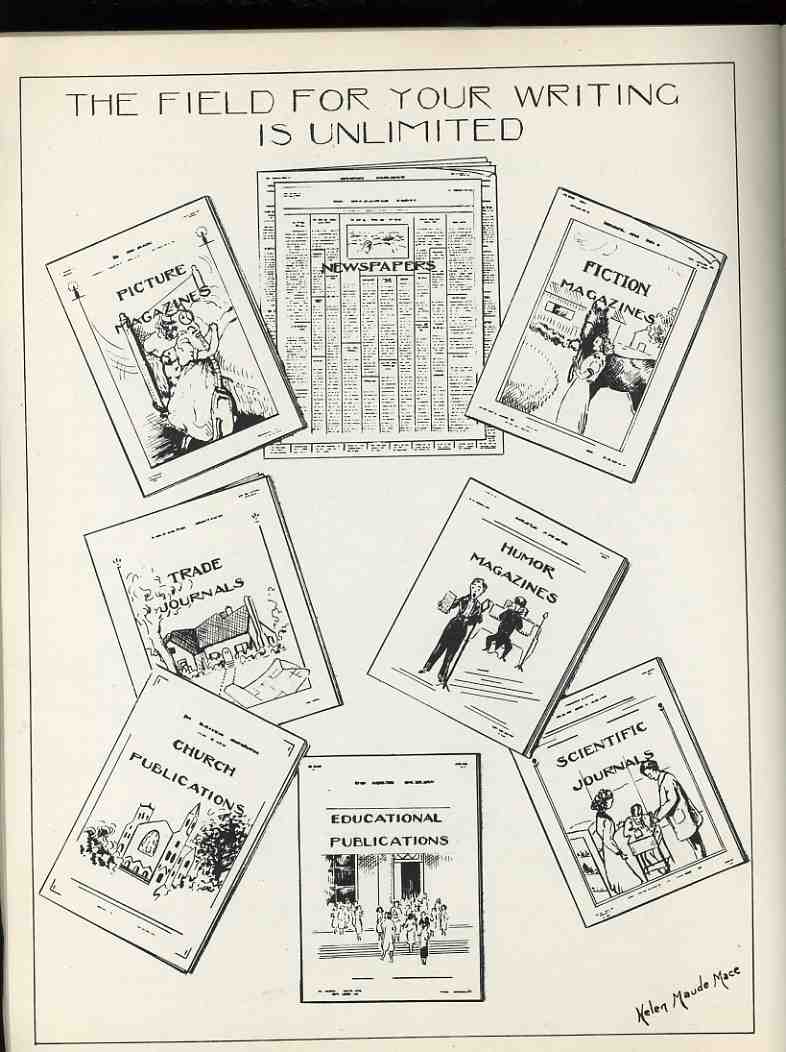
    As much as something can be tedious for only 40 pages or so, this is, and drags on for fourteen chapters, offering shamelessly and  mainly useless tidbits for the flowering reporter/tipster/writer. Ross tells us to “Keep Your Eyes Open” (Chapter Eight) for stories that you might “find on the street”, and also to expand our horizons to include writing for “myriads of church publications”.  And on and on; every one dead-data morsel that we are offered in this book takes the place of two good data points already in our head.  No doubt if you read this book a thousand times you’d have nothing at all left in your noggin.

    ·Posted by :

    ·in:


  • On Becoming Nothing: French Collaborators in World War II

    JF Ptak Science Books LLC  Post 391

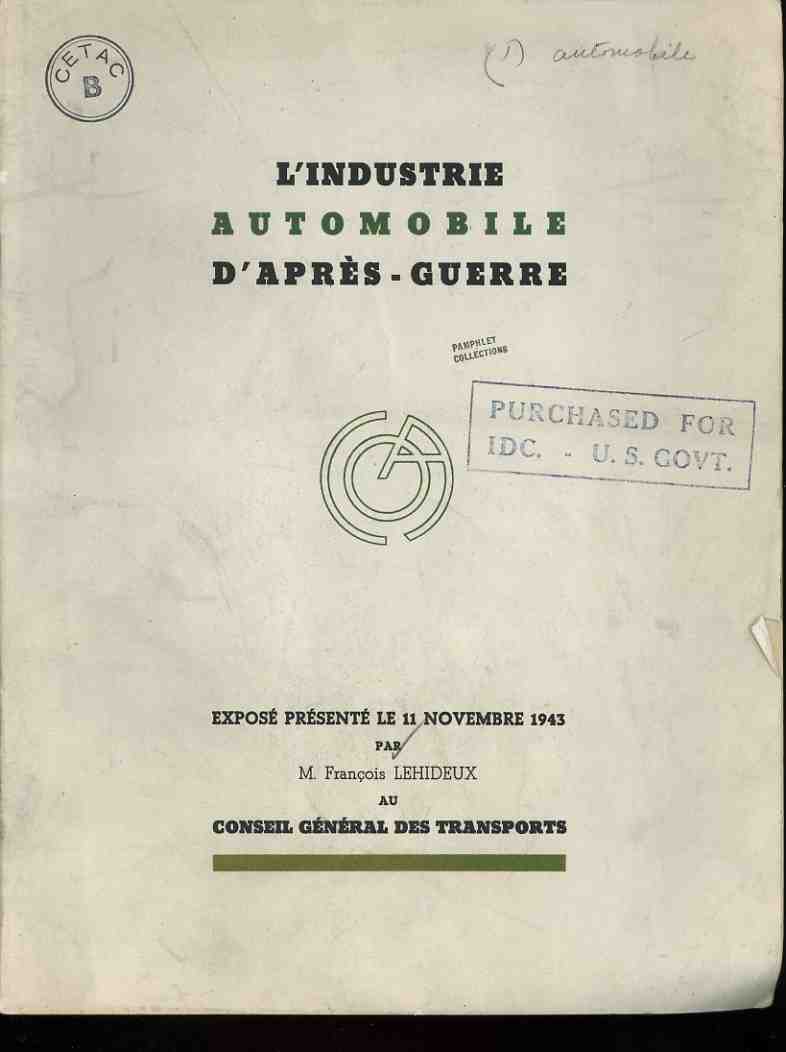
    0--blog---Nov 25 french auto125This curious pamphlet surfaced today—an “expose” on the post-war automobile industry in France; I was curious to see how soon after the war this was published, and then was momentarily shocked to see that it was published in 1943, while France was still heavily occupied by the Nazis.  And then of course I knew why there was any possibility of publishing something like this concerning a huge industry during a time of occupation (when things are normally ground to a halt):  that the French people concerned with this effort had to have been at least part of the puppet Vichy government of Marshall Petain or were  (also) Nazi collaborators.  My vote would have been both.  The author, Francois Lehideux, who died ten years ago at age 94 (1904-1998), was the head of the French automobile organization and working at the pleasure of the onerous Petain, and was in fact arrested in 1945 as a Nazi collaborator once the real French were back in power.  (Lehideux was released a year later for lack of evidence, or something along those lines, though I am sure, like O.J., that everyone knew the true story. Petain, a glorious and important military leader of WWI, a heroic and towering figure, died in senility and was buried on the prison island he was sent to after his death sentence for his traitorous behavior was commuted.  He lived to be 95.)   Lehideux lived a long and trying and no doubt prosperous life.  He was CEO of Renault (having married the founder’s niece in 1934), and then “worked” for the Vichy government (for which he received the meritorious  Order of the Francisque, as did Francois Mitterand), was imprisoned, and then when he was released went to work for another organization comfortable with the Nazis, Ford Motor Corp.  Maybe it was just old Henry–who was a fantastically bad anti-Semite and who received the highest civilian decorator from Adolf Hitler (an award he held on to)—and not the Company that was bad.  Certainly Ford was not the morally-abusive capitalist who behaved intolerably during the war, as there were plenty of those:  Occidental Petroleum, Brown Brothers Harriman (run in part by Prescott Bush (yes), who was convicted and fined under the Trading with the Enemy Act in 1943), Chase Bank, and many others.

    As Lehideux slipped closer to the grave he headed an organization that tried to rehabilitate the image of Petain; long story short, Lehideux could not leave his own sordid past alone, and while trying to cleanse himself by scrubbing up the traitorous and offal-stained Petain, was embroiled in and won a freedom-of-speech lawsuit regarding his adoration for the old dead meat-puppety pisspot. His “victory” was certainly odd and I’m sure that in his own mind his life during the war was vindicated, his role reversed to having helped France arise from the ashes.  But all that happened really was that he was told that he could write what he thought, and nothing more.  In effect he created a fourth referential gender category (as in der/die/das etc): zed.  Nothing.  I think he just became nothing in his victory.  Or nothing until he was dead, and then he was at least that, which is a step-up from nothingness; but while he lived, the man was nothing.  Except of course to the people in France who were injured or killed as a result of his compliances with the Nazis, and then he was less than nothing and should’ve become dead sooner.  But I think he made himself into less and less until he finally achieved nothingness. 


    Finding and paying attention to extremely ephemeral and dead pamphlets like this can be very stimulating, and rewarding; they can make you aware of points of view and thought that you never knew existed, and can hold nuggets to odd pathways of thinking that can only be excited by something similarly odd.  Sometimes all you need is a little piece of exposed ephemeral thread; and then all you have to do is pull it.  


    ·Posted by :

    ·in:

    —

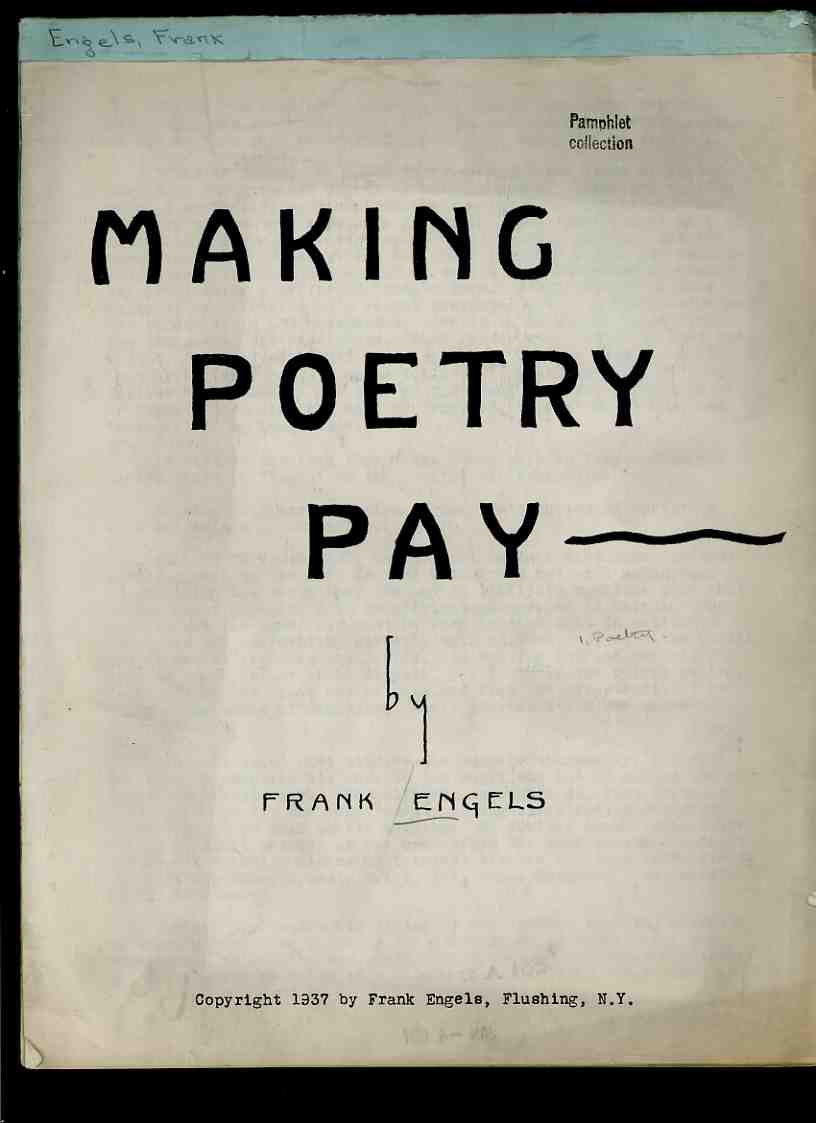
  • Make Poetry Pay ((?) (!))

    JF Ptak Science Books LLC  Post 389
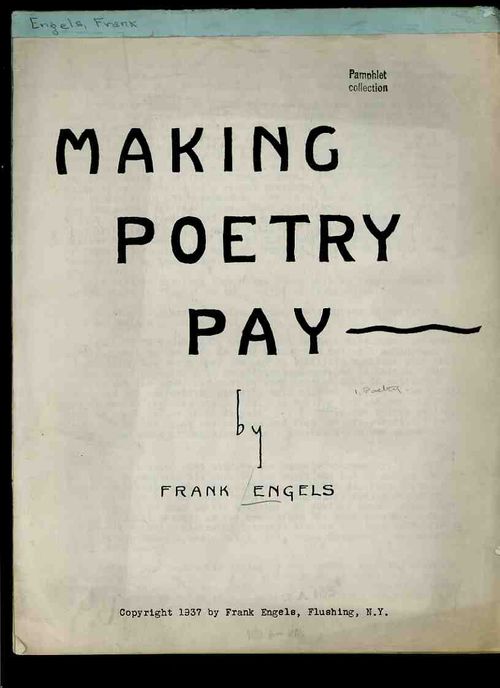
    0--blog---Nov 24--poetry124 I wasn’t sure from the cover of this exceptionally obscure work by Frank
    Engels if this was
    supposed to be (confused by the tone and the extended double tilde) declarative or interrogatory, or whether poetry was
    supposed to generate income or if you were supposed to hurt
    it/extract-exact revenge.  On opening the pamphlet, which was
    published by Mr. Engels in the beautifully-named but
    poetically-challenged Flushing, New York (home of the World’s Fair and
    Archie Bunker) in 1937, we find that it does not disappoint, and assures that all of the classes of what this thing could be are accommodated. 

    In general, though, Mr. Engels wants to let you help him make money by telling you how to make money writing poetry of all sorts and shapes, and where to sell it, and how, and by what means.  Engels tells us that “there are different schools of poetry, and each contributes something to literature”, and that the best poetry “makes vast appeals to the broadest interests of the reading population”.Poems can be short or “book-length”, and we’re bolstered by the “recent poll” taken where 62,000 readers in 252 newspapers in 39 states sent in the names of their favorite poems, and the 12-line “Trees” by Joyce KIL(L)MEr was third on the list.  So it “doesn’t take much to be a poem liked by many”, and that you “don’t have to be a Longfellow” and write a book-length poem to make money in poetry.  

    It is best to appeal to “those fields of universal human appeal:  grief, joy, hope, despair, love, simple truth, true humor”, especially when trying to sell poems to magazines. “Timelessness should be considered” we are warned, and that the poem be “neat and easily read”.  Also, avoid selling the same poem more than once to a magazine, and “avoid this unfortunate error”. 

    Next we are told to consider “selling by mail”, selling “in pamphlet and card form”.  I’m not sure what that means, though the poetic reader is told that “Boyd’s City Dispatch, 114 East 23rd Street, NYC, furnishes a list of 5,145 millionaires interested in art; they could , no doubt, furnish a list of wealthy poetry appreciators”. Oh, dear.  Mr. Engels says that “old folks” who can no longer work but whose minds and poetry are good can make money in this manner.

    Next genre for poetry sales is “greeting card verse”, which offers “opportunities for those who can turn out this sort of work”, and that the “Greeting Card editors are the friendliest editors in the publishing field”.  The sales genre for “syndicating poetry”, for the “prolific versifier”, is just so far beyond reason, such an uninhabitable planet of possible expectations. that it is beyond comment. 

    Engels approaches direct selling as a possibility for the ease of being able to produce everything at home, with “Poems of varying lengths being produceable (sic)  into a folder”. Engels explains that one of his own “little booklets” “of 14 rhymes totalling (sic) 308 lines…cost two cents a copy to print and sells for ten cents”.  Also I found the following nugget: “poems about dogs artisitically (sic)  lettered and framed can be sold direct or thru stores or agents for cents cents to a dollar, depending on size…” 

    This drags on for quite some time, even though its only three pages long.  Perhaps the best of these selling scenarios, though, is the “trailer poet”.  “There are quite a number of trailer poets, poets who live and travel in trailers, who make their livings by selling their poems…there are upwards of 300,000 trailer travelers in America as this is being written, and the prediction of trailer manufacturers is that the number will mount to millions.  Think of it,a million of more roamers whose needs, from popcorn to poems, will probably be supplied by roamers”.  Well.  I’m not terribly sure about what “roamers” are in Engels’ mind, though I’ve got a good idea that they’re dustbowlers, trying to make their way somewhere where they were not unwelcomed.  Engels reminds the reader that these people needed poetry too, and that they could be sold your poem pamphlet for 10 cents, if you had a good one to sell.  If only the “trailer people” had a penny to spare…
    ·Posted by :

    ·in:


  • Naive-Bizzare Book Title: Selecting Radio Stations Like Lining Up Pigs, 1931

    JF Ptak Science Books LLC  Post 385

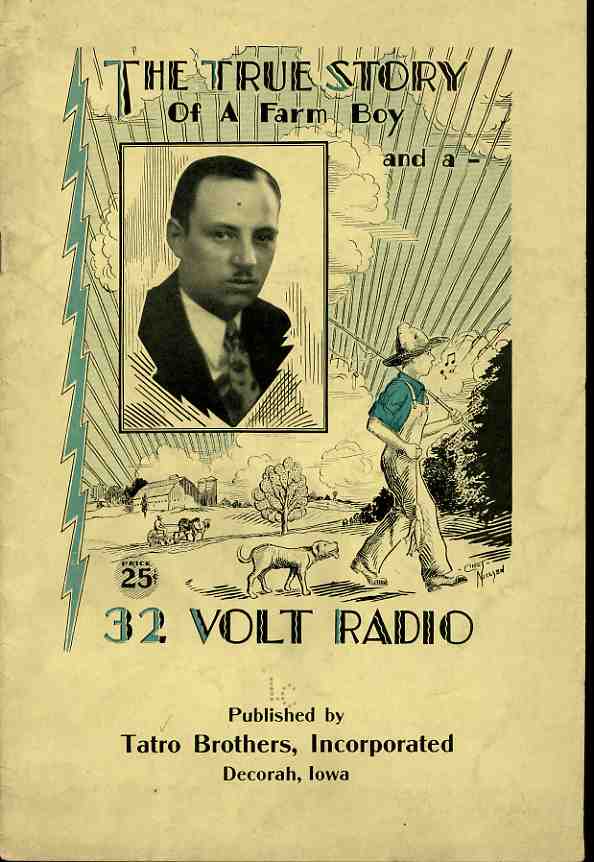
    0-blog---Nov 21 bizarre--radio091I am very attracted to the innocence and softly bizarre category of the Naive Surreal collection here, like this little pamphlet that came out of Decorah, Iowa in 1931.  The titles in this category are odd but still understandable, and the “what the ____!” response to the subtle ones isn’t quite so high and the exclamation points not so many as in the cases of the Naive Surreal titles. 

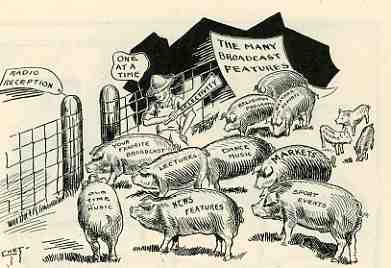
    This work was really just a sales vehicle for a radio sold by the Tatro Brothers’ store, although the pamphlet did have this wonderful cover going for it as well as some very unusual cartoon illustrations.  The cartoons related everything back to the farm community of the pamphlet’s origins–even the channel selector for the radio related the broadcast stations to pigs going through a gate. 

    0-blog---Nov 21 bizarre--radio092

    The other weird bit on this one is that it is from the Herbert Hoover collection, coming from the White House library in June 1931.  No doubt the author, J.A. Nelson, sent the President a copy of his effort, and the President(‘s staff) no doubt sent it directly to the Library of Congress. 

    ·Posted by :

    ·in:

    —

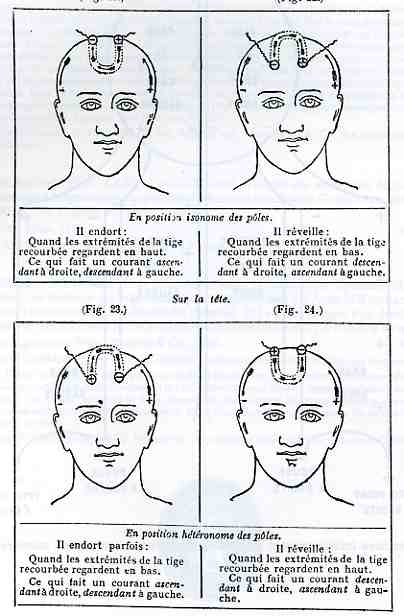
  • The Magnetic Sleep Doctor and the Shelf-Life of Dream Images

    JF Ptak Science Books LLC  Post 382

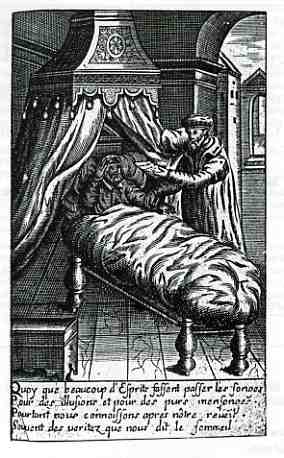
    0-blog---Nov 19 sleep082

    This interesting and semi-bizarre image shows a doctor of magnetism (and necrologer and astrologer and several other things) conspiring at the edge of science and the heart of all things dark to adjust the dreams of the formerly sleeping man.  The patient is awakening and the doctor is doing, well, things that I don’t understand:  suffice to say that he was trying to assuage good dreams for the other man via the secrets of magnetism.

    The mysteries of sleep and the dreamworld were hotbeds of investigation from all sides, and there is a fairly deep publication record on the subject for the 1550-1700 period. This image comes from Le Palais du Prince du Sommeil, ou est enseignee l’Onriomancie autrement l’Art de Deviner par les Songes, printed in Lyon by Jean Pavhlhe in 1670, and written by the spectre-like M. Mirbel, whose history and biography are just about non-existent. 

    The idea of approaching sleep and dreams via magnetism is unusual even in the very unusual history of unusual ways of adjusting dreams–the interpretation of dreams is evidently closely related in mysterious and bendy ways, almost as convoluted and soft as the physical means used to induce them. 

    The history of big dreams and dreaming in general is far bigger than the issue of fixing them, and much paler, considering the vast range of imagery.  Jung (Memories, Dreams, Reflections), Havelock Ellis (World of Dreams), Freud (oy vey), Shakespeare (“we are such stuff…”), Leonardo, Joseph (and the Pharohs), William Blake, Solomon and of course Daniel, and then on and on into the night.

    Daniel’s
    dreams (as in The Book of Daniel) were gigantic and full, and there
    have been many others who have recorded their dreams in the history of
    literature and religion.  I must say though that the dream of King
    Prasenajit (the ruler of Kosala,  located on the northeast of modern
    Uttar Pradesh, India), a disciple of Buddha, had a dream in ten parts
    which troubled him greatly, and when you look at its elements you can
    see why:

    -Three jugs set in a row, one put against the other.
    The first and the last of the jugs are mutually exchanging the vapours
    of the liquids that are contained in them, vapours which never descend
    in the empty jug situated in the midst.
    -A horse that swallows the food concomitantly through the mouth and through the anus.
    -A tree full of flowers.
    -A tree full of fruits.
    -A man who is knitting a rope. Behind the man there is a sheep. The owner of the sheep eats the rope knitted by the first man.
    -A fox lying down on a bed made of gold, and eating out of golden vessels.
    -A cow suckling her own calf, against the law of nature.
    -Four
    oxen that arrive, bellowing, from the four corners of the horizon. They
    are rushing upon each other, in order to start fighting, but all of a
    sudden they vanish, right before clashing their horns together.
    -A pond surrounded by slopes. Its water is turbid in the offing, but clear near the shore.
    -A huge torrent, entirely red.

    This would give anyone pause, even more so if you were a disciple of the Buddha.  None of these images fit into my dream dictionary (especially the horse one), but perhaps they are deeply related to the times and not transferable over the centuries.  Which is an interesting way of looking at a particular time and understanding a bit of it that doesn’t normally sink into the public record–the expression of dreams might tell a little more about the time and place than about the person.  This sort of made-up historiographic (?) approach reminds me a little of snooping around old Domesday books and business/city directories, looking at the sorts of jobs that were common once upon a time and now slipped away into the tar pit.  So to with dream imagery?  Perhaps like just about everything else, dream images may well have a shelf life.  (I was going to reference Twinkies as an example contrary to this, but I understand that a new something-or-other has been added to it/them to make it so that these fine products will actually go bad after a while, rather than like before, when it could be counted on the cockroaches nibbling on them into eternity following the death of Dr. Strangelove.  Perhaps a former-chemist/librarian out there knows what this ingredient is and will share the knowledge?)

                                                                                             :

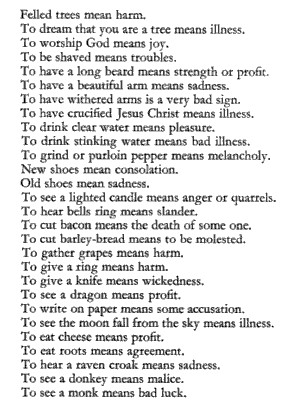
    Blog--magnetic dreamsFor example, this 18th century directory for what dream images may
    “mean” are mostly foreign to the general experience, I would say.  On the other hand, to attach meaning to the importance of dreaming about stealing pepper may be a little quixotic, but much less so than interpreting it as a harbinger f melancholy.  I know that to even mention the business of pepper theft in 1650 tells us a lot about its importance and why it would’ve been stealable and can tell us something about the foods of the time, trade, commodities and such.  Thinking about it in terms of a predictive element may not be as fruitful…


  • Bad Ideas Department: First Image of a Hypnotized Chicken

    JF Ptak Sciene Books LLC  Post 380

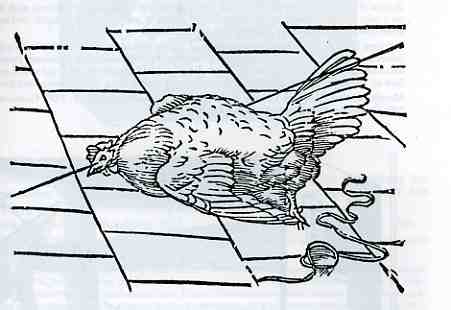
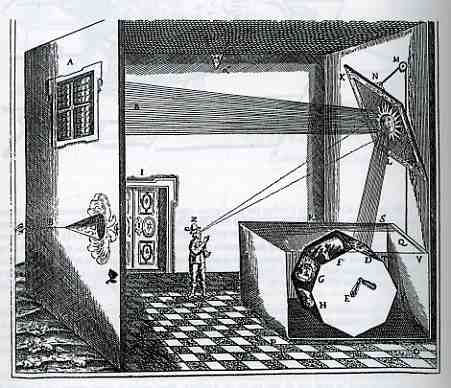
    0-blog---Nov 19 kircher chicken080This non-metaphorical, truth-be-told image is the responsibility of the irrepressible everyone’s-favorite-18th-century-Jesuit, Athanasius Kircher.  Fr. Kircher was extremely learned and had a superb memory and a great scientific bent; and for the stuff that he didn’t know or hadn’t read about or couldn’t prove by experimentation or produce by logical means, well, he just made the stuff up and pressed on.  But there is *so* much that he got correct and he published such a terrific amount of material that we’ll forgive these forays into The Twilight Zone  His detractors and critics  couldn’t keep up with the man; almost nobody could–the bit about the hypnotized chicken that appears in his incredible Physiologia Kircheriana Experimentalis...(Amsterdam, 1680, edited and compiled by Kircher’s pupil Johann Stephan Kestler), which is packed with so much diverse material that the chicken pretty much gets lost in the intellectual sauce.  Kircher’s reach was deep, formalizing bunches of natural science expositions by physical and mathematical experimentation and proof, not the least of which was proving the lunar influence on the tides and the construction of a magic lantern (below) .

    The hypno-chicken comes into the picture via Kircher’s interests in the magnetic art and electricity, dabbling away at the edges of science in a precursor to Mesmerism.  He also came up a little short with his experimental proof that insects were born of animal dung, but, as I said, he got much more right than he did wrong, and forgive him his rush to publication on some things that he may not have been happy with.

    0-blog---Nov 19 kircher movie081

    To press the point only slightly (the list and breadth of his accomplishments is just too much for this prankish little post about the chicken), have a look at the partial list of his publications:

    A partial list of Kircher’s works include:

        * 1631 Ars Magnesia
        * 1635 Primitiae gnomoniciae catroptricae
        * 1636 Prodromus coptus sive aegyptiacus
        * 1637 Specula Melitensis encyclica, hoc est syntagma novum instrumentorum physico- mathematicorum
        * 1641 Magnes sive de arte magnetica
        * 1643 Lingua aegyptiaca restituta
        * 1645–1646 Ars Magna Lucis et umbrae in mundo
        * 1650 Obeliscus Pamphilius
        * 1650 Musurgia universalis, sive ars magna consoni et dissoni
        * 1652–1655 Oedipus Aegyptiacus
        * 1654 Magnes sive (third, expanded edition)
        * 1656 Itinerarium extaticum s. opificium coeleste
        * 1657 Iter extaticum secundum, mundi subterranei prodromus
        * 1658 Scrutinium Physico-Medicum Contagiosae Luis, quae dicitur Pestis
        * 1660 Pantometrum Kircherianum … explicatum a G. Schotto
        * 1661 Diatribe de prodigiosis crucibus
        * 1663 Polygraphia, seu artificium linguarium quo cum omnibus mundi populis poterit quis respondere
        * 1664–1678 Mundus subterraneus, quo universae denique naturae divitiae
        * 1665 Historia Eustachio-Mariana
        * 1665 Arithmologia
        * 1666 Obelisci Aegyptiaci … interpretatio hieroglyphica
        * 1667 China Monumentis, qua sacris qua profanis
        * 1667 Magneticum naturae regnum sive disceptatio physiologica
        * 1668 Organum mathematicum
        * 1669 Principis Cristiani archetypon politicum
        * 1669 Latium
        * 1669 Ars magna sciendi sive combinatorica
        * 1673 Phonurgia nova, sive conjugium mechanico-physicum artis & natvrae paranympha phonosophia concinnatum
        * 1675 Arca Noe
        * 1676 Sphinx mystagoga
        * 1676 Obelisci Aegyptiaci
        * 1679 Musaeum Collegii Romani Societatis Jesu
        * 1679 Turris Babel, Sive Archontologia Qua Primo Priscorum post diluvium hominum vita, mores rerumque gestarum magnitudo, Secundo Turris fabrica civitatumque exstructio, confusio linguarum, & inde gentium transmigrationis, cum principalium inde enatorum idiomatum historia, multiplici eruditione describuntur & explicantur. Amsterdam, Jansson-Waesberge 1679.
        * 1679 Tariffa Kircheriana sive mensa Pathagorica expansa
        * 1680 Physiologia Kicheriana experimentalis

    ·Posted by :

    ·in:

    — — —

  • Bad Ideas Department: the “Terminal Box” and the Restructuring of Society, 1938

    JF Ptak Science Books LLC  Post 376

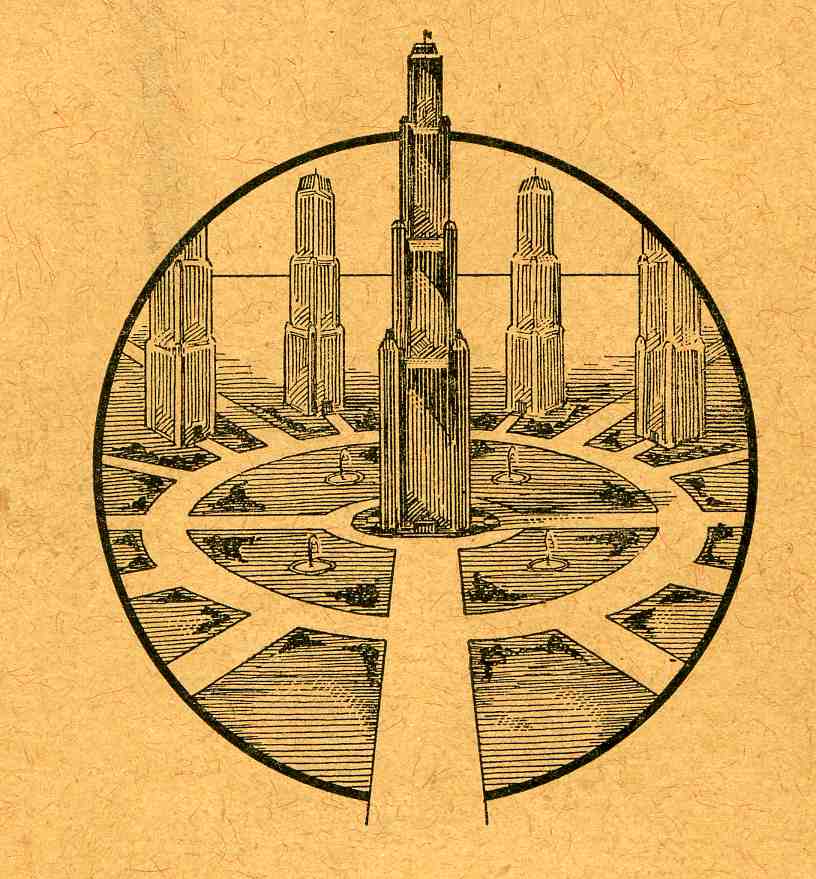
    0-blog---Nov 14 new city075
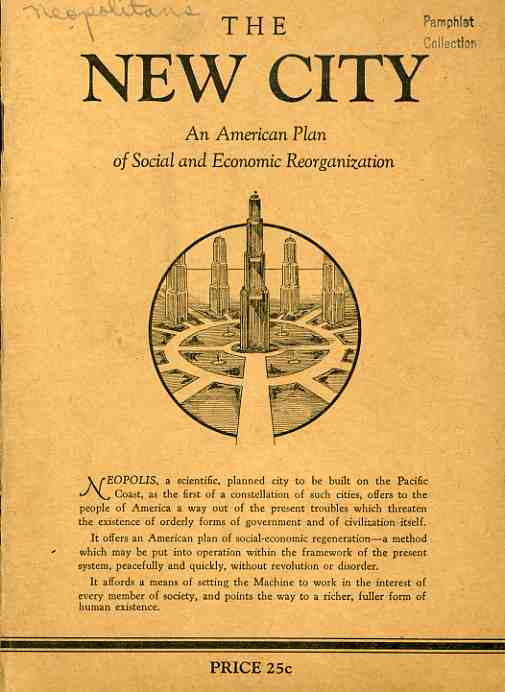
    The unnamed author of The New City, an American Plan of Social and Economic Reorganization (1938), makes a hard-edged plea for the formation of a new American society—and by “new” the author really means it, advocating a different economics, social structure and even the physical development of new cities and abandonment of the old physical and philosophical structures. 

    Sprinkled among the Swiftian notions of rightness, quixotic lancings of social ills and a general bombardment of the structure of society are some interesting and isolated points: 
    “America is the supreme user of the machine…ravishing the irreplaceable wealth of one of the earth’s richest continents, tearing down forests, looting the treasures of coal and draining the reservoirs of oil and natural gas, by methods scandalously wasteful.” 

    This leads the author to the Depression, “a decade of demonstration of the profit system’s inability to deliver to the people the needs of life, a painful heartbreaking demonstration”.  0-blog---Nov 14 new city076

    It is the profit-deliverers, not the machine s or people, who are to blame.  One way of addressing the distribution system, was, unfortunately, Russia—“a form if society set up to overcome this impasse of the capitalistic system of production and distribution”.  Of course the Russians, the Soviets, were just in the middle of their enforced starvation/gulag/brutalization period under Josef Stalin, the gigantic negative parts of which were still in general not known to the great unwashed. 

    The unnamed author dips lightly into Socialism, and then into Fascism and Nazism, though the only thing he/she really has to say about the later two is that “their answer [to economic woe] was in the seizure or control of the means of production by the state”, their own brutal means skipping off unnoticed into a pinkish glow, though the loss of personal freedom is “disdained”. 

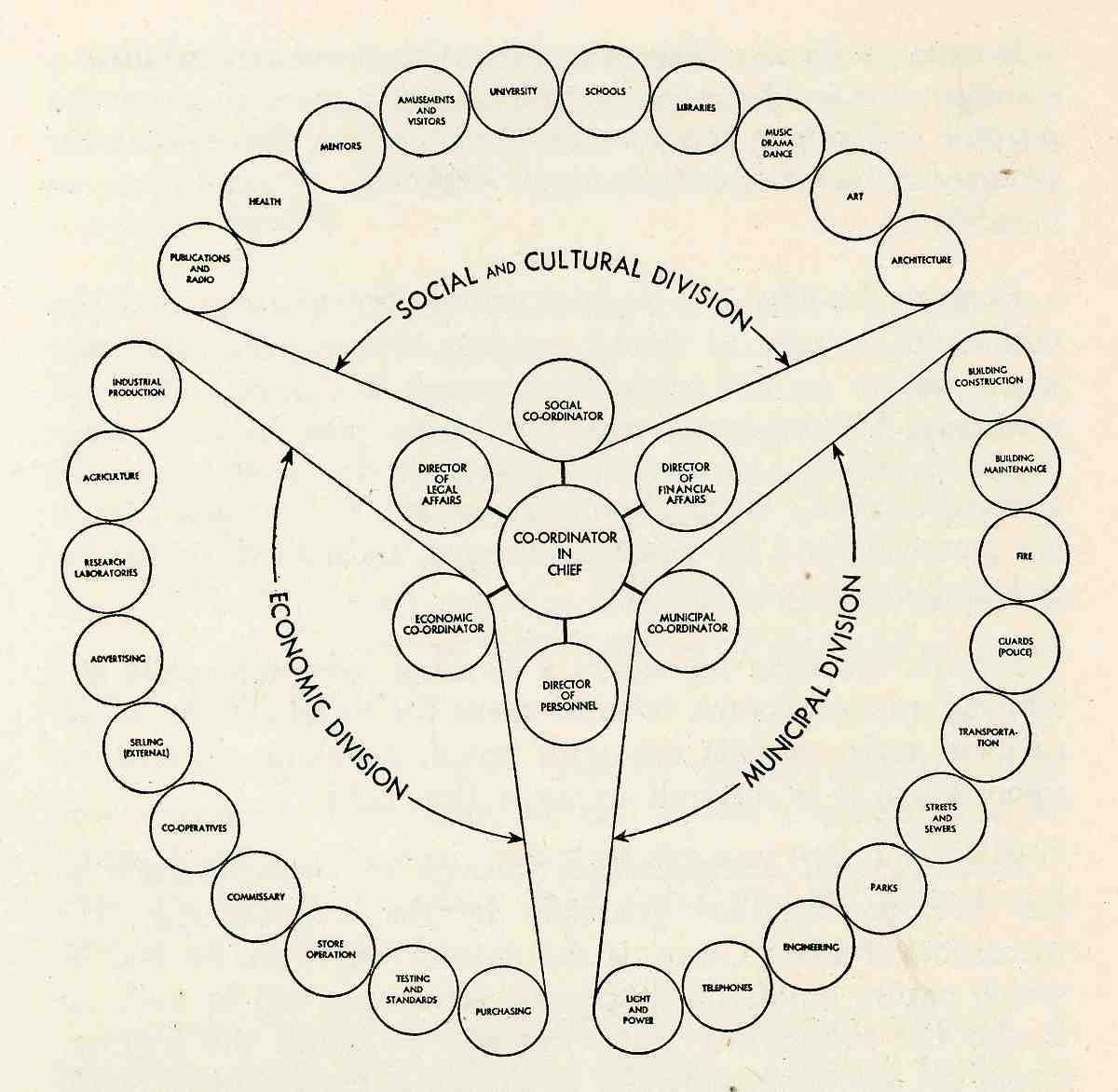
    The New City is actually a new world order, a new governmental form to take advantage of technological advancements leading to “nationalized urbanization” The first city in this new order is Neopolis, and this pamphlet was a call to those who would stand as its citizens.  (There’s actually a sort of application form, though all it really is a bill-of-sale for ordering more copies of the New City pamphlet.)

    Even though the pamphlet is easily obtained, membership, the possibility of being a Neopolitan, is something entirely different.  The difference is actually exceptional, perhaps the most extraordinary thing about this whole misguided idea.  “Membership is to be carefully controlled at all times” we read. . “It is not desired to build up a huge and unwieldy membership of poorly-assimilated elements….interesting educational instruction…with tests to determine the fitness of the member for loyal, cooperative activity, leading, necessarily, to the elimination of those who may be found undesirable”. 
    That’s some pretty muscular, steroidal stuff, particularly after such a glancing blow against the Soviets and Nazis. 
    0-blog---Nov 14 new city077

    Since this is just an “abridgment” of a soon-to-be-written 250-page explanation of the concept, the complex and concentric organization of society is left mainly to the drawing of its plan, the physical layout of the city based upon this ideal. 

    The Seattle-based author never did quite make it past page 29, never did name themselves, and never provided a concrete place where all of this heady stuff was being think out.  It is a sort of pretty design in a creepy/queasy way, there on the front cover, but that’s about as far as it goes.  If anyone actually did send any money to this quack thinker, it wound up in a nicely metaphorical place:  at “Terminal Box 3463”. 

    This may be the very best idea to come out of touching this pamphlet—a place where people can send correspondence regarding Bad and/or Dead or Dying Ideas: “Terminal Box ______”.  I guess that box number would be pretty high by now. 

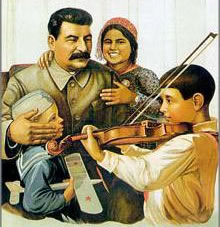
    Stalin20
    (Uncle Joe, before he killed the children.)