A Daily History of Holes, Dots, Lines, Science, History, Math, Physics, Art, the Unintentional Absurd, Architecture, Maps, Data Visualization, Blank and Missing Things, and so on. |1.6 million words, 7500 images, 4.9 million hits| Press & appearances in The Times, Le Figaro, Mensa, The Economist, The Guardian, Discovery News, Slate, Le Monde, Sci American Blogs, Le Pont, and many other places… 5000+ total posts since 2008.

Category: Bad Ideas

  • The Thin White Line: Concrete Ribbons as the Answer to the Air Raid Problems of London (1938)

    JF Ptak Science Books LLC   Post 469

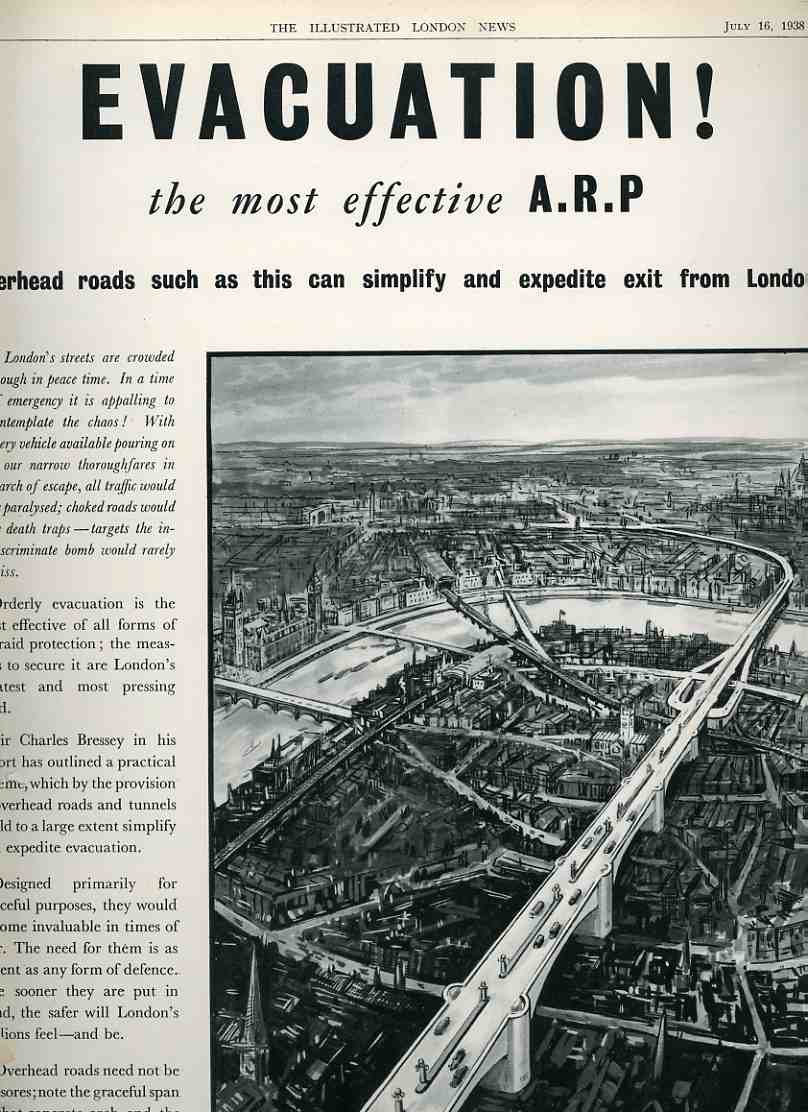
    0 blog jan 07 evacuate london365The Illustrated London News for 16 July 1938 was screaming at its readers–14 months away from the British involvement in WWII–that the MOST EFFECTIVE form of ARP (air-raid protection) was via the evacuation of London.  And of course what the “article” meant was the orderly evacuation of London, as decentralized evac during a crisis (i.e. bombing) would be an “appalling” and chaotic mess.  

    The answer was elevated highways. 

    The reader was told that “the cost of such roads will necessarily be high”, but the high ticket price wouldn’t be quite as bad as tearing down buildings and widening streets through central London.  The tearing/widening idea is so original and so shockingly bad I don’t know what to say, if there was actually anything to say at all.  But then it is second only to the idea of building elevated roadways for evacuation purposes–road that look from the picture like they were four lanes wide.  These roads would have “the additional merit that under them the traditional appearance of London can be maintained unimpaired”.  Stress that part about the appearance “underneath”.  Not only that, the heartbeat of London evacuation=, these elevated roads, were evidently immune from bombs themselves; or at the very least nothing is mentioned about these roads being targets in themselves.  One bomb, one hit, one severed artery. (Looking back through the Bad Ideas Department I see Buckminster Fuller’s tragically goofy idea for building a mile-high dome over midtown Manhattan that was “radiation proof”…he didn’t say anything about it being impervious to actually being the direct target of a nuclear weapon, though.)

    Generally when ideas are this terrificly bad there is usually a reason for it, a reason that transcends logic and honest coherent thought.  And that reason in this case was money. 

    At a time when Nazi Germany was bursting at the seams for more people to fight and for  nations to devour, when there was a true and real fear of London being a target of German bombs, this simple and weak and strategically indefensible solution was proposed by one large and interested party.

    The “article” is signed by the Cement and Concrete Association of Grosvenor Gardens, London.  And thus all is clear.


  • Things that Are Just Simply Wrong: War Gases and Babies; Protective Suits for Children and Babies, 1943

    JF Ptak Science Books LLC  Post 466

    0 blog jan 12 baby gas380

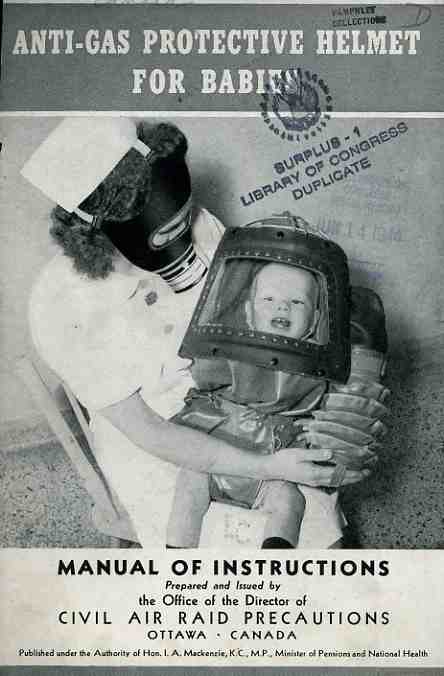
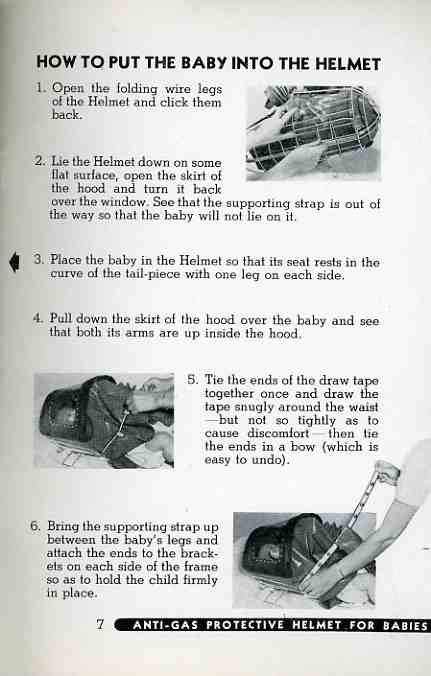
    There’s nothing that shouts “WRONG” with greater voice than images like this.  Like pornography and art, things that are just plain wrong are instantly recognizable.  And this, my dear reader, is a fine example of that thinking. Anti-Gas Protective Helmet for Babies, Manual of Instructions was prepared for the Office of the Director of Civil Air Raid Precautions of Ottawa, Canada, and published in 1943.  I’m not sure that the image of the nurse in the gas mask isn’t as disturbing, but the two of them together is just too much.  

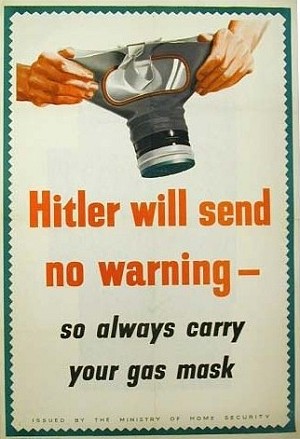
    I wasn’t aware of the gas attack preparations in Canada–the situation was entirely different in Britain, where everyone was required to own one, and by 1940 more than 38 million had been distributed to the population.  But the planning was underway in Ottawa in ’43 for the worst, as removed and distant from the war as just about any other place on earth–but the Air Raid Precautions people pulled no punches in their hearts and minds campaign, and I’m sure that it was very effective.  This little pamphlet certainly caught my attention.

    0 blog jan 12 baby gas381

    Blog gas poster

    ·Posted by :

    ·in:

    —

  • Dead Letter Department #1: LIFE Magazine Subscription from 1940

    JF Ptak Science Books LLC 

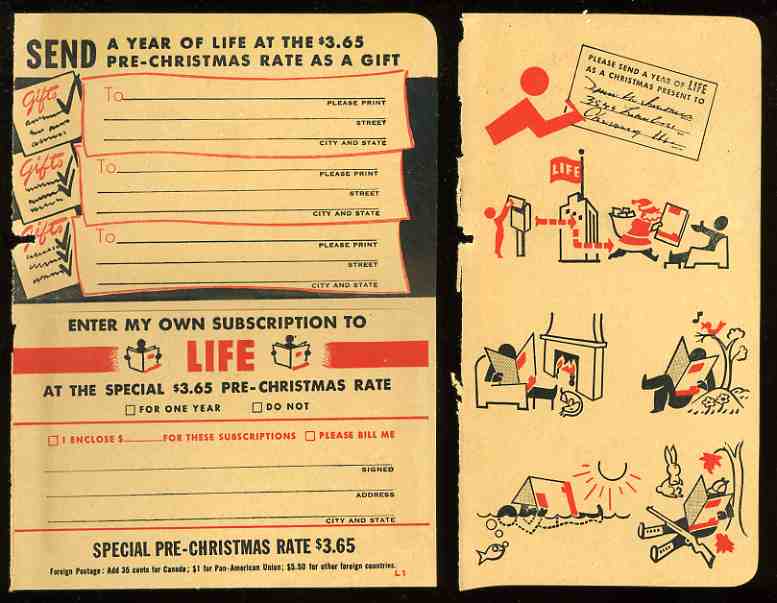
    0 blog jan 09 dead letter369
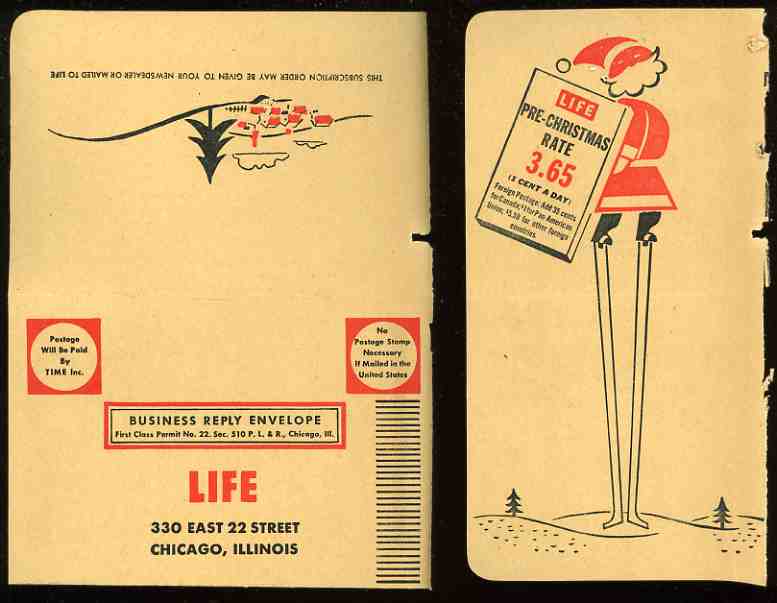
    It seems to me as though I have quite a few of these old subscription or mail-back forms from the 1930’s, ’40’s and 1950’s.  In the spirit of Don Novello (aka Father Guido Sarducci) I thought that I’d start sending some of these little buggers back out, just to see what happens with them on the other end.  I have my doubts that there are very many pieces of antique mail making their way through the labyrinth of the U.S. Postal System, so perhaps it will give some of those folks in blue a little something to talk about.  Or not.  And so I put my $3.65 in the little envelope for a year’s subscription to the fine LIFE magazine–if I could get into the Wayback machine, I’d enjoy 52 issues of LIFE in 1940 for just a few dollars.  Unfortuantely LIFE stopped being a weekly in 1972 and then sputtered along as a much-changed monthly for several decades until it completely left the track in 2007. 

    0 blog jan 09 dead letter370
    It was an interesting magazine to be sure, though not without its
    problems.  For example, I looked through every page of LIFE from 1939
    to 1945 and my impression was that there wasn’t all that much war
    reporting in the thing until everything heated up (including America, finally) in
    mid-1942. (And by “very much” I mean, well, that I just expected more in the magazine about the World War than I was seeing, space being taken up by nonsense and Liliputian interests rather than the global conflict.) Up to that point there seems to have been far more non-war
    words/images than war-related. Even in 1942 there was more adveritising
    using men-in-uniform than there were actual stories depicting fighting
    men.  Things changed quite a bit in the magazine as the war became more
    “real” for the U.S. in 1943; still, the reporting didn’t come close to
    that of the London-based Illustrated London News, where the war was
    real since 1940.  This is hardly scientific, only an impression, but
    having looked at the entire war coverage in LIFE and Illus London News I am left with a lingering impression of a remarkable difference between the two (similar) magazines.  More still for the Illustrirte
    Zeitung
    (Leipzig), but that’s another story.  Still the use of
    men-in-uniform to sell cigarettes or steel or whatever is pretty
    bothersome to me–there was a lot of that going on in LIFE, not so much
    at all in ILN, and almost none in the Illustrite Zeitung.

    ·Posted by :

    ·in:


  • The Air Bridge to Nowhere: the Friendly Skies, Chicago to Moscow, 1944

    JF Ptak Science Books LLC  Post 449

    0 blog dec 29missing men327
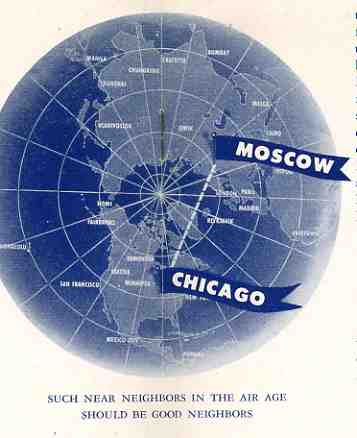
    This hopeful and terrifically unbalanced homage to wistful loveliness of the Soviet Union, The Businessman’s Stake in American-Soviet Friendship,
    by Harland Allen, was published in Chicago in 1944, and seems to me a
    small prayer for what the post-war world might bring about.  Allen
    forced the then-popular economic thought that the people dangling from
    the visor of Uncle Joe Stalin’s cap were money angels rather than
    Russian corpses, and that the air lane shown in the trans-polar map at
    right would soon be filled with American exports headed to Moscow.
    (Little did he know that in  a decade this line would be the distance
    traveled by ICBMs, or close enough to it.)  At least that seems to be
    the hope here, Stalin forcibly melted into the Big Board, the Soviet
    Union trading on the DOW as CCCP (Inc.).

    The small pamphlet
    received some spirited review support from the Northwestern University
    School of Law, the Des Moines Register and Tribune,the Society for the
    Advancement of Management, the Meadville Theological School, and Laird
    Dell Attorney at Law. And that’s about it. But these were ripe times
    for this sort of pro-Soviet thought:  after all, dozens of millions of
    Russians had been killed in the fight in the East against their former
    Nazi allies, and without all of that blood sacrifice I have no doubt
    that the war would’ve lasted for some years to come.*  The U.S. had a
    powerful ally in the Soviet Union regardless of what had happened there
    in the 1930’s and regardless of their attack on Finland and regardless
    of their Pact with Hitler–from 1942 onward they would hinder and halt
    the Nazi army and nearly ground the whole thing down to a nub, crushing
    the German capacity to fight in the west. The atomic bomb was to be
    untried until July 1945, and the outcome of the war was not yet known. 
    Love for the Soviet Union was high in the sky at this point, FDR making
    many airy and superior statements about our new ally, while the rest of
    the propaganda machine was lubed and oiled for the coming fight.  LIFE
    magazine went so far as to pronounce Lenin as “perhaps the greatest man
    of modern times” and that the NKVD was analogous to the FBI.  Even old
    anti-Soviet hawks like MacArthur publicly pronounced their admiration
    for the new regime.  (George Patton famously did not.)

    Back to
    our pamphlet: aside from some romantic vision of the Soviet Union,
    Allen maintained that the U.S. needed to deal with the CCCP because of
    its enormous army (which he did not want to annoy and fight) and its
    impending “mastery o the air”–it would be better to trade and make
    money than it would be to make war.  Allen pointed out that some of the
    problems of Americans dealing with the political system in the Soviet
    Union were inadequate reports on what he described as the country’s
    economic “principle of national planning“. .(I hardly know what
    George Orwell might’ve said about the supremely understated summation
    of the Soviet system as “national planning” and the fruitless and
    embarrassingly weak attempt at  controlling language to describe the
    monstrously repressive regime.)  He continues:  “Journalists have been
    positively fearful of open-minded reporting in Russia lest they get
    tagged–or tarred–with the familiar epithet “communist”, and then goes
    on to describe the similarities of the “two great peace-loving
    peoples”. 

    And so it goes, on and on in this pamphlet–it just
    isn’t worth going into any further than this.  The euphoric sheen of
    pro-Soviet sentiment and appreciation wore thinner as the war
    progressed, truer feelings becoming more exposed as the German army
    retreated westward, reproducing the famous Minard chart of Napoleon’s
    disappeared army in a war 130 years earlier.  The endgame for European
    real estate, fumbled badly by the dying FDR at Yalta, brought out the
    cardboard smiles between the US and the Soviet Union, relations
    strained to the point that the military employment of the atomic bomb
    was in some not-minor sense made to bridle Soviet intentions.

    But that was still two years hence for Mr. Allen, who I guess couldn’t see into the future that far, even if his work was heralded by the Des Moines Register.  He just didn’t do a very good job of withstanding the test of time, even though that test ended in 1946.


  • Skinny IV: the American Empire 1940

    JF Ptak Science Books LLC  Post 420

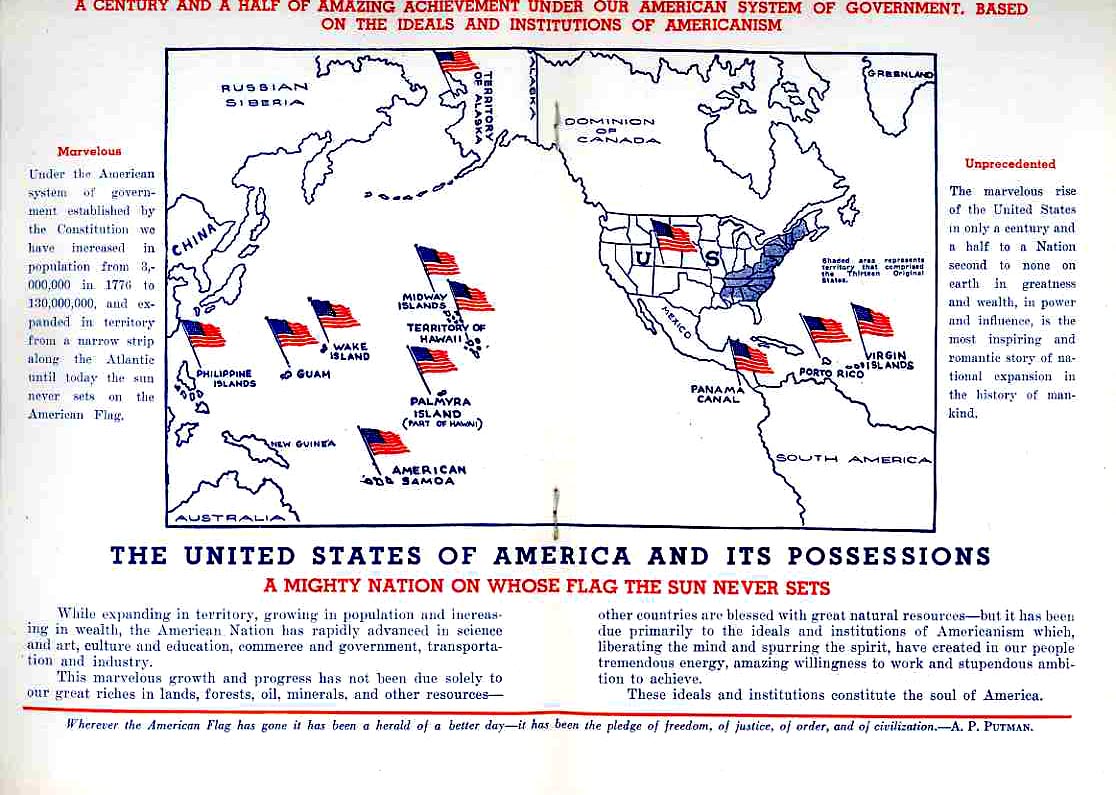
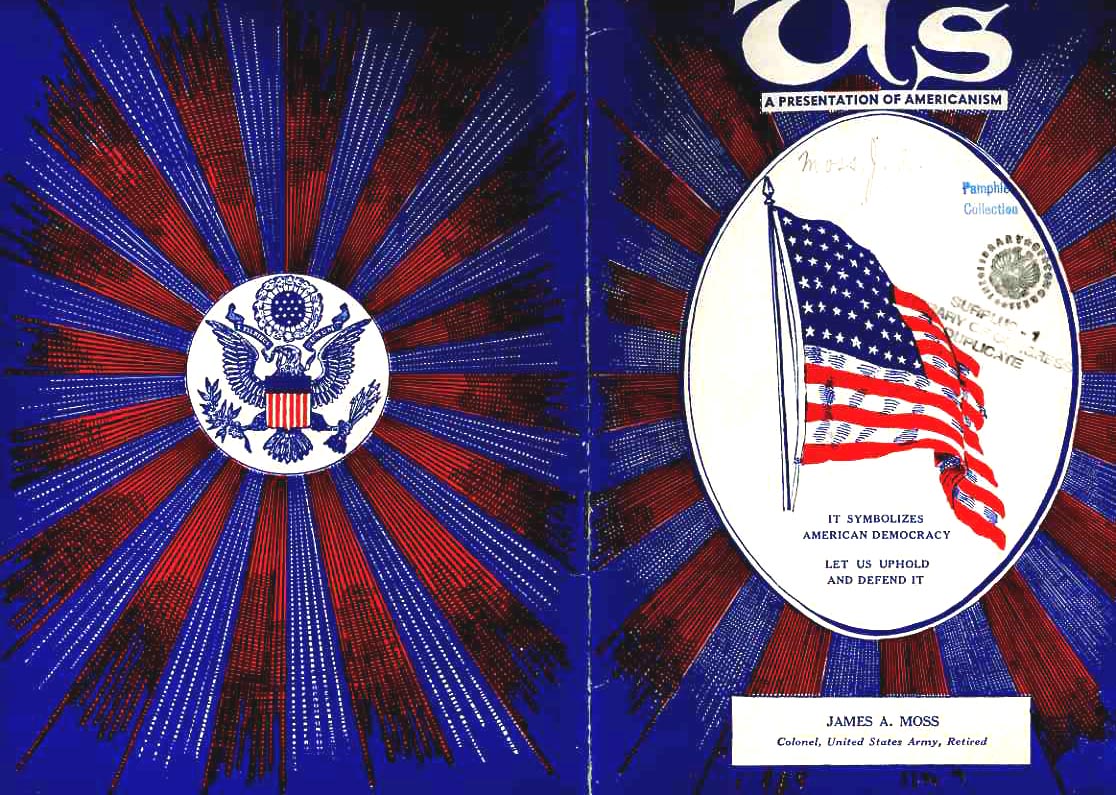
    0--ebay---dec empire205 This map of the American Empire, “a might nation on whose flag the sun never sets”, appeared in an odd little publication called US, a Presentation of Americanism, published in 1940 by the United States Flag Association.  The author, Col. James A. Moss, was adjectively gifted, or affected, never having met one he didn’t like or couldn’t use.  The pamphlet drips red, white and bluey drippings–on this map spread alone we see unimaginative and repetitious uses of the words  “amazing”, “marvelous”, “unprecedented” and so on. 

    Yet for all of this multi-colored ink and trying adjectives, the Empire, or empire, as described by Moss really wasn’t so much, once you added up all the square miles.  Actually, if you take away Alaska from this mix, all of this external property doesn’t add up to more than Texas; if you subtracted the very problematic size of the Philippines, these properties wouldn’t cover North Carolina*.  Now so far as “empires” go, this isn’t much–they’re lovely places to land planes, though, or refuel ships (in earlier days)–but when the foreign conquests don’t add up to 5% of the general land mass, an “Empire” it isn’t.  Perhaps if one of those flags was on Australia (sorry!), well, then, that would make a stiffer claim for the E-word (or I-word, actually, as in Imperium).  Roman, Persian, Ottoman, British, Assyrian, Spanish, Byzantine, Median/Mongol, Athenian, Akkadian, Russian, Celestial--these are empires (whole alphabets of them), in power, land, influence.  America could’ve really have been an empire in 1945 had it the stomach and hadn’t been exhausted of the whole idea of war–thank goodness it didn’t happen. Running amok and all. I’m happy to think of this Skinny Empire of the United States in 1940–Fat Empires generally are killers.

    Some of the other Skinny Posts:

    Skinny III:  Skinny Water. An Extremely Thin Shower Apparatus, 1888.

    Skinny II: Morals, Class Warfare & Letting Someone Else Pick up your Dropped Fork

    Skinny (I) Tech–Swimming, Sitting and Smoking Thin (Really Thin)

    *There are simple ways of determining this exactly–adding up columns of figures in the Statesman’s Yearbook will satisfy this need, but I think that my guess gets us to the point to within a comfortable margin. 

    0--ebay---dec empire206


  • Ultimate Legal Hoax: Pilate’s Death Sentence of Christ and the Salamander Letter

    JF Ptak Science Books LLC  Post 419

    0--blog-dec 9 pilate224
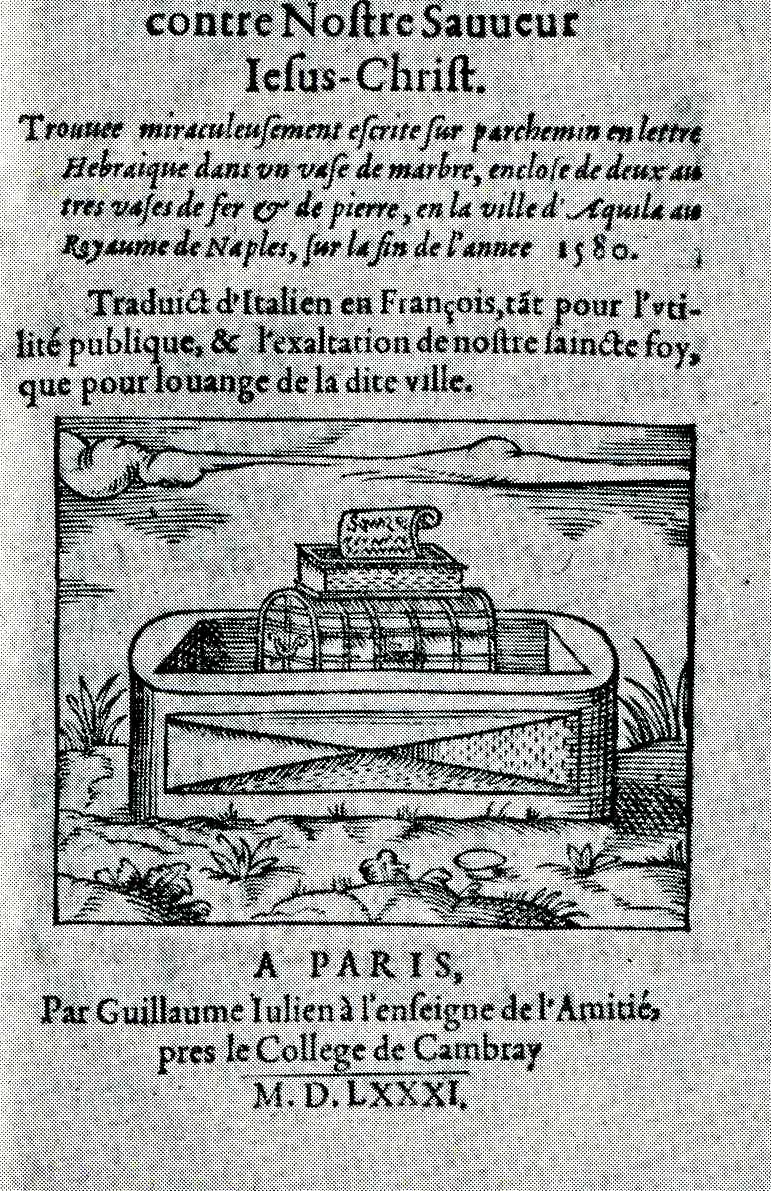
    One of the most remarkable literary frauds testing the published boundaries of religious merit was this remarkable publication, the death sentence for Jesus Christ by Pontius Pilate. Printed in Paris by Guillaume Juliene for Jean Stratius at Lyon, the Thresor admmorable, de la senstence prononceepar Ponce Pilate, contre notre Sauveur Jesus-Christ, (translated from Italian into French), was a work of great audacity if for nothing else than in its reach. (I’d like to restrict these comments on religious-mythological writings to the more-obvious and modern forgeries and hoaxes, and leave the question on the “authenticity” of other religious works like “divinely-inspired word-of-god transcriptions” for another time.) The book is about a parchment that was supposed to contain a rather touching, and naive   account (in Hebrew) of Pilate’s death sentence of Christ, a document found in a successive, nesting marble containers which protected it from time’s enemies.  As a matter of fact, the vignette illustration on the title page shows the parchment and the open containers as “proof” of the hoax’s merit.  Another very nice, light touch was the remark that this work was translated from the Italian (and that from the Hebrew) edition; it is most likely that this is the original edition, beginning its fictional life as a third-generation translation, a claim adding to the document’s possible authenticity. 

    It is not possible to leave remarks on religious forgeries/hoaxes without mentioning the talented and odious murdering forger Mark William Hofmann, the man who lead the most productive life of any American forger, and who late in his career was said to be attempting to fabricate the missing first 118 pages of the Book of Mormon. In addition to his very accomplished literary and political forgeries, Hofmann came upon an evil and brilliant idea–the devout Mormon would forge unseemly documents from the earliest periods of Mormon history and sell them to the Mormon Church, which was evidently very interested in obtaining such documents for its not-public archive.  Hofmann’s plan was remarkable–at first blush the offending documents that he “tracked down” were donated to the Church.  As the troublesome finds became more interesting (read “damaging”) he needed money (and lots of it) from Church officials to secure the documents from their “enemies”.  Having established goodwill and a sort of loyalty, and being terribly gifted and of course deeply knowledgeable about early Mormon history, Hofmann (a sixth-generation Mormon) created his own market, his own clientele, and his own product. (The “product” being very well researched and radiocarbon dating-proof documents for which he also forged their own provenance (!); even though fairly elementary stuff it was very well constructed, and Hofmann’s forging ability was exceptionally high.)  Outside the messing around with people’s belief system and committing major frauds all over the place and stealing millions of dollars, the biggest problem with Hofmann (perhaps some of you will remember his from the “Salamander Letter” of the mid 1984) was that in the course of doing business and protecting himself he bombed and killed two people in cold blood.  He didn’t answer his own religion’s hushed call for “blood atonement” and was sentenced in his cowardly way to life imprisonment in the state of Utah, where he lives to this day.


  • A Bad Idea From Start to Finish: Ultra-Lux in Tiger Killing, Denigrating Even a Filthy Sport

    JF Ptak Science Books LLC  Post 413

    0--ebay---dec 6 tiger186

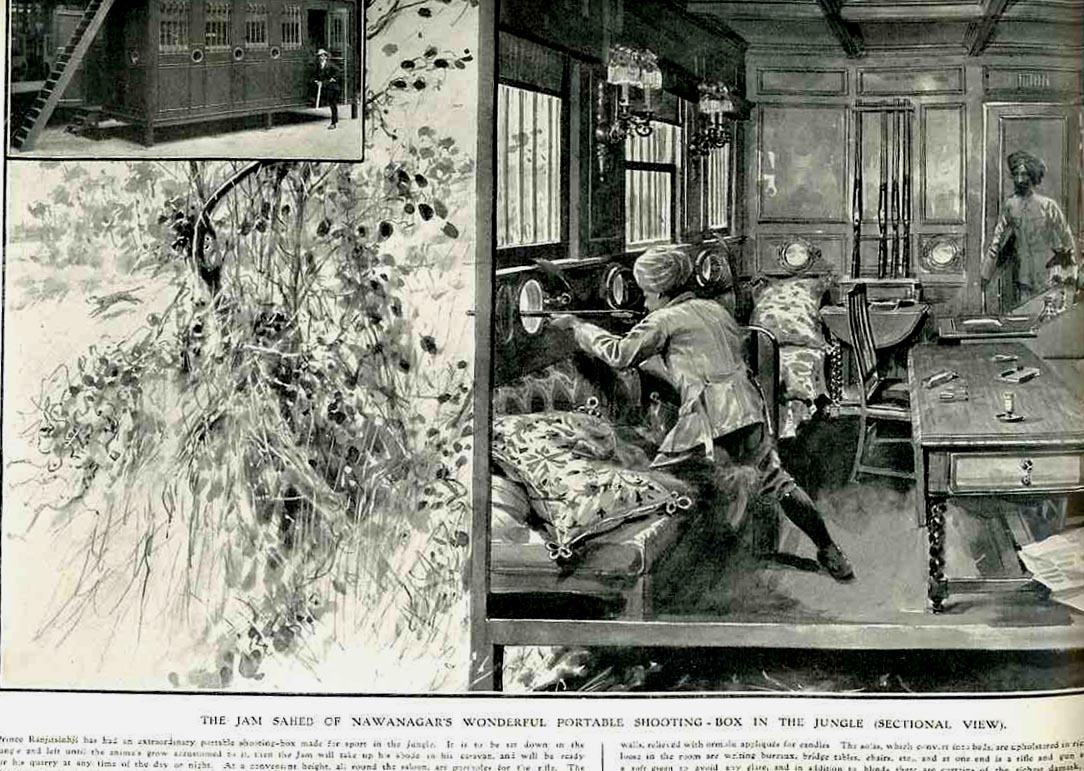
    The title of this lithograph–which appeared in the 27 October 1907 issue of The Illustrated London News–is “Tigers Shot While You Wait in Luxury, Ranji’s Latest Wonder”, and described transporting the Club Room into the wild for blood sport.   I don’t think I’ve ever encountered that phrase before, “tigers shot while you wait in luxury”.   The shooting was done from the portable luxo-car that we see in the upper left corner, which would’ve been transported, probably by a team of humans, into the depths of teh jungle, or at least deep enough for a tiger to be enticed in towards the hunting shed (with promises of meat scents and such?)
    The abomination was made for the sporting whims of Prince Ranjinisnhi (“the Jam Saheb of Nawanagar”).  The shed looks to be about 16x8x8 and had a kitchen, drawing room, and “bathroom and lavatory”, all “decorated in the Queen Anne style, with somewhat severe oak paneling on the walls, relieved with ormolu appliques…”, with nothing but the finest decorating everything else.  The boredom for the Prince was further relieved with portholes for shooting whatever, so that there needn’t be any cause for going outside. This is just wrong on every level.

    ·Posted by :

    ·in:


  • One of the Worst Santa Claus Titles, Ever: St. Nick & Eraserhead.

    JF Ptak Science Books   Post 411

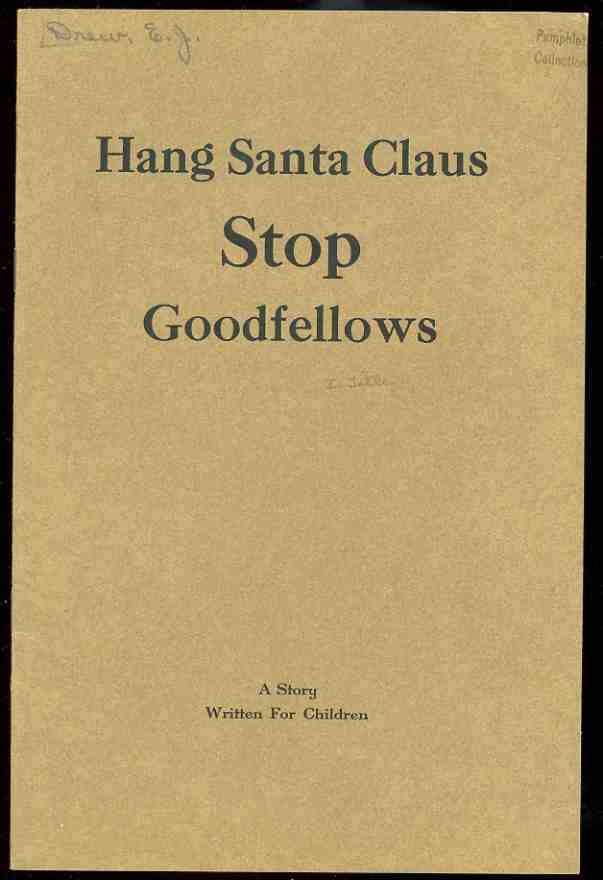
    0--ebay---dec 5 santa183 In the world of bizarrely entitled written works, this extreme effort, written by E.J. Drew (in 1937)   is a prime, glowing, poster-boarded champion.  When you throw Mr. Claus into the mix of bizarre, naive surreal and badly-titled Things Which Have Been Written by Humans, greatness is achieved.  Great badness–even after reading this, um, this written thing (and I’m not sure what category this might occupy but I am sure that whatever it was intended to be written as was written with words, and that’s about it, a Word Written Book, so to speak) I am not sure what it is about. 

    It was a “story written for children”, and such an un-tender Santa-related bad-inducement should certainly never find its way into any hands measuring less than four inches wide; or for that matter, more than four inches wide.

    But getting back to the “about” part–I really can’t tell.  Suffice to say that it involves some bad stories about being in the Dust Bowl, and about children so poor that they were FORGOTTEN by Santa. Then somehow Santa is beaten to a pulp by bad boys, rescued by newspaper boys (the “Goodfellows”), some other stuff, and then everyone winds up being judged by St. Peter as to where they would spend eternity. Santa replaces St. Pete, and then sends people like John Dillinger to the Bad Place. 

    David lynch
    Well.  If there is a moral in here I cannot find it; I can’t figure out the title, either.  The Goodfellows were good and weren’t “Goodfellas”, and the hanging and stopping I just don’t know.  The whole thing is a little disturbing, sort of like the feeling you get when you get your *first* disturbing feelings seeing David Lynch’s twisted/broken Eraserhead.  Pound-for-pound, Drew’s sweaty and nightmarish thing is as unpretty as Lynch’s third-worst. 

    As if one copy wasn’t enough. you can “get additional copies” of this work if you go back in time seven decades years and order them from E.J. Drew, 4034 West Warren Avenue, Detroit, Michigan. No price was listed.

    ·Posted by :

    ·in:

    —

  • Meekness as a Quality of Woman, 1685: on Patriarchy and the Enslavement and Subjugation of Women

    JF Ptak Science Books LLC  Post 409

    “‘Love is strong as death,” and so is the obedience and reverence paid to the ashes of the dead, ruling husband”

    The Ladies Calling, in Two Parts by the Author of The Whole Duty of Man, The Causes of the Decay of Christian Piety, and The Gentlemans Calling, by Richard Allestree, printed in Oxford in its popular eight impression in 1685, was hardly a novel or unique approach to the coaching of the supplicating and correct behavior of women.

    Its eight printings in a dozen years (assuming that the print run was at least largish, this would qualify as a best-seller in today’s market) was a testament to its somewhat mirror-like expectation of the social visions of the time, also making it hardly alone in its challenges to the neo-individuality of the female sex. It was pretty much what was to be expected, a “normal” vision of the actions of women, including as ever the not-so-faint aroma of the codification of sexuality, or at least the value of women as sexual objects.  (It is true that well-married women did have a sort of power through the husband, but if the promise of children was broken or if there was something not quite right in the private life, the wife could be gotten rid of very easily, and her power by association would be gone)

    The titles of its eight chapters pretty much tell the whole story:   Of Modesty,  Of Meekness, Of Compassion, Of Affability, Of Piety, Of Virgins, Of Wives.Of Widows. The message, or, rather, the demand:  be compassionately meek, religious and observant, happy, virginal until wifely and then wifely until death, and then acting properly after the death of that  which gave you nearly purpose. Be true and faithful and genuflectorial and obedient to your god and husband, and not necessarily in that order at all times.  Ideally, the woman would obey the callings and creations of the church representing the whims of the creator; though there were some times when the husband would be needed for elucidation and guidance to even the teachings/programs of the religious authority.  The creation of patriarchy had been at least a 2000-year-old process in the 17th century, and this book was yet another in the subtle changes to the regulation of that wall. 

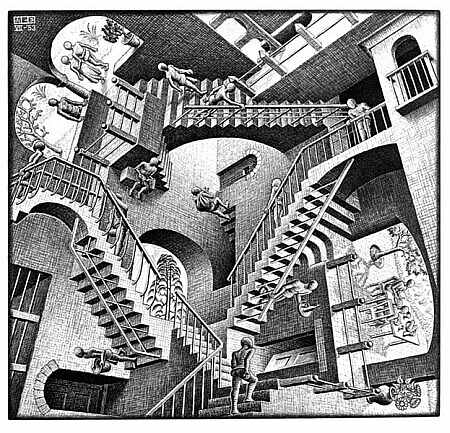
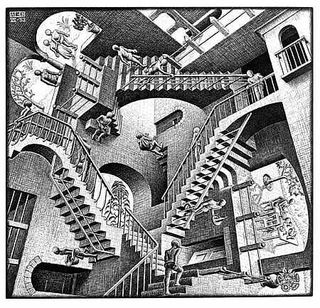
    The following two sections are pulled from the chapter on Meekness (and illustrated by an architect of Catch-22edness, M.C. Escher, on the inescapable logic of cohesive subjugation):
    Escher-mc-relativity-7400006

    “1. In the next place we may rank Meekness as a necessary feminine Vertu; this even nature seems to teach, which abhors monstrosities and disproportions, and therefore having allotted to women a more smooth and soft composition of body, infers thereby her intention, that the mind should correspond with it. For tho the adulterations of art, can represent in the same Face beauty in one position, and deformity in another, yet nature is more sincere, and never meant a serene and clear forhead, should be the frontispiece to a cloudy tempestuous heart. ‘Tis therefore to be wisht they would take the admonition, and whilst they consult their glasses, whether to applaud or improve their outward form, they would cast one look inwards, and examine what symmetry is there held with a fair outside; whether any storm of passion darken and overcast their interior beauty, and use at least an equal dilligence to rescu that; as they would to clear their face from any stain or blemish.”

    “3. And first for the Meekness of the Understanding, it consists in a
    pliableness to conviction, and is directly opposite to that sullen
    adherence observable in too many; who judg of tenets not by their
    conformity to truth and reason, but to their prepossessions and
    tenaciously retain’d opinions, only because they (or some in whom they
    confide) have once own’d them; and certainly such a temper is of all
    others the most obstructive to Wisdom.”

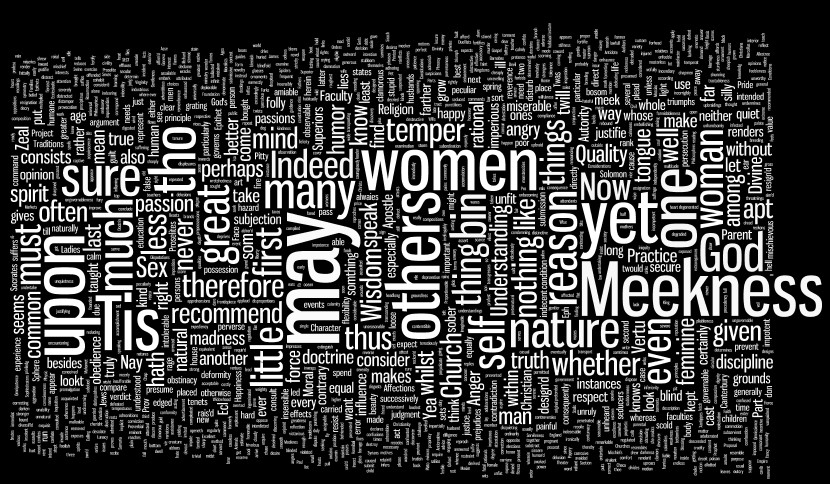
    The following is a Wordle Word Map of Meekness, featuring a vaguely three-dimensional 5,000-word
    word map of the contents, the words weighted, the most often occurring
    words appearing largest, and so on.  I’m not sure exactly what I’m learning from it, or learning more than I’d learn from reading two paragraphs of the chapter. 
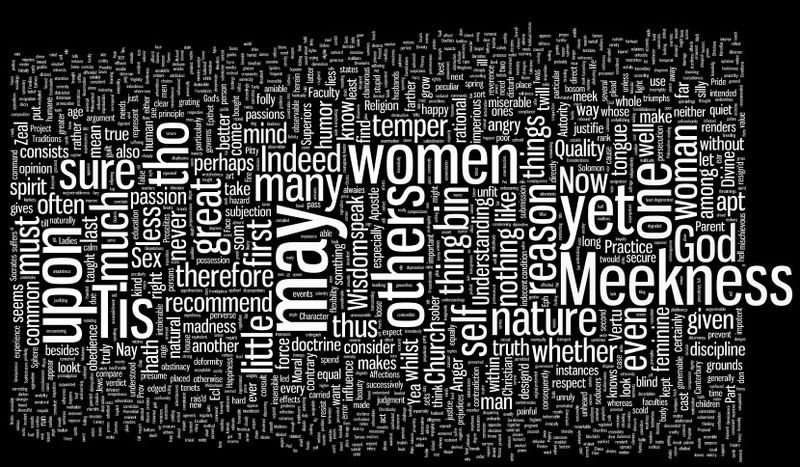
    Wordle--meekness 5000

    Some further quotes from this work, including the seven remaining chapters:

    Of Modesty
    “That the Obligation to Moral & Christian Vertues is in it self universal, and not confin’d to any Sex or Person, is not to be denied: yet, as in human Constitutions there are often Precepts, which (tho not exclusive of any, do yet) more peculiarly and eminently level at som particular rank or order of Men; so in the laws of God and Nature, there appears the like distinction. That all-wise Creator, who hath put peculiar proprieties and inclinations into his Creatures, hath accordingly design’d their actuating and improving them: and altho in mankind, which differs nor in species but in gender, the variety may seem less; yet there is still enough to found som diversity, either in the kind or degree of duty”

    Of Compassion
    “But this is yet more unnatural in the female Sex, which being of softer mold, is more pliant and yielding to the impressions of pitty, and by the strength of fancy redoubles the horror of any sad object; yea so remarkable is this tenderness, that God, when he would most magnify his own compassion, illustrates it by that of women, as the highest human instance. Indeed such a propension have women to commiseration, that they are usually taxed with an excess in it; so that any imprudent lenity is Proverbially called, A womanish Pitty, and therefore it may be thought an impertinence to exhort them to that which they can scarce avoid.”

    Of Affability
    “But hitherto we consider Affability only in its ethnic dress, as it is a human ornament; ’twill appear yet more enamoring upon a second view, when we look on it as bearing the impress of the Sanctuary, as a divine Vertu. And that it is capable of being so, we have the autority of St. Paul, who inserts it in the number of those Christian Graces which he recommends to his Roman Proselites; condescend to them of low estate, Rom. 12. 16. and that we may the better discern its valu, ’tis observable that he links it with the most eminent Vertu of Humility; for it immediatly follows his Precept of be not high minded. Indeed ’tis not only joined with it as a Friend or Allie, but derived from it as its stock and Principle: and certainly a more divine extraction it cannot have, Humility being the Alpha and Omega of Vertues, that which laies the foundation, (without which the most towring Structure will but crush it self with its own weight) and that which perfects and consummates the building also, secures and crowns all other Graces; which when they are most verdant and flourishing, are like Jonas his gourd, that may afford some shadow and refreshment for a while, but are apt to breed that worm which will destroy them. When once they are smitten with Pride, they instantly fade and wither; so necessary is humility both for the acquiring and conserving, all that is good in us.”

    Of Piety
    “Piety is taken for our more immediate entercourse with God, in things purely divine, as Adorations, Praiers, Aspirations, and all pantings and breathings of the soul after him; and in this notion ’tis more particularly called Devotion. And this is comprehended it: the other, as a part in the whole; nay indeed, as an effect in its cause; for where Piety has not first formed and modelled the soul, there can be no true Devotion.”

    Of Virgins
    “Virginity is first in order of time, and if we wil take S. Pauls judgment in respect of excellence also, 1 Cor. 7. And indeed she that preserves her self in that state upon the account he mentions v. 33. that she may care for the things that are of the Lord, that she may be holy both in body and in Spirit, deserves a great deal of veneration, as making one of the nearest approaches to the Angelical State, And accordingly in the primitive time, such a Virginity was had in a singular estimation, and by the assignment of the Schoolmen, hath a particular coronet of glory belonging to it.”

    Of Wives
    “In that of a Wife her duty has several aspects, as it relates, first to his Person, secondly to his Reputation, thirdly to his Fortune.”

    Of Widowhood: 
    “THE next state which can succeed to that of Marriage is Widowhood, which tho it supersedes those duties which were terminated merely in the person of the husband, yet it endears those which may be paid to his ashes. Love is strong as death.”

    “Love is strong as death.”  So is obedience, or obedient love, or meekness rapped up in a quilt of obedient love in a field of affable, modest, pious modesty, commanded by the male even in death.

    I said earlier that the idea of patriarchy and the war on gender is a 2500-year-old process.  It is remarkable to think about the advances in equal rights for women in the last 115 years, especially in the light of the introduction of money into the equation.  Within the last 400 years or so the concept of private acummulation of property came along to the not-wealthy classes mostly (perhaps) as the standard practice of the transfer of dowry/property/children from the women to man via marriage. (I say “115” and not “100” years because, at Tahakopa, on 28 November 1893, New Zealand became the first country to grant voting rights to women on a national basis–hats off again to NZ for being first again in so many important categories.) That said, and with the extraordinary weight of money, the subjugation part was very well entrenched until relatively recent times.  As a matter of fact in the history of patriarchy this would represent only about 3% of the timeline of subjugation–1.5% if you were being honest about it. 

    So in the history of the enslavement of women,  and of all the billions of lives of women that have been lived during that time over 25 centuries, it is only within the lifetimes of living grandmothers that the true superior progress in achieving equality of rights for the sexes has been made.  If that sort of realization doesn’t illuminate the darkly myopic views of people who would want to continue ruling via exploiting differentiation, I don’t know what will.  That for 2500 years something was “normal” and acceptable; and then in the last 115 or so years, it became less so, and now in the last 50 years it is a recognized embarrassment and mistake to anyone with a brain.  Condensing backwards vision like this is an interesting practice, especially when you put it up alongside other, contemporary issues that smack of this sort of discrimination, like California’s Proposition 8.  I just hope that it won’t take a hundred years for the majority of the people living in this country to recognize that we were being stupid.  I trust that New Zealand won’t take nearly this long. 
    ·Posted by :

    ·in:

    —

  • Skinny II: Morals, Class Warfare & Letting Someone Else Pick up your Dropped Fork

    JF Ptak Science Books Post 406

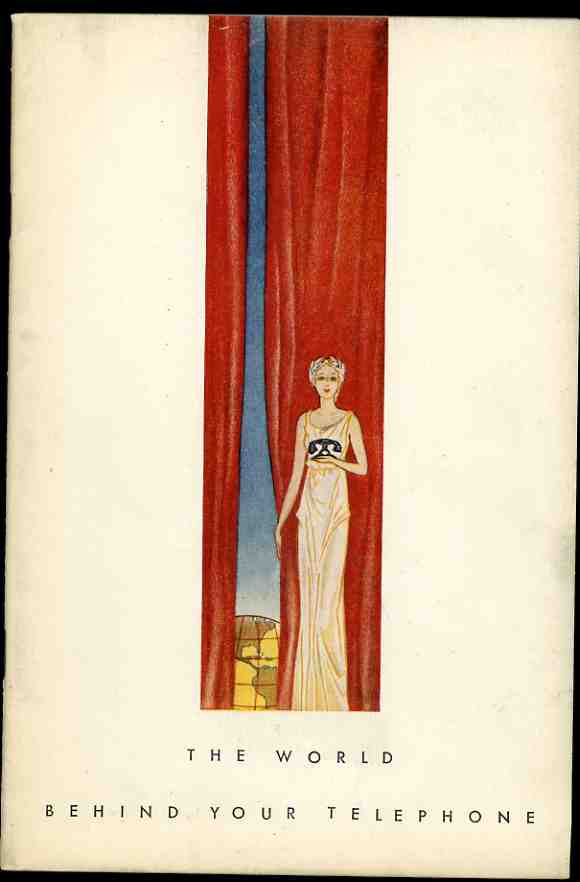
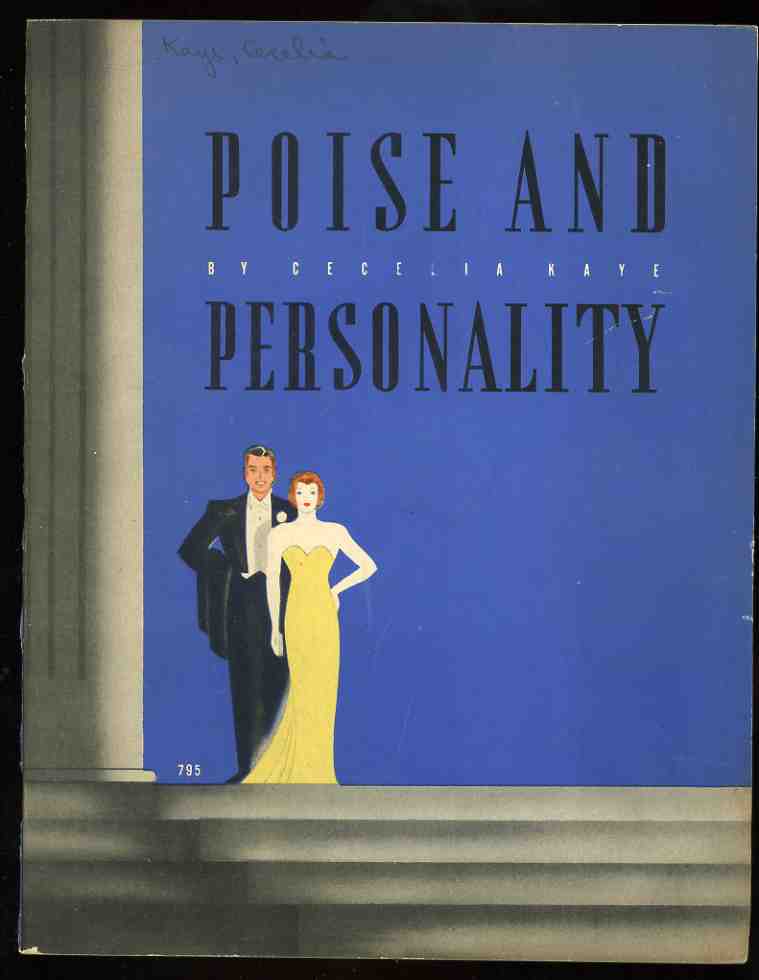
    Yes, these two pamphlets are beautifully designed, real works of production art, speaking elegantly and skinnily to their skinny, elegant times.  The World Behind the Telephone is a straightforward look at the stuff going on behind the scenes that made the telephone “go”–the woman holding the telephone is remarkably tall and angular, holding back the curtain of an even taller and skinnier doorway, beckoning the viewer into the unseen telephonic world.  Poise and Personality features more skinny people, and offers the skinny on some excruciatingly class-conscious tips on expected behavior and the division of the classes.

    0--blog---Nov 29 skinny156

    0--blog---Nov 29 skinny157

    “Social poise does not consist of a mere set of mannerisms” it reads, but beware:  “avoid careless and loose forms, which are in bad taste”.  There are all manner of pinkies-up logics and societal sniffing splayed throughout these pages, from the chapter improbably titled “Preccedence [sic] in Introductions”, to “Sensitivenesses” (“being sensitive is a luxury and the price runs high”), “Inferiority Complexes (“if you are afraid of people, talk to them with a smile…”), “Personality development” (“undoubtedly there is a native something that differs in each of us”), “Poise” (“…people are unhappy because they are nervously conscious of a lack of ability to mix with strangers….consequently they are unable to appear calm and balanced”. 

    Yes, it is a product of its time.

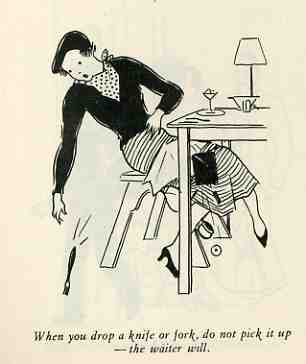
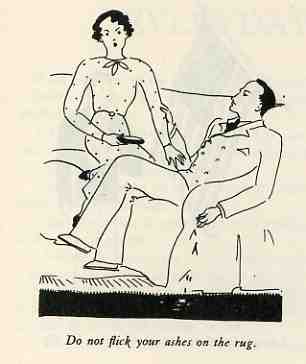
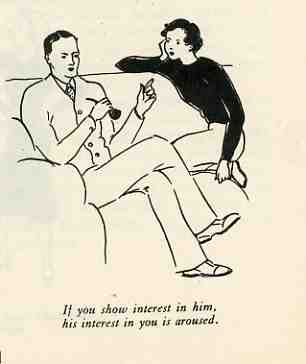
    There are some troubling and insensitive things in here as well, pamphlet being delivered of it times or not.  Letting the waiter pick up your fork is one; do not drop your ashes on the floor is another.  The more subversive ones though are on dating behavior and gender wars, the subjugation of women as it was in 1938 firmly on display.  “If you show interest in him, his interest in you is aroused.” Oh dear sweet creator, the woman is only of interest to the man if she reflects his interesting bits back to him.  Why not have the guy date a mirror?  That way nothing will be lost in all of that wasteful biological differentiation. 

    Here’s an early classic on the subject:  John S. Mill’s On the Subjugation of Women, an oldie but still a goodie. 

    0--blog---Nov 29 skinny158 0--blog---Nov 29 skinny159

    0--blog---Nov 29 skinny160

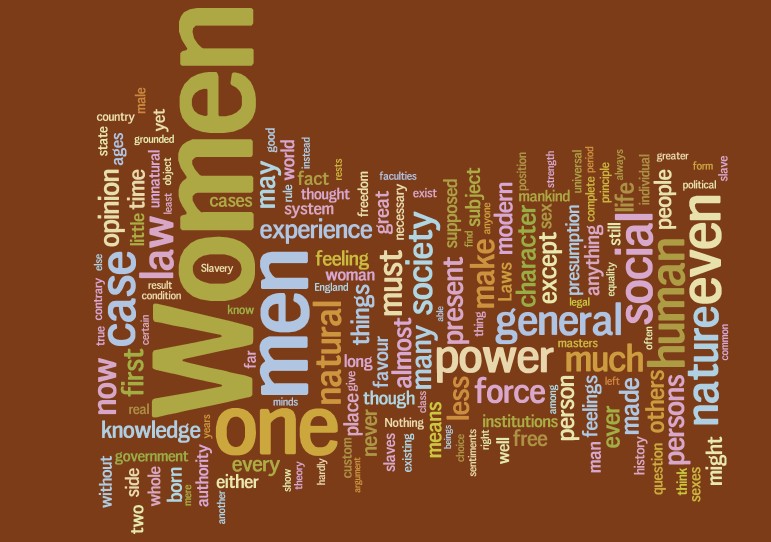
    Just for good measure, and really not related to this post, I’ll throw in a word map generated by Wordle.net of Mill’s Subjugation of Women (I like how “slavery” happened to pop up in the middle of the “O” in “women”):

    Wordle--subjugationfixed

    ·Posted by :

    ·in:

    — —