A Daily History of Holes, Dots, Lines, Science, History, Math, Physics, Art, the Unintentional Absurd, Architecture, Maps, Data Visualization, Blank and Missing Things, and so on. |1.6 million words, 7500 images, 4.9 million hits| Press & appearances in The Times, Le Figaro, Mensa, The Economist, The Guardian, Discovery News, Slate, Le Monde, Sci American Blogs, Le Pont, and many other places… 5000+ total posts since 2008.

Category: Bad Ideas

  • Crowds #5: Clarity and Confusion in Displays of Human Masses.

    JF Ptak Science Books LLC  Post 523
    0 abay feb 23 crowd617

    I do enjoy looking at pictures of crowds–big crowds.  Images of the crowd are much easier to find in the 19th century and onwards (and particularly in photographs), though big displays of human seas (such as they were) began to show up in the late 15th century, and then, more as a matter of course, in the early 16th century.  What is enjoyable for me are the numerous vignettes that make up the whole, discrete visions within the larger visual field, a sweep of smallnesses that can seemingly stand on their own had they been bigger. 

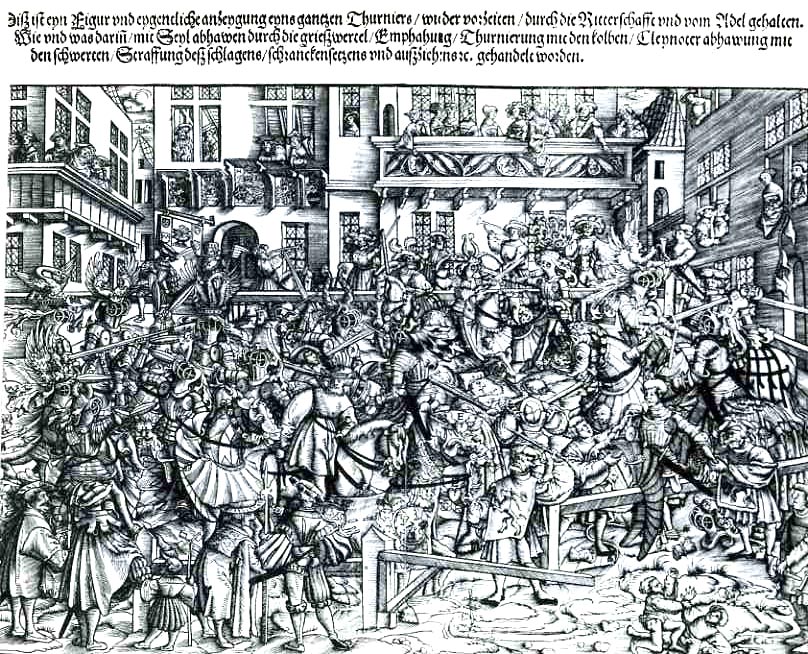
    Depicting crowds can be a chore successful and not–for example, the image to the left, an amalgamated porridge of controlled mock combat, a sweeping chaos with appreciative bystanders, is so busy, and has so many constituent parts, that there 
    0 abay feb 23 crowd618

    really isn’t a “whole”.  I can hardly see the thing, for crying out
    loud, for all of the disconnected action.  The artist who produced this
    remarkably good/bad image for Georg Ruexner’s fantastic Anfamg, Ursprung und Herkomen de Thirnirs in Teutscher Nation
    (published in 1530) clearly had interest only in the details of the
    action; and thus the overall image is a beautiful confusion of starts
    and fits, defiant in its general appeal to comprehension.  The impression to me is a miserably layered oneness of discordant activity, a sloppy relief of enormous detail, the whole worth far less than the sum of its parts. 
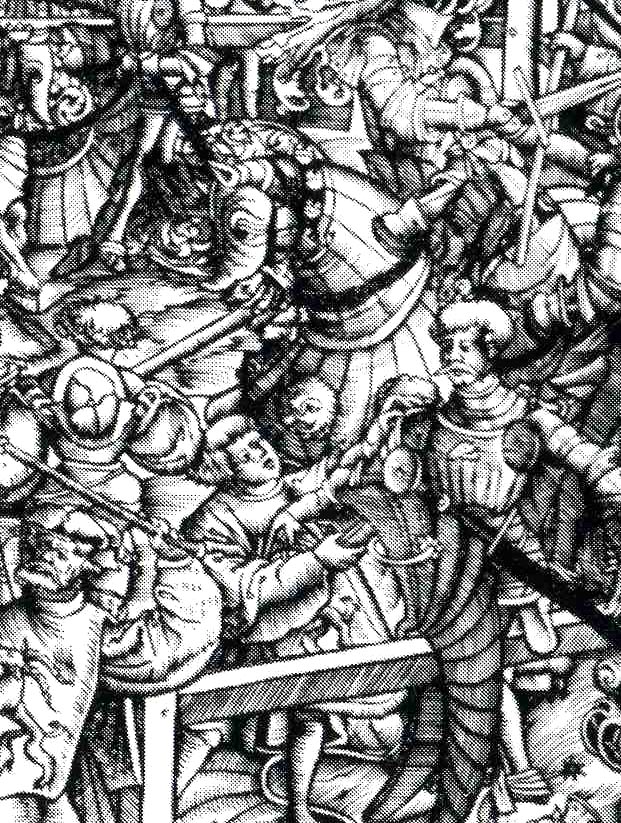
    The only place that your eye gets a chance to rest and focus is on the two dozen or so spectators who are in the windows and balconies overlooking the small square where the tournament was taking place–their appearance, and also that of the small assembly of musicians at center, offer a calming influence to the rest of the picture.
    One bit that leaps out at me, though, are the two small boys who seem to be having a fistfight, right there at the bottom-right of the image.  I can tell you that pictures of boys fighting finding their way into piece of renaissance art is a very rare thing.  Perhaps the artist was trying to send us a message, after all?

    (I know this is a pretty big complaint, particularly since the book is a monumental work on The Tournament, and it was done within the first 65 years or so of the invention of movable type printing, but I just found the thing so opitcally  corrosive that I wanted to surface it. )
    0 abay feb 23 crowd620

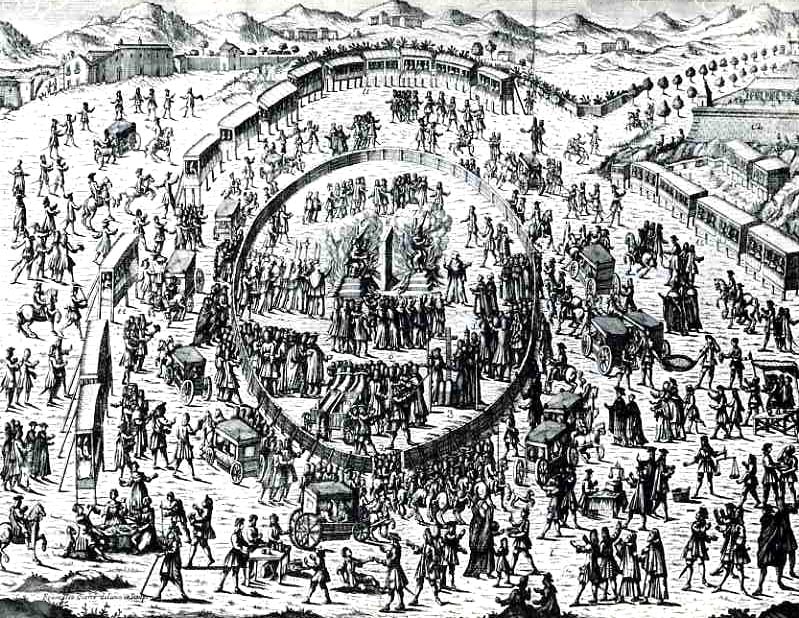
    The second example, coming to us from Antonio Mongitore (L’Atto Pubblico di Fede Solennemente Celebrato nella citta di Palermo, 1724) depicts an earlier scene, and one of complexity and order.  Unfortunately, the cohesion centers around the execution of two tried/convicted heretics–god knows what they did to deserve this cleansing sentence. It didn’t take all that much during the Inquisition to find yourself in deep black waters, as Mother Church seems to have been extraordinarily thin-skinned; the slightest abrasion to their slight slate of moral indignities could result in being hurt in foul way, and then burned alive at the stake. 

    But in looking closer at this image, I’m not sure sure that these two unfortunates were actually being burnt–it may be that they were being roasted alive.

    0 abay feb 23 crowd619

    They are seated, and the pyre seems to be only behind them–perhaps
    the flames hadn’t reached them yet; but people were in fact roasted,
    cooked alive, which may be even more girzzly than being consumed
    entirely by flames.  The two are being approached, or watched, or
    offered too-late benedictions by a line of clerics shielded by a
    crucifix–perhaps they were just reminding the condemned exactly who it
    was that they had pissed off. 

    There is no doubt that this was
    a popular diversion for those not in fear of being burnt at the stake,
    as there are probably hundreds of people in attendance, including those
    in a semi-circle of pre-modern “skybox” accommodations–undoubtedly the
    holier folks.  Piety of witnessing best in privacy and all that. 

  • A Beautiful Book of Terrible Things: Artillery, 1623

    JF Ptak Science Books LLC  Post 522


    0 blog feb 16 rockets596
    0 blog feb 16 rocket detail

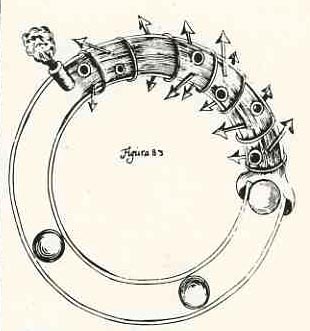
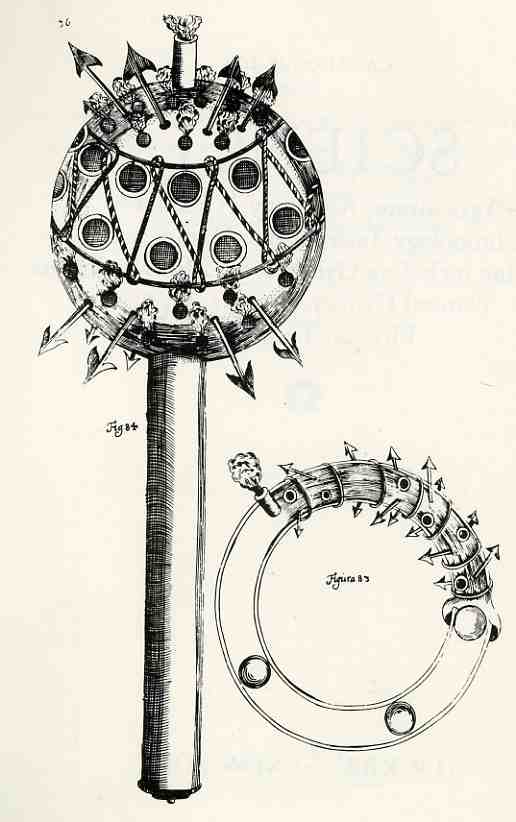
    Praxis Artolleriae Pyrotechnicae, printed in Osnabruck by Tilman
    Buchholtz for Johann Georg Schwaender, is one of those beautiful books
    of horrible things; beautifully designed and illustrated, with
    magnificent images of the horrifying necessaries that bind and tear
    nations and people.  Flying and land-based weapons o fall sorts filled
    these pages:  rocket, grenades, land mines, plus pyrotechnics and
    fireworks.  As jolly as this implement might seem, it is not a
    firework, at least not one for entertainment:  it was meant to
    dismember or kill.  Those “arrows” on the ring are not showing the
    direction of the flight of the module–they are spears.  This was a
    lethal weapon of the highest order–pretty, not-so-simple, and deadly.

    Some other beautiful terribles, published to about the year 1600, include: 

    Roberto VALTURIO 1472 Vérone De re militari

    Niccolo Fontana TARTAGLIA  1537  La Nova Scientia

    Vanoccio BIRINGUCCIO  1540 : De La Pirotechnia

    Conrad HAAS  1556 : Kunstbuch

    Girolamo CATANEO 1564 : Opera
    nuova di fortificare, offendere et difendere, et far gli alloggiamenti campali
    .

    Thomas DIGGES  1579 Arithmetical
    military treatise
    .

    Gabriello BUSCA 1584 Istruzione dei Bombardieri.   1585  Della espugnatione et
    difesa delle fortezze
    .  1606 :Della
    Architeltura militare
    .  

    Luys COLLADO 1586
    Practica manuale di artegliera.

    Jean BEAVIE 1591 Liège La
    pyrotechnie militaire

    Daniel DAVELOURT  1597 Briefve
    Instructions Sur Le Fait De L’artillerie de France
    .
    – 1606  L’Artillier.
    – 1608 : L’Arsenal et le magasin d’artillerie.
    – 1617  L’Art et la conduite des eaux sur le fait de l’Artillerie de 
    et ses dépendances

    Joseph BOILLOT.  1598 Modelles,
    artifices de feu et divers instrumens de guerre
     

    Gabriele BUSCA da Milano 1605 Della
    espugnatione et difesa delle fortezze
    .
    1598 Istruttione de’ bombardieri.
     

    Eugenio GENTILINI  1598 Instruttione
    di artglieri
    .

    David RIVAULT de FLURENCE 1605
    Les elemens de l’artillerie concernans tant la theorie que la pratique du
    canon
    .
    1608 L’invention description & demonstration d’une nouvelle artillerie
    qui ne se charge que d’air ou d’eau pure, & à neantmoins une incroiable
    force. Plus d’une nouvelle facon de pouldre a canon tres-violente qui se faict
    d’or, par un excellent & rare artifice non communiqué jusques à present.
    L’histoire du progrez & des premiers usages des armes à feu tant recentes
    qu’anciennes, est deduitte en l’avant-propos
    .  

    Leonhard ZUBLER 1608  Nova
    geometrica pyrobolia – Neuwe geometrische Büchsenmeisterery
    .


  • Stepping UP to Heaven: the Beautiful Dead of Los Angeles

    JF Ptak Science Books LLC Post 516

    0 abay feb 13 forest lawn DET583

    0 abay feb 13 forest lawn582

    DEAD, adj.

    Done with the work of breathing; done
    With all the world; the mad race run
    Though to the end; the golden goal
    Attained and found to be a hole!
          —Squatol Johnes (Amrbose Bierce in his Devil’s Dictionary.)

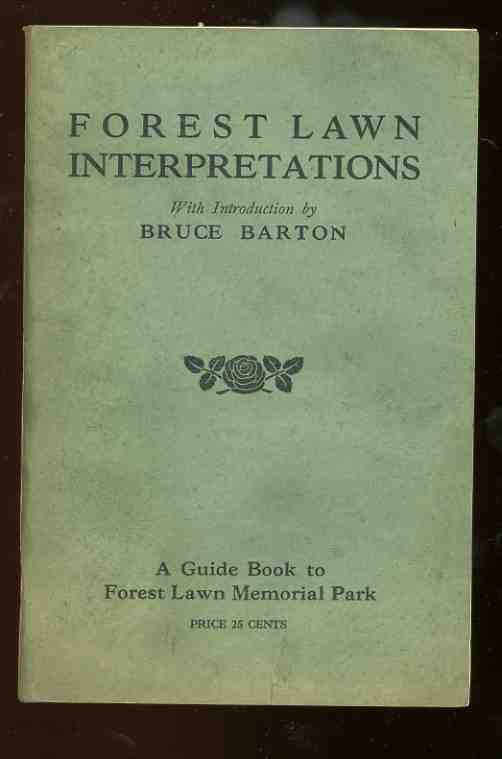
    A first step up toward Heaven? What was Mr. Barton thinking, outside, perhaps, of filling up pages with words so that he could collect 10-cents apiece for them?  His pen was so filled with sugar (I’m sure that I got a case of The Diabetes just from reading the words) and his exaltations of being in the cemetery were so gloriously and morbidly obese that one could only but fling oneself under the next trolley to Burbank  to get to the luscious dirtnap promised for the departed at Forest Lawn. I mean, dirt never tasted sooo good.  This pamphlet, published in 1935, was basically a sales brochure for tourists–the sales number made for prospective departeds would have to had been something far more enticing–at least it would have had to cost a lot more to print.  But what I think the Forest Lawn people were doing was trying to control a little bit of public attention and sympathy to generate ever more interest in the

    Lamp
    sales of cemetery privileges and internment bric-a-brac for the noticables who could afford it.  It was still very expensive to sleep with the worms at Forest Lawn, even in the Depression–it seems as though the price of admission at the lowest end was in the order of a few thousand dollars, which was a lot in those days. But if a lot is what is cost to be dead in an expensive place, well, then so be it.  The place was decorated with casts of Renaissance statues and other High Art exuda that it was, well, perfectly awful.  (Or  in the words of Darren McGavin, who plays/was the wonderful father from A Christmas Story, when gazing for the first time on a spectacularly ugly table lamp made of a resin model of a woman’s (provocative) leg, gasps (just as you’re thinking he’s about to retch into his own hands): “Its…indescribably beautiful!“.).  Forest Lawn is just so.  I guess that it must be, because there’s a quarter of a million people buried in there, and a million people visit them a year.  What with sections called Eventide, Babyland (for infants, shaped like a heart),
    Graceland, Inspiration Slope, Slumberland (for children and
    adolescents), Sweet Memories, Vesperland, Borderland (on the edge of
    the cemetery), and Dawn of Tomorrow, how could this place not be indescribably beautiful?  Listen:  it is beautiful enough for people to get married there.  Ronald Reagan did.  Case closed. 

    ·Posted by :

    ·in:


  • Van Helmont’s Lovely Title Page and his Sorry Slip into Curative Magnetism

    JF Ptak Science Books LLC  Post 514

    0 ebay feb 10 helmont553

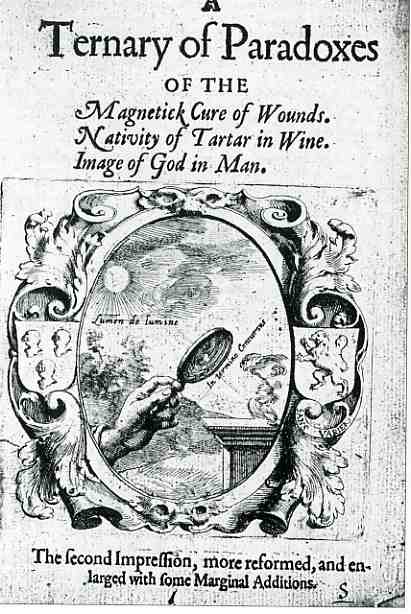
    Joan Baptiste van Helmont’s
    A ternary of paradoxes : the magnetick cure of wounds, nativity of tartar in wine, image of God in man.
    (printed in London  by James Flesher for William Lee, 1650), offers its own unintended paradoxes (and joined the field of relatively few books with the word “paradox” in their title).  Purportedly a work of science, van Helmont offers the reader his views on the curative powers of the loadstone.  Of particular interest is Helmont’s (1579-1644) discussion of the weapon salve, a cure for injuries caused by knives and swords. The unique feature of this ointment was that it was not applied to the wound but to the weapon which caused the wound, though in the midst of other very problematic scientific observations, this wasn’t so bad.  For example, Helmont presented a recipe for making scorpions, which involved bricks, sunlight and basil, from which a scorpion would come. 

    And what exactly is Helmont’s place in the history of science?  Difficult to say:  he did make several important physical discoveries, and did present what some have called the modern approach to experimentation (firm insistence on relateable objects in empirical observation and so on); however, he was a reaching alchemist misty mystic who rejected syllogistic thought, mathematics*, human reasoning.  These are hard bits to let go.

    All this said, what with scorpions and magnetic treatment of wounds, he comes close to the generation of infection in wounds:  “Upon the solution of Unity in any part the ambient air…repleted with various

    0 ebay feb 10 helmont555

    evaporations or aporrhoeas of mixt bodies, especially such as are then
    suffering the act of putrefaction, violently invadeth the part and
    thereupon impresseth an exotic miasm or noxious diathesis, which
    disposeth the blood successively arriving at the wound, to
    putrefaction, by the intervention of fermentation. ” With his magnetic
    sympathy, Van Helmont expressed clearly the doctrine of immunity and
    the cure of disease by immune sera: “For he who has once recovered from
    that disease hath not only obtained a pure balsaamical blood, whereby
    for the future he is rendered free from any recidivation of the same
    evil, but also infallibly cures the same affection in his
    neighbour…and by the mysterious power of Magnetism transplants that
    balsaam and conserving quality into the blood of…’
    Problematic greatness just needs to be understood in greater detail
    than simply disregarding everything because someone disdains logic…

    Note:

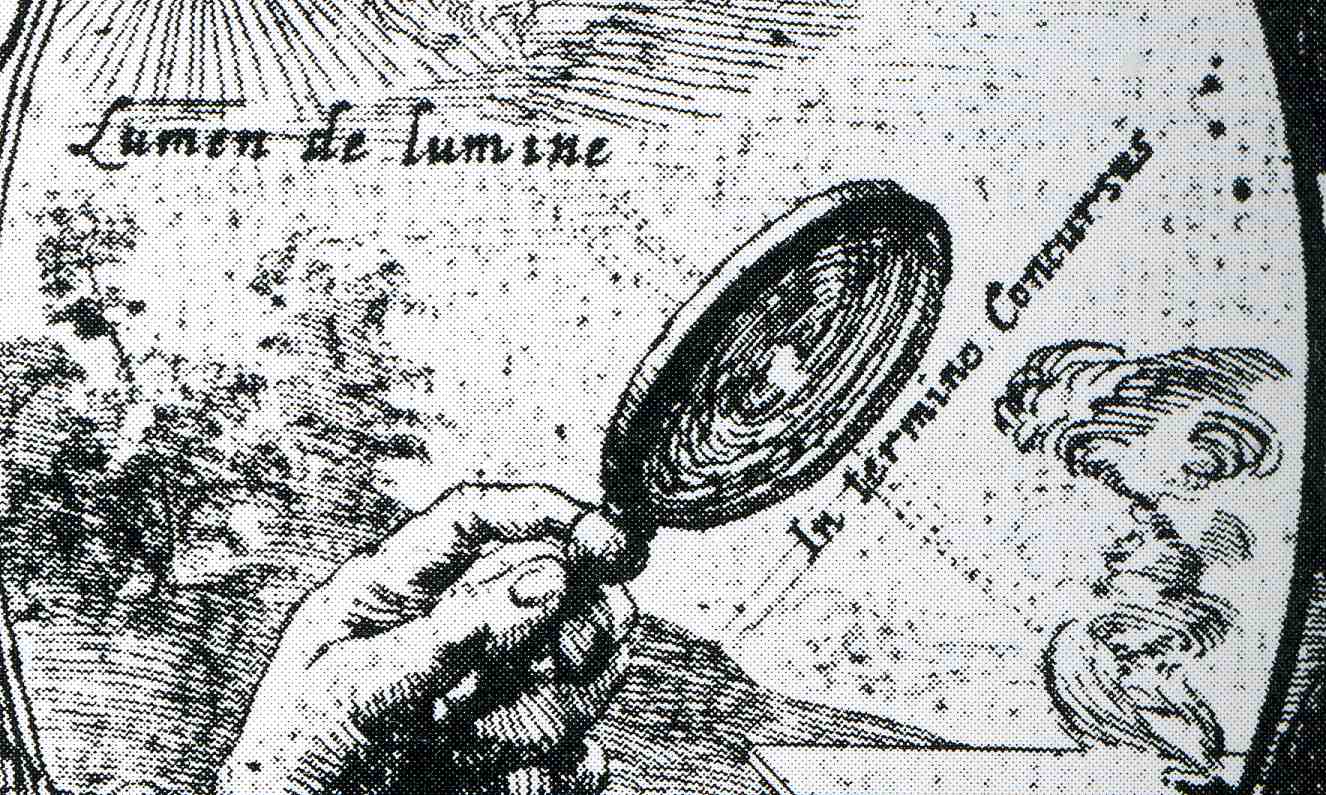
    The interesting image in the middle of the title page is more religious symbolism than what seems to be a straightforward physics reference, and the bulk of it lies in the “lumen de lumine” inference, which in the Nicene-Constantinopolitan Creed confesses faith in Jesus Christ as Lumen de Lumine (Light from Light).  Once you replace the optics with the divine, the rest of the image and its relationship to the contetns of the obok becomes more clear.

    *

    Helmont thought about the restrictiveness of mathematics, and that the quantitative aspects of things that math addressed missed their interior qualities, thus making mathematics not able to see what things are.  Oopsie.


  • The Zero Minus Zero Department: David Lynch Marionette Explains Surviving a Nuclear Holocaust

    JF Ptak Science Books LLC  Post 512

    Rural_civil_defense_tv_spots_1965_000210
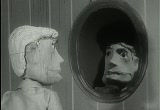
    I wouldn’t look at this linked video if it is bedtime where you are.  It is a singularly creepy experience, at least for me, to watch this exceptionally bad marionette go through the paces of explaining how rural folks should/could prepare for the consequences of Atomic Armageddon.  Delivered to god knows where by the Department of Defense in  1965, this cretinous, bunch-crotched, simian-fingered, dead eyed, helmet haired, waxy marionette with a Joker mouth that goes from ear-to-ear wants to help in ways that make you want to run into the flames to drink a flaming glass of Pure Radiation.  As we watch the ten or so shorts unfold, the creepiness grows denser and bolder, watching the shaky walls behind hay bales in the basement fortress, collecting the errant cow to stuff it into the bomb shelter with a pat on the butt, the deeply disturbing profile of Marionette Man watching tv, the fully-dressed-wide-eyed-shocked-into-consciousness-zombie sleep, the black mirror, and on and on. 

    These films are bizarre, errant, meaningless masterpieces, sugar coating the End of Things with flippant advice from a scary man moved with shining string–could such an important message be delivered with less care and still be delivered? Well, yes, of course, as anyone who can still remember “duck and cover” exercises can tell you. These supposedly “uniquely” stupid messages bombed onto the American population were basically part of an entire genre of visual seduction that induced an intellectual collitis that enabled such broadcast monologues to be delivered in the first place.  The best way to lie and have your message be believed is Lie Big, and these public betterment messages were among the Biggest Lies of the decade. 


  • Things out of Place Department: a Cloud of Magnetism in the Sky Poked by the Needle of God

    JF Ptak Science Books LLC  Post 508

    0 blog feb 9 missing magnet543“And even though I’m sitting waiting for Mars

    I don’t believe there’s any future in cause

    Hole in the sky, gate way to heaven

    Window in time, through it I fly…”

    Black Sabbath, “Hole in the Sky”, 1975

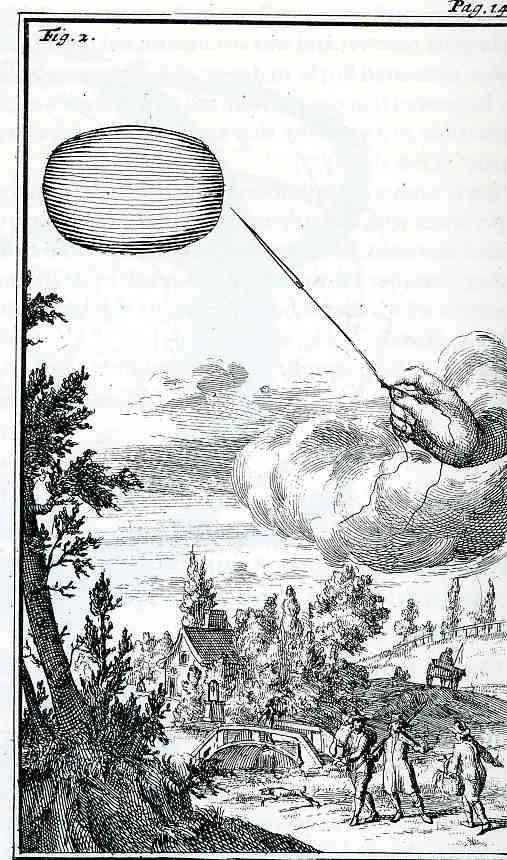
    Well, there were many liberties taken with this title, though on the face of it, the title is correct (sort of).   This image comes from a relatively obscure (or at least quite rare) copy of  Joachim Dalance’s work Traite de l’Aiman, divise en deux parties, la premiere continent les Experiences et la seconde les raisons que l’on en peut rendre... which was printed by Henry Weinstein in Amsterdam in 1687 (just across the waters in London Isaac Newton’s fantabulous Prinmcipa Mathemtica was being printed in the same year).    This important work on magnetism featured a number of good and useful observations on magnetism, interspersed with some semi-useless bits:  the magnetically floated coffin of Mohamets is mentioned and disproved, the origin of magnetism is asserted by hypothesis and is not pretty, along with some “fanciful conception(s) of the magnet’s potential”*; on the other hand, there is a mention of the invention of the compass, the real use of magnets, a mention of declination, and the orientation of a compass needle in a magnetic field is shown.  All pretty good stuff, considering the time.  (The magnum opus on the magnet was published in 1600m by William Gilbert and was called De Magnete, Magneticisque Corporibus, et de Magno Magnete Tellure (On the Magnet and Magnetic Bodies, and on the Great Magnet the Earth), though folks have been writing on magnetism since Aristotle and Thales)

    M. Hofer, the author of the quote above, mentions that the pamphlet’s images “are particularly good scientific illustrations”, though doesn’t mention this, figure 2, as being anything significant.  Trying to dissect the phenomenal imagery, which purports to depict the origins of the sources of magnetism, we see something like a “magnetic cloud” in the sky, about to be pricked by a needle held by the primum mobile.  That, or it is a missing piece of sky, a gapping hole, though not in the sense of what we’re getting now in the ozone layer, or in the fantastic billion-light-year wide swath of nothingness in the foamy universe.  Perhaps it is more like the Black Sabbath lyrics after all, a hole in the sky, pricked by the creator, to loosen the fabric of magnetism and getting a glimpse of heaven.    Or something.  

    [I should point out that Dalance was an out-and-about guy, with high-level correspondence, and who seemed to be at the right places at the right time.  Among many contributions to the sciences, Dalance–who was a friend of Henry Oldenbourg, helped introduce Huygens to the Royal Society as well as to the French Academy of Sciences, acting as an intermediary for the most part.  He seems to be an interesting guy.]

    *–Ph. Hofer, Baroque Book Illustration, page 42


  • Bad Ideas: Advertisers in Your House and in Your Head, 1939

    JF Ptak Science Books LLC  Post 508

    Scan0006
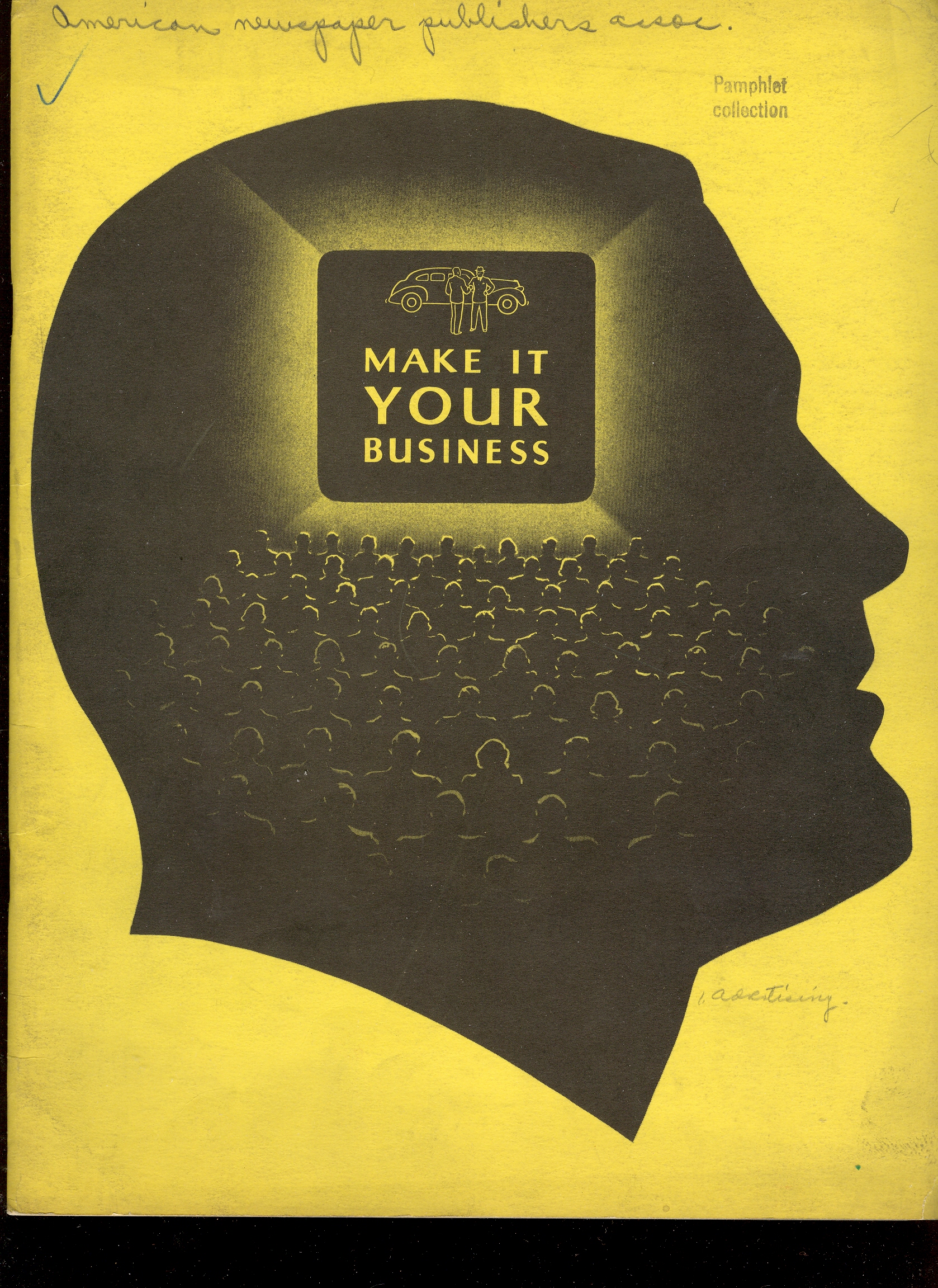
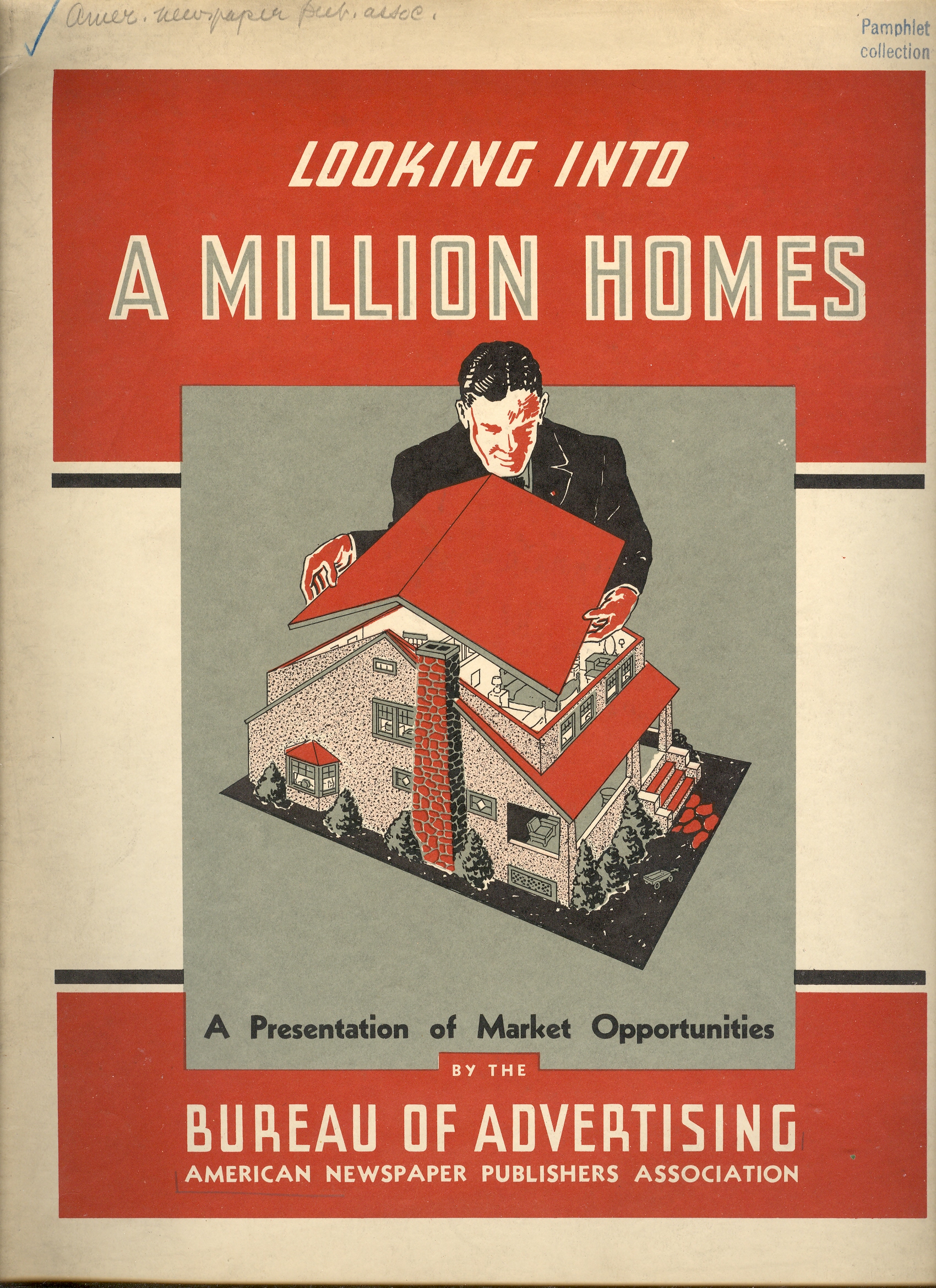
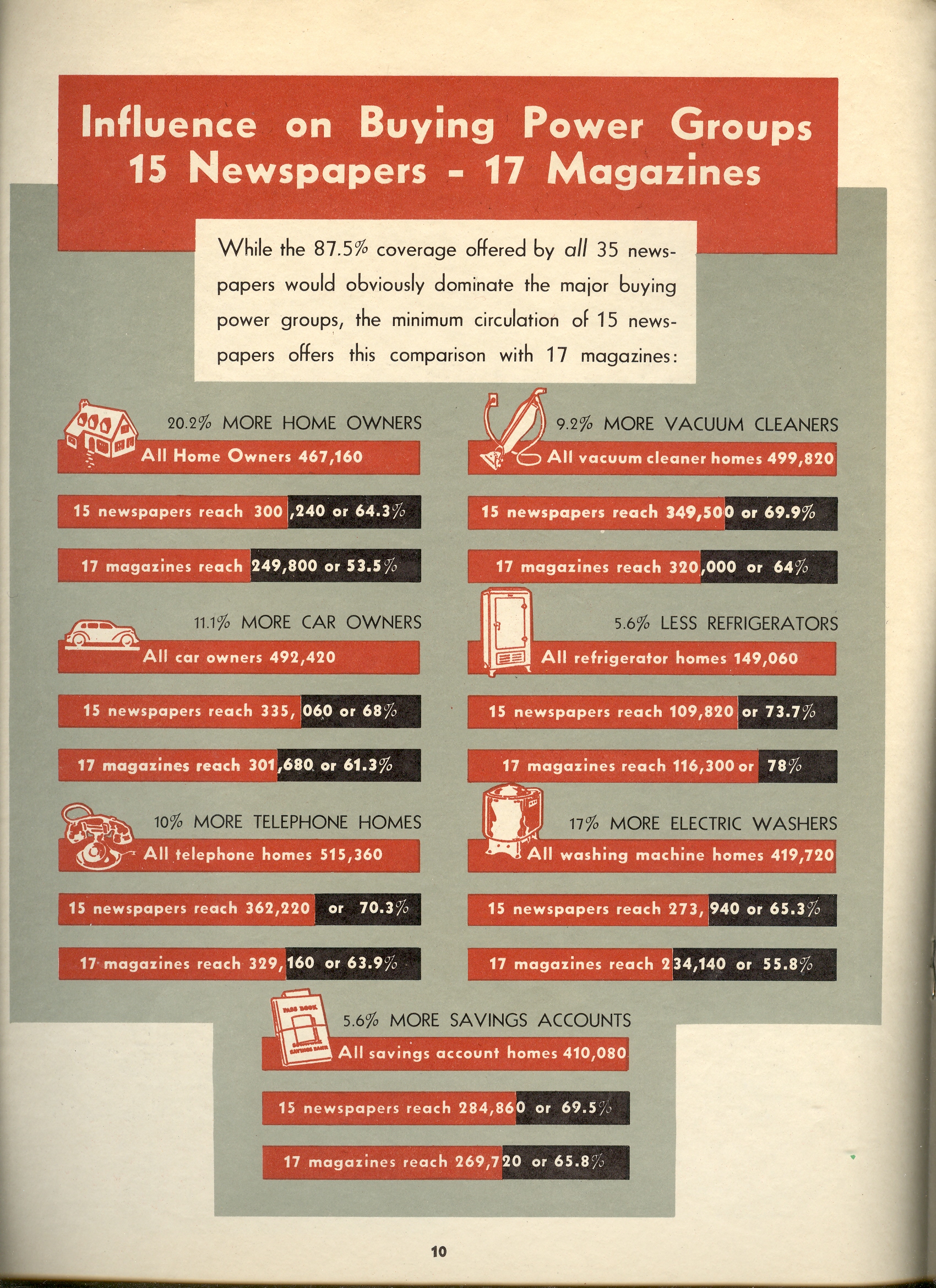
    I have little doubt that in the near future we will be deluged with advertisement at any time and in any place, the ads made exactly for you, found for you by little crevices occupied by digicams with facial recognition software powered by the next 50 years of programming research, perhaps reaching into what has been defined as your genetic soul….and there will probably be no escaping it, unless you’re able to pay somehow for the privilege of obscurity or silence.  The genre of force-feeding and creating need in the buying public for various bric-a-brac started was for real in the 1920’s (this being in no small part the shrinkological efforts of the “father” of American behavioral psychology, John B. Watson) and cranked up considerably and with major dollars in the 1930’s, when it was absolutely determined that ‘proper” advertising could sell anything.  (Watson showed this with great effect when he determined that people didn’t buy a “type” of cigarette more than they purchased the cigarette’s image–and to determine the image what was improved was the walk-away catchphrase that purchasers could quickly identify with the product.  And so a lowly and failed cigarette brand structured for women was renamed and given a catchy sales tag–the cig was Marlboro and the phrase was of course “I’d Walk a Mile for a Camel”.  Watson’s contention was of course that people didn’t buy the thing as much as they bought its promise, and the promise had to be delivered and reiterated to them endlessly, for years.) 

    These two pamphlets naively displayed what the advertisers were really after, the continual search for the GoldenScan0007
    Chalice–and that is to be in the head of the consumer, and then to be in their house, from initiating the desire to facilitating the purchase.  Both pamphlets were published in 1939 by the American Newspaper Publishers Association, and were a sales presentation for making sales presentations, an advertisement for the advertisers.  And they really did want to get into the mind of the public and insinuate them selves within the home. And both rate VERY high on the Creepy Scale.  

    I should point out that the graphical representation of the statistical data in the second pamphlet is quite terrible–these efforts aren’t in the top-99th percentile-bad category, but certainly are in the top 90%.  Easy. 

    Scan0008


  • Elements of Social Delinquency, 1947: Books and Records as Faithless Elements of the Decline of Morality

    JF Ptak Science Books LLC  Post 499

    0 blog jfeb 2deliqunency502
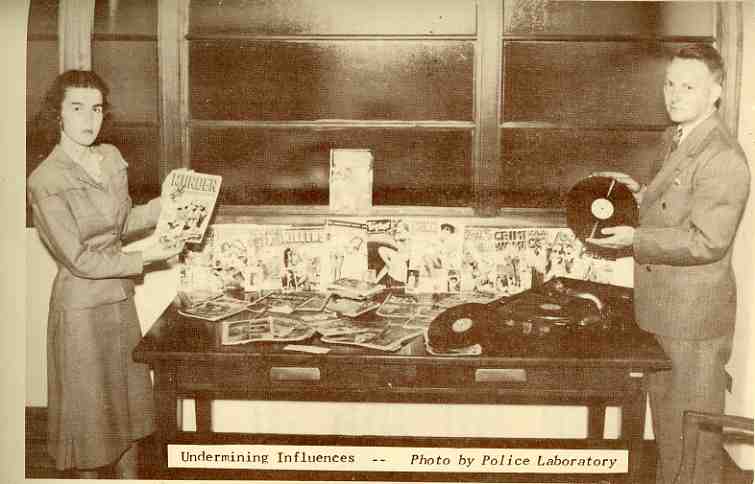
    Only 62 years ago the basic contributors to the delinquency of American youth were recklessness, idleness, books and records, and this helpful pamphlet, Delinquency Prevention, the City’s Future, published unattributed in 1947 for the Youth Protection and Delinquency Prevention Program for the city of San Diego, California, had many of the basic answers to the knotty questions of raising good-spirited anti-corrupt young folks.  This young woman, appearing on page 27 in the photo captioned “Undermining Influences–photo from Police Laboratory” stood before a neatly laid table packed with expediencies of social decay, and from the looks of it, she could barely stand to be there, even though she was protected by a mighty and invisible cloak of superiority.  (It seems that she is caught in mid-sentence, gingerly holding her MURDER magazine, jaw thrust forward, fixing the camera with a sharp left eye which was fortressed by a mighty and disproportionately-sized eyebrow.) 

    0 blog jfeb 2deliqunency503

    0 blog jfeb 2deliqunency501
    Unfortunately, given the large-grain halftone of the original, I can’t quite make out all of the titles of the offending magazines and records–most of the “men’s journals” seem to deal with murder-kill-bang-bang-stockings and god knows that the records in 1947 were probably by Johnny Mercer (as I can hardly believe the SDPD could even acknowledge anything like the fantastic bluesy music on so-called “race labels”).  Anyway the message here was that “wrong” reading and listening were corrupters and would lead to the end of society, inhabiting the young with “social ill” found “outside the hours of school and work”. 

    0 blog jfeb 2deliqunency500
    This program sought to remedy this invasion of “untoward influence” by more fiercly regulating the idle time of children, which meant filling that up with more school or workl or church or other fulsome and halo-inducing activities.  The city council also sought to diminish the capacity of the “juvenile hang out” of the soda fountain–who knows how many future SDS-ers were born right there in the Rexall on Main Street of Great Barrington, Massachusetts? Nursing a 10-cent coke and a 25-cent hamburger for as long as possible doesn’t seem like sedicious activity from here in the future–and as a matter of fact, the soda fountain looks to me to be one of the first places where American teenagers could go socially to enjoy food and drink and spend money solely (or sort of) with members of their own age group.    This must’ve been a radical change from the other regulated avenues that teenagers could frequent in the earlier decades of the century. In any event, the soda fountain was a place where social callousness was begging to happen, waiting to be unleashed in its youthful fury to cripple The City.  I’m sure that San Diego was not alone its its 1947-American-desire to get crooked-standing girls and short-sleeved-sweater boys to go to school, “do activities related to school”, go to church, and then stand *almost* holding hands in a problematic setting of shade and brightly dappled sun.  If these two are the final successful products of juvenile delinquency prevention and naive social engineering,, what is it that their very distinctive body language is saying? 

    ·Posted by :

    ·in:


  • Great and Unbuildable Department: Floating a Missing Manhattan (1975)

    JF Ptak Science Books LLC  Post 470

    “Heard melodies are sweet, but those unheard
    Are sweeter…” John Keats,
    “Ode on a Grecian Urn”

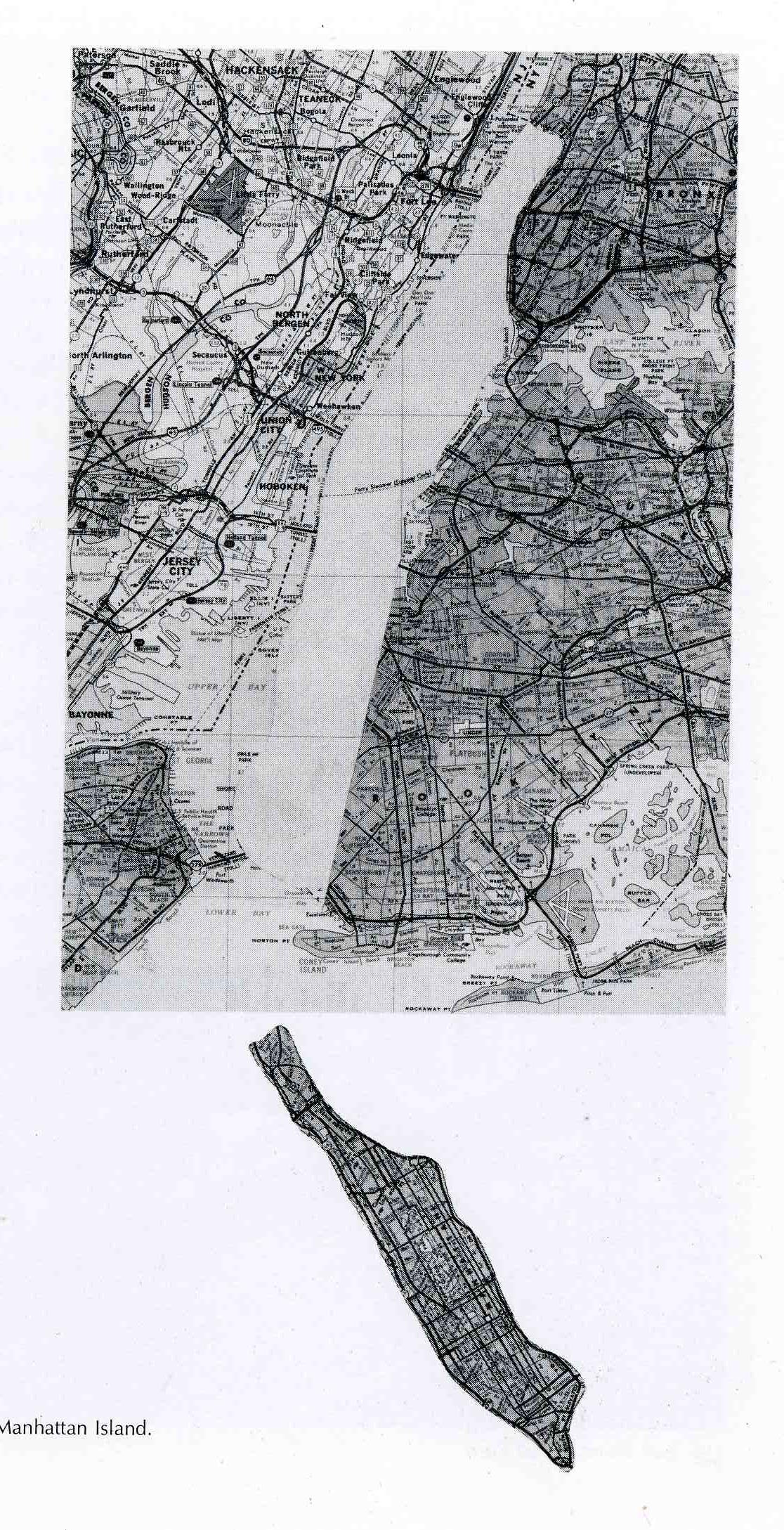
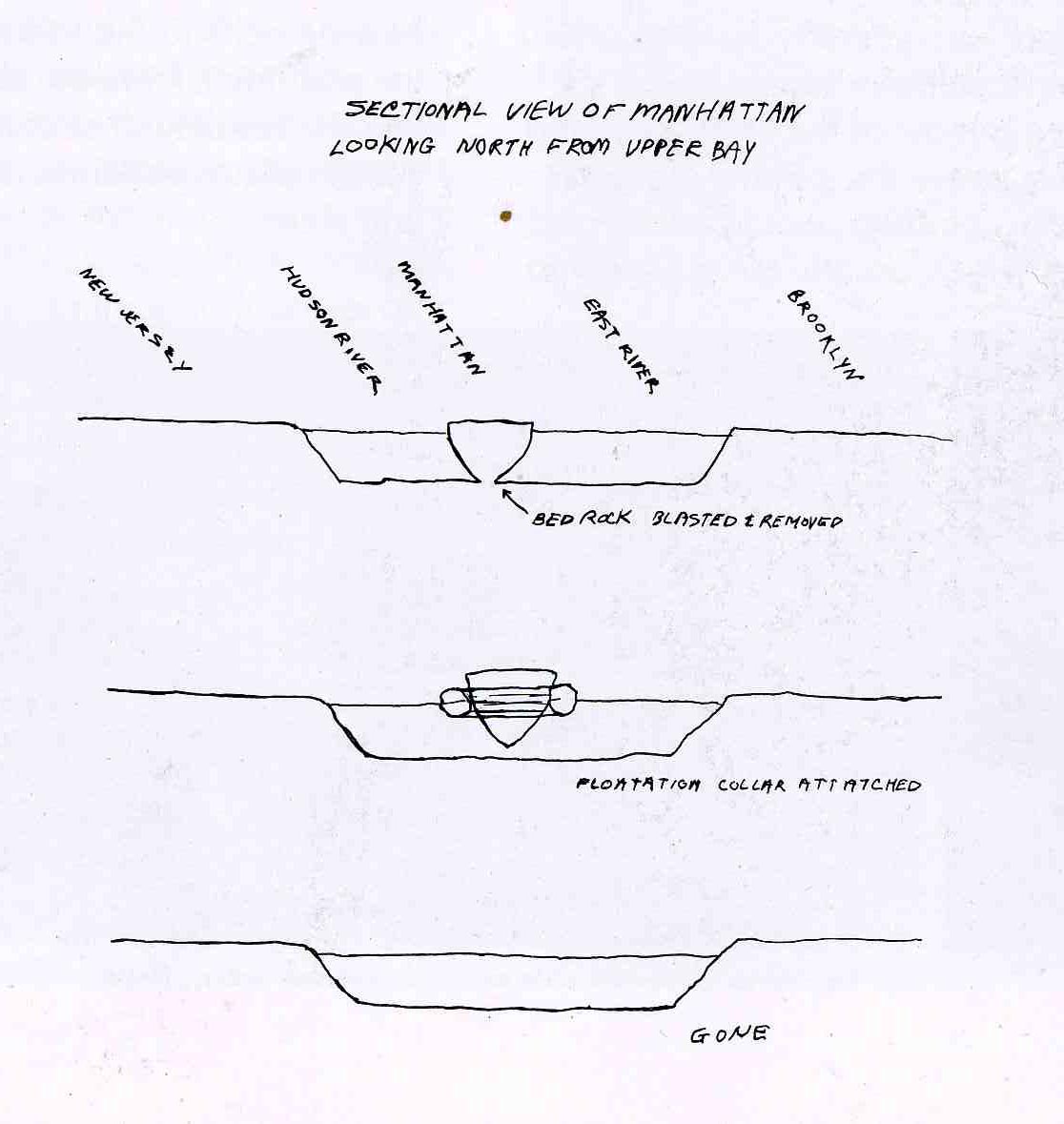
    0 blog jan 16 manhattan386 Agreeing with Mr. Keats or not, Robert Grosvenor had a delectable and memorable idea for a project in 1975:  testing the sea-worthiness of Manhattan island.  Grosvenor (b. 1937) was a well-known kinetic sculptor in Manhattan by the time of his detaching-Manhattan idea.  I found the summary of his project in Unbuilt America, by Alison Sky and Michelle Stone, of SITE, Inc. (seventh in a series called ON SITE), and published in 1976.  The book is a treasure trove of the unbuilt and the unbuildable, or the undoable, or the unnecessarily unattainable, though Grosvenor’s part in this book is clearly one of the very few who did not (really) take his/her project seriously.  I do though like the simplicity of the presentation of the project, right down to the “Step 2” of preparation, which was the umbilical snipping of the bedrock of Manhattan and the attachment of the “flotation collar”, which, I guess, would allow it to be moved around so long as flotation devices were attached. 

    I’m not sure, but I don’t think that Manhattan ever learned how to swim.  I’m also not so sure about where Manhattan would “go”,exactly; but what would it matter, since the people living in Manhattan were already where they wanted to be?

    0 blog jan 16 manhattan387


  • The Thin White Line: Concrete Ribbons as the Answer to the Air Raid Problems of London (1938)

    JF Ptak Science Books LLC   Post 469

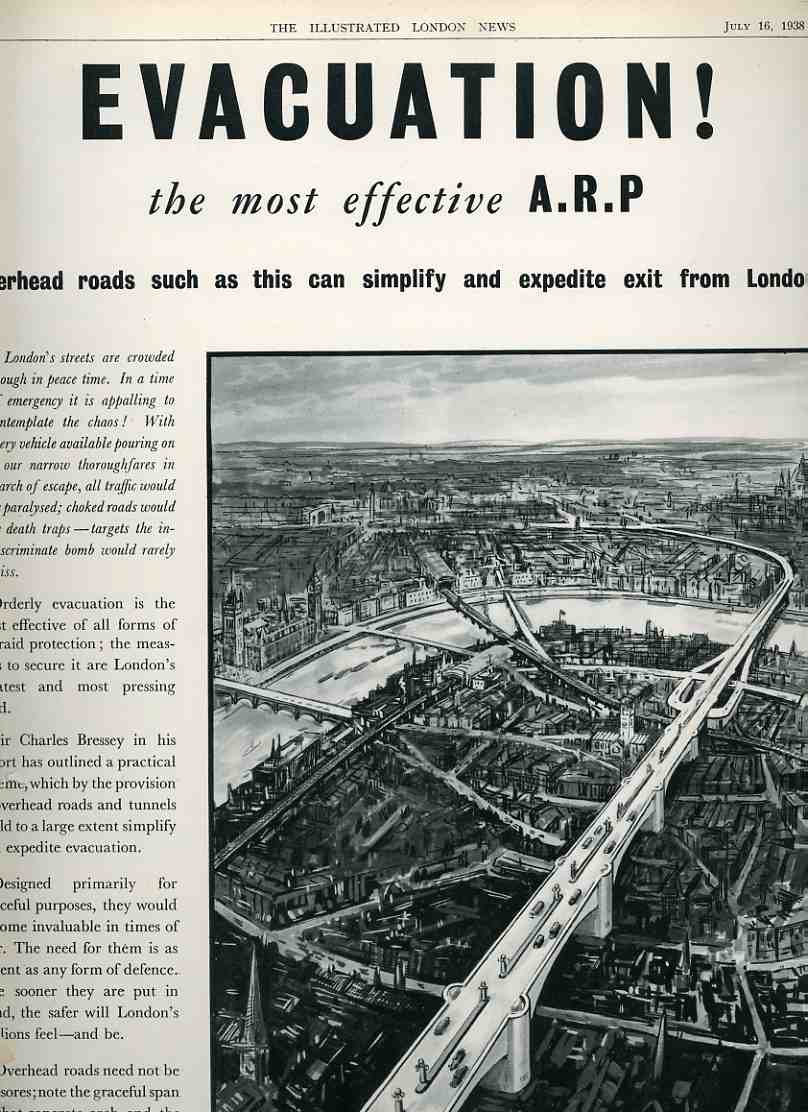
    0 blog jan 07 evacuate london365The Illustrated London News for 16 July 1938 was screaming at its readers–14 months away from the British involvement in WWII–that the MOST EFFECTIVE form of ARP (air-raid protection) was via the evacuation of London.  And of course what the “article” meant was the orderly evacuation of London, as decentralized evac during a crisis (i.e. bombing) would be an “appalling” and chaotic mess.  

    The answer was elevated highways. 

    The reader was told that “the cost of such roads will necessarily be high”, but the high ticket price wouldn’t be quite as bad as tearing down buildings and widening streets through central London.  The tearing/widening idea is so original and so shockingly bad I don’t know what to say, if there was actually anything to say at all.  But then it is second only to the idea of building elevated roadways for evacuation purposes–road that look from the picture like they were four lanes wide.  These roads would have “the additional merit that under them the traditional appearance of London can be maintained unimpaired”.  Stress that part about the appearance “underneath”.  Not only that, the heartbeat of London evacuation=, these elevated roads, were evidently immune from bombs themselves; or at the very least nothing is mentioned about these roads being targets in themselves.  One bomb, one hit, one severed artery. (Looking back through the Bad Ideas Department I see Buckminster Fuller’s tragically goofy idea for building a mile-high dome over midtown Manhattan that was “radiation proof”…he didn’t say anything about it being impervious to actually being the direct target of a nuclear weapon, though.)

    Generally when ideas are this terrificly bad there is usually a reason for it, a reason that transcends logic and honest coherent thought.  And that reason in this case was money. 

    At a time when Nazi Germany was bursting at the seams for more people to fight and for  nations to devour, when there was a true and real fear of London being a target of German bombs, this simple and weak and strategically indefensible solution was proposed by one large and interested party.

    The “article” is signed by the Cement and Concrete Association of Grosvenor Gardens, London.  And thus all is clear.