A Daily History of Holes, Dots, Lines, Science, History, Math, Physics, Art, the Unintentional Absurd, Architecture, Maps, Data Visualization, Blank and Missing Things, and so on. |1.6 million words, 7500 images, 4.9 million hits| Press & appearances in The Times, Le Figaro, Mensa, The Economist, The Guardian, Discovery News, Slate, Le Monde, Sci American Blogs, Le Pont, and many other places… 5000+ total posts since 2008.

Category: Bad Ideas

  • Bad Ideas Department: Children, Tall Ladders and Bees

    JF Ptak Science Books LLC  Post 554

     blog 19 children714
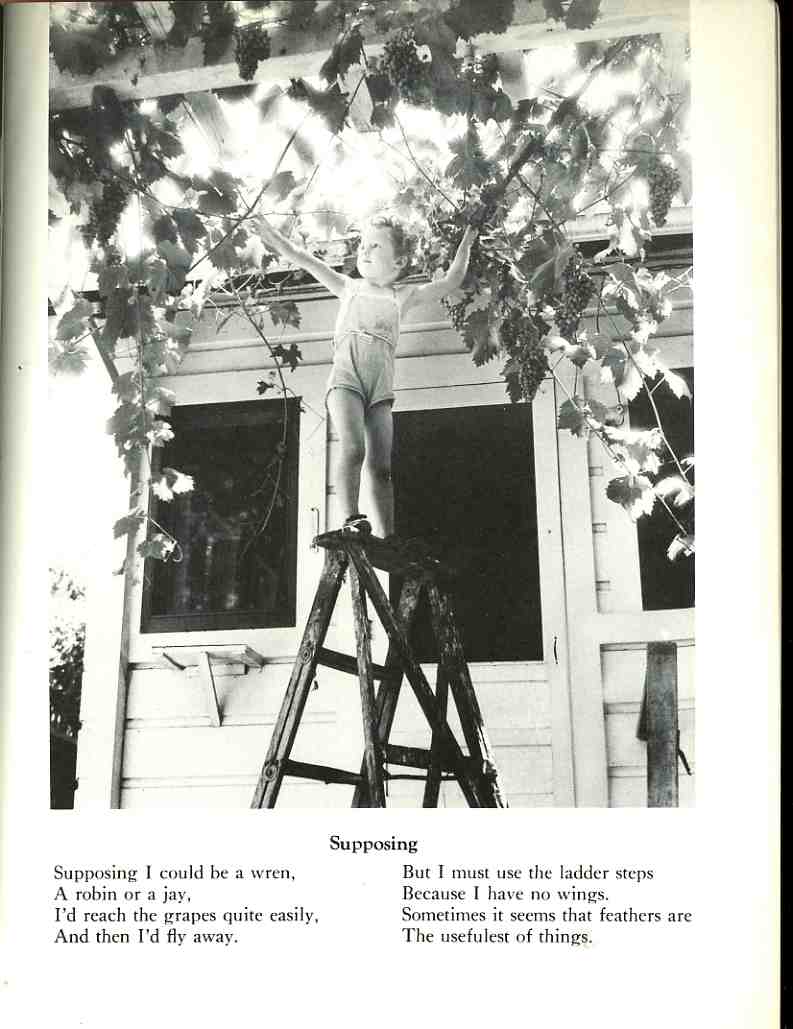
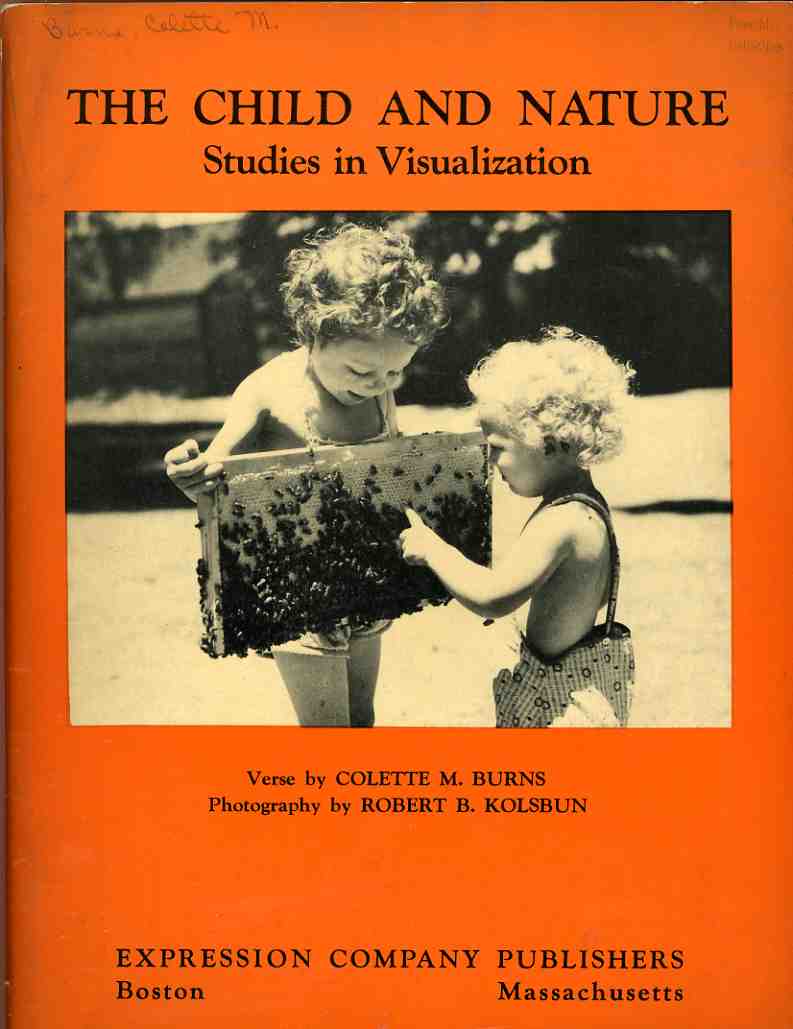
    From the Bad Ideas Department, and from the deeper/further “what the hell!?: sub-department, comes this bizarre offering.  I don’t know what the photographer or writer or publisher or whomever was thinking–or, for that matter, what the graphics department was doing, when they put this photo on the cover of this skimpy children’s rag, inducing an automatic cringe respond from any thinking person. The Child in Nature, Studies in Visualization is a mystery–what were these people thinking, or trying to think, or visualize? (And let me just point out that this was a “happy” book, not an Aesopian tale of possible woe and lessons-to-be-learned-the-hard-way book.) There is a picture on the inside of the result of this activity, but the swollen-up eye of the finger-poking child was just too much to bear, and so I just couldn’t possibly publish it.  Released by the Expression Company (?) of Boston in 1939, I would hope that those responsible have gone on to receive their appropriate rewards. 

    Its just shockingly, stupidly,  stupid.

     blog 19 children715

    ·Posted by :

    ·in:


  • Bizarre & Naive Surreal Book Titles: Sex, God, Food, and Clean (and Colorful) Blood

    JF Ptak Science Books LLC  Post 552

     blog 12 titles bizarre diet688
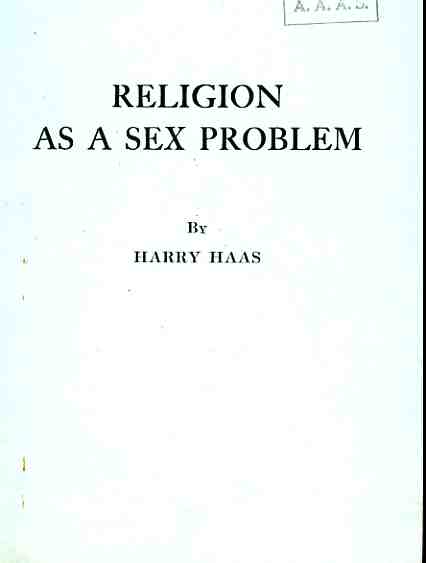
    Continuing a minor thread on bizarre and spectacularly mundane book titles comes today’s entries on the various uses of “sex” in finding high-ideal  religion and a proper waistline. Harry Haas had a very simple answer to sex (a concept that I was frankly surprised to see described in three words):”low cultural sex instincts” lead to “low cultural levels”, the reverse evidently never entering the writer’s mind.  Sex “was not a moral issue”, but an instinct “which like other instincts must be satisfied in one way or another”. It is also “Nature’s unscientific way of propagating the human races–the pre-logical and instinctive, the animal way”.  He asks the reader “why do some of us read these risque publications if they are so degrading? Tobacco Road and various other pornographic diversions, I mean “[sic]. Mr. Haas doesn’t know, but he does believe that the sex problem was vast, “a modifying agent in our personality growth” which “is responsible for an enormous amount of neurosis (and) seen to be at the bottom of the world’s greatest achievements”.  This leads of course to babies “blind, crippled and diseased and mentally hopeless–all of which find their common origin in sex troubles, feelings processes or chemical changes.  Probably nine-tenths of our anxieties, if not the major cause of world unrest, can be traced back to sex”. Mr. Haas then gets to his major and remarkably scarce question:  “could it be that the writers and interpolators o blog 12 titles bizarre diet689f the Bible were themselves unconsciously afflicted with sex troubles?”  He then takes this issue far and wide, and frankly by this point everything got so muddied and biblical that I just lost interest.  But the title is still good enough to stand firm and true, even if the the author didn’t get to an answer, except to suggest that you purchase his pamphlet on the  psychoanalysis of  the bible–it was available for one dollar, postpaid, and had something to do with Albert Einstein.  He published this booklet on his own  in Orangeburg, S.C., in 1941, while the world was hell bent on some religico-sex-fueled instinct war.

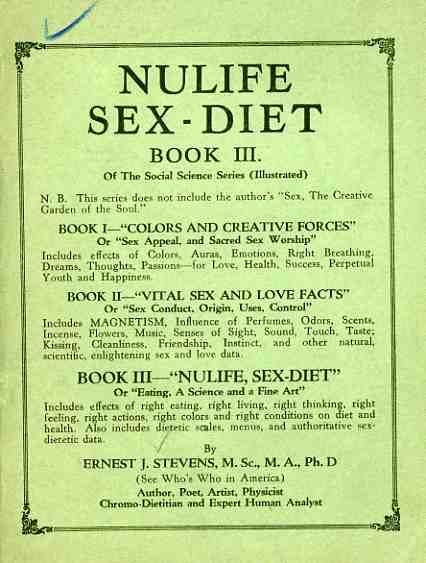
    Ernst J. Stevens (“Chromo-dietician and Expert Human Analyst”) let loose his spongy  Nulife Sex-Diet Book III of the Social Science Series (Illustrated) in 1934–it is one of that class of books that doesn’t look right, doesn’t feel right, and smells a little like it spent too long lost under the cushion of a chair in a bad place.  His book is a hopeless melange of shrinko-babble, blood coloring and therapeutic color use wrapped around dietary “laws” of dubious value.  Having dispensed with 10 chapters in 15 pages, Dr. Stevens takes on “Color, Music, Taste and Skin Odors” after having established a priority in “colors in our flesh, colors in our thoughts and colors in our foods” and their connects to color balance and blood cleansing skin beautifiers.  That sounds like a lot to deal with in 15 five-inch-tall pages, but that’s the least of it–the true metier of the book was also woven through everywhere, the messages of vim and vigor and health sense and mixing of the sexes colliding at every level with everything else.  It is a powerhouse display of some sort of need that I cannot identify.  The title, of course, is super. 


    ·Posted by :

    ·in:

    —

  • Legislating a Change in Pi Day (3.14): When 3.2 was “Almost” Pi, Indiana, 1897

    JF Ptak Science Books  Post 550

    Pi movie poster


    The issue of establishing scientific validity and fact through political and religious machinations, rumination, fascinations and condemnations has a grindingly used, odd history, and little of it comes to much of a good end.  Usually it is just a bad idea, or a wronger-than-bad stinkingly non-idea; that, or something with a sickening wiff of eau de maison funeral perfumery.  I’m not so sure about whether anyone has legislated that a point in space exists, or that non-Euclidean stuff is twisted, or that the world (as in “Earth”) began precisely at 11:11 am (?!) on the first day of the first week of the first month of the first year 4004 BCE.  Biological matters have been taken more seriously in the legislature and courts, at least in my country, than stuff in physics and math—the meaning of death has more or less been legislated, while the whole issue of sustainable “human” life has been battered around for decades (with the last administration’s elephantine approach to things like stem cell research now just being lifted following eight years of abuse).  Many examples begin to emerge when looking deeper into the history of science, especially with the influence of the churches, hammering evidently tender belief systems on top of scientific endeavors.

    The issue with mathematics and the law seems mostly limited to weights and measures and time, which is logical; I’m not so sure about the more ethereal stuff, except for the very famous example of the Indiana pi debacle of 1897.  It was in this that the solemn state legislature was nearly hoodwinked by an amateur semi-mathematician, crank and number cruncher named Edwin Goodwin, who persuaded the people who need to persuaded and had a bill* introduced in the Indiana General Assembly—it basically established that the value of pi be set at 3.2   t his makes not too much sense until you realize that the only good that could come of this tripe is to use it in one of a never ending series of attempts at squaring the circle. 

    The bill of course almost made it all the way through—it started life in the place where it should’ve ended, in the Committee on Swamp Lands, and then blazed its way through Education and eventually passed unanimously by the Indiana house.  Had it not been for the serendipitous acuity of Purdue professor C.A. Waldo—who alerted the state senators about its humbug nature, where the bill was finally shuttled into its everlasting postponement….in the Committee on Temperance. 


    *A Bill for an act introducing a new mathematical truth and offered as a contribution to education to be used only by the State of Indiana free of cost by paying any royalties whatever on the same, provided it is accepted and adopted by the official action of the Legislature of 1897.

    ·Posted by :

    ·in:

    —

  • Naively Surreal Bad Ideas: Marriage, Women, Satan and Fleshy Ribs

    JF Ptak Science Books LLC  Post 544

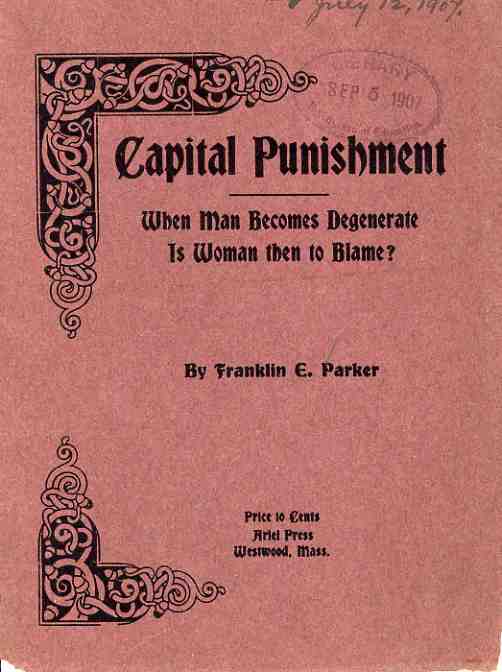
    Well.  In this tortuously ripped 1907 poetic headbanger on blame and retribution and innocence–and somehow ultimately about capital punishment–are neural squeezings that I have never se   blog 12 marriage696en or heard before, which are so loftily bad, and so logically weak, as to make a grown man puddle-up in amazement.  I don’t want to get too far into this thing, as the entire entertainment part of the work can stop right at the sub-title, because this little pamphlet is just tremendously bad, it transcends being about bad; it climbs out of badness into the so-bad-it-is-good department, and then slips instantly into the bad-good-bad-bad genre.  

    Listen:
    Since woman has been made of a rib of man, and is the “pupil of man’s schooling”,

    How then can woman obviate

    the crimson flesh of shame;
    when man becomes degenerate,
    is woman then to blame
    ?

    For woman being part of man,
    and should she cause an aching,
    how can her sins be other than
    the image of his making

    It goes on from there, of course, but we really don’t need to follow.  The answer, by the way, is “yes”.

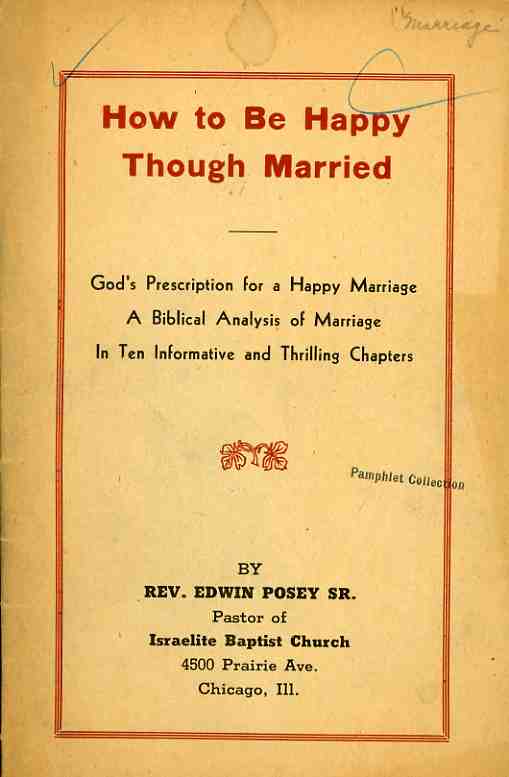
       blog 12 marriage695 When I first saw Rev. Posey  Sr’s.1947  pamphlet I thought that it read “How to be Happy Through Marriage”.  Oops.  My mistake, though the title as it stands is infinitely more entertaining, what with the story being told in ten thrilling chapters (seeded over 28 sparse pages).  In the final installment of these prescriptions for happiness in spite of it all, we are reminded that “Satan is God’s arch enemy”, and that “IF YOU WOULD BE HAPPY KEEP SATAN OFF YOUR SHIP” and “do all to the glory of god” and MARRY IN SEASON”.  DO NOT marry a man for a “meal ticket”, or “to keep him from marrying someone else”, and DO NOT marry too soon or too late. And so on.  [Caps in original.]

    There’s much more sage advice sprinkled liberally around biblical verses, but I think you’ve already gotten enough of the  flavor to appreciate the rest of the meal (food itself sometimes getting in the way of its promise).

    ·Posted by :

    ·in:

    — —

  • Titles of the Sublime Mundane: the Empty Calories of the Over-Obvious

    JF Ptak Science Books LLC  Post 540

      blog mar 10 obvious sublime saturn679
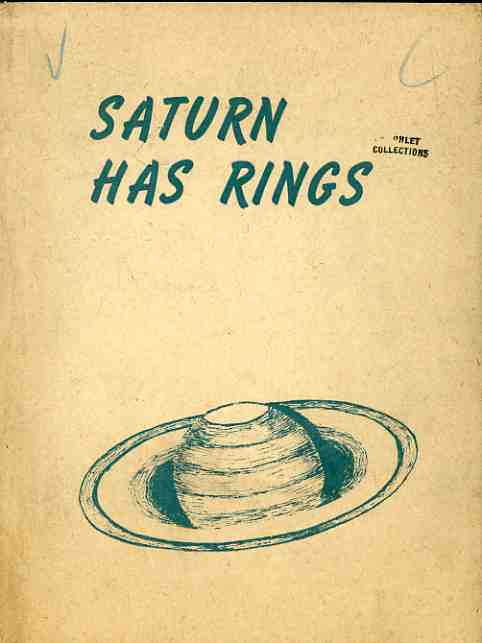
    Sometimes publications have absolutely no pretense, stating exactly what it is that sleeps between their covers. And sometimes these titles seem more like declarative broadsides or posters and not books at all, the “book part”, or any writing furthering the cover’s statement,  being unnecessary.  The first example here (and one which begs the response “yup!”), Saturn Has Rings, written in 1944 by Donald Lee Cyr (of El Centro), should’ve stopped at the end of the title of chapter one, “A Rose has Petals”.  But no, it didn’t, and stretched itself over another fifty thin pages. 

    Frederick Blaine Humphrey’s Know Your Groceries (1931) takes an unexpected twist, spiraling into something called “biochesspathy”, “natural dianetics”, and somehow “applying the natural science of the Bible…to the philosophy of youth and health”. 

      blog mar 10 obvious sublime groceries677

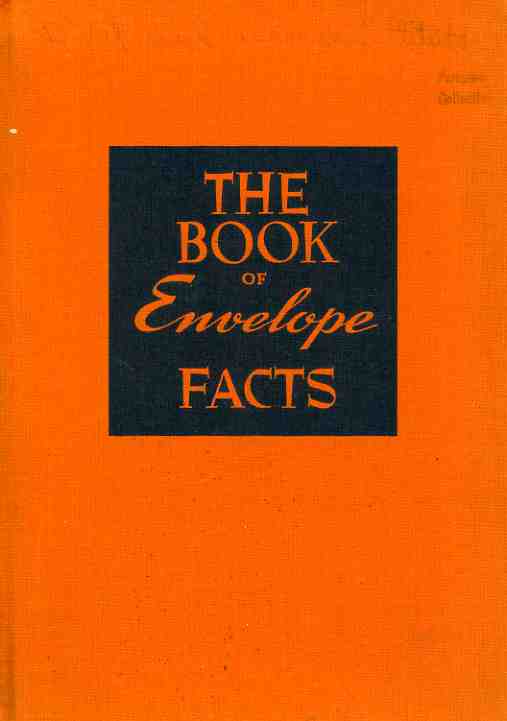
    The Book of Envelope Facts…yes.  This is actually a lovely book, in its very special way, with 55 pages of non-stop facts and semi-useless information on envelopes.  Chapter Two’s “Arousing Interest with Envelopes” competes wildly with Chapter Three “Attracting Attention with Envelopes” and Chapter Four’s “Creating Desire with Envelopes”.  It is completed with eight pages of a glossary of envelope terms.

      blog mar 10 obvious sublime envelope680

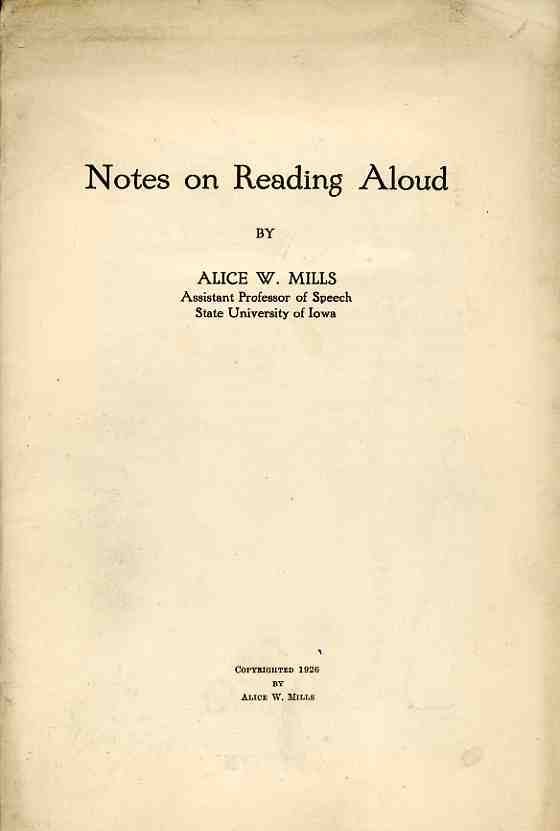
    This last example, Alice Mills’ Notes on Reading Aloud, really doesn’t belong, because it is mainly on acting; but the title is so lovely I just couldn’t resist. 

      blog mar 10 obvious sublime aloud678

    ·Posted by :

    ·in:

    — —

  • Bad Titles Department: Huh? Confusing Nothingness, Making Stuff, and Radio Hair

    JF Ptak Science Books LLC  Post 537

    0 blog march 9 titlitle that which661
    There is a constant and imaginary warfare going on among certain categories in this blog:  mainly, its “bad ideas” vs. “outsider logic” vs. “impossible books”.  The result is that I just give up and fold them all into each other so I don’t have to think about them at all.  I also haven’t made many entries in these areas because, well, there’s just so many of them to deal with–but I can tell you that they would make a fantastic Mystery Books gallery show, especially if the viewers were made to supply their interpretation of what the written material was all about from their problematic, time-sucking covers and titles.  And I can tell you that reading the content sometimes doesn’t help to understand the title or the cover art, the logic of investigation passing through it all like a stony Bushism (where you know that something was said,  with words, but that’s about all). 

    Take for example Scorn Not That Which You Do Not Understand:  the title begs you to do so as you read it, though it took me a few turns to actually understand what it was saying.  The problem with the tiny pamphlet is that once you’ve read a few pages, you know a little less about the book before you knew it existed, which is a hard thing to do.  (The writing goes downhill after the title.) 
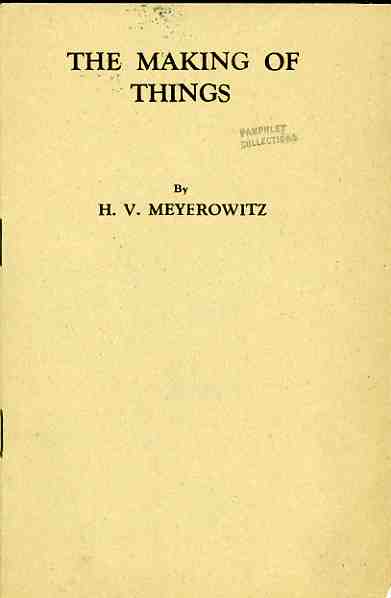
    0 blog march 9 titles making of things660

    The Making of Things made me not want to know what was being made, and so I have not to this day opened it, though I judge from outside appearances that it was published around 1940 and is at least three pages long.  The title is just so on-beyond simple that knowing what it actually refers to is bound to disappoint. 

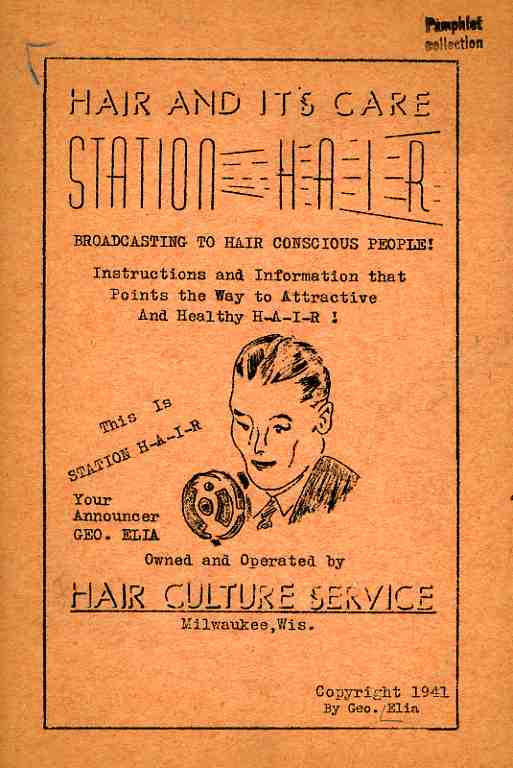
    Station Hair, Hair and its Care
    , is a written radio broadcast from Station H-A-I-R (brought to you by George Elia of the Hair Culture Service of Milwaukee Wisconsin, and evidently with offices in the Lake Wobegon region near Overthere, Minnesota), taches us all how to have healthy, radiant and attractive hair good enough for radio.  In the looks-made-for-radio genre, my own hair (or whatever it is) is definitely in the hair-made-for-radio department, so long as I get enough bootblack to color my scalp. 
    0 blog march 9 tittle hair662

    (This leads me to a semi-connected memory:  does anyone remember a street person in Manhattan, midtown, who was a drummer, with gigantic painted-on jet black eyebrows and painted-on black hair?  This wouild’ve been around 1970.  He was heavy, short, and would walk around with drumsticks and play on whatever was available, announcing, if I recall correctly, the famous drummer that he was immitating. He had to have been a famous street performer….Ring a bell with anyone.  Jeff?)

    ·Posted by :

    ·in:

    — —

  • Blank & Empty Things 36: Sold Shadows and Fat Chairs (Peter Schlemiehl and Joseph Bueys)

    JF Ptak Science Books  LLC  Post 535

    22

    On the heels of my last post on the usefulness of constructing
    geologies of wrongness and on the extraction by Creationists of something from
    nothing comes today’s bit, where something really does come from nothing, and
    where (again) nothing of something is extracted from nothing. 

    1)  Something from
    Nothing

    How old are shadows? 
    Or, really, how old is the depiction of the shadow in the history of
    western art?  The shadow predates the
    modern re-discovery of classical perspective by a thousand years—little bits of
    shadows pop up here and there in deep antiquity, certainly way before Uccello
    and Alberti and the rest came along.  On
    the other hand shadows do escape notice of many painters in the 15th
    century (and during the period of being very comfortable with the century-old realignment
    of perspective), which is odd, unless all of those works were depicting scenes
    at high noon or thereabouts. 

    The something-from-nothing part with shadows comes from the
    odd and somewhat creepy story of Peter Schlemihl (Peter Schlemihls wundersame
    Geschichte,
    “Peter Schlemihl’s Remarkable Story”) written in 1814 by
    the semi-ruined Franco/German aristocrat Adelbert von Chamisso.  In one adventure, Peter,
    unfortunately poor in a land of the wealthy, makes an agreement with a
    mysterious grey man (who is probably the devil) to sell his shadow for a
    bottomless purse of gold.  In an 1861
    British edition of this work, the great George Cruikshank portrays the very
    moment when the shadow is being literally lifted from the ground by the
    mysterious grey man—the point of contact between his hand and the shadow just
    gives me the willies.  The grey man’s own
    shadow, arching behind him, is also very threatening and terribly offputting to
    me.  Perhaps it is just a  great wrongness, making the shadow something
    from its vast nothingness.  (And the
    story goes that the gold is never-ending, but people are so repulsed by Peter
    not having a shadow that it makes his life supremely difficult—so much so that
    the grey man returns with a new deal, offering to Peter his shadow and the
    endless purse if only he would relinquish his soul when he died.  Peter begs off, throws away the purse, and
    lives without his shadow and without money.)

    Hans Christian Andersen also provides a scary fairy tale in
    1847 called “The Shadow”, in which a man’s shadow slips away and is replaced by
    another shadow which slips back (slowly) into the old shadow’s place—but it is
    not what it seems:  “I have gone through the most terrible affair that
    could possibly happen; only imagine, my shadow has gone mad; I suppose such a
    poor, shallow brain, could not bear much; he fancies that he has become a real
    man, and that I am his shadow.”

    2)  Nothing from
    Something from Nothing.

    Yes, this is terribly convoluted, but the title fits the
    subject, and the subject is Josef Beuys (1921-1986), a German artist (or
    perhaps he was a performer in art) who broadly dabbled in conceptual art.  He came to prominence in the 1960’s, when the
    acceptance of these art performances was as much a work of art as the art piece
    itself, and, I guess, he has remained, his appreciations now gaining an antique
    patina. 

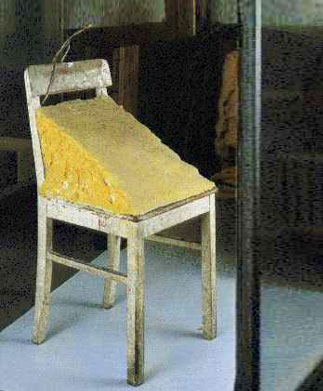
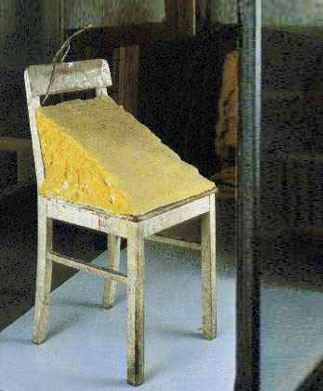
    I wanted to address his work, Fat Chair.  The title doesn’t quite describe the work,
    which is a chair with a wedge of fat on it. 
    Many a critic’s eyebrow has been plucked trying in deep intellectual
    desperation to see something in this work. Under the weight of these artistic
    appraisals of this work, I’ve just got to say, really, sometimes fat on a chair
    is just that.  I can appreciate Beuys as an artist and performer of his
    times, but the deep thought that has gone into Fat Chair is a bit much for my
    taste, praising observers biting off much more than can be chewed.  For example, from one website we see:
    0 fat

    “ ‘Fat Chair’ (1964) is much more about the
    physicality of the human body. To Beuys, fat as a material could be considered
    before form was considered… Fat…appealed to Beuys b

    ecause it was a composite
    with no internal structure…Beuys placed fat with its “chaotic organic
    energy”
    , symbolising warmth, in the cold, rigid,
    man-made form of a right-angle. This form, which represented the coexistence of
    instinct and intellect was placed in the right-angle of a chair between seat
    and back. The fat also occupies space on the chair that would be filled with
    our digestive and excretive organs if we were sitting on it.”

    Another website states “Fat…was an ideal material for Beuys
    to use to sign

    chaos and the potential for spiritual transcendence. Fat has
    the ability to exist as a physical example of two extremes: a flowing liquid
    when warm and a defined solid when cold. Beuys also believed that fat was
    psychologically effective, in that “people instinctively feel it relates
    to inner processes and feelings.”

    I’m
    sorry to not include the references for these opinions—it is just to painful,
    too embarrassing to ascribe them blame. 
    And they are hardly alone in this hagiographic myopia, pulling these
    strands of something from nothing about nothing. 

    I’d
    prefer to leave it all at nothing in regard to the Beuys (or to Andres Serrano
    or Damien Hirst and so on),  thinking
    about lovely Ludwig’s self-abandoned seventh proposition (“Where (or of what)
    one cannot speak, one must pass over in silence”).  Better yet, better to apply the one of the
    last lines of the great classic “The Street of Laredo” (the Johnny Cash version
    of course)—when the young dying cowboy is asked about who shot and killed him,
    he simply says, in the best cowboy fashion, “speak not his name, and his name
    will pass on.”. 


  • Blank and Empty Things: the Case of pre-Biblical “Missing” Eclipses, Refuting Darwin, and the Geology of Wrongness

    JF Ptak Science Books LLC  Post 533

    0 blog march 5 darwin refutation654 A History of Blank and Empty Things #35.

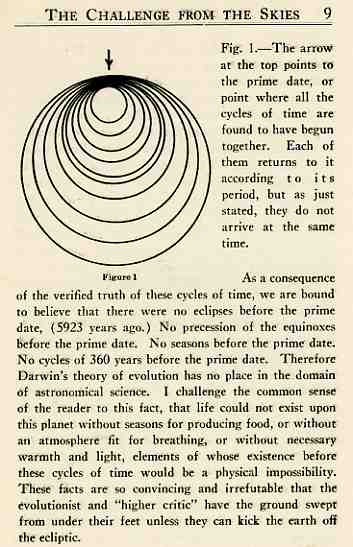
    Mr. R.R. Menke, the author The Challenge from the Skies, Planetary Motion and its Solemn Witness Against Evolution and Higher Criticism, self-published his biblico-religico-astronomical diatribe against Charles Darwin in Huntington Park, California, in 1925.  What he launches in 51 labored pages against one of the most elegant ideas in the history of science  is simply, well, shocking; shockingly eyebrows-catching-on-fire bad, so-bad-it-isn’t-even-bad bad.  Without reading the whole, um, thing, I do get the piercing whiff of a notion having to do with eclipses and the true date of seven (?) days of creation.  He uses some sort of chrono-alchemy layered in spreadable butter, the words made of microscopic asparagus, to prove his point that “as a consequence of the verified truth of these cycles of time, we are bound to believe that there were no eclipses before the prime date (5923 years ago)”.  No eclipses before creation.  AND no precession  of the equinoxes, “no seasons before the prime date, no cycles of 360 years before the prime date”.  Oh my.

    His conclusion, by virtue of this magnificently weighty evidence (and which he doesn’t even relegate to its own paragraph), is “Therefore Darwin’s theory of evolution has no place in the domain of astronomical science…”  And this is so not so much, evidently, that there were no eclipses, and no seasons, and no 360-year cycles (?!), but rather, at the base of it all, there was nothing. No earth.  And since the earth is only 60 centuries or whatever old Darwin just doesn’t work.  I have no idea why the eclipse business was necessary if Mr. Menke was going to argue that there was no “there” there for anything to happen, what with the impracticable nature of having something in nothing. 

    0 blog march 5 darwin refutation655

    There you have it.  There’s more, much more, but frankly it just isn’t worth the 20 minutes to dig out more.  I rarely read anything in Creation Sc__nc_ as there is nothing redeeming at all in it–I’m posting this today because it strikes me that this present work isn’t necessarily singularly bad, but rather representationally bad.  Since the entire belief/hope/prayer system or whatever the Creationists claim as the intellectual/moral basis to their Principa in explaining the stuff of the universe is painfully wrong, and bad, and potentially harmful, I wonder why we should distinguish the levels of badness and wrongness?  It isn’t as though  establishing a geology of wrongness will somehow categorize it all in such a way that something worthwhile could be discovered, like a miraculous toe-hold at the top of the  Sisyphusian hill they’re trying to slide up.  And so perhaps Mr. Menke’s work is just wrong, along with the rest of the others; perhaps the other side needs to deal with him as being one of their own more so than anyone else.  Certainly there are more elegant refutations than this unfortunate attempt, but that only makes the wrongness prettier:  a pig in a (white) wedding gown is still, after all, a pig.


  • Sublime Mundane: a History of High School Lunches and the Commercialization of Children’s Needs

    JF Ptak Science Books  LLC  Post 561

     blog 23 mar lunch724

    This is another in a series of posts on the Sublime Mundane–books and pamphlets whose titles are nothing if not introductions to spectacular nothingness.  Sometimes these publications are indeed about disappearing wisps of lost lint, and sometimes not; sometimes the mundane and seemingly stupifyingly “normality” of their subject matter leads to something of deep depth.  Today’s pamphlet, left, fits the second category. 
    Part of the interest in this work–outside of its momentarily arresting title that has a potential for being a cascade of boredom– is that it so quickly rights itself into an important topic.  That’s not to say that it isn’t a boring topic, as my quick and semi-feeble research reveals.  It does get interesting though when you consider that it took so long for the recognition that, since all of these children in school have been brought together, that there wasn’t some sort of federally organized effort to make sure that the weakest members of this group had at least one decent meal a day.  That said, the earliest program were for students who could afford to pay for their lunches.  Perhaps it was assumed that, around the turn of the century, there were no lunch rooms per se and that children would eat wherever they could find the space, that many children were also going home for lunch, and that they were all being fed.  (I do remember that some classmates of mine in P.S. 29 would go home for lunch, and I remember wondering exactly what that was all about.  I can recall taking my brother for special every-so-often-Friday treats at Joe & Pat’s Pizzeria for three slices and two cokes for a dollar back there in 1968.  But I digress.)  It actually took a little time before children’s lunches at school were made to be free to those who needed it. 

    Which brings us to Marion Nestle’s Food Politics (Berkeley, University
    of California Press, 2002), who discusses the early commodification of children’s food: “School meal programs
    began during the Great Depression of the 1930’s. From
    the outset, they had two purposes: to help dispose of
    surplus agricultural commodities owned by the government
    as a result of price-support agreement with farmers ,
    and to help prevent nutritional deficiencies among low-income
    schoolchildren. Because chronic disease risk factors were
    not an issue at that time, the rules specified meals that
    used surplus commodities and were higher in fat, saturated
    fat, sugar, and salt—and lower in fiber—than recommended
    in later years.”  All of which is detestable and unwholesome and immediately transparent.

    Perhaps the really interesting stuff on feeding children at school starts here, in the 1930’s, and that with the commercialization of children’s biological needs, breaking the back of an agricultural finance Vintage-space-lunch-boxproblem in the school lunch rooms.  The lunch as commodity expands from massive leftover projects into something a little more insidious in the television age, when children not only get to dress their foods in the sorts of containers that they wanted (lunch boxes), but also were being deluged with displays of foods that they could select for themselves via television.  This commercialization process gets ramped up decade by decade, until in the 1990’s and 2000’s the lunchroom has in some cases become an extension of the t.v. commercial, and that local and state governments are counting the value of sugary waters, salt, and catchup packets while plying the rest of the arrested nutritional package with prepackaged conglomerate goodness.

    And such is the value of the sublime mundane, at least for me–these items are filled with possibilities invisible to their titles. 

    Even after all of this, I must confess that I would dearly like to have a Fireball XL5 lunch box to take with me into eternity.  All systems go!

    Some interesting links with more than you need to know about school lunch history:

    The Food Museum Online Exhibit:  School Lunch History
    School Lunch Programs in the USA (according to city)
    School Lunch Programs in Europe

    ·Posted by :

    ·in:

    — —

  • Elements of Social Delinquency, 1947: Books and Records as Faithless Elements of the Decline of Morality

    JF Ptak Science Books LLC  Post 499

    0 blog jfeb 2deliqunency502
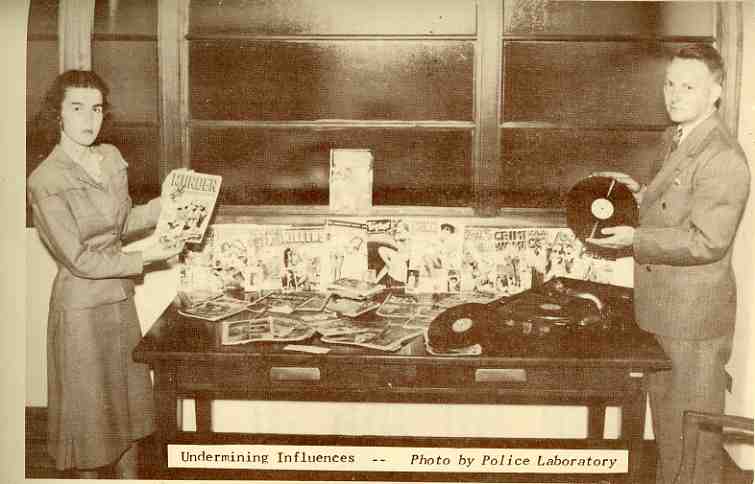
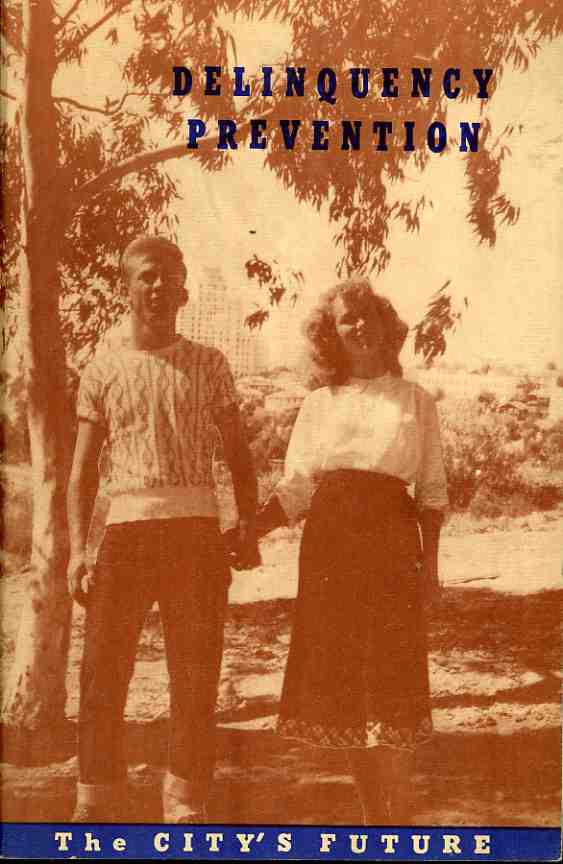
    Only 62 years ago the basic contributors to the delinquency of American youth were recklessness, idleness, books and records, and this helpful pamphlet, Delinquency Prevention, the City’s Future, published unattributed in 1947 for the Youth Protection and Delinquency Prevention Program for the city of San Diego, California, had many of the basic answers to the knotty questions of raising good-spirited anti-corrupt young folks.  This young woman, appearing on page 27 in the photo captioned “Undermining Influences–photo from Police Laboratory” stood before a neatly laid table packed with expediencies of social decay, and from the looks of it, she could barely stand to be there, even though she was protected by a mighty and invisible cloak of superiority.  (It seems that she is caught in mid-sentence, gingerly holding her MURDER magazine, jaw thrust forward, fixing the camera with a sharp left eye which was fortressed by a mighty and disproportionately-sized eyebrow.) 

    0 blog jfeb 2deliqunency503

    0 blog jfeb 2deliqunency501
    Unfortunately, given the large-grain halftone of the original, I can’t quite make out all of the titles of the offending magazines and records–most of the “men’s journals” seem to deal with murder-kill-bang-bang-stockings and god knows that the records in 1947 were probably by Johnny Mercer (as I can hardly believe the SDPD could even acknowledge anything like the fantastic bluesy music on so-called “race labels”).  Anyway the message here was that “wrong” reading and listening were corrupters and would lead to the end of society, inhabiting the young with “social ill” found “outside the hours of school and work”. 

    0 blog jfeb 2deliqunency500
    This program sought to remedy this invasion of “untoward influence” by more fiercly regulating the idle time of children, which meant filling that up with more school or workl or church or other fulsome and halo-inducing activities.  The city council also sought to diminish the capacity of the “juvenile hang out” of the soda fountain–who knows how many future SDS-ers were born right there in the Rexall on Main Street of Great Barrington, Massachusetts? Nursing a 10-cent coke and a 25-cent hamburger for as long as possible doesn’t seem like sedicious activity from here in the future–and as a matter of fact, the soda fountain looks to me to be one of the first places where American teenagers could go socially to enjoy food and drink and spend money solely (or sort of) with members of their own age group.    This must’ve been a radical change from the other regulated avenues that teenagers could frequent in the earlier decades of the century. In any event, the soda fountain was a place where social callousness was begging to happen, waiting to be unleashed in its youthful fury to cripple The City.  I’m sure that San Diego was not alone its its 1947-American-desire to get crooked-standing girls and short-sleeved-sweater boys to go to school, “do activities related to school”, go to church, and then stand *almost* holding hands in a problematic setting of shade and brightly dappled sun.  If these two are the final successful products of juvenile delinquency prevention and naive social engineering,, what is it that their very distinctive body language is saying? 

    ·Posted by :

    ·in: