A Daily History of Holes, Dots, Lines, Science, History, Math, Physics, Art, the Unintentional Absurd, Architecture, Maps, Data Visualization, Blank and Missing Things, and so on. |1.6 million words, 7500 images, 4.9 million hits| Press & appearances in The Times, Le Figaro, Mensa, The Economist, The Guardian, Discovery News, Slate, Le Monde, Sci American Blogs, Le Pont, and many other places… 5000+ total posts since 2008.

Category: Bad Ideas

  • Maps of the Cosmos of Moles, 1671: Astrology, Pseudoscience & Furious Belief

    JF Ptak Science Books LLC  Post 646  Blog Bookstore

    “The first principle [in science] is to not fool yourself.”  R.P. Feynman

    “The Woo-woo
    is all the same, everywhere, anytime, everytime.”
    —James Randi on the
    history of   the pseudosciences .

    Self-deception and belief in Woo-woo (spurious pseudo-scientific beliefs) is some of the stuff that separates humans from animals.  And not in a good way, unless it was all chalked up to an expression of creativity and imagination.  I started this post as an entry in the History of Dots category, then in the Blank and Missing Things department, and then simply to the Bad Ideas category.  But the more I thought about mole mapping and how extraordinary it was, the less extraordinary it became, especially once the veil of age has been removed. As it turns out, mole mapping is neither more nor less extraordinary than any other system of belief.

    Here’s
    a sentence one doesn’t get to write very often: 
    Richard Saunders (1613-1692) was perhaps the foremost historian, astrologer and seer
    of human moles and their predictive forces who ever lived.  He was far from being the solitary member of
    a one-unit class:  the use of moles as
    predictive and interpretive agents stretches back dozens of
    Blog--jun 11 circ mole

    centuries, so the
    claim of Saunder’s being its most famous practitioner is not empty,
    mega-pseudo-scientific or not.  The
    mystical commentary on the Torah, the Zohar (a part of the Kabbalah), gets
    right to the point of the significance of moles (“the stars of the body”),
    transferring the structure of the cosmos and the constellations to the
    skin.  The seer and soothsayer Melampus
    from Greek mythology, in one of his necessarily pseudographic works, writes on
    the importance of moles of the face and their zodiacal relations—an idea that
    was picked up 2000 years later by the extremely significant mathematician
    Jerome Cardano.  There was a decent
    amount of argument regarding the location of zodiac symbols on the face, as it
    turned out.

    But
    the leading exponent of moles is Saunders, who was also one of the leading
    figures in a wide and very powdery period of European non-scientific
    sciences.  These wonderful images come
    from the second (!) edition of his cumbersome but accurately-titled work Saunders Physiognomie and Chiromancie,
    Metroscopie, the Symmetrical Proportions and Signal Moles of the Body, Fully
    and Accurately Explained; With Their Natural Predictive Significations Both to
    Men and Women
    (published in London, 1671, by Nathaniel Brook), in which he
    divines the psyche and the future with peoples’ moles. 

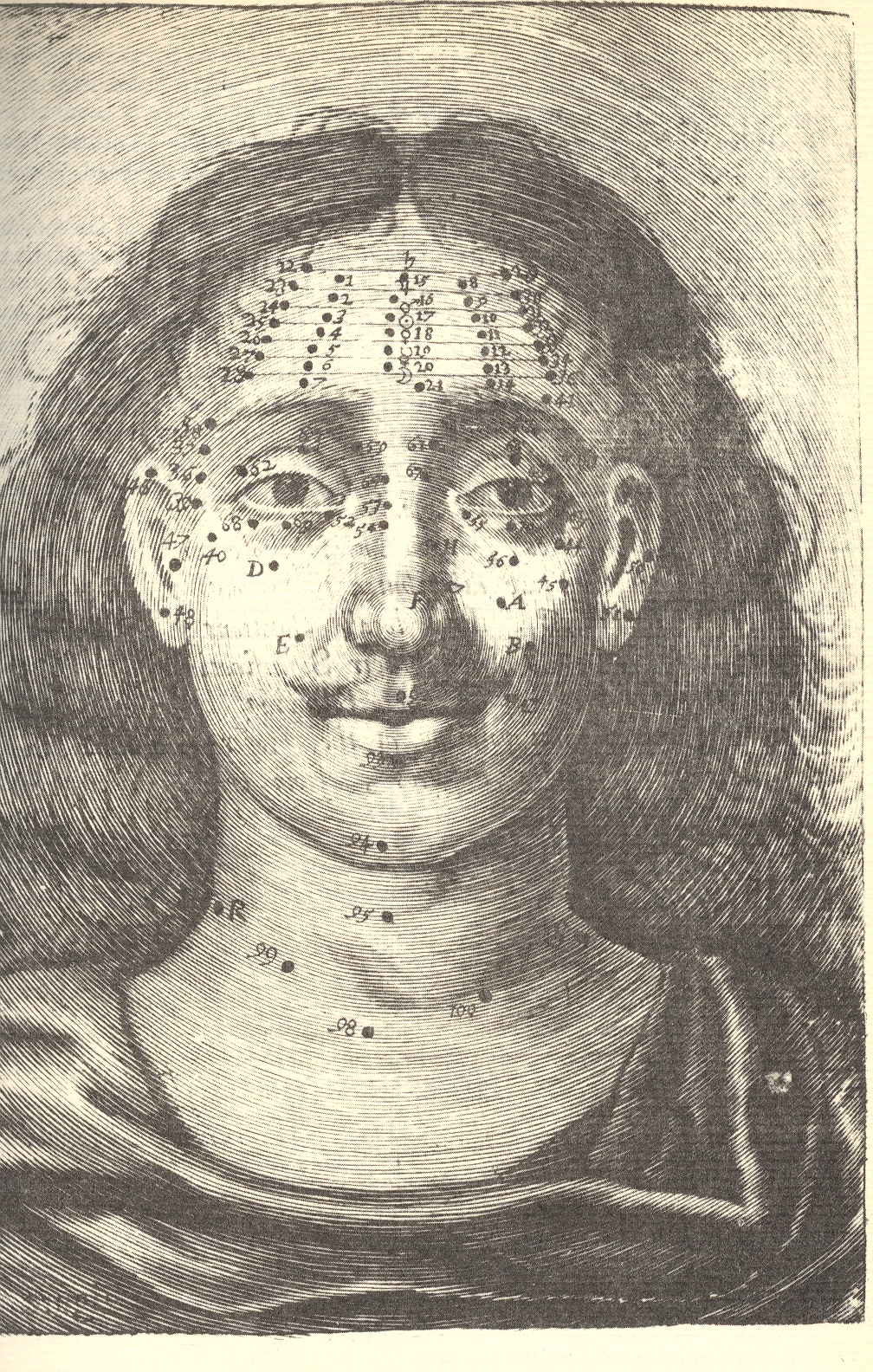
    The
    first figure, detailing the mole locations of a man’s face, is a remarkable,
    weird accomplishment, not only because of the exhaustive treatment that is
    given to every location of every mole (g_d help us), but also because of the
    manner of the engraving.  If you look
    closely, you can see that it is Fresnel lens-like—it is an engraving composed
    of (almost) concentric circles.  I cannot
    recall seeing such a thing before—needless to say the practice of engraving
    would be laborious, and not much practiced. 
    I’m not even sure what great good it causes, though it does give a
    little different idea of depth and dimensionality to the image.  The effect that it achieves here though is to
    give a solar-system-like background to the moles—something that is much more
    spectacularly achieved in the next image.
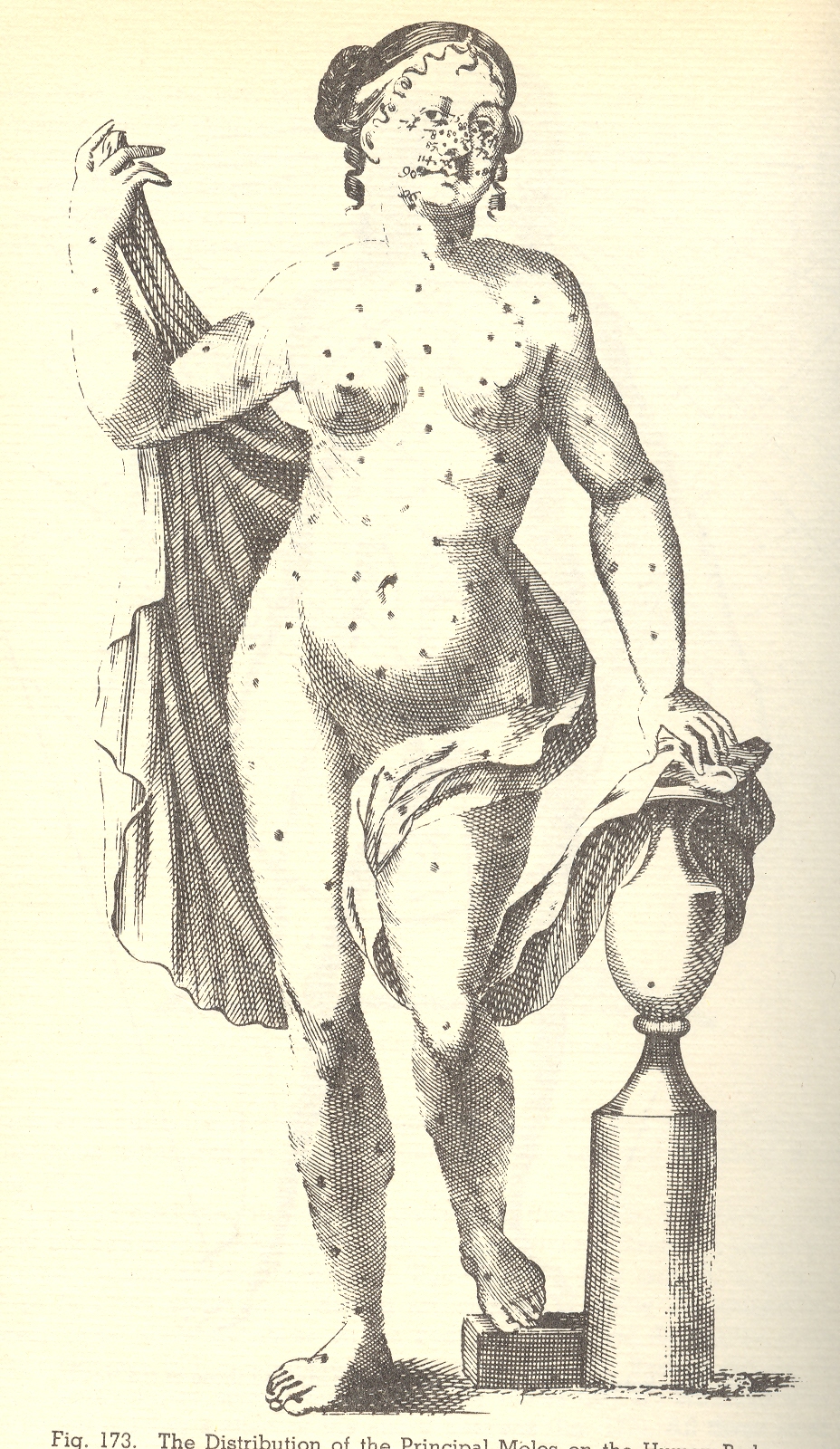
    Blog--jun 11 mole lcosmos The
    map of the moles of this woman’s body looks to me just like a constellation—and
    a constellation is just what they were for Saunders, who viewed the arrangement
    of moles on the body like an astronomer searching the night sky for a new
    comet.   But an astronomer would not be
    trying to force governing connections in the starry realms to occurrences on
    earth (or heaven, or whatever)—that would be the job of an astrologer, whose
    job would be enormously simplified since everything it conjures is
    fictional.  Had Robert Hooke been Richard
    Saunders-like when he made virtually the first microscopic investigations in
    human history, he would have been correlating the hairs and pores of the flea
    rather than making his minute and beautiful observations.

    Saunders
    sees mole connections everywhere, even developing sub-classifications to
    sub-classes: this is seen in the lovely relational map of face moles to moles
    on other parts of the body. (I like the spare curved lines most.)Blog--jun 11 mole lines
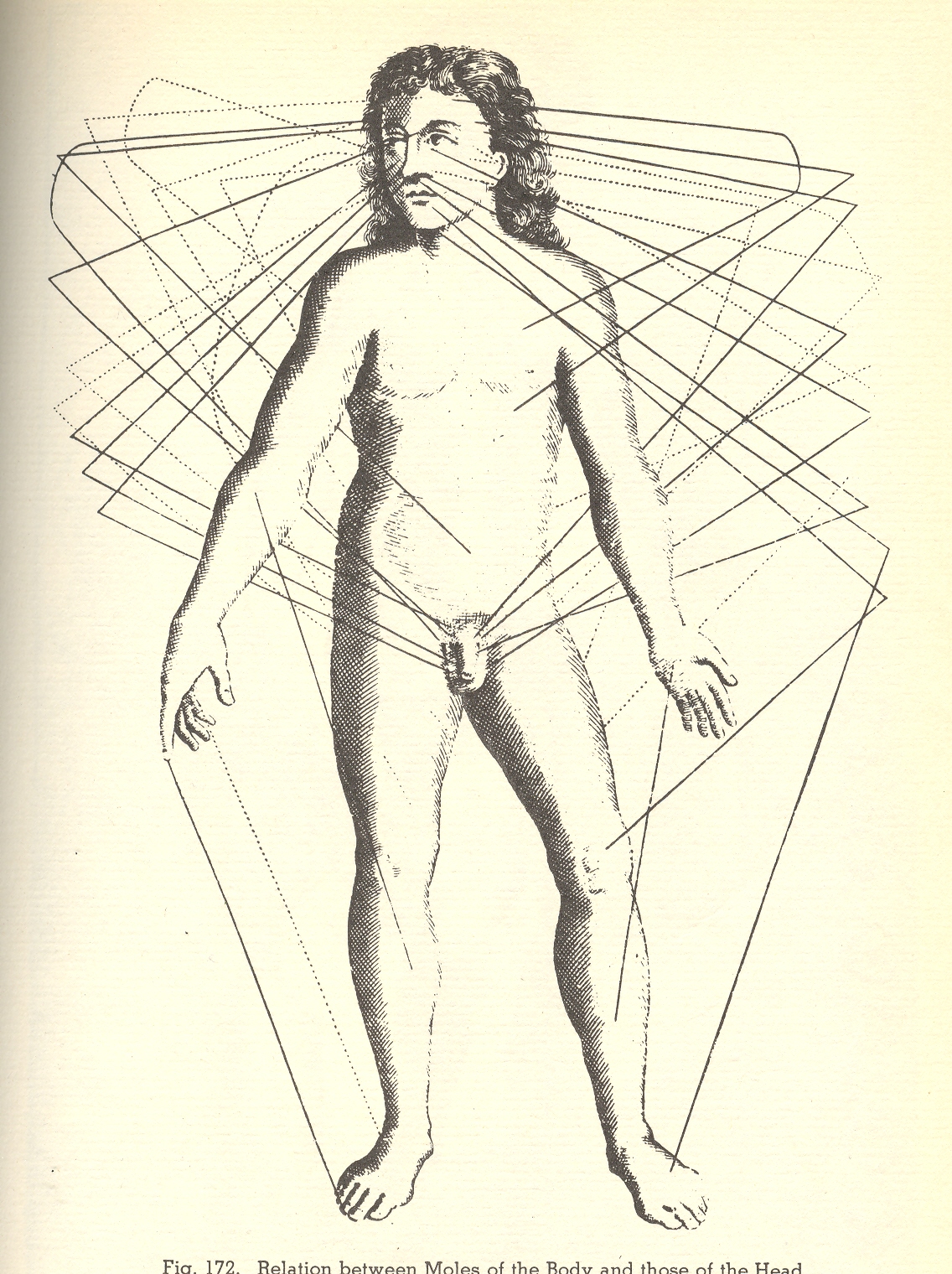
    This
    all looks perfectly phenomenal, unbelievable even,  from out here in 2009.  The fact remains though that the vast
    majority of newspapers in his country still carry horoscopes, and most Americans
    believe in UFOs, and a not-small percentage of those folks say that they’ve
    actually been abducted by Outer Space Aliens. (I calculate that from the
    “first” UFO sighting near Roswell 50 years ago that a sighting has been made about every ten seconds since
    then.  Why all of this interest?  And here’s a question among the many that I
    have about this stuff–outside the astronomical chances of actually
    encountering the other life forms in the universe that do undoubtedly
    exist:  why do these crafts, which have
    spectacular, beyond-physics capacities, have little dotty lights on them?)

    And
    so as bizarre as images like this might look, many (most?) folks in the present
    really haven’t left these ideas behind—they just get changed a little,
    upfitted, retro-ripped, and outfitted with flashing lights.

    In a
    very long career of getting people to think  in spite of themselves, James Randi (scientific
    investigator, keeper of the scientific method, head of the James Randi
    Educational Foundation
    , and formerly “The Amazing Randi” from years ago) has
    one particular mythbust-lecture that I find phenomenal, with a very large “oh
    my good god!” capacity for the students at the end of it–if they would but allow it.  Listen: 
    Mr. Randi would explore the possibilities of astrology, asking the group
    or class who there believed in it, taking a census of belief.  He would then make a very strong, convincing
    case for the application of this hope in astrology (he is a very determined and
    logical speaker), and then give astrological “readings” to each member of the
    group.  The readings would turn out to be exact and persuasive—a second tally would be taken of  believers, with
    the usual results being that (unless they knew who Mr. Randi was or was already
    a skeptic or logically un-needy thinker) the class would now consist of an
    overwhelming percentage of astrology-believers.

    Then
    Mr. Randi lets the high-wind boom swing free: 
    everyone received the same reading. (You can see a short snippet for one of these experience HERE–Mr. Randi has conducted this lecture many times for many different audiences.)  The shock of realization is palpable.

    On
    the telephone this morning Mr. Randi graciously explained this lovely lesson—he
    also explained that even after the key ingredient of the lesson was revealed,
    and even after he lectured on thought and belief and superstition and logic and
    so on, that the people who had already believed in astrology would almost in every circumstance still
    maintain that belief.  Even in the face
    of overwhelming evidence, the idea of belief was no match for fact.  Truth, fact, explanation, method, logic—none
    of these could put a chink in the armor of belief, and is no match for self-deception.

    “The
    Woo-woo is always the same, everywhere, all the time.  If its not astrology its something else, the basis for all of it is the same” (my
    paraphrase) says Mr. Randi. After approaching belief
    systems like UFOs and astrology and mentally bending spoons and mind-reading
    and on and on, Mr. Randi says that at their base, the stories have a common heritage of need.
    And they’re unbendable, and certainly unbreakable, for all of those who need
    the belief.  There’s no room for
    constructive debate and exchange in such belief systems, whether it is
    astrology or creationism (I just can’t call it by its other, cleaned-up
    name), as they cannot satisfy the basic tenets of knowledge growth and scientific inquiry which, according to RP Feynman, is the willingness to test your beliefs against falsity and to investigate all possibilities that might make them invalid.*  Mole mapping predictions and the
    fate of a life is no different from any of these other derivations in wishful/hopeful pseudosciences, either—just a different name
    for the same underlying system of beliefs, though the moles are a little long in the tooth. 

    Anyway, creationism or astrology or life-after death–they might as well all be mapping moles.

    As Feynman said:

    The first principle [in science] is that you must not fool yourself — and you are
    the easiest person to fool. So you have to be very careful about that.
    After you’ve not fooled yourself, it’s easy not to fool other
    scientists. You just have to be honest in a conventional way after that.

    * Feynman on the scientific method:  “It’s a kind of scientific integrity, a principle of scientific thought
    that corresponds to a kind of utter honesty–a kind of leaning over
    backwards. For example, if you’re doing an experiment, you should
    report everything that you think might make it invalid–not only what
    you think is right about it: other causes that could possibly explain
    your results; and things you thought of that you’ve eliminated by some
    other experiment, and how they worked–to make sure the other fellow
    can tell they have been eliminated “
    RP Feynman quoted by Ralph Leighton,  1985, p. 341
    ).


  • Naive Surreal Titles (Series #15): Antique Ideas About Womanhood

    JF Ptak Science Books LLC  Post 645  Blog Bookstore

    Blog--jun 9 odd titl ssh

    In a 
    continuing thread that I call The Naïve Surreal—common, ephemeral titles
    relating to subjects whose meaning has virtually no place outside its own era,
    creating art in their otherwise forgettable and forgetting covers and design—come
    these two examples relating to women and girls. 
    There’s really not much to say about their contents, really—so much has
    already been said.  They’re just a standard
    of their time.  Things People Won’t Talk About (1937)  is [sic] venereal diseases,
    and is an appeal for actual public discussion (“the foolish secrecy surrounding
    (the diseases) is what makes them so destructive”.

    Blog--jun 9 odd tevry grl
    What
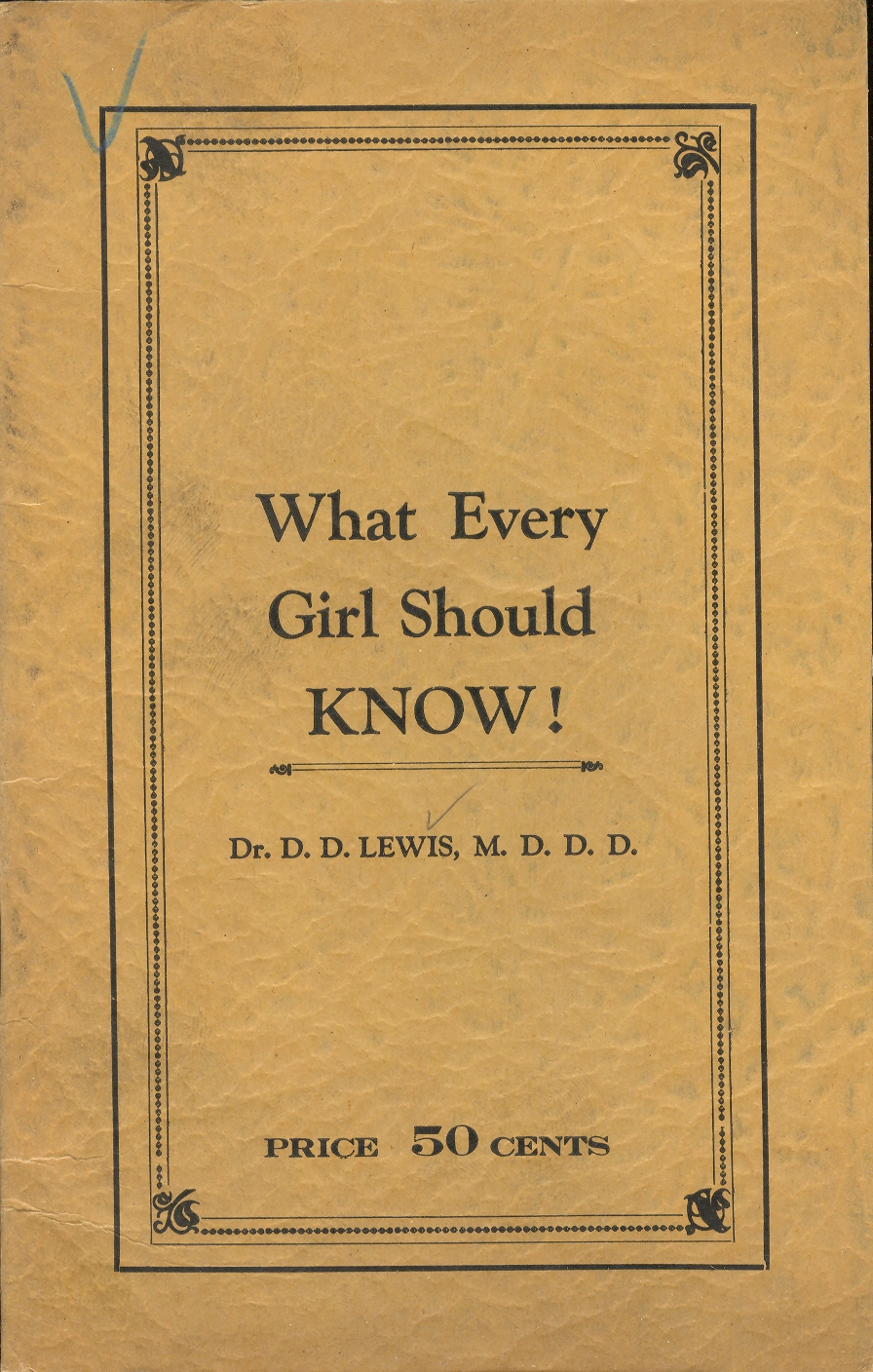
    Every Girl Should Know

    (1928) contains nothing I think outside what everyone would expect it top say,
    except that it is rather well written, and also (in places) quite strongly
    opinionated.  The little pamphlet also
    assumes that its readers already know its complaints:  “the evils of self-abuse are so well known,
    that there is no need to elaborate further on this point”.    Its “chapter”
    headings tell a lot of the story, and probably enough of it to make their
    reading the only thing you need to read: 
    “Know Thyself”, :Know Thyself Spiritually”, “Woman’s Mission”, “The Age
    of Puberty”, “The Ovaries”, “Harmoul—its Importance”, “Rash Marriage”, “Freedom
    and More Freedom”, “Lust and Love”, “The Value of Chastity”, “Buying Popularity”,
    “Selling the Body for Clothes”, “The Tragedy of Dual Love”, Menstruation”, “Masturbation”,
    “Promiscuous Sexual Intercourse”, “Gonorrhea”, “Syphilis”, “The Dreaded Third
    Stage”.  So. There you have it.

    ·Posted by :

    ·in:

    — —

  • Bad Book Titles (and Worse Contents): Cruella DeVille and the Fur of Cats and Dogs, 1938

    JF Ptak Science Books LLC  Post 642  Blog Bookstore

    Blog--jun 8 fur title How
    could one pass up the chance to browse through such a  compelling and revolting
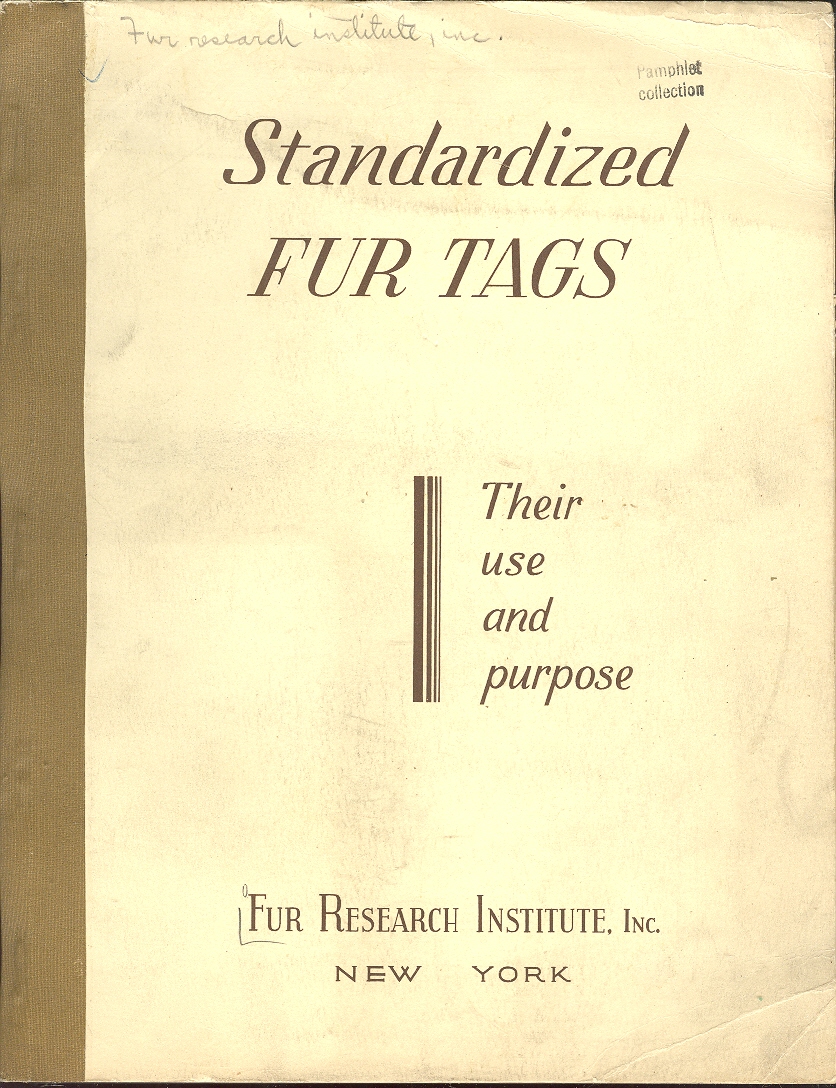
    title such as   Standardized Fur Tags, Their Use and Purpose, (published in NYC
    by the Fur Research Institute in 1938)? 
    Titles like this cry out in equal parts of pity, shame and pride,
    calling to their readers like fur-lined Sirens beckoning to fur-encrusted
    sailors floundering in a fury sea, hell-bent to crash upon fur-slathered
    rocks.  In a world of covering things in
    fur that once belonged to another living thing, the thinking’s all over but for
    the process, pricing and standardization, so that the furriers were less
    inclined to cheat one another and focus on the fleecing of the buying
    public.Blog--jun 8 fur title 001  

     Opening
    this oversized pamphlet reveals the explanation of the fur identified by the
    tags that would appear on the interior-neck of the garment.  There are 125 descriptions and standardization
    of furs, though I must say that what caught my attention first was the fur of
    the “natural” house cat (followed by the “dyed” house cat)—they say that this
    was not an agoraphobic cat’s pelt used to make the apparel, but from cats “wild
    and semi wild”.  Like barn cats, I guess.
    (We are told that the fur “breaks off”, and is not a very good choice for
    outerwear, though it did seem to work for the cat.)

    Blog--jun 8 fur title 002

    Then
    there’s the “dyed Chinese dog” and the “dyed Mongolian dog”—I’m not sure who
    would need pelts made of dog (or cat, or anything else for that matter), but I
    guess that they were popular enough to be included in these furrier  guidelines. 
    And so the list goes on and on: dyed skunk, pieced skunk, natural skunk,
    dyed squirrel, dyed weasel, natural wolf, dyed opossum, etc. 

    ·Posted by :

    ·in:

    — —

  • The “Is This Really Necessary?” Department: Fish Throwing Machine, 1932

    JF Ptak Science Books LLC  Post 665

    Blog==june 25 ifish Our necessities are few but our wants are endless.
    Josh Billings

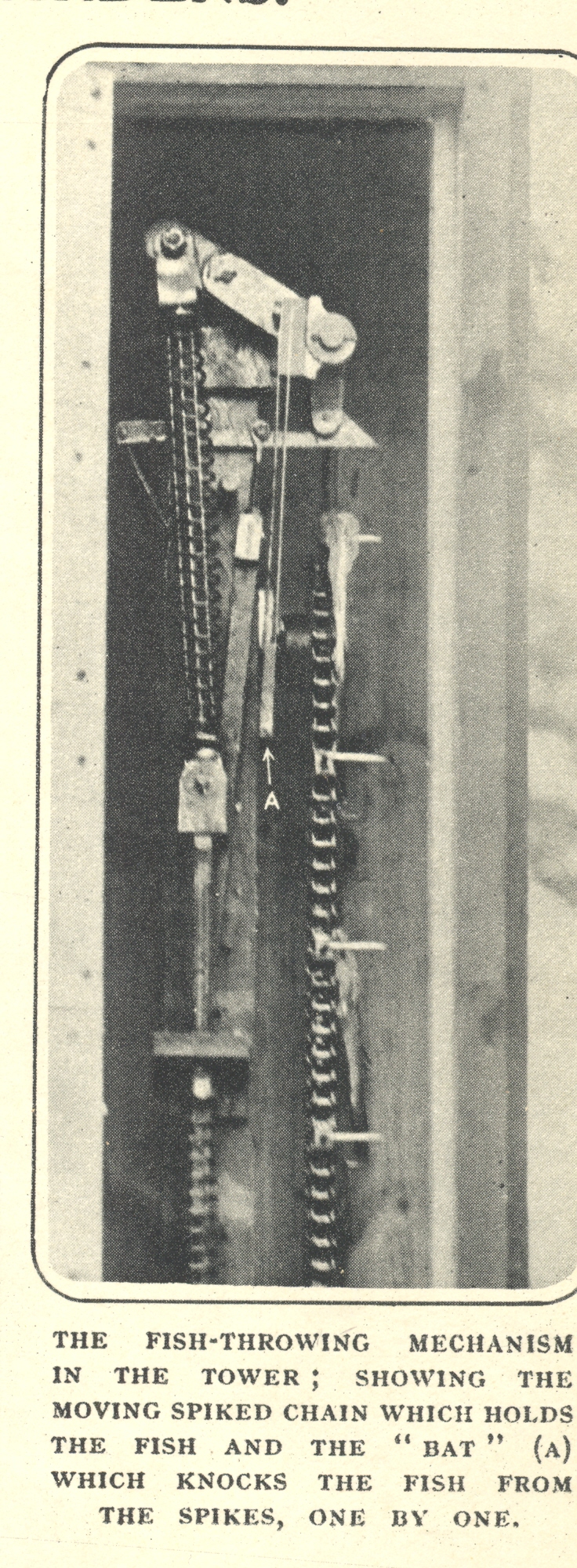
    “Necessity” is a fickle word and and even more elusive emotion, especially when discussing that quality in others.  But there are some things that look, well, just completely unnecessary; so very unnecessary that they are just plain wrong.  Hard to identify, difficult to codify–but everyone knows it when they see it.Blog==june 25 ifish 001

    Such is the case of this fish-throwing machine installed at the London Zoological Gardens.  The wooden tower seems to be 12 feet high or so, with a fish launched from its uppermost window once a zoo patron deposited their sixpence, eager to mechanically feed a sea lion.   Patrons to the zoo at Regents Park who were eager to see the sea lions fed had to arrive at slimly-appointed time; now, with the fish thrower, they could see the sea lions fed at any time, and do it themselves if they were so inclined.  I don’t know exactly what happened to these beats, but constant feeding would’ve have gone all that well.  

    And yes, you got three fish for sixpence.

    Source:  The Illustrated London News, 17  September 1932.

    ·Posted by :

    ·in:


  • Condemnation of the American Correctional System: 1929 = 2009?

    JF Ptak Science Books LLC  Post 609   Blog Bookstore
    Blog--may 10--prison
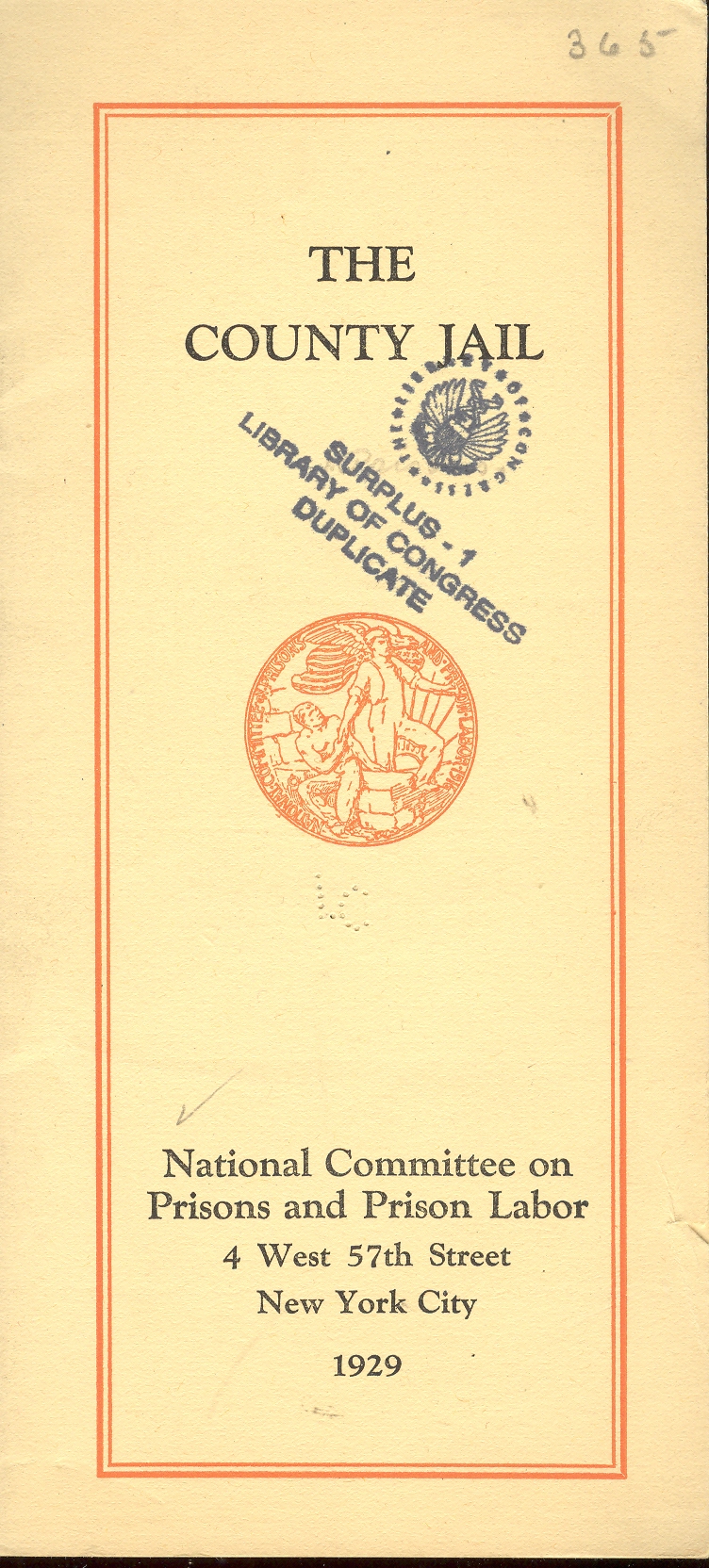
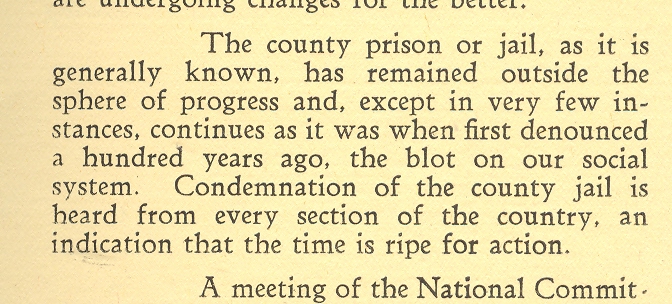
    This pamphlet is the address by the philanthropist Alfred Lewisohn–a German immigrant who made many dozens of millions of dollars and with his brother became Copper Kings–to the national Committee on Prisons and Prison Labor.  Lewisohn was a major contributor and the honorary president of this group–a very liberal, very convincing group with a large measure of outrage with the way in which American crime was addressed and criminals imprisoned.

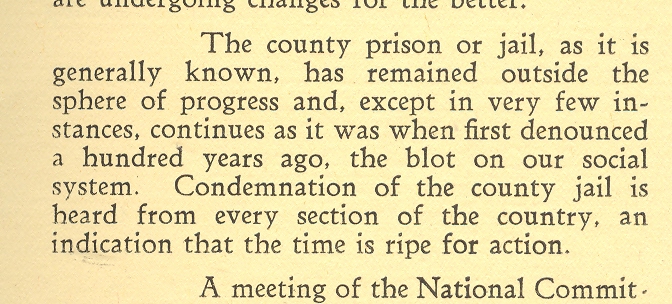
    Lewisohn was enraged with the prison system in the U.S.,though he did have hope for the Federal system, which he hoped would (soon) become the template for the successful treatment of criminals. Everything else below the Federal level was a mess, a mistake, wrong–he thought it absurd that such vast amounts of money would be spent on systems which were milled in deceit, harmful to almost everyone involved, and utterly broken.  He saved his greatest vituperative for the county jail, which was beneath contempt.

    Blog--may 10--prison 001

    Lewisohn’s complaints, condemnations and suggestions seem, unfortunately, pretty modern–he would also be spinning QUASAR-like in his grave if he had any idea of what was going on now, 80 years after the publication of this paper.  Corporal punishment by corrections officers is probably almost entirely gone, replaced by that which is administered by other prisoners; the obscene labor requirements from the prisoners is also pretty much gone, as are other things. The spending, the enormous incarceration rates, the idleness and waste–those are all still there.  Except that the incarceration rates–those are far beyond anything that Lewisohn could have imagined.   For example, when Lewisohn was writing the incarceration rate that he complained about went from 110,000 people in jail in the U.S in 1920 to 180,000 in 1930.  The numbers rose to 272,000 in 1940 , down to 252,000 in 1950, then up again to 332,000 in 1960 and 338,000 in 1970.  Things get really bad in the 1980’s with the war against drugs:  the American prison population rises from 474,000 in 1980 to 1.18 million only ten years later.  In 2000, the total rose to 1.9 million, and by 2009 the figure topped 2.4 million.  I should also point out that this is a figure for people actually in prison–for those in the criminal justice system, the number balloons to 7.8 million.  

    And so with the war on drugs, we find ourselves in this country with 1.2 million non-violent people in prison.  According to the Justice Policy Institute (and the Bureau of Justice statistics), it costs something like $50 billion to keep these people in jail, or about the cost per year of schooling at an A-school for 1.2 million kids.  That figure is also twice the total amount of money spent on the Aid for Families with Dependent Children (AFDC), which services something like 8 million people.  With food.  The total bill for keeping people in prison in the U.S. is around 100 billion.  Its harder for me to calculate the total-total for dealing with the other 5 million somewhere in the criminal justice system–but it is a pretty big figure, coming to some large chunk of a non-wartime military budget. And all that money on something that doesn’t work all that well. 

    [Other social expenditures dwarfed by 50 billion in the continued reading section below…]

    ·Posted by :

    ·in:


  • Slave-Catching in D.C. in the Month Before Emancipation, 1862

    JF Ptak Science Books LLC  Post 606   Blog Bookstore
    (All images are expandable)

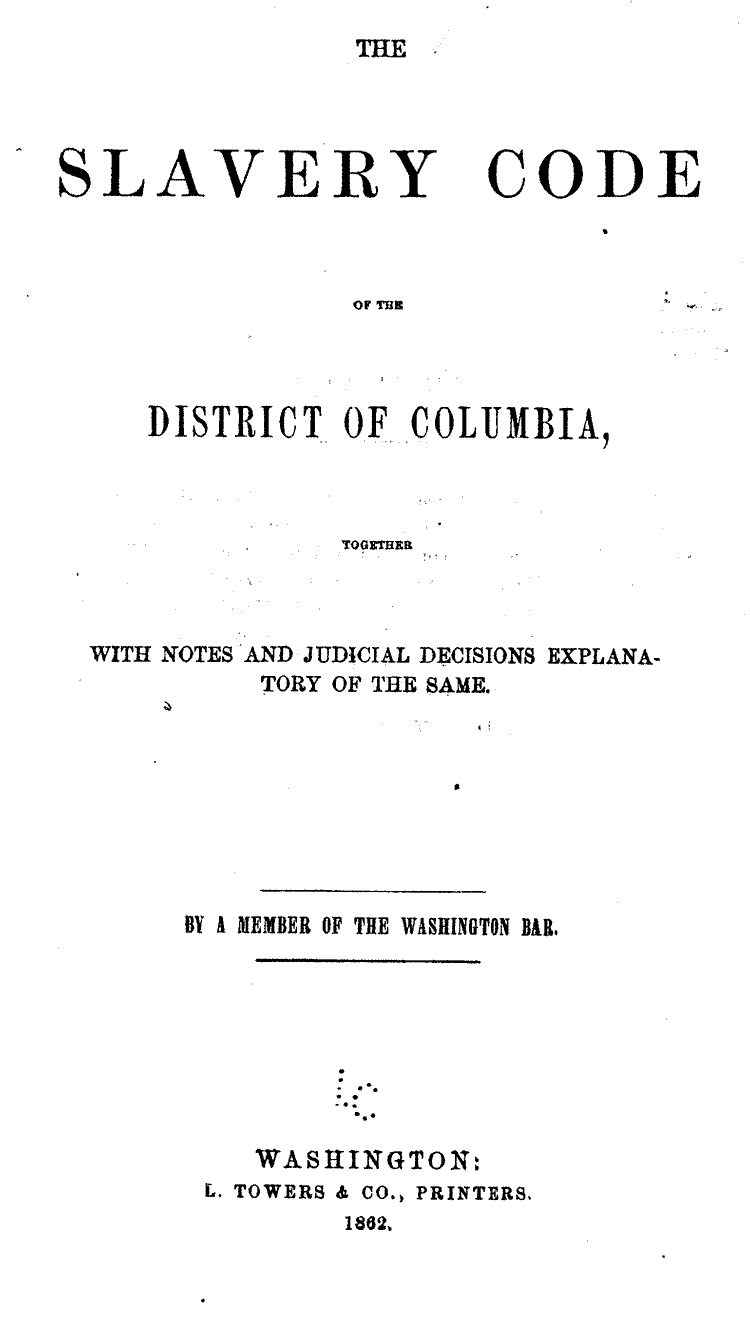
    Blog--may 6--slavery Slave-catchers were busily and profitably at work in Washington right up to the last moments before the issuing of the abolition of slavery in the District on April 16, 1862–this coming several months before the Emancipation Proclamation. (Congressman Abraham Lincoln, R-IL, sought the abolition of slavery in the District in 1849 but was shot down, mainly by a coalition led by Democrat J.C. Calhoun.)  Historically D.C. had a relatively small slave population, around 6800 in 1830 and  3800 in 1860–Maryland, its neighbor, did not, having upwards of 100,000 slaves at the beginning of the war, making it one of the most densely-slaved state by area in the South.,  “Absconders” from the counties of Maryland surrounding D.C. often made their way to the District, perhaps thinking that it would be a friendlier place:  and it was, comparatively, but the escaped slave was not immune to being hunted and prosecuted, recoverable like any other piece of stolen personal property, the slave in this case basically stealing themselves.

    D.C. was a small place, and the slaves were concentrated mainly in what we would today call downtown.  There was in fact a slave pen right there on the Mall, very close by the entrance to the Smithsonian. (To this day there is no marker.)  So the slave population in the District was highly visible.  As Charles Ball writes:

    “…I generally went up into the city to see the new and
    splendid buildings; often walked as far as  Georgetown , and made many new acquaintances
    among the slaves, and frequently saw large numbers of people of my color
    chained together in long trains, and driven off towards the South.” –“Fifty Years in Chains or The Life
    of an American Slave
    ,” 18-19,in First-Person Narratives of the
    American South, 1860-1920.

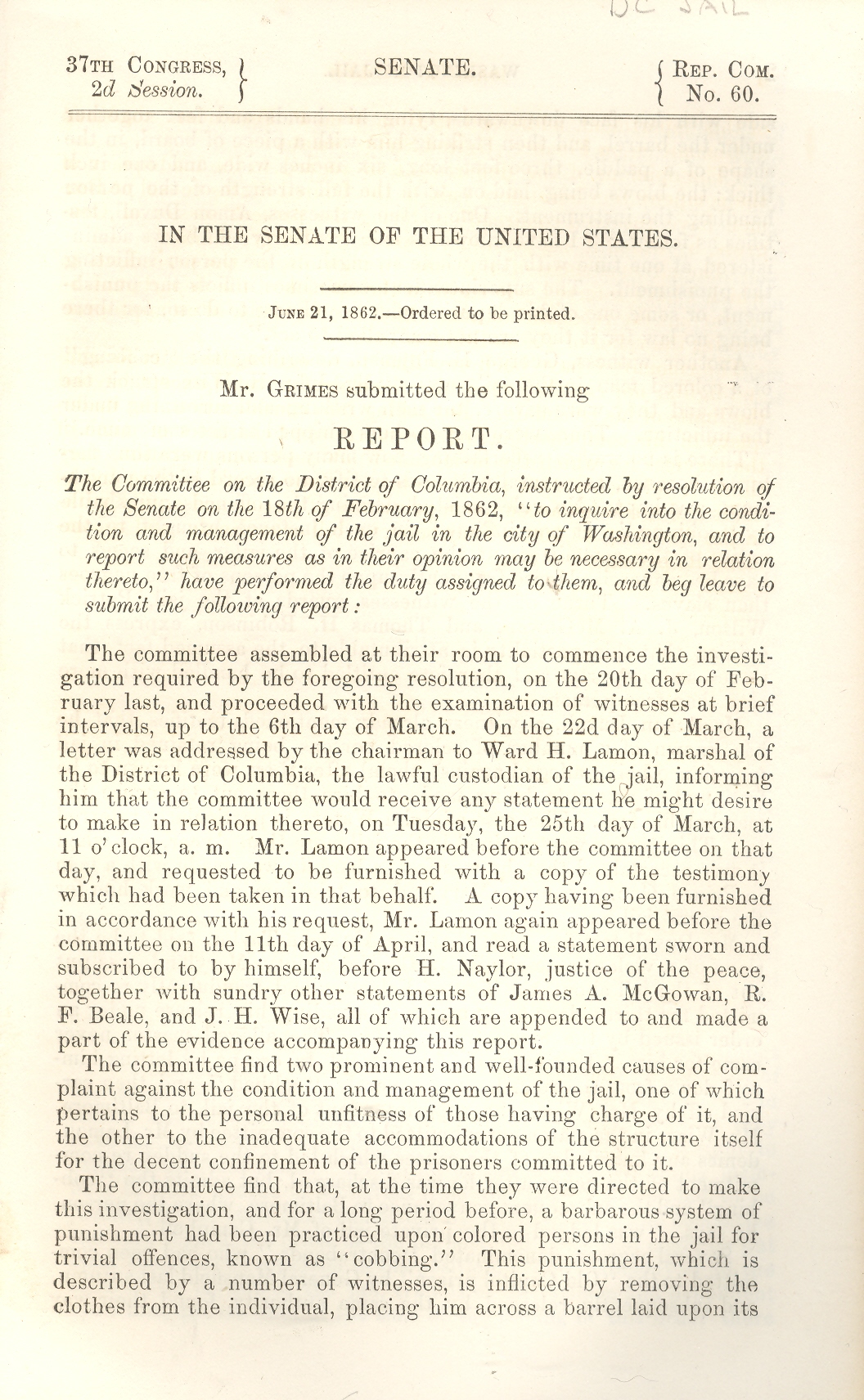
    This all comes to my mind after bumping into this government-printed document at right—it was keeping track of its part of eternity in the bottom of one of my boxes of pamphlets, shaking its way into a disturbing consciousness. Blog--may 6 dc jail

    This unhappy pamphlet details the intolerable conditions of the D.C. Jail, which at the time (February, 1862)  housed 300 prisoners, nearly five times the amount it was designed for.  Aside from bad/no food, hot/cold conditions, physical torment, and not-discernible terms of imprisonment, the prisoners were desperately overcrowded, sometimes ten to an 8×10 cell. 

    Conditions were worse for the blacks in the jail—these men were often arrested and imprisoned on no real charge, kept by the DC jailer, in prisoner, at their own expense. 
    The report states:

    “Mr. Amon Duvall, a witness already mentioned, testifies that he has known of a number of colored persons being retained in jail (no offence being alleged against them) after they were known to be free, and of attempts being made to hire them out to secure the marshal his fees. The case of John Waters is particularly referred to. This person was retained in the jail more than a year, and when it was ascertained that he was free a bargain was made with a man in Prince George county, Maryland, to take him and work him for the years’ jail fees.”

    The longer they stayed, the more they owed. Of course, if you had no money, and you were kept in jail a year—even by fraud—you accumulated quite a debt to the prison.  At this point the blacks were “hired out”, enslaved if free, to work for a year or whatever appropriate time to pay for their own (undeserved) incarceration. When these men ran from this service, they were further pursued, now doubly-damned: 
    “…absconded and ran away from said Prince George County, and are now fugitives from service and labor lawfully due to said affiant in said Prince George County and has reason to believe and does believe that all of the said slaves are now in the District of Columbia; he prays for process and that said slaves may be taken and delivered up to him by order of this court receiving & the statute in such cases made and provided.”[ George Duvall, Dist. Court of the U. S. for the Dist. of Col. Clerk of the Court “Fugitive Slave Cases, 1862,” May 15-19, 1862.]

    It was an insidious system that provided strong income for those with the power to demand it. 

    ·Posted by :

    ·in:


  • Letters from the Dead and Dead Letters, Part I: Letters from the Condemned, 1719

    JF Ptak Science Books LLC  Post 602    Blog Bookstore

    Hanging offenses in England  in the
    18th century reached considerably far down into common crime.   The practice of printing a broadside detailing
    the crime with the prisoner’s lament below was also a common practice—it fueled
    public introspection/fear about keeping the laws of the King, provided them an
    entertainment (as the hangings were public), and helped to sustain a minor
    industry of grubby little Grub Street presses that produced such things. Very
    early on in my bookselling career I sold a collection of upwards of 500 of
    these broadsides—I remember clearly that young boy(s(!) were hanged for the
    theft of handkerchiefs,  men hanged for
    the theft of a goat, a chambermaid for stealing some tableware; people were
    hanged for house breaking, “threatening”, shooting a stag, fraud, damaging
    public buildings, and the like.  Under
    James I in 1603 there were 50 crimes with punishments of death; by 1783 there
    were 200. As James Briggs (et al) wrote in Crime
    and Punishment in
    England ,
    an Introductory History, “the death penalty was a leading feature of penal
    thinking”. 

    Crimes against code, the basic public
    sensibility, and common discussion were also punishable by death.  Homosexuality was one offense in this
    category—in 1769 William Blackstone’s foundation work on English law  (Commentary….,
    chapter 15, Book IV, pp 205-217) described homosexuality as the “crime  that could not be named”, and both active and
    “passive” partners to such a crime were eligible for hanging.  I wonder about the statistics for crimes like
    this, and also about the number of Lesbians who were hanged for their love.

     Adultery was another crime for which one
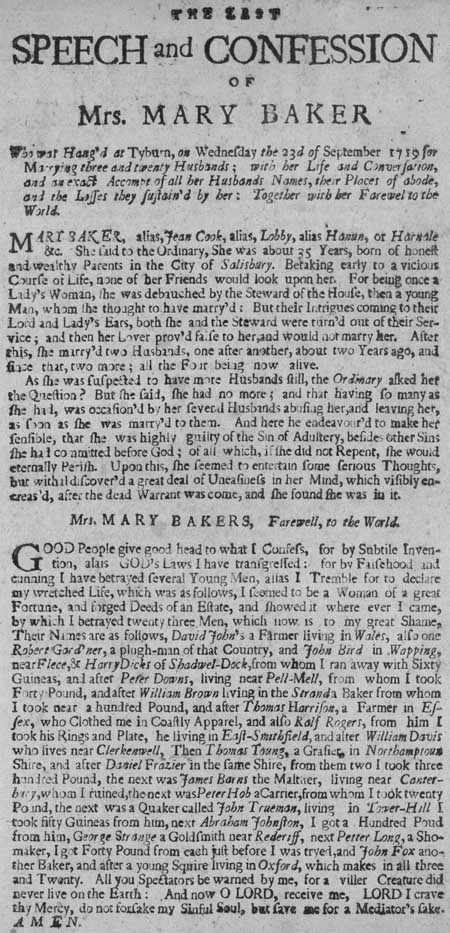
    could swing, and the broadside that I’ve reproduced here details just one such
    criminal.  It is the hanging confession
    of Mary  Baker , who was convicted  of defrauding “several” men of money, and
    also of the sin of multiple marriages, and adultery.  The case was quickly heard and the sentence
    quickly delivered

    Blog--may 4--
    Mary was interviewed and she allowed that she had taken two
    husbands; but the legal representative convinced her to tell the whole story,
    as she would be soon be judged by god. 
    This was sooner than she thought, evidently, because she was convicted
    on these two admitted counts (though she was suspected of many more).  Convicted and sentenced, and sentenced to
    death.  It was after she received the
    death warrant that she confessed to more than the original two.  As the broadside states: “She seemed to
    entertain some serious Thoughts, but withal discover’d a great deal of Uneasiness
    in her Mind, which visibly enereas’d, after the dead Warrant was come, and she
    found she was in it”.  Finding yourself
    in a death warrant would increase your uneasiness, I’m sure. 

    I’ve got no idea why Mary would go into
    such detail; perhaps it  was a natural
    reaction, trying to rescue the soul by confession; maybe she was enticed by the
    legals, somehow (threat against her, threat against family, a more “pleasant”
    (i.e. less painful, immediate) death at the hands of the hangman.  I don’t know. ) But this is the list of the
    men she married, or didn’t marry, outlined in her confession. 

     She starts with a general appeal to her readers:

    “GOOD People give good head to what I Confess, for by
    Subtile Inven-
    tion, alyis GOD’s Laws I have transgressed: for by Falsehood and
    cunning I have betrayed several Young Man, alias I Tremble for to declare
    my wretched Life, which was as follows:

    I seemed to be a Woman of a great Fortune, and forged Deeds
    of an Estate, and showed it where ever I came, by which I betrayed twenty three
    Men, which now is to my great Shame, Their Names are as follows:

    [And making a list of these names, we have:]

    David John’s a Farmer living in Wales,
    Robert Gard’ner, a plugh-man of that Country,
    John Bird in Wapping,near Flece,
    Harry Dicks of Shadwel-Dock, from whom I ran away with Sixty  Guineas
    Peter Downs, living near Pell-Mell, from whom I took Forty
    Pound
    William Brown living in the Stranda Baker from whom I took
    near a hundred Pound,
    and after Thomas
    Harrison, a Farmer in Essex, who Clothed me in
    Coastly Apparel, and Ralf Rogers, from him I took his Rings and Plate, he
    living in East-Smithfield
    William Davis who lives near Clerkenwell
    Thomas Young, a Grasier in Northamptoun Shire
    Daniel Frazier in the same Shire, from them two I took three
    hundred Pound
    James Barns the Maltner, living near Canterbury, whom I ruined,
    Peter Hob a Carner,from whom I took twenty Pound,
    Quaker called John Trueman, living in Tower-Hill I took
    fifty Guineas
    Abraham Johnston, I got a Hundred Poud
    George Strange a Goldsmith near Rederiff,
    Petter Lang, a Shoemaker, I got Forty Pound from each just
    John Fox another Baker, and after a young Squire living in Oxford, which makes in all
    three and Twenty.

    I don’t know anything about Mrs. Baker.  It does seem as though she was out and up to not-much-good, an defrauded a bunch of guys.  Seems that she met a very stiff end for what harm she actually caused.  Then again, when kids were hanged for plucking two hankies from a gent’s pocket, her crimes seem large in the redded eyes of the Bloody Code.  

    ·Posted by :

    ·in:


  • A Note on the History of Smiling

    JF Ptak Science Books Post 630  Blog Bookstore


    Where do exhausted 1951 smiles go?

    Blog--may 29--smile 7up det

    I don’t know when the first illustrated advertisement appeared, and I don’t know when the first picture of a smiling human face was used in that in order to sell a product displayed in a mass market printed publication.  My sense though is that the smiling, happy (and too-happy) face was first used in the first or second decade of the 20th century, but that the general, templated use of the eagerly over-sized mega-toothed smile topped by wide-spirited painted eyeballs came into play in America right after the end of WWII.  The enthusiastic smiled-upon objects seem to become more slight and mundane as time passes, coming to a point fairly early on of the mysterious basis for this happiness over such modest products.  The smiles and happiness brought by these items was surely short-lived, the smile becoming a fossil, a relic, to simpler times and simpler consuming needs. 

    Blog--may 29--smile 7up

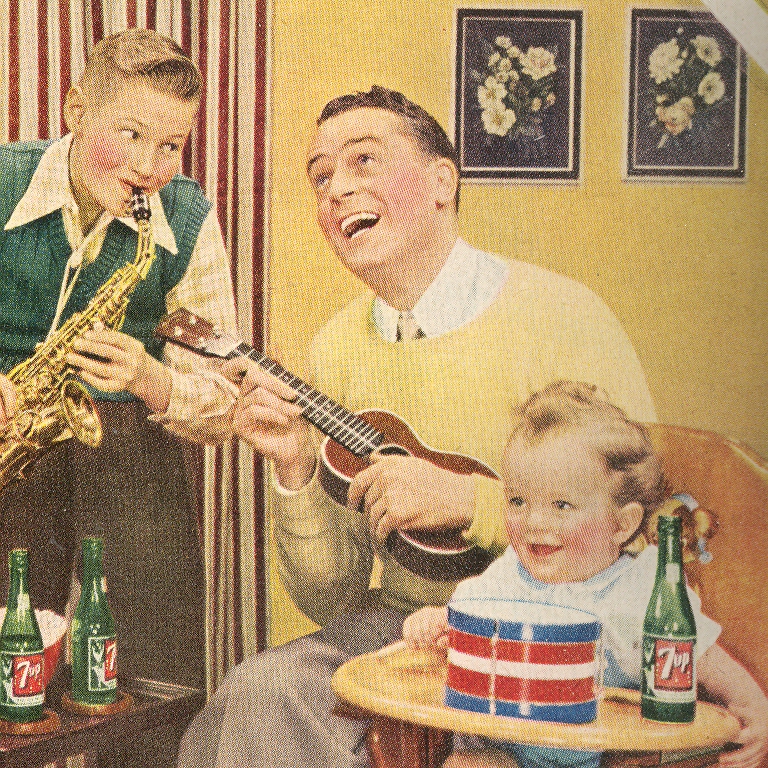
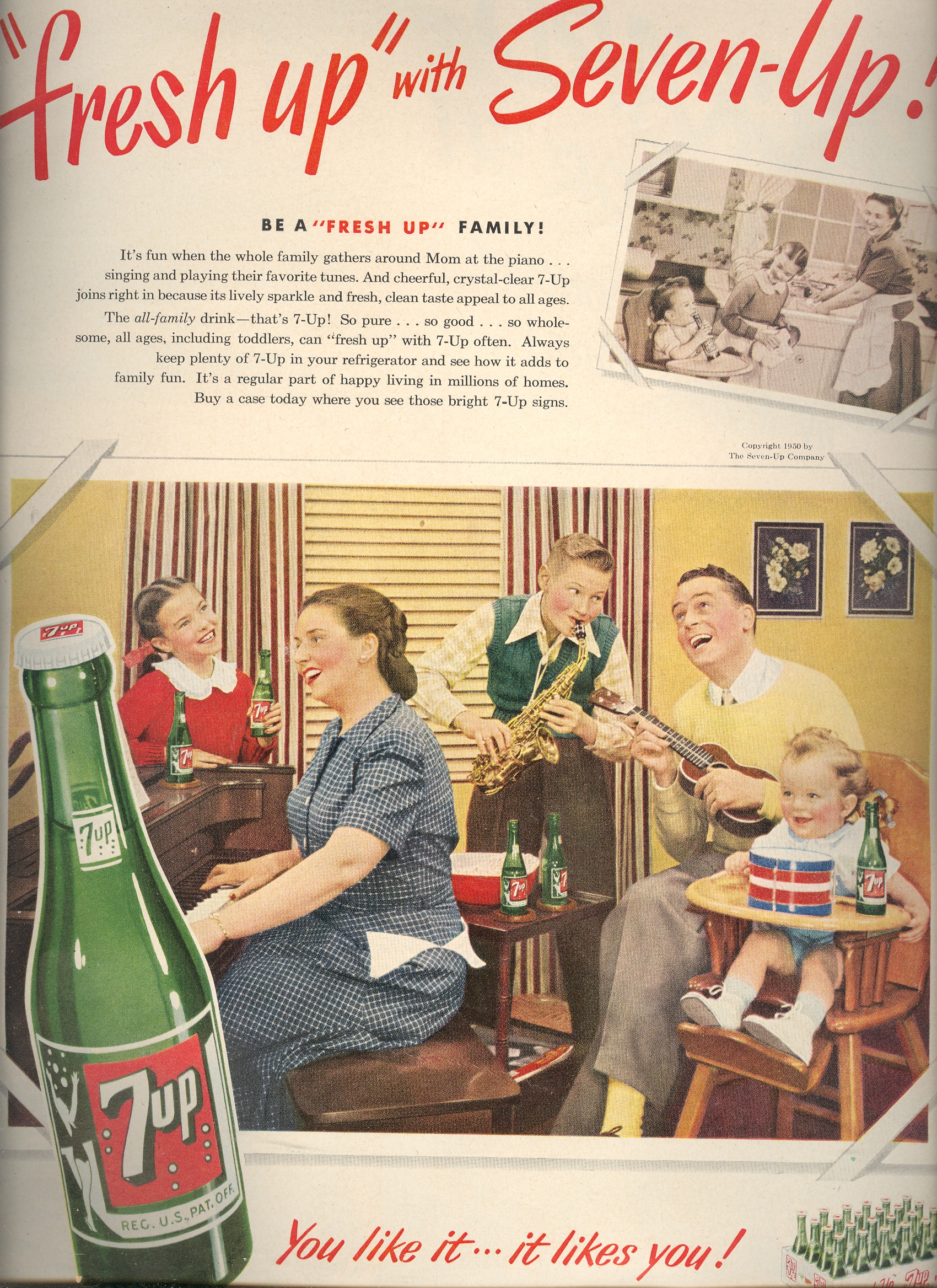
    Breezing through a hand volume of LIFE magazine for 1951 finds many examples, and quickly too:    how exciting can a bottle of 7Up possibly be?  This entire family seems to be serenading the object of their collected desires, the father certainly being the most moved of the bunch.  Baby has its own bottle and, of course, drum.


    Blog--may 29--smile water bott;e

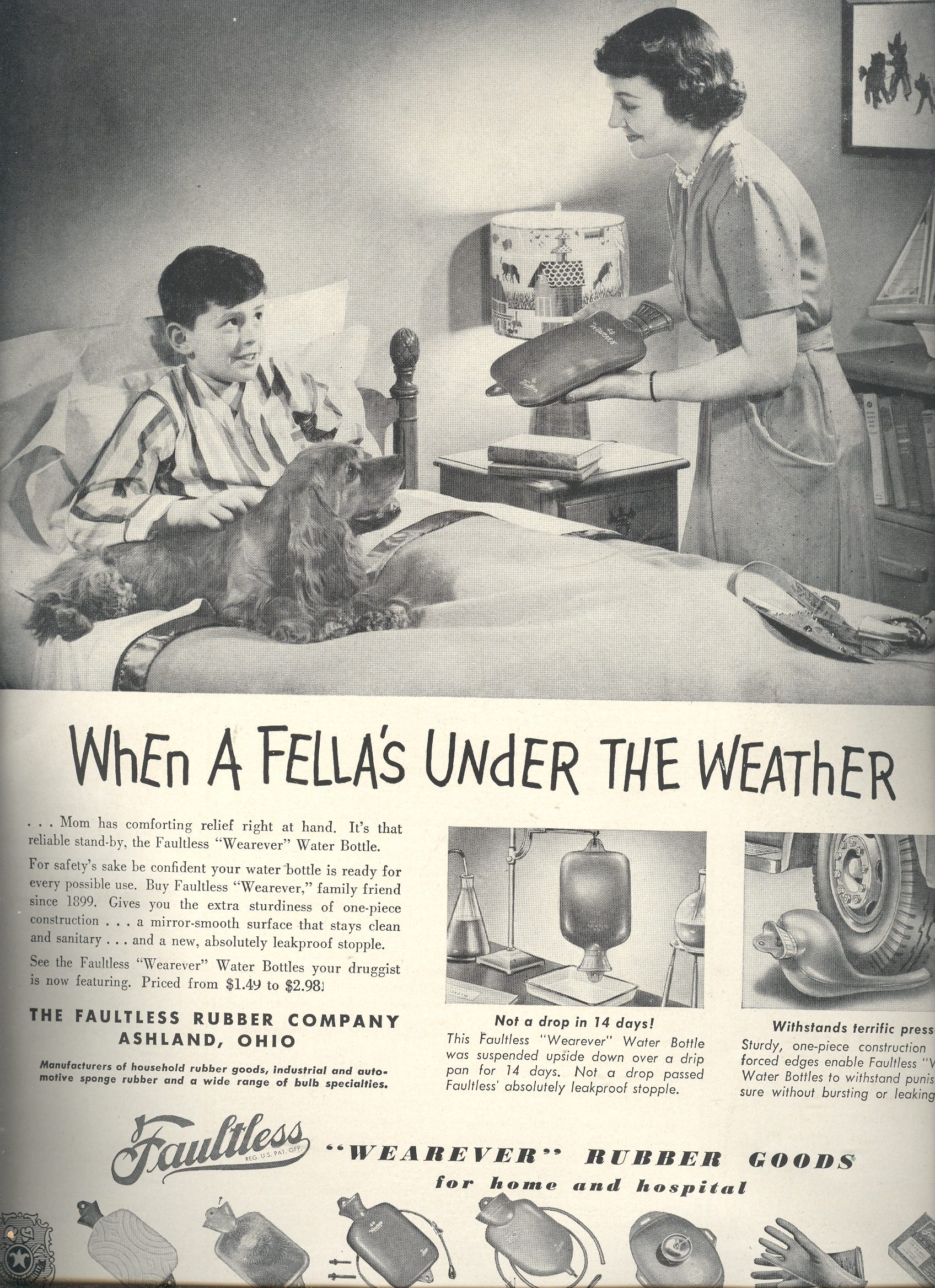
    Is that Jerry Mathers smiling so contentedly at Mother brining in his hot water bottle?  (The doggie is staring at something to Mother’s left, probably focused on some trainer threatening/rewarding  it to make it seem  interested in the hot water bottle, too. )  It is hard to image this item bringing a smile to anyone’s face, at least from this standpoint in the future.  Its a simple rubber bag, brought to  a simple room.  In a weird and unexpected King of the Hill neighborhood sort of way,  the whole scene seems  very comforting. Maybe its the cowboy holster at the foot of the bed and the perfectly folded blanket that seals the deal.)


    Blog--may 29--smile pumps

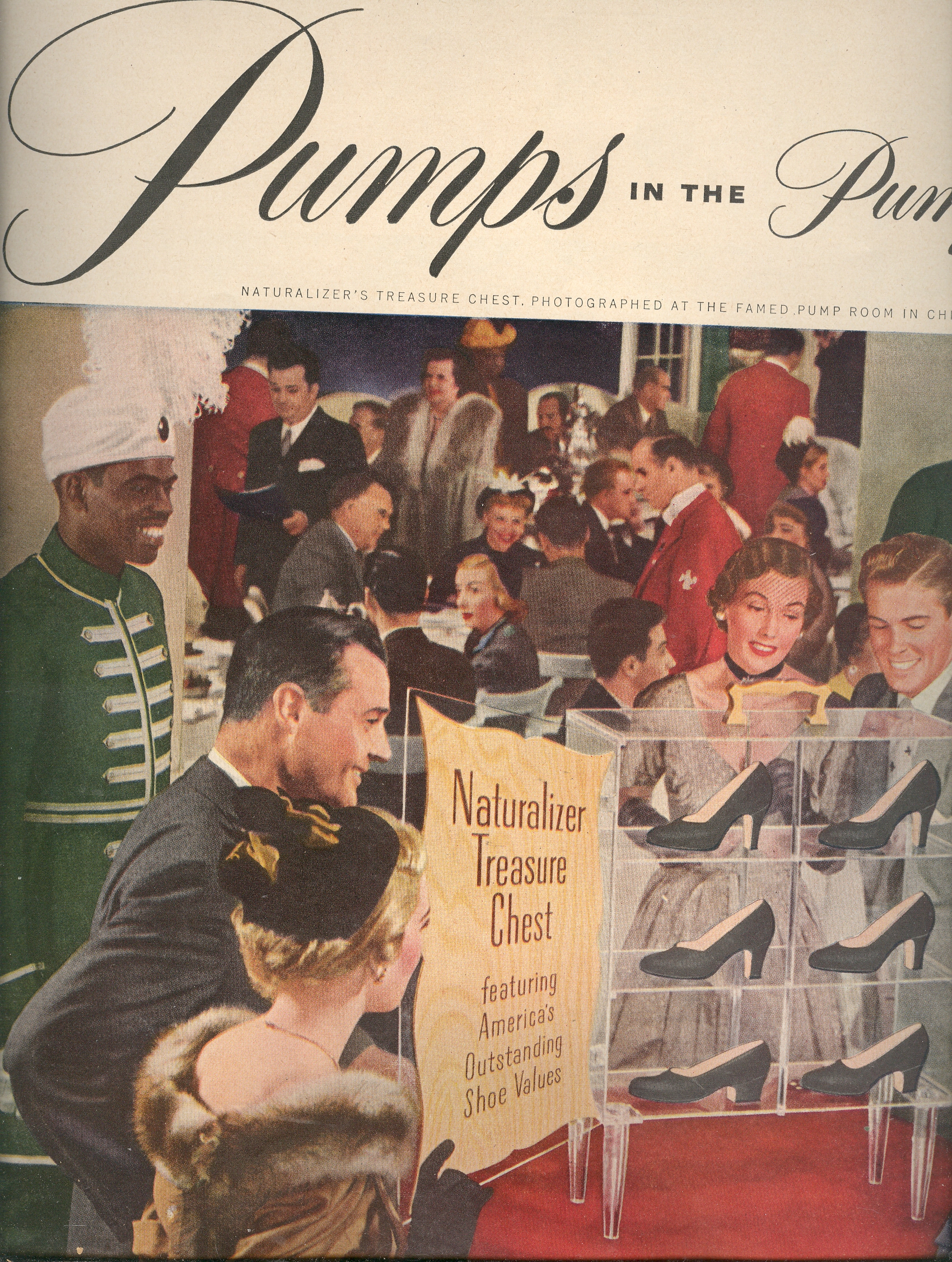
    Pumps?  This is actually half of an ad featuring a number of very accommodating couples allowing themselves to be happy while looking at women’s shoes.  I can’t tell what is going on in the background, but in the foreground there are several of men infected with broad-beam smiles brought on by looking at a glass case filled with pumps.  The glass “treasure chest” seems to be guarded by garishly-festooned black men, a sign of the un-lliberated LIFE magazine times.  


    Blog--may 29--smile underwear

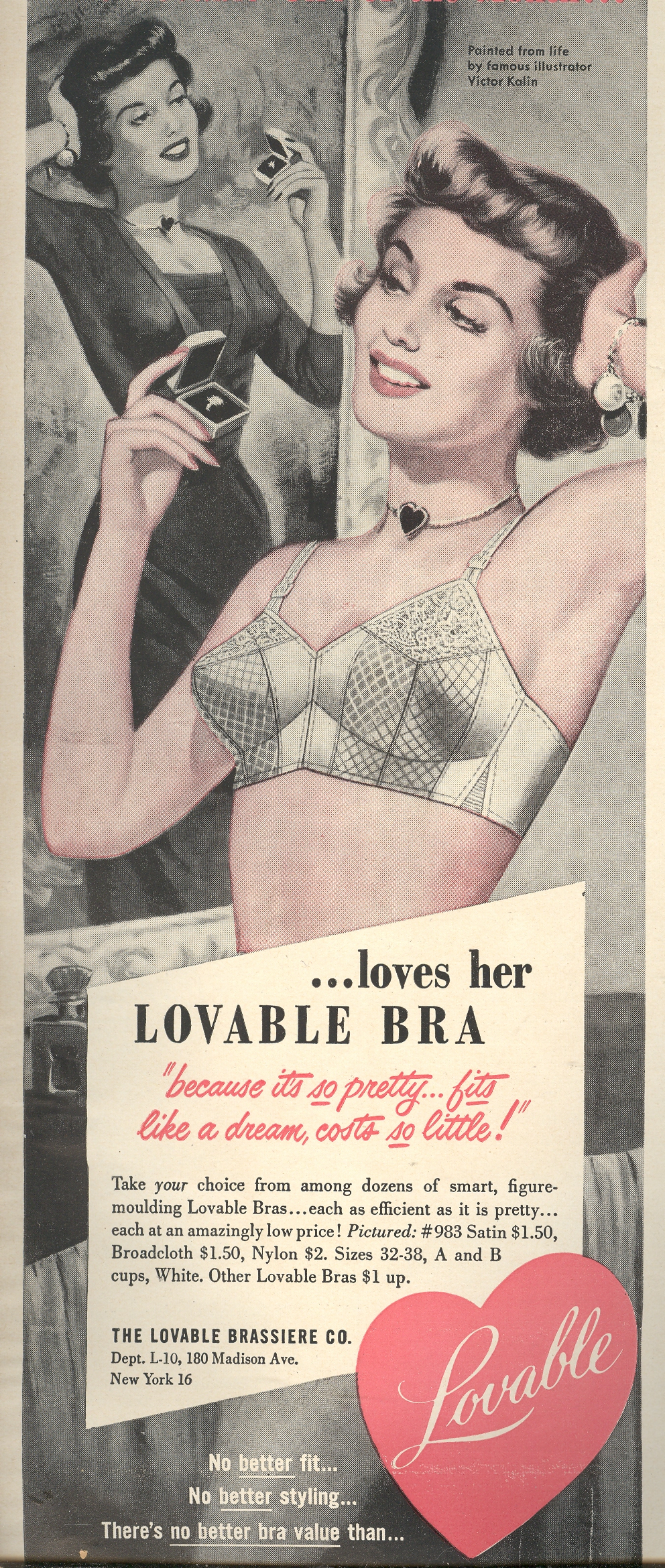
    This man seems overly exuberant with the pleasure brought him by his underwear, though he is at least alone while experiencing this private Underwear Emotion. (In many other ads by Jockey there’s a man & boy setting, each usually with big smiles, straddling things to show the comforts of their underthings, caught in what seems today to be pre-porny trash poses of extremely dubious ease…no one today would ever come close to publishing such a thing in today’s (legitimate) advert community.) So too for the woman who seems to match appreciation for her new engagement band with the fortitude of her bra–it isn’t exactly clear that the ad is celebrating  uplifted pointy breasts with  marriage proposals, but  it  doesn’t take too much  of  a  leap to get there.

    Blog--may 29--smile bra

    There was a time that the *something* that made us smile didn’t make us smile any longer.  The smile is gone, gone to where smiles go once they’re no longer needed, replaced by thin-lipped satisfied need.There was a time in 1951 when advertisers thought their products to be so appealing that they used monumentally misplaced smiles to convince the buying population of the United States to purchase their product, expecting I guess to produce that photographed smile onto the face of every purchaser, or at least to image the smile in the consumers’ noggins. That smile didn’t last long—after all, we’re just talking about 7Up and underwear. 

    I wonder about the issue of the  impossible smile of promised  pleasures like these, and how it changed over the years. As a casual observer of  millions (?)  of these  sorts of things over the years,  my own general impression is that the smiles are  era-dependent and semi-generational.  Or not.

    ·Posted by :

    ·in:


  • Nazi Propaganda and the Battle for Europe, 1941: the War at Sea

    JF Ptak Science Books  Post 624   Blog Bookstore 

    Propaganda Series #  14  (See listing below)
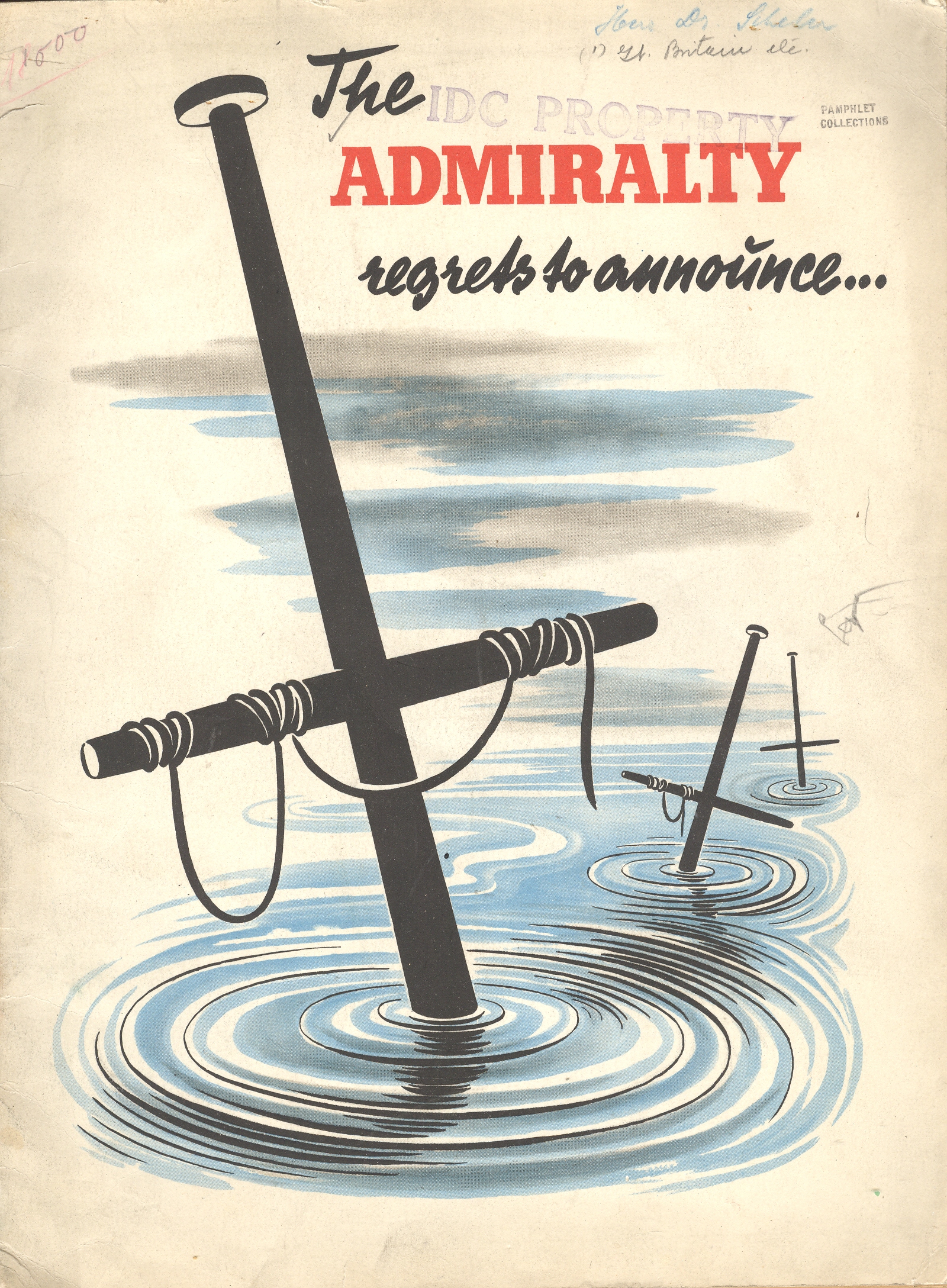
    Blog--May 24--regrets The Admiralty Regrets to Announce… was for years the standard beginning to an official British announcement concerning the loss of ships and sailors.  The phrase is used as the title to this work (by an unattributed writer known only as “an expert”) to immediately introduce the reader to the failings of the British navy.  It is of course a piece of Nazi propaganda, issued some time in 1941. (My copy is he U.S. copyright deposit copy and is stamped with a transfer date of September 1942; the pamphlets reads to me as though the U.S. had not yet entered the war.)  The great strengths of the German air force and navy are extolled and the failings of the British mercantile elaborated at great—and sometimes greatly imagined—lengths.  The booklet was published in French (except for the title) and answers its own repetitive question: “quelle est donc la situation relle de la marine commerciale anglais?”

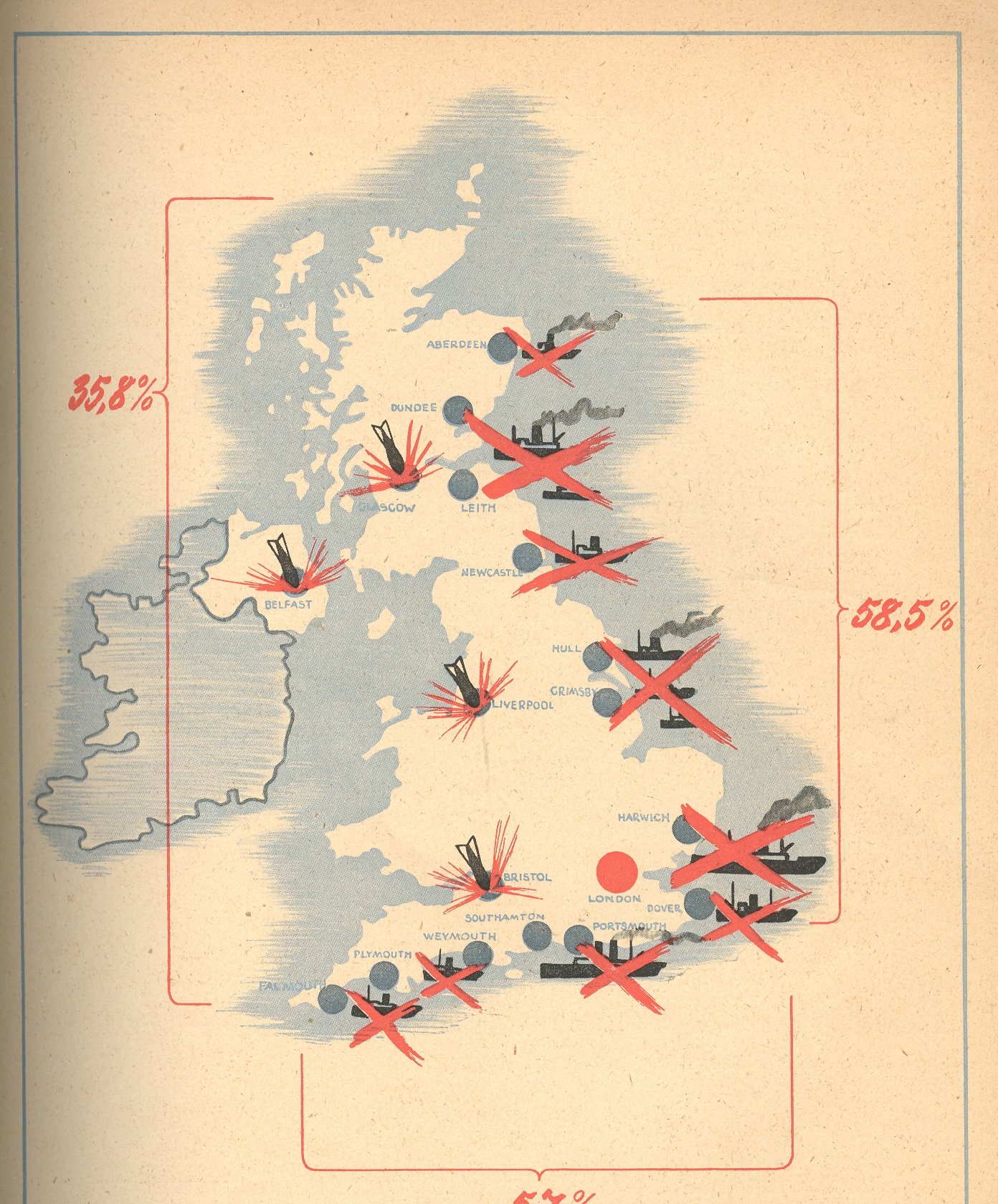
     The pamphlet’s 32 pages (illustrated with 2Blog--May 24--map14 photographs of various blow-ups and bombings, plus one graph and three maps) are dedicated to winning the French hearts and minds, trying to convince the conquered population that there really wasn’t any help coming, and that the British could not even supply themselves with the necessaries to run a country, let alone a war.

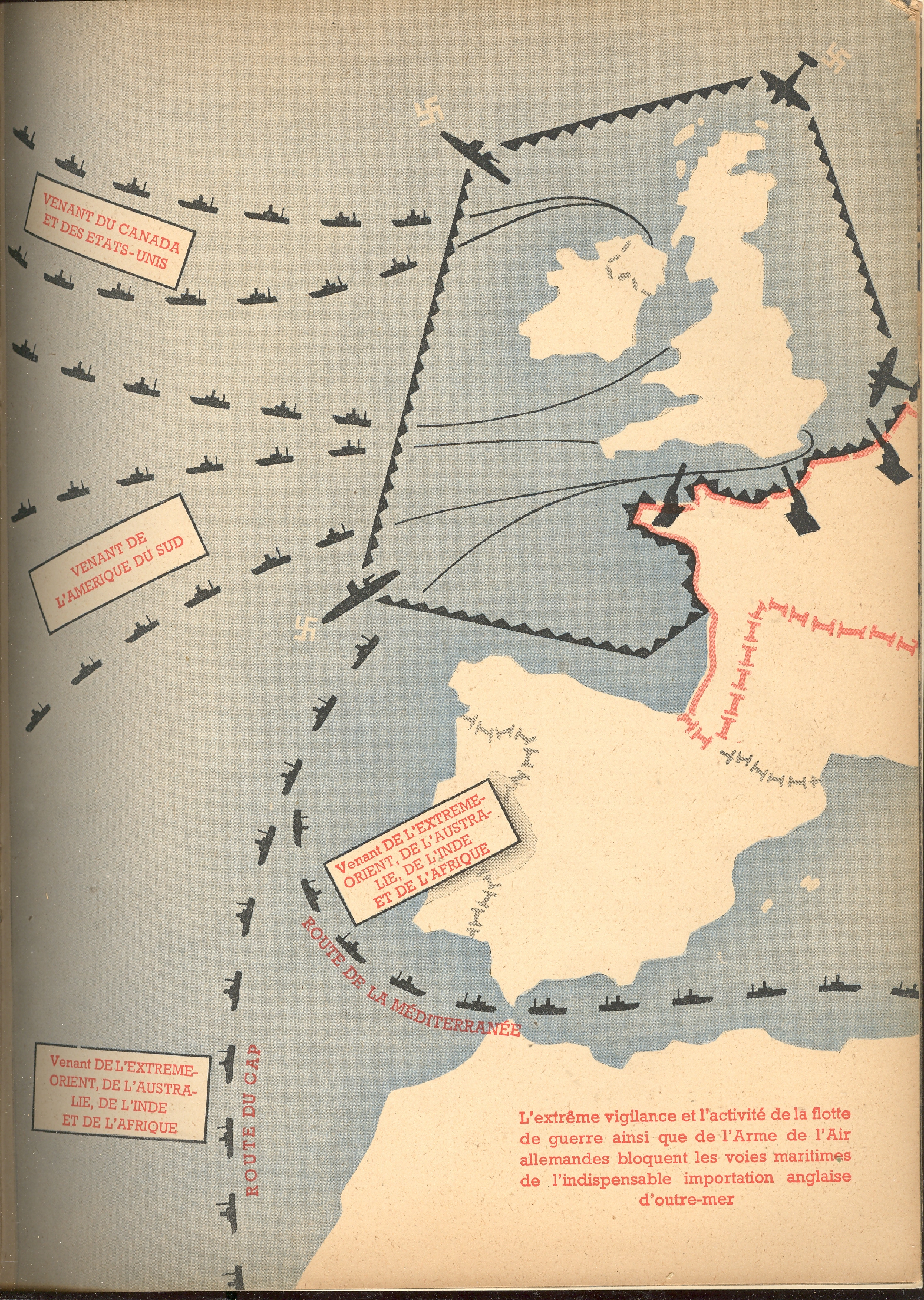
    In the map at right we see the  ports and shipping centers that were bombed by the Luftwaffe (with London located by a big red dot).  Another map shows the stockade-like presence of the Nazi navy securing its impregnable wall against the arrival of foreign trade and supplies to Britain.  

    Blog--May 24--map2

    This post is one of a series on propaganda maps which occasionally appear in this blog.   Like Thomas Nast political cartoons and war photography, a map can instantly and overwhelmingly display not only data but sentiment as well. The maps published in this pamphlet by the Nazis are were certainly immediately understandable to just about anyone, French-reading or not, literate or not–the images needed no words, especially when surrounded in the text by vicious images of German military might.  OvBlog--May 24--map2 001errun or not, Petain-ized as it was, France was still offering aid to its allies and resistance to the Germans–the more minds that could be won over with propaganda of this sort meant one less to have to worry about as an active enemy.

    A Listing of Some our the Propaganda-related posts in this Blog

    Nazi Propaganda: Scaring the Will-to-War, 1935

    Maps as Propaganda: the Nazi’s Use of Maps in the Hearts and Minds Campaign in Occupied and Holland and France, 1943


    The Propaganda of Restricting Infomration: Dorothea Lange’s Photos at the Japanese “Relocation” Camp, Manzanar, 1942

    Psychological Warfare--Aerial Propaganda Leaflets and Surrender Tickets, WWII.

    Maps as Propaganda: the Turning of the Tide, January 1943


    Humanitarian Propaganda–Hope for those at Home, September 1944.

    Nazi Propaganda: Scare Tactics in a Hearts and Minds Campaign, 1940

    A Propaganda Effort Equating the New Deal and Nazism, 1935: the Power of Willful Forgetting

    The Atomic Bomb: 6 August 1945. Propaganda Leaflet Dropped on Japanese Cities

    The Polish “Threat” to Germany, 1939:   Nazi Propaganda on the Perceived Polish “Invasion”


    Propaganda Maps #2: the Nazis. the Big Lie, and Cartography


    Graphical Display of Data: the R.A.F. and Luftwaffe Present Their Cases, 1938-1940


  • Fossils of Almost No Value? Statistics, Prisons, and Meaninglessness

    JF Ptak Science Books    Post 622   Blog Bookstore

    Blog--May 23--convict The fossil record is generally one of the richest and most
    compelling histories of the development of life on earth, a far-reaching,
    cumulative record of extraordinary importance. 
    There are the other, occasional, fossils that stand only by themselves,
    and seem to have almost no use in the current time, living almost entirely
    within themselves. The following statics seem to fall into that category—they
    seem to be only a tombstone for an era, providing nothing except to tell the story
    of what happened, existing only for that purpose, with no compelling
    utilization for anything outside understand a small piece of life for the year
    the stats were gathered. 

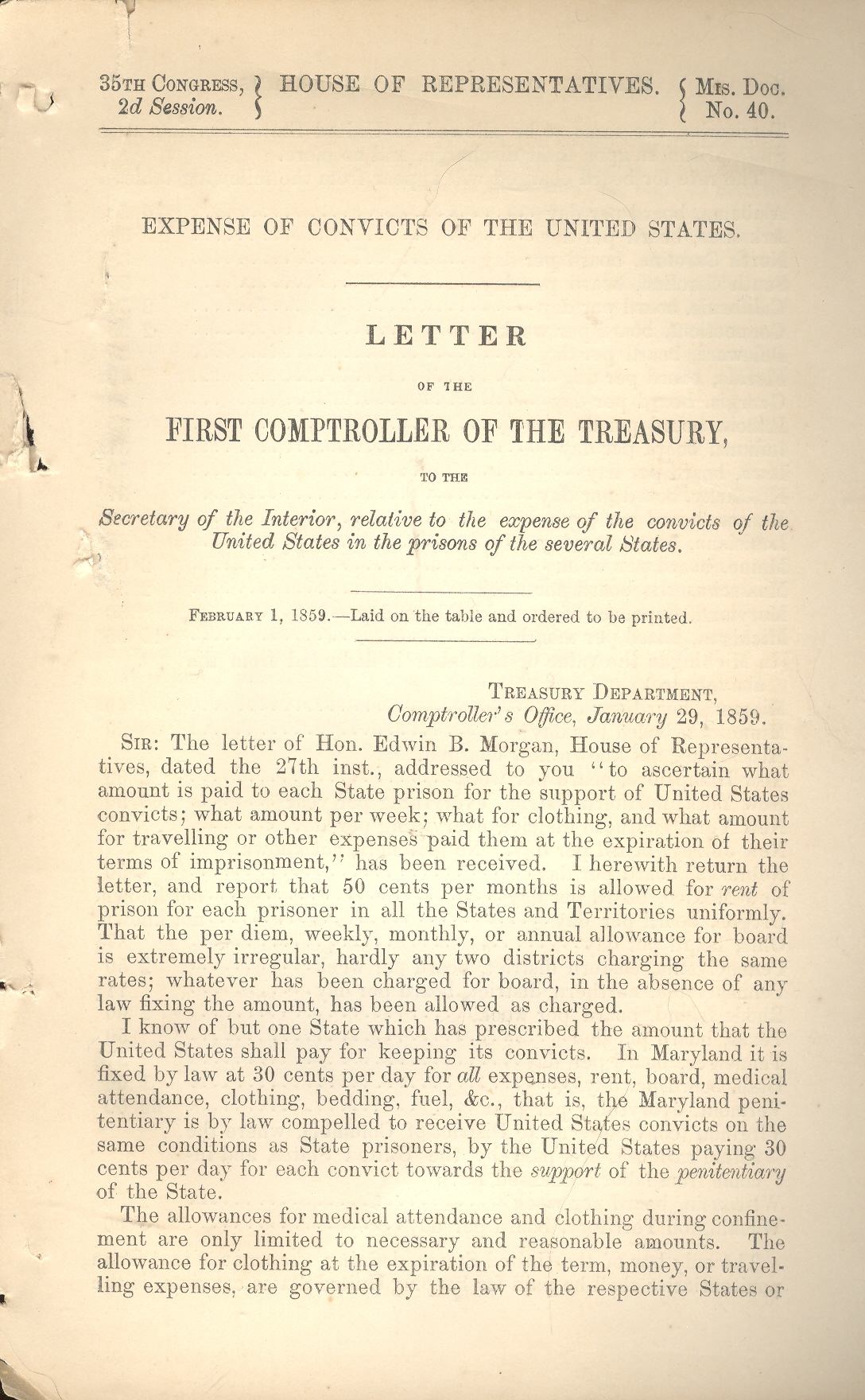
    The cause for this sentiment was found in a government
    publication called Expense of Convicts of the United States  (Letter from the
    Comptroller of the Treasury…)
    , 1 February 1859).  The following comes in the first paragraph:

    “I….report that 50 cents per months is allowed for rent of
    prison for each prisoner in all the States and Territories uniformly.”

    What this means is that the U.S. Treasury would pay 50 cents
    to the state for keeping a federal prisoner. 
    That is 50 cents per month, or about 1.7 cents per day. And that was
    also for rent of the cell, exclusive of all else, each state furnishing the
    government with the added cost, separately.

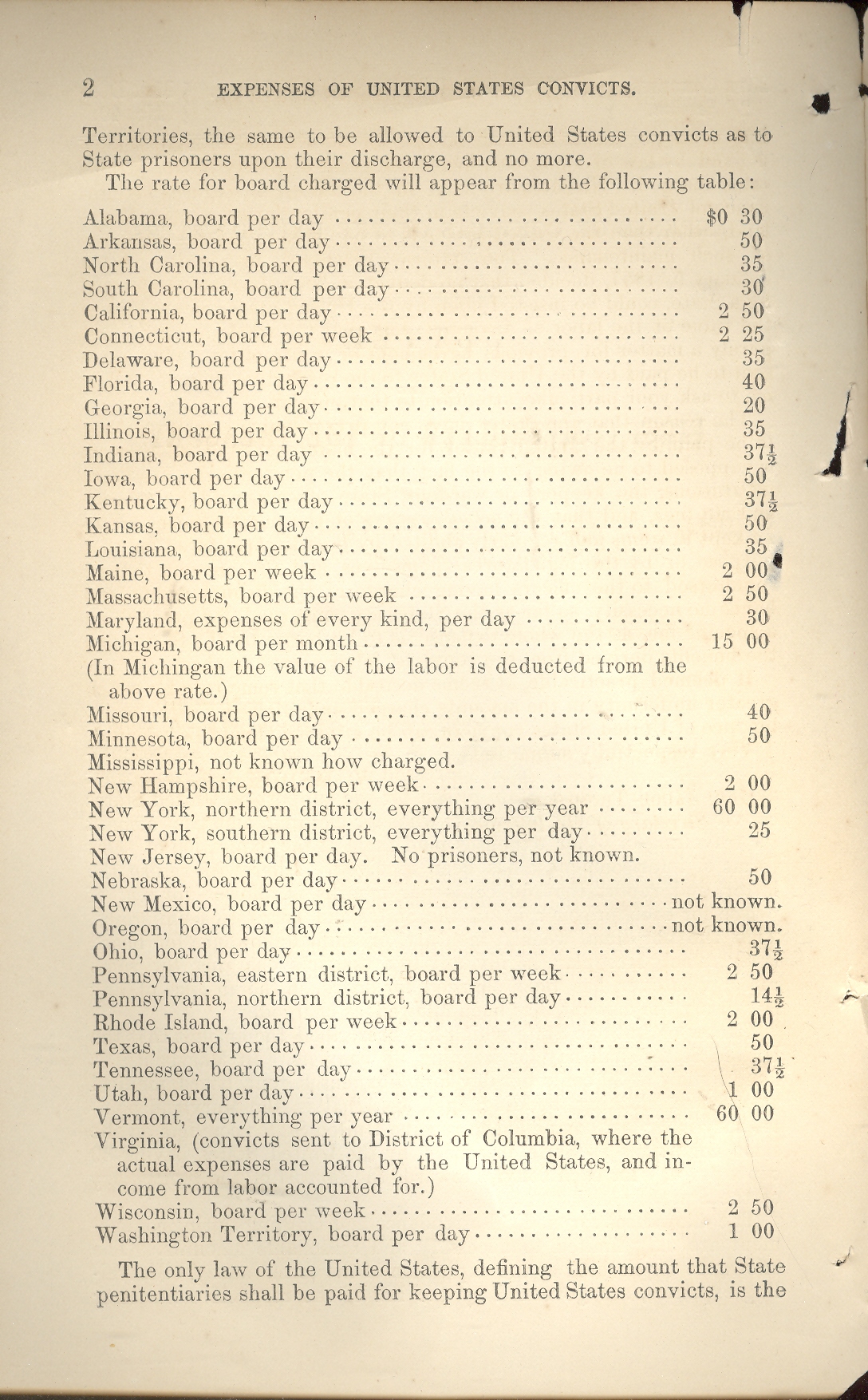
    Evidently the only state in the country that prescribed an
    exact amount for keeping a federal prisoner in a state institution was
    Maryland, “which received 30 cents per day for all expenses, rent, board, medical attendance, clothing, bedding,
    fuel, and etc” (italics in the original). 
    The rest of the states and territories had diverging and different
    expenses, from the southern district of New York at 25 cents a day for board,
    and ranging up to about 50 cents per day in  Michigan. Vermont charged an extra 60 dollars a year, in addition to the 6 bucks that they would
    get for the rent of a Vermont
    cell, to keep a prisoner—all expenses included—for one year, or about 18 cents
    per day, total. 

    Unfortunately I don’t have the stats of how many federal
    prisoner there were in 1859, so I don’t know how much of a percentage of the
    budget was occupied by prison expenses. 
    But what I do know is that even with tossing around the CPI with
    multiplier effects and so on the figures translate in no way to keeping a
    person in prison today.   The cost of
    housing someone in prison per year is around $35,000 a year, or $100 or so a
    day.  Adjusting the 1860 dollar via CPI
    for 2009 makes that dollar worth about 25 dollars today, which would be a
    doubling and a doubling again of keeping someone in prison. 

    I’m not so sure that those figures tell us much about what
    we pay, today. 

    Next, I was having a breeze through The Prison System of the United States by S.J. Barrows
    (Commissioner of Prisons for the U.S.) which was published in Washington  in 1900.  One particularly interesting
    section was the publication’s solitary statistical table, “Appendix A”, which
    detailed the crimes of the 625 men incarcerated in the state of Michigan  in 1900.  Well over half of all those in prison were
    there for larceny and burglary, while about 12% were in the big house for
    violent crimes.  (Evidently 95% of this
    number were literate and 70% could “cipher” (that is, produce basic arithmetical
    skills)).  The total crime list (such as
    it was) includes the following:

    Capital crimes (murder in the first and second degree) and
    manslaughter, along with murderous assault comprised about 1% of the total
    prison population.  Other violent crimes
    included assault with intent to do great bodily harm, rape, attempted rape,
    rape and assault composed another 3%. Further assaults were classified under
    (a) with intent to do great harm;  and
    then as assault on a female under 14 years; and on a female under 16 years  There were also the sexual assaults:  taking indecent liberties with female; with
    male child;  unlawful and carnal
    knowledge of a young child;   inducing female to enter house of ill fame.  These last two categories included about 5%
    of the prisoners.  Set aside form these
    were the crimes of adultery, abduction, incest and sodomy, which included
    another 3%.  So it seems that the violent
    offenders in prison in  Michigan 
    in 1900 totaled out at 12% or so. 

    Burglary and larceny were the  largest categories, being subdivided into (a)
    burglary accompanied by actual assault; (b) larceny; (c) larceny from a
    dwelling;  (d) larceny from a shop in daytime; (e) attempting larceny from
    the person; (f) entering a church in daytime to steal; (g) breaking and
    entering a store in daytime;   (h) breaking and entering a store in
    nighttime;(I)  breaking and entering a
    dwelling in daytime; (j)  breaking and
    entering a dwelling;  (k) breaking and
    entering a railroad car.

    Then there were a few largely vacant offenses:  Resisting an officer; Uttering and publishing
    a forged note, breaking out of prison, perjury, arson, false pretense, and
    malicious destruction of personal property, all combing for less than 2% of the
    jailed population.

    Blog--May 23--convict 001

    The vast majority of prisoners in Michigan were imprisoned for non-violent
    crimes.  The federal fathers, in the
    meantime, recognized that people in prison shouldn’t be idle while paying their
    debts to society, and should fill their time with work that would occupy the
    prisoner and bring some income into the prison system:

    “The moment we apply to the convict a
    different system of economics because he is in prison we go astray. When we
    subject to analysis the plans proposed for abolishing the competition of
    convict labor we find them based on false principles or expecting results not
    to be realized. The wiser way for the peace of society and the interest of the
    State is to place prison industries on the same ground as free industries, and
    defend that.
    It is also said in opposition to the contract system that
    contractors do not pay as much for the labor of convicts as free laborers
    command.”

    In 2005 the federal offenses for which people are incarcerated include: Drug
    Offenses 59.6%; Robbery 9.8%;  Property
    Offenses 5.5%;  Extortion, Fraud, Bribery
    6.8% ; Violent Offenses 2.7% ; Firearms, Explosives, Arson 8.6% ; White Collar
    1.0%; Immigration 2.8%;  Courts or
    Corrections 0.8%;  National Security
    0.1%;  Continuing Criminal Enterprise
    0.8%;  Miscellaneous 1.5% .  54% of prisoner in state custody for the same
    time were incarcerated for violent crimes, with drug offenses coming in at 20%
    and property crimes at 19%.  The racial
    breakdown of prisoners in the U.S. is another tragedy: of the prison population
    in toto of 2.3 million in 2008 there
    were 4,777 black male inmates per 100,000 black males held in state and federal
    prisons and local jails, compared to 1,760 Hispanic male inmates per 100,000
    Hispanic males and 727 white male inmates per 100,000 white males—that means
    that the black incarceration rate was double and then double and then
    half-doubled again that of whites.  What
    this also means is that there were more blacks in jail cells than in college
    dorm rooms in 2008.

    I’m not sure that any amount of creative statistical mathemartistry could bring these figures to life for some sort of practical application in 2009, the present situation in the prisons being so immense and pervasive.  Numbers and assorted data from the past usually have the capacity to help us see where we are today; as I said earlier, I think that these fossils are simply that:  dead.