A Daily History of Holes, Dots, Lines, Science, History, Math, Physics, Art, the Unintentional Absurd, Architecture, Maps, Data Visualization, Blank and Missing Things, and so on. |1.6 million words, 7500 images, 4.9 million hits| Press & appearances in The Times, Le Figaro, Mensa, The Economist, The Guardian, Discovery News, Slate, Le Monde, Sci American Blogs, Le Pont, and many other places… 5000+ total posts since 2008.
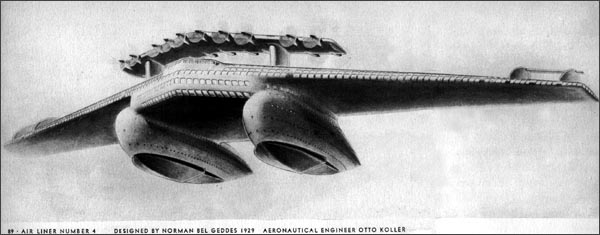
Sometimes things are designed that are so bulbous and so inflated and so terribly hyper-packed that they are just destined never to be built beyond the imagination. Among the largest of these things meant for the air was designed by a particularly streamlined designer, Norman Bel Geddes, who basically owned the concept of aerodynamic function at all levels of design in the 1930’s.
But Bel Geddes’ apoetically-named aircraft, Airliner 4, is an entirely different issue. It may possibly be the largest, slowest, lowest, fattest and most lumbering plane ever designed. (And by this I mean that it stood a chance of some sort of actually being built and flown, as opposed to the monsters with wing-topped tennis courts and such.)
This 530′-long 1.2 million pound beast took an hour to climb to its max ceiling of 10,000 feet where it would cruise along at an astonishing 100 mph. It would wind its way lovingly across the country, slicing off its travel hours like frozen bologna, 30 hours from coast-to-coast, slowly, methodically, so as not to disturb its 600 passengers in their sleeping rooms. But I’m not sure how much sleep would get slept, what with 20 (!) 1900 hp engines screaming overhead.
The passengers who didn’t sleep could do a lot besides sit and be serviced by the aircraft’s crew of 155–they might actually need guides to get them through the oddness of the plane’s 9 decks, 3 kitchens, 2 dining rooms, solarium, 100-couple dance floor, gym, barbershop and medical offices (with waiting room). Plus much, much more. (I like a plane with a doctor’s office waiting room; perhaps the real genius would’ve been to come up with the smaller, more interior, extra waiting room to which one graduates before seeing The Doctor.)
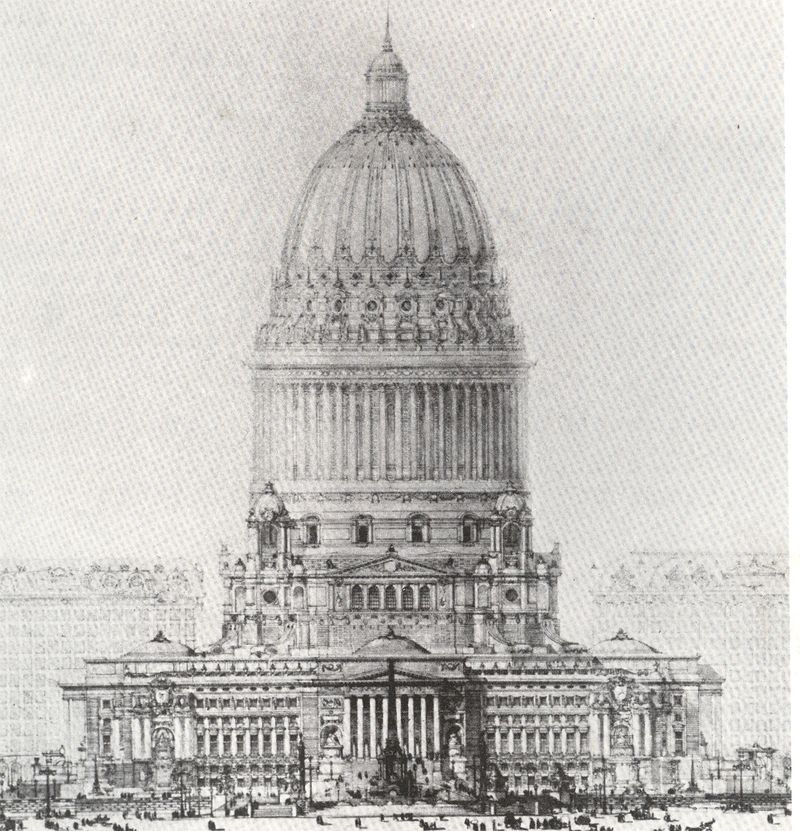
Getting closer to the ground is the plan for the Chicago Civic Center (1909) by the usually accomplished Daniel H. Burnham. This beast looks more like a stubby nuclear- pulse intergalactic Mothership than anything that anyone would have wanted to build on the ground—at least in space it would be out of sight.
In a struggling prose reminiscent of Lewis Sullivan Burnham writes1: “The Civic Center will be dependent for its effectiveness in the character if the architecture displayed in the buildings themselves…” which I think is self-referential, stating that the architecture’s effectiveness is dependent upon the architecture. If this is the case, the enormity of the Civic Center doesn’t save it from itself.
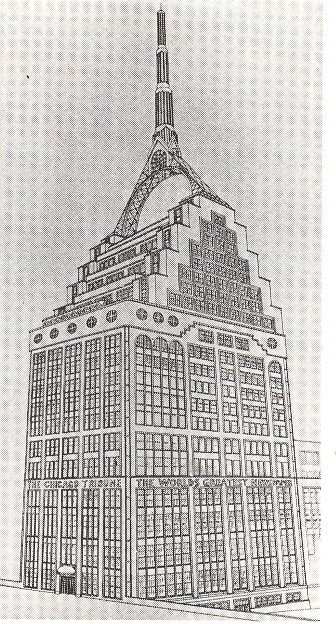
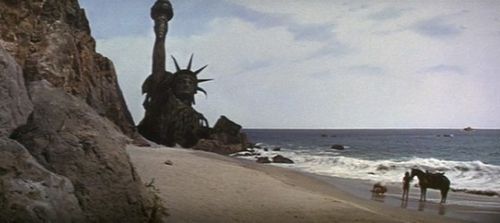
Staying in Chicago we find another proposal, this for the ChicagoTribuneTower competition of 1922—many of the works submitted seem to my eye big and wide and ugly, but perhaps none more so than that offered by Ludwig Koloch. This may well have been a nice design for the top third or so of a building, but not for three thirds–and actually, this may be four-thirds. It reminds me of something rising from the sands at a beach in the future, the remnants of destroyed civilizations. Without the apes.
Notes:
Daniel Burnham and Edward Bennett, Plan of Chicago, 1909.
Ranters,
Diggers, Manifestarians, Puritans, Muggletonians, Shakers, Quakers, Levellers, Seekers…terrific names all for religious or religioesque movements, most now
gone, though it seems that of the most-gone the Ranters are probably the
most-goned gone–which must’ve been a function of their unstated aims of not
having a particular course of action.As
an anti-movement their movement was tautologically doomed, as they flourished
for only a decade or so, sandwiched into the very full mid-17th
century.
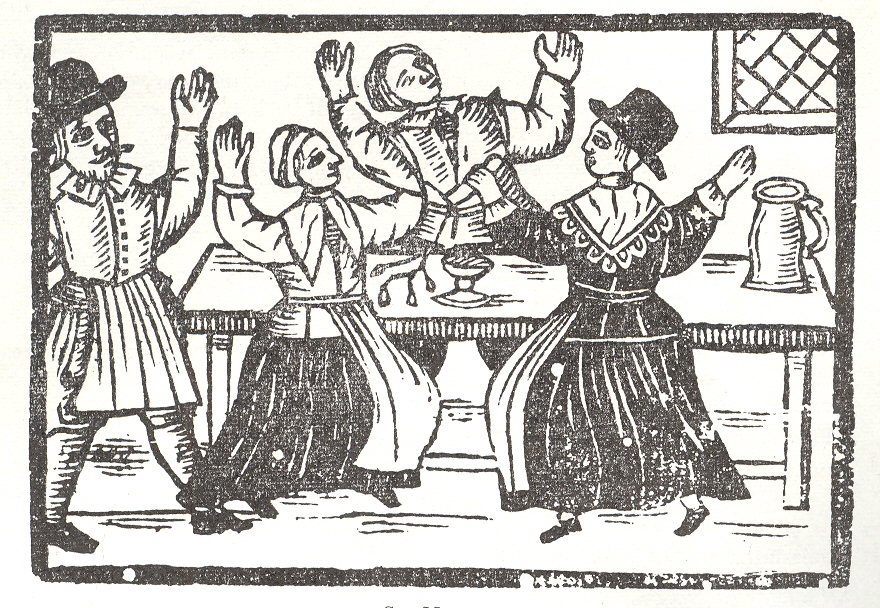
{The image above is an illustration from the book, Hell Broke Loose... below. It also is a pretty tame version of other images that show more nudity/drinking/sexual activities.]
Ranters
were an English Free Spirited heretical group of wide interpretation of social
and moral value. Their questioning of the potency of the man’s fall doctrine
steamed together with a quasi-semi-millenialism evidently led to an
alehouse-based loosening of socially governed restraints. According to the many People magazine-like pamphlets and soft
porn reporting, their activities made for sugary eating by the bawdy-eyed ha’penny
people buying gossip in cheaply printed formats.Free of Sin and Law, the Ranter celebrations
were soaked in alcohol and nudity, which are ripe pluckings for any non-serious journalist, then or now.
Judging from the list of publications (listed below in the “Continued Reading” section) there must’ve been a very immediate lusty interest in the Ranters’ lustily interesting ways. I’ve written this post for the simple interest in one particular, extraordinary title: [with apologies for the underlining, but I cannot convince the Typepad gods to remove it.]
Hell broke loose: or, the notorious design of the wicked Ranters, discovered on Sunday last at Black-Fryers Being a true relation of the strange proceedings of Mr. Vaughan, and his wicked proselytes; and their entring of Black-Fryers church in sermon time, like so many spirits from hell, with four damnable papers in the hands, containing such horrible, audacious, and abominable songs, the like not to be parallel’d in former ages. With the manner how this onsolent Ranter traced the streets from Black-Fryers to Saint Paul’s Church-yard, in his Holland shirt, without doublet or breeches, a treble cap, like the Pope’s miter, with silk fring, and white shooes, and stockings. With their damnable plots, and conspiracies against the ministers of the gospel: their examination before the right honourable the Lord Mayor of London; the sad and woful speeched, made by the ringleader of the Ranters, concerning the city magistrates, and golden chains: and the committing of them to Bridewell till the next sessions. 1650
See? That’s just fabulous, and represents a Title Page Extravaganza that seems to be a 17th century feature–including as much as humanly possible on a title-page. As does this book, with all manner of detail in the title, not the least of which is the description of a man running around with no pants but with a Pope’s mitre and white shoes and socks.
The 17th century “Hell Broke Loose” extended-title (but non-Ranter) category has a number of other entries in it, too, for published books, including the following lovilies:
Hell broke-loose; upon Doctor
S–ch–ve–l’s sermonsor, Don Quevedo’s vision, of an infernal cabal of Whiggish papists and
popish Whigs in Utopia; upon a mock-tryal of the doctor. Translated from the
original; by Jack the Spaniard.1713
Hell broke loose, or, An answer to the late bloody
and rebellious declaration of the phanatiques, entituled A door of hope,
&c.wherein their horrible conspiracy against our gracious soveraign, and the
city of London, in their late rebellion is discovered : together with a brief
view of our lives, manners and malice of those desperate and unparallel’d
traytors. 1661
Hell broke loose :or an history of the Quakers both old and
new. Setting forth many of their opinions and practices, published to antidote
Christians against formality in religion and apostasie 1660
Some of the other big-title Ranter titles from this time include the following:
“The Edge… there is no honest way to
explain it because the only people who really know where it is are the ones who
have gone over.“–(Dr.)Hunter S.Thompson
Oddities
and Curiosities and the Tryphiodorus Award
Sometimes
things that were just done because they could be done aren’t necessarily an
accomplishment—they may use letters in the alphabet and make words, but the
words really don’t seem to take us anywhere. Literally.There is a literary practice (and I mean this in a medical
or forensic sense) in which the writer chooses to not use a particular letter
of the alphabet, abandoning it for very private reasons into the dustbin of
abandoned alphabet letters. (That dustbin is generally empty until one of these
people show up with the idea of filling it, unless of course we expand the
dustbin to include punctuation, and then it gets filled rat her quickly (though
not in the Steinian sense).)
The
work which most filled the alphabet dustbin more than any in history is probably the Odyssey of Tryphiodorus (a Greek grammarian who flourished in Egypt ca. 4th century ACE) effort
written in 26 parts, each segment abandoning one letter of the alphabet until
each letter had been completely omitted from one section.. The author could
have a lot of time by writing this 26-part cycle in all at once, in one part,
abandoning all 26 letters at the same time—this may have produced a more
elegant result (with the Bellman’s map coming to mind).
This Odyssey may have produced a sort of a
lipogramic palindrome, in asquinty-eyed
way.
Which
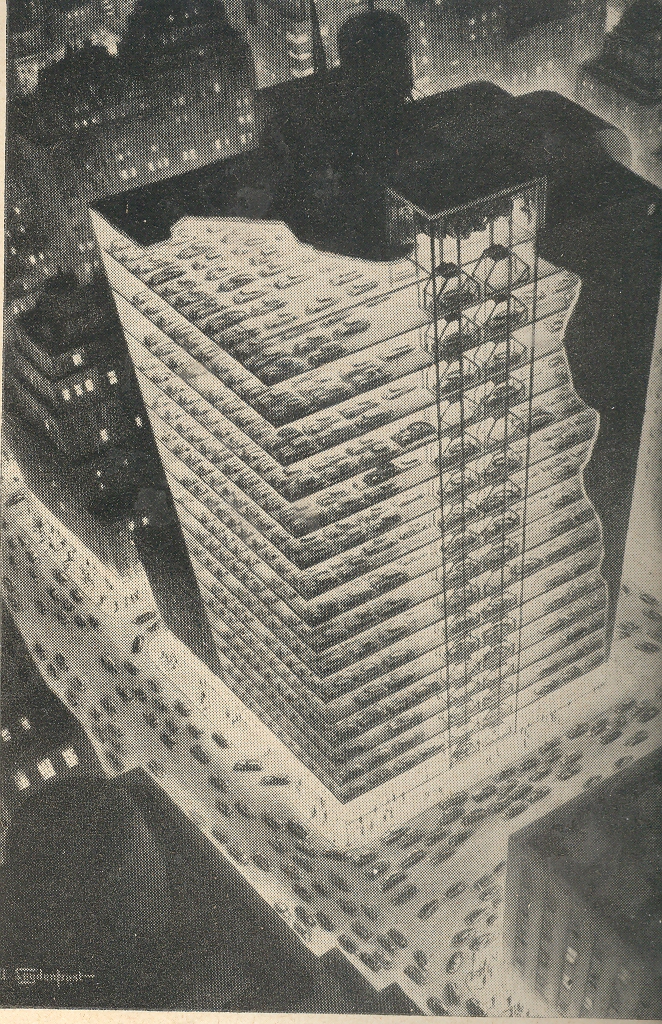
brings me to this odd structure proposed by real estate mogul and hyper-builderWilliam Zeckendorf, whose vision brought to
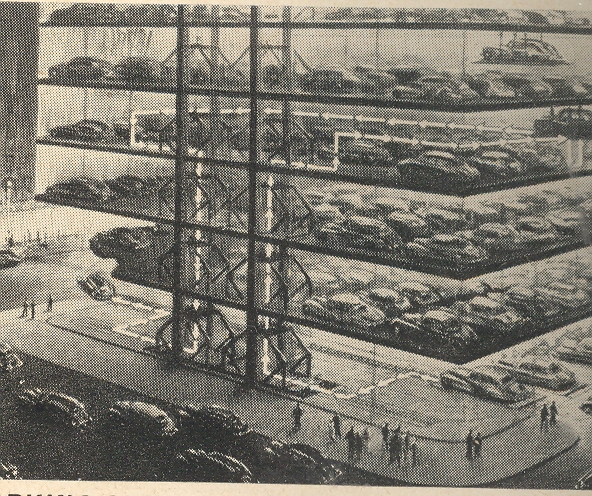
the pages of LIFE magazine in 1942 (?) a very tall completely automated structure designed for nothing but car
parking. People would drive to NYC in their own cars (!) and park them in this
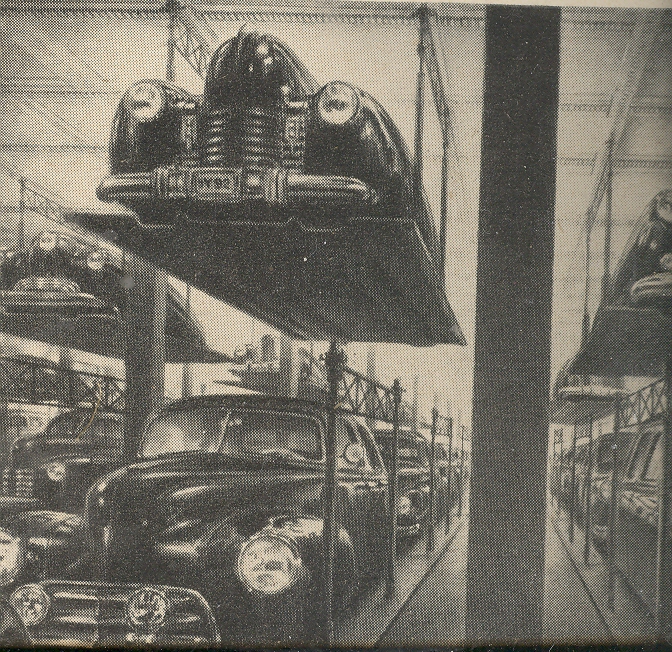
car hotel; the car functions would be given over completely to the building, moved
into their spots and juggled and finessed into position by conveyors and forklifts
and such.
Cars
in a building, moved about free of humans, rested; humans on the street making
their own human traffic.The whole idea,
the entire structure, seems backwards to me, the meaning of a building turned
inside out, wanting the essential idea, forwards and backwards being simply a
bad notion.
The
picture of Mr. Zeckendorf—who was tremendously energetic and who had very many good ideas along with these heavily
popularized odd plans—standing in front of a lovely (scale?) model of his
parking structure makes me want to see another, smaller version of Mr.
Zeckendorfand his model standing just
behind it, and smaller one after that, and so on…a fractally bad idea deserving of the Tryphiodorus award for missing the most sense. I bow deeply to Mr. Zeckendorf for trying and for constructing this beautiful (I want it) model.
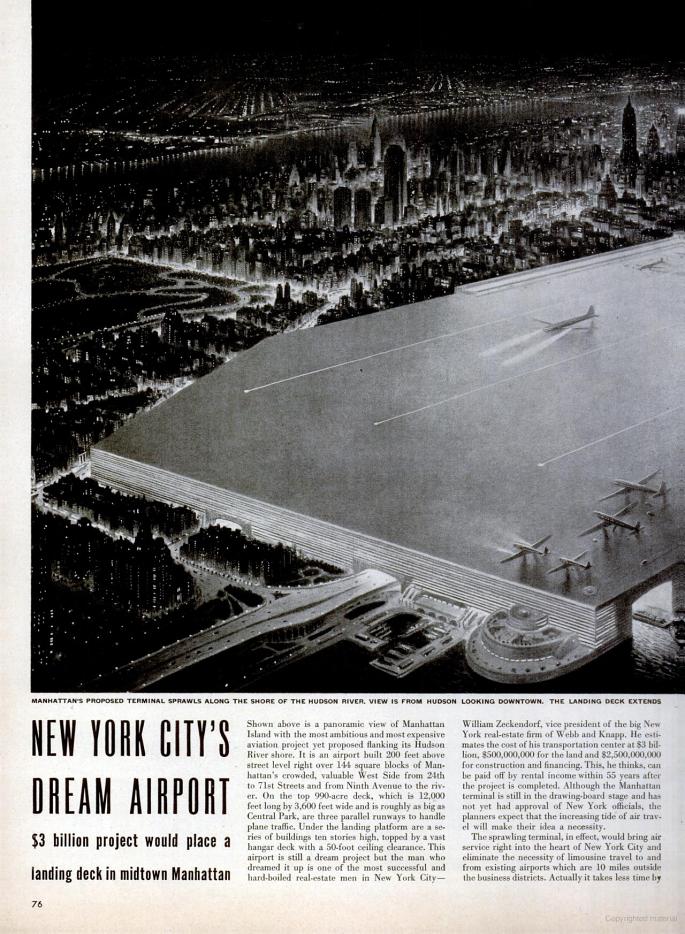
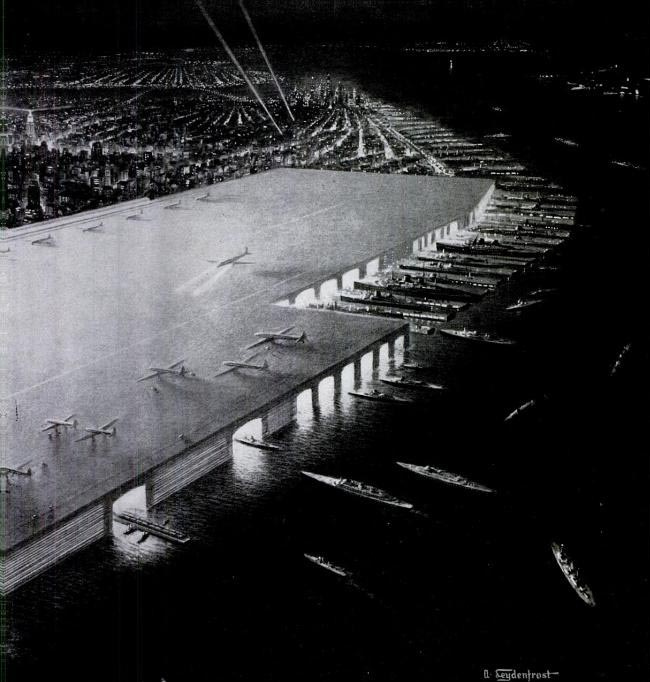
I think that I’d like to introduce a subset in my Bad Ideas category: Bad Flat Ideas. To start it off, I found this very lovely example in LIFE magazine for 18 March 1946, the brainchild of generally-appropriate real estate mogul William Zeckendorf: a spectacularly bad idea of installing a rooftop airport along a very long swath of property along the West Side.
It seems as though the airport would extend from the bottom third of Central Park south to, well, I really can’t tell, perhaps lower midtown? Honestly, it doesn’t matter. For all of its size it actually isn’t quite big enough, looking like there’s maybe 10 or 20 plane lengths margin-of-error at the end of the runway. Plus there’s the *no* margin of error bit for the edges of the airport, which assumes that no plane will ever topple over the table top. Plus a host of other pertinent stuff.
The penultimate line: it is also incredibly ugly, a definition of architectural ugliness that few projects could match.
The bottom line though to this project was the bottom line: in the end, the Manhattan Airport would save about 15 minutes travel time to Philly over Laguardia.
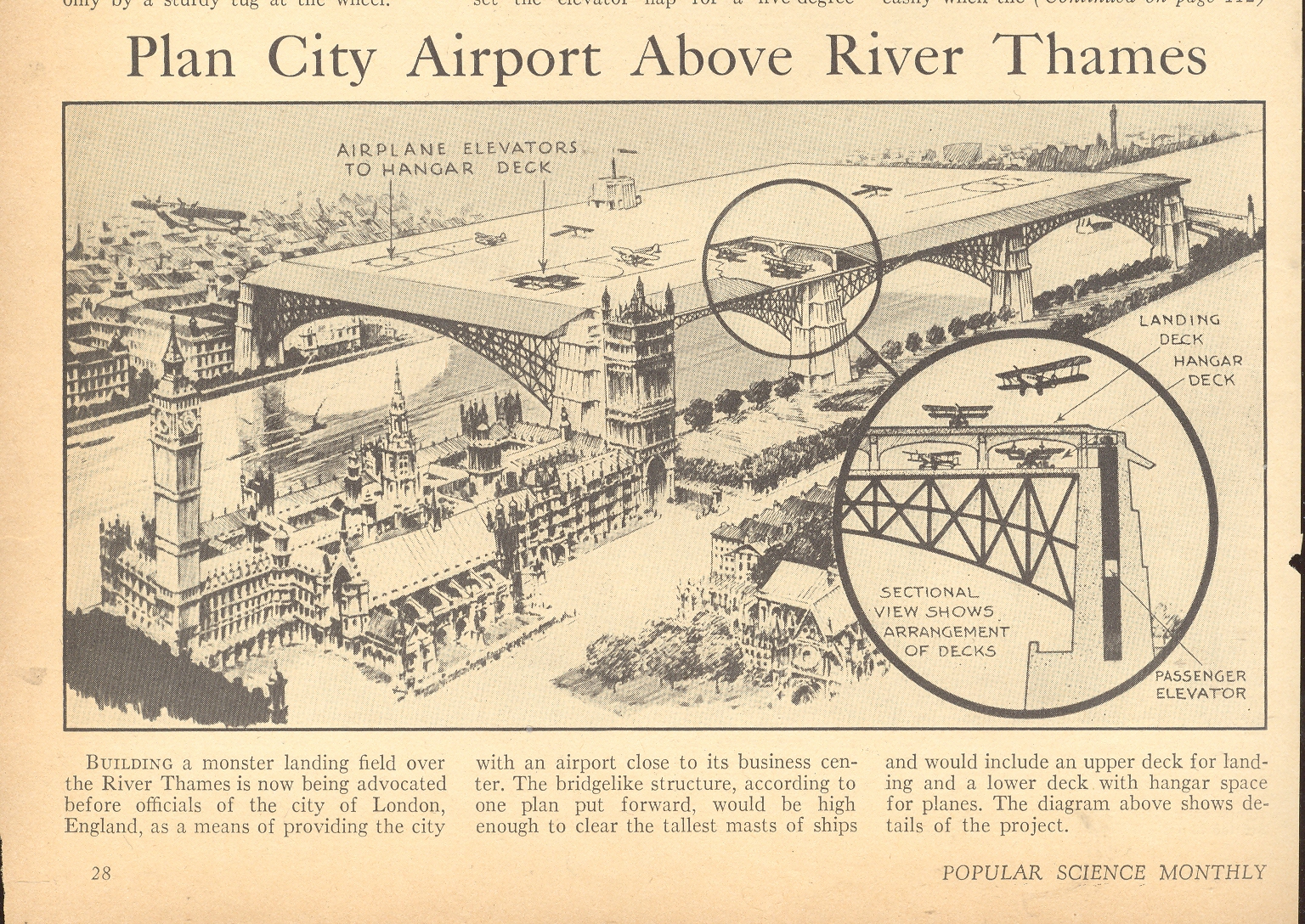
I should not leave unmentioned the unmentionable project proposed for poor London (which I wrote about late last year here):
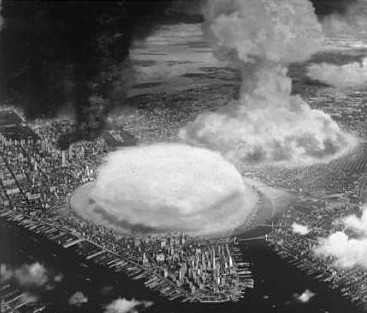
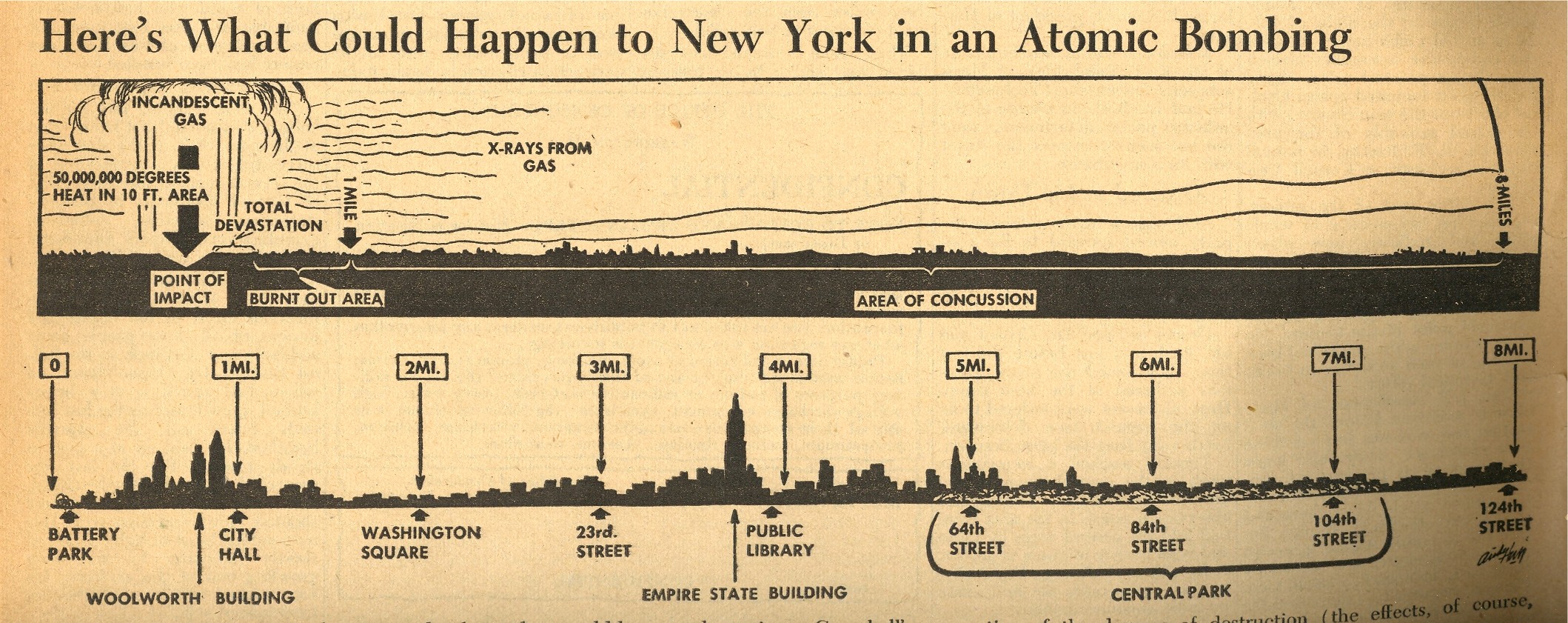
Having just finished a post here on missing and duplicated-in-outer-space New York Cities, we return to the more grim possibilities of pre-Cold War cityicide.
I haven’t seen very many images at all of NYC under attack, and this one from nuclear attack on NYC from Collier’s Magazine (1948) is fantastically poignant, showing perhaps three ground-bursts of atomic bombs in Manhattan and Brooklyn. At the time, 1948, the Soviets had just developed their bomb and I think had no way of getting one here. But this didn’t speak to the future, and my guiess is that Collier’s was just taking it a little easy with the popular reading clientelle. I can’t remember now how many weapons would’ve been targeted at NYC by the mid-1950’s, but I know it wasn’t a simple dozen.
A lateral view of this sort of explosion in Manhattan was presented in an extraordinary issue of the liberal PM Magazine, issued with a 7 August 1945 date (though I think it came out a few days later). This would have been just a day after the Hiroshima bombing, and the 12 pages of dedicated coverage t the atomic bomb was really quite spectacular. Included is the following small graphic that appeared on page seven which shows what effect the Hiroshima atomic bomb would have if dropped on New York City—it was no
doubt gigantically sobering to anyone who looked at it, and brought the power of
the bomb and its destruction to a common, understandable point.
I’m not an historian of the first newspaper coverage of the bomb, but
it strikes me that this may well be the first graphic to depict the
effects of an atomic bomb exploded over NYC.
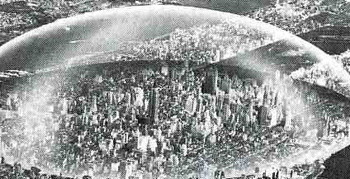
Seeing the Collier’s pictures makes it that much more difficult to think about the idea of Buckminster Fuller that would help rid ourselves of radiation anxiety (which I wrote about earlier, here). Fuller’s idea is multiple orders of magnitude removed from the
original idea of the arcade, constructing a dome1 to encapsulate NYC
from the East River to the Hudson along 42nd St, and from 64th to 22nd
St: that’s two miles in diameter and, plus a mile high (or about five
Empire State Buildings pile one on top of the other). I’m not so sure
how this would be built, or how things would be heated or cooled, or
what the construction material was for the skin of the dome, or how
people get in and out, or how you deal with heating and cooling, or how
any noxious chemicals are expelled—but Mr. Fuller thought that the
savings alone from snow removal from NYC streets would pay for the dome
in ten years.
Mr. Fuller also thought that the dome would protect the city (or
this part f the city) from radiation fallout. That could be true,
assuming that of all the hundreds of nuclear warheads that the Soviets
would’ve launched against NYC alone none of them would’ve found their
target, except perhaps for the Ridgways or Staten Island, where the
shock wave or winds produced by ensuing firestorms would not have
disturbed the dome. Of course if a warhead actually came close—or
actually hit—the dome, the protection from radiation would be moot.
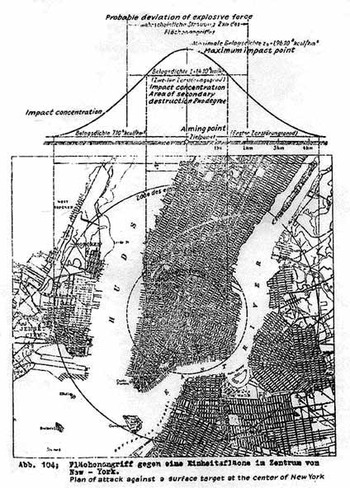
Another odd and stomach-wrenching image comes from that devilish scamp Eugen Sanger (dead before he was fifty,
1905-1964), a German rocket designer and engineer for the National
Socialists, went to work for the French Air Ministry following the end
of World War Two after doing his all and thankfully falling short for
the Reichsluftfahrtministerium (RLM, or “Reich Aviation Ministry”).
He
worked without rancor there until he was nearly kidnapped by Joe
Stalin—for the purpose I suppose of continuing work on what may have
been his greatest effort, unfulfilled during the war years—the Amerika
Bomber. The Soviets evidently thought that this might come in handy in
1947.
The Sänger Amerika Bomber (or Orbital Bomber, Antipodal Bomber or
Atmosphere Skipper) was designed for supersonic, stratospheric flight,
and had much more bang for the buck than the V2 (10000 feet/second
exhaust velocity, as compared to the later V-2 rocket’s 2000
meters/second, 6560 feet/second) and since it was stratospheric had a
far greater range, coming in at better than 14,000 miles. The
22,000-pound weapon carried one large 8000-pound free-falling bomb.
Sanger’s idea in the early 1940’s was to get this bomb to around
Times Square. And since the Amerika Bomber was a relatively inexpensive
weapon compared to the damage it could cause, there was room for
producing a lot of them.
Seeing Manhattan in the cross hairs like this is quite sobering, and it is an image that is rarely made.
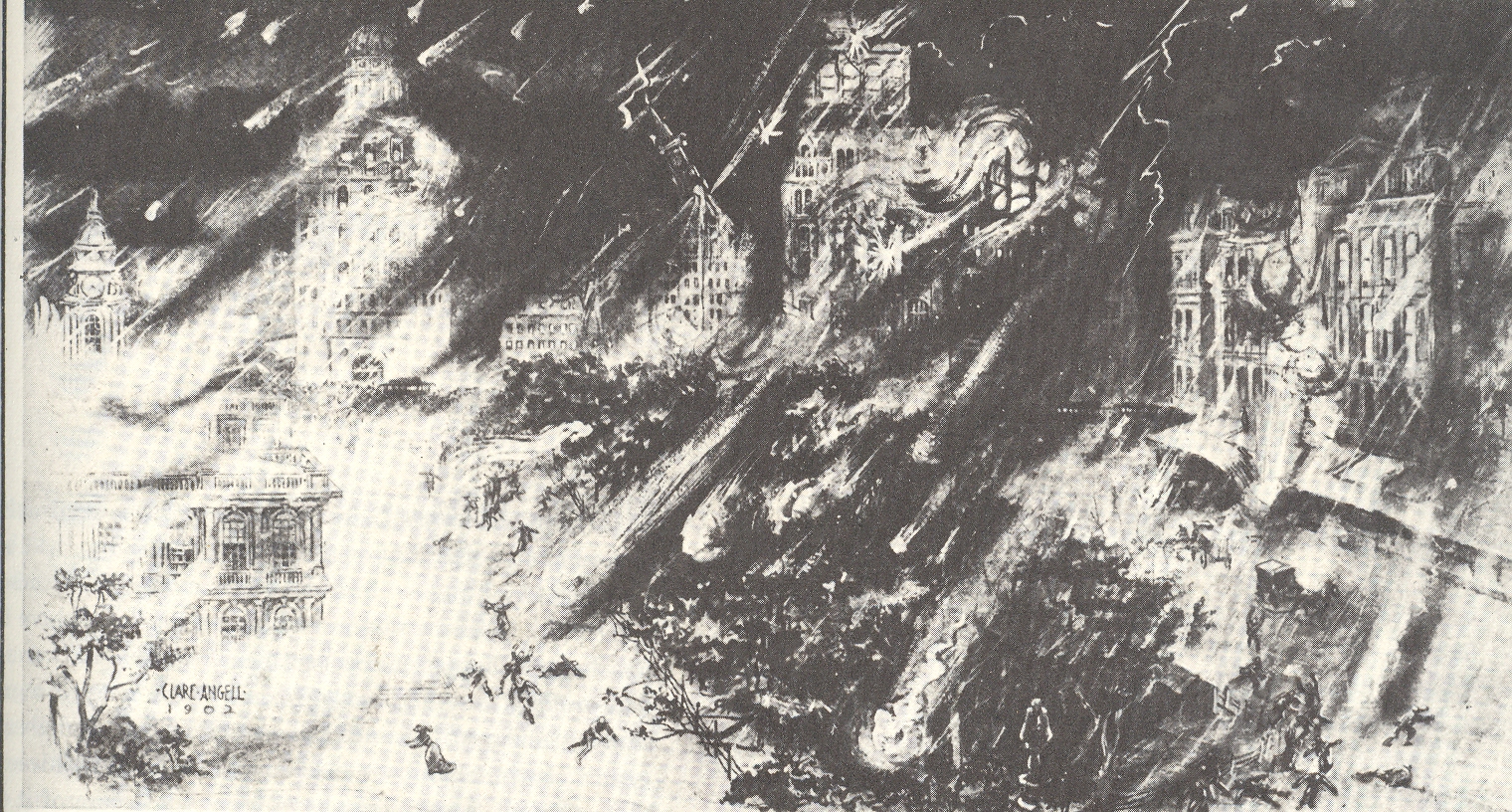
Another attack on Manhattan depicted here comes from above, way above, Manhattan decimated by a meteorite “shower” of enormous magnitude. The image appears in an article by Hudson Maxim (1853-1927, brother of the more famous Hiram) “How the World Will End”, printed in 1910, and shows dozens of small meteorites striking NYC in the City Hall area.
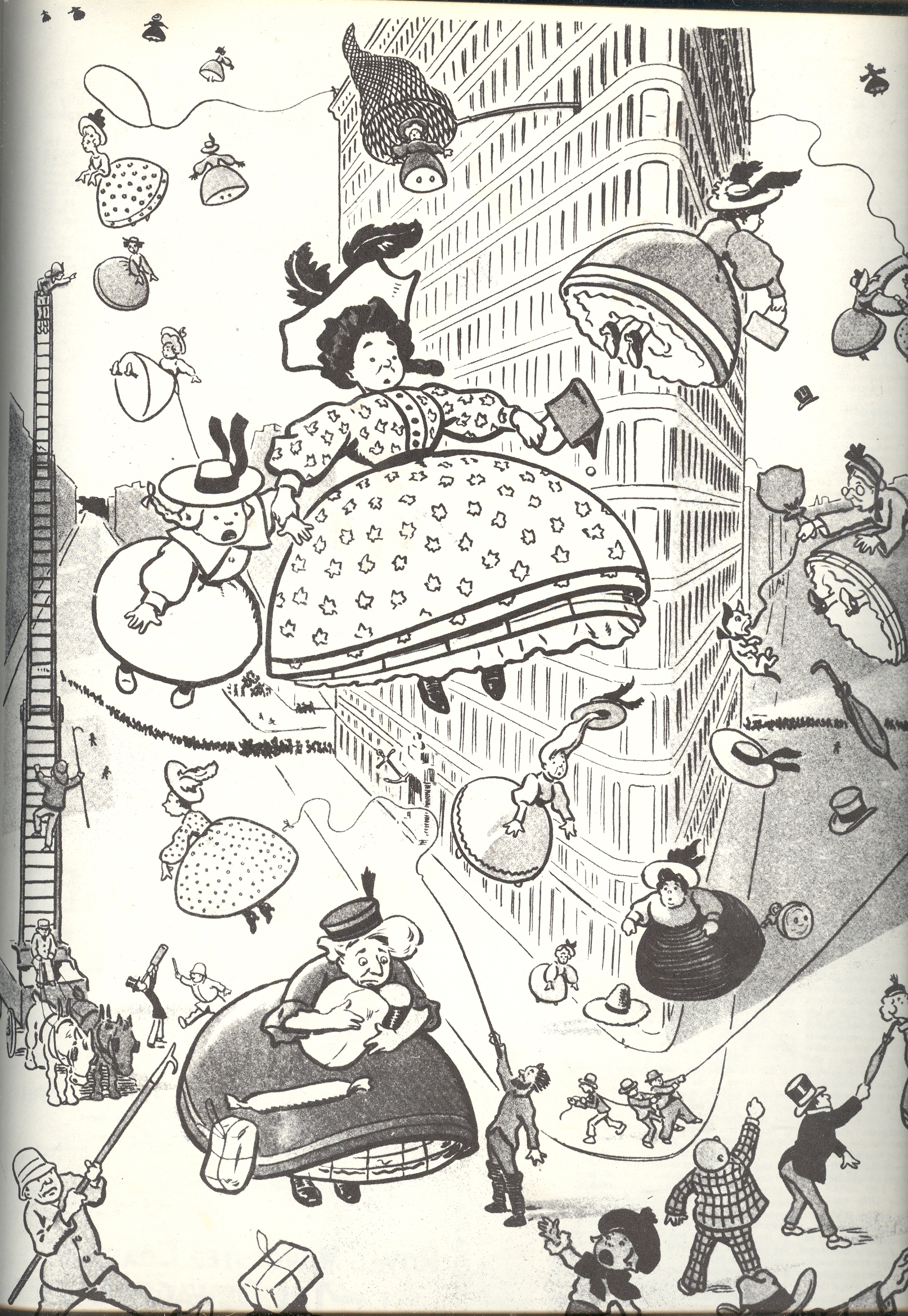
The last image comes from 1904 and–when taken out of context–it seems
as though Manhattan is in for the worst of it, with a view in front of
the Flat Iron Building of an aerial bombardment of women. This is
probably one of the few bad things that weren’t done with/at women, and
would actually predate the first use of explosives being dropped from
aircraft. Unfortunately the original, intended image was a poke at crinoline ,
and featured women being blown up into the air rather than the other
way around, though I like my interpretation better.
Notes:
(Source: Buckminster Fuller in Think magazine, vol 34, Jan/Feb 1968. AND of course the lovely work by Alison and Sky Michele Stone, Unbuilt America, McGraw Hill, 1976, pg. 99.)
Harold,
like the rest of us, had many impressions which saved him the trouble of
distinct ideas George Eliot.
A novel is balanced between a few true impressions and
the multitude of false ones that make up most of what we call life. Saul Bellow
No, this isn’t a story about the great saint but a much
lesser one.For centuries the pulse was
a vaguely understood thing reaching back into the murky medical past as far
back as Galen.The association of course
was with the heart, and the association of the heart was as the great
controlling center of all function and control of the human body—a theory that reached
far forward into the 16th century.
It is generally established that it was the fabulous work of
William Harvey (1578-1657) that brought into light the idea of pulmonary circulation,
but the idea was buried in a vastly-suppressed work by the brilliant and highly
problematic Michael Servetus (Spanish, 1511-1553).
Servetus (physician, cartographer, theologian, writer and
general all-adept Humanist of a high order) was in trouble with the church for
many reasons, not the least of which was trying to dislodge the theory of the
heart as sacred and the seat of wisdom. But he did establish that the heart was an organ, which didn’t sit well
with very many people, least of all the Calvinist court in Vienna
which found him guilty on many anti-Humanist grounds, including his
anti-Trinitarian Christology, which made him a reviled figure to Catholics and
Protestants.He was tried and found to
be dangerously heretical, and sent to the flames.(There was a practice at the time to burn
people alive using wet wood, providing a slow, baking environment in which the
subject was painfully nearly-baked alive before he/she was actually consumed by
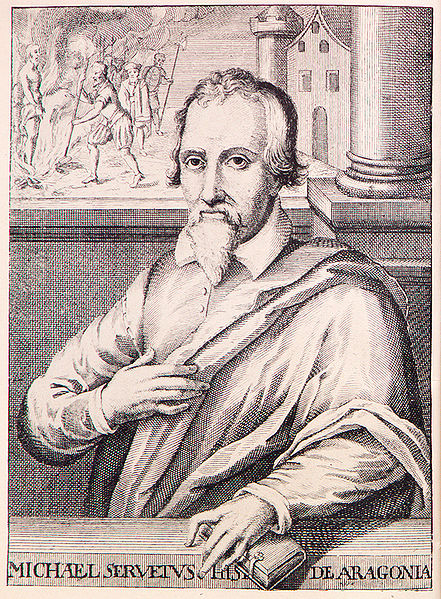
the flames.People thought about this….In the engraved portrait of Servetus we see him being burned–along with his books, which are slow burning things, at upper right. As a matter of fact Servetus’ effigy was burned in some places along with his books, which explains the scarcity of some.)
Later on, Harvey
withstood blistering attacks on his correct statements on the circulation of
the blood (costing him nearly all the patients in his practice), though he at least
lived to see a brighter day: Servetus, on the other hand, didn’t, and was
burned at the stake for his heresies, one of which his attack on the spiritual
heart. (Plenty of others have paid for their insight and invention and would be
later celebrated Semmelweis wasn’t killed but did wind up in an asylum;
Galileo didn’t wind up in an asylum but did wind up imprisoned; Copernicus
wound up in neither place, escaping possible clerical criticisms by dying just
as his revolutionary work was published. Phillippe Lebon’s ideas for
illumination by gas were seen as ridiculous, as were the revolutionary ideas of
Edward Jenner and Luigi Galvani. Einstein’s 1905 ideas weren’t happily
received in France
for a decade, and David Hilbert’s impressions of mathematics in the middle of
the third decade of the 20th century was that it was “done”. )
And so I think we might as well remember Servetus today at
least as often as we do St. Valentine. Or multiple St. Valentine units—the name
seems to have been canonized in 496 ACE in memory of several people by this
name.At least Servetus had an
association with the heart in a positive way—I don’t know the Valentine/heart
connection though I suspect that at least one of them had their beating heart
ripped from their body.
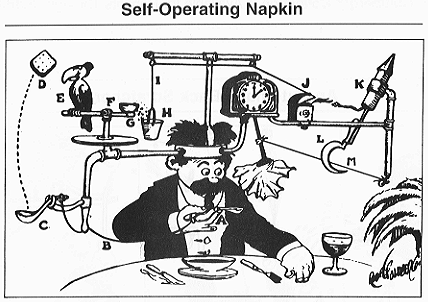
I
think no plumb line was ever so worked with pulleys and wheels, strings and
catclaws and other Rube Goldberg devices as were the demographic studies of
nuclear warfare.It is as though their
compass rose had no compass, with everything centered on the center, no way
out, no way in. just there.A faceless
clock face describing “G-2 o’clock” whenever it pleased.These studies seem to me the nuclear warfare
equivalent of the Bellman’s map (described earlier in this blog as the most
perfect map ever constructed): a pretty polygon describing a totally blank
surface.
I
have a number of these things here, some of which are restricted-distribution
publications, works of statistical fancy/fantasy meant for other eyes in the
same community dedicated to the fancies described, a tautological audience for
self-referential.
One
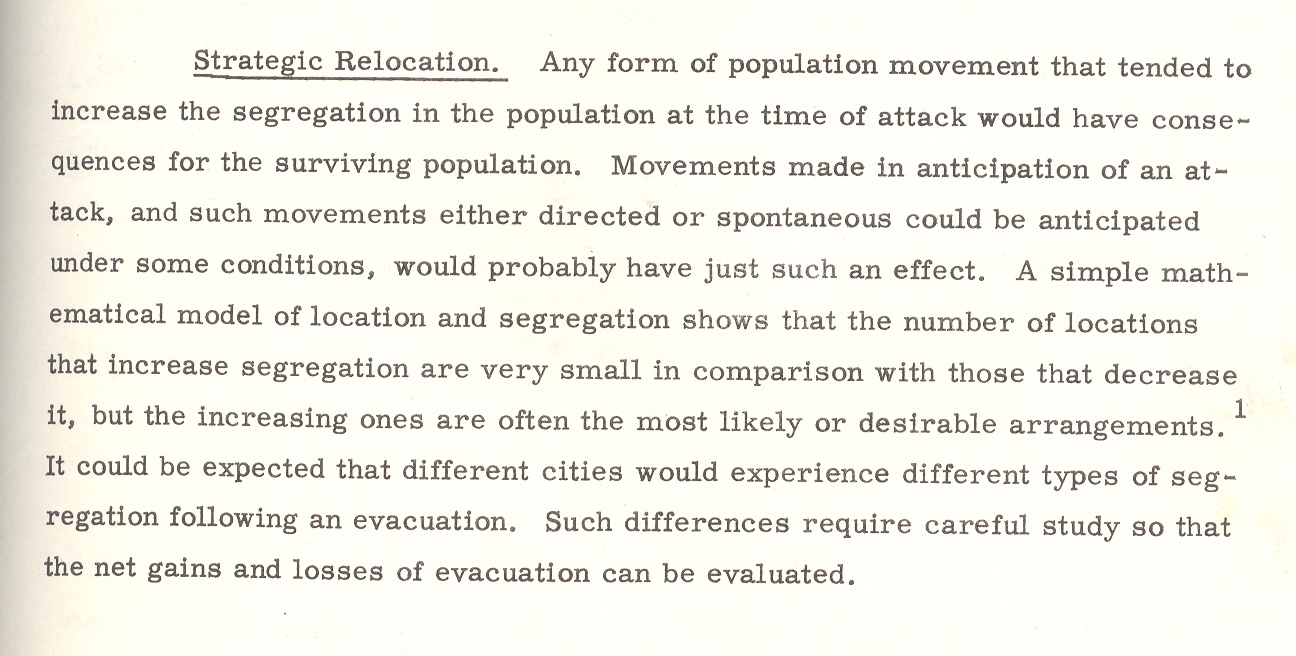
such bit, plucked from this pile is William W. Pendleton’s A Study of the
Demography of Nuclear War produced by “Human Sciences Research, Inc.” Outside
of its statistical foray in survivability and the procreative prospects of the
left-overs of vast nuclear exchanges, the work is a solemn attempt at
institutionalizing the death requirements of nuclear combat.The necessity of overwhelming carnage is
presented in ironic and underwhelming language, the first bits of which are
seen in the conclusion of pamphlet’s abstract1:
“Cities differ in the kinds and magnitudes of
change to which they might be subjected. Considerable variation in the demography
of surviving populations can be expected; that variation would be related to
policy decisions; and those decisions should therefore be examined for their
demographic implications.” [Emphasis mine.]
Put
another way, the city is the main focus of the survivability equations, and the
chances of the humans being bombed in those cities would change with—god help
us—the amount of bombing.
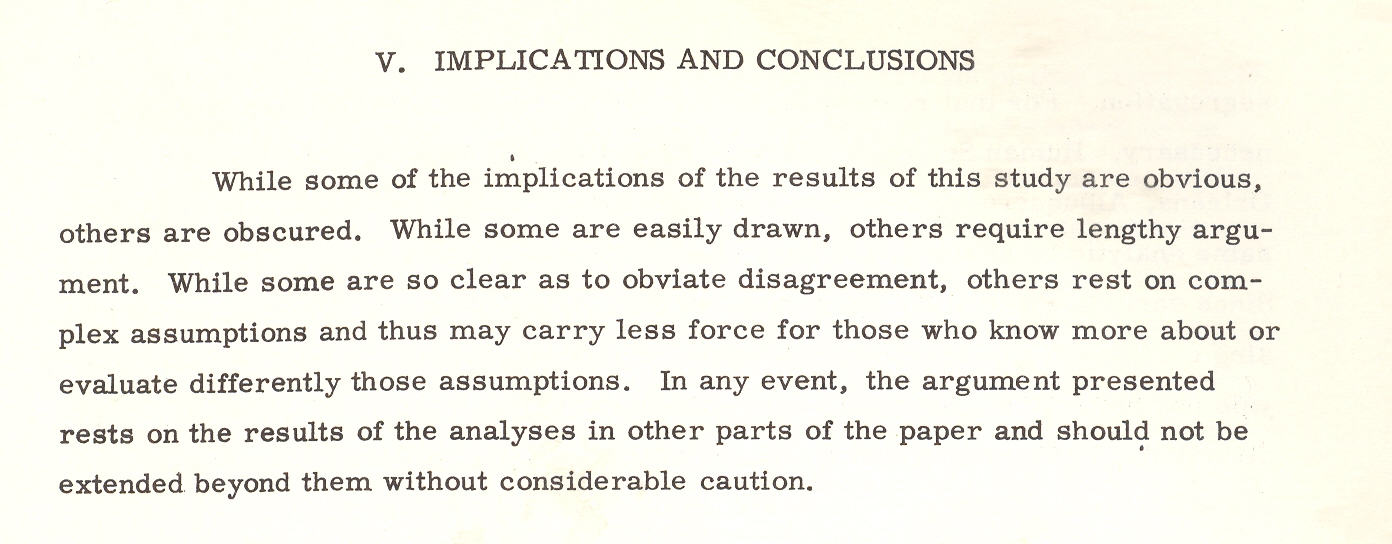
Cities differ in the kinds and magnitudes of
change to which they might be subjected.
This
is the key I think to understanding documents like this, making a simple
foundation statement so convoluted and tortured that it and most of what
follows make any sense outside of restating themselves. Which I guess is a
strength.
Back
to the pamphlet and the interesting table that attracted my attention.According to one study [and for the sake of
brevity I’m not going to describe the scenarios or data estimation methods and
so on] the U.S. would suffer 46% casualties [meaning immediate deaths and not
as a result of radiation or illness or starvation or the encyclopedia of
whatever that would lead to death somewhere down the road].The resulting demographic of the “perished”
by job description postulates that the most-killed category of worker would be:
(#1) aeronautical engineers, 86% dead; (#2) transportation equipment salaried
manager, with 79% killed; (#3), social scientists, with 78% of them going down
with their clients; (#4), authors, with 76% gone.
Authors?Of what, I wonder?The good ones with the bad?Are authors different from writers?And what do you call folks who produce tv
shows?Since the stats here are for 70
cities there’s no wonder that there aren’t any farmers in this table, as the
majority target areas (some 450 cities cited elsewhere as targetable, including
my own little burgh of Asheville, N.C.) would naturally have city
folk in them.And so I’m guessing that
three-quarters of all “authors” in 1960/6 were living in these target cities
and were going to go up in smoke.The
aeronautical engineers category is more understandable as every one of those
industries employing 50 or more people would be a target; frankly I’m surprised
that given the possible firepower of the Soviet Union
in 1966 that 14% would survive; I’d guess offhand that the number would be
2%.
Even
though this stuff is spread out in only 98 pages or so it would keep a person
busy segregating the Orwellian gems from those not; it would be a tricky
business as most of the “text” in the “not” category would be largely limited
to prepositions.
Here’s
another bit:a parenthetic poke at the
post-attack composition of Congress. It is stated that the “postattack”
(hyphenated no longer) Congress would be “quite different”.It would also be (“in
their eyes”) “more Conservative than the pre-attack (hyphenated!)Congress. It isn’t a cause for great prognosticational (?) liberty to assume that
the Congress might be more Conservative, but why on Earth did the author
qualify the assumption by saying “their eyes”? Pish and posh.
The
paper goes on its merry way, connecting the necessaries of Goldbergian delight,
and somehow nothing ever happened, which to me is a secret miracle.Especially given the weight of papers like
this one, which seems to medicate the effects of war, assuming that there will
be a Congress and that people will report back to work once the factories are
rebuilt and that there will be more segregation in the colossal world of post-attack
America, and on and on into the red dawn.
Mr.
Mencken’s view of Warren Harding comes to mind when I read this stuff and
wonder about how it was that we didn’t blow the whole place up:
“I
rise to pay my small tribute to Dr. Harding. Setting aside a college professor
or two and a half dozen dipsomaniacal newspaper reporters, he takes the first
place in my Valhalla of literati. That is to
say, he writes the worst English that I have ever encountered. It reminds me of
a string of wet sponges; it reminds me of tattered washing on the line; it
reminds me of stale bean soup, of college yells, of dogs barking idiotically
through endless nights. It is so bad that a sort of grandeur creeps into it. It
drags itself out of the dark abysm of pish, and crawls insanely up to the
topmost pinnacle of posh. It is rumble and bumble. It is flap and doodle. It is
balder and dash.”
Notes
1. The
abstract from the above paper: “The basic problem with which this report
is concerned is that of determining the kinds of demographic change that might
result from a range of nuclear attacks, ascertaining the effects of those
changes on the future of the surviving populations, and indicating possible
areas for Civil Defense action and planning. Earlier studies of the demography
of nuclear war were examined and their relevant conclusions and methodology
incorporated in the report. A different methodology–expected to be more
sensitive to compositional effects–was then designed. The new methodology was
tested and found to be more effective than the old. Surviving populations
representing a wide range of variation in attack conditions were created on the
basis of both old and new methodologies, and the demographic significance of
these populations was examined. Assuming a range of post-attack demographic
conditions, a series of projections was made on the surviving populations. The
demographic significance of the recovering populations was then examined. On
the basis of the analysis a series of recommendations relevant to Civil Defense
planning was made: Within the framework of this analysis the crucial variable
is the demographic pattern of the city. Changes in composition, as well as
size, could be of substantial magnitude and would last for generations in some
cases. Cities differ in the kinds and magnitudes of change to which they might
be subjected. Considerable variation in the demography of surviving populations
can be expected; that variation would be related to policy decisions; and those
decisions should therefore be examined for their demographic implications.”
I spent 33 years and four months in active military service and
during that period I spent most of my time as a high class muscle man
for Big Business, for Wall Street and the bankers. In short, I was a
racketeer, a gangster for capitalism.–Marine Corps Major General and two-time Medal of Honor recipient Smedley Butler, from his 1935 book War is a Racket.1
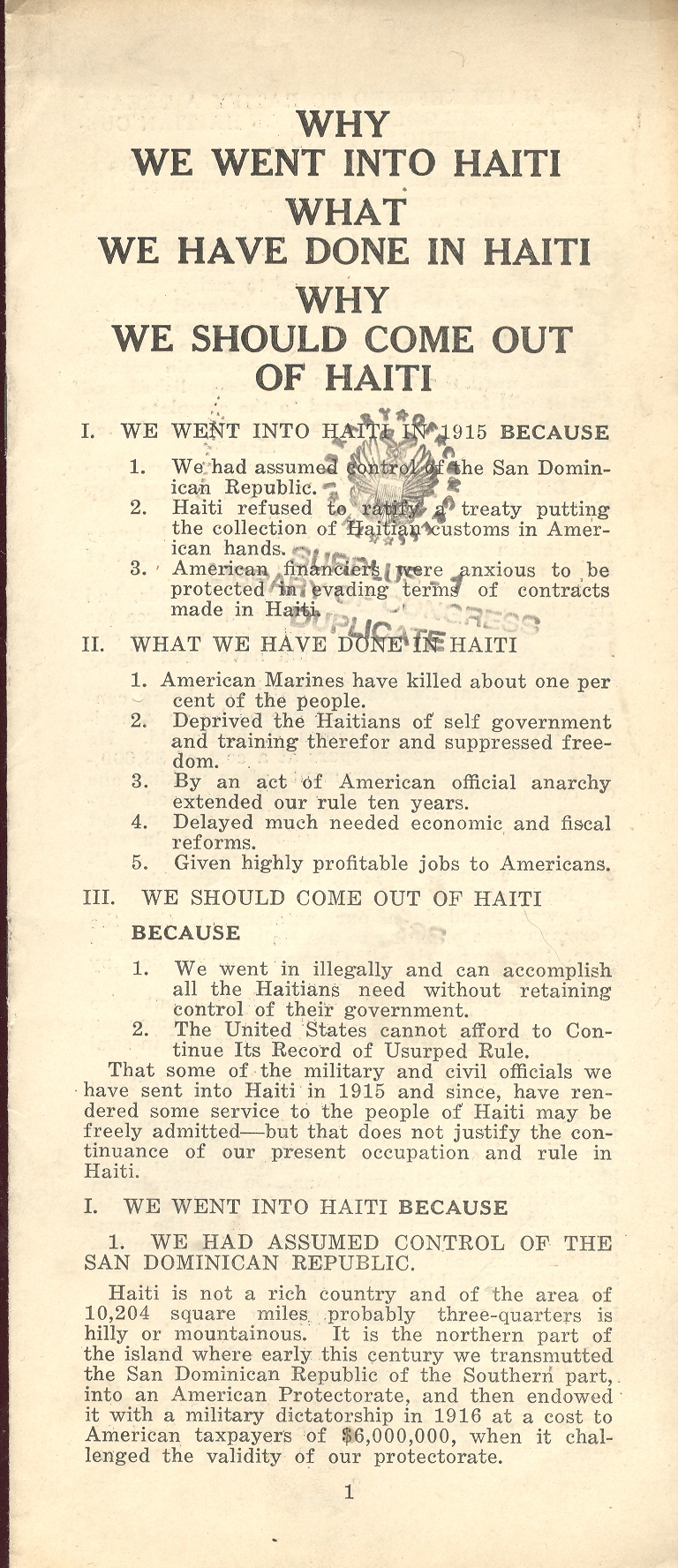
This small pamphlet (reprinted below in continued reading)–printed in 1929 and once owned by H.L. Mencken, and with his annotations–is a gonzo screed against American imperialism in Haiti produced by “The People’s Lobby” and headed by Prof. John Dewey.2
This “intervention”, an extension
of American hegemony in the Americas
known as “The Banana Wars” and a direct relation to Theodore Roosevelt’s corollary
to the Monroe Doctrine (1904), was a movement taken to protect business
interests, infrastructure and investment. And the Haitian debt repayment
structure.
After a series of six failed Haitian
governments in five years, President Woodrow Wilson felt the stinging itch of
capital protection and ordered the occupation of Haiti by the Navy and the
Marines, all in the guise of preserving peace and order and stability (of the Haitian state. “The urge to
save humanity is always a false front for the urge to rule it.” as Mr.Mencken wrote). But this itch had been felt by
a number of presidents over time, what with the many imperialist interventions
and occasional occupations of Panama, Nicaragua, Cuba, Dominican
Republic, Honduras
and Mexico.
The pamphlet is effective as an
anti-Imperialist proto-gonzo work, though it does leave some gaping holes in
fact and some narrow ones in fiction.Be
that as it may the anonymous author incites indignation with the outrages of
the American occupation, not the least of which is the usurpation of Haitian sovereignty.
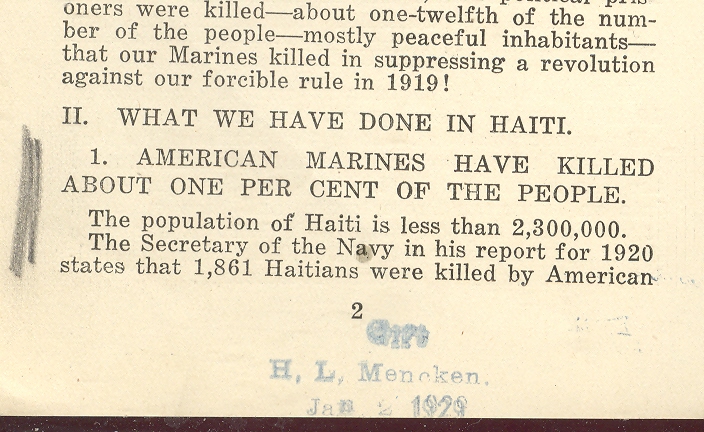
The only annotations of the former owner–Baltimore’s
other great writer, H.L. Mencken– are his characteristic hashmarks in the
margins highlighting the death rate of Haitians killed during the
occupation. According to the pamphlet,
which quotes the report of the Secretary of the Navy (Joseph Daniels) , there
were 1,861 Haitians “killed by American forces in 1919 alone”. The writer makes the acidic point that this
figure represented one percent of the total population of the nation. And that is, perhaps, all that Mr. Mencken3 needed to see.
The occupation of Haiti left broad scars along with the new and vastly improved infrastructure, which was probably just a colonial remnant of the necessities of governance by the occupying force. After all, we needed roads and bridges and such to secure the possession, and it isn’t as though we could role them all up and take them home at the end of the day. They were more cenotaphs to an unwanted and shameful legacy than the betterment of Haiti’s social structure. To close with Mr. Mencken, the flowers that came with the American occupation make us look more for the coffins than anything else.4
Notes:
1. In 1935, Butler wrote in his famous book War Is a Racket: “I spent 33 years and four months in active military service and
during that period I spent most of my time as a high class muscle man
for Big Business, for Wall Street and the bankers. In short, I was a
racketeer, a gangster for capitalism. I helped make Mexico and
especially Tampico safe for American oil interests in 1914. I helped
make Haiti and Cuba a decent place for the National City Bank boys to
collect revenues in. I helped in the raping of half a dozen Central
American republics for the benefit of Wall Street. I helped purify
Nicaragua for the International Banking House of Brown Brothers in
1902-1912. I brought light to the Dominican Republic for the American
sugar interests in 1916. I helped make Honduras right for the American
fruit companies in 1903. In China in 1927 I helped see to it that
Standard Oil went on its way unmolested. Looking back on it, I might
have given Al Capone a few hints. The best he could do was to operate
his racket in three districts. I operated on three continents.
3. Mr. Mencken also made the following Modest Proposal: “It seems to me that the United States would be a great deal better off
today if it had a war on its hands, somewhere or other, all the time.
I do not mean, of course, such puerile buffoonery as now goes on from
time to time in Nicaragua and Haiti, but real war, occupying say a
quarter of a million or half a million men.” “Editorials” in the The American Mercury, Nov 30, p.284
4. As in his Bierce-like dictum “A cynic is a man who, smelling a flower, looks for the coffin”.
Squidward: What’s that horrible smell?! [sees steam coming out of SpongeBob’s window]
Is Patrick thinking again?
Patrick: [sticking
his head out of the window] I’m making art!
Squidward: Patrick, it smells like something crawled into your brain and died!
Patrick:
That’s the creative process at work!
Like St. Paul warned by
Archangel Michael, and Dante by Virgil, the visions of the Hell they were
touring was also stinky, though the robes they held to the noses did not
prevent them from experiencing the very lofty stench of sin.Perhaps it was something like the
crawled-in-and-died stench made by the beautiful Patrick starfish from SpongeBob
Squarepants, his brain’s intellectual exuda forming a pretty but stench-ridden
experience.
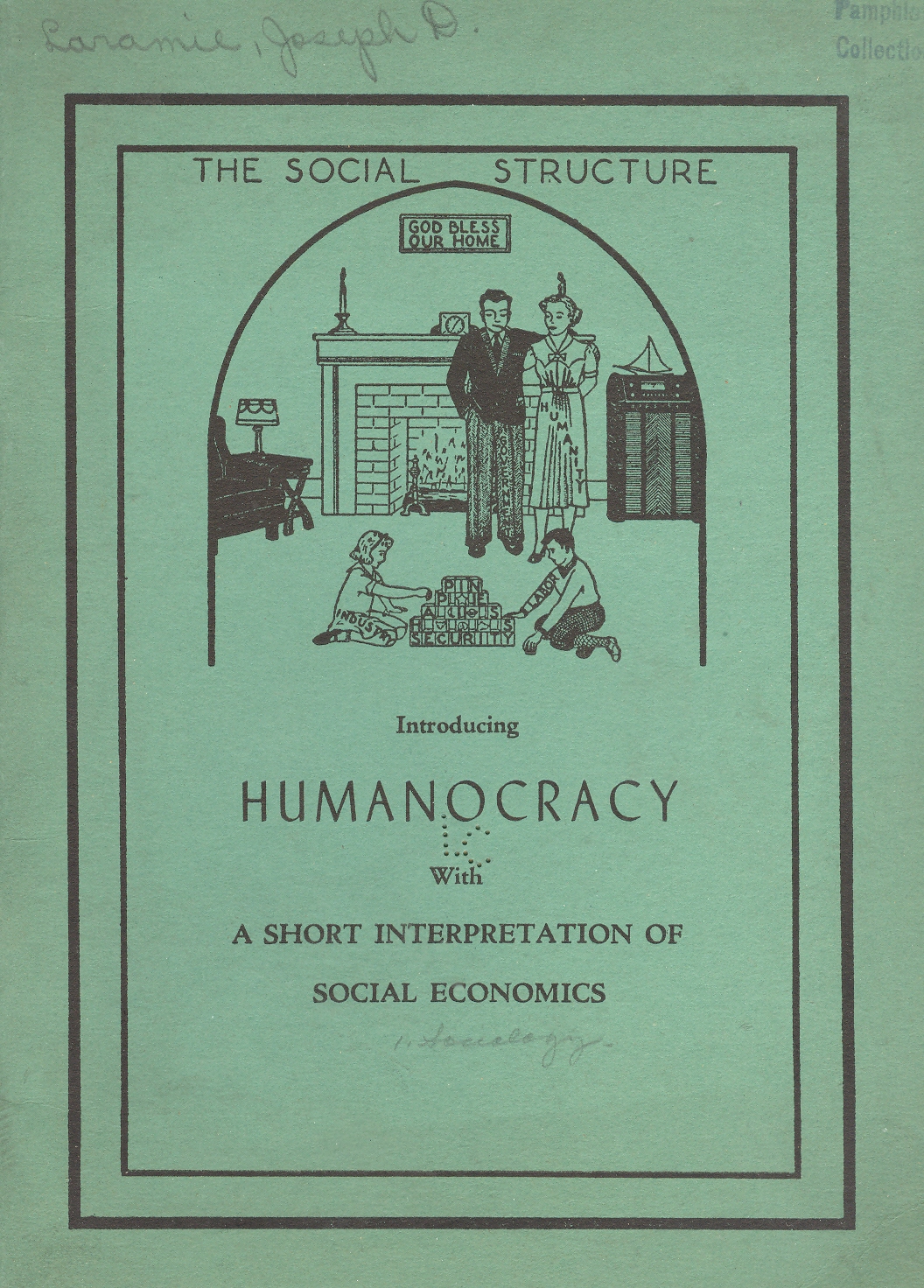
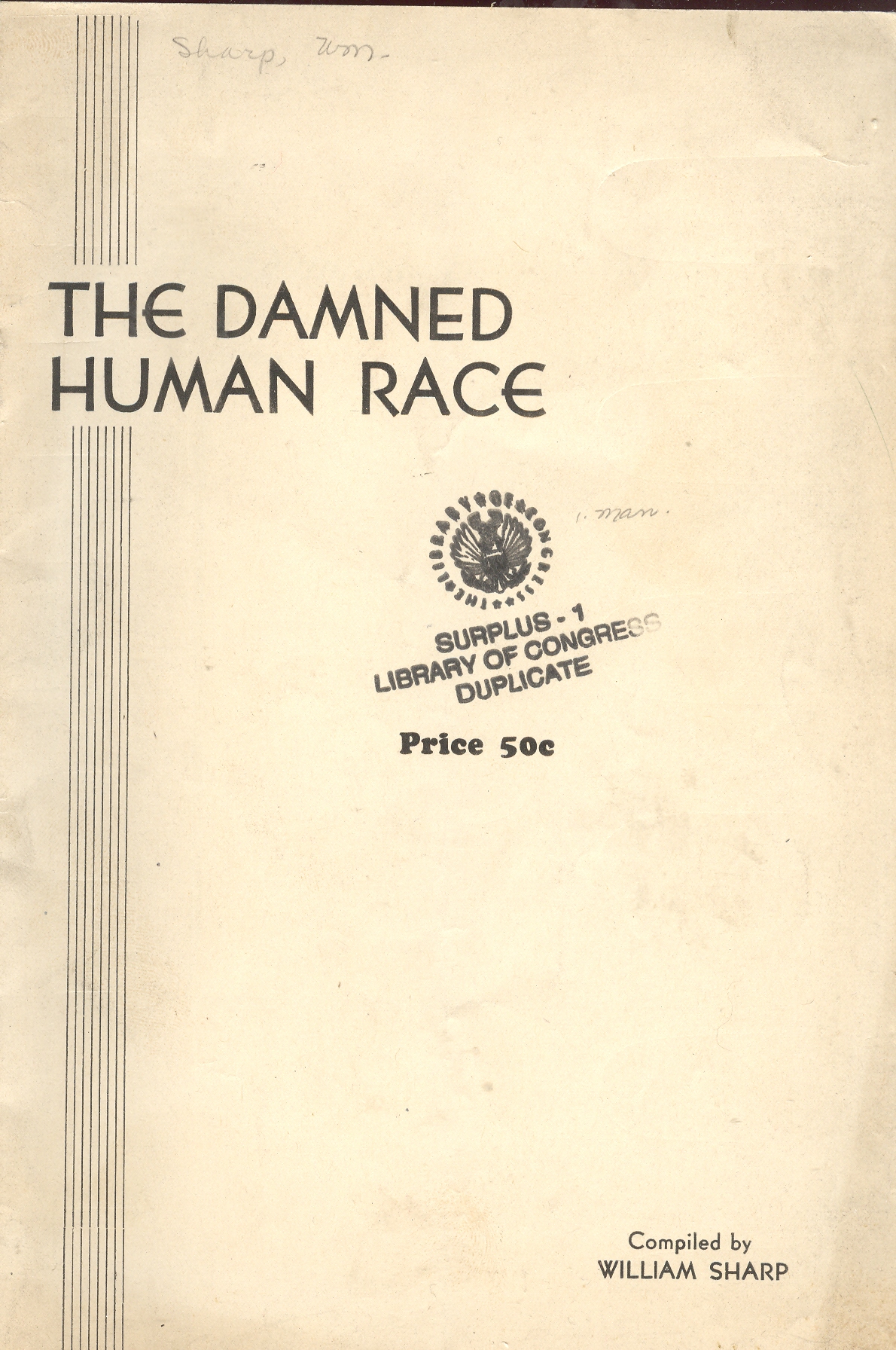
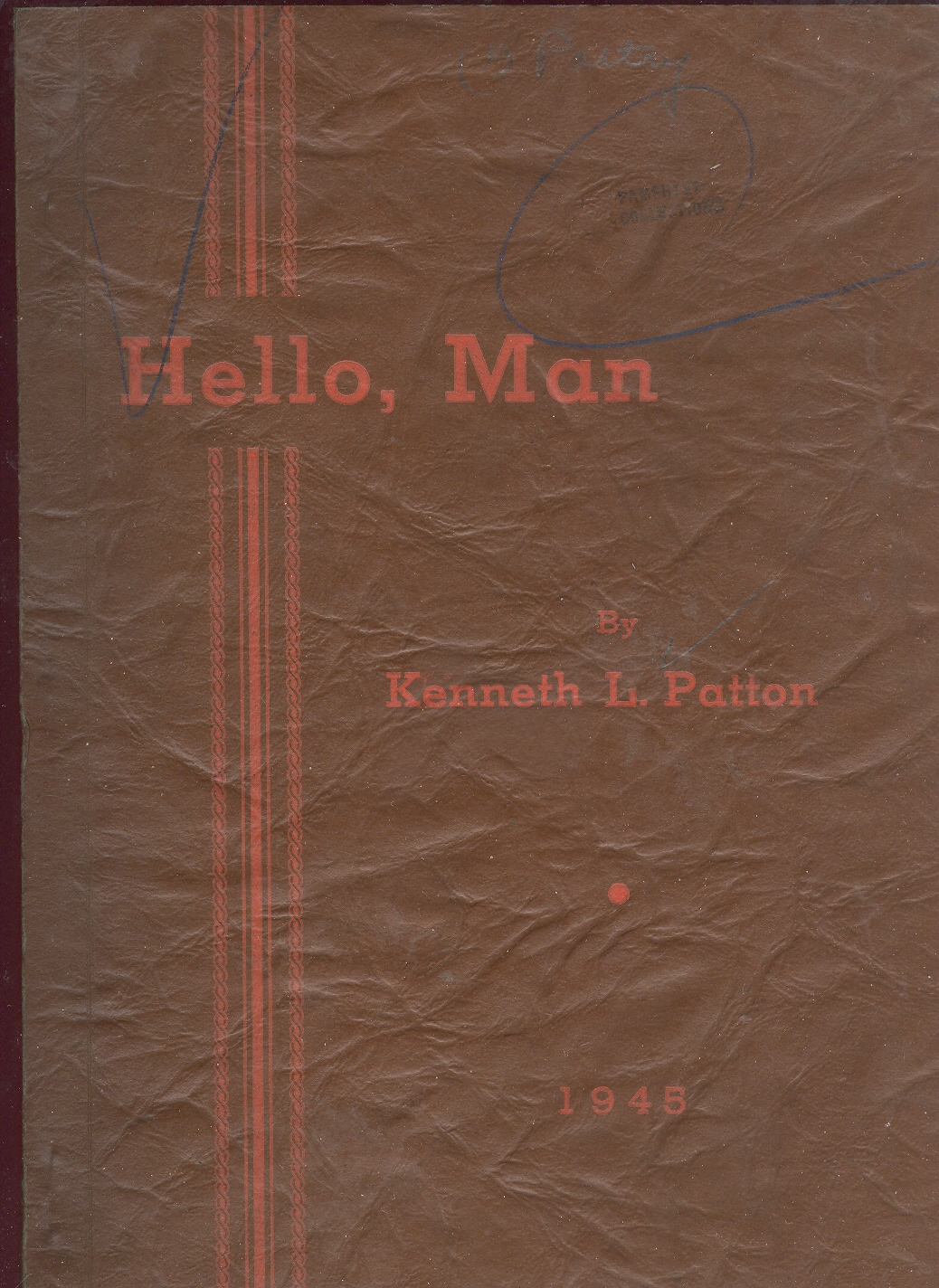
And so to with experiencing the found, unintentional absurd–or
the naïve surreal—in printed material like some of the examples below.Their title pages can be experienced as art
in a way, at least today, so far removed from their original meaning and
context that the words float like disembodied arks of meaning looking for
whatever piece of land/meaning that they bump into.Sometimes their titles are the bizarre-ity,
masking a mundane, pedestrian contents; much of the time the title and contents
emanate the stench of lost meaning through and through.
“… ‘Why us thy mind’, he said, ‘so far away, unlike its usual self, What are thy wits about, where have they fled?’ —Virgil yelling at Dante for asking a dumb question outside the City of Dis,. Inferno, XI, 76-78
Listening
to these dreadful stories this morning on NPR about the Vatican’s relations
with the Roman Jewish community and the abortive WWII papacy of Pope Pius XII—the
papacy of blank and missing compassion—I thought about the missing Papacy of
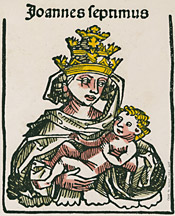
Pope Joan.Whether or not she existed is
a question of debate; whether she was a pope or not is perhaps even less
debatable.What seems not impossible
though is the ability of a large institution like the Catholic Church to make
the entire issue of unwanted history or legacy to go away.
The
historicity of this papacy is long and shows the murkiness of the earliest
writers on Joan. She was supposed to have served as pope between Leo IV and
Benedict III around the year 850.The
fuller versions of her history turn up in the 14th century, although
the earliest mentions of a female bishop of Rome go back to the 9th
century—Joan remains unnamed though until the 13th century when
Martin of Opava’s Chronicon Pontificum et Imperatorum1(referring to
Joan as “John Anglicus” or “John of Mainz”) does so for the first time.
Joan
escapes the Middle Ages with a little flair, but doesn’t do so well in the
Renaissance.As a Missing Piece in the
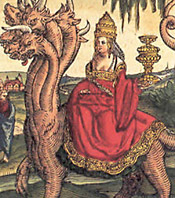
history of the Papacy she turns up not-so-well represented:for example, she is seen here looking good
but turning up bad overall as the Whore of Babylon2.She was treated as a disgrace, and impostor,
someone who demeaned the Catholic institution by her sex and deception, though
god knows that the history of the papacy is filled with horror stories3 that
far exceed the reach of mere deception.
So
I was thinking about the piecing-together of the Pope Joan jigsaw and
remembered an actual “womanly” jigsaw that could actually be pieced
together.This bit came together as a
result of a post I did here just two days ago (What Goes Into Making Human Robot Girls, 1941), and was one of a series of
intolerably heavy eight-page pamphlets cementing the structure of female social
intercourse at the hands of the magazine The
Ladies’ Home Journal.
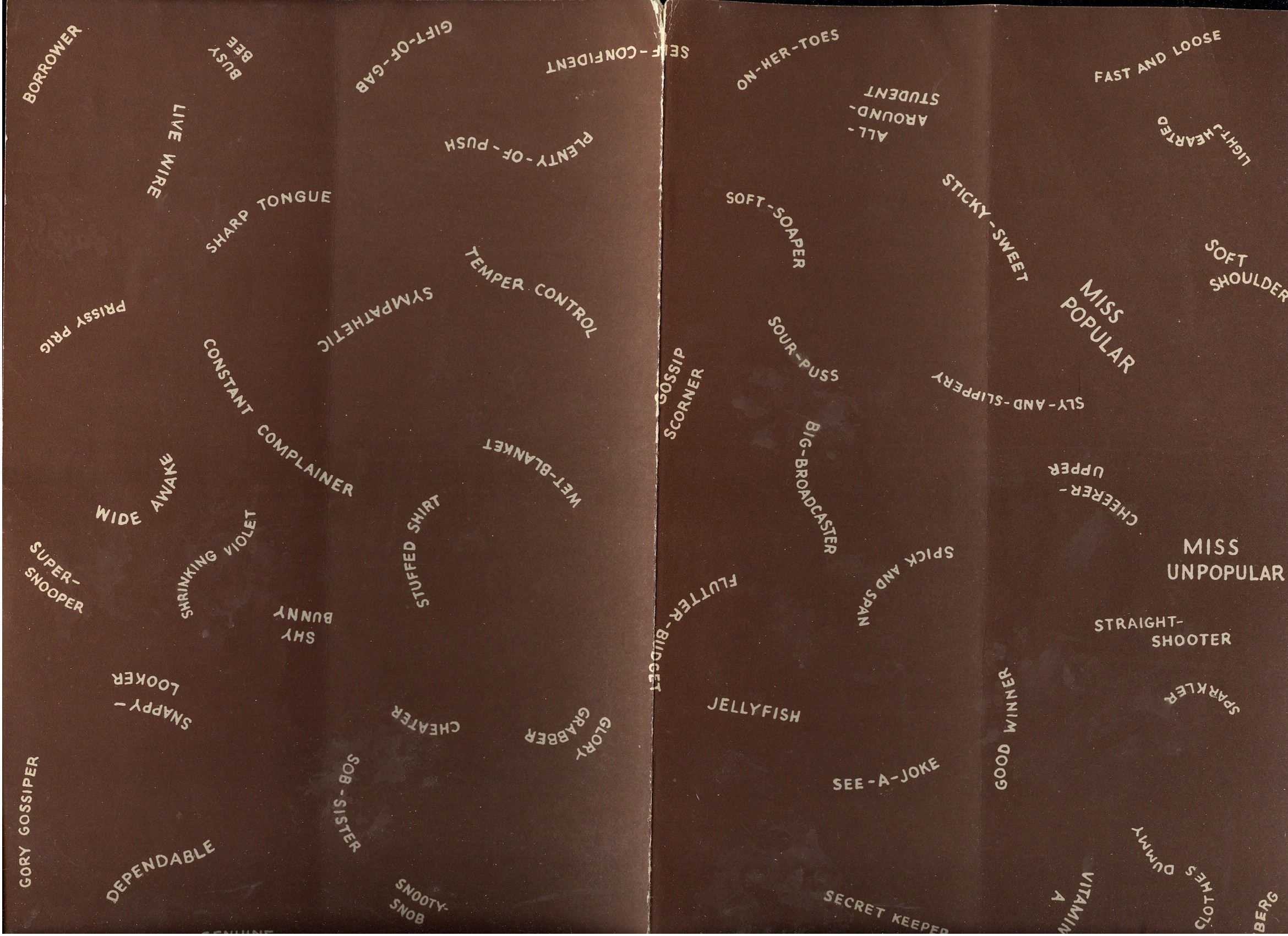
One of these
publications—hardly a pamphlet per se, just a folded 11×8 inch sheet of heavy
stock—came without a title, presenting itself as a puzzle. The puzzle pieces
are parts of two women, “Miss Popular” and “Miss Unpopular”: the reader was to
take the publication, cut out the pieces, and reassemble them into hidden role
models, with phrases describing each on the back of each puzzle piece, all done
without the slightest possible understanding of metaphor or irony.
Miss
Popular phrases/descriptors: live wire, plenty of push, wide awake, snappy
looker, dependable, genuine, secret keeper, on-her-toes, spick and span, light
hearted, all-around-student, straight-shooter, gossip scorner, sympathetic,
cheerer-upper, sparkler.
Miss
Unpopular’s phrases/descriptors: glory grabber, sour puss, cheater, sob-sister,
snooty-snob, wet-blanket, borrower, prissy prig, sharp tongue, gory gossiper,
clothes dummy, iceberg, sly and slippery, jellyfish, sticky-sweet, soft soaper
(?) and of course fast and loose.
And
so girls—or young women—picking up this publication in 1941 were expected to
cut this thing up and piece together the proper (paper) role model using the
reinforcing traits of meager acceptance printed on the back of the puzzle
piece. And poor Pope Joan, whether she was real or not, whether she was
imagined or sunk purposefully away into the Pandora’s sisters’ boxes of forced
forgetfulness—it really doesn’t matter—is just another woman or part of woman’s
puzzle whose blank or missing piece has been extruded, forced into a form more
friendly to a world less friendly to women.
Notes
1.According
to the Chronicon:“John Anglicus,
born at Mainz,
was Pope for two years, seven months and four days, and died in Rome, after which there
was a vacancy in
the Papacy of one month…” [See continued reading section below for more]
2. Babylon was the
representation of the seat of evil on the Earth.From the “Book of Revelation” (17:3–4):
“And I saw a woman sitting on a scarlet beast, full of names of blasphemy
with seven heads and ten horns. The woman was garbed in purple and scarlet, and
gilded with gold, gems, and pearls, and bearing a golden goblet in her hand
full of abominations and filthiness of her fornication.”
3.
Borgia and the Medicis not being the least of the story: see E.R. Chamberlin’s The Bad Popes, (1969)