A Daily History of Holes, Dots, Lines, Science, History, Math, Physics, Art, the Unintentional Absurd, Architecture, Maps, Data Visualization, Blank and Missing Things, and so on. |1.6 million words, 7500 images, 4.9 million hits| Press & appearances in The Times, Le Figaro, Mensa, The Economist, The Guardian, Discovery News, Slate, Le Monde, Sci American Blogs, Le Pont, and many other places… 5000+ total posts since 2008.

Author: JF Ptak

  • The Indredible and Useless Dog Engines of 1895 and 1939

    JF Ptak Science Books   Post 797 (Sept 2009) Extended. 
     

    ++00++ 9.22 dog det


    In 1702, at the beginnings of the Industrial Revolution, Thomas Savery (c.1650 – 1715) began the idea of calculating the work done by steam engines over that done by horses, writing in his book, The Miner’s Friend:

    “So that an engine which will raise as much water as two horses, working together at one time in such a work, can do, and for which there must be constantly kept ten or twelve horses for doing the same. Then I say, such an engine may be made large enough to do the work required in employing eight, ten, fifteen, or twenty horses to be constantly maintained and kept for doing such a work…”   But it was James Watt who first introduced the term ”horsepower” while trying to advertise and place forever the idea of his steam engine over than of the earlier Newcombe engine and, of course, horses.”
    ++00++ 9.22 dog


    James Watt (1736-1819), Scottish inventor and “re-inventor” of the steam engine, the man who put the ‘power” into “horsepower”, determined that a horse could turn a mill wheel (of a 12-foot radius) about 144 times in an hour (about 2 ½ times a minute), traveling 2.5x2pix12 per minute.  It has been shown though that on average a horse will work at about 1.5 horsepower like this for an hour on and off; and less than 1 horse in other times; a man could work at 1.5-2.5 horsepower for a short time, but generally would pull about a tenth of that for an extended time.


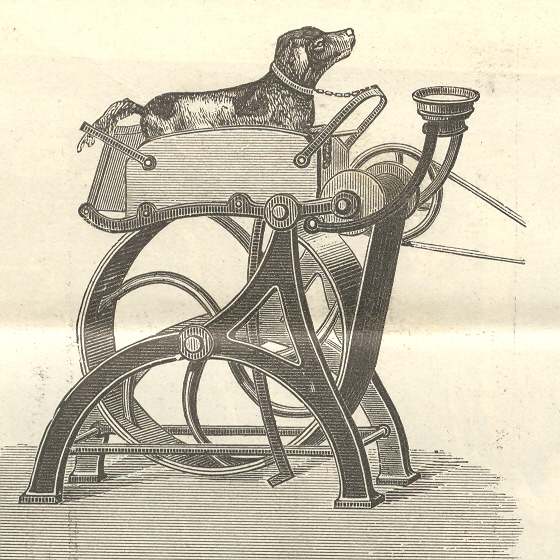
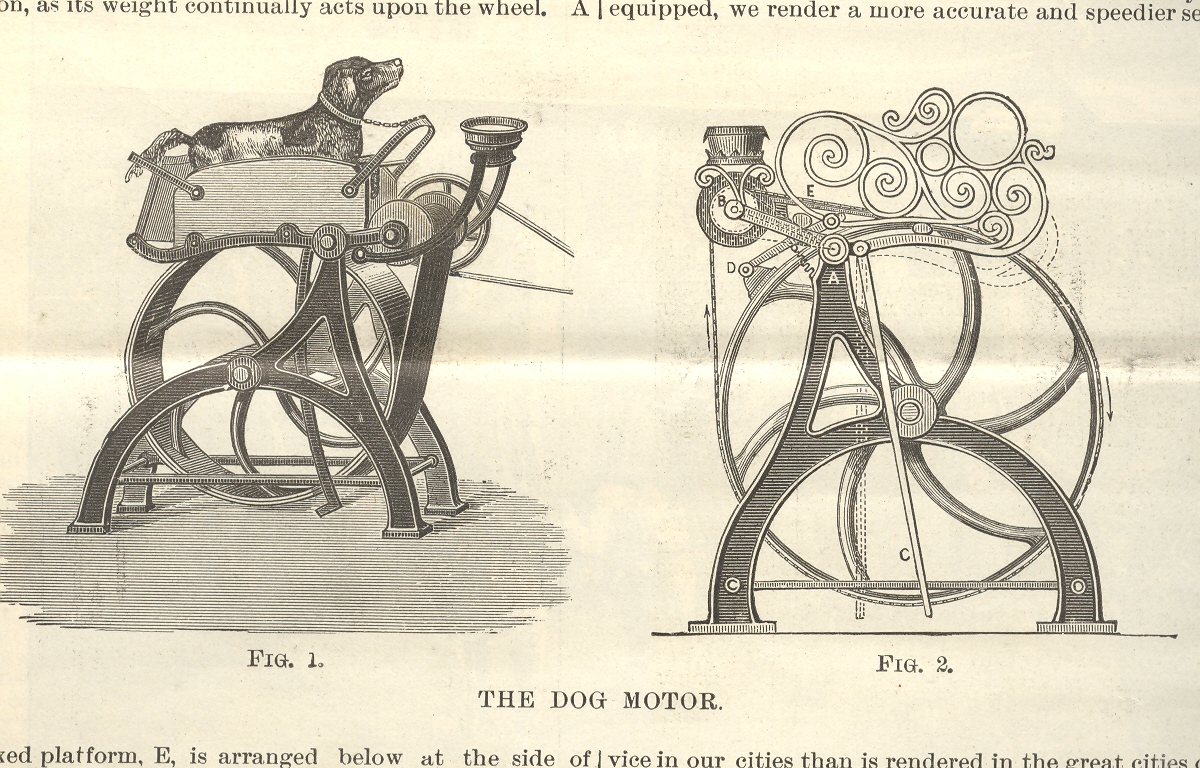
    And so we come to the crux of the biscuit of this post:  a dog motor.  This entirely, utterly, unconvincing and thoroughly bad idea was fully fleshed out by a M. Richard (naturally of Paris) for the Agricultural Exhibition and re-published from La Nature in the Scientific American Supplement  on 10 August 1895.  It is slightly lovely in its high Victorian way, or at least so until you consider that an animal goes in side the thing, working its way along an infinite belt, a cup of water just within reach.  The dog would power the large wheel, which would turn a smaller wheel and belt, which in turn would be connected to smaller, and so on, until it reached whatever it was it was powering, which is left entirely to our imagination.  Even when I squeeze my eyes in a telescoping effort, I cannot see what it is that this poor doggie might power.  Given the descending orders of radii of the wheelworks, perhaps the tenth-horsepower dog engine ran a fan, or something, something remarkably insignificant.  It does tell us something about over-design, like buying a ten dollar bill with a twenty. 
     

    ++00++ 9.22 dog det 2


    Another, more recent but less serious attempt at utilizing canine power was found in Popular Science for 1939:


    The thing that really bothers me is that both of these really bad ideas occurred in years where there were fantastic ideas in the history of physics–1895 being the home to the discovery of the atomic world in the work of Wilhelm Roentgen, and 1939, well, more of the same plus making the atomic world go “boom”.

    In this same vein, and keeping with the highlight-year-for-physics theme, is this thing, created in the 1880’s but published in Popular Science in 1933:

    With the help of Laura Massey (Bookn3rd !), from the wonderful bookseller blog, The Cataloguer’s Desk at the great Peter Harrington Rare Book Shop (London), I’m including an 18th century version of sweating dogpower called the Turnspit:

    File:Turnspit Dog Working.jpg

    I’m not sure what it is that would keep the dog running after it realized in the first half-minute that it will never be able to retrieve that hanging thing set out in front of him/her–maybe things got poke-y. 

  • Robert Burton, “The Anatomy of Meloncholy”, and the Height of Heaven

    JF Ptak Science Books LLC  Post 763  Blog Bookstore

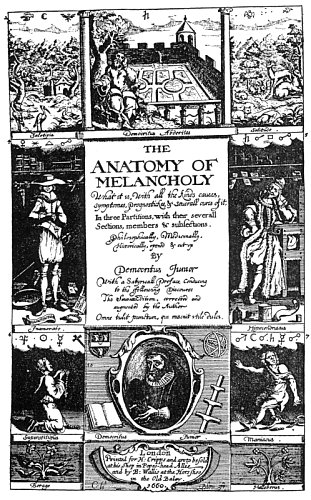
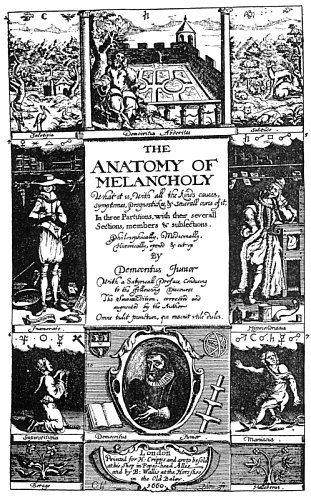
    The Elizabethan Robert Burton (1577-1640), in his supreme 1621 effort The Anatomy of Melancholy1 (“The best
    book ever written. Period”)—ostensibly a quasi-medical book on depression/melancholy2  but
    really about everything, not to mention the entirety of the sciences—called on
    Galileo and Kepler in supporting his view that the “eighth sphere” (of Dante, containing
    the starry realm and the abode of the Heavenly Father) was 170 million 800
    miles away3 from the earth. 

    Burton anatomy


    Burton
    thought that if you were to drop a stone from that distance and have it travel
    100 mph it would take “65 years or more”, [page 152 or so]) to reach the ground
    here on earth.  Heaven aside, something going
    100mph for 65 years wouldn’t get but a third of the way to 170mil., though it
    was interesting for

    Burton to be thinking in terms of big distance like this at this time. There are by
    the way other “eighth spheres” around in the history of science and literature,
    from Sacrobosco to Copernicus, but Burton must absolutely be referring to Dante for this reference.

    Well.  There is of
    course much of great interest in this book that wound up being correct, and
    then there was the other stuff, like this, that just didn’t work. Overall
    though it may be a book to be buried with; it is beautiful, complex,
    deliberate, fantastic, horribly erudite, compelling, and sometimes unreadable.  

    Notes:

    1.The full title of
    the book, by the way, is: The Anatomy of Melancholy, What it is: With all
    the Kinds, Causes, Symptomes, Prognostickes, and Several Cures of it. In Three
    Partitions with
    their several Sections, Members, and Subsections. Philosophically,
    Historically, Opened and Cut up.  The book again was first published in 1621, and followed by revisions in 
    1624, 1628, 1632, 1638, and 1651; the 1651 edition was reprinted in 1660 and 1676, and then all was quiet until it was picked up again in 1800.

    2.  Burton  identifies
    Melancholia as follows: “Melancholy
    , the subject of our present
    discourse, is either in disposition or in habit. In disposition, is that transitory Melancholy
    which goes and comes upon every small occasion of sorrow, need, sickness,
    trouble, fear, grief, passion, or perturbation of the mind, any manner of care,
    discontent, or thought, which causes anguish, dulness, heaviness and vexation
    of spirit, any ways opposite to pleasure, mirth, joy, delight, causing
    frowardness in us, or a dislike. In which equivocal and improper sense, we call
    him melancholy, that is dull, sad, sour, lumpish, ill-disposed, solitary, any
    way moveBurton melancholyd, or displeased. And from these melancholy dispositions no man living
    is free, no Stoick, none so wise, none so happy, none so patient, so generous,
    so godly, so divine, that can vindicate himself; so well-composed, but more or
    less, some time or other, he feels the smart of it. Melancholy in this sense is
    the character of Mortality. . . . This Melancholy of which we are to
    treat, is a habit, a serious ailment, a settled humour,
    as Aurelianus and others call it, not errant, but fixed: and as it was long
    increasing, so, now being (pleasant or painful) grown to a habit, it will
    hardly be removed.”

    3.  The quote for the 170 million mile high Heaven bit: “So that according to these men the number of ethereal spirits must needs be infinite: for if that be true that some of our mathematicians say: if a stone could fall from the starry heaven, or eighth sphere, and should pass every hour an hundred miles, it would be 65 years, or more, before it would come to ground, by reason of the great
    distance of heaven from earth, which contains as some say 170 millions
    800 miles, besides those other heavens, whether they be crystalline or
    watery which Maginus a
    dds,
    which peradventure holds as much more, how many such spirits may it
    contain? And yet for all this Thomas Albertus, and most hold that there
    be far more angels than devils.”

    ·Posted by :

    ·in:


  • The Telescope in Galileo’s Hands: the Expansion of the Universe, 1610

    JF Ptak Science Books LLC  Post 672  Blog Bookstore

    It bothers me how
    long people had access to something like a telescope and used it as a toy, or a
    contrivance, or as an insurance tool or a gear in the machine of war before the
    instrument made its ways into Galileo’s mind. 
    There are many rivalries for the term of “inventor” of the telescope,
    with descriptions of undoubtedly very primitive telescopes going back to
    Egyptian and Arabian legend, to Chaucer, to Roger Bacon’s “glasses or
    diaphanous bodies”, to the theoretical accomplishments of Thomas Digges and
    terrestrial interests of Dr. John Dee. These investigations no doubt made their
    influence in the development of the telescope, but seem minor compared to great
    strides made in 1608, when the telescope seemed to be everywhere (at least in
    Germany and Holland and Italy and France) in advanced development.  But particular high distinction goes to Holland, with Jan Lippershey  and James Metius  who
    (was it in 1608?) filed petitions for the exclusive rights to sell their
    instruments for seeing things at a distance. 


    Sidereus

    But still, people
    were still not actually pointing these instruments “up”—and then there was a
    class of aristocrats and well-do-dos who were shown these optical tools as toys
    and pastimes.  But all of this changed monumentally
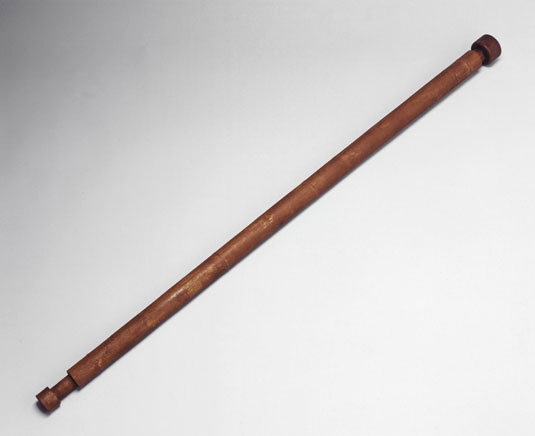
    when news of the telescope came to Galileo’s attention in May 1609—by August 29
    he had fabricated one of superior quality and effect (three diameters and nine times
    larger), though the first public demonstration was used to spot ships’ sails
    over an horizon that was invisible to the naked eye.  By 1610 he had produced his fifth and most
    powerful telescope, allowing things one thousand times closer, which he
    instantly used and made enormous discoveries of such significance that they are
    hard to understand today in the context of early 17th century
    knowledge.

     With the exception of
    comets and eclipses the sky had remained immutable, a perfect score of the
    creator’s creation, until 1572, when Tycho Brahe noticed something new in Cassiopeia,
    something that was not a comet—a something that was a star. This was momentous
    because the night sky had been seen for centuries as being complete—a new star,
    the Nova of Brahe, contradicted this high belief, offering the possibilities of
    newness where there had not been one previously.  And so too with Kepler’s new star of 1602.


    One of the things
    that Galileo brought to the world was an entirely new sky, revealed to him
    through his telescope—so many stars that he could only guess (though Galleon
    reckoned that there was an order of magnitude more stars than previously known “stars
    in myriads, which had never been seen before….and which surpasses the old,
    previously known, stars by ten times”).


    Galileo's TelescopeAll of this was
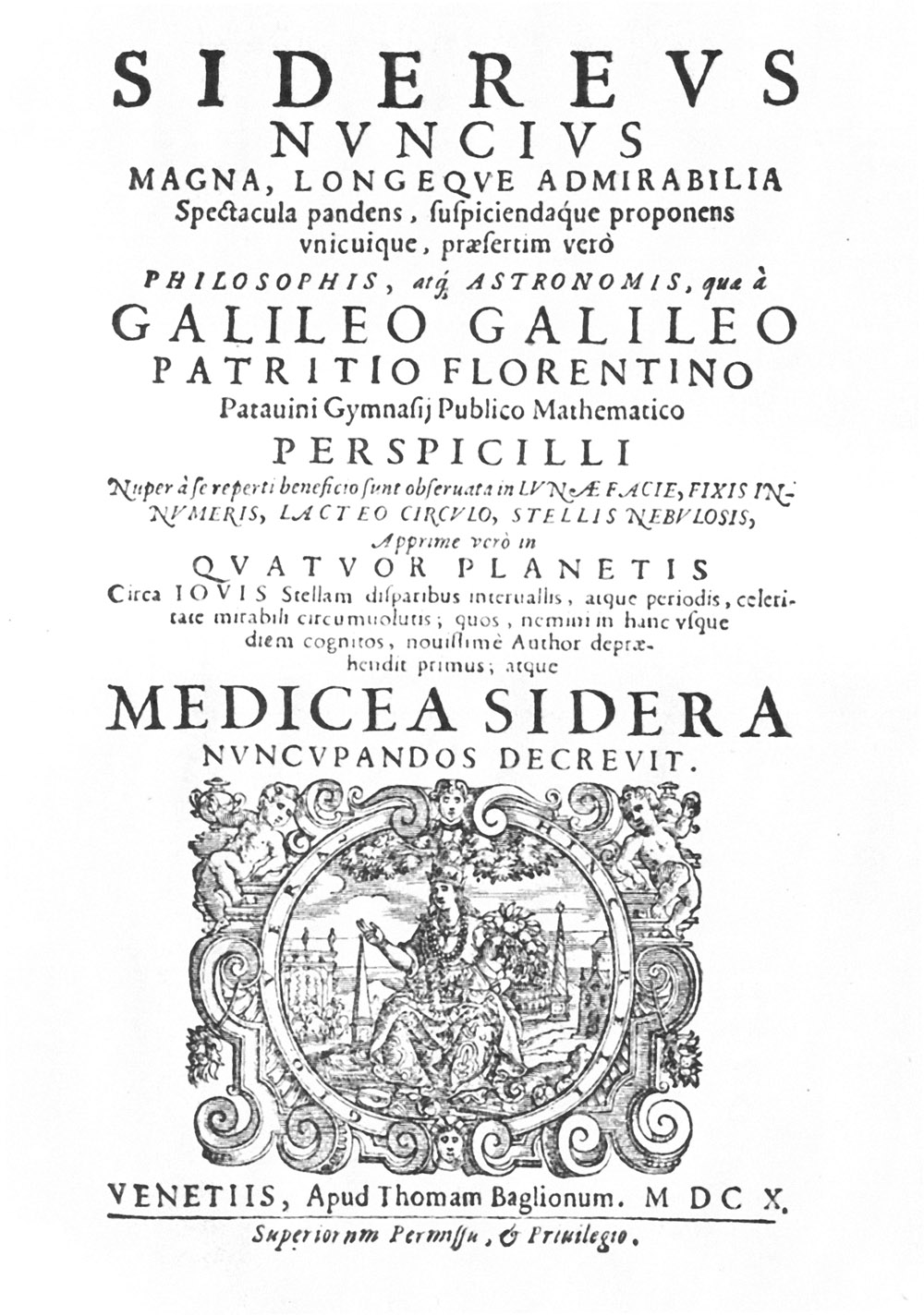
    published in his fantastic Sidereus
    Nuncius
    on March 4, 1610—extraordinarily, the very title page1 of the book
    proclaiming some of the great discoveries of Galileo’s adventure.  Of course there was also his investigations
    of the Milky Way and the impossible discovery of four new “planets” (moons) around
    Jupiter, and the disruption of the happy belief in a smooth and luminous
    Moon. 

    It is difficult today to estimate the impact Galileo’s
    innovation and the subsequent (and immediate) publication of Sidereus had on society.  The challenges to long-defined orthodoxy and
    the bending of theological constraints (though the church would have its turn
    on Galileo later); expanding the size and scope of the universe, applying mathematics
    to the study of physics, understanding the physics of motion, developing the
    telescope and the microscope and other precision physical instruments, are all
    such deeply important changes that it is difficult to resize them in terms of
    21st century advancement. 

    1. The title page reads: “great
      and very wonderful spectacles, and offering them to the consideration of
      every one, but especially of philosophers and astronomers; which have been
      observed by Galileo Galilei … by the assistance of a perspective glass
      lately invented by him; namely, in the face of the moon, in innumerable
      fixed stars in the milky-way, in nebulous stars, but especially in four
      planets which revolve round Jupiter at different intervals and periods
      with a wonderful celerity.”

    ·Posted by :

    ·in:


  • Missing Body for a Famous Head: Ernest Solvay at the Solvay Conference, 1911

    JF Ptak Science Books LLC  Post 761.5  Blog Bookstore

    Blank and Missing People, #54 (Continued from yesterday’s post.)


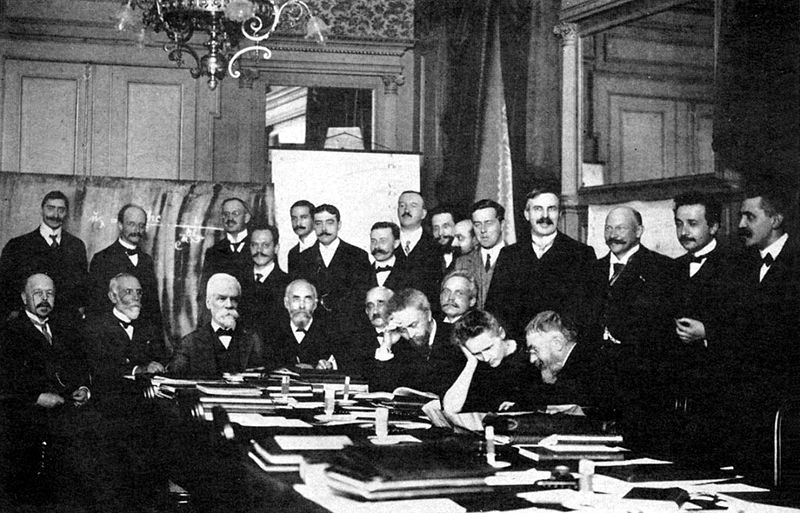
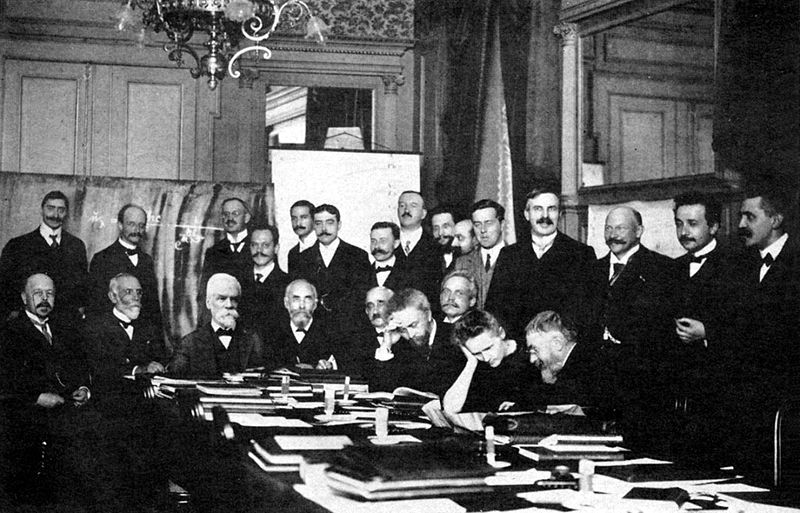
    I wonder who the missing man is in this photograph of the
    great 1911 Solvay Conference on Physics? 
    Ernest Solvay (1838-1922), a wealthy industrialist who funded the event,
    was absent when this photo was made, but is certainly pictured here, seated
    between Brillouin and Lorentz.  If you
    look closely you can see that M. Solvay’s head is far larger than it should be,
    the result of a poor paste-up of a darkroom artist who fit Solvay’s head over
    the torso of a sit-in for the sponsor.  I
    wonder who this bow-tied fellow was, and what he was thinking about sitting
    there in the midst of such high-caliber intellectual firepower. 

    Solvay


    Invited attendees for the 1911
    Solvay Conference at the Hotel Metropole. included   Seated
    (L-R): W. Nernst, M.
    Brillouin
    , E. Solvay, H.
    Lorentz
    , E. Warburg, J. Perrin, W. Wien,
    M. Curie,
    and H. Poincaré. Standing (L-R): R. Goldschmidt, M. Planck,
    H.
    Rubens
    , A. Sommerfeld, F. Lindemann, M. de Broglie, M.
    Knudsen
    , F. Hasenöhrl, G. Hostelet, E. Herzen, J.H. Jeans, E.
    Rutherford
    , H. Kamerlingh Onnes, A.
    Einstein
    and P. Langevin.


  • Going from “Nothing” to Everything in a Few Years: Einstein at the Solvay Conference, 1911

    JF Ptak Science Books LLC  Post 761 Blog Bookstore

    By “nothing” I mean Einstein’s relative “nothing” of early
    1905 compared to the rest of the hard-working, Ph.D. laden physics field in the
    major universities of Germany.  And
    certainly Einstein was nothing and somewhat nowhere in this regard just prior
    to his momentous year of 1905*, scrounging around the fringes of the academic
    world, working as a patent examiner, trying to get his doctorate hammered out
    and accepted. 

    Then come the summer of 1905, and the dates June 9,  July 18,  September 26 and November 21—the publication
    dates of his four papers in the Annalen der Physik, and with them a new epoch
    in the history of physics, a true modernizing, revolutionary effect takes
    place. 

    But Einstein quietly gets his dissertation accepted (and his
    degree confirmed in January 1906 from the University of Zurich), and his revolution
    is started, absolutely certain of his results, but privately worried about
    whether all of it would be as beautiful as Newton ’s theories. The ball is forever set in
    motion.  And to make a little extra
    money, Einstein takes a private student for instruction at the end of the
    year.  He is 26 years old. 

    The odd thing (although not odd when explained by Abraham
    Pais in any of his three books relating to Einstein) is that Einstein would
    remain at the patent office for another four years, though he is promoted to
    second class expert in 1907.  Einstein
    does become a private college lecturer in 1908, but stays with the patent
    office until October 1909 (even though he is awarded his first honorary
    doctorate in July from the University of Geneva) when he begins work as an
    associate prof for theoretical physics at Zurich.

    Things speed up for Einstein from this point, and he is
    suddenly and rightfully acknowledged as being one of the most important
    thinkers in the field of physics in the world by being invited to the
    ultra-exclusive Solvay Conference for theoretical physics in 1911. (By the time of the conference, Einstein
    had been a professor at the German University in Prague, in 1910.)
    At 32
    he is the youngest person there, surrounded by some of the best minds in the
    business. 

    Solvay

    [Invited attendees for the 1911
    Solvay Conference at the Hotel Metropole. included   Seated
    (L-R): W. Nernst, M.
    Brillouin
    , E. Solvay, H.
    Lorentz
    , E. Warburg, J. Perrin, W. Wien,
    M. Curie,
    and H. Poincaré. Standing (L-R): R. Goldschmidt, M. Planck,
    H.
    Rubens
    , A. Sommerfeld, F. Lindemann, M. de Broglie, M.
    Knudsen
    , F. Hasenöhrl, G. Hostelet, E. Herzen, J.H. Jeans, E.
    Rutherford
    , H. Kamerlingh Onnes, A.
    Einstein
    and P. Langevin.]

    Einstein is evidently not moved by the proceedings, writing
    that he had heard “nothing new”, at least at the formal meetings.  The conference was for a full week,but since
    everyone was staying at the same hotel (which would’ve been a pretty potent
    address for that week) I assume that a lot was discussed in private—evidently Einstein
    was extremely quiet during the official proceedings, but became animated in
    private, post-conference conversations. 

    My point for this post, really, is quite simple—the extraordinary
    academic rise in Einstein’s fortunes during the 1909-1911 period, captured in
    this famous photo.  Einstein was a bona fide powerhouse (the powerhouse) by this point, what with
    his revolutionary 1905 papers, plus the blockbusters of 1906, 1908 and 1911,
    and still yet getting stronger. (Incidentally, I always wondered about Einstein’s
    hand position in photos like this, showing one hand seemingly forming a neat
    zero with index and thumb. Actually, that hand is in the same position for this
    photo and for the other Solvay Conferences that Einstein attended (the 2nd,
    5th and 6th)—the mystery for me was solved by my friend
    Dr. Raymond Cooper, who pointed out to me that it was just Einstein holding his
    pipe.

    *It really is hard to overstate the importance of Einstein’s
    efforts in this year.  Really.

    The four papers in volume 17 of the Annalen der Physik:

    –Über einen die Erzeugung und Verwandlung des Lichtes
    betreffenden heuristishen Gesichtspunkt
    , (“On a Heuristic Point of View
    concerning the Production and Transformation of Light.”) being the photoelectricity/quantum
    of light paper, received March 18 and published June 9.

    –Die von der molekularkinetischen Theorie der Wärme geforderte Bewegung von
    in ruhenden Flüssigkeiten suspendierten Teilchen
    , (“On the Movement of
    Small Particles Suspended in Stationary Liquids Required by the Molecular-Kinetic
    Theory of Heat”), being the  Brownian
    Motion of particles/atomic theory
    paper, received May 11, published
    July 18.

    –Elektrodynamic bewegter Körper, (“On the Electrodynamics of Moving
    Bodies”), being the special relativity theory paper,. received
    June 30 and published 26 September.

    –Ist die Trägheit eines Körpers von seinem Energieeinhalt
    abhängig?
    (“Does the Inertia of a Body Depend upon Its Energy Content?”),
    being the mass-energy equivalence paper (and the kernel of E=mc²),
    received September 27 and published November 21.

    A List of the Solvay Conferences (the number, followed by
    its year, a translation of the title of the conference, and the conference
    chair):


  • The Overworked Working Poor of 1914: Women and Children and What They Didn’t Get Paid

    JF Ptak Science Books LLC    Post 760   Blog Bookstore

    ++00++ 9.19 10,000 cvr

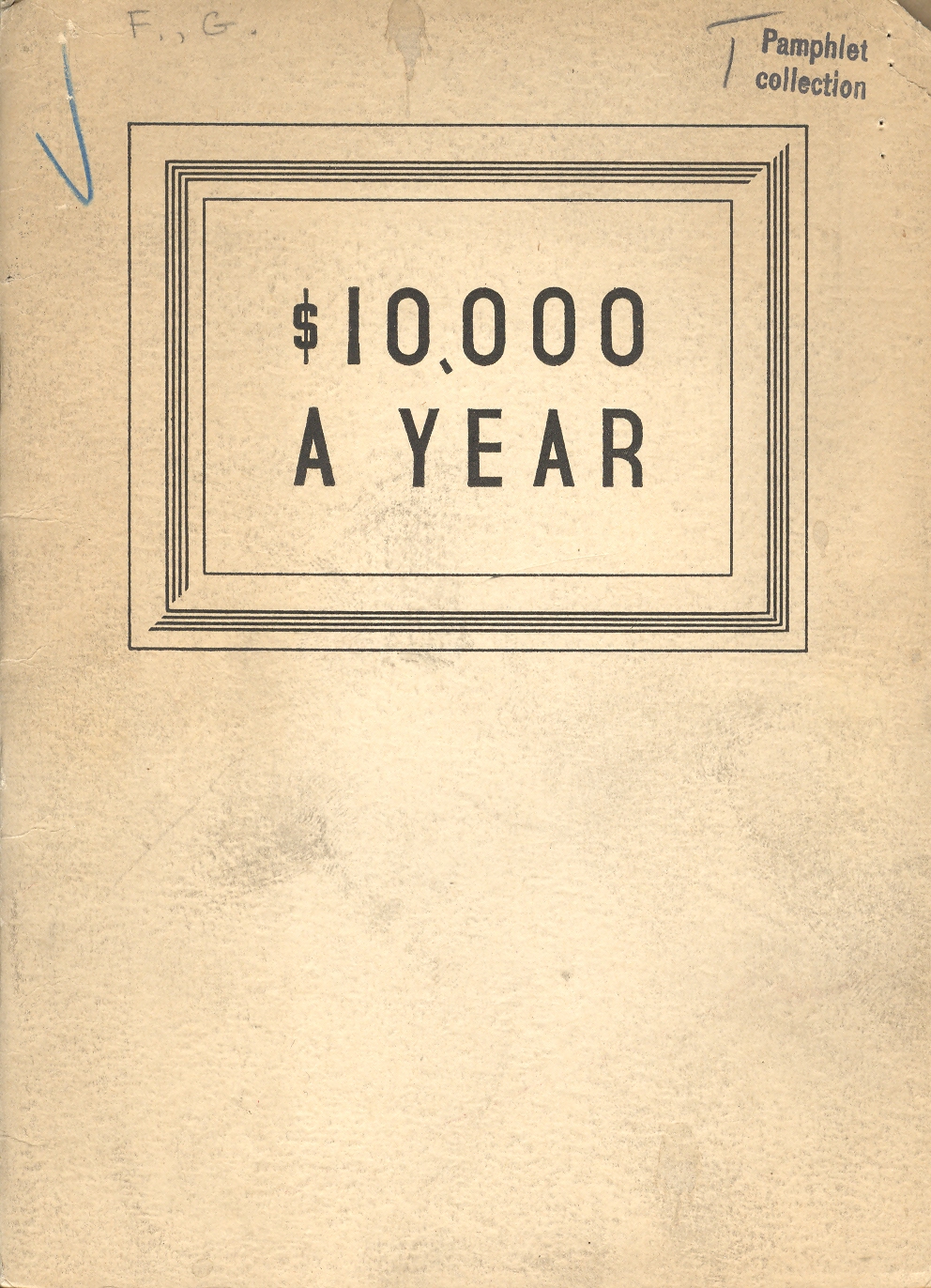
    An income of $10,000 dollars a year, in the Depression year
    of 1936, was a huge, fabulous fortune, controlling a major buying power for
    food and cars and housing.  (A fine brick
    home for the solid middle class family of five would’ve cost well less than the 10K
    per year—which means that this 1936 income would correlate somewhat to a 300,000/year income in 2009 dollars so far as buying power goes.) Unfortunately the author of
    this pamphlet directed it at doctors who could supplement or insure their
    income by selling their patients the pamphlet’s products:  “Anabolic Food Products”, a quacky vitamin
    supplement that evidently had really little use except to expand the
    income. 

    This reminded me of another pamphlet from a slightly earlier
    period on the over-worked working poor.  Report
    to the Louisiana State Commission to Study the Conditions
    of Working Women and Children…
    (published in 1914), chronicled the averages incomes
    more so than the conditions of their work—and the statistical package was
    simply not a pretty story.  Reading through the
    numbers hammered home how far away and mountainous $10,000 a year meant. 

    ++00++ 9.19 10,000 cvr 1914

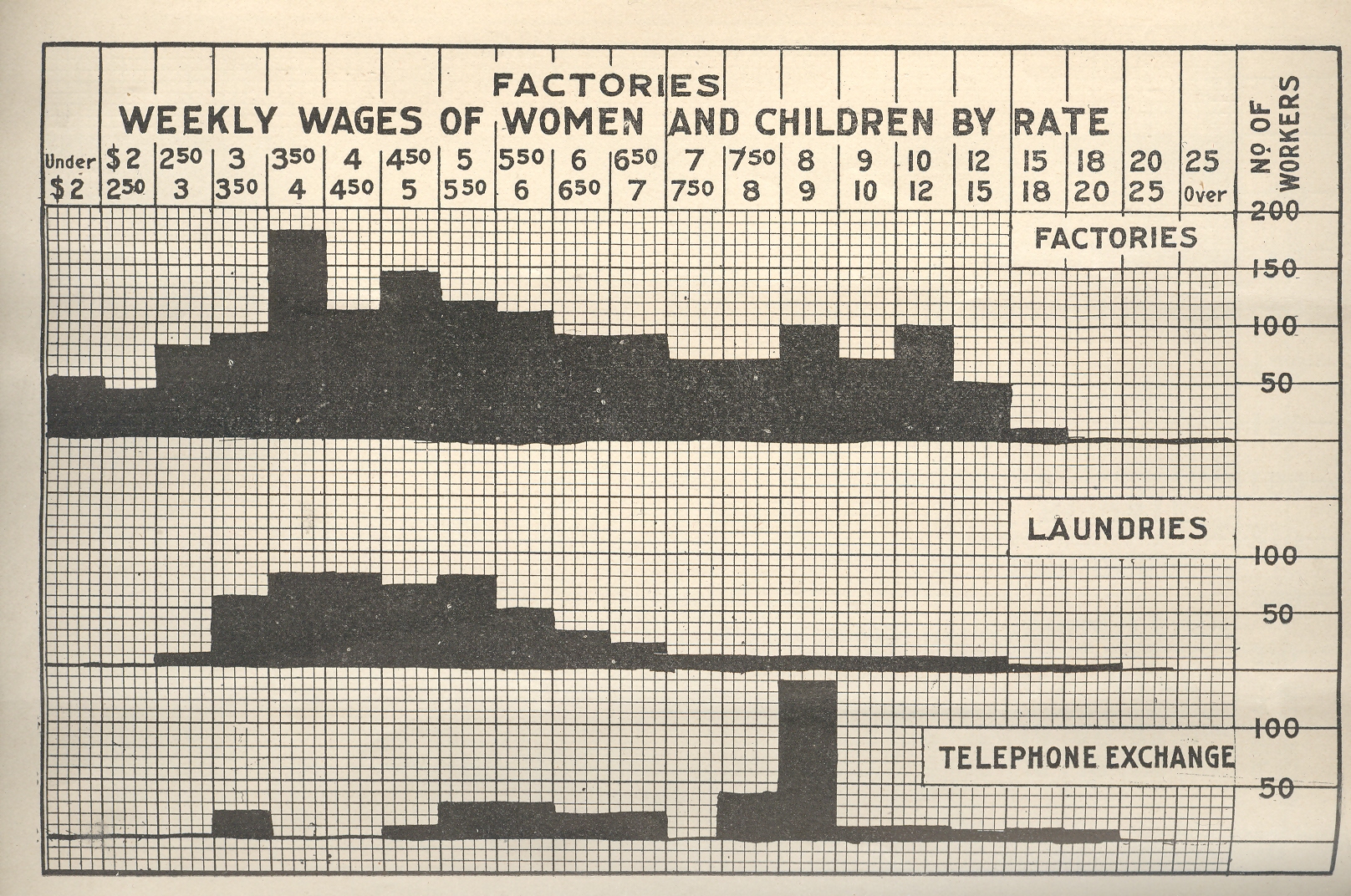
    That big bump in the bar graph for factory wages shows that
    the most frequent average weekly wage for women and children was about  $3.75, with about a quarter of all of those
    polled workers making less than that, and about half making 5.00 a week or so.
    Multiply those figures by 52 and they don’t come out to much—specifically, they
    don’t really approach the average income for a worker in the U.S. in 1914,
    which was about $650 a year.  It looks
    like only 10% or so of all of these workers met this standard of $12.50 per
    week.  And this was for factory workers—things
    get worse for most all other types of jobs—except for workers at a telephone
    exchange (and that wouldn’t last for very long).   

    ++00++ 9.19 10,000 cvr 1914 stats

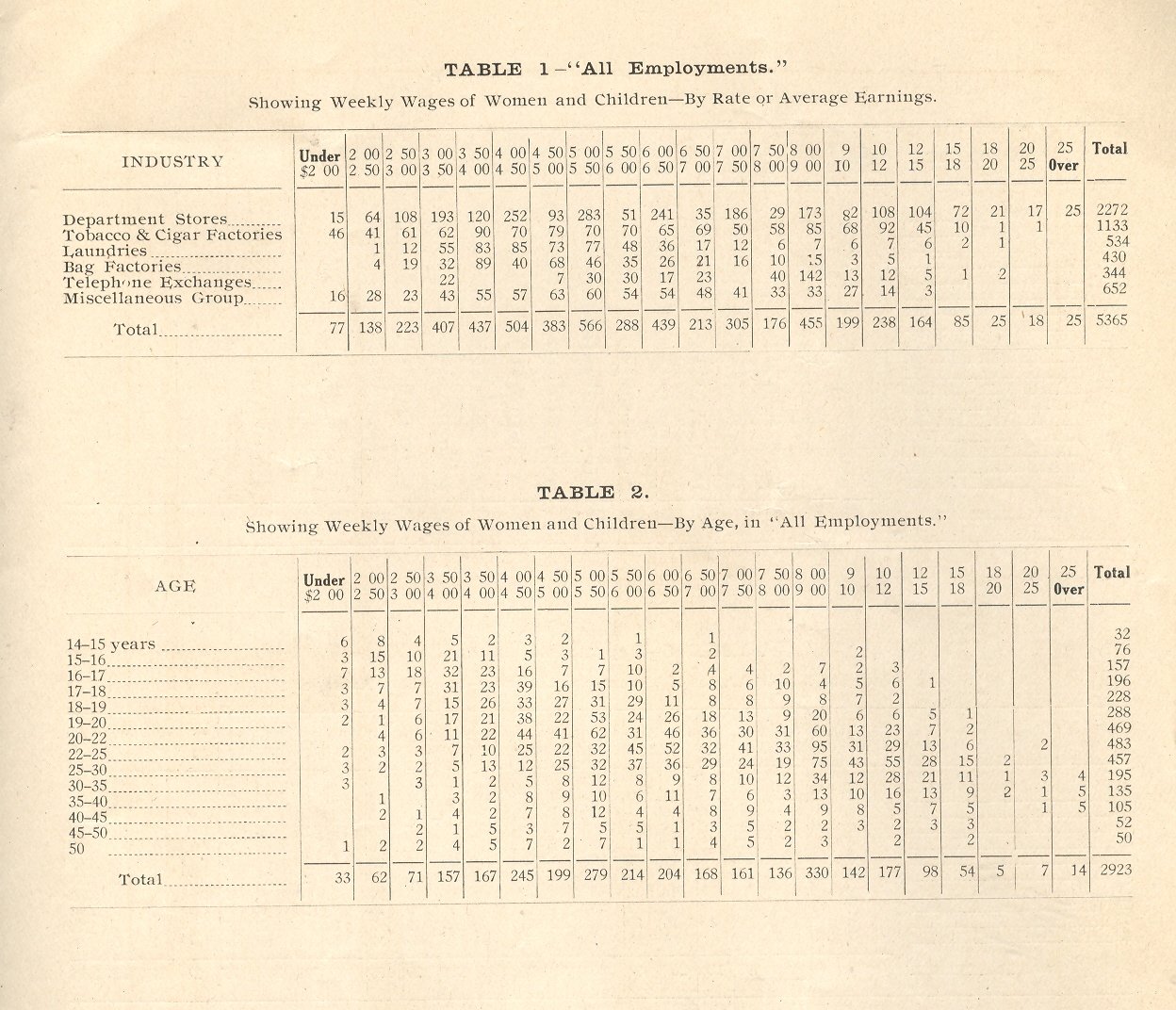
    The conclusions the pamphlet reached are inescapable:  “we can arrive at but one conclusion, namely:
    that no matter what are the causes determining wages, the earnings of women in
    industry are exceedingly low in a great many cases, and scarcely enough for
    subsistence……the striking facts is that nearly three-fourths of all women in
    industry are between 18 to 35 years of age, meaning that they are spending the
    best years of their lives …at the lowest rate of wages…”

    In 2009 women are still paid less than men–about 77-cents on the dollar less.  Generally speaking the U.S. now imports most of its child labor produced goods–out of sight, out of mind.


  • Visionaries, Ice People, and the Marriage of Stupid and Brutal.

    JF Ptak Science Books LLC  Post 759  Blog Bookstore

    The ‘twenties is know as the “speed” decade—everything was
    going faster, increasing its speed, expanding to the limit:  this was true for the ability to communicate
    via telephone, the appearance of commercial radio, the great increase in the
    speed of trains and planes and automobiles; the music was fast, the movies were
    talking. 

    ++00++ 9.17 otto gail

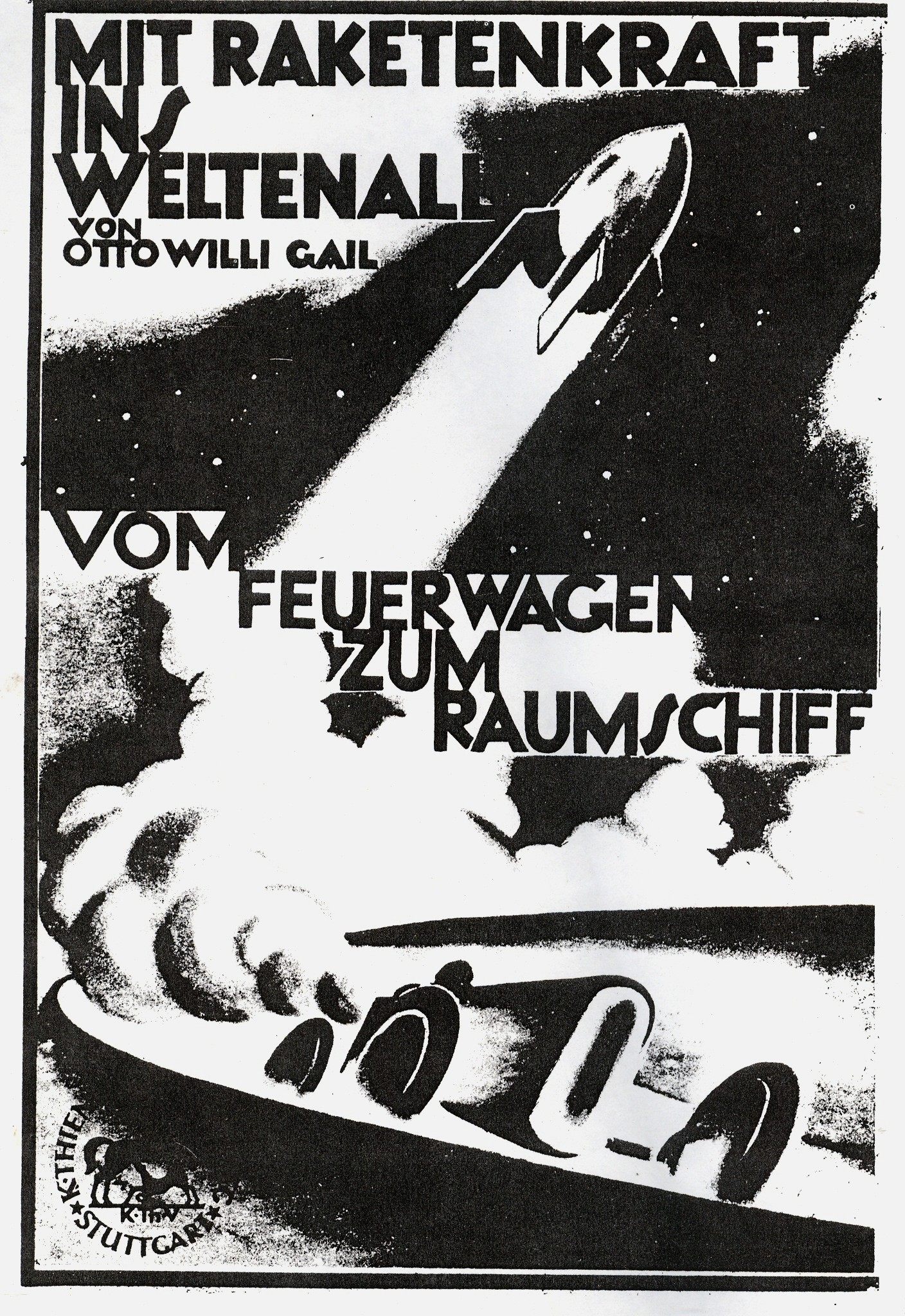
    There are many iconic images relating speed and the roaring twenties—generally
    though this spectacular cover for Otto Willi Gail’s Mit Raketenkraft ins
    Weltenal…vom Feurerwagen zum Raumschiff
    (1928) is much less frequently seen, though it
    certainly does get the message across. 
    Otto Gail was a creative German science fact and science fiction writer
    with a strong background in following the scientific and technical
    accomplishment in rocketry of the age, especially the works of Max Valier1 and Hermann
    Oberth2. Raketenkraft was more a peek into the future and pop techy work for
    kids than a straight-out scifi novel like his The Moon Stone, which was a story
    that brought us Atlantis, space travel and hidden ancient culture in the
    underground Ice World.Gail, ott--stone moon

    It’s the unfortunate Ice World that attracts my attention
    around Gail, swimming around his interesting and tech-involved scifi world like a
    melting and failing Moon made of hundred-year NYC garbage scows, the idea of a
    good engineer-turned-trash cosmologist named Hans Horbiger, whose ideas wound
    up being whispered into the ears of many monsters. Horbiger had some sort of
    vision-dream about stuff in 1894 and spent the next 30+ years fleshing out the idea,
    which sounds bad from the very start when the author admits to finding “Newton wrong”.  Anyway without losing too many minutes
    thinking about this time-hole, Horbiger’s theory worked ice up to being the
    primary and primordial ingredient of all processes in the universe, with ice
    planets circled by ice moons, and some sort of gooey ice ether to make it all
    go ‘round. Oh yes: there were superior ice people living in the interior of the
    earth.  Horbiger died in 1931, but his many
    followers managed to work the theory into a presentable Jewish-baiting
    anti-relativity Deutsche Physik form
    for the new government of Adolph Hitler in 1933, and it was there that his
    ideas took hold in the cancerous Himmler and Hitler and others, a happy
    marriage at last, the ridiculous to the unspeakable. I’m not sure where the
    ice people are today, but I did saw some awful History Channel show that
    stated that Hitler never did die in the bunker and was removed by submarine to
    the interior ice people of earth, flying around the insides of our globe “in a
    UFO”.

    And so I associate poor Gail (1896-1956) with the Horbiger
    mess, and not his good work in science reporting and popularization.  So it goes.

    Gail, otto ice theory

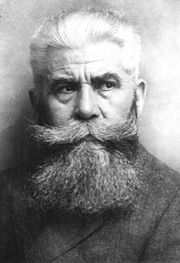
    The other thing that you can say about Horbiger—he had a
    full-out behemothian mustache.  That’s
    about it.

    Notes

    1. Valier seems to have been the first person  killed in a rocket-related incident, blistered by his exploding rocket-car.

    2.  Oberth is another one of those Germans working at Peenemunde (along with Wernher von Braun and a great host of others)  trying to kill as many people in the UK as possible who wound up in Huntsville, working for our government.  It is all so problematic.  It is interesting that there is little in the Air and Space Museum (as part of the Smithsonian system)  that mentions von Braun.  He is burioed in a simple grave in a cemetery next door to a Jewish cemetery in Alexandria , Virginia.  I also remember going to some restaurant in the diamond district that, in very high bad taste, served up a beer called the Wernher von Brown–von Braun certainly had his hands covered in Jewish blood at least to the wrists, and to have a product so stupidly named as that in that place was just one of those impossible things that happen every day.

    ·Posted by :

    ·in:

    —

  • Skeleton of the Sun and Sky: Henry Van de Velde pre-Abstract Art, 1884

    JF Ptak Science Books LLC  Post 758  Blog Bookstore

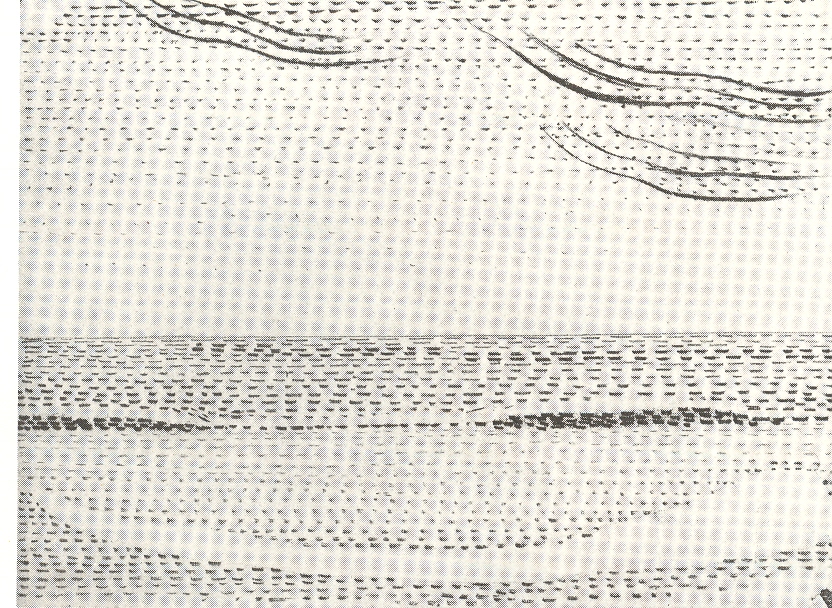
    I wonder if Henry van de Velde (1863-1957) as one of the earliest people to paint what he saw as an x-ray of the stuff of existence.  His artwork, “Sun at Ocean (Rhythmic Synthesis”) which I found in  Werner Hoffman’s Turning Points in Twentieth century Art, 1890-1917 and which was executed in 1888/9, looks to me to be absolutely incredible
    ++00++ 9.17 vna de velde
    for its time, a nearly non-representational, proto-abstract something, done three decades before these genres came into being.

    His representation of known objects seems to be nearly, completely, removed—what we have left here is the representation, or impression, of the subject of the painting.  We can see the sky and sun and ocean there still, but just barely: their representation in skeletal form shows us the bare bones of the world, like a pre-X-Ray X-Ray (which didn’t come around until the very ready and able Wilhelm Roentgen bumped into it in the winter of 1895).

    It is hard to think of how unusual this artwork would’ve been, even given some historical consulting. The Impressionists, who had crept up into the artworld existence to their first show in 1874, were seen as being a radical, revolutionary, avant garde movement.  Their reception was not a cordial one, as they were threatening the established order of the instructionally-regulated world of art that had stood for centuries.  Van de Velde’s work was far outside of Impressionism, or at least it would seem so to me, making it more radical still.

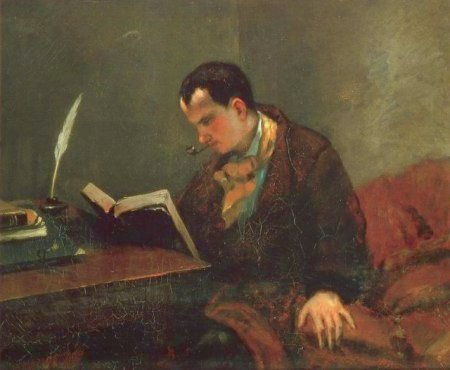
    I’m not sure where van de Velde’s work stands in the history of Modernism (ca. 1875-1916, when virtually very major discipline encountered massive change).  It doesn’t seem to be a prototype for abstract art, which doesn’t seem to have precedents in the 19th century outside of found-art in mathematics of the fourth dimension.  This new world of art seems to begin suddenly in 1907 with the work of Braque and Picasso, and then Marcel Duchamp, and Nayral (1910) and Gris (1911), followed by many others including Gleizes and Marcoussis and Metzinger and Villon (all in 1912).  The Impressionists on the other hand have a very rich history of impressionistic works leading up to their major debut in 1874:  like Courbet’s “Portrait of Baudelaire” (1848/50), or Cezanne’s “Man with a Blue Cap” (1865), or Bourdin’s “Cloud Study” (ca. 1859), on Monet’s “Still Life” (1859, with the disappearing bread), or Degas’ “Semiarmis…” (1861) or Pissarro’s “The Road” (1864), or the glorious modern self portrait of Cezanne done in 1865.  There are many others.

    Van de Velde’s art leaves me puzzled, probably because I really don’t know about the painting phase of his life (an activity he gave up in 1892); probably because I just don’t know enough, and am not art scholar.  I don’t know why this isn’t significant, unless, of course, the work was not seen, or was unknown, or was simply rejected.

    But that still leaves us with the artwork itself: a skeleton. Scaffolding.  Stage setting.  Fragments of the remaining object.  Simplification: a rediscovery of the material of the world reduced to its barest essentials, to a geometrical simplicity of nothing but lines, dashes, suggesting a larger form.  It is the amount of weight in the “suggestion” of form that makes this work so incredible—up to this time, I think, there weren’t any other works of art where so much was open to interpretation, and so much of the optical characteristics of the subject had been removed.  (Rodin’s statue of Balzac, showing the author seemingly ripping himself from his stone, was much hated when it was shown in 1897, the “unfinished” parts seen as ugly and crude by many.  This would seem a good example of the weight of suggested form in pre-20th century art.)

    1889.  Decades before Malevich, Rodchenko, Balla, Severini, Tatlin, El Lissitzky, Klee, Kandinsky.  (And Mondrian, the biggest question mark for me and greatest possible inheritor of this work.) I just don’t get it where van de Velde “went”.  He did go on to a terrific career in design and architecture  in worlds outside of this effort; I just don’t know what happened to “Sky and Sea’…maybe Henry just didn’t like itpreferring his gorgeous nouveau design motifs.  After all, he survived this artwork by almost 70 years (!), and perhaps he laid it aside as a youthful flourish.  As I said, I really don’t know.  


  • Anniversary and Thank You

    A small bit of news:  this blog has just received its 250,000th visitor, far more than I ever thought possible.  The milestone comes on my 599th day of blogging and 757th post, some 400,000 words and 4,000 images or so after this all first started in February 2008.  My thanks to everyone who has taken the time to stop by.  This has been an enormous amount of fun, and I’m so very happy that someone is out there enjoying it.

    I must also thank my brilliant, beautiful and always interesting wife, Patti Digh, who encouraged me to actually start writing and whose constant support and help has been the great difference for me in keeping this blog going.  MMB.

    *Patti is a professional writer and speaker and has a number of blogs of her own, including the very widely popular 37days. 

    ·Posted by :

    ·in:


  • Big Mathematics 1816: Manuscript Notes and Found Math Art

    JF Ptak Science Books LLC  Post 757  Blog Bookstore

    In my science bookstore business one of my principle interests is antique manuscript notebooks in the sciences.  It is a pleasure to see someone working through a problem, or finding what the writer thought to be the most interesting point in a lecture on a particular subject, and to read the occasional doodles and see the timely gloss every now and then.  I’ve had notebooks from an advanced and very careful student for a course given by the great Robert Bunsen that was filled with hundreds of pages of what the master was trying to communicate to his pupils.

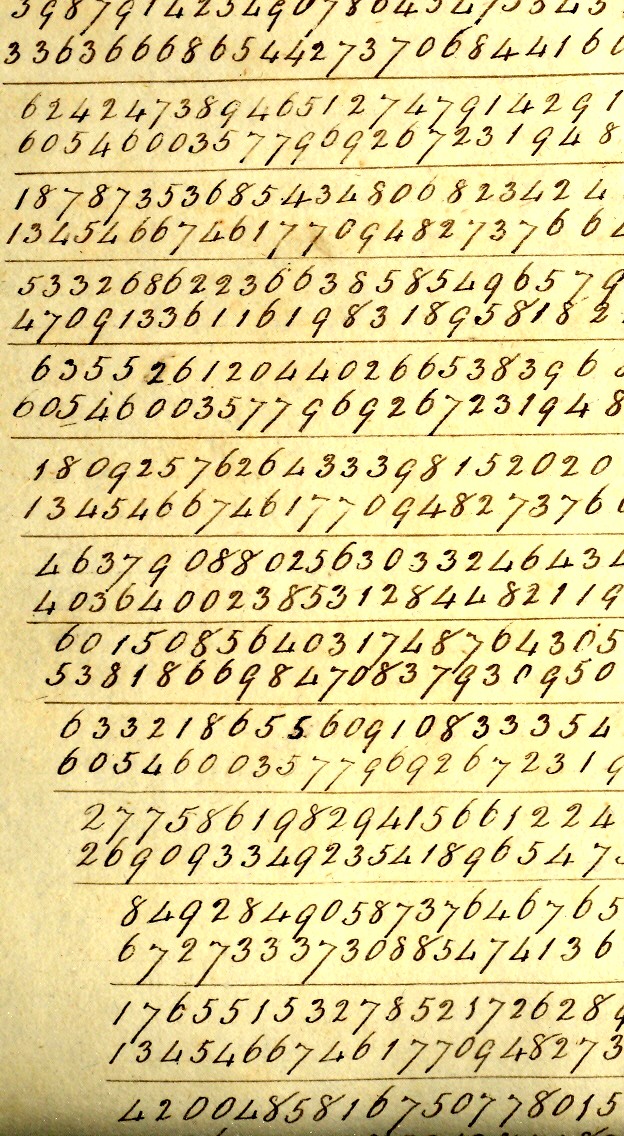
    ++00++ 9.16 math

    There’s also a  series of notebooks from the spectacular period of Cornell physics history (1948-1949), including 6 notebooks of classes with Richard Feynman, including several hundred pages from his 1948/9 course in advanced quantum mechanics, which included (a very early) use of the Feynman diagrams.  The thing that makes these observant, advanced notes taken during Feynman’s classes have more than a pedagogical interest (which is substantial and enough on its own)—they have a capacity to show the logic behind the man’s thinking and how he presented his ideas over a period of some months.  Also, and curiously, notebooks like these seem to have not survived. 

    Then there’s the notebooks taken by the team of Charlotte and Fritz John when they were pursing doctoral degrees at Goettingen (1929-1933), until forced to leave with the enforcement of the Nazi laws against non-Aryans.  Goettingen happened (and happens) to be the seat of a long, great mathematical heritage, home of Felix Klein, Emmy Noether, David Hilbert and Bernhard Riemann (among many others).  The notebooks—some two linear feet of them—represented four years of advanced interactions with some of the finest mathematical minds in Germany.  I was told by Mrs. John that they were required to take such full notes—but let me tell you, these notebooks were typed transcriptions of the daily handwritten notes, compiled over the course of a class, and then bound.  They are beautiful, and go far beyond my concept of “required”.  Mrs. John told me the story of the class notes that she and Dr. John took while taking a course with the great Hermann Weyl (who had taken his doctorate under the iconic David Hilbert, and who was also forced to flee Goettingen because his wife was Jewish):  everyone of course was required to take extensive notes during the day and work on them during the night, turning them in the following day for appraisal.  She told me that she still vividly remember placing their notes on a long wooden table at the front of the class, and then picking that set of note up the next day.  After a month of this, she, said, they became convinced that Weyl was not looking at the notes at all, as everything seemed always to be in the spot that they left it in.  One week they decided to see if the notes were being moved, and placed a hair carefully on the interior page, reasoning that if the notes were reviewed, the hair would be gone.  For a week, the hairs stayed in place.  “And so, what did that mean to you?” 

    ++00++ 9.16 math block

    Mrs. John replied that it really didn’t mean anything, and that they continued to do the notes as they would, and leave them on the long wooden table.  They never slacked off (which I can fully imagine).  She said that they did it for themselves, of course, but also they did it for Dr. Weyl, fully expecting that the day that they missed handing in their notes would be the day that they were looked for by Dr. Weyl.  Plus they were studying with a famous and fabulous thinker, and did not want to disappoint themselves or their instructor. 

    I do enjoy the historic or significant material like this, but I also quite the naïve, homegrown, elementary manuscript attempts by children at doing math or understanding physics.  Cipher books have always been a little hard to find in my field, wit many of them (I think) winding up in the genealogy area), and they just don’t seem to be very much on the findable side of things anymore. 

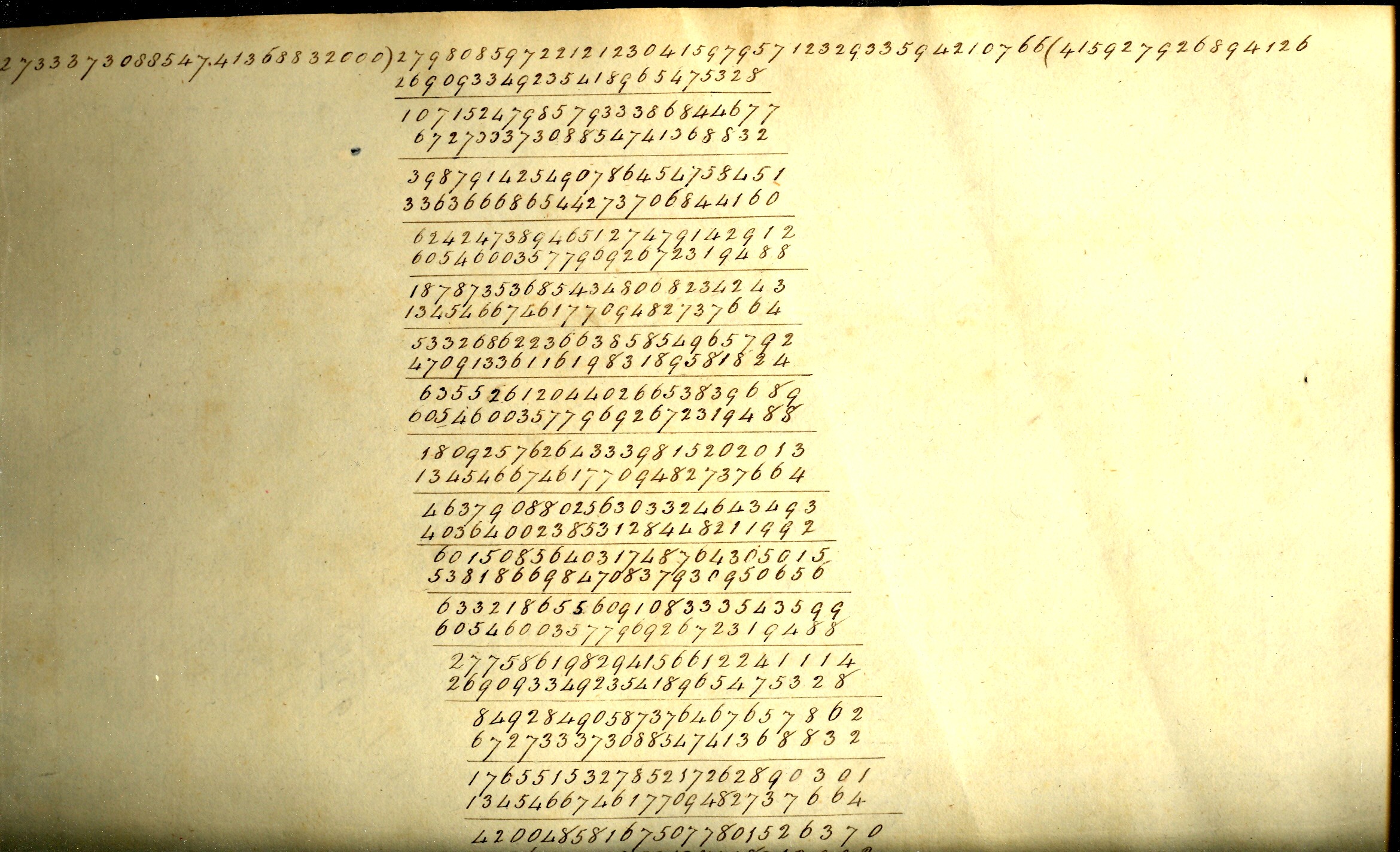
    The example I’ve reproduced here are from an anonymous (but dated 1818) work on different elementary areas of mathematics.  What makes this special to me is the precision of the penmanship and the extreme effort that is being used for a simple display of division.  It would certainly convey the message if the author had used two five-figure numbers to display division rather than these enormous, never-to-be-encountered numbers. 

    ++00++ 9.16 math string

    Surely there were pages and pages of scrap used to get to this point as the operator machined his numbers down, showing us the result rather than the real process.  But what is left to us in this effort is a thing of considerable beauty—the found art of practicing elementary math.