A Daily History of Holes, Dots, Lines, Science, History, Math, Physics, Art, the Unintentional Absurd, Architecture, Maps, Data Visualization, Blank and Missing Things, and so on. |1.6 million words, 7500 images, 4.9 million hits| Press & appearances in The Times, Le Figaro, Mensa, The Economist, The Guardian, Discovery News, Slate, Le Monde, Sci American Blogs, Le Pont, and many other places… 5000+ total posts since 2008.

Author: JF Ptak

  • The Loneliness of Being Wright(s): not Reporting the First Flight.

    JF Ptak Science Books LLC  Post 774  Blog Bookstore
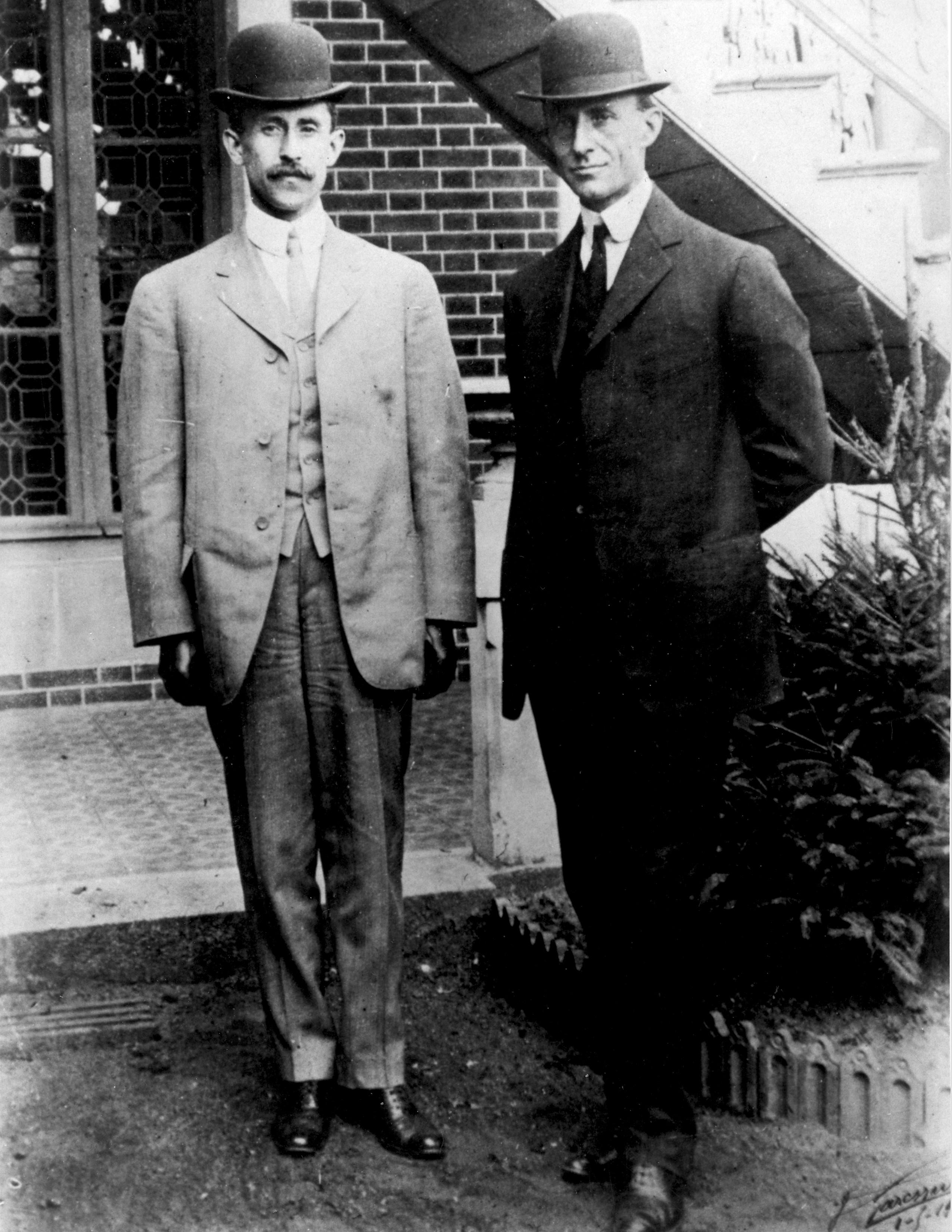
    Wright_brothers_orville_wilbur

    Reading through the 1903/04 volumes of the NYC-based Popular Science Monthly I was
    struck, again*, by the lack of reporting (and the oddness of reporting when
    done) on the Wright Brothers’ first powered flight in December 1903.  The editors gave a page of coverage to the
    Samuel P. Langley failed aerodrome flight of November in the December
    issue. 

    Langley at the time was the secretary of the Smithsonian Institution, and one of America’s
    leading scientists who had a strong side interest in aerodynamics if not
    aviation.  Swimming in private funds,
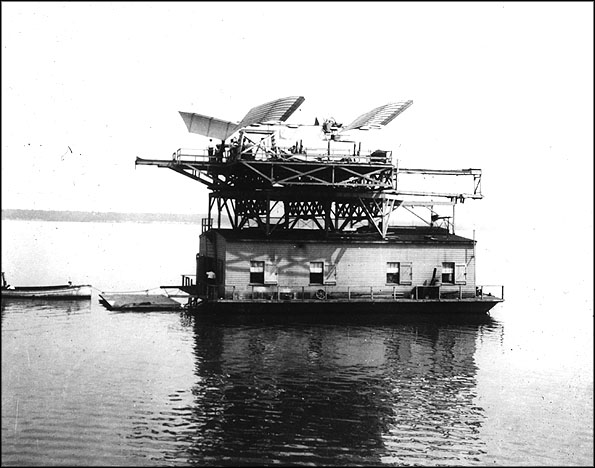
    some money from the Smithsonian and $50k from the War Department, Langley set out trying to produce a flyer which—in its two
    attempts at flight from a raft in the Potomac in
    November—wound up broken and soggy in the river, following a “flight” straight
    from its launcher into the water.  The
    article actually took Langley to task on two fronts:  first, it made
    absolutely certain that readers understood that his powered plane didn’t fly;
    and second, that he might well prove to be a damaging embarrassment to the
    Smithsonian and American science by proceeding with his experiments. (The Langley aerodrome is pictured just below.)
    Langley aerodrom

    The Wright’s first powered flight took place at Kill Devil
    Hills along the North Carolina coast in
    December, 1903, just weeks after the appearance of the Langley article.  They were somewhat reticent and droll in reporting
    their accomplishment; more so, people seemed simply not to believe them (see
    below for some further reading).  Still,
    though, there was no real mention of the Wright’s flight in Popular Science
    Monthly
    through April.  Oddly, the Smithsonian’s
    website reports that one of the first mentions of the flight was in the March
    (1904) issue of this journal, but they are mostly mistaken.  There is an article in that number by the
    Octave Chanute, a great figure in the history of early aviation, who writes in
    general about the progress of flight.  In
    the section on ‘flying machines” Chanute devotes one paragraph of his eight
    page article to the Wrights, and the main emphasis here is that other aviators
    should follow the Wrights’ example of careful preparation before actually
    hoping aboard a plane to fly:  its was
    the training that was emphasized. There isn’t actually any mention whatsoever regarding
    their powered flight, although engines and propellers are discussed somewhat. Of
    the 480 pages remaining in the journal after the December issue, this one
    paragraph was the only room that could be found for talking about the Wrights,
    and then not talking about their great achievement.


    Of course there were many people who didn’t believe the
    Wright story—there was scant photographic evidence and only five eyewitnesses,
    and for years afterwards the Wright had a problem with officially authenticating
    their flight as the great First Flight. 
    But I’m a little puzzled by the Chanute coverage, as he was a pretty
    diplomatic and sharing person, and proved to be particularly supportive of the
    Wrights in general (visiting them at Kill Devil at certain points in 1901,1902
    and 1903).  The brothers understood
    intellectual propriety and credited Chanute when credit was due (particularly
    in the cases of truss design and stacked wings).  So it is puzzling to me when it seems as
    though Chanute may have gone out of his way to not mention the flight.  This is especially true if you read between
    the lines of the next paragraph. Chanute writes: “Now that an initial success
    has been achieved with a flying machine, we can discern the use of such an
    apparatus, and also some of its limitations”. 
    To me, after having written seven pages on flying history, to refer to a
    singular “initial success” makes sense only if he was referring to the Wrights’
    December flight. (I don’t think that he could’ve been referring to the Langley test, as the aerodrome simply fell into the Potomac, the structure of the plane overwhelmed by the thrust,
    the power of the engine, and movement in general—the plane just broke up and
    was flung into the water.)  To me, the
    invisibility of the unmentioned flight is glaringly visible.  But this was pretty much in the realm of
    standard reception for the Wrights for most of the rest of the decade—I am
    still struck though with the rush away from announcing the flight that almost
    everyone seemed to take in 1904. 


    (It is interesting to note Chanute’s vision for the airplane
    in his closing paragraph, where he envisions military uses for aircraft, though
    these were limited to scouting and observation with not a whiff of tactical
    employment.  Also there is the
    possibility of mail delivery (“in some cases”) and the rescue of people in
    trouble in restricted-access areas.  On
    the other hand, the just-failed Langley had a much broader and deeper
    appreciation for what he saw as the impending future of the airplane, saying ‘the
    great universal highway overhead is soon to be opened”, which was directly
    contrary to Chanute, who couldn’t see aircraft being used for simple
    transportation.  Actually Langley’s vision was
    taken to task in that earlier article in the Popular Science Monthly, the editor writing that “Dr. Langley seems
    to claim too much” in regards to the future of flight, and that “he should be
    careful not to do anything that could lend itself to an interpretation that will
    bring injury to the scientific work of the government or country”.  It is certain that with at least this one
    (very popular, widely circulated) science magazine, one couldn’t be too
    stinking careful about what one did or thought or said regarding flight—and in
    the case of the Wrights, one could say hardly anything at all. 


    * For three other of my posts
    on this issue of publicity and the Wrights, see:

    –The Unbearable Wrightness of Being:  the Wright Brothers Introduce Europe to FlyingThe Casual Treatment of the Wright Brothers

    –The Department of Great Understatement:  the Wright Brothers, 1903.

    —The Casual Treatment of the Wright Brothers in the Scientific American


    For the interesting conclusion (and summary) of Chanute’s
    Progress in Flying Machines of see here.


  • A Stone-Cold Masterpiece of Naive Art: Teresa Ottalo, ca. 1860

    JF Ptak Science Books LLC  Post 773  Blog Bookstore

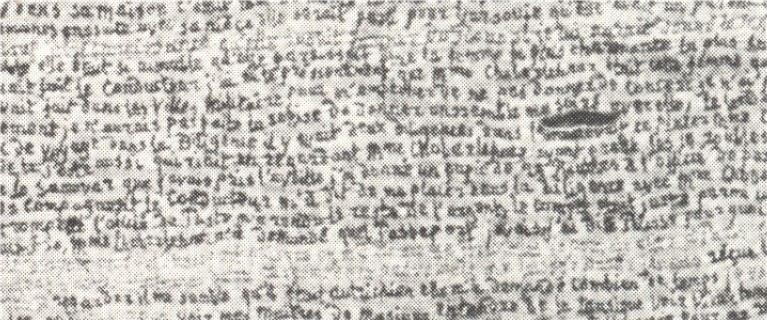
    As a collector of naive art–particularly produced with letters or numbers–and as a person generally interested in naive and outsider (and art brut and letterist and found )art, I was astonished to find this spectacular work by Terea Ottalo (ca. 1800-1870).  First of all, I make this to be about 200 lines long, and about 50 inches tall.  The words are, well, minute.

    Secondly:  this magnificnet thing was EMBROIDERED.  Breathtaking, really.

    I haven’t yet found out anything about Ms. Ottalo, except some basic references of her affiliated “school” of art.

    I do know that this, whatever it is, is a masterpiece. 

    ++00++ 9.29 teresa ottalo

    And an unfortunately smudgy detail, such as it is–I cannot offhandedly find a good, clear, high resolution image of anything at all by Ms. Ottalo.  This will have to do for now, but I think it gives a reasonable idea of the fineness of this work (found in Michek Thevoz’s Art Brut, Skira, 1976)–this sample detail represents less than 10% of the overall image:                                                                                                                                        

    ++00++ 9.29 teresa ottalo detail

    ·Posted by :

    ·in:

    — —

  • What Things are and what things Aren’t Department, #3: Things that Aren’t ‘Bridges” or “Floating Land”.

    JF Ptak Science Books LLC  Post 772  Blog Bookstore

    My friend Jeff Donlan sent me a link to a site in which librarians-on-coffee-breaks
    were busily renaming classic book titles as they might be re-titled today. For
    example, we have:

    Old: Richard III ;
    New: R3: Judgment Day

    Old: Frankenstein, or
    The Modern Prometheus;
    New: Frankenstein:
    Wrath of the Supercorpse

    Old: Das Kapital;
    New: Labor Value: How Today’s Companies
    Get the Most out of Their Workforce.


    You get the picture. And so it was with this in mind that I
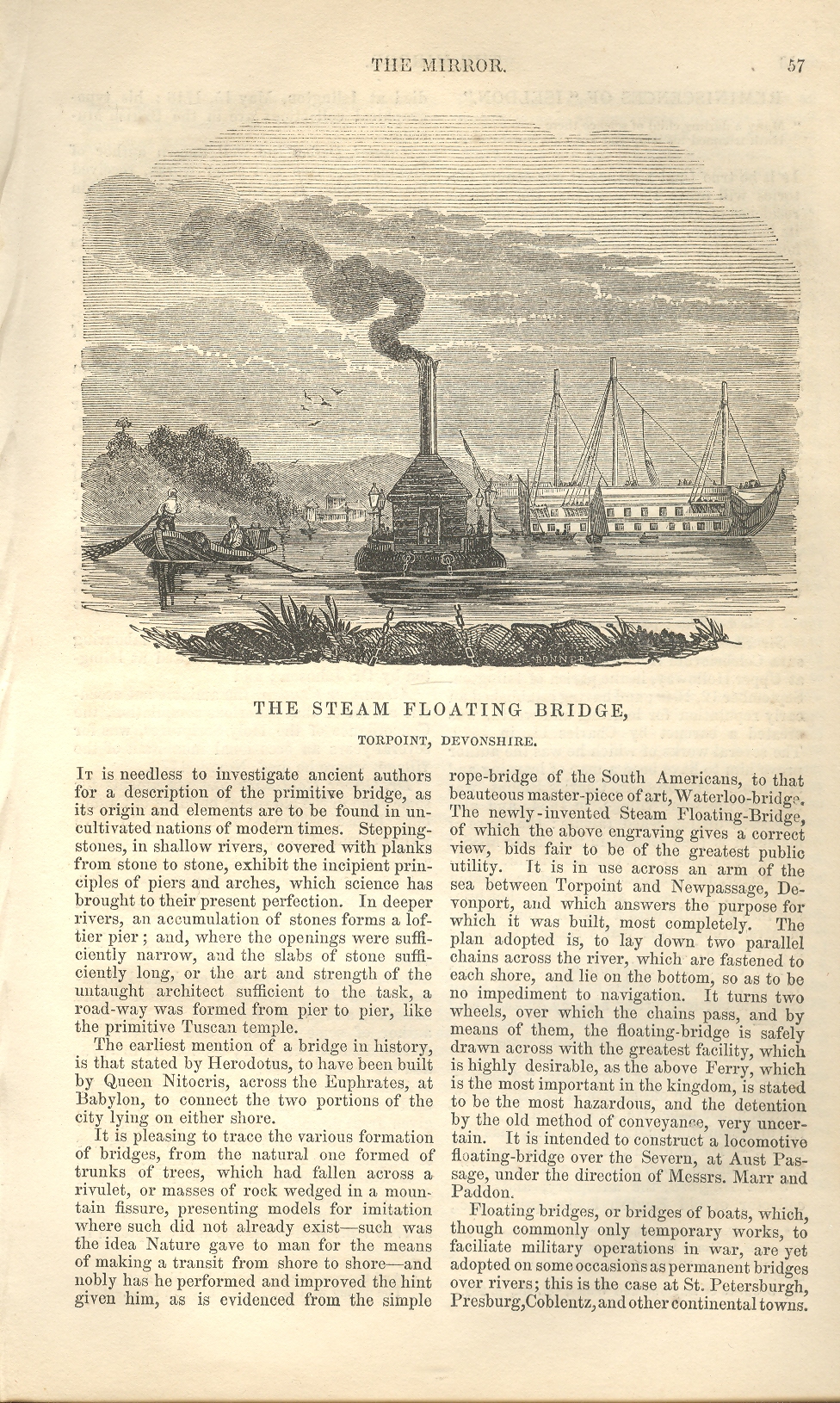
    came across this unusual woodcut in the delightful publication called The Mirrour of Literature, Amusement and
    Instruction,
    published in London on 25 January, 1840.  There are all
    manner of fringe-interesting and ephemeral materials here—necessarily
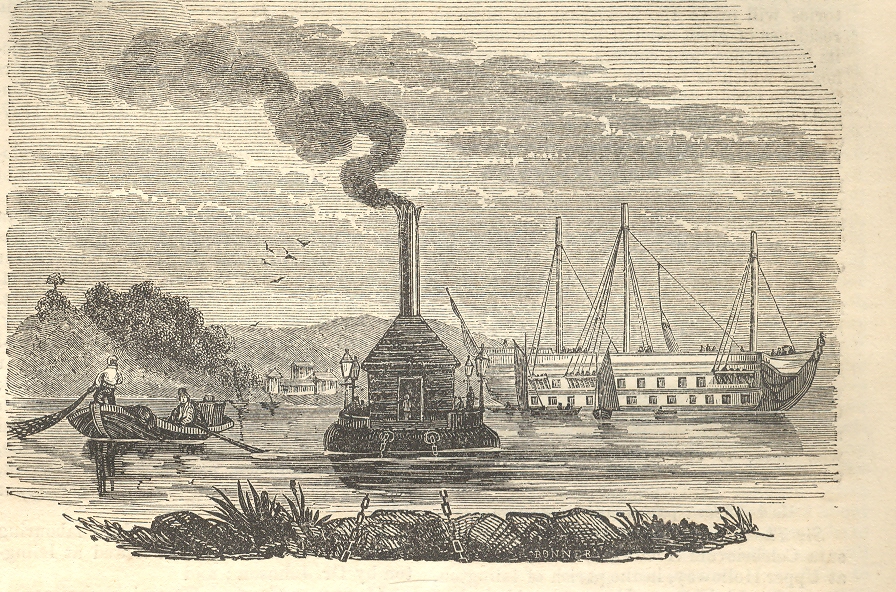
    unexpected, as in this short article about “The Steam Floating Bridge”
    (of Torpoint, Cornwall to Devonport, Devonshire crossing the Hamoaze).


    ++00++ 9.29 floating bridge 001

    At first glance
    this looked like a remarkable modernized way of reformulating the word and concept
    for “boat” or “ferry”. (What audacity!—though perhaps it was someone trying to
    evade patent protection by calling a boat “a bridge”, leading an entirely new
    wave of renamed inventions into a shadow industrial revolution…)  But luck on this was only half-full—on closer
    inspection (and of course before actually reading the article, set aside like
    so many instructional manuals) you can see the “bridge” part of the
    steam-driven barge:  two chains leading
    from the land, then under water, then up again on the bow/stern of the business
    end of the barge, then down again, and then on to the other shore.  This all does sound quite like an old common
    ferry to me, but if the good Cornish people felt it to be a bridge, then a
    bridge it is.

    ++00++ 9.29 floating bridge

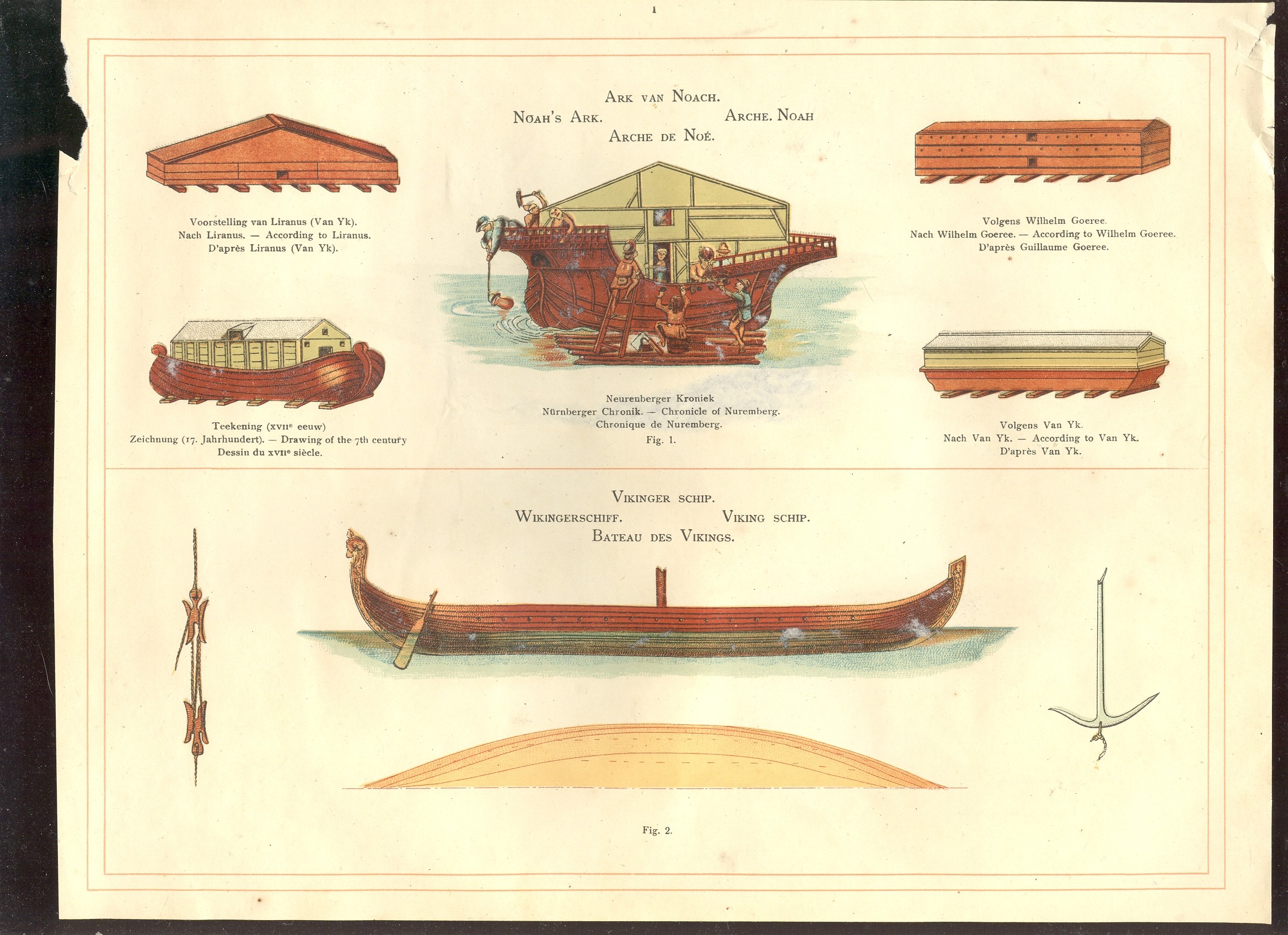
    Loosely connected to this floating “bridge” is the so-called
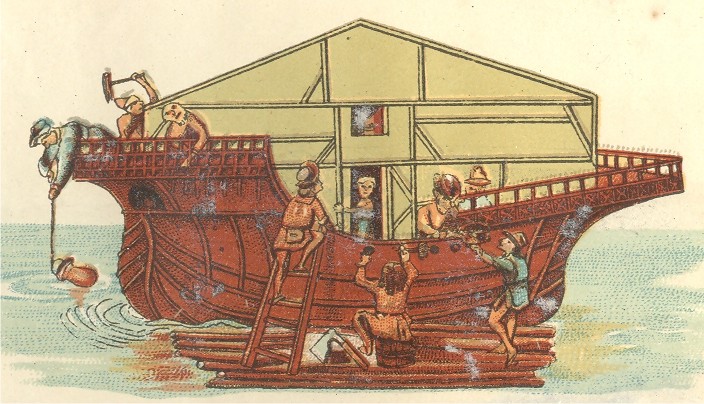
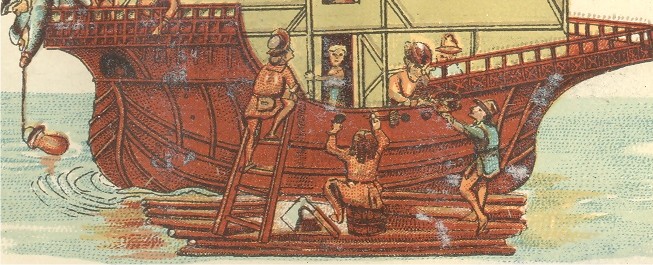
    floating “land” used by associates of the mystical Noah to help in the
    last-moment construction of the great ark. 
    The activity on board is a little confusing to me, as is the
    room-enough-for-three bit of floating “land”, which I would hazard to call a “raft”. 

    ++00++ 9.29 noahs ark

     I
    should point out that the guy with the hammer-like tool is working on the roof
    and not the head of the person in the flattened foreground, though this would
    make for a better story, taking a step towards an ancient Murder on the Orient Express.  


    ++00++ 9.29 noahs ark detail2

    I wonder also about the guy collecting water with the jar, as it seems
    that if he waited for just a little bit longer the water would be coming to
    him. (This image is a 19th-century republication of the scene from the 1493 Nuremberg Chronicle.)

    **A longer and fuller description of the “bridge” is found in
    the Saturday Magazine for 1842, here. 


  • The Kennedy-Nixon Debate that Wasn’t: Mrs. vs. Mrs.

    JF Ptak Science Books Post 770  Blog Bookstore

    ++00++ 9.27 kennedy debate detail

    Television made a grand, sweeping entrance into the presidential political arena, becoming a tertiary, occasionally  biased and highly visible invisible determinant in the contest, 49 years ago yesterday. Nearly half of the country tuned in to watch the first debate on 26 September 1960–which would actually be considerably more than half of the voting population—for a first-ever nationally visual spectacular of seeing two presidential aspirants face each other.  Nixon turned from being an aspirant into a perspirent:  deciding not to use makeup and sweating badly under the heat of the studio lighting, Nixon looked dark and foreboding compared to the just-returned–from-California Kennedy, tanned and nicely tailored  Also of course Kennedy had that charisma bit going on, and spoke very well, was charming, and funny—most of which Nixon was not, though he did have his (version of the) facts under command, had a certain presence because of being Vice President for eight years, and was a formidable debater. 

    ++00++ 9.27 kennedy debate


    But things did not go well for Nixon in the debates, and probably cost him the election which was determined by a squeaky-small margin of  49.7% to 49.6%  (34,220,984 to 34,108,157) of the popular vote.  But as we have seen recently the popular vote doesn’t mean anything if you have the electoral college, which Kennedy had reasonably wrapped up 303 to 226.  Too bad the Kleig lamps didn’t do their magic in 1968.

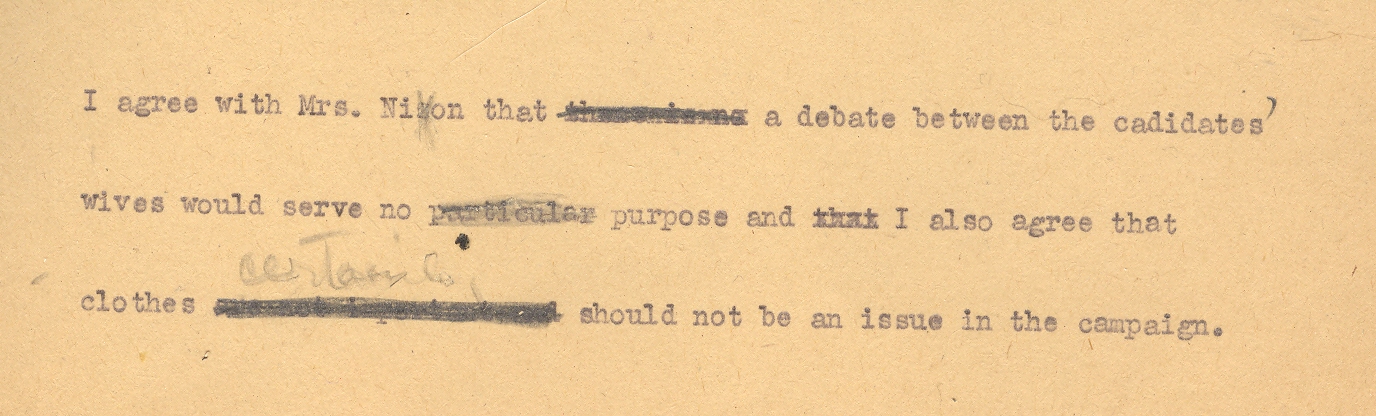
    What I’d like to address here was the (very little known?) second-tier, non-existent but evidently proposed debates between the candidate’s wives. 

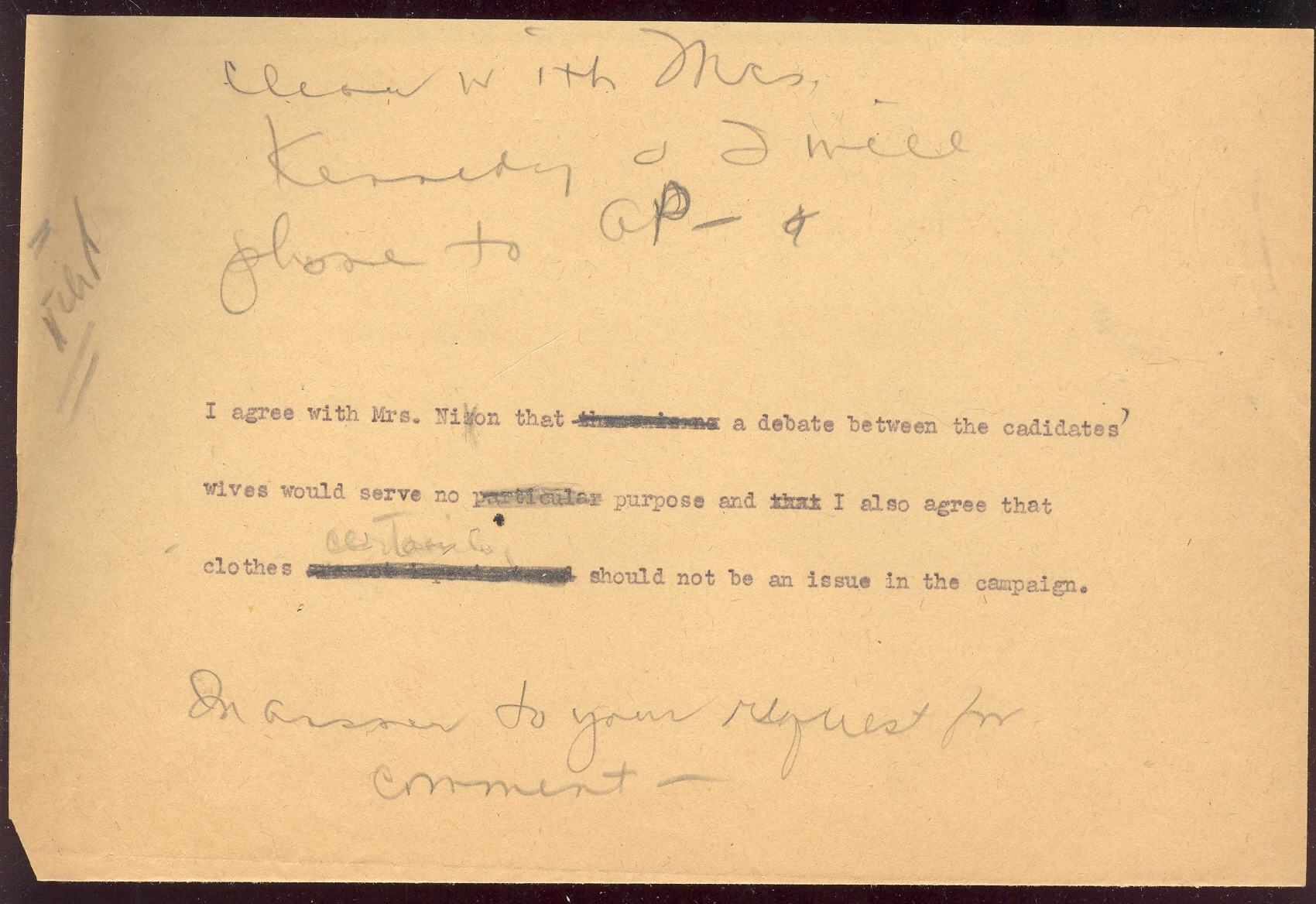
    I own a small archive of Jacqueline Kennedy-iana that came to me via her first, pre-White House press secretary, Gladys Uhl.  Among these 50-odd pieces is this fantastic response from Mrs. Kennedy’s office regarding the proposed wives’ debate.

    The edited typed-carbon response reads:  “I agree with Mrs. Nixon that a debate between the candidates’ wives would serve no purpose and I also agree that clothes should not be an issue in this campaign.”

    The penciled note at top reads:  “Clear with Mrs. Kennedy and I will phone to AP – G”  (The “G” being Gladys Uhl, the press secretary.)  The note at bottom, from Mrs. Kennedy, reads: “In answer to your request for comment.”

    And so ended a truly bad idea, cut to the quick by Mrs. Kennedy and Mrs. Nixon, thankfully sharing the belief that the wives of candidates needn’t get officially involved in the presidential contest. 


    ·Posted by :

    ·in:


  • The Stillness of High-Victorian Action (Blank & Empty Things Series #55)

    JF Ptak Science Books LLC  Post 770
    Follow Me on Pinterest

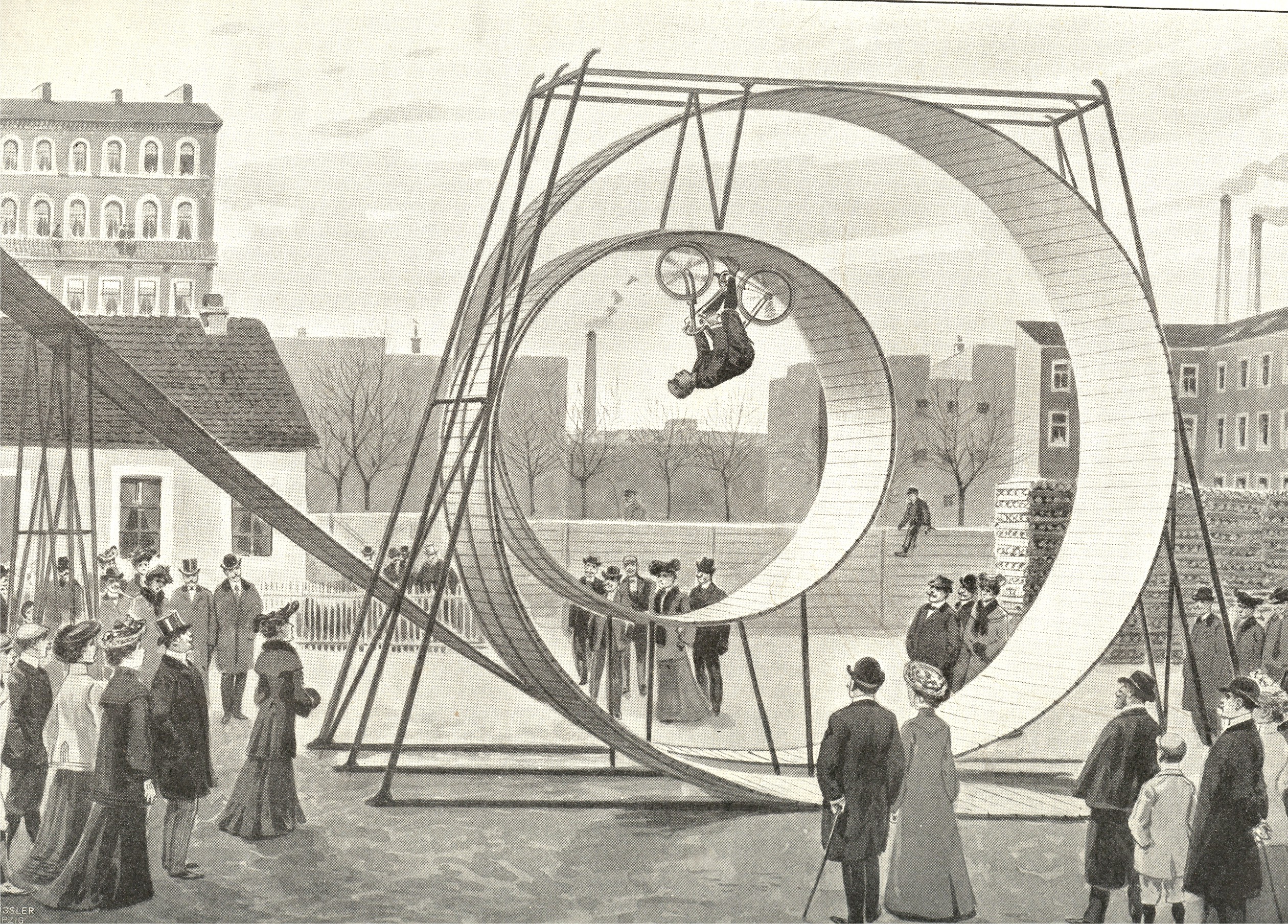
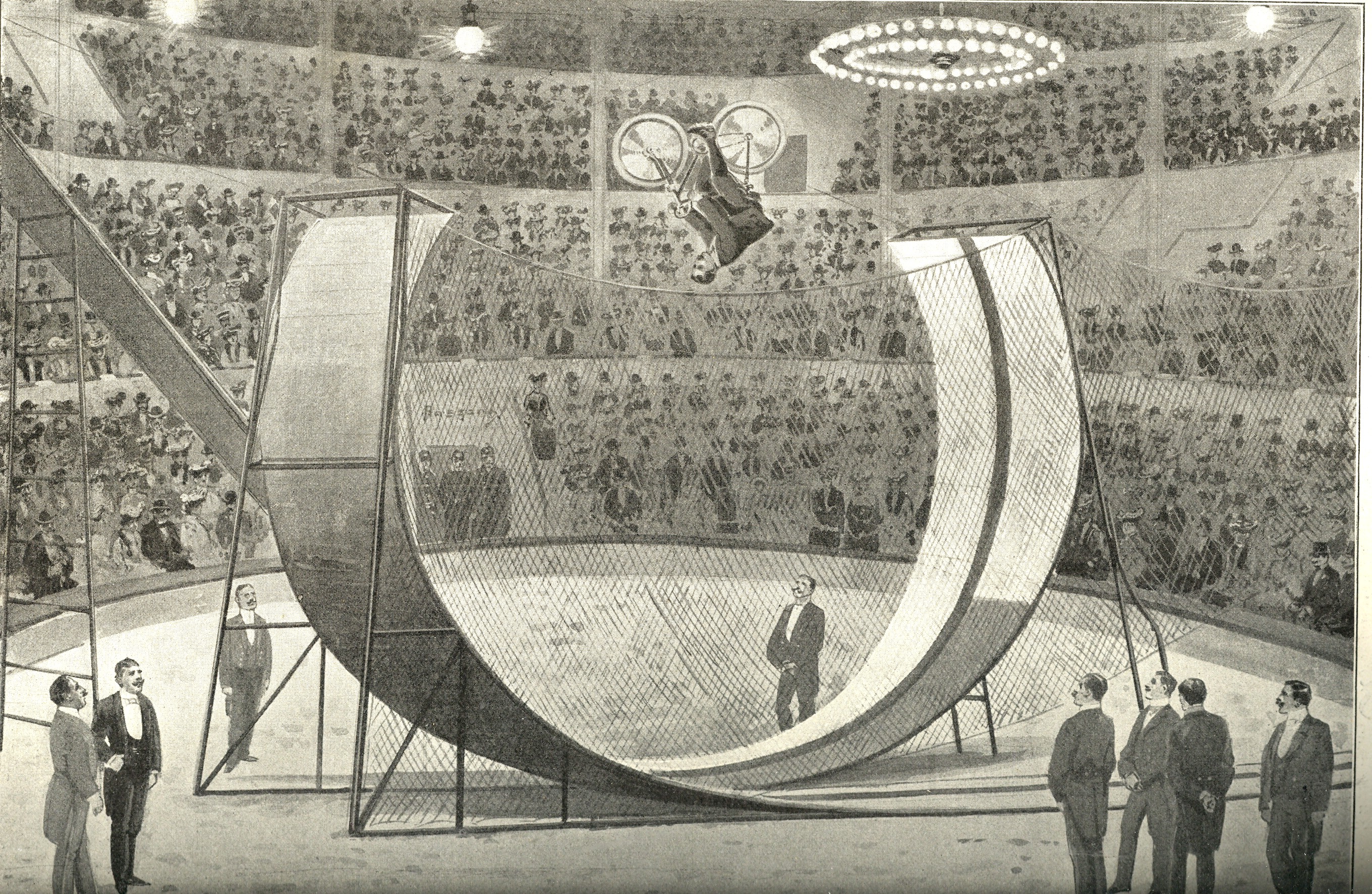
    ++00++ 9.25 bike acrobaticsIt seems to me that even when the Victorians1 were busy doing
    something, nothing seemed to be happening–true too for me with this later period in Germany, under the command and control, for good and for ill, of Kaiser Wilhelm, German Emperor and King of Prussia from 1888 to the end of the Great War.  There’s a certain something
    to illustration at this time, creating wooden
    humans manikins, watching other wooden figures doing something at elevated speeds that
    made them seem motionless.  I’m not sure what it is–perhaps propriety,
    perhaps the need to be visibly invisible, the sine qua non of behaving
    correctly. 

    I’m not sure what sort of special, invisible addition needs to be
    applied to Victorian/Wilhelmian Nothingness to add up to Something. There’s a
    certain unexplained emptiness, motionlessness, nothingness to illustration in this period, and I’m always at a loss to save good examples of it–though today I have two good examples, found in the 7 April and 28 January 1904 issues of the Illustrirte Zeitung (Leipzig).  For all of the excitement and action and crowds given in these daredevil bicycle demonstrations there seems to be not a breathe being breathed, or perhaps it was breathe breathed slowly.  In any event, the situations seemed suspended in action and belief. Ironically this was also the age when the concept of “speed” was at the beginning of being completely re-written with the introduction of the car, airplane, internal combustion engine, widespread electrical networks, motion pictures, and so on–but none of this mattered in images like these, outstanding as they are for being scenes of action presented in a mosaic of stillness and quiet.

    1. Yes, the Queen expired in January 1901, but the influence didn’t necessarily die with her.

    ++00++ 9.25 bike acrobatics2


  • Blank and Empty Things Post 54: The Cowboy Race of 1893

    JF Ptak Science Books LLC  Post 769   Blog Bookstore

    Some other posts on the Cowboy and the West:  The
    Advancing Frontier and the Increase in Bloody Names of Literary Heroes
    ;  
    Where is the West? 
    How to Find Nowhere
    ;  
    Lines that Closed the West: 
    Wires, Rails and Words

    ++00++ 9.25 coboy

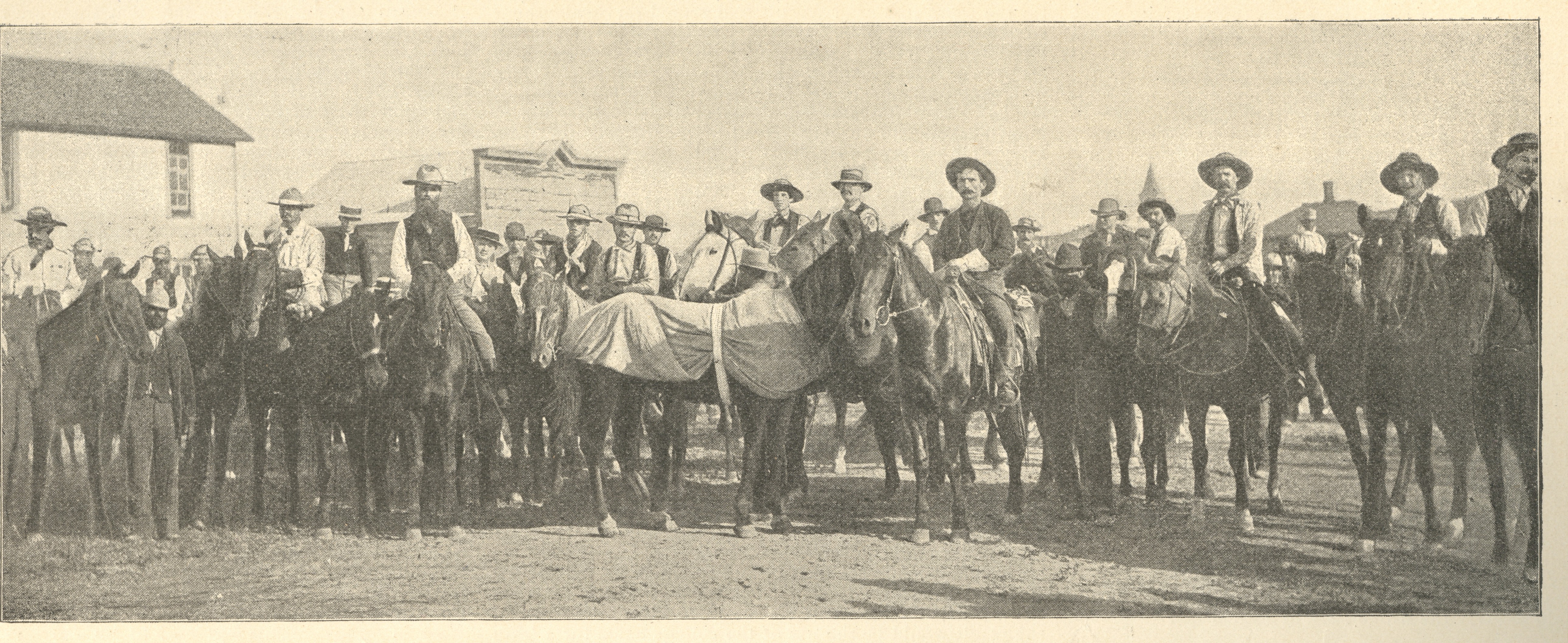
    I’ve not seen this picture of the nine cowboys who starred
    and started the Great Cowboy Race of 18931. 
    They gathered with a frenzy on the little town of Chadron, Nebraska
    (population 2,000, which doubled in size as the event’s opening grew near)
    determined to announce the “best “ cowboy, the first to cross the finish line
    near the Chicago World’s Fair of 1893 and shake the hand of Buffalo Bill
    Cody (well on his way to becoming a shell of what used-to-be).  The contest was supposed to take
    two weeks and average 50-75 miles a day, which is a lot to ask of a team of
    horses (and the riders).  So there was
    the expected shenanigans, and the man who “won” evidently helped plan the secret
    route, and someone else rode a trains with his horses for a bit, and so
    on. 

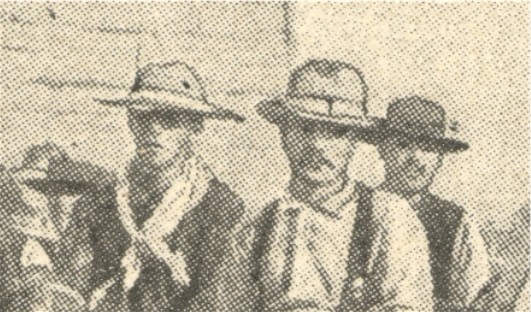
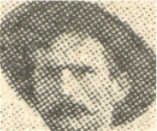
    The result doesn’t matter–it seems an overall sad story, these guys winging their way to the windy City, a race to oblivion. (Some of the cowboy contestants were already about half-faded away into Limbo judging from the photo touch up that had to be done of their faces.)  

    ++00++ 9.25 coboydet2

    Ironically these cowboys were racing to the cosmopolitan
    host of the World’s Fair in which the historian Frederick Jackson Turner read
    his paper “The Significance
    of the Frontier in American History
    ,” —a
    significant theoretical piece announcing why Americans are so different from Europeans, and
    also that the American frontier had clearly, absolutely, been broken and installed in the gauzy national psyche.  The fate of the Cowboy had already been determined 20 years before with the introduction of refrigerator cars, railroad expansion and barbed wire–all of which cut the West into smaller and smaller parcels, until they restricted the Cowboy to its own Reservation. A crooked race to Chicago seemed to crystalize the Cowboy’s tenuous grasp on  existence, depicted finally by the new(ish) half-tone photo process of Stephen Henry Horgan, making a half-portrait of empty circles, the image disappearing more and more the closer we look at it..

    ++00++ 9.25 coboydet

     It was just a sorry show for the cowboy all
    the way around, and a story that doesn’t need to be told here.  I did just want to publish this picture.  There’s a long and good story here http://www.thelongridersguild.com/chadron2.htm
    about the entire affair. 


    I include the list of the riders, mainly for the names of
    their horses:

    Emmett
    Abbott riding Outlaw and Joe Bush.

    Joe
    Campbell riding his one horse, Boom-de-aye.

    Davy
    Douglas riding Wide Awake and Monte Cristo.

    Old Joe
    Gillespie riding Billy Mack and Billy Schafer.

    George
    Jones riding Romeo and George.

    Charlie Smith
    riding Dynamite and Red Wing.

    Rattlesnake
    Pete Stephens riding General Grant and Nick.

    Doc
    Middleton riding Geronimo and Bay Jimmie.

    John Berry
    riding Poison and Sandy

    .


  • Racing Houses and Lost Cemeteries: Ochiltree, Texas, 1920

    JF Ptak Science Books LLC   Post 768  Blog Bookstore

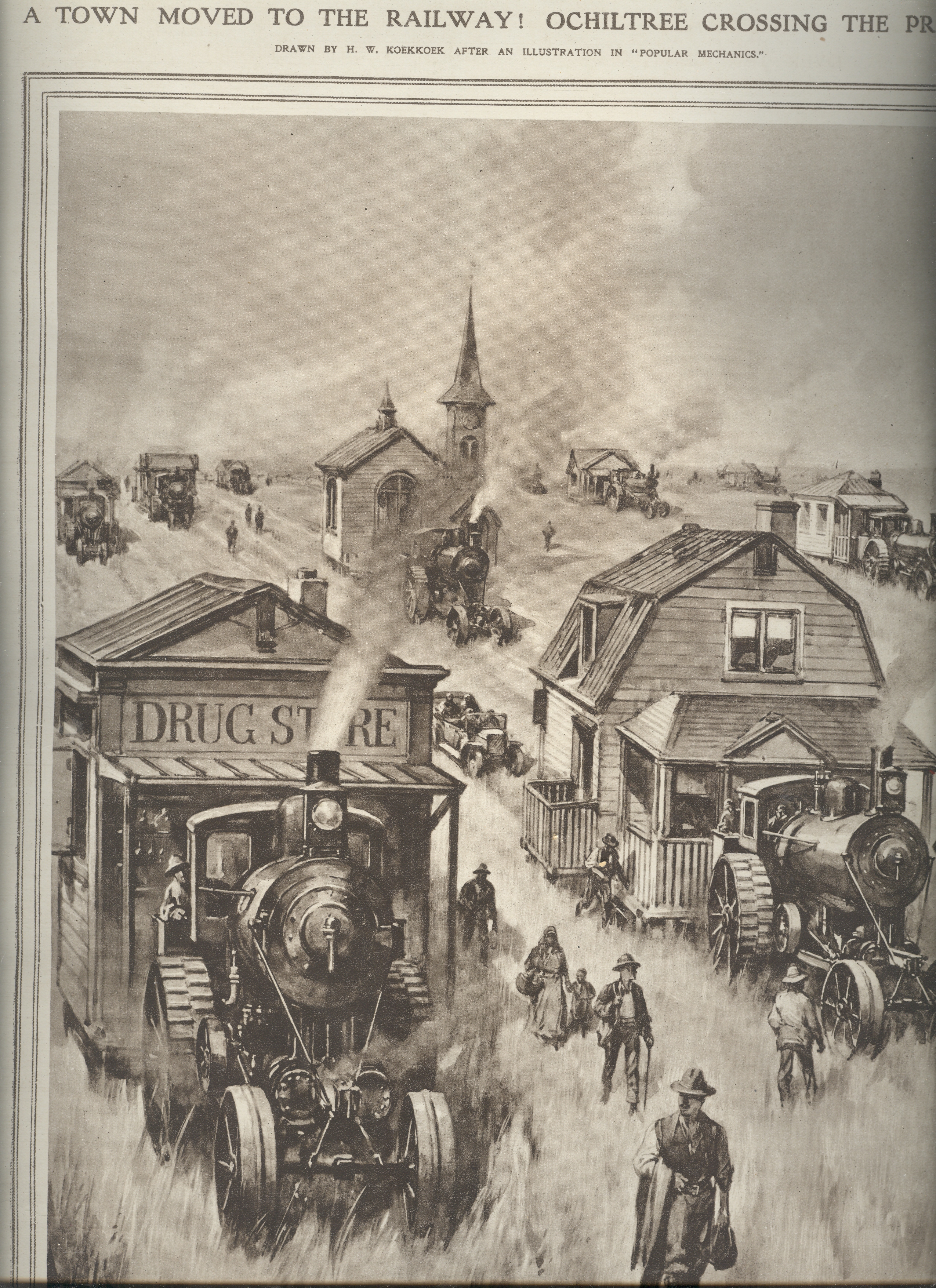
    ++00++ 9.25 ochiltree, texas

    Dateline:  Ochiltree, Texas, 20 October 1920.  Mr. Ralphsted Winston has been racing houses for the 30 years.  “Yep.  House racing is older’n auTOWmobiles by a large space; we’ve had tractors for a good time longer than cars, and more powerful, too.  It was just natural to do something with them more than find black soil”.  And so evidently came house racing.  A reporter wondered if there was one particular house that was best to race with.  “Sure” replied Mr. Winston, “houses with porches.  Let’s the breeze to let the breeze come out to show them” he explained, somewhat. 

    For the last ten years Mr. Winston has been racing a different sort of house.  “God’s house” he said firmly.  “Churches.  Round here, in North Texas, they’re small-built with wood and such, and aren’t too heavy, makes for nice tight turns and a solid straightaway”. 

    “And chapels?” came a question.

    “Not allowed.  Got to be a church” came Mr. Winston’s reply, his jawline cracking.

    “The only problem with churches”, he continued, “is that not one of them has ever won a race.  Ever. Even in the best conditions, we get bested by porches, schoolhouses, even soddies”.  “Yup”, and then came a long, ponderous spit, “not a one, won”, extended a chuckling Mr. Winston.

    A reporter asked, “Why don’t you have a race with nothing but churches. Then at least you’ll have a winner.”

    “There will be a whole LOT of losers.  Maybe ever one” replied an eyebrow-raised Winston. “I do guess that someone would have to win, even if they were from Oklahoma, they’d be a winner too.  Not everybody has to wind up in a drown ditch.  But in the land of the blind , you don’t have to be a happy one-eyed king.”

    Well, this really isn’t a race of houses, though I’d much rather think of this picture in these terms.  (The church is passed on the left, on the right! There’ll be hell to pay for those maneuvers!”) What is happening here is that the town of Ochiltree is being moved closer to the railroad that passed the town by, by 15 miles or so. It was the North Texas and Santa Fe RR (Shattuck, Oklahoma to Spearman, Texas) that left Ochiltree behind; and just after that, a new town called Perryton appeared, established there on the railway line, taking all of the interest (and the county seat) away from Ochiltree.  So what happened was that Ochiltree decided to move to Perryton, to become part of that town, evidently leaving nothing but space wherer the town used to be. (The Handbook of Texas said that the town “disappered completely”.) I wonder though if there weren’t a few people who decided to stay, who just wouldn’t move; who in 1921 found vast new distances between them and whoever else was left, all of the other buildings gone, pulled up out of the ground, lock, stock and barrel.  And what about the cemeteries for the two churches that were moved? According to the good folks at the Perryton Memorial Library, the cemeteries were left, and still there, in a town that isn’t.  (On the other hand I can’t imagine how a small town would’ve moved a cemetery–there may have been 500 people in Ochiltree at the point of departure, and perhaps another250 or so who were over the years already departed…that means that every able-bodied person would have had to dis-and-re-inter one fallen town member, which may have been way to much to ask of anybody given that they were already moving the entire town.)


  • Things Not Meant to Fly: Big, Heavy, Underpowered Planes

    JF Ptak Science Books 

    Airplane tallest041
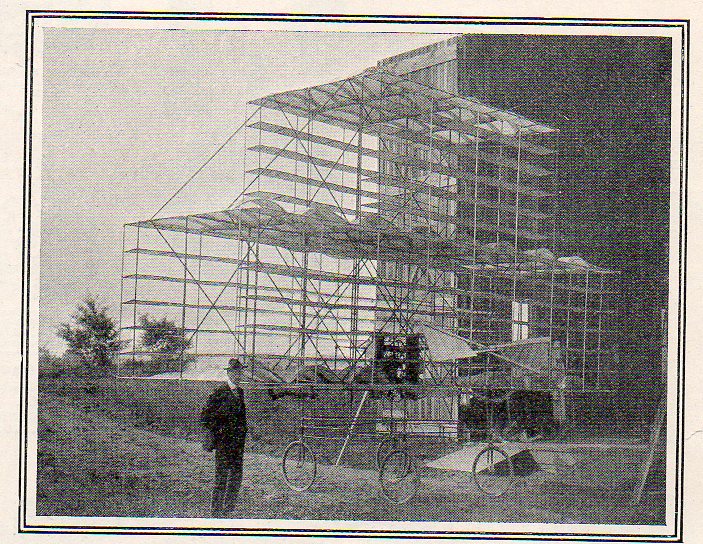
    “The tallest airplane ever built” is the title to this picture which appeared in the “Chronicle of the Car” section of the  Illustrated London News for 22 February 1908.  The plane is the work and vision of J.W. Roshon, a photographer from Harrisburg Pa.  Somehow, Mr. Roshon designed this thing to fly–that it could roll, and perhaps even taxi, is one thing, but flying really doesn’t seem to be part of its performable agenda.  The plane was made of “aluminum and steel tubing, bamboo, and steel wire… and measured 24 feet wide, 8 feet deep, and 17 feet high”, and held 900 square feet of canvas.  This all sounds very heavy to me, especially when you consider that the engine weighed 50 pounds and generated seven horsepower. By contrast, the Wright I Flyer (the famous first-flight airplane of 1903) had a wingspan of 40 feet, weighed 625 pounds and sported a 12 horsepower, 170 pound  engine (and which by the way was all produced for about a thousand dollars).

    Its hard to see, but the pilot is prone, and laying left-to-right, and the plane really does seem to be 8 feet long, stem to stern. I cannot find out what happened to the canvas and tubing and pilot after the test flight (where “flight” means “roll”).

    ++00++ 9.25 airplane 001

    ·Posted by :

    ·in:

    —

  • The Story Behind the Iconic Image: Robert Hooke’s Flea, 1665

    JF Ptak Science Books LLC  Post 766  Blog Bookstore

    …”it is my hope, as well as belief, that
    these my
    Labours will be no more comparable to the Productions of
    many other
    Natural Philosophers, who are now every where busie about greater
    things; then my
    little Objects are to be compar’d to the greater and
    more beautiful
    Works of Nature, A Flea, a Mite, a Gnat, to an Horse, an
    Elephant, or a Lyon.”—
    Robert Hooke
    at the end of his 28-page preface to
    Micrographia1 (1665)

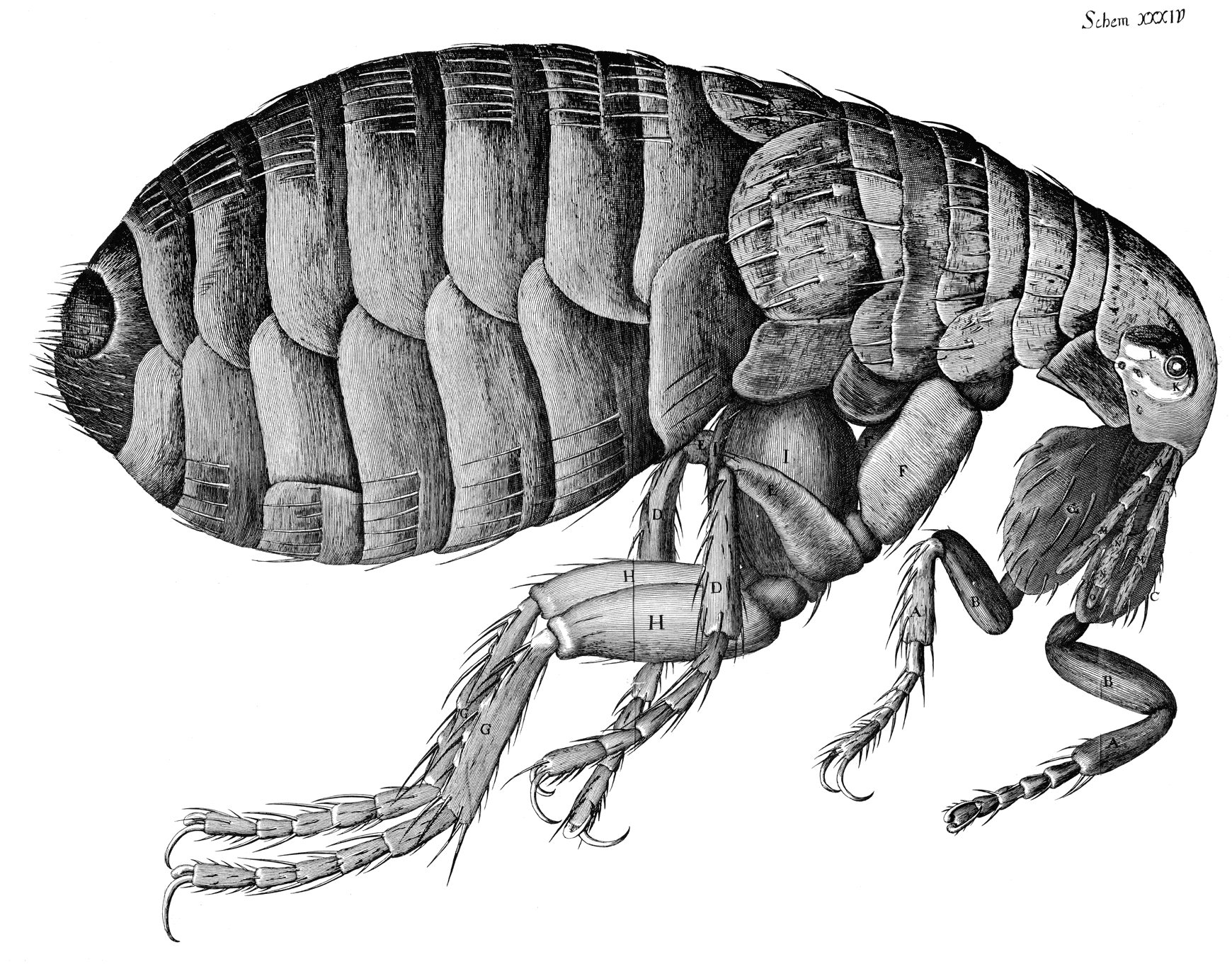
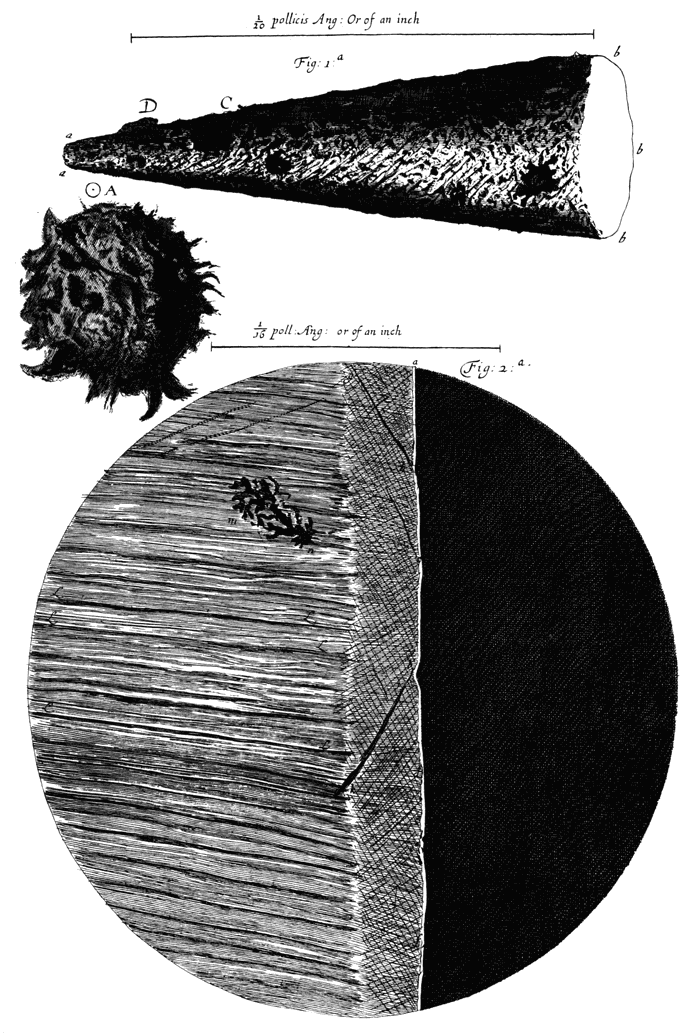
    Hooke--flea

    I’ve written elsewhere in this blog about Robert Hooke, and
    how, if there had somehow and impossibly been no Newton, he might’ve taken Sir Isaac’s place
    in the popular mind.  He was a tireless,
    relentless observer and experimenter, who lost little effort in a stranded idea
    and pursued interesting and problematic questions relentlessly.  More than others too he chased his won glory—minor
    but long and insistent—the years of which wore thin on many people in the
    scientific community.  But there were
    many characteristics of the man that made him not quite so lovable and
    endearing—not that Newton was any of those things, as he was not, but if you
    are going to be a secondary luminary to a super nova you’ve got to have
    something else going for you that the other man doesn’t have—sharing, helpful,
    greatly generous—to get you into the long pre-dusty pages of history. Also it would’ve
    helped if Hooke chose his battles with a little more aplomb and ingenuity—the
    war which began in 1672 with Newton went very badly for Hooke and followed him
    to the grave (and far beyond). 


    What I’d like to talk about right now, though, of the many
    things to talk about concerning Robert Hooke, is the most iconographic image he
    ever produced, and perhaps one of the most famous scientific images of the 17th
    century—the flea. 


    The 28-year old Hooke published the results in a gorgeous
    and revolutionary book, Micrographia (a lovely e-text edition appears at Gutenberg, here) in 1665, which became an instant
    best seller and highly praised and valued. (Samuel Pepys, perhaps among the
    shiniest stars whose imprimatur was like a royal blessing, said the book (was)
    “the most ingenious book that I ever read in my life.”) There is no
    telling what the people of the mid-17th century thought of seeing
    such incredible discoveries in the little semi-invisible stuff that made up
    their normal, daily lives.  The only thing that somewhat equates to this
    would be if the first images of the Hubble were those of Earth-bound objects
    whose detail had previously been unknown.  Hooke’s observations and
    drawings of things like the common flea were just an astonishment—that such a
    creature of “low order” could have such intricate detail and design was a
    complete revelation.  The drawings of the fly’s eye, too, was an
    inescapable wonder, an incredible object to consider as having any
    detail pre-microscope, and then revealed to have unimaginable design and elegance. 


    It turns out that the flea was not the most important object
    that Hooke had in mind with the Micrographic—it
    was part of an overall attempt at making sense of all creation, the bug part of
    the book occupying only a part of the (only) one-fifth of the book’s 246 pages
    devoted to living creatures.  The book
    actually starts with inanimate objects (the needle, followed by a razor, linen, silk, glass canes, flint, and so on), and then works it way through living
    stuff, ending up talking about light and the Moon and the cosmos. 

    Hooke--needle

    The opening images of the book are actually
    of the edge of a razor and the head of a needle—under magnification they showed
    a bitter, ragged edge and a nubby, pitted point (respectively)—which would have
    been almost as unimaginable and shocking as the flea….except that the flea of
    course opened possibilities of entire worlds of things alive in our
    semi-invisible environment.  Things
    really weren’t as they seemed to be.


    Hooke’s flea, as spectacular and revolutionary as it was,
    was only a part of the story—the rest of the behind-the-picture narrative lies
    in a much wider and more complex view of all things, living and not,

    in which Hooke tells us we should employ the
    microscope/macroscope to solve disputes in our “wandring senses”. Not bad
    advice at all.


    In the preface to the
    Micrographia Hooke states:

    Thus all the uncertainty, and mistakes of humane actions, proceed either
    from the narrowness and wandring of our
    Senses, from the slipperiness or
    delusion of our
    Memory, from the confinement or rashness of our Understanding,
    so that ’tis no wonder, that our power over natural causes and effects is so
    slowly improv’d, seeing we are not only to contend with the obscurity and
    difficulty
    of the things whereon we work and think, but even the forces of our own
    minds conspire to betray us.

    These being the dangers in the process of humane Reason, the remedies of
    them all can only proceed from the
    real, the mechanical, the experimental
    Philosophy, which has this advantage over the Philosophy of
    discourse
    and
    disputation, that whereas that chiefly aims at the subtilty of its
    Deductions and Conclusions, without much regard to the first ground-work, which
    ought to be well laid on the Sense and Memory; so this intends the right
    ordering of them all, and the making them serviceable to each other…

    He continues with a short outline of how to accomplish this:

    The first thing to be undertaken in this weighty work, is a watchfulness
    over the failings and an inlargement of the dominion, of the Senses.

    To which end it is requisite, first, That there should be a scrupulous
    choice, and a
    strict examination, of the reality, constancy, and
    certainty of the Particulars that we admit: This is the first rise whereon
    truth is to begin, and here the most severe, and most impartial diligence, must
    be imployed; the storing up of all, without any regard to evidence or use, will
    only tend to darkness and confusion. We must not therefore esteem the riches of
    our Philosophical treasure by the
    number only, but chiefly by the weight;
    the most
    vulgar Instances are not to be neglected, but above all, the
    most
    instructive are to be entertain’d; the footsteps of Nature are to
    be trac’d, not only in her
    ordinary course, but when she seems to be put
    to her shifts, to make many
    doublings and turnings, and to use
    some kind of art in indeavouring to avoid our discovery.

    The next care to be taken, in respect of the Senses, is a supplying of
    their infirmities with
    Instruments, and, as it were, the adding of artificial
    Organs to the natural; this in one of them has been of late years
    accomplisht with prodigious benefit to all sorts of useful knowledge, by the
    invention of Optical Glasses. By the means of
    Telescopes, there is
    nothing so
    far distant but may be represented to our view; and by the
    help of
    Microscopes, there is nothing so small, as to escape our
    inquiry; hence there is a new visible World discovered to the understanding. By
    this means the Heavens are open’d, and a vast number of new Stars, and new
    Motions, and new Productions appear in them, to which all the ancient
    Astronomers were utterly Strangers. By this the Earth it self, which lyes so
    neer us, under our feet, shews quite a new thing to us, and in every
    little
    particle of its matter; we now behold almost as great a variety of
    Creatures, as we were able before to reckon up in the whole
    Universe it
    self.

    1. The
    full title of the book: MICROGRAPHIA, OR, SOME Physiological Descriptions OF MINUTE BODIES, MADE BY MAGNIFYING.


  • Fantastic African Found Architecture vs. a Color Catastrophe in Fort Wayne

    JF Ptak Science Books  Post 765  Blog Bookstore

    • A  great job done with access to nothing, and a bad/period job done with access to everything.

    Part I:

    ++00++ 9.23 petrol town 005

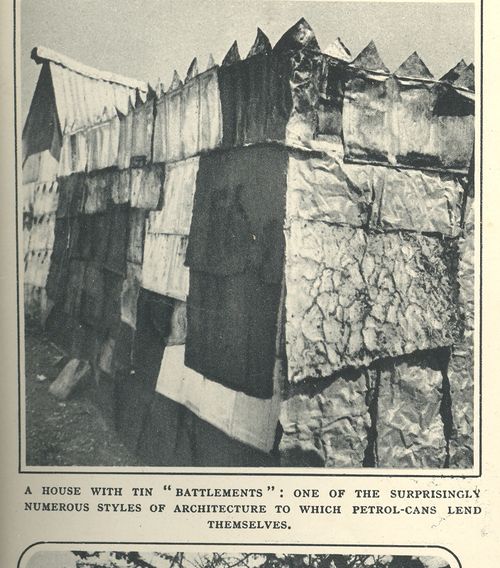
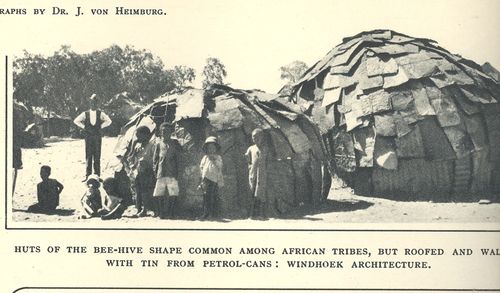
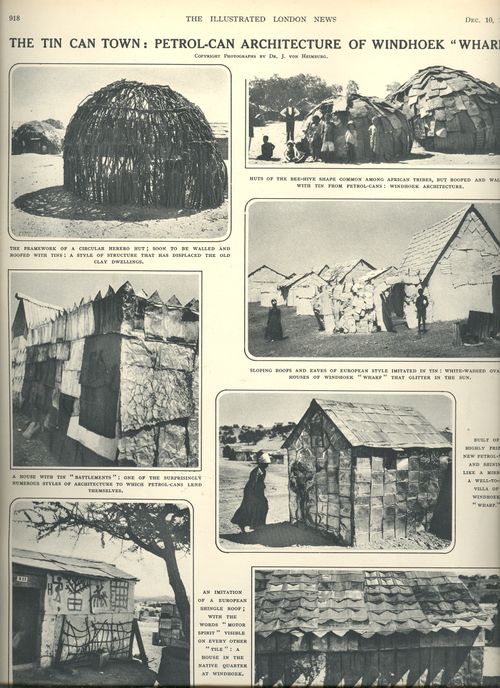
    The town of Windhoek (at least so-named by Imperial Germany, which moved in in 1884, claiming this part of Africa for themselves against British desires) was growing at the edge of the Namib desert–a mile high, 14 inches of rain a year, an situated between two rival tribes, and for 35 years under the control of Germany.  Barren, dry, and far from anywhere.  This report appears in the Illustrated London News for 10 December 1932, a story from a German traveler at Windhoeck 13 years after Germany was forced to give everything up after the terrible Great War. 

    ++00++ 9.23 petrol town 001

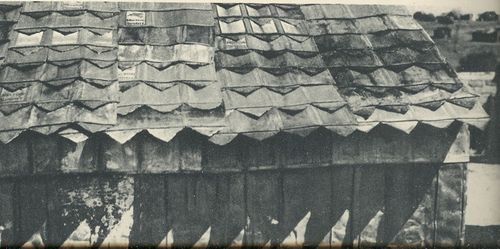
    And what this traveler sees is quite shocking, spectacular:  Windhoeck had become a town made of discarded tin petrol cans.  Thousands of cans flattened and battered and fashioned and fabricated to fit over wooden skeletons–and then whitewashed–all arranged around a city plan of roundabouts and looking vaguely like Washington DC in plan.  

    ++00++ 9.23 petrol town 004


    In a place with little resource the people living there were applying whatever they could that made sense to its fullest use–the found, discarded petrol tins were of exceptional utility, rewriting a certain amount of economic theory of value.  The vernacular landscape for this community was intelligent and lovely, making artful use of scarce commodities.  

    ++00++ 9.23 petrol town

    Part II:

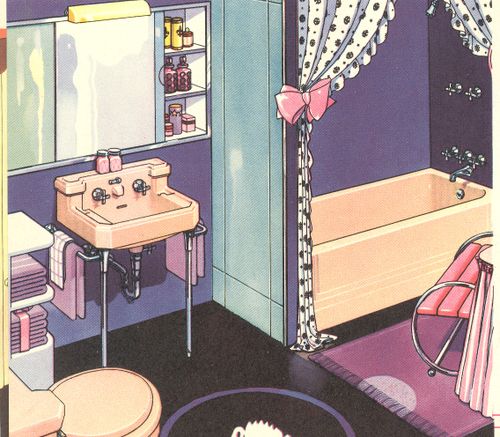
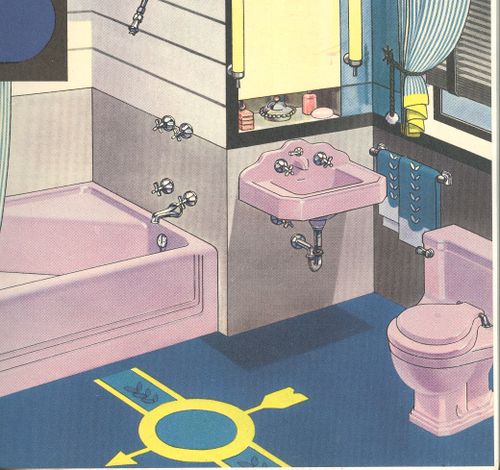
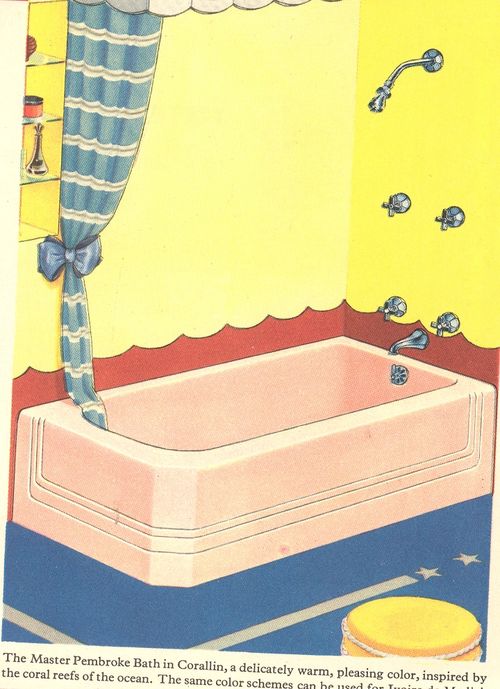
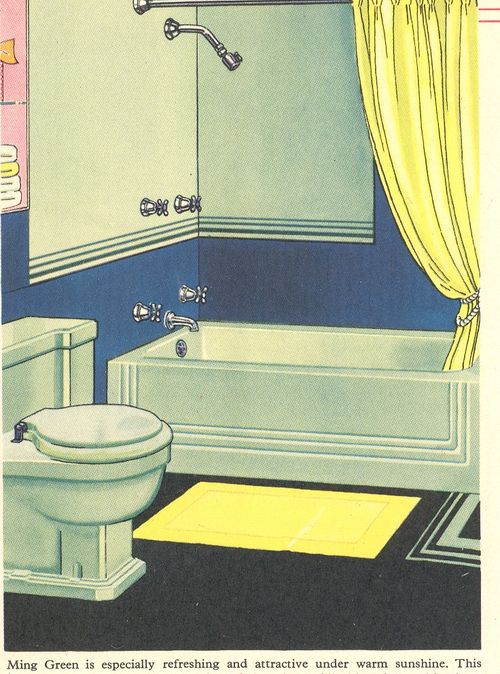
    The National Mills Company catalog—purveyor of bathroom and plumbing supplies to the trade of Fort Wayne, Indiana—of 1939 is like a trip back in time to grandma’s Great Barrington bathroom, comforting and sort of pleasing, until you get to the color illustrations.  It is there that the Turner colorized classic movies seem to have gone and speewingly bled their incredible neo-technicolor blood—colors not found in nature do battle amongst themselves in brilliantly chromo-deranged bathrooms and kitchens. 

    ++00++ 9.23 bath 002

    These things certainly seem benign enough in black and white (and gray tones), but in color we are left with “oh, wow!” reactions as the cones in our eyes plead for mercy, and anyone who ever lived with any ability of color sense goes a-spinning in the ethereal night, corkscrewing themselves into a-chromatic corners of the beyond.  

    ++00++ 9.23 bath 001

    Seeing these right on the heels of my post on beautiful, simple vernacular architecture of found objects makes these samples of bourgeoisie pre-war post-depression excess all the more awful, like that knowing lump in your throat when you know something is going to go badly.  The experimentation with extreme color for the middle class in the National Mills catalog seems to have survived itself, many of these colors were evidently sold In big enough numbers to warrant reappearances in the next few catalogs.  Go figure.

    ++00++ 9.23 bathroom3 great


    ++00++ 9.23 bath