A Daily History of Holes, Dots, Lines, Science, History, Math, Physics, Art, the Unintentional Absurd, Architecture, Maps, Data Visualization, Blank and Missing Things, and so on. |1.6 million words, 7500 images, 4.9 million hits| Press & appearances in The Times, Le Figaro, Mensa, The Economist, The Guardian, Discovery News, Slate, Le Monde, Sci American Blogs, Le Pont, and many other places… 5000+ total posts since 2008.

Author: JF Ptak

  • The Forensic Microscope and Hidden Images in Art

    JF Ptak Science Books LLC  Post 744  Blog Bookstore

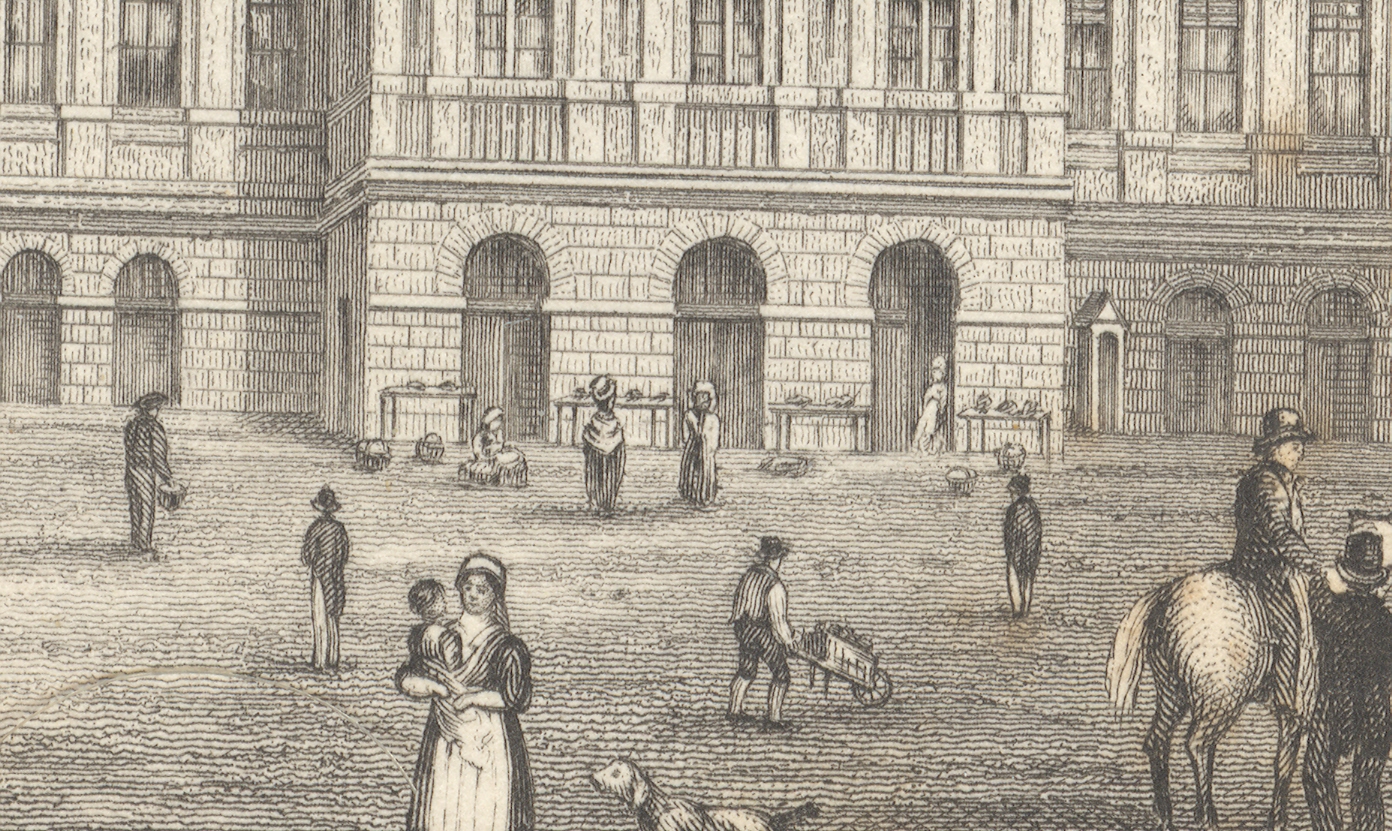
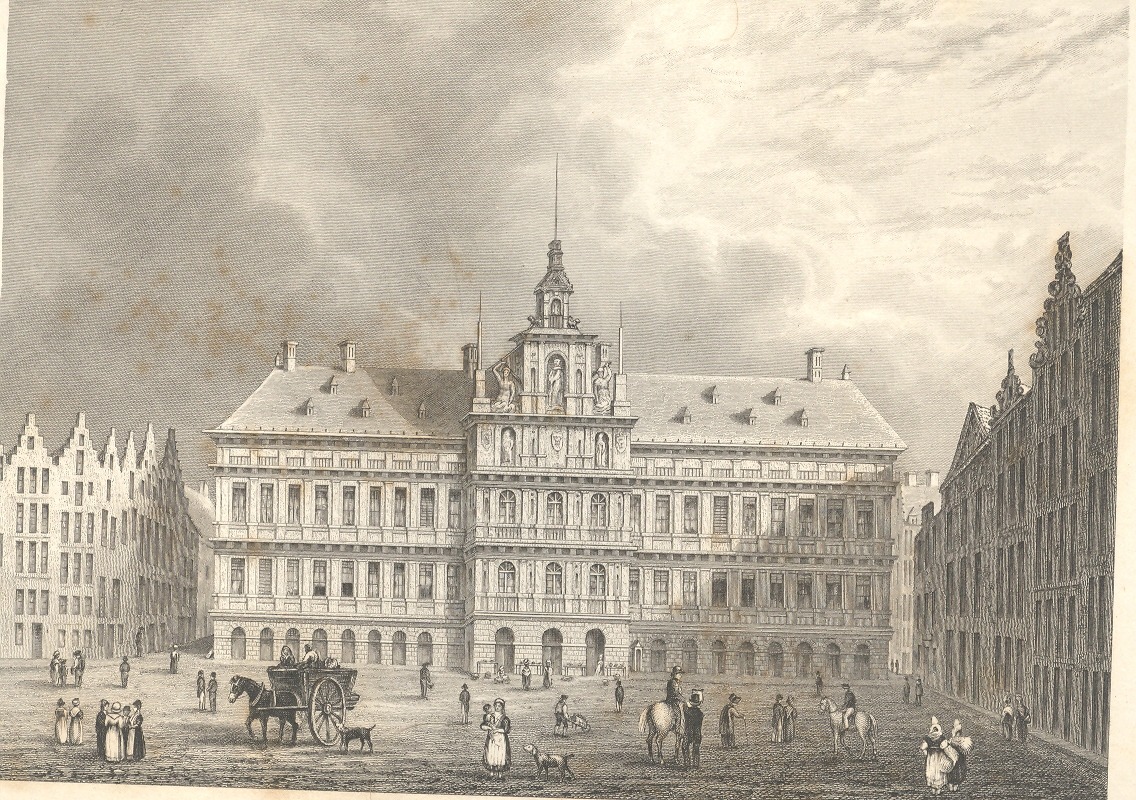
    I’ve written before about the found, incidental figures of “filler” art found in larger works,generally inconsequential  images used to supplement the empty foreground or provide handy perspective or scale for the subject at hand.  In this example, a steel engraving of Town Hall at Antwerp, the principal focus of the artist is the architectural structure, the public square and the surrounding buildings.

    +++looking closely
    To give the whole engraving some buoyancy and scale, the artist provided a fairly active scene of town life going on in the square.  Now of course he could’ve made the figures more generic, but the artist went far beyond that, recording some of the lost city life of the 1830’s. 

    +++looking closely detail

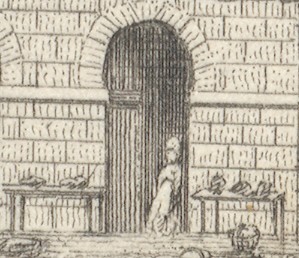
    The truly interesting bit here is barely observable in the original; but, under magnification, we see a very rich and minuscule “engraved photograph” of a slice of daily commerce and street life in Antwerp.  If you look at the central entrance to the town hall you can see three main (and large) doorways, and if you look clos+++looking closely detail2er still, you’ll see something leaning against the portal at right.

    Extraordinarily, what the artist snuck into the original is a tiny (2mm) figure watching over several tables of her (fruits?/vegetables?) ware, waiting for a customer. There doesn’t seem to be much interest in her stuff, currently, and she has allowed herself a little relaxation, leaning against the doorway.  I’ve found this sort of extremely minor subject matter and its ephemeral connection to the larger work at hand to be just fascinating.  I wonder why such detail would be added–why would the artist, or engraver, take such care and interest in such minor visions.  Perhaps this is just what was at hand on the days the artist fleshed out his work; perhaps it was the work of the engraver, alone, incising yet another semi-boring architectural image; desperate for a little artistic activity, adding some interesting, almost-invisible touches, here and there.  Perhaps no one would ever really notice them, but whoever was responsible for adding such incredible, extra-dimensional details would certainly enjoy knowing they were there, recognized or not.

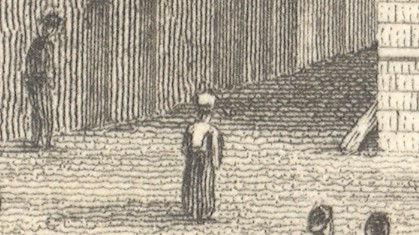
    And while we’re at it–why in the world was that log-like+++looking closely detail4 thing at the base of the extreme left of the Town Hall included in this picture? I just adore that such ephemeral interest was included in this type of work–its reasoning lost forever, except that which we give it.


  • Spam, Smeat, Spic, Prem, Mor & Arf: Food by Any Other Name

    JF Ptak Science Books LLC  Post 743  Blog Bookstore

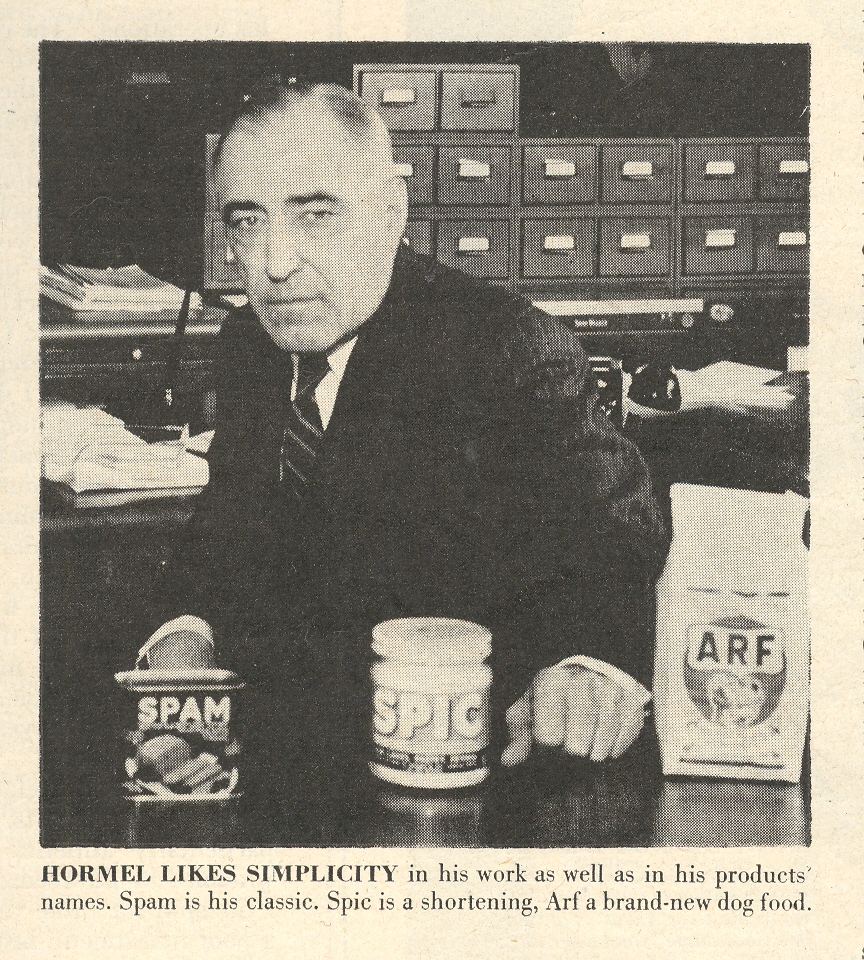
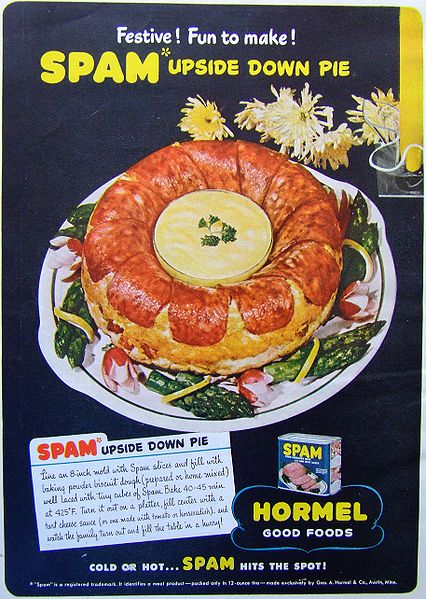
    This photo launched itself up to me while looking through
    the 11 March 1946 issue of LIFE magazine for a depiction
    of an atomic attack on NYC.  It was Joe
    Hormel who found me first, fistily challenging me to look at his food products,
    a proud manager with his best stuff, presiding over his world of tinned meat
    with steely Elmer Ganty-like broke-bone determination.

    +++hormell

    Joe ran his father’s “butcher business” and brought Spam to
    the world in 1937, trying to find an end run around the shrunken Depression
    food allowances, and pretty much succeeded.(Spam may also have been the first “singing
    commercial” in what the LIFE article called “the earthiest, corniest and most
    successful campaigns in U.S. advertising history.”)  When the meat shortages spiked during WWII,
    Spam found its way overseas via Lend-lease arrangements, feeding millions of British
    and European people..  The consensus was
    that Spam was mysterious and unpretty,  but did deliver something like 15-grams of
    protein per tin, which made it some sort of factor in waging the successful
    war.  US soldiers also received smeats
    called “spam” though they weren’t necessarily Hormel’s product—just another in
    a long line of monosyllabic imitators whose quality and zestyness didn’t come
    close to the real thing, though this time prepared in the millions of pounds by
    Army cooks who banked on the Spam name more so than the actual preparation.   Or so I read. 
    In any event it was a real issue for Hormel who “insisted that Spam was
    a high-grade compound of ham and pork shoulder” and that the [real] “dainty,
    tasty Spam retained liquids in the meat, whereas the bulky Army preparations
    was guilty of the worst sin the in the tinned meat world…” floating away in “loose
    juice”.  As a vegetarian, neither sounds
    very appetizing.  And the anti-Spam
    stories and songs and newspaper articles and art and editorials of complaint
    and disgust coming from US soldiers during the war are endless and legion and
    iconic. 

    +++spam ad

    Spam seems impervious to the barbs and arrows and boulders
    hurled its way over the last 72 years, still chugging along in its tinned meat
    way, 6 billion sold units and growing. 

    [Note:  “Spic” was
    actually a shortening, and “Arf” was a dog food.  I just couldn’t resist putting their names in
    the title.]


    Also, I include some of the recipes from the Monty Python
    (170) skit on spam:

    • Egg, bacon, and spam
    • Egg, bacon, sausage, and spam
    • Spam, bacon, sausage, and spam
    • Spam, egg, spam, spam, bacon, and spam
    • Lobster thermidor aux crevettes with a mornay sauce
      garnished with truffle pate, brandy, and a fried egg on top and spam.

    ·Posted by :

    ·in:


  • Political Majesty at the Interior and Exterior of Creation (1588 & 1680)

    JF Ptak Science Books LLC  Post 742  Blog Bookstore

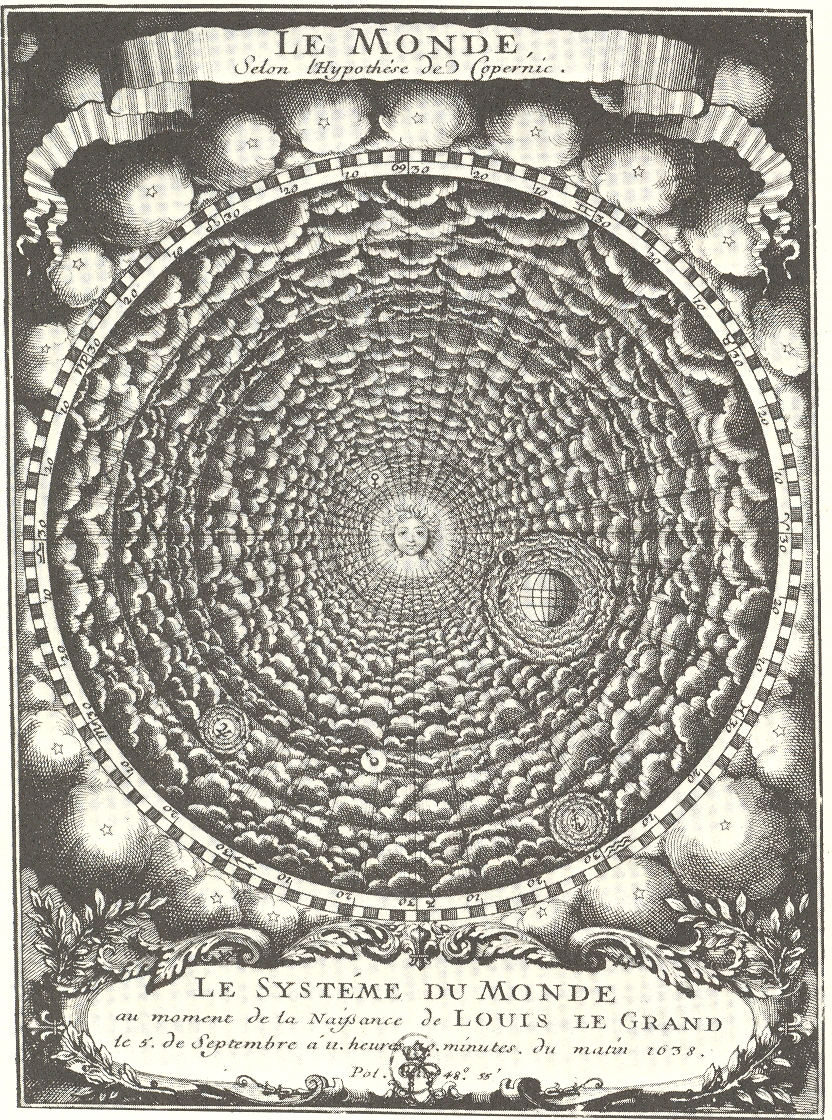
    This engraving Le
    Monde Selon l’Hypthese de Copernic. Le Systeme du Mondeau movement de la
    Naissance de Louis le Grand le 5 de Septembre 11. heures 20 minutes du matin
    1638
    , is a

    +++Louis Grand Universe singular representation of the universe at a singular moment in
    time.  And that moment in time was the
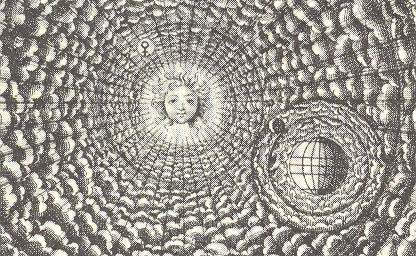
    birth of Louis le Grand, or Louis XIV, the Sun King, pictured at the moment of
    his birth at the center of the Copernican universe. The future (72-year-long
    reign) king smiles benignly at us from the center of the universe.

    +++Louis Grand Universe 2

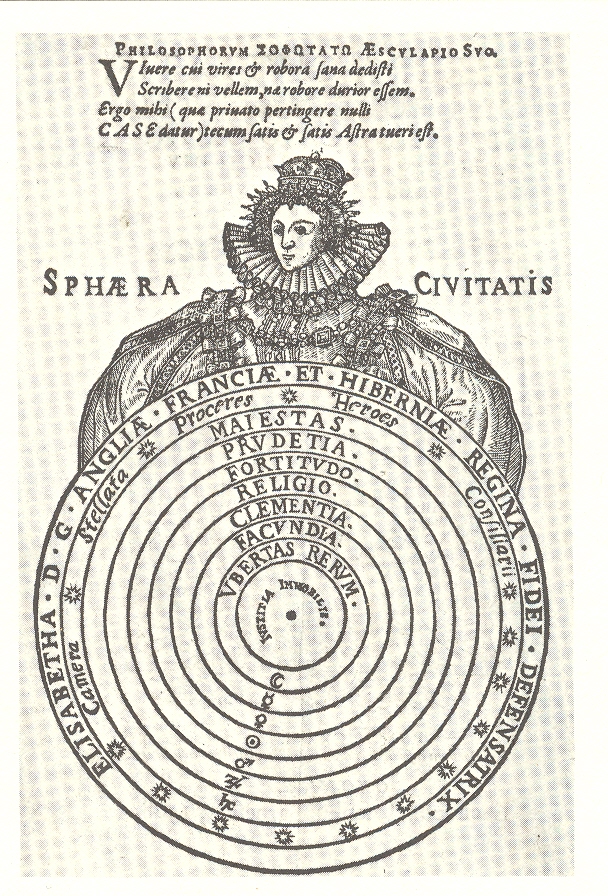
    On the other side of the coin is the all-reaching embrace of
    the deity-like Queen Elizabeth, who cradles the nine successive spheres of the
    universe.  The innermost sphere is
    occupied by the Earth, the center of all things, around which are labeled the
    seven spheres of the planets:  “urbetas
    rerum” (immovable justice) of the Earth, “facundia” (eloquence) of Mercury, “Clementia”
    (clemency) of Venus, “Religio” as the Sun, “Fortitudo” (fortitude) of Mars, “Pridetia”
    (prudence) of Jupiter, and “Majestas” (majesty) of Saturn.  Beyond the sphere of Saturn is that of the
    fixed stars (consisting of the Star Chamber, the nobles, Lords, Counsellors);
    and beyond that, in the last sphere, is Elizabeth.   


    +++Louis Grand Universe 3

    The image appears in John Case’s Sphaera Civitatis  (1588,
    The Sphere of the Commonwealth) who
    writes in his preface “How well civic machinery accords with heaven’s form, and
    how it is distinguished by like figures, our republic, unique, will declare on
    behalf of many. Do you see the stars, wheeling around in their alternating
    course, and Justice, who weighs causes in her balanced pans, the unchangeable
    center of our universe?” [Full text here.]


  • What if Marx had Dedicated Das Kapital to Darwin?

    JF Ptak Science Books LLC  Post 741  Blog Bookstore

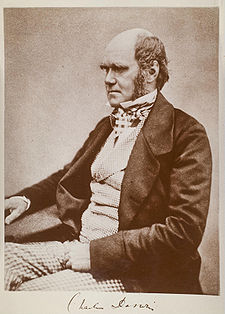
    Darwin

    It’s a kind of intriguing question in the world of “what ifs”–even though the thought had been taken seriously for years, the
    issue has been (for decades) safely put to sleep in misty mythtime, except in the minds of some
    creationists and conservatives.

    The issue came up again for me while reading I.B. Cohen’s Revolution in
    Science
    (Harvard 1985) in the “Influence of Marx and Engels” chapter, where the idea of the dedication gets resurfaced. Leaving aside the whole aspect of Das Kaptial
    and the thought of Karl Marx (1818-1883), I’d just like to concentrate on the
    Darwin-Marx “connection”.  One thing is
    for sure:  Marx thought a lot of Darwin
    (1809-1882), particularly in the way that he could use aspects of Darwin’s
    theory (On the Origin of Species by
    Means of Natural Selection, or the Preservation of Favoured Races in the
    Struggle for Life
    , the title changing in the sixth edition in 1872
    to simply The Origin of Species.)
    to bolster his own thought.  Marx thought
    Darwin’s theory
    to be “very important” dealing a death blow” to “teleology in the natural
    sciences”.  He was particularly
    interested in Darwin
    as it was, in his mind, “the natural history foundation for our viewpoint [of
    historical materialism], “serv[ing] as a …basis for the class struggle in
    history”. 


    Darwin origin

    The business of the dedication is slightly knotty, as there
    is supporting correspondence that seems to support it all.  Darwin did
    receive a letter and he did respond, but it related to Marx’s son-in-law Edward
    Aveling’s (1849-1898) book The People’s Darwin
    (1881).  The issue is dealt with often
    and elsewhere on the web, so I won’t go into it here, except to say that the
    issue of Darwin
    being the dedicatee of Das Kaptial has been put completely to rest as
    untrue. 


    It is interesting to read Darwin’s very thoughtful, old-school  thanks-but-no-thanks response to Marx (found at
    Friends of Darwin)

    Dear Sir:
       I am much obliged for your kind letter & the Enclosure.—
    The publication in any form of your remarks on my writing really requires no
    consent on my part, & it would be ridiculous in me to give consent to what
    requires none. I shd prefer the Part or Volume not to be dedicated to me
    (though I thank you for the intended honour) as this implies to a certain
    extent my approval of the general publication, about which I know nothing.—
    Moreover though I am a strong advocate for free thought on all subjects, yet it
    appears to me (whether rightly or wrongly) that direct arguments against
    christianity and theism produce hardly any effect on the public; & freedom
    of thought is best promoted by the gradual illumination of men’s minds, which
    follow from the advance of science. It has, therefore, always been my object to
    avoid writing on religion, & I have confined myself to science. I may,
    however, have been unduly biased by the pain which it would give some members
    of my family , if I aided in any way direct attacks on religion.— I am sorry to
    refuse you any request, but I am old & have very little strength, and
    looking over proof-sheets (as I know by present experience) fatigues me much.
       I remain Dear Sir,
          Yours faithfully,
             Ch. Darwin

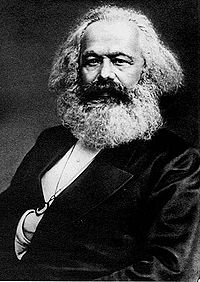
    Marx

    By 1865 Marx moves on a bit, finding a new champion in the
    natural history world, Pierre Tremaux, whose Origine et transformations de
    l’homme et des autres êtres
    (1865) which he found to be “a very important
    advance over Darwin”.  I have no idea
    what Marx was thinking with Tremaux, except that history has forgotten the1865
    work and its author.  M. Tremaux has
    disappeared; Darwin
    continues to prove out as fantastically correct. 


    All quotes from Cohen’s revolution, pp 344-347

    ·Posted by :

    ·in:


  • A History of Blank and Empty Things #53: Painting by Number and Pop Art

    JF Ptak Science Books LLC  Post 740  Blog Bookstore

    I wonder if Mr. Billy Collins has ever approached the
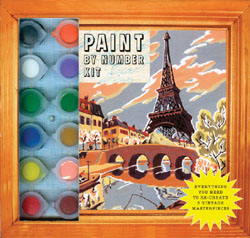
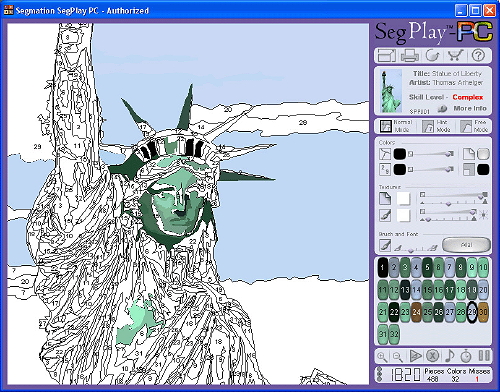
    ineffable connection between paint-by-number art and Andy Warhol?  It seems that paint-by-number (PBN) came from
    nearly nowhere, a near state of being nowhere and nothing, just after WWII, to
    the point of selling millions of sets by 1952. 

    Paint by number 1

    It was an astonishing thing, really, how the PBN craze took over America.  And it just so happens that 1952 was the
    first one-man show for Andy Warhol, and was also the beginnings of the Pop Art
    movement, which seems to me a rush to the most common denominator trough the commoditization
    of consumerism and popular culture, creating art out of visible
    nothingness.   Warhol in particular
    trained his sites on images that were already twisted around people’s neurons
    and living in their memories.  Art was
    made from images injected into the heads of consumer buying units, a delightful
    confusion of imagination and the already imagined, a reaction to a familiar sub
    rosa
    advertised image.

    Perhaps Warhol’s art was part of a larger whole, an
    illustrator to a bigger point, a performance unintended to stand alone.  But that is what happened, the art separated
    from the wider message, and soared to great acclaim. 

    Paint by number 2

     Warhol seems more like a paint-by-number color memorist,
    filling in the blanks of an already-mostly-formed memory burned into the long
    term memory via years of advertising and severe repetition.  Nearly the entire broadcast industry was
    created to support this memory-making process: 
    Seinfeld, Spongebob, The Office, Your Show of Shows, and all the rest,
    created not necessarily for your pleasure but as a series of  interchangeable 11-minute-long placeholders
    to hold the viewer/listener to the point where they would be exposed to 180
    seconds of product identification.  It is
    the repetitious memory formation that the folks depended upon so that when you
    go down the supermarket aisle looking for an 89-cent can of tomato squeezings
    called “soup” that the 799 exposures to the Campbell Soup Company’s product
    line will direct you their way, a primitive bit of biological programming.  And for all of the trimmings and
    philosophical-critical digressions, Warhol capitalized on creating art on vast
    shared memories, coloring in a shared image, reaching into the minds of
    millions for something that everyone could see and understand—and not have to
    think about, not lose one neuron in interpretation, and enjoy it like an comfy
    old slipper. 

    Paint by number 3

    Where Warhol succeeds and PBN fails is at the art/appreciation
    point—few people took the PBN seriously as an art form, mainly because it wasn’t
    presented as such, except for those who somehow took the thing too seriously.
    Warhol took his creations seriously from the very beginning—and perhaps there
    was really nothing more than the defense of his art that was the art
    itself.  It just seems to me that, in the
    history of art, it tool 1500 years or so for linear perspective to be
    rediscovered, another 500-odd years beyond that to bend and mystify nature in
    the form of Impressionism, and another 30 years to lose all recognizable
    natural forms all together.  And then after
    Braque and Duchamp and Kandinsky and the Blaue Reiter, and the Fauvism,
    Suprematism, Vorticism, Dadaism, Deco, De Stijl, Surrelaism, Concrete art,
    Abstract Impressionism, and on and on, that after all of this since Nude
    Descending, that we are lead to Pop Art and silkscreens of soup cans.  It just seems to me to be more about the
    packaging than the package, which might just well be a wrapped bit of
    nothing. 


  • Propaganda in Maps: the Polish “Corridor”, 1939

    JF Ptak Science Books LLC  Post 739  Blog Bookstore
    +++korridor 2
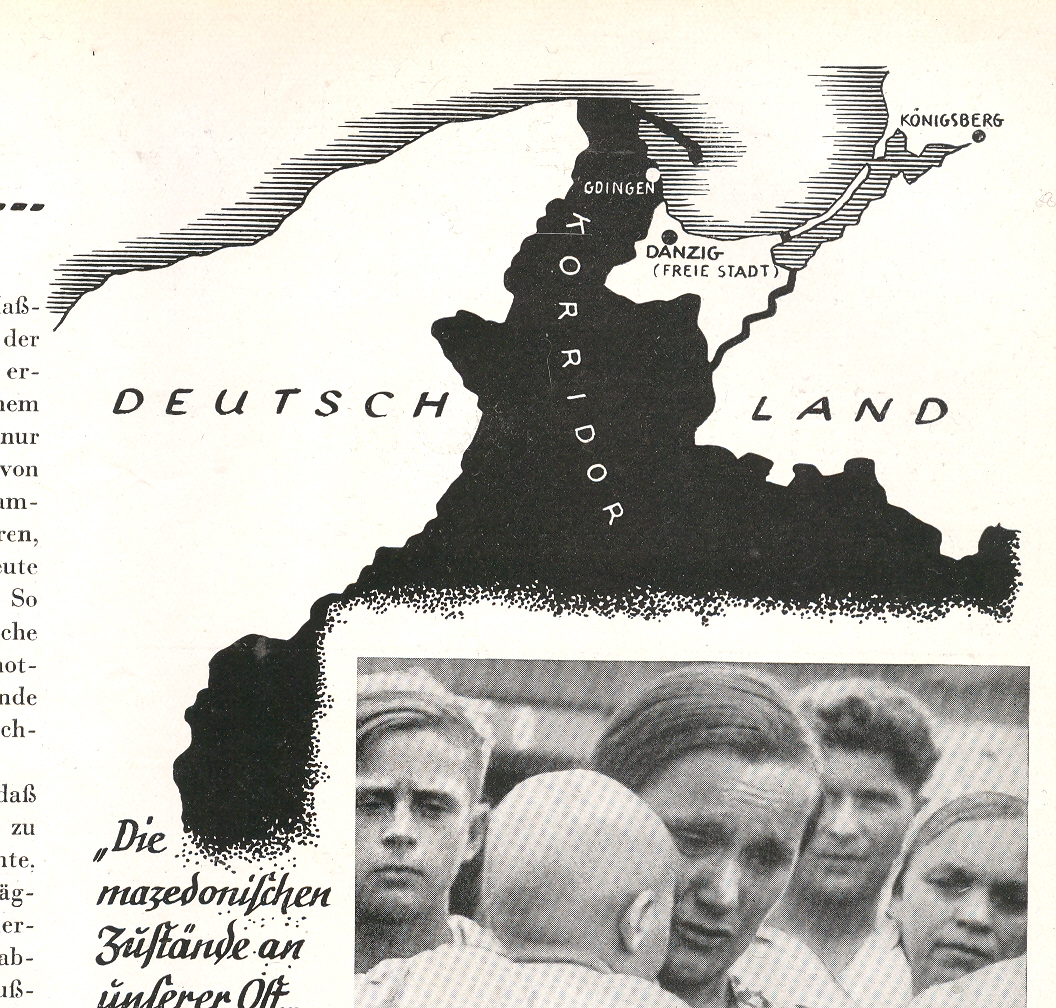
    There’s a war on?  Really?  You wouldn’t know it from the cover page of the most popular magazine in Germany, the (Leipzig) Illustrirte Zeitung, published 7 September 1939. The odd thing is that for months, years, previously there was a huge and occasionally overwhelming militaria scent to this magazine (a sort of LIFE magazine-like affair in its way), paving the way for the reading population (which I’m sure must’ve been in the millions) for the stuff to come.  I’ve looked at every issue of this magazine from 1933 to 1939, and there is simply no mistaking the under- and over-current of the war preparation.  It was just relentless.  And so to finally come to the real fighting part of the beginning of the war it is a little odd to see the cover of the mag decorated with Mother Earth in the herb garden.  The contents of the issue is not what I expected either–not much dedicated to fighting outside of happy and relieved Gdanskers saluting their warm welcome to the advancing Nazi machine, images of the “mongrels” who were living in the places that had once been occupied by Germans, and an “apology” of sorts as to why all of this was necessary.All of which was bluster and diatribe–its hard to imagine, really, how someone living in Leipzig reading this thing over breakfast could’ve nodded their head in logical consent with the magazine’s specious arguments.

    Which brings us to the small inset map depicting what was one of the major “problems” for  Germany with Poland–the northern stretch of Polish land that touched the Baltic, the so-called Polish “Corridor“.  This polemical affair shows exactly what the Germans thought of the territory, a piece of Germany now in enemy hands, a dagger struck through the heart of Prussia.  

    +++korridor Poland of course didn’t think of the land in terms of a “corridor”, and as a matter of fact the term was an offensive one.  It was simply a part of Poland, one which was returned to the Poles with the rest of the country (which had been disappeared, absorbed, with the Treaty of Vienna in 1815) in 1920.  It was essential with repatriation that this land be included, giving Poland a natural access to the Baltic, and an ability to follows it major river (the Vistula) all the way to the sea.  Without access to the Baltic, Poland’s economy would have been strangled, the country simply wouldn’t have had a good stake to survival.  It was a return of land that had been connected to the Polish Crown from 1466-1772.

    The ethnicity issues are long and deep, and something I can’t get into right here. But Germany certainly made the claim that there were huge German populations in the corridor who needed to be rescued, and who suffered under the control of the inferior Polish people. But as I said, this is a complex issue–the population in the area was probably around 45% in 1920, and this before the huge repatriation efforts to bring those German people home.  There may have been so many Germans in that area because of a massive Germanization of the area in the 19th century…and on and on.

    The Polish government did sign a Non-Aggression Pact with Germany in 1934, after which everything got on the slow boat to hell.  In the months before the Germans attacked, through the summer, there was much frenzied back-and-forth, an awful lot of negotiations that were so much meaningless talk as a mask for the inevitable.  Whatever was agreed upon and signed, Germany was going to attack, anyway, come what may.  And so they did.

    [I should point out in closing that, just a few days ago, the Airminded.org site reminded us all of H.G. Wells’ 1933 The Shape of Things to Come, and his prediction on the start (or re-start) of the next great war, right there at the Polish “corridor”, and right soon.] 


  • Very Early Films of NYC, 1903

    JF Ptak Science Books LLC  Post 738 Blog Bookstore

    I came across another fantastic part of the Library of Congress site:  The Life of the City, Early Films of NewYork, 1896-1906. I’ve quoted liberally from the descriptions of the films, and also provided a chronological listig of many of the films that are found at the site.  They are spectacular things, like pieces of eidetic memories, offering wide swaths of minuate detail in corners of pockets of life from a hundred years ago. 

    NOTE:  To view the films just follow the link and click on the MPEG format for best viewing.

    NYC Garbage Dumping Scene 1903
    Nyc dumping wharf

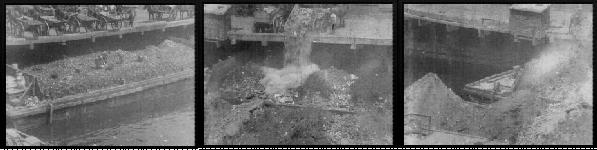
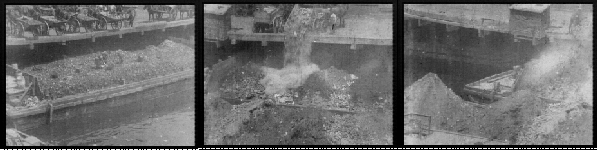
    Yes, this is what people did when they worked, not so long ago, when thousands and thousands of people worked at making The City go–in the streets picking pulling pushing prying pumping preening polishing purging.  What grabs me are the three workers working beneath the horse-drawn carriages, working on the barges, spreading around the waste.  The topsiders dump their cargo, letting it fall twenty feet or so, landing very closely to the men below.  It seems like an unending process

    From the LC site:
    “The film shows a wharf where a barge is being loaded with trash from
    two-wheeled, horse-drawn wagons. The trash is dumped off the edge of the pier
    onto the barge, where men with shovels are spreading the piles of debris. The
    camera pans left to the next barge, where four-wheeled carts are shown dumping
    excavation rubble. Probably filmed on the East River,
    this is one of several New York City Sanitation Department dumping wharves in
    operation at the time.”

    “Ghetto” Fish Market
    Nyc--fish market

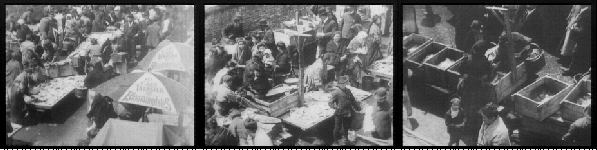
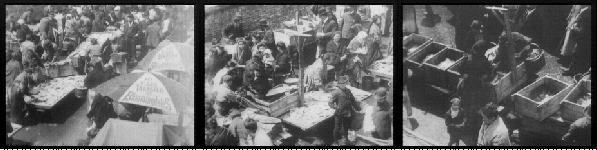
    I love what the kids do when they see this camera–they pretty much uniformly stand still, their fingertips pressed together in wonder and worry, and stare at the strange goings-on fifteen feet above the crowd.  At one point three officials stroll through the crowds, coming in at top right; they are very sharp eyed, and the one guy at the end of these three looks like every other guy who has played a corrupt NYC official in every other movie made before WWII. 
    “The view, photographed from an elevated camera position, looks down on
    a very crowded New York City street market. Rows of pushcarts and
    street vendors’ vehicles can be seen. The precise location is difficult
    to ascertain, but it is certainly on the Lower East Side, probably on
    or near Hester Street, which at the turn of the century was the center
    of commerce for New York’s Jewish ghetto. Located south of Houston
    Street and east of the Bowery, the ghetto population was predominantly
    Russian, but included immigrants from Austria, Germany, Rumania and
    Turkey. According to a description in a 1901 newspaper, an estimated
    1,500 pushcart peddlers were licensed to sell wares (primarily fish) in
    the vicinity of Hester Street. At one point the film seems to follow
    three official looking men (one in a uniform) as they walk among the
    crowd. They may be New York City health inspectors, who apparently
    monitored the fish vendors closely.”

    NYC Waterfront
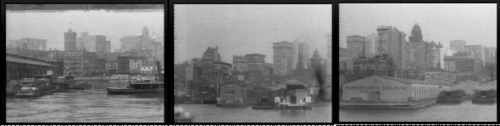
    Nyc-ncy skyli


    From the LOC site:
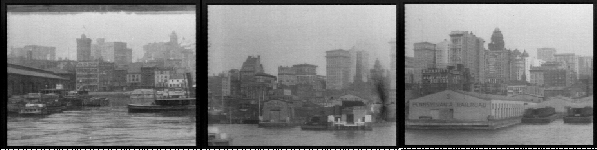
    “Filmed from a moving boat, the film depicts the
    Hudson River (i.e., North River) shoreline and the piers of lower
    Manhattan beginning around Fulton Street and extending to Castle Garden
    and Battery Park. It begins at one of the American Line piers (Pier 14
    or 15, opposite Fulton Street) where an American Line steamer, either
    the “New York” or “Paris,” is seen docked [Frame: 0120]. The camera
    passes one of the Manhattan-to-New Jersey commuter ferries to Jersey
    City or Communipaw [0860]. Proceeding south, the distinct double towers
    of the Park Row, or Syndicate Building, erected in 1897-98, can be seen
    in the background [0866]. A coastal freighter is next [1560], then
    Trinity Church appears, to the left of which can be seen the Surety
    Building, as a tug with a “C” on the stack passes in foreground [2032].
    Several small steamboats come into view [2136], and the B.T. Babbitt
    Soap factory at Pier 6 is seen [2300], followed by the Pennsylvania
    Railroad piers (#5 & #4), with a group of docked railroad car
    floats [2556], and the Lehigh Valley Railroad piers (#3 & #2), also
    with car floats [3030]. Next are the Bowling Green Building
    (rectangular, with facade to camera) [3208], the Whitehall Building
    (vertical, thin side to camera) [3388], followed by Pennsylvania
    Railroad Pier #1 [3630]. Pier A (with a clock tower) is seen with the
    New York Harbor Police steam boat “Patrol” at its end [4654]. The
    Bowling Green Offices and the Produce Exchange at Bowling Green are
    visible in the background. The breakwater (sheltered landing) and the
    New York City Fireboat House appears [5270] and the distinctive round
    structure, Castle Garden, once a fort and immigrant station, but at the
    time of filming the City Aquarium, comes into view [5438]. The camera
    then pans east along the Battery Park promenade: the Barge Office (with
    tower) is visible in the distance [5804], and further out the Brooklyn
    shoreline with the grain elevators at Atlantic Avenue can be seen
    [6088]. This view is continued, with only a minor break in continuity,
    in the film Panorama of Sky Scrapers and Brooklyn Bridge From the East
    River. Together they comprise a sweep around the southern tip of
    Manhattan, from Fulton Street on the Hudson to the Brooklyn Bridge.”

    Brooklyn Bridge to the Battery, waterfront
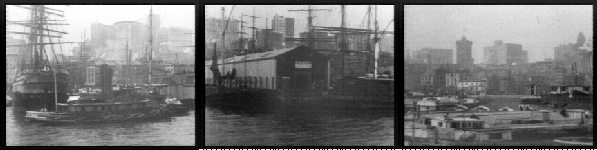
    Nyc--brooklyn

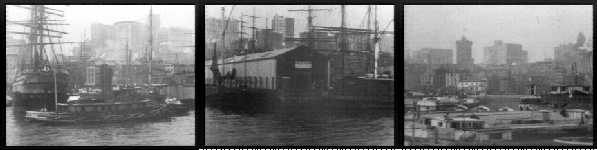
    Another beautiful water-side continuous panorama, from just above the Brooklyn Bridge to the battery.

    From the LOC site:  “This film depicts the East River shoreline and the piers of lower
    Manhattan starting at about Pier 5 (the New York Central Pier) opposite
    Broad Street, and extending to the Mallory Line steamship piers just
    south of Fulton Street and the Brooklyn Bridge. The film begins with
    shots of canal boats or barges (from the Erie Canal via the Hudson
    River) docked at and around Coenties Slip [Frame: 0106]. As the film
    progresses, the New York Produce Exchange located at Bowling Green,
    Manhattan, with its distinct tower, comes into view in the background
    [0346]. Between here and the Wall Street ferry, there follows in order
    of appearance: steam tugs [0308 and 0422], a wooden hull barkentine
    [1032] with box barges alongside, a docked iron hull sailing ship,
    probably British [1448], an ocean steamer with yards on the foremast
    [1748], a derrick lighter laden with barrels docked at the end of a
    pier [2134], and a fruit steamer [2612]. In the Wall Street Ferry slip
    (between Piers 15 and 16) there is a Wall St., Manhattan-to-Montague
    St., Brooklyn, double-ended steam commuter boat [2896]. The ferry is
    visible immediately before a shot of the large advertising billboards
    on Pier 16. The film next shows the Ward Line piers (J.E. Ward &
    Co., New York and Cuba Steamship Co.) [3040], a Pennsylvania Railroad
    tug [3190], a derrick lighter [3320], and the Mallory Line piers
    [3692]. A Mallory Line steamer can be seen on the south side of one of
    the Mallory Piers [3736]. The camera begins panning out into the East
    River after passing pier 20, catching the fog bell at the end of pier
    21 [3922]. A car float is visible passing under the Brooklyn Bridge
    [4202]. The pan follows the line of the Brooklyn Bridge eastward to
    Brooklyn Heights, where the Hotel Margaret (tall building in
    background) is visible just before the end of the film [4464]. This
    film continues the view begun in the film Sky Scrapers of New York City
    From the North River. Together they comprise a sweep around the
    southern tip of Manhattan, from Fulton Street on the Hudson to the
    Brooklyn Bridge.”

    Immigrants Arriving at Ellis Island 1903
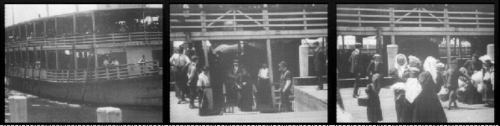
    Nyc--ellis

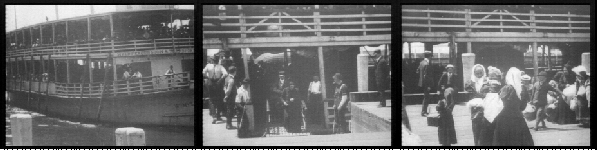
    Here comes everyone, from everywhere, emerging from a ferry, delivering immigrants from Manhattan to Ellis Island, where the process of the beginning of the rest of the lives of all these people began.  Between 1892 and 1954 some 12.5 million people were processed into the U.S. through Ellis, and in the early days, say 1892-1920, most of them looked just like these folks–the grandparents and great-grandparents of a quarter of the country.

    From the LOC site:  “The film opens with a view of the steam ferryboat “William Myers,”
    laden with passengers, approaching a dock at the Ellis Island
    Immigration Station. The vessel is docked, the gangway is placed, and
    the immigrant passengers are seen coming up the gangway and onto the
    dock, where they cross in front of the camera.”
    ·Posted by :

    ·in:


  • A Not-Obvious Gross Understatement: Bomb + Plane = Drop, 1915.

     JF Ptak Science Books LLC  Post 737 Blog Bookstore

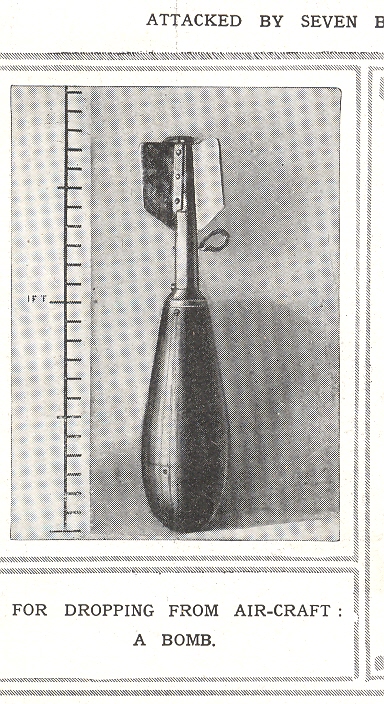
    ===blog==aug 30==bomb overview

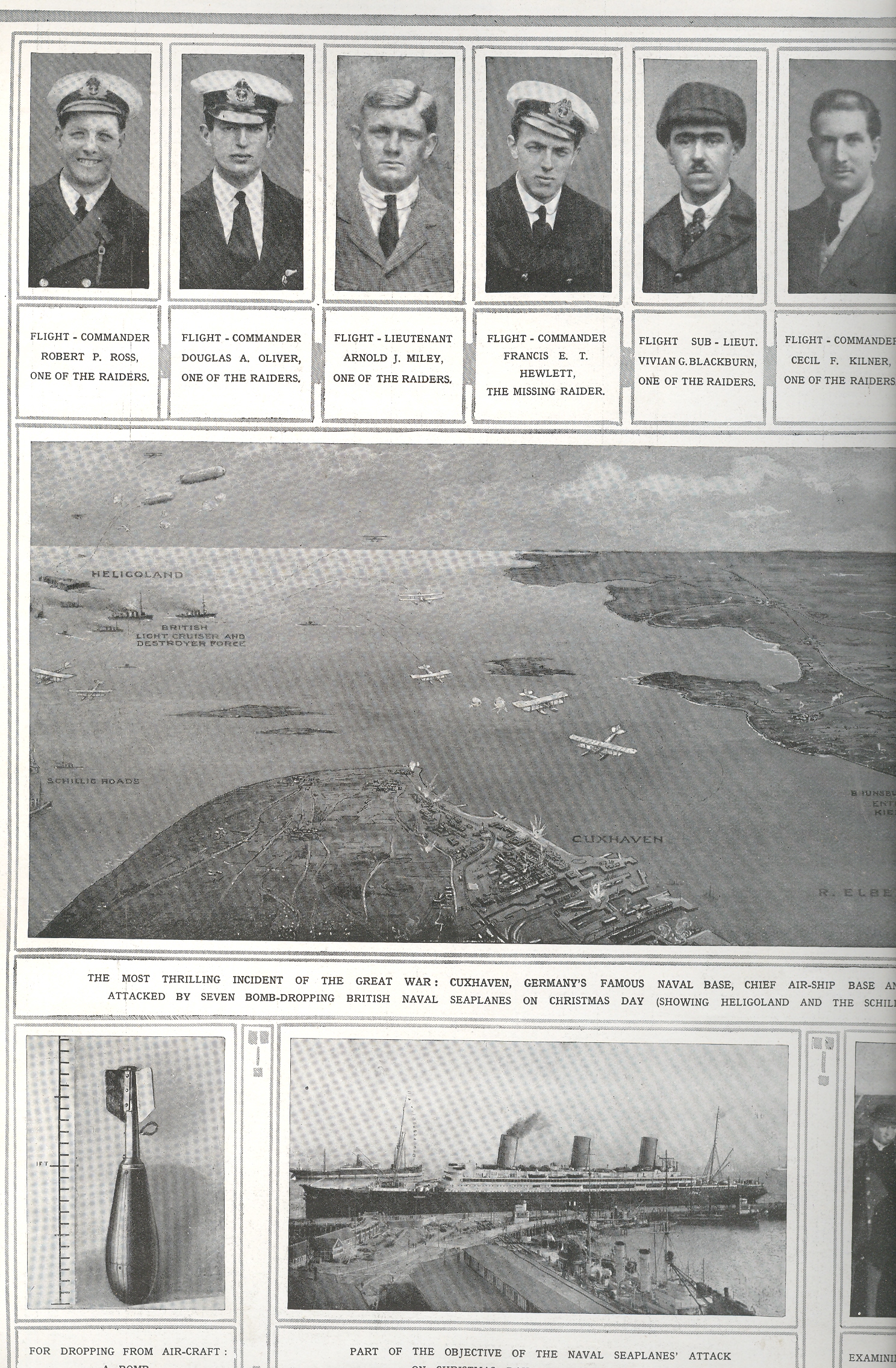
    In the young history of the beginning of the Twentieth Century’s Thirty-One
    Year War, in the very young history of bombing1, came this adventurous “first”
    in warfare:  the attack of a target from
    the air, sea and under the sea. The British launched an assault against the German
    installation at Cuxhaven,
    trying to get at its Zeppelins and navy, sending a task force of destroyers,
    subs and cruisers in support of eight search and destroy seaplanes. The
    tactical results were mixed (there are many places to check out this part of
    the war) but the strategic outcome was enormous:  it was a new approach to warfare.  The technical aspect of bombing was so new,
    really, that the picture of the bomb at lower left had to be identified as
    such, and===blog==aug 30==bomb det that it could be used as an offensive weapon dropped from a plane (“for
    Dropping from Air-Craft: a Bomb”). 

    1. It was the Italians who conducted the first aerial bombardment, against a
    very creatively-named military “target”– consisting primarily of civilians–outside
    of Tripoli in October
    1911.

    From the Flight/global Archive:

    “The Cuxhaven raid marks the first employment of the seaplanes of the Naval Air Service (sic)
    in an attack on the enemy’s harbours from the sea, and, apart altogether from
    the results achieved, is an occasion of historical moment. Not only so, but for
    the first time in history a naval attack has been delivered simultaneously
    above, on, and from below the surface of the water.”— United Kingdom Flight
    Magazine: the “Official Organ of the Royal Aero Club of the “, 
    Flight
    Magazine Global Archive: Aircraft
    in Warfare
    , 1 January 1915.

    Notes:

    A lovely site with many links for early aviation: Airminded; and an unusual and wonderful book on the history of bombing in general, called, of course, A History of Bombing, by Sven Lindqvist.


  • Dreaming of the 10-Ton Eiffel Tower Bullet, 1891

    JF Ptak Science Books  Post 736

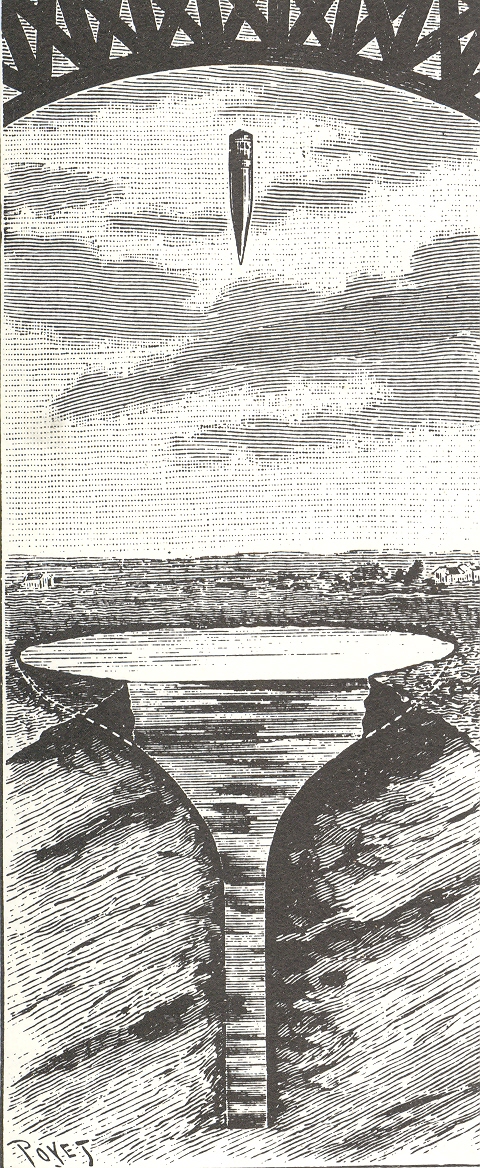
    ===blog==aug 30--eiffel People find inspiration everywhere, insight to creativity in the obvious and not so.  Great statues have been envisioned in the depths of slabs of marble, solutions to mathematical problems in the step of a bus, the beginning of a new physics in the rolling ball in a wagon.  Its an old and very warn cliché, but the world can be seen in a grain of sand if you could just pieces together the bits of glass:  just as pointillism was seen in the not-simple intercession of two colors and cinematography in the latent image and the structure of the universe in a patch of dancing dust.

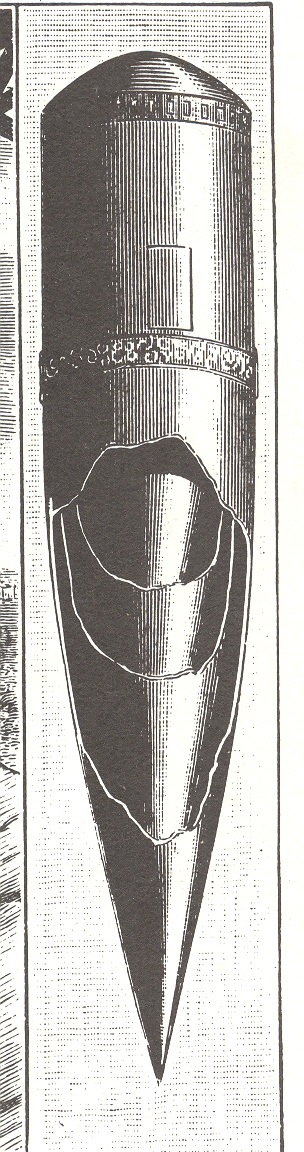
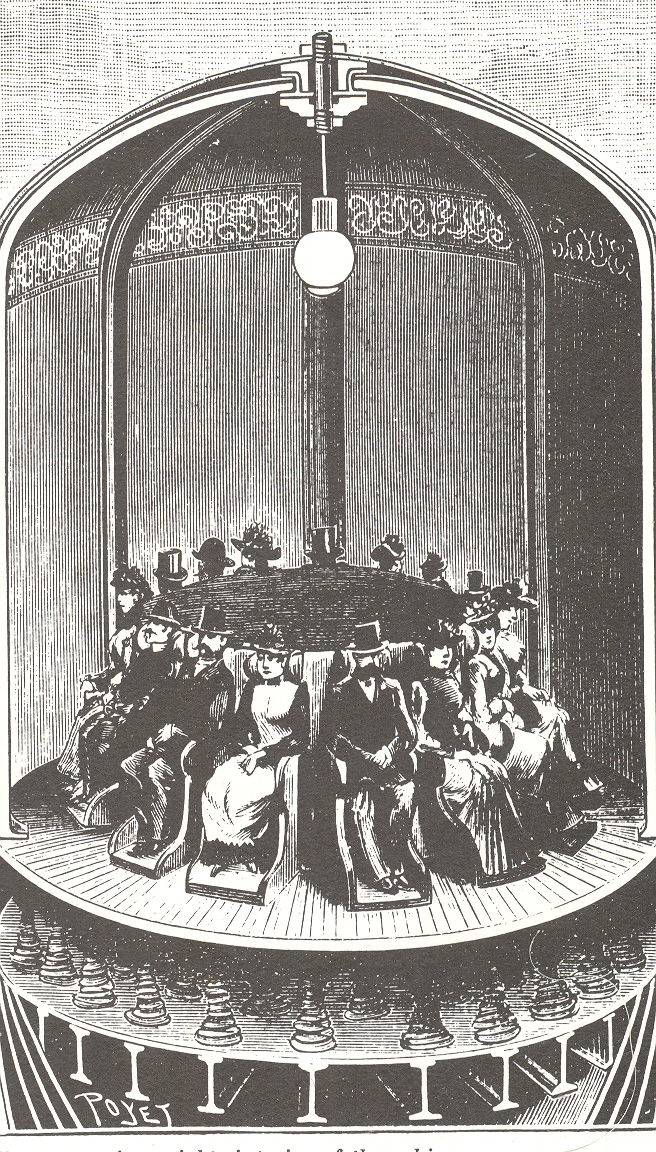
    The Eiffel Tower has had its own way with the visions of people, from it representing the birth of The Modern, to an icon of passion, to architecture and engineering innovation, and to general  adventure and the call of possibility.  It has moved other people to think “special” thoughts:  like, for example, what a lovely canvas it would be to place a 700’-tall electrified sign.*  And to M. Carron of Grenoble, who may have the most unusual inspirations from M. Eiffel, the tower was the perfect place to drop a 40-foot tall, 20,000-pound bullet filled with 20 people in leather armchairs into a 200-foot deep champagne-glass pool.

    ===blog==aug 30--eiffelbullet

    This is certainly a singular insight.  But in 1891 it represented something a little more than just giving people a thrill ride.  Physics of impact aside for the moment, M.Carron’s bullet capsule would be released from the top of the interior of the Tower, about 1000 feet high, and released to fall into an excavated pool 150’ across and 200’ deep.  The idea was that in addition to the springs inside the capsule, the water would act as a “shock absorber”, and so “the shock felt by the occupants on landing will be in no way unpleasant”.  

    [Okay, so the thing would hit at 178mph or so, and, assuming that the whole thing didn’t get completely crushed on impact, I’m not so sure that 200’ of depth is very much wiggle room for the thing to come to a halt (if it didn’t deform).  I Also it would have to not have any wind deflection so as to not veer off its perfect entry into the water.  And so on.  Calculating the force of impact is difficult without knowing how far down the bullet would go, but hitting the water at 80 m/s and stopping at 30 meters would yield something like 28,600,000 KE and 1,274,000 N. There are lots of problems….]

    ===blog==aug 30--eiffelinside

    The thing is, though, the thing that made this so appealing, is that for the 20-francs that get a person a seat in the bullet, that they would each get to go twice as fast as any human had ever traveled before ( 65 miles per hour was about the speed of the fastest train constructed).  So it was an extraordinary claim, an done that doesn’t get made all that often in the history of locomotion.

    And so this wasn’t a practicable or workable idea; but, well, so what?  It was an unusual idea, inspired by some sort of different thinking, which are both good places to be in according to the Gazetteer & Atlas of Ideas.  Sometimes thinking like this is just prelude to something else, thought avenues that had to be explored before the real thinking could get done, introducing you to a new geography of thought.  That’s what M. Carron had going for him; the newness of his thinking was much more important than the wrongness of it.

    *This story comes at the end of a post called Bad Ideas Department:  the First Image of a Hypnotized Chicken, so in spite of the title you’ll wind up in Paris.


  • Trikewriter: 19th C Bicycle as Outdoor Printing Press

      JF Ptak Science Books  Post 735 Blog Bookstore

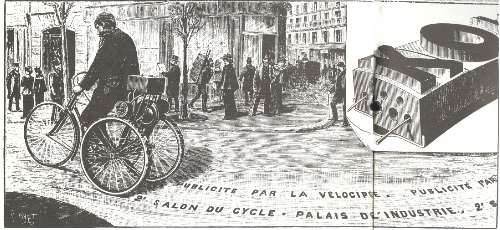
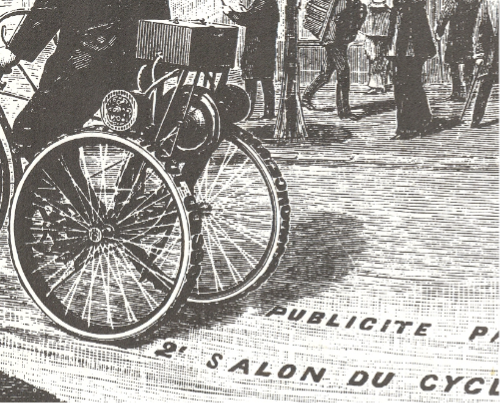
    Yesterday I posted a short note on the History of Extreme Writing with the example of cloud writing.  From clouds above to the mud below comes this second, very peculiar example of this exclusive genre:  tricycle writing.  This may actually come “on he heals” (so to speak) of another ancient form of writing coming from ancient Greece, where prostitutes would mirror-write ‘follow me” on their footwear so that prospective clients would follow their message writ in the dust to their home. This present shows the invention at work in the streets of Paris: as you can see it really was a printing press, applying the messages that were attached to the two rear tires in a way similar to that which prints lines in the street. 

    ===blog==aug 30==bike writer


    The wheels actually could be fitted with movable type, making the message changeable. I imagine too that the messages could be written with water-soluble ink or whatever so that the advertiser could be paid again and again, and that the street canvas would be refreshed constantly.   I hate to say it–what with the possible destruction of public property aspect of it–but it looks to me as though this sort of thing would be very successful in getting a message across. At least the first time–it is easy to imagine hundreds of these buggers crisscrossing a city, messages on the ground everywhere, the streets confusions of sentiments and exclamation.  We have that now with billboards and other fixed advertising; so I imagine the only thing preventing ads from appearing on the roads are public safety issues. 

                                                                                                                                                                       
                                                        ===blog==aug 30==bike writer


    ·Posted by :

    ·in:

    —