A Daily History of Holes, Dots, Lines, Science, History, Math, Physics, Art, the Unintentional Absurd, Architecture, Maps, Data Visualization, Blank and Missing Things, and so on. |1.6 million words, 7500 images, 4.9 million hits| Press & appearances in The Times, Le Figaro, Mensa, The Economist, The Guardian, Discovery News, Slate, Le Monde, Sci American Blogs, Le Pont, and many other places… 5000+ total posts since 2008.

Author: JF Ptak

  • History of Anticipation–a Note on Not Discovering Deep Sky In England (pre-Galileo)

    JF Ptak Science Books  Post 1365

    “‘Tis all in pieces, all cohaerennce gone”–John Donne1

    I wonder why it was that the telescope didn’t get trained at the sky in Great Britain.  Its one of those “things/non-events” when everything is in place for something very big to happen, when the pieces are there and sorted, when the theory has been thought out, when the practical applied work has been done–and then, a turn-away is made, a drifting occurs, and the big thing doesn’t happen.  A deep reluctance sets in–and since it is the anniversary of Darwin’s (and Lincoln’s) birthday, it seems natural to include Darwin in a history of anticipation category, since it took him so very long to come to enough of a comfort level to actually publish his Big Idea, and that seems to have been done on the intersession of an editor and thought leader (Huxley) and the fact that someone else was going to beat him to publication (Wallace).

    But what I’m talking about here is John Dee’s work with “perspective glasses”–the telescope–in the 1560’s and 1570’s and the idea of which he writes about in his Description of Caelestiall Orbes, thirty full years before Galileo’s epochal Sidereus Nuncius of 1611.

    The promise of the telescope is also seen in the work of Dee’s pupil Thomas Digges (half of the Digges’ brother scientific team, the other brother being Leonard), who writes of it in his Alae sue Scalae MAthematicae, 1573; and again in the Treatise on the A treatise on the properties and qualities of glasses for optical purposes, according to the making, polishing, and grinding of them by WIlliam Bourne (see here) where among other things claims to have uised his instrument to see things seven miles away (beautifully put so “not only discovered things farre off, read letters, numbered pieces of money…but also seven myles of declared what hath been  doon at that instante in private places”, meaning that he was able to discern print at some distant and to also see what would have been private things from an unthinkably distant distance)2. 

    And as Marjorie Nicholson  observes in Science and Imagination (Cornell, 1956), this point is again made by yet another Englishman, Thomas Hariot, who is best remembered today for his beautiful and early work on the American southeastern coast, published in 1691 (A Briefe and True Report of the New Found Land of Virginia), in which he describes his own telescope, “a perspectiue glasse whereby was shewed manie strange sightes”. 3

    It seems though that among all of this accomplishment that the telescope–as had been the early case with Galileo, and who had also overcome the instrument’s horizontal hold–was used laterally, more an instrument for navigation and the field commanders of armies.  Why it was not pointed to the sky, I do not know, but it does seem as though Donne’s words were waiting more for Galileo than for anyone else. 

    Notes:

    1.  This is from Donne’s AN ANATOMY OF THE WORLD, Wherein,by occasion of the untimely death of Mistress Elizabeth Drury, the frailty and the decay of this whole world is represented THE FIRST ANNIVERSARY:
    “And freely men confess that this world’s spent,
    When in the planets and the firmament
    They seek so many new; they see that this
    Is crumbled out again to his atomies.
    ‘Tis all in pieces, all coherence gone,
    All just supply, and all relation…

    2. Bourne did come very close, but his work was to stay in manuscript and not published, even though he was a known scientific quantity in his day (and found in the  Philosophical Magazine, 1839):

    3. A Briefe and True Report of the New Found Land of Virginia : of the Commodities and of the Nature and Manners of the Naturall Inhabitants : Discouered bÿ the English Colonÿ There Seated by Sir Richard Greinuile Knight In the ÿeere 1585 : Which Remained Vnder the Gouerenment of Twelue Monethes, At the Speciall Charge and Direction of the Honourable Sir Walter Raleigh Knight Lord Warden of the Stanneries Who therein Hath Beene Fauoured and Authorised bÿ Her Maiestie and Her Letters Patents / This Fore Booke Is Made in English by Thomas Hariot seruant to the Aboue-Named Sir Walter, a Member of the Colonÿ, and There Imploÿed in Discouering ; CVM GRATIA ET PRIVILEGIO CÆS. MATIS SPECIALIi. Francoforti ad Moenvm, Typis Loannis Wecheli, Svmtibvs Vero Theodori de Bry anno CIC IC XC. Venales Reperivntvr in Officina Sigismvndi Feirabendiii

    he entire text, with the tremendous John WHite illustrations, is located here.

    On page 27 we see:
    “Most thinges they sawe with vs, as Mathematicall instruments, sea compasses, the vertue of the loadstone in drawing yron, a perspectiue glasse whereby was shewed manie strange sightes, burning glasses, wildefire woorkes, gunnes, bookes, writing and reading, spring clocks that seeme to goe of themselues, and manie other thinges that wee had, were so straunge vnto them, and so farre exceeded their capacities to comprehend the reason and meanes how they should be made and done, that they thought they were rather the works of gods then of men, or at the leastwise they had bin giuen and taught vs of the gods. Which made manie of them to haue such opinion of vs, as that if they knew not the trueth of god and religion already, it was rather to be had from vs, whom God so specially loued then from a people that were so simple, as they found themselues to be in comparison of vs. Whereupon greater credite was giuen vnto that we spake of concerning such matters.”
  • Technical Drawing: an Early, Convict-Powered, Revolving Turret Ship

    JF Ptak Science Books   Post 1364

    Technical drwg--revovl turret circular540

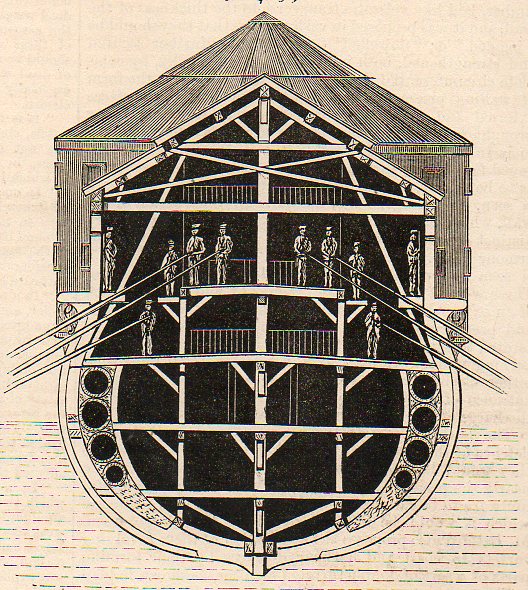
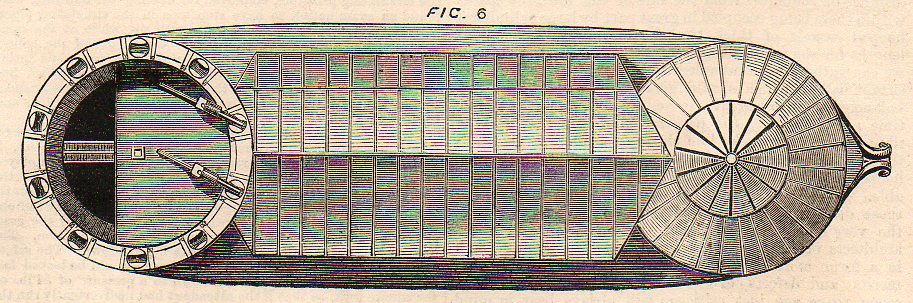
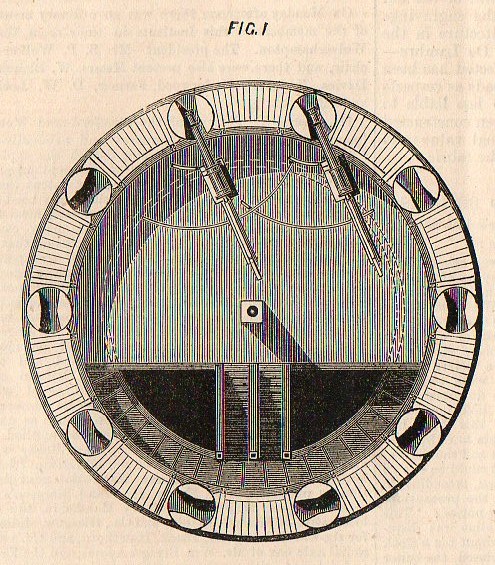
    This image (from the The Engineer for 30 October 1874) shows a plan of the top floor of a revolving battery designed by M. Baltard in 1831 (and which is available at our blog bookstore).  This idea is probably ancient, though it really only had major technological legs by the 19th century. Even though Baltard is given some fair credit for the modern rediscovery of the revolving turret–and in this short article he is given premier status–there were earlier engineers at work before him.  For example, in the earliest part of the 19th century Col. John Stevens designed a saucer-shaped floating battery that was supposed to be able to fire in any direction; T.R. Timbly–slightly after Baltard–applied in the U.S. Patent Office in June 1843 for a device he called a “metallic revolving fort”.  Then came the great John Ericsson–very long on accomplishments but very short now in modern memory, he is also one of those memorialized men in marble in DC for whom people have almost no modern recognition–who in 1854 produced an “impregnable battery revolving cupola”, which led to his great innovation on the Monitor.  And as we recall, the Monitor’s defeat of the Merrimack in Hampton Roads in 1861spelled the coming end of the wooden ship of the line–metal ships with mounted revolving turrets fore and aft would prove entirely too far superior to the 19th century wooden ship.

    Technical drwg--revovl turret537

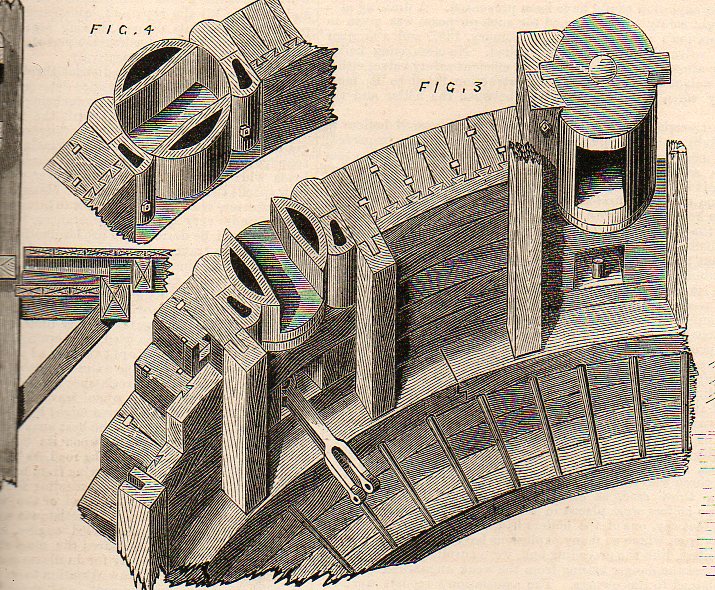
    What we are seeing in the first engraving is the top floor of a two-story fortification–roof removed–showing the floor plan of the battery.  The walls and roof were stationary; the floor was not.  The two cannons were located on a revolving floor and were moved by turning the floor (basically) to one of the open firing windows (embrasures) a detail of which is above. When the barrel of the canon was pulled out of this opening, it was turned closed to prevent any fire coming into the fort.

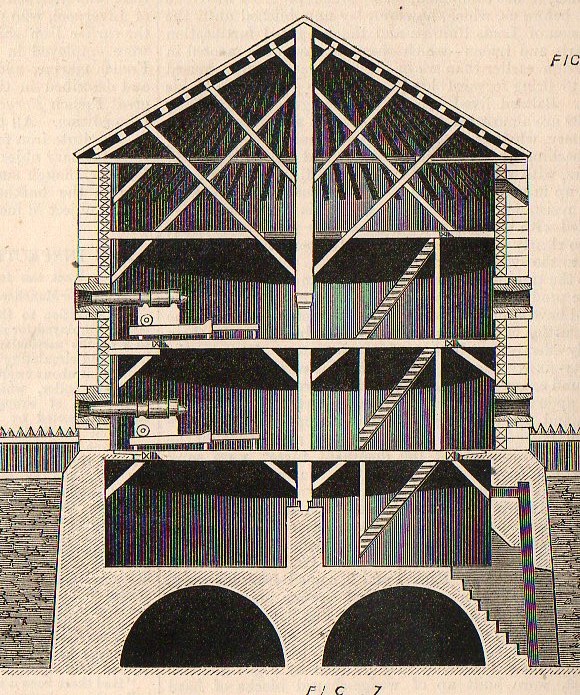
    The engraving below shows a cross-section of the two-turret land structure.

      Technical drwg--revovl turret535

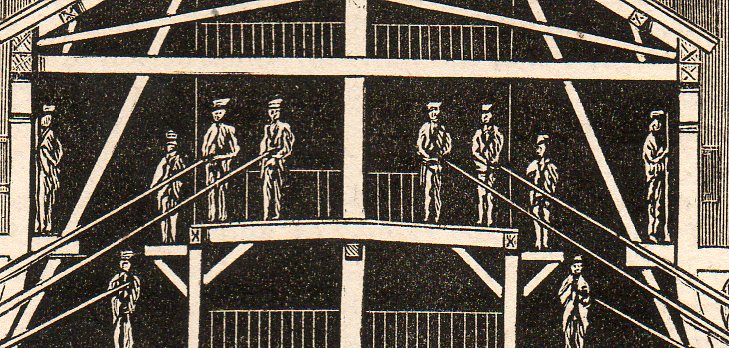
    The engraving below shows the idea of the land fortification shipboard, one revolving turret fore and aft. It turns out that the engine for the vessel was human, the engineer calling for “either” convicts (forcats) or soldiers to row to move and position the boat

      Technical drwg--revovl turret536

    And a detail we can clearly see the long sweep oars:

    Technical drwg--revovl turret big detail538

    And the turrets on the ship, the pre-Monitor-style ship:

    Technical drwg--revovl turret big detail539

    I assume that the boat was being used for coastal or harbor defense, or at least something very close to land, and was really more a floating, positioning battery than a boat.  Seems to me though that after everything was said and done, after all the work was accomplished and the boat built, that making the whole thing dependent on sticks of wood was a fatal flaw. 


  • Blank, Missing & Empty Things: Band Members

    JF Ptak Science Books   Quick Post

    Blank band533

    This image–a part of this blog’s longish series of posts on The History of  Blank, Missing and Empty Things–shows military band instruments left where their players last put them.  I’m uncertain if the instruments were left as a (perhaps) temporary monument to the band members going off to war, or if it was more permanent (judging from the fallen leaves), or, well, I’m not sure.  The picture comes from The Illustrated London News for November  1941, at perhaps one of the lowest points in the war.  It is a stark photograph which strongly drives the point of sacrifice and possible loss. 

    ·Posted by :

    ·in:


  • Elements for a Whiskey Alphabet Drawn from the Bible of Booze Names

    JF Ptak Science Books  Post  1363

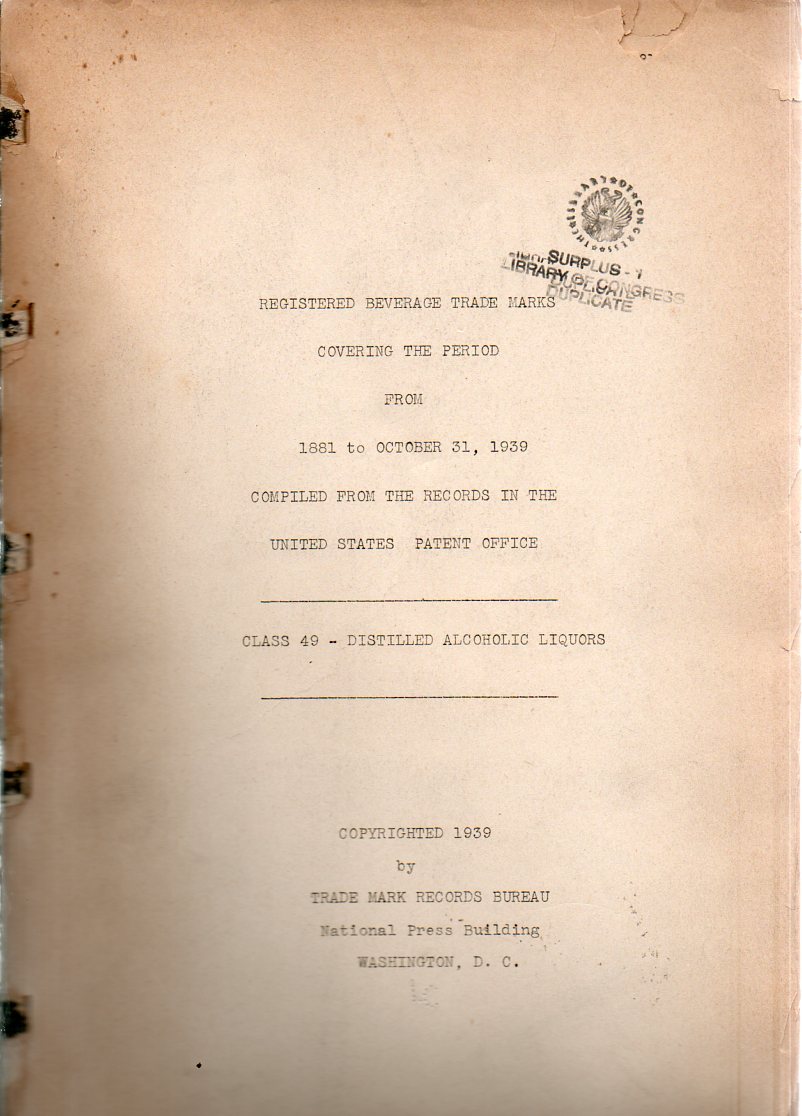
    Booze alphabet532 It may or may no be the case, but this large, flaking book that is balanced on top of a petulant pile of paper, Registered Beverage Trade Marks Covering the Period from 1881 to 1939 Compiled from the records in the United States Patent Office (Distilled Alcoholic Liquors) may be the keys to the kingdom of names of booze(s) trademarked in this country.  15″ tall, and inch thick, and 296 sheets big, this work (copyrighted y the Trade Mark records Bureau (in the National Press Club Building in DC, the one with the problematic parking garage) lists some 7,500 names of whiskey, cordials, gin, rye, bourbon and who knows what else.  I cannot find the book in any online database, big or small, and I’m not sure where this info might be housed and housed in one spot.  I have no doubt that people somewhere need this data, unwieldy and unusable as it might be–you see, it is organized only according to a six/seven digit number which I guess is the trademark filing number, or something; there is nothing else useful about the thing, the data floating around without regard to year or place or liquor type. [The book is available from our blog bookstore, here.]

    So I sat down with the book for an hour pulling out interesting, odd, out-of-place, from-another time and bizarre names, including all manner of expected animal names like bull and elk, and then unicorn; and lots of sunny this-and-that, sloping/sunny/grassy hills, mountains, clubs; and of course the Old _____  category seem fairly filled up. 

    If I spent a little more time on this entire alphabets could be produced relating to nothing but names from the animal kingdom, flora, the sciences, professions, religion, states of mind, altered states,  literature, and the labels that suggest a possible medical benefit.  One of my favorite categories is the “conversational liquor label”, the label that speaks to you, invites you, tells you what to do with the bottle of booze:  Hava Cocktail and Uneeda Whiskey are good examples of that, as are You’re Lookin Good, Uvanta and Yugeta whiskeys. Another is the liquor name ending in “o”, like the beautiful Famo, from St. Jo, MO, which unfortunately wasn’t trademarked in ’00.  The label of suggested promise and outcome is another good one:  Kentucky Courage, Pleasant Dreams, Invincible Rye, Solace Whiskey and Ready Money are all good examples of the implied end-of-bottle pillow-fluffer…maybe, especially, The Old Solution whiskey.

    And then of course, there are those where the (creative) spirit has just flown away, like the lumpily-named Standard Spirits Whiskey, its hometown of New Orleans embarrassed by the lack of effort–especially in the light of some many hundreds of imaginative creations, like the fabulous Bone Factor Whiskey (1903), which like som many other great names  (Yellow Hammer Whiskey) comes from Louisville, Kentucky.

    Antediluvium Whiskey, NYC, 1898; Anti-Grippine Whiskey, Philadelphia, 1906; Ash Cake Whiskey, Lynchburg, VA. 1899, Auto Crat Whiskey (St. Louis, MO), 1905

    Bank Check Whiskey, Boston, 1900; Bone Factor, 1903;

    Caloric Whiskey, 1904; Cremo Whiskey, 1902; and the confusing Chickencock “potable spirits”, 1929

    Devil’s Island Benefactor Gin, 1905; Daily Mash Whiskey, 1935; Dandilyon Whiskey, Columbus, OH, 1906;

    Electric Whiskey, Cincinnati, 1890;

    Flow Whiskey, Pittsburgh, 1908; Famo Whiskey, St. Jo, Mo 1894; Faust’s Own Whiskey,  Phila, 1900.

    Gopher Gin, St. Paul, 1902; Gas Away, Columbus OH, 1902; Galoxy Whiskey, NYC, 1905; Gong “ethyl alcohol, etc,” 1932′ Georgia Watermelon, 1911

    Hen Bolt Whiskey, 1889;  Hava Cocktail, NYC, 1933; Hospitality Gin, Louisville, KY, 1900

    Index Whiskey, Cincinnati, 1906; Invincible Rye, 1900

    Jupiter Gin, Boston, 1905; Judge’s Preference, Boston, 1905;

    Kentucky Courage Whiskey, Lexington, 1900

    Marconi Whiskey, Birmingham, 1903

    Old Tom Gin, 1887 (There are any number of Old ____ labels: Old Crow, Old Man River, Old Count, Old Court, Old Coon, Old King Cole, Old Rock, Old Moss, Old Soldier, and so on–there’s a specialized sub-alphabet in this category, alone.)  Perhaps my favorite “old” is The Old Solution, Baltimore, 1900.

    Peeper Whiskey, Lexington, KY, 1880; Pen and Pencil Club Rye, Phila, 1894; Pleasant Dreams Whiskey

    Radium Whiskey, Terre Haute, 1905; Rolling Fork Whiskey, Lexington, KY, 1876; Ready Money Whiskey

    Sun Shot Cordial, Birmingham, AL, 1901; [SWASTIKA emblem, no name] Whiskey, Frankfort, KY,  1902; Suburban Whiskey, Boston, 1909; Solace Whiskey, Balto, 1900

    Tidal Wave Whiskey, Houston, 1905

    Uncle Tom Whiskey, Cincinnati, 1905; Uneedda Whiskey, Davenport IA, 1899;  Uvanta Whiskey, Louisville, KY, 1905

    Vitoline Brandy,  St. Paul, 1897

    Yugeta Whiskey, Plymouth, PA, 1906; You’re Lookin Good Whiskey, D.C., 1902; Yellow Hammer Whiskey, Louisville, 1905

    Zeno, Ace of  Clubs Whiskey

    And to sew up the specialty market in school-named liquors, Lawrence McCormick of Baltimore trademarked whiskey names for Brown, Yale, Harvard, Princeton, Cambridge, Cornell, Swarthmore, Chicago, Oxford and of course Lehigh University, not to mention various label designs that featured books and “philosophical instruments” emblazoned on shields and rocks and such, all perhaps for those in search of higher education.

    Unfortunately there are no images of the labels in the book, though I guess if someone could find 200 or so they’d have themselves a snappy coffee table book of their own. 


  • Technical Drawing–Superb Shadowing, Shipboard Cannons, 1887

    JF Ptak Science Books   Quick Post

      Shadow ship 515

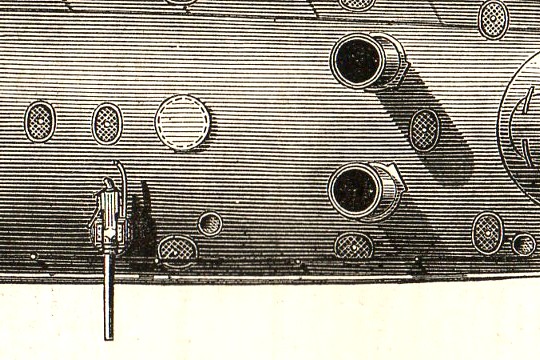
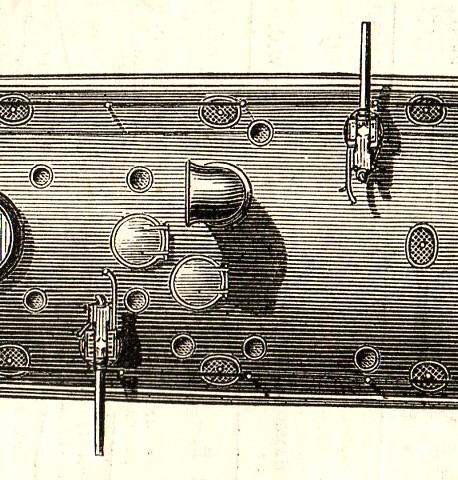
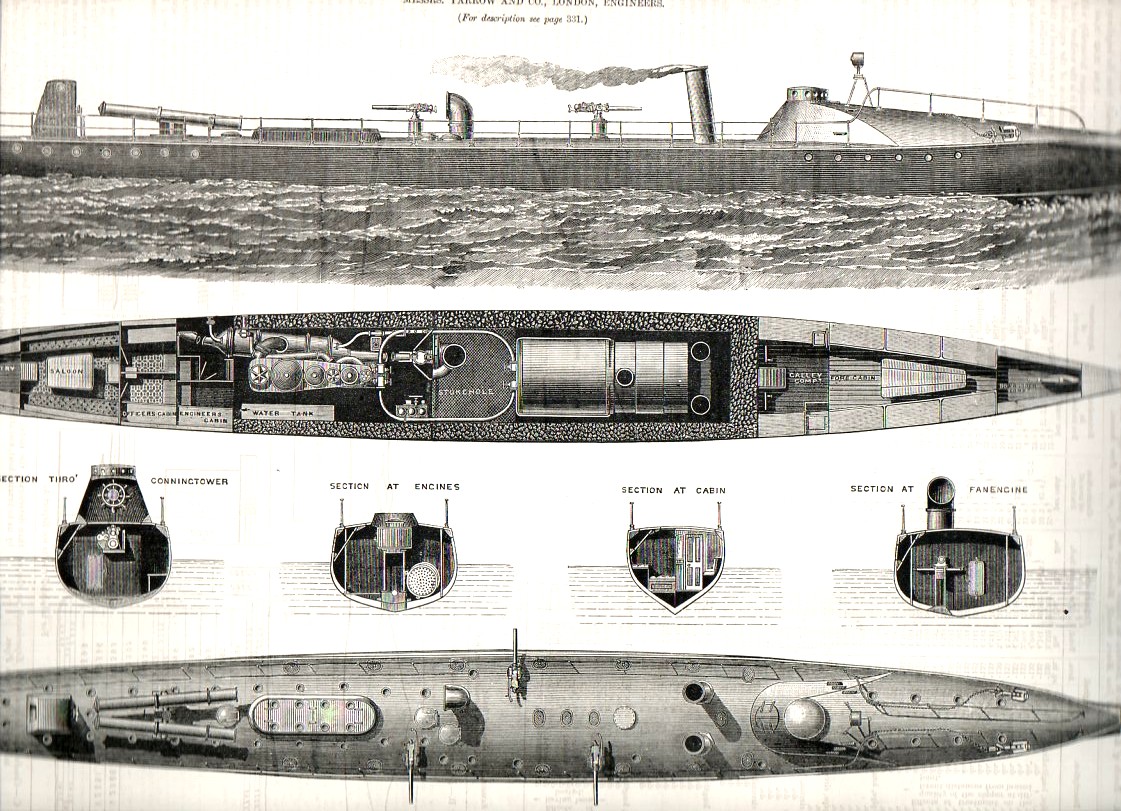
    Horace may have said “Pulvis et umbra sumus” (“We are but dust and shadow”)- and meant it, but the artist working here on this ship would definitely have replaced “dust” with “metal and wood”.  The details above and below are two very small bits (each about a half-inch long or so)  from a 15-inch long engraving of a Spanish torpedo boat, and published in The Engineer on 21 October 1887.  The workmanship is superb and the sense of design to me is absolutely glorious–the entire image of the plan of the ship is below. [The original is available from our blog bookstore.]

    And another detail:

    Shadow ship 516


    Shadow ship 513


  • Technical Drawing–Superb Shadowing, Steamship Boilers, 1880.

    JF Ptak Science Books  Quick Post

    Boiler511

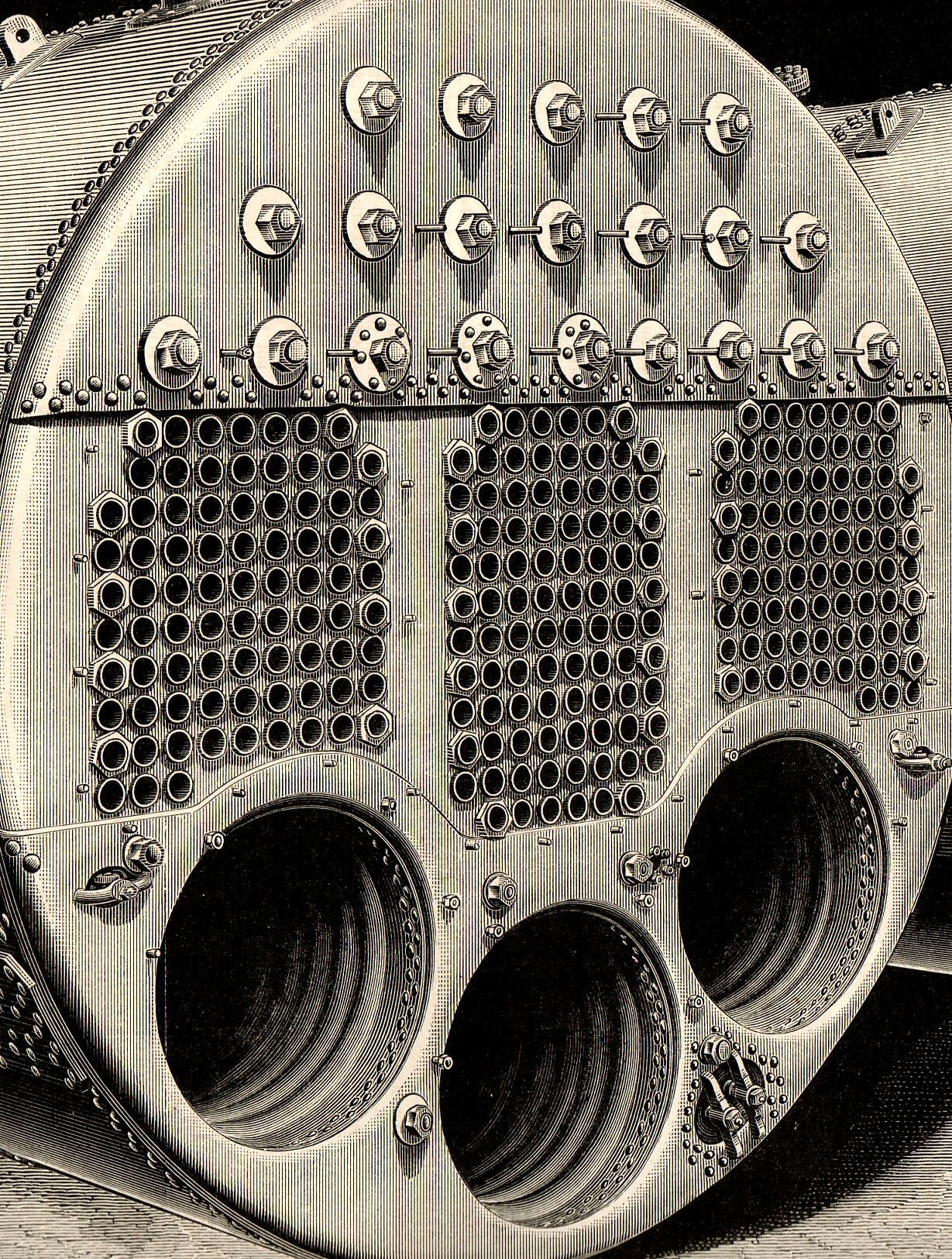
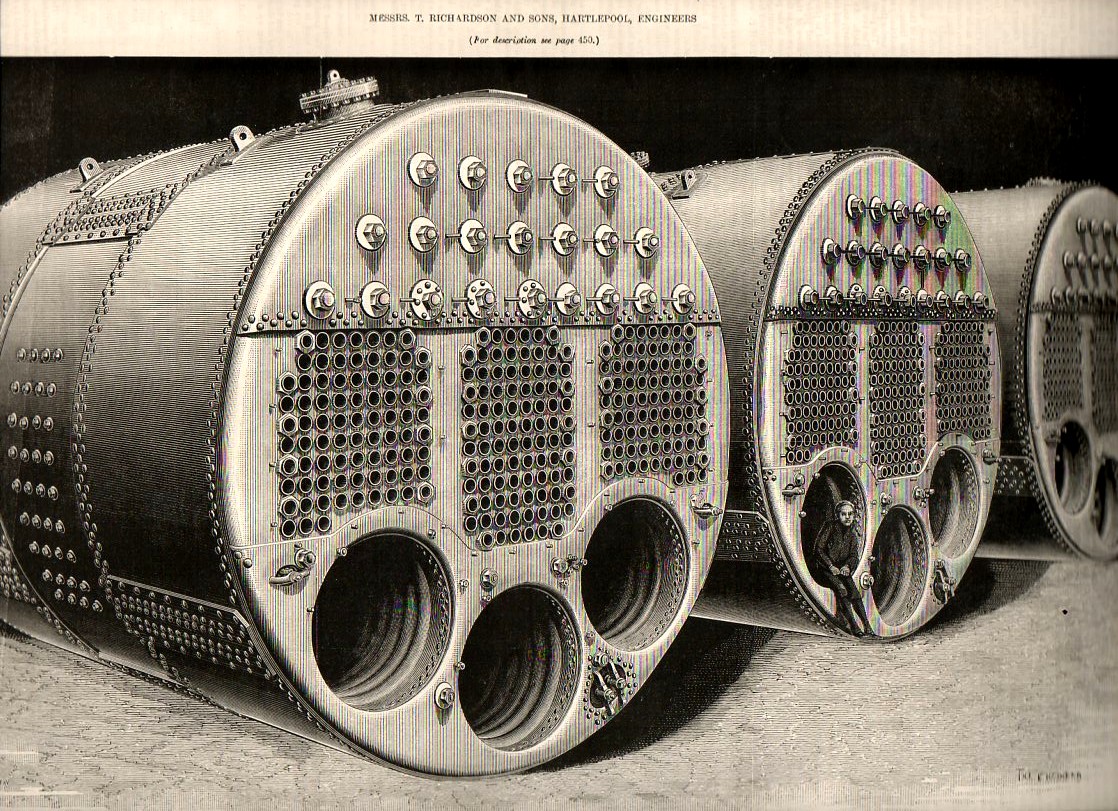
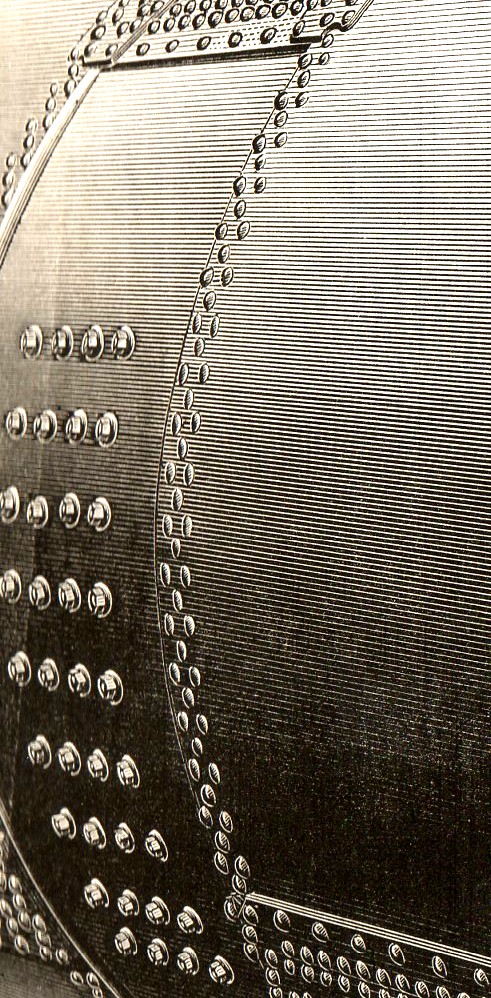
    This is another in a beginning series on superior draftsmanship in rendering technical, physical and biological objects.  The image–boilers for the RoyalMail  Steamshp Roslin Castle, published in The Engineer on 30 November 1880–is a very contained complexity, beautifully shadowed.  [The original is available for purchase at the blog bookstore.]

    Which is a detail from this:

    Boiler510

    And from which also comes this detail:

    Boiler512


  • Antique pre-Dada Ingredients of the Anatomy of the Senses

    JF Ptak Science Books  Post 1362

    Dadaist senses mouth det503

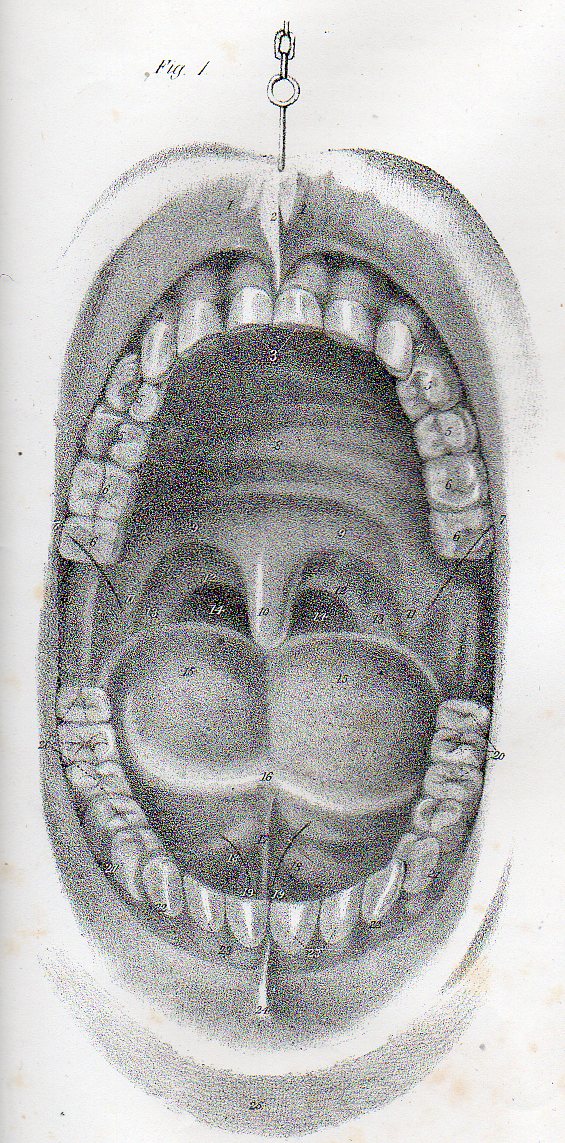
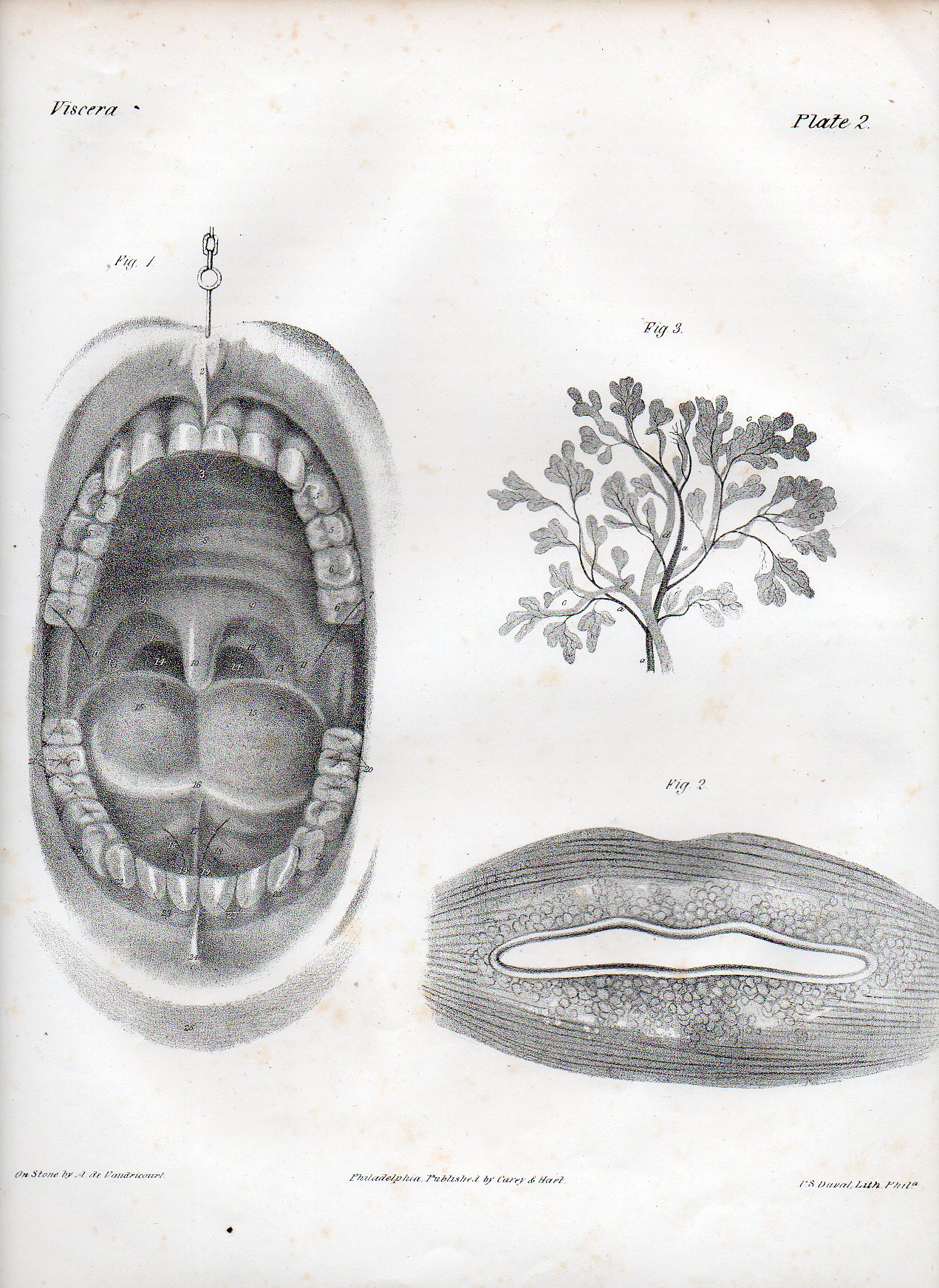
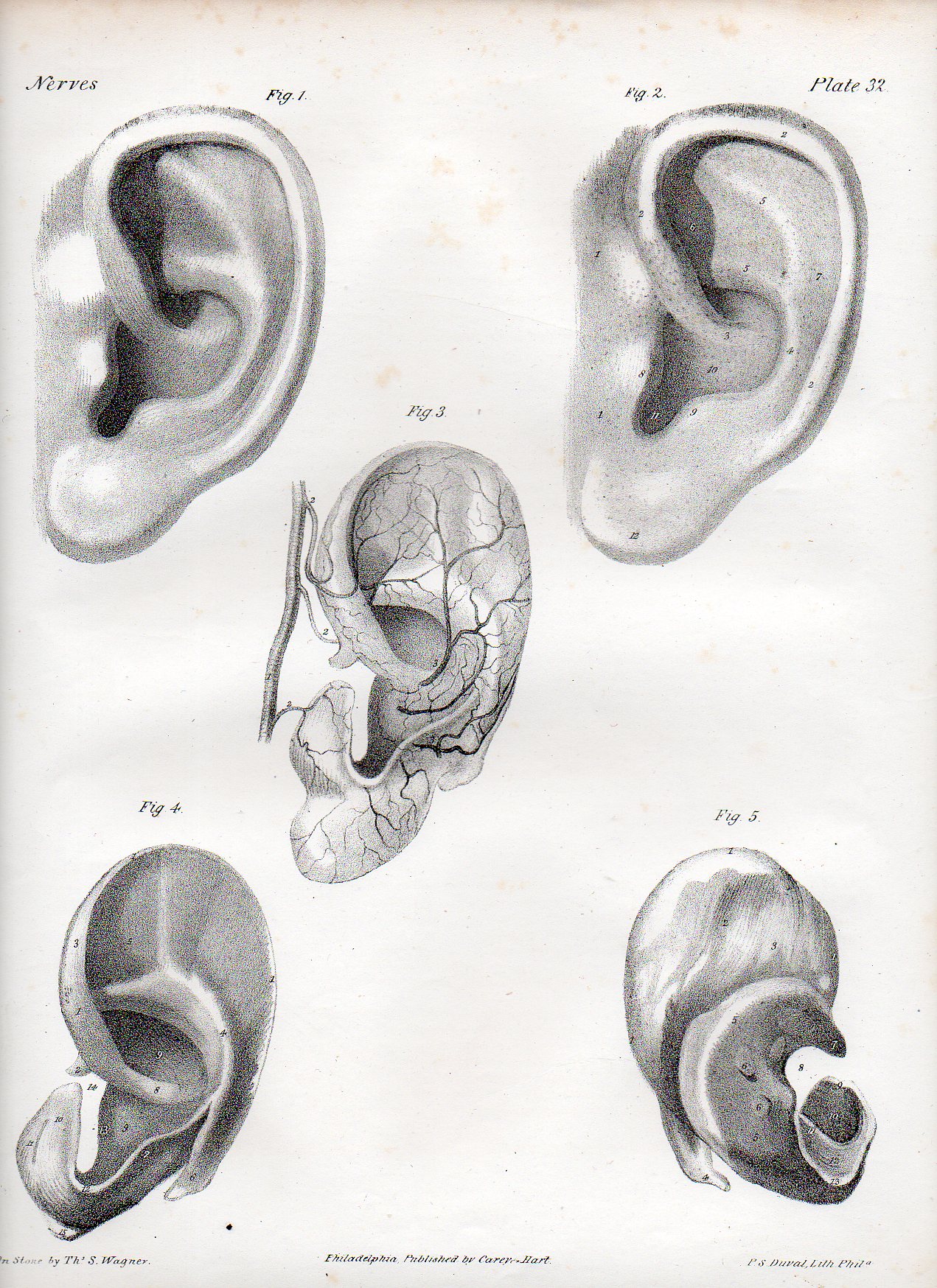
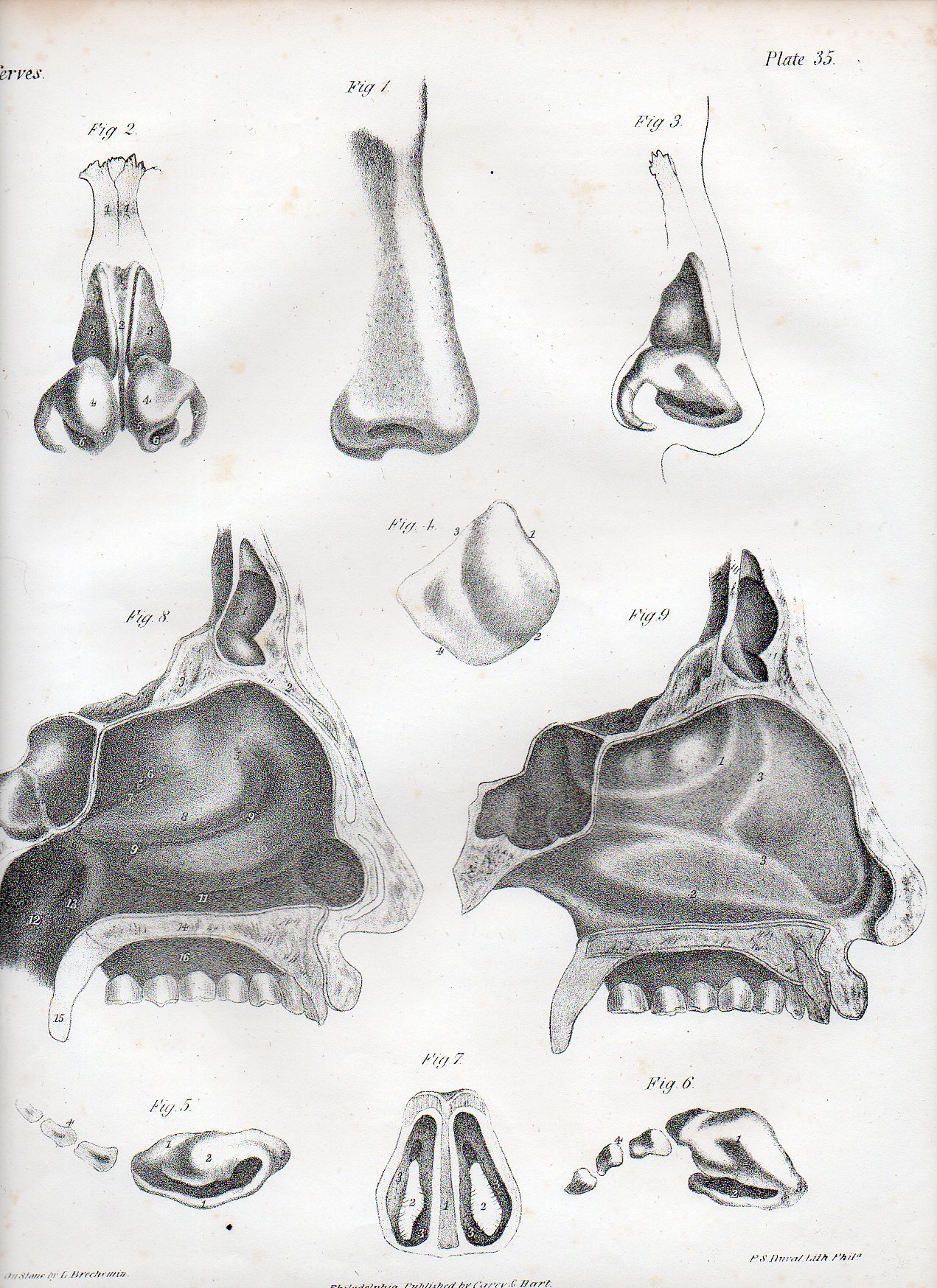
    Some of the strangest, occasionally least-of-their-time scientific illustration seems to come in the area of anatomical illustration–for me, anyway.  When taken out of context, some medical illustration looks positively modern, or post modern, as we can see with the following examples [all o fwhich are available from our blog bookstore].

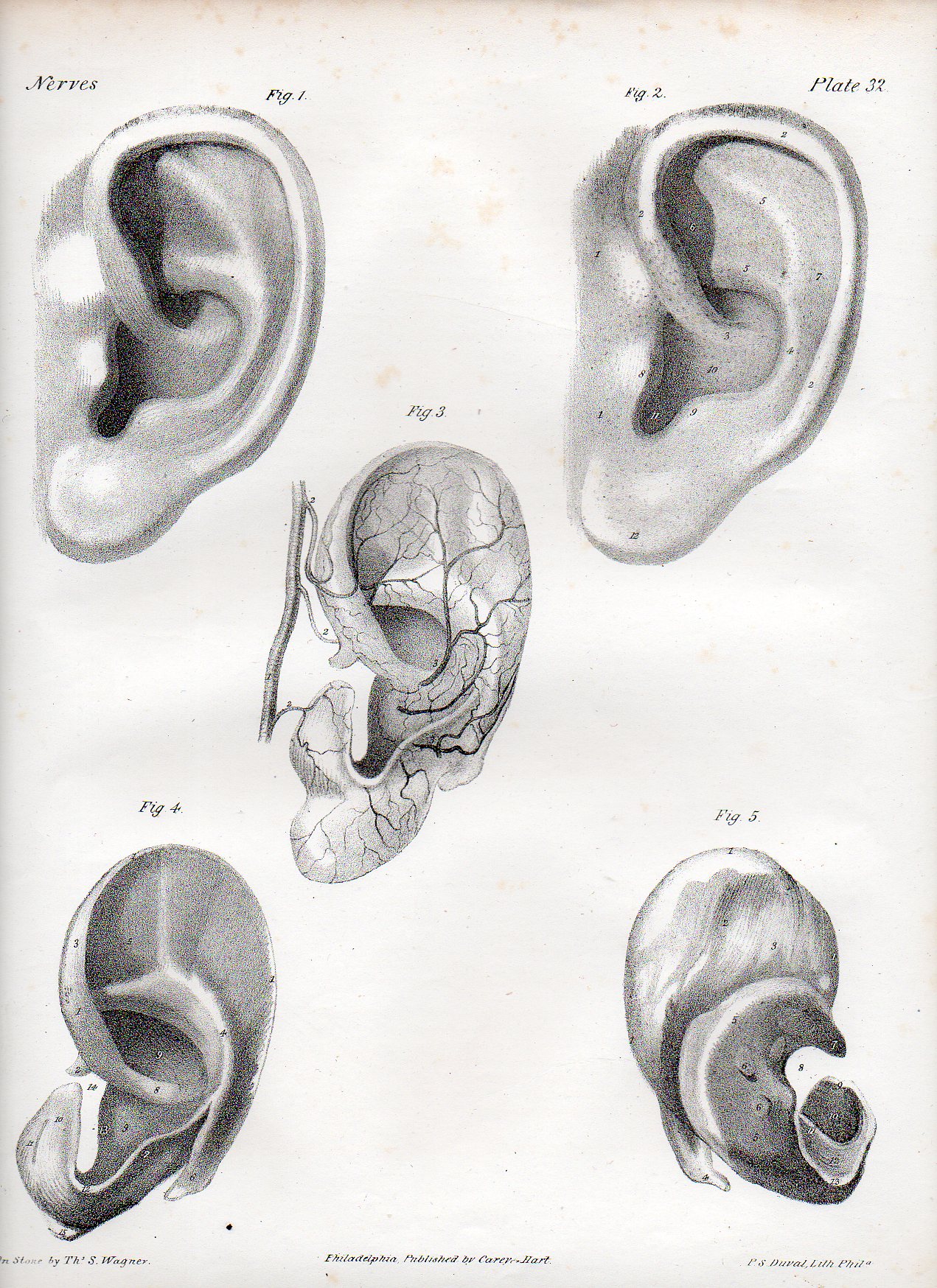
    The first image is a detail from a series of images by the Irish-born Quain brothers:  Jones Quain (1796-1865),  an anatomist and professor of Anatomy and Physiology at the University of London; and Richard Quain (1800-1887), professor of anatomy in 1832 at the University of London, then surgeon at North London Hospital, and president of the Royal College of Surgeons. The illustrations are from a later and smaller printing of their beautiful 1844 work The Anatomy of the Arteries of the Human Body, with its Applications to Pathology and Operative Surgery, in Lithographic Drawings with Practical Commentaries.  Taken out of context, removed 80 years or so, taken to Germany, and they might be bits and pieces (or entire works for that matter) of a Dadaist exhibition in Berlin in 1925. 

    The full image of the image above is from:

    TASTE

    Dadaist senses mouth502

    SIGHT

    Dadaist senses eye 2507

    Dadaist senses eye506

    And this beautiful detail:

    Dadaist senses eye 4509

    Dadaist senses eye 3508

    SOUND

    Dadaist senses ear505


    TOUCH

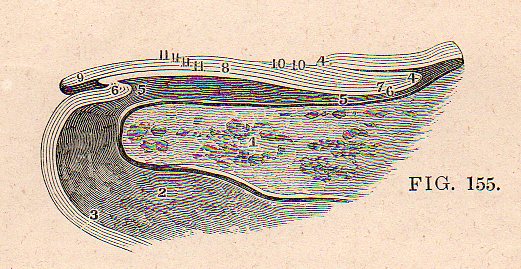
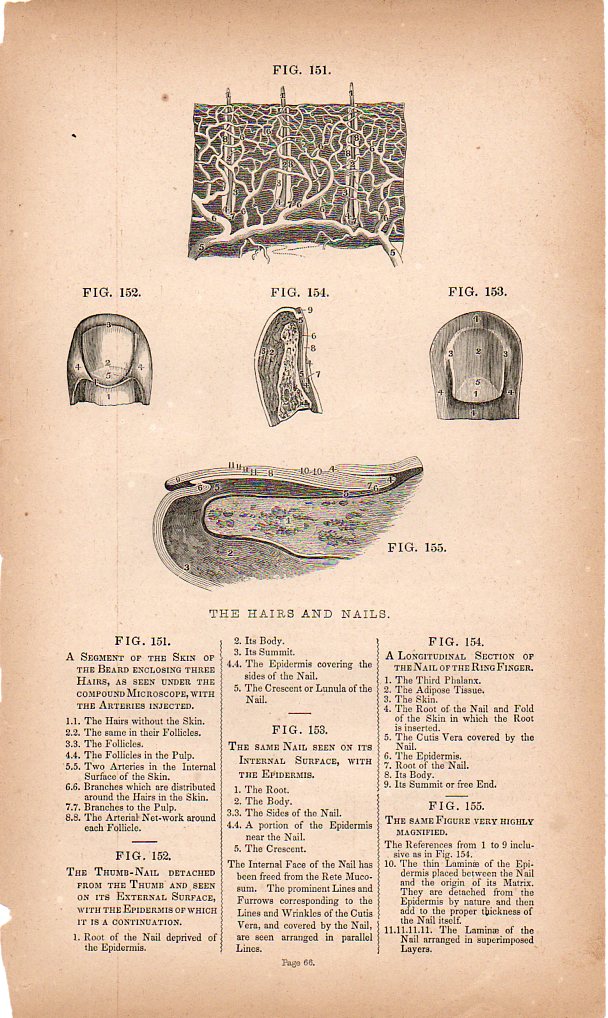
    This remarkable cross-section of the fingertip.

    Dadaist senses touch det501

    Which is a detail from:

    Dadaist senses touch500

    SMELL

    Dadaist senses nose504

    HEARING

    Dadaist senses ear505


  • An X-Ray of Cubism? Jouffret and Visualizing the Fourth Dimension, 1903 and 1906.

    JF Ptak Science Books   Post 1361

    Is this an X-Ray of Cubism?

    Jouffret

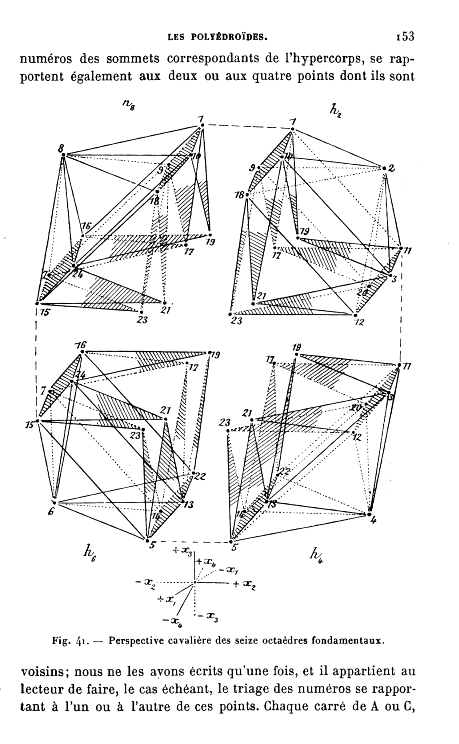
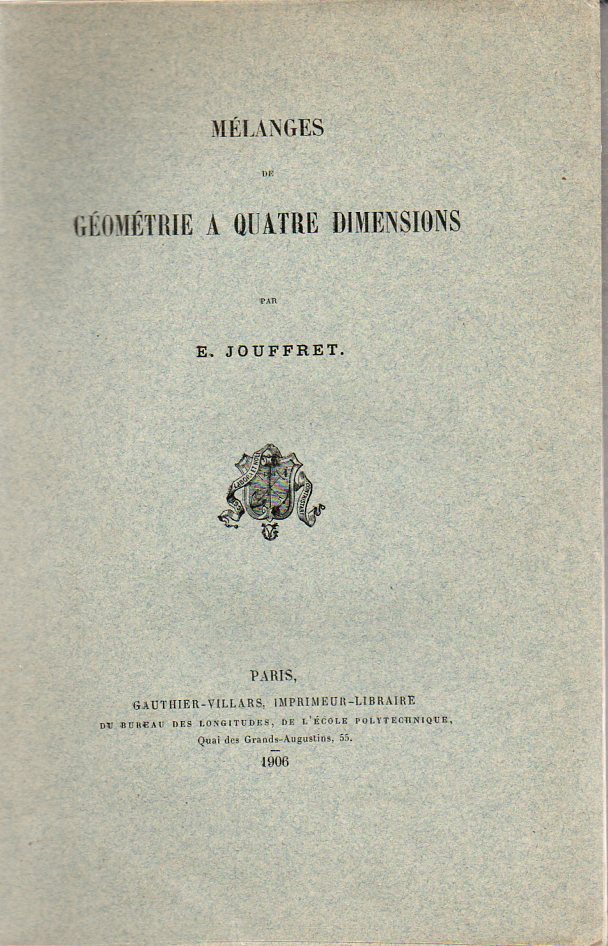
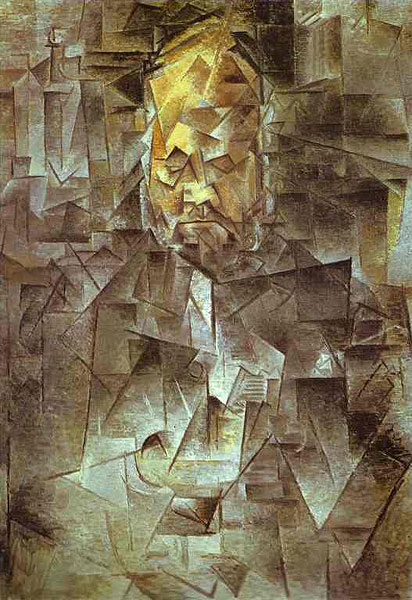
    Emile Jouffret brought an amazing and lovely pair of books to the mathematical dining table, both coming at about the mid-point of a period of perhaps the most sweeping multidisciplinary revolutions in human history.  Published in 19031 and 19062 [and both originals available at our blog bookstore] they both may have had an impact as a visualization tool for the newest movement in art since the creation of Impressionism (1850’s-1870’s): Braque and Picasso’s  Cubism. When you compare the illustrations in the Jouffret books you cannot help but to see a connection to the work of (the morally-lonely) Picasso (and especially in his 1910 portrait of the movement-molding art dealer Ambroise Vollard, below). Georges Braque and the that the two would make in 1906, the first year of the Cubist movement. 

    Jouffret’s 1903 book was hardly the first on the topic, though it may be the first of the major, book-length treatments of the topic, as well as the most  heavily illustrated.  Thinking on the fourth dimension goes back as far as Kant, at least, and the real work begins in the first half of the 19th century.

    The first major3 work arrives with Hermann Grassmann’s “Die Lineale Ausdehnungdlehre” (Theory of Linear Extensions) in 1844 (and the subsequent translations of the work as well as original work by Arthur Cayley); followed by Ludwig Shclafli (1814-1895) “Theorie der vier flachen….” (Theory of Continuous Manifolds, 1852 but not published until 1906), Riemann’s 1854 speech (which was not published until 1867 and which appeared translated by William Kingdom Clifford in Nature in 1873, G.F. Rodwells “On Space of Four Dimensions” (Nature, May 1873),  Dodgson/Carroll‘s  Through the Looking Glass (1872) deep references, Zollner “On Space of Four Dimensions” 

    Jouffret499

    (April 1878 and subsequent publications, and who is referenced in Kandinsky’s [difficult -to-me On the Spiritual in Art of 1912), W.I. Stringham (1847-1909) “Regular Figures in n-Dimensional Space” (American Journal of Mathematics, 1880), and E.A. Hamilton Gordon, “Fourth Dimension”, April 1887, to name some of the major figures.  And then of course comes Edwin Abbott’s Flatland, a Romance of Many Dimensions, by a Square (1884) and Charles Howard Hinton, who published a number of different works beginning in 1880 (“What is the Fourth Dimension?”, 1880 plus Scientific Romances 1884, and The Fourth Dimension, 1904) and lasting through the turn of the century.  There is also H.G. Wells, whose The Time Machine began to appear in parts as early as  1894, though it did appear in the same issue of the  Science Schools Journal as the Hamilton Gordon article, in April 1887, as the “Chronic Argonauts”). Wells’ also approaches the fourth dimension in “The Plattner Story”, in 1896 and The Invisible Man in 1897. Other literary contemporaries of Wells who used the fourth dimension in their work include Oscar Wilde (“The Canterville Ghost”, 1891), George Macdonald (Lilith, 1895), and Joseph Conrad and Ford Maddox Hueffer The Inheritors, (1901)–the most convincing and scientific of all of these literary efforts though lies with Wells. From about this point on–from the time that Jouffret enters the scene in 1903–the fourth dimension has become part of the culture, and a popular culture at that…especially after the Cubists begin their assault on visual representation in about  1906.

    The Jouffret books are beautiful, and very interesting–they would have been better served with a bibliography, which would have been very nice to have–that said, Jouffret does have a fair number of footnotes to earlier work, so it is not as though his work is without attribution.  But it is a very interesting adventure. (Just a note–the fourth dimension and non-Euclidean geometries would get their first bibliography in D.M.Y. Sommerville’s classic  Bibliography of Non-Euclidean Geometry in 1911, which is a must-have for all of those interested in this topic…it is massively packed with all manner of major and minor works as well as obscuriana.  It is not, unfortunately, annotated.)

    1. Jouffret, E.  Traite Elementaire de Geometrie a Quartre Dimensions et Introduction a la Geometrie a n-Dimensions. 

    2.  Jouffret. Melanges de Geometrie a Quatre Dimensions.  Paris, Gauthier-Villars, 1906.  220pp.

    3. Most of the data in this long and winding sentence has been culled from Linda Dalrymple Henderson’s terrific The Fourth Dimension and Non-Euclidean Geometry in Modern Art, Princeton, 1983–most of my references come from the first 45 pages or so of her book, which is the Bible of all modern works on the fourth dimension/math/physics/art.

    Picasso_vollard1910


  • Unintentional Dadaist Anatomy: WIlliam Rimmer, 1877

     JF Ptak Science Books  Post 1360

    Blog==June 29--rimmer backdet

     
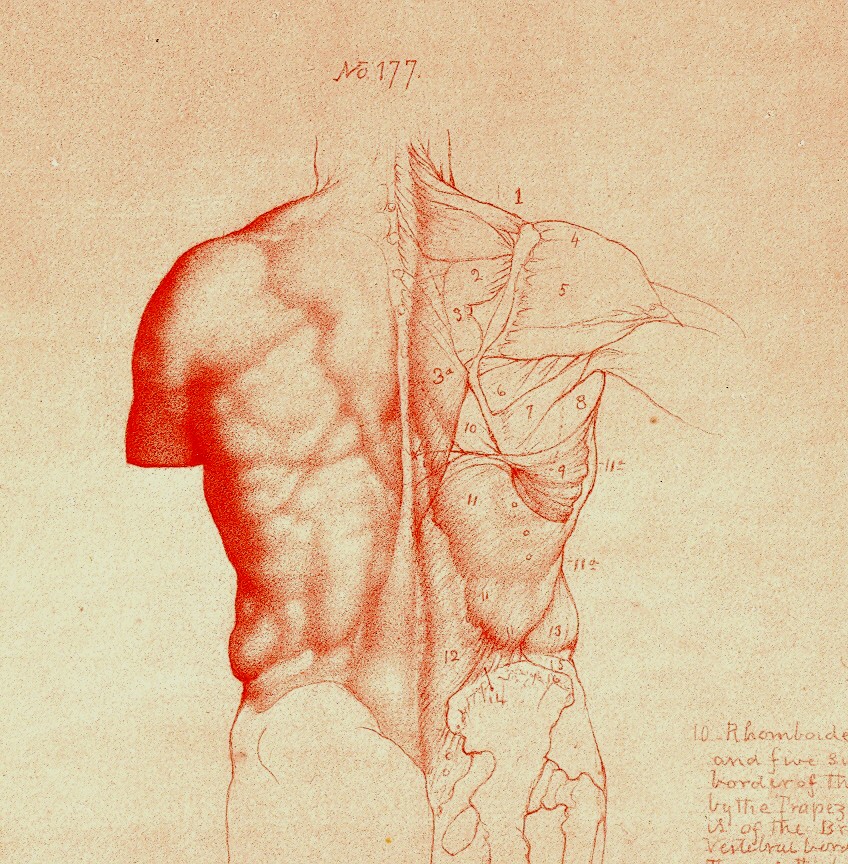
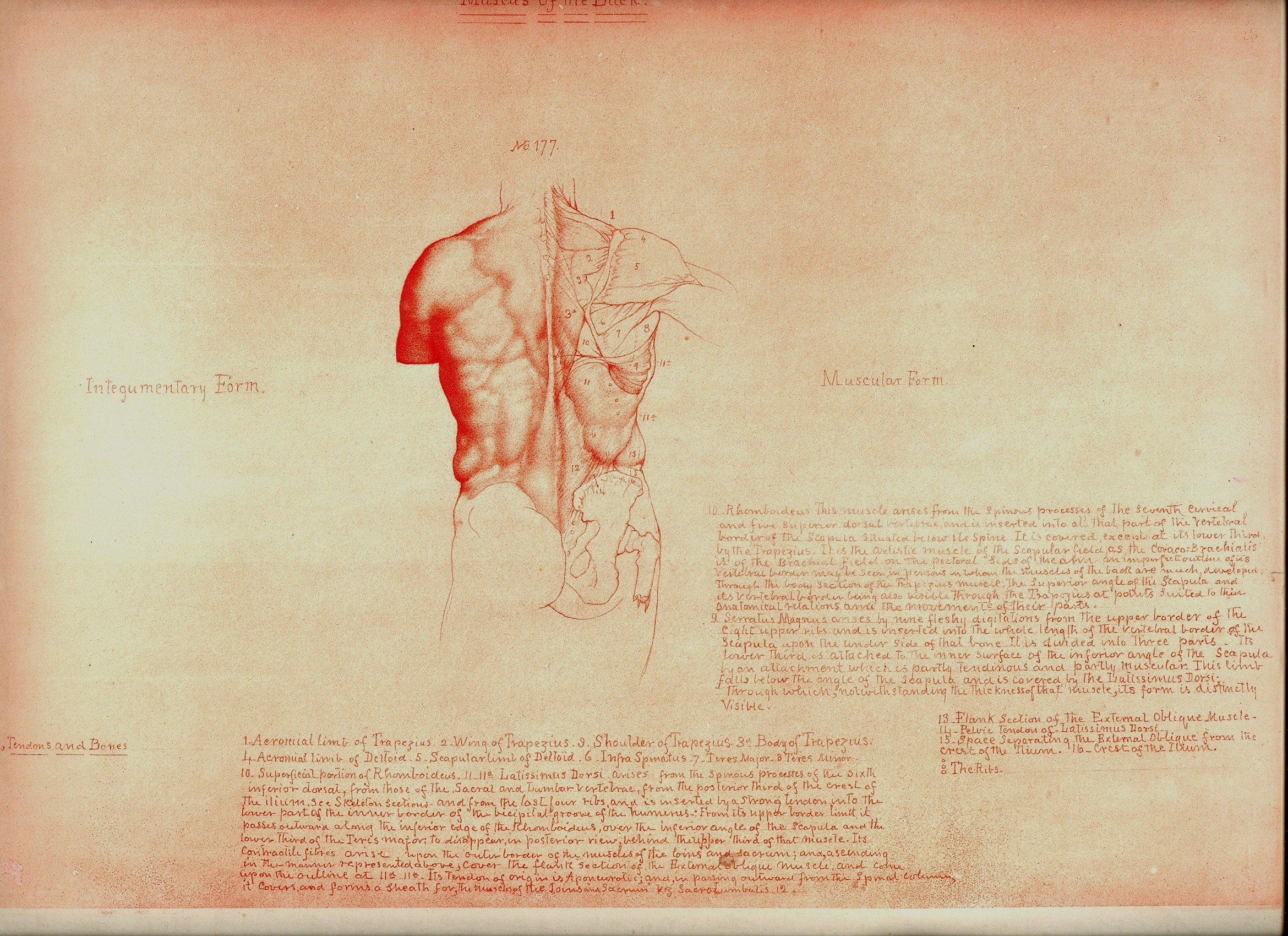
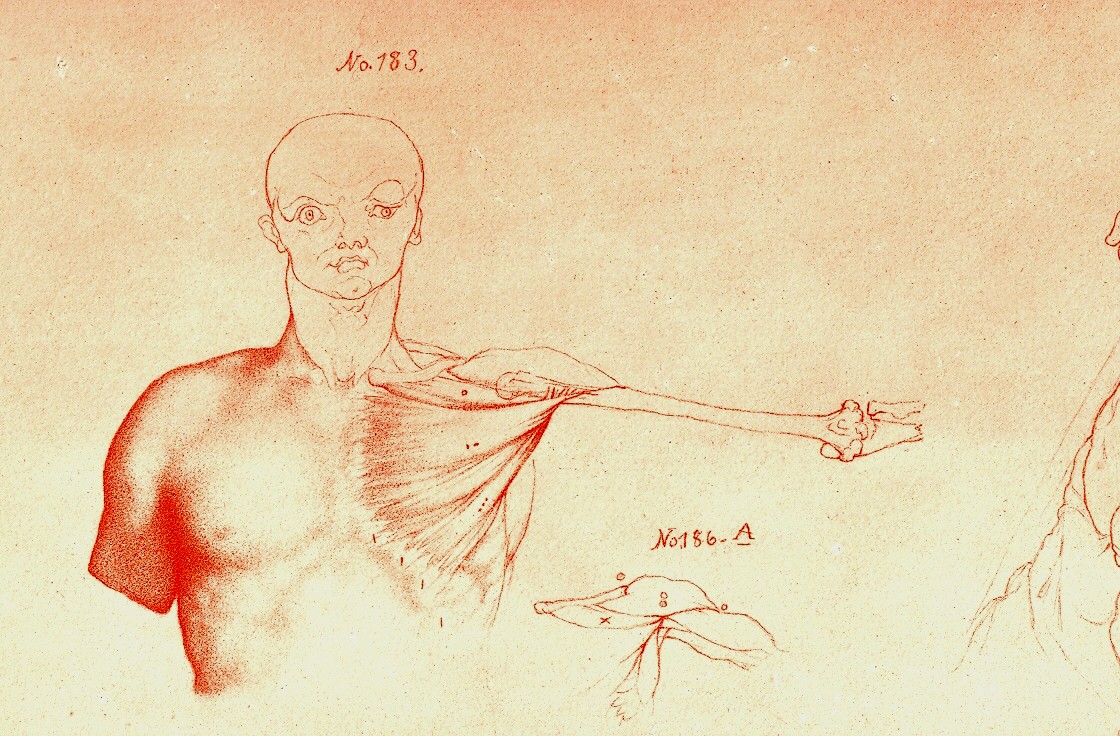
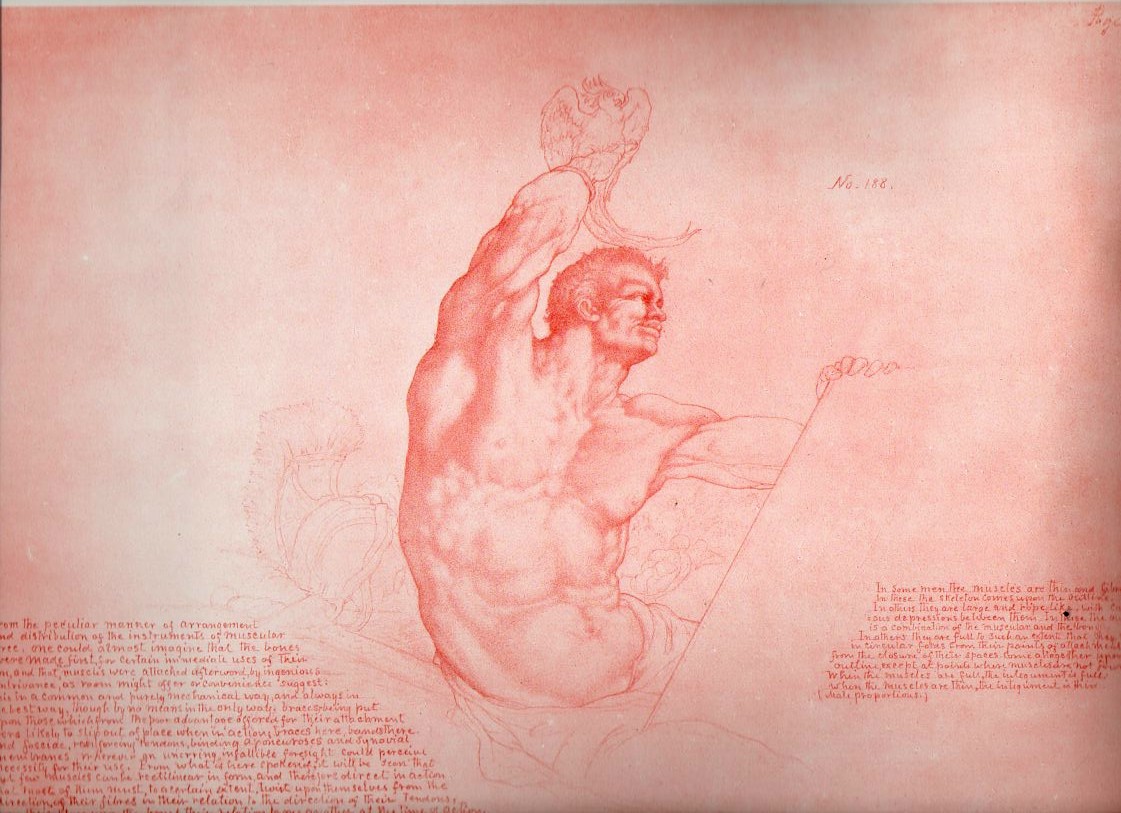
    Looking at old prints sometimes reveals more than just their own history, simple or not:  there are, from time to time, subtle bits of otherness that creeps into the image, if you allow yourself the time to see it.  And sometimes looking at images of the past reveal a little of the future, or the possibility of the future. A great example of this is William Rimmer’s (1816-1879) Art Anatomy, this edition published in 1877 (and about which I wrote earlier in this blog1).

    Blog==June 29--rimmer back

    Blog==June 29--rimmer pecs det

    The work reminds me of at least two touchpoints, one from art, the other literary.  First and foremost, the added elements, the humanist touches and flairs (and I mean Humanist as in the 16th century variety) , the mytholigizing elements, the little designs that are added to the anatomical details

    that run throughout the course of the work,  remind me of the work of the Dadaists that would come forty years later.  As will be seen below, there really isn’t much necessity for all of the added extras, the fabulous add-ons, that Rimmer incorporates in this work.  This part of the work definitely has an antiquarian flavor to it, the major anatomies of the 16th and even into te 17th century having a pronounced artistic flavor to them.

    In a more removed sense, I get a heavy dose of memory of Marcel Proust from the Rimmer images.  In a sense, Rimmer is trying to affect change, an instability, into the most common and stable presentations in art, human anatomy.  There is a strong his history of presenting anatomy in an artistic format–Vesalius is one famous example–where skeletons are posed reading books, or holding their skin or contemplating  a(nother) skull–but not so much past the late 17th century.  Though very few of the “decorated” anatomies have ever taken their artistic license quote so fabulously as Rimmer.  And Proust I think is a Great Destabilizer–he works very hard to push the center of gravity away from where it should be on just about everything.  He drags himself to the proposition at hand, to the memory, to the situation, and though all of his great personal destabilizers–his allegeries, his allegeries to the things that he loves, his allergies to his allergies, his vast catalog of physical complaints, his pale melancholia, his fits, his spectacular memory, his ability to see differently, and on and on, all seemed to coalescence into a colossal ability to see even the smallest detail outside of its small details.  Perhaps this is a stretch, but that is the literary sense-impression I have from Rimmer.

    Notes.

    1. For some reason I never included any of the images available for sale in my blog bookstore–though now I have.

    Rimmer496

    Rimmer495


  • Beautiful Technical Shadowing, 1880

    JF Ptak Science Books    Quick Post

    Techno art wheel488

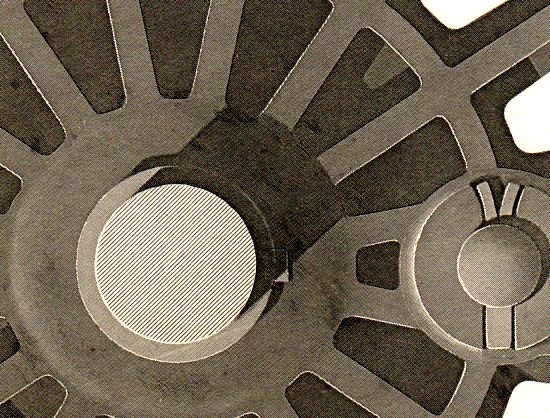
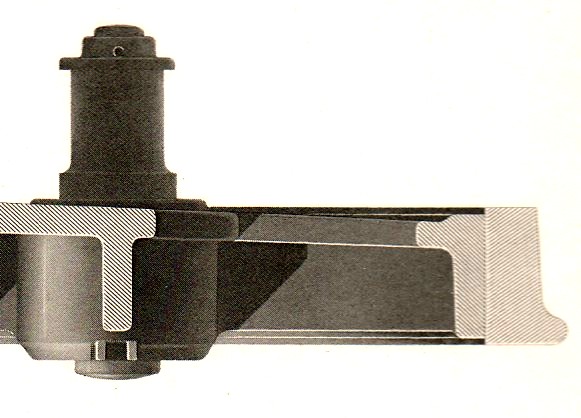
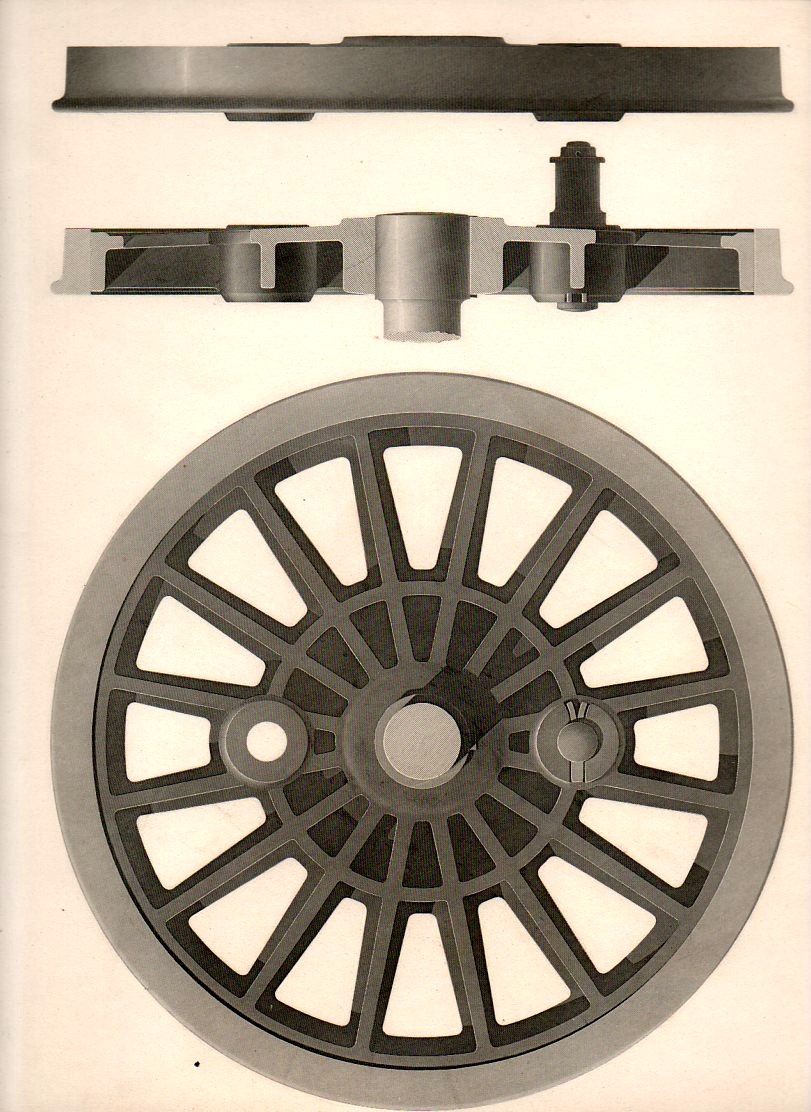
    This superb engraving, “Examples of Finished Shading, Locomotive Wheels” (source unknown) was engraved by J.W. Lowry after the original of C.J. Wallis, and published by Blackie & Son of Edinburgh and London around the year 1880.  The work is detailed yet spare, heavy yet elegrant, beautiful, and of course perfectly shadowed.  Splendid. The details (above and below) could be almost anything, but the first does have a certain pull of the 18th century masters of Fench visionary architects (Boullee, Leduc & co.) to it. The full engraving (which is available at our blog bookstore) is follows the following.

    Techno art wheel489
    And the full engraving: Techno art wheel487