A Daily History of Holes, Dots, Lines, Science, History, Math, Physics, Art, the Unintentional Absurd, Architecture, Maps, Data Visualization, Blank and Missing Things, and so on. |1.6 million words, 7500 images, 4.9 million hits| Press & appearances in The Times, Le Figaro, Mensa, The Economist, The Guardian, Discovery News, Slate, Le Monde, Sci American Blogs, Le Pont, and many other places… 5000+ total posts since 2008.

Author: JF Ptak

  • Daily Dose of Dr. Odd: the Future at the End of Burning Ash (Cigarette Card Visions)

    JF Ptak Science Books   Quick Post

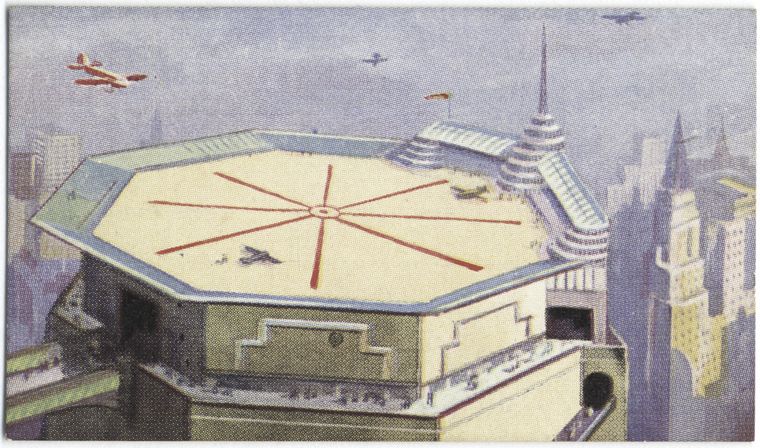
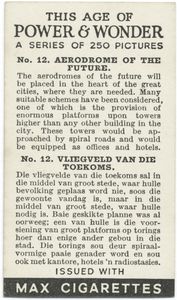
    Three wonderful images of the future, brought to the viewer via the tobacco trading cards interests in the 1920’s–a future that could very well have been denied by the user of the product that advertised it. 
    Source: New York Public LIbrary Digital Collections, here.

    Aerodrome of the future.
    Aerodrome of the future.

  • “Kill Sin Pimple” and other Religious Nicknames of the 17th Century

    JF Ptak Science Books    Post 1841

    Barebones601

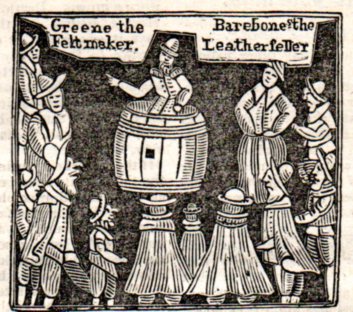
    Who Is that man pointing and speaking from the preacher barrel? 

    This quaint woodcut appeared as the cover illustration to a pamphlet entitled A Word to Fanatics, Puritanism and Sectaries1; or, New Preachers New, and it answers my question: the screamer is Mr. Praise-God-Barebone who is attended by his attender, a more-commonly named Mr. Green (“the Feltmaker”), and is shown preaching to a small crowd, many of whom are shown with long faces and in deep caricature, more so to mirror words they are hearing.  Barebones is not presented in a friendly light, as the pamphlet was a warning to the general reader of the rising crowd of untrained and possibly heretical religicos who were gathering attention in and about London in the (Cromwellian fanatical) 1640’s.  They were seen as diffident, destructive, and definitely of the dimpled damaged variety of street entertainer. The interestingly-named pamphlet and Mr. Barebone was reported by the  magazine, The Mirrour, (July 19, 1823) as “the object of the work is to ridicule such persons without education undertake to expound the Scriptures, and who, ignorant themselves, have the vanity to pretend to teach others”. The powers that be were not amused.

    After dispatching the screamers The Mirrour then lists a number of very compelling and some-never-heard-of-before-by-me nicknames, like Barebone’s brother “Christ Came Into the World to Save” Barebone, followed by these examples: Accepted Trevor, of Norsham; Redeemed Compton, of Battle; Faint Not Hewit, of Hearthfield; Make Peace Heaton of Hare; God Reward Smart, of Firehurst; EarthAdms, of Warbleton; Called Lower of Warbleton; Kill Sin Pimple, of Witham; Return Spelman, of Watling; Fly Debate Roberts, Britling; Be Faithful Joiner, of Britling; Mare Fruit Fowler, of ast Hadley; Weep Not Billing, of Lewes; and Meek Brewer, of Okeham.  The magazine claims official records as the source for these names, but, well, who knows–perhaps the editors were just attempting to put a larger exclamation point on their biting article.

    These are extraordinary names in some ways similar to the passive reportage nastiness of H.L. Mencken’s nickname walk-through in his The American Language, but not quite so–in that book, the old problematic sage of Baltimore staggers his way through unbridled American enthusiastic for the common person’s testing and misunderstanding of English.  The religious  nicknames  seem more like baseball nicknames from the 1920’s, or earlier.  But of course these names predate those efforts by nearly 300 years.

    Somehow I’d like to see trading cards for these guys–although half-ancient that don’t give much leeway to their modern sports varieties.  Baseball has provided ceaseless though a little limited entertainment, tending sometimes toward the poetic overstatement (the Chairman of the Board, The Mighty Slider, The Great Significance) though it does get down to business in the ‘40’s and ‘50’s (the golden age of BB nicknames).  Here are a few examples, minus the racist stuff:  Pork Chop, Tater, Gummy, Whale, Pickles, Rawmeat, Spud, Bunny, Beast, Kitten, Possum, Slug, The Rat, Pudge, Tomato Face, Buttercup. (The most effective nicknames could’ve been made by combining two of the single names:  “Spud Rawmeat”, “Pudge Slug” or “Gummy Buttercup”, for example.)  There’s an awful lot of them dealing with food, and a whole heck of  a lot dealing with facial features; they all seem to outweigh ball playing ability, by far.  All this said, I do have a sweet pull for the religious nicknames. 

    Notes:

    1.  Sectraries:   members of a sect, especially those who belongs to a religious sect that is regarded as heretical or schismatic.


  • Was Homer Color Blind? (1878)

    JF Ptak Science Books  Quick Post

    “Colour Blindess in Relation to the Homeric Expressions for Colour”, from Nature Magazine, volume 18, p. 676, 1878.

    “In an article on “The Colour Sense” in the Number of the Nineteenth Century for October last, Mr. Gladstone points out certain peculiarities…in the expressions of colour used by Homer. “Although” he says “this writer has used light in various forms for his purposes with perhaps greater splendor and effect than any other poet, yet the colour adjectives and colour descriptions of the poems are not only imperfect but highly ambiguous and confused”. And again-“we find that his sense of colour was not only narrow, but also vague, and wanting in description”.


  • Daily Dose of Dr. Odd: Double Dose! Instructions and Regulations for Dealing with the Plague, 1338

    JF Ptak Science Books  Quick Post

    Ordinances For Sanitation In A Time Of Mortality

    Pistoia was a provincial city of about 11,000 in the early fourteenth century located in the region of Tuscany, less than thirty kilometers northwest of Florence. Its government was in the hands of a small executive council made up of the Anziani or Elders of the People and the Standardbearer of Justice. The chief administrative officers were the Captain of the People and the Podesta who served six-month terms. They could not be Pistoian or even Tuscan. They were allowed limited social contact with Pistoians and their behavior was audited, or “syndicated” at the end of their terms of office. This allowed anyone who felt wronged by their actions to bring charges. The eight Anziani and the Standardbearer of Justice were citizens of the city selected by lot to serve two-month terms from among the citizens of the city who met age, professional and property qualifications. This small council debated all issues and made recommendations to a general city council, the Council of the People which was required either to approve or reject proposals without amendment. As will be clear from the ordinances, there were virtually no issues which affected life in the city which the government could not debate.

    The context of the Ordinances was the arrival of the Plague early in the Spring of 1348. Plague probably cost the city and surrounding countryside about one fourth of the total population. The statutes themselves reflect both the scientific knowledge and the practical issues which this crisis brought to a head.

    In the name of Christ Amen. Herein are written certain ordinances and provisions made and agreed upon by certain wise men of the People of the city of Pistoia elected and commissioned by the lords Anziani and the Standardbearer of Justice of the said city concerning the preserving, strengthening and protecting the health of humans from various and diverse pestilences which otherwise can befall the human body. And written by me Simone Buonacorsi notary. . . in the year from the Nativity of the Lord MCCCXLVIII, the first Indiction.

    First. So that no contaminated matter which presently persists in the areas surrounding the city of Pistoia can enter into the bodies of the citizens of Pistoia, these wise men provided and ordered that no citizen of Pistoia or dweller in the district or the county of Pistoia . . . shall in any way dare or presume to go to Pisa or Lucca or to the county or district of either. And that no one can or ought to come from either of them or their districts … to the said city of Pistoia or its district or county on penalty of £ 50 … And that gatekeeper of the city of Pistoia guarding the gates of the said city shall not permit those coming or returning to the said city of Pistoia from the said cities of Pisa or Lucca, their districts or counties to enter the said gates on penalty of £ 10 … It is licit, however, for citizens now living in Pistoia to go to Pisa and Lucca, their districts and counties and then return if they have first obtained a license from the Council of the People ….


  • Daily Dose of Dr. Odd: Chronicle of the Plague, Florence, 1336

    JF Ptak Science Books   Quick Post

    The Florentine Chronicle on Medieval Plague Marchione di Coppo Stefani

    Marchione di Coppo Stefani was born in Florence in 1336. He wrote his Florentine Chronicle in the late 1370s and early 1380s.  [Stefani, Marchione di Coppo.Cronaca fiorentina. Rerum Italicarum Scriptores, Vol. 30. ed. Niccolo Rodolico. Citta di Castello: 1903-13.]

    “Rubric 643: Concerning A Mortality In The City Of Florence In Which Many People Died”

    “In the year of the Lord 1348 there was a very great pestilence in the city and district of Florence. It was of such a fury and so tempestuous that in houses in which it took hold previously healthy servants who took care of the ill died of the same illness. Almost non of the ill survived past the fourth day. Neither physicians nor medicines were effective. Whether because these illnesses were previously unknown or because physicians had not previously studied them, there seemed to be no cure. There was such a fear that no one seemed to know what to do. When it took hold in a house it often happened that no one remained who had not died. And it was not just that men and women died, but even sentient animals died. Dogs, cats, chickens, oxen, donkeys sheep showed the same symptoms and died of the same disease. And almost none, or very few, who showed these symptoms, were cured.


  • Putting Black-and-White Back into Color: 1930’s Schoolrooms

    JF Ptak Science Books    Post 1840

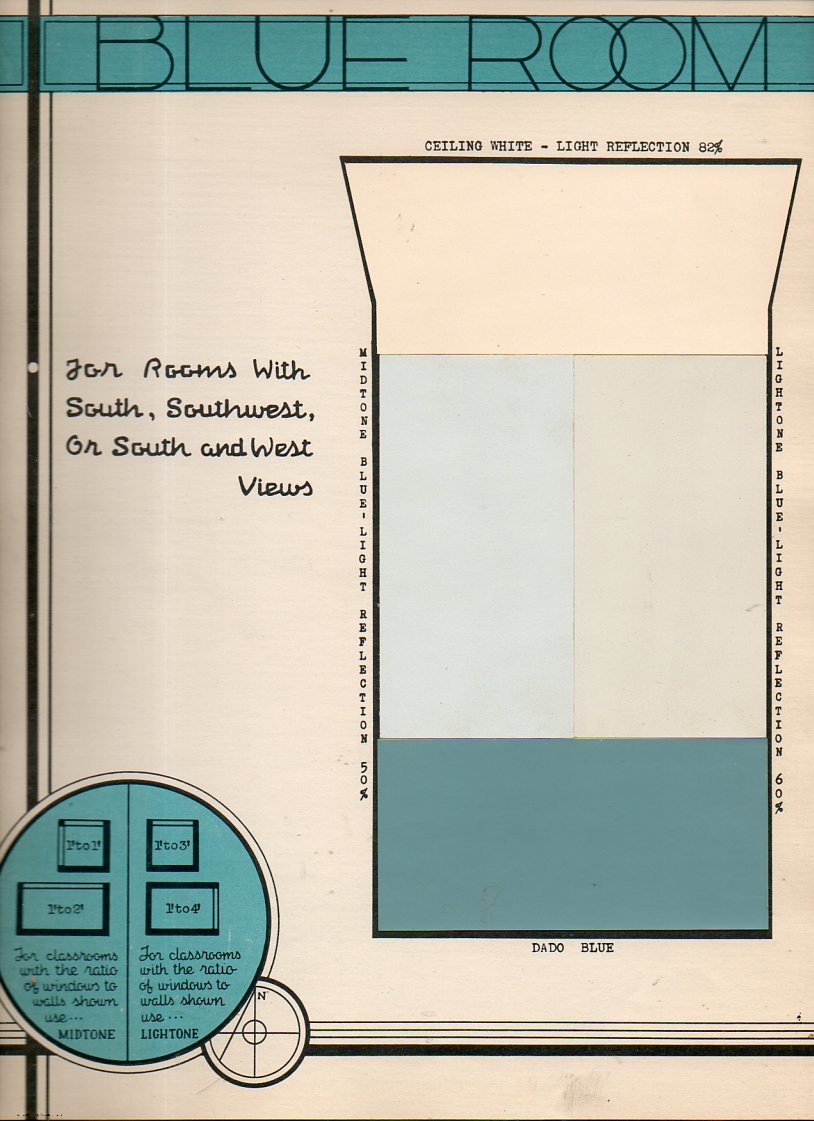
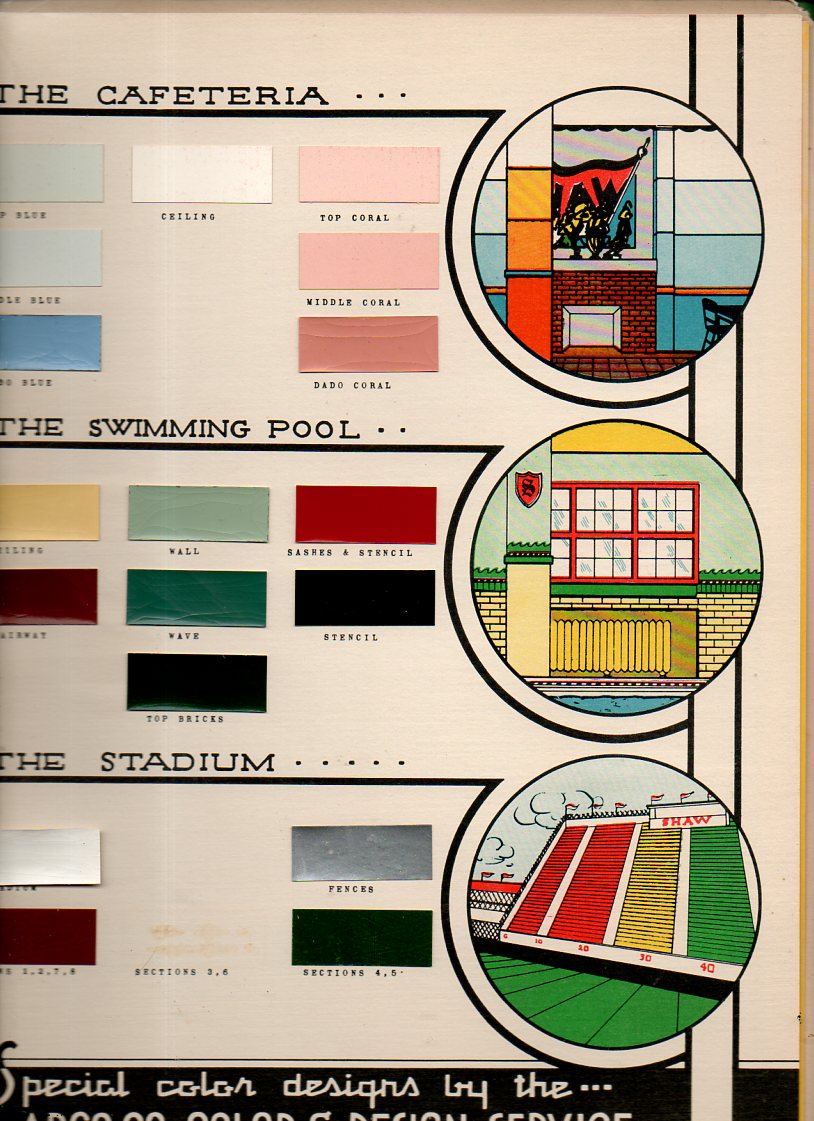
    Its easy to assume a modern prejudice regarding the interior decoration of 1910-1940 school rooms, allowing a certain conceit and picturing them in shades of gray, the images formed being “colored” by the images of those things that we have seen, almost all of which have turned up in black-and-white photographs or movies. But of course we know that this can’t be true, and that Humphrey Bogart didn’t always wear a gray worsted in his movies, and didn’t move that gray suit through gray rooms. Its just that the image-formation is influenced by what we’ve seen, and since what we’ve seen of these rooms is mostly without color, then our images are difficult to assemble outside black-and-white.  This applies to just about everything from that era, which explains why it is such a glorious shock to see motion pictures or photographs of (say) New York City street scenes from 1944. (And why is it such a jolt to the visual system to learn that police cars in Chicago during the 1933 World’s Fair were orange?)

    This thinking came to the surface again this morning when I uncovered the Paint Specifications for the Model School, prepared for the East Cleveland Board of Education under supervision of the Foremost Authorities, and published by ARCO in 1939.  It reminds us that the only thing that lived in black-and-white in those days are in our memories.  (I’ve written about unexpected color in Lost German Color of 1927,  The Very Describale Macro Color of 1937, The Color Green in the History of Squares, and of course the non-immortal 200,000,000 Pounds of Buttocks-or-Putting the Black-and-White back into Color, and others.   [This item is available for purchase via our bookstore blog, here.]

    Color school587

    Color school592

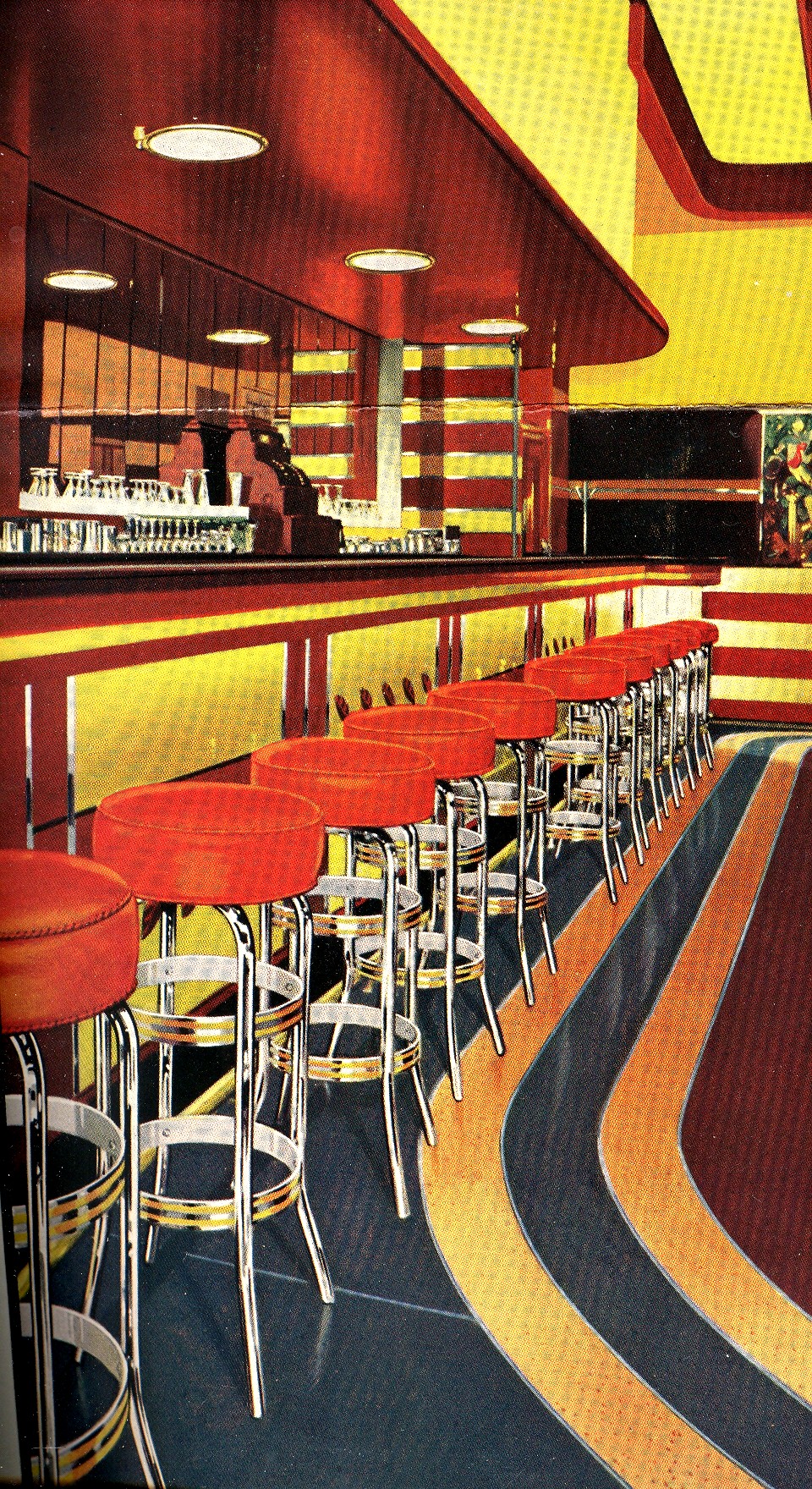
    The rest of the ARCO catalog is below; but first, here’s a sample from the 200,000,000 Pounds of Butts post, showing the 1938 barroom in color:

    Mar 14 7th red bar


  • A History of Blank, Empty & MIssing Things: the Soul and “The” Heaven

    JF Ptak Science Books     Post 1839
    0 blog jan 29 soul missing


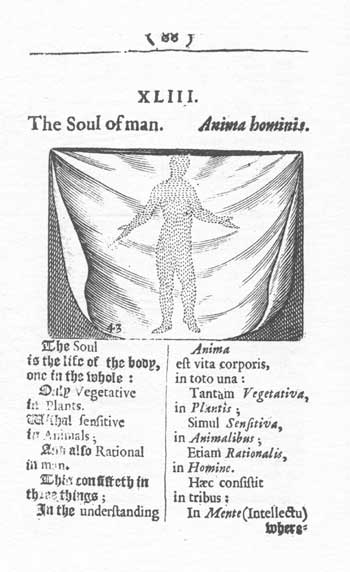
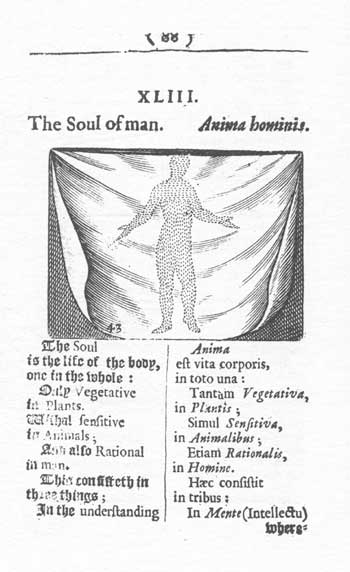
    Continuing a thread of interesting and odd observations of things that are empty, absent and disappeared are the following two images: the first, of the human soul; and the second, a picture of The Heaven. 


    The image above is a very spotty, molecular-like and modest image of the human soul, which seems to fill at least the outlines of the body, though there is a lot of nothingness in-between.  I’m not sure if the cloth, or sheet, is in front or behind the soul, or if the soul is impregnated into the object; I think that I’d rather believe it to be in front, placed there for whatever slim modesty it affords the gone person behind it.  This Outline (?), or  Depiction (?) is  found in Anima Hominis. (on pages. 88–9) from Charles Hoole’s English translation of Comenius’ Orbis Sensualium Pictus* published in 1659.

    The English translation of the Latin verse reads as follows: :

    The Soul is the life of the body, one in the whole: Only Vegetative in Plants. Withal sensitive in Animals; And also Rational in man.

    This consisteth in three things;

    In the understanding whereby it judgeth, and understandeth a thing good and evill, or true or apparent;

    In the will, whereby it chooseth, and desireth, or rejecteth or misliketh a thing known.

    In the Mind, whereby it pursueth the good chosen, or avoideth the evill rejected.

    Hence is hope, and Fear, in the desire and dislike;

    Hence is love and joy, in the fruition;

    But Anger, and Grief, in suffering.

    The true judgment of a thing is Knowledge; the false is Error, Opinion, and Suspicion.

    I found this image while looking for something entirely different, and was tremendously and wonderfully interrupted, at She-Philosopher. 
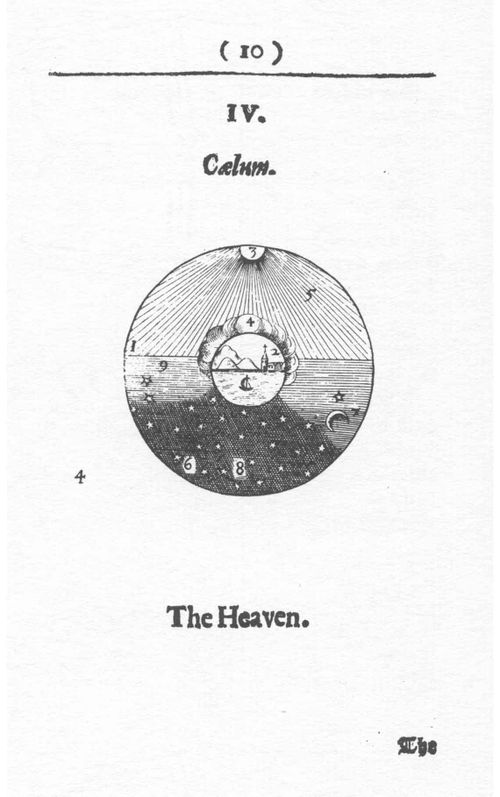
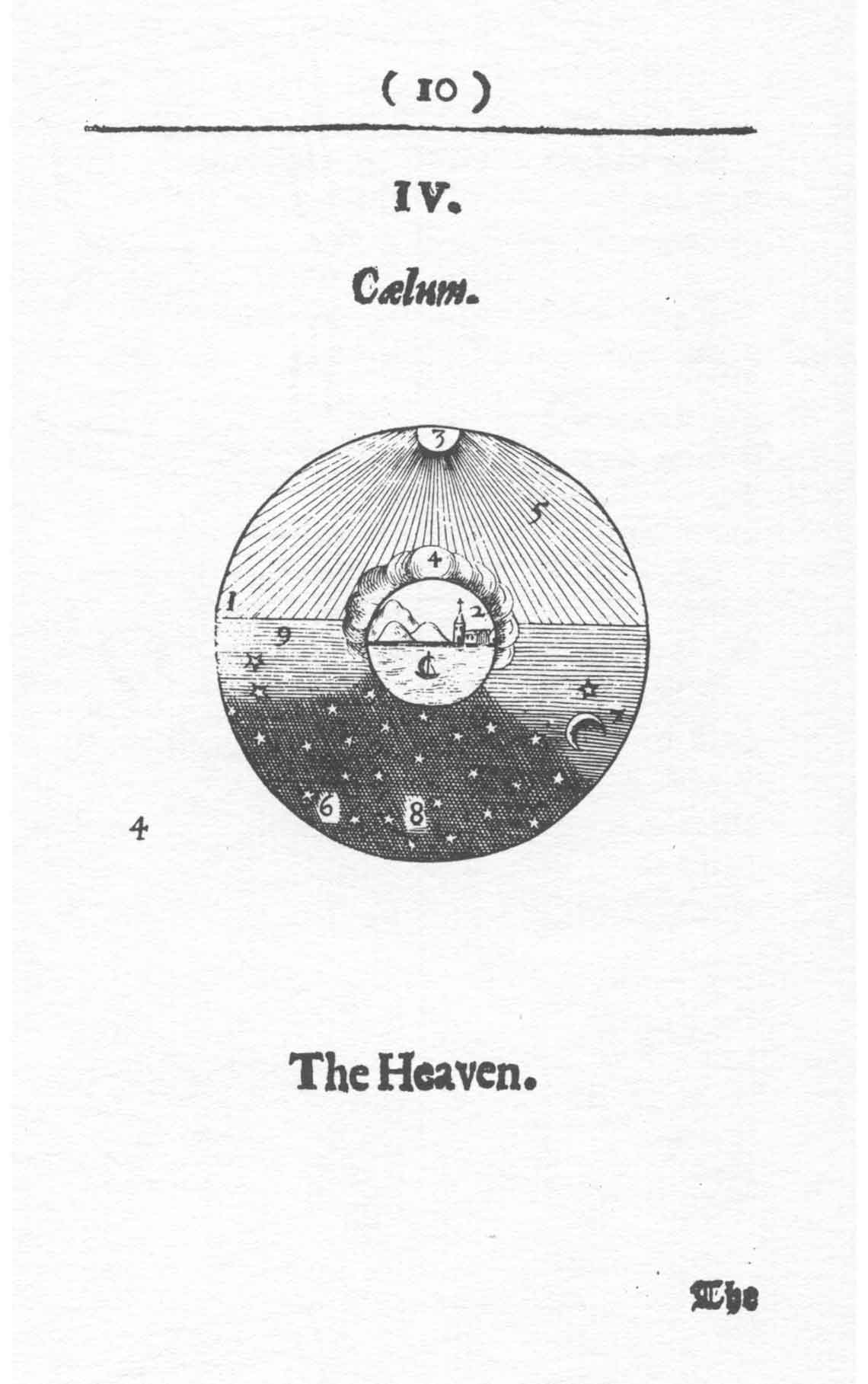
    0 blog jan 29 missing heaven Also, earlier in this same book (occupying pp 10–11) is plate IV, Coelum (“The Heaven”),  which as filled up with lines as it is still looks surprisingly empty–after all, no one’s home.

    You can click on the image for something large, or at least large enough to read the numbers hat are referred to in the verse.  Unfortunately, the number “4” towards the bottom-left just refers to this being the fourth illustration, and does not find a home in the text (another 4 being present within the circle of the engraving).  It would’ve been much more interesting had this extra-universal 4 referred to the whiteness around it, far removed from the depiction of what was thought to be the cosmos so neatly contained in the circles to its right.  .

    (I would like to point out that the use of the word “twinckle” toi describe starlight is about the earliest usage for the word that I’ve seen.)

    The English translation of the Latin verse reads:

    The Heaven 1. is wheeled about, and encompasseth the Earth 2. standing in the middle.

    The Sun 3. wheresoever it is shineth perpetually, howsoever dark Clouds 4. may take it from us; and by its rayes 5. it causeth light, and the light, Day.

    On the other side over against it is Darkness 6. and thence Night.

    In the Night, shineth the Moon, 7. and the Stars 8. glister, and twinckle.

    In the Evening 9. is Twilight, In the Morning, 10. the breaking, and dawning of the Day[.]

    *The lovely and very full title is actually as follwos:  Joh. Amos Commenii Orbis sensualium pictus. Hoc est, omnium fundamentalium in mundo rerum, & in vita actionum, pictura & nomenclatura. Joh. Amos Commenius’s Visible world, or, a picture and nomenclature of all the chief things that are in the world, and of mens employments therein. A work newly written by the author in Latine, and High-Dutch (being one of his last essays, and the most suitable to childrens capacities of any that he hath hitherto made) & translated into English, by Charles Hoole, teacher of a private grammar-school in Lothbury, London. For the use of young Latine-scholars. London: Printed for J. Kirton, at the Kings-Arms, in Saint Paules Church-yard, 1659.
  • Chronology of Milestone Events in Particle Physics, 1896-1958

    JF Ptak Science Books   Post 1838

    The data and research and linkage below are taken entirely from the Chronology of Milestone Events of Particle Physics, streamlined and adapted and made a little more accessible (for me) for a fast browse–I’ve had no hand in assembling this data, just re-arranging it. 

    The links are quite valuable–the scientist’s biography is clickable on the name, and the article is reproduced from the original in the pdf. 

    BECQUEREL 1896B 
    Evidence for spontaneous radioactivity effect.  PDF  

    BECQUEREL 1896C 
    Confirmation of the effect of spontaneous radioactivity.   PDF

    BECQUEREL 1896F 
    Uranium radioactivity established.   PDF  

    THOMSON 1897 
    Discovery of the electron, the first elementary particle.   PDF  

    ·Posted by :

    ·in:


  • Quantum Mechanics: Chronological and Not-Critical Bibliography

    JF Ptak Science Books    Post 1837

    Chronological Bibliography of Quantum Mechanics

    This is a handy and interesting 329-entry timeline of QM placed in chronological order from the article noted below.  I guess it would be easy to start the list with Planck if you wanted to give it a firm footing somewhere, though the history of quantum mechanics goes into development stages long before the 1900 Planck paper.  Be that as it may, this is just a quick exercise, and if an idea was formed or a lost memory found via a quick look at this list, then it is good enough for me.

    References used in “From the origin of quantum concepts to the establishment of quantum mechanics”, by M A El’yashevich, in Soviet Physics USPEKHI, 1977, 20 (8), 656–682.

    SOURCE:  http://www.turpion.org/php/reference.phtml?journal_id=pu&paper_id=5456&volume=20&issue=8&type=xrf


    REFERENCES

    [1] M. Planck, Über irreversible Strahlungsvorgänge, Ann. d. Phys., 1 (1900), 60–122, M. Planck, Trudy 191–233)

    ·Posted by :

    ·in:

    —

  • Images of Shadows in Storytelling

    JF Ptak Science Books   Post 1836

    ‘There is seldom in shadow a mystery less hidden”–Ombra Nichts Schatten, The Non-Mystery of the Shadow, London, 1842

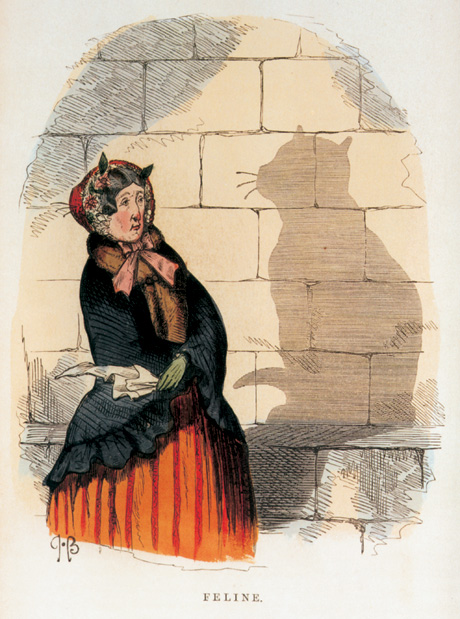
    Shadows have long played havoc in the imagination, for good and for evil, for elucidation and of mystery–they have hidden nothing and everything, and displayed as little as possible and as much as can be imagined. A simple shadow in a hole had proved the circumference of the Earth twenty centuries ago, and before that the Earth’s shadow on the face of the Moon showed us to be a sphere; the shadow allowed us to measure the heights of mountains on the Moon before we could do so (accurately) on Earth; we measure shadows in X-rays, and follow the trails of subatomic particles, and on and on.  Shadows are particularly interesting in story telling, whether they be suggested  aurally or in text, or of course in illustration: 

    Chalres H. Bennet, Shadow and Substance, London 1860.

    A superior example of shadow-art is seen in Indonesian shadow puppet theatre, “Wayang Kulit”, where the shadows of Javanese-Indonesian characters are projected onto a cloth screen by a strong light from behind.

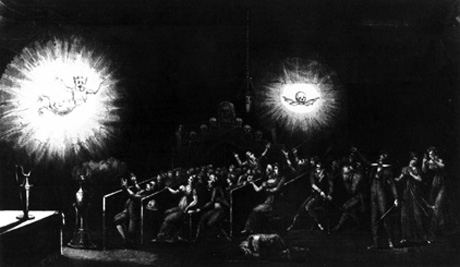
    Audiences were bathed in direct and brilliant light while being swamped in shadow in the early 19th century as part of an early form of non-cinema cinema, as we see here in the frontispiece from Robertson’s Mémoires récréatifs, which depicts a phantasmagoria of lantern projections:


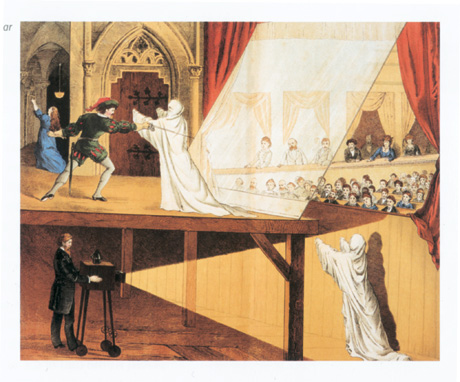
    And more forthright illusions as seen in this engraving showing the spectre “Dr. Pepper’s Ghost,” from Theodor Eckardt, Die Physik in Bildern Eßlingen, 1881:


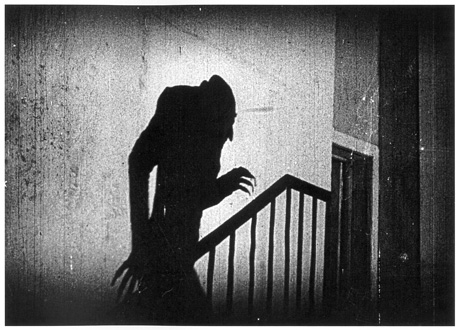
    The shadow may have been invented in cinema by the German Expressionists, with  Friedrich Wilhelm Murnau’s Nosferatu (1919) as a shining example:

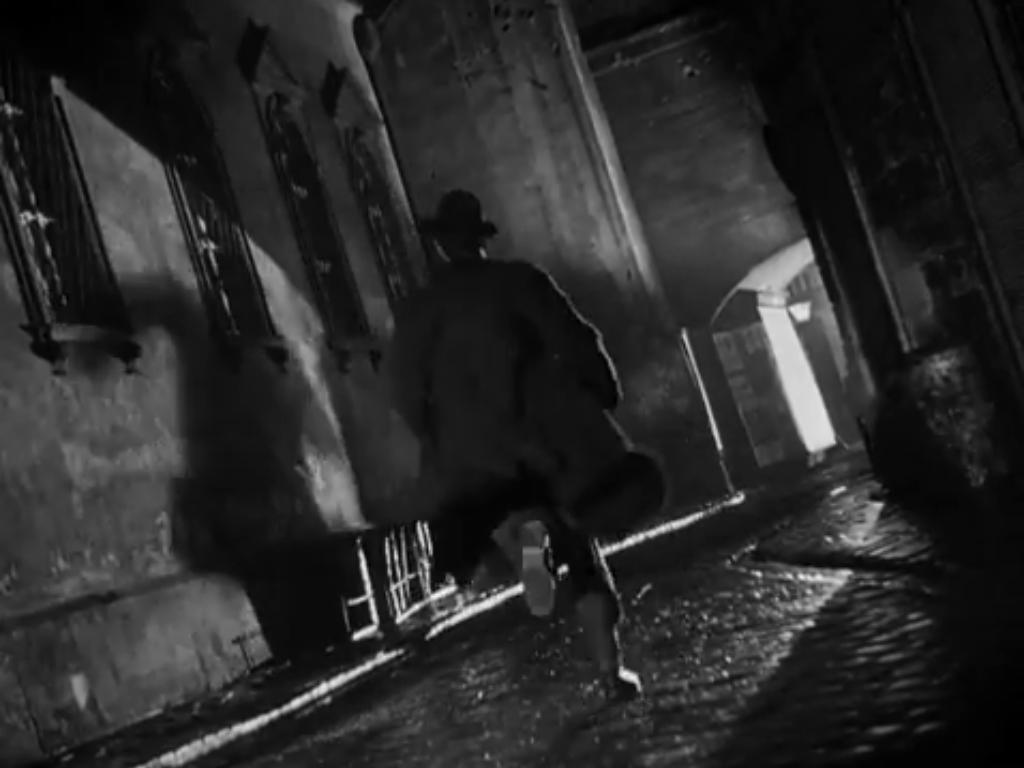
    And of course the shadow is used with great effect in the  very black-and-white and no-gray-tones Film Noir world, particularly in the hands of a master like Mr. Welles in films like The Third Man:

    And in Fritz Lang’s diabolically-bad M, earlier, in 1931 (featuring an impossible shadow in the movie still below):

    Thank heaven for little girls... or would that be hell?


    Shadow has been used to given questionable dimensionality in addition to giving perspective to dimensions that we are familiar with:


    And the artificial shadow made for the geographical clock dial to tell the story of passing time:

    And also for shadow puzzle toys:


    And on and on, deep into the night…