JF Ptak Science Books Post 1833 (Part of a series on the History of Lines)
 Hyphens ( – ) are very old in the history of printing, going back to the lucky Johannes Gutenberg–and much further back than that in practice, appearing as a gull wing mark to Greek grammarians, though it doesn’t appear as a word, or at least so according to the OED, until 1608. But what I’d like to talk about right now in this blog’s first and probably only hyphenic post is the joining of two words to make a bigger/better word, not an adverb-adjective bit, or a syllabification usage, or as a prefix (anti-, non-, co-, pre- and so on), and definitely not as a way to hide a letter or part of a word (as in “G-d” or “the V- word”).
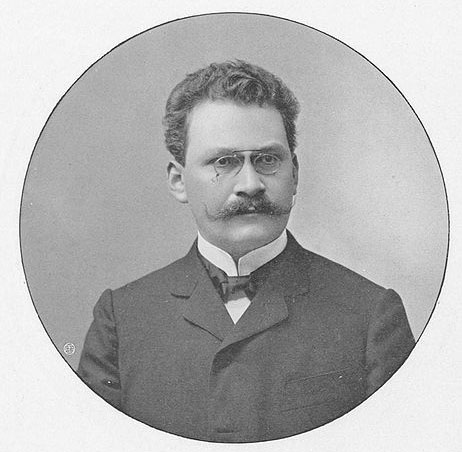
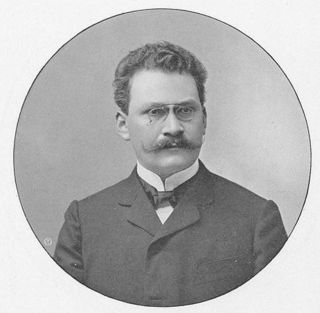 It might be argued that Hermann Minkowski (1864-1909, Ph.D. under F. von Lindemann at Konigsberg at age 21 and a brilliant thinker who died tragically young of appendicitis) created one of the most significant/important hyphenated words in the history of hyphenated words. This came about on his paper on the work of former student Albert Einstein’s 1905 STR, a significant contribution to that field and one which helped develop the path to the theory of general relativity in 1916. The paper (1907/8) was “Die Grundgleichungen für die elektromagnetischen Vorgänge in bewegten Körpern“, published in Nachrichten von der Gesellschaft der Wissenschaften zu Göttingen, Mathematisch-Physikalische Klasse, pp:53–111 (and translated here as”The Fundamental Equations for Electromagnetic Processes in Moving Bodies”, and translated by Megh Nad Sah), and it was here (on page 63, section five, see above) that the two words were linked for what6 I think was the first time. (The general idea goes back quite some distance, and is very nicely reviewed by R.C. Archibald in 1914 in his article “Time as a fourth dimension” in the Bulletin of the American Mathematical Society, volume 20, page 149, who records that it goes back at least to Jean d’Alembert in 1754 and Joseph Louis Lagrange in his Theory of Analytic Functions (first edition of 1797 and a second in 1813, writing that “One may view mechanics as a geometry of four dimensions, and mechanical analysis as an extension of geometric analysis”), and to Immanuel Kant and William R. Hamilton’s quaternions, and others.) I am not sure when the term is collapsed (“Space and time”, “Space Time”, “Space-Time”, “Spacetime”, Spacetimes”), but John Wheeler does away with the hyphen in his Spacetime Physics in 1963, though I’m sure the disappearance and conjunctions take place long before that (though Schroedinger was using it in 1950).. J.A. Isenberg refers to a different set of hyphens for this idea in his 1980 article “Wheeler-Einstein-Mach Spacetimes”, which appeared in Physical Review (D), 24 (2), 251-256, and which frames another aspect of the, making use of the plural which had appeared some time before.
Now, on the other end of the spectrum comes a story from the Velvet Revolution of Czechoslovakia–it is another very quick rendition of a complicated history, like the above, but it will serve the purpose as a section in the History of Lines. The Revolution was coincident with the collapse of the Warsaw Pact governments coming with the demise of the USSR, and occurred in November and December 1989. Following the state’s first free, democratic elections, it was faced with what to call itself. Czechoslovakia, Czecho-Slovakia, Czech-Slovakia–it was a severe issue illustrating the concerns of the Czech and Slovaks, not the least of which was the language identifying whether the sign connecting the two words was a “hyphen” or a “dash”. There were language and cultural barriers, and what finally happened was that Czechoslovakia ceased to exist, giving way to two states on 1 July, 1993: the Czech Republic and Slovakia. The hyphen issue was of course just indicative of much more complex concerns, but minor mirrors like this–and, say, the different names that each side gave to the revolution, the Czechs preferring “Velvet” and the Slovaks using “Gentile”)–and so it all ended in what is referred to as the “Velvet Divorce”.
 [Image: Hans Gersdorff, Feldtbůch der Wundartzney : newlich getruckt und gebessert, published in 1528.]