A Daily History of Holes, Dots, Lines, Science, History, Math, Physics, Art, the Unintentional Absurd, Architecture, Maps, Data Visualization, Blank and Missing Things, and so on. |1.6 million words, 7500 images, 4.9 million hits| Press & appearances in The Times, Le Figaro, Mensa, The Economist, The Guardian, Discovery News, Slate, Le Monde, Sci American Blogs, Le Pont, and many other places… 5000+ total posts since 2008.

Author: JF Ptak

  • Daily Dose of Dr. Odd: Fabulous Spherical Spacecraft from Pulpworld

    JF Ptak Science Books   Quick Post

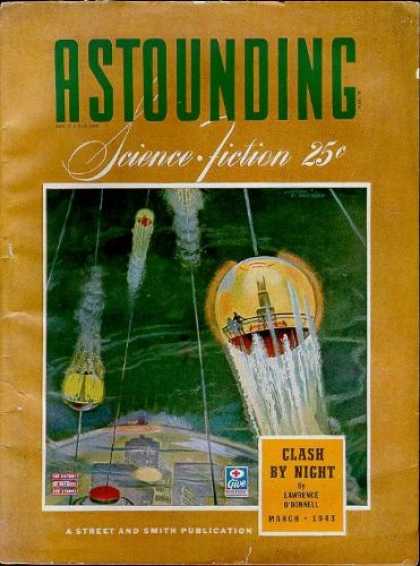
    Piecing my way through the great collection at Cover Browser, looking for science fiction pulp covers for images of Enormous-and-Montrously-Huge-Outer-Space-Things, I developed a very small collection of spherical spacecraft and/or “stuff”.  They’re quite lovely, I think. 

    [All of the images I used below I selected from the big and wonderful collection at Cover Browser, here.]

    Astounding Stories 148 - Science Fiction - March 1943 - Short Stories - Golden Age Science Fiction - Classic Science Fiction Short Stories


  • Daily Dose of Dr. Odd: Chess Covers from Science Fiction Pulpworld

    JF Ptak Science Books  Quick Post

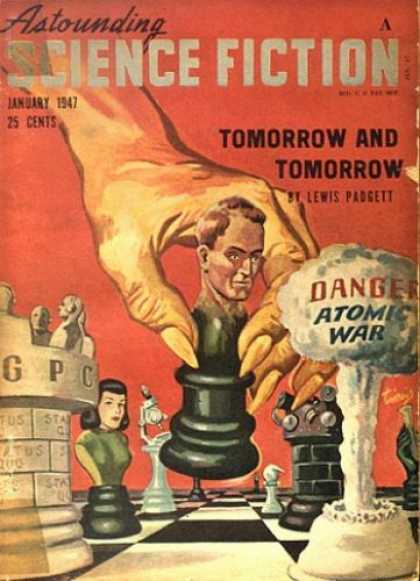
    I don’t often see pulp sci fi covers decorated with chess figures, but I did find these three, recently.  The first, “Tomorrow and Tomorrow” is interesting because of teh author.  Or “authors”, as Lewis Padgett is a pseudonym for a husband and wife writing team, Henry Kuttner and C.L. Moore.  And although there is a small sub-genre of married people.couples writing books together, few of them have taken a separate name for their efforts.  “Padgett” is one of them.  In any event, the chess pieces are unusual, and their appearance on the cover of a journal such as this makes this doubly-so. 
    Astounding Stories 194 - Chess - Atomic War - Tomorrow And Tomorrow - January 1947 - Danger


  • The Care of the Dead, WWI, 1916

    JF Ptak Science Books     Post 1852


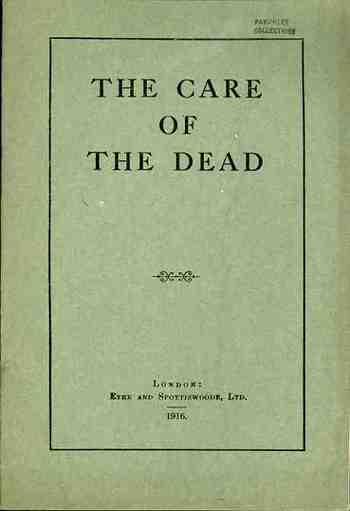
    Blogsept_2_dead478 The Care of the Dead, published by Eyre and Spottiswoode in London in 1916, is a quiet, spare pamphlet, on what was happening to the fallen British soldier in France and Belgium.  It is a big topic–physically the little paper-wrapper work seems barely strong enough to support the implications and heaviness of its title–and I’m sure the issue would’ve been the most important questions in the minds of the families of the hundreds of thousands of dead British soldiers*–the pamphlet really does seem to be feather-light under the solidity of its title. 

    Reading though this  work gave me an insight into the depth of what millions of war dead means–and an insight I think that I’ve never had before.  The anonymous author writes about touring the battlefields of France in 1915 and 1916, driving in an automobile, “the eye of the traveler along the roads is struck by many low crosses sticking out o the ground–in the fields, in cottage gardens, in corners of farm yards and orchards, even on roadside strips of grass.”

    Where the ground has changed hands a good deal in the course of a war, you may see, within a few hundred yards of each other, the gabled and eaved cross of the Germans, with “Hier ruht in Gott” and a name painted in white on a dark ground, the beaded wire wreath of the French, with its “Requiescat” or “Mort pour la France: and the plain-lined cross of the English, white or brown or just the unpainted wood, “In loving memory” of officers or men…”  Now I’m sure I read any number of accounts of the views of battlefields from commanders’ line and soldiers’ views and the like; but I don’t think I’ve had the perspective of an officer driving around a no-longer-a-contested-battlefield in a car and being struck by the appearance of the little white crosses, well, everywhere.  I have a very crisp imagined image in my head, now, with this 92-year-old war memory described from the driver’s seat of a car. 

    ·Posted by :

    ·in:

    —

  • French Canadian Bean Soup & Fevered Last Words From a Bullet in the Belly

    JF Ptak Science Books    Post 1851

    Dutch schultz mug

    “STEVENS:  Yet you invented the coincidence.
    TEMPLE:  Mrs Gowan Stevens did.
    STEVENS:  Temple Drake did. Mrs Gowan Stevens is not even fighting in this class. This is Temple Drake’s.
    TEMPLE: Temple Drake is dead.
    STEVENS:  The past is never dead. It’s not even past.”
    –Mr. William Faulkner, Requiem for a Nun

    Wordle--dutchclean

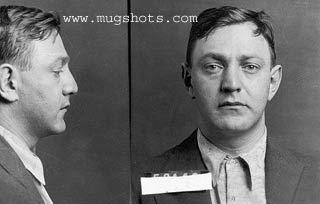
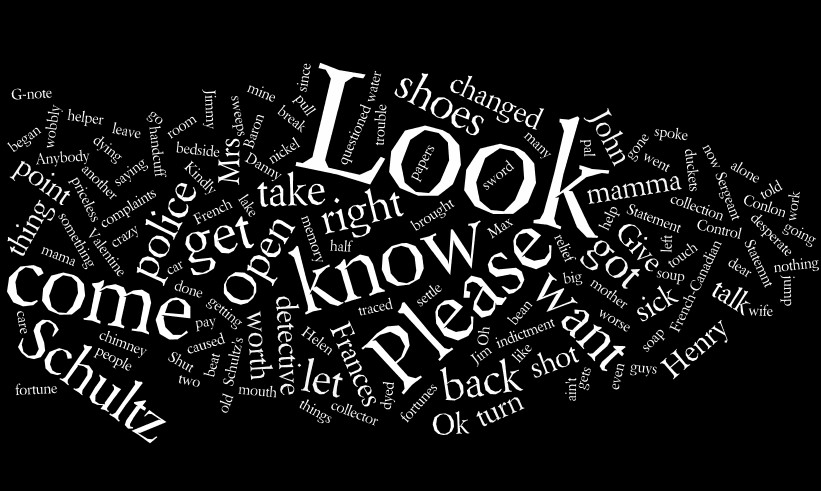
    This is a Wordle of the stenographic recording of the last words of the gangster Dutch Shultz, slipping quickly into dark oblivion, the stenographer (F.J. Lang) at the foot of his deathbed recording all the man had to say. Arthur (Dutch Schultz) Flegenheimer was in rough shape, laying there in Newark, shot with a bullet in his belly, spiking a 106-degree temperature, and sliding back and forth between states of  insanity and lucidity. And say stuff he did–responding to the questions of a police detective (including a Sergeant Luke Conlon), Schultz’s answers are remarkable for their tapestry of wrenching artfulness of drug-induced and mind-slipping schizo blather, sprinkled with infection induced fancy.  The cops were looking to see who it was that shot and put the Dutchmen in the bed–they weren’t going to get any responses worth anything.  A number of the law enforcement officials, local and federal, tried to analyze the oracle after Schultz’s death, but couldn’t make any sense of it all.

    William S. Burroughs, a supreme black-humorist and still dead, had at this idea and transcript long ago, and did a wonderful job with the story, a real achievement. 

    I wonder what the last words were of F.J. Lang and Sgt. Conlon.

    This is about the only place where I can add a note about another notorious gangster, Arnold Rothstein, partner of Meyer Lansky and fixer of the Black Sox World Series of 1919. He also had police questioning him as he lay dying, shot by an unnamed and uncaught assailant in NYC in November 1928. When asked who shot him, one of Rothstein’s final replies was “Me mudder did it”. 

    ·Posted by :

    ·in:


  • On Being Obvious–Towards an Illustrated Alphabet of the Obvious

    JF Ptak Science Books    Post 1850

    “It is obvious that we can no more explain a passion to a person who has never experienced it than we can explain light to the blind.”–T.S. Eliot
    “We have now sunk to a depth at which restatement of the obvious is the first duty of intelligent men”.– George Orwell 
    “There is nothing more deceptive than an obvious fact.”–Arthur Conan Doyle
    The obvious thing about the full sense of obviousness is that it isn’t obvious. Sure, there are plenty of aspects and bits of obviousness that are obvious, but like reverse plasma flashes of lightning, and the great bulk of icebergs, and the tops of clouds and the interiors of mountains, there is much more to the state of Being Obvious than necessarily meets the eye, even when the clues are all visual. 

    Dutch soldier next to a sea mine
    What is it that makes something “obvious”?  There must be hundreds of reasons to label something so, yet the cause of the labeling is much fuller than the label it wears.  There can be a rich and varied life in the obvious and its different stages, as rich and varied as snow and fog and clouds, though those examples seem to have more qualifiers and descriptors than the obvious does.  “Painfully”and “woefully” obvious are certainly two qualifiers for different states of obviousness, though at this level of inspection the different levels of obviousness seem to be a little oblivious. And yet there seems to be great depth in so many different aspects of The Obvious.
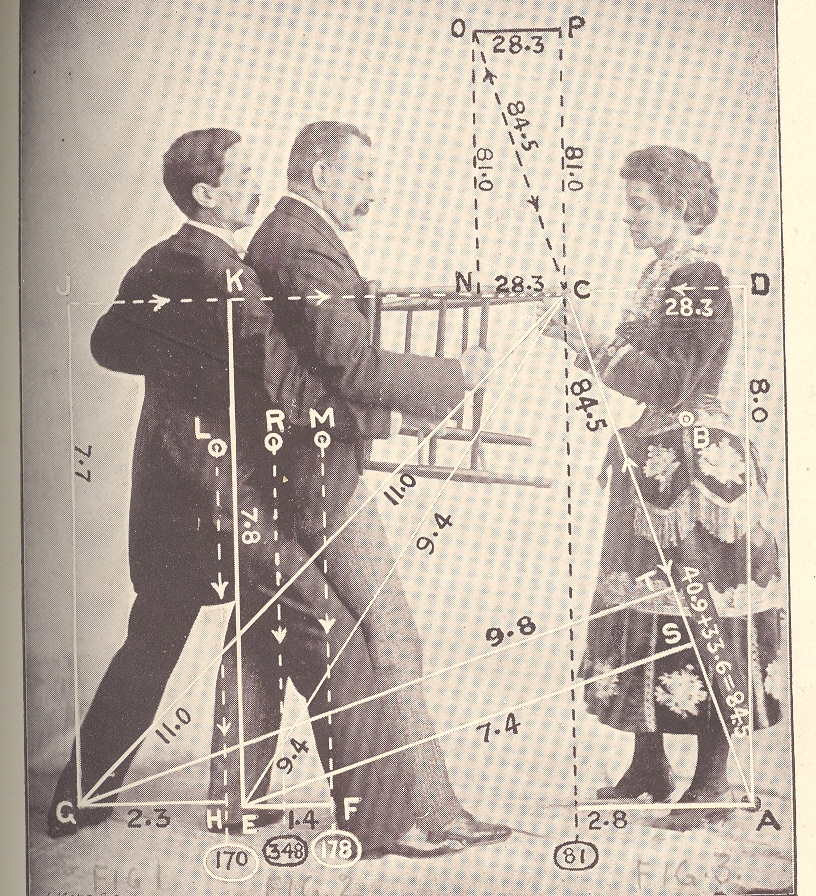
    It would be nice to be able to construct a Geometry of the Obvious–of course this is entirely plausible so long as it doesn’t actually have to mean anything or be rigorous in any way.  A fantasy geometry would then be pretty easy to construct (which also is being used for the letter “G” in our alphabet):
    G   Geometrically Obvious:

    Mar 23 center of levity cvr det 2

    It would be easy to assume that the visual assumption for the Aspect of Obvious would be the center of the image, though it is not necessarily so, even in this imaginary compilation of defining the obvious aspect of the photo. The stuff that makes something obvious can be anywhere.

    And so to lay the groundwork for an Alphabet of The Obvious I’ve made a few selections, below–suggestions really for what the categories and assignments to letters might be. 

    For example,this would be a fine example of:

    A  The Absurd & Doubly Out of Place Obviousness–the horse seems to be the one with a sense of irony for the surroundings its quiet semi-absurdiy: 

    Arthur Tress
     
    B  Better-Him-Than-Me Obviousness:
    Absurd aug 3greggsegal7 
     

    ·Posted by :

    ·in:

    —

  • Cliff’s Notes for Nazi School, 1937

    JF Ptak Science Books    Post 1849

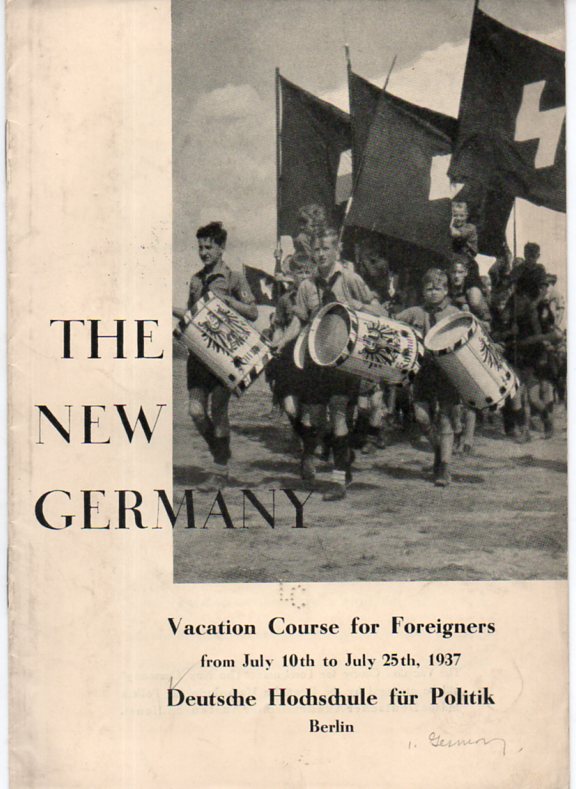
    Oh happy day for this handy Cliff’s Notes pamphlet for the visiting visitor, for the foreign foreign, to the “new” Germany of 1937.  It is difficult to imagine but not horribly so the subtitle here, “Vacation Course for Foreigners”–it was, after all, so far as the rest of Europe and England and the rest of the world was concerned, still only a conceit that the Germans were harboring for themselves, the sabre-rattling Lebenstraum was still in the theoretical stage, though the loathing and discrimination of the Jews and other sorts of humans was not. 

    Nazi school621

    The pamphlet promises to “give our foreign guests an opportunity o f seeing young National-Socialist Germany as it really is” and to “show them that the German people do not want anything but to attend to their work in discipline and peace”. Which was not the case.

    I was interested to see the “programme” of instruction, and to check out the near-futures of the people who were the lecturers for each section.  Before I began, I wondered how much their fates would be changed eight years hence and if they would resemble the fates of other high ranking Nazis. (I looked at the lives of Nazi medical personnel and experimenters in an earlier post here called  “Kristallnacht: The Long post-WWII Lives and Forgotten Pasts of Criminal Nazis: Doctors”, here.)

    Mostly, they went on to live long lives.

    In the program, Dr. Reinhard Hoehn delivered a talk on “National-Socialist Law”. Hoehn was a Nazi academic lawyer with a criminally morose view of jurisprudence; he went rather high-ranking and was successful in laying the “legal” groundwork for Nazi ambitions, including being a representative at the Wannsee Conference.  Born in 1904, Hoehn went on to live until 2000.


  • The Very Seat of Solitary Utopian Anarchy–a Radical Approach from Scranton, 1878

    JF Ptak Science Books     Post 1848

    “In 1873, when Morse advocated an end to all political rule, Alcott commented about Morse in his journal.  ‘Once, I might have accepted fully his doctrine of Individual Sovereignty, ignoring all interference from institutions conventions and creeds of all kinds, as during the Fruitlands and non-taxpaying periods of my life.  It was putting this logic to its ultimate consequences, and individual issues,—abolishing the social and political order altogether. . . .  It left me an outcast and a vagabond.—  The sincere victim of a half-truth seen in the light of an idea at last’.”–Amos Alcott, friend of Sidney H. Morse (author of the pamphlet below), from the site Alcott.net 

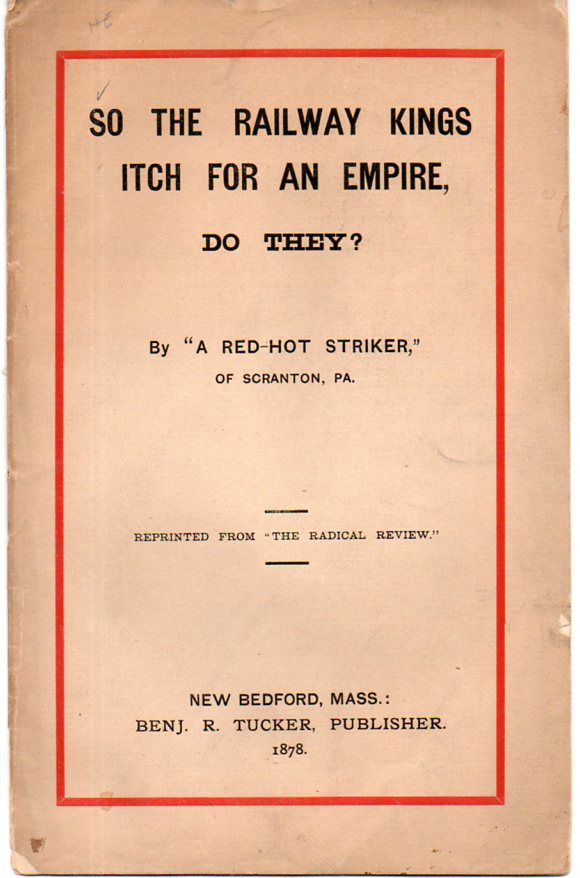
    I just could not resist this pamphlet, all dressed in white and red, catchy and playful title…I thought it would be a nice catch for my Daily Dose of Dr. Odd series, until I realized straight away that it was a serious publication.  Well, the mood of the discourse was a little common and jocular, but the message certainly wasn’t. 

    Radical620[The original is available from our blog bookstore, here.]

    The author was Sidney H. Morse (“The Red-Hot Striker”) and the piece was a rant against big money, monopoly/combinations and The Ruling Class. It was published in “The Radical Review”, which was published by the anarchist and free-thinker Benjamin Tucker, in 1878.  The executive summary for this short piece is plain–first, there should be no “executive”, and second, most of all of this revolves around free Communism and the statement “it takes a great many poor men to make one rich man”. 

    It seems that Mr. Morse (fl. 1870-1900) might have left many of his radical thinkers behind (like Mr, Alcott, above) when he went free-range and advocated no government or controlling system whatsoever, every person their own entity.  I’m not sure so that most people could get away with that thinking even left to themselves in a themself universe, every person in their own Utopian-solitary-anarchy. Seems as though the expectations of whatever this was, (no expectation or all-expectation) , was just too expectant.


  • On Seeing the Future in Waves, 1876

    JF Ptak Science Books  Post 1847

    I wrote a few days ago on one great event of 1876–the invention of the Graham Bell telephone, the successful, most appropriate, best working telephone–mentioning that there were others great achievements in this year as well..  The four stroke engine (Nikolaus von Otto, the application of thermodynamics as applied to chemical change (J. Willard Gibb s, one of the very few portraits of whom would later hang on Einstein;s Princeton walls), Robert Koch’s bacterial cultivation, Eugen Goldstein’s work on Pluecker’s (cathode) rays, all came into being in this year.  But there was another remarkable development in that year that also contained a pretty clear vision of the future, of the shape of things to come.

    That vision belonged to Lord Kelvin,  whose work across many different fields, and at great and expanded levels, was extraordinary; but it was in his tide predictor that the future materialized.. He was one a few people who could really wear the future-specs really well, right alongside Strickland, and Babbage, and Bush, and Turing and von Neumann, a true visionary whose vision awaited the appropriate technology to machine it.

    Thomson was attracted to many things, not the least of which were gadgets, like slide rules, to which he brought his profound capacities. He saw that these arithmetical tools were analog computers, and that bound together, they represented much more than just themselves, the seeds of far more powerful calculating engines. His great breakthrough was devising a tidal predictor, something that he devised in 1873, and wrote about in a seminal paper in 1876, describing what is basically the world’s first analog computer.
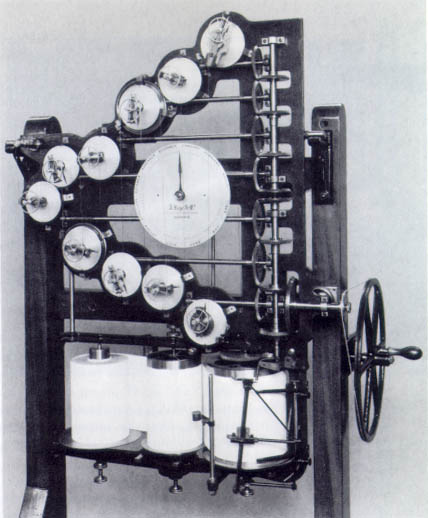
    Baron Kelvin's Tide Predictor (1876-1878)

    “1876-1878, Baron [ Lord ] Kelvin builds his harmonic analyzer and tide predictor machines. The harmonic analyzer broke down complex harmonic, or repeating, waves into the simpler waves that made them up. The tide predictor machine could calculate the time and height of the ebb and flood tides for any day of the year.“–York University, here.

    See Thomson’s excellent lecture given at the 25 August 1882 Southampton Meeting of the British Association for the Advancement of Science, here.
  • 1937 Anniversary of the Black Settlement and Town of Mound Bayou, Mississippi, 1937

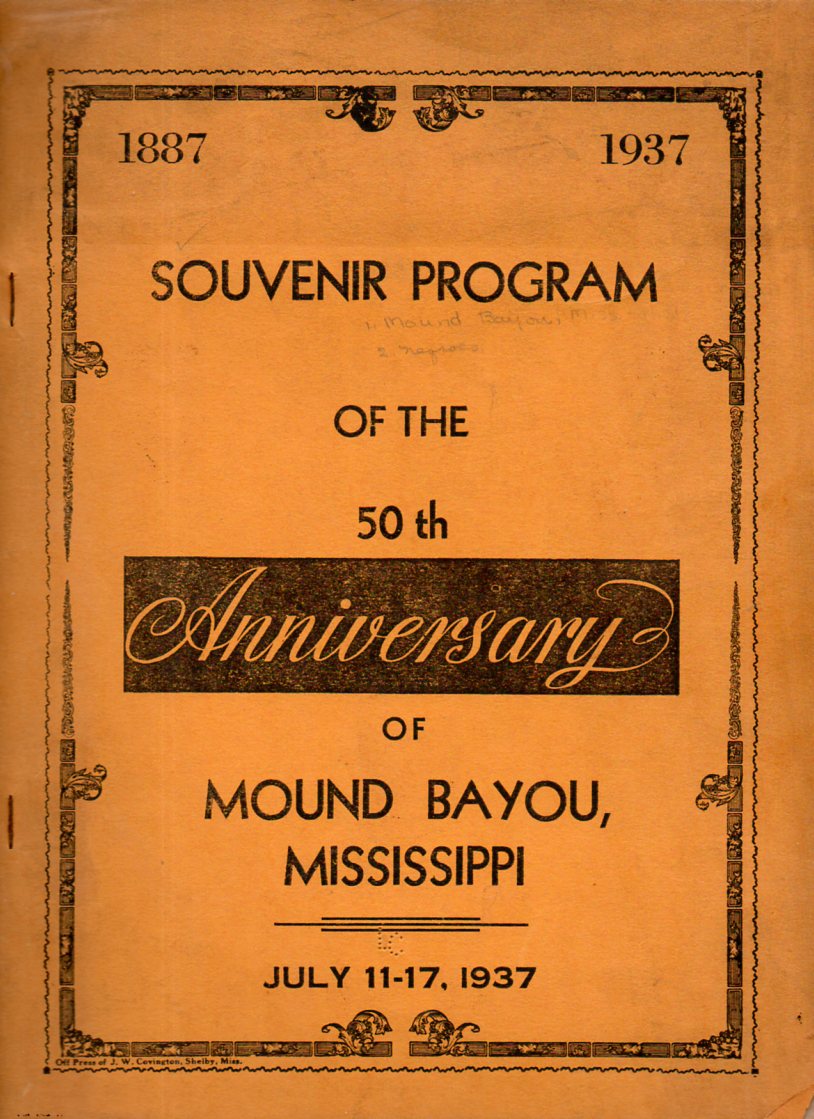
    Mound bayou619JF Ptak Science Books  Quick Post

    There is something terribly American, full of hope, and trust, and celebration in this anniversary celebration pamphlet for the city of Mound Bayou, Mississippi. (I talked to someone in town administration this morning and the “Mound Bayou” is pronounced as one, quick, word: “Moundbayou”, with equal pronunciation emphasis.)  The Souvenir Program for the 50th anniversary of the establishment of the town (July 11-17, 1937) is filled with town history, and advertisements, and photographs. 

    Isaiah T. Montgomery was one of the founders of Mound Bayou, clearing out the bottomlands in the wilderness of northwest Mississippi, the town populated by Freedmen.  But here at the time of the anniversary, in 1937, with the failure of cotton prices and the Depression being at its height or depth, the majority of the people living in Mound Bayou were sharecroppers, with most property lost.

    Mound bayou617
    But that didn’t matter too much to the people of Mound Bayou.  As is stated on page 47 of the pamphlet:

    “The real significance of Mound Bayou…cannot be measured by the number of acres we own, neither by the size and number of businesses we operate, the strength of our financial institutions, nor by the eminence of or native sons and daughters. But the true significance of Mound Bayou lies in the fact that we are able to demonstrate to the world that the Negro can and does live as a law abiding citizen under the authority of the “bone of his bones and flesh of his flesh”.  The reading continues:  “We have no jail because we don’t need one. Int he entire community dwell 8,000 Negroes and we have not had a capital crime in thirteen years.  Petty crimes are infrequent.”

    The original document is available at our blog bookstore, here.


    ·Posted by :

    ·in:


  • Black Iron Mine Workers, Birmingham, Alabama, 1918

    JF Ptak Science Books 

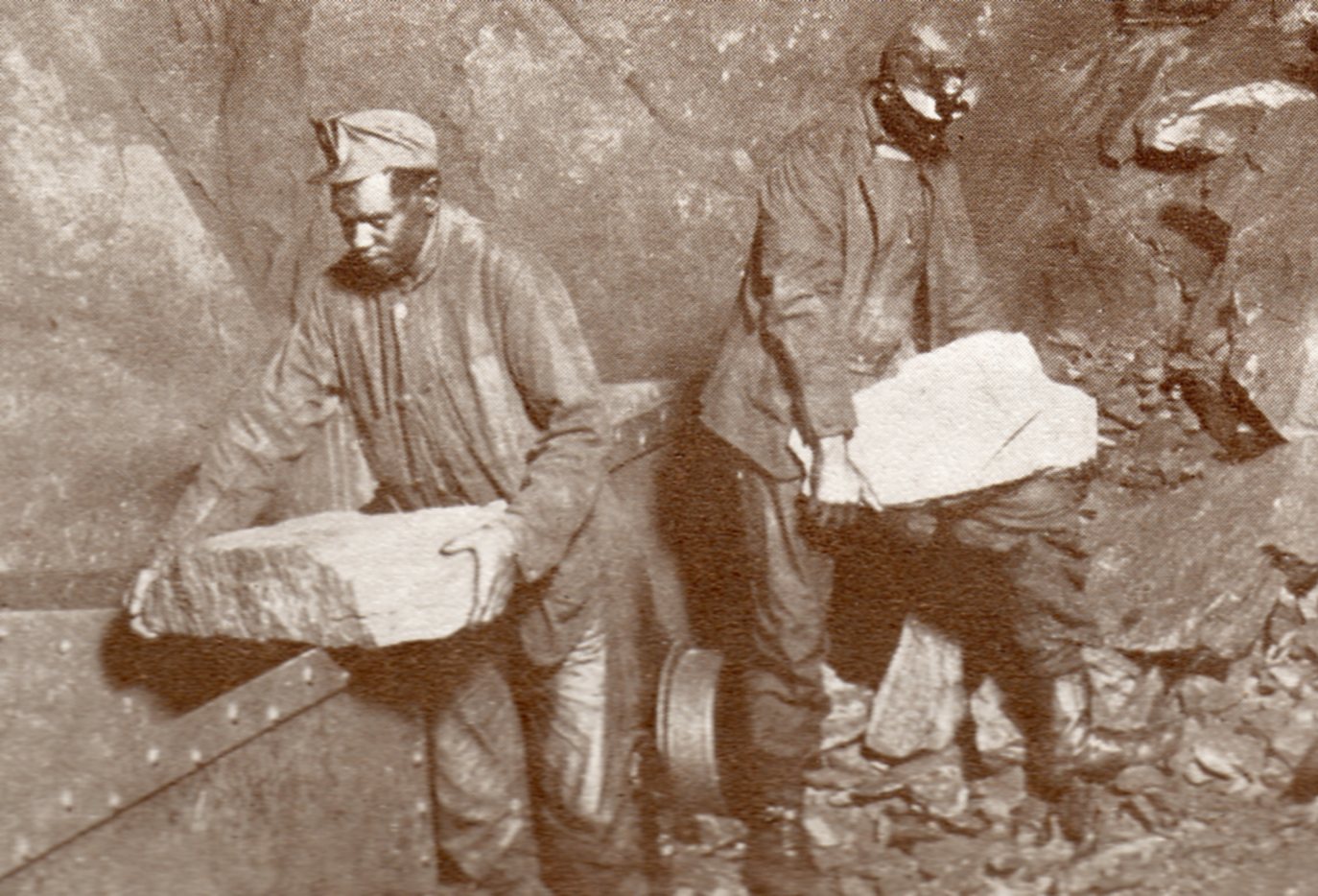
    I found this item today out in thye warehouse, mixed in for some reason with Hitler Jugend pamphlets and many issues of the 19th century Archiv fuer Anthropologie, just completely out of place.  It is an accordion fold multiple panel oversize postcard, I suppose, an advertisement for a meeting of the Rotary Club of Birmingham, Alabama, and probably for 1917/1918. 

    Lack birmingham'616

    Which is a detail of the image (below):

    Unfolded the obect is 25 inches long and about 9 inches wide, divided by five panels, seven of which have photographic images, one is for the contact information, and one for the addressing and mailing part.  It all folds nicely into a somewhat-larger-than-pocket-size object, printed on pretty thick, very thick stock.  (The original is available at our blog bookstore, here.)

    ·Posted by :

    ·in: