A Daily History of Holes, Dots, Lines, Science, History, Math, Physics, Art, the Unintentional Absurd, Architecture, Maps, Data Visualization, Blank and Missing Things, and so on. |1.6 million words, 7500 images, 4.9 million hits| Press & appearances in The Times, Le Figaro, Mensa, The Economist, The Guardian, Discovery News, Slate, Le Monde, Sci American Blogs, Le Pont, and many other places… 5000+ total posts since 2008.

Author: JF Ptak

  • The Expandable Waistcoat & Blank Book Patents of A. Einstein & S. Clemens

    JF Ptak Science Books   Quick Post  
    Follow Me on Pinterest 

    Albert Einstein was many things–including a designer of clothing, and a patented one at that. He applied for and was granted a patent in 1936 (not an unbusy period in which he must’ve been noodling this thought around in his head, that blouse thing along with gravitational lensing, that pesky quantum mechanics, and the EPR paradox and all that) for an expanding waistcoat. 

    Well.  Einstein had his hand in other patents, including a rather famous one regarding a refrigerator with no moving parts (along with the great Leo Szilard, the “Einstein-Szilard electromagnetic pump), as well as part interest in gyroscompasses and a hearing aid, and better yet a “light intensity self-adjusting camera” with an “electric eye”.  And the “ornamental blouse”. I suspect that it was all in fun, except that once the thinking had been done, it was thought to take it to the next logical step. 

    ·Posted by :

    ·in:

    —

  • Affairs of the Heart: Blood & Clouds, 1664

    JF Ptak Science Books  Post 2025 

    Follow Me on Pinterest 

    0 blog feb 6 circle541

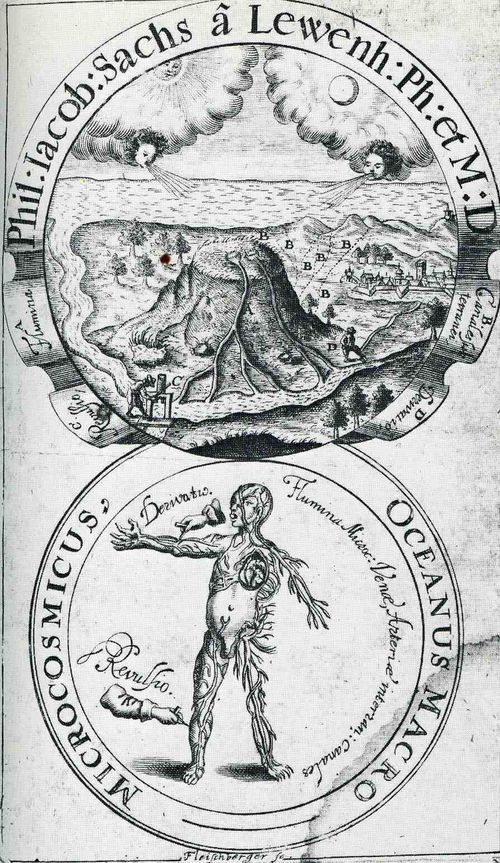
    In 1664 Philipp Jakob Sachs (Sache de Lewenbheimb) wrote an influential book on the circulation of the blood.  It was the advanced work of a learned man, a naturalist and physician who was also the editor of the Ephemerides Academiae naturae curiosorum, which was the first journal in the field of natural history and medicine and one of the founders of the Academia Naturae Curiosorum (Leopoldina).  His work came 40 years after the great work by William Harvey, who published Exercitatio Anatomica de Motu Cordis et Sanguinis in Animalibus in 1628, a work in which he essentially brought the idea of circulation of the blood into the modern age, building on earlier ideas of Michael Servetus, whose 1561 work on circulation (and his religious ideas) brought him to be executed by flames. 

    For centuries the pulse was
    a vaguely understood thing reaching back into the murky medical past as far
    back as Galen.  The association of course
    was with the heart, and the association of the heart was as the great
    controlling center of all function and control of the human body—a theory that reached
    far forward into the 16th century.

    Servetus (physician, cartographer, theologian, writer and
    general all-adept Humanist of a high order) was in trouble with the church for
    many reasons, not the least of which was trying to dislodge the theory of the
    heart as sacred and the seat of wisdom. 
    But he did establish that the heart was an organ, which didn’t sit well
    with very many people, least of all the Calvinist court in Vienna
    which found him guilty on many anti-Humanist grounds, including his
    anti-Trinitarian Christology, which made him a reviled figure to Catholics and
    Protestants.  He was tried and found to
    be dangerously heretical, and sent to the flames.

    Harvey
    withstood blistering attacks on his correct statements on the circulation of
    the blood (costing him nearly all the patients in his practice), though he at least
    lived to see a brighter day:  Servetus, on the other hand, didn’t, and was
    burned at the stake for his heresies, one of which his attack on the spiritual
    heart.

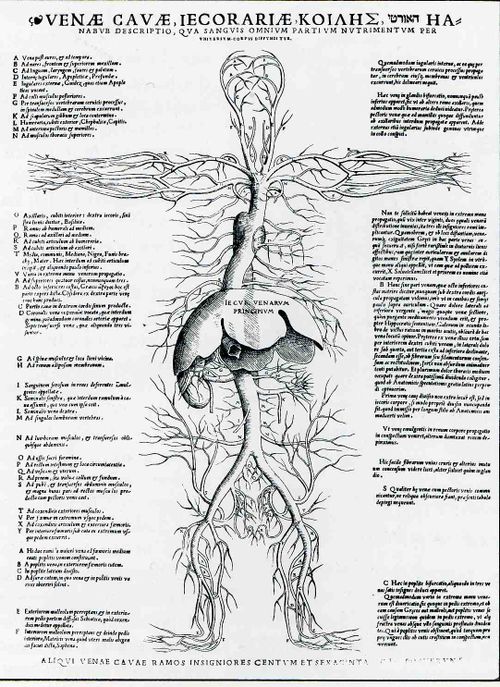
    In any event, the frontispiece to Sachs’ work is an interesting allegorical composition showing a connection between the place of the very prominently featured heart in the circulation of the blood, and the water cycle, and the cosmos of creation (the breath of life coming from the winds of the Sun and the Moon).   
     0 blog feb 6 circle542

    Notes:  (Sachse de Lewenheimb, Philipp Jakob Sachs, 1627-1672 , Oceanus macro-microcosmicus, seu Dissertatio epistolica analogo motu aquarum ex et ad Oceanum, sanguinis ex et ad cor… 1664, with full text via Google books here).
    ·Posted by :

    ·in:


  • Old Word of the Day–Abcedarian

    Abcedarian n.s. [from the names of a, b, c, the three first letters of the alphabet.] He that teaches or learns the alphabet, or first rudiments of literature.
    Samuel-Johnson-37037-1-402 det
    This word is used by Wood in his Athenae Oxonienses, where mentioning Farnaby the critic, he relates, that, in some part of his life, he was reduced to follow the trade of an abecedarian by his misfortunes.

    –Johnson, Samuel. “Abecedarian.” A Dictionary of the English Language: A Digital Edition of the 1755 Classic by Samuel Johnson. Edited by Brandi Besalke. http://johnsonsdictionaryonline.com/?p=296.

    ·Posted by :

    ·in:


  • Strange Things in the Sky Department: Tall Ships Flying

    JF Ptak Science Books   Quick Post  Strange Thing in the Sky series
    Follow Me on Pinterest


    Source: Encyclopedia Britannica via Google Books
    I love Tall Ships, but perhaps never so much as when they are flying–real or imagined. 


  • Civil War Maps by the Great Mapmaker of the Confederacy, Jed Hotchkiss

    JF Ptak Science Books  Quick Post

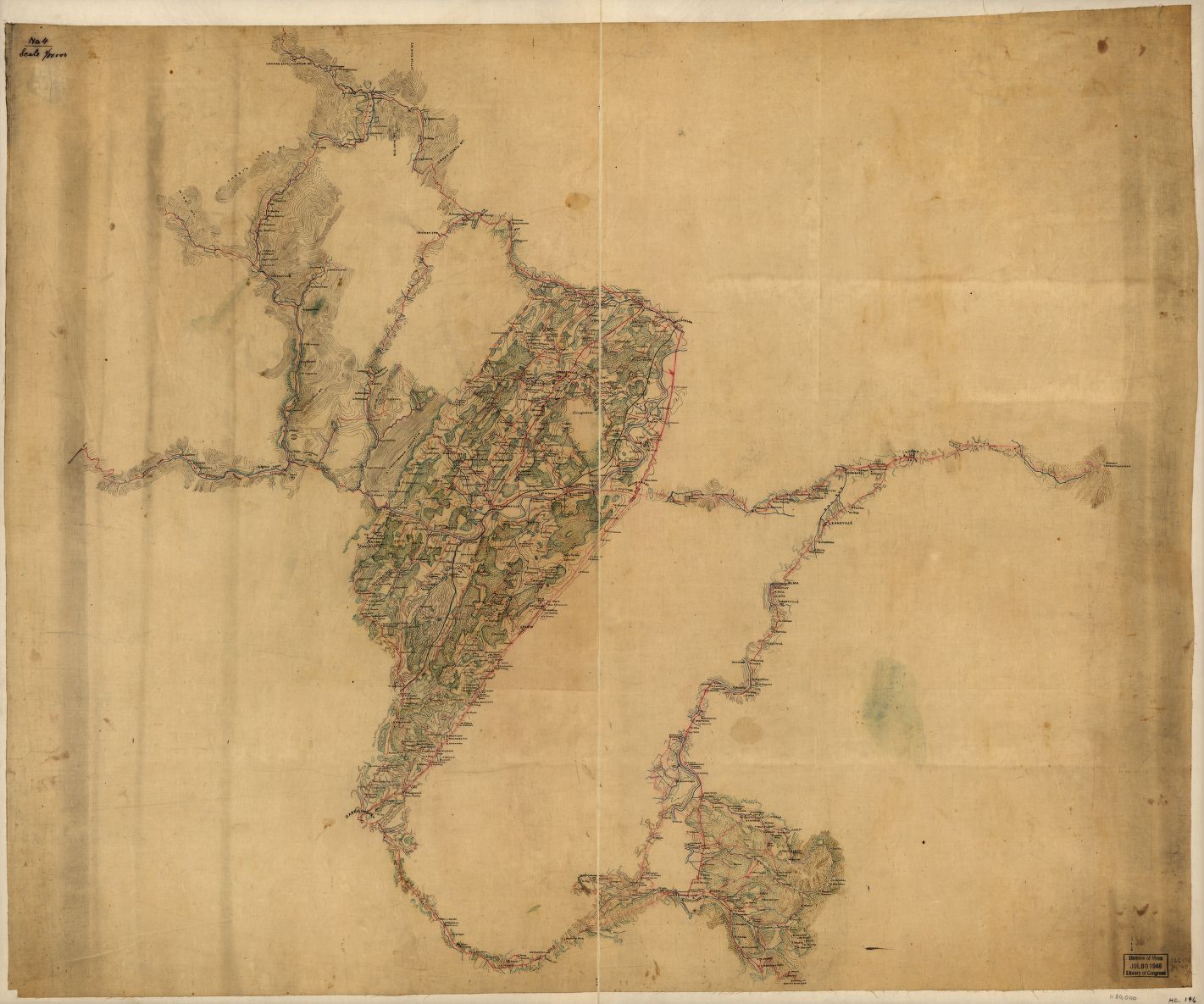
    I was searching for the “Make Me a Map of the Valley” map, the Stonewall-Jackson-directive map, that was made to devastating effect by the Confederacy’s leading cartographer, Jedediah Hotchkiss.[More on Hotchkiss here from the Encyclopedia of Virginia.] I saw this on display at the Library of Congress years ago–it is an enormous thing, about 22 square feet and more than 7 feet long (or tall, as it was displayed vertically then), filled with minutiae and just a splendid map of great detail put to extreme use by General Jackson (and Lee, and others).   The LC has the Hotchkiss Collection, their “jewel in the crown” of the Civil War maps there, and there is a great amount of it on display on the LC website.  The Big One, though, is not there in full.  I copied a few of some of the maps most interesting to me, and at the bottom is a link to the other 120 or so maps online by Hotchkiss.  

    Hotchkiss sketchbook cover copy

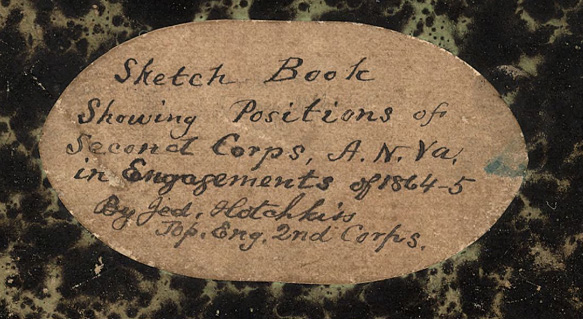
    [Above:  title for one of Hotchkiss’ workbooks, Sketch book of Jed. Hotchkiss, Capt. & Top. Eng., Hd. Qrs., 2nd Corps, Army of N. Virginia : [Virginia], “Shows general maps of northwestern Virginia and parts of
    Montgomery County, Maryland, with some showing roads, troop movements,
    and the names of some residents…”

    “The Hotchkiss Map Collection contains cartographic items made
    by Major Jedediah Hotchkiss (1828-1899), a topographic engineer in the
    Confederate Army. Hotchkiss made detailed battle maps primarily of the
    Shenandoah Valley, some of which were used by the Generals Robert E. Lee
    and Thomas J. “Stonewall” Jackson for their combat planning and
    strategy. Several of the maps have annotations of various military
    officers, demonstrating their importance in the military campaigns…”–from the LC site.  A good, long essay on the collection by Clara LeGear appears elsewhere on the LC site, here.

    All maps are expandable after being opened.

    Map of the Shenandoah Valley from Harrisonburg to Mt. Jackson, with
    topographical detail along the principal roads from Thornton’s Gap to
    Swift Run Gap and along several valley roads in northwestern Virginia:

    Hotchkiss mt jackson


  • The Trained Neutrality of Killing

    JF Ptak Science Books   Quick Post

    Siegried Giedion wrote a terrific book called Mechanization Takes Command (and beautifully subtitled ...a contribution to anonymous history) in which he (sweepingly) looks at how mechanization took over from hand production in the life of social and technical world. 

    The book was published by Oxford University Press in 1948, and given that year, Giedion has something very interesting to say about killing.

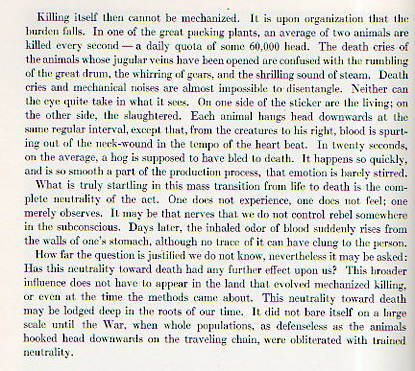
    After investigating “The Mechanization of Death: Meat” and how over hundreds of years the hammer-to-the-head and skinning that transforms an “animal” into “:meat” turned from human to mechanical hands, he decided that “what is truly startling in this mass transition from life to death is the complete neutrality of the act”.  The animal=meat act and the mechanization of killing removes the “human” element of the act, and that “one does not experience, one does not feel; one merely observes” a killing that is not somehow dying.  He reckons that this experience may in general have made us more capable of desperate act of killing that do no longer seem so desperate. 

    It is a remarkable and early insight into the meat industry from an uncommon and unexpected source.

    Giedion738[Source:  Siegfried Giedion, Mechanization Takes Command, Oxford University Press, 1948, p.246.]

    ·Posted by :

    ·in:

    — —

  • Title from BizarroLand–a Daily Dose from Dr. Odd

    JF Ptak Science Books   Quick Post   Daily Dose from Dr. Odd  series
    Follow Me on Pinterest

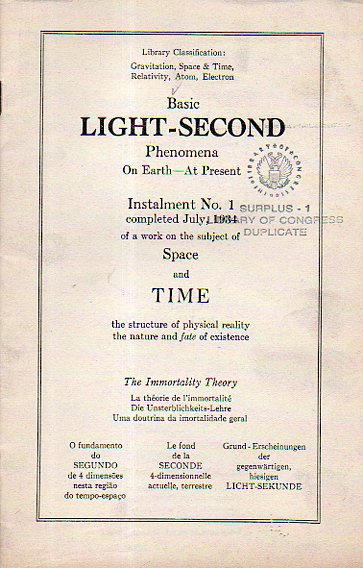
    In my heaping pamphlet collection there is a sub-collection of works
    with impossible, outsider-y, and stubbornly semi-confused titles that
    simply cannot be ignored–I mean the titles can’t be ignored, though most of the time their texts beg to be. 

    Some of the titles change from cover to title page; some titles are non-existent and replaced by simple exclamations.

    In this case, and the first instance that I can recall, there is a “Library Classification” at top-center of the cover, leading to other information about the book just before we get to the title, which seems nearly secondary, and which is followed by other non-title information right there on the cover. There is all manner of info there, a cover with a very busy pace–data galore for what should be a mostly blank space, except the author’s name. 

    Book titles  Bizarro land737


  • Imaginary Aircraft of Massive Oddness

    JF Ptak Science Books  Quick Post
    Follow Me on Pinterest

    These Air Wonder Stories magazine covers are just absolutely delightful–full of abolute hope and belief in the possibilities of what the future might bring i the forms o fair travel.  THe first shows an enormous jet-powered craft that is breaking through a waterspout, seemingly undisturbed. 

    Air Wonder Stories, Dec. 1929

    ·Posted by :

    ·in:


  • An Interesting Three-Part Perspective, 1560

    JF Ptak Science Books  Quick Post 

    Follow Me on Pinterest


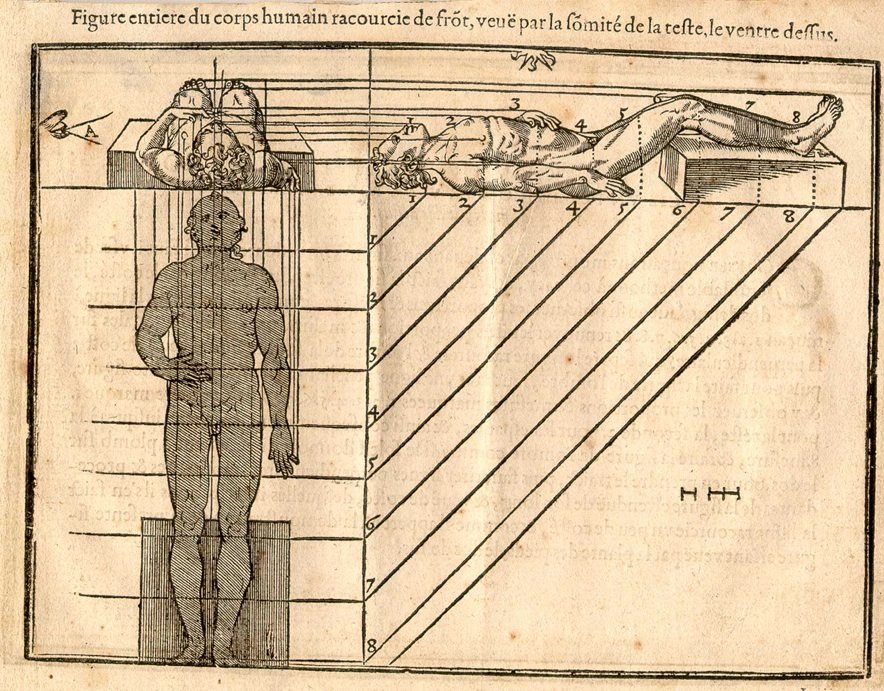
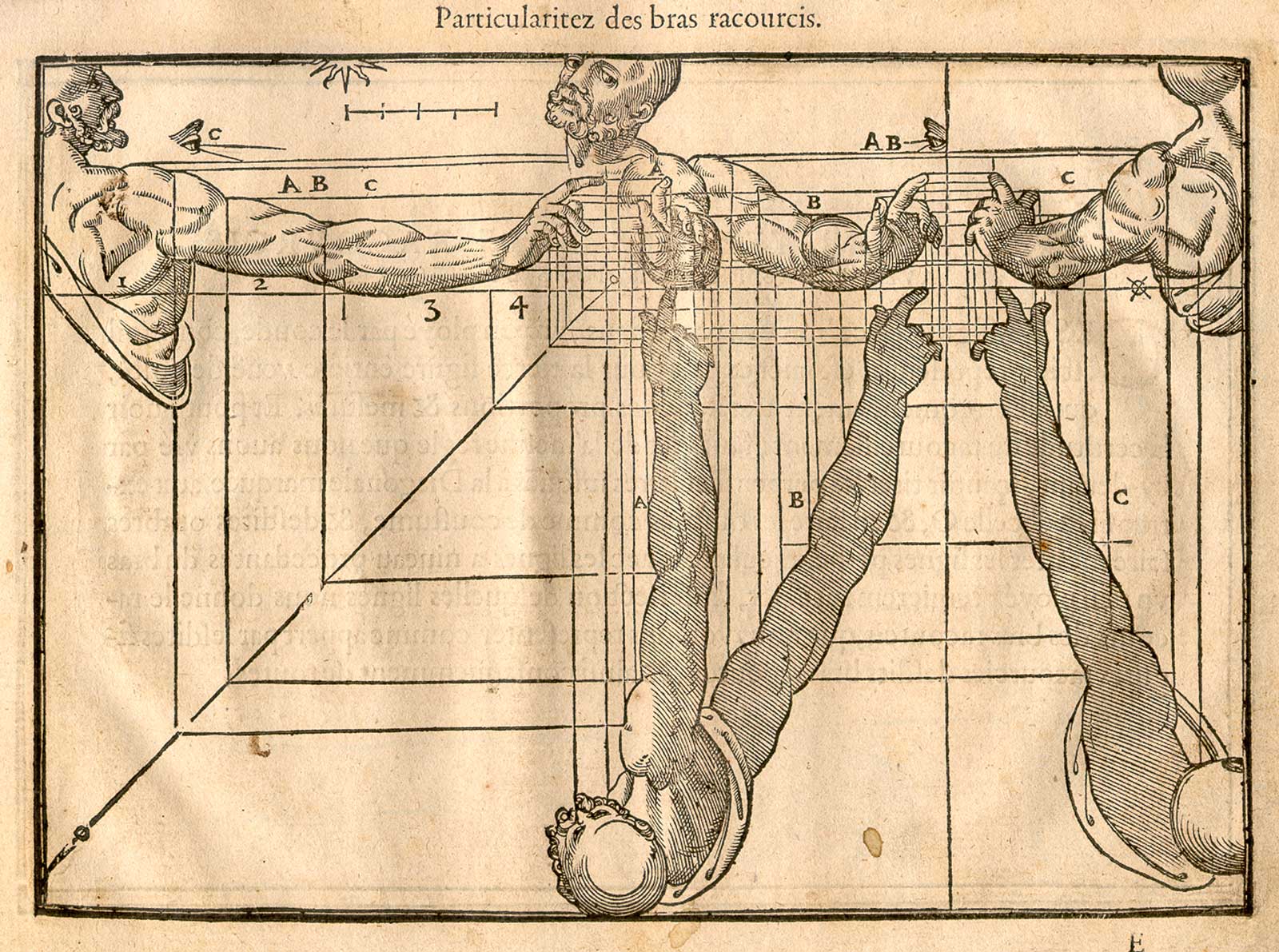
    I’m not sure if I’ve ever seen a 16th century human perspective drawing showing the body in plan and elevation and cross-section.  Jehan cousin the younger (1522-1595, in France), the son of Jean Cousin the Elder (1490-1560), a painter and sculptor, produced such an image in his Livre de Perspective, which was published in 1560. Well, the image definitely was published in 1560, though the artist may have been father and it may have been son–they worked closely together, and the Younger was taught at great length by the Elder, so much so that their work became indistinguishable. Nevertheless, the images I think are quite extraordinary, as we see below: 


    And so by Andreas Mantegna, a classic example:

    The following images come from the 1608 edition of the Cousin Perspective. a number of which are fairly unusual (all from the Library of Congress site, here):
    Cousin_p16

    ·Posted by :

    ·in:

    — —

  • Some Famous Military Pigeons

    JF Ptak Science Books  Post 2124 

    Follow Me on Pinterest


    Several years ago I purchased part of an archive of David Katcher, who was the founding editor of the journal Physics Today.
    Before that, several years before that, in 1945, David Katcher was Lt.
    Katcher, serving as a correspondent/writer in the public relations
    office of the U.S. Army Headquarters of the Western Pacific (GHQ
    USAFPAC). There’s a 6-inch stack of paper here with what seems to be his
    (and associated) mimeographed offprints of the daily grind of running
    the PR department of the Army in the Philippines, which, taken as a
    whole, is pretty interesting, showing the concerns and trials of the
    Army in reestablishing the government and infrastructure of the
    country.  Some of the individual reports/publications are stand-alone,
    straight-up fabulously interesting things, and so far as I can
    determine, have not been published anywhere else.  These two examples
    are both related to the subduing of the last remnants of the Japanese
    Army still fighting in the dense nether lands of northern Luzon, the
    Philippines, fighting after the surrender had been made (14 August 1945)
    and  signed (formally, on the USS Missouri, 2 September) , fighting after the war had ended.

    And in all of this comes this unexpected item, dated 1 October 1945, from “Headquarters. United States Army Forces Western Pacific, Public Relations Office, APO 707, General Release 56–Manila” and which–in the midst of the end of the war and the dropping of two atomic weapons–concerns a brave and battle-distinguished and heroic pigeon, “Blackie Halligan”. 

    “Blackie carried a number of messages to this location, one of which was
    extremely important because it gave the location of some 300 Japanese
    troops. He carried out this message despite being badly wounded. Word of
    his accomplishment reached General Patch, Commander of the American
    Division, who made a special trip to the loft where he decorated
    Blackie. Later, Blackie saw action at other islands in the Pacific.”–CECOM Historical Site, U.S. Army, source.

    Sometimes, in the midst of great loss in the throes of great victory, in the balance of stories great and true and tried, the small story of sacrifice may be the perfect antidote for large needs. 

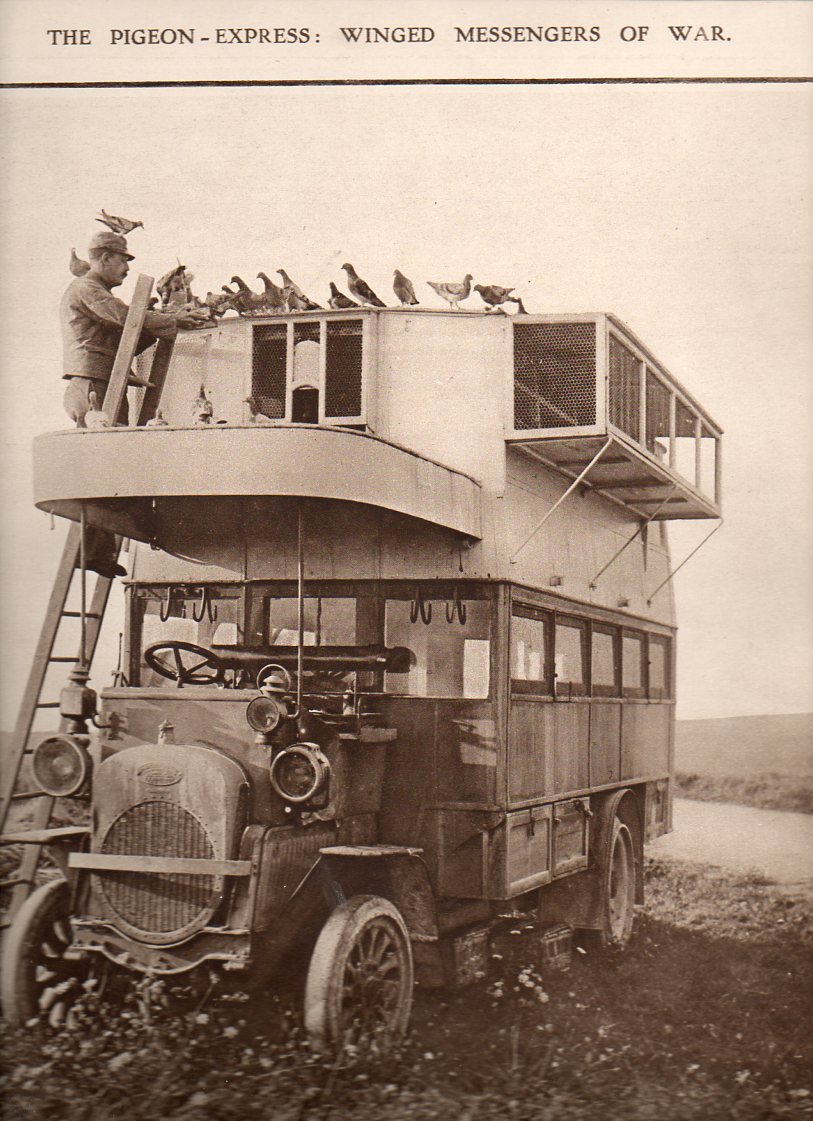
    There is of course a long history to the pigeon in war, and frankly I was surprised to find this story in 1945. Most of the famous pigeons of war come from the First World War:(the image below coming from The Illustrated London News for 2 October 1915):

    WWI--e---pigeon truck det644

    WWI--e---pigeon truck643

    ·Posted by :

    ·in:

    —