A Daily History of Holes, Dots, Lines, Science, History, Math, Physics, Art, the Unintentional Absurd, Architecture, Maps, Data Visualization, Blank and Missing Things, and so on. |1.6 million words, 7500 images, 4.9 million hits| Press & appearances in The Times, Le Figaro, Mensa, The Economist, The Guardian, Discovery News, Slate, Le Monde, Sci American Blogs, Le Pont, and many other places… 5000+ total posts since 2008.

Author: JF Ptak

  • The Long and the Longer of It: a Fabulous Engraving of Trajan’s Column

    JF Ptak Science Books   Quick Post 

    Follow Me on Pinterest 

     I have a hard time resisting long and detailed engravings, and the great sculptural victory column with the enormous numbers of bas relief depicted by Giovanni Piranesi (“Trofeo o sia magnifica colonna … ove si veggono scolpite le due
    guerre daciche fatte da Trajano, inalzata nel mezzo del gran foro …” and printed in 1770) certainly takes a stellar position. It is of course a depiction of the epic victories of Roman Emperor Trajan’s campaigns against the Dacians (101-102 and 105-106 ACE), and is located at Trjan’s Forum, north of the Roman Forum.  The story of Trajan’s efforts on the 100′-high column (125′ with pedestal) wraps itself around 23 times, rendering a 625′-long storyline of defeat for the Dacians.

    It is a beautiful thing, even if Sixtus V (the Sixtus who came after Sixtus IV who commissioned the Sistine Chapel, or the chapel dedicated to the Sixtus popes) placed that statue of St. Peter on the top of it. 

    Here’s a fantastic site that interprets and presents all of the 500+ sculptures on the column: http://www.stoa.org/trajan/

    Trajan column

    ·Posted by :

    ·in:


  • Ear Trumpets for the Eyes

    JF Ptak Science Books   Quick Post 
     
    Follow Me on Pinterest


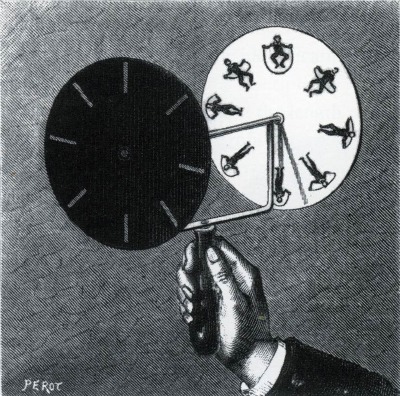
    Phenakistiscope

    This is a very quiet image of a major device in the history of the animated/moving picture:  Joseph Plateau’s phenakistoscope, a device which was based on the persistence of vision principle that would allow th emind to believe it was witnessing a continuous (though segregated) motion.  

    Oddly enough, this device brings to mind this ulatra-stable depiction of motion:

    Phenak2Which is a detail from this lovely illustration [Source: found by Eric Edelman, collage artist, in Funk & Wagnall’s Dicitonary, 1920]:

    Phenak
    Notes:

    1. “On 10 December 1830, Michael Faraday(1791-1867)
    gives a lecture at the Royal Institution. The publication appears
    in February 1831: “On a peculiar Class of Optical Illusions”. Continuing
    on what Peter Mark Roget (1779 – 1869) had published in the Philosophical
    Transactions, he describes two parallel discs, revolving on the
    same a
    xis, in opposite directions, each having 16 cogs. When viewed
    in a mirror a stationary image is seen. He does not refer to Plateau’s
    work, done before 1831 and which had been published in the Correspondance
    mathémathique et physique. Later Faraday writes that the
    honour is due to Plateau.”–source, here.
    s
    in –February 1831: “On a peculiar Class of Optical Illusions”. Faraday writes that the
    honour is due to Plateau.

    ·Posted by :

    ·in:


  • Propagandizing Germany’s Disarmament, 1932

    JF Ptak Science Books   Post 2123   
    Follow Me on Pinterest

    This image comes relatively early in the history of the German rearmament and the subsequent march to WWII.  These infographics come from the Illustrirte Zeitung (Leipzig) in March 1932 and depict the various low levels to which the German military had reached. Germany’s military situation was dictated by the terms of the Treaty of Versailles some six months after the Armistice was signed, the terms of which were decided over months and for which Germany was not an invited member to the negotiations. In any event, the protocols of the treaty were fairly strict (some felt not strict enough, while others like J.M. Keynes felt the economic restrictions and concessions were too harsh), and so far as the military was concerned the army, navy, and air force were all severely limited in size and development.

    The 1919 treaty began to unravel in earnest by 1932, at which time Germany–reeling still from the Depression and from the economic hardships and concession placed on it by the treaty, suffering large unemployment and with a disastrous economy–by June of that year had decided to ignore the military restrictions of Versailles and sought to rearm.  By July Germany withdrew from the nearly half-trillion-dollar (in 2013 American dollars) concessions agreement, and started to accumulate funds for a vast new military restructuring program. In a year Hitler was chancellor, and the Nazi Party made huge gains in the Reichstag.  And the war was in motion.

    Few people in Germany would have to be reminded that the military was in dire straights, but these infographics hammered the point home in a very stark visual manner. 

    Propaganda Germany 1931113(“Germany is Disarmed!” shows the difference in man- and fire-power between 1913 anbd 1932)


  • Tree Wagons and Rolling Land Thunder–Early, Interesting Vehicles

    JF Ptak Science Books Post 2122   
    Follow Me on Pinterest

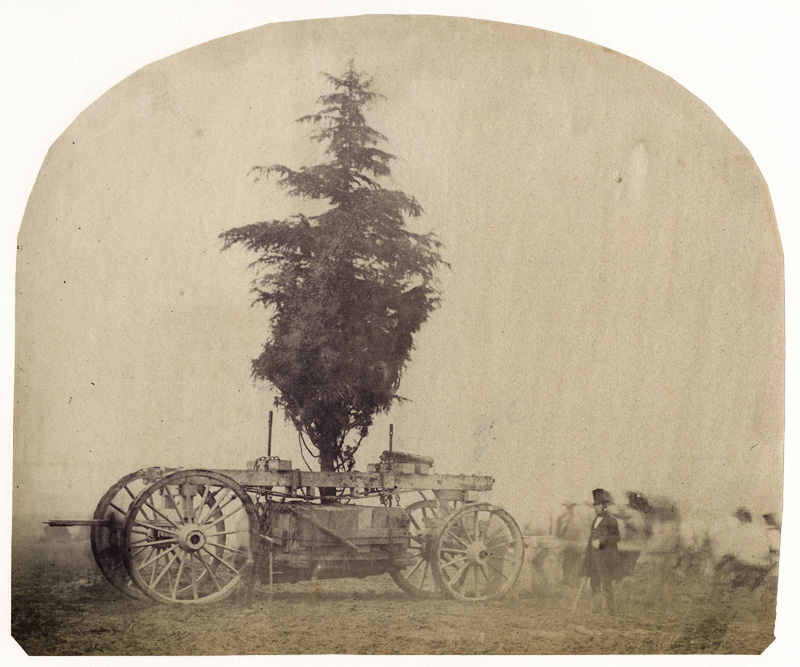
    I imagine that tree wagons had been around for quite some time by the time this Daguerreotype was made ca. 1860–the very unusual aspect of this is that it must be a very very early photograph of the process.  And, actually, it is probably rare among images in general to see the transportation of a mature tree–frankly I think it is a very mature tree in spite of its height (is this the slow-growing American Hemlock?), mainly because the trunk seems to be as thick as the observer at right.  The tree and roots look to be suspended in a wooden container, and the wheels look thick and tall (at least 5′ and probably more)–it no doubt was a very heavy load, and it would be interesting to know what was going to pull it along that open field. 

    Transporting-a-Tree-on-a-WagonImage: http://www.retronaut.com/2013/04/moving-a-tree-on-a-wagon/

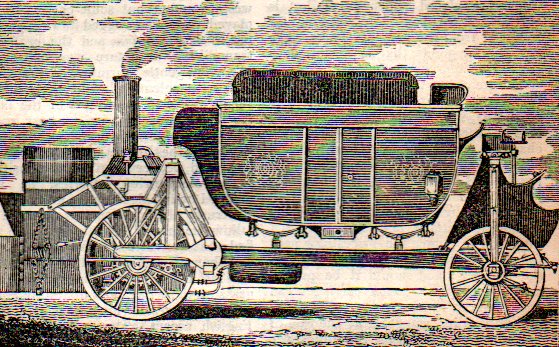
    The tree wagon was animal-powered–the rolling thunder land car was powered by steam. 

    Steam engine Griffith263

    ·Posted by :

    ·in:


  • History of Blank, Missing and Empty Things, Part 66: Hope

    JF Ptak Science Books  Post 2121  Part of the series, a History of Blank, Empty and Missing Things

     
    Follow Me on Pinterest

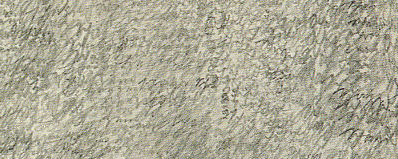
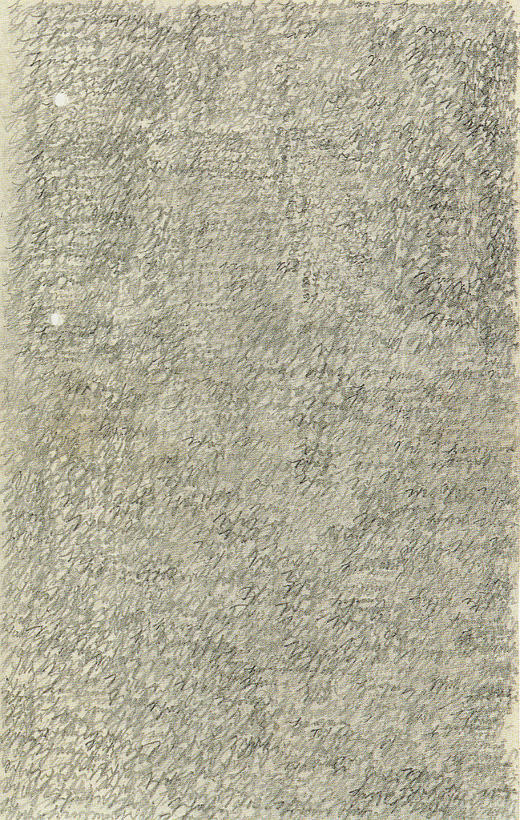
    Outsider Hauck DETAILThis is a detail from an image of great hope lost.  Here’s the full picture, one of many, of hundreds like it:

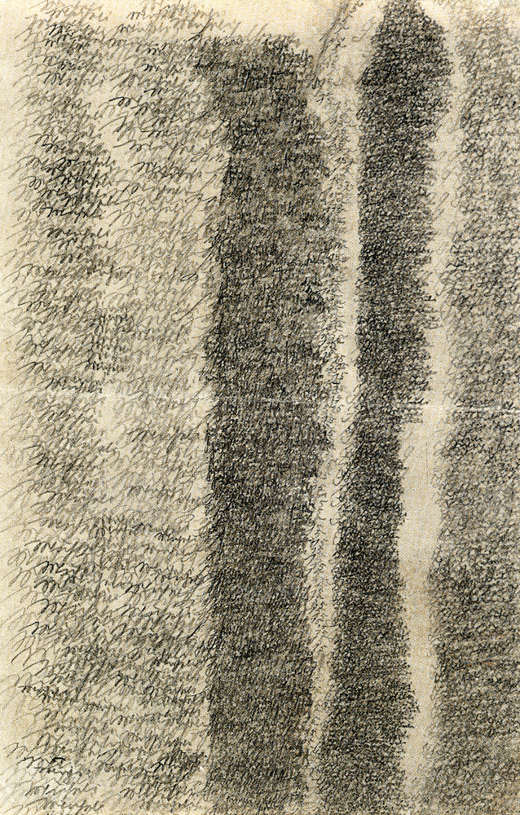
    Outsider HauckThis is a letter from a woman named Emma Hauck, a “pateint”, a committed person, in an asylum for the “fatally” insane, a schizophrenic, an incurable who simply wanted to go home. She was not insane enough to know where she was, not insane enough to not want to get out, not insane enough to know that she was in desperate straights, not insane enough to try to get some help.  Emma Hauck wrote letters to her husband, Mark.  Mostly, the letters were composed of single words (like “kommen, kommen”, “come/come” and “Herzensschatzi komm” or “sweetheart/come”) written concisely and tightly, over and over again, layers of kommen/kommen, so many that there is a geology of letters, though there is no geologist.

    Outsider hauck 2
    The images appear in the book and collection of psychiatrist and art historian Hans Prinzhorn (1886-1933), in his Bildnerei der Geisteskranken: ein Beitrag zur Psychologie und Psychopathologie der Gestaltung1, which was published in Berlin in 1922.  Prinzhorn was among the first in his profession to study the art of the insane, and to use it in diagnosis.  In the meantime, over dozens of years, he accummulated a collection of thousands of works of art (many coming when he was an assistant to Karl Wilmanns at the psychiatric hospital of the University of Heidelberg), most of which are housed today in the Sammlung Prnzhorn (UniversitätsKlinikum Heidelberg, here).

    The Emma Hauck images are astounding, and deeply private, communicating hope and despair in an illegible performance.  Letters sent in hope to her husband to come and save her; letters which were never sent. 


  • What Poe Said about Dickens, 1841

    JF Ptak Science Books  Post 2120

    “Mr. Bulwer, through art, has almost created a genius. Mr.
    Dickens, through genius, has perfected a standard from which Art itself
    will derive its essence, in rules.”–
    E.A. Poe on Charles Dickens, 1841.


    Poe[Image source:  National Park Service]

    Edgar Allan Poe
    was a brilliant and insightful and more-than-occasionally a vicious/wicked surgeon as literary critic–in his collected works there is one entire volume dedicated to those works, and it is well worth a read.

    Poe reviewed Master Humphrey’s Clock and The Old Curiosity Shop for the May 1841 issue of Graham’s Magazine–that’s because they were written and published serially at about the same time, both ending in late 1841, and written by a man who was seemingly several brilliant writers at the same time. (fFor all that he wrote, he must have been several people, because he managed to do it all in a life-span of 58 years1.)

    Dickens
    He says
    something of Dickens that is pretty remarkable. To be sure he was not always this glowing, and not necessarily supportive, and was a razor-sharp critic when the need arose–that need seemingly being most of the time)–but this is what he had to say on Dickens, and it reads quite true to me:

    “The Art of Mr. Dickens, although elaborate and great, seems only a
    happy modification of Nature. In this respect he differs remarkably from
    the author [Edward Bulwer Lytton] of Night and Morning [1841]. The latter, by excessive care and by
    patient reflection, aided by much rhetorical knowledge, and general
    information, has arrived at the capability of producing books which be
    mistaken by ninety-nine readers out of a hundred for the genuine
    inspirations of genius. The former, by the promptings of .the truest
    genius itself, has been brought to compose, and evidently without
    effort, works which have effected a long-sought consummation- which have
    rendered him the idol of the people, while defying and enchanting the
    critics. Mr. Bulwer, through art, has almost created a genius. Mr.
    Dickens, through genius, has perfected a standard from which Art itself
    will derive its essence, in rules.”


    ·Posted by :

    ·in:


  • DIY Pocket Baseball Game, 1876

    JF Ptak Science Books   Quick Post  Follow Me on Pinterest

    Following up on a post from yesterday on a make-it-yourself baseball history calcul-computer is this glorious spinning arrow pocket game board from 1876.  An enthusiast could easily cut and paste their way to their very own baseball game for lost moments on the train or in line at the Piggly Wiggly.  Enjoy.


    ·Posted by :

    ·in:

    —

  • The 15 Billion Year Old Monkey and “Gasoline Alley”

    JF Ptak Science Books  Post 2118   Part of the series A History of Blank, Empty and Missing Things  Follow Me on Pinterest

    Concevons qu’on ait dressé un million
    de singes à frapper au hasard sur les touches d’une machine à écrire …
    [translation: Let us imagine a million monkeys typing haphazardly on
    typewriters …”
    1


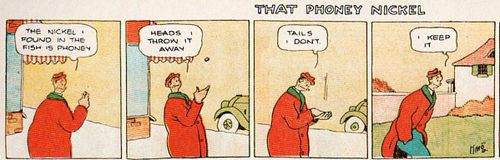
    Gasoline alley723[
    Gasoline Alley, 1931]

    There are some ideas that leave me with a powerful sense of nothing.

    To me, “nothing” can be very important–especially in writing and speaking and action, doing or saying nothing has been the important and the correct thing to do.  “Nothing” isn’t necessarily an ending, and, just a period or a coma, can just be a placeholder for something that is developing.  There can be long nothings and short one, forever- and micro-nothings, and nothing that is nothing for almost nothing.  Nothing can be implied, insinuated, broadcast and defined, though self-defined extended nothingnesses (like John Cage’s 4’33”) is a tricky thing to make happen with success. 

    The ideas that leave me with a sense of nothing are interesting things.  And there are a lot of them. When I can remember them they are in my nothing file, waiting for nothing–or something–to happen.

    This is the sense I had when I was trying to explain randomness to my 10-year-old daughter and her 11-year-old cousin, sitting out in a park, looking at stuff.  Somehow I reached into the past and pulled up the infinite monkey theorem, and tried to make that interesting, but just couldn’t do it. Maybe it was the difficulty of super-large numbers, or the fascinating but incomprehensible thought-threats of Borges and his infinite library, but I was left with nothing.

    It is Borges who writes a lovely piece on the history of producing everything from nothing, appearing in his “The Total Library” in 1939 (and then again in “The Library of Babel” in 19412), reviewing machines and such of spectacular randomization that could produce the whole of what we recognize as what we know. 

    Emile Borel wrote on it in 1913, finding the possibility of one million monkeys pounding away at one million typewriters.  In his wonderful work, The Math Book3, Cliff Pickover looks at 250 big ideas in the history of mathematics and gives each of them one page only for presentation and explanation.  He approaches the infinite monkey theorem by looking at one monkey wailing away at one typewriter, striking the keys, and analyzing how long it might take for the one monkey to produce one line from one book.  The line is “In the beginning…” at the beginning of one great nothingness, from the Old Testament, a 56-object sentence (including punctuation and spaces) and, Pickover reasons, that if there is a 93-character keyboard,then this monkey will have a 1/9356 possibility times 10100 of getting it right, and that if it worked for 24 hours a day striking one key every second then it will have used all of the time in the present universe–the Big Bang Monkey.

    All I got back were big stares, and a big sense of nothing in my gut.  It reminded me of the cartoon featured above, a toss-off sub-cartoon in a panel of the Gasoline Alley series.  Did he actually look at the coin?  Did he just decide to keep it?  And why keep a phoney nickel? And who counterfeits nickels, even during the Depression?  What is the outcome of the panels–just some guy walking down the street with a nickel in his pocket.  Something may have happened, but it was a lot of nothing. 

    I know that I should have a bigger sense of what Felix Edouard Justin Emile Borel and Jorge Francisco Isidoro Luis Borges were writing about and in many ways I do, but in the end I know that I am left with nothing.  But I have it in my pocket.  

    Notes

    1. Émile Borel (1913). “Mécanique Statistique et Irréversibilité”. Statistical mechanics and irreversibility) J. Phys. 5e série 3: 189–196.

    2.  Jorge Borges,  “La biblioteca total” (The Total Library), Sur No. 59, August 1939. Translated by Eliot Weinberger, in Selected Non-Fictions (Penguin: 1999)

    3.  Clifford Pickover, The Math Book, (2009), Sterling, page 328.


  • A Few Circular Ships (Some Submerged and Semi-Sugmerged) 1868-1880

    JF Ptak Science Books      Post 2017

    I’ve noticed a few interesting articles on the circular ship from mid-late 19th century; I don’t really have much to say about them except that I appreciate their structure and, well, beauty, and so I’m just sharing them here. 

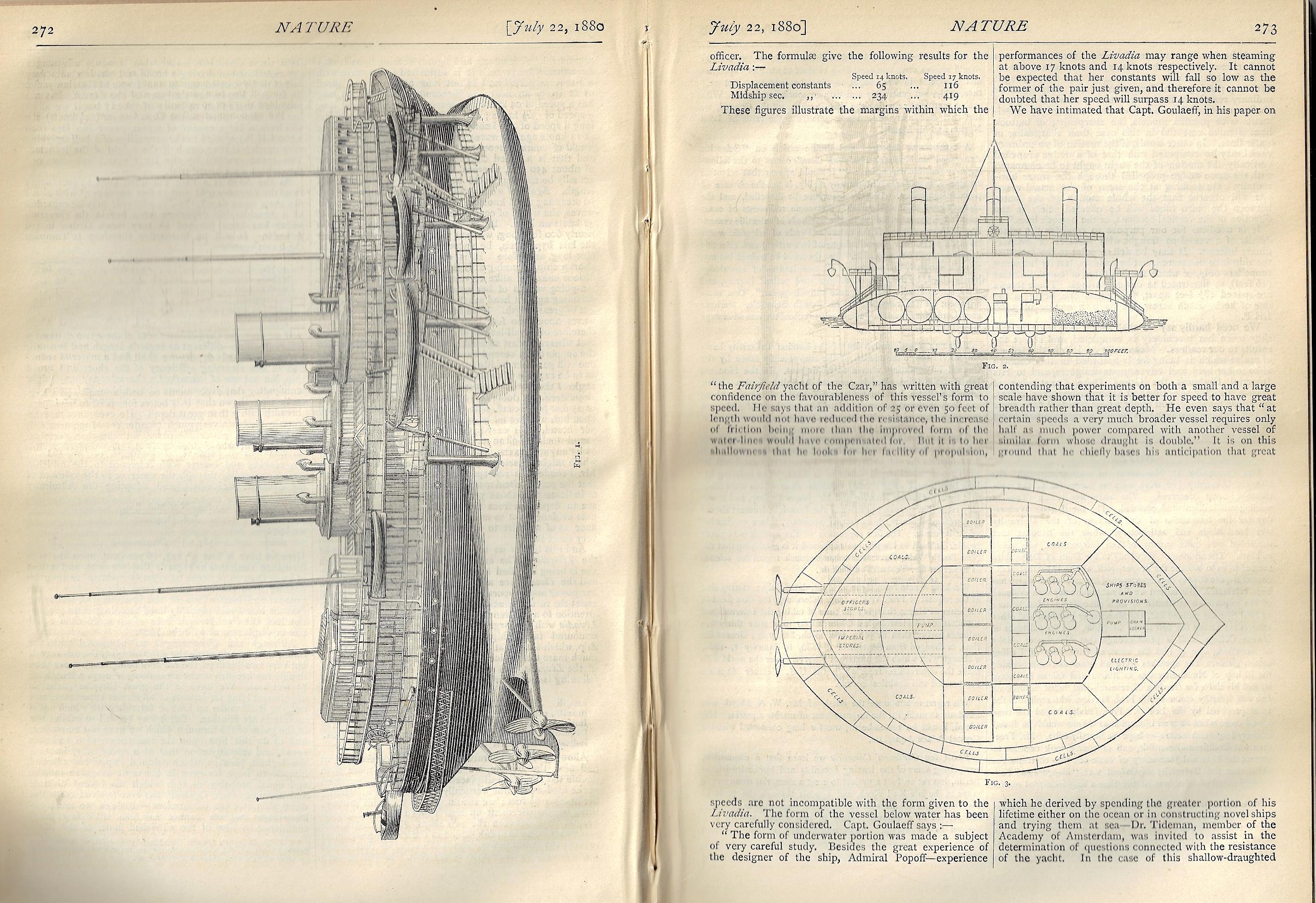
    First is “The Russian Imperial Yacht, ‘Livadia’”, which is an article in Nature, July 22, 1880, appearing on pp 270-274, with several large illustrations, including an elevation and a plan of the ship.  

    Nature 1880 Lividia

    “The Livadia was an imperial yacht of the House of Romanov built in 1879–1880…intended for service on the Black Sea…a radically novel ship conceived by Vice Admiral Andrey Popov, designed by naval architect Erast Gulyaev and built by John Elder & Co. of Govan on Clyde. The Livadia continued Popov’s line of circular shipsalthough this time Popov sacrificed geometrical perfection for seagoing capabilities. She had a beam of 153 ft (47 m) against overall length of only 259 ft (79 m). An extreme example of tumblehome architecture, she sported a conventionally shaped superstructure mounted on a wide, flat-bottomed, turbot-shaped submerged hull or pontoon. The Livadia turned out a surprisingly maneuverable and stable ship with a respectable maximum speed of 15.7 knots and her efficiency was comparable to conventional ships. Her performance at sea trials surprised most naval architects and was attributed to the favorable placement of the propellers.”–Wikipedia

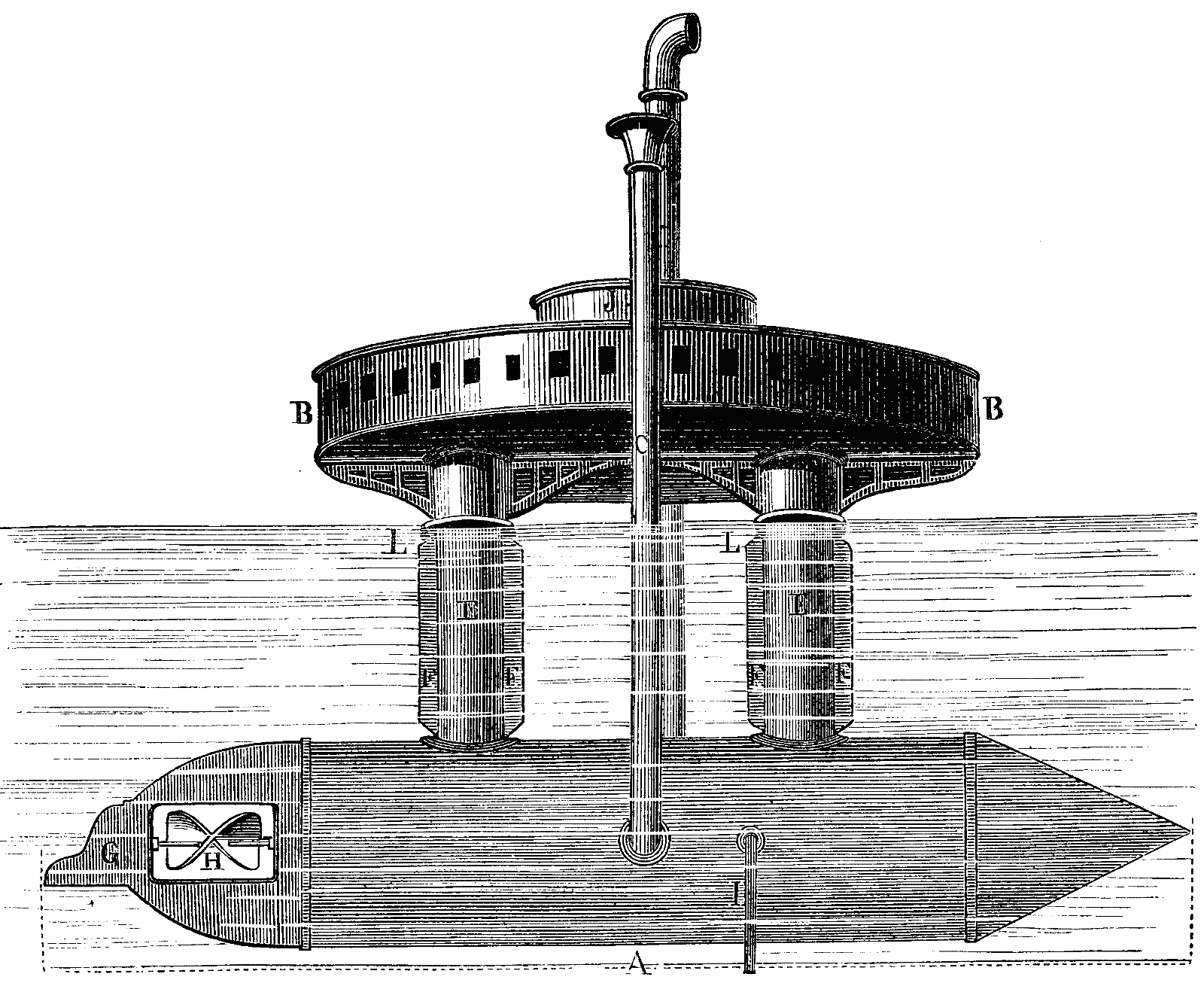
    Next is this fantastic set of drawings for a proposed circular semi-submerged ship, the work of Donato Topmmasi of Paris, and which appeared February 24, 1877, in the Scientific American, page 115.

    Submerged ships tommasi a


    ·Posted by :

    ·in:


  • A Note on Luther and Copernicus

    JF Ptak Science Books  Post 2106

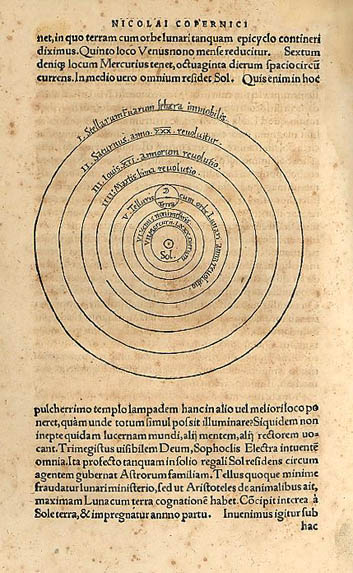
    Like many religious leaders and clerics, Martin Luther in 1539 took a dim and critical view of Copernicus and his new and substantiated theory of planetary motion and placement–he was also among the earliest important criticisms of the work, unable to provide any harmony between the new ideas and the overwhelming authority of the Bible. How did Luther come to say these things about a work that wasn’t published until 1543 (as De revolutionibus orbium coelestium  or On the Revolutions of the Heavenly Spheres)?  As it turns out Copernicus’ book was largely finished a decade or so before it was finally published, being constantly revised and amended and corrected, with parts of the work presented for review and comment to such people as Pope Clement VII (who came to believe in the book and who volunteered to pay for its printing but dying before this could be set into place). 

    Copernicus de revo
    The work was discussed for ten years before publication, with part of the theory finding its way into a small but select circulation in Copernicus’ 40-page summary of his major work, Commentariolus1,  which would have been passed hand-to hand and which itself would not see publication for another 400 years (as the De Revolutionbus was the mature version of what the Commentariolus summarized)–though few copies existed, people did lecture on the work, which is probably where Pope Clement came into contact with its ideas. So it is entirely plausible for Luther to have come into contact with these ideas before publication.

    Luther stated:

    “There is talk of a new astrologer who wants to
    prove that the earth moves and goes around instead of the
    sky, the sun, the moon, just as if somebody were moving in a
    carriage or ship might hold that he was sitting still and at
    rest while the earth and the trees walked and moved. But that
    is how things are nowadays: when a man wishes to be clever he
    must needs invent something special, and the way he does it
    must needs be the best! The fool wants to turn the whole art
    of astronomy upside-down. However, as Holy Scripture tells
    us, so did Joshua bid the sun to stand still and not the
    earth.” And there was more.2

    Even still Luther never did issue  a retraction for his statement, and
    the Catholic Church designated the book to its list of prohibited books,
    in spite of a vetting element that took place prior to publication–it should also be noted that the
    book was also respectfully dedicated to Pope Paul III, leader of the Catholic Church, which was somewhat ambivalent to the work for several decades.

    ·Posted by :

    ·in: