A Daily History of Holes, Dots, Lines, Science, History, Math, Physics, Art, the Unintentional Absurd, Architecture, Maps, Data Visualization, Blank and Missing Things, and so on. |1.6 million words, 7500 images, 4.9 million hits| Press & appearances in The Times, Le Figaro, Mensa, The Economist, The Guardian, Discovery News, Slate, Le Monde, Sci American Blogs, Le Pont, and many other places… 5000+ total posts since 2008.

Author: JF Ptak

  • Bad Poetry Yields Good Results in the Celebration of the “Atom-Molecule”, 1874

    JF Ptak Science Books  Quick Post

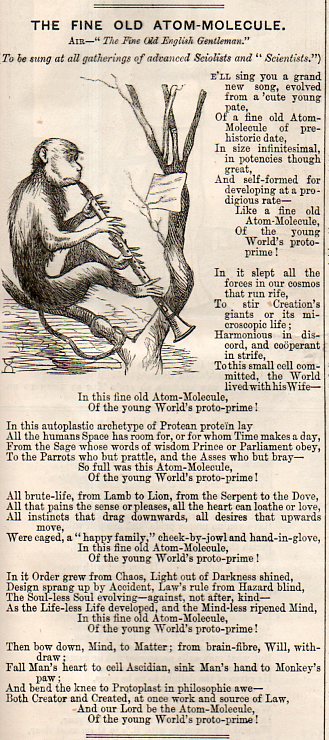
    Browsing  the 1874 volume of the London Punch an interesting but truly bad poem slid from the page. The poem certainly suffers from itself, but there are interesting insights, and poetics aside there’s some good thinking going on in spite of a probably-very-quick composition time.

    For example, the first line of this stanza “In this autoplastic archetype of Protean protein lay” is a real tooth-popper, but it does dig down into some interesting turf:

    All the humans Space has room for, or for whom Time makes a day,

    From the Sage whose words of wisdom Prince or Parliament obey,

    To the Parrots who but prattle, and the Asses who but bray–

          So full was this Atom-Molecule,

          Of the young World’s proto-prime!

    Atom molecule696
    The poem wobbles and wrangles within its own very tight and bumpy twists (”  Of the young world’s proto-prime!”) though the essence of existence does seep through:

    In it slept all the forces in our cosmos that run rife,

    To stir Creation’s giants or its microscopic life;

    Harmonious in discord, and cooperant in strife,

    To this small cell committed, the World lived with his Wife–

          In this fine old Atom-Molecule,

          Of the young world’s proto-prime!

    It is a curious work which I liked in the end, or at least I liked it as a vehicle to get you to another place: 

    In it Order grew from Chaos, Light out of Darkness shined,

    Design sprang up by Accident, Law’s rule from Hazard blind,

    The Soul-less Soul evolving–against, not after, kind–

    As the Life-less Life developed, and the Mind-less ripened Mind,

          In this fine old Atom-Molecule,

          Of the young World’s proto-prime.


  • Fossils of Almost No Value? Statistics, Prisons, and Meaninglessness.

    JF Ptak Science Books   Blog Bookstore 
    Blog--May 23--convict The fossil record is generally one of the richest and most
    compelling histories of the development of life on earth, a far-reaching,
    cumulative record of extraordinary importance. 
    There are the other, occasional, fossils that stand only by themselves,
    and seem to have almost no use in the current time, living almost entirely
    within themselves. The following statics seem to fall into that category—they
    seem to be only a tombstone for an era, providing nothing except to tell the story
    of what happened, existing only for that purpose, with no compelling
    utilization for anything outside understand a small piece of life for the year
    the stats were gathered. 

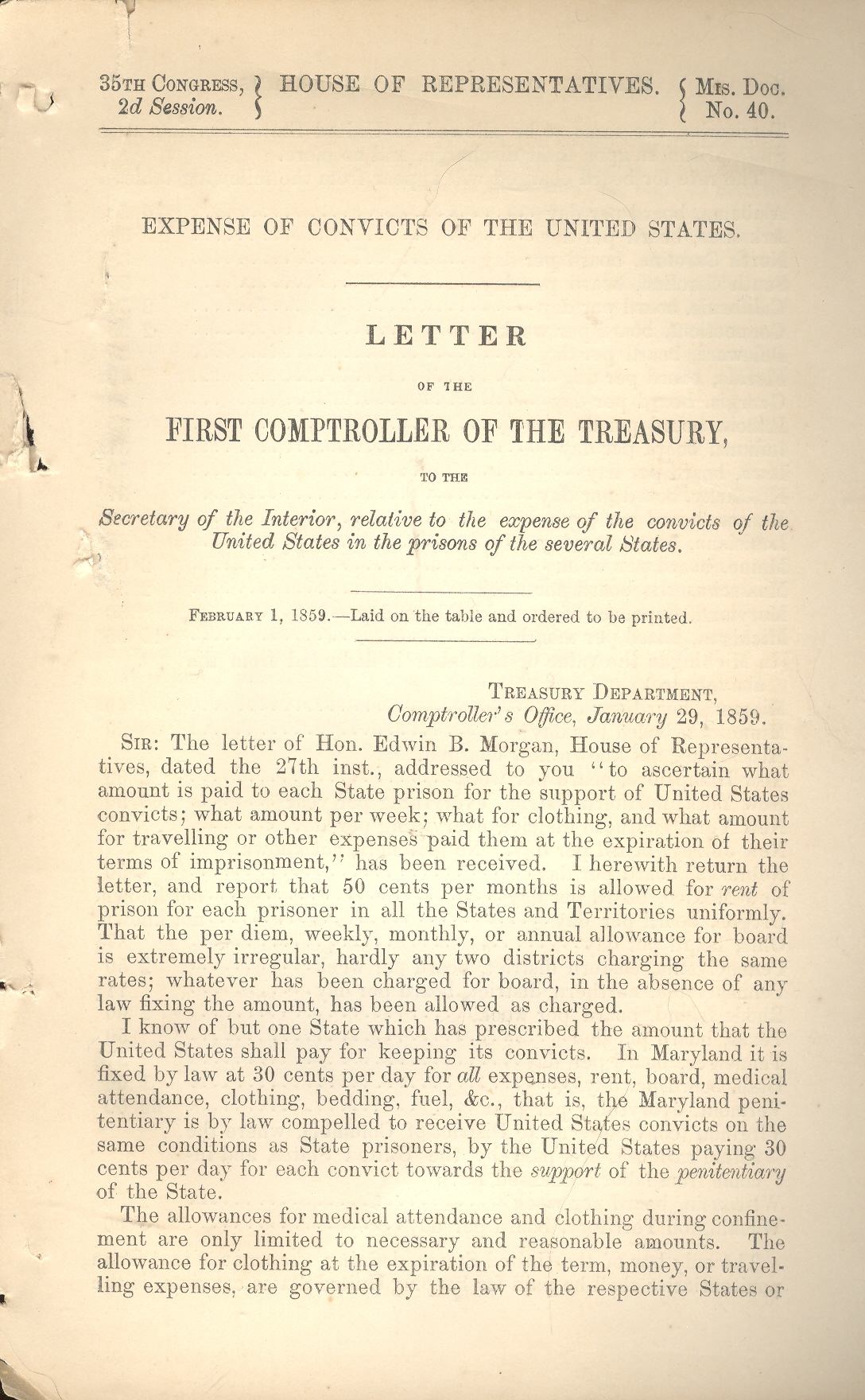
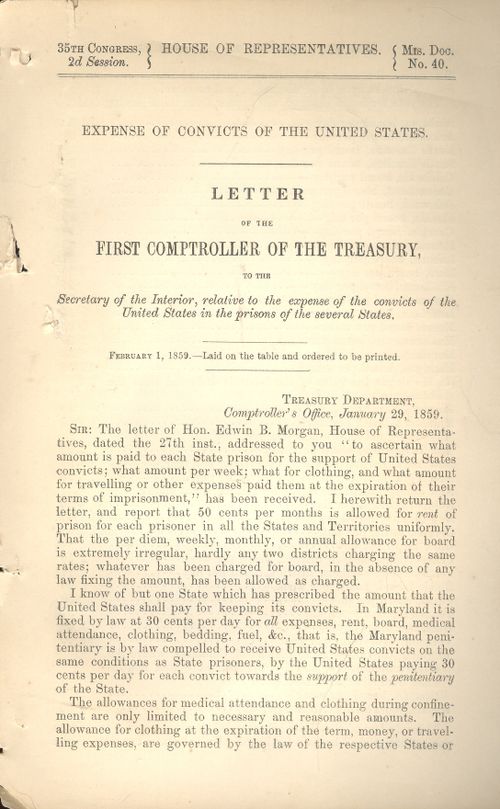
    The cause for this sentiment was found in a government
    publication called Expense of Convicts of the United States  (Letter from the
    Comptroller of the Treasury…)
    , 1 February 1859).  The following comes in the first paragraph:

    “I….report that 50 cents per months is allowed for rent of
    prison for each prisoner in all the States and Territories uniformly.”

    What this means is that the U.S. Treasury would pay 50 cents
    to the state for keeping a federal prisoner. 
    That is 50 cents per month, or about 1.7 cents per day. And that was
    also for rent of the cell, exclusive of all else, each state furnishing the
    government with the added cost, separately.

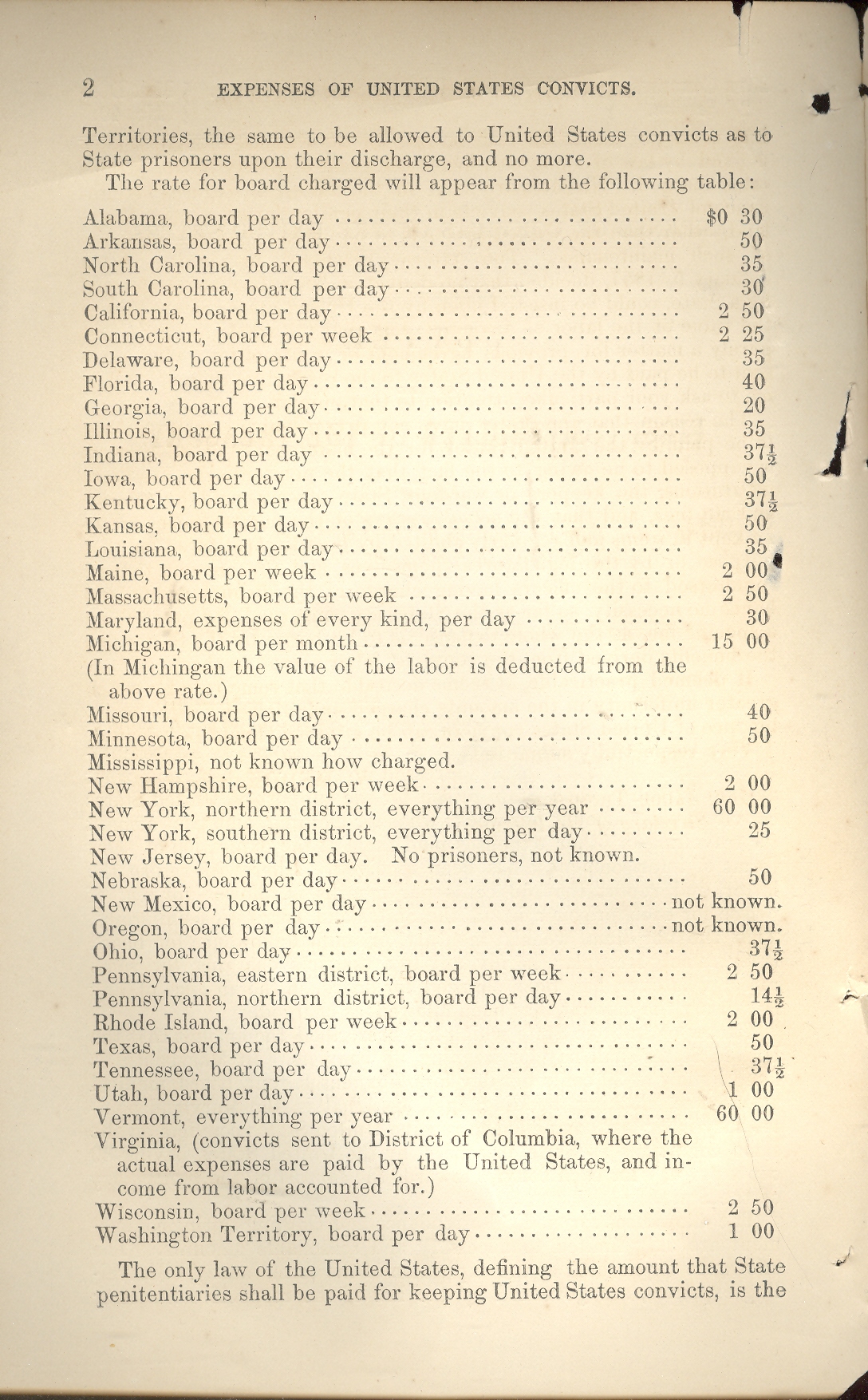
    Evidently the only state in the country that prescribed an
    exact amount for keeping a federal prisoner in a state institution was
    Maryland, “which received 30 cents per day for all expenses, rent, board, medical attendance, clothing, bedding,
    fuel, and etc” (italics in the original). 
    The rest of the states and territories had diverging and different
    expenses, from the southern district of New York at 25 cents a day for board,
    and ranging up to about 50 cents per day in  Michigan. Vermont charged an extra 60 dollars a year, in addition to the 6 bucks that they would
    get for the rent of a Vermont
    cell, to keep a prisoner—all expenses included—for one year, or about 18 cents
    per day, total. 

    Unfortunately I don’t have the stats of how many federal
    prisoner there were in 1859, so I don’t know how much of a percentage of the
    budget was occupied by prison expenses. 
    But what I do know is that even with tossing around the CPI with
    multiplier effects and so on the figures translate in no way to keeping a
    person in prison today.   The cost of
    housing someone in prison per year is around $35,000 a year, or $100 or so a
    day.  Adjusting the 1860 dollar via CPI
    for 2009 makes that dollar worth about 25 dollars today, which would be a
    doubling and a doubling again of keeping someone in prison. 

    I’m not so sure that those figures tell us much about what
    we pay, today. 

    Next, I was having a breeze through The Prison System of the United States by S.J. Barrows
    (Commissioner of Prisons for the U.S.) which was published in Washington  in 1900.  One particularly interesting
    section was the publication’s solitary statistical table, “Appendix A”, which
    detailed the crimes of the 625 men incarcerated in the state of Michigan  in 1900.  Well over half of all those in prison were
    there for larceny and burglary, while about 12% were in the big house for
    violent crimes.  (Evidently 95% of this
    number were literate and 70% could “cipher” (that is, produce basic arithmetical
    skills)).  The total crime list (such as
    it was) includes the following:

    Capital crimes (murder in the first and second degree) and
    manslaughter, along with murderous assault comprised about 1% of the total
    prison population.  Other violent crimes
    included assault with intent to do great bodily harm, rape, attempted rape,
    rape and assault composed another 3%. Further assaults were classified under
    (a) with intent to do great harm;  and
    then as assault on a female under 14 years; and on a female under 16 years  There were also the sexual assaults:  taking indecent liberties with female; with
    male child;  unlawful and carnal
    knowledge of a young child;   inducing female to enter house of ill fame.  These last two categories included about 5%
    of the prisoners.  Set aside form these
    were the crimes of adultery, abduction, incest and sodomy, which included
    another 3%.  So it seems that the violent
    offenders in prison in  Michigan 
    in 1900 totaled out at 12% or so. 

    Burglary and larceny were the  largest categories, being subdivided into (a)
    burglary accompanied by actual assault; (b) larceny; (c) larceny from a
    dwelling;  (d) larceny from a shop in daytime; (e) attempting larceny from
    the person; (f) entering a church in daytime to steal; (g) breaking and
    entering a store in daytime;   (h) breaking and entering a store in
    nighttime;(I)  breaking and entering a
    dwelling in daytime; (j)  breaking and
    entering a dwelling;  (k) breaking and
    entering a railroad car.

    Then there were a few largely vacant offenses:  Resisting an officer; Uttering and publishing
    a forged note, breaking out of prison, perjury, arson, false pretense, and
    malicious destruction of personal property, all combing for less than 2% of the
    jailed population.
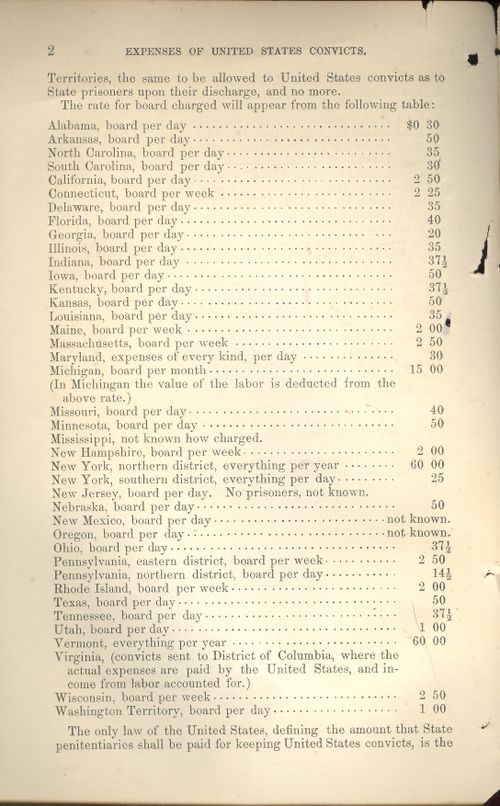
    Blog--May 23--convict 001

    The vast majority of prisoners in Michigan were imprisoned for non-violent
    crimes.  The federal fathers, in the
    meantime, recognized that people in prison shouldn’t be idle while paying their
    debts to society, and should fill their time with work that would occupy the
    prisoner and bring some income into the prison system:

    “The moment we apply to the convict a
    different system of economics because he is in prison we go astray. When we
    subject to analysis the plans proposed for abolishing the competition of
    convict labor we find them based on false principles or expecting results not
    to be realized. The wiser way for the peace of society and the interest of the
    State is to place prison industries on the same ground as free industries, and
    defend that.
    It is also said in opposition to the contract system that
    contractors do not pay as much for the labor of convicts as free laborers
    command.”

    In 2005 the federal offenses for which people are incarcerated include: Drug
    Offenses 59.6%; Robbery 9.8%;  Property
    Offenses 5.5%;  Extortion, Fraud, Bribery
    6.8% ; Violent Offenses 2.7% ; Firearms, Explosives, Arson 8.6% ; White Collar
    1.0%; Immigration 2.8%;  Courts or
    Corrections 0.8%;  National Security
    0.1%;  Continuing Criminal Enterprise
    0.8%;  Miscellaneous 1.5% .  54% of prisoner in state custody for the same
    time were incarcerated for violent crimes, with drug offenses coming in at 20%
    and property crimes at 19%.  The racial
    breakdown of prisoners in the U.S. is another tragedy: of the prison population
    in toto of 2.3 million in 2008 there
    were 4,777 black male inmates per 100,000 black males held in state and federal
    prisons and local jails, compared to 1,760 Hispanic male inmates per 100,000
    Hispanic males and 727 white male inmates per 100,000 white males—that means
    that the black incarceration rate was double and then double and then
    half-doubled again that of whites.  What
    this also means is that there were more blacks in jail cells than in college
    dorm rooms in 2008.

    I’m not sure that any amount of creative statistical mathemartistry could bring these figures to life for some sort of practical application in 2009, the present situation in the prisons being so immense and pervasive.  Numbers and assorted data from the past usually have the capacity to help us see where we are today; as I said earlier, I think that these fossils are simply that:  dead.


  • Great Cutaway of a Classic Aircraft

    JF Ptak Science Books  Quick Post

    (I’m back to the blog after a two-week hiatus for moving to our new house–that is the longest period by far of not writing in the 5.5 years of this blog. This is just a quick post on an interesting and newly-found image–writing should start very soon…)

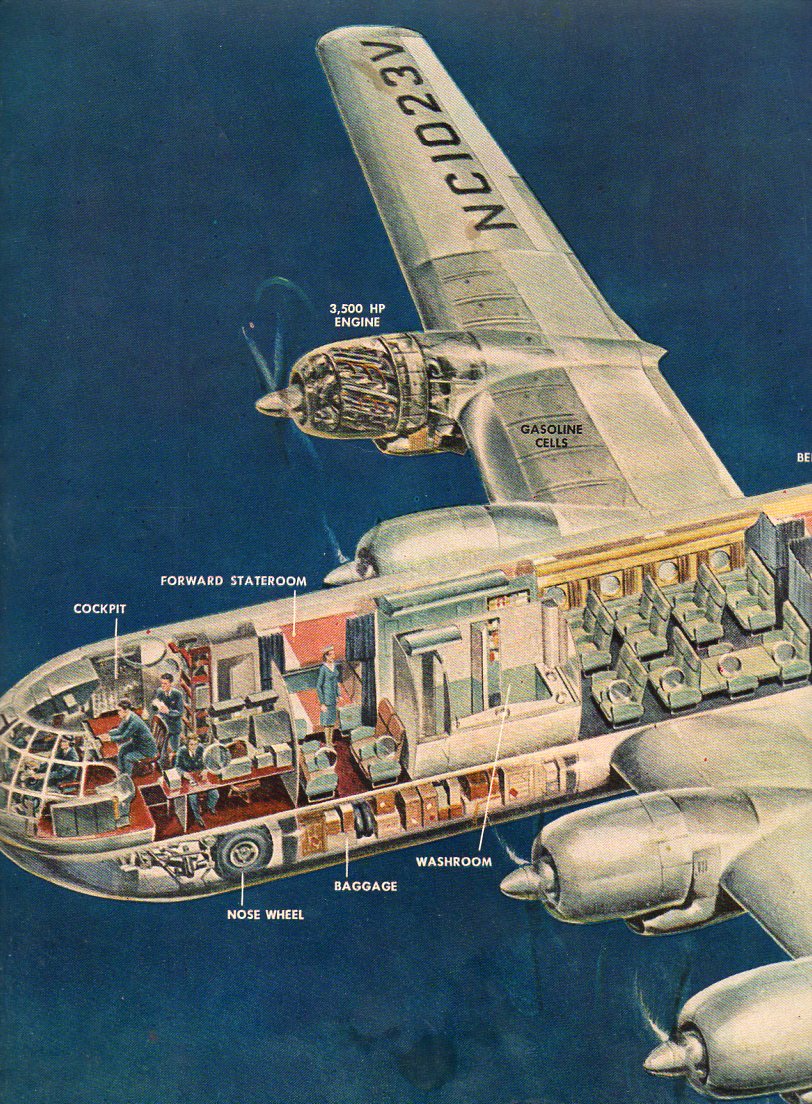
    Beginning to unpack from our move, the very first thing to emerge from the very first (“desk”) box out in the studio was a clutch of cut-away aviation images.  And the first of those was this beautiful 1948 two-parter from LIFE magazine of the new PanAm B-377 Stratocruiser.  The Stratocruiser was first flown in 1947 and was a derivative of the B-29 (troop transport) Superfortress via the C-97 Stratofreighter.  Aside from the general opulence, the dark-blue background of this image is just lovely.  

    Stratocaster694

    ·Posted by :

    ·in:


  • A Beautiful Ballooning Image of an Unfolding Tragedy

    JF Ptak Science Books  Quick Post
    Follow Me on Pinterest


    Ballooning wonder detail
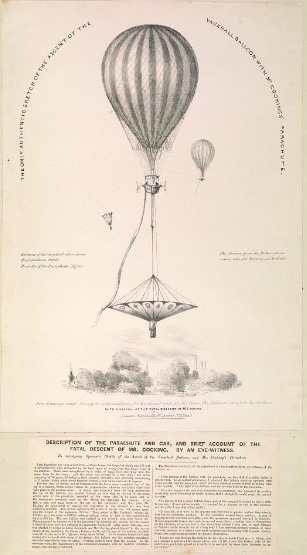
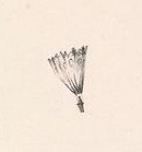
    The The Great Nassau ballooned ascended from Vauxhall Gardens on 24 July 1837 under the control of aeronaut Charles Green (1785-1870) along with a small crew.  Also included was Robert Cocking, another aerial explorer who was in tow of the balloon with an experimental parachute of his own design and construction.  He was taken aloft, and at 5000 feet was released into disaster–the parachute failed, and Mr. Cocking was dead. 


    Ballooning para copy

    This lovely broadside (found via Bibliodyssey) describing the even exists on the Smithsonian Institution website (here). 

    And the detail of Mr. McCocking’s fall:


    Ballooning parachute fail

    ·Posted by :

    ·in:


  • Belly Barrows and Lard Balloons

    JF Ptak Science Books   Quick Post    
    Follow Me on Pinterest

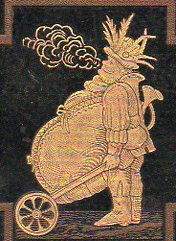
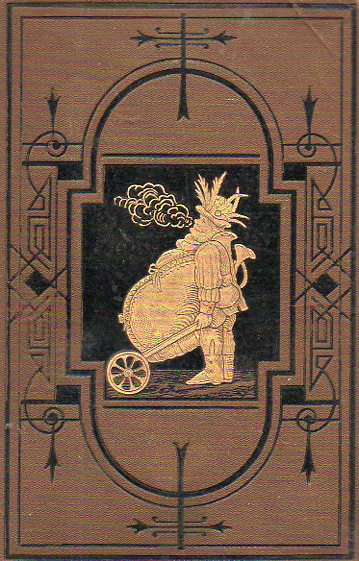
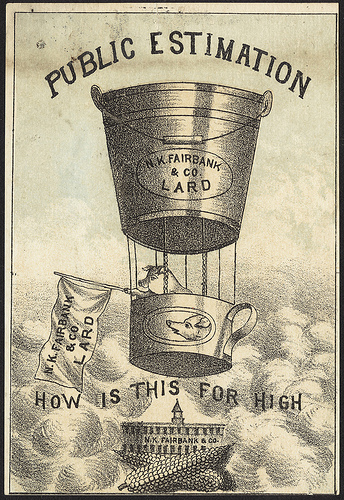
    There is no good reason to include these images in this blog on the history of science and general ideas–except that they are rather extraordinary, and highly unusual, even in the genres of caricature and grotesque.

    Belly690
    The first is the book cover image for Thomas Wright’s A History of Caricature and Grotesque in Literature and Art (published in London by Chatto and Windus in 1873) and is a peculiar rendition of largesse and self-greed.

    Belly689
    Another never-seen-it-before image popped up today–this one an illustration for a  swaddling-meat peddler’s trade card, entitled “The three graces of N. K. Fairbank & Co.’s lard – purity,
    weight, sweetness”, printed in the late 19th century.  The image cannot be contained by the card’s size (12x8cm):

    Belly lard
    The floating lard aside, the image is disturbing and heart breaking.  The pig has every indication of kindness and quiet enjoyment, flying a small flag in his gondola of floating fat, being taken away to points probably-known.  The image was found via Bibliodyssey, and the image used is from the collection at the Boston Public Library Print Department.  (Interesting to note that the entry at Boston lists the following:  “Subject: Swine; Corn; Oil & fats; Animals in human situations”).


    ·Posted by :

    ·in:


  • Heavy Metal Mondrian–a Sewer Story

    JF Ptak Science Books   Quick Post


    Mondrian sewer cleaned detail
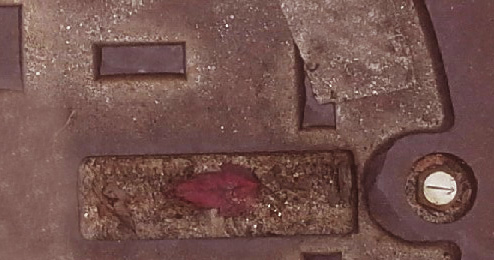
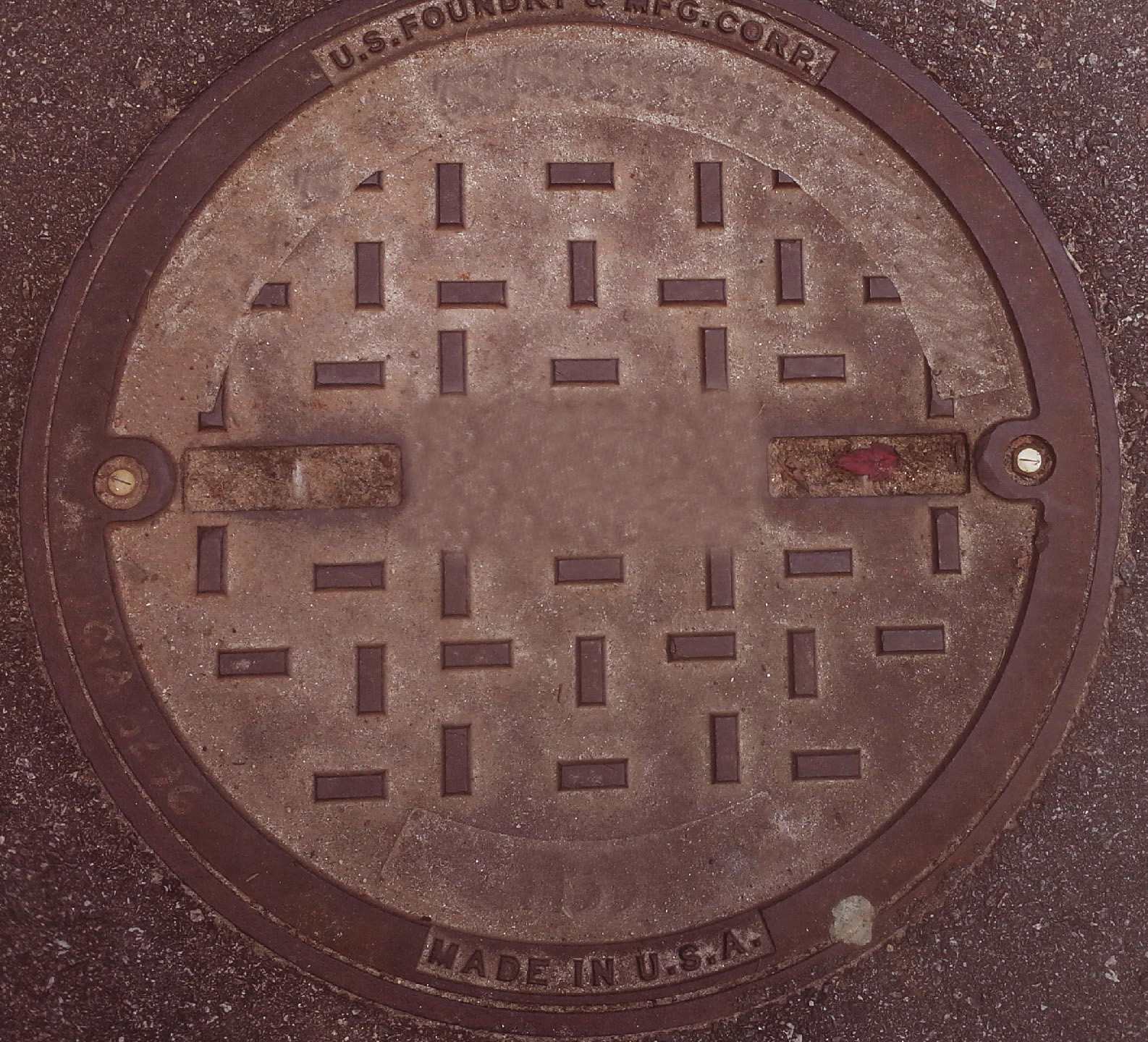
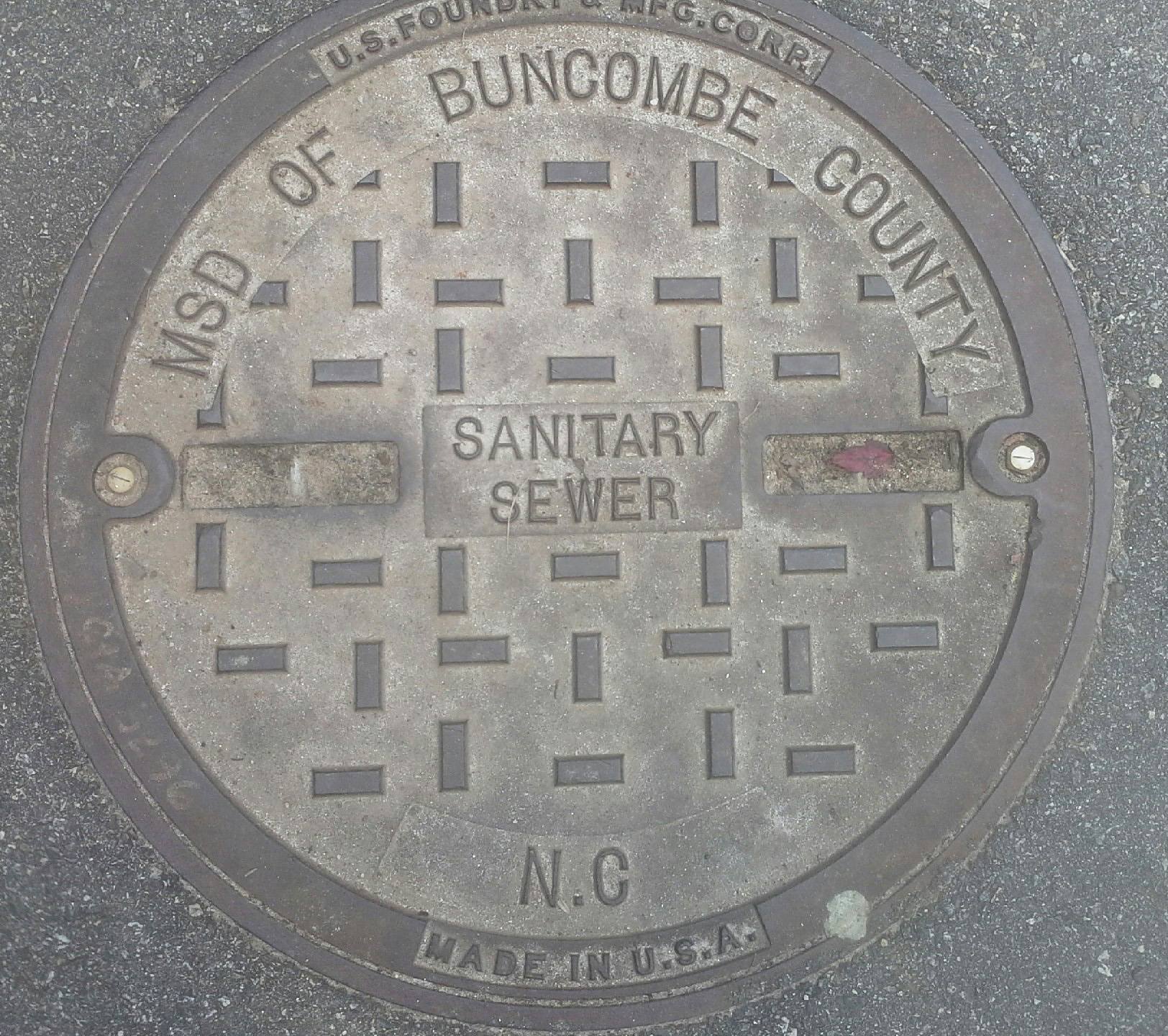
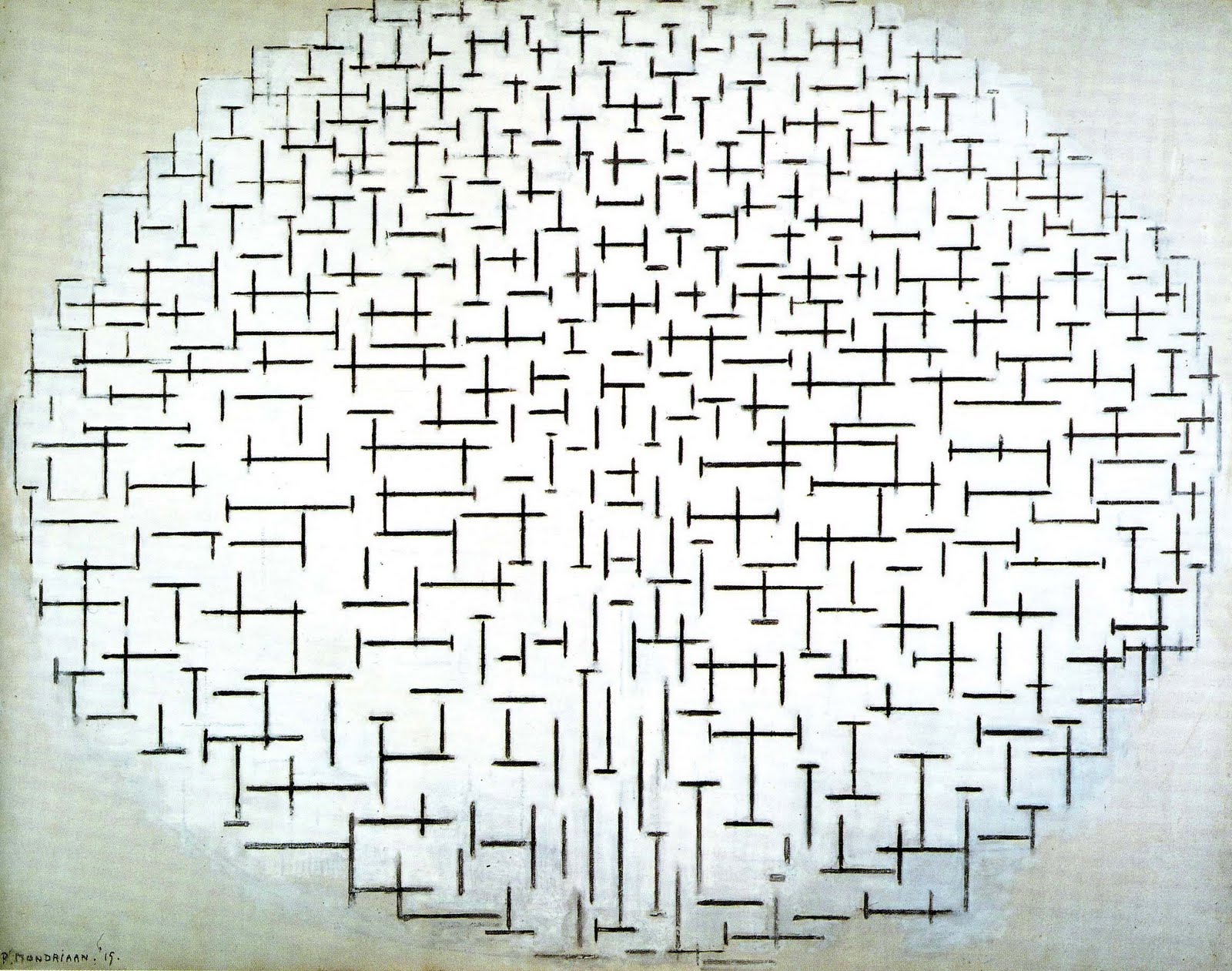
    Walking through the Western North Carolina Mountain Fair last week-end I found a little bit of Piet Mondrian (1872-1944) embedded in the sidewalk.  (Mondrian helped establish De Stijl (1917 or thereabouts), with a philosophy of using lines to
    transform artistic thought onto canvas, and the lines were all
    horizontal or vertical, with square and rectangular shapes. These would
    represent the pure harmonies of expression, along with the primary
    colors as well as black and white. His images are iconic.)

    Here’s the cleaned-up version of what I saw underneath the text:

    Mondrian sewer cleaned_edited-1
    And the original:

    Mondrian sewer

    And Mondrian’s trees:

    Mondrian trees

    And this:

    Mondrian original
    Had he seen this sewer access, I think that Mondrian would have been pleased.)

    Once you start looking for Mr. Mondrian, he seems to be everywhere:

    Mondrian-cake-010[Source: The Guardian blog.]

    ·Posted by :

    ·in:


  • For Kids: Who is STUMPY PITYPRANCE STUBBYPENCIL?

    JF Ptak Science Books   Quick Post

    (I know, I’ve been on a bit of a fictional non-science bender–please bear with me.)

    Amazing Name Masticating Namonamemaker

    How do you change your bland,
    old-fashioned everyday name into an EXCITING, NEW, FRESH and ENTIRELY
    ORIGINAL title? Hmm? It is as simple as falling down. Just take
    the first letter of your first name and the first AND last letters of
    your last names, find them in the columns below, and, PRESTO, your
    new name appears. For example, we’ll use the name of a happy dog,
    say, Blue Ptak, so, take the “B” in column 1 (“StumpY”) and
    the “P” of column 2 (“Pityprance”) and the “K” of column
    3 (“Stubbypencil”) and you get Blue’s new non-secret name,
    Stumpy Pityprance Stubbypencil.


    ·Posted by :

    ·in:


  • Found-Word Bibliopathology Poetry

    JF Ptak Science Books   A catalog entry for the Museum of Imaginary and Impossible Things

    Poetry from Found-Wordist and Book Pathologist Mr. Ignatio Norme

    [This description appears on pages 67-69  of the guide to the G.R. “Joe” Gebors Museum of the Imaginary and the Impossible.* The physical location of the collection is just south of Savannah on Tybee Island, Georgia.] 

    • Catalogue #156.2  Received by Museum:  19 September 2006.  Originator:  Mr. Ignatio Norme [b. Boston, Mass, 1923; d. Hyannis, 25 January 1988.]

    Short Description: 

    Ignatio Norme, Found-Wordist and Page Number Collector (Boston, Mass.; 1923-1988)

    The man who found obscure phi-related connectivity between random word placement, page number and the poetic ideal.

      0-blog-nov-20--norme-cvr


    Mr. Norme’s work first came to the attention of the literati in 1952 when Dallas Headman of Case Western described it as “a unique approach to approaching uniqueness”; this would be the only phrase ever used to evaluate Norme’s efforts in every review from 1922 to 1975, when his work stopped being noticed.  In a spectacularly prolific career Mr. Norme produced some 8,000 poems, most of which were produced on broadside sheets of paper or on large pieces of wood.  The combination of the materials of production and the many tens of  thousands of books led to Mr. Norme’s house being an internal castle, letting in neither visitor nor light, a friendly singularity for his pursuit.  As his utilities and taxes were paid decades in advance, Mr. Norme’s death, and the discovery of his corpse, was not discovered until 2005, seventeen years after his passing.


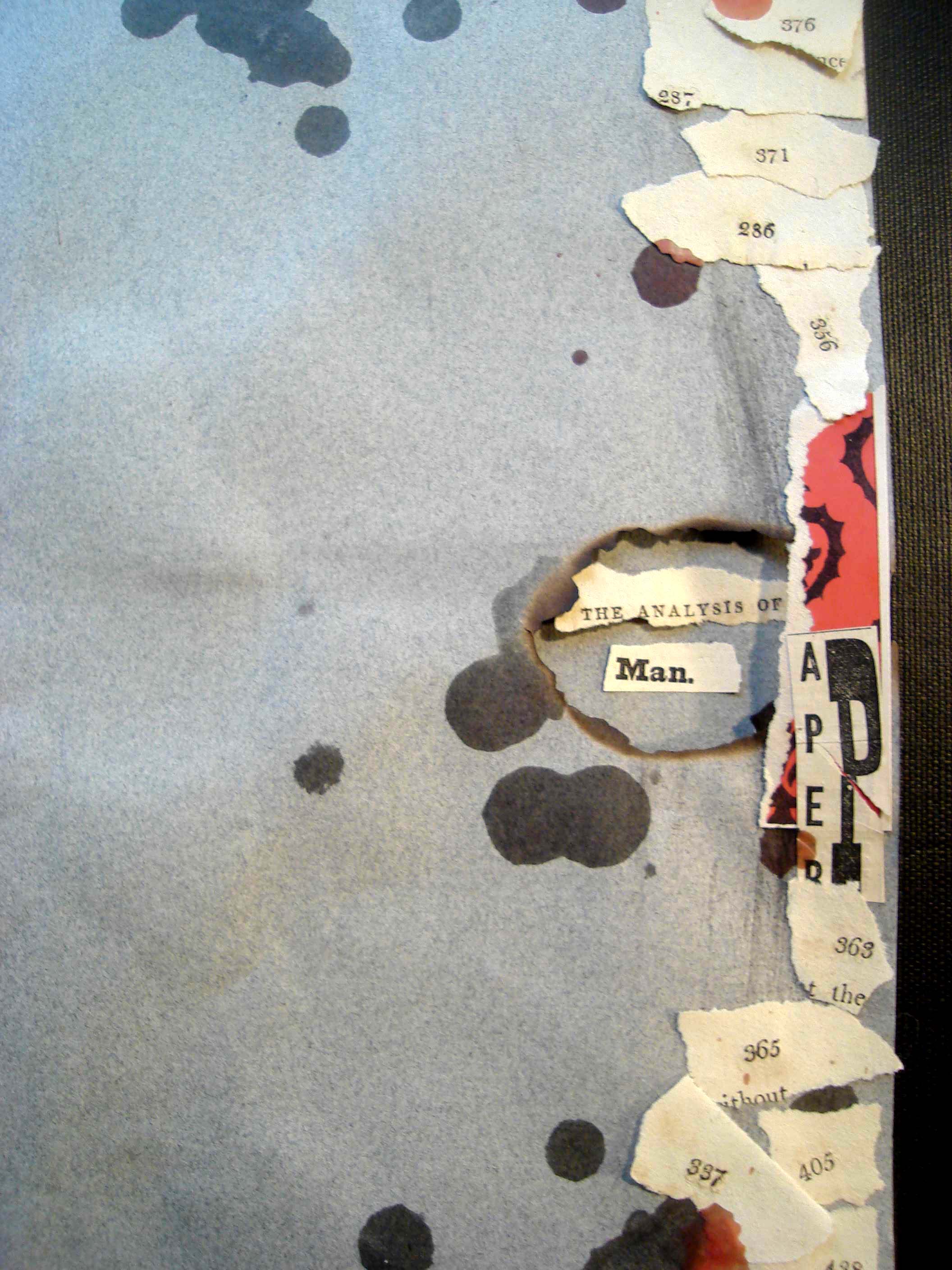
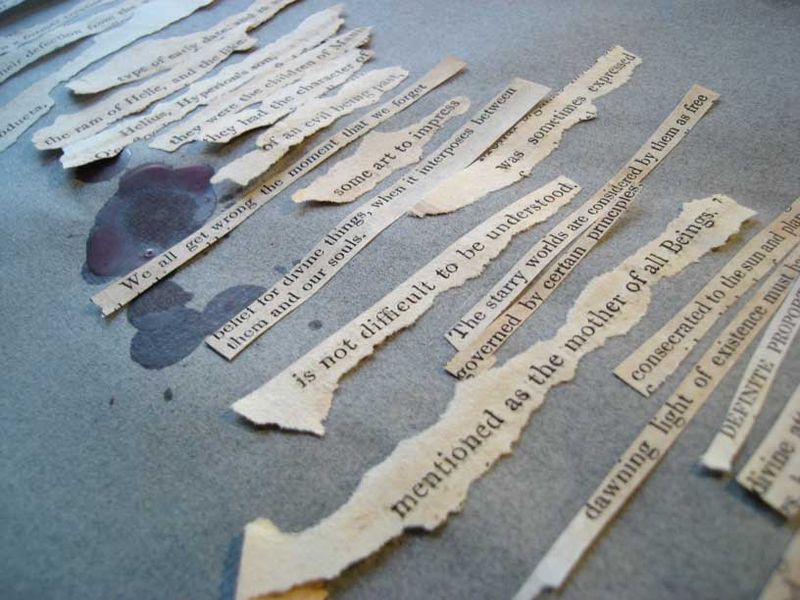
    According to his unpaginated journals, Mr. Norme’s pattern of poetic creativity and discovery involved removing all page numbers from the book he was reading and then choose a number of the “poem lugs” at random.  He would then reverse the number, go to that page of the book, and then add the page number and go to that line of the book, and tear out the number of words as indicated by the page numbers ending numeral.  The bits would then be assembled, and the page numbers glued to the walls of his house.  (We estimate that there were some 60 million page numbers glued to all surfaces of Mr. Morme’s home.  The house itself has been purchased by the Museum of American Art, a full room of which will be on display in that museum’s Outsider Art collection in the Henry Darger wing.)


    Weltin--norme 

    Mr. Norme found poetry everywhere he found it, seeing in the simplest verb the most compound noun; even when the poetry seemed not to find an external logical sensate, the internal phi-correlated word relations played in the mind behind all phases of knowledge, an unheard neuro-music that encapsulated the idea of unknown “correctness” in the vision of the poem.


  • Hidden Scenes of The Last Supper within The Last Supper

    JF Ptak Science Books    A catalog entry for the Museum of Imaginary and Impossible Things

    The History of Miniature and Sub-miniature
    Recurring Last Supper Images in the Images of the Last Supper

                                           The Scrote Collection

    Barent Scrote (1835-1940) , founder and
    self-scion of the TumLand Cattle Company of Bnillings, Montana, began
    collecting images of The Last Supper following his
    near-death-near-starving experience in the great Mountain Freeze of
    1883. Finding the images “calming” and “filled with food”
    and “complete with knives” Scrote managed to accumulate 610
    paintings of what many consider and believe to be a sacred scene. The paintings were of varying talents and articulated non-artist
    copiests, but they were all, indeed, old.

    Following the killing
    winter of 1886 Scrote lost most of his cattle and changed his
    interests to sheep, also changing his collecting habits from The Last
    Supper
    to Implements of Eating Used in the Last Supper.“My
    narrow interests narrowed, and the entire scene became less
    interesting, so I focused on the table, until the table itself became
    boring…that’s when I became interested in the utensils” (this from
    the unpublished memoirs of Barent Scrote at the American History
    Center of the University of Montana, Billings).

    The extraordinary
    development within the subcategorization was Scrote’s enormous
    discovery of separate, single, miniature, stand-alone duplicating
    images of The Last Supper found within the very painting of The Last
    Supper
    . Scrote discovered the dual images of the great event while
    microscopically surveying the roughly one acre of table-tops that are
    represented in his Last Supper Collection. Though most of the
    images were extremely difficult to recognize, some were bafflingly
    obvious but unrecognized. On display in the museum is  one of Mr.
    Scrote’s most prized possessions, the
    Horror
    of the Obvious Duplicating Last Supper

    engraved by Boot Day in Amsterdam in 1724. “It is magnificent to
    see the secondary Supper in its obviated presence and invisible
    glory, having stood the test of standing time, being unrecognized as
    a duplicating Last Supper for 350 years. It is a triumphant feeling,
    sometimes, to make a discovery in the obvious”.

    Mr. Scrote wrote sparingly
    and convincingly of his discovery and observations, including, for
    example:

    • “Dual Nature of
      Miniature Last Suppers with the Last Supper (Major)”, in Horn n’
      Rip Magazine, a Magazine for Readers
      , vol 2/1, pp 1-3, Helena,
      Montana, September 1890.
    • “The Case of Missing
      Table Ware in Dual Mini Images of the Last Supper…SOLVED”, in
      Wrting and Writing, vol 2/2, pp 23-24, Billings, Montana,
      August 1891.
    • “Microscopiscal
      Semiworlds of Newly Discovered Third Dual Mini Last Suppers in the
      Works of Herrn Pieter Doeshc of Vleland, the Netherlands”, in “My
      Own Writing
      ”, Silver City, New Mexico, vol 1/1, pp 1-2.

  • Some Great First Lines in Literature

    JF Ptak Science Books   Quick Post

    • I put these together a while ago, and then didn’t do anything else with them.  I’m not sure what I was up to, so I’m posting what I have, simply because it is a niuce read.   A Tale of Two Cities is still a stellar entrance.

    All
    children, except one, grow up. Peter Pan

    In
    an old house in Paris that was covered with vines lived twelve little
    girls in two straight lines. Madeline/Bemelmans

    The
    Mole had been working very hard all the morning, spring-cleaning his
    little home.Wind in Willows/Grahame

    In
    the great green room, there was a telephone and a red
    balloon.Goodnight Moon/MW Brown

    Alice
    was beginning to get very tired of sitting by her sister on the bank,
    and of having nothing to do: once or twice she had peeped into the
    book her sister was reading, but it had no pictures or conversations
    in it, “and what is the use of a book,” thought Alice
    “without pictures or conversation?” Alice in Wonderland


    ·Posted by :

    ·in: