A Daily History of Holes, Dots, Lines, Science, History, Math, Physics, Art, the Unintentional Absurd, Architecture, Maps, Data Visualization, Blank and Missing Things, and so on. |1.6 million words, 7500 images, 4.9 million hits| Press & appearances in The Times, Le Figaro, Mensa, The Economist, The Guardian, Discovery News, Slate, Le Monde, Sci American Blogs, Le Pont, and many other places… 5000+ total posts since 2008.

Author: JF Ptak

  • Underestimating the Mechanics of the Invasion of England, 1940

    JF Ptak Science Books    Post 2397                                  Part of a long series on the Display of Quantitative Data

    England was last invaded in 1688 by the Dutch republic, following twelve other attempts from 1066, but Adolf Hitler was half-determined to do so (and several of his leading generals who were not-at-all determined, anti-determined to do so) himself, trying to follow in the lost  footsteps of Napoleon with Operation Sea Lion (Unternehmen Seelöwe). Napoleon failed of course, as did his predecessors: three French, two Spanish, and an Austrian attempt since 1707. And so would Hitler, although he would never come close to implementing much outside of his terror attacks on cities in the U.K. and the war waged on the RAF (and particularly Fight Command)–control of the air being integral to any sort of invasion that he might try to mount.

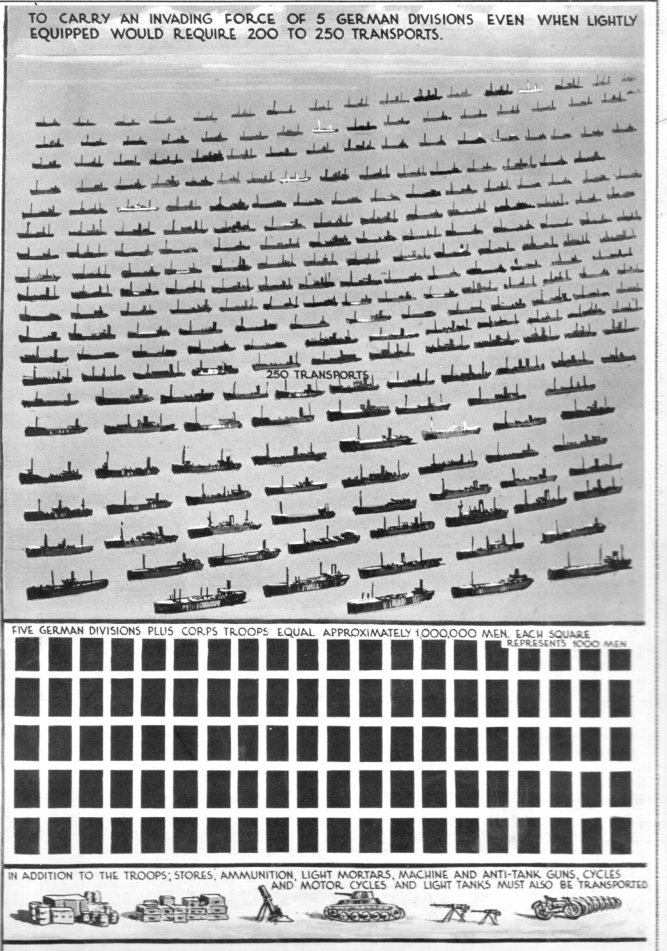
    It was at the beginning of this air attempt–the Battle of Britain–that the following interesting  small graphic appeared in the Illustrated London News  (June 29, 1940), a featurette on what it would require for the Germans to mount a successful invasion of England. Interestingly the Brits had just mobilized their own floatilla for the evacuation of Dunkirk just weeks (26 May-4 June 1940).  

    The German armada pales in comparison….
    Data vis German invasion England662


    Some part of it doesn’t make sense to me, (sitting here quietly in the future, not having Nazis flying overhead trying to kill my country)–like a convoy of troop carrier set at 250 to carry a million soldiers into the U.K.   Plus there were all of the stuff of invasion–food, supplies, support, materiel of all shapes and sizes and description, and on and on.  The D-Day invasion force used 6,939 vessels, 1,213 naval combat ships, 4,126 landing ships, 864 merchant vessels, and 736 other ships, not to mention the 3000+ aircraft and gliders, all in use toland 156k soldiers along a 50 mile front in Normandy. An utterly understated spectacular undertaking–and no doubt the Germans would have had to do something along similar lines, a lot of something that they just didn’t have. But no one knew this yet, not really.

    This small series of graphics probably served two purposes: one was to alert English readers that such an invasion was theoretically possible, and secondly, that, well, it was in some ways impossible, given the enormity of the task. So, beware, but do not fear, is what I think the message was here.  

    And by the way here are two bits of films about a successful Nazi invasion of England: 

    It Happened Here, 1966:

  • History of Dots: Dots of Death, 1937

    JF Ptak Science Books,  Quick Post                                                                         Part of the History of Dots series

    Data visualization traffic  death658

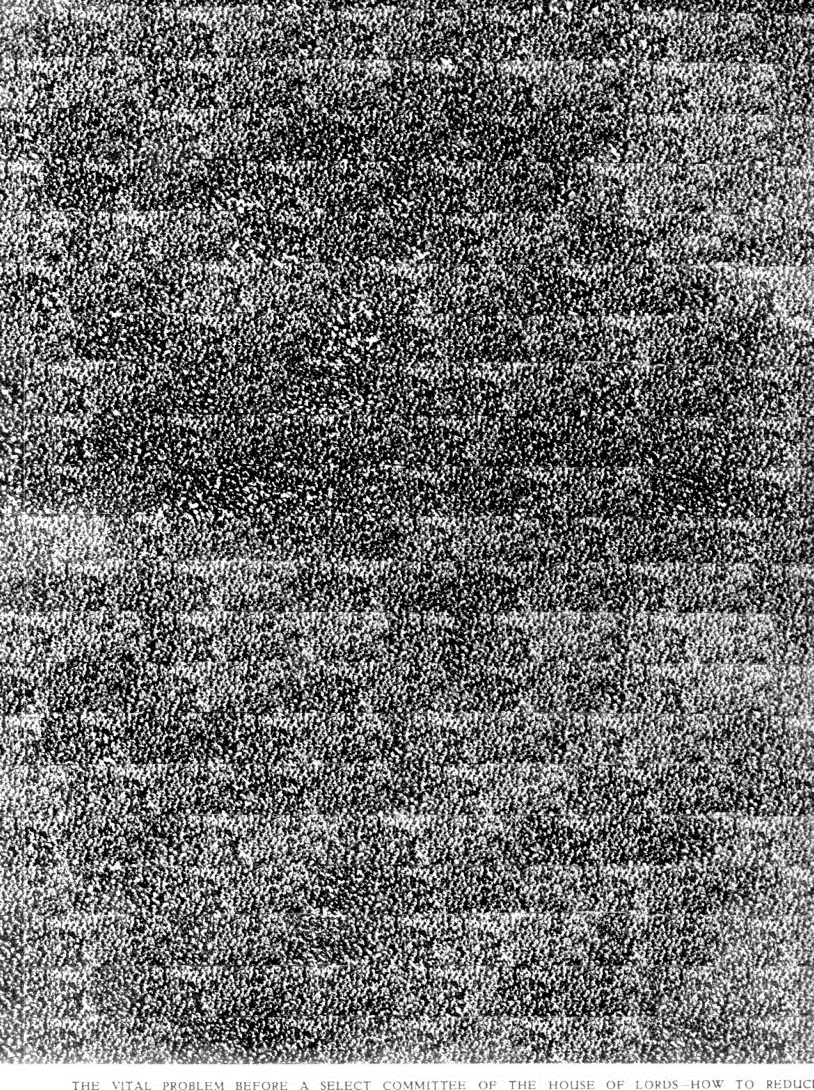
    This is one half of a very impressive, “what the holy heck” sort of photograph–even more so that it portrays the number of people killed in road accidents in England from 1928-1937.  67,100 people were killed–the number of injured was evidently 30 (!) times higher.  This is particularly impressive given that in all of the U.K. 2175 people were killed in 2012 compared to 36,000 for the U.S., which means 3.5/100,000 in the UK and 11.6/100,000 in the U.S. So things have gotten much better now than they were then, with a third of the fatalities for a much larger population. In any even the photo montage was a very compelling image, and was printed in the Illustrated London News, December 18, 1937, page 1110.  

    An extreme detail figuring about 2% of the image: 

    Data visualization traffic  death660

    Another detail, about 1/20th of the image:

    Data visualization traffic  death659

    ·Posted by :

    ·in:

    —

  • Color in Black & White (#4): Stained Glass Designs, 1937

    JF Ptak Science Books  Post 2396    

    Part of the series on the History of Blank, Empty, and Missing Things

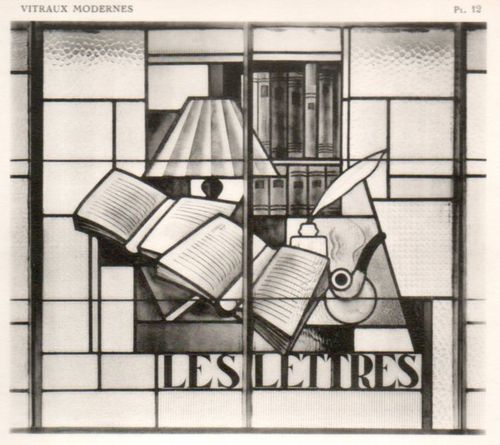
    Sometimes the suggestion of color is color enough, though I had never really thought about it in terms of stained glass windows before.  They do have an elegance, even in photographs (never having seen anything extensive in person, just bits and pieces). These designs weren’t in black and white in real life–they were just printed so, for unknown reasons, even though the portfolio in which they appeared was half-luxurious. (I have a book depicting the windows at Chartres that is also done in black and white.)  This makes a good and appropriate entry in a long series on this blog called Blank, Empty, and Missing Things, the “missing” part here being color outside of black and white.

    The following images are of modernist stained glass designs collected and curated by Robert Mallet-Stevens (1866-1945)–one of the leading between-the-wars French architects–for the International Exposition of 1937.  

    Stained glass414

    “L’Exposition de 1937, qui nous montre la ‘généralisation’ de l’architecture moderne, nous offre quelques vitraux de tout premier plan… Quand l’architecte voit dans l’espace des volumes bien ordonnés, le peintre verrier trace des lignes et oppose des couleurs heureuses… Je n’oserai dire que l’architecture moderne est en plein progrès, mais je puis affirmer que le vitrail ‘va très bien’!”   From he introduction, by Mallet-Stevens. (Basically, Mallet-Stevens is saying that the Expo is presenting the newest form of modernist architecture, and that the stained glass work in particular was powering ahead (“‘va très bien’!”)). 


  • Beautiful Lines: Depicting Voyages of Discovery, 850-1850

    JF Ptak Science Books   Quick Post

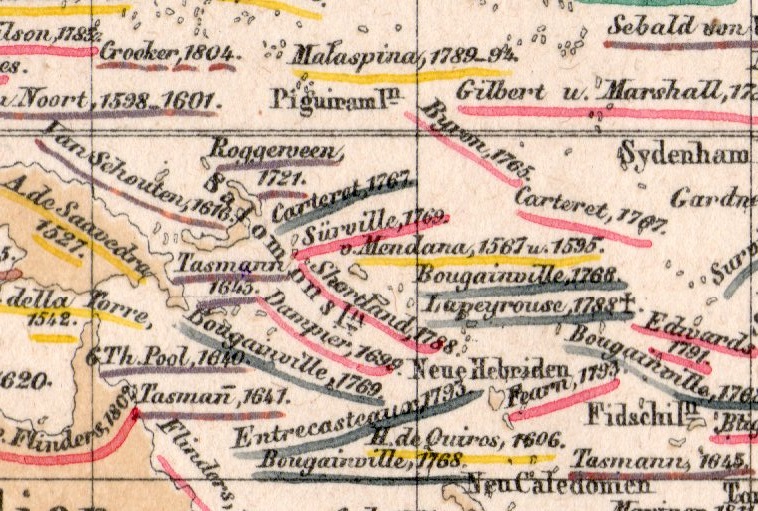
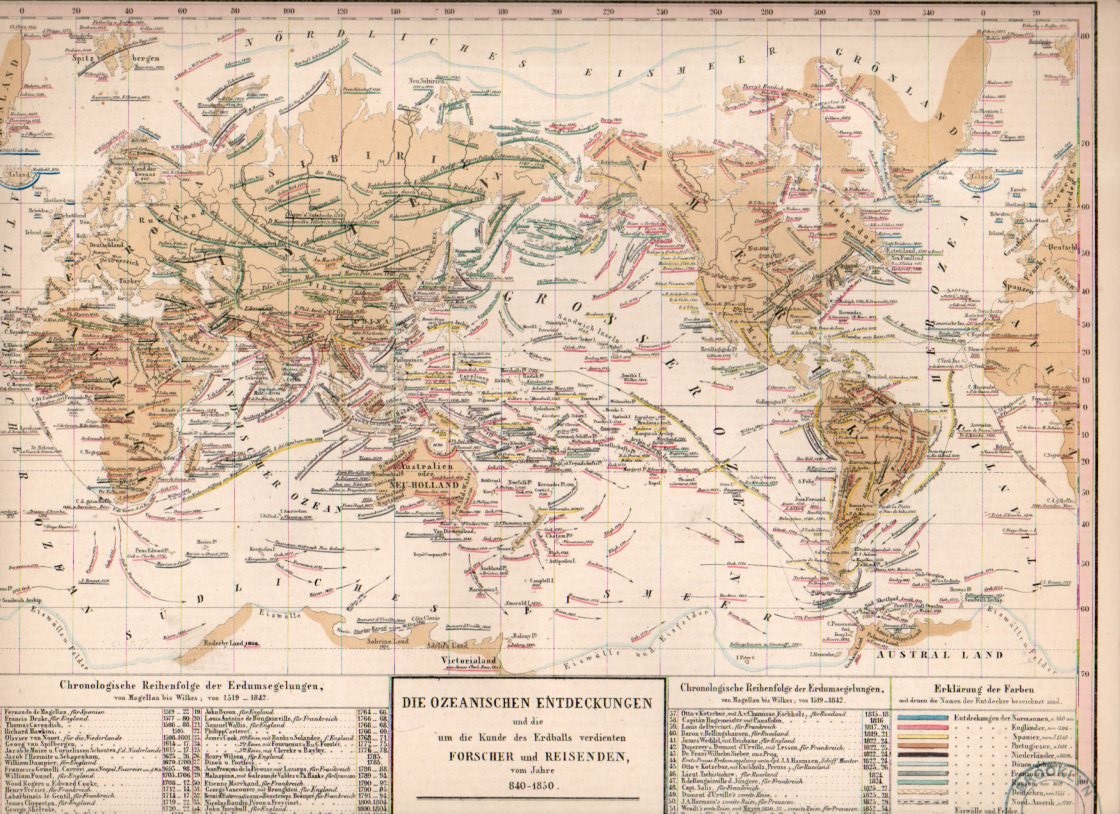
     This small detail (measuring about 1/3″ square) is from a fine, detailed, and oddly beautiful map (itself only about 12×9″) which was published in the atlas volume1 to accompany the best-selling encyclopedic presentation of the natural history knowledge of the world to that time, Baron Alexander von Humboldt’s Kosmos, which was published over a period of several from 1845-1862.  

    Map visualization ocean currents657

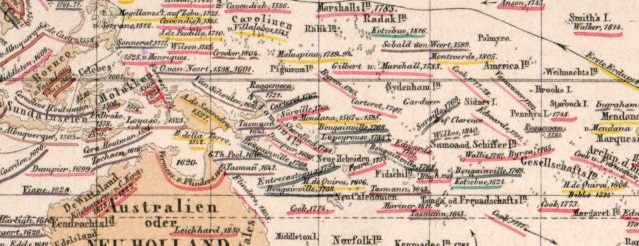
    The map is titled Die Ozeanischen Entdeckungen und die  um die Kunde des erdballs verdienten  Forscher  und Reisenden vom Jahre 840-1850, and depicts voyages of discovery for a milennium, 850-1850. It is a terrifically-detailed map, even among highly-detailed maps. (This detail is taken froma 1×2″ section seen here:)

    Map visualization ocean currents656


    And the full map:

    Map visualization ocean currents655

    Notes:

    1.  The atlas was by T. Bromme, Atlas zu Alex. V. Humboldt’s Kosmos in zweiundvierzig Tafeln mit erlauterndem Texte. Herausgegeben von Traugott Bromme. Stuttgart. Verlag von Krais & Hoffman. (with second title page) Atlas zur Physik der Welt in … Bromme, 1851. 


  • The Explosion of Papers Following the Announcement of the X-Ray, 1896

    JF Ptak Science Books   Post 2393

    Looking through a (massive, 20-pound!) volume of Electrical World1 I found that it  contains some of the earliest work published in the United States on Wilhelm Roentgen’s seminal discovery of the X-Ray, which he published on November 8, 1895. And there were a lot of papers–more than 100. One reason why the work was done by so many and so quickly is that Roentgen did not seek to patent his invention (much like the Curies would do so afterwards) and so there was a land-grab by hundreds of physicists and experimenters to do work in this astonishing new field. 

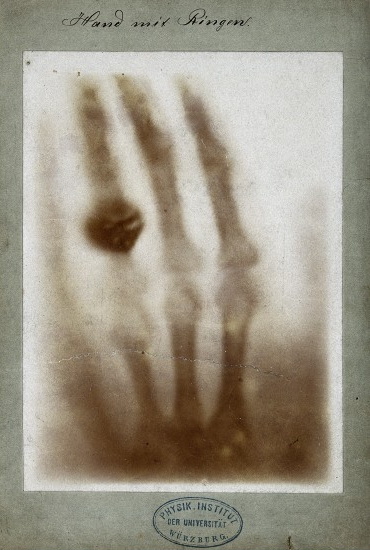
    The photograph (“Hand with Ring”)  below is Roentgen’s own, an x-ray of his wife Bertha’s hand–it is one of the iconic images in the history of modern science:

    Rontgen  bertha[Source: Wikimedia Commons]

    Electrical World is the third place that the Roentgen paper was reprinted, this time for the first time in an American journal, one day before the appearance of the The Electrician article, which was one day after the publication of the paper’s first appearance in English, in the journal Nature, on 23 January 1896.  (The Electrician would also publish Roentgen’s second article later in that same year, in March.) The Roentgen article does not seem to be reprinted in full anywhere else in 1896/1897. (See Charles Phillips, Bibliography of X-Ray Literature and Research, (1896-1897), published by The Electrician, 1898.)

    ·Posted by :

    ·in:


  • Superior Cover Design, German Aviation, 1920

    JF Ptak Science Books   Quick Post

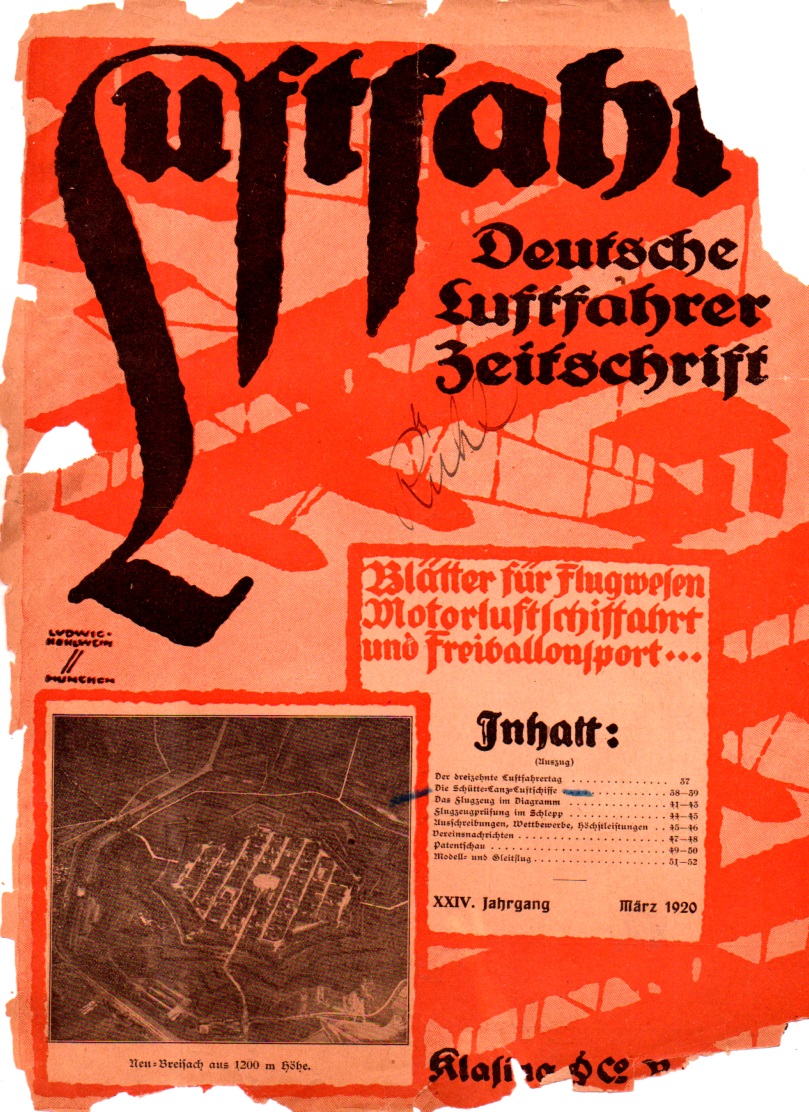
    This is a survivor of some sort, found at the bottom of a box of German aviation pamphlets–I’m sorry that it is in this condition, but at least there is some of it that remains, because the design is quite striking.  It comes in the 24th year of the publication Luftfahr(t), Deutsche Luftfahrer Zeitschrift, and published in 1920.   It is just the cover of one issue, and I expected to see a fuller image of the thing online thinking it not to be so uncommon, but I couldn’t find any, which I thought unusual.  And so I share this rag-tag copy.  

    Luftfahrt 1929601

    ·Posted by :

    ·in:


  • Confirmation of Einstein’s Theory of General Relativity, 1919

    JF Ptak Science Books    Quick Post

    “It is concluded that the sun’s gravitational field gives the deflection predicted by Einstein’s general theory of relativity.”

    I’ve bumped into a famous piece of phsyics history, a semi-popular report on the verification of the Einstein theory of general relativity. The article is “Eclipse Photographs Verify Einstein’s Prediction” adn is found in  Popular Astronomy (published in Northfield Minnesota, volume 28, 1920, the issue for January, #1, 1920, with the notice appearing on pp 69-70.) At about the same time there appears the famous and deciding report by F. W. Dyson, A. S. Eddington, and C. Davidson, “A Determination of the Deflection of Light by the Sun’s Gravitational Field, from Observations Made at the Total Eclipse of May 29, 1919” which appeared in the Philosophical Transactions of the Royal Society of London. Series A, Containing Papers of a Mathematical or Physical Character for 1920 (pp 291-332). This is the integral report on  which Popular Astronomy reports on for a more general astronomy readership.

    This report repeats the famous finding: “It is concluded that the sun’s gravitational field gives the deflection predicted by Einstein’s general theory of relativity.”

    ·Posted by :

    ·in:

    —

  • Abstracts of Einstein’s 1905, 1907, & 1916 Papers

    JF Ptak Science Books  Quick Post

    I’ve nibbled away at a set of the Science Abstracts (Physics) and pulled away several reviews of Albert Einstein’s great papers of 1905, 1907, and 1916.  
    =>Einstein’s three monumental papers of 1905, as they appeared in Science Abstracts, Section A.–Physics, 1905, volume VIII, 1906, printed in London, E. & F.N. Spon, 


    ·Posted by :

    ·in:

    —

  • A Fine RADAR Map of NYC, 1946

    JF Ptak Science Books   Quick Post

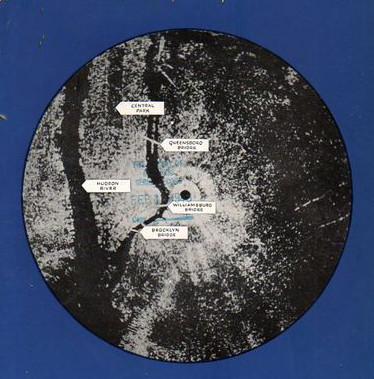
    Radar map nyc

    The history of RADAR (RAdio Deection And Ranging, and something I’ve always written in caps, for whatever that is worth) is absolutely not what I’m thinking about now–that is a long story with lots of twists and turns, complicated, complex–and it ranges depending upon location as for the most part RADAR (from the 1930’s anyway) was developed in secret, kept as a military secret.  And that’s because it was a very important development, with the victor of the Battle of the Beams being the possible victor, period.  

    Radar246

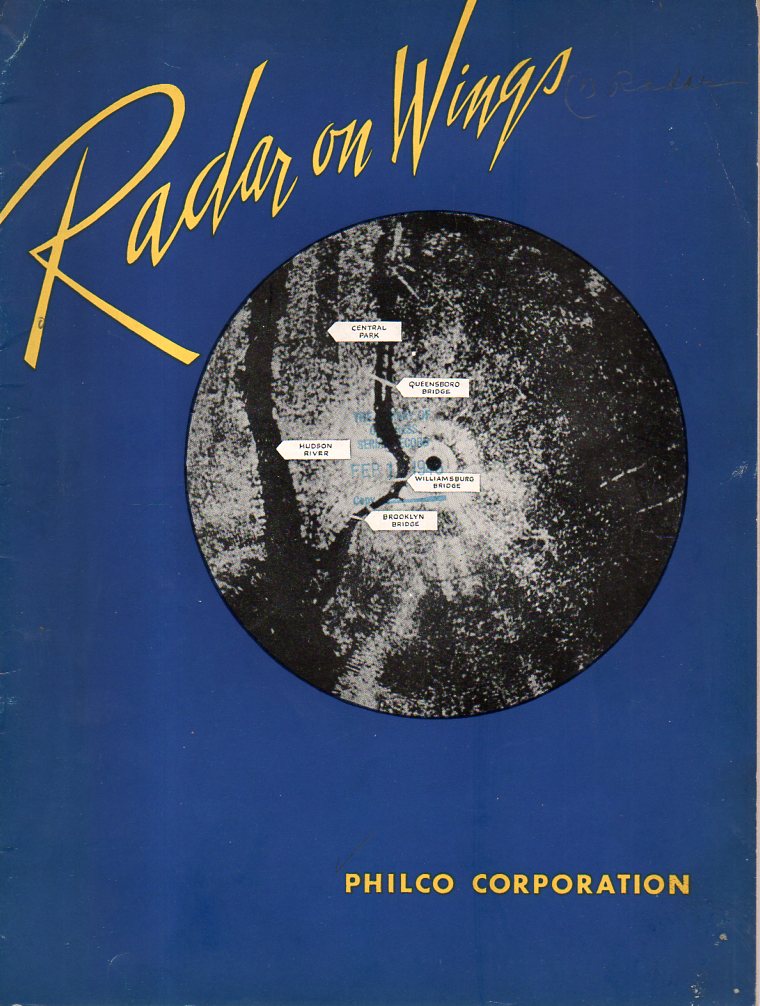
    All I want to do presently is note the significance of this particular pamphlet in the history of RADAR. This work was printed by PHILCO Corporation, (and dated January 4, 1946), and has an inserted leaflet stating that this “makes public for the first time the salient facts about the Corporation’s development and production of airborne radar equipment for the United States Army and Navy”.  PHILCO and other companies made significant contributions to the war capacity of the Allied forces, and–for this company in particular–much of that went unknown for quite some time afterwards, and of course there are some stories that just won’t get told. But for PHILCO the story gets told here.  

    This is also a fabulous nighttime map of NYC–produced by RADAR.  

    [RADAR on Wings, Philco, 1946.  10×8″, 30pp (unpaginated) with lots of photographs and an occasional schematic.  Available from this blog’s bookstore.]


  • “Sabotage”, the Wobblies, and the Illusion of Property (1913)

    JF Ptak Science Books  Post 2392

    “The object of this work is to awaken the producers  to a consciousness of their industrial power. It is dedicated, not to those who advocate but to those who use sabotage.”–Walker C. Smith, in the second of his miniature two-paragraph foreword in Sabotage (1917 edition)

    Sabotage608

    [The original pamphlet is available from this blog’s bookstore, here.]

    Walker Conger Smith (born 1885 on the same day that Babe Ruth and Elvis Pressley died in later years) was a hard line political seer, a magical agitator and writer for the Wobblies, officially known as the Industrial Workers of the World (and the I.W.W.)  He lived a busy 41 years, and in his time raised a lot of attention to the IWW’s Socialist vehemently pro-Union organizing, during a time (1910-1927 or so) when big business would respond with their won police/strikebreakers/armies to disrupt and dispel (and trounce) strikers and strikes. 

    One of Walker’s best known works was Sabotage, its History, Philosophy & Function. First published in 1913 and then widely reprinted, it made the case for poor pay for poor work, and that in the long run the wealth produced by the workers belonged to them, and so work slowdowns and then destruction of the means of production was well within the rights of the wronger worker. 

    The pamphlet certainly found a readers–on both sides of the issue. It was regularly used in legal actions against Unions as proof of their criminal syndicationism and of organized destruction of business/factory property.  

    The pamphlet ends with these very strong statements:

    “Its [Sabotage’s] advocacy and use help to destroy the property illusion”…

    “Is the machine more than its makers? Sabotage says “No!”

    “Is the product greater than the producers? Sabotage says “No!”

    “Sabotage places human life–and especially the life of the only useful class–higher than all else in the universe.”

    ….”For Sabotage or for slavery? Which?”

    The pamphlet ends with a salutation from Jack London:

    “Dear Comrade Smith:

    Just a line to tell you that I have finished reading your pamphlet SABOTAGE. I do not find a point in it on which I disagree with you. It strikes me as a straight-from-the-shoulder, clear, convincing, revolutionary statement of the meaning and significance of sabotage.

    Yours for the revolution,

    Jack London”


    Full text here.

    The IWW website identifies this printing as 1917.  http://www.iww.org/sr/history/library/WCSmith/sabotage