A Daily History of Holes, Dots, Lines, Science, History, Math, Physics, Art, the Unintentional Absurd, Architecture, Maps, Data Visualization, Blank and Missing Things, and so on. |1.6 million words, 7500 images, 4.9 million hits| Press & appearances in The Times, Le Figaro, Mensa, The Economist, The Guardian, Discovery News, Slate, Le Monde, Sci American Blogs, Le Pont, and many other places… 5000+ total posts since 2008.

Author: JF Ptak

  • The Coming of Broadcast Television (1929)

    JF Ptak Science Books   Post 2388

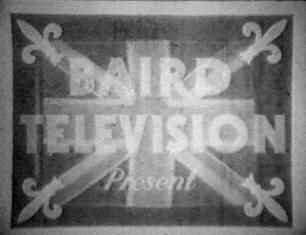
    I found a news item in the April 6, 1929 issue of Nature that gives a real sense of the coming of the future, of the future-at-hand–and they seemed to have a sense of what was coming, though probably not as big as that future would be. In this case, it was the beginning of the passive visual assumption of the collective culture–the very quick and potentially immediate assimilation of pop culture, this by the invention of television and popular broadcasting.  

    Baird_tv_caption

    The unidentified author was reporting on the recent activities of the Baird Television Development Company, which the author was interested in, and although it was “not presently practicable ” it did “represent(s) a noteworthy scientific achievement”, which I am sure was the writer’s way of downplaying a very significant event.


  • Lost German Color of 1927

    JF Ptak Science Books    Post 2387

    [Part of the series on Color and its Abuses, as with an example of “When Color is Best in Black-and-White”, here.]

    German color375
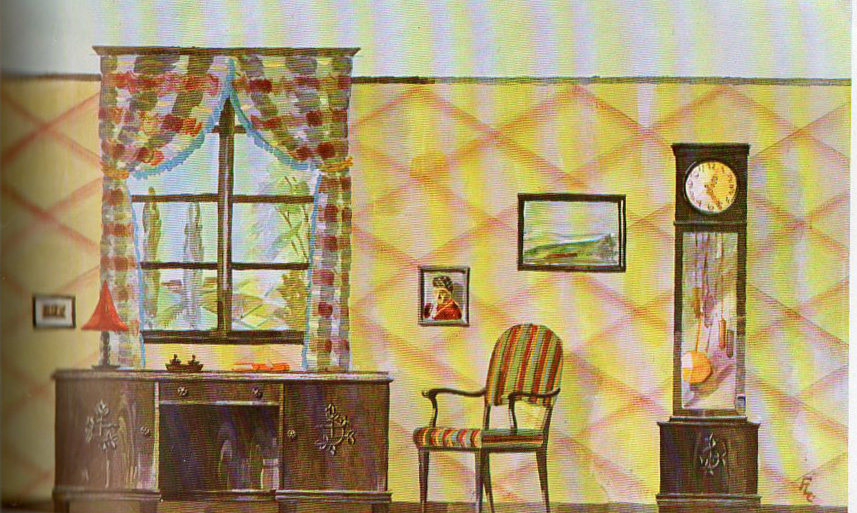
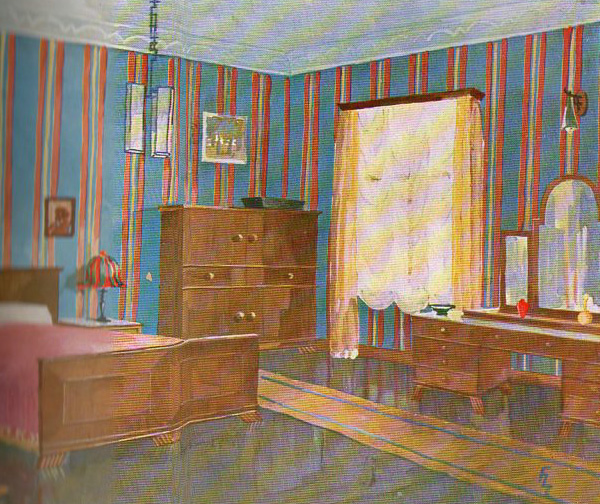
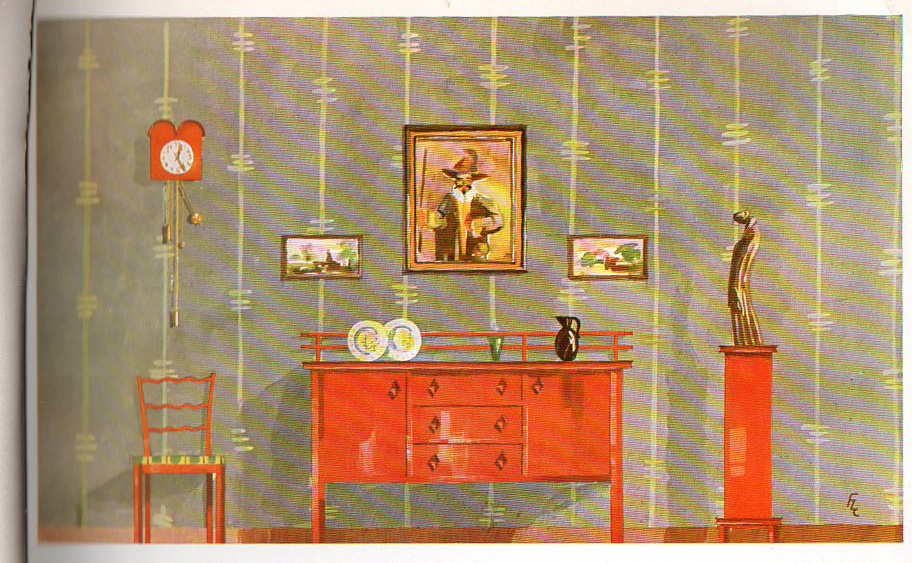
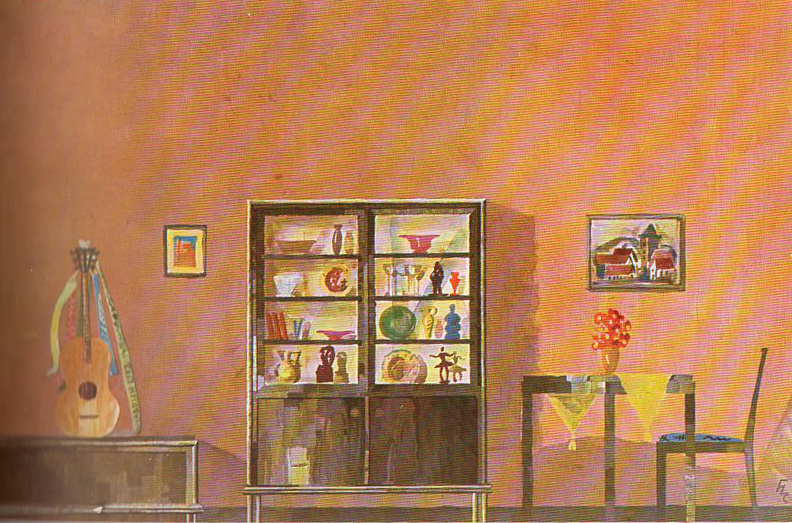
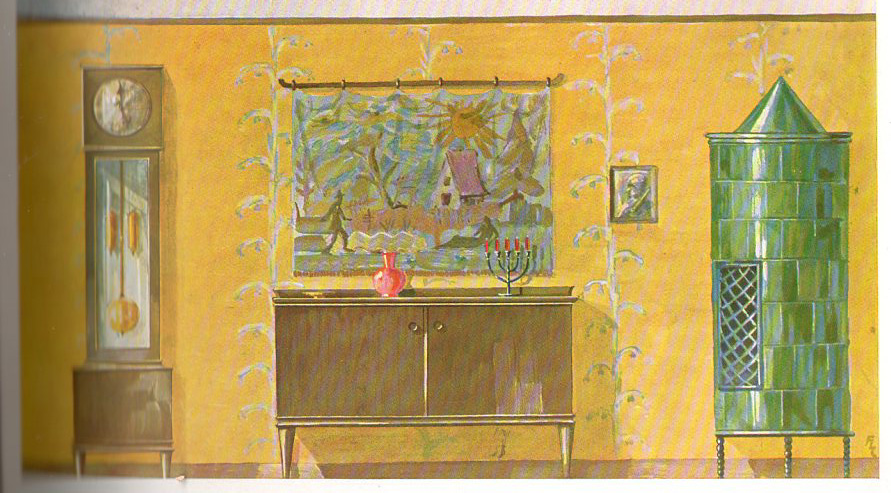
    Nothing quite says no-color as German deep noir of the mid- and late-1920’s.  These movies can be so deep and contrasted, so very black-and-white, with such stark Moon-like shadows, no dawn or dusk just night and day, that it can make you forget that outside of the photographs and movies that people were moving around in great swirls of color.  And nothing quite helps you to remember this than by having a look at a book like one below, a DIY piece printed in Berlin in 1927, the Farbige Wohraume1.

    German color377
    It is of interest here because in addition to blueprints and sections of the furniture to be built, there are associated illustrations showing the completed work placed in a decorated room.  And it just so happens that these rooms are highly, colorfully decorated–not that there’s so much in the room, per se, but there is definitely a lot of color. 

    German color371

    German color372

    Notes:

    1. Farbige Wohnräume, 24 Tafeln farbig dargestellter neuzeitlicher Räume (5 Wohn-, 6 Speise-, 6 Herren-und 7 Schlafzimmer) mit den einzelnen Nöbeln im Masstab 1:20. Dazu weitere 24 Tafeln mit den zur Anfertigung erforderlichen Grund- und Aufrissen und Detailschnitten einschliessich der Sitzmöbel.  Berlin,  Verlagsanstalt Deutschen Holzbeiter Verbanes GMBH. Rebound in library cloth, very nice, workable copy.  37x26cc, 24 color plates of room designs, followed by 24 heavy leaves of associated blueprints printed front and back, these showing a profile of the furniture to be constructed on recto and some cutting instructions on verso.  The color illustrations of the furniture in a room setting is correlated with the blueprints in rear, each of the color plates with a corresponding sheet of blueprints.  Only four copies located in WorldCat: Yale, University of Illinois, Grand Rapids Public Library, and Cornell. 

    German color373


  • When Things ARE Better in Glorious Black & White: Color Detonation and the Invention of *More* Primary Colors, 1942

    JF Ptak Science Books   Post 3286

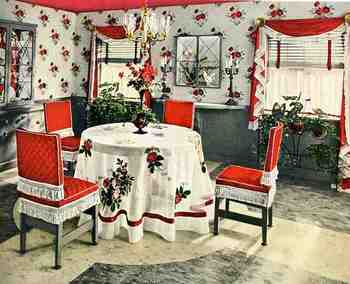
    00blogoct_14color848Well: this is a variation of yesterday’s post on the two opposite edges of color in oddly-applied scientific/technical manners. In unwittingly responding to the question “when is color-use bad?”, the answers were found in these room decorations from 1942, all of which come from a pamphlet entitled Ideas for Old Rooms and New, extracted from the mind of  Hapel (?) Dell Brown.  It is a tidy book with ideas that are anything but tidy;and  as you scroll down you’ll see that the room solutions suggested by Hapel Del are anti-tidy; clutterous (no, not a word but could be).  Everything about these creations speaks to the annihilation of visual resting places; everything seems to be an affront to the concept of causal emptiness.  The weird thing is that there aren’t very many objects in these rooms at all (at least comparing these rooms from where I’m sitting)–the visual complaints seem all rocketing from the abuse of colors found in the fabric of the furniture and walls and floors and window treatments.  The eye gets no rest–and as a matter of fact, the cones of the eyeball are impaled on the rods as a result of the author/decorator  desperate attempts to invent three more primary colors. 

    Believe it or not we don’t really get the full flavor of the color cacophony because the floors in these picture look sort of benign, fading away into themselves–which they are not, according to  the description in the text, because they are all high-gloss linoleum rolls or tiles (“efused [sic] with deep wondrous color”.  And that means not only are these floors adding sheen and color to the rest of the incredibly colorful–an effect fairly lost in these photos–they are also cold.

    One thing that I haven’t pointed out in this peon to syrupy/pastel-y/techno-gelatinous-chromodrama is that they were all done in response to a re-decoration of a perfectly nice-looking house, with all of the former “bland” colonial-style rooms presented in glorious black and white.  I’d rather live in Maison Noir than in this happy nightmare.


  • Taking the Bookman’s Bus–Unexpected Finds While Browsing (1843)

    JF Ptak Science Books   Post 2385

    The Bookman’s Bus will definitely take you from point A to Point B, though it might not be a direct route, even when the direct route is the only route–there are stops to be made, turns to be taken, and of course turns to be built before they can be taken; eventually though you’ll get to your destination, or not.  And the destination can change, according to what is found along the way–it can get closer, or farther, as necessary.  It is in the getting-there that some real stuff may happen. 

    I was looking for the Annalen der Physik publication by Gauss and Weber on the first use of an electromagentic telegraph, but I was looking in 1843 rather than 1833, which is a mistake I often make (which is weird because Morse’s telegraph appears in 1837 and his code in 1843, so the date mix-up is a mystery. So with the retrieved volume 59 I realized that I was ten years off from where I wanted to be, but like any practicing reader I browsed–and my general book browsing practice is back-to-front, which is how I found a good article by Clapeyron, almost at the end of the book in the 8th section. I went a little further to see the neighbors for the Clapeyron in the 644-page book and the very paper preceding turned out to be a fairly significant paper in the history of physics and acoustics–Georg Simon Ohm’s on what would be known as Ohm’s Law of Acoustics. That would be the other Ohm’s law.  The big Ohm (published in his pamphlet Die Galvanische Kette in 1827) is one of the most powerful of the 19th century, and states “a relationship between the voltage across an electric circuit, the electrical resistance in the circuit, and the current in the circuit.”(–Dictionary of Scientific Biography.) Ohm’s law of acoustics doesn’t take such a big bite out of the not-determined but is significant in the history of acoustics: “The proposition that the human auditory system responds to a complex sound by generating sensations of the separate components of the sound rather than a sensation of a single integrated sound; thus when we listen to an orchestra we hear the separate instruments although the ears receive only a single complex sound wave.”(–Oxford Reference)  And for the record the paper’s title: “Ueber die Definition des Tones , nebst daran geknupster Theorie der Sirene und oehnlicher tonbildender Vorrichtungen”, pp 513-565).

    There were other interesting papers populating this volume, several of which had to do with early photography, including a work on using the Daguerreotype with the microscope, along with two papers by Moser (one of which was the first German translation of his work on “Invisible Light”), and another on shortening the time of exposures by the soon-to-be-very-famous H. Fizeau. Also there are two not-so famous papers by the famous Lenz (a two-parter, actually, on heat flow). There are others, not the least of which is a paper famous perhaps not for the complicated theory on the development of mountain ranges that was wrong, but for the data that was collected for the construction of the not very good theory–that was the work of Jean-Baptiste Elie de Beaumont, who had a long and distinguished career though not for his mountain theory.  

    So. There was a lot in this volume, and a lot of it turned out to be very interesting, in spite of teh fact that I had selected th ewrong volume to begin with.  

    ·Posted by :

    ·in:


  • Putting Black-and-White Back into Color: 1930’s Schoolrooms

    JF Ptak Science Books    

    Color school592

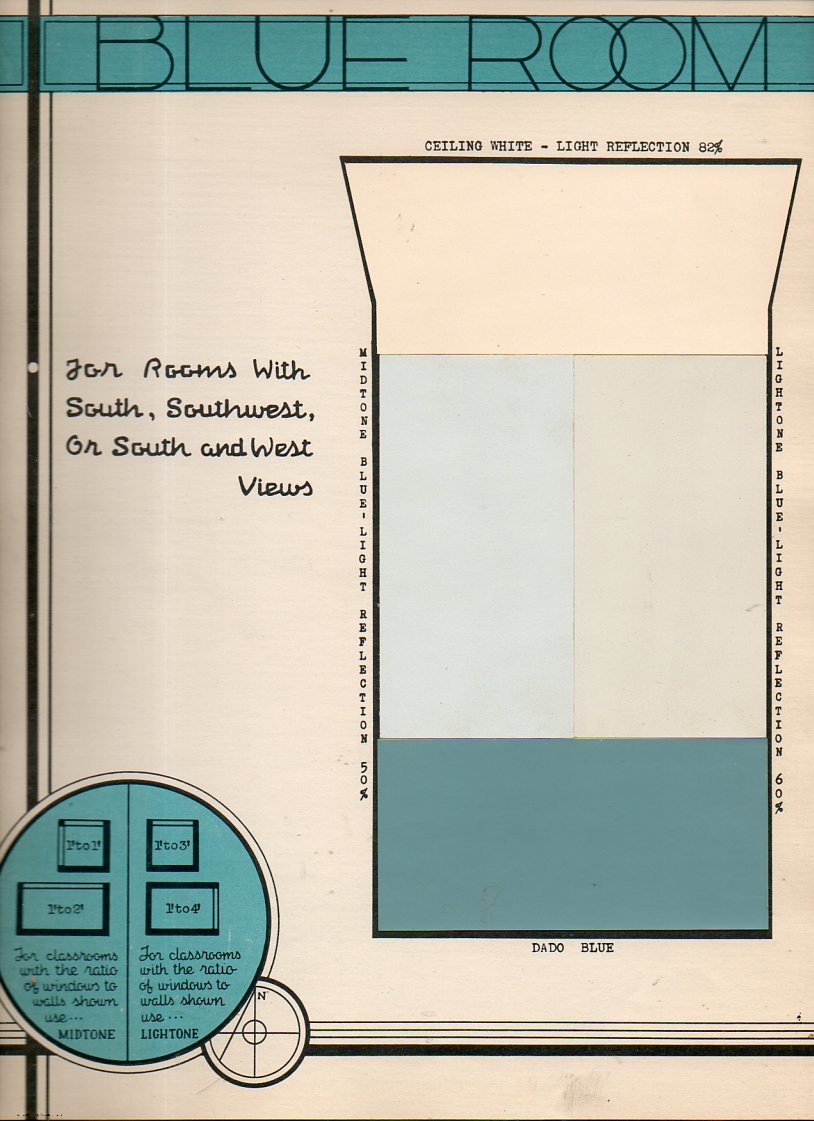
    Its easy to assume a modern prejudice regarding the interior decoration of 1910-1940 school rooms, allowing a certain conceit and picturing them in shades of gray, the images formed being “colored” by the images of those things that we have seen, almost all of which have turned up in black-and-white photographs or movies. But of course we know that this can’t be true, and that Humphrey Bogart didn’t always wear a gray worsted in his movies, and didn’t move that gray suit through gray rooms. Its just that the image-formation is influenced by what we’ve seen, and since what we’ve seen of these rooms is mostly without color, then our images are difficult to assemble outside black-and-white.  This applies to just about everything from that era, which explains why it is such a glorious shock to see motion pictures or photographs of (say) New York City street scenes from 1944. (And why is it such a jolt to the visual system to learn that police cars in Chicago during the 1933 World’s Fair were orange?)

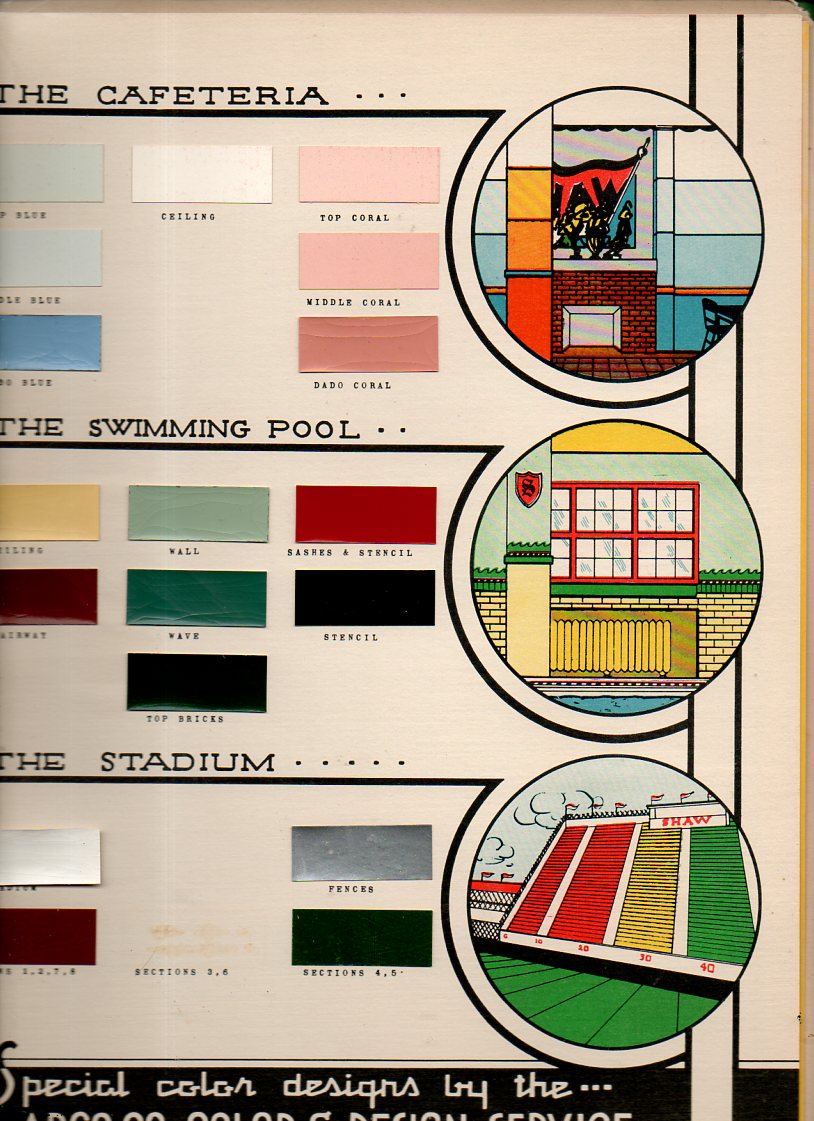
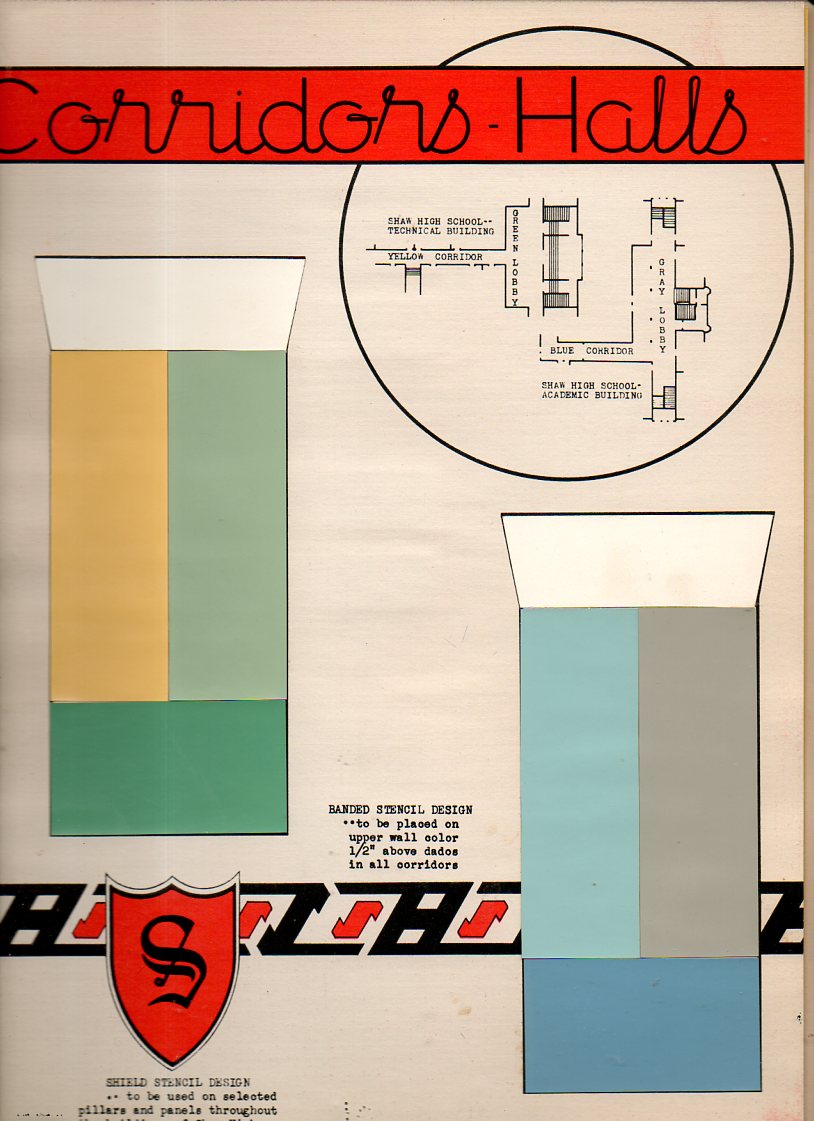
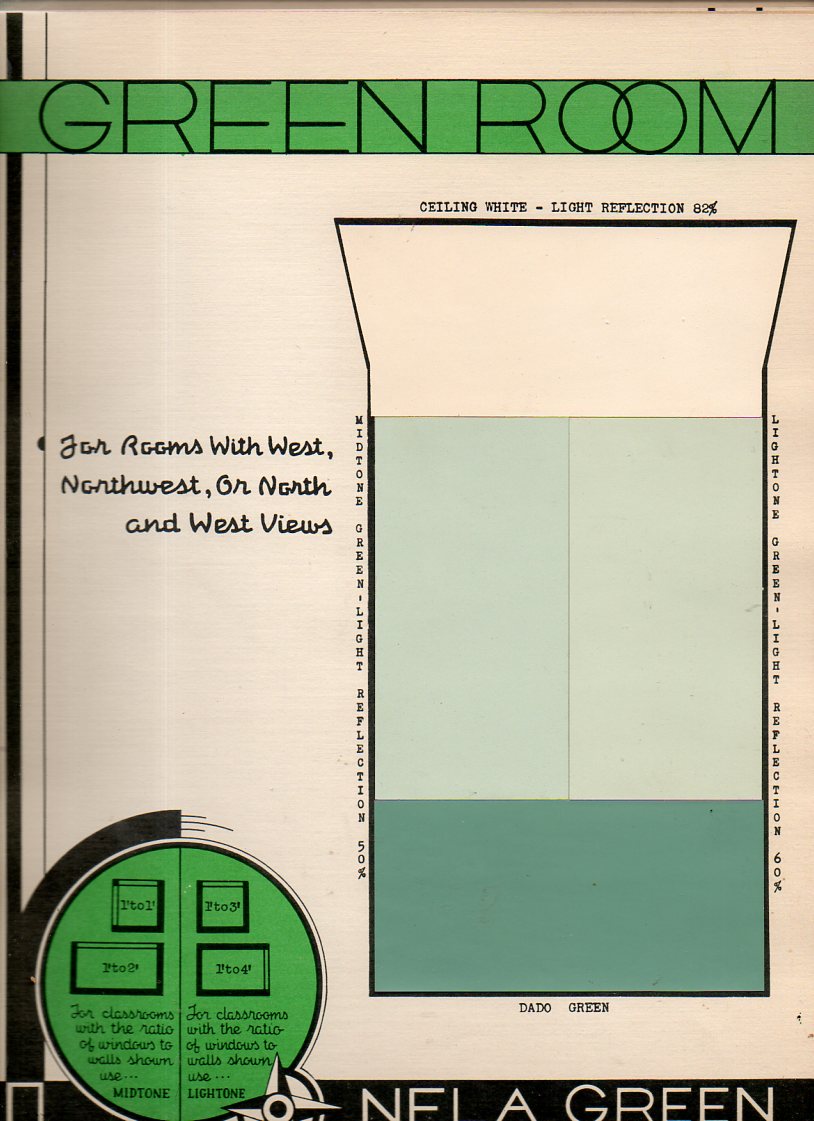
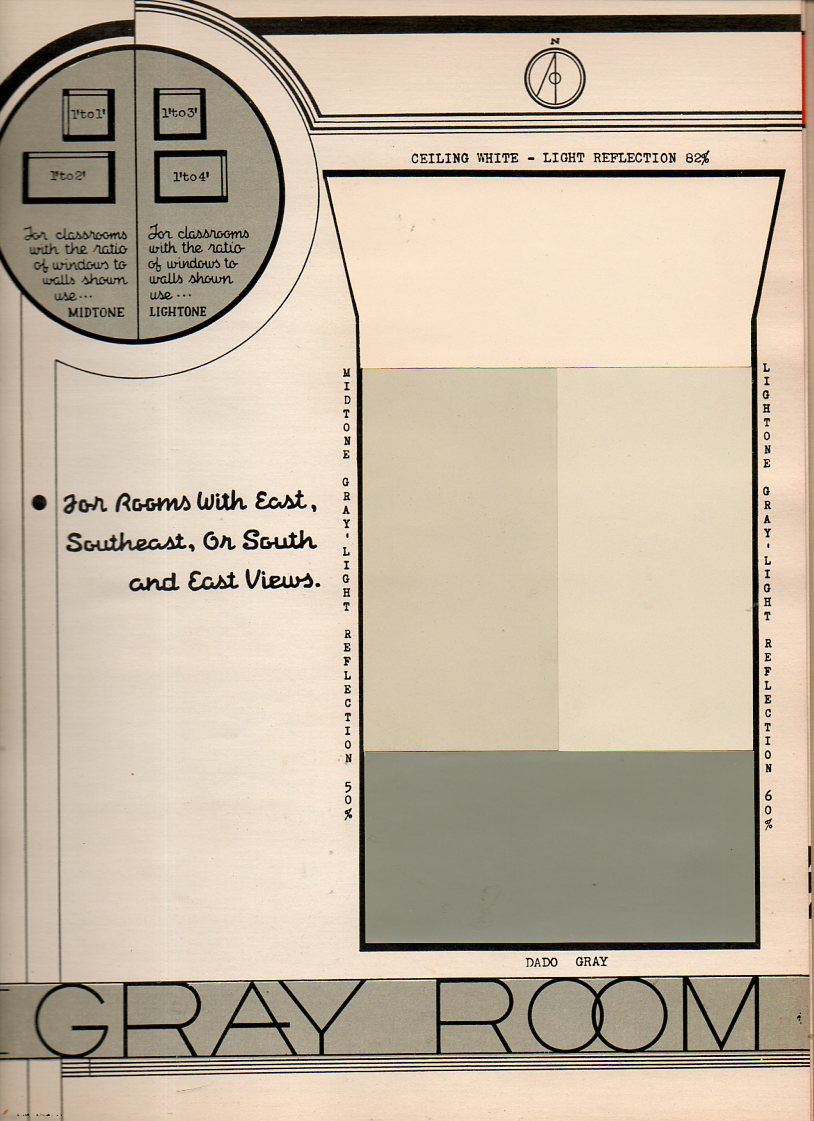
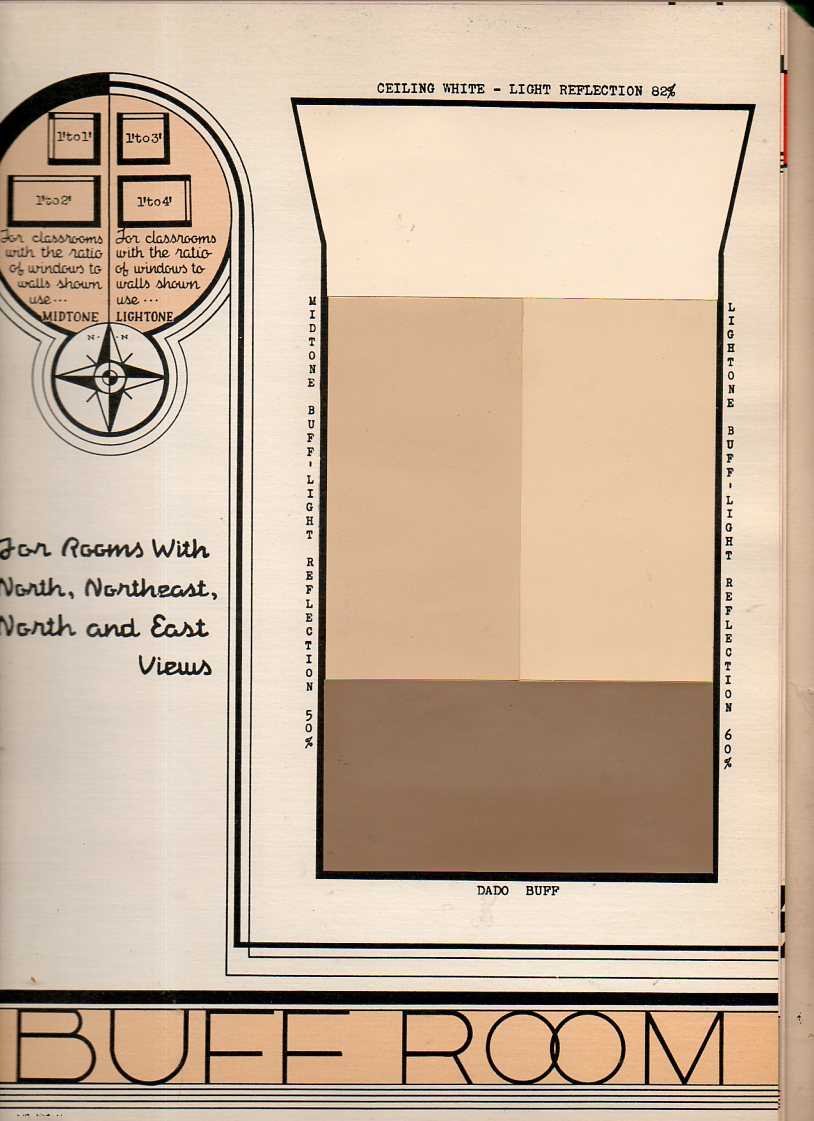
    This thinking came to the surface again this morning when I uncovered the Paint Specifications for the Model School, prepared for the East Cleveland Board of Education under supervision of the Foremost Authorities, and published by ARCO in 1939.  It reminds us that the only thing that lived in black-and-white in those days are in our memories.  (I’ve written about unexpected color in Lost German Color of 1927,  The Very Describale Macro Color of 1937, The Color Green in the History of Squares, and of course the non-immortal 200,000,000 Pounds of Buttocks-or-Putting the Black-and-White back into Color, and others.

    Color school587


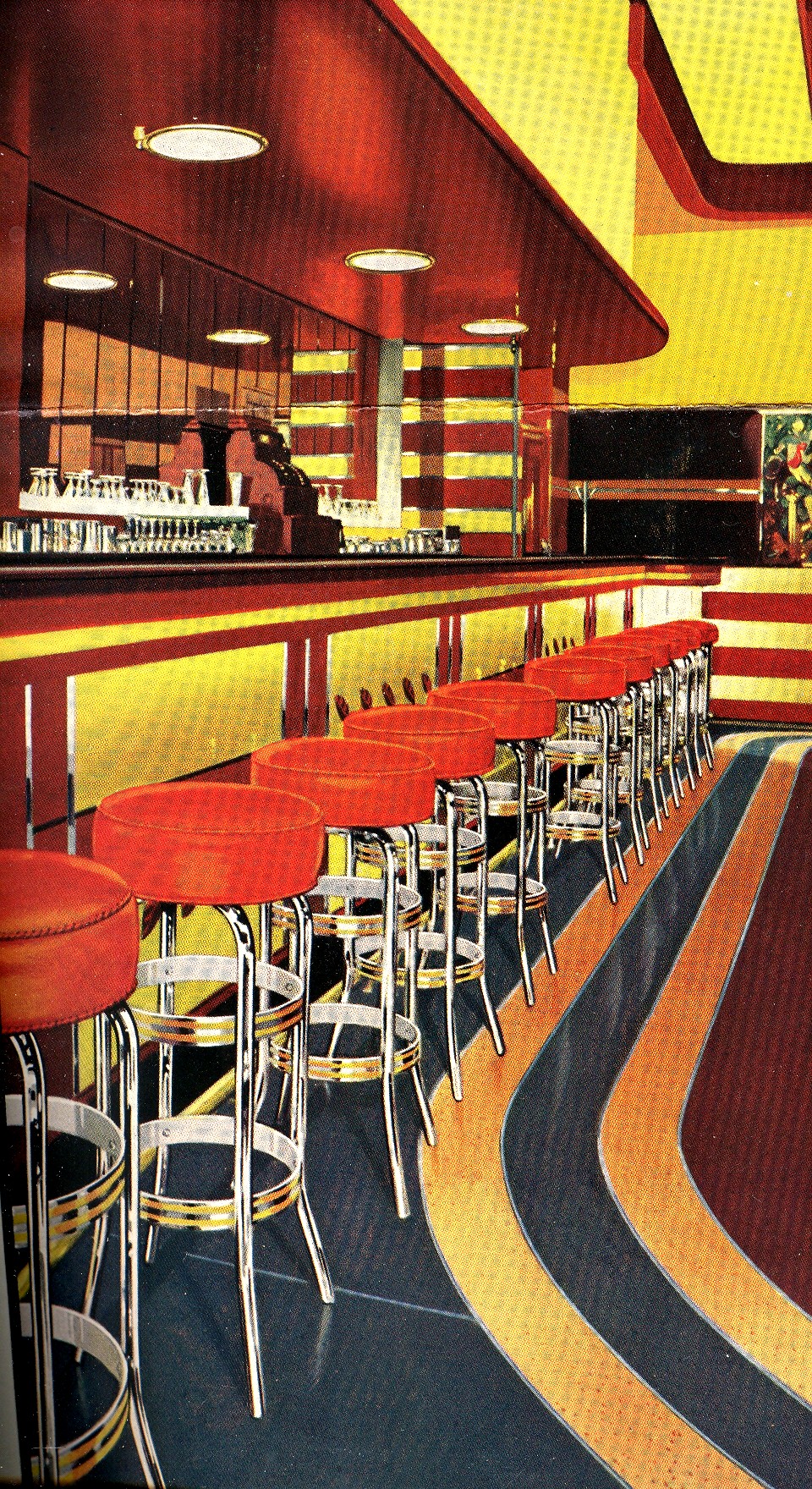
    The rest of the ARCO catalog is below; but first, here’s a sample from the 200,000,000 Pounds of Butts post, showing the 1938 barroom in color:

    Mar 14 7th red bar

    Color school591

    Color school588

    Color school590

    Color school589


  • 53 Very Well Chosen Words Outlining the Atomic Bomb (Nov 1945)

    JF Ptak Sciene Books   Post 2382

    Rabi593

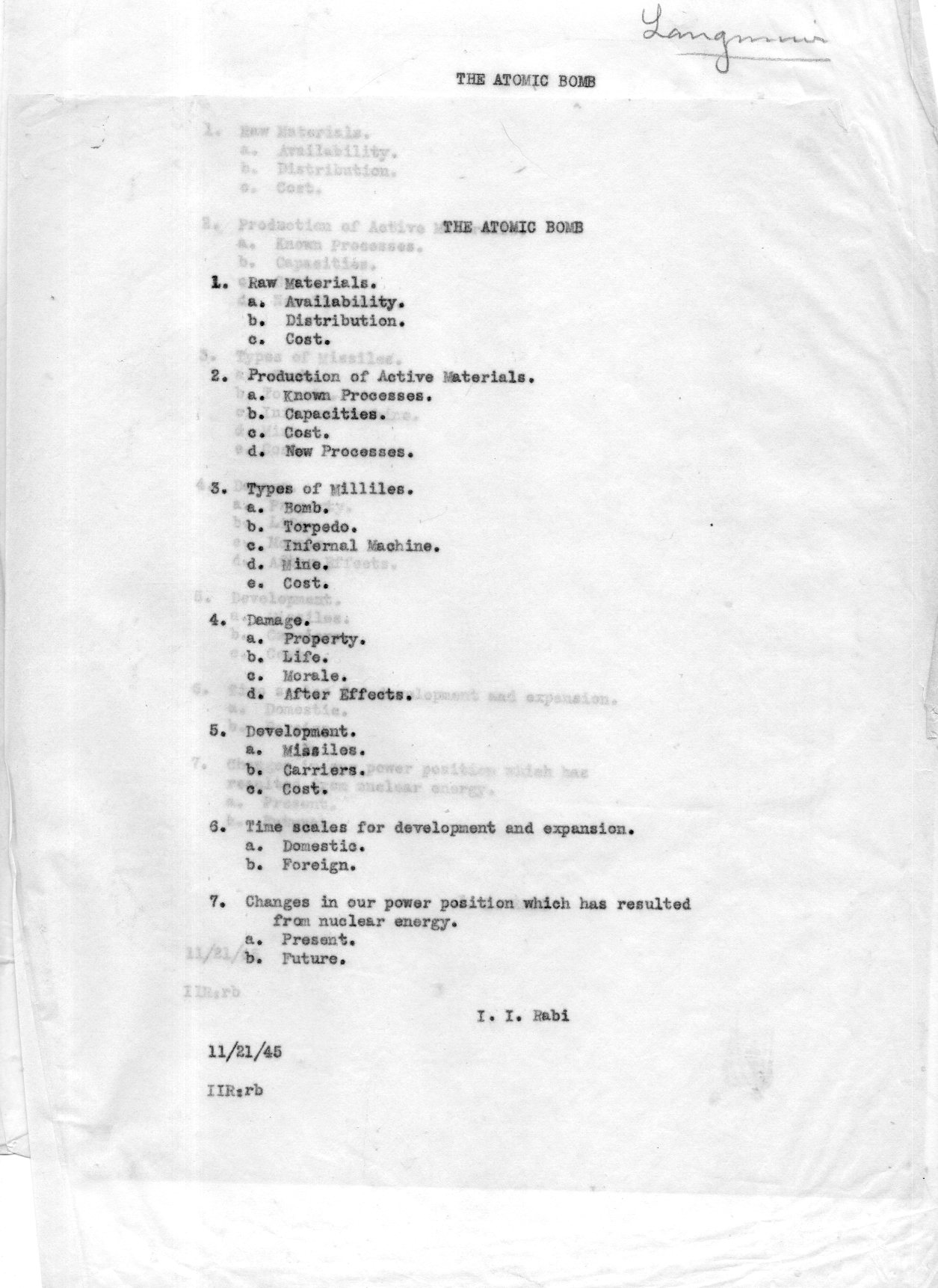
    This is a duplicate of a carbon copy document by I.I. Rabi, and is one of 35 documents1 relating to the development of U.S. atomic policy, October 1945-January 1946, that comes from the library of Caryl Haskins2, a close and long-time friend of Vannevar Bush, who worked with Bush throughout World War II at the OSRD, and was executive assistant to Bush at NSRD 1941-1945. Vannevar Bush, one of the most important scientist-advisers of World War II, foresaw the development of the atomic arms race in 1943, and by 1945 became a fundamental thinker and advocate of addressing the problem of atomic information control.  The 35 documents in this collection are–almost without exception–by aides and close colleagues of Bush  who assisted him in formulating the positions and issues, dating from October 1945 through January 1946.   They consist of background papers, drafts of proposals, informal studies, as well as mature statements of thought that would become implemented in the core of U.S. policy regarding the spread and control of atomic weapons.  They are generally carbon typescripts and necessarily of extremely limited distribution, generally have no letterheads, occasionally carry the authors’ full names (although sometimes only initials are used), and 18 are stamped or typed “Secret”.

    The sheet by Rabi (1898-1988) is simple but interesting, and in 53 words outlines the issues of the atomic bomb–it is dated November 21, 1945.  IT was typed for Rabi by an assistant (“rb”), and at the bottom as being by Rabi.  Rabi of course played key roles in the development of the bomb, as well as playing a very crucial and critical role in the discussion of the future of atomic weapons. 

    Rabi592[These are the two copies of the Rabi outline–the second was Irving Langmuir’s copy. There couldn’t’ve been too many of these made–there would be the original, then perhaps six carbon copies. I any event, it is a rare thing. The original is for sale here at our blog bookstore.]

    ·Posted by :

    ·in:


  • Dentists and Mushroom Clouds–the Mundane in Planning for the Thermonuclear Post-Apocalypse

    JF Ptak Science Books     Part of a long series on Atomic and Nuclear Weapons History

    The sotto voce singing of the oblivious obvious/mundane is slung throughout the nearly 200pp-work “Mass Casualties, Principles Involved in Management”,  which were papers delivered at the 62nd annual convention of the Association of Military Surgeons, published in 1956 in Military Medicine.  

    For example:

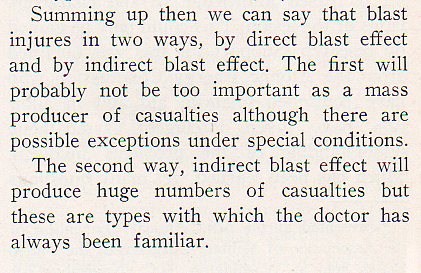
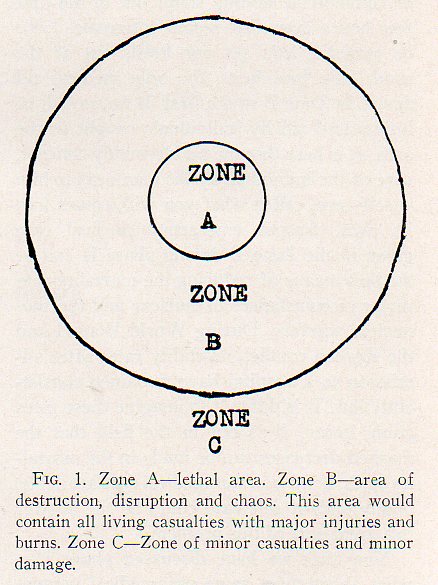
    Nuke--nuke detonation313 Nuke--nuke detonation315


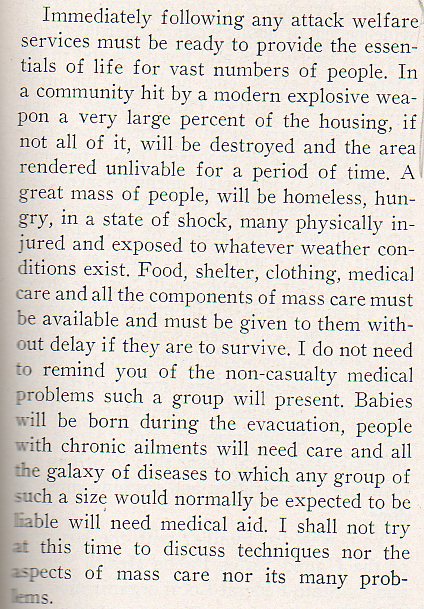
    How can a person–how can I–write about Nuclear Holocaust as being mundane? When it comes to reading how some people mundanely responded to planning for surviving it.

    It is a very deep Disturbia into which people fall when writing about the millions of details in accounting for the unaccountable, writing about the medical/physical/psychical consequences of surviving a bomb when dozens might well be detonated at the same time, the millions of details overtaken by billions of other details not mentioned and perhaps not imagined. 

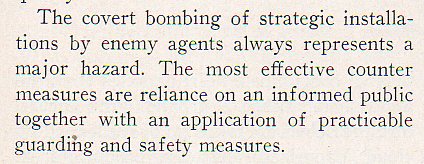
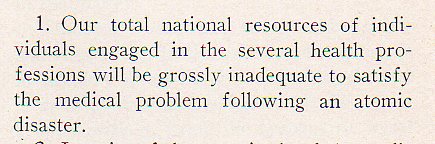
    I’ve collected some wide non sequiturs dealing with the matters of the nuclear apocalypse from a publication calledMilitary Medicine in an article entitled “Mass Casualties, Principles Involved in Management”,  which were papers delivered at the 62nd annual convention of the Association of Military Surgeons, 1956.  Sometimes the chapter heading says it all, giving wide pause; and sometimes you have to wade in a little, but you don’t need to go very far, or very deep.  Overall the issue of the absolutely overwhelming devastation and the impossibility of dealing with the human consequences of nuclear war do absolutely get written about, but it occurs somewhere inside each contribution, which is front-loaded with pop-iconic understatement and then followed up with vast simplification. 

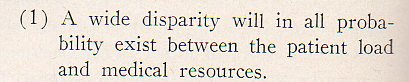
    Then of course there is the official-speak in quietly stating screamingly bad things: “a wide disparity will in all probability exist between patient load and medical resources”.  There’s so much like that in this publication that it is hard to keep up, like differentiating sands on a beach. 

    [I resisted including the section on the use of dentists in the post apocalypse–it was too painful, and I ran out of steam.]


     Nuke--mass cas priciple320
    Nuke--mass cas priciple321


    Nuke--secondary missile316Nuke--secondary missile317

    Nuke--thermal318
    Nuke--thermal319
     Nuke--mass psych324
    Nuke--mass psych325
    Nuke--mass psych326
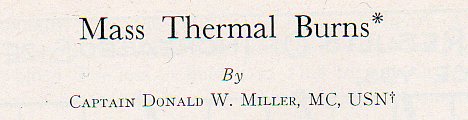
    Nuke--mass thermal burns322
    Nuke--mass thermal burns323
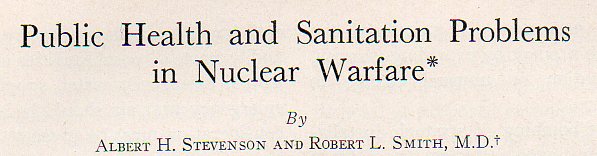
    Nuke--public health327 

    Nuke--public health328

    Nuke--public health329 
    Nuke--public health330

    Nuke--organiz336
    Nuke--organiz337

    Nuke--vet334
    Nuke--vet335

    Fabulous graphic:
    Nuke--enlisted331
    Nuke--enlisted332

    ·Posted by :

    ·in:


  • Millions of Miles of Hole-Filled Paper–Dystopia, Entertainment, Vonnegut and Prison

    JF Ptak Science Books 

    {Part of this blog’s History of Holes and History of the Future series.]

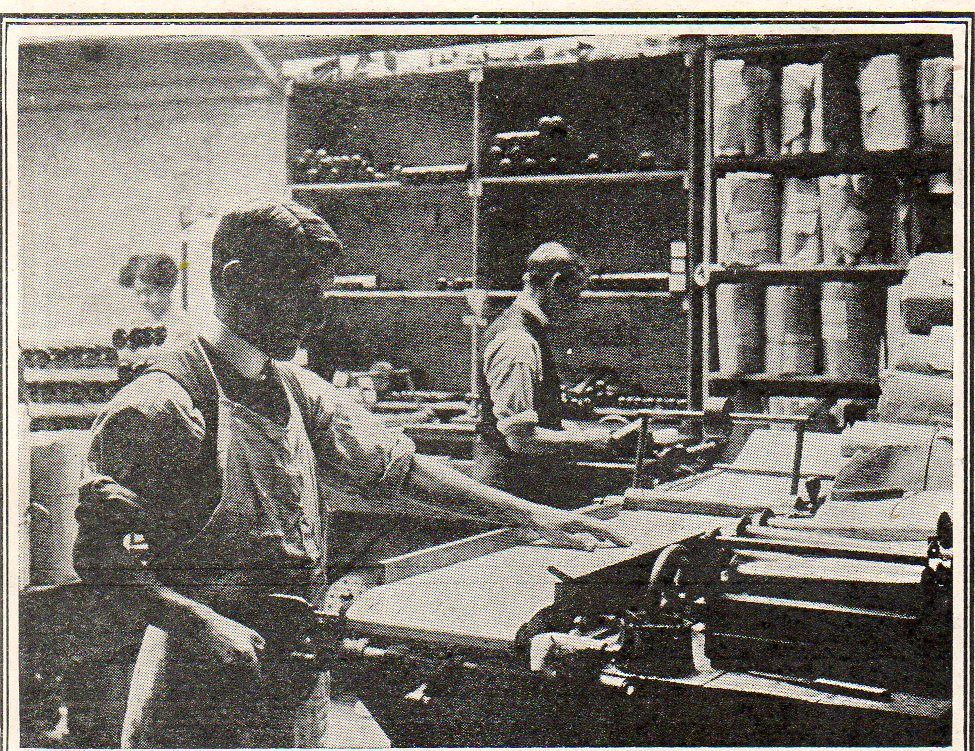
      Music role making--1871 There is a certain layered, geological dystopic quality to the  images of these men laboring at producing piano rolls for player pianos (and found in The Illustrated London News for 18 December 1909). This is true especially for the details, the small boxes in the background to where the rolls are being “processed”–music pounded out with metal points on a hard surface, as though produced by whatever it was that was in those little labeled wooden containers, far removed from the artistry of melody. These are images of a culture being made into hundreds of thousands of miles of hole-filled paper.

    The piano roles remind me of automatons replacing humans in entertainment, and then replacing the humans making the piano roles; of machines taking over the jobs of people writ large.  There’s a long and rich literary history of this idea, not the least (or first) of which is the appropriately-named Player Piano, Kurt Vonnegut’s first novel, written in 1952.  Like a tiny idea-machine, Vonnegut manufactured part of his tale from Brave New World, with Huxley having taken his bit from an earlier novel, We, written by Yevgeny Zamyatin in 1921–they’re all bleak images of a future dominated by machines, the humans acquiring numbers for names, like the replaceable and expendable units they became. 
    (Artwork by Malcolm Smith for Imagination, June 1954.)

    Robots in ocntrol--hanging human879

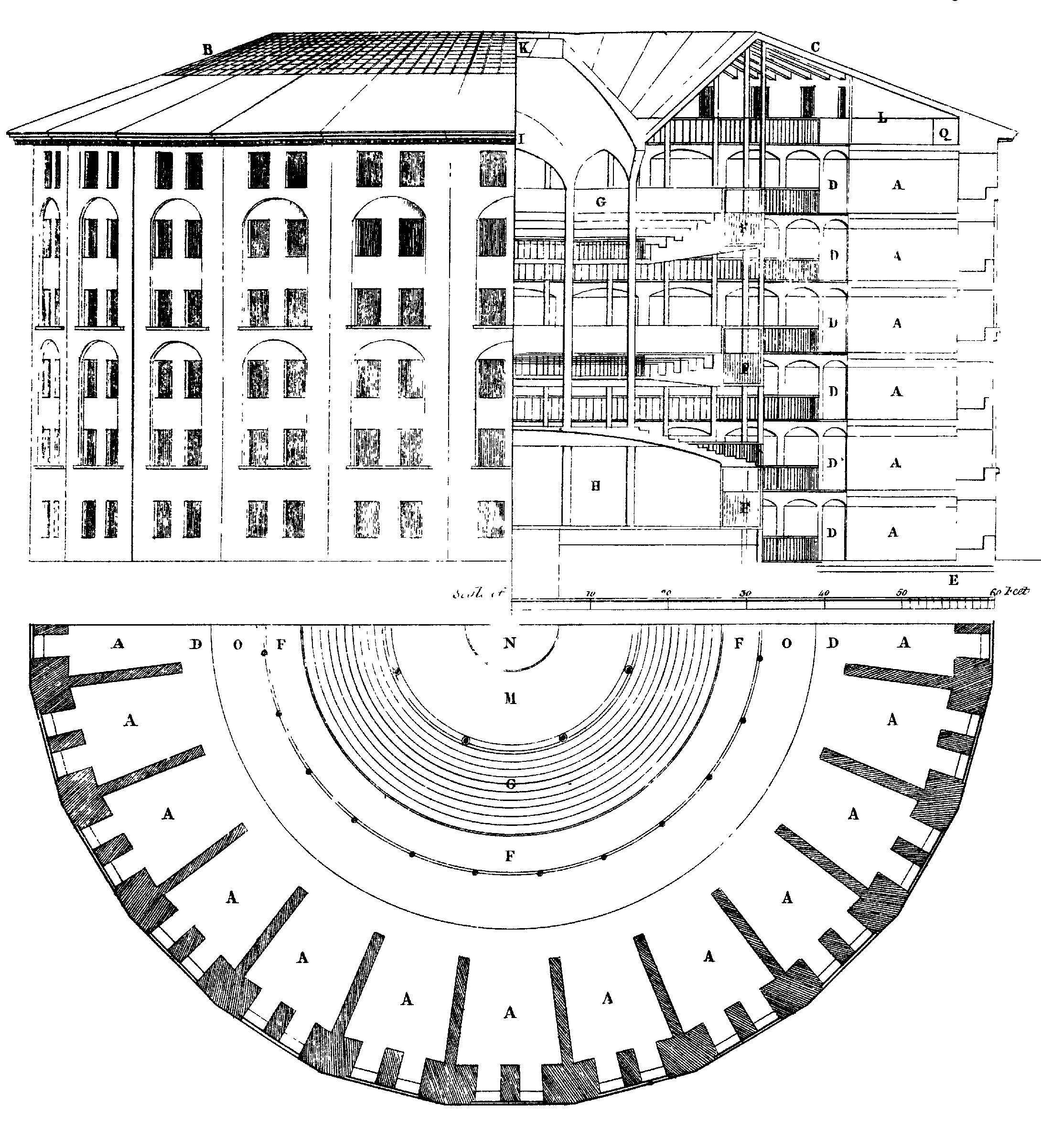
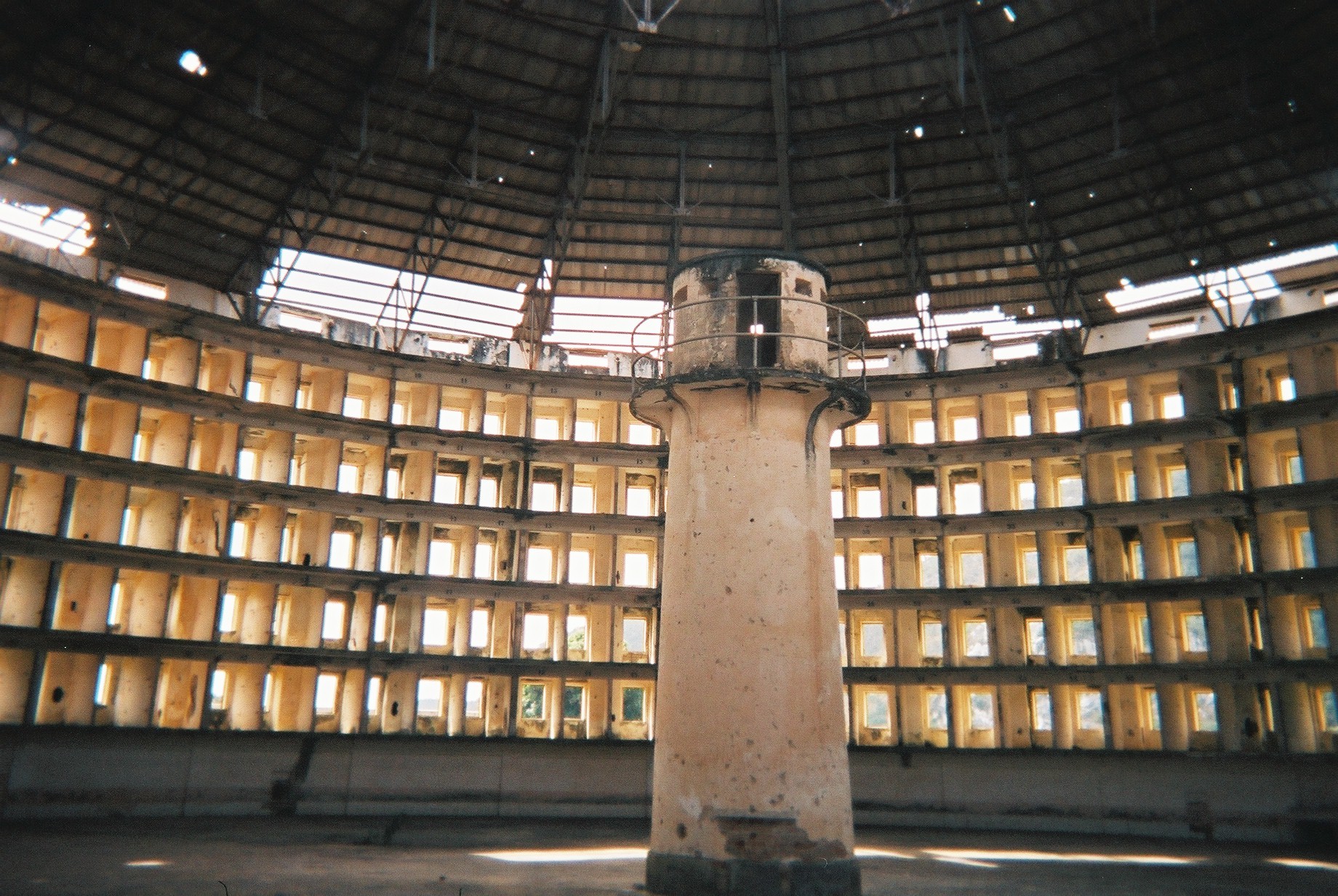
    The devices for producing the roles remind me of Jeremy Bentham’s panopticon, a functional prison designed so that all of the prisoners could be viewed from one central point.  The profile of the place reminds me of the geared punch machine for the piano roles; I’m not at all sure about what the function of the prison reminds me of.  But in the history of holes, I guess all it foes it fill u its empty holes with people, keeping them there for months or years or decades, and then replacing them with other people, part of a long and continuing series.

    File:Panopticon.jpg

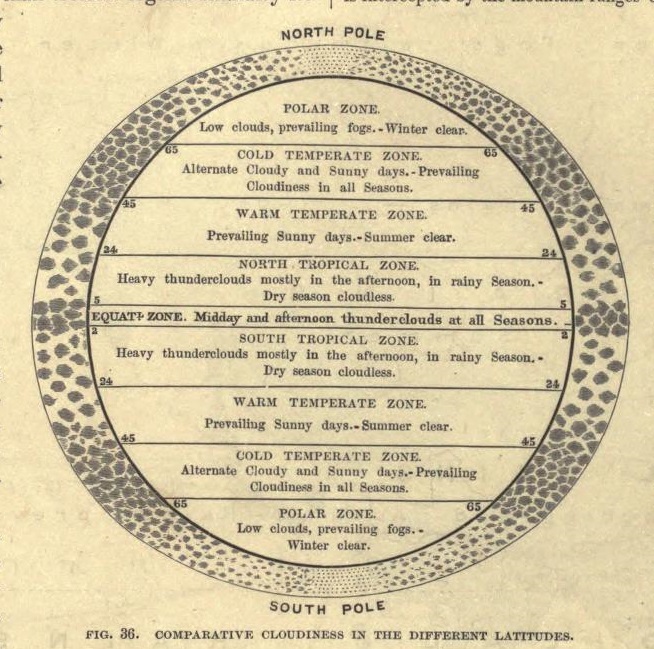
    Here’s the panopticonal prison at Presidio Modelo, Isla De la Juventud, Cuba–with the walls laid flat, and some cells filled-up, and reduced, you may be able to make a certain music with it, like reading the scores made by pigeons roosting on a five-wire-strung staff of utility poles. My daughter Emma just suggested that there could be a Morse Code crossover as well!)

    File:Presidio-modelo2.JPG

    The plan and elevation of these prisons relate to the player paino paper, like the early dots and dashes of communication, like the punched cards that Vonnegut had in mind when he was writing his early classic. 

    Now, the rest of the Illustrated London News story:


  • A Cloud Map (1873)

    JF Ptak Science Books   Post 2381
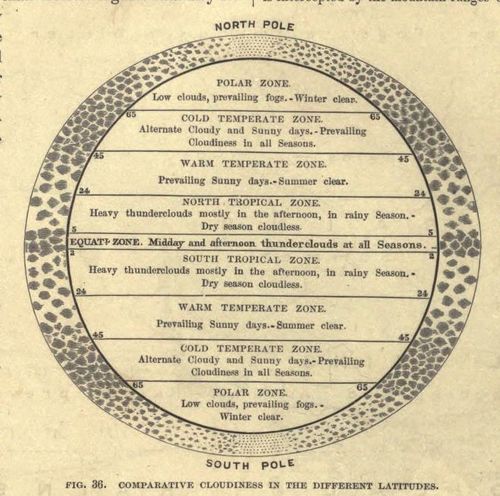
    Cloud comparative

    [Image from Arnold Guyot, Physical Geography, Scrinber’s, New York, 1873]

    There are all sorts of clouds, everywhere: Red Cloud, mushroom clouds, clouds of confusion, Cloud Nine, dust, radioactive, rain, thunder, lightning, drifting, passing, growing, high, low, solitary, puffy, racing, threatening, and on and on, enough to fill many sets of alphabets even before you get to their real names.And that’s just in English.  In sheet music in the U.S. in the late 19th century songs celebrated clouds of all manifestations–people “waited for the clouds to roll by”, and also listened to “The Clouds Will Never Roll Away”, and how time, temperance, and love will move the clouds, and how many other things would be covered by them. Of course nowadays people think of clouds not only as physical atmospheric mountains but also as places to store data. 

    Clouds though pretty much escaped the notice of even the greatest of all great classifiers, Aristotle, and just about everyone else, for two dozen centuries, no real scientific approach to them until Luke Howard first published on his cloud classifications in his paper “On the Modifications of Clouds and on the Principles of their Production Suspension and Destruction being the Substance of an Essay…” in 1803 (full text here), and his “modifications” (which at the time meant “classifications”) were instantly and universally adopted.  (It is interesting to note that in the first German appearance of the Howard papers in the Annalen der Physik in 1815 that there were no illustrations.)

    Arnold Guyot (1807-1884) published his imaginative and rather unusual and complete global map on the appearance of clouds.  It is pretty, and creative, and to my experience very unusual. He was a very accomplished and experienced, significant scientist (Guyot Hall, Princeton is named for him), though this map above is speculative and questioning in an area meagre data. 

  • Relativity in the Remotest Heavens (1941)

    JF Ptak Science Books   Quick Post

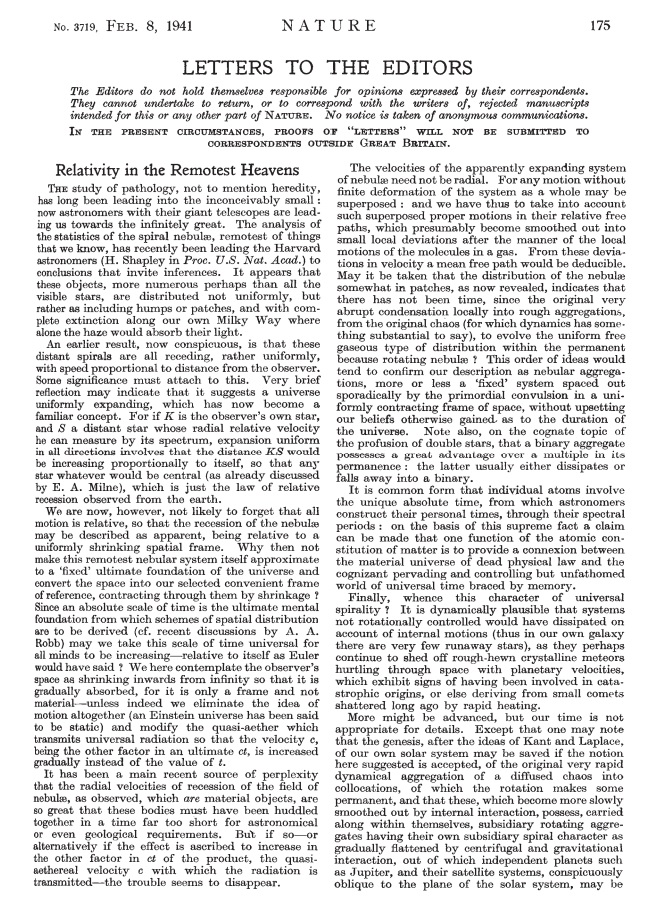
    I came upon this interesting paper by Joseph Larmor (1857-1942) while browsing a volume of Nature for January-June, 1941, and in researching it found a wonderful set of links for 80 papers written by Larmor from 1881-1941 (from PhDTree)  http://phdtree.org/scholar/larmor-joseph/publication/   See the St. Andrews site for a good biography of Larmor, here

    Larmor relativity


    ·Posted by :

    ·in: