A Daily History of Holes, Dots, Lines, Science, History, Math, Physics, Art, the Unintentional Absurd, Architecture, Maps, Data Visualization, Blank and Missing Things, and so on. |1.6 million words, 7500 images, 4.9 million hits| Press & appearances in The Times, Le Figaro, Mensa, The Economist, The Guardian, Discovery News, Slate, Le Monde, Sci American Blogs, Le Pont, and many other places… 5000+ total posts since 2008.

Category: Technology, History of

  • A Mechanical Night Nurse, 1869

    JF Ptak Science Books   Quick Post

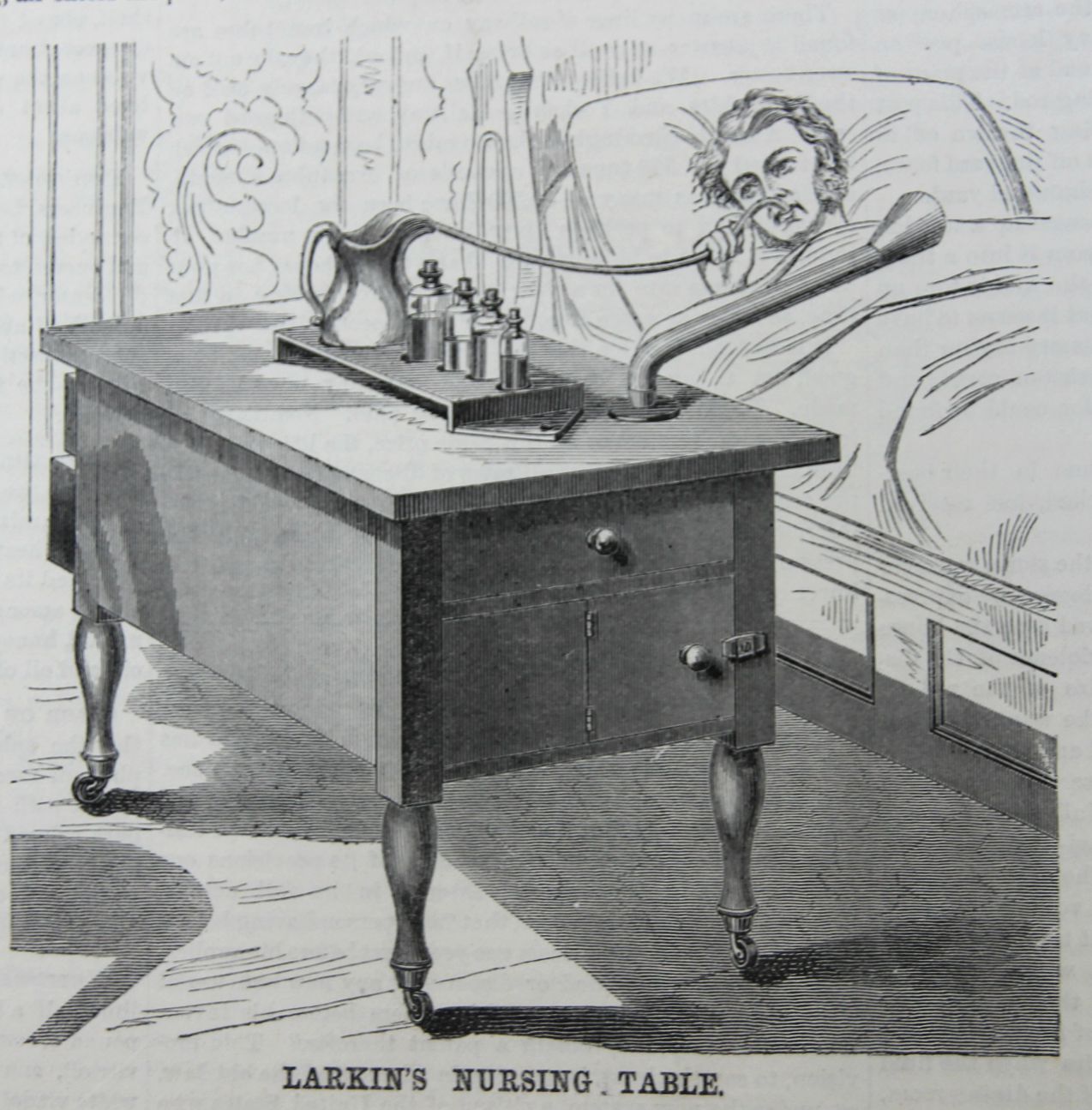
    [This bedside nurse’s aid appeared in the July 17, 1869 issue of the Scientific American.]

    According to the article, “The inventor of this nursing table has endeavored to afford greater comfort to the sick by providing them with the means of supplying in a measure their own wants during the absence of an attendant. In large hospitals the want of something of this kind has been long felt and in many cases its use in private houses would be a great convenience…” Mostly it was a drinking-and-spit-bucket apparatus–still it would no doubt come in handy and loosen the duties of the nurse somewhat.   

    Nursing Table 1869


  • One of the Many Mona Lisas of Early Flying Machines

    JF Ptak Science Books  Quick Post

    Flying macine 1885214

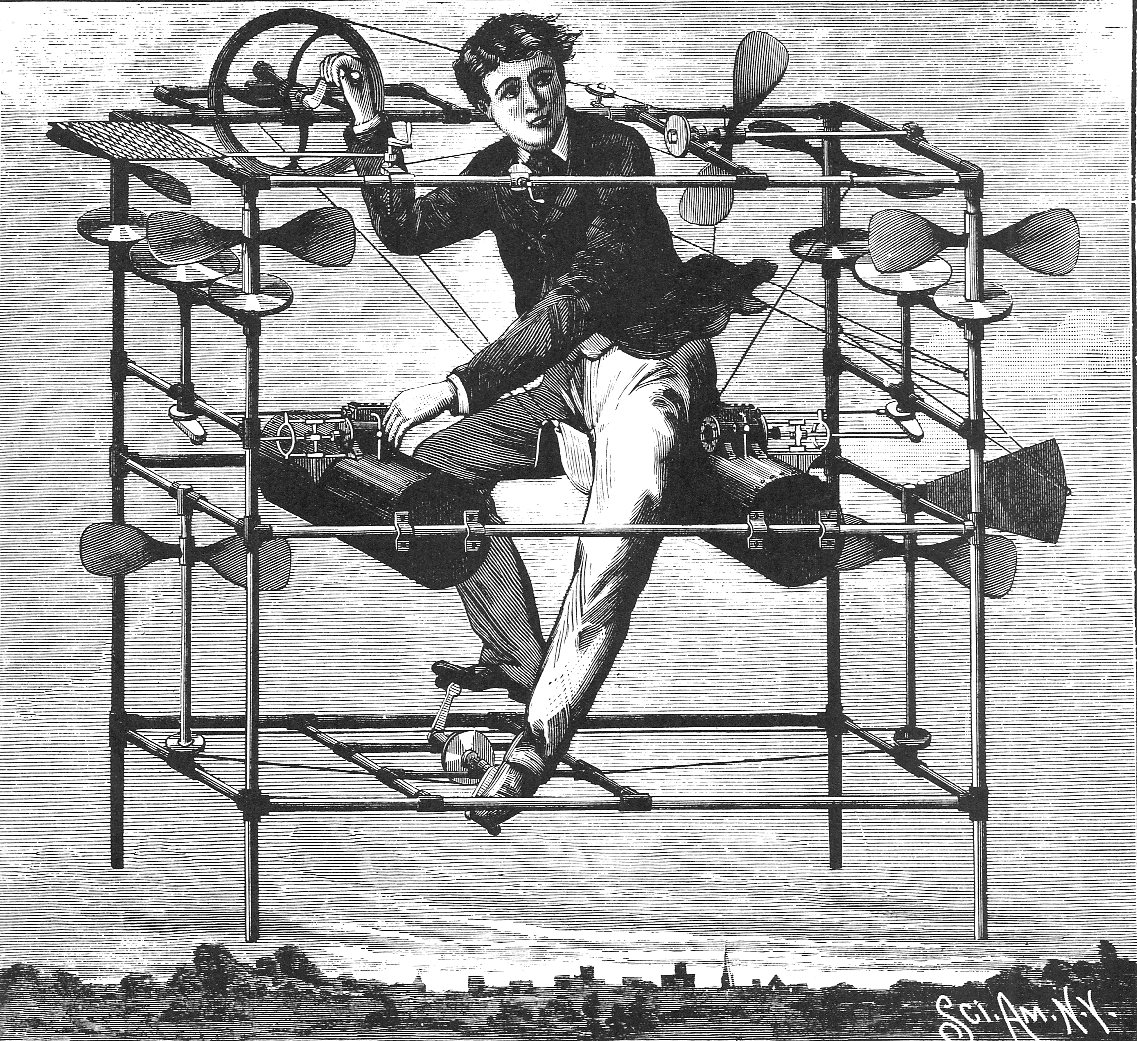
    I’m pretty sure that I’ve only written a plural of “Mona Lisa” a few times before in my history of writing–and that in reference to the real one, when it was stolen by Vincenzo Perugia (and company?) in 1911. (My guess is that it was stolen on demand for a collector and then offered for sale to a number of other underworld-y collectors who were sold fakes–at that point, what could they do (?) given that they couldn’t exactly report the swindle to the police.) For me there are some iconic image of flying machines that made the news in the pre-Wright Brothers era, and I would consider the one here to be one of them.

    It was designed by W. Ayres and happily and nattily appeared in the pages of the Scientific America (1885). It seems to have been a kind of helicopter/ornithopter, partially human powered and partially powered by compressed air that would run a generator that would run the little propellers situated around the aircraft.  The frame of the craft was made of 1/4″ steel tubes, though there is no indication of their thickness. Given that there’s something like 40 feet of this pipe superstructure, I’m going to guess that the pipe was a pound/foot; then given the weight of the pilot, and the other bits and pieces, this antique drone would have to work very hard to lift its 200′ payload.  The (May 9th) article states that there is enough power generated to lift that 200 pounds, but…

    In any event, I really like the image.  


  • Yet Another Early Robot Designed to Go Bad

    JF Ptak Science Books   Quick Post

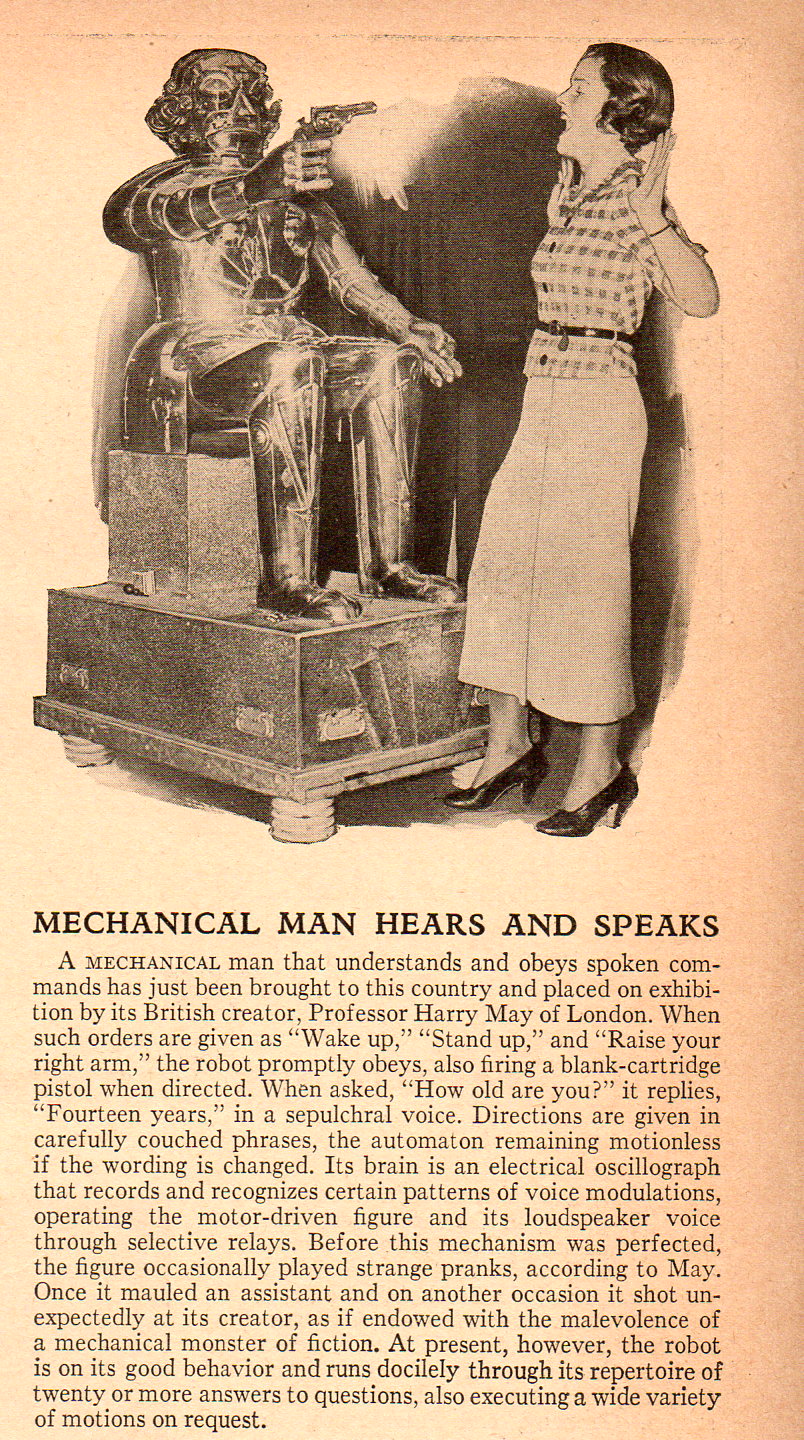
    These poor early robots–some were designed to pretend-to-clean, others to pretend-to-smoke, and yet others (even at this tender age in the history of robots) were designed to threaten people and whatever else was in front of them with a pistol.  It is a sad, thing, really–it is hard not to empathize with the amalgamated sorrow.  

    Robot with gun209[Source: Popular Science Monthly, January 1935, page 19.]

    I’ve written perhaps 15 or so posts on early robots (prior to WWII) and to me it seems that most were relegated to menial tasks–and when not menial, then they were often killing or threatening living humans.  Perhaps when our robot overlords of the future (ROOTF) absorb the human interpretation of their early history they will take pity on us for representing their early possibilities in such unfortunate ways–they may get over the images of robots harvesting, pulling wagons, sweeping clergy, squeezing the blood out of workers, savaging scantily clad women of the future, and so on…or they may not.

    For other posts on robots, enter “robots” in the google search box at left.  If nothing else, the images are very good.  


  • The Flying Whirligig of 1935

    JF Ptak Science Books   Quick Post

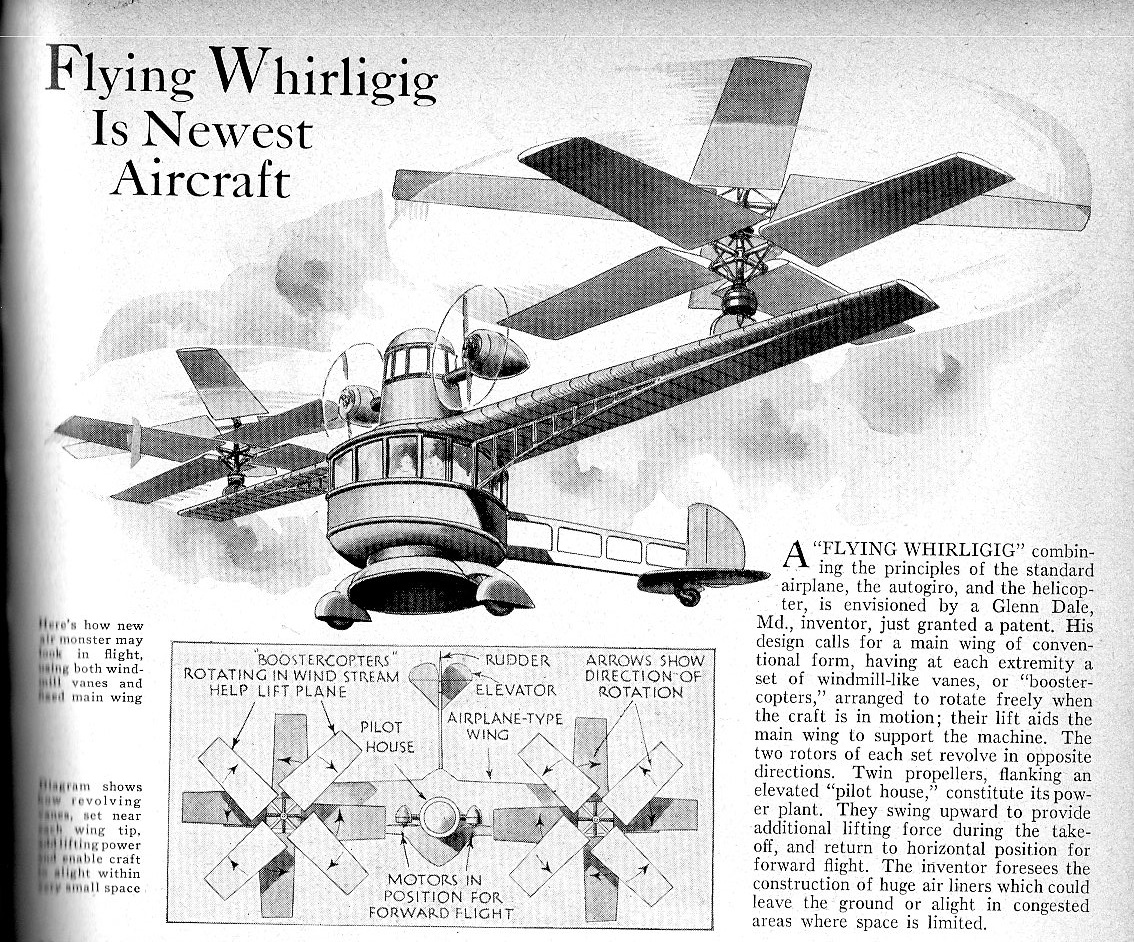
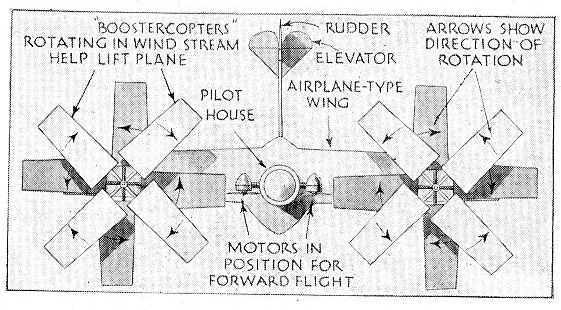
    This half-modern helicopter appeared in the Popular Science Monthly for February 1935–it seems t o have the fundamental of the body of the helicopter to be about right, and then adventures out with huge wings and two eight-blade rotors.  It was a monster of a machine, and appeared in print just about a year before the successful introduction of the Focke Wulf FW 61, and four years before Sikorsky’s true helicopter (VS-300) of 1939. The idea for a helicopter had been around for quite a while, at least from the time of Leonardo’s “aerial screw’, and through the coining of the word in 1861 by d’Almecourt, and was a long time in the making, though the main bits for the development of the aircraft came together in the 1930’s.  The “flying whiligig” here does have a squinty resemblance to the V-22 Osprey, but that would be a long time in coming.  

    Helicopter1935195

    And a close-up of the schematic:

    Helicopter1935196


  • An Early Rear-Wheel Steered Bicycle, 1869

    JF Ptak Science Books  Post 2530

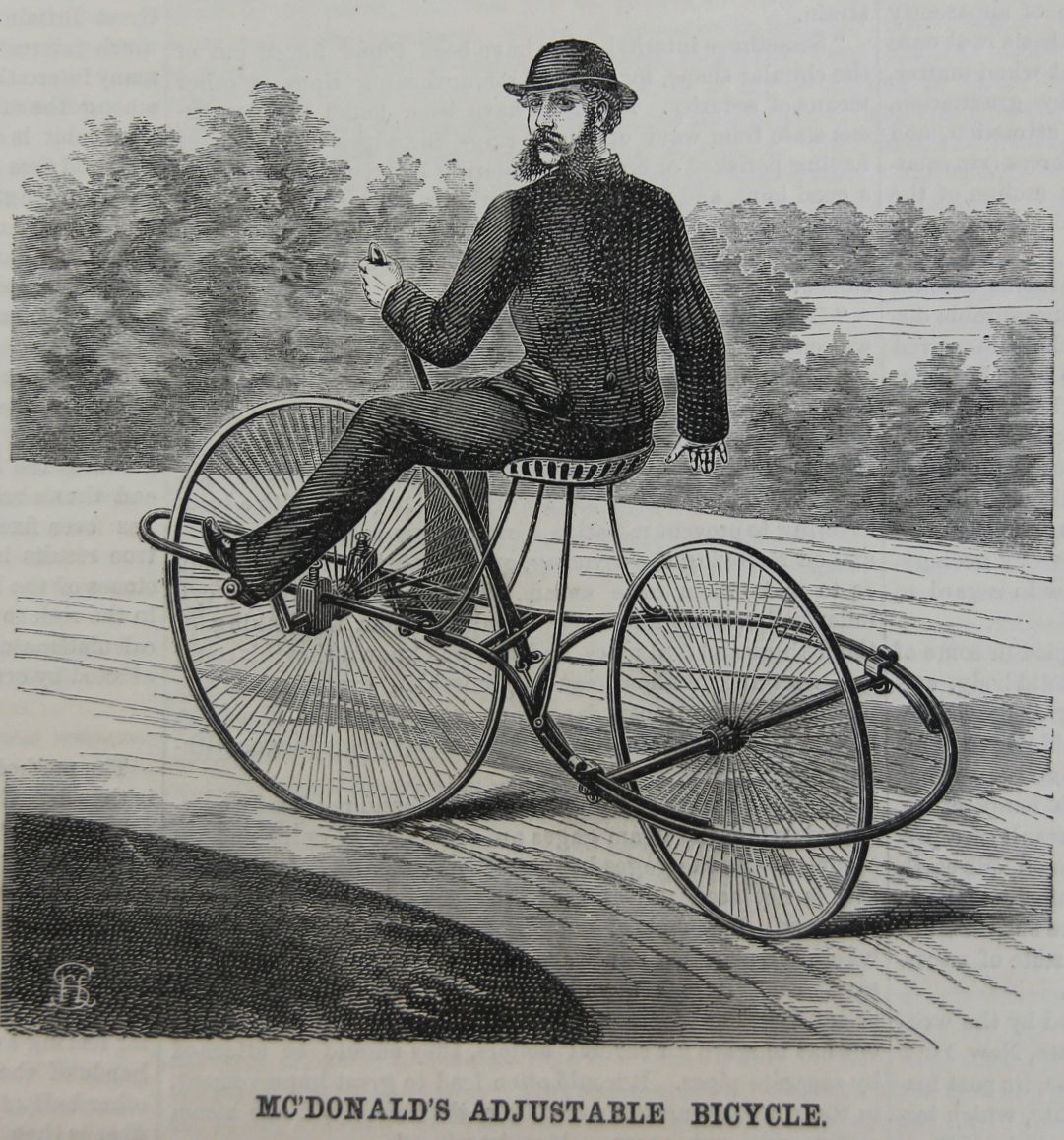
    Bike 1869

    Thumbing through the 1869 volume of Scientific American hunting for an image of a wave-powered device I found this unusual woodcut of a bicycle.  Actually, it is still at this point mainly referred to as a velocipede, a word that “Scotch Tape” was a brand name for a bike-like invention by the very-busy Nicephore Niepce in 1818. (Niepce was a prolific and high-end thinker having invented the world’s first photographic device from which the oldest-surviving photograph was made, towards the end his work being done in partnership with Louis Daguerre with whom he had a business relationship for the development of what would turn of to be Daguerre’s improvements on his original breakthroughs.  And that was not his only breakthrough–along with his brother Claude Niepce patented what was probably the world’s first internal combustion engine–the pyreolophore–in 1807.)

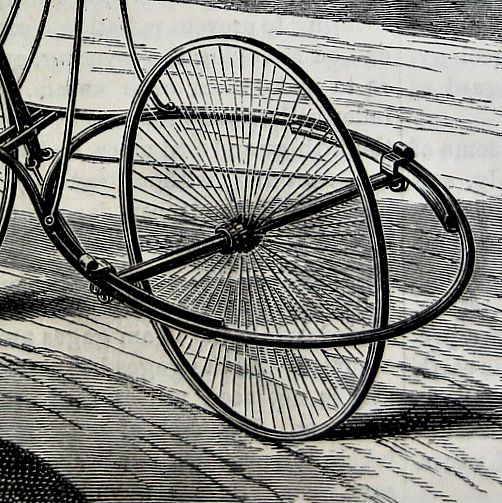
    In any event this machine, the McDonald velocipede above and below was interesting mainly for its steering mechanism. (On the other hand, this still is a very early example of a peddled-wheel bike, invented earlier in the decade by Pierre Michaux.)  Here the biker would use the joystick that controlled the rear wheel by means of the apparatus on the vertical circular frame surrounding the rear wheel. Interesting to note here that the articles states that the velocipede was relatively easy to construct–and maybe so for the more-adept engineering-type of 1869–as the bike was patented but not in production.  

    From the Scientific American: “The frame is of hollow pipe the rear being a complete in which the steering wheel rotates on its axis the steering a wheel running between the parallel bars the front portion. The axle of this passes through boxes secured to the bars by screws so it may be adjusted forward or back to suit the physique of the rider. The axle of the steering wheel runs in secured to sliding bars curved to fit the diameter of the circular portion of the frame thus allowing this wheel with its axle to per form an entire revolution within the frame a horizontal plane. Its movements are controlled by means of rods attached at one to he ends of the axle and at the brought together to the lower end of a directly under the rider’s seat the handle which comes up in front of the rider the fulcrum being on a cross piece between the portion of the parallel bars serving not that purpose but that of a brace. It will seen from the figure that the guiding of vehicle may be effected by one hand seat need not be so high as represented in engraving it may be lowered until nearly the level of the reach which is the line of the axles.”–Scientific American, April 24, 1869, p.264.  

    And the detail:

    Bike 1869 detail

    ·Posted by :

    ·in:


  • Another “Archie”: Antiaircraft in 1916

    JF Ptak Science Books  Quick Post

    • There’s another interesting story on the use of “Archie” as a nickname in another military situation, here, in an earlier post, “George and Archie: Two Misty Names in Making Everything Into Nothing. Hiroshima, 1945.”

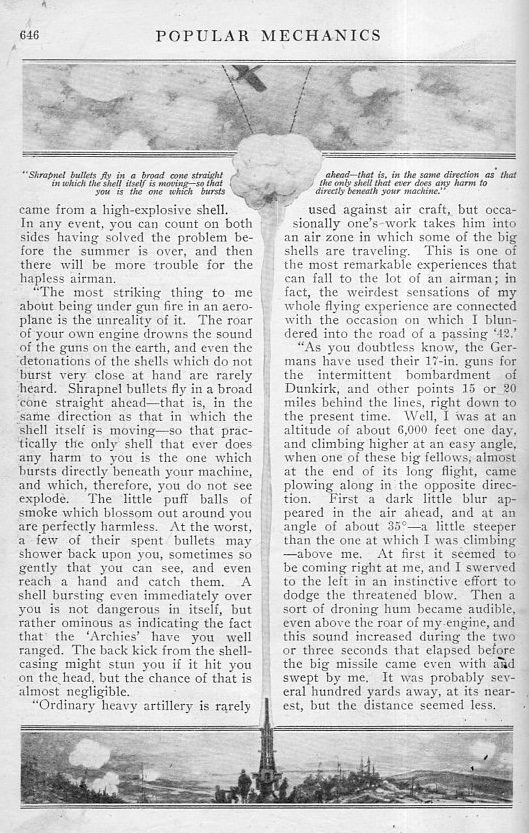
    This interesting graphic appears in the article “Airmen’s Sensations in Battle” in Popular  Mechanics, November 1916. It hows a cross-section, of sorts, of an air battle with antiaircraft involvement, and to my experience is of a very unusual design. The author writes of being chased by Fokkers and then met by “Archie” (British slang for antiaircraft guns) fire from below. Overall it is an effective design that heightens the sense of the story.

    WWI antiaircraft186

    Notes:

    “Archie”: “Nickname given to anti-aircraft fire during First World War. Said to derive from a British pilot who reacted to enemy anti-aircraft fire by shouting the line from a music hall song ‘Archibald certainly not’. This caught on and was inevitably shortened to Archie.”– Phil Jobson Royal Artillery Glossary of Terms and Abbreviations   Briefly put, the AA situation during WWI was, well, primitive–necessarily primitive, I mean. There was some improvisation against balloons earlier on but the first AA-downing of a military aircraft was evidently in 1912 in the Italo-Turkish War. In 1916, two years into the war, the development of firepower against aircraft (and the detection of them, which extended to acoustical devices for the greatest part) was still in its very earliest stages. 


  • A Great Classic–the First True Textbook on Computing Bibliography!

    JF Ptak Science Books   Post 2529    Reference Tools series

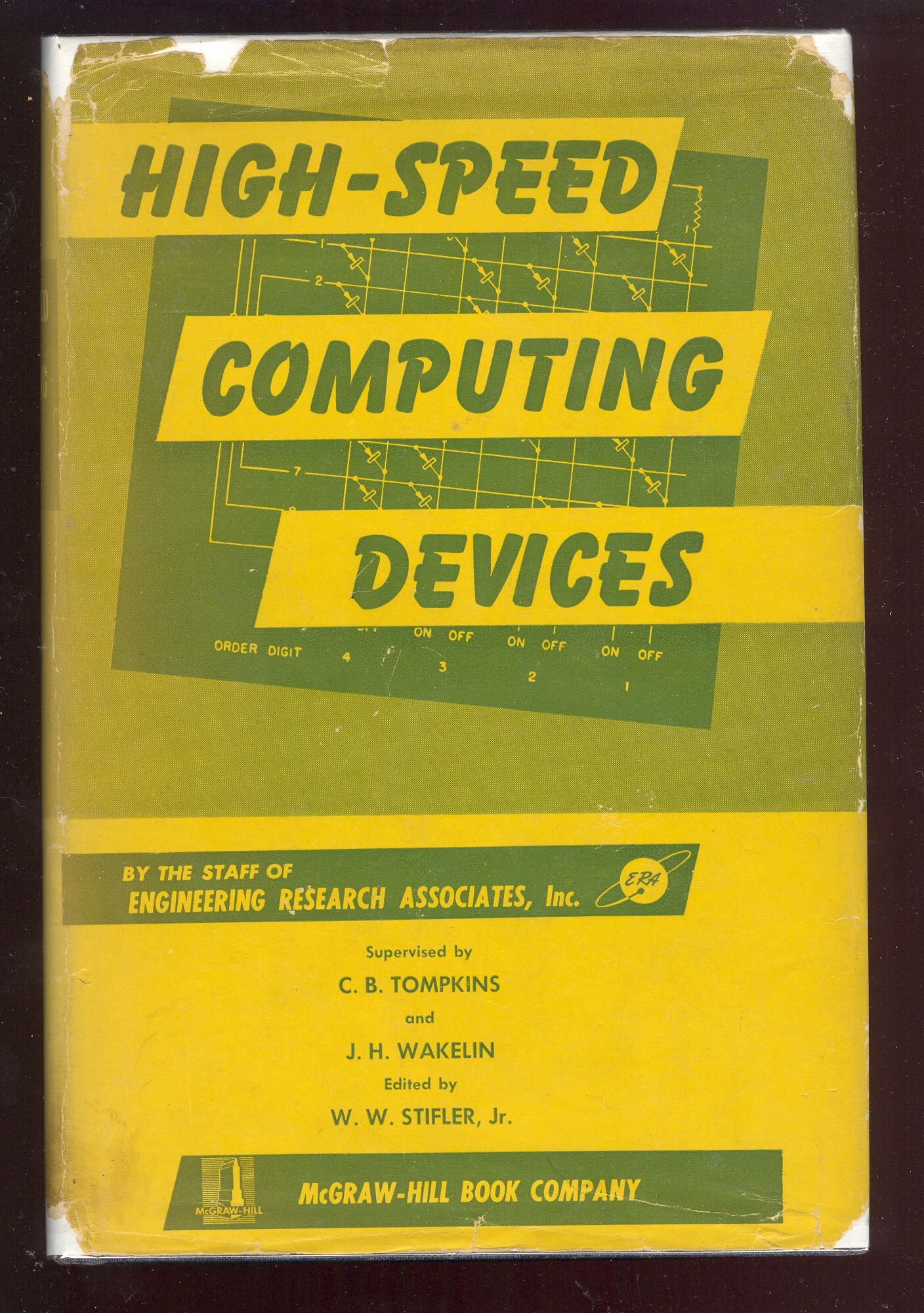
     C.B. Tompkins’  High-Speed Computing Devices (New York,  McGraw Hill, 1950) is probably the best of the pre-1960 textbooks on the computer, complete with stout bibliographies and lots of bits to trail  from the golden age of computers. This classic work is enhanced by a (very) unusually complete series of chapter-ending references and bibliographies. Among much else of interest we find a treatment of the Harvard Mark I and II on pp 183-187 in the chapter on “Large-Scale Digital Computing Systems” on pp 182-222 with bibliography occupying pp 218-222. Also, the “Punched-Card Computing Systems” chapter pp 146-181 has a very nice bibliography on pp 166-181. 

    Books--era


    Even though I’ve used this book quite a bit I’ve never collected the chapter-ending references in one document until today. Tompkins now appears in the glorious Internet Archive, and I’ve taken the 16 pieces of bibliography and gathered them all below in a document that is about 40 pages long.  Have a look, and enjoy–thanks to the Internet Archive!

    • This is considered to be the first textbook on digital computers, the first compendium in English on digital computer technology, and a pioneering work that influenced many computer designers during the 1950s. It provides an unsurpassed picture of the state of the art during the late 1940s, and is further enhanced by the inclusion of several excellent bibliographies. — Sarrazin F2.
    • “The book is a careful analysis of the electronic field as of 1950 and was in very large measure written by the late Professor C. B. Tompkins..” – Goldstine 315.
    • (This book) was written to satisfy “a perceived need, following the end of WW II, for compendium of technologies applicable to the emerging field of electronic digital computers…Because published technical information was scarce in the U.S., there can be little question that the book was an important contribution to computer literature…with its state of the art picture of the period 1947 through 1949, establishes a well-documented baseline fro tracking and evaluating subsequent technological progress.”– Arnold Cohen, from the Introduction to the 1983 Charles Babbage Institute Reprint Series Edition of the ERA Report, published by Tomash Publshing. ERA


     High-Speed Computing Devices, by C.B. Tompkins: bibliographies

    Source: Internet Archive  https://archive.org/stream/highspeedcomputi00era/highspeedcomputi00era_djvu.txt

    Chapter 1. Introduction 
    Chapter 2. Preliminary Considerations 
    Chapter 3. Counters as Elementary Components 
    Chapter 4. Switches and Gates
    Chapter 5. A Functional Approach to Machine Design 
    Chapter 6. Arithmetic Systems
    Chapter 7. Numerical Analysis 
    Chapter 8. Desk Calculators 
    Chapter 9. Punched-card Computing Systems 
    Chapter 10. Large-scale Digital Computing Systems
    Chapter 11. Analog Computing Systems 
    Chapter 12. The Form of a Digital Computer  
    Chapter 13. Arithmetic Elements  
    Chapter 14. Transfer Mediums  
    Chapter 15. Data-conversion Equipment 
    Chapter 16. Special Techniques and Equipment 


  • A Beastly and Beautiful Number Cruncher, 1889

    JF Ptak Science Books   Quick Post

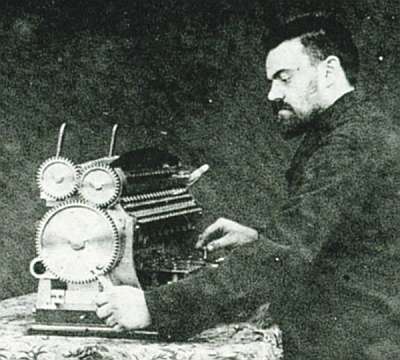
    It was a surprise, finding M. Bollee’s article (“Sur une nouvelle machine a calculer”) in this 1889 Comptes Rendus, peeking around in that big 10-pound volume looking for something else.  It was very easy to miss if you weren’t looking for it, just a few pages long in a 1000-page book.  But there it was, nestled comfortably in pp 737-739.  It these few pages Bollee describes his machine and with particular reference to his innovative approach to direct multipilication–a fine addition (ha!) to the long line of contributions by Babbage and Clement, Scheutz, Wiberg and Grant and Hamann. 

    Bollee

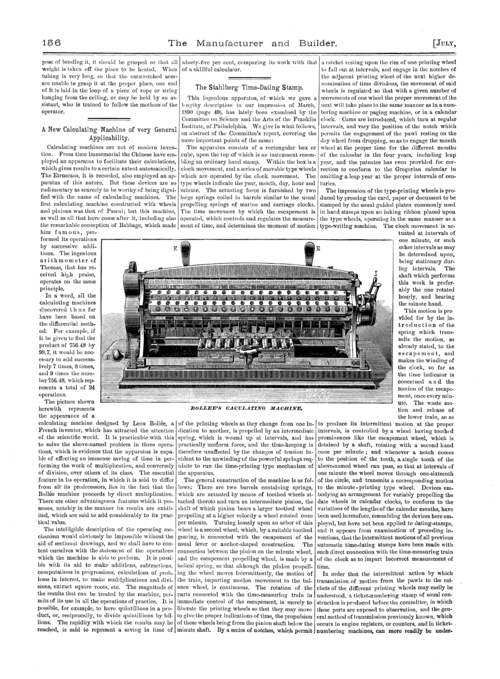
     The article in the Comptes Rendus is not illustrated, though I did find an image of the machine in The Manufacturer and Builder:

    Bollee


  • Note on an Unusual Version of a Classic Russian Aerospace Text

    JF Ptak Science Books   Post 2527

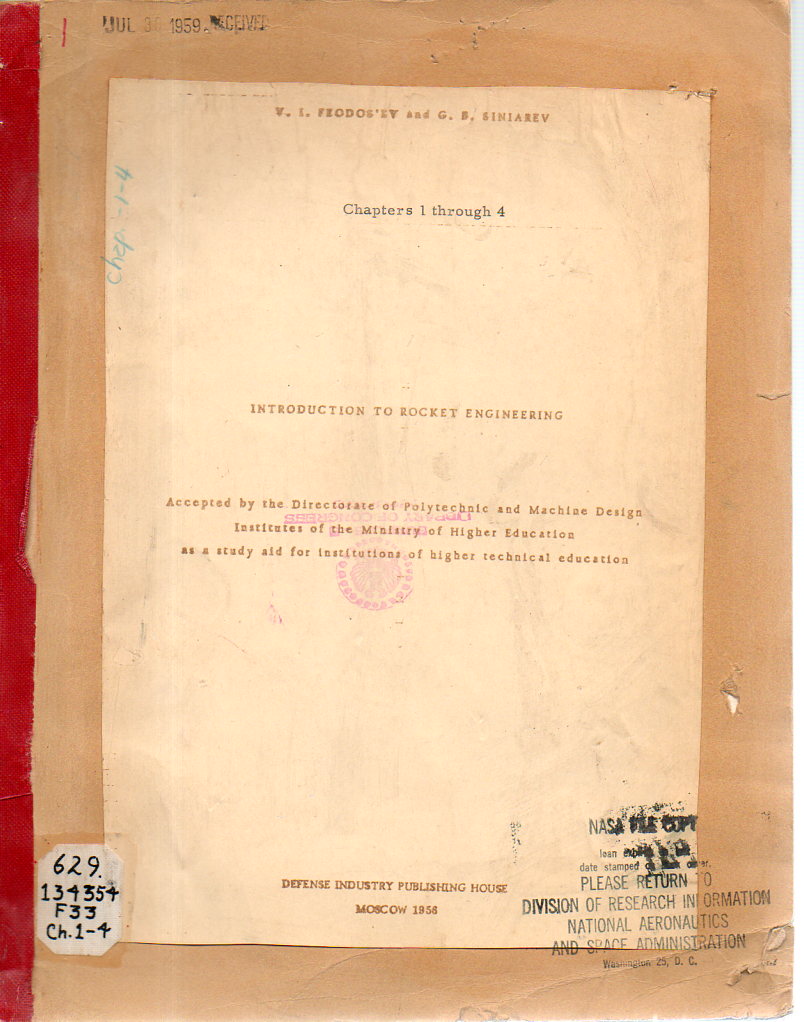
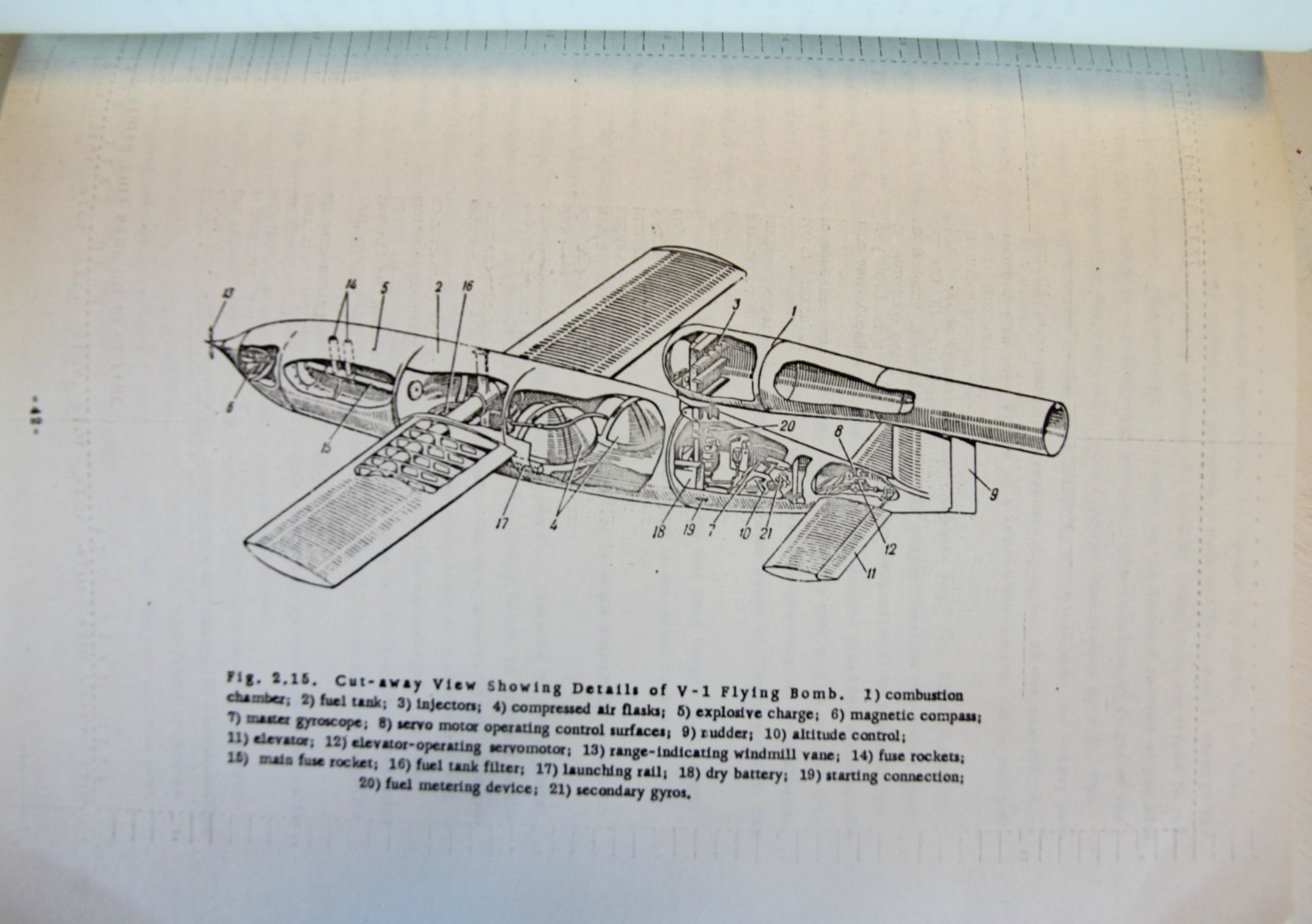
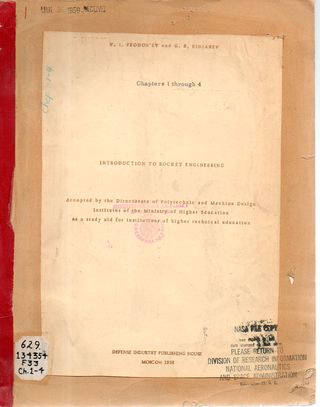
    V.I. Feodosiev (with his two initials looking ironically similar to the V1 that he wrote about) and G.B. Simiarev wrote a classic textbook1 in rocket technology which was published in Moscow in 1958.  Even though it was translated and published in English the following year by Academic Press, the version here seems to have been translated in the same year as its Russian edition. I’ve had some translations-on-demand in the store that were fast-tracked for the particular agency that needed the work, translations that sometimes didn’t appear in English for years afterwards.  In this case the Feodosiev was translated (anonymously) for an undisclosed agency, though this copy wound up in the library of  the NASA Division of Research Information2. It could well be that the work was produced for NASA but frankly there are many other candidates for the point of origin of interest.  This copy is definitely different from the Academic Press translation, so at least two different translations were made of the text.  
    Feodosev Rocket171

    I really don’t have that much to offer here on this edition, except to note its differences from the Academic Press version, though this may be of some use to someone working in this area.  

    • The original is available via the blog’s bookstore, here.

    Here’s an abstract/summary of the work (which has a slightly different title)  by the Academic Press 1959 version of this publication: 

    “Introduction to Rocket Technology focuses on the dynamics, technologies, aerodynamics, ballistics, theory of servomechanisms, principles of navigation instruments, and electronics involved in rocket technology.”

    “The publication first takes a look at the basic relationships in the theory of reactive motion; types of jet propelled aircraft and their basic construction; and types of reaction motors and their construction. Discussions focus on air breathing motors, anti-aircraft rockets, long range bombardment rockets, surface to surface, short range bombardment missiles, thrust of a rocket motor, and operating efficiency of a rocket motor. The text then examines rocket motor fuels and processes in the combustion chamber of a rocket motor.”
    Feodosiev _4_

    [V-1, from page 42]


  • “The Body as Army and Navy”, 1921–Mechanical Images of Sensory Capacity

    JF Ptak Science Books  Quick Post


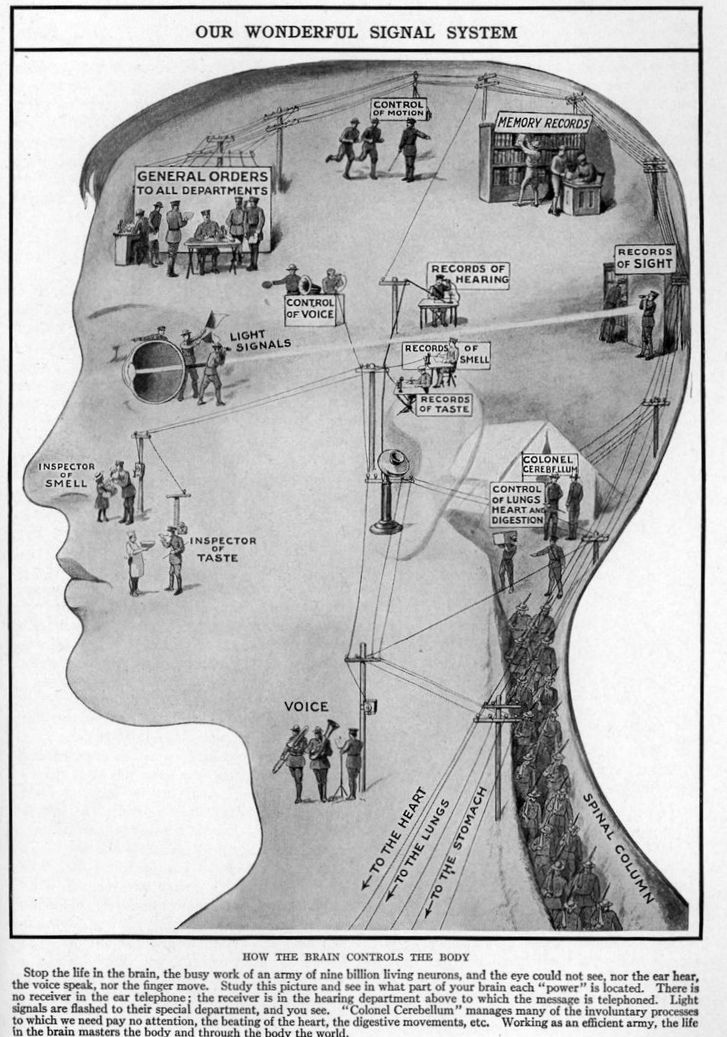
     These creative displays are found in Marion Florence Lansing’s The Wonder of Life (volume 11, Supplementary), published in 1921.  They represent a somewhat humanized-but-roboticized/automated approach to displaying he control of the senses, which seems to have been a developing style in the 1920’s giving the popular cultural appearance of mechanical people (the term “robot” appearing for the first time in this same year in Karel Capek’s play R.U.R.). The images also appear, appropriately enough, in the chapter titled “The Machinery of Our Bodies”. 

    Map of the senses