A Daily History of Holes, Dots, Lines, Science, History, Math, Physics, Art, the Unintentional Absurd, Architecture, Maps, Data Visualization, Blank and Missing Things, and so on. |1.6 million words, 7500 images, 4.9 million hits| Press & appearances in The Times, Le Figaro, Mensa, The Economist, The Guardian, Discovery News, Slate, Le Monde, Sci American Blogs, Le Pont, and many other places… 5000+ total posts since 2008.

Category: Technology, History of

  • Glorious Gearworks, Extended–Models of the Solar System, 1817-1821

    JF Ptak Science Books  Quick Post

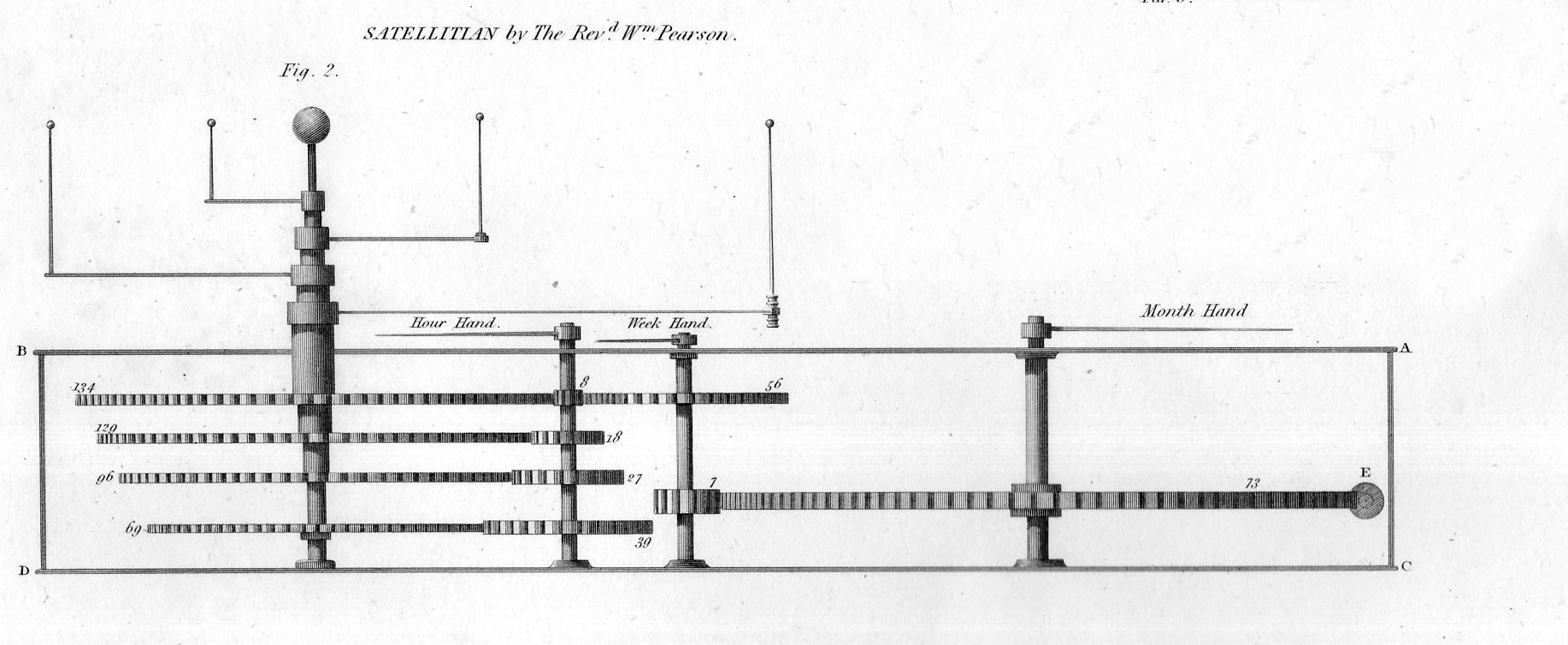
    I’d like to make a quick addition to an earlier post on a form of  Pearson’s planetarium.  This is from the same source, though from a few years later, and involves Pearson’s Satellitian, which was a differently-abled device.  All of the images appeared in the magisterial if not occasionally problematic Cyclopedia of Abraham Rees (1743-1825).

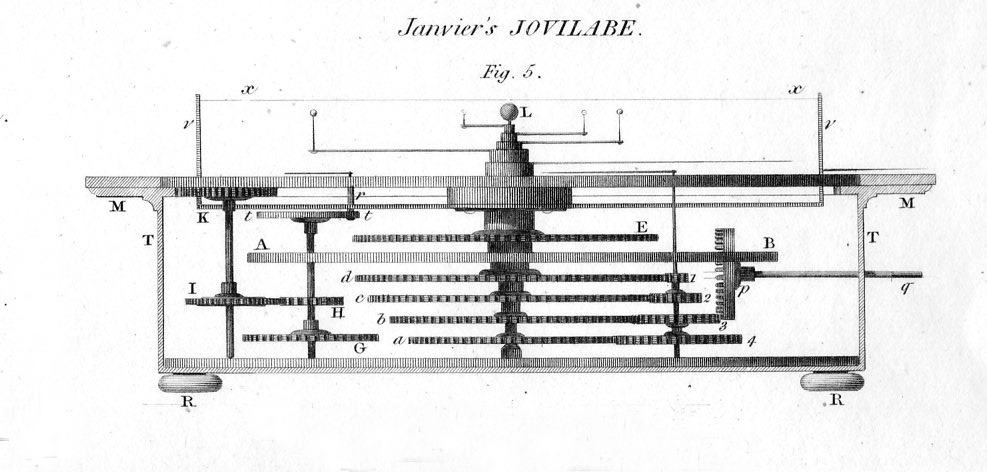
    The first image is a cross section for he “Satellite Machine by Roemer”, followed by “Janvier’s Jovilabe, and the with Willliam Pearson’s “Satellitian”, all appearing on the same 11×8″ sheet and printed in 1820.

    First, the Roemer:
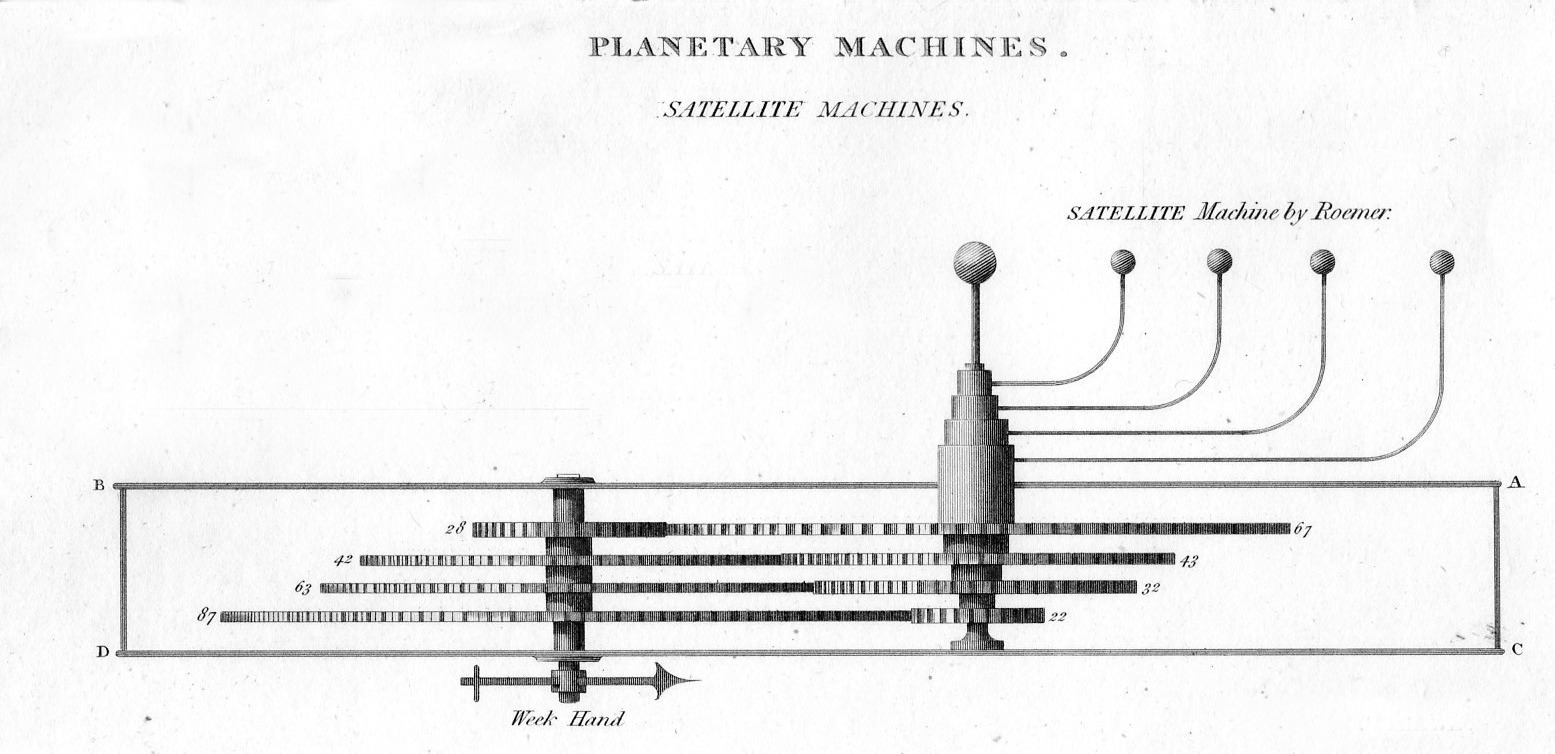
    Planetary MAchine Roemer

    Here’s a description from Rees on the Roemer instrument (this courtesy of Google Books; the images are my own):

    • A good article on the Roemer and the Pearson machines appears in the Edinburgh Magazine, volume 15, 1832,  http://tinyurl.com/ogo36n9 

     And the Janvier:
    Planetary MAchine jANVIERb

    And the Pearson machine:

    Planetary MAchine Pearson

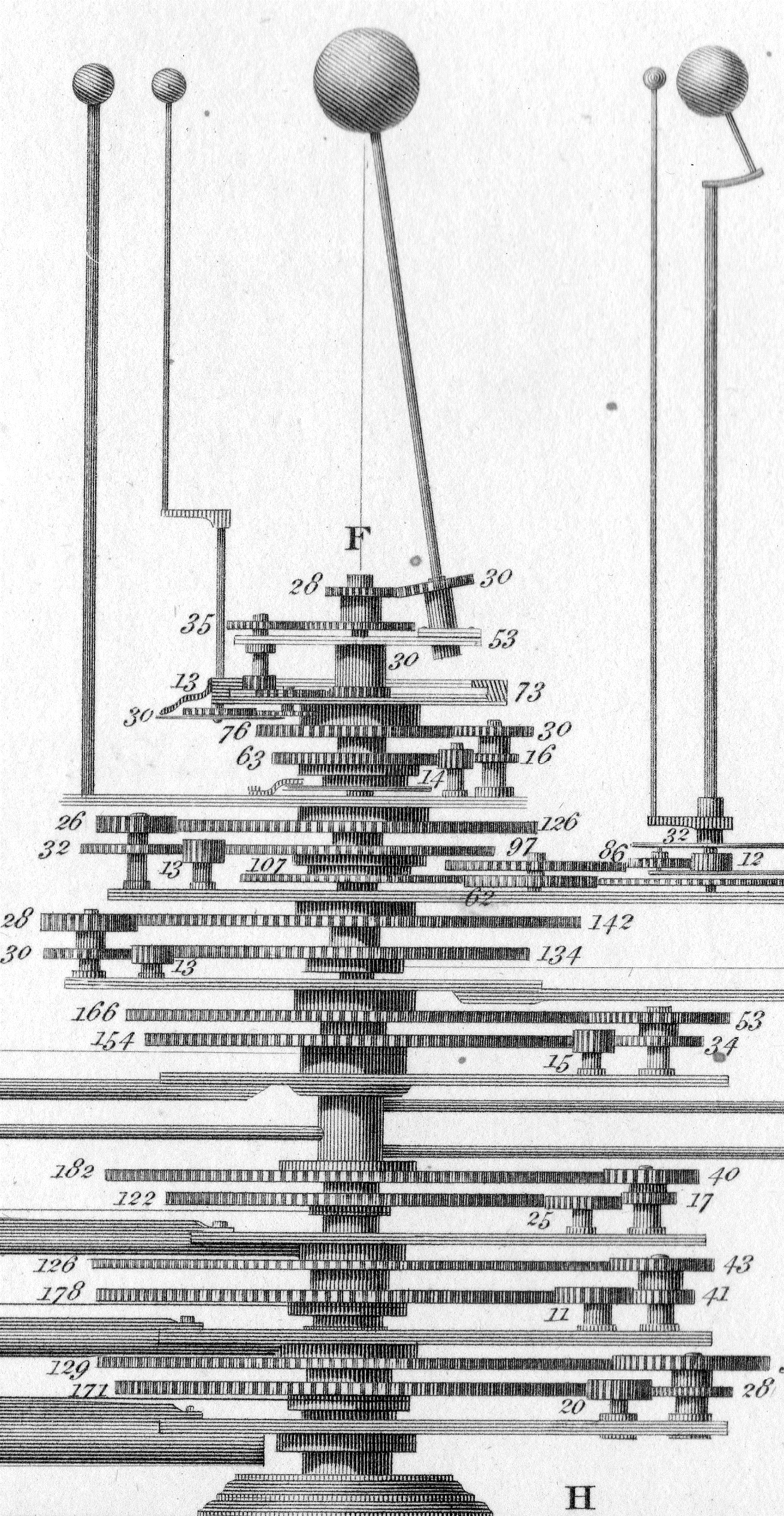
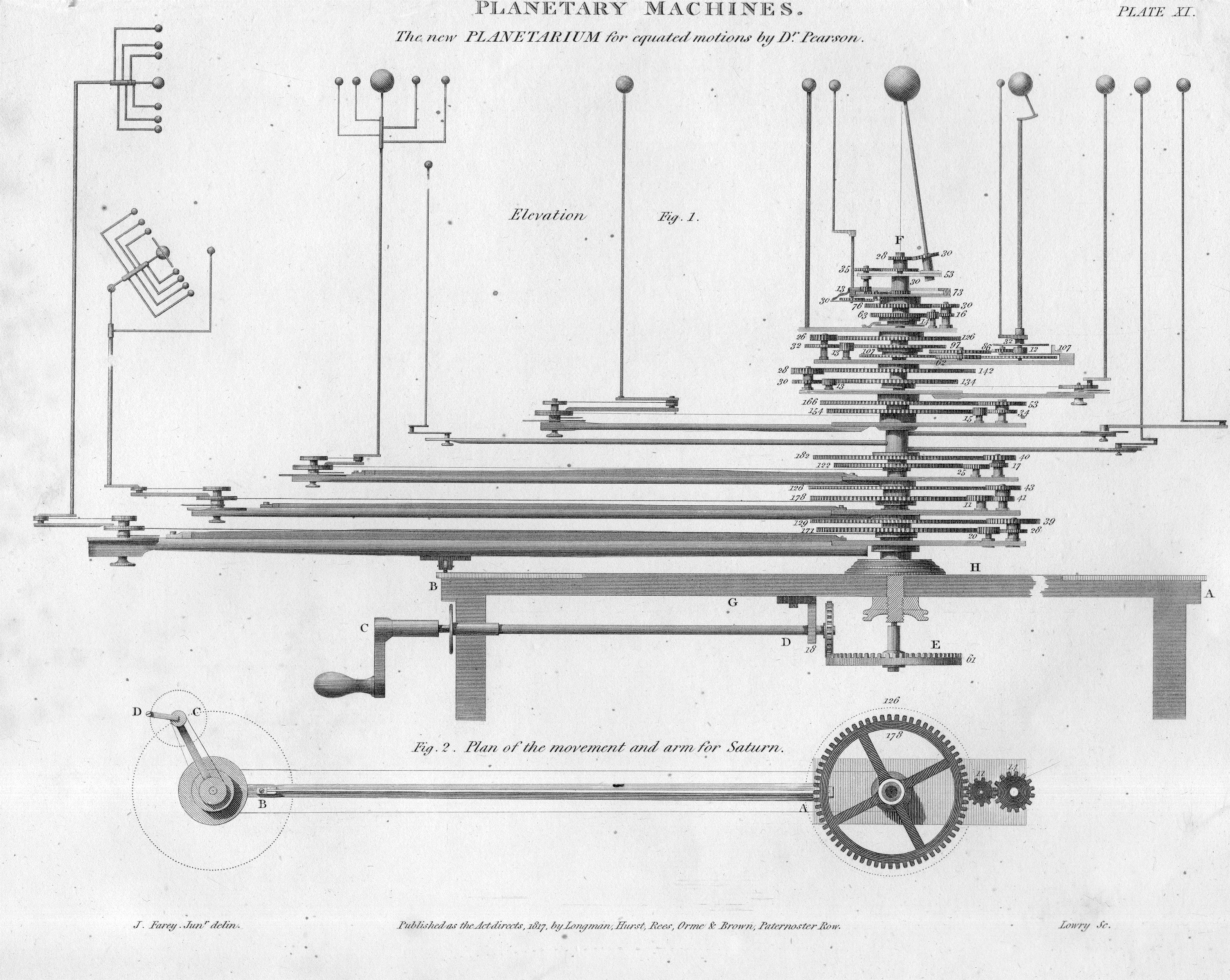
    This is the second Pearson instrument, the heart of  a beautiful orrey created by William Pearson (1767-1847, and one of the founders of the Royal Astronomical Society) as found in the 1817 volume of Rees, and features the main gearing for a mechanical display of the functioning of the Solar System:
    Planetarium916

    This is the detail from the following, full-length version, which is 8″x10″–so there’s a fair amount of detail in a limited field:
    Planetarium914


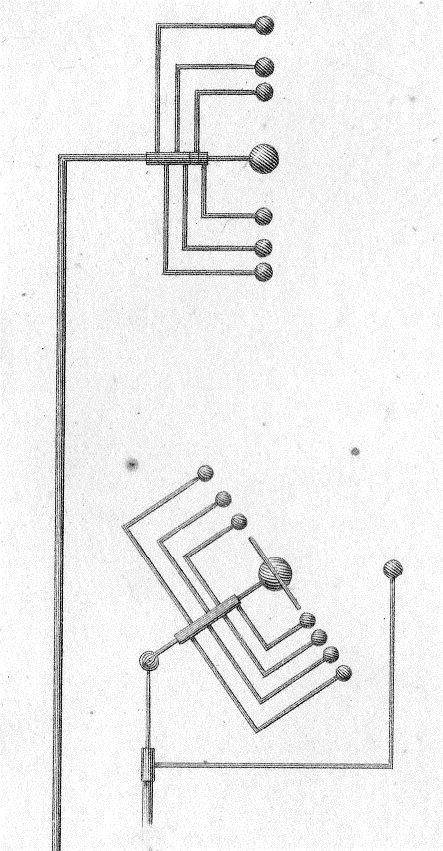
    And the beautiful Dadaist detail of Jupiter and Saturn:
    Planetarium915


  • A Standardized WWI U.S. Ship Launch, 1918

    JF Ptak Science Books   Quick Post

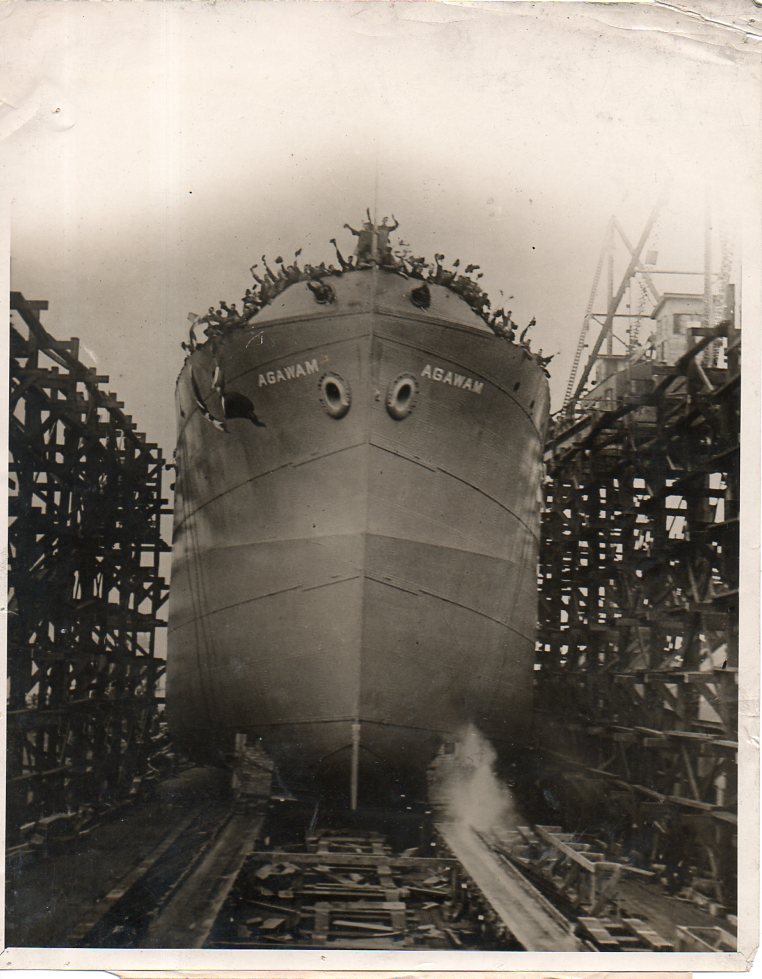
    WWI Photo--ship launch128[A detail from:]

    WWI Photo--ship launch127

    This great photograph was made in 1918 and stamped on the reverse “Photo by Central News Photo Service” of NYC. It shows the launching of the U.S.S. Agawam, the first standardized ship launched by the U.S. Navy (according to a New York Times article for May 3, 1918, (“FIRST FABRICATED SHIP; The Agawam, Forerunner of Standardized Fleet, to be Launched Today”).

    The image reminds me in a way of the launching of the Dreadnought, which in some ways was another beginning of WWI, or at least of the naval race right before the war and of the competition for naval superiority between the Germany and England.  And I remember how King Edward VII, rickety with illness, climbed the stairs to deliver his speech, and to break open the bottle of Australian wine against the Dreadnought‘s bow. Except that the bottle didn’t break on the first attempt–a somewhat forbidding element, except that it was her bow that Dreadnought used to sink a German sub.  The ship revolutionized naval technology and Germany played catch-up to it (and in effect an entire new class of battleship) right to the beginning of the war.  Less than 15 years later, the Dreadnought was sold for scrap.  

    ·Posted by :

    ·in:

    —

  • Battle Tech–Armored Vehicles, WWI

    JF Ptak Science Books  Quick Post  

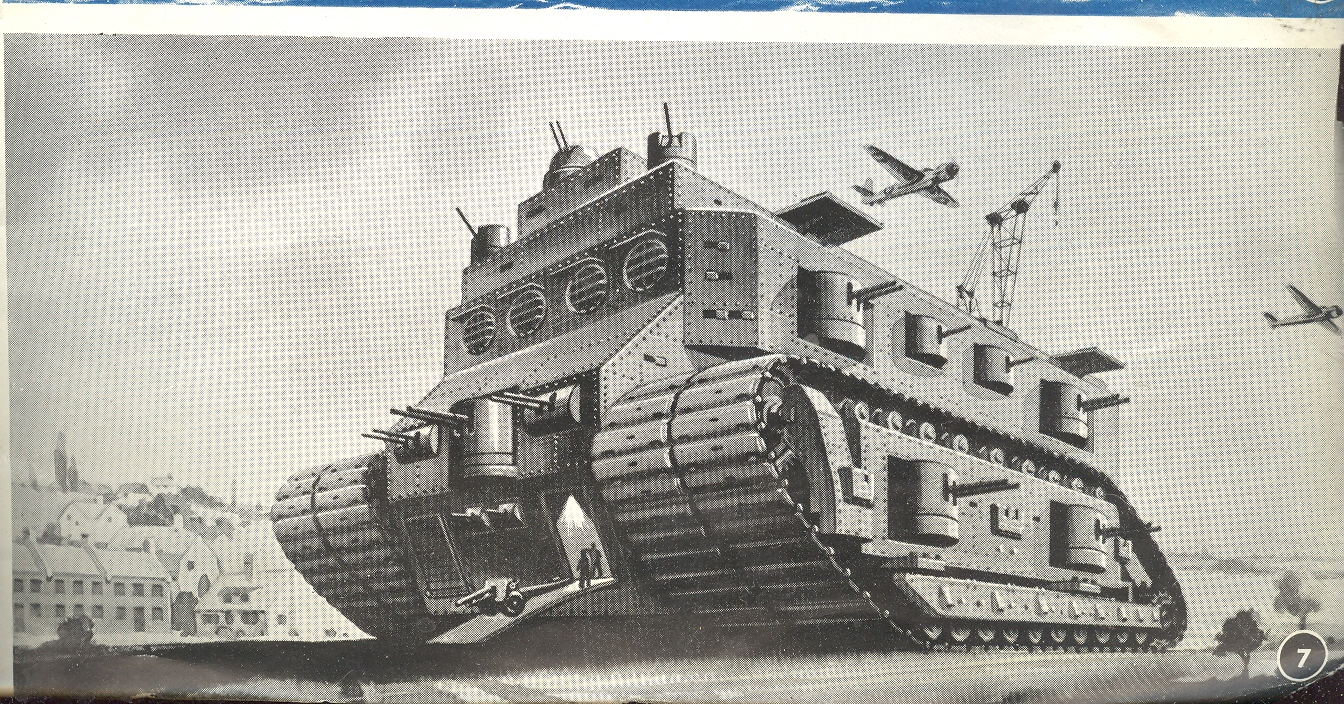
    I’ve written earlier in this blog on fabulosity in land battleships though not so much about the real thing.

    • For example, in “Movable Maginot: a Feast of Morbidly Techno-Gigantism”,  https://historyofideasblog.com/thesciencebookstore/2012/12/moveable-maginot-a-feast-of-morbidly-techno-gigantism.html, as well as others:

    000--win--land tank

     [Also “moveable maginot” is a phrase that does not show up online, except for here.]

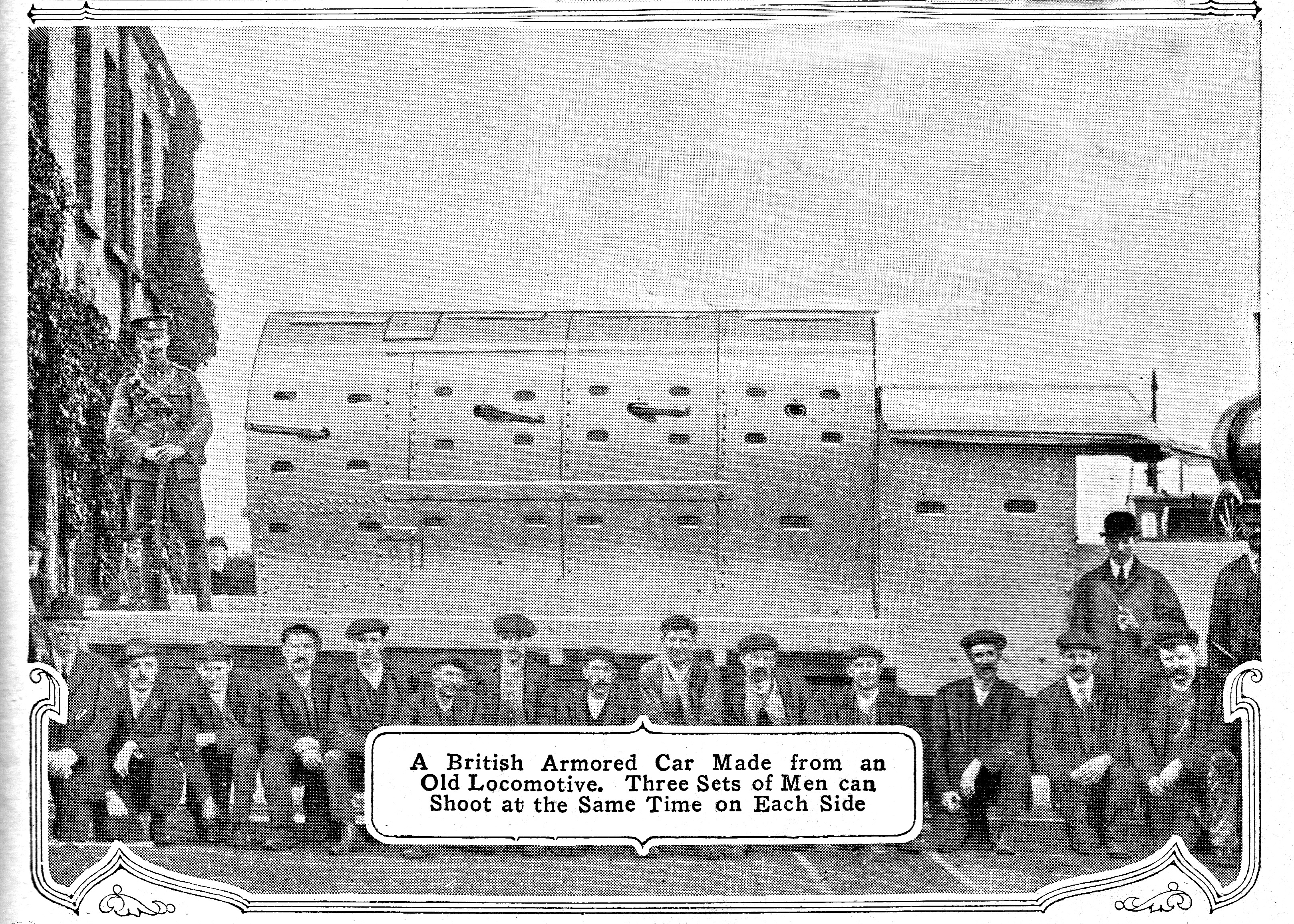
    Moving away from the mega-behemoth of imagination, let’s have a look at this loco-tank as it was contrived and constructed in 1916, with the photograph appearing in Popular Mechanics Magazine for November, 1916 (midway through WWI).  

    WWI Project armored loco272

    ·Posted by :

    ·in:

    —

  • A Peek into the Very Near and Short-Lived Flying Future, 1928-9

    JF Ptak Science Books    Quick Post

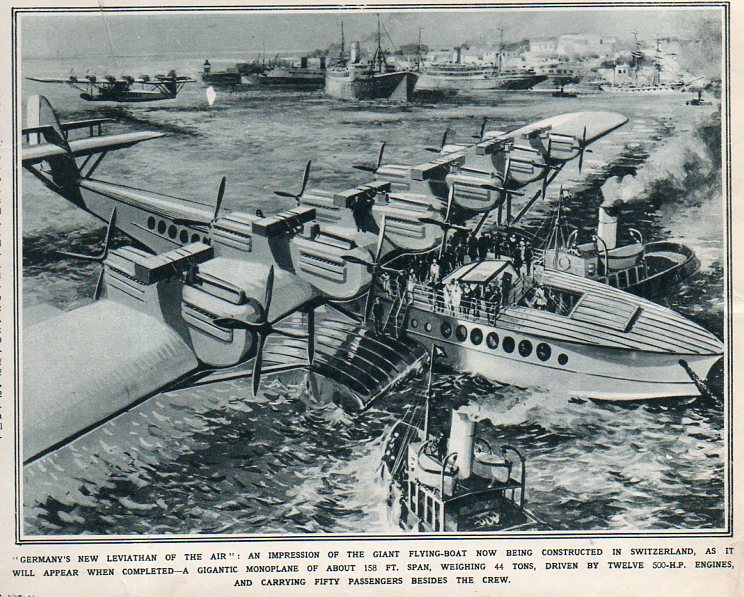
    AIRPLANE GIANT964

    This mammoth German aircraft appeared in the pages of the Illustrated London News on 31 March 1928, a sneak-peek into the future. It may have been a shock to British aviation sensibilities–it was supposed to dwarf the largest such plane that the Brits had (the Calcutta) : 158′ to 93′ wingspan; 44 tons to 9 fully loaded wright; engine power, 6000hp to 1500hp, with  twelve very impressive 500 hp fore-and-aft engines.  

    The plane made an appearance in real-life in the air in July 1929 as the Dornier Do X,  the largest and heaviest flying boat in history, with pretty much the stats that appeared on it a year earlier. (Stuff happens) and the Dornier is broken up for scrap by 1937.  


  • The Grande Lux of the Brooklyn Bridge

    JF Ptak Science Books  Quick Post

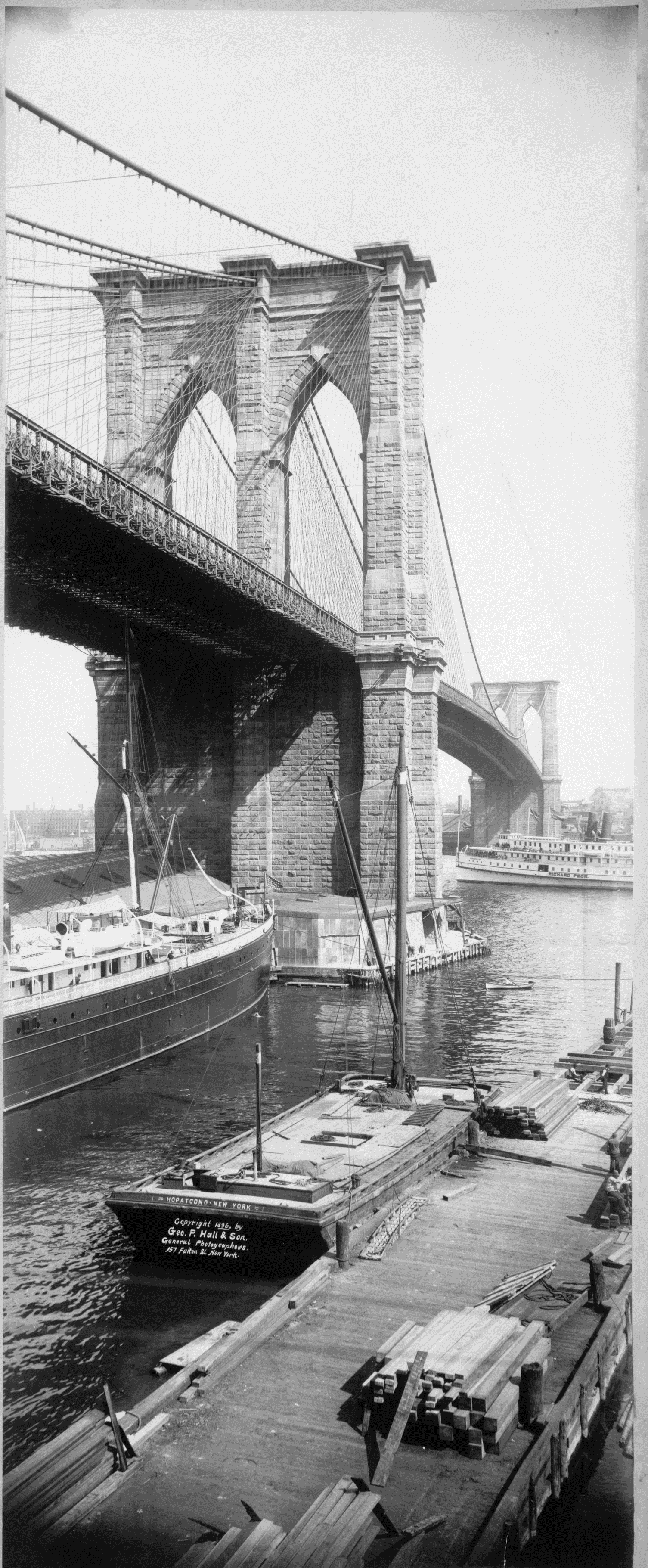
    Brooklyn Bridge Tall

    Brooklyn Bridge, 1896. 

    I find this a very moving image of the bridge, encompassing the small bit of uneven workmens’ construction material in the bottom/foreground of the image, which for me was it center, and which caused my eye to scan from there to the top of the tower.  The full mega-file of this beauty is a vertical panorama 40″x12″, and it seems as though you could push this to at least 60″x18″, and perhaps a full double to 80″x24″–it is impressive just seeing it on a monitor this big–in the Grande Lux tapestry version, I am sure it would fantastic.  [Source, Library of Congress, http://www.loc.gov/resource/cph.3c04634/] 


  • A Massively Geared “Tricycle” of 1879

    JF Ptak Science Books  Quick Post

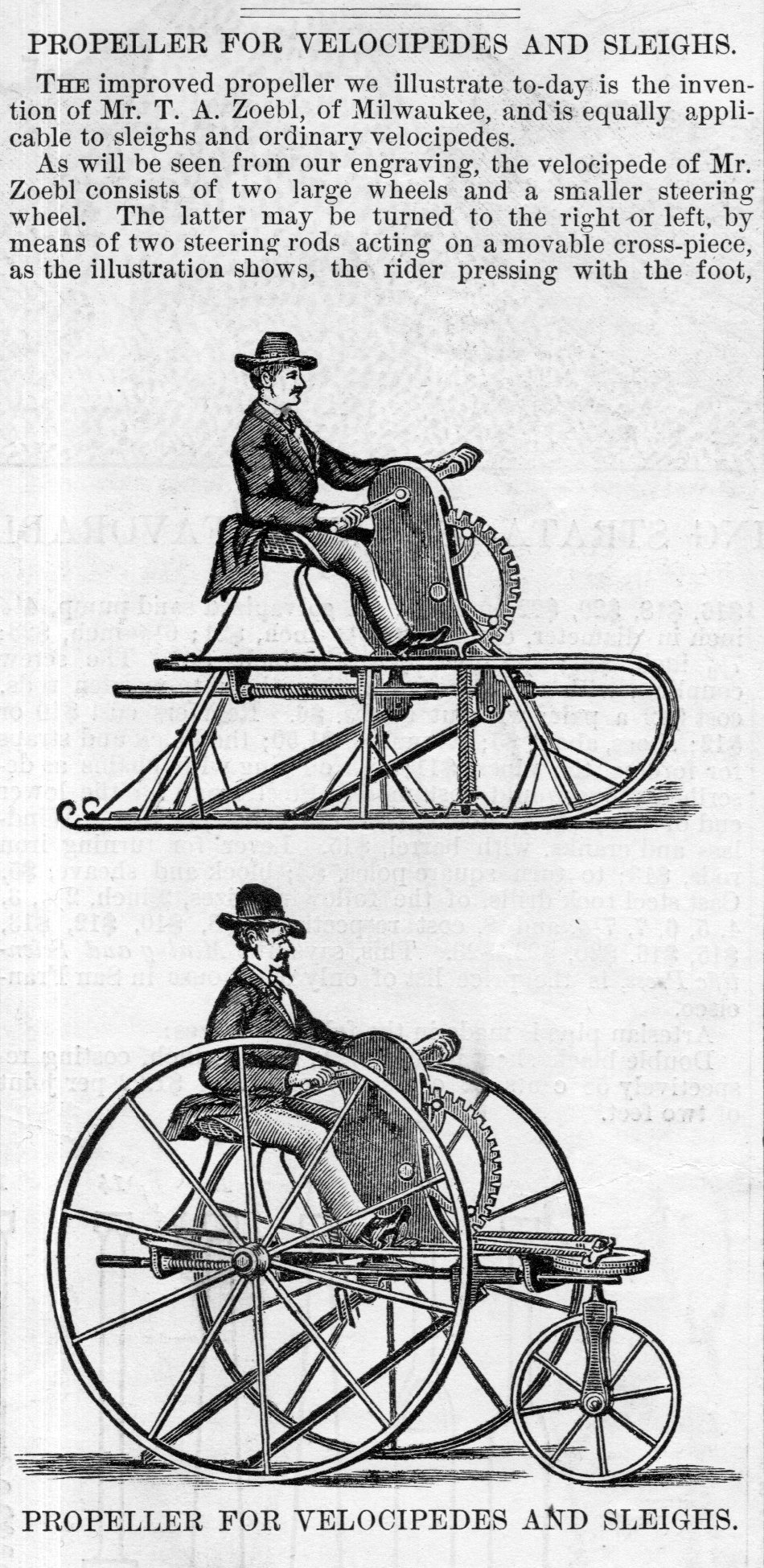
    Propeller bike266

    Looking for illustrations of an enormous horse-drawn rangefinder in volume 7 (1879) issue of the Scientific American Supplement I came across these two unusual images of  a hand-powered sleigh and “bicycle”. The gearwork looks to be about the size of a modern bike wheel, perhaps even bigger–it certainly weighs more, and could weigh more than an entire (good) bike. I don’t really understand how the energy is transferred but it seems to be that the gear drives a toothed rod back and forth that reacts with a springed mechanism that in turn moves the wheels.  It is a huge gearwork, but that vehicle looks awfully big and not-so-mobile to be driven by that and the springs.  On the sleigh the gearwork seems to push a plane of some sort to push the sleigh forward. Even in 1879 there were better and simpler designs for bikes…I don’t know what to say about the sleigh….

    From the SA:


  • Smell-o-Rama without the Rama

    JF Ptak Science Books  Quick Post

    “A true poet does not bother to be poetical. Nor does a nursery gardener scent his roses”Jean Cocteau.

    Maybe so and maybe no, and if not, maybe they should…especially for the poets.  But this come from the writer with only the memory of smell for an olfactory sense.  

    I looked around without success in Walter Benjamin’s Arcade Project to find something about this image, which turns out to be a scent dispenser. These buggers were quite popular (at least in France) and used to be hung at entrances to popular venues where patrons could scent themselves with this-and-that for a few pennies. It seems positively Terry Gilliam-ish to me, but that’s what it was.  

    Scent dispensers260[Reprinted in Scientific American, 1895–sorry, no exact issue was recorded.]

    ·Posted by :

    ·in:


  • A Chain but Not a Chain (?) in the Last Judgment (1512)

    JF Ptak Science Books  

    Chain236

    This interesting image, “The Last Judgment”, appeared as a woodcut in a book by Ricius (Rici, Rizzi, Rizius), Paul(us) (Paulus Israelita), Freiherr von Sprinzenstein (1530 Reichs- u. erbländischer Freiherr, 1480-1541), Eruditiones christianae religigionis plurimum utiles & cuilibet christiano ad modum necessarie, which was printed in Paris in 1512. The author was a German Jew who converted to Christianity and wrote and studied a form of Christianized kabbalaism, a philosopher, translator, and a physician who was the doctor to Emperor Maximillian I.  What attracted me in all of that in this image had nothing to do with any of this–what I’m seeing here, wrapped around the condemned entering Hell in the mouth of the beast, is a chain.  The unhappy group standing in the jaw of the beast, cowering against a very annoyed Archangel Michael, are being collected with the “chain” and pulled downward by a hell-beast.  

    It is an odd object, and I’m not convinced that it is a chain, though it does look like one.  The issue with chain is that outside of being worn for defense and adornment (for centuries) steel chain didn’t appear in the west in extended use unto the 19th century.  There is a sketch of chain in a Leonardo sketch, but a popular use of a chain really doesn’t exist for another two centuries.

    Again, this item does have a torus-like shape and does look like a chain of some sort, but that doesn’t necessarily make it one.  Also I’m not familiar with its symbology if it isn’t a chain, so I’m a bit out of my element. I’m glad though to share this should someone out there know what it is, or isn’t. It is certain though that it is odd. 

    UPDATE:

    A friend on facebook provided an interesting Bible quote on chains/Last Judgment:“For if God spared not the angels that sinned, but cast them down to hell, and delivered them into chains of darkness….” 2 Peter 2:4.

    Also there are:

    And the angels who did not keep their positions of authority but abandoned their proper dwelling–these he has kept in darkness, bound with everlasting chains for judgment on the great Day.–Jude 1:6

    And I saw an angel coming down out of heaven, having the key to the Abyss and holding in his hand a great chain.–Revelation 20:1


  • WWI Endgame Dataviz, 1918

    JF Ptak Science Books  Quick Post

    DATAVIZ Bombs230

     I found this interesting graphic in the Illustrirte Zeitung (Leipzig) showing the production of bombs in Germany for last half-year of WWI. The aviator seems happy enough, at least for the readers of the magazine, reassuring that something was goign on in the defense of the country, even though the writing was pretty much on the wall when this image appeared in late August, 1918, six weeks away from the end.  It is a small graphical display–about 2.5×4 inches or so–and it is a congratulatory message on the massive amount of munitions that were produced from January-July 1918.  This was one among many that just wasn’t enough.  

    DATAVIZ Bombs229


  • Streamlined Mini-Monorail, 1935

    JF Ptak Science Books   Quick Post

    This terrific proposal for a miniature, semi-individual monorail appeared in Popular Science Monthly for April 1935:  

    Monorail226

    And the text, which makes you wonder why something like this would be necessary, at least for the version of the vehicle in the interior pages.  The cover version at least accommodates eight passengers, perhaps, though there’s an awful lot of metal around them.  The interior version packs four in its bubbly self, and given the amount of effort that would go into powering and building the vehicle to move around a restricted number of people–though perhaps you can say the same about cars, and then some.  

    Monorail227