A Daily History of Holes, Dots, Lines, Science, History, Math, Physics, Art, the Unintentional Absurd, Architecture, Maps, Data Visualization, Blank and Missing Things, and so on. |1.6 million words, 7500 images, 4.9 million hits| Press & appearances in The Times, Le Figaro, Mensa, The Economist, The Guardian, Discovery News, Slate, Le Monde, Sci American Blogs, Le Pont, and many other places… 5000+ total posts since 2008.

Category: Technology, History of

  • NCC-1701 Rotating Dirigible Hangar, 1935

    JF Ptak Science Books   Quick Post

    Aviation dirigible162

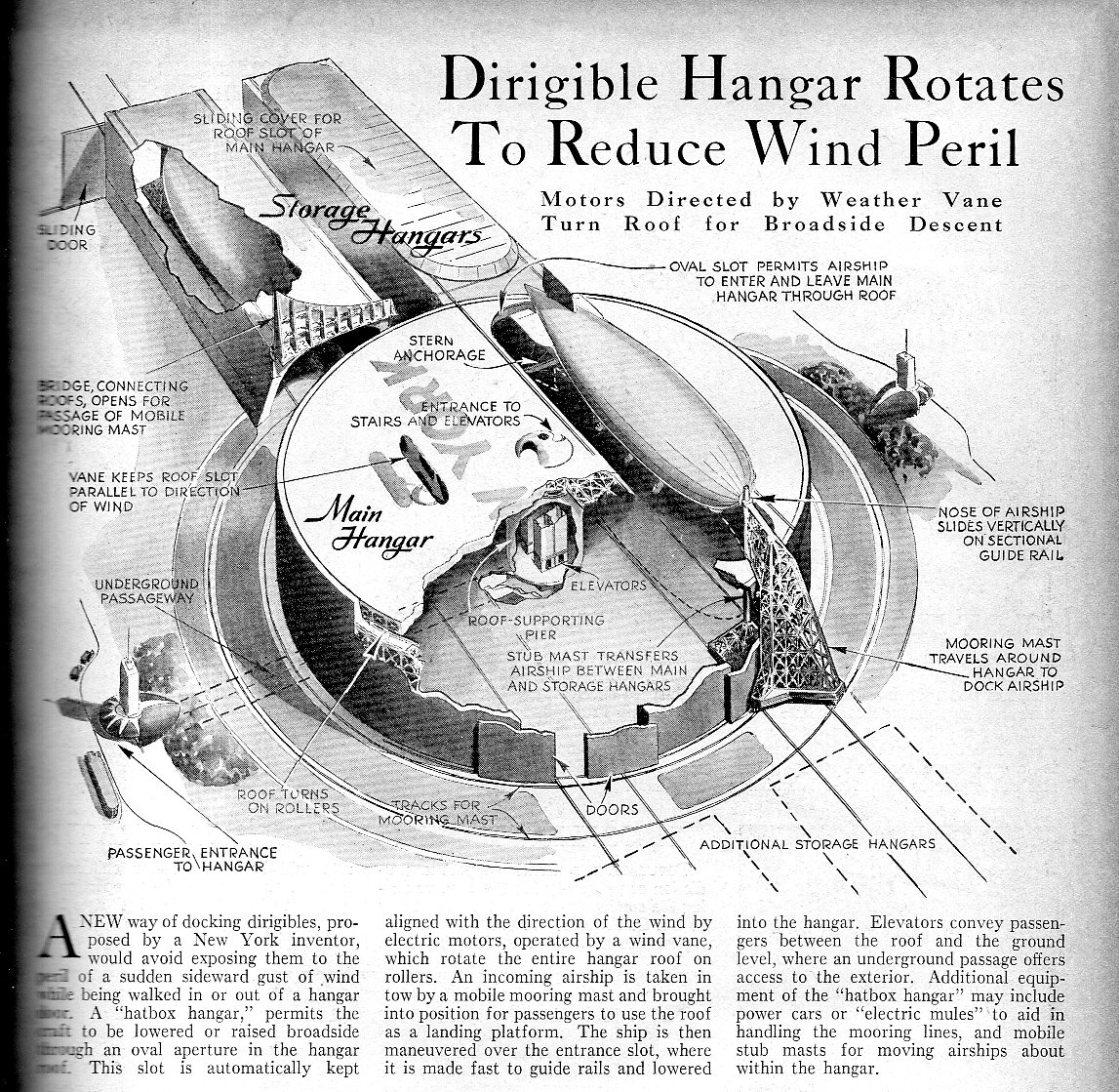
    I’ve seen a number of “found” USS Enterprise outlines in antique images recently: this one occurs in the May 1935 issue of Popular Science Monthly. This image shows a proposal for a versatile hangar for dirigibles: the airship could moor itself to a traveling mooring mast that looks like it could do a 360 on tacks around the landing area, and then brought down to a landing on the circular pad, which can be lowered to place the dirigible in an attached hangar.  It looks as though multiple hangars could be attached to this complex.  

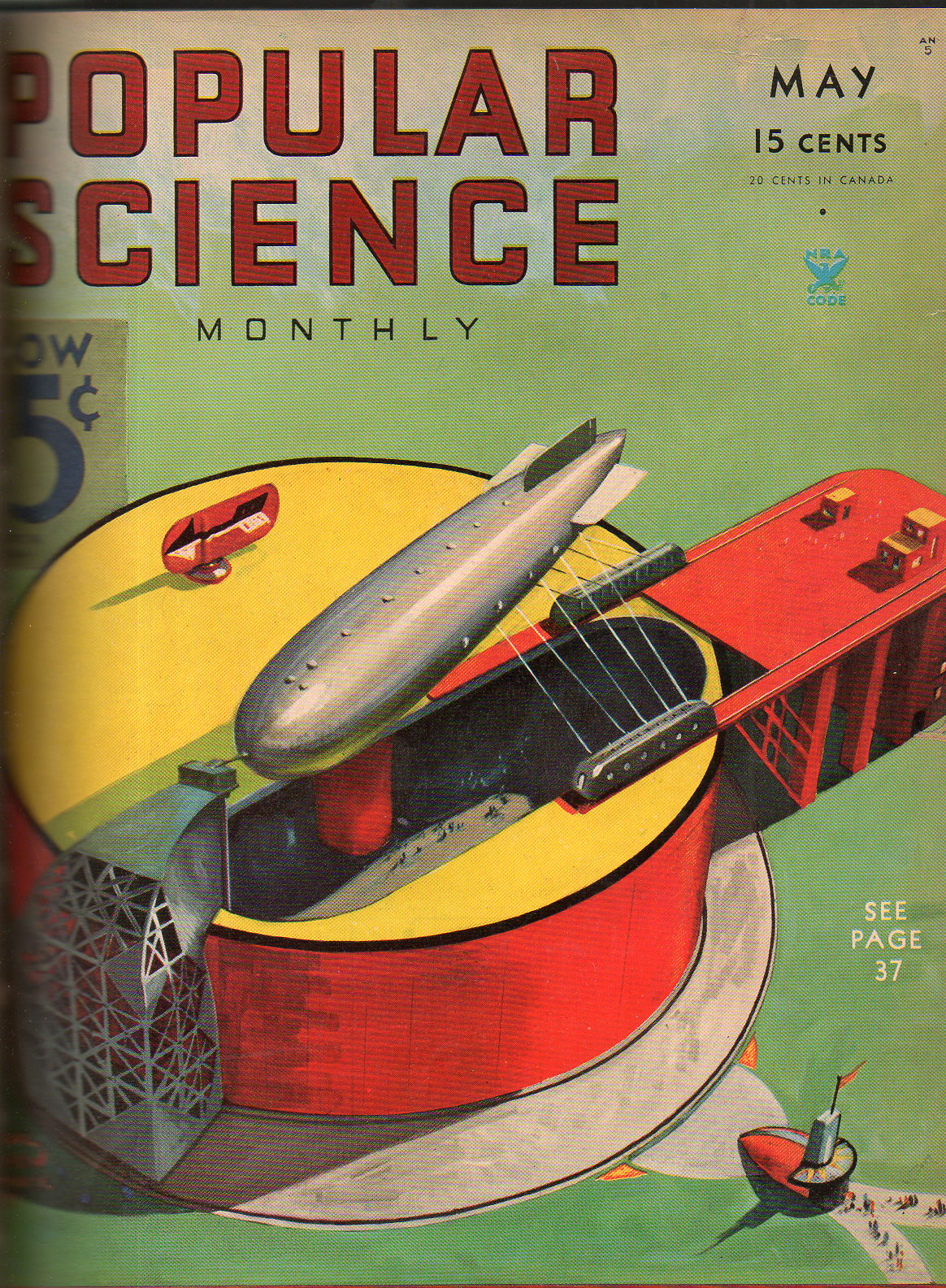
    Here’s another view, from the cover–a non-“found” NCC-1701 design:

    Aviation dirigible163

    The days of the great airships were pretty numbered by this point, its future only 600 days away or so from crashing and burning along with the Hindenburg in May 1937. 

    • For other related posts on this blog just enter “dirigible” in the Google search box at upper left. 

  • Beautiful Engineering Ad, 1876

    JF Ptak Science Books  Quick Post

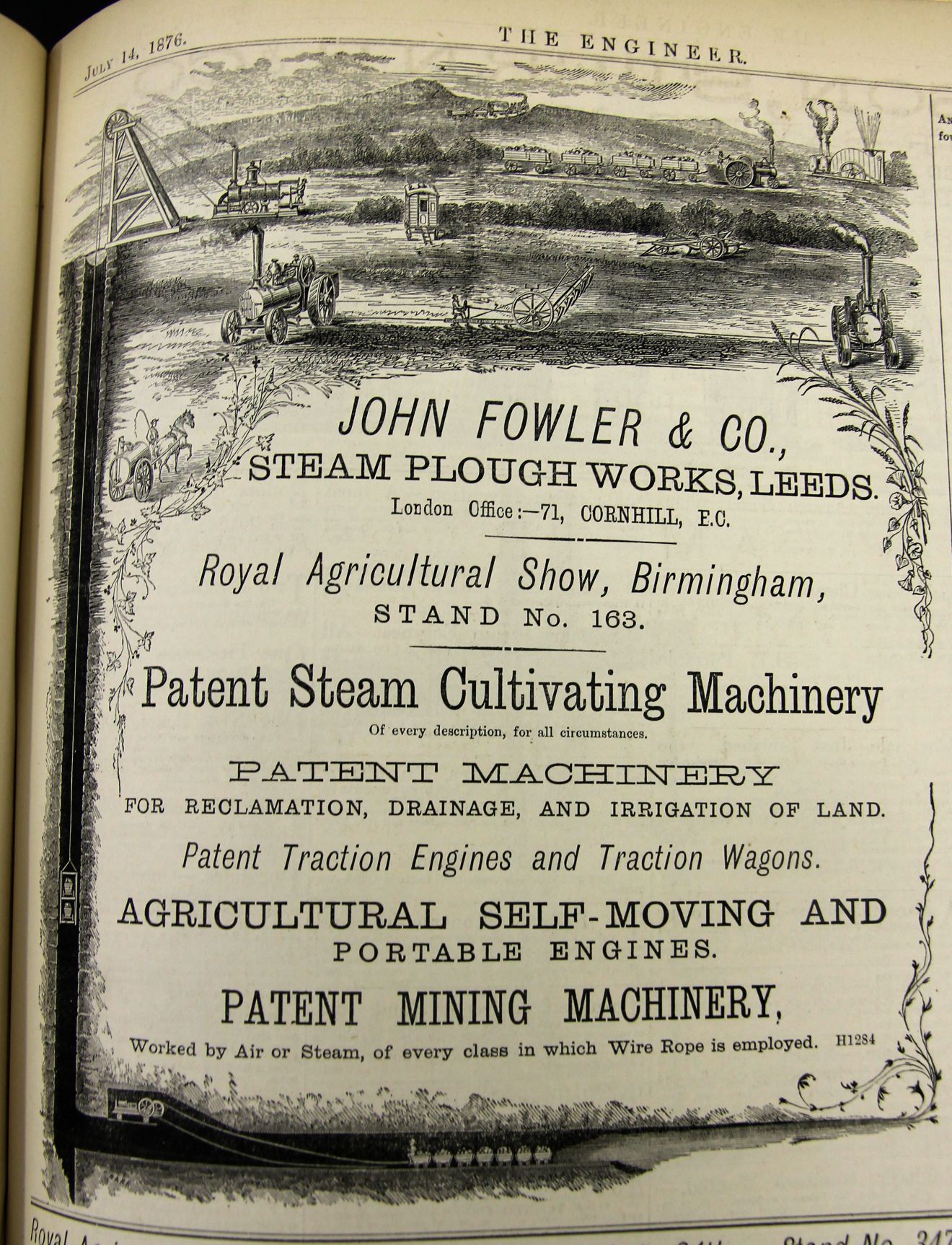
    This beautiful ad appeared in the middle of The Engineer, published in London on 14 July 1876. John Fowler & Co. sold all manner of steam machinery for agricultural and mining purposes, as we can see in the little drawings that illustrate the ad–and particularly the mining scene, which shows the Fowler machinery above and below ground. The original ad is about 5″x7″–the little mine shaft at bottom is only a few millimeters.

    ENgineer Ad 1876

    ·Posted by :

    ·in:


  • A Map of Fordlandia: the “Drama of Transportation”, 1932

    JF Ptak Science Books    Quick Post

    FORD_2_155

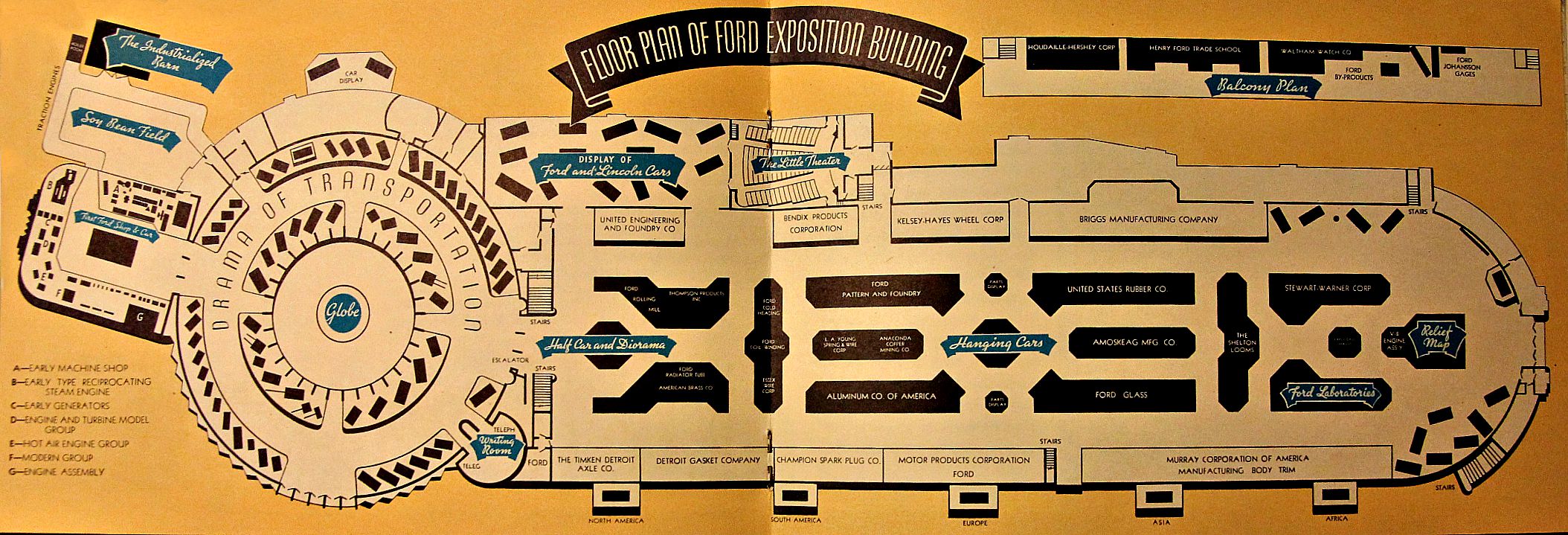
    The “fair” in this pamphlet, Ford at the Fair, was the Chicago World’s Fair of 1932, and it was a souvenir for the visitor to the Ford Motor Company pavilion.  Well, the building–pretty in profile, but odd/weird in plan–held other exhibitors whose business was related in support of Ford (Alcoa, Anaconda Copper, Bendix, etc.), and displayed in a singular turnaround the Cars as Consumable Products. (Remember that world’s fairs such as this were still mostly displays of technology and industry and business, so you were more likely to see a Meat Pavilion or Heinz Products then than to see curious rides and historical whatnots in present incarnations.) 

    This unusual Bavarian trophy/hunt display of a couple of Fords in the middle of the floor plan–which says simply “hanging cars” on the map looked impressive and a little alien-esque:

    FORD154


    And the map of the pavilion, which once you get over the possible Renaissance-like plan, and you pull back a little bit, it takes on a bit of a profile of a tank-like dragster:

    Ford _3_

    In any event, this was a glorification process wrapped around a celebration of old-timey industrial celebration, presented in gleaming metallic greens and blues, and rubber, and gasoline, and oil, and hope. 

    Here’s an interesting video showing the Ford pavilion at the fair, found at youtube.com:  


  • The Straight Series: Looking Straight Through a Vickers Gun Sight, 1916

    JF Ptak Science Books   Quick Post

    WWI Project MAchine gun sighting detail


    WWI Project Machine gun sighting


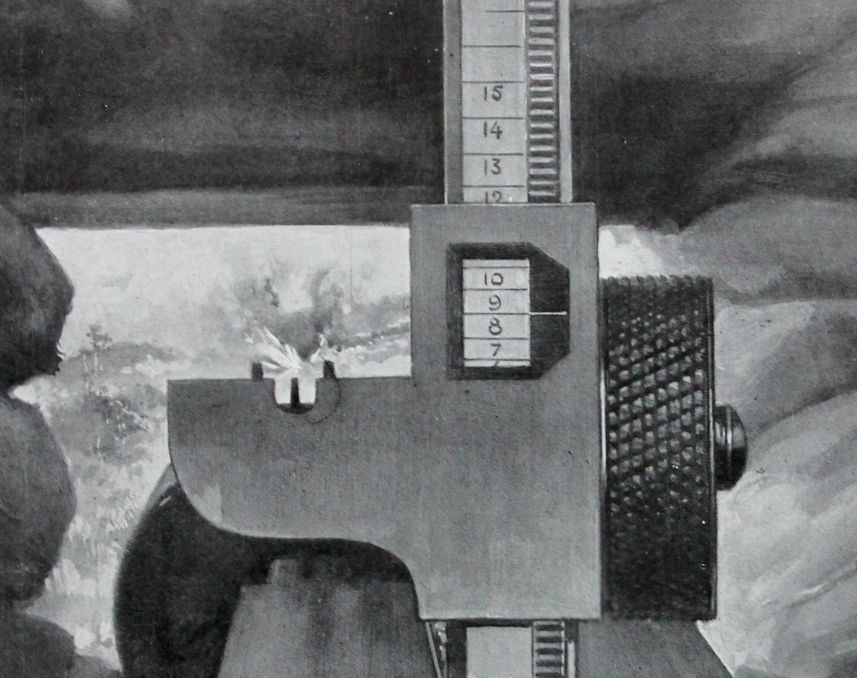
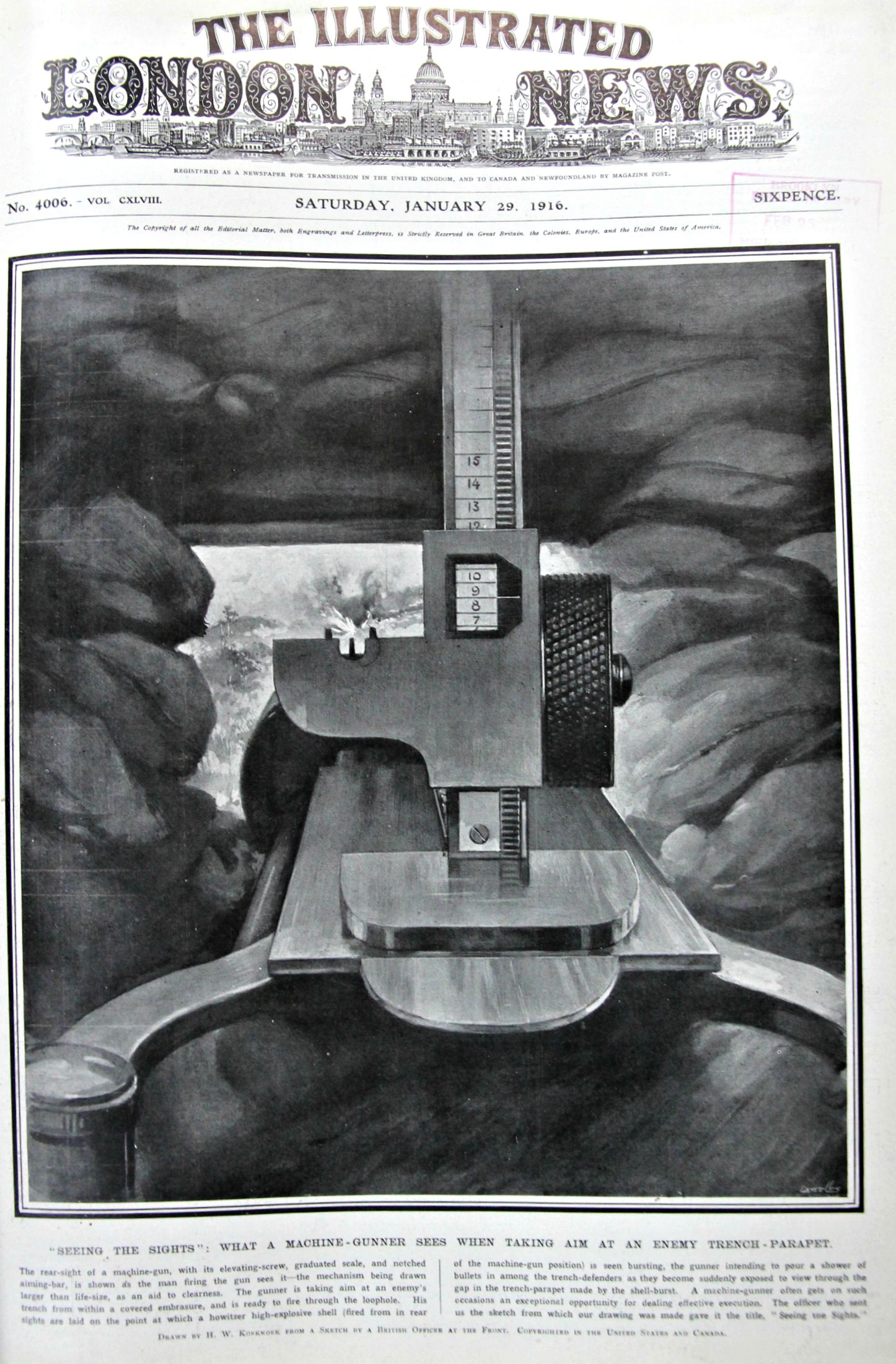
     There are a number of posts on this blog that have no real category, though they are joined by one simple principle–they look “straight” onto something, like straight up,  straight down, and straight through.  It isn’t necessarily obvious, but these points of view are really pretty scarce in the history of antique prints. (Since there is no category you can search “straight” int he Google search box at left for other poss.)  In this case, above, we have the gunner’s eye view of the working of a machine gun, a great image published by The Illustrated London News in 1916.  

    The machine gun type isn’t stated but I figured that it must be a water-cooled Vickers .303–from this vantage point your face wouldn’t be more than a foot from the sight; the curved bits at front are hand grips, and the “trigger” (an oval button that you press in to activate the gun) would be between those two curved elements and just below–I think that you could’ve seen the trigger if it was drawn in, though for whatever reason it is not there. In any event those hand grips are less than 9 inches apart, so you can tell now that the view of the machine gun is from very close proximity. 

    Here’s an unexpected find: a video of shooting a Vickers (without sighting mechanism) at nearly this exact perspective,  found on youtube:

    ·Posted by :

    ·in:

    —

  • On Sharpening a Millstone, 1869

    JF Ptak Science Books  Quick Post

    Sci Am Millstone sharpener

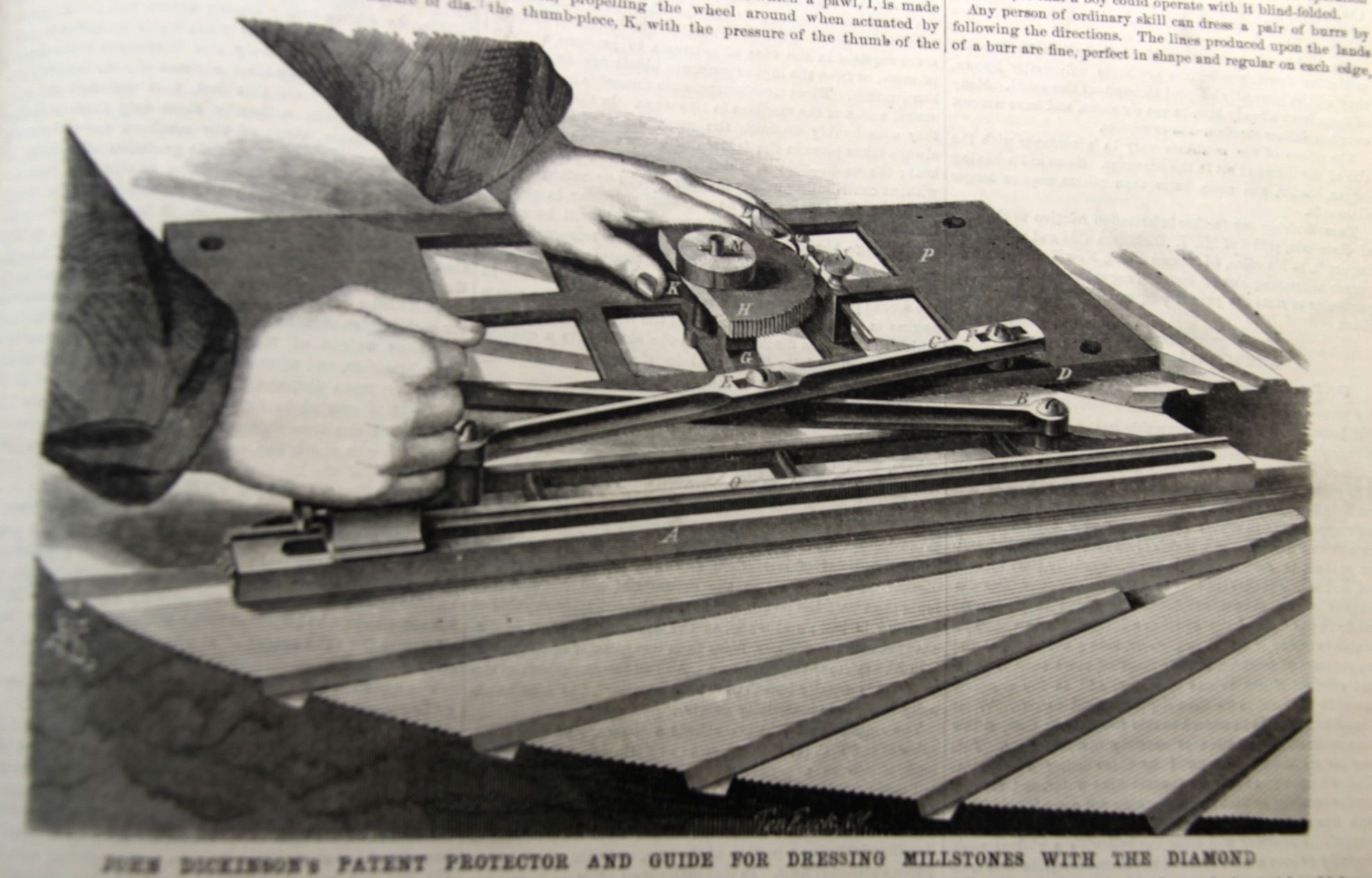
    I came upon this interesting image in a wrist-bending/breaking volume of Scientific American, the 27 November 1869 issue (page 337), featuring something I never gave any thought to–a millstone sharpener. Once seen it makes perfect sense to me to keep the channels of the stone in good repair, and John Dickinson created this lovely apparatus to do just that, using industrial-grade diamonds on the grinding surface. The device won a medal in its presentation at the 1862 world’s fair in London, and appeared in ads from that year in the agricultural-world’s equivalent of the Scientific American, the American Agriculturalist.  The exact illustration was used a few years later in an article on Dickinson’s tool in The Manufacturer and Builder (volume 3, 1871, page 59), though this seems to have been a common practice, as I’ve noticed many times that SA reproduced foreign images without attribution.  In any event, it was a smart invention, though the clientelle for it sounded as though they needed a bit of a “sell” for the sale:

    “Millers who may be unacquainted with the nature of diamonds or their durability, it is reasonable to suppose, will be somewhat skeptical and incredulous as to the practicability of using them successfully as an economical application in dressing the lands of millstones.”

    ·Posted by :

    ·in:


  • An Automatic Page Turner, 1887

    JF Ptak Science Books  Quick Post

    Automatic page turner153

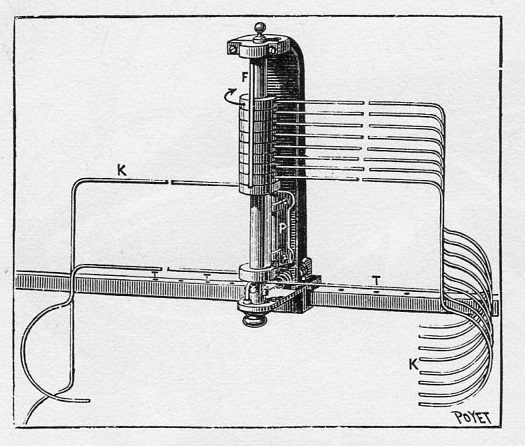
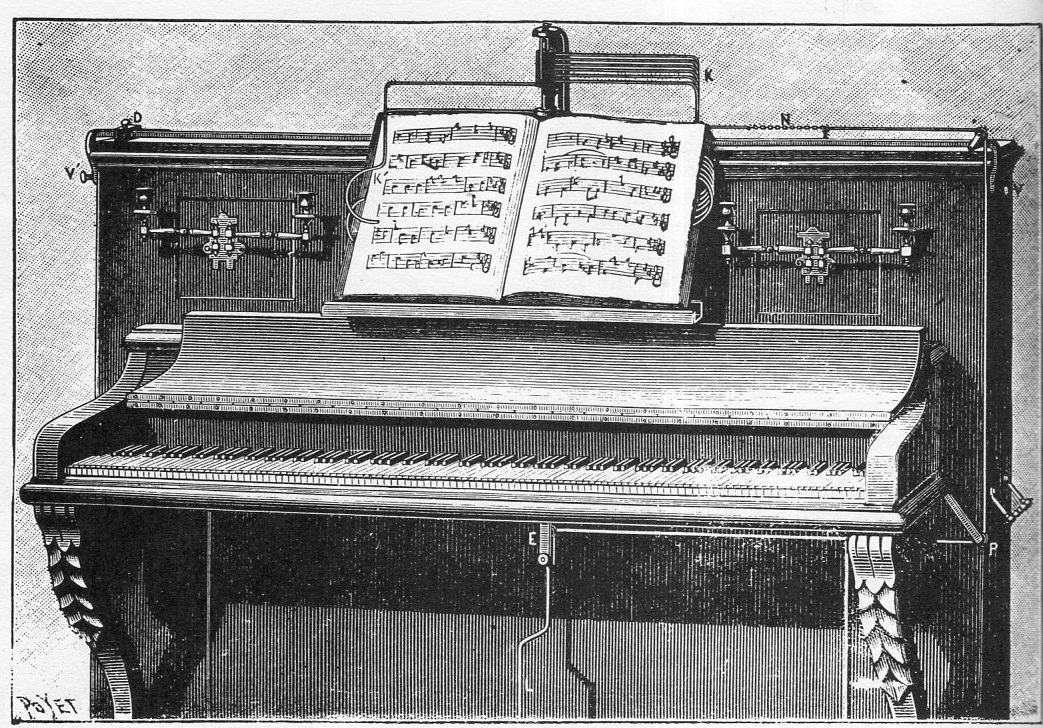
    Augustin Lajarrige (“un mecanicien de Marseille”) devised this ingenious mechanism, an automatic page turner (“tourne-page automatique”), in 1887.  It was made for someone playing the piano–the pianist would advance the pages back or forward by simply moving the bar with the leg left or right.  It is a simple but ingenious and elegant idea.  

    Automatic page turner152

    La Nature: Revue des sciences et de leurs applications aux arts …, Volume 15, page 157, 1887.

    [See: La Nature, here: ]http://tinyurl.com/px4zl2b]

    ·Posted by :

    ·in:


  • Victorian Non-Near-Steampunk Inventions (and Embellishments of Need)

    JF Ptak Science Books Post 733 (from August 2009) expanded  Blog Bookstore
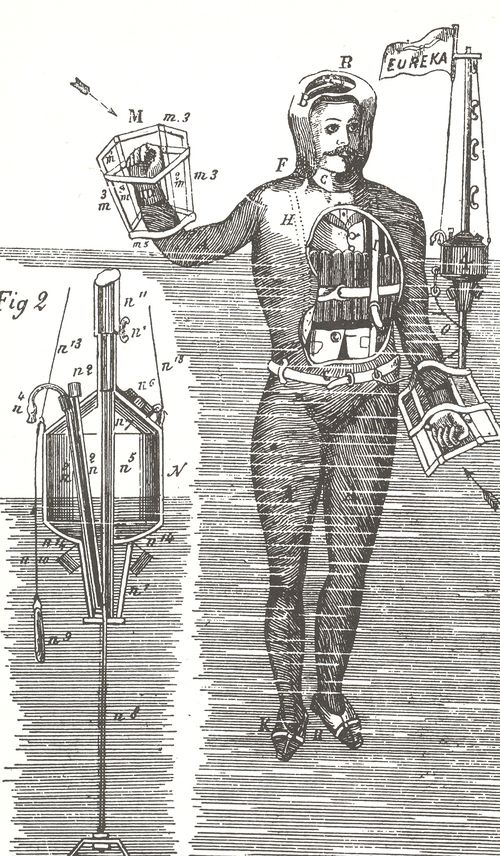
    ===blog==aug 28==floating device


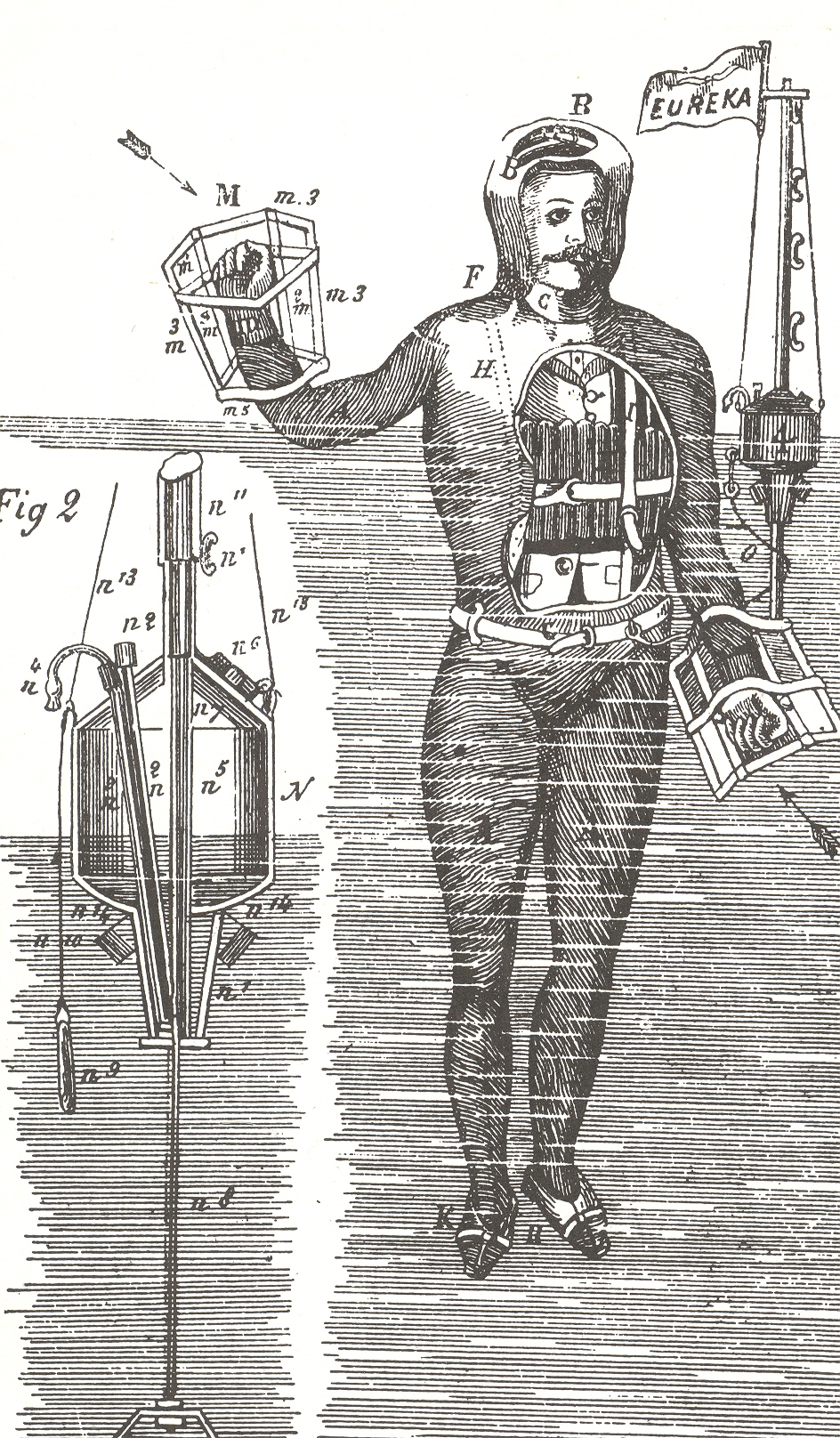
    [Source: Scientific American, July 11, 1869; also [The full description of the apparatus (as seen in the American Phreonological Journal, September, 1869) can be read in the continued reading section, below.]

    And so in 1869 came this odd Victorian appeal to a frosty blend of survivability and entertainment.  The fellow in this woodcut was decked out in the very latest lifesaving apparatus for making one’s waxed-mustachioed way through disaster. The surviving member donned a very resistant, very heavy suit made of rubber, including a helmet (of some sort), all of which was made to make the wearer impervious to cold or heat./ Under the rubber suit was a floatation/buoyancy undersuit which seems to fit snug around the wear’s waistcoat.  It looks as though the whole of the suit would increase the mass of the wearer by something like one-third.  Most intriguing here is the little companion buoy (complete with a “Eureka” flag), which was outfitted with water, food, “reading material so that he may read the news to pass the time of day”, cigars, a pipe and tobacco, plus torches.  Evidently, this was to keep the person afloat, alive, and entertained for days on end. 

     [Source: Scientific American via Google Books]

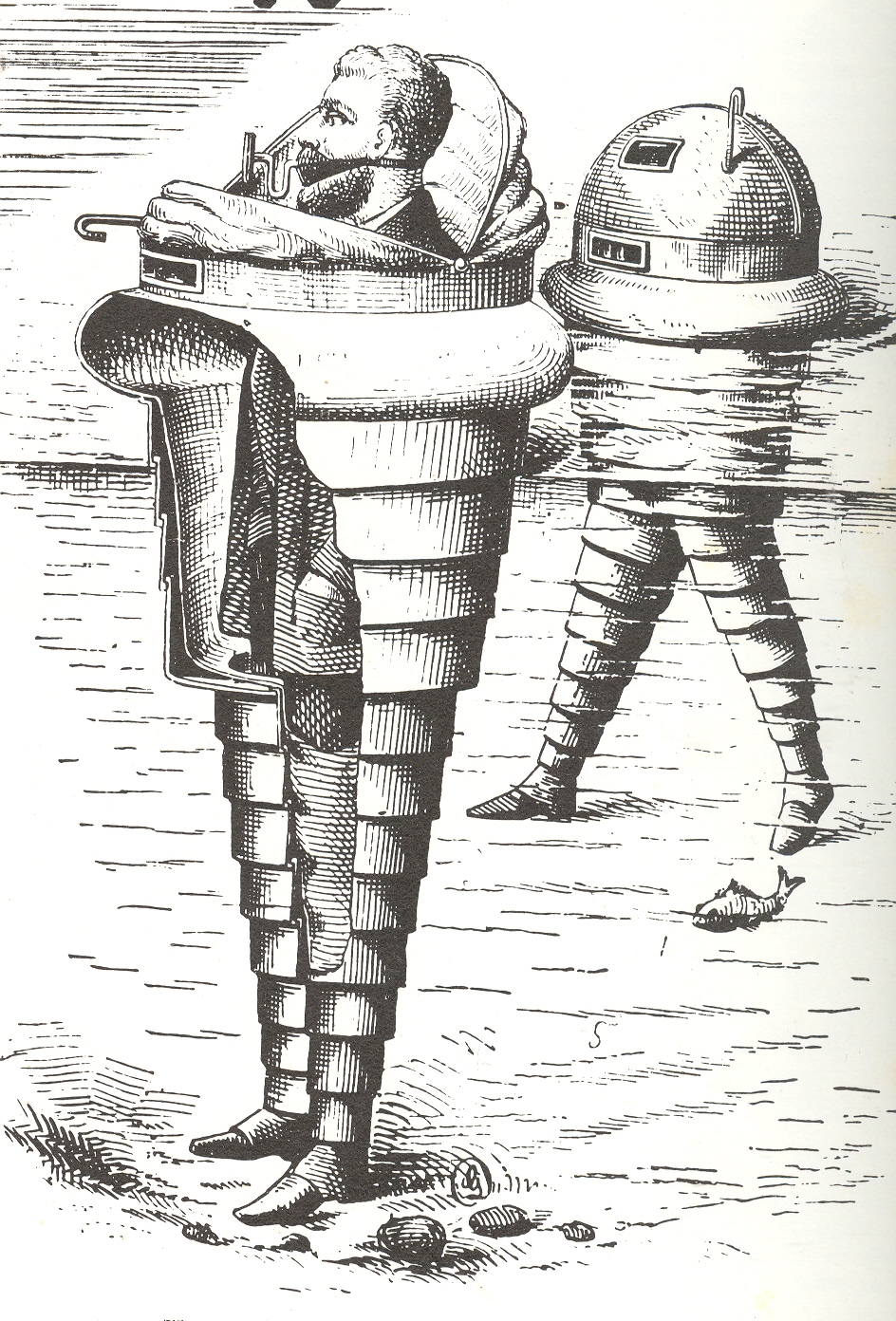
    This magnificent 1877 non-SteamPunk telescoping india-rubber screw, invented by Traugott Beek (of Newark N.J.), is supposed to be waterproof, so that the wearer could put it on over evening clothing (as is the case in this illustration) and enjoy a spin in the surf before contemplating other Victorian nighttime reveries.  It was said that the wearer could stow away a month’s worth of food in the suit, somehow–I don’t see how this could be, especially if there was a month’s worth of water, which would like fitting in the suit with another (larger) person.
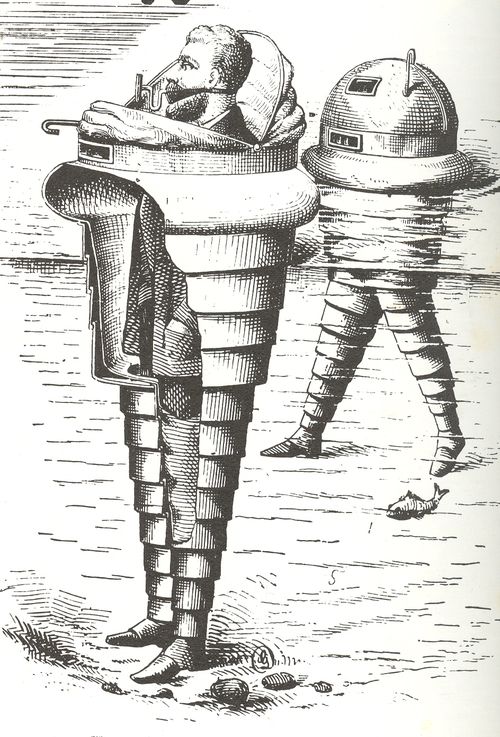
     

    ===blog==aug 28==fswimming device

    [Source: Scientific American, May, 1877, issue #18.]
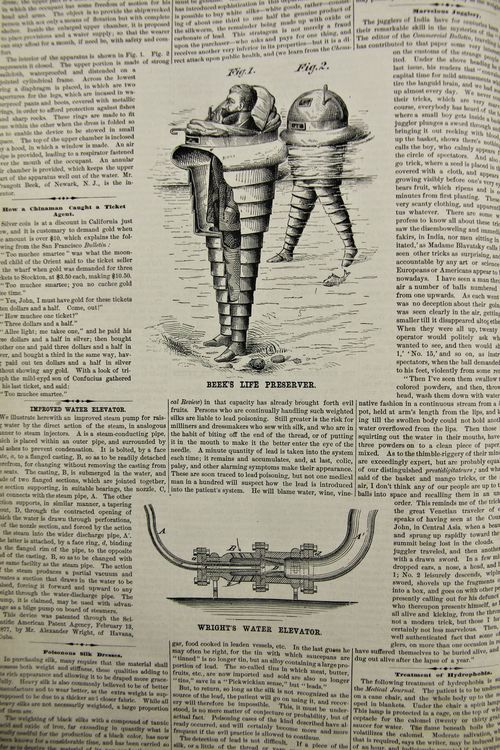
      Beek's life preserver

    ·Posted by :

    ·in:


  • When Buckets were Buckets and Picks were (really) Picks

    JF Ptak Science Books   Quick Post

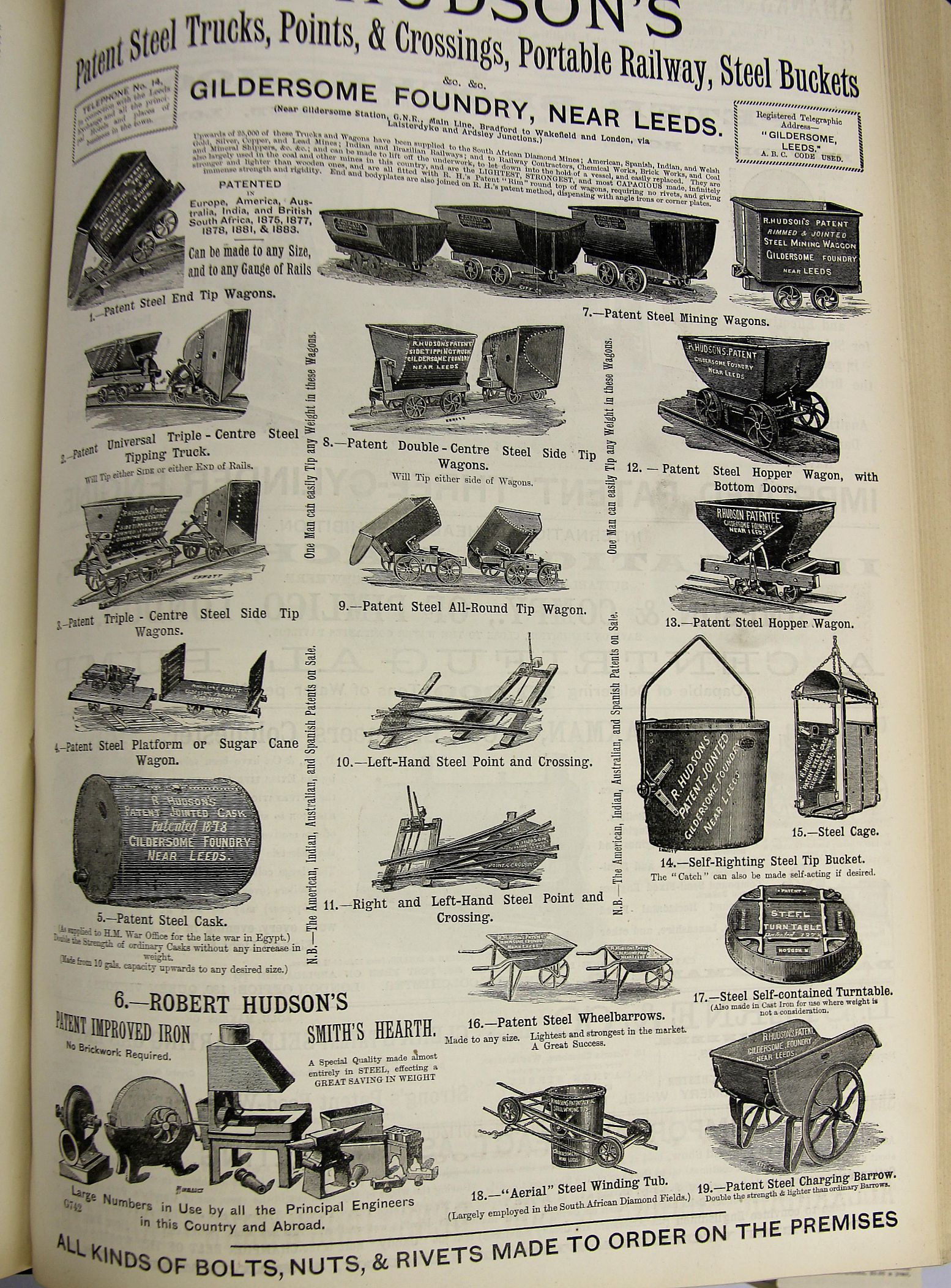
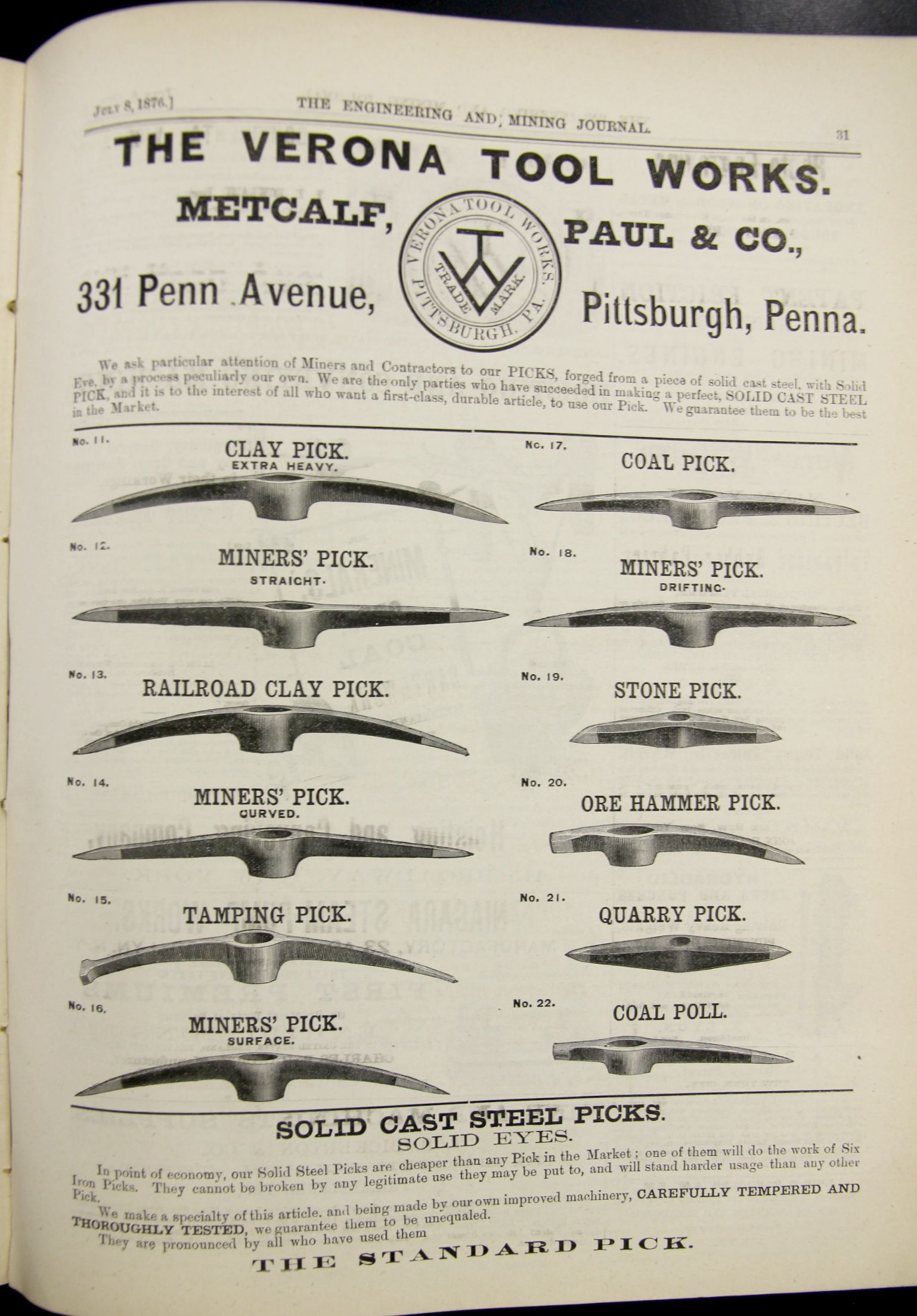
    Rose is a rose is a rose is a rose as Ms. Stein has said, though that doesn’t necessarily apply to buckets and picks.  Once upon a time there was a solid and universal need for many varieties of each one of these (exclusive of the not-elusive Ms. Hyacinth Bucket-pronounced-bouquet as the Major would say),and we get a taste for them in these pages of advertisements.  

    The first is for Hudson’s hardware (“steel trucks, points, crossings, portable railway, steel buckets”) and so on, presumably mostly for mining, and it appeared in The Engineer for July 4, 1884:

    Mining buckets

    The ad has a superb aroma of engineering heavy finery.  

    The second is from the Engineering and Mining Journal, July 8, 1876, and the ad trumpets a “perfect, solid cast metal pick” for all sorts of segmented work.  Different jobs, different surfaces, different environments, different people–different picks for the job.  

    Mining picks


  • An Outstanding Window That is Almost Not-a-Window (13th Century)

    JF Ptak Science Books  Quick Post

    “Rose is a rose is a rose is a rose.”–G. Stein,  (Sacred Emily, Geography and Plays)

    “A rose is a rose is an onion.”–E. Hemingway, For Whom the Bell Tolls

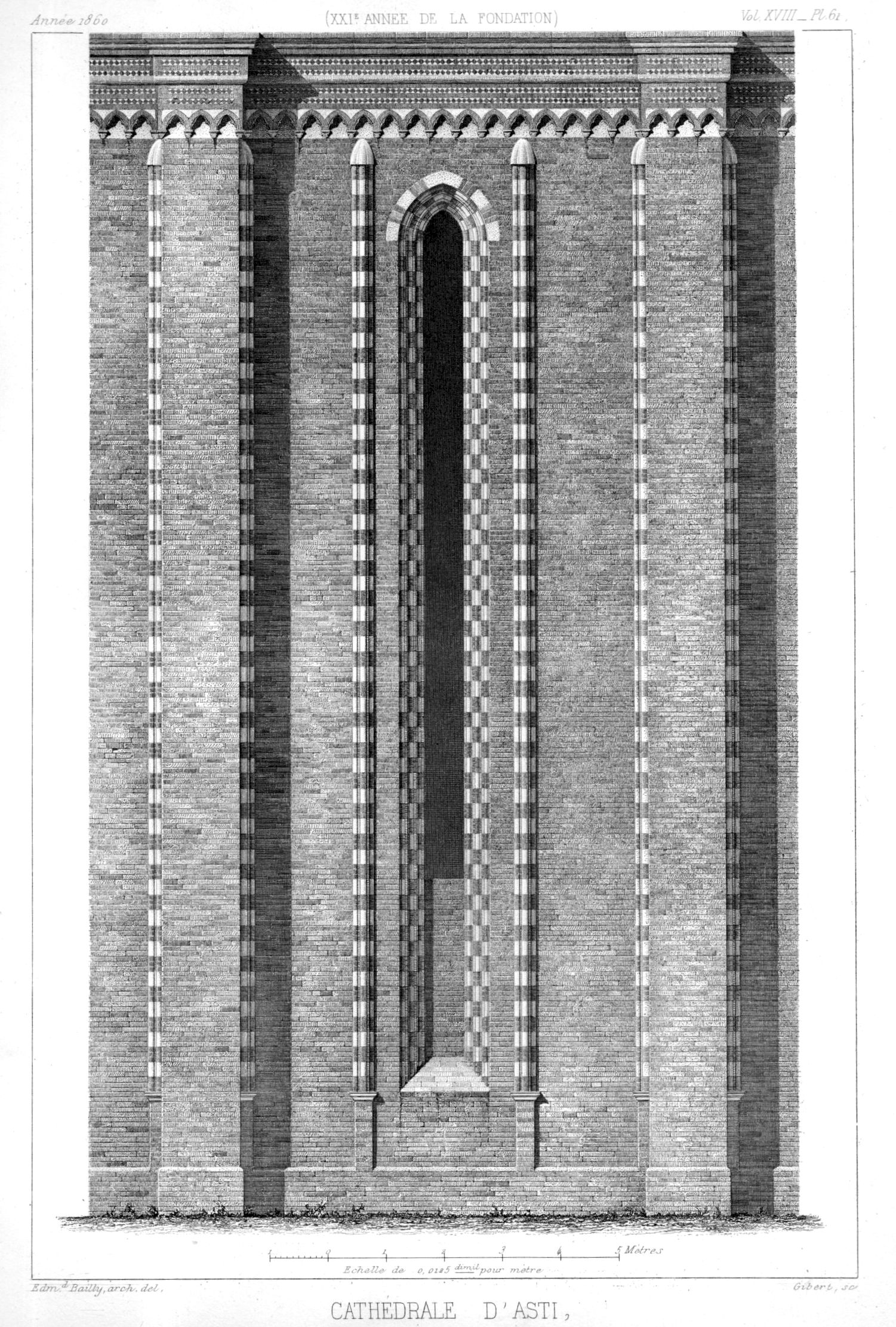
    By all measures, this window is of course a window. It is almost not a window because in the mass of the structure it is almost not there. But it certainly was–even if its height is great than ten times its width–when this cathedral at Asti was being built in the 13th century (and into the 14th). In any event, whatever the “is” might be here and in spite of the apparent isn’tness, it has a very appealing appeal.

    Architecture Asti036–Cattedrale di Santa Maria Assunta, found in Cesar Daly (editor), Revue Generale de l’Architecture et des Travaux Publics, ca. 1860 (not sure of the volume).  


  • More Woolwich Heavy Stuff (1879)

    JF Ptak Science Books   Quick Post

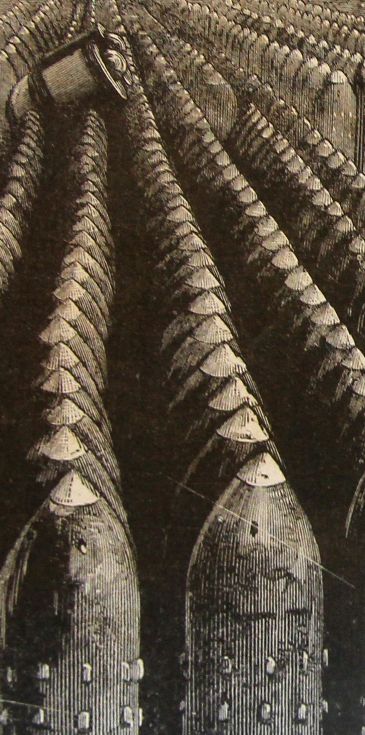
    Woolich shells detail

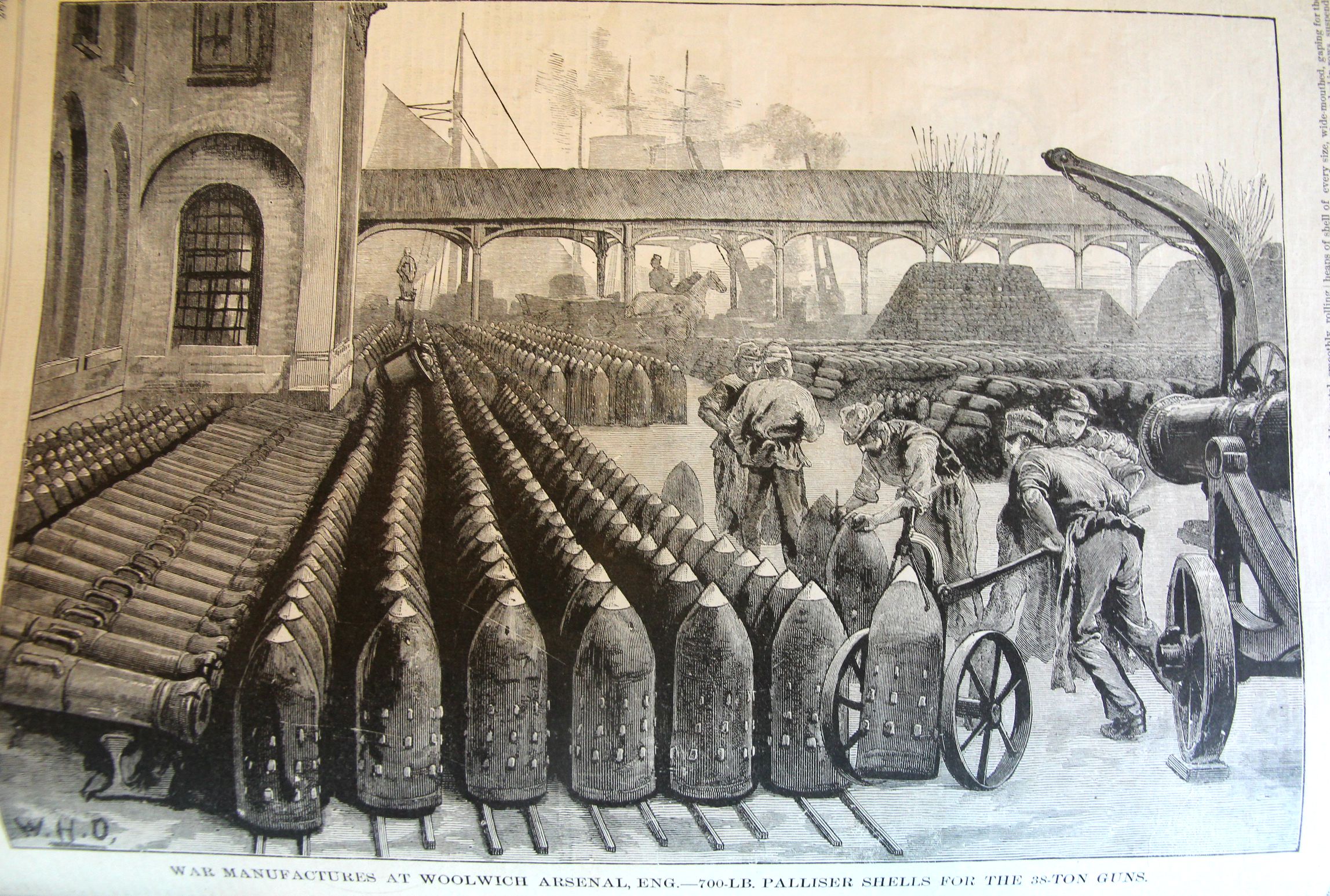
    [Detail of image below: “War Manufactures at Woolwich Arsenal:  700-lb Palliser Shells for the 38-ton Gun“.  Source: Scientific American Supplement, June 1879.]

    I’ve written earlier on this blog on the Woolwich works (“Very, Very Heavy Metal–the Woolich Infant, 1876″) that touches on some very heavy artillery, superior monsters all, with the “Infant” in question being an 80-ton gun. That came to mind seeing this big full-page engraving in Scientific American of Woolwich in 1879 and this stationary parade of potential of  death and destruction (and we’re glad to have them on our side) 700-lb shells.  That’s Sir William Palliser shells, which were manufactured as armor-piercing, and intended to do major damage to armor-plated warships–hyper-damage, actually, considering the 410-pounder in this variety was very highly effective.  This shell was just an absolute brute. 

    This is a detail from:

    Woolwich arsenal 700


    [Apologies for  the waviness–the book is very large and getting it to lay flat was not really a consideration.]