A Daily History of Holes, Dots, Lines, Science, History, Math, Physics, Art, the Unintentional Absurd, Architecture, Maps, Data Visualization, Blank and Missing Things, and so on. |1.6 million words, 7500 images, 4.9 million hits| Press & appearances in The Times, Le Figaro, Mensa, The Economist, The Guardian, Discovery News, Slate, Le Monde, Sci American Blogs, Le Pont, and many other places… 5000+ total posts since 2008.

Category: Technology, History of

  • Pause-Giving Photographs of Artillery Shell Vastness, ca. 1917

    JF Ptak Science Books   Quick Post

    Shells as far as the eye can see, at the National Filling factory at Chilwell, Nottinghamshire. Even though I enjoy calculating estimates at vast quantities of things (like all of the life that has existed on Earth, from multi-cellular onwards, how many Legos it would take to build a Dyson sphere around our Solar System, what distance the Enterprise has covered under the command of Capt Picard, that sort) I really can’t get a comfortable picture of the vastness of this factory to estimate the number of pounds of explosives under that roof.  

    Given that the factory produced about 19 million shells during WWI, I think it would be a safe guess that some 1 billion pounds of explosives were processed through the factory–and perhaps several billion.  But it is difficult to say what we are looking at in these photos, except to say that the number is “big”.

    WWI shells979[Source” John Hughes-Wilson, The First World War in 100 Objects, Firefly Books, 2014.  

    WWI shells canary girls[“Female munitions workers guide 6 inch howitzer shells being lowered to the floor at the Chilwell ammunition factory in Nottinghamshire, U.K.”–Source: “British official photographer : Nicholls, Horace – This is photograph Q 30040 from the collections of the Imperial War Museums.”]

    WWI shells nottinghamshire

    [Source: http://www.iwmprints.org.uk/image/1100193/milner-e-the-interior-of-the-filled-shell-store-at-the-national-shell-filling-factory-at-chilwell-nottinghamshire-15-may-1917]

    WWI shells long hall

    [Source: http://www.iwmprints.org.uk/image/1100192/milner-e-shells-awaiting-filling-with-explosives-in-a-store-of-the-national-shell-filling-factory-at-chilwell-nottinghamshire-21-november-1916]
  • Unusual Cross Section of Dirigible, 1929

    JF Ptak Science Books  Quick Post

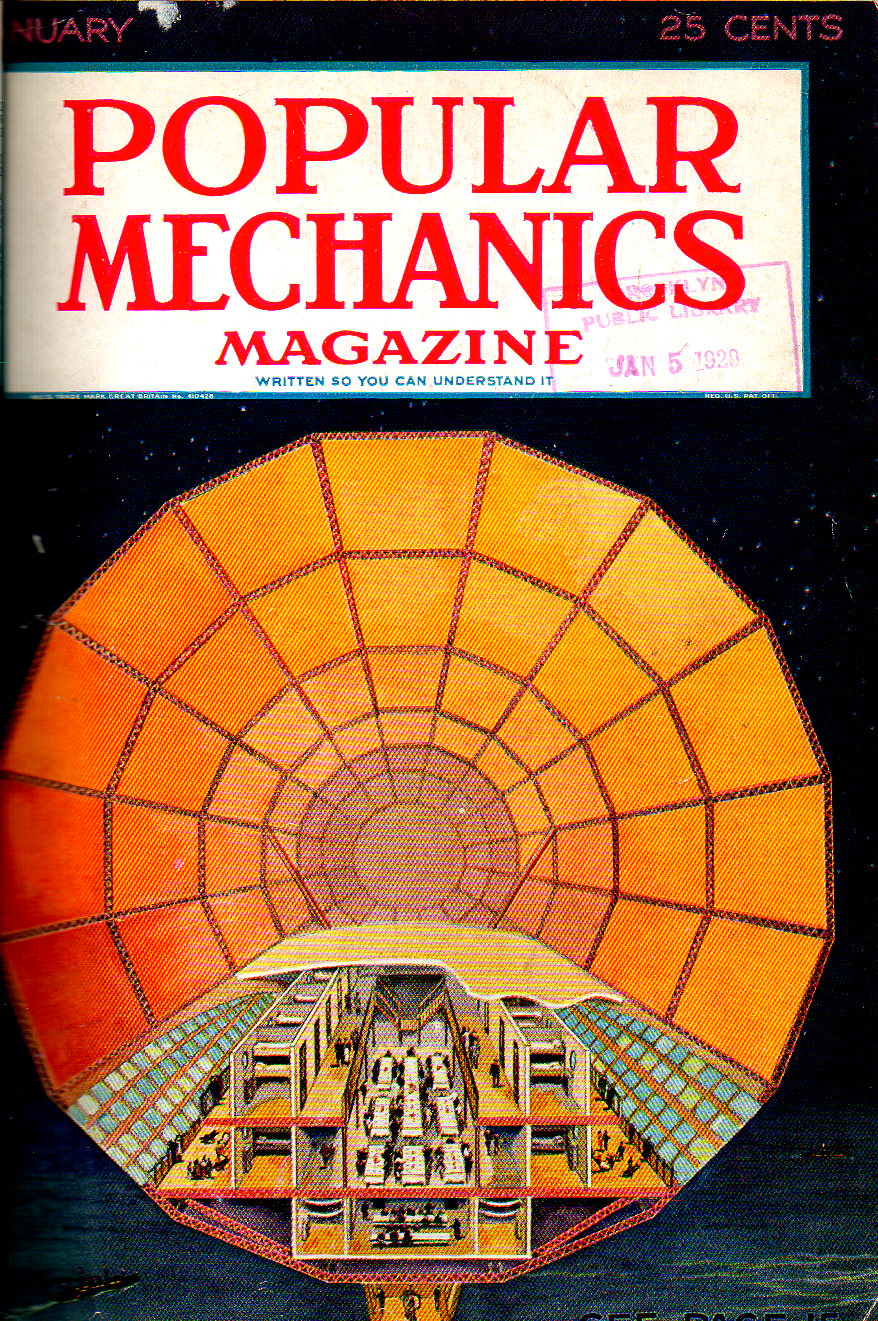
    I’ve seen other straight-on cross sections of lighter-than-air aircraft before, though seldom have they been at night, and seldom in color, making this one fairly unusual to my experience.  

    Dirigiv=ble 1929924

    Under discussion in the article were the current great lighter-than-air ships and their future. Mentioned prominently were the Graf Zeppelin (which flew it first intercontinental flight just months earlier in October 1928 (and which flew until 1937)), and the British R-101, which was under construction at press time of this article, and which would crash and burn in its maiden voyage in October 1930. But in 1929, with these great new developments, and with airplane service across the ocean still seemingly in the relatively-distant future, the future of the dirigible looked pretty goo.  But even by 1932 the great Graf Zeppelin’s service would be extremely curtailed by the new airplane services, and by that point the days of the dirigible were numbered–especially come May 1937 when the Hindenburg crashed (and burned) so spectacularly.

    Again, January, 1929, was a good time for the dirigible–but hundreds of days later, the situation would be reversing. 


  • Glorious Gearworks–Model of the Solar System, 1817

    JF Ptak Science Books  Quick Post

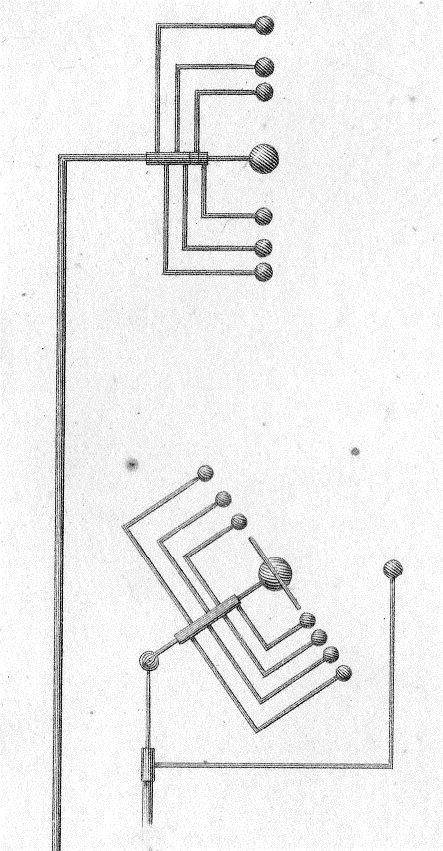
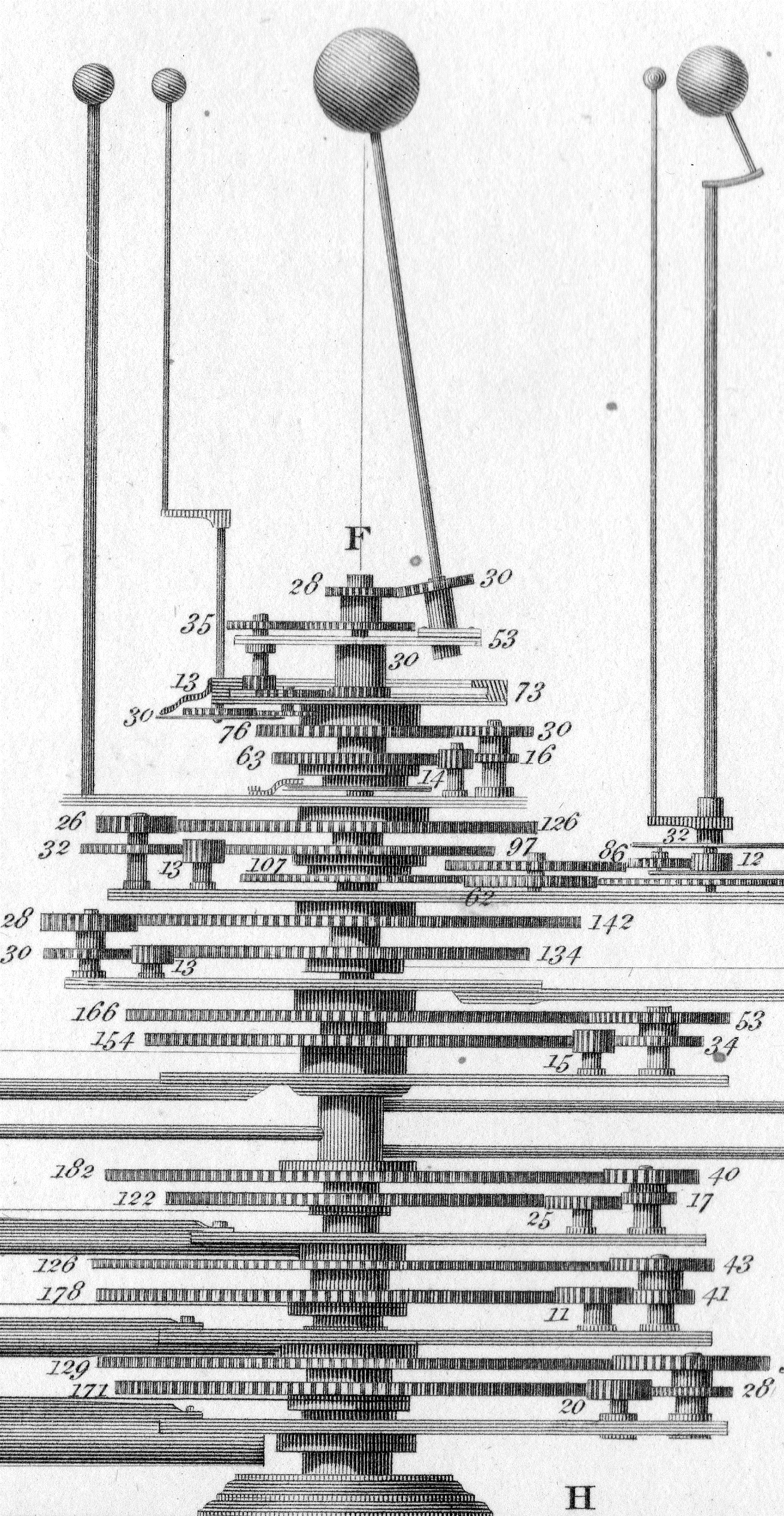
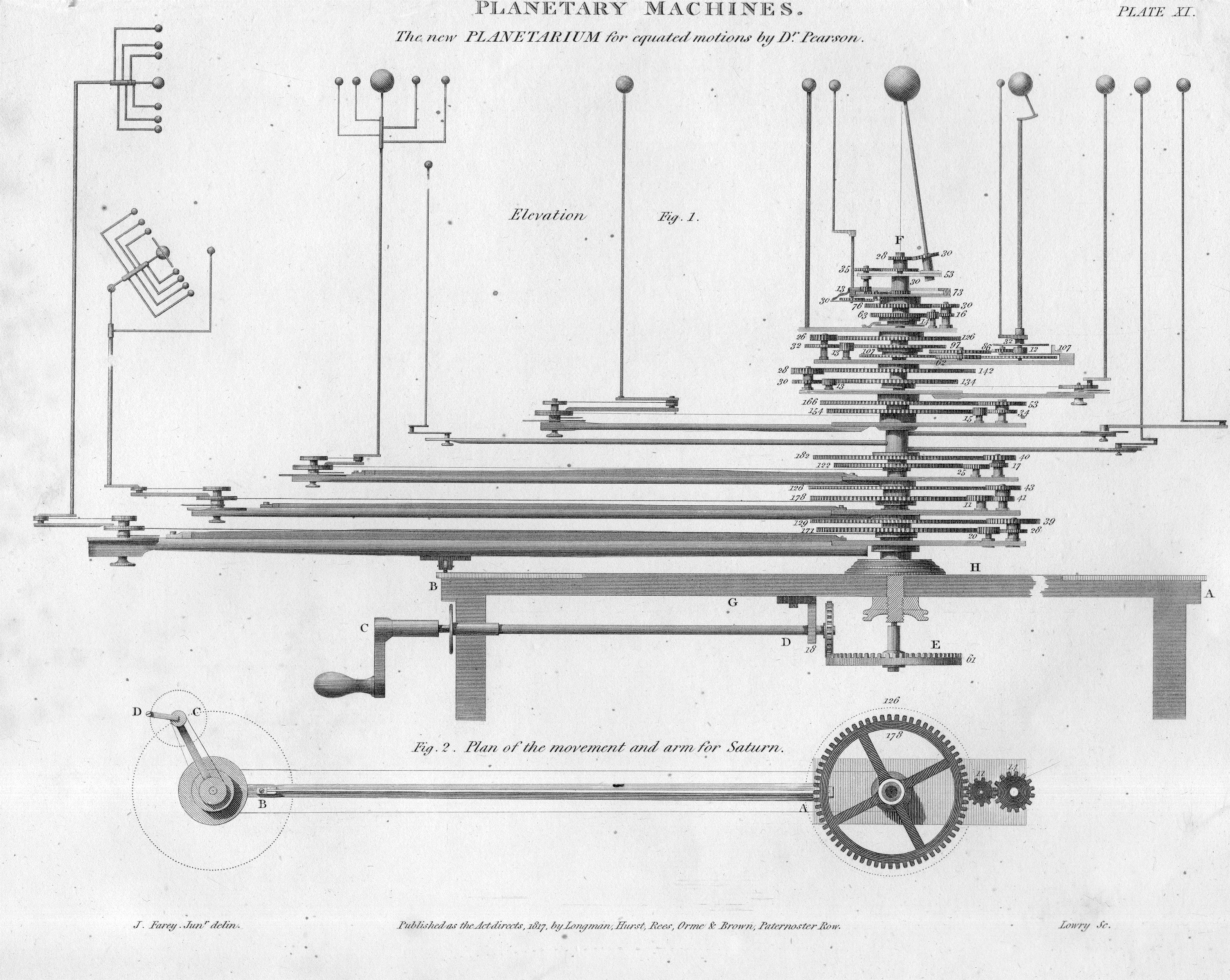
    This is the heart of the beautiful orrey created by William Pearson (1767-1847, and one of the founders of the Royal Astronomical Society) as found in the magisterial if not occasionally problematic Cyclopedia of Abraham Rees (1743-1825). It was published in 1817 and features the main gearing for a mechanical display of the functioning of the Solar System:

    Planetarium916

    This is the detail from the following, full-length version, which is 8″x10″–so there’s a fair amount of detail in a limited field:

    Planetarium914


    And the beautiful Dadaist detail of Jupiter and Saturn:

    Planetarium915

    • The original print is available from the blog’s bookstore, here.  

  • Understated Appearance of Bell’s Telephone Patent, 1876

    JF Ptak Science Books  Quick Post

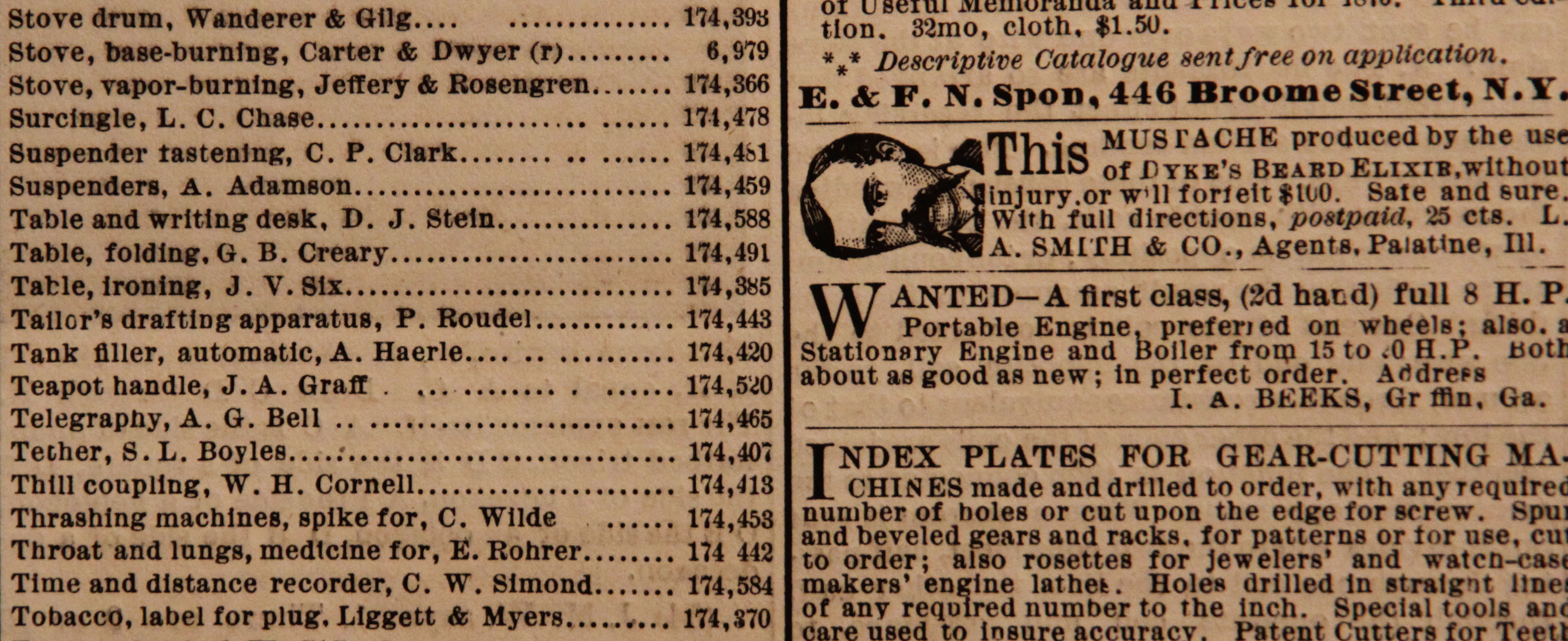
    \And yes, there it is, a one-liner, like everything else, in an 1876 volume of Scientific American:

    Bell patent close
    Besides it being the Centennial year, 1876 saw a number of major games in the history of human thinking. Sometimes the announcements or earliest public appearances of these breakthroughs didn’t get all that much attention.  As one of the major means of transferring technical and applied science info to the general public, it is interesting to see how Scientific American reacted to such innovations.  For the thick, heavy volume for 1876, amid patent announcements and articles on telegraphic fire alarms, electro-harmonic multiplex telegraphs, recording telegraphs, electro-magnetic telegraph railroad car signals, signal box telegraphs, underground telegraphs, telegraph keys and armature, acoustic telegraphs and the l;ike (though there weren’t that many reported, not really, just on the order of dozens), we find one of the most important of them all, patent # 174,465, by Alexander Graham Bell, appearing 8 April 1876.  It would be a rude resumption of being here in the future of this event to call the coverage short-sighted

     In an earlier article in the 4 March 1876 issue of SA, there appeared “The Invention of the Telephone”, by P.H. Vander Weyde, in which there is yet any mention of Mr. Bell.  There is an illustration of one of his precursors in the field, the Reuss telephone, with ample description. (This was actually Philipp Reiss, and his telephone really wouldn’t work to transmit the human voice, though did so work for music to some degree.)  Bell’s patent  would be at the Patent Office in March, and would appear as a one-line notice (among a hundred others), the patent stating it was “the method of, and apparatus for, transmitting vocal or other sounds telegraphically … by causing electrical undulations, similar in form to the vibrations of the air accompanying the said vocal or other sound”.  (The first image above is a detail; the second image a longer version, which is really only less than half of what the real-life version looks like in the tall listing.)

    Weeks later, Elisha Gray‘s (on 13 May) telegraphic telephone patent (175071) appears in the Scientific American, and later, on 9 September, on page 163, there is the article “The Human Voice Transmitted by Telegraph”, on the successful transmission by Graham Bell. 

    Admittedly there were a number of developments in the production of the speaking telephone at this time, though in general there seems to have been no great attention paid them in the pages of the Scientific American than pipe cutting machine improvements or improved gravel separators.  Obviously the great impact of the invention was yet to be appreciated, even in any sort of fictional way.

    • (Bell, Alexander G.) The Scientific American, 1876. We offer the entire volume, sumptuously illustrated with all manner of technical objects, in two parts (bound in one volume), 414+414pp each.  Very fresh copy, bound in black l;ibrary cloth. Very good copy.  $950    [email protected]

    ·Posted by :

    ·in:


  • A Beautiful Naval Cross-Section of Superb Detail, 1851

    JF Ptak Science Books   Quick Post

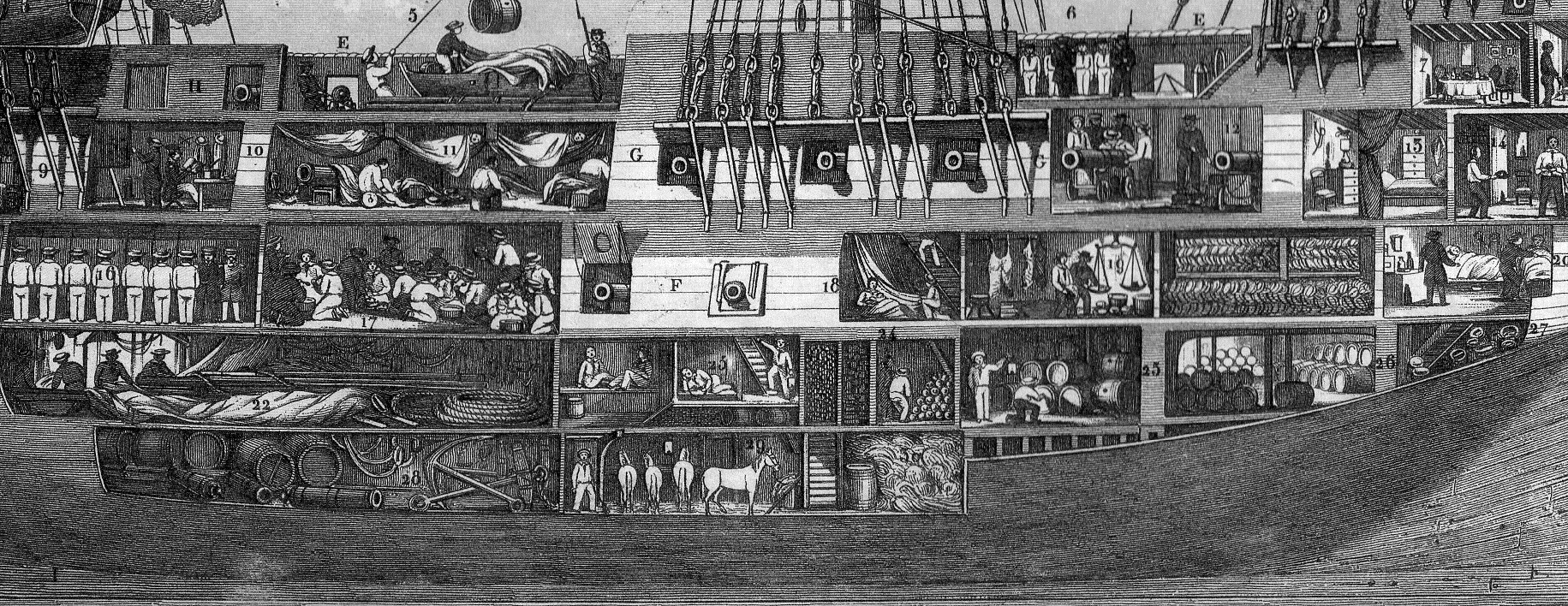
    Ship cross section 1810906

    J.G. Heck wrote and compiled a fascinating, complex, and magisterial work called The Iconographic Encyclopedia of Science, Literature and Art, which was published in America for the first time in 1851 following Spencer Baird’s translation from its original German (Bilder atlas zum conversations lexicon…)

    The key to his work is the amount of data displayed on each of the 500 engraved plates illustrating this work and the way in which it is arranged.  The design and layout of the 30,000 items on these 500 plates was a work of genius, and for my money it is easily the best-presented complex means of the display of data and objects that was published in the 19th century.   

    In this sample (on one sheet of paper) we see three views of a naval war ship (of at least 24 guns) showing above-deck fore and aft, and then a fantastic cutaway/cross-section showing the four decks below deck.  To my experience the technical cut-away is not a common thing to encounter in the 19th century 9or before), and this one happens to be tight, very compact, very detailed, and for all of that quite small.  The entire print measures 12×9″, with the cross section being only about 2.5″ tall.  

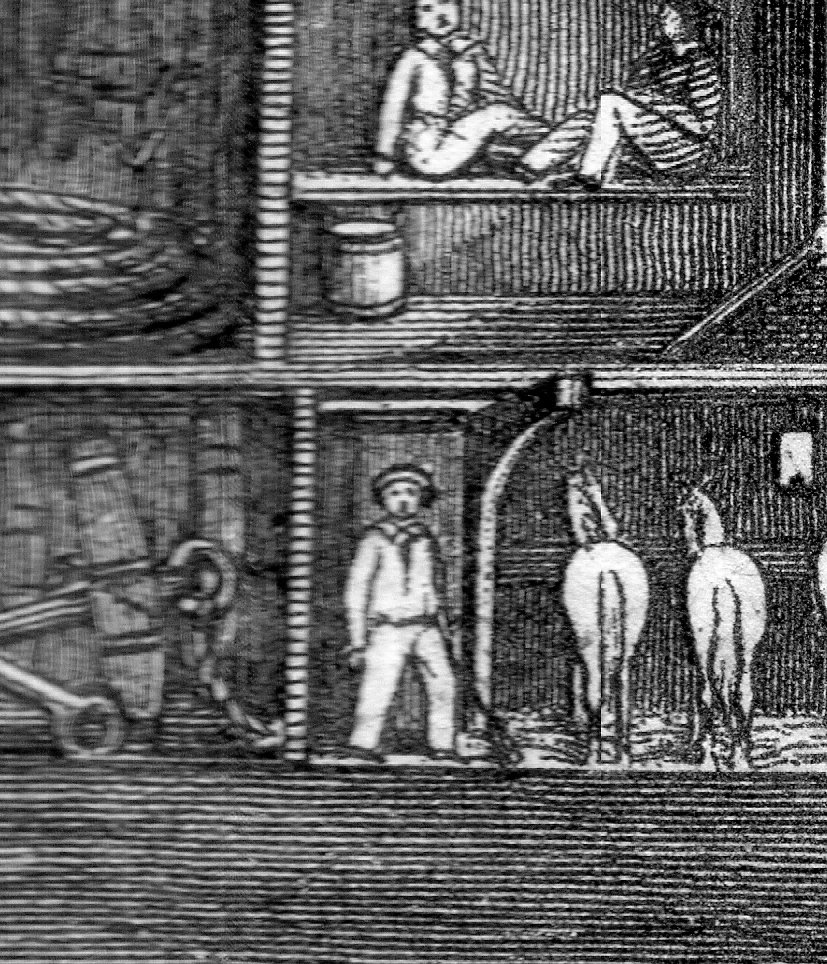
    I’ve concentrated on one figure at the center-bottom of the engraving, a man four decks down who seems to be shoveling out the horse stalls.  In the print he’s about 1/4″ tall, but as you can see scanned in high resolution it turns out that the artist/engraver gave some fair amount of effort to this tiny figure, which is an impressive act of craftsmanship. He even has a collar:

    Ship cross section 1810907


  • The R 101–a Great British Airship, 1929

    JF Ptak Science Books  Quick Post                                                                                                            Follow Me on Pinterest 

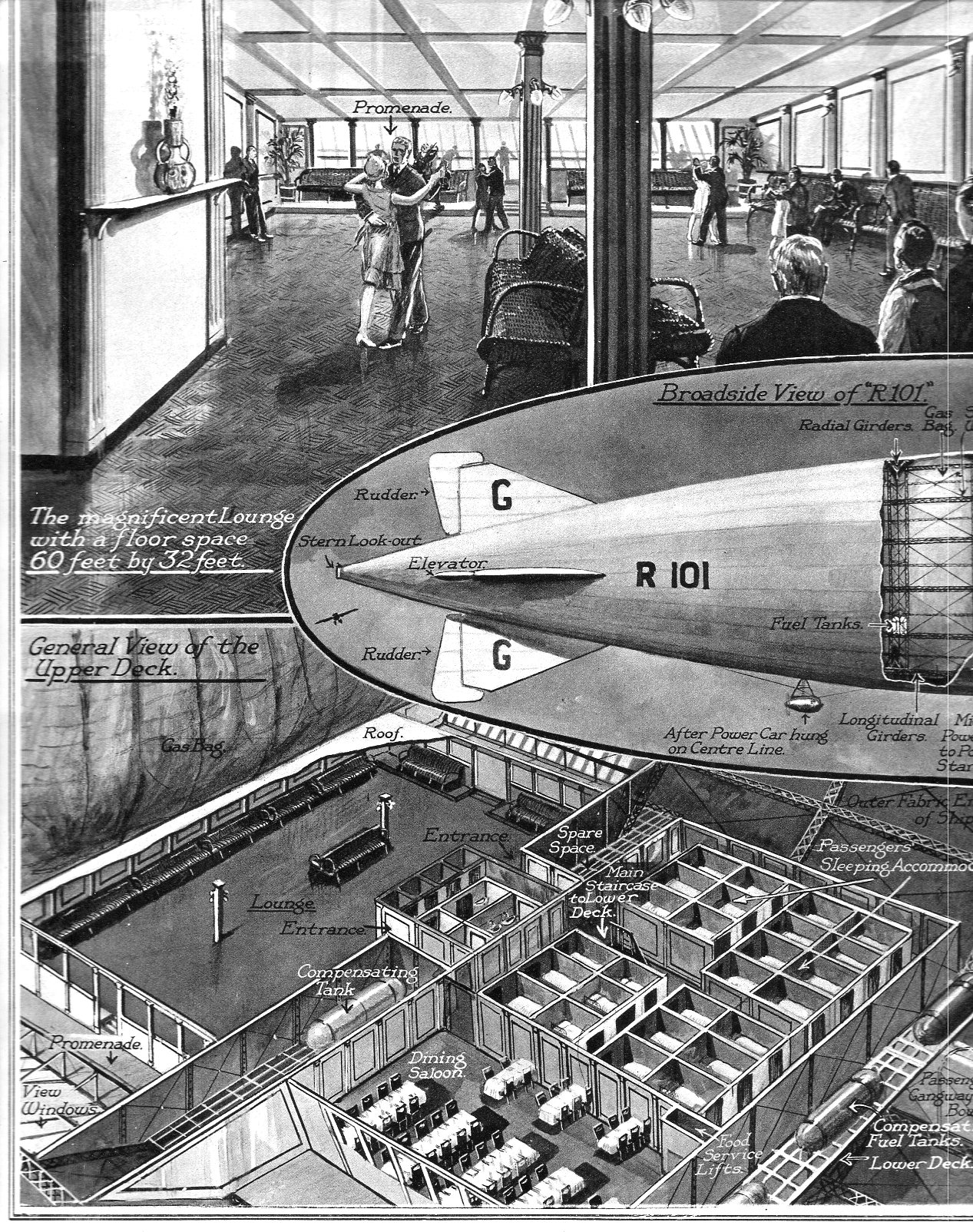
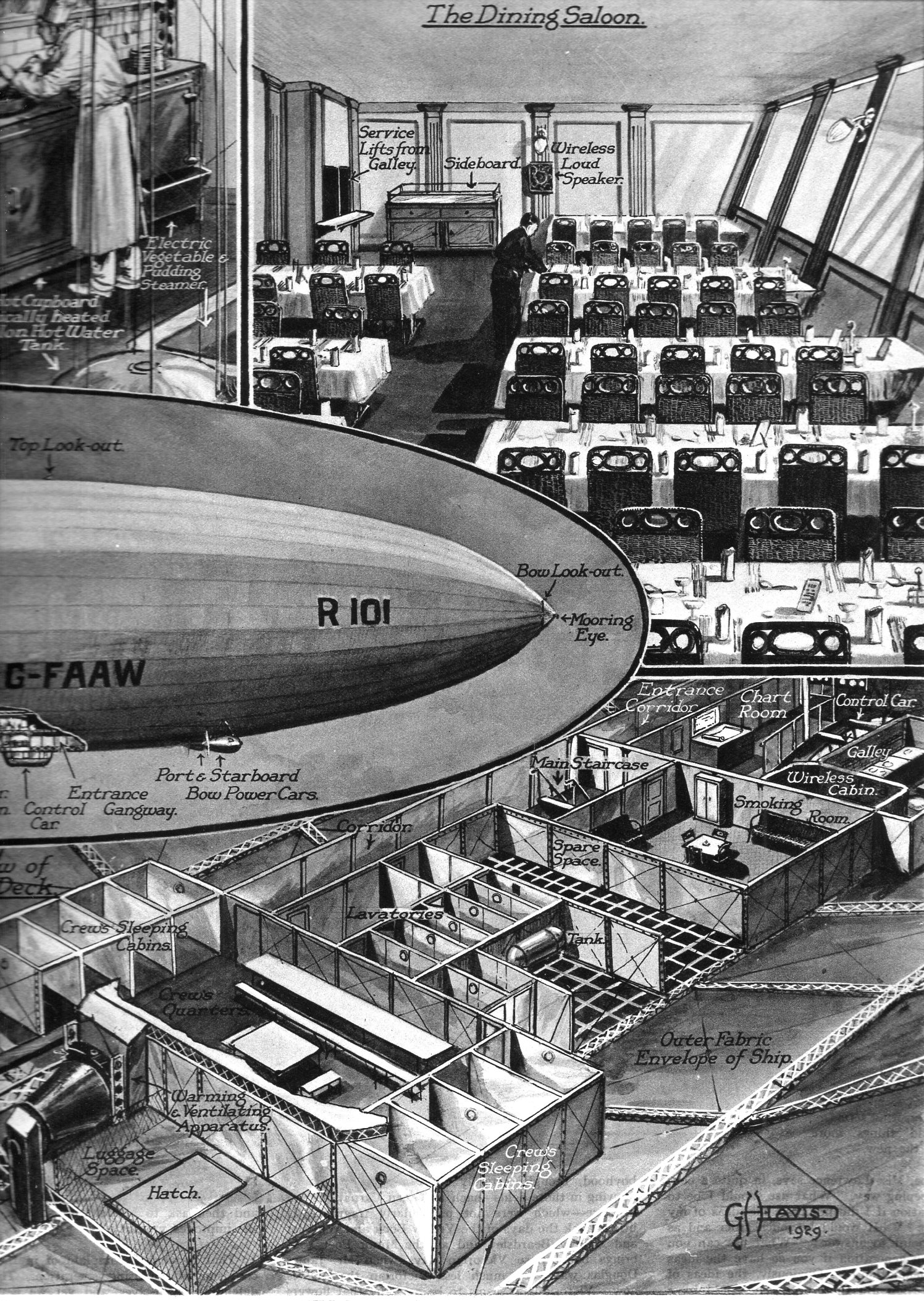
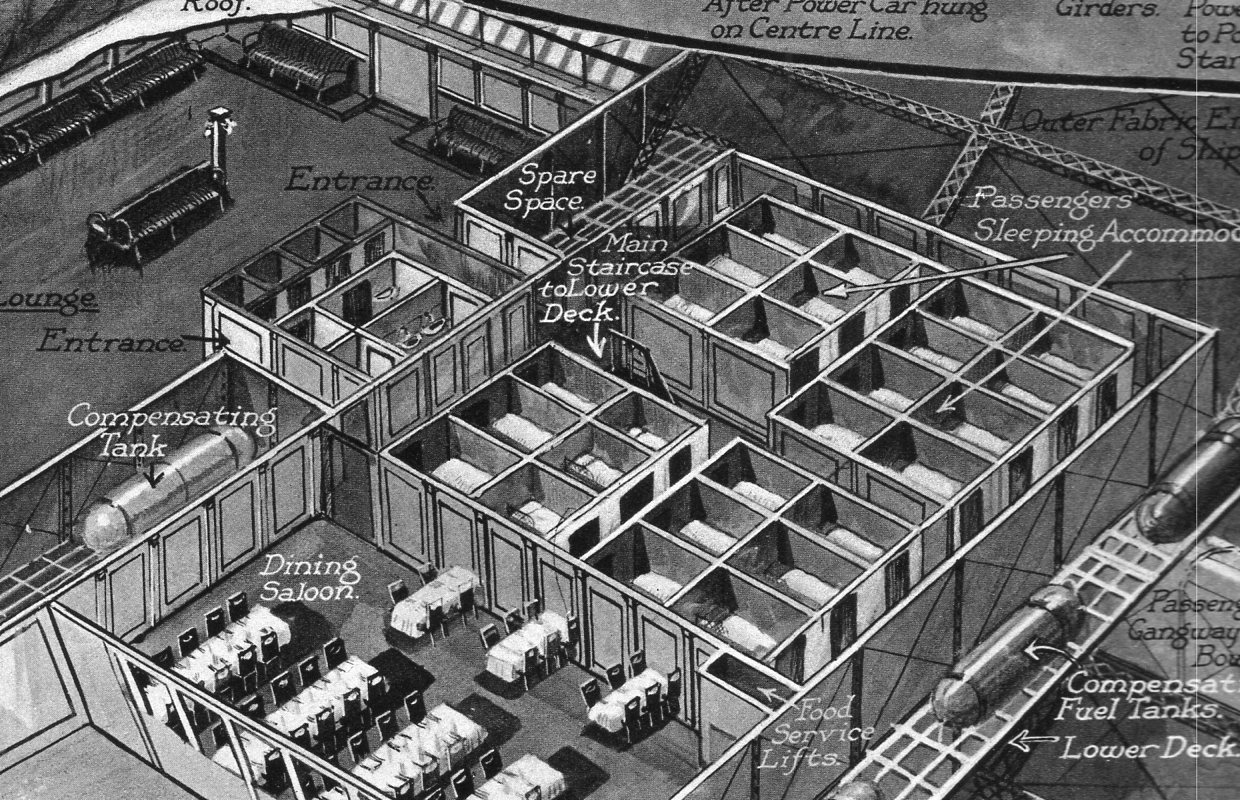
    The R 101 was one of the largest lighter-than-air airships ever created.  The ship was still about a year away from its maiden flight when this popular survey was published in the Illustrated London News on March 29, 1929–unfortunately this flight would also be its last, finding disaster over France on October 5, 1930. The airship was 777′ long, 140′ high, and had a volume of about 5 million cubic feet, and operated with a crew of 42–a big object.  

    R 101 airship898 R 101 airship900

    And the detail of the sleeping quarters:


    R 101 airship899
    And the text:


  • A Cutaway Infographic of the RAF Wellintgon, 1941

    JF Ptak Science Books  Quick Post

    Bombardier881

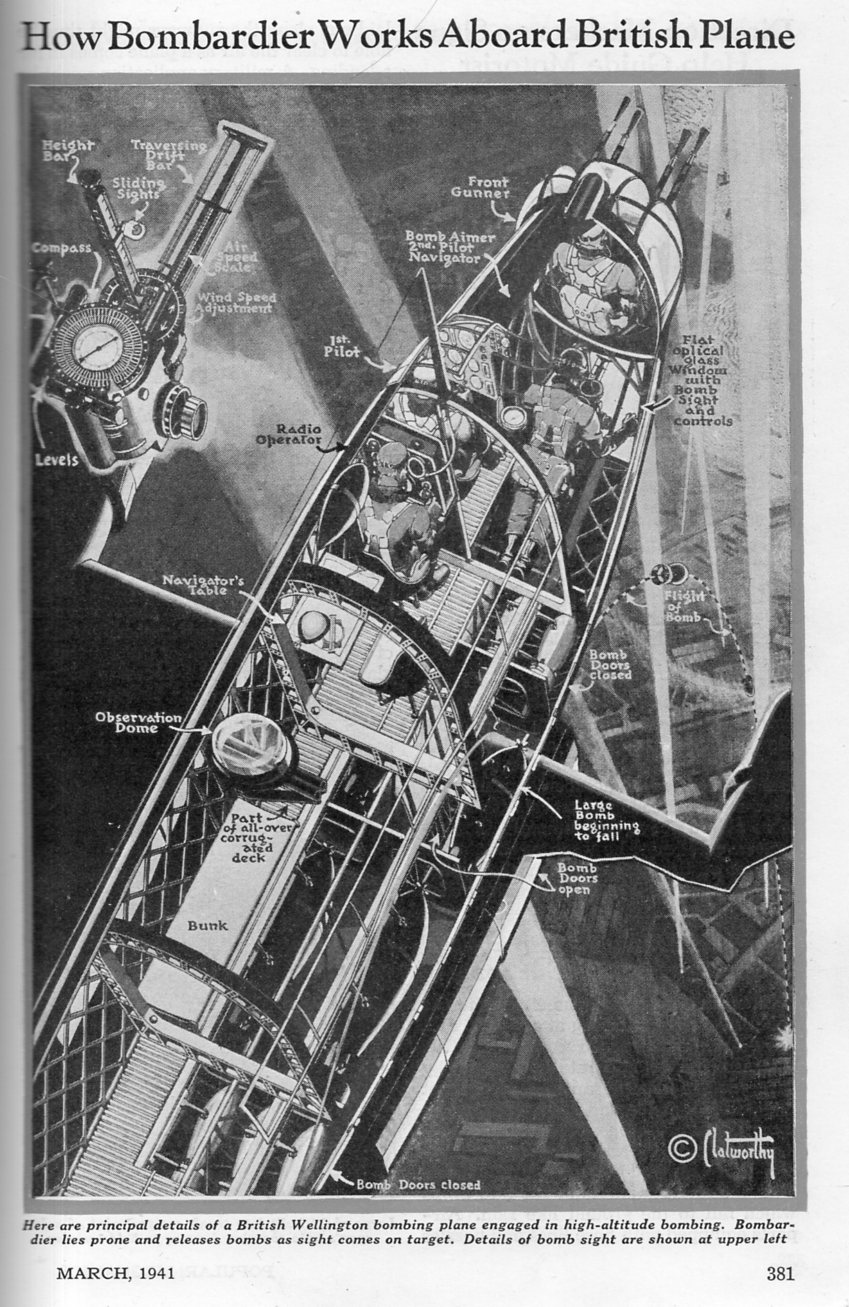
    This great cutaway by the prolific S. Clatworthy appeared in the March 1941 issue of Popular Mechanics. It illustrates a  section of the Vickers Wellington light bomber–a 6-man, 6’4 long and 86′ wide medium distance aircraft that saw service from the mid-1930’s and served with distinction throughout the entire duration of WWII.  It is an unusual view through the plane, an oblique but nearly straight-down view showing the position of members of the crew and most especially the bombardier.  

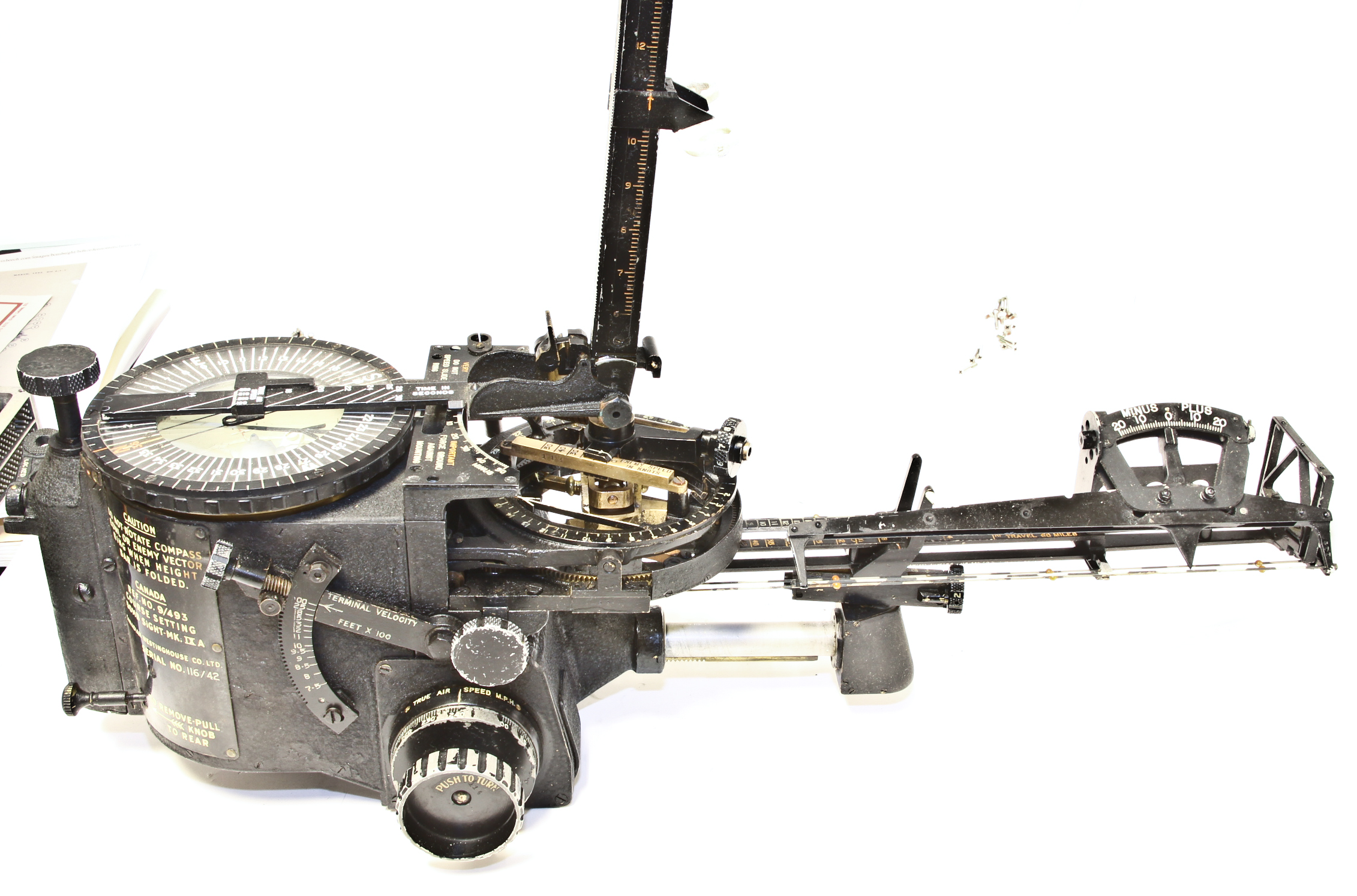
    Here’s a very nice presentation of the (Mark IX) bombsight shown in the inset of the cutaway, this from the Glenn’s Museum site, here: http://www.glennsmuseum.com/bombsights/pics/mark_ix_side.jpg

    “The British-designed RAF Mark IX bombsight was first introduced in 1939. It was used on Canadian and Great Britain planes in World War II: in particular Lancaster, Wellington and Sterling bombers, and Mosquitos, Beauforts and Beaufighters fighters. This was an early preset vector bombsight that involved squinting through wires that had to be manually set based on aircraft speed, altitude and bombload. The sight lacked tactical flexibility as it had to be manually adjusted if any of the parameters changed.”

    Bombsight mark_ix_side


    A nice image of a Wellington on the cover of Popular Science this same year (1940), here: http://www.popsci.com/archive-viewer?id=oScDAAAAMBAJ&pg=0&query


  • Claude Shannon as the Father of (1) Info Theory or (2) Information Age or (3) Both?

    JF Ptak Science Books  Quick Post

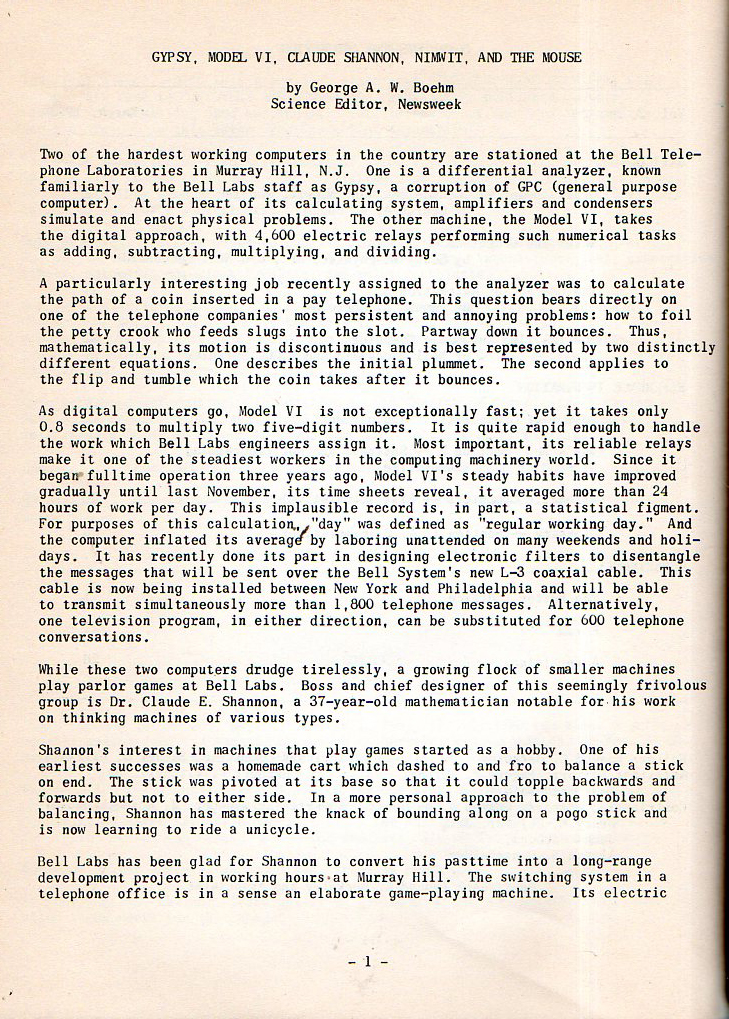
    George Boehm wrote a fine, semi-offhanded paper on Claude Shannon’s inventiveness: “Gypsy, Model VI, Claude Shannon, Nimwit, and the Mouse”, in Computers and Automation, volume 2, number 2, March 1953.  (The article is found on pp 1-4 in the issue of 37pp.) 

    Shannon (1916-2001) is widely seen as being the “father of information theory” though it might be more accurate to refer to him as the “father of the information age”–either title will do just fine.

    Shannon basically established the foundation of the digital circuits in his 1937 A Symbolic Analysis of Relay and Switching Circuits, which was also one of those great dreams-come-true parts of graduate school, when your masters’ thesis is actually something that means something, and with Shannon’s paper that “something” was exponential. It is the stuff of dreams but Shannon actually did it and did so with this paper at the age of 21. In the midst of a brilliant young career he also produced (in 1948, 11 years later) another great landmark effort,  A Mathematical Theory of Communication, which is the pioneering paper on information theory and which was so brilliantly composed that its framework is still in place after 67 years. A year later came Communication Theory of Secrecy Systems, a work which established cryptography as a science more than a system. And on and on. 

    I like that Shannon was born in Petosky, Michigan, up there on the choppy Little Traverse, and all of those big-pebble Petosky fossil/stones.

    This is a very insider-y semi-offhand but solid review of some of the gadgetry and robotic work of Claude Shannon:

    Shannon512


  • Avaition Cross-Section, 1940

    JF Ptak Science Books   Quick Post

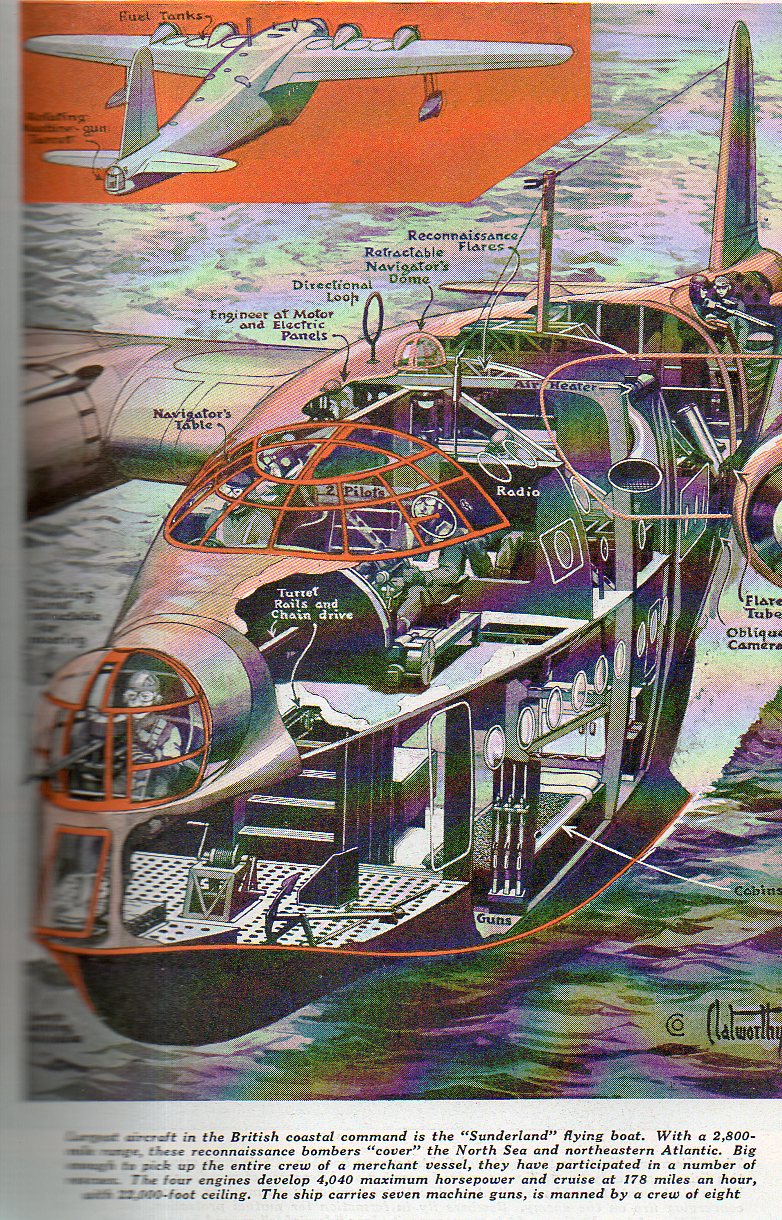
    Schematic  bomber 1940850

    This is a not-frequently-seen schematic of the Royal Air Force’s Sunderland, a flying boat, and the largest airplane in British service, pictured and slightly dissected in Popular Mechanics in 1940.  (Apologies for the blurry definition on the left side–the book is huge, and not very friendly to the scanner.)


  • Floating and Airborne Airports, 1925

    JF Ptak Science Books  Quick Post

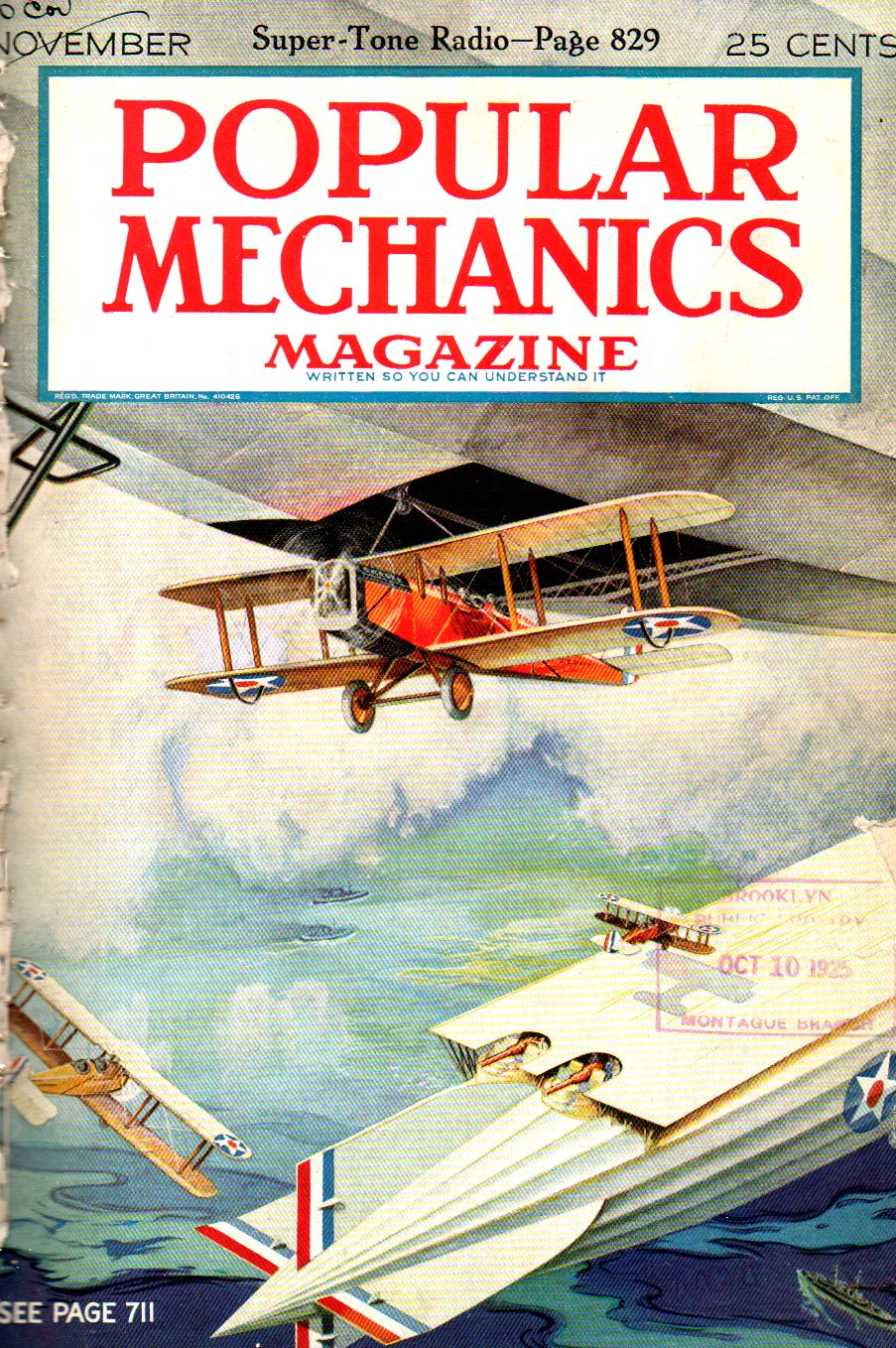
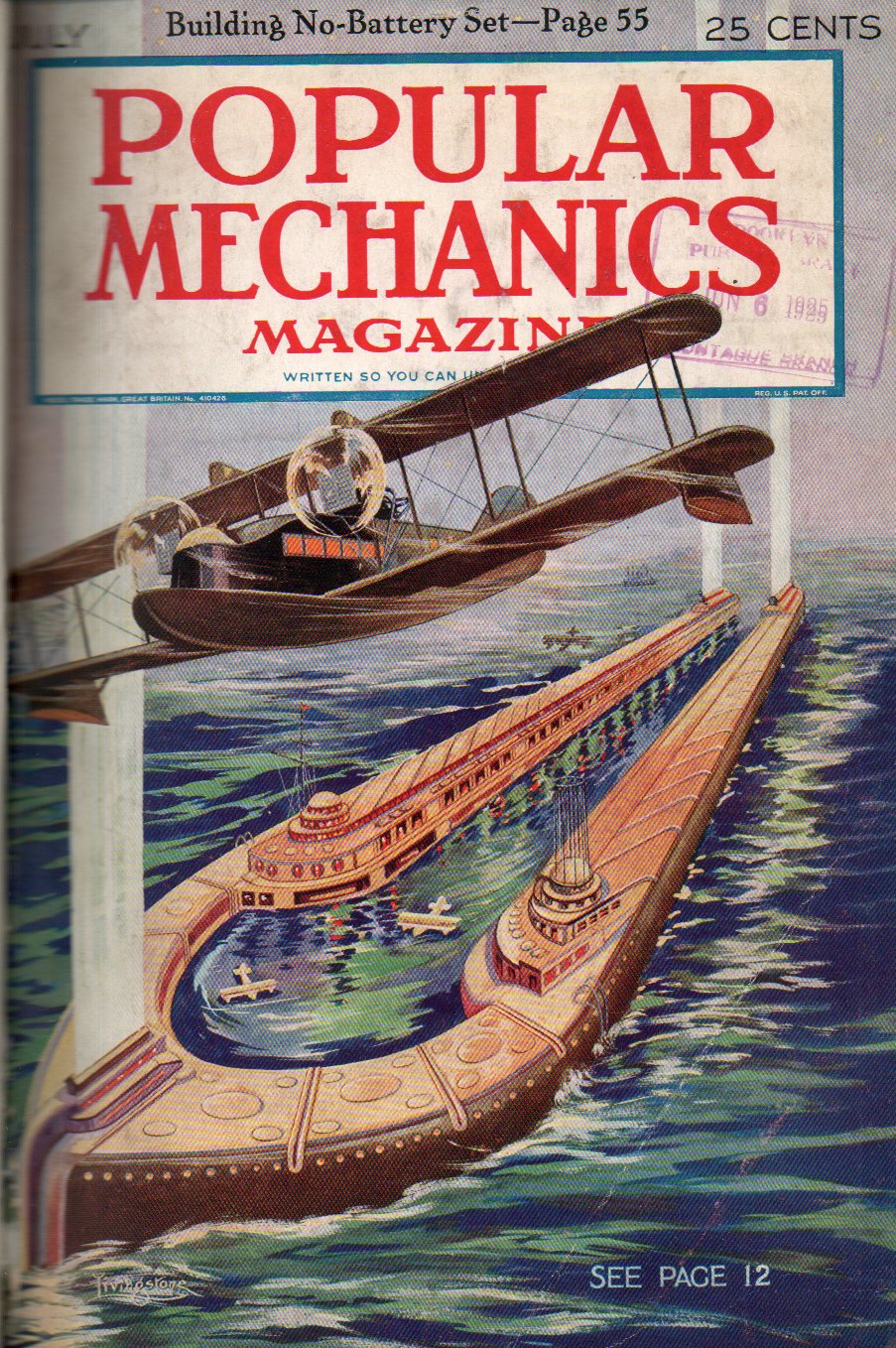
    Airport aerial740


    One of the great dreams of early modern flight was to get across the Atlantic. In the decade+ before the first non-stop transatlantic crossing many plans were presented for making it across the Atlantic with stops. The problem of course was where the “stopping” would take place. Popular Mechanics presented two of these ideas in 1925: one was the floating airport, a series of four 1200′ long and 250′ wide aviation harbors on the high seas, four of which would be necessary to get aircraft across the ocean.  The other were aerial sky harbors, with zeppelins outfitted as aircraft carriers in the clouds.

    Airport floating739

    These proposals look like less-than-fresh ideas in 1927 when Lindbergh makes his flight, and obsolete by the early ‘thirties when several airlines offered transatlantic service.  Anyway given the available technology the ideas were not half-bad, though the technology would overtake the necessity for these ideas idea pretty quickly.  Considering that we go from the Wright flight in 1903 to transatlantic flight in 30 years, the speed of technological advancement was really pretty extraordinary. 

    Also from this blog see: