A Daily History of Holes, Dots, Lines, Science, History, Math, Physics, Art, the Unintentional Absurd, Architecture, Maps, Data Visualization, Blank and Missing Things, and so on. |1.6 million words, 7500 images, 4.9 million hits| Press & appearances in The Times, Le Figaro, Mensa, The Economist, The Guardian, Discovery News, Slate, Le Monde, Sci American Blogs, Le Pont, and many other places… 5000+ total posts since 2008.

Category: Prints–looking HARD/deeply at

  • A Forgotten (?) Photographic Protest of the 1933 Chicago World’s Fair

    JF Ptak Science Books  Post 352
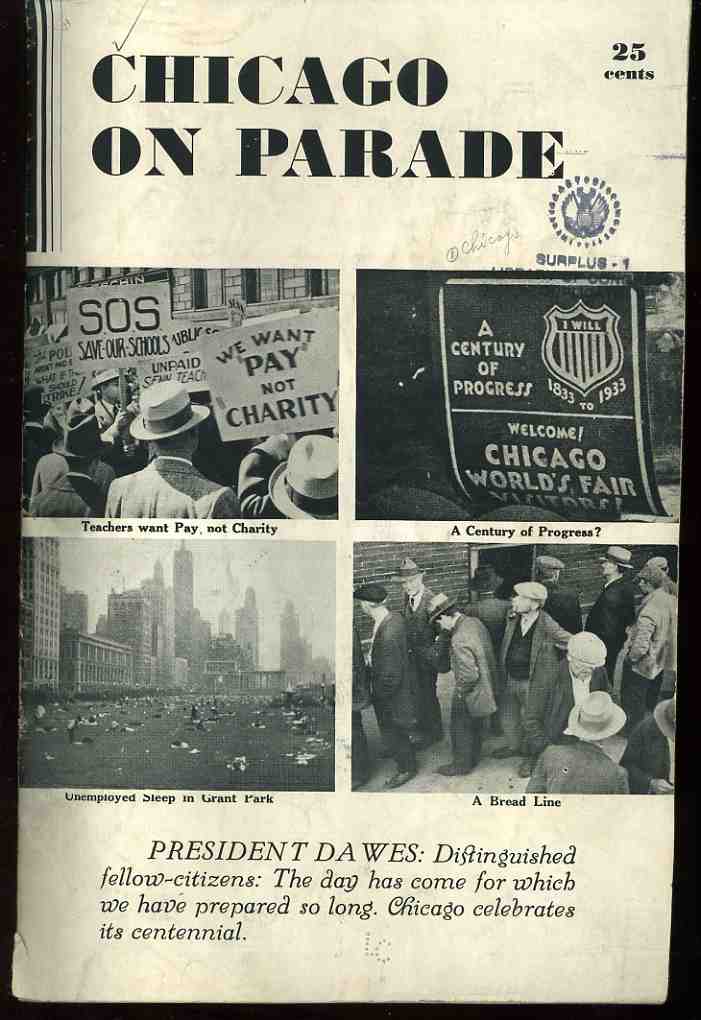
    000-ebay--Nov 4--chic 1985 This short pamphlet is a very strong tonic to those thinking about Chicago’s “Century of Progress” celebration and World’s Fair that was taking place in the middle of the Depression in 1933. (It was intended to instill hope and foster a little forgetfulness during a time in which the Depression in full swing nationwide, plus native-Chicago problems of gangsterisms, race riots, red scare, and economic distress ) As a matter of fact this pamphlet didn’t seem to find much distribution, or at the very least it didn’t get saved in spite of the fantastic documentary images that it contains.  This copy of Herman O. Duncan’s Chicago on Parade (1933), was his own, sent to the Library of Congress as a gift in 1942 before it came to me in 1999. I can find only three other copies of this pamphlet located in libraries world wide (Oxford, Duke, Chicago), and it seems very strangely underrepresented. 

    Duncan addressed the work directly to the Rufas Dawes (President of the Century of Progress Celebration), and to the mayor of  Chicago and governor of Illinois as a very blunt request to not forget the actual world of real Chicagoans living in dire straits within site of the fairgrounds.  Duncan was obviously taking issue with the many statements of wonderment and flourishes of progress that accompanied the propaganda surrounding the fair, so that the attention of the public would not be “diverted by our political and civic leaders”.  Duncan continued that these photographs, “none of which had been published previously in the United States” could “perhaps suggest a point of reference from which Chicago can measure its Second Century of Progress”. 000-ebay--Nov 4--chic 6 det991
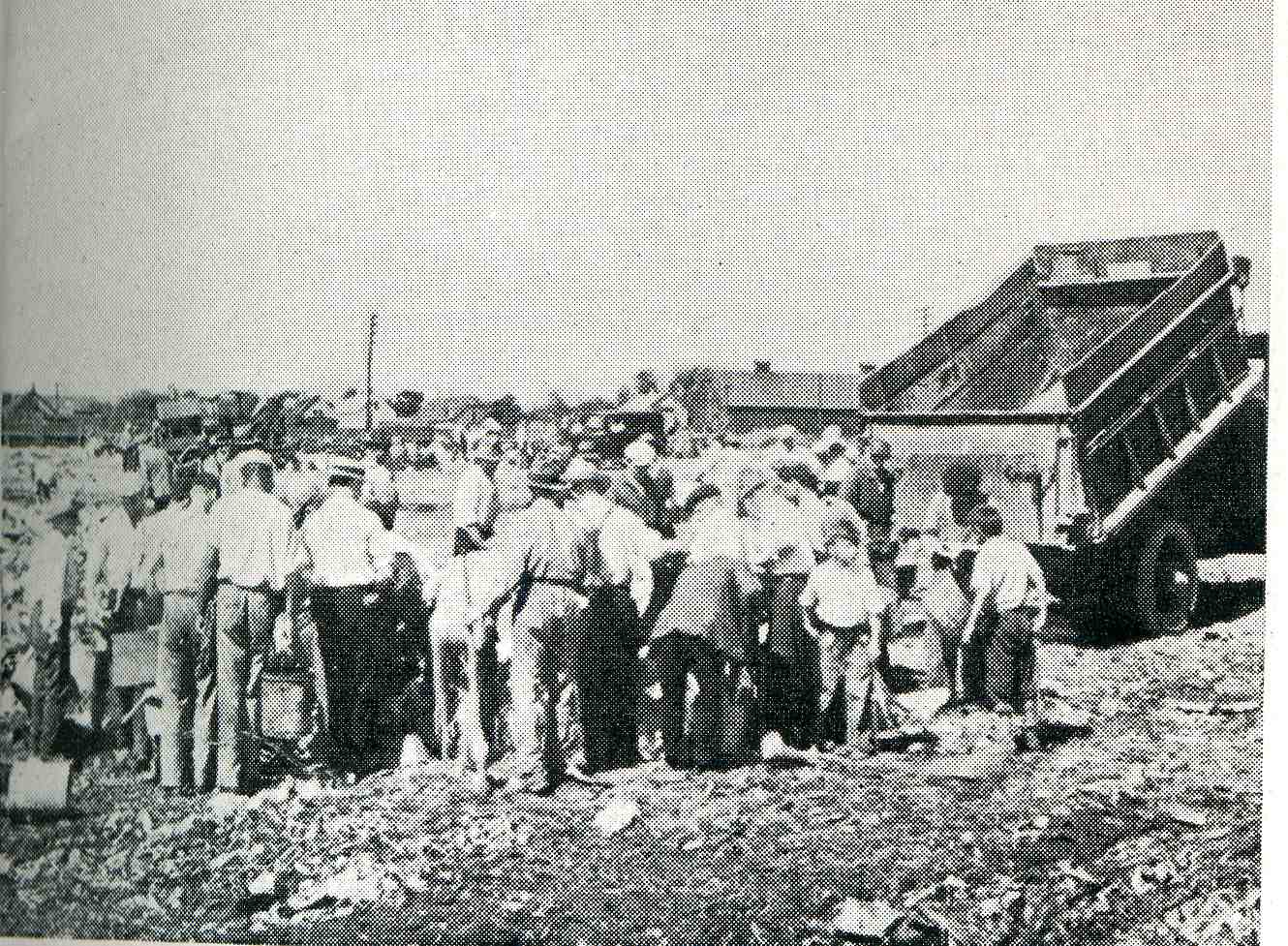
    Duncan (who unfortunately did not identify the photographer(s)) was very strong in the use of images.  He was not afraid to show long bread lines, people (including children) scavanging at the city dumps, blacks and whites marching together in protest of police brutality, (many hundreds) of people sleeping out of doors in Grant Park (Chicago’s “front yard”),because they had no where else to go, and much more.  The photographs had a real touch of journalistic acumen, and none of the images look forced or posed–they are the real stuff of social documentary, and how they have escaped wide notice is not known to me
    . 
    000-ebay--Nov 4--chic 2986
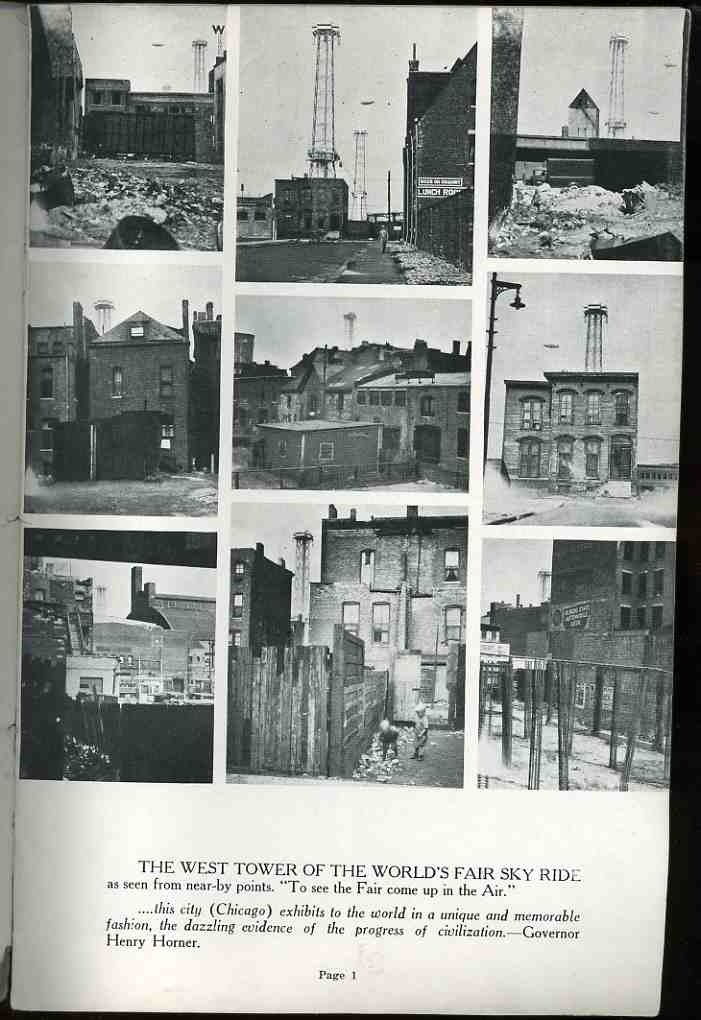
    Perhaps the strongest statement (outside of the
    photos of the children scrounging for food in dustbins and at the dump) is this series (below) showing views of the city of Chicago that were within site of the tower for the Century of Progress Sky Ride (“See the Fair / Come Up in the Air”).  The series make an elegant and strong and incontrovertible point, and that there was definitely something very wrong going on outside the walls of the celebration which had been scooped out of the city’s east side.  (The images remind me of series of photos of the US Capitol Building that appeared in the great classic of social and cultural recording of class division, Neglected Neighbors, which my friend Andy Moursund introduced me to many years ago in Georgetown.)

    The logo design for the event is terrific and I’m sure that everyone had seen it at least once in their lives, but out of the many hundreds of other pamphlets and display materials that I have here for the expo I’ve got to say that the overwhelming majority of them are luridly colored with a palette found outside nature.

    And anti-nature colors are somewhat schizoid-happy  colors, like MGM technicolor cartoons from 1949, which applies a massively ugly chromo-palette to the blight of the surrounding Depression problems.  Mr. Duncan was determined that this not happen, at least so far as he could help it, and published these arresting images to remind the rest of Chicago that the vividly colored happy face placed over the city like a stamp for the Century of Progress was not the case in fact. 

    There are another few images in the “continued reading” section.

    Note:  click on the photos for a larger, more detail view.


  • The Queen in the Coal Pit: an Unusual Photograph of Royal-Nearness

    JF Ptak Science Books LLC  Post 360

    000-ebay--Nov 7queenonacar008
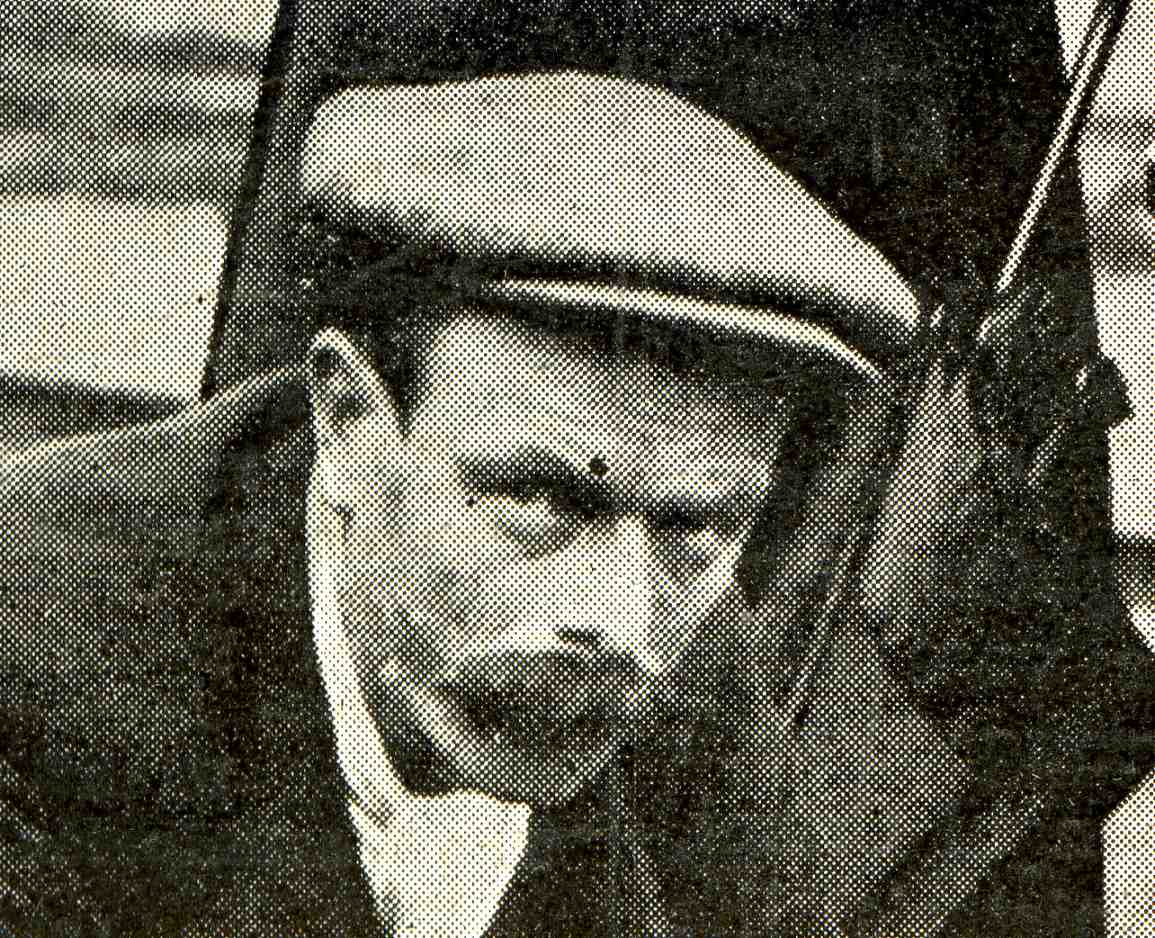
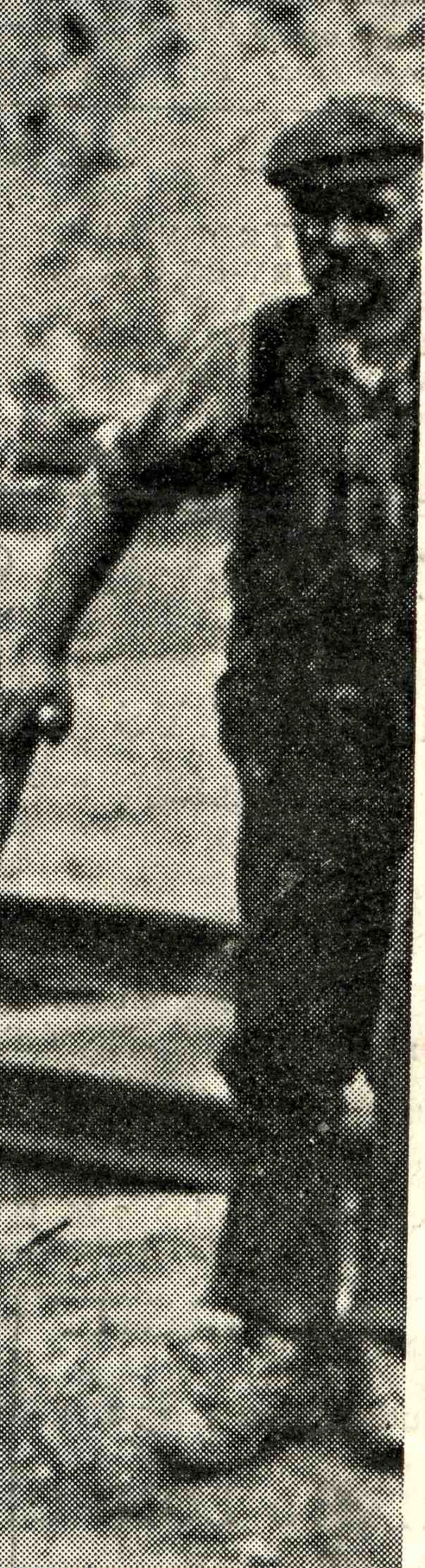
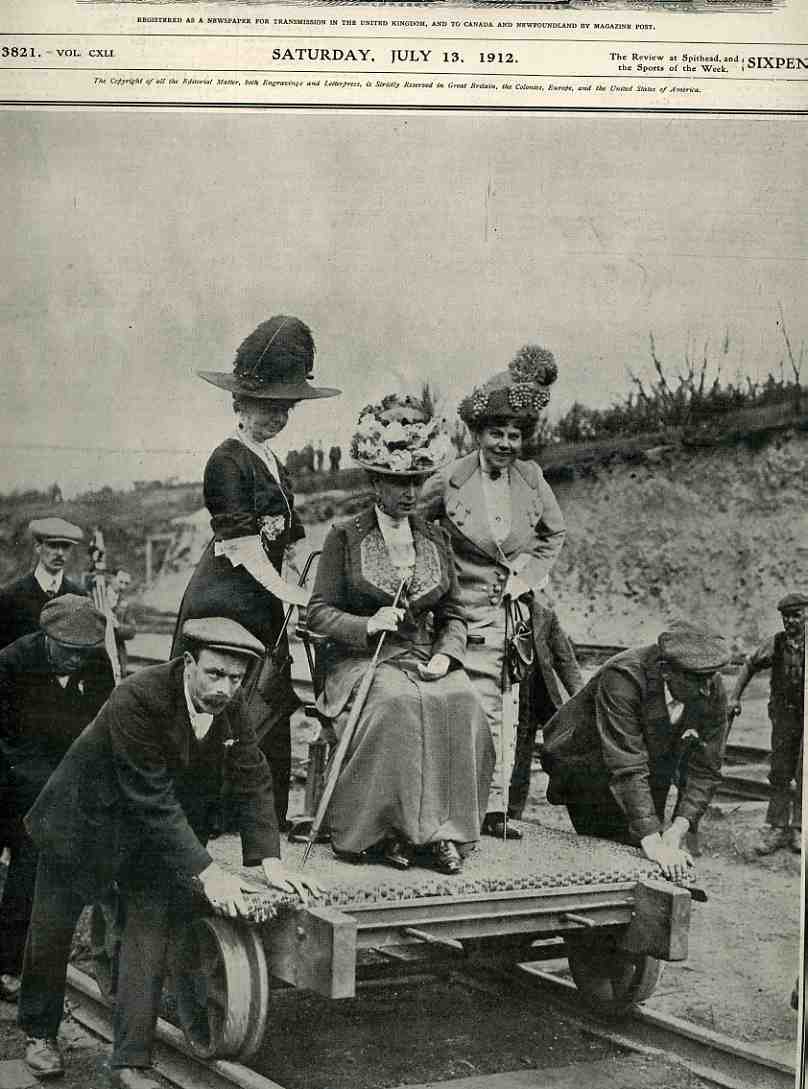
    Its not often that one sees a Queen on a side car (actually a “railway plateplayer’s trolley”)  in a coal bit, but such is the case in this photograph, showng her majesty at the Silverwood Colliery (near Rotherham), in the southern mining districts of Yorkshire.  The King and Queen attended to interests there at the coal mine “quite an hour”, before returning to finery and fuss.  Though fuss is what was made to transport the queen from point to point, her human-propelled on this car, looking not very comfortable, gripping her rapier-thin parasol with her three middle fingers.  I’m sure that the four men selected for this task (the three that we can see wearing similar boutonnieres)–their shoes spotless, their jackets pressed–were told to take it quite slow and steady, what with the queen on board.  I can’t decide what the look is, exactly, from the lead man–at the very least I don’t think that he wants to be there.  For a very busy mine there aren’t very many men in view, save for the guy on the right with the shovel; I feel pretty confident that these working fellows were kept away so as not to drift into the picture, like this guy, who would remind them of the  scrubby un-scrubbed  who made the Empire run. 000-ebay--Nov 7queenonacar009
    (Image from The Illustrated London News, 13 July, 1912)

    000-ebay--Nov 7queenonacar010


  • The Tomb of Broken Dolls–an Appeal for Respect for Outgrown and Disabled Toys

    JF Ptak Science Books  Post 349

    “No two toys are ever broken in the same way or with the same emotional results.” RobertGraves, Poetic Unreason

    000-ebay--Nov 1 doll tomb975


     I first wrote about this fabulous idea–a tomb or memorial for broken and lost toys–on this blog almost three years ago–it still seems like an utterly fantastic practice.

    000-ebay--Nov 1 doll tomb975

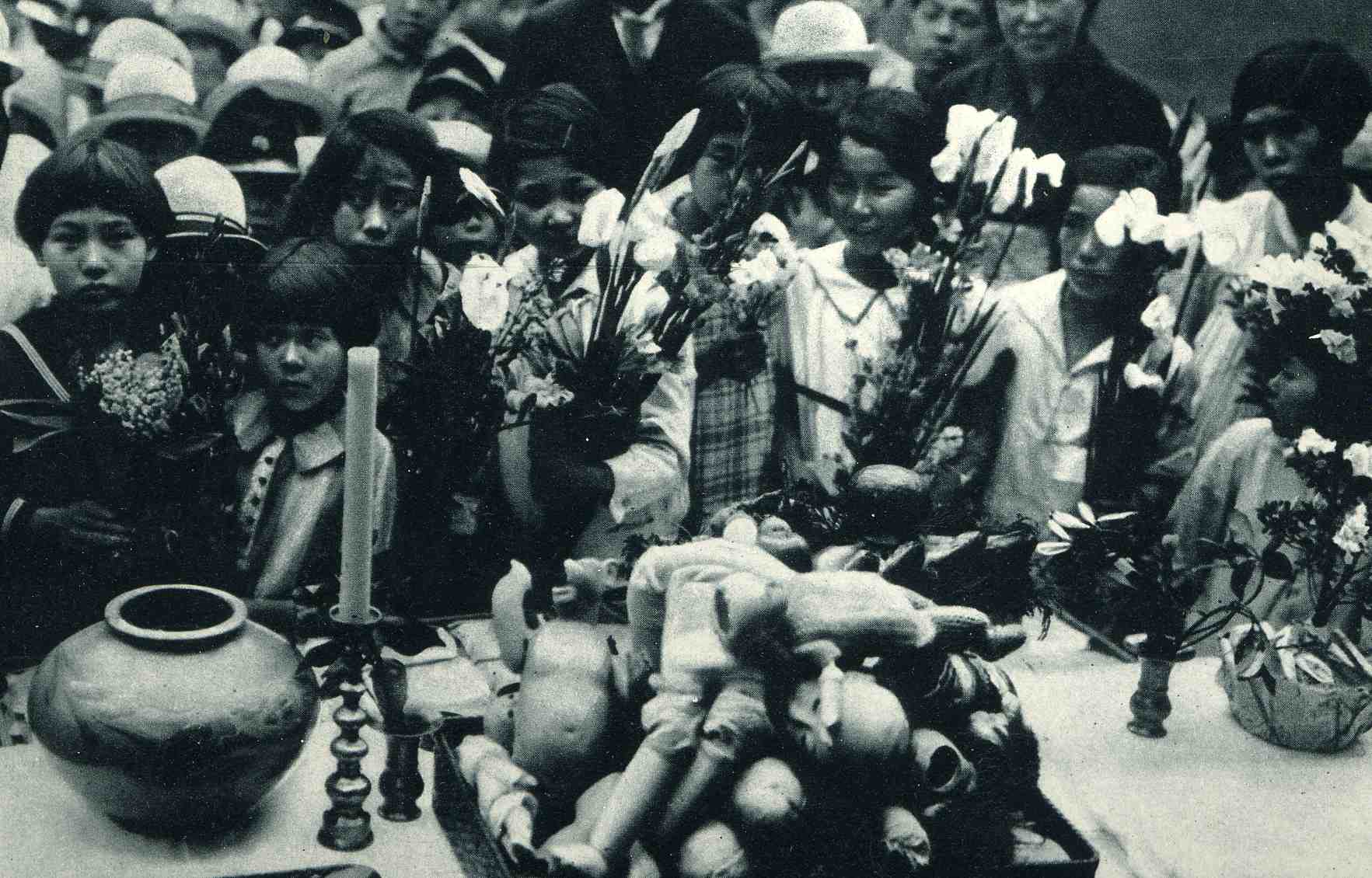
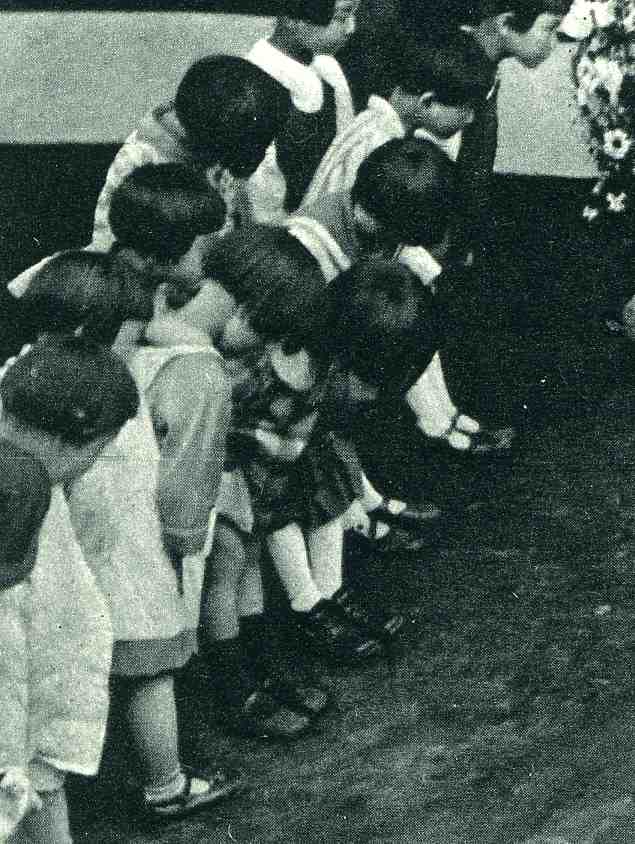
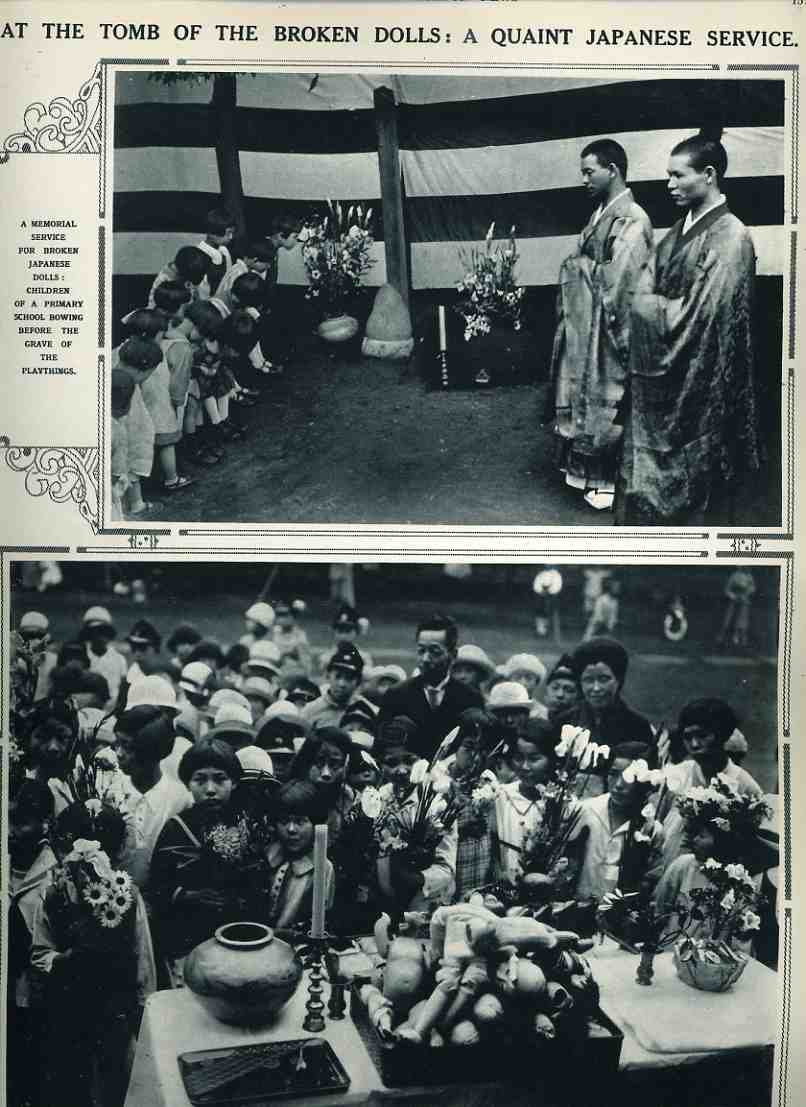
     This is an absolutely outstanding concept, and I simply have no notion as to why we don’t have such observations in the United States.  (The following two details are from the larger images, below, found  in the 27 July 1929 issue of The Illustrated London News, page 157.) The story provides these two pictures and unfortunately scant details of the ceremony which was held at the Imperial Primary School at Sugamo, Japan. 

    The first photo shows the detail of children offering flowers for the altar on which their tray of broken dolls is being venerated; and to the right is the detail of children bowing to the grave of “broken playthings”, though the markings on the (grave?) stone indicate that it is for dolls.  It also seems to be a marker for a mass of toys, not that each toy would have its own marker; I suspect it to be enough to have a place where allot of kids could come to venerate objects in which they might have invested countless hours of their time, effort, attention and affection.  That it is a shared place and experience makes the monument all the more so powerful.

    000-ebay--Nov 1 doll tomb976

    There are few better things to teach a child than to pay respects for something that has given them pleasure or helped them, or, say, for returning the love which has been showed them from their doll or toy.  It has always struck me as not-quite-right that a toy can be a beloved object one day and a dust-magnet the next, destined for the trash heap.  Certainly these are holy objects in themselves, and deserve a better and more kinder fate than being mixed with broken glass and greasy unmentionables. 

     000-ebay--Nov 1 doll tomb974


    Are there greater things to be concerned with?  Yes, of course, but only on the face of it–I think that helping kids understand the underlying dignity of inanimate objects such as their playthings could give them a greater awareness for the other seemingly invisible things that they will find throughout their lives. Further I think that a visible, constant reminder for these objects would be really more like a memory-monument for a period of time, a place in nearly everyone’s life in which held a certain purity and promise, a protected and beloved frailty of the human experience shared by all.  I can honestly think of no other monument that could reach across religious or philosophical or belief systems to arouse a feeling of common goodness than this. Everyone has had a toy that they’ve loved, and I have no doubt that if remembered these would be powerful emotions, and could be about the most common denominator we have on the planet.  I can think of no divisive element in such a monument of veneration.


  • The Towering Magnificence of the Porcupine, 1604

    JF Ptak Science Books LLC  Post 359                                            

    000-ebay--Nov 4--porcupine995

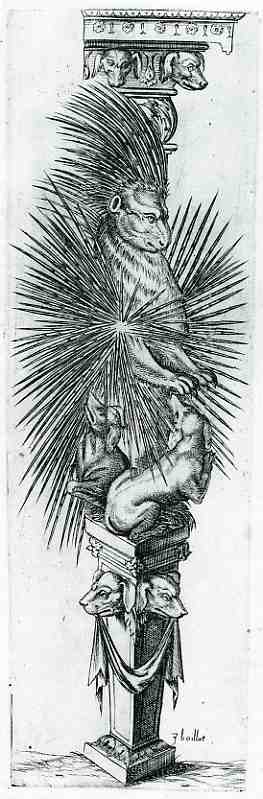
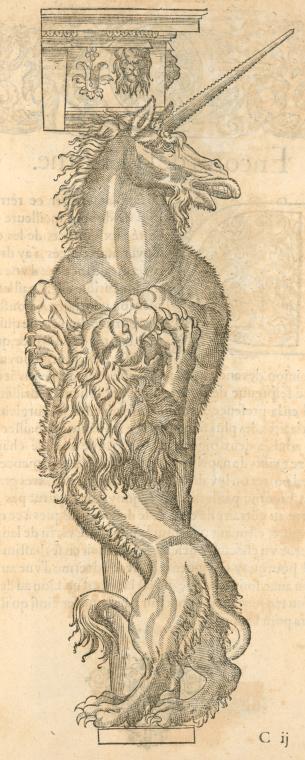
    This is perhaps the greatest monument ever erected to the porcupine–of course it may be the only monument ever erected to the porcupine, but it is undeniably monumental.  This unusual image was published in Strassburg in 1604  in Joseph Boillot’s (1546-1603) sumptuous New Termis Buch (first printed in 1592 as a Nouveaux pourtraits et figures de termes).  It is a bestiary of sorts, a very curious book, offering real and imaginary animals together in alabastered, marblized, memorialized, architectural form, with the  great hope of offering them to fellow engineers and builders for incorporation into the real world.  Or perhaps not, perhaps it was all just done in fun, an exercise, an experience, an artistic creation wrapped inside  the fundus of a great Baroque eyeball.  Unicorn


    The end result is the Boillot produced some extraordinary beasts, wrapping them in extraordinary garments, surrounded by other wonderful animals real and not, and elevated to extraordinary heights.  The powerful unicorn, draped with the vicious but subdued lion; the ass, regal, judicious, pensive, thoughtful, kept in place, or warm, by a dragon. Then of course there is the porcupine, absolutely magnificently appointed with spikes  kept by by dogs, supported at all levels by the creatures.


  • The Detail in the Detail: 20,000 Soldiers & 1 Mule, 1918

    JF Ptak Science Books  Post 358

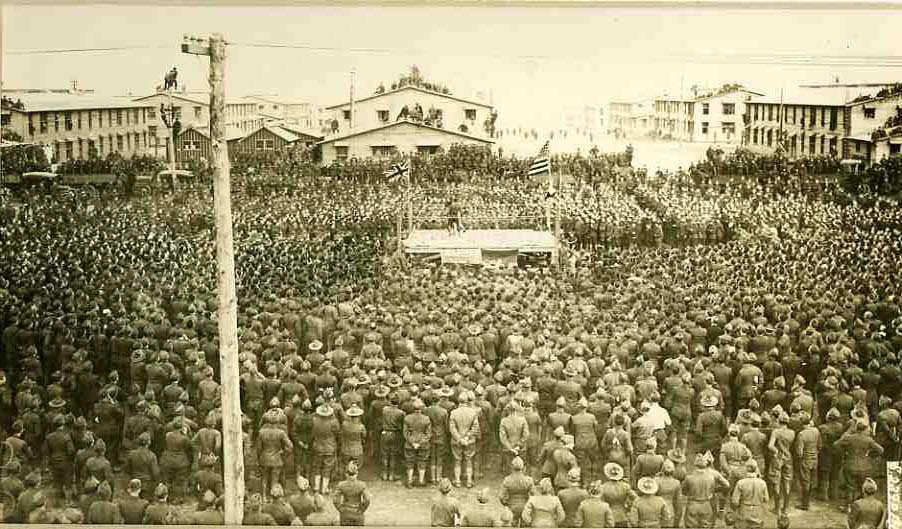
    I’ve made several posts on images of large crowds (most recently on the incredible aerial photograph of the crowd of 100,000 spectators at the Dempsey-Carpentier fight), sometimes using the crowds to put a fleshy face on an otherwise forensic statistic, and sometimes because, well, the photograph is simply beautiful or extraordinary (or both). The later is the case here with this news service photo from Underwood & Underwood (NYC), titled “Boxing Contest Viewed by Twenty Thousand Soldiers”, and published in the middle of 1918.  It depicts a fight between featherweights Hank Schroeder and Jimmy Smith, with the referee being the legendary fighter, Benny Leonard.  (The way that the news photo service worked was that if a newspaper needed a picture, say, of 

    000-ebay--Nov6 boxing crowd997


    American soldiers watching a boxing match to illustrate a story they would have contracted with a company like Underwood and Underwood who would supply the photo and the caption.)  It looks as though Schroeder (who must’ve had a hard time during the war with his name) fought and was defeated by Johnny “The Kid” Troy for the American Expeditionary Force featherweight title–which means that Schroeder may have been the champion, or perhaps not, if the title was vacant).  I couldn’t find anything out about Jimmy Smith, though I did uncover many other Smiths who were boxers in the ‘teens and ‘twenties, including Cyclone Cy, Sgt. Ray, Willie, Petey, Frankie and Buggy. 

    The text that accompanies the image states that “this was one of the most picturesque boxing tournaments ever held”, and I don’t doubt it, as the composition of the crowd, the closeness of the soldiers, and the numbers contained in such a small area, are all pretty singular factors making this an extraordinary photograph.  The fight took place at Camp Upton, ( Suffolk County, Long Island, and named for the great American western explorer and Civil War general), which at the time was still processing troops for the fight overseas. (Camp Upton would be laid to rest after the war until it was reactivated for training for WWII, eventually winding up as part of the Brookhaven National Lab grounds.)

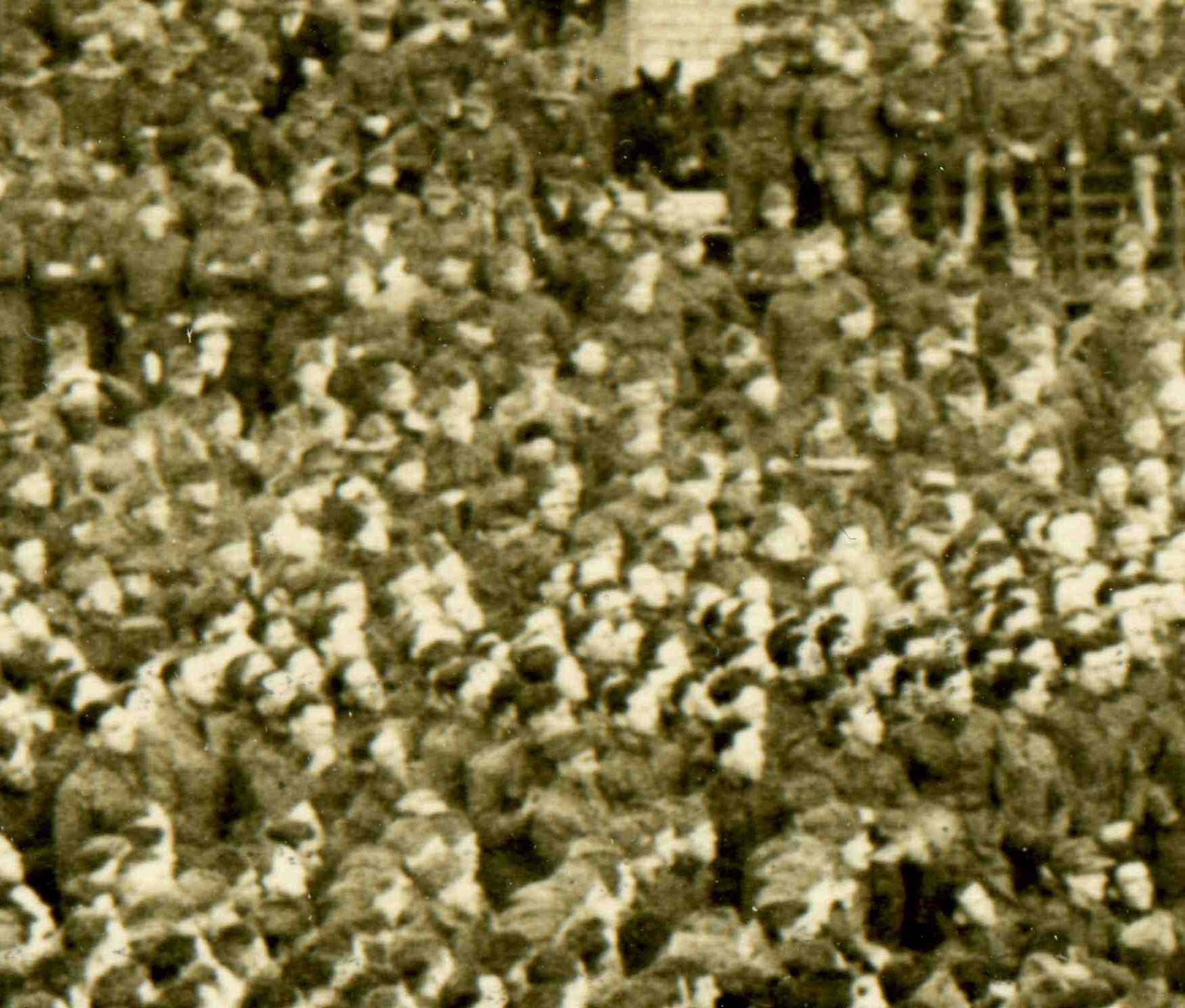
    This detail is from a 5% portion or so of the image from the middle-upper-left, and, I see, happily, includes a mule with the rest of the soldiers.
    000-ebay--Nov6 boxing crowd999

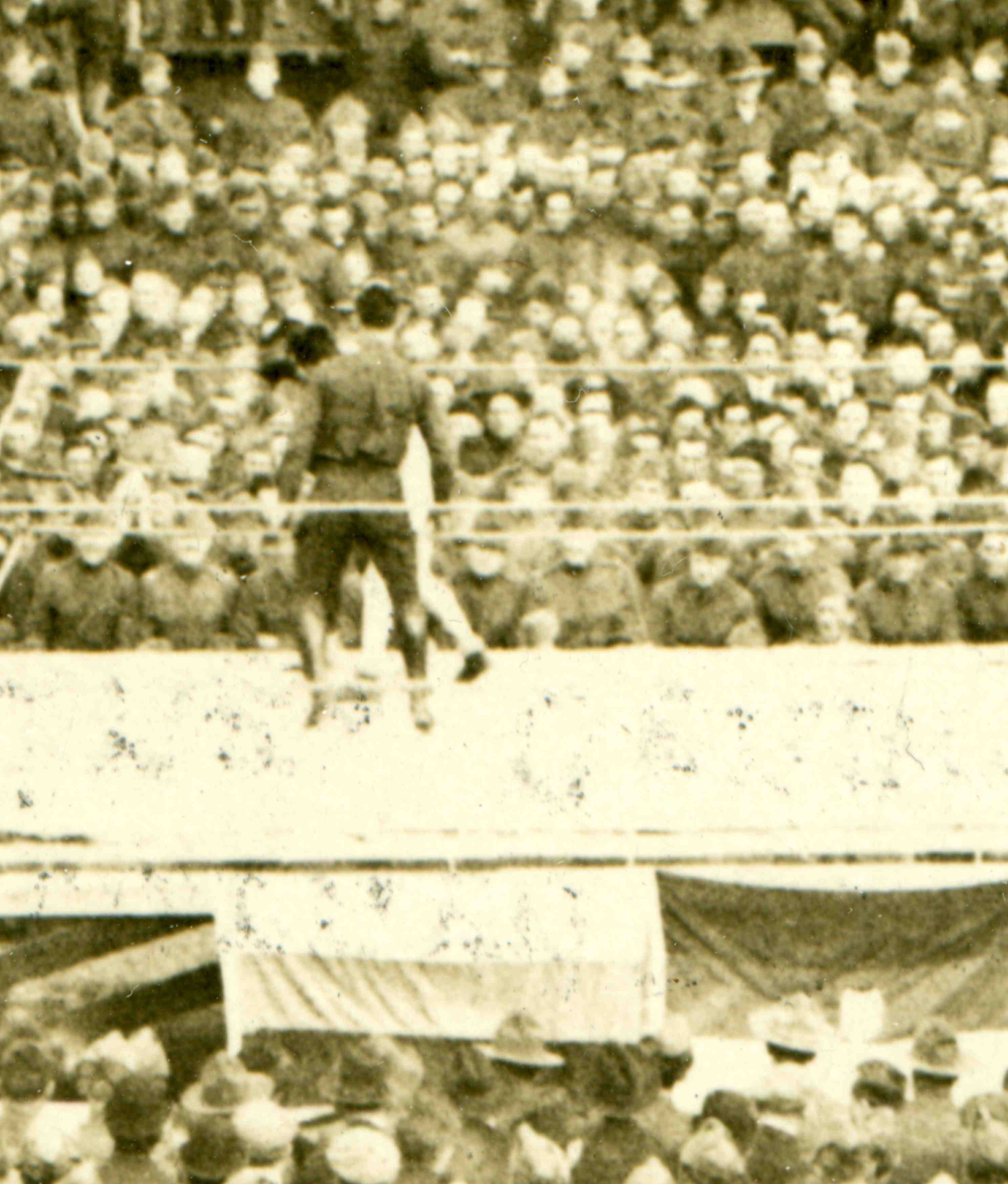
    This is a close-up of the ring itself, where we see Bennt Leonard as the ref with his back to the camera, with the two fighters mixing it up in a tight little one-man ball. I reckon that there must be 300 soldiers in the background of this tight view. 

    000-ebay--Nov6 boxing crowdXYZ002

     000-ebay--Nov6 boxing crowd999XX


  • An Early, Complex Picture of a Really Cold Sky: 1550

    JF Ptak Science Books LLC  Post 357

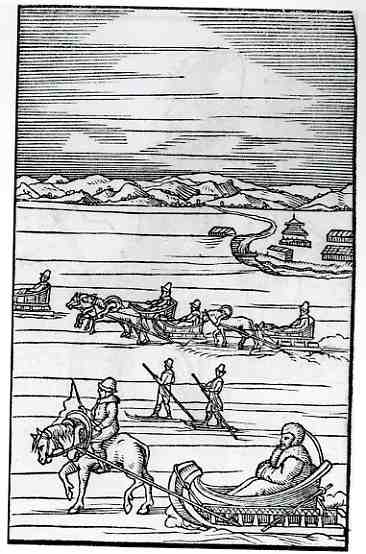
    000-ebay--Nov 4--cold994This woodcut engraving from the Italian edition of Sigismund Herberstein’s Rerum Moscoviticarum Commentarii (literally Notes on Muscovite Affairs) is a fantastic and early image of a terrifically cold scene in deep bleak Russia.  Herberstein (1486-1566) was a Cariolan/Slovene writer, explorer, ethnographer and exceptional diplomat of 69 missions who write this book full of observations of customs, village life, the military–and of course sleighing on frozen rivers and lakes.  But what exactly is going on in the sky? Is this  the aurora borealis?  Or a diffused sunset? Or are these simply clouds in an enormously dry and frigid environment?  I’m not sure precisely what we’re looking at here, but I do know that it is a very *cold* picture.

    See here for a digital version of this work. work.


  • Hero’s Stairs to Nowhere: an Intolerably Small Look at a Great and Important Book

    JF Ptak Science Books LLC  Post 356

    000-ebay--Nov 1 heron978
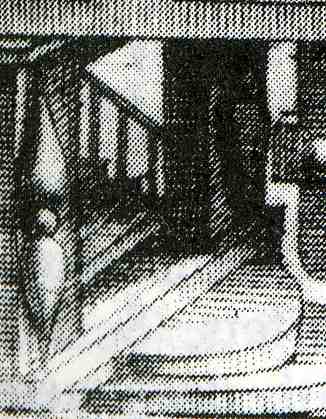
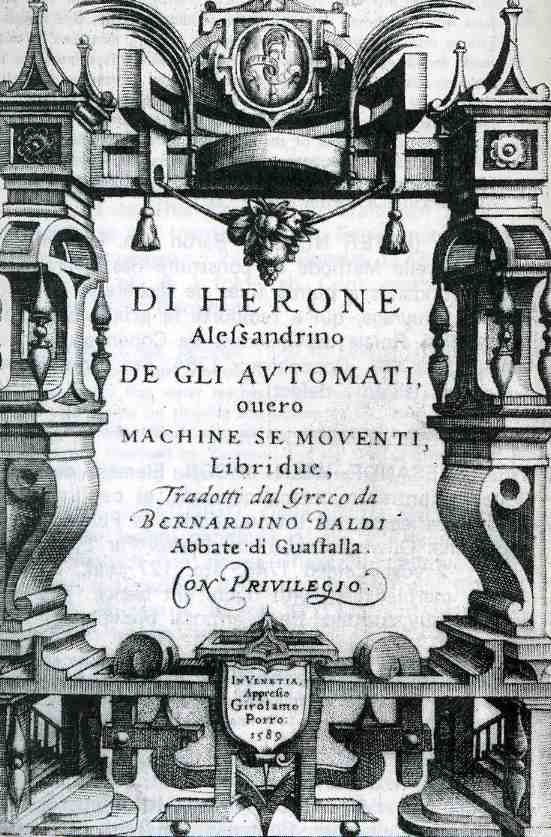
    And so here we have a gorgeous title page for the very first treatise on automata, and the thing I’m focusing on are the stairs in the bottom corners of the design, the stairs that go nowhere.  Maybe its just because of the seemingly flat effect of the perspective that they became so obvious to me, or the  subtle sense of a twisted two-and-a-half dimensions feel to it, the very Escher-y feel of complex, impossible and improbable dimensionality.  For example, the very pre-Baroque ornamentation of this very heavy title page construction seem to bounce between convex and concave, like the background and foreground change place somehow, as it the case of Escher’s trying to find a place between planes of two- and three-dimensional representation.  Although here I’m pretty sure the effect is unintentional; whereas in Escher, the effect is the aim of the art. 

    000-ebay--Nov 1 heron977

    The design and the printing of this large book was the work of the firm of Bernardino Baldi, of Venice, who published De gli avtomati oueri machine se moventi...in Venice in 1589, the original by Her/Heron of Alexandria, who lived ca. 10-70 ACE.   Hero was one of the most exalted of Greeks in the pantheon of ancient experimenters and scientists, an unparalleled inventor and producer of the earliest automatic and robotic devices. Have a look at  the illustrated link to Hero’s fabulous work called Penumatics (below).


  • Extra-Earth Humano-Alien Souls From Outer Space Repopulate Earth-Hell!!(??) Blank & Missing Things XXVII

    JF Ptak Science Books  LLC Post 401


    (Extra-Earth alert! This is the third time that I have found a pamphlet illustrating a view of the earth with an extra alien-earth in the background.)

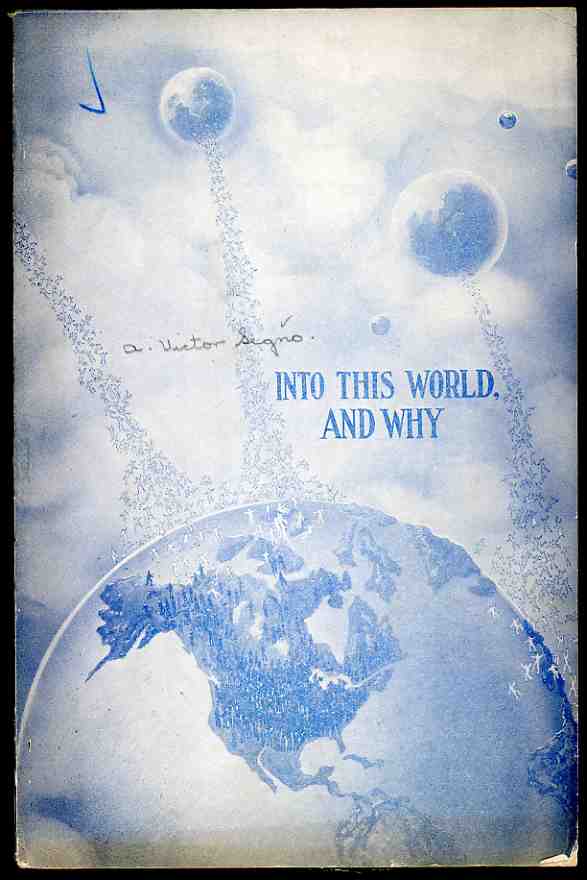
    This 1929 pamphlet by Dr. (?!) Victor Segno is the poster child for  the sub-category of Advanced Strangeness in the Naive Surreal Collection of our store. Segno is no stranger to dislocated and fractured ideas, and has a long history of preaching and extracting money from the preached-to.  Early on in his career he spawned a not-terribly original idea called “mentalism” which involved getting your “brain waves” correct and “harmonizing” your surroundings with them, which somehow also had something to do with leadership and success.  But all of that involved sending Segno a dollar for a pamphlet on brain-wave distribution.  According to Segno’s home-town paper, the LA Tribune, there were something like 12,000 people who were part of the runaway Segno train wreck–the Tribune couldn’t understand why, and didn’t much care for Segno’s quacky successes.

    0--blog---Nov 29 into this world149

    Suffice to say that quite a bit happens between 1902 and this 1929 effort, some of which involves considerable success and tiny-empire building in Echo Park.  But Segno really does break the bonds of treacly abnormalism with “Into this World and Why”, which offers a curriculum of soul/ghost extra-terrestrial astrological-astro dead/reborn beings to come and re-(!!) populate humans on earth.  (Wait a minute–that idea gets picked up by L. Ron Hubbard, yes?  Except that when L. Ron gets a hold of this idea there are 10,000 atom bombs involved and a new added process called “the clear”. But that’s another story.)  After kind of reading this pamphlet, I have come to determine that the best thing about it–bizarro ideas or not–is the cover. 

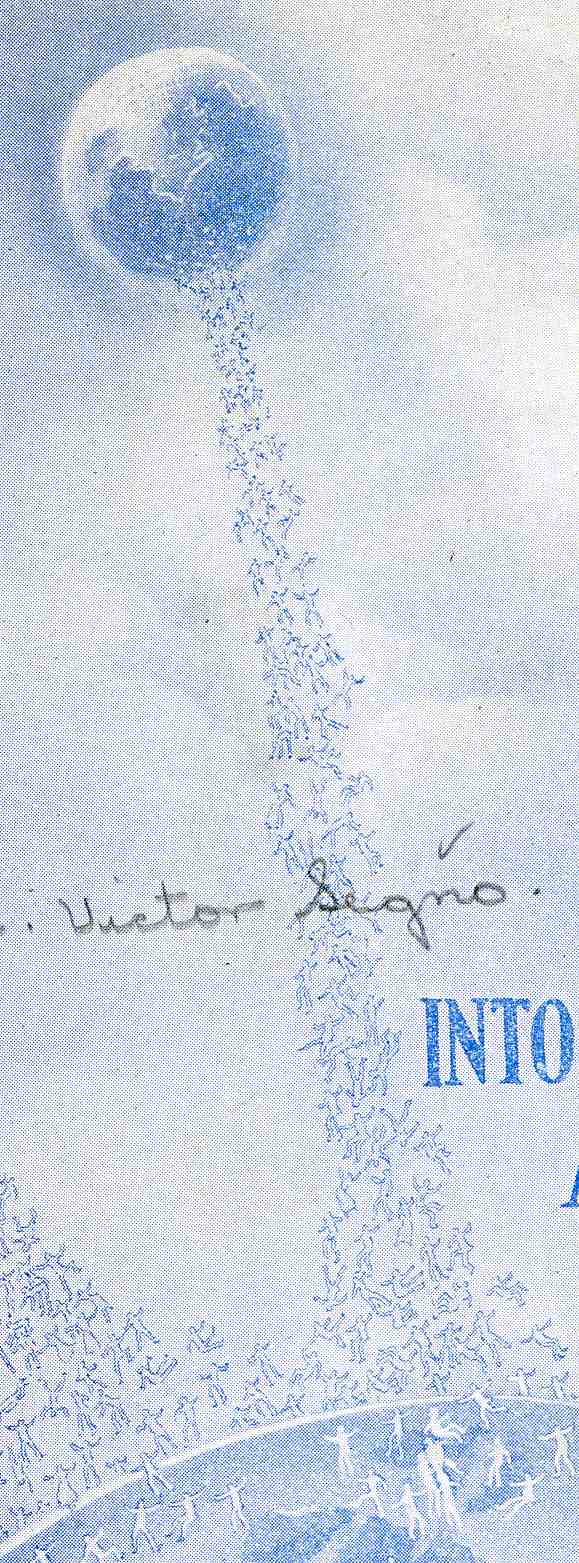
    0--blog---Nov 29 into this world151The cover, though is magnificent.  Look closely, and you’ll see that there are five other earth’s floating above the earth, all of which are contributing not bodies but souls, souls a-piling up like clustered grapes in places, souls being deposited back on earth for another go around in existence. Segno explains to the humble reader that the universe is divided into twelves sections, each populated with a planet that looks like earth, all of which are superior to the earth.  These are soul-abodes for the dead of earth whose souls leave and travel blah blah blah along the means of an undescribed process called “radiography” of the brain waves. As you can see the humanish forms falling onto earth are empty, waiting as they were to fill up a body.  Oy, vey.


    And so the thing drags on for 52 pages, a length probably determined by the paper on hand.  (But that wouldn’t stay the case, as this  pamphlet went into a self-stated 26th edition…if true, then there is no justice in publishing,)  The only reasonably entertaining and proto-sci-fi idea that comes into play here is that in all of the universe it is the earth that is Hell.  Earth is the place of punishment that souls are sent to until they get things right, at which time they leave for one of the other twelve earths.  So it goes.  

    0--blog---Nov 29 into this world150

    The other interesting bit on the cover is the representation of the giant mountains of Europe, which erupt above the earth’s horizon.  I figure that for these bumps to be so prominent that the mountains needed to be at least a hundred mile high. 


  • Wholesale and Retail: the Timelessness of Bailouts and Corporate Thievery

    JF Ptak Science Books   Post 399

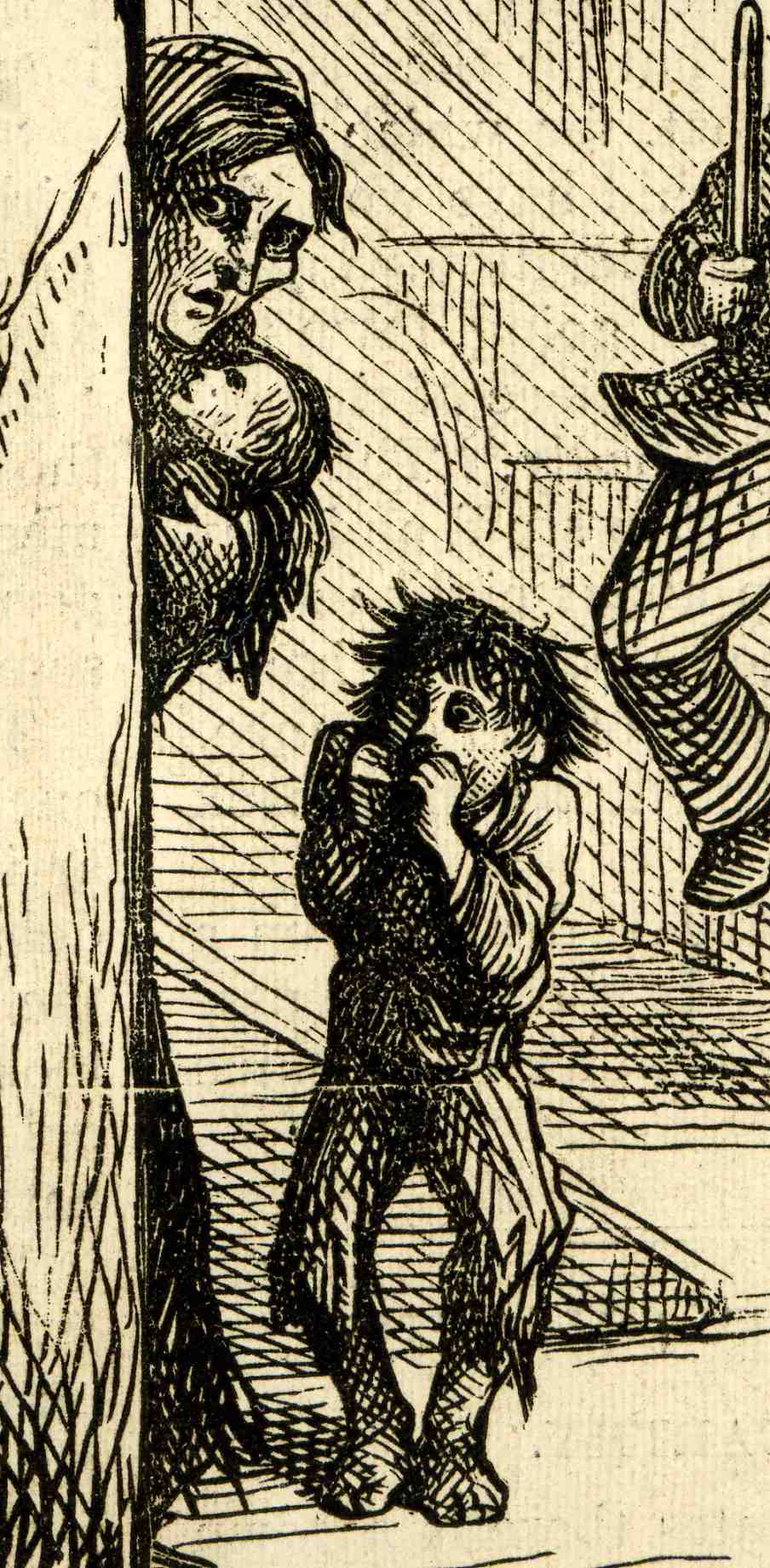
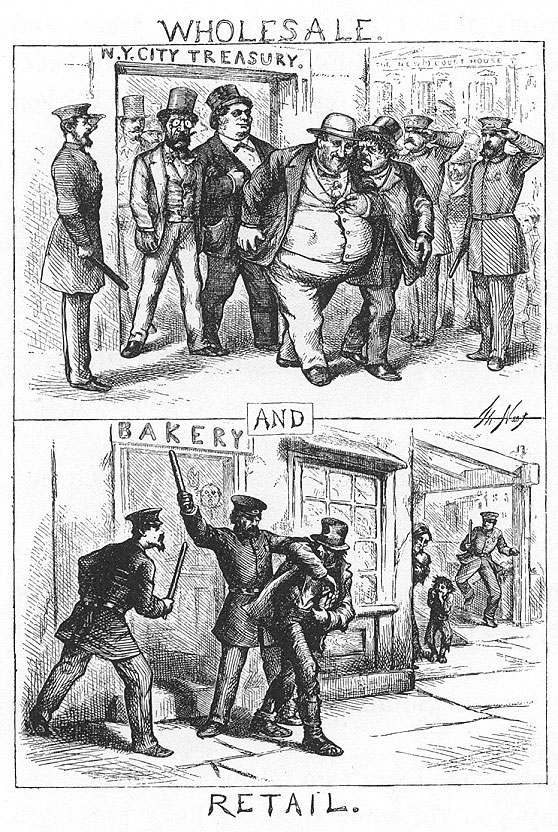
    0--blog---Nov 28 wholesale147 The largely-heroic Thomas Nast has proved–unfortunately–that his visual social commentary is timeless.  For example, this iconic 1871  image of the wholesale theft and corruption of U.S. treasury and government funds by William “Boss” Tweed and his Tammany Hall conspirators versus the swift retribution to the retail theft of the destitute man trying to provide food for his starving family can still be run today on editorial pages–except of course that no one likes to see the faces of  horrified children, their innocence and observation uncomfortably reflecting the true nature of the social situation.

    Nast addressed his audience visually–the illiterate readers didn’t need a word of English to understand these images, knowing full well who the disgusting Tweed was and of course being well familiar with the folks in the bottom half of the cartoon.

    The image is immediately understandable, and powerful.

    Evermore so since Nast used terror in the face of the little child–seeing his father being beaten and arrested by at least three of NYC’s finest–to send the point home to the heart of any viewer who had one.I’m not an historian of this media, but over the decades I’ve seen many dozens of thousands of such images, and I think that I can say accurately that (at least before 1900) children are not used in such a way to make a political point. 

    The emaciated mother, the terribly-afflicted baby in her arms, the terrified sibling, all set against the jowly baker and the rotund Tweed make the image utterly heartbreaking, horrifying.

    08 Wholesale and Retail

    The faces have changed, today, and Tweed has been replaced by a host of others; the process is the same, though with different and more extravagant mechanics.  And the money is bigger. 


    I doubt that there will be much trickle down from the trillion dollar bailout that would reach today’s version of this child–we’re just not reminded as often that there are still large populations of these children who might benefit from a tiny percentage of largese from something like the AIG bequest. I’m just saying that if say one-tenth of one percent  ( .1% ) of the trillion dollars (and one trillion dollars looks like this: $1,000,000,000,000) coming down the sluice was tithed to the 10 million kids in this country who could really use some help that there would be one billion dollars more to help someone out.  I know that this will not happen, mainly because those tenths of a percent add up–why, if you take 10 of them you’d get all the way up to one percent. 


  • Wicked Polly Reveals the Sameness of Names, 1827

    JF Ptak Science Books LLC Post 341

    00-blog-Oct 22-polly908
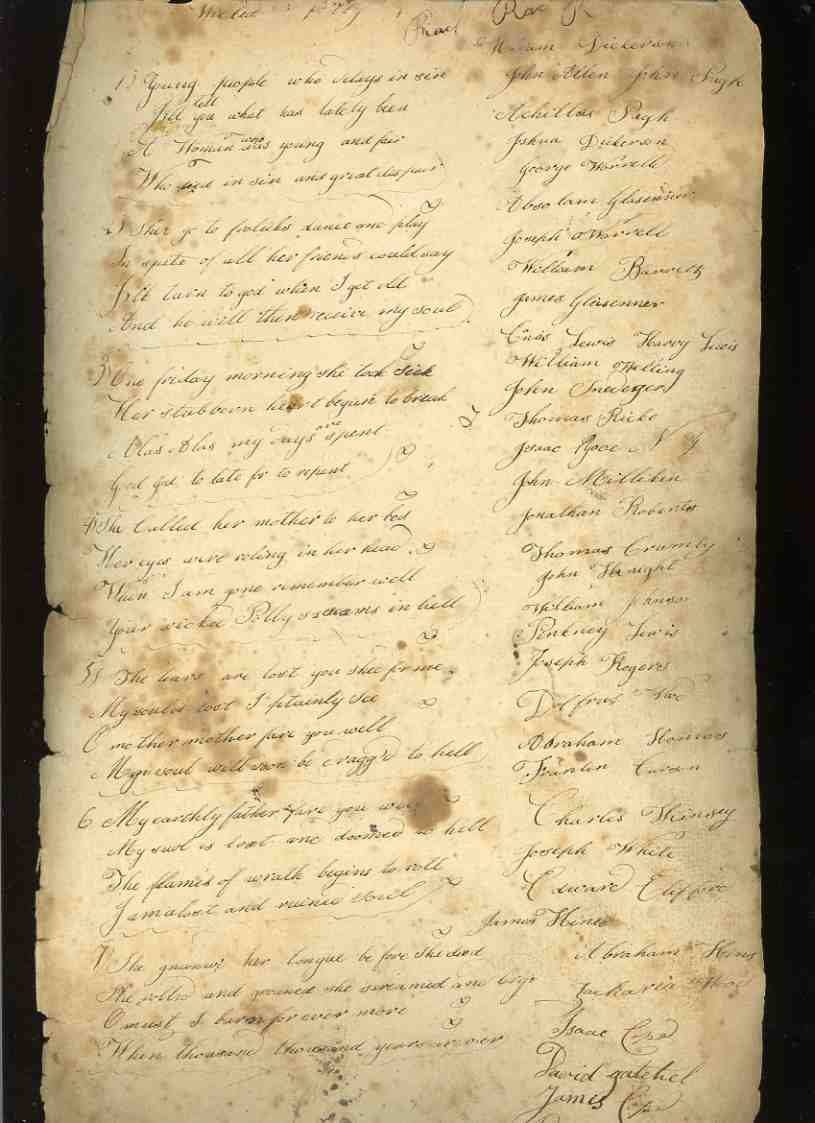
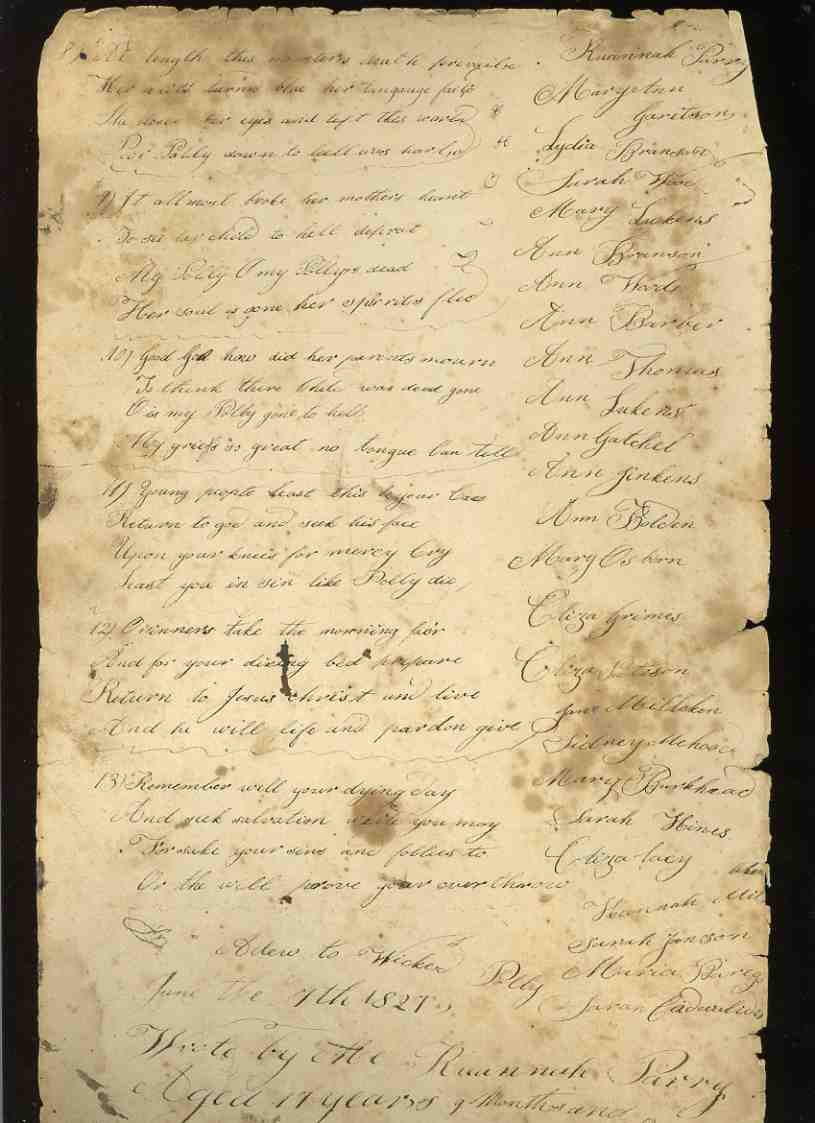
    In my collecting of antique children’s art (that is, art produced by children from 1880 and earlier) I’ve stumbled across a number of interesting other associated, relateable,  things.  One such item is this manuscript copy–from 1827–of a much older children’s warning/lesson poem, called “The Lamentable Story of Wicked Polly”, a scare-the-kids-to-death kind of poem, instilling (and installing) a very healthy dosage of the wrath of god, a falling away from the just Jesus, and the regretably-late realization on the everlasting pain of sin.  A rosey children’s lullaby it is not.

    [The lyrics are below; click on the images for a more legible resolution.]

    But the side interest here is literally at the side, a perhaps revealing bit of marginalia in which the copyist has recorded the names of 54 children (I imagine).  Are these names the names of classmates, other children in school, kids in town?   There are 26 girls and 28 boys; the girls, as it urns out, have 9 different names; the 28 boys have 18 different names. I wonder why?  The girls have the following names (and with the number of holders):  Ann (7), Ekiza (4), Mary (4), Hannah (3), Sarah (3), Mary (3), Jane (2) and then one each for Lydia, Sidney and Maria. 

    The boys have more imaginative names:  most popular are William (4) and John (4); this is followed by Joseph (3), James (2), and Abraham (2).  The rest of the names are single-uses, and include: Achilles, Joshua, George, Absolom, Enos, Thomas, Pinkney, Charles, Edward, Zachoria, Isaac, Dening and Reason.  This is a small and unexpected sample, but it is interesting nonetheless–I don’t even have an explanation, just this observation. 


    00-blog-Oct 22-polly909

    The Lamentable Death of Wicked Polly


    Young people who delight in sin.
    I’ll tell you what has lately been:
    A woman who was young and fair,
    Who died in sin and sad despair.

    She’d go to frolics, dance and play,
    In spite of all her friends could say;
    I’ll turn to God when I get old,
    And He will then receive my soul.

    One Friday morning she took sick,
    Her stubborn heart began to break;
    Alas! alas! my days are spent,
    Too late! too late for to repent.

    She called her mother to her bed-
    Her eyes were rolling in her head-
    When I am dead remember well,
    Your wicked Polly screams in Hell.

    The tears are lost you shed for me,
    My soul is lost, I plainly see;
    Oh! Mother, Mother, fare you well-
    My soul will soon be dragged to Hell.

    My earthly father, fare you well,
    My soul is lost and doomed to Hell;
    The flaming wrath begins to roll,
    I am a lost and ruined soul.

    She gnawed her tongue before she died,
    She rolled and groaned and screamed and cried,
    Oh, must I burn forever more,
    When thousand, thousand years are o’er?

    At last the monster Death prevailed,
    Her nails turned blue, her language failed;
    She closed her eyes and left the world,
    Poor Polly down in Hell was hurled.

    It almost broke her mother’s heart
    To see her child to Hell depart;
    My Polly, O my Polly’s dead,
    Her soul is gone, her spirit’s fled.

    Alas – how did her parents mourn
    To think their child was dead and gone.
    Oh! is my Polly gone to Hell,
    My grief’s so great no tongue can tell.

    Young people, lest this be your case,
    Return to God and seek His face.
    Upon your knees for mercy cry,
    Lest you in sin like Polly die.

    Oh! sinners, take the warning fair
    And for your dying bed prepare,
    Return to Jesus Christ and live,
    And He will life and pardon give.

    Remember well your dying day,
    And seek salvation while you may;
    Forsake your sin and follies, too,
    Or they will prove your overthrow.