A Daily History of Holes, Dots, Lines, Science, History, Math, Physics, Art, the Unintentional Absurd, Architecture, Maps, Data Visualization, Blank and Missing Things, and so on. |1.6 million words, 7500 images, 4.9 million hits| Press & appearances in The Times, Le Figaro, Mensa, The Economist, The Guardian, Discovery News, Slate, Le Monde, Sci American Blogs, Le Pont, and many other places… 5000+ total posts since 2008.

Category: Prints–looking HARD/deeply at

  • Found Portraits Outside and Under Els: Greenwich Street, NYC, 1893

    JF Ptak Science Books  LLC  Post 439

    0 blog dec 22 el309

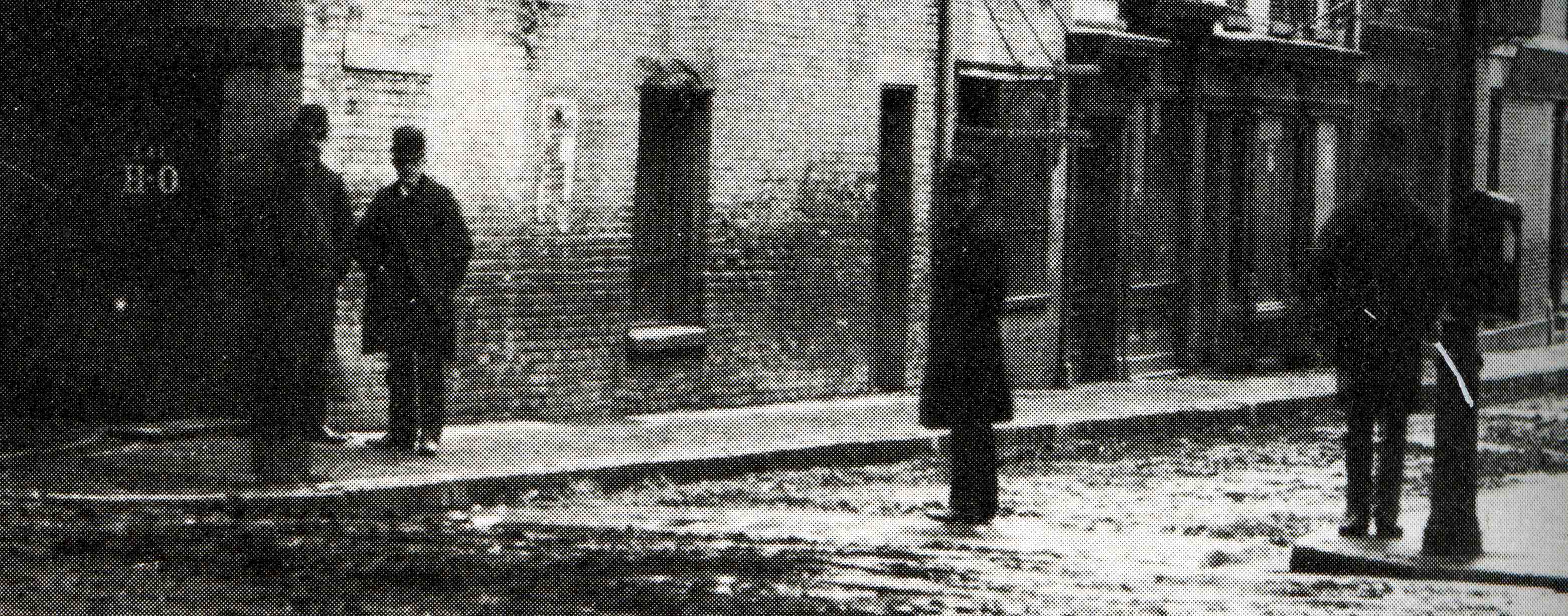
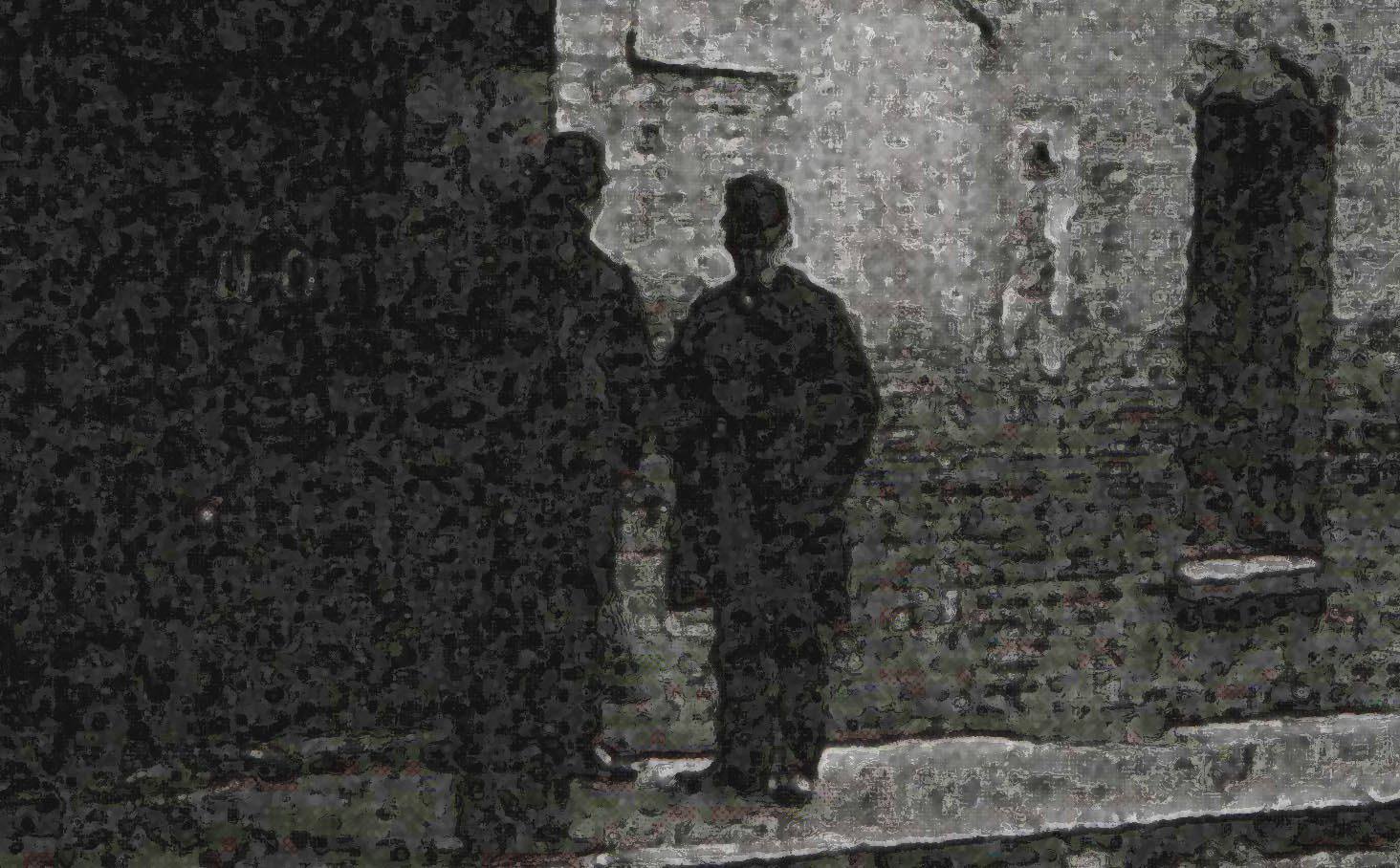
    0 blog dec 22 el311 Just another in a short series of looking hard at NYC photographs, looking for miniature scenes within small scenes within sub-scenes within the whole.  Ken Burns has made a living by wrapping this process around storytelling, I know, but that doesn’t mean that us normal folks can’t do it too.  This capture is of Greenwich and Morris Streets, made by the John S, Hall & Son firm around 1891.  Morris is a very short bugger of a street, barely five houses long, running into Washington Street (which you can’t see because of my bad cropping).  The group of men waiting for the photo to be made are patient, feet close together, all bowlers straight-on, with one man standing nearly in a puddle.  The closer you pull into these men, the more their stories seem wanting to be told. 

    0 blog dec 22 el311 artistic 2


  • Found People in Windows: Hudson Street, NYC, 1865

    JF Ptak Science Books LLC  Post 438

    0 blog dec 21nyc307

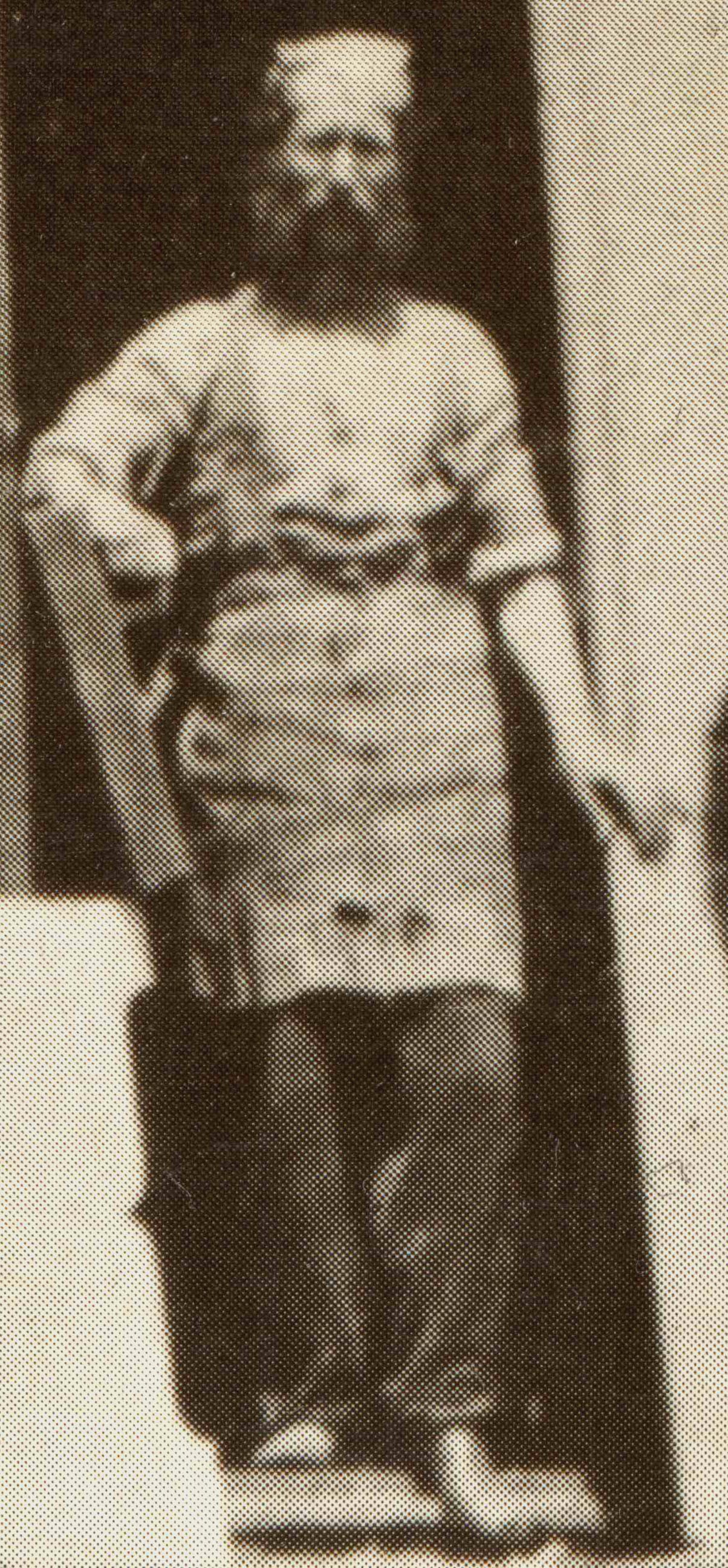
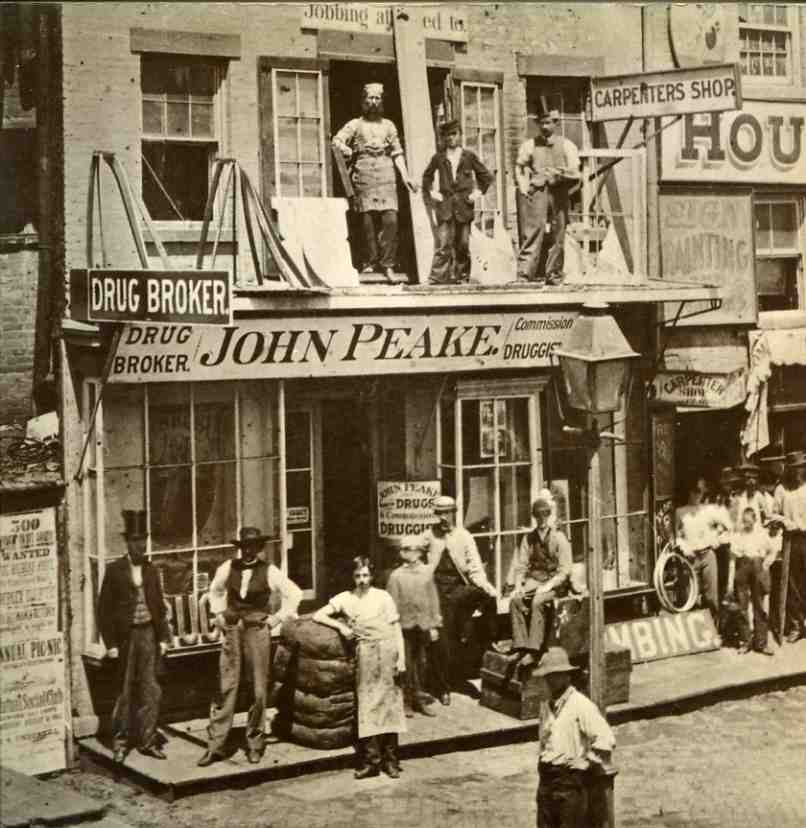
    This fine-looking, serious and imposing specimen steals the show in the photo made to exhibit the John Peake Pharmacy, from whom this carpenter rented his second-story workspace.  I have no doubt that Mr. Peake is the well-dressed fellow in the tall beaver-skinned stovepipe hat at bottom.  The photograph was made by Marcus Ormsby on :Lower Hudson Street in New York City in 1865–one of the signs to the left of the supposed Mr. Peake says something about a picnic taking place in August 1865.  The poster above that one though says something about “300 Wanted” and looks a lot like Civil War recruitment posters that I’ve seen–if it was July/August or thereabouts the war would’ve been over for months….perhaps it was an old poster, perhaps a poster for something else entirely. 

    I do like the carpenter in his working window, there above the “a” in “Peake”–he is holding a substantial planer (or moulder?) in his right hand, and wearing what looks like a union/affiliation 4-square cap.  I’m happy to see that he  is steadying himself with his left hand’s pinkey–for all of that musky confidence he  seems perfectly well in comfort keeping his whole enterprise artistically balanced with a longish-looking pinkey finger.

    The buildings in this photo–not 18th century, I don’t think, but probably thirty years old or so in 1865–are virtually covered by signage advertising what was going on inside:  the larger image shows a printer, carpenter, oil cloth merchant (“oil’d clothing”), pharmacist, paintstore, sign painter and card maker, all there and doing business in about 60 feet of street.  The interesting part of the signs is the very free use of the period “.”, which ends one-word pronouncements, proper names, and just about everything else–I like that. 

    All of this aside, this is just a gorgeous photograph offering a perfect glimpse into a workaday scene in NYC just after the end of the Civil War.

    0 blog dec 21nyc306


  • People in Windows: Found Portraits in Little Places, 1887

    JF Ptak Science Books LLC  Post 437
    0 blog dec 21 johnston nyc304
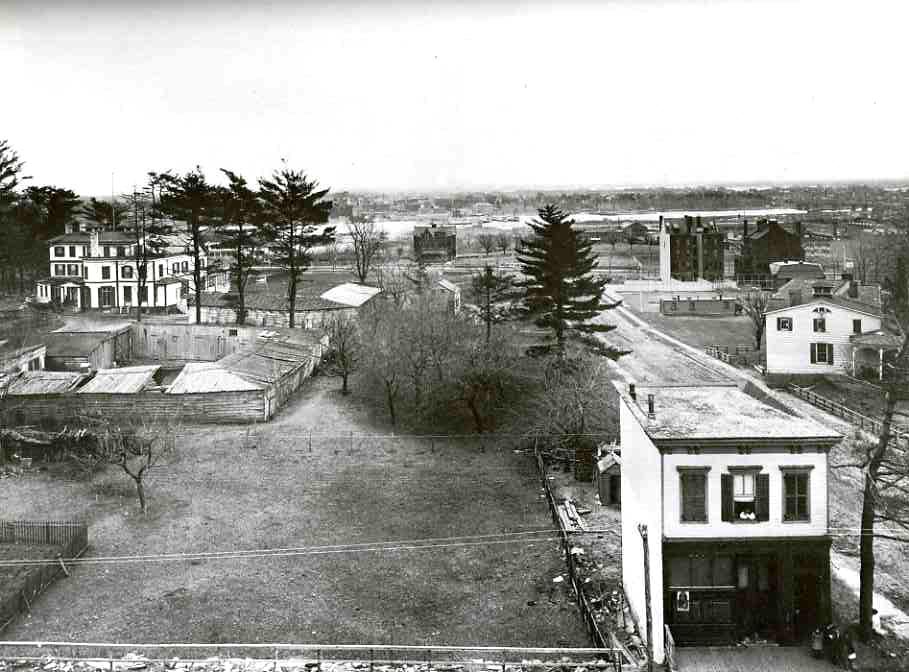
    This photograph was made in 1887 by the prolific if not mysterious* John S. Johnston, taken from Amsterdam Avenue (between 147th and 148th streets) , and looking east to the Harlem River and the Bronx.  My guess is that there was a three- or four-story apartment on the west side of Amstersdam and Mr. Johnston set himself up on the roof with his view camera to make this shot.  As a photographer Johnston’s interests extended to naval/nautical scenes–making photographs of the American fleet as well as racing yachts and such–and recording creeping uirbanism into formerly rural areas in the northern reaches of NYC. 

    Of interest here is the brand-new Mount Saitn Vincent Hotel (at left), and the small animal pen located right in fron of it.  The other interesting deal is that there is a considerable amount of trash that has blown up against the fences (especially at bottom) from the winds coming in off of the river–from where I sit it seems as though there might be a foot or two of trash leaning up against the fence. Actually one of the things that my eyes are trained for now is looking at the trash in the streets of old cityscape photographs–it is really remarkable how much stuff winds up on the street and preserved foreverish in photos….one of my favorite images, which I cannot put my hands on this very moment, shows a few fellows leaning up against the side of a newly opened “New York Store” in Austin, and in the gutter in front of them are four ratty old shoes strewn amidst the other less recognizeable trash.

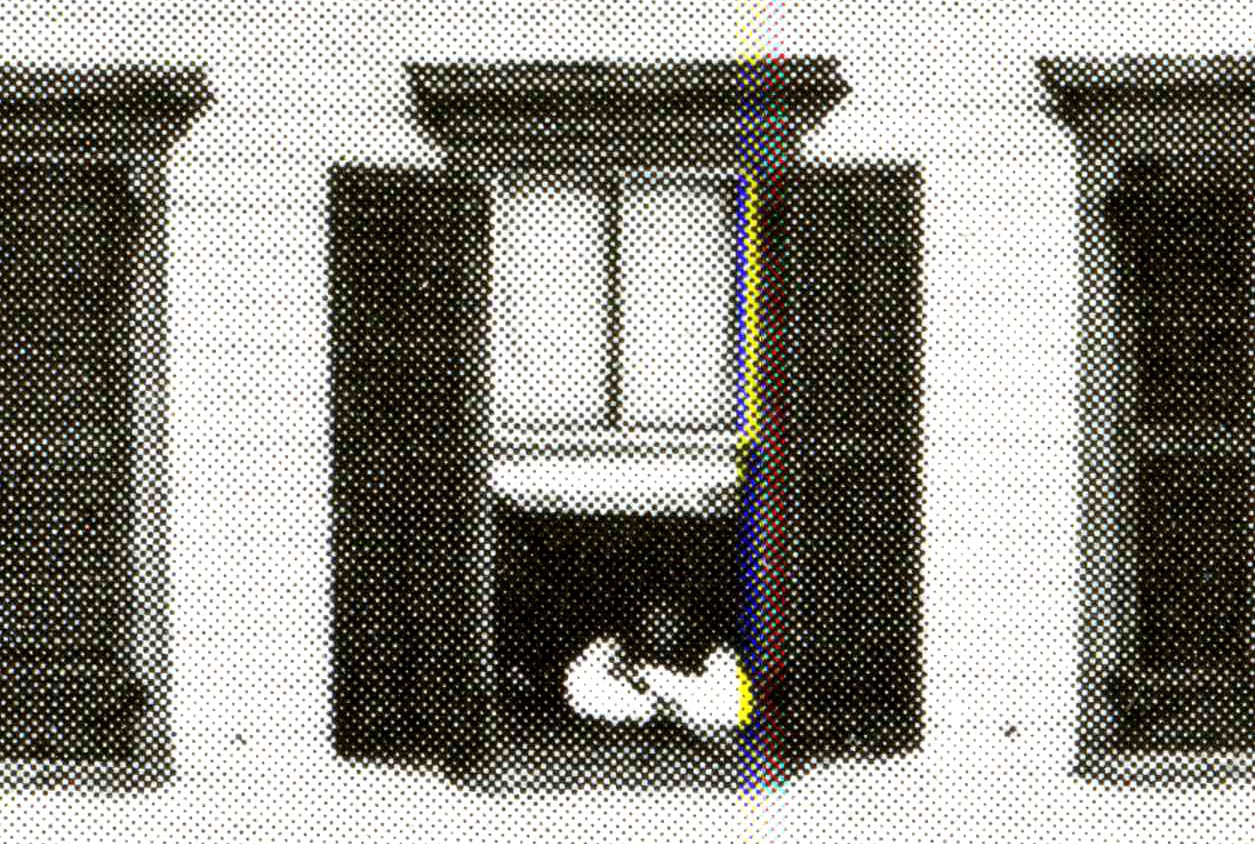
    The other interesting bit is the found portrait of the man scene leaning out of his second-floor window in the building at bottom right.  Unfortunately I’m not working with the original so I’m picking up a lot of grain from the halftone, but after playing with it a little in photoshop I’ve come up with a reasonable look at this man, who must’ve just been watching Johnston getting his exposure ready.  I have little doubt that if the original were available that we’d be able to discern facial characteristics.  (Actually, I’m looking for myself again–I’ve found images of me lurking in tiny bits of large crowds in old photographs; sometimes the resemblence is astonishing, really.  This guy already looks big abd bearded and bald, which is most of my story.  If you drop in my eyes, there I am.)

    0 blog dec 21 johnston nyc305

    *Johnston lived not far from where this picture was made:  his addresses have been given as 783 Broadway, 1263 Broadway and  508 W. 158th St.  He died at Niagra Falls, where he went to recuperate from a “severe cold” that he caught while making photos at a horse race.  On his deathbed, he refused to identify any friends, or family, and would not give the address of his home.  The obituary reported that he did have a wife and daughter, but they had been estranged “for some time”.  I can respect a man whose wish is to go out very quietly.  (I don’t know the story about his identification and how the obituary came to be written–that woul dmake an interesting tale.)


  • God’s Odds: the (Very) Fine Arithmetic of Heaven and the Infinite Population of Hell

    JF Ptak Science Books LLC  Post 436
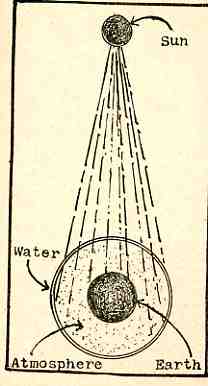
    0 blog dec 20303

    Some years ago I purchased a rather large collection from the Library of Congress unimaginatively called “The Pamphlet Collection”.  It was not very distinguished, and for the most part, not terribly interesting on the face of it–but it was LARGE and, as it turns out, most of the material in the collection just isn’t anywhere else (for good or for ill).  After trying to make sense of the purchase–which was categorized and boxed but I couldn’t really figure out what the principle of division was–there was one pile that refused identification because the subject matter was so inescapably unusual, so unexpected, so logic-challenging, that they formed their own genre: they became the Outsider Logic collection.  There are at least 500 of them, maybe more.  They are differentiated from the Naive Surreal collection, which is associated but just happen to look incredibly odd because they are not only way out of context but also their context largely doesn’t exist anymore.  

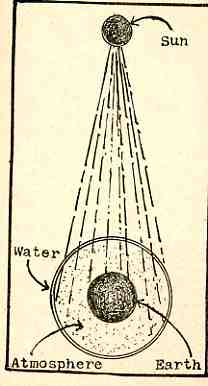
    The sample today is a religious tract of some sort–very scream-y, lots of quotation marks, exclamation points, and is thick and stubbily printed, and which really doesn’t have a title per se, the front cover simply starting  “Behold I Make All Things New. This work by  V.T. Houteff.It is too long to get an idea of what is really going on, but I happened upon this diagram, which, shall we say, is a little on the outsider side, as the author explains that the Earth “lives” in an atmosphere surrounded by a bubble wall of water.  I like the arrow pointing to “water”. 

    On the next page to this attractive image was a longish rant on the number 144,000.  It turns out that 144,000 represents the total  number of people allowed into heaven. 

    If this is so, where is everyone else?  That doesn’t leave much room for pets, or other animals, or insects.  DO plants go to heaven?  What about amoebic life?  When a person “goes” to heaven, what goes with them?  Are all life forms—microscopic and not—that are always present on a person/body given a free ride?  There’s a lot of life going on oh the surface of the skin and of course inside the body…I guess that would be a “no”, as I imagine Heaven would be ultimately clean. 

    I assume that people still have bodies because of the belief—exhibited in this pamphlet of outsider logic and by perhaps millions of other people who are adherents of other faiths and belief systems—that there are 144,000 people allowed into heaven. Wouldn’t there be infinite room for your spirit, which I would imagine to be infinitely small?  Something that has no mass and is not calculable on any level couldn’t ever fill anything up.   

    The 144,000 figure is something like 7/100’s of one percent of all people who have lived and are living, which is something like having a one-in-five million chance of getting into heaven right now—that is IF we allowed that heaven could be filled up right this instant.  If there was wiggle room involved—say if g wanted to include the possibilities that there might be a ultimate human population of 1 trillion or something like that, then, well, there are two more zeroes that would go in front of the percentage number (.0007%), to provide for the prospect of heaven not getting filled up until some point in the next 100,000 years. 

    What if there were 124,000 people already in heaven?  Suddenly competition gets gigantically fierce, allowing 20,000 places for the current 6 billion, which means that .001% of everyone living gets into heaven and then fill it up.  What would it be like to be the last person in?  Do you shut the door?  Are there people behind you on line? 

    And then how good do you have to be to get in?  Better than a baby who dies in childbirth?  That happens about 50 times an hour, worldwide, so far as I can tell.  I’d expect a person like that could get into heaven as they certainly didn’t have much of a chance to do anything to interfere with g_d or its plan.  Once you start throwing in children who die who are under the age where they could commit a foul act, say 5, and then toss in aborted fetuses (which for these cases I’m sure would be called “babies”), that figure of 50-an-hour would jump, probably, two orders of magnitude.  500 deserving babies an hour for thousands of years adds up to a heck of a lot more than 144,000.  Actually the 144,000 total would be hit in less than three weeks.  Which in the course of tens of thousands of years of human civilization and 10,000’s of thousands more to come, that would mean that 99%++++ of all babies and children who die before the age of 5 would go to not-heaven.  It is also hugely
    problematic because humans may be around on earth for another million
    years, which cuts the chances of slipping into heaven to seven (or
    twelve) places to the right of the decimal point.  Those are not good
    odds.

    That, friends, doesn’t sound very fair.

    I guess that means that hell doesn’t have a bottom line.  Hell never gets full.

    I don’t mean to stomp on any belief systems here, but, well, the numbers sorta speak for themselves.  They also mean that for all of the Jehovah’s Witnesses alive right now—a religion that distinctly shares this 144k belief—that basically none of them alive right now stand any sort of chance of going to heaven.  That is a hard sell.

    A statement in fairness to the ancients:

    Historically, speaking for the folks thinking about this 2000 or whatever years ago, 144,000 does loom larger than it looks today, of course.  Not only was the population of the world much smaller (by almost two orders of magnitude) but there was also almost no way for anyone living then to accurately guess the global population.  Given a population of 100 million, if everyone alive in the year 1 were to be considered for a filled-up heaven, then about one-tenth of one percent would make it.   Now, if you were an ancient and thinking about the population of the world in general, my best guess is that you’d be thinking in terms of maybe tens of millions. Maybe.  That means the 144k figure would be something believable, sort of, being 1% of the population.  Say we grant the 1% as a given; and that it was a given that the ancients thought in “low” numbers for populations; it is also a given, I think, that they did think in long terms of time, in the thousands of years, at least.  That means if they gave room for heaven to be :”filled up” in a thousand years, and the population of the world didn’t change, it would mean that of everyone on earth as known to the ancients that 144 people a year for a thousand years would go to heaven.  And frankly, those figures don’t look very promising either.   
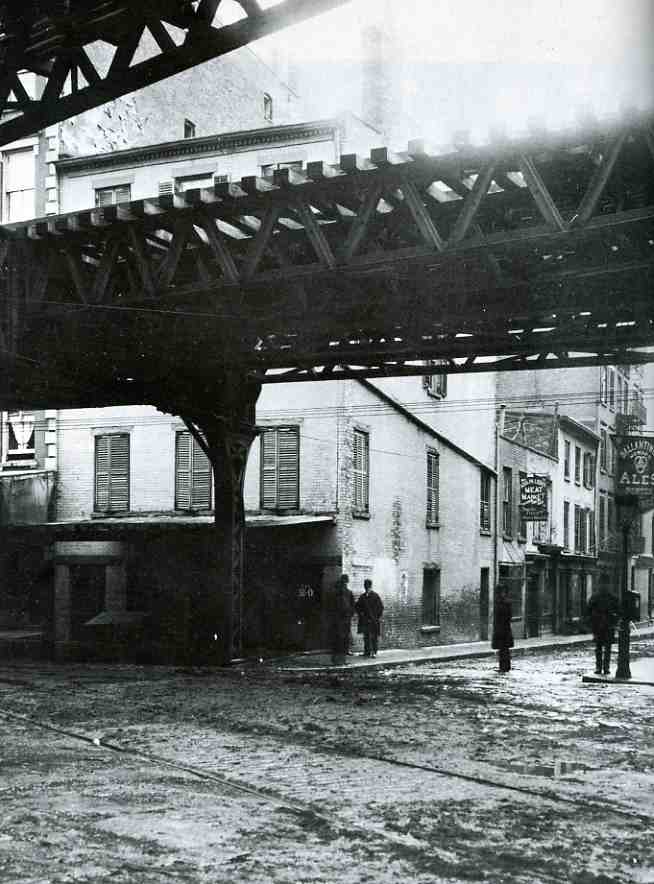

  • “The Fall of the Bolshevik Regime”, Kereneky in Petrograd 1918

    JF Ptak Science Books   Post 435

    0 blog kerens=ky 18 dec285

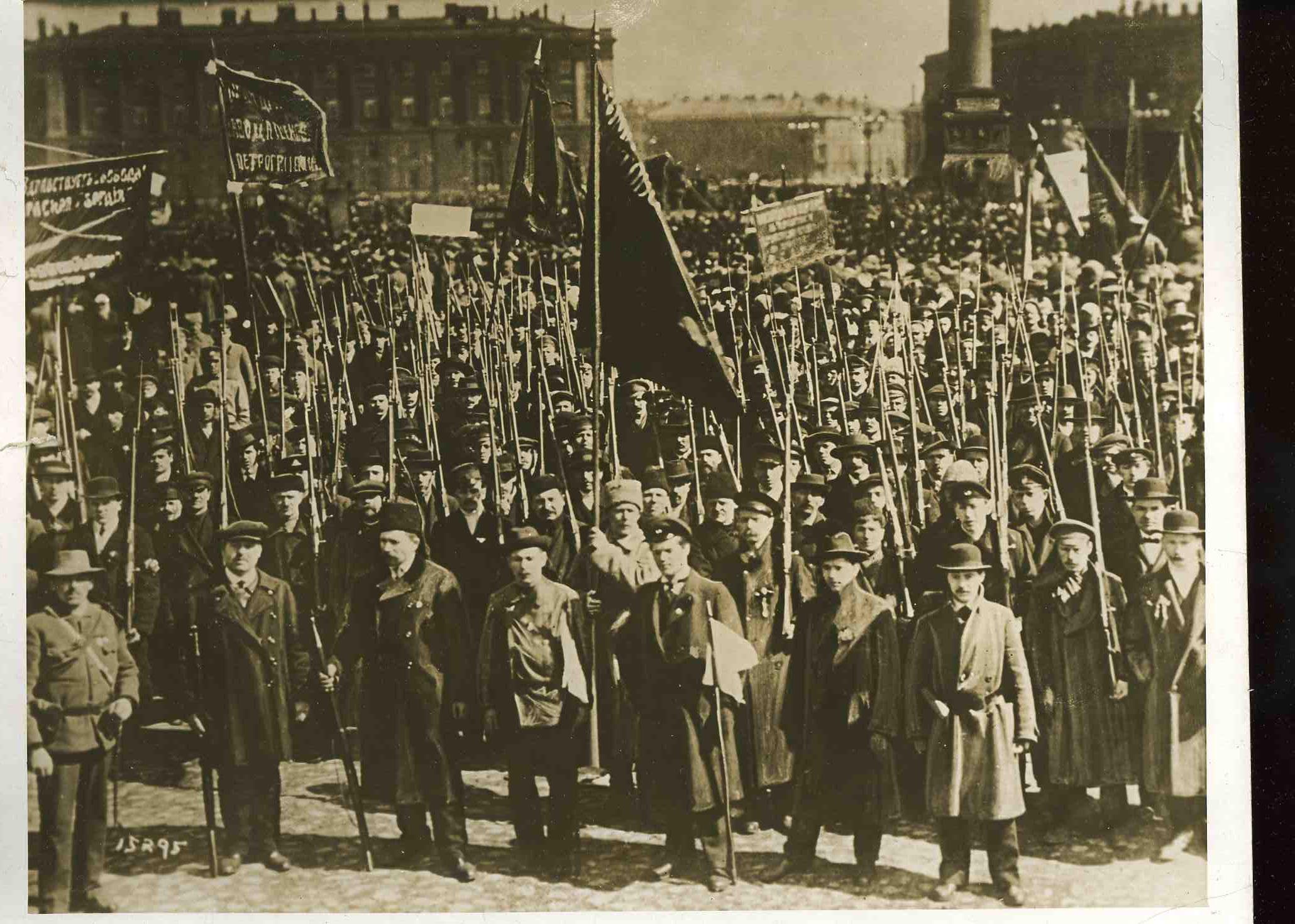
    This photograph–a picture of hope soon dissipated–shows the 1918 portion of the Russian Revolutions of 1917 at just about the time of its, well, “completion”, beginning the period of the Russian Civil War, which would last until the creation of the USSR in 1922.  (The photo is also part of a News Photo Service archive I purchased some years ago in, and was originally released by the Western Newspaper Union.) Alexander Kerensky, who according to the stamped caption of this photograph, was leading an army of “200,000 marching on Petrograd” in order to overthrow “Lenine [sic] and Trotsky” and the “Bolsheiki Revolution”.  Kerensky (1881-1970) was elected second Prime Minister of the Russian Provisional Government under Lenin following the February (1917) Revolution.  A complex of war (WWI) and domestic/social/political directed chaos led Kerensky and Lenin to opposing paths, and, following the October 1917 revolution, the winner was clear.  Kerensky, according to the data on the photo, was a “David” leading an army in opposition deposed to toppling  the Bolsheviks “next week”.  Things did not go as planned, or almost nothing did, and Kerensky’s army drifted, walked and ran, via indifference, fear and belief to the side of the Bolsheviks.  About the only soldiers who stayed loyal to Kerensky was the 1st Petrograd Women’s Battalion, a unit of the 1st Russian Women’s Battalion of Death. (This was the first all-female combat unit in Russia, and although starting out with about a force of 2,000, quickly wasted away under the rigorous and harsh command of its commander, Maria Bochkareva*, down to about a fighting group of 300.)  Kerensky fled the country and began a long series of travels, though ultimately settling in the United States, dying in NYC in 1970 (making him one of the longest surviving principal participants of the Revolutions).

    St. Petersburg/Petrograd has a long and important history in the formation of the Russian nation—established in 1703 as the capital of the Russian Empire and remaining so for more than 200 years, it was also the seat of the 1905 Revolution as well as the February and October revolutions of 1917.  Another bit of full-circle was that Kerensky and Vladimir Ilyich Ulyanov (Lenin) were both born in the not-large town of Simbirsk (now called Ulyanovsk).  Kerensky’s father, as it turned out, taught Lenin at the Kazan State University, a great institution of higher learning featuring non-other than the principal founder of non-Euclidean geometry, Nikolai Lobachevsky, as its rector for almost twenty years (1827-1846). 


    0 blog kerens=ky 18 dec286

    *This interesting, severe, passionate woman through intrigue and loss wound up fleeing the Soviet Union in 1918, winding up in NYC and ultimately meeting with Woodrow Wilson, appealing for American support and intervention to halt the Bolsheviks.  She made the same appeal directly to George V, before winding up back in the Soviet Union, where, in 1918, she was captured.  She was ultimately tried and convicted of being an enemy of the people, sentence to death, and then killed by the precursor to the KGB, the Chaka. 

    0 blog kerens=ky 18 dec287


  • The Face of War: the Child-Soldier, 1918

    JF Ptak Science Books LLC  Post 361

    000-ebay--Nov 7war trench013
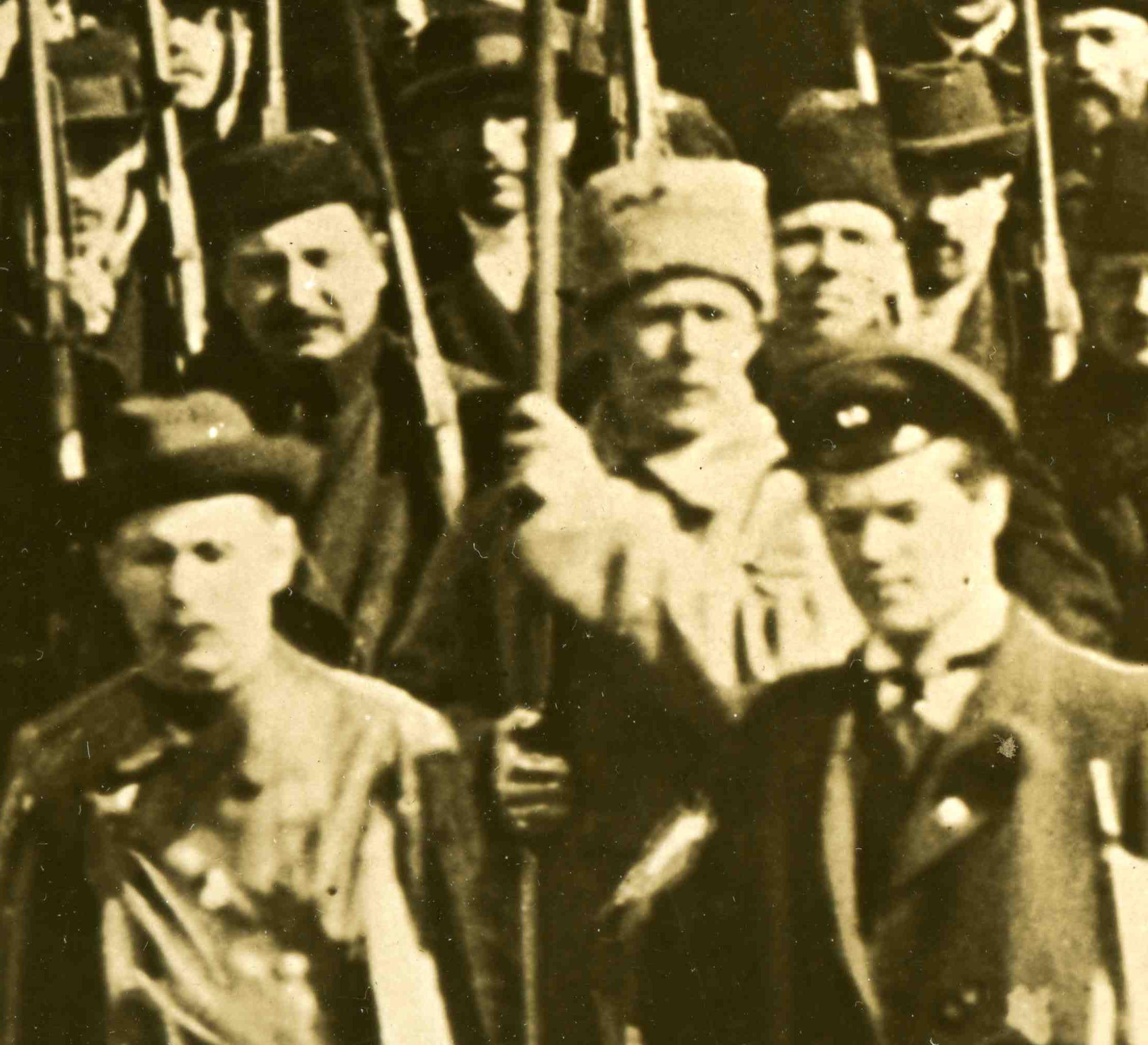
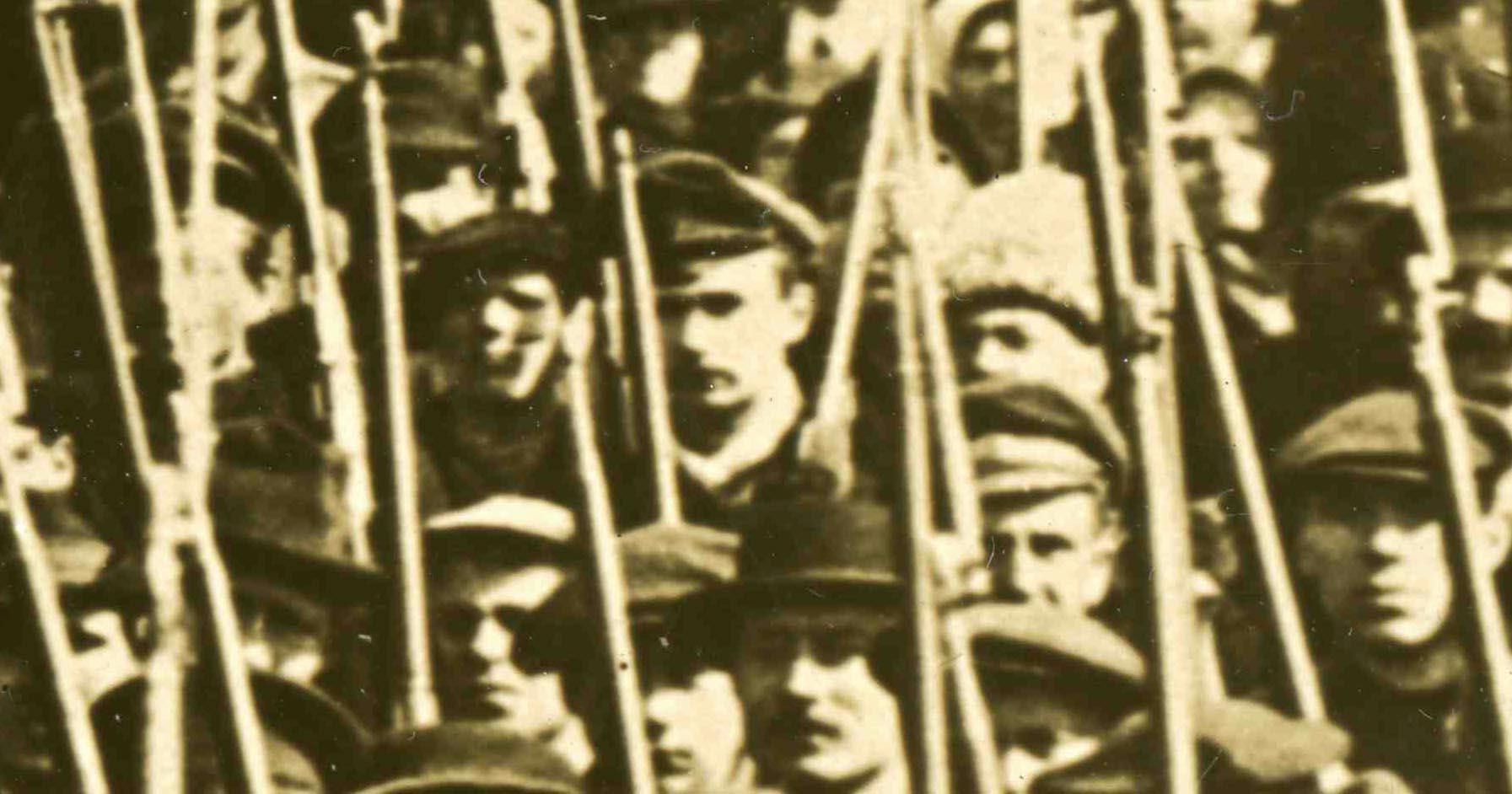
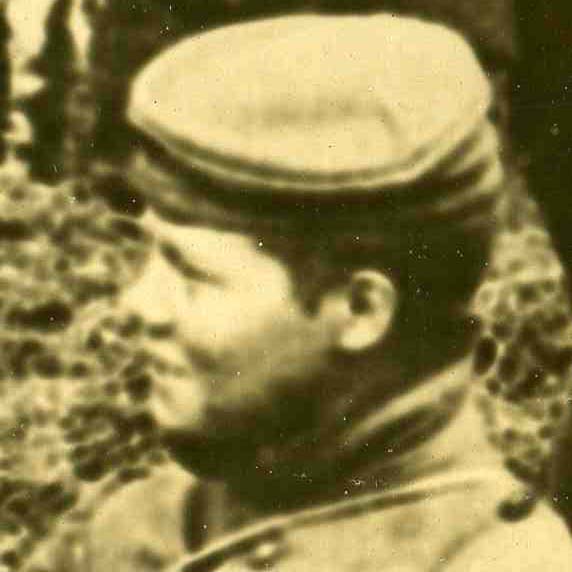
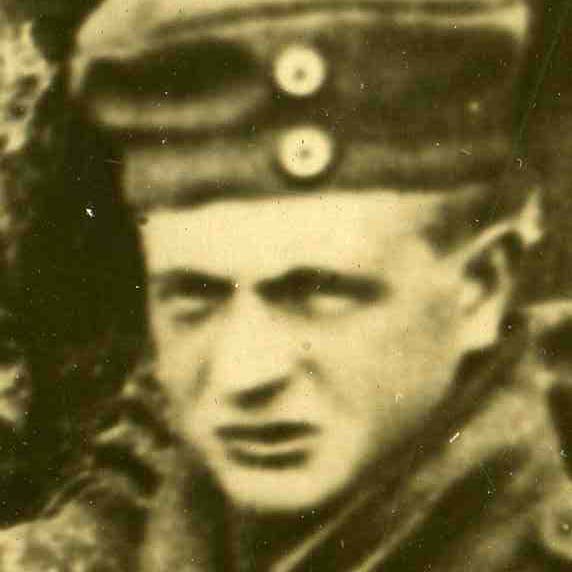
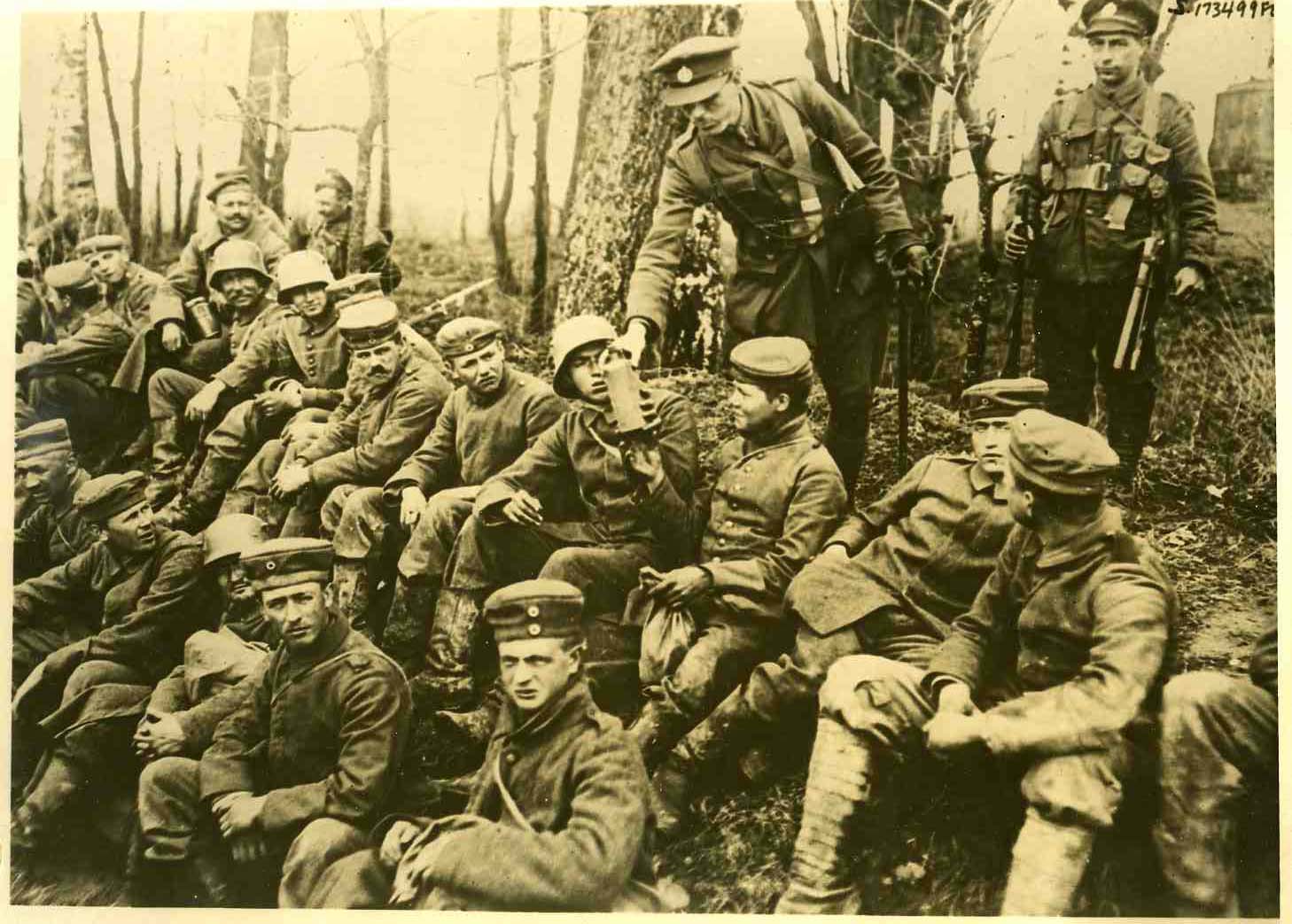
    This is a picture of a captured German soldier, somewhere in France in the middle of 1918, months away from the finale in November.  His tunic is still clean, his buttons as shiny as his baby-fat face, happy to be receiving something–a canteen?–from the British officer, an object of strict attention.  Except that the more our dour soldier to his right has his fingers around the thing and will probably take it from the boy, who looks not only young, but small.  As a matter of fact, most of these soldiers look very young, too young:  sopranos. 

    As the soon-to-be-defeated experience in every war, as the ranks of suitable, able-aged soldiers slim and shrink, the military hand grabs up whatever is available, or left.  I guess this makes sense as most folks in the industrial world didn’t debate child labor laws–with energy, anyway–until the 1920’s.  If you an work in a cotton mill at 8 or 10 or 12 years of age, why not get these workers to carry guns?  The answer is that they’re not capable, for the overwhelming majority, and would make a

    000-ebay--Nov 7war trench014
    000-ebay--Nov 7war trench012 poor soldier, possibly costing more effort and life on his own side
    than on the enemy’s.  But at the tail end of a brutal conflict like
    WWI, the grim matter is that general conscript had been gobbled up and
    fed into the grist mill that had already cost millions of lives. This
    phenomenon is not just a WWI problem, and not an old problem, either: 
    you could construct an alphabet of abusers, and apply it by century: 
    Burundi, Chad, Ivory Coats, Rwanda, Somalia, Sudan, Burma, China, Sri 
    Lanka, Columbia, the Soviet Union, the United States, all pressing
    children into the front line, or as drummer boys, powder boys, cannon
    fodder, mine-clearers, and on and on. Run out of men, and the
    13-year-old boy was next in line, the face filling out any sort of
    uniform at any point in time.


  • A Forgotten (?) Photographic Protest of the 1933 Chicago World’s Fair

    JF Ptak Science Books  Post 352

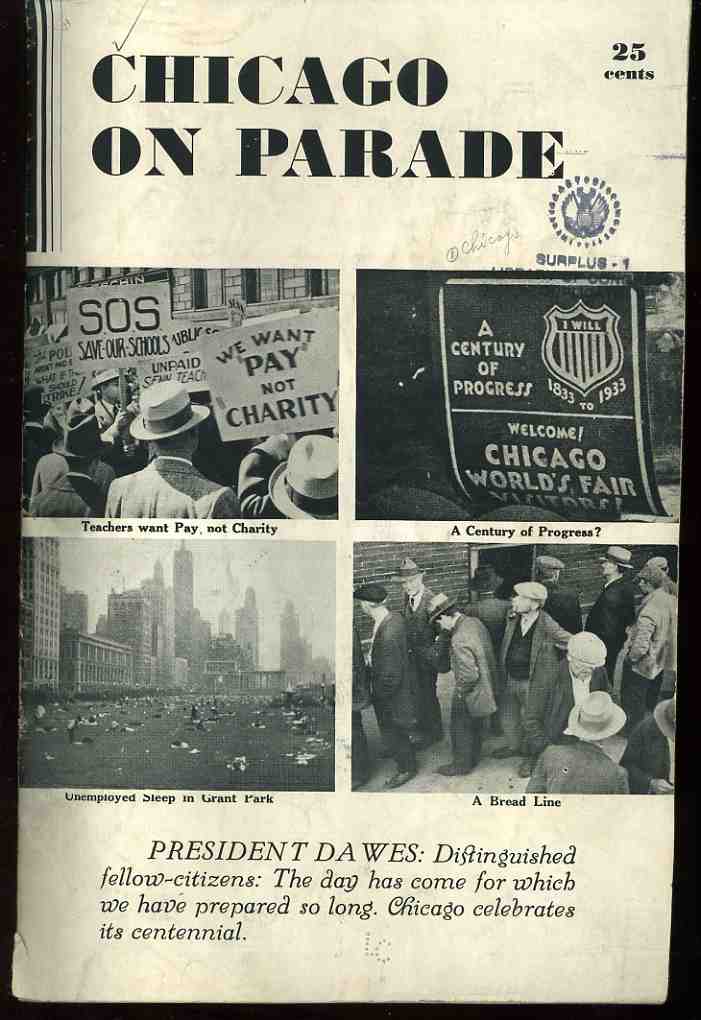
    000-ebay--Nov 4--chic 1985 This short pamphlet is a very strong tonic to those thinking about Chicago’s “Century of Progress” celebration and World’s Fair that was taking place in the middle of the Depression in 1933. (It was intended to instill hope and foster a little forgetfulness during a time in which the Depression in full swing nationwide, plus native-Chicago problems of gangsterisms, race riots, red scare, and economic distress ) As a matter of fact this pamphlet didn’t seem to find much distribution, or at the very least it didn’t get saved in spite of the fantastic documentary images that it contains.  This copy of Herman O. Duncan’s Chicago on Parade (1933), was his own, sent to the Library of Congress as a gift in 1942 before it came to me in 1999. I can find only three other copies of this pamphlet located in libraries world wide (Oxford, Duke, Chicago), and it seems very strangely underrepresented. 

    Duncan addressed the work directly to the Rufas Dawes (President of the Century of Progress Celebration), and to the mayor of  Chicago and governor of Illinois as a very blunt request to not forget the actual world of real Chicagoans living in dire straits within site of the fairgrounds.  Duncan was obviously taking issue with the many statements of wonderment and flourishes of progress that accompanied the propaganda surrounding the fair, so that the attention of the public would not be “diverted by our political and civic leaders”.  Duncan continued that these photographs, “none of which had been published previously in the United States” could “perhaps suggest a point of reference from which Chicago can measure its Second Century of Progress”. 000-ebay--Nov 4--chic 6 det991

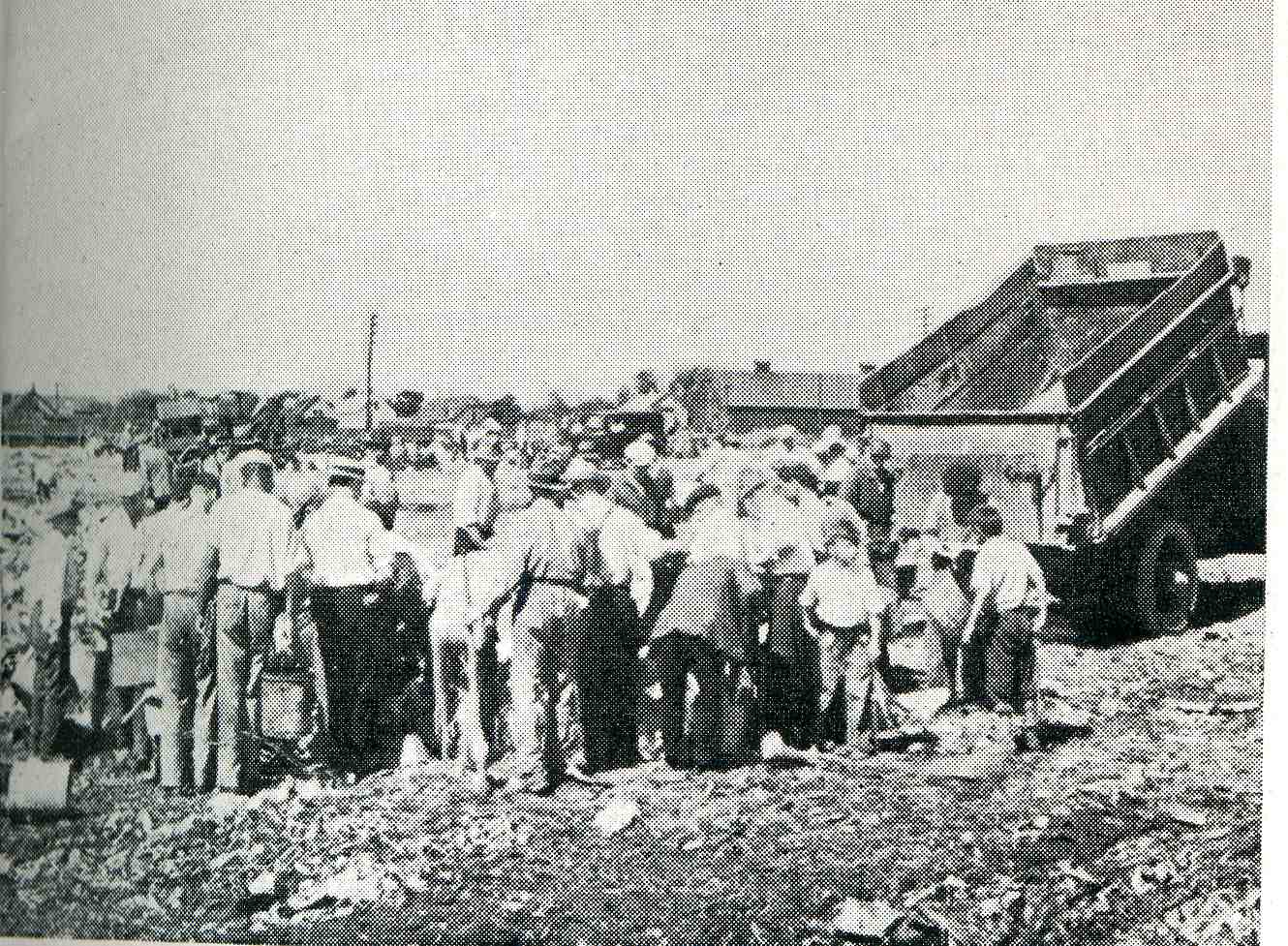
    Duncan (who unfortunately did not identify the photographer(s)) was very strong in the use of images.  He was not afraid to show long bread lines, people (including children) scavanging at the city dumps, blacks and whites marching together in protest of police brutality, (many hundreds) of people sleeping out of doors in Grant Park (Chicago’s “front yard”),because they had no where else to go, and much more.  The photographs had a real touch of journalistic acumen, and none of the images look forced or posed–they are the real stuff of social documentary, and how they have escaped wide notice is not known to me
    . 

    000-ebay--Nov 4--chic 2986
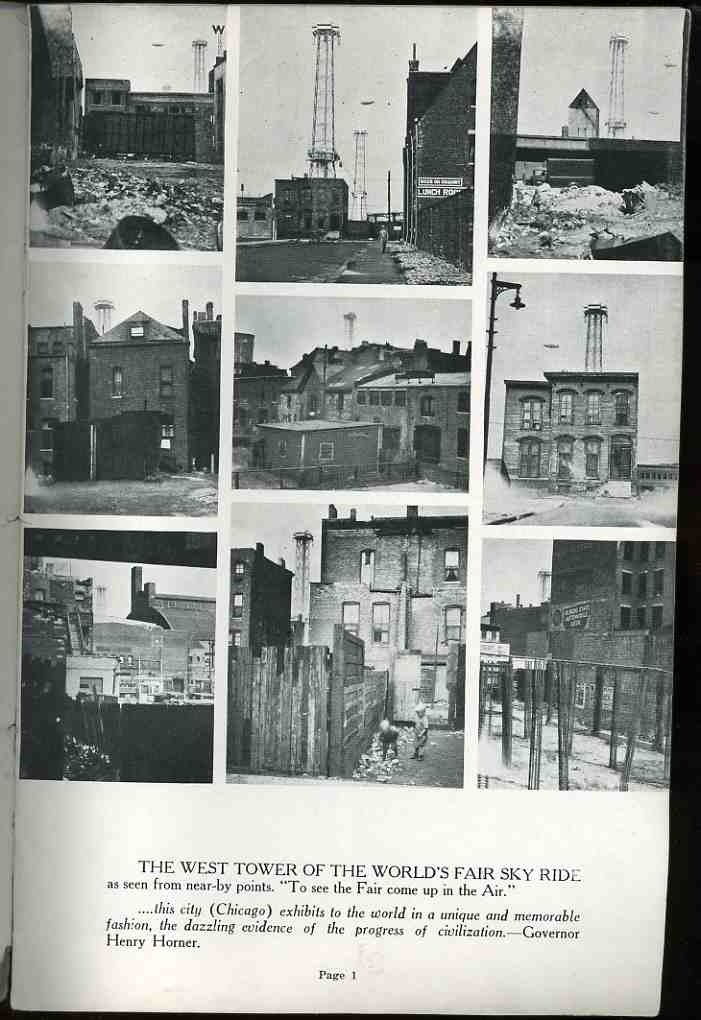
    Perhaps the strongest statement (outside of the
    photos of the children scrounging for food in dustbins and at the dump) is this series (below) showing views of the city of Chicago that were within site of the tower for the Century of Progress Sky Ride (“See the Fair / Come Up in the Air”).  The series make an elegant and strong and incontrovertible point, and that there was definitely something very wrong going on outside the walls of the celebration which had been scooped out of the city’s east side.  (The images remind me of series of photos of the US Capitol Building that appeared in the great classic of social and cultural recording of class division, Neglected Neighbors, which my friend Andy Moursund introduced me to many years ago in Georgetown.)

    The logo design for the event is terrific and I’m sure that everyone had seen it at least once in their lives, but out of the many hundreds of other pamphlets and display materials that I have here for the expo I’ve got to say that the overwhelming majority of them are luridly colored with a palette found outside nature.

    And anti-nature colors are somewhat schizoid-happy  colors, like MGM technicolor cartoons from 1949, which applies a massively ugly chromo-palette to the blight of the surrounding Depression problems.  Mr. Duncan was determined that this not happen, at least so far as he could help it, and published these arresting images to remind the rest of Chicago that the vividly colored happy face placed over the city like a stamp for the Century of Progress was not the case in fact. 

    There are another few images in the “continued reading” section.

    Note:  click on the photos for a larger, more detail view.


  • The Queen in the Coal Pit: an Unusual Photograph of Royal-Nearness

    JF Ptak Science Books LLC  Post 360

    000-ebay--Nov 7queenonacar008
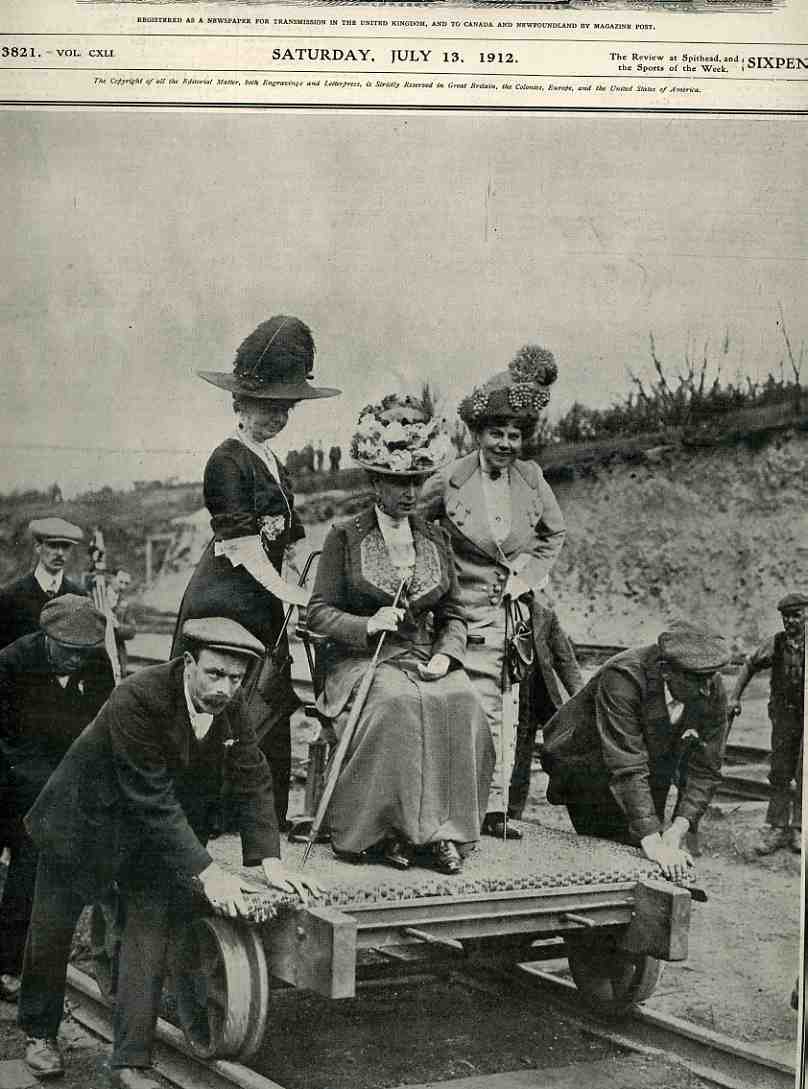
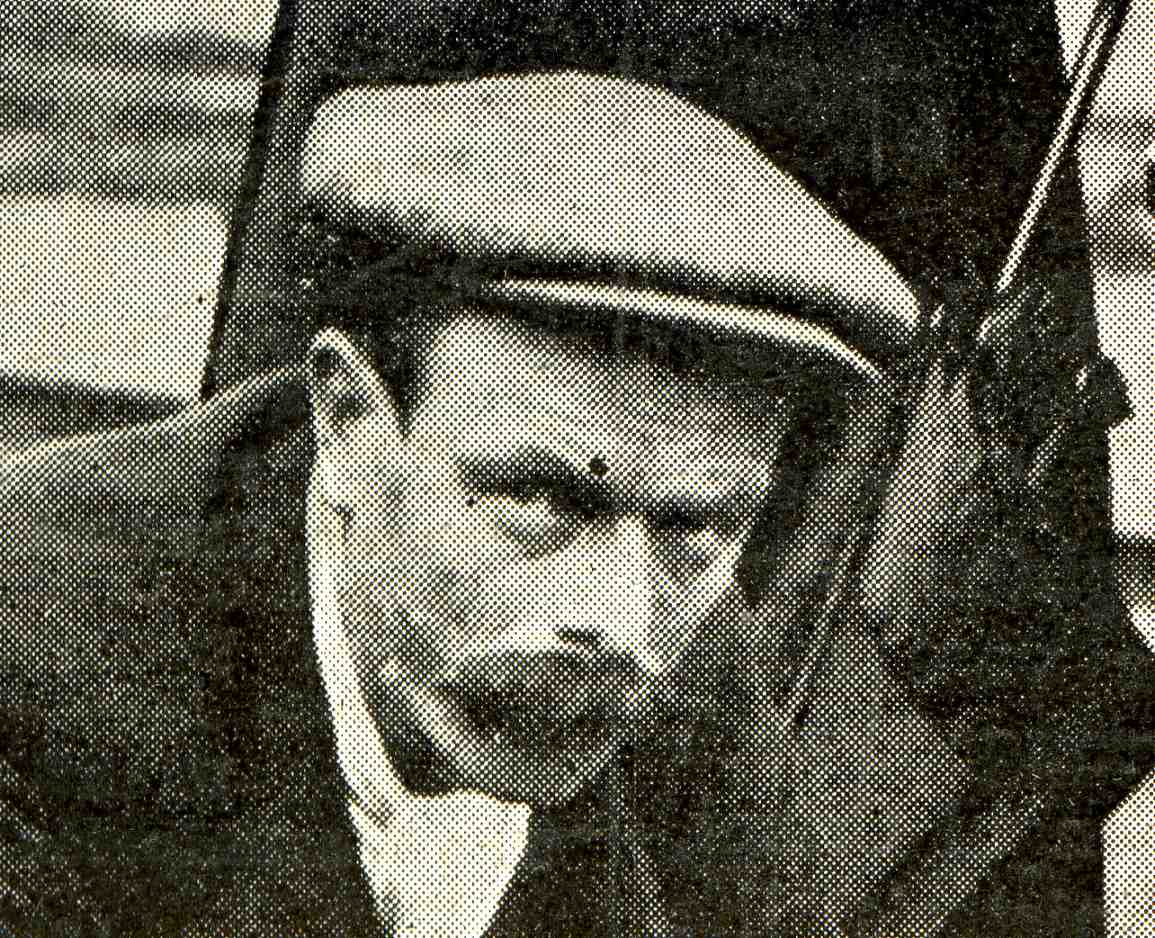
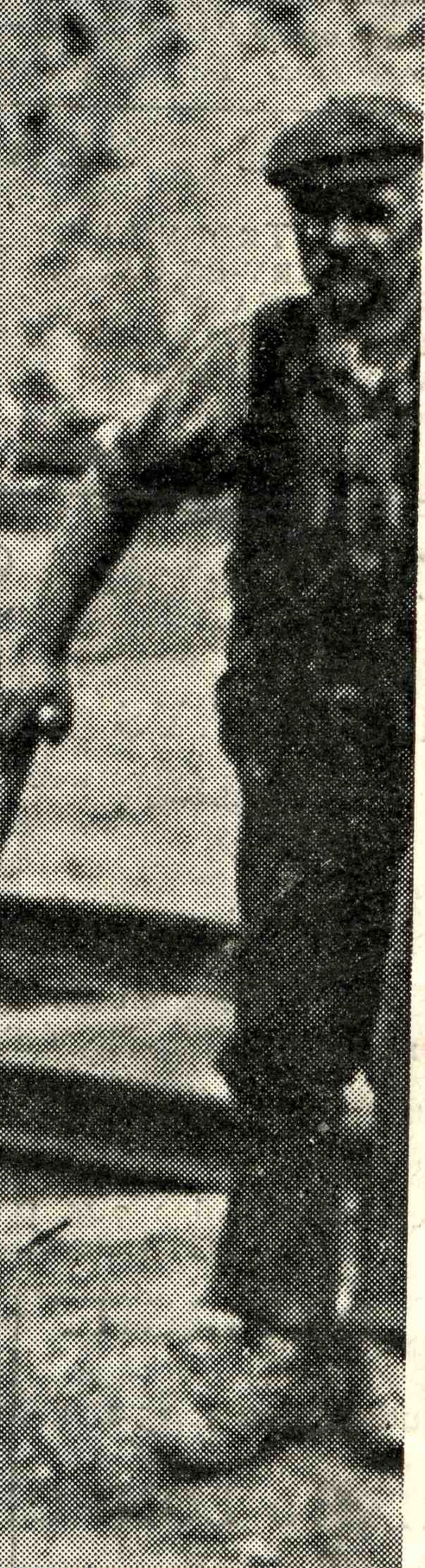
    Its not often that one sees a Queen on a side car (actually a “railway plateplayer’s trolley”)  in a coal bit, but such is the case in this photograph, showng her majesty at the Silverwood Colliery (near Rotherham), in the southern mining districts of Yorkshire.  The King and Queen attended to interests there at the coal mine “quite an hour”, before returning to finery and fuss.  Though fuss is what was made to transport the queen from point to point, her human-propelled on this car, looking not very comfortable, gripping her rapier-thin parasol with her three middle fingers.  I’m sure that the four men selected for this task (the three that we can see wearing similar boutonnieres)–their shoes spotless, their jackets pressed–were told to take it quite slow and steady, what with the queen on board.  I can’t decide what the look is, exactly, from the lead man–at the very least I don’t think that he wants to be there.  For a very busy mine there aren’t very many men in view, save for the guy on the right with the shovel; I feel pretty confident that these working fellows were kept away so as not to drift into the picture, like this guy, who would remind them of the  scrubby un-scrubbed  who made the Empire run. 000-ebay--Nov 7queenonacar009
    (Image from The Illustrated London News, 13 July, 1912)

    000-ebay--Nov 7queenonacar010


  • The Tomb of Broken Dolls–an Appeal for Respect for Outgrown and Disabled Toys

    JF Ptak Science Books  Post 349

    “No two toys are ever broken in the same way or with the same emotional results.” RobertGraves, Poetic Unreason

    000-ebay--Nov 1 doll tomb975


     I first wrote about this fabulous idea–a tomb or memorial for broken and lost toys–on this blog almost three years ago–it still seems like an utterly fantastic practice.

    000-ebay--Nov 1 doll tomb975

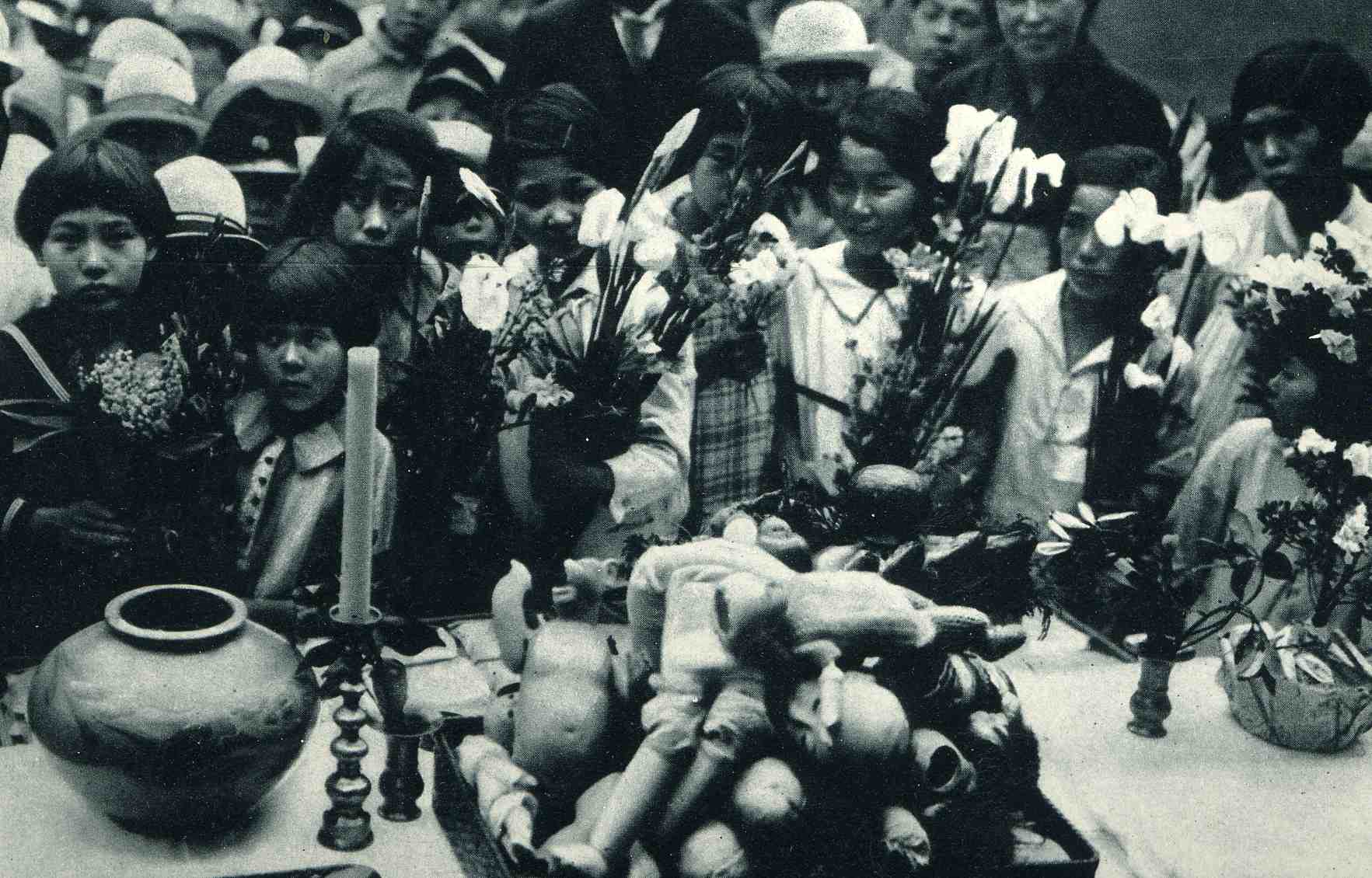
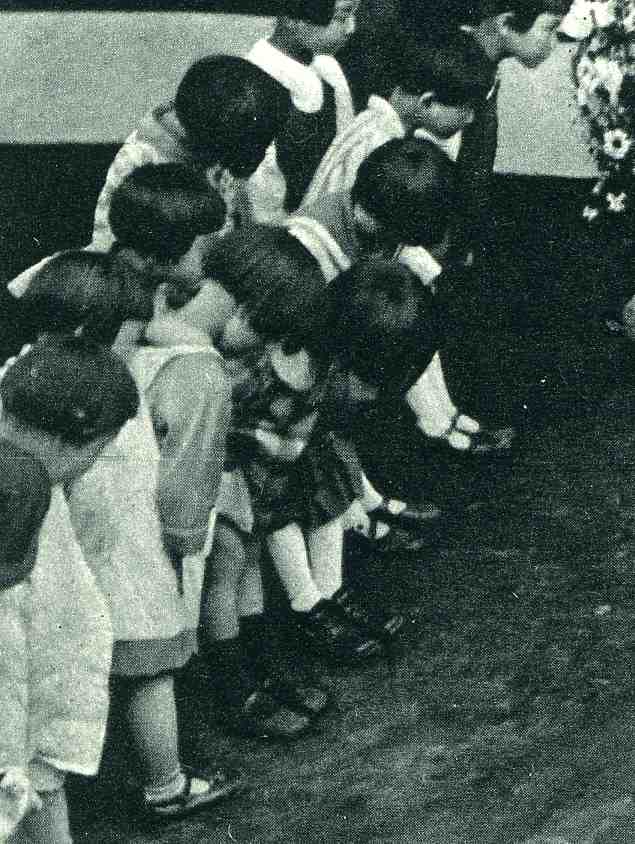
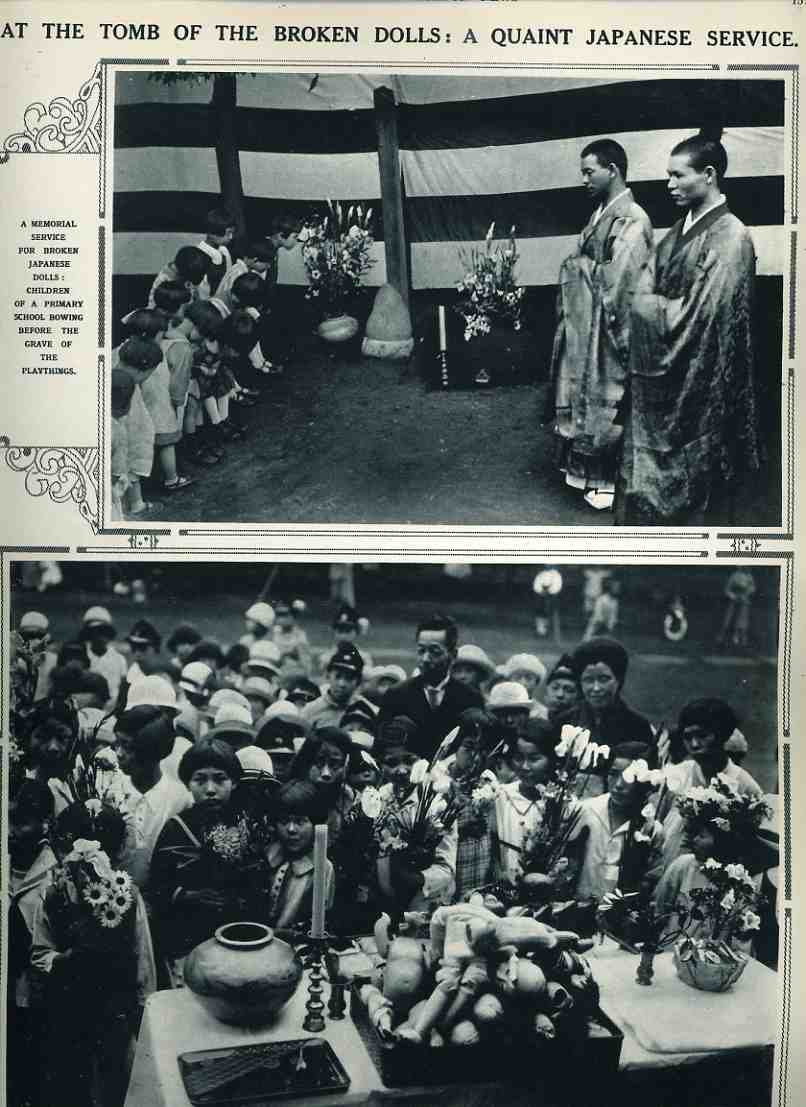
     This is an absolutely outstanding concept, and I simply have no notion as to why we don’t have such observations in the United States.  (The following two details are from the larger images, below, found  in the 27 July 1929 issue of The Illustrated London News, page 157.) The story provides these two pictures and unfortunately scant details of the ceremony which was held at the Imperial Primary School at Sugamo, Japan. 

    The first photo shows the detail of children offering flowers for the altar on which their tray of broken dolls is being venerated; and to the right is the detail of children bowing to the grave of “broken playthings”, though the markings on the (grave?) stone indicate that it is for dolls.  It also seems to be a marker for a mass of toys, not that each toy would have its own marker; I suspect it to be enough to have a place where allot of kids could come to venerate objects in which they might have invested countless hours of their time, effort, attention and affection.  That it is a shared place and experience makes the monument all the more so powerful.

    000-ebay--Nov 1 doll tomb976

    There are few better things to teach a child than to pay respects for something that has given them pleasure or helped them, or, say, for returning the love which has been showed them from their doll or toy.  It has always struck me as not-quite-right that a toy can be a beloved object one day and a dust-magnet the next, destined for the trash heap.  Certainly these are holy objects in themselves, and deserve a better and more kinder fate than being mixed with broken glass and greasy unmentionables. 

     000-ebay--Nov 1 doll tomb974


    Are there greater things to be concerned with?  Yes, of course, but only on the face of it–I think that helping kids understand the underlying dignity of inanimate objects such as their playthings could give them a greater awareness for the other seemingly invisible things that they will find throughout their lives. Further I think that a visible, constant reminder for these objects would be really more like a memory-monument for a period of time, a place in nearly everyone’s life in which held a certain purity and promise, a protected and beloved frailty of the human experience shared by all.  I can honestly think of no other monument that could reach across religious or philosophical or belief systems to arouse a feeling of common goodness than this. Everyone has had a toy that they’ve loved, and I have no doubt that if remembered these would be powerful emotions, and could be about the most common denominator we have on the planet.  I can think of no divisive element in such a monument of veneration.


  • The Towering Magnificence of the Porcupine, 1604

    JF Ptak Science Books LLC  Post 359                                            

    000-ebay--Nov 4--porcupine995

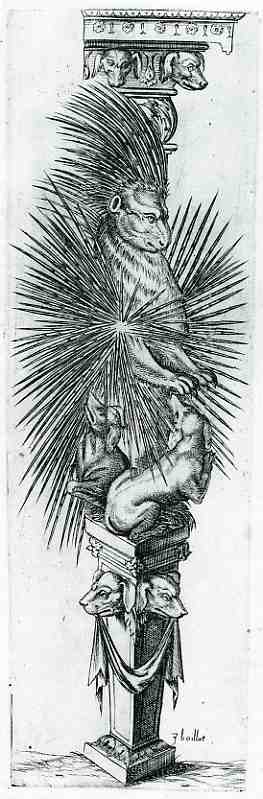
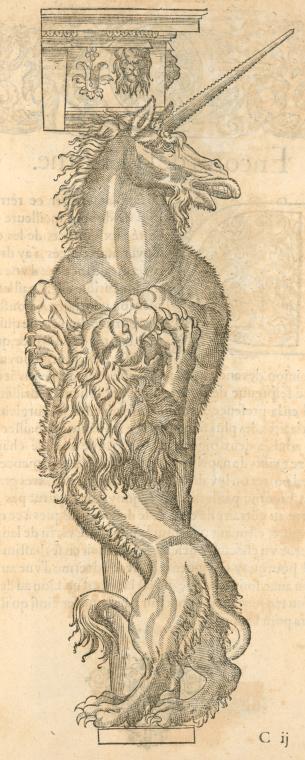
    This is perhaps the greatest monument ever erected to the porcupine–of course it may be the only monument ever erected to the porcupine, but it is undeniably monumental.  This unusual image was published in Strassburg in 1604  in Joseph Boillot’s (1546-1603) sumptuous New Termis Buch (first printed in 1592 as a Nouveaux pourtraits et figures de termes).  It is a bestiary of sorts, a very curious book, offering real and imaginary animals together in alabastered, marblized, memorialized, architectural form, with the  great hope of offering them to fellow engineers and builders for incorporation into the real world.  Or perhaps not, perhaps it was all just done in fun, an exercise, an experience, an artistic creation wrapped inside  the fundus of a great Baroque eyeball.  Unicorn


    The end result is the Boillot produced some extraordinary beasts, wrapping them in extraordinary garments, surrounded by other wonderful animals real and not, and elevated to extraordinary heights.  The powerful unicorn, draped with the vicious but subdued lion; the ass, regal, judicious, pensive, thoughtful, kept in place, or warm, by a dragon. Then of course there is the porcupine, absolutely magnificently appointed with spikes  kept by by dogs, supported at all levels by the creatures.