A Daily History of Holes, Dots, Lines, Science, History, Math, Physics, Art, the Unintentional Absurd, Architecture, Maps, Data Visualization, Blank and Missing Things, and so on. |1.6 million words, 7500 images, 4.9 million hits| Press & appearances in The Times, Le Figaro, Mensa, The Economist, The Guardian, Discovery News, Slate, Le Monde, Sci American Blogs, Le Pont, and many other places… 5000+ total posts since 2008.

Category: Prints–looking HARD/deeply at

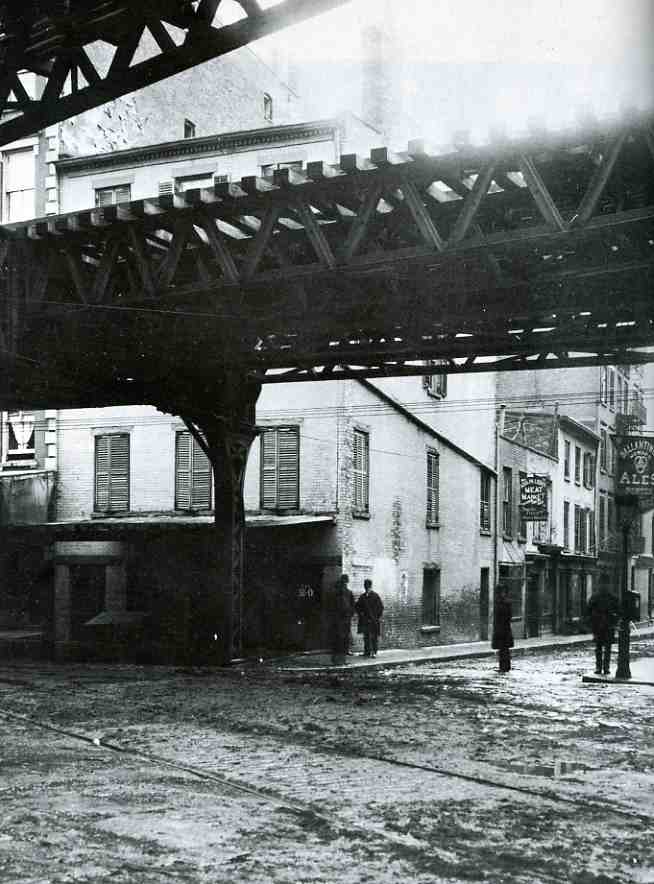
  • Found Portraits Outside and Under Els: Greenwich Street, NYC, 1893

    JF Ptak Science Books  LLC  Post 439

    0 blog dec 22 el309

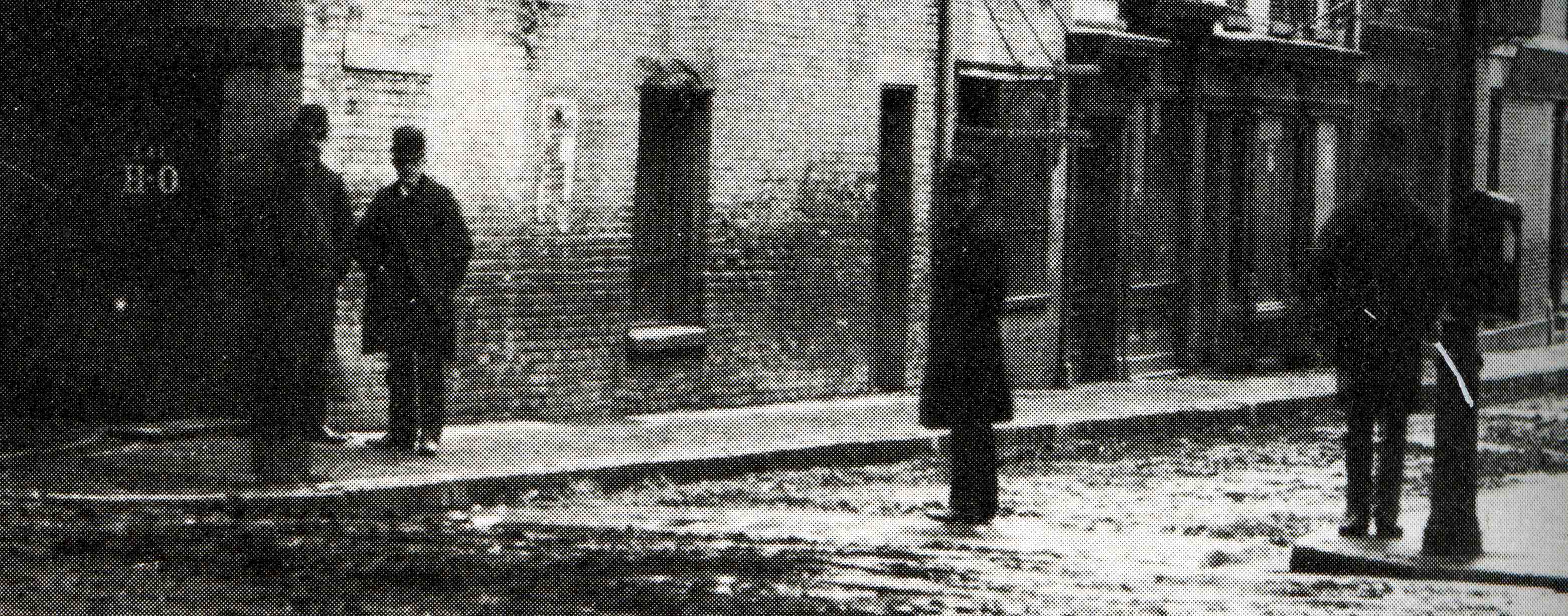
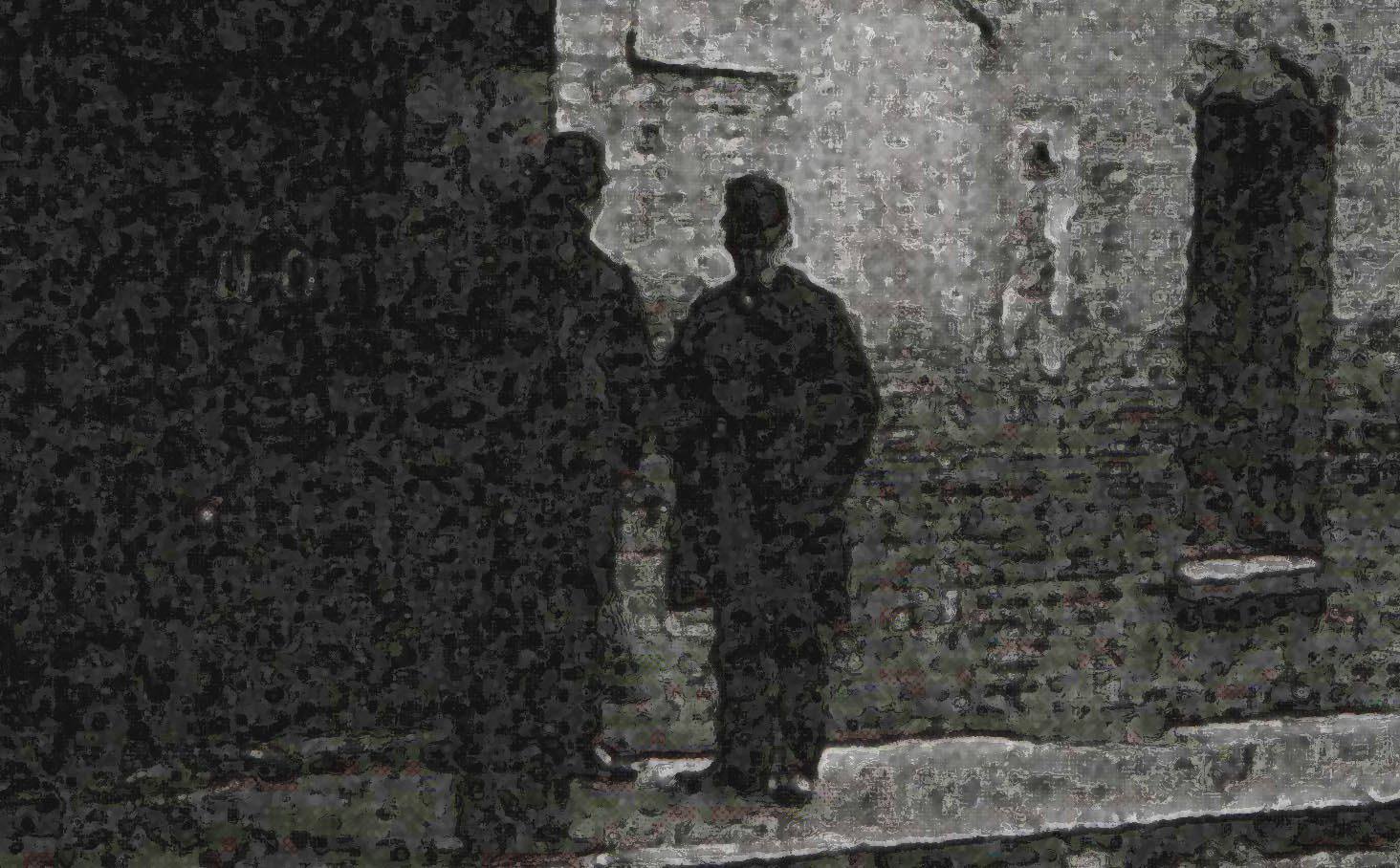
    0 blog dec 22 el311 Just another in a short series of looking hard at NYC photographs, looking for miniature scenes within small scenes within sub-scenes within the whole.  Ken Burns has made a living by wrapping this process around storytelling, I know, but that doesn’t mean that us normal folks can’t do it too.  This capture is of Greenwich and Morris Streets, made by the John S, Hall & Son firm around 1891.  Morris is a very short bugger of a street, barely five houses long, running into Washington Street (which you can’t see because of my bad cropping).  The group of men waiting for the photo to be made are patient, feet close together, all bowlers straight-on, with one man standing nearly in a puddle.  The closer you pull into these men, the more their stories seem wanting to be told. 

    0 blog dec 22 el311 artistic 2


  • Found People in Windows: Hudson Street, NYC, 1865

    JF Ptak Science Books LLC  Post 438

    0 blog dec 21nyc307

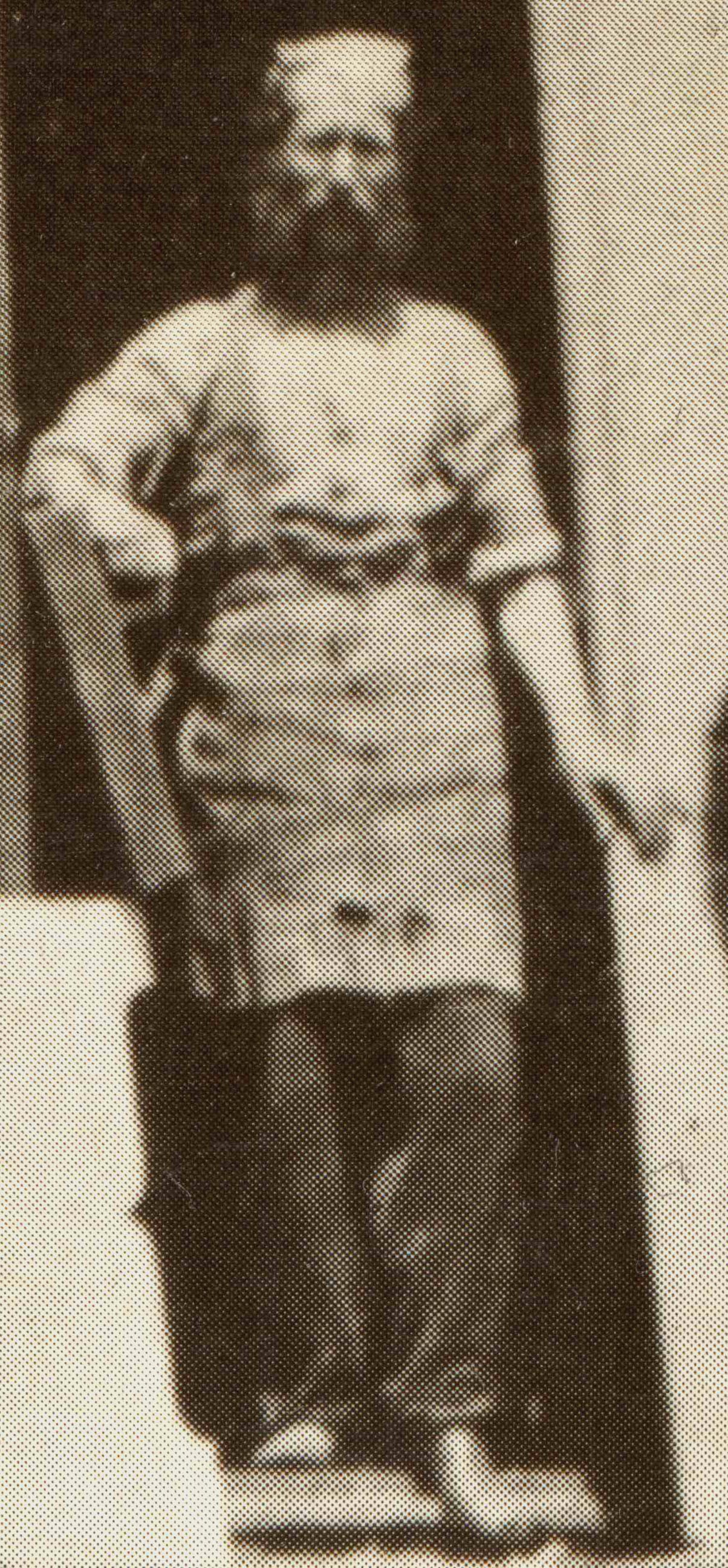
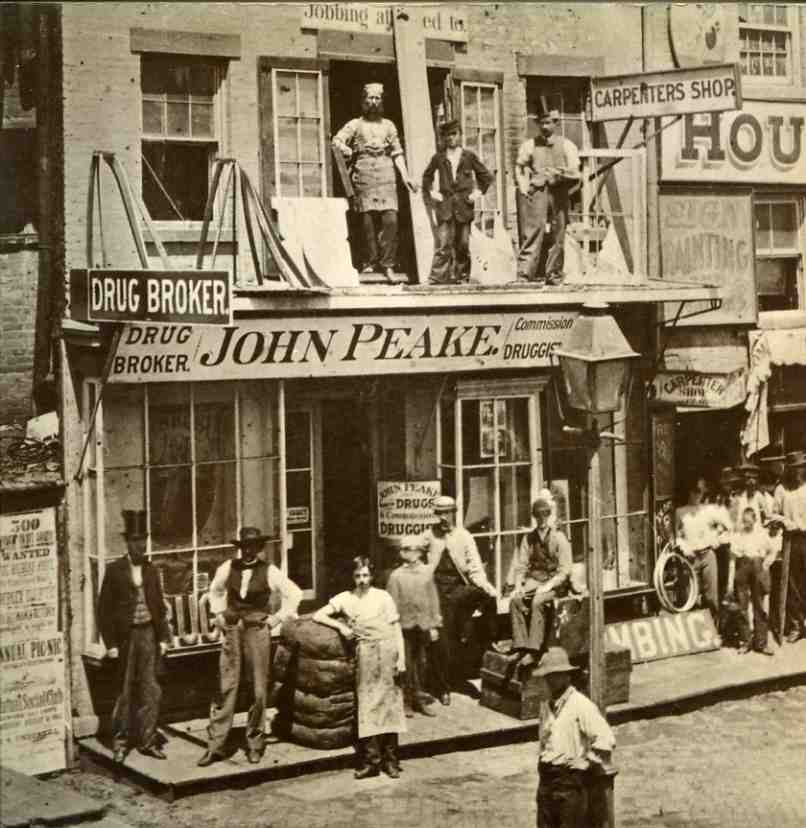
    This fine-looking, serious and imposing specimen steals the show in the photo made to exhibit the John Peake Pharmacy, from whom this carpenter rented his second-story workspace.  I have no doubt that Mr. Peake is the well-dressed fellow in the tall beaver-skinned stovepipe hat at bottom.  The photograph was made by Marcus Ormsby on :Lower Hudson Street in New York City in 1865–one of the signs to the left of the supposed Mr. Peake says something about a picnic taking place in August 1865.  The poster above that one though says something about “300 Wanted” and looks a lot like Civil War recruitment posters that I’ve seen–if it was July/August or thereabouts the war would’ve been over for months….perhaps it was an old poster, perhaps a poster for something else entirely. 

    I do like the carpenter in his working window, there above the “a” in “Peake”–he is holding a substantial planer (or moulder?) in his right hand, and wearing what looks like a union/affiliation 4-square cap.  I’m happy to see that he  is steadying himself with his left hand’s pinkey–for all of that musky confidence he  seems perfectly well in comfort keeping his whole enterprise artistically balanced with a longish-looking pinkey finger.

    The buildings in this photo–not 18th century, I don’t think, but probably thirty years old or so in 1865–are virtually covered by signage advertising what was going on inside:  the larger image shows a printer, carpenter, oil cloth merchant (“oil’d clothing”), pharmacist, paintstore, sign painter and card maker, all there and doing business in about 60 feet of street.  The interesting part of the signs is the very free use of the period “.”, which ends one-word pronouncements, proper names, and just about everything else–I like that. 

    All of this aside, this is just a gorgeous photograph offering a perfect glimpse into a workaday scene in NYC just after the end of the Civil War.

    0 blog dec 21nyc306


  • People in Windows: Found Portraits in Little Places, 1887

    JF Ptak Science Books LLC  Post 437
    0 blog dec 21 johnston nyc304
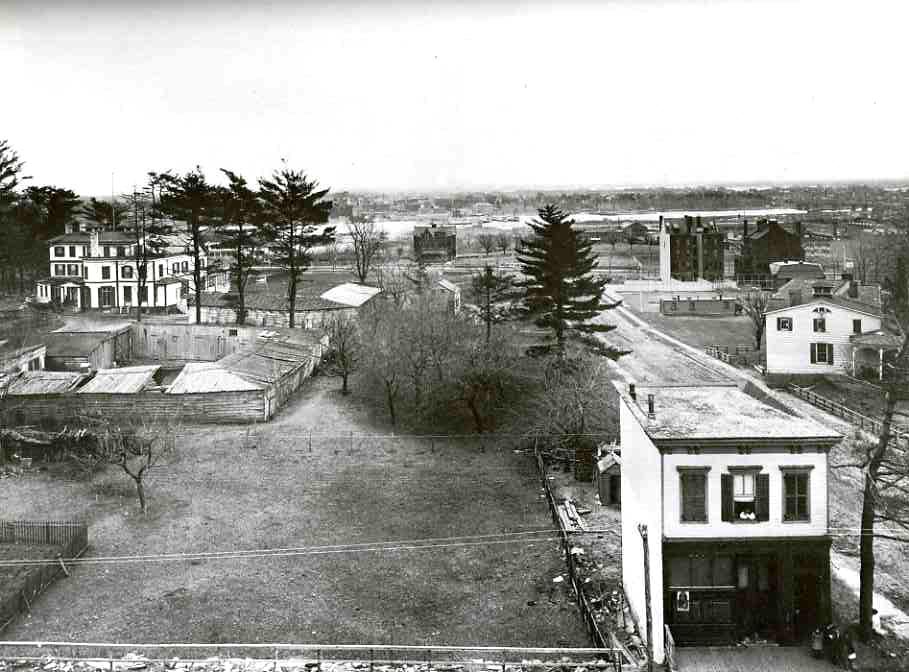
    This photograph was made in 1887 by the prolific if not mysterious* John S. Johnston, taken from Amsterdam Avenue (between 147th and 148th streets) , and looking east to the Harlem River and the Bronx.  My guess is that there was a three- or four-story apartment on the west side of Amstersdam and Mr. Johnston set himself up on the roof with his view camera to make this shot.  As a photographer Johnston’s interests extended to naval/nautical scenes–making photographs of the American fleet as well as racing yachts and such–and recording creeping uirbanism into formerly rural areas in the northern reaches of NYC. 

    Of interest here is the brand-new Mount Saitn Vincent Hotel (at left), and the small animal pen located right in fron of it.  The other interesting deal is that there is a considerable amount of trash that has blown up against the fences (especially at bottom) from the winds coming in off of the river–from where I sit it seems as though there might be a foot or two of trash leaning up against the fence. Actually one of the things that my eyes are trained for now is looking at the trash in the streets of old cityscape photographs–it is really remarkable how much stuff winds up on the street and preserved foreverish in photos….one of my favorite images, which I cannot put my hands on this very moment, shows a few fellows leaning up against the side of a newly opened “New York Store” in Austin, and in the gutter in front of them are four ratty old shoes strewn amidst the other less recognizeable trash.

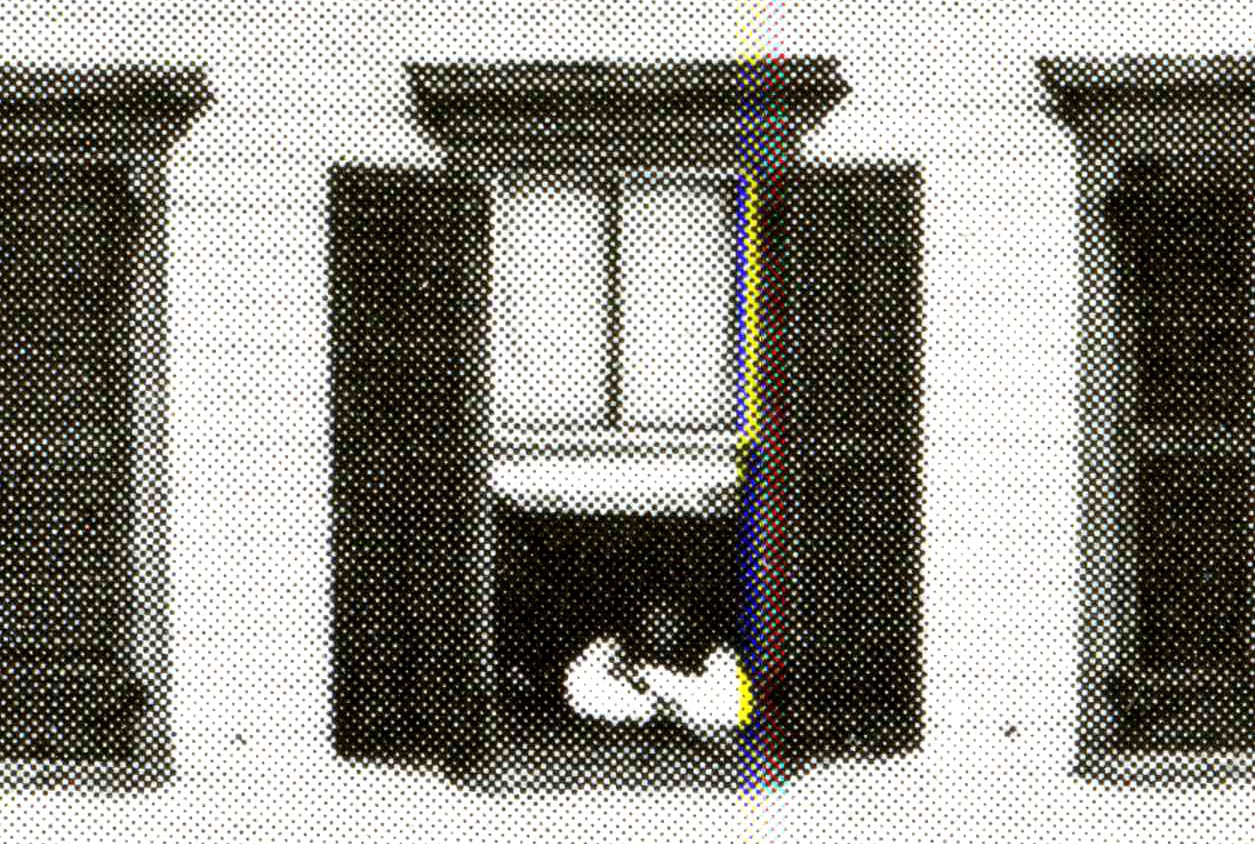
    The other interesting bit is the found portrait of the man scene leaning out of his second-floor window in the building at bottom right.  Unfortunately I’m not working with the original so I’m picking up a lot of grain from the halftone, but after playing with it a little in photoshop I’ve come up with a reasonable look at this man, who must’ve just been watching Johnston getting his exposure ready.  I have little doubt that if the original were available that we’d be able to discern facial characteristics.  (Actually, I’m looking for myself again–I’ve found images of me lurking in tiny bits of large crowds in old photographs; sometimes the resemblence is astonishing, really.  This guy already looks big abd bearded and bald, which is most of my story.  If you drop in my eyes, there I am.)

    0 blog dec 21 johnston nyc305

    *Johnston lived not far from where this picture was made:  his addresses have been given as 783 Broadway, 1263 Broadway and  508 W. 158th St.  He died at Niagra Falls, where he went to recuperate from a “severe cold” that he caught while making photos at a horse race.  On his deathbed, he refused to identify any friends, or family, and would not give the address of his home.  The obituary reported that he did have a wife and daughter, but they had been estranged “for some time”.  I can respect a man whose wish is to go out very quietly.  (I don’t know the story about his identification and how the obituary came to be written–that woul dmake an interesting tale.)


  • God’s Odds: the (Very) Fine Arithmetic of Heaven and the Infinite Population of Hell

    JF Ptak Science Books LLC  Post 436
    0 blog dec 20303

    Some years ago I purchased a rather large collection from the Library of Congress unimaginatively called “The Pamphlet Collection”.  It was not very distinguished, and for the most part, not terribly interesting on the face of it–but it was LARGE and, as it turns out, most of the material in the collection just isn’t anywhere else (for good or for ill).  After trying to make sense of the purchase–which was categorized and boxed but I couldn’t really figure out what the principle of division was–there was one pile that refused identification because the subject matter was so inescapably unusual, so unexpected, so logic-challenging, that they formed their own genre: they became the Outsider Logic collection.  There are at least 500 of them, maybe more.  They are differentiated from the Naive Surreal collection, which is associated but just happen to look incredibly odd because they are not only way out of context but also their context largely doesn’t exist anymore.  

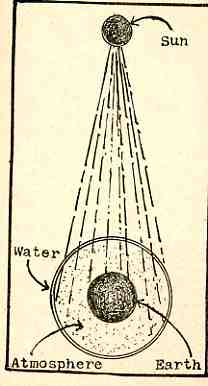
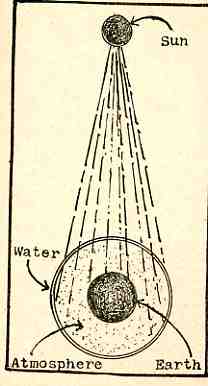
    The sample today is a religious tract of some sort–very scream-y, lots of quotation marks, exclamation points, and is thick and stubbily printed, and which really doesn’t have a title per se, the front cover simply starting  “Behold I Make All Things New. This work by  V.T. Houteff.It is too long to get an idea of what is really going on, but I happened upon this diagram, which, shall we say, is a little on the outsider side, as the author explains that the Earth “lives” in an atmosphere surrounded by a bubble wall of water.  I like the arrow pointing to “water”. 

    On the next page to this attractive image was a longish rant on the number 144,000.  It turns out that 144,000 represents the total  number of people allowed into heaven. 

    If this is so, where is everyone else?  That doesn’t leave much room for pets, or other animals, or insects.  DO plants go to heaven?  What about amoebic life?  When a person “goes” to heaven, what goes with them?  Are all life forms—microscopic and not—that are always present on a person/body given a free ride?  There’s a lot of life going on oh the surface of the skin and of course inside the body…I guess that would be a “no”, as I imagine Heaven would be ultimately clean. 

    I assume that people still have bodies because of the belief—exhibited in this pamphlet of outsider logic and by perhaps millions of other people who are adherents of other faiths and belief systems—that there are 144,000 people allowed into heaven. Wouldn’t there be infinite room for your spirit, which I would imagine to be infinitely small?  Something that has no mass and is not calculable on any level couldn’t ever fill anything up.   

    The 144,000 figure is something like 7/100’s of one percent of all people who have lived and are living, which is something like having a one-in-five million chance of getting into heaven right now—that is IF we allowed that heaven could be filled up right this instant.  If there was wiggle room involved—say if g wanted to include the possibilities that there might be a ultimate human population of 1 trillion or something like that, then, well, there are two more zeroes that would go in front of the percentage number (.0007%), to provide for the prospect of heaven not getting filled up until some point in the next 100,000 years. 

    What if there were 124,000 people already in heaven?  Suddenly competition gets gigantically fierce, allowing 20,000 places for the current 6 billion, which means that .001% of everyone living gets into heaven and then fill it up.  What would it be like to be the last person in?  Do you shut the door?  Are there people behind you on line? 

    And then how good do you have to be to get in?  Better than a baby who dies in childbirth?  That happens about 50 times an hour, worldwide, so far as I can tell.  I’d expect a person like that could get into heaven as they certainly didn’t have much of a chance to do anything to interfere with g_d or its plan.  Once you start throwing in children who die who are under the age where they could commit a foul act, say 5, and then toss in aborted fetuses (which for these cases I’m sure would be called “babies”), that figure of 50-an-hour would jump, probably, two orders of magnitude.  500 deserving babies an hour for thousands of years adds up to a heck of a lot more than 144,000.  Actually the 144,000 total would be hit in less than three weeks.  Which in the course of tens of thousands of years of human civilization and 10,000’s of thousands more to come, that would mean that 99%++++ of all babies and children who die before the age of 5 would go to not-heaven.  It is also hugely
    problematic because humans may be around on earth for another million
    years, which cuts the chances of slipping into heaven to seven (or
    twelve) places to the right of the decimal point.  Those are not good
    odds.

    That, friends, doesn’t sound very fair.

    I guess that means that hell doesn’t have a bottom line.  Hell never gets full.

    I don’t mean to stomp on any belief systems here, but, well, the numbers sorta speak for themselves.  They also mean that for all of the Jehovah’s Witnesses alive right now—a religion that distinctly shares this 144k belief—that basically none of them alive right now stand any sort of chance of going to heaven.  That is a hard sell.

    A statement in fairness to the ancients:

    Historically, speaking for the folks thinking about this 2000 or whatever years ago, 144,000 does loom larger than it looks today, of course.  Not only was the population of the world much smaller (by almost two orders of magnitude) but there was also almost no way for anyone living then to accurately guess the global population.  Given a population of 100 million, if everyone alive in the year 1 were to be considered for a filled-up heaven, then about one-tenth of one percent would make it.   Now, if you were an ancient and thinking about the population of the world in general, my best guess is that you’d be thinking in terms of maybe tens of millions. Maybe.  That means the 144k figure would be something believable, sort of, being 1% of the population.  Say we grant the 1% as a given; and that it was a given that the ancients thought in “low” numbers for populations; it is also a given, I think, that they did think in long terms of time, in the thousands of years, at least.  That means if they gave room for heaven to be :”filled up” in a thousand years, and the population of the world didn’t change, it would mean that of everyone on earth as known to the ancients that 144 people a year for a thousand years would go to heaven.  And frankly, those figures don’t look very promising either.   

  • “The Fall of the Bolshevik Regime”, Kereneky in Petrograd 1918

    JF Ptak Science Books   Post 435

    0 blog kerens=ky 18 dec285

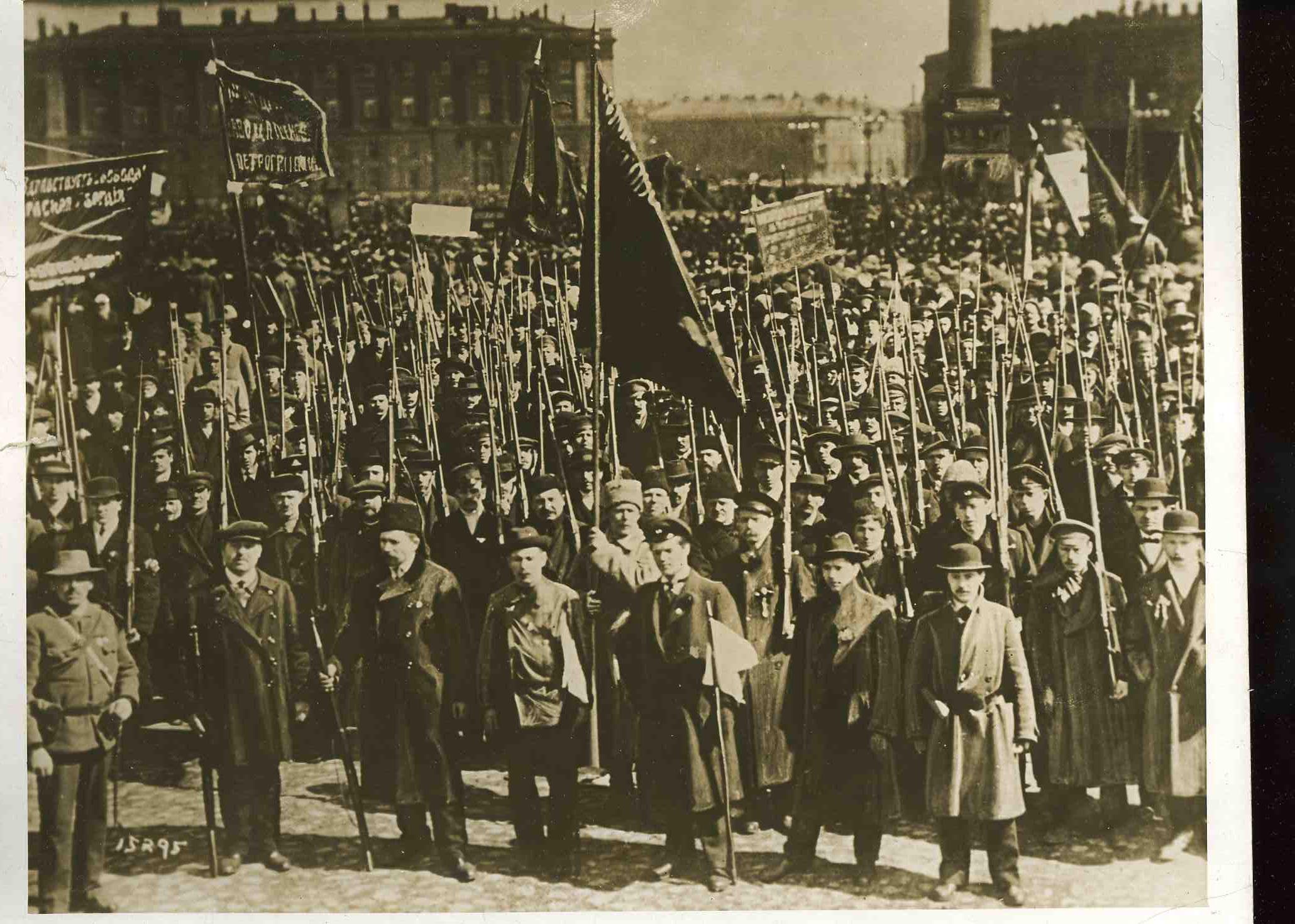
    This photograph–a picture of hope soon dissipated–shows the 1918 portion of the Russian Revolutions of 1917 at just about the time of its, well, “completion”, beginning the period of the Russian Civil War, which would last until the creation of the USSR in 1922.  (The photo is also part of a News Photo Service archive I purchased some years ago in, and was originally released by the Western Newspaper Union.) Alexander Kerensky, who according to the stamped caption of this photograph, was leading an army of “200,000 marching on Petrograd” in order to overthrow “Lenine [sic] and Trotsky” and the “Bolsheiki Revolution”.  Kerensky (1881-1970) was elected second Prime Minister of the Russian Provisional Government under Lenin following the February (1917) Revolution.  A complex of war (WWI) and domestic/social/political directed chaos led Kerensky and Lenin to opposing paths, and, following the October 1917 revolution, the winner was clear.  Kerensky, according to the data on the photo, was a “David” leading an army in opposition deposed to toppling  the Bolsheviks “next week”.  Things did not go as planned, or almost nothing did, and Kerensky’s army drifted, walked and ran, via indifference, fear and belief to the side of the Bolsheviks.  About the only soldiers who stayed loyal to Kerensky was the 1st Petrograd Women’s Battalion, a unit of the 1st Russian Women’s Battalion of Death. (This was the first all-female combat unit in Russia, and although starting out with about a force of 2,000, quickly wasted away under the rigorous and harsh command of its commander, Maria Bochkareva*, down to about a fighting group of 300.)  Kerensky fled the country and began a long series of travels, though ultimately settling in the United States, dying in NYC in 1970 (making him one of the longest surviving principal participants of the Revolutions).

    St. Petersburg/Petrograd has a long and important history in the formation of the Russian nation—established in 1703 as the capital of the Russian Empire and remaining so for more than 200 years, it was also the seat of the 1905 Revolution as well as the February and October revolutions of 1917.  Another bit of full-circle was that Kerensky and Vladimir Ilyich Ulyanov (Lenin) were both born in the not-large town of Simbirsk (now called Ulyanovsk).  Kerensky’s father, as it turned out, taught Lenin at the Kazan State University, a great institution of higher learning featuring non-other than the principal founder of non-Euclidean geometry, Nikolai Lobachevsky, as its rector for almost twenty years (1827-1846). 


    0 blog kerens=ky 18 dec286

    *This interesting, severe, passionate woman through intrigue and loss wound up fleeing the Soviet Union in 1918, winding up in NYC and ultimately meeting with Woodrow Wilson, appealing for American support and intervention to halt the Bolsheviks.  She made the same appeal directly to George V, before winding up back in the Soviet Union, where, in 1918, she was captured.  She was ultimately tried and convicted of being an enemy of the people, sentence to death, and then killed by the precursor to the KGB, the Chaka. 

    0 blog kerens=ky 18 dec287


  • The Fullness of Microscopic Photographic Landscapes — the Impenetrable Complexity of Captured Moments

    JF Ptak Science Books LLC  Post 433

    0 ebay 17 red cross fly282

    Here’s another in the Looking (Really) Closely at Prints series–actually they’re more like a Inner Life of Prints series than anything, each mico-investigation leading to another entirely new world, each a new image, each a new view and vision, an orders-of-magnitude appreciation of one single object. 

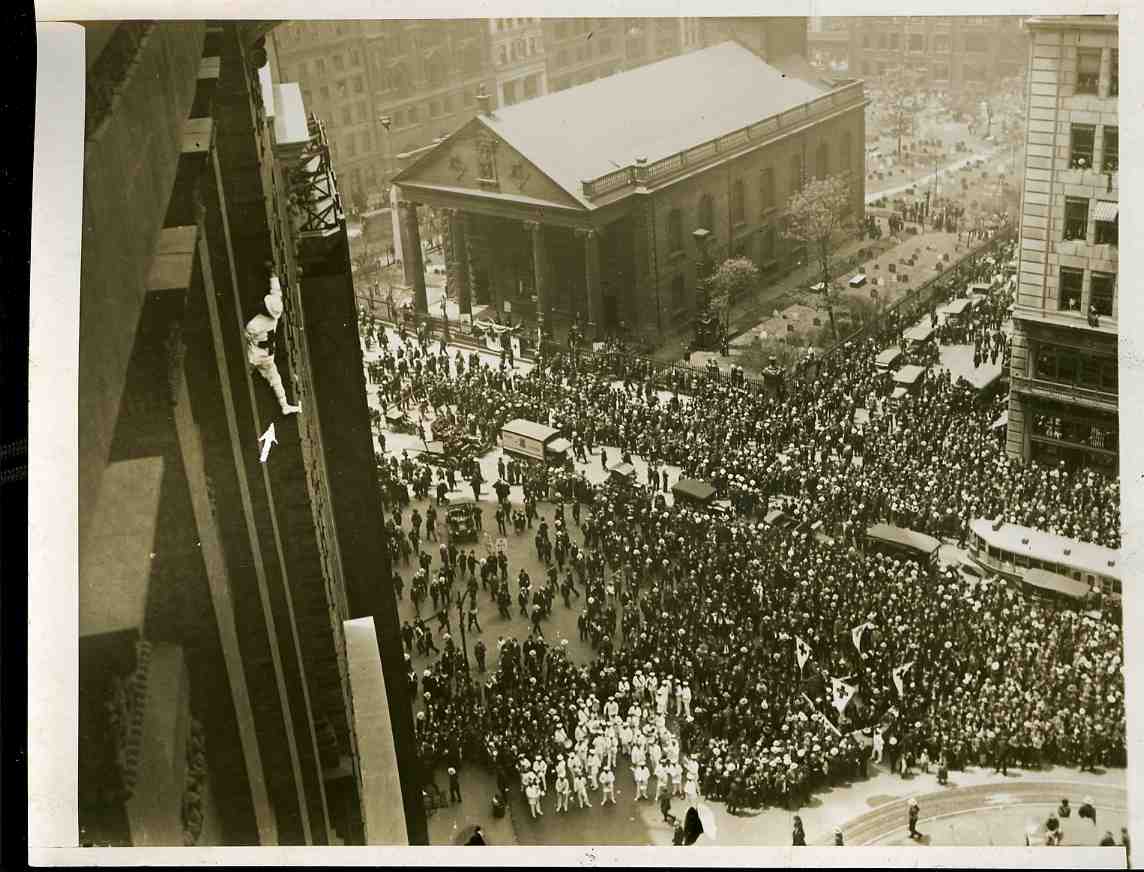
    This photograph depicts a “human fly” making his untethered way up the side of a high rise in Manhattan (?), each foot of his success no doubt raising money for relief effort of American troops or displaced persons or orphaned children, probably in 1918.

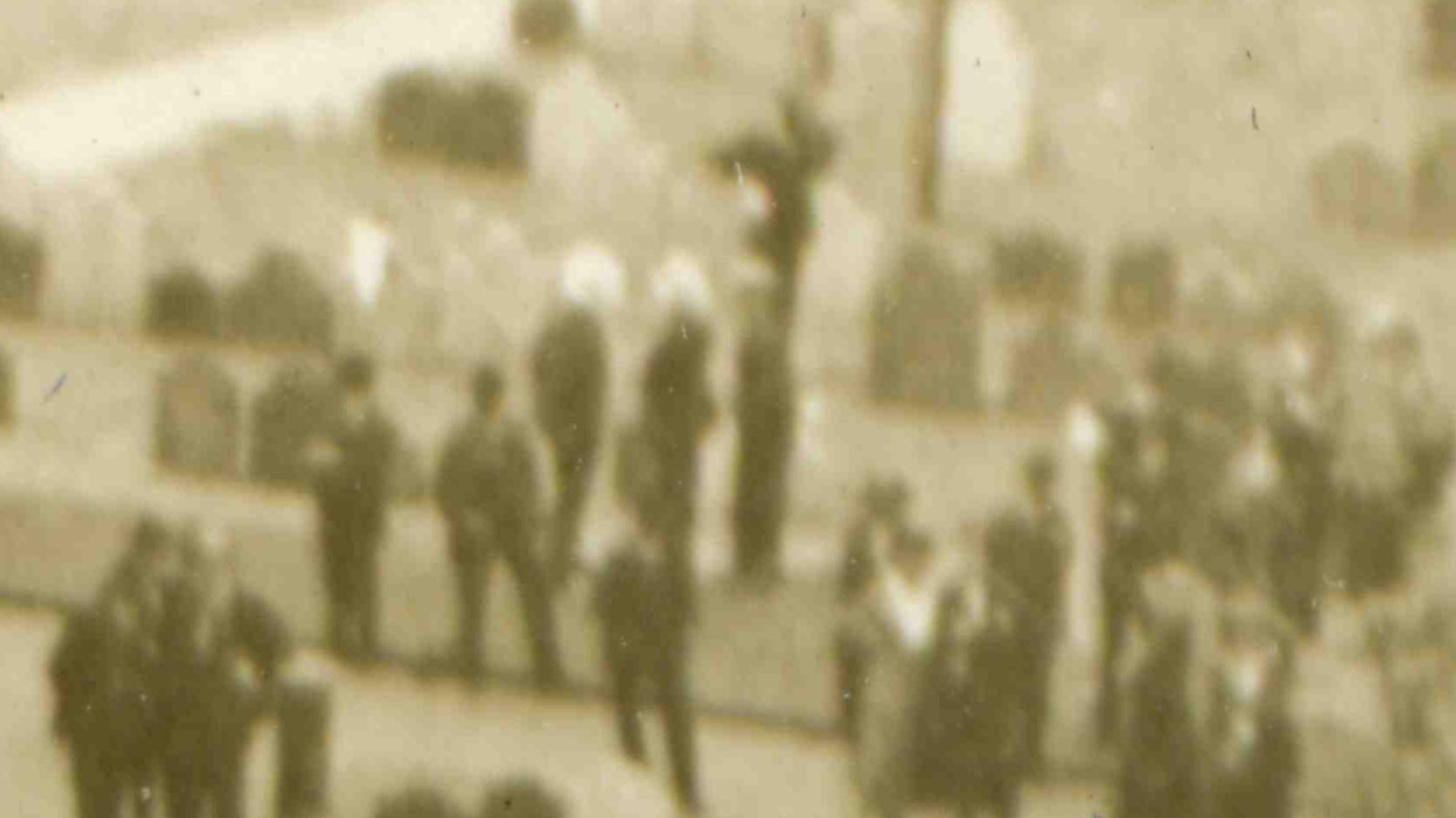
    Perhaps this is Mr. Harry G. Gardiner. the self-styled “human fly” who climbed many buildings in NYC and Boston and Philadelphia in 1918 and 1919.  I cannot identify the church (Episcopal?) in the background, sorry to say (though I’m sure that this will be easy for someone to do).  But I did have a very close and fairly thorough look at the crowd under some fair magnification, and found that not many were actually watching the climber.  On the other hand how interesting can it be to watch someone climb a building–slowly–observing it from hundreds of feet away?  I didn’t see any kids, I don’t think, and there are lots of people looking the other way.  Its difficult not to try and put yourself in the very shoes of these people under the ‘scope, trying to imagine what they were thinking, the heat of the sun on their boaters, the uncomfortable nature in general of wearing all of those clothes for the women, leaning against the black iron fence taking in the stubby sites of the graveyard next to the church….I stopped finally with the two guys in boaters (seen here in the enlargement, the original being just a specky bit at the rear of the cemetery  at the back of the church, to the right), looking very comfortable and relaxed, one with his hands loosely clasped behind, the other perhaps pointing.  Both are looking away from the climber, in the opposite direction, across the graveyard and above the gravestones.  The sun caught their hats perfectly.  They were enjoying a leisurely morning.  There are hundreds and hundreds of these mico-scenes caught in this moment, their suggested fullness revealed only under magnification, like looking through a telescope, in a way, back into a frozen moment of time, yet another photonic jewel.

    0 ebay 17 red cross fly284


  • A Pie Line and Sugar Angel, 1918: U.S. Troops in Paris

    JF Ptak Science Books LLC  Post 431

    0 ebay 16 pie line280

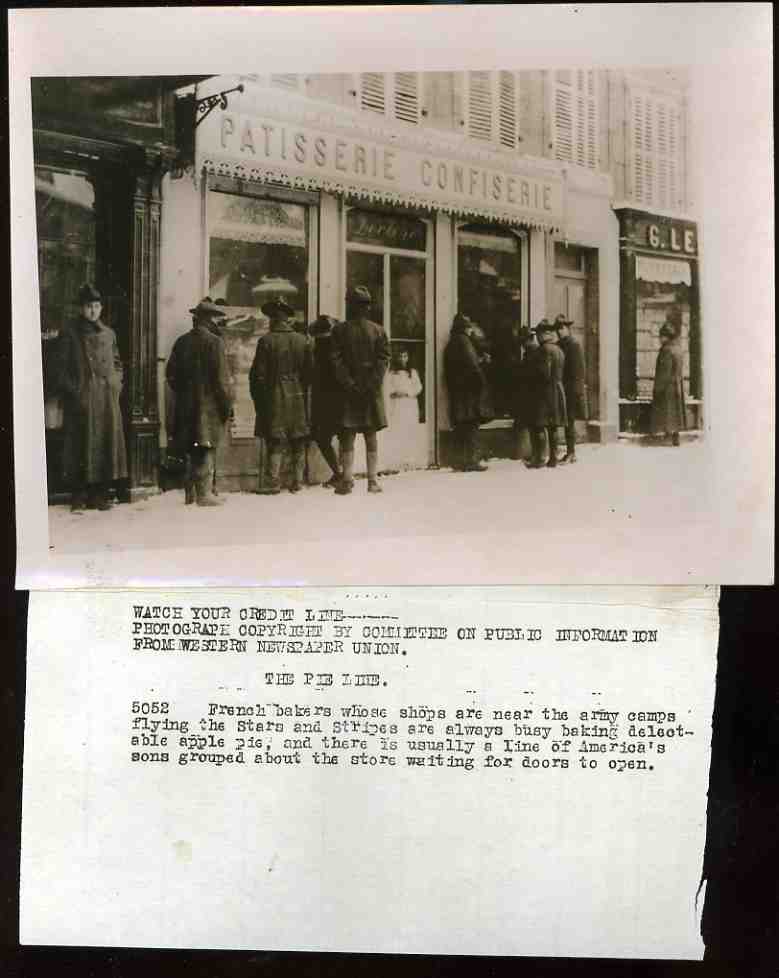
    There’s definitely an angelic figure in this photograph, an image  made showing American Doughboys lining up in front of a bakery/candy store (high-sugar delivery transport systems enhancer) in Paris in 1918.  This photograph is a News Photo Service item, produced by the Western Newspaper Union, which would send photographs (and their captions) on demand  to newspapers and magazines requesting a scene, say, of American soldiers waiting patiently in line for apple pie at a Parisian bakery.  The caption says that “America’s sons (were) grouped about the store waiting for doors to open” so that they could have at the apple pie. They are waiting for something, to be sure; it doesn’t seem quite right that a bakery would not be open during daylight hours (though the shutters on the upper floors are closed still) in the winter (I see snow), but then again I’m not an expert on the hours kept by small business in Paris during WWI. 

    I am taken with the figure of the small girl in the windowed-door of the bakery, standing there with her hands clasped, framed by the window pane, dressed in flowing white.  Is the place really closed, or did the soldiers simply have no money for these treats, the little girl standing there in the unlocked doorway wondering why all of these soldiers just don’t come inside?  Were the men paid in scrip with no value in the streets of the
    city?  The good news is that these men were alive, and it may have been
    November or December of 1918, which means that the killing of millions
    and millions of soldiers and civilians had just about come to an end,
    so they could probably stay living,  safely making their idle if not
    penniless way around the snowy streets of Paris, wanting and waiting to
    go home.

    0 ebay 16 pie line281


  • A Very Fine Dog: a Renaissance Image Illustrating a Break with the Medieval for a Book of the Baroque

    JF Ptak Science Books LLC  Post 430

    0 ebay 15 doggie272
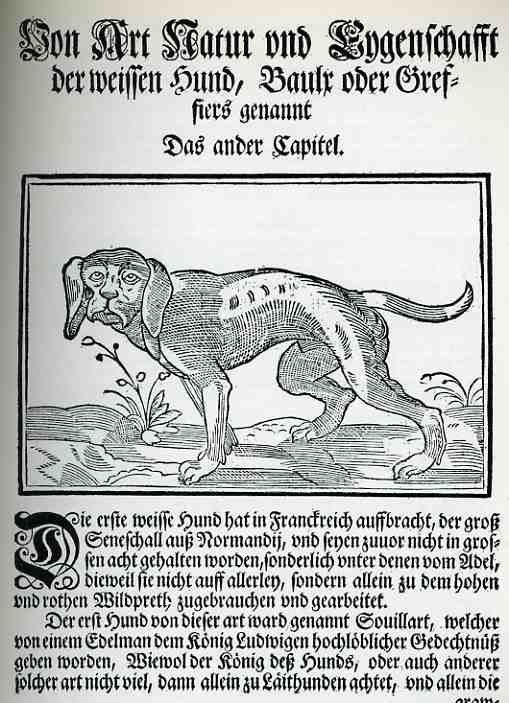
    This lovely woodcut of a hunting dog is found in the German translation of Jacques du Fouilloux’s 1561 classic on hunting.  The German edition Neu Jaegerbuch..., published in Desau in 1726 after the 1561 appearance of La Venerie employed the woodcuts of the original, making it a subject of a very small class of illustrated books whose images predated the publication of the text by 150+ years or more.  (Another book in this category belongs to Solomon Schinz, whose 

    Anleitung zu der Pflanzenkenntnis und derselben nützlichen Anwendung. Mit hundert illuminirten Tafeln, printed in Zürich in 1774, was a reissue of the  101 plates from
    Leonhart Fuch’s botanical masterpiece, De Historia Stirpium, printed in Basel in 1542.) The German translation is the first in that language since the publication of du Fouilloux 185 years earlier, which in turn was a work that was the first significant change in hunting books for 200 years or so.  So in a way this is the first “modern” book on hunting printed in Germany in 385+ years, using renaissance images to illustrate a post-Medieval set of ideas.

    Actually, the only thing I like about this book is this picture of the doggie. 


  • Big Skies, Long Horizon: 42nd Street, 1861

    JF Ptak Science Books  LLC     Post 428

    0 ebay 12 42nd st256

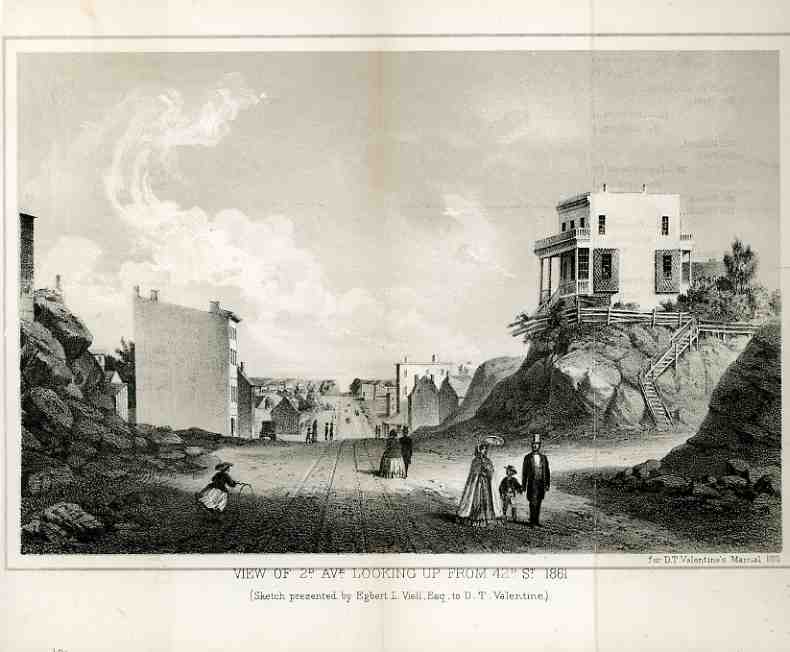
    This view of the northern reaches of Manhattan , published in Valentine’s
    Manual 
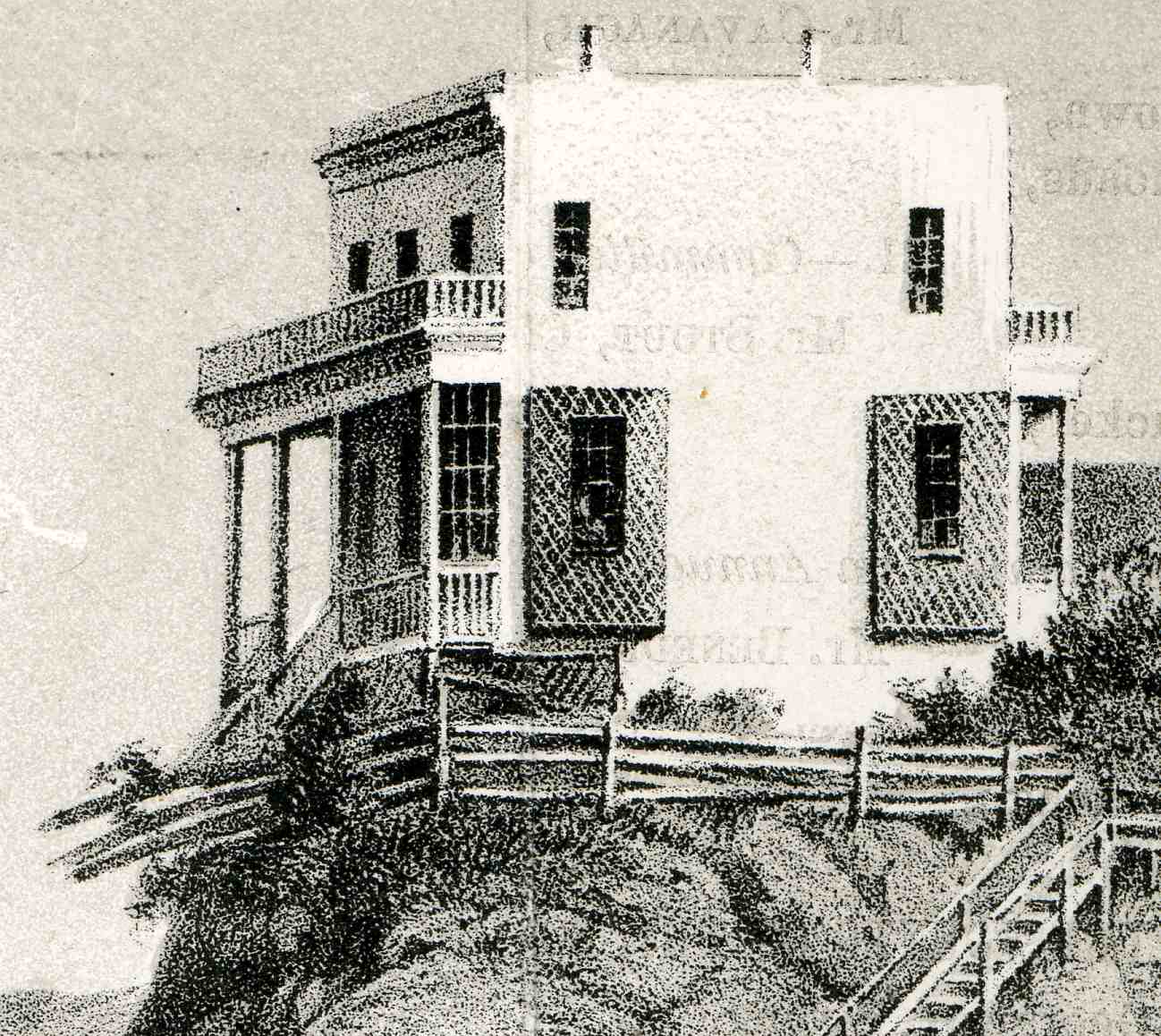
    in 1861, reveals a superior and clear view of the northern reaches of the island due north along 2nd Avenue at the 42nd Street intersection.  An historian of The City could probably identify that precipitously-perched house at the corner of 42nd and 2nd–I can’t.  My guess though is that from the looks of the ruining fence that 2nd avenue must’ve been widened and scraped away the house’s front yard.  The view up 2nd is largely unobstructed  and shows few people, though we do see a *girl* playing with a hoop and a strolling family (with, uncommonly, daddy holding the child’s hand…I guess that the mother’s hands were busy holding the parasol and shawl).  

    0 ebay 12 42nd st257

    The census for 1860 shows that the population of Manhattan at
    850,000.  Given that today’s population is about twice that, where were
    the rest of the 1860-people?  As we can clearly see, they weren’t
    uptown.  Manhattan was pretty densely populated as a whole, but the
    great majority of the population action was taking place below where we
    would today consider midtown. If we take the left and right hand of 2nd
    ave as the 19th and 22nd Wards (which were actually divided by 6th Ave,
    but 2nd will do for these purpose), then there would be about 80,000
    people living there, or about 9% or so of the entire population of the
    city. These two wards also accounted for about 30% of the entire area
    of the city below 86th street.  So even though this scene looks pretty
    pastoral, there were still a fair number of people living in those
    low-rise stretches.

    Another bit to consider is that the
    island’s population then was fairly static–the people in Manhattan
    were largely residents, whereas today the daytime population just about
    doubles, which makes it the country’s most-commuted-to daytime city.
    (Manhattan daily increase= 87% increase; Washington, D.C.  73.0%; 
    Boston  41.1%;  Seattle 28.4%; Denver 28.0%; Portland, OR  23.0%;  San
    Francisco  21.7%; Charlotte, NC  21.2%; Houston   20.6%; Nashville
    19.5%; Austin  19.4% )

    Second_Ave_NYC_from_85th_St

    All this said, I always have liked this image because it so odd, and naive, and lovely.  Unexpected,  I was thrilled to see the failing fence for this property, along with its curly stairs leading away from the sheer droop at what used to be the front steps of the house.  To me these are just gorgeous details.

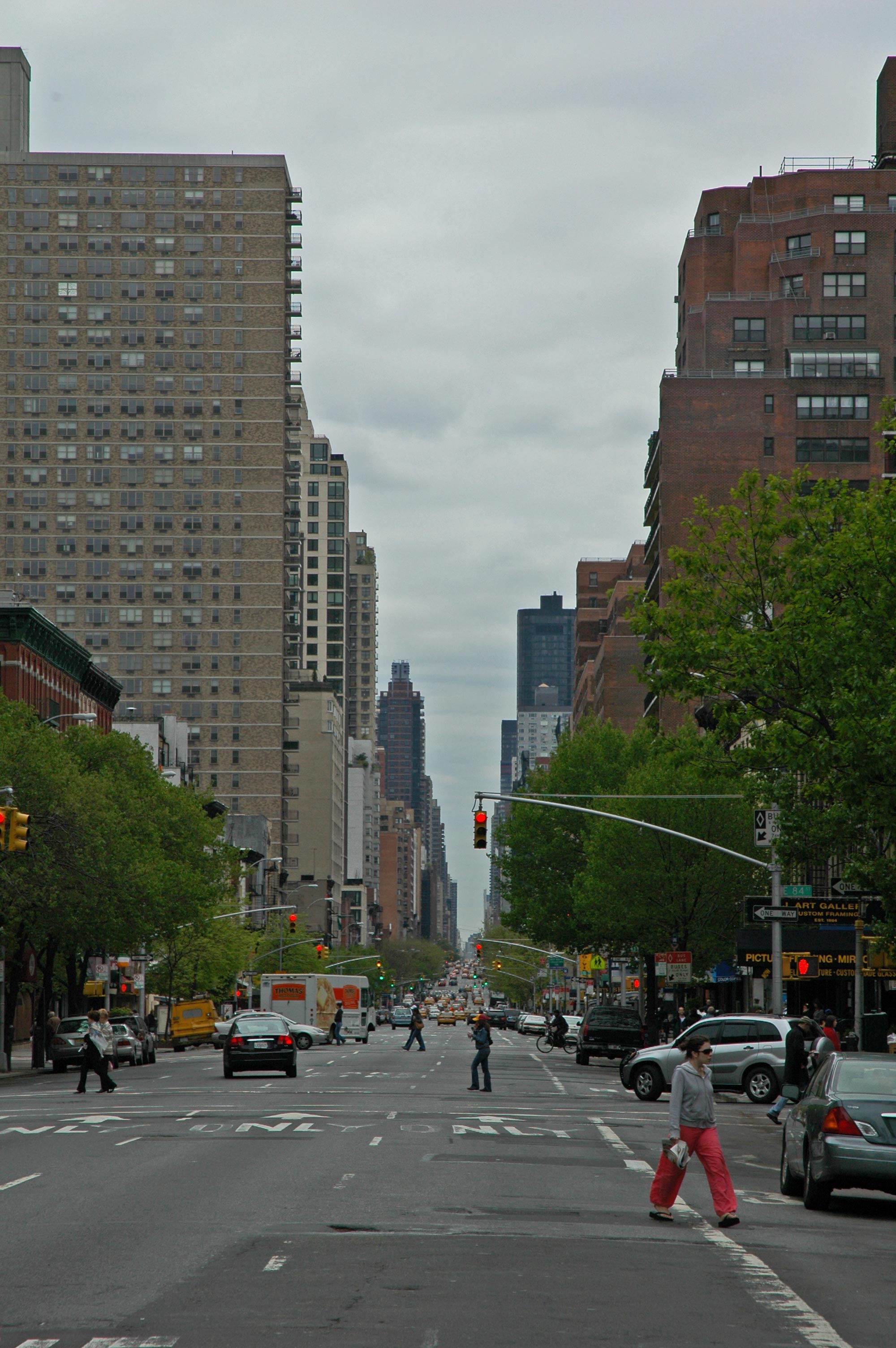
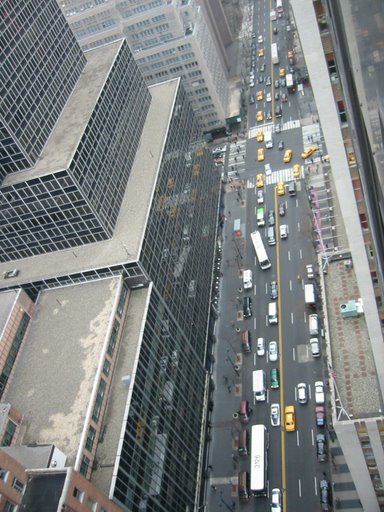
    Here’s a shot (right) of 2nd ave looking south from 85th street, which may very well be the vanishing point of the 1861 image.  Maybe.   The photo below shows 2nd and 42nd from the Helmsley. 

    Second ave 42nd st

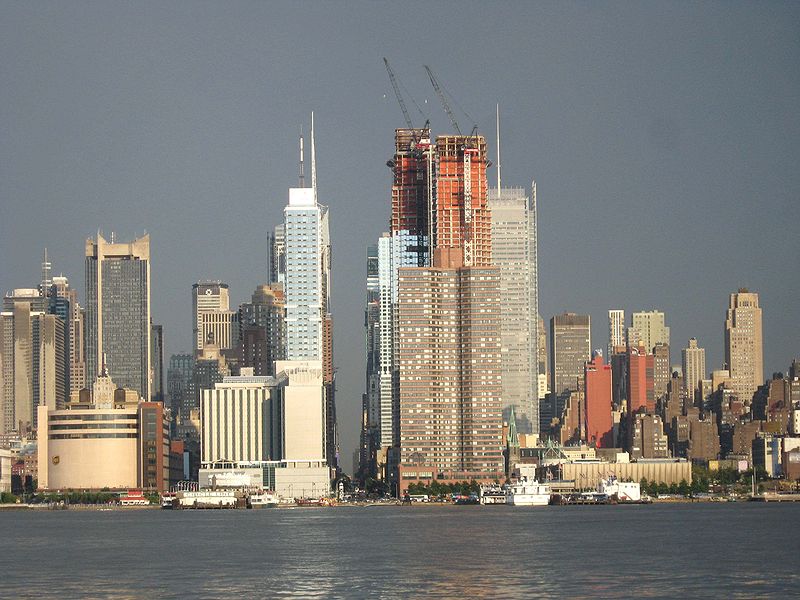
    Finally, below, we see a view of 42nd Street from the Hudson. 
    Sexond ave hudson


  • Where to Be and Where to Look Part 1: de Gaulle and FDR

    JF Ptak Science Books LLC  Post 425

    0 ebay clark
    Many years ago I went to the house of a man with books to sell.  The
    house was terrific, with a view of the Potomac and just outside the
    district line–a hard thing to accomplish in housing in Washington. 
    The elderly gent’s house was open, airy and basically wallpapered with
    large format, very big photographs.  Many of the photographs I
    recognized–and of those, many were iconic images.  I said something
    simpy like, “so I see that yo collect historic photographs.”  “No, I
    don’t” he said.  In that moment I thought he was just being a wiseacre
    with me, He quickly said, “I took them”. 

    Ho-ly Crap, I thought.

    I honestly didn’t know what to say–I had seen so many of them in my life, and so often, that like a lot of things, these images were just there, part of the cultural landscape.  And here was the man who took them.  After I got over my shock and came to a sense or two, I interview hi a little.  The man behind the camera’s name was Ed Clark.

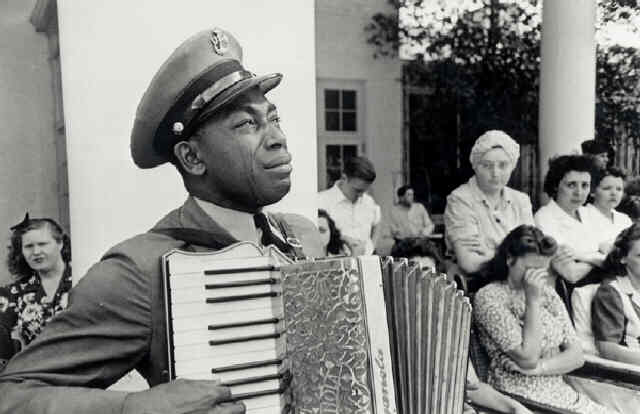
    Ed (1912-2000) was about 80 when I met him, and he was selling some books because he was getting ready to leave DC and head back home to Nashville.  He was very quick with strong recall.  I asked him about his ultra-famous photo of CPO Graham Jackson, preserved forever, who on 23 April 1945 in Warm Springs, Georgia, was playing Dvorak’s Going Home as Franklin Roosevelt’s casket was being taken to the train for a last ride to D.C.  Jackson was at Warm Springs to perform for Roosevelt when the President died on the 23rd.  I wondered about where the rest of the crowd was, and particularly, where the rest of the photographers were, at that moment  After all, FDR was about the most famous man in the world, and perhaps the most important, when he died in the last stretch of WWII.  Surely there must’ve been tons more photojournalist there to record the scene of FDR’s body being removed.  “There were” Ed said.  I asked him where they were.  He explained that they behind him, which would’ve been in front of him, actually–he was at the rear of the crowd, with every other photographer pointing their cameras forwards, recording the movement of FDR’s body.   Ed said that he turned around (“because that picture was already being made”)and found the rest of the crowd, the people who were already there at Warm Springs, watching from a respectful distance.  And it was at that point that CPO Jackson started to play his accordion, the music being one of FDR’s favorite pieces.  “They weren’t looking the wrong way”, Ed Clark said, “just not the right way”.  And Ed made the photo that everyone else missed, because they’re faced the obvious.

    0 ebay 12 where not to belia260

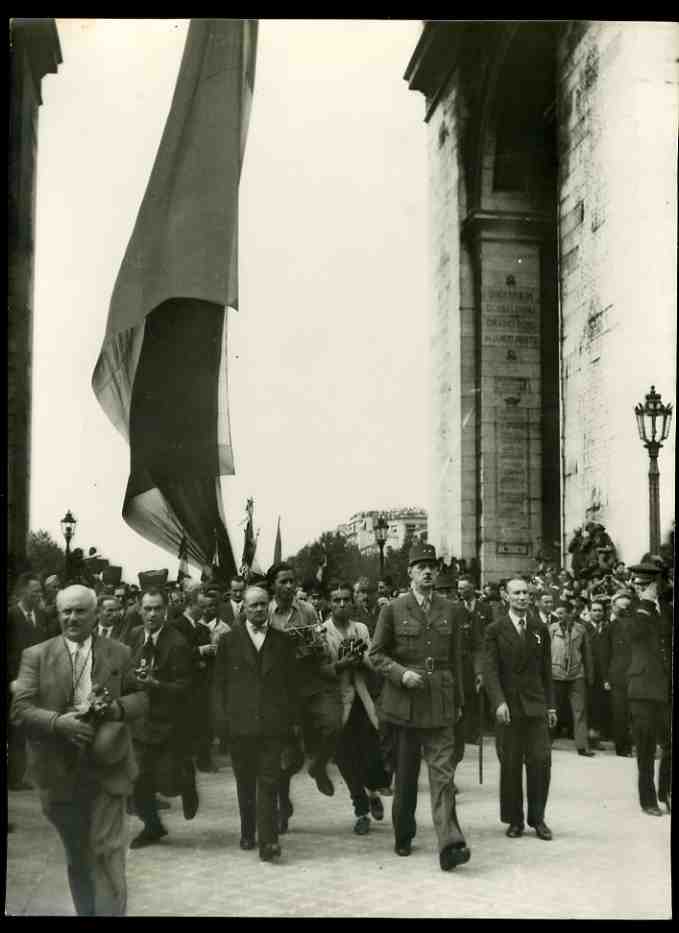
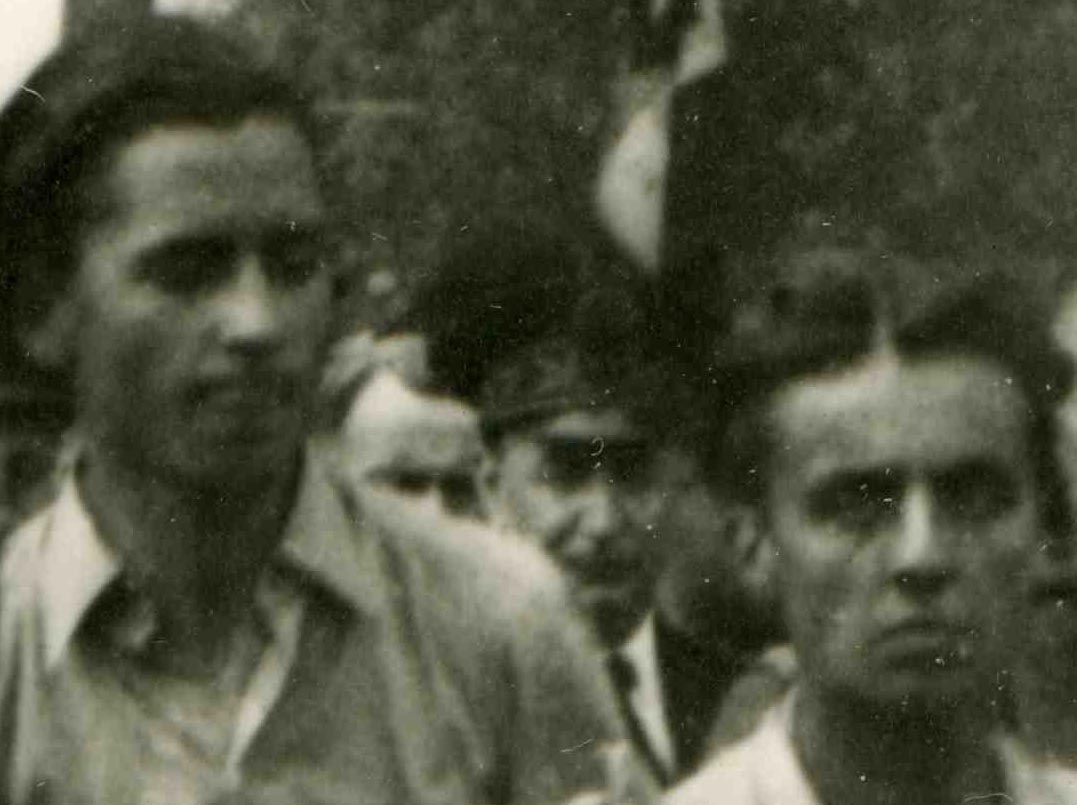
    This second picture captures both the moment and the photographers whop were missing it.  The scene is of course General De Gaulle making his triumphant return to the liberated city of Paris, walking back into the city through the Arc de Triomphe on 25 August 1944.  I am also completely certain that the picture was taken by another LIFE photographer (Ed Clark having worked their for years contributing many photo-stories and covers), Ralph Morse (my original doesn’t have any identification on the back, though it certainly looks like the others Morse made at that moment).  Morse caught De Gaulle in mid stride at the half-way point through the Arc.  And you can see the look of pain in the faces of the other scrambling photographers who must’ve been just coming to the realization that they were in the shot they had been desperately wanting to make since 1940. Their sinking feeling is pretty visceral.

    Perhaps being in the “wrong” place is just someone else’s perception until you prove them wrong.  After all, there must be some right place right time, wrong place right time, right place wrong time, wrong place wrong time hierarchy, no?–that is, until you’re smart enough to realize that there’s no such thing as “wrong”. 

    0 ebay 12 where not to belia261