A Daily History of Holes, Dots, Lines, Science, History, Math, Physics, Art, the Unintentional Absurd, Architecture, Maps, Data Visualization, Blank and Missing Things, and so on. |1.6 million words, 7500 images, 4.9 million hits| Press & appearances in The Times, Le Figaro, Mensa, The Economist, The Guardian, Discovery News, Slate, Le Monde, Sci American Blogs, Le Pont, and many other places… 5000+ total posts since 2008.

Category: Militaria

  • Nazi Propaganda Map for a European Hearts and Minds Campaign

    JF Ptak Science Books  (Post 193 from 2008) Expanded and with better images. 
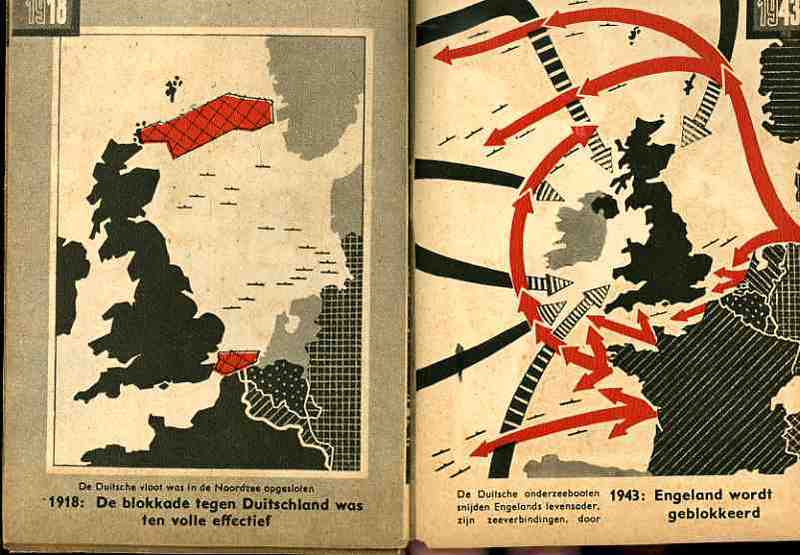
    Nazi Maps D Propaganda1

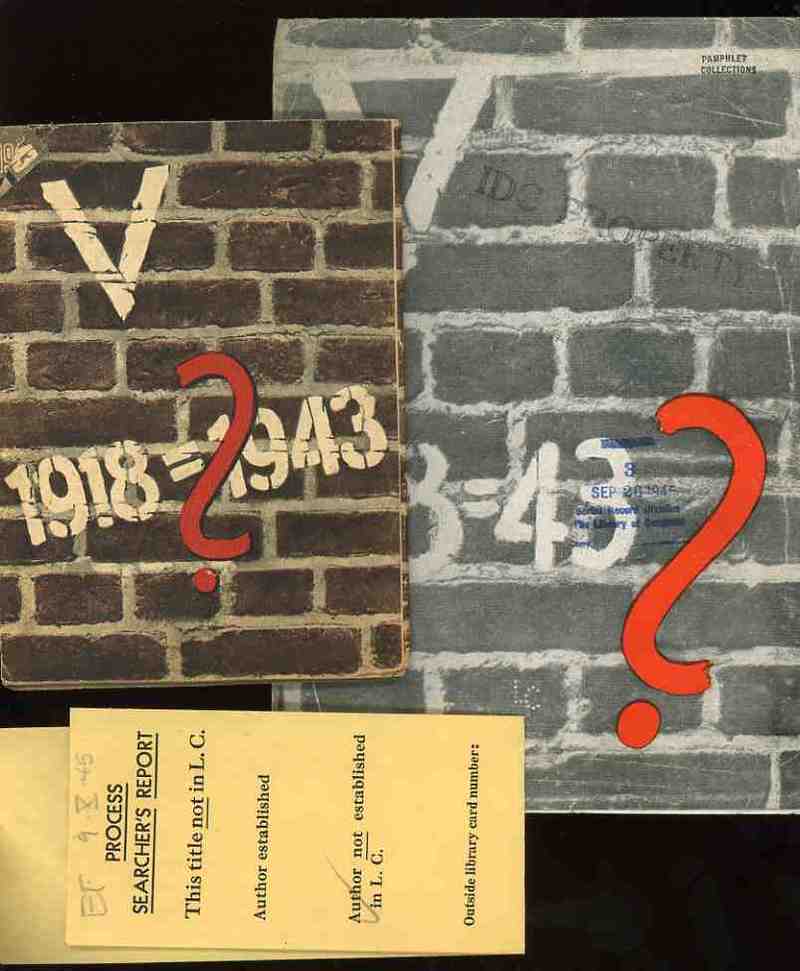
    These two, related, pamphlets were the products of the Nazi Propaganda engine and sought to affect the moral and intellectual stamina of the people in the occupied countries of the Netherlands and France in 1943.   Each stressed the enormous differences in the German state that took place in the 25 years between the end of World War I and the third year of the Nazi European part of World War II.  I’ve no idea whatsoever about the grander symbology  (if any) of these numbers associated with these two pamphlets (the Roman numeral for “5” and the 25 years of the difference and the “13” points (of the French propaganda) aside from the obvious mathematical implications.
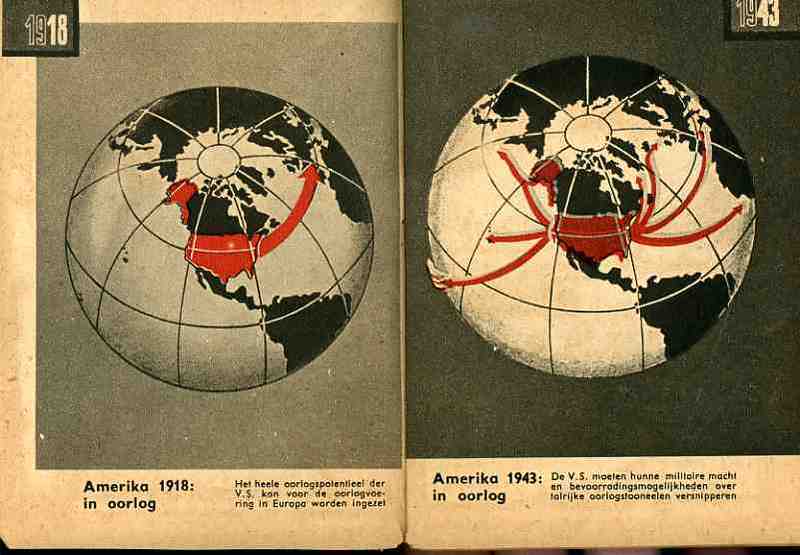
    Nazi Maps D Propaganda2

    (The only interesting bit that I can find in the “18=43” from the French pamphlet is Luke 18:43 “Immediately the man could see again and began to follow Jesus, glorifying God. All the people saw this and gave praise to God.”. )   I find it curious that identical symbolism (?) was used for the two countries, and that the French version was simple comparative text (summarizing the differences in the two periods of time) while the Dutch version was mainly a picture book. 
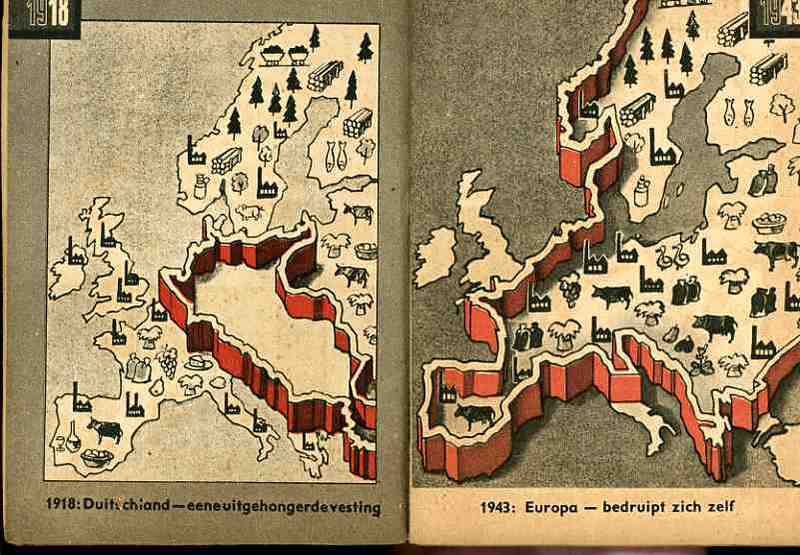
    Nazi Maps D Propaganda3

    I would reprint the French version if it wasn’t so bloodily hateful.  (Suffice to say that this is so by looking at one example: in the last of the second issue of 13 points  Goebbels et alia wrapped themselves in the insulating fabric of the German “people” in the “resistance” against “Jewish saboteurs”—not the German political machine, and not the German military, but the German people, insinuating that the Nazi annihilation of the Jewish people was de facto sanctioned by the will of the German nation.  This is of course part and parcel of the fictitious and loathsome Protocols of the Elders of Zion (of which Henry Ford was a happy reader), a French work that was completely stolen and plagiarized by Imperial Russia in the early 1880’s and which, later,  Hitler used to both build his hate against the Jewish people and use (and acknowledge ) as the template for his early actions in the Nazi Party.)
    Nazi Maps D Propaganda4

    The maps used in the Dutch publication are fairly general and issue a stark warning about the growth of Germany–and how Germany continues to grow through war.  The first that we reprint, above, tries to get the point across to the occupied people that England has more problems to deal with than would concern their attention with the Netherlands.  The second part of the first map crazily shows the attack upon England and the effectively exhausting attention it has to pay to many points of invasion.  Ditto for the second map, showing the spread of American concerns–the U.S. in 1943 would have far more to deal with in many points in a two-ocean war than to concern itself with or have the ability to think about the liberation of Europe and the Netherlands.  The last map shows the supposedly extraordinary growth in Germany’s  industrial and agricultural capacity. 

    In short, the maps tell its readers to just keep quiet, the German nation is mighty, and just wait for the end of the victorious German war.  The maps also addressed non-readers–of course the Dutch literacy rate was extremely high, but you didn’t have to be able to read the description of the map to understand its blunt message. (This makes me wonder if the maps really weren’t intended for scare tactics against children.)  As Boss Tweed once infamously reported–that he had no fear of editorials because his constituency couldn’t read–he hadn’t counted on the political cartoons of Thomas Nast–which could be understood by a non-reader–and which wound up being one of the direct causes of his exposure and downfall. 


  • Unexpected Graph of Nazi Elections, 1919-1933, and the Beginning of the End

    JF Ptak Science Books   Post 2427

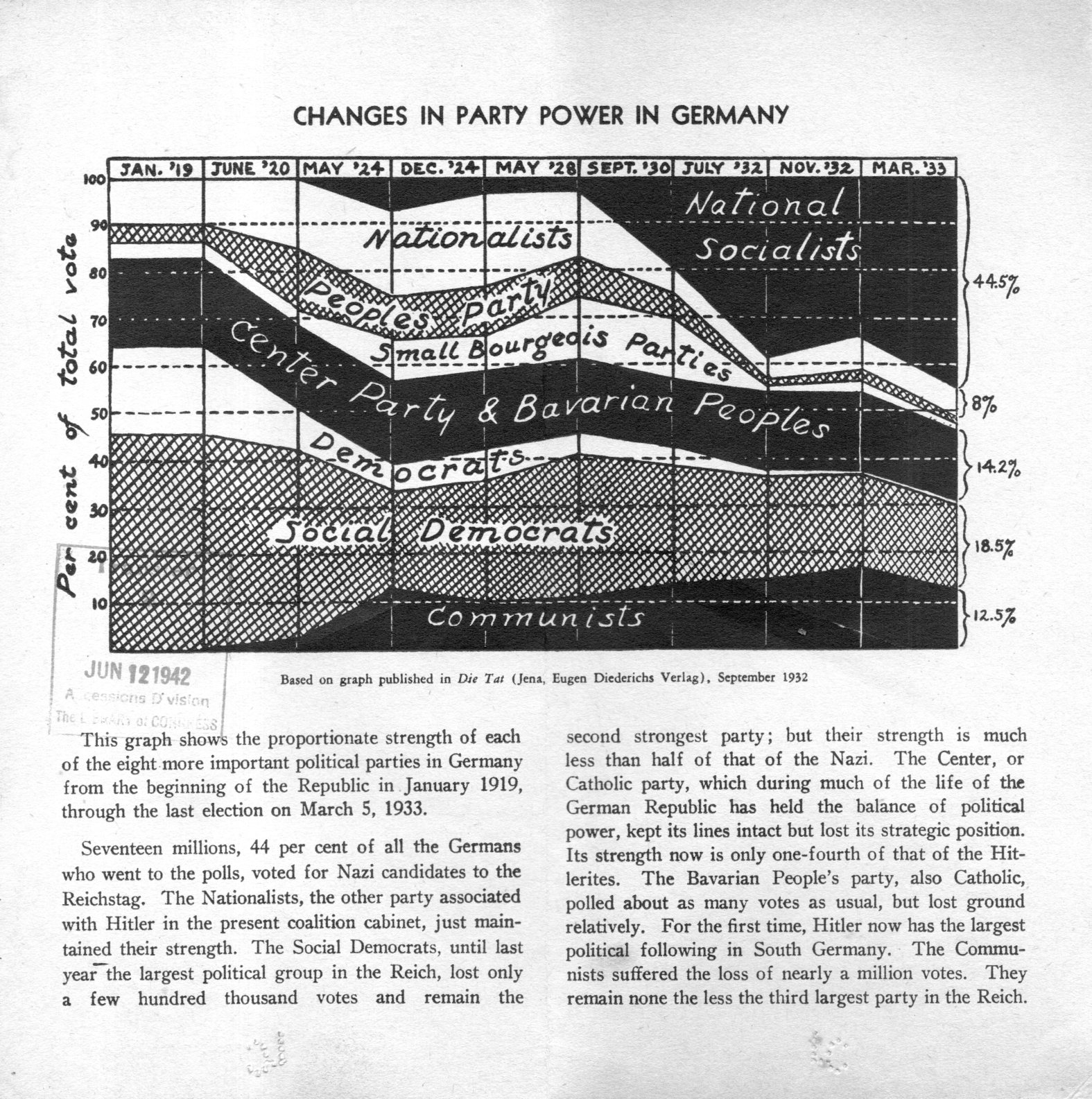
    This graph shows the growing shadow of The End, the falling curtain, creeping across the the vertical and the horizontal.  This was published to show the results of the fatal 1933 election–this was the one right after Hindenburg appointed Hitler Chancellor who immediately dissolved the Reichstag and so necessitated a new election. That election followed months later, and in spite of massive Brown Shirt presence, plus NSDAP intimidation, violence, coercion and son on, Hitler’s party did very well, but perhaps surprisingly not as successful given all of those other factors.  He didn’t have control of the government as a result of the election that gave the Nazis 43% of the seats in the Reichstag.  It would come to develop that Hitler and the party found enough support to implement the Enabling Act, which would give Hitler the power to enact laws without the support of the Reichstag.  Four months later, with the political and power struggle over, there were no other parties in Germany besides the Nazi Party, and that would become Hitler’s ultimate power, and the true beginning of the rotting of Germany and the coming of the deaths of dozens of millions of people.  

    Nazi election453

     [Source: private, via the Library of Congress from the OSS library.]


  • Underground Airports, 1935-1941

    JF Ptak Science Books  Quick Post

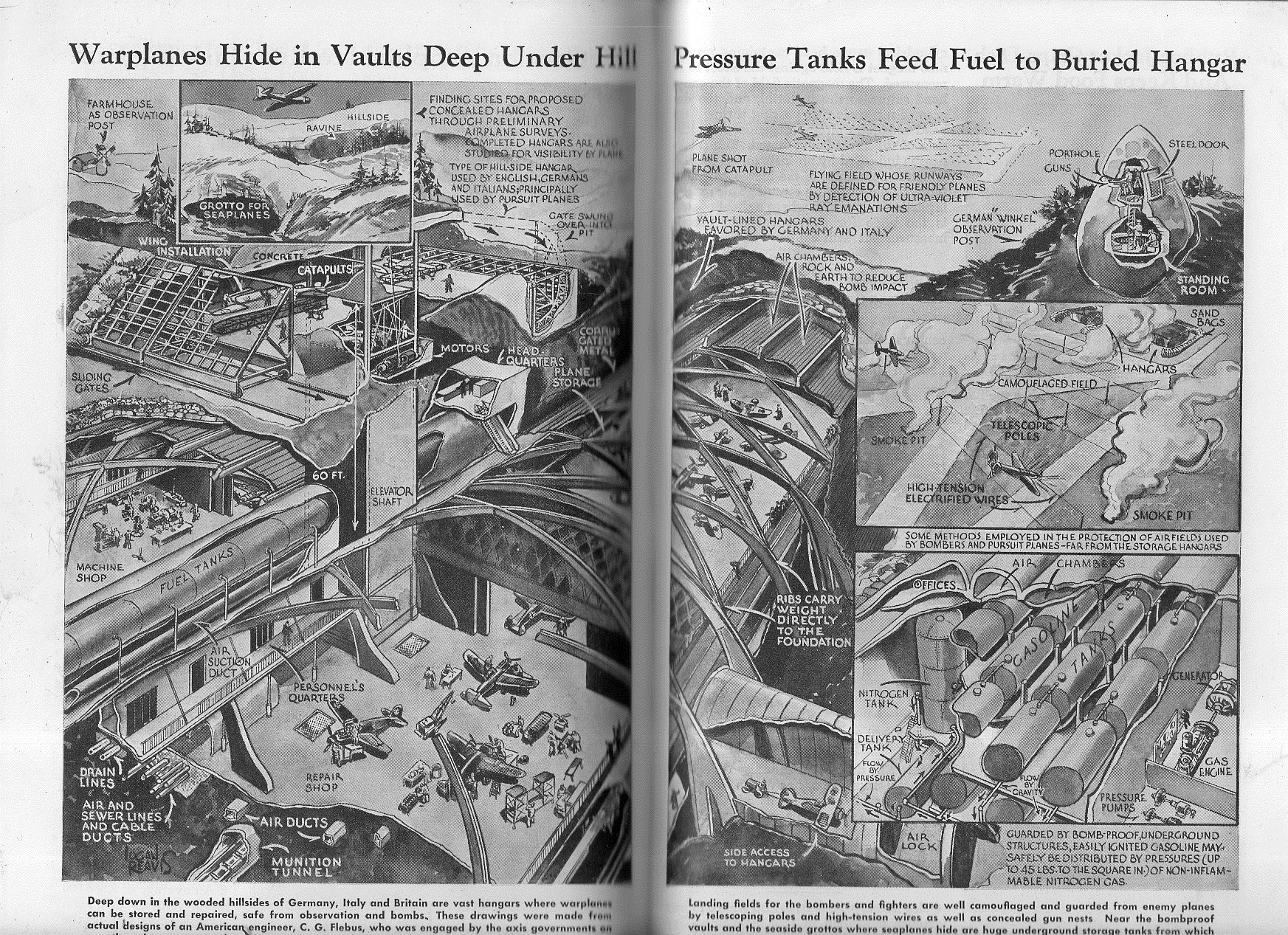
    I’ve seen a number of plans from the 1925-1935 period calling for skyscraper-topped airports, and airports built over a largely cover-ed themes, and over a covered-up Central Park, and floating in NYC harbor, and so on. I have not seen too many future visions of underground airports. This plan appears in Popular Mechanics for June 1941 and advocates a very tightly controlled underground environment for airports.  The war in Europe was nearly two years old at this point, and the bombing war from the air was very advanced. There is little doubt that all sorts of plans were being considered to protect air force complexes from bombing, though something of this scale, dealing with so few number of plans, could hardly have made it further than this public outing.) 

    Cross section under groun air908

    [Image is expandable]

    An earlier and peace-time example of underground tech is found at the great Modern Mechanix blog, and features an April 1935 article in the journal of the same name an effort to remove the airport underground.  Dr. William Christmas is the chief major domo in the piece and he is depicted with his visions of flight of the future,  holding a model of his 400′ 25,000hp plane with 75′ propellers set to cruise at 200 mph.  The monster could not be accommodated by the plans for an underground airport at right, which frankly looks like a hard drive, and which seems like a positively enormous amount of engineering for a spinning platter underground airport with room for eight planes.  

    Underground airport

    [Source:  Modern Mechanix, http://blog.modernmechanix.com/mags/ModernMechanix/4-1935/under_air.jpg]


  • Preparing for the Possibility of the Invasion of the U.K., 1941

    JF Ptak Science Books   Quick Post

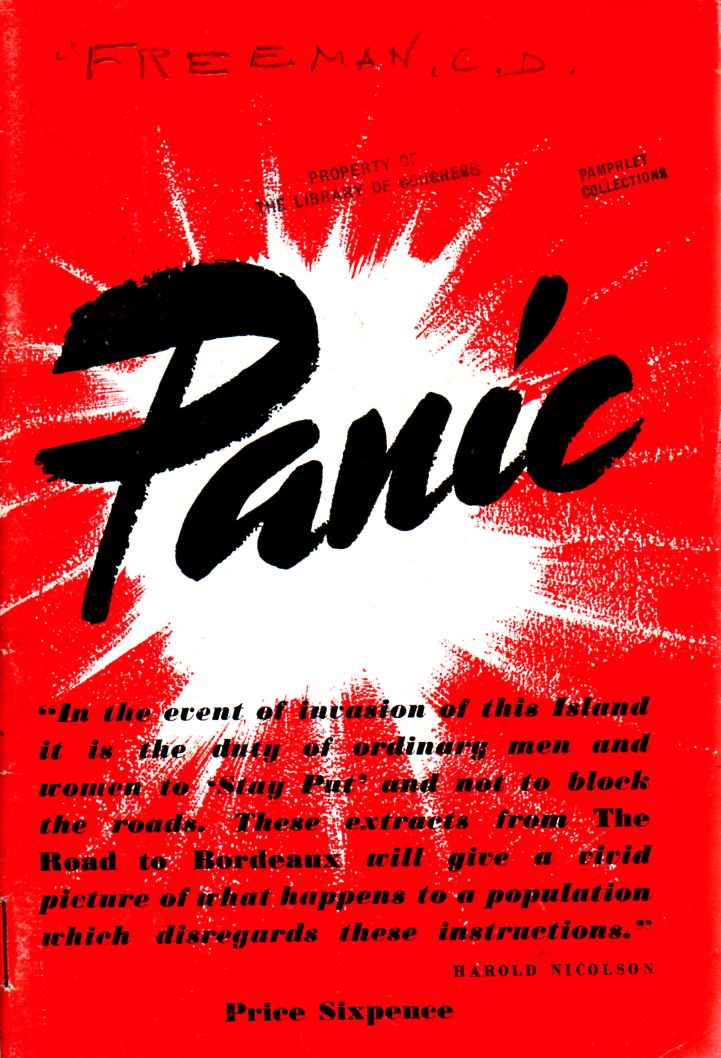
    Panic (publish in London in 1941) was a slim pamphlet containing the experiences of two British ambulance drivers working in France during the invasion by the Nazis in 1940.  They reported on their experiences there, which were grim. The major lesson that C. Denis Freeman and Douglas Cooper published was in the one-word title of their work–panic. They found that the French population in general reacted very badly–in a panic–in their response to the invasion. They found “the awful truths” that the population crowded roadways and made it difficult for the French army to maneuver, and also confounded efforts at organized resistance. 

    Panic879

    The lessons were learned in 1940, and I am sure that in the process of writing and publication through the end of 1940 and beginning 1941 that the general fear in the U.K. of a possible invasion by Germany had dissipated.  But the lessons were there to be learned, and Harold Nicholson (the the Minister for Information) declared that the lessons of France could be applied to the U.K.–namely that in the event of invasion that people should “STAY PUT’ and not block the roads.  Simple stuff, really, but mostly “simple” post facto.  

    [My copy was received by the Library of Congress on 8 August 1941, just a little beyond when the pamphlet could have done some better good…]

    ·Posted by :

    ·in:


  • Deadly Dead Ideas: the U.S. Thinks About the Great War, 1915

    JF Ptak Science Books   Quick Post

    Hollow square790

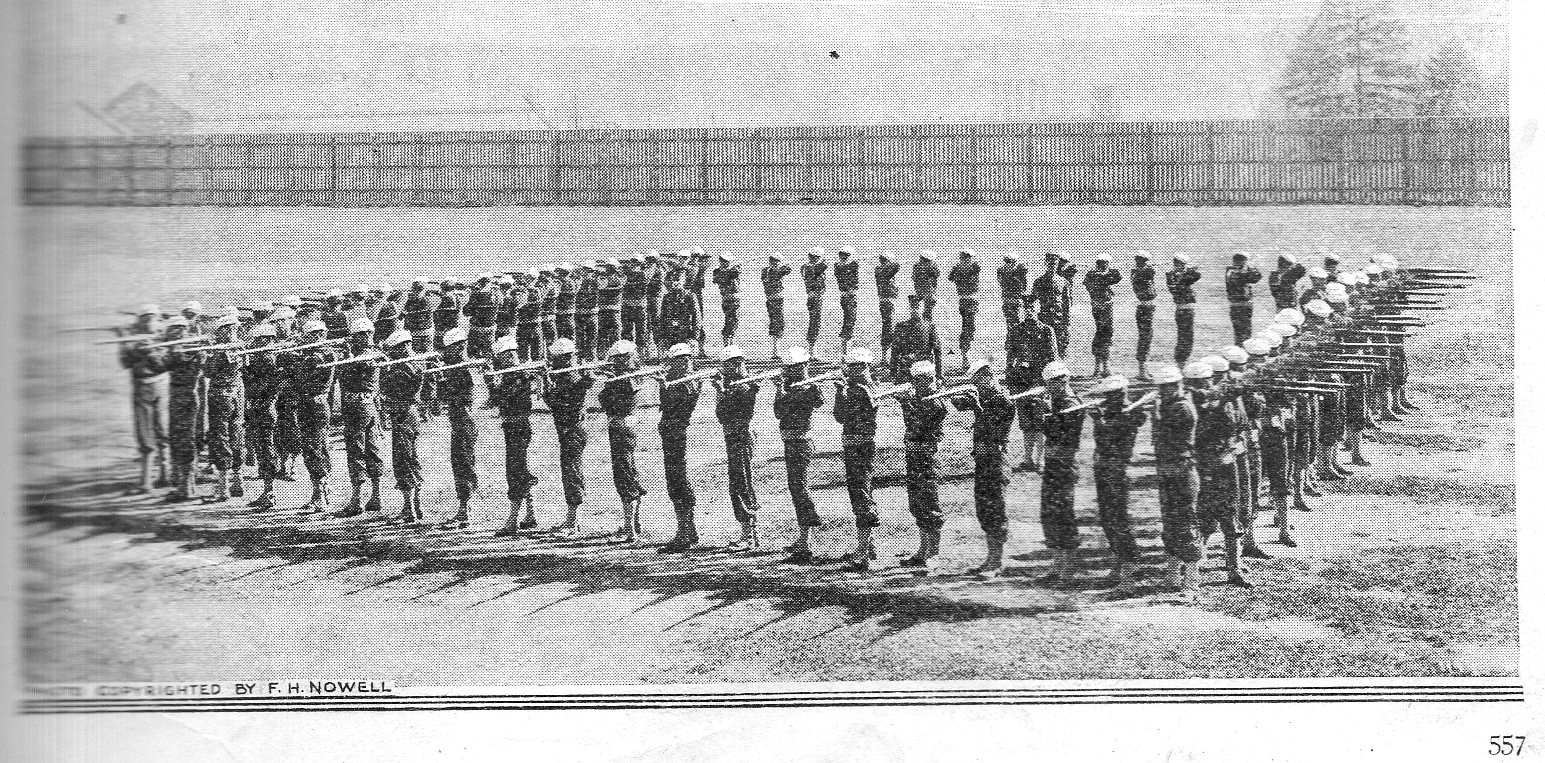
    My browsing came to a sudden halt when seeing this small inset photo in an article in Popular Mechanics for October 1915.  “My Four Years in the Navy” was a fairly long feature piece, and it showed a series of rather crowded images of life at sea with overtones of “readiness” should something happen to bring the U.S. into the year-old WWI.  It was the picture at the bottom of p. 567 that gives you great pause–first of all, the sailors are armed and on land, but they’re also forming a “hollow square”, a defensive position used when a large force attacks a smaller one.  The tactic has been around at least since Roman times and used steadily through the early 19th century (especially it seems during the Napoleonic Wars), but it gradually wore away from the face of battle, and was hardly employed in the late 19th c, except against irregular forces (like against warriors in the Zulu Wars). What made it an antique notion was the machine gun, and tank–mostly though it was rapid-fire assault weapons the crushed the square, the collection and stacking of soldiers close together (and in layers) made them easy targets to an opponent with such weapons).  Nobody was using this technique in the Great War, but there they were, these poor sailors, demonstrating the formation to fight against hundred-year-old ghosts.  The U.S. was nowhere near being ready to fight in WWI in 1915.  


  • Women, Work, and Bombs: 1918

    JF Ptak Science Books   Quick Post

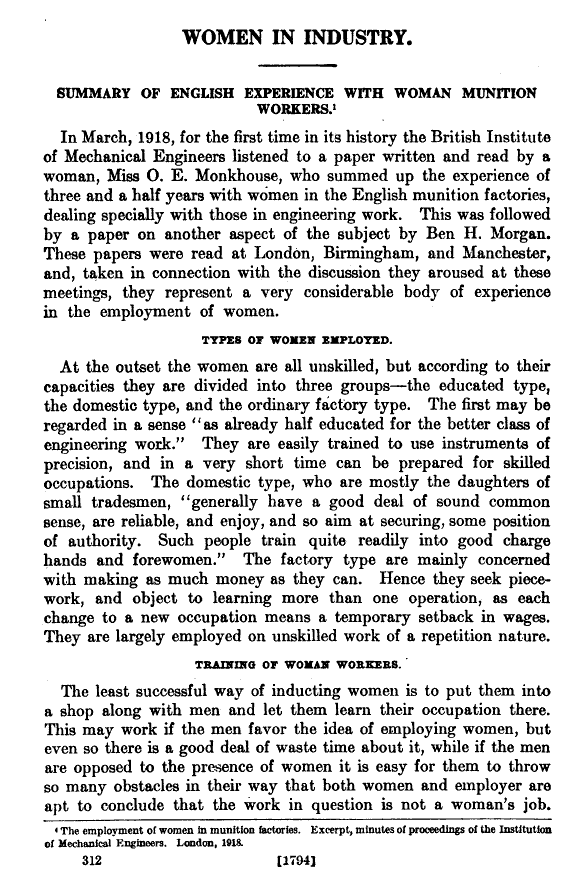
    I came across an interesting little story in Nature (March 28, 1918) about women munitions workers.  It is a note based on a report written by Miss O.E. Monkhouse–and as it was noted in the Monkhouse piece that it was the first paper read by a woman before the British Institute of Mechanical Engineers–and summarizes the work of a million women workers in wartime bomb  factories.  It is probably a valuable report for its telling of the number and nuts and bolts, and of course for the history of the introduction of women into a work environment where they had never been before, and in great numbers,  but it still must suffer through the painful prejudices and opinions of the times. Ms. Monkhouse though is an elegant spokesperson and proponent for equality, and makes several arguments for the abilities of women being equal to that of men, which makes this short article well worth the read. 

    Women in industry


    ·Posted by :

    ·in:

    —

  • Gas Masks of Cloth and Gauze (June 1915)

    JF Ptak Science Books    Post 2414

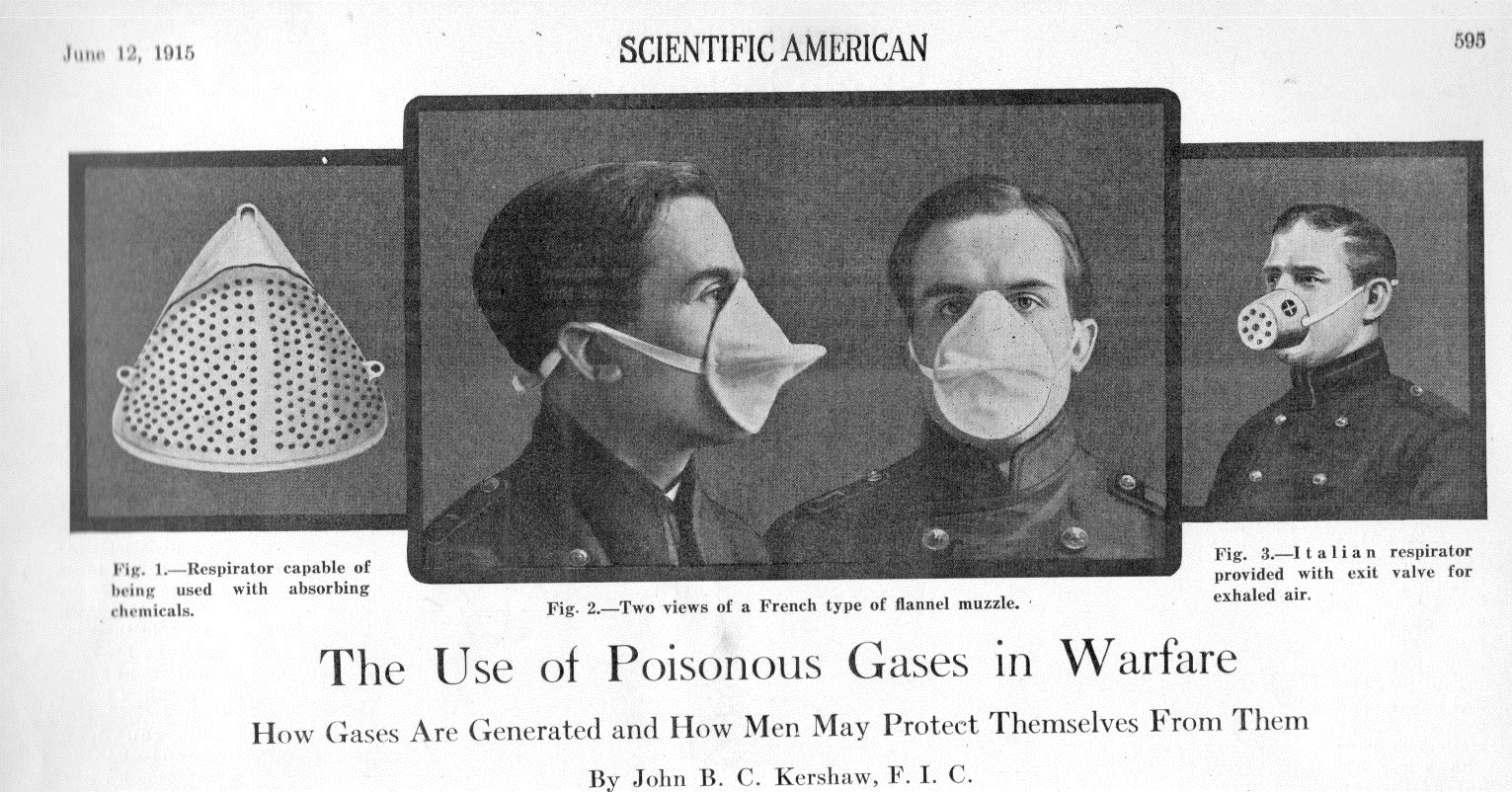
    Gas mask752

    About two months after the Germans used the first poison gas in WWI  (on April 22, 1915 against French Colonial troops at he Second Battle of Ypres in Belgium) the Scientific American published (on June 12, 1915) an account of some very early responses to the new lethal threat.  This was a more caustic and dangerous form of a warfare that existed for at least 2200 years, going back to the Peloponnesian wars, with pitch- and sulphur-saturated wood that was set alight and buried under siege walls, the noxious smoke incapacity the soldiers within the walls. As the SA article also points out, bellows  were used to propel the nasty and noxious smoke produced in a cauldron of burning charcoal, pitch and sulphur, blown hopefully over the walls and lines of the enemy–this at about the same time as the Athenians and Spartans were having it out.  

    There’s also indications that plague/disease-ridden animal carcasses were catapulted across enemy lines, armies going at one another using rockets of diseased meat. And so on.

    But the 150 tons of chlorine gas that the Germans sent over the French lines on that day was something entirely different–and far more lethal than any other gas previously used. (There was an earlier attempt to use gas in battle, employing an even nastier gas–xylyl bromide. It was dispatched January 15, 1915 against the Russians on the Eastern Front, but due to extreme cold most of the gas froze–it still however was potent enough to kill a thousand soldiers.) 

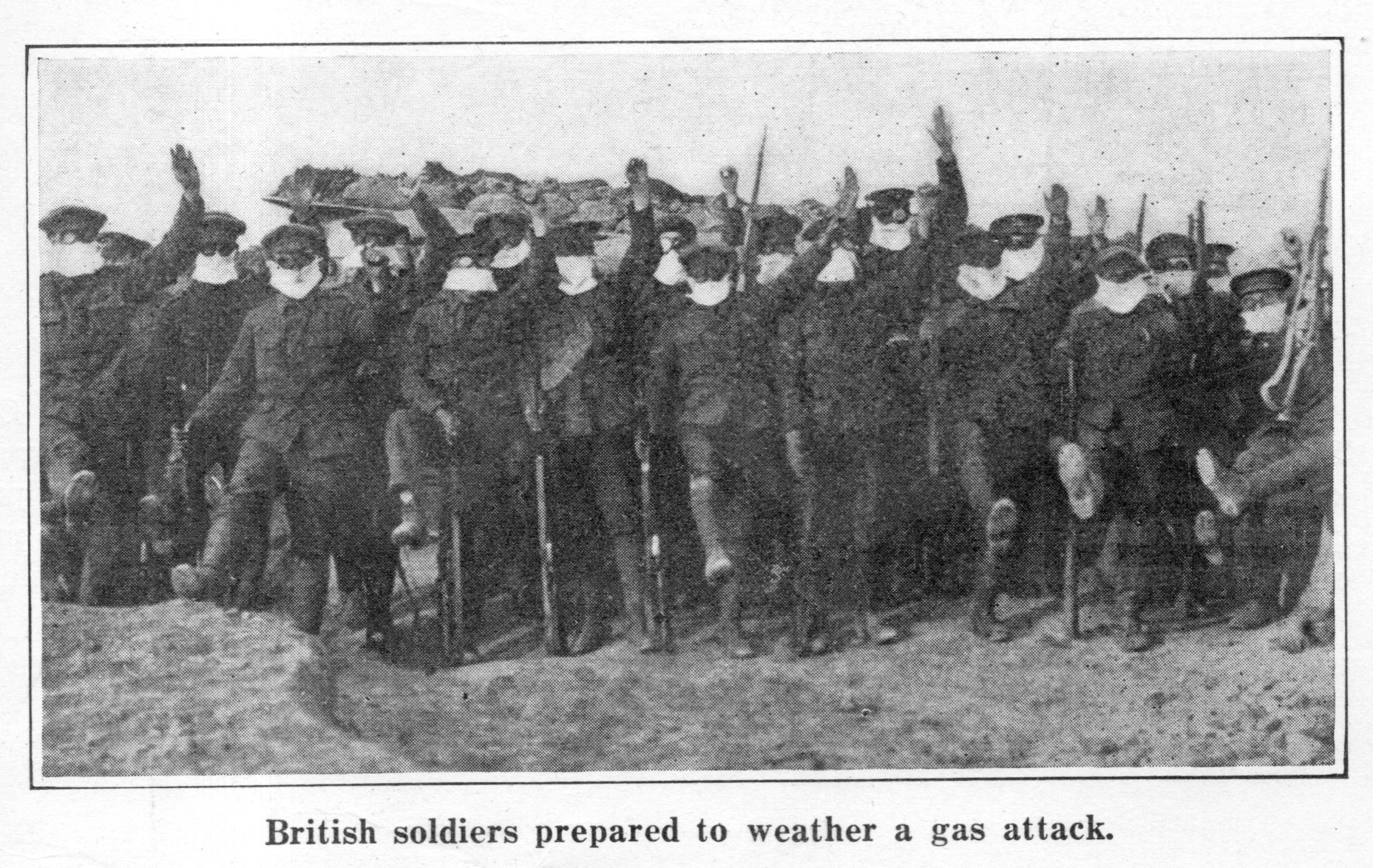
    The early response to protection from gas warfare was inadequate, with masks being sometimes little more than string and cotton gauze. This response was better than no response, because in the end it at least gave some millions of soldiers comfort to know that they were being taken care of, that something was being done to address the gas problem.  Of course this would last only so long as they didn’t have to actually employ the mask.  

    As the war progressed, the gas mask response improved, though so did the lethal varities of gases that were employed.  Even the best of the masks were incapable of defending much against phosgene and diphosgene–and then there was no protection at all from mustard gas, which was another beast entirely.

    It was the illustrations that stopped me in the Scientific American article–first for the flannel muzzle mask (above), which made my heart half-break; and then, just beneath that picture, a portrait of a group of British soldiers wearing cloth masks, who were “prepared to weather a gas attack”.  They were told that adding a little water to the mask would help stop the gas, a lot of which was hopeful expectation and wishful thinking.  

    Gas mask753

    An earlier post appears here, “Gas Masks and Poison Gas, World War I, 1915”, on early (November/December 1915) masks.  


  • A Really Bad Place to Be in a Night Time Attack–Next to a Light-Tube Filled With Bullets (1915)

    JF Ptak Science Books   Quick Post

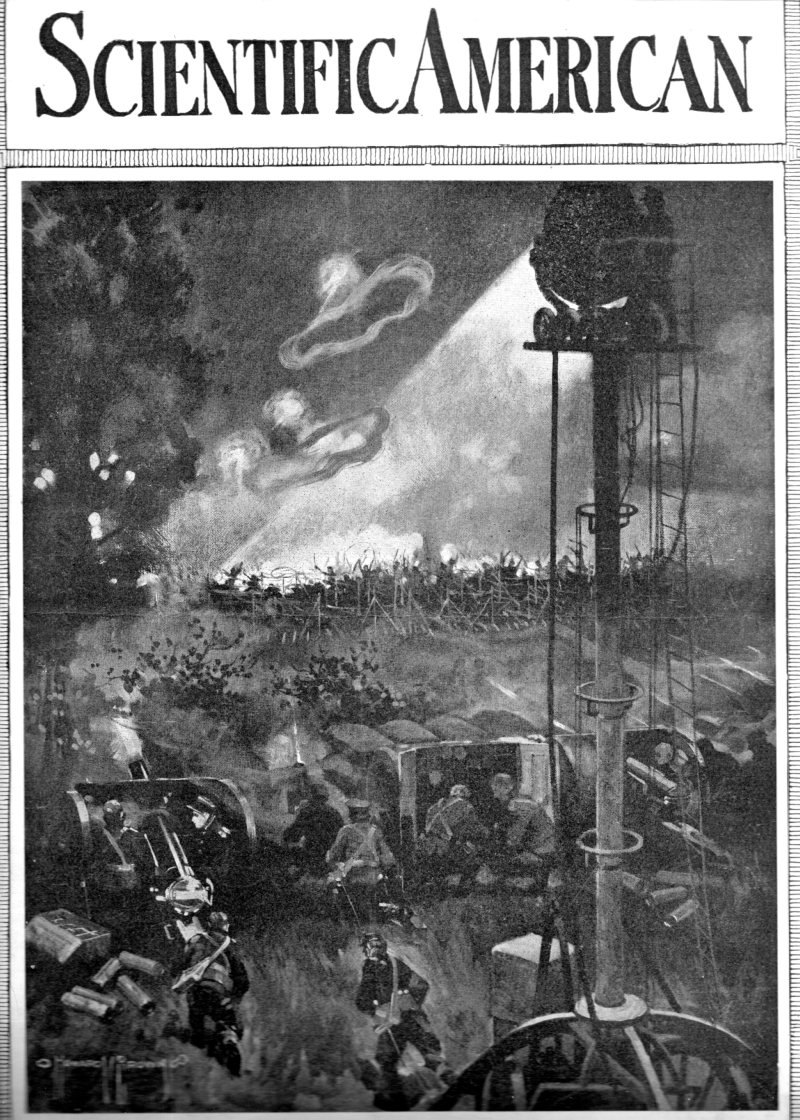
    The searchlight had been used in military operations for several decades before this cover appeared in the Scientific American for June 15, 1915.  Just a few years earlier an idea for using a powerful illuminating source in a dirigible for night time bombing appeared in the Illustrated London News–it was pretty powerful, showing the dark airship against a dark sky, the searchlight piercing its way down to the surface to reveal fleeing African tribesmen.  (Why the target was Africa and tribesmen with spears I can only guess at, but each answer I come up with is not pretty.) The present image seems like a fine idea at first for the defensive position, illuminating an advancing line in a night time attack.  That said, the spotlight seems like a pretty big target, the 5′-wide glowing glass an easy mark from a few hundred feet.  One thing I could say for sure is that I would not want to be the guy up there operating the spot, which right now looks more like a light tube to fill bullets with more than anything else.   

    Sci american  searchlight754

    ·Posted by :

    ·in:

    —

  • One Version of What the End of a Soldier’s War Looks Like (1918)

    JF Ptak Science Books    Post 2414

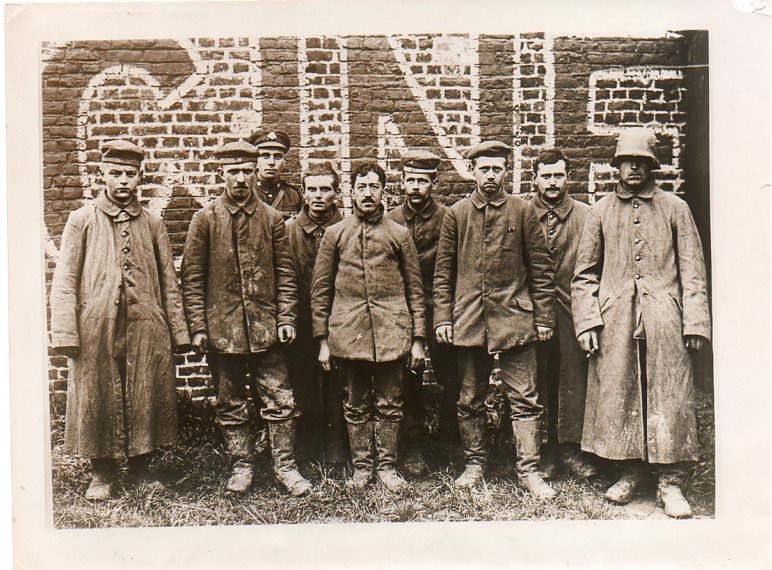
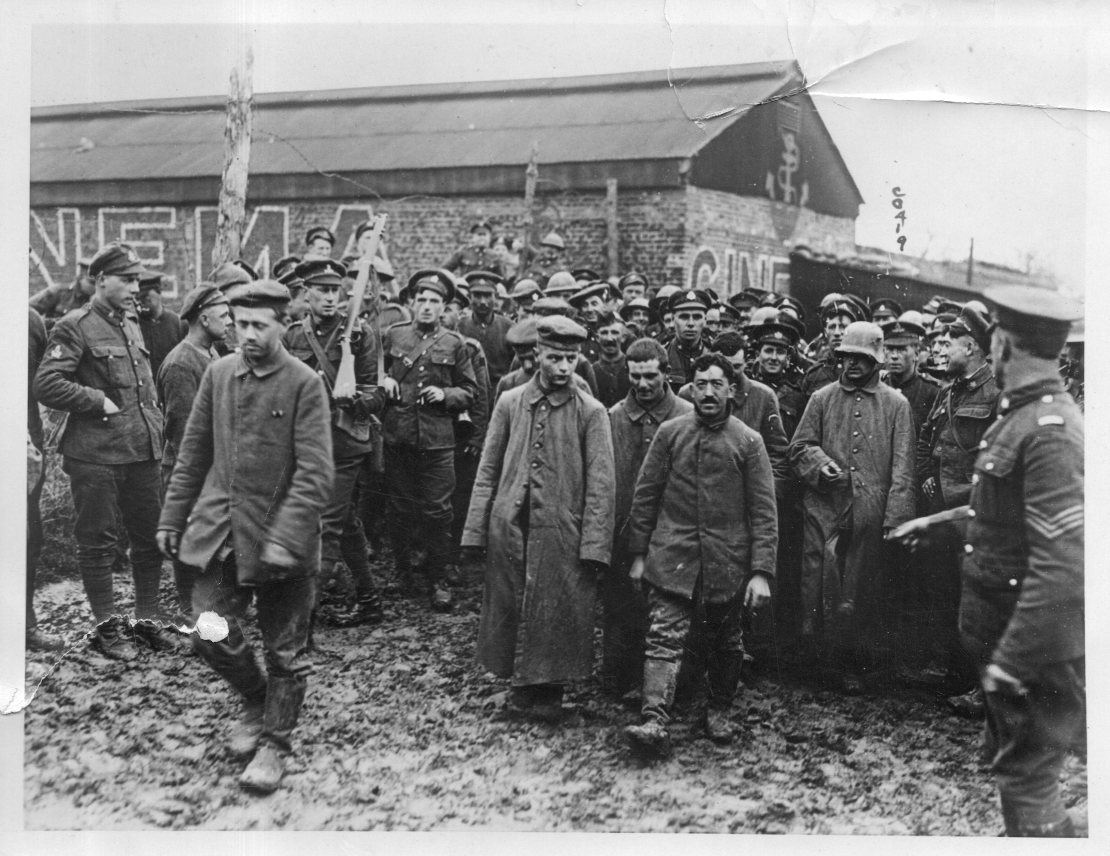
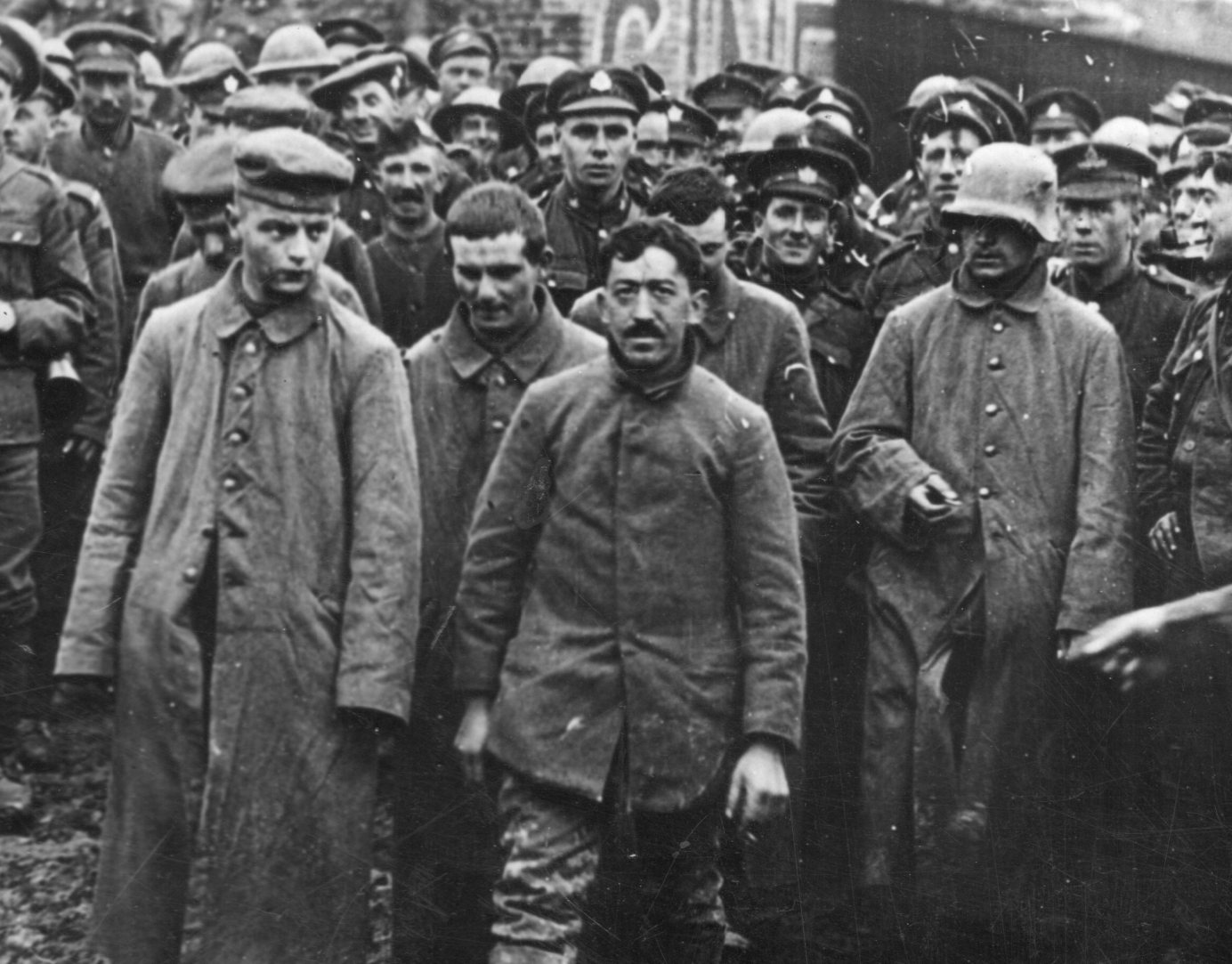
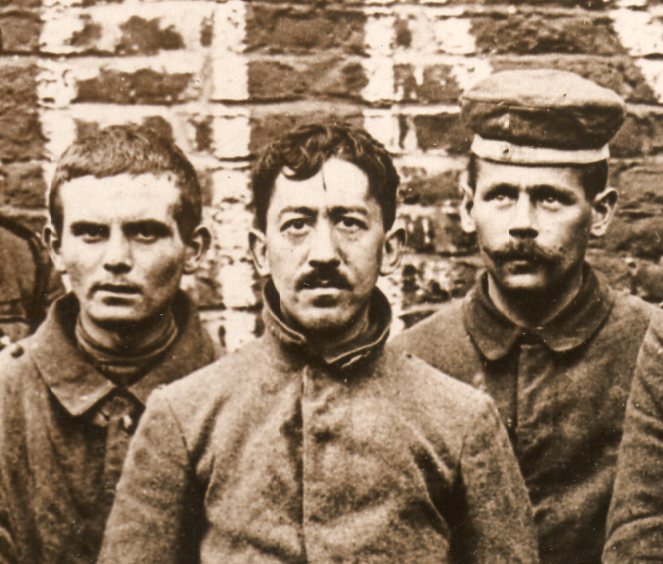
    Earlier in this blog I wrote about an extraordinary WWI news service photograph from a collection here of German prisoners on display, ca. autumn, 1918.  (There’s a description along with tighter, detailed images of the individual faces of the prisoners here.)   In the great wide world of  serendipity, where everything is possible, and nothing seems to be in the place you’d expect it to be, I found another photograph of that same group of POWs. 

    The original photo–truly a fine and remarkable image: 

    WWI photo--german prisoners

    And the newly-uncovered photograph, showing this group either approaching or leaving the side of the cinema where their group portrait was made:

    WWI photo  GERMAN PRISONER CINEMAal747

    And the detail:

    WWI photo  GERMAN PRISONER CINEMAal748And one of the details from the original post:

    WWI photograph--german prisoners middle069

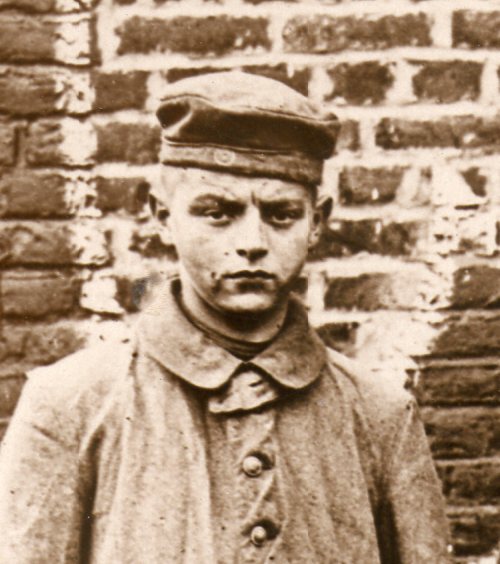
    There’s a lot of surrounding British soldiers and Irish Tommies, and commotion, and mud, and happy/confused/and something else in the faces of the victors as they paraded this end-of-the-war group of soldiers  in the muck.  In the original group portrait the soldiers are bookended by what I see as two extremes of soldiers in the war–the boy on the left, experienced with god-knows-what under his camouflaged and hardened baby fat:

    WWI photograph--german prisoners boy067

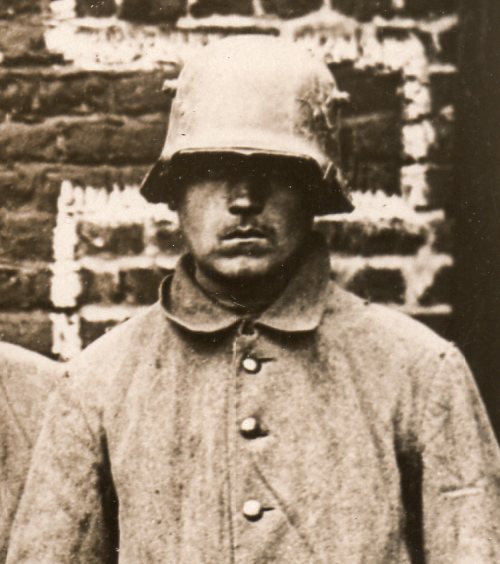
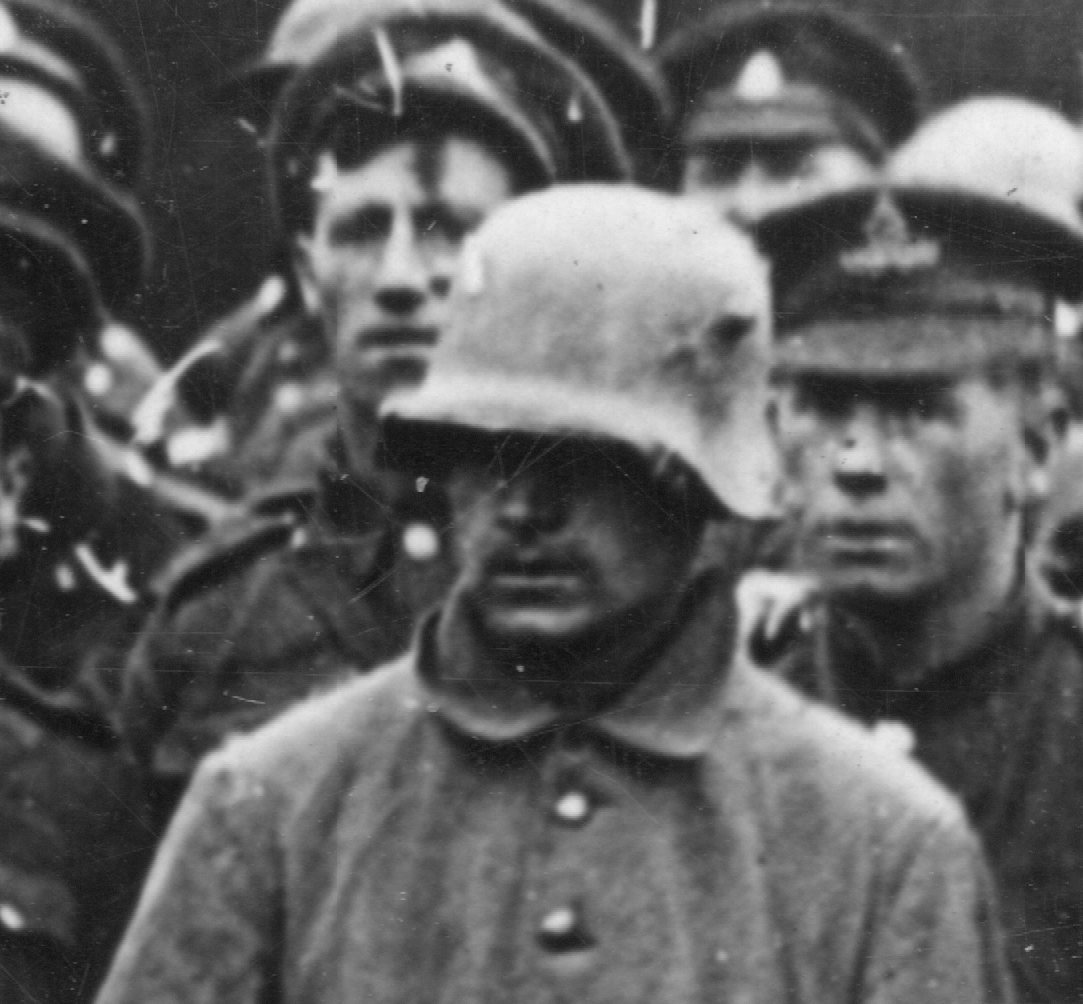
    and the guy on the right, who seems so much like a Durer-Death/apocalypse image itself, a thousnad-yard-stare man, a soldier of deep experience, and worn to the nub:

    WWI photograph--german prisoners old068

    He seems to have the same expression in each picture:

    WWI photo  GERMAN PRISONER CINEMAal749

    Maybe he was just bone-tired, though he definitely gives the impression of you-can’t-hurt-me, and perhaps underneath it all he was happy to have made it through the war alive, and hadn’t become one of the 40 million casualties.  In a few months, the war would be over, and perhaps most of the men in this picture got to go home.  

    ·Posted by :

    ·in:

    —

  • Cut-Away Schematic: British Vickers Medium Tank, 1925

    JF Ptak Science Books  Quick Post

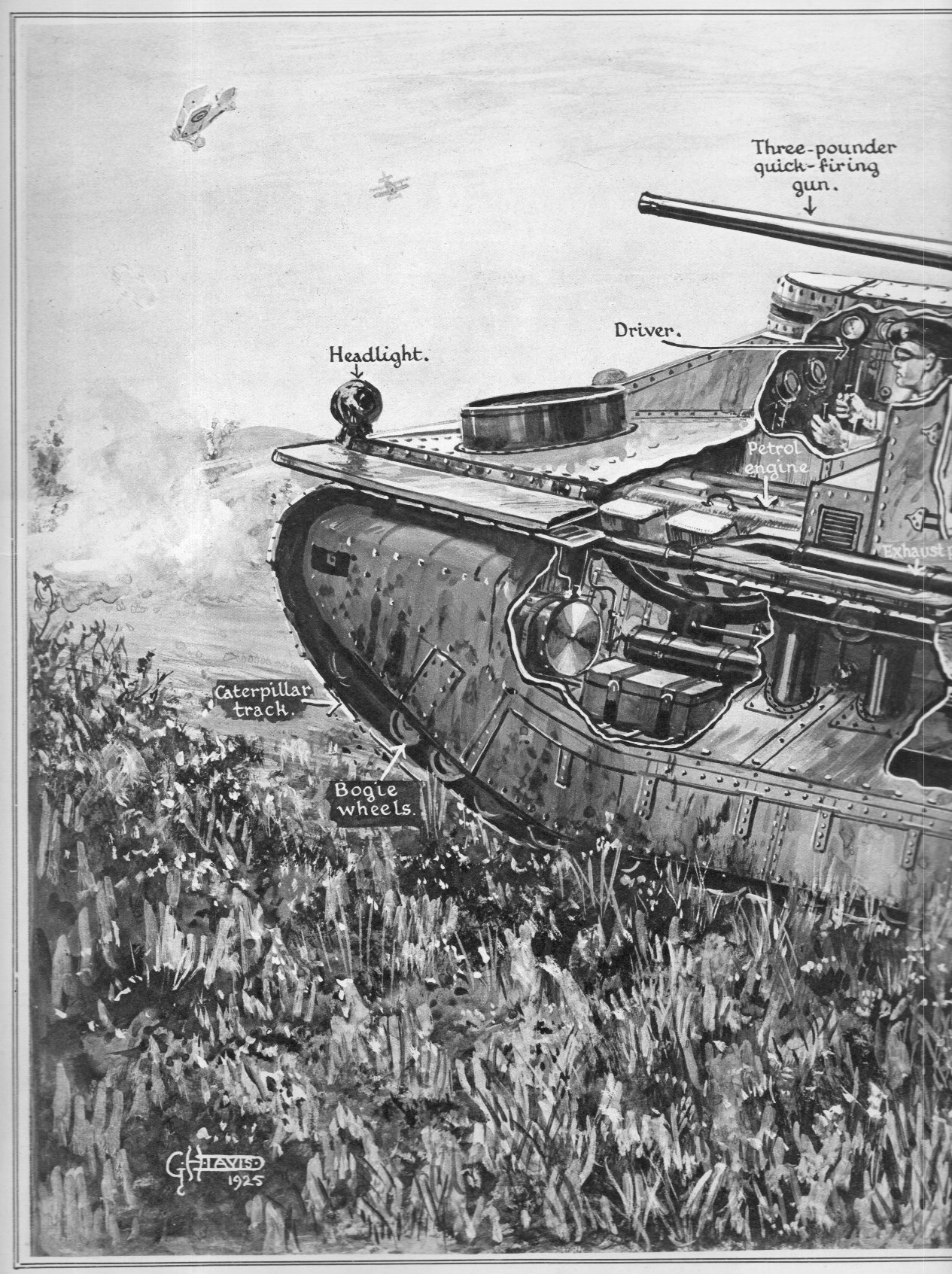
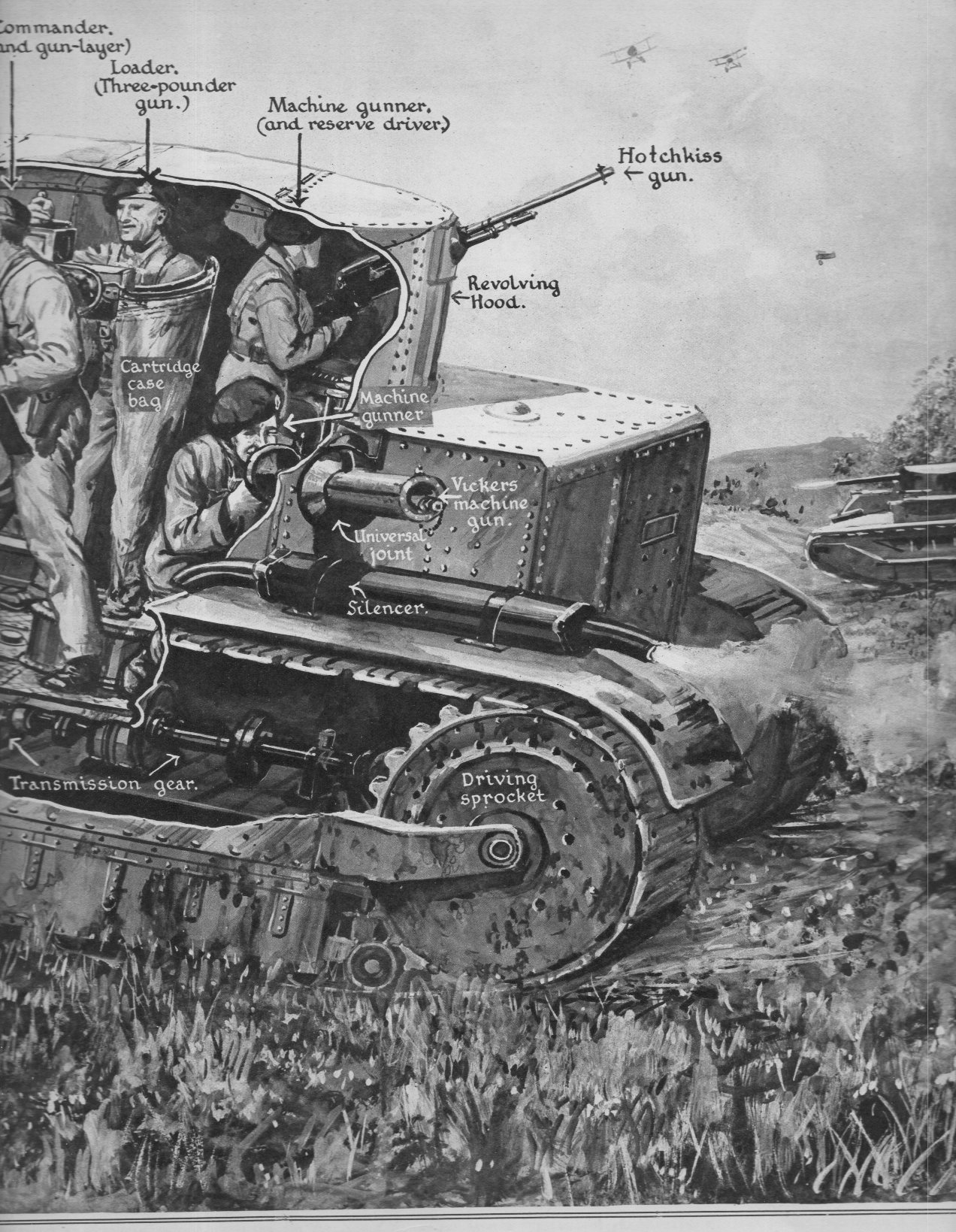
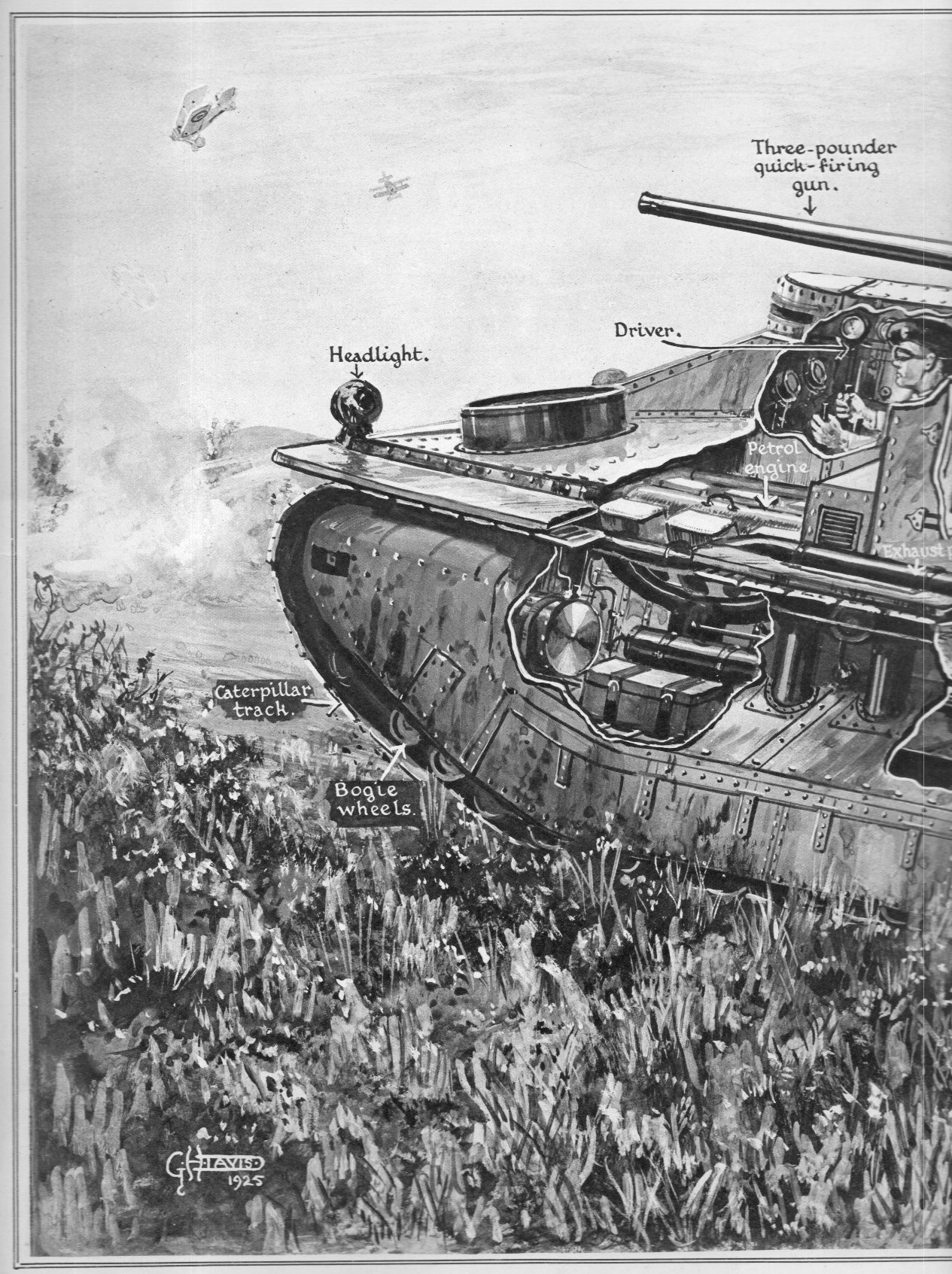
    One of my favorite popular technical illustrators of the 20th century was G.H. Davis (1881-1963), who worked enormous accomplishments for the Illustrated London News for some forty years.  His specialty seemed to be the cut-away schematic, showing half-exposed/half-not technical schematics on mostly oblique angles.  The example below is a fine one, showing the (not-named) British 1925 tank, which I believe must be the Vickers Medium I or variation thereof.  It was certainly an improvement over the tanks used in WWI, and for all intents and purposes it seems a “modern” tank. 

      Tank 1925743

    Tank 1925744


    Tank 1925743