A Daily History of Holes, Dots, Lines, Science, History, Math, Physics, Art, the Unintentional Absurd, Architecture, Maps, Data Visualization, Blank and Missing Things, and so on. |1.6 million words, 7500 images, 4.9 million hits| Press & appearances in The Times, Le Figaro, Mensa, The Economist, The Guardian, Discovery News, Slate, Le Monde, Sci American Blogs, Le Pont, and many other places… 5000+ total posts since 2008.

Category: Militaria

  • A Solid Ring of Neutrality–German Propaganda, 1940

    JF Ptak Science Books  Quick Post
    German trade war539

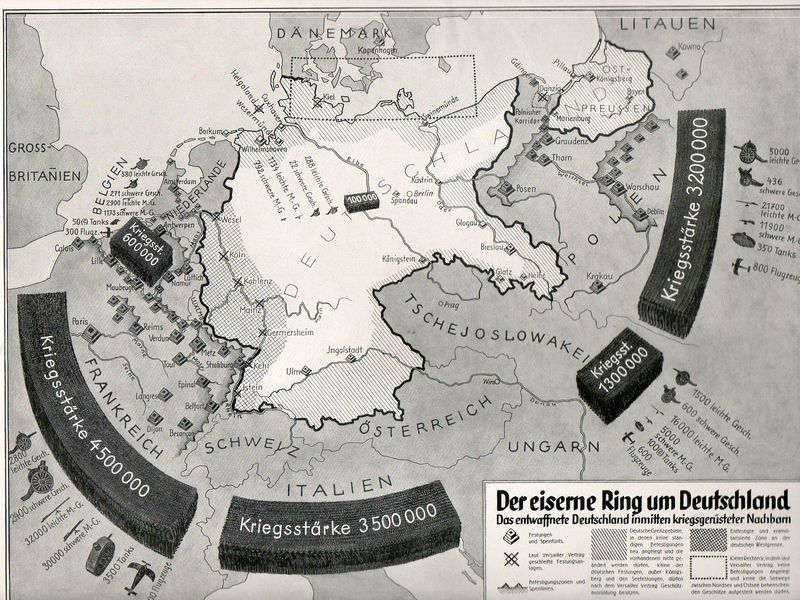
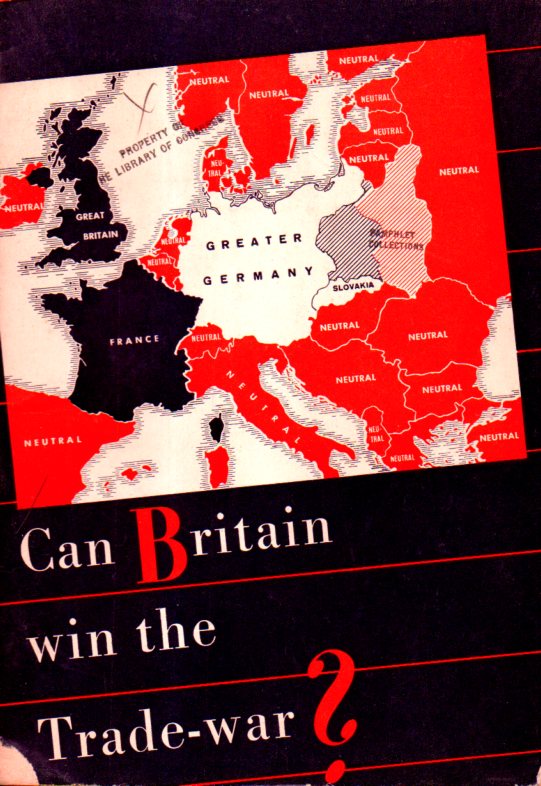
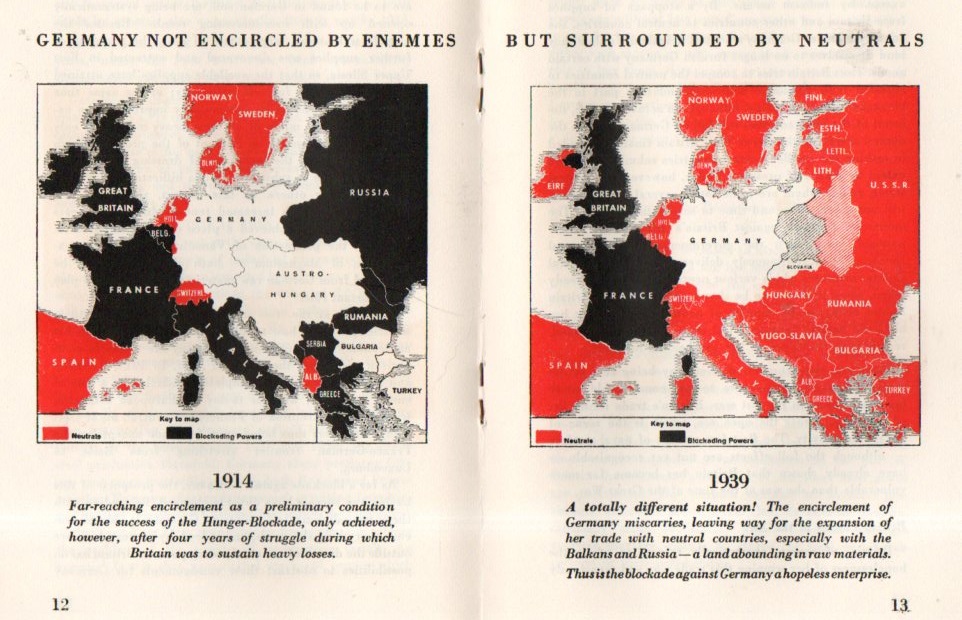
    One thing is for sure–this pamphlet, which has no place of publication or date–was definitely a German war propaganda effort, printed in English, published in Germany, and I guess distributed wherever the English-language-winds and luck would take it.  My copy come from a collection that I purchased from the Library of Congress, and it is luckily stamped August 6, 1940, for the date it was received by the library. So the summer (or earlier) of 1940 is the date: the Battle of Britain had begun in July, Dunkirk had been evacuated June 4, France surrendered a few weeks later, and the war was not going well for the U.K.  Germany was still a year away from their disastrous attempt to conquer the Soviet Union with Operation Barbarossa, and at this time in 1940, the U.S.S.R. was its vital trading partner. Great Britain was waging a successful economic war/blockade against Germany, which was without any real finance and with no reserves to purchase foreign goods, so in spite of the successes of the invasions and Blitzkreig, the Brits were enjoying a certain level of success. And so this pamphlet appears, one of others, a small part of a hearts-and-minds campaign to try and apply pressure to Britain’s allies to convince her to sue for peace.  
    German trade war540

    The main thrust of the maps of the pamphlet was to show Germany surrounded by not-threatening allies, pillowed by neutrals and countries it had overtaken (with no attempt made to label Poland).  The interior map (above) is a very faint attempt to show the comparative strength of Germany being surrounded by neutrals in 1939 as compared with being surrounded by enemy countries in 1914. The message of course was that Germany was strong in 1914-1918 in spite of the “threatening” neighbors, so with relatively benevolent neighbors in 1939 they would be even more effective as a war-making national machine.  Perhaps this had some influence somewhere, maybe among the Vichy French.  And some elements in the U.S. 

    The Nazis certainly liked their red.

  • A Peek Behind the Curtain at the U.S. Strategic Bombing Survey (1945)

    JF Ptak Science Books  Post 2371

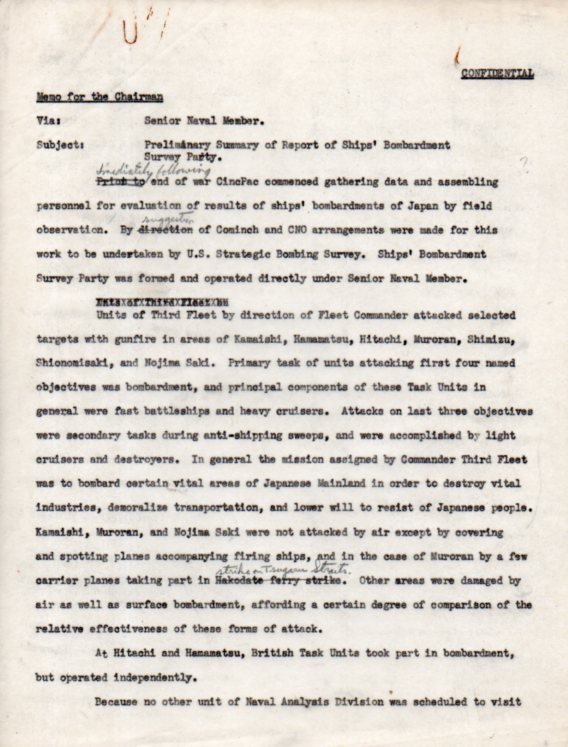
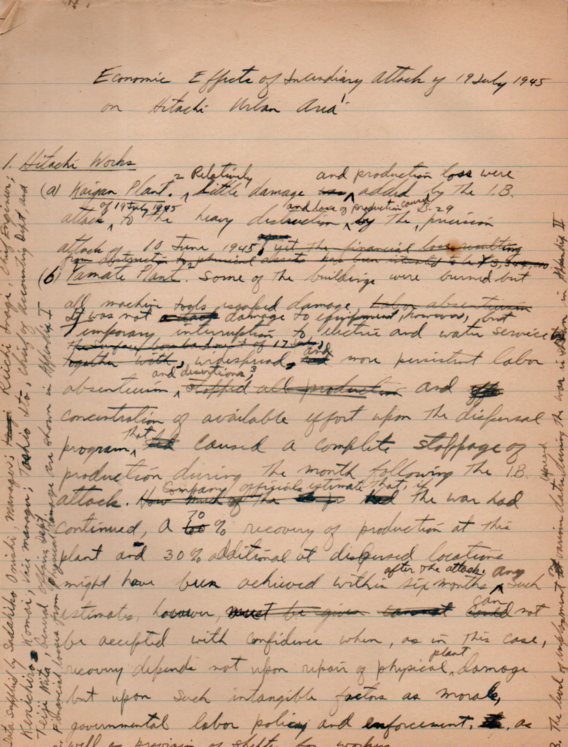
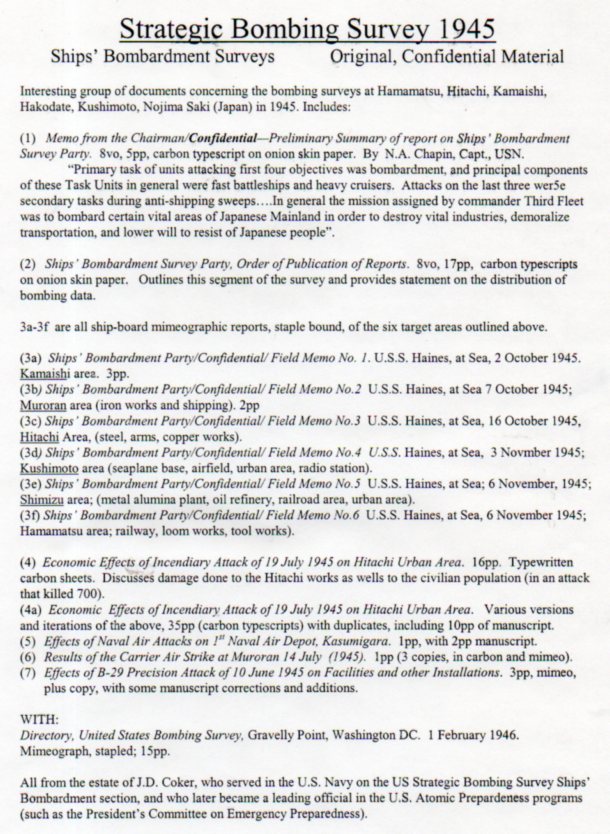
    The U.S. Strategic Bombing Survey was a massive intelligence operation composed of a 1000-person team. It attempted to establish the successes and failures of American bombing operations during WWII, resulting in a 208-volume set of findings for the war in Europe and another 108 volumes for the war in the Pacific. Atomic bombing was another matter. I am not going to address the effectiveness issues of different sorts of bombing here–it is a very large and complex issue, and just outside the scope of what I set down to down just now and the amount of time I have. What I did want to do was share this typed/manuscript material (below) that was kept by a member of the analytical team serving in the Pacific. It is interesting to see how the form of the final reports took shape from some of the original notes.  

    This small archive—from the estate of J.D. Coker, who served in the U.S. Navy on the US Strategic Bombing Survey Ships’ Bombardment section, and who later became a leading official in the U.S. Atomic Preparedness programs (such as the President’s Committee on Emergency Preparedness)—are mimeographs and manuscripts that comprise what seems to be the summary of the Navy’s bombardment of Kamaishi, Muroran, Hitachi, Kushimoto, Shimizu and Hamamatsu.  This was about the extent of the Allied naval bombardments against Japan, as it was not possible for battleships to maneuver close enough to the Japanese homeland to fire against industrial and production centers.  (It may have also been the case that the aircraft used to protect the assaulting ships could have perhaps done as much damage to the targets as the ships themselves.)

    The archive includes:

      USSBS overview191

    USSBS 1176

    USSBS economic effects189

    ·Posted by :

    ·in:

    —

  • History of Lines series: the Geometry of Cannon-Fire (1812)

    JF Ptak Science Books   Post 2369

    Cannons ha003
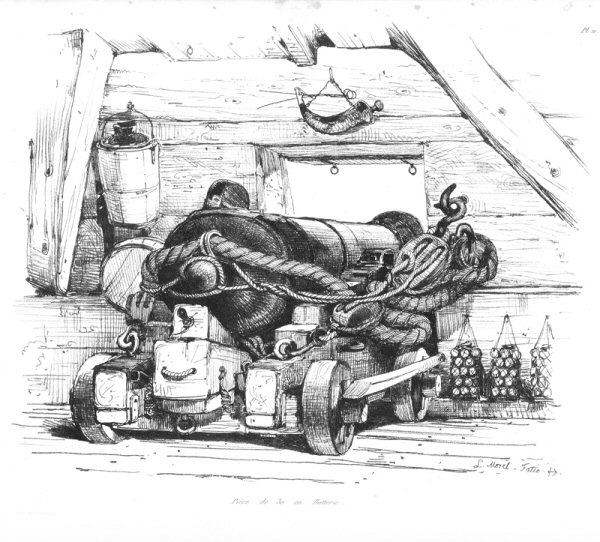
    There were many integral components to firing a cannon on a ship, not the least of which were the Powder Boys, the small, young, semi-strong kids who would run the gunpowder from a below-decks armory to whatever gun deck was needed.  It was a relatively simple procedure, filling up a longish tube (cannon  derived from the Italian  cannone–or large tube–which came from the Latin canna from the Greek  kannē , meaning something like a reed or any similar hollow thing) with gunpowder and then cannonball/shot and then wad, then causing the gunpowder/propellant to ignite and throw the ball.  Basically, that was it, though you needed to maintain the cannon, aim it, and so on (don’t forget to first swab the bore from unexploded gunpowder so you don’t blow things up!).

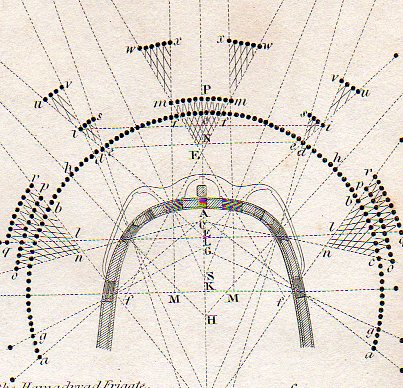
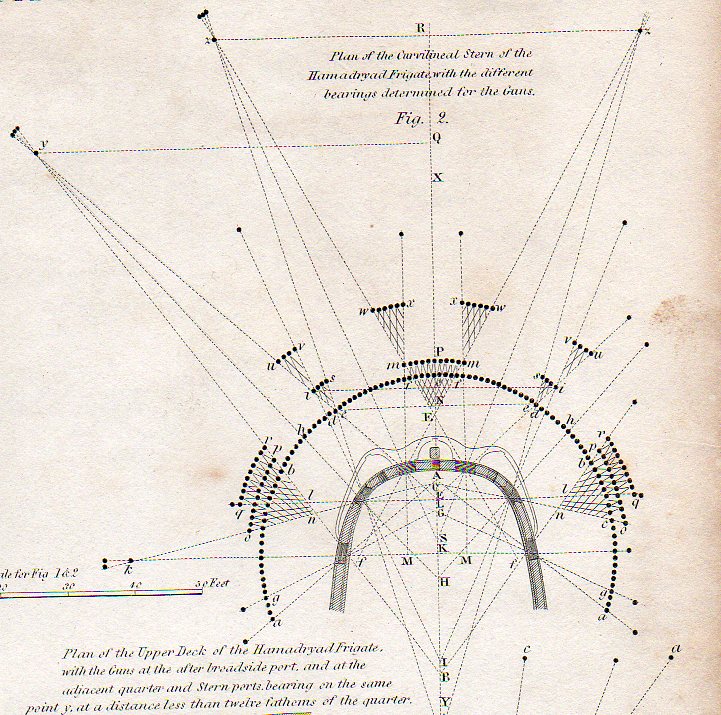
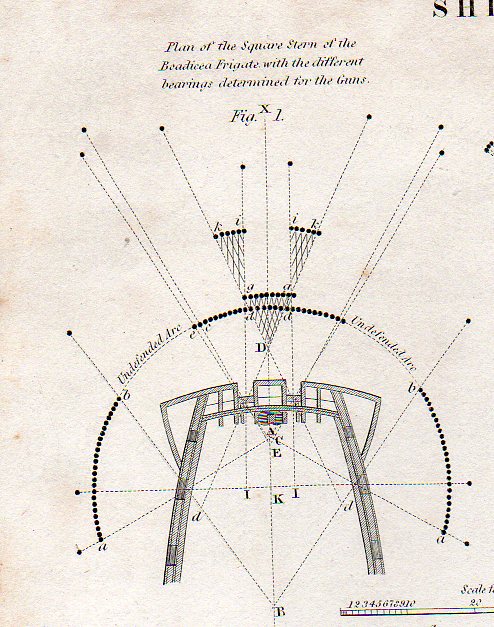
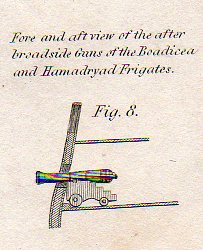
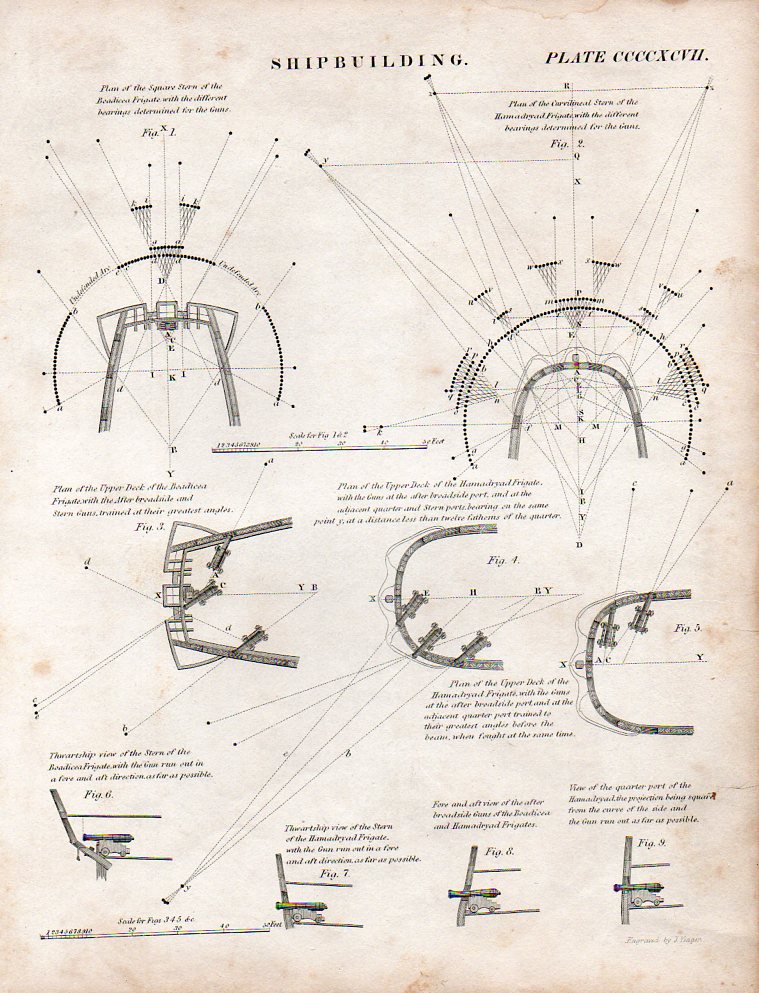
    The (first)  image above of found modernist/semi-dadaist artwork comes form 1812 and was found in Rees’ Encyclopedic Dictionary from the article on “Shipbuilidng”   and illustrates the ways in which the stern of a ship can be outfitted with cannons–actually, the sterns of the HMS Bodiceae (28 18-pounders)  and HMS Hamadryad  (36 guns). Also by this time cannons had been carried on naval ships for nearly four hundred years, while the first cannons appeared on the ground in Europe another few hundred years before that. 

    Cannons ha002


    In the third detail (below) we see the coverage of the four cannons placed in the stern of the Bodicae, mainly pointing out its weaknesses, showing the undefended arc, which comprises about 1/3, or about 60 degrees of the defensive posture.  The Hamadryad on the other hand shows 100% coverage of the 180+ degrees of attack possibilities shown, along with secondary and teriary areas of fire coverage covered by more than one gun.

    Cannons b004 

    A fine,tiny detail from the full engraved sheet:

    Cannons little005And the full sheet:

      Cannons001

    This is pretty much all that was needed to fire a cannon, except the men of course.

    File:Antoine Morel-Fatio pl10.jpg


  • Memory-Inducing Advertisements—Wartime “Nature”, 1942

    JF Ptak Science Books    Post 2365

    Yes, it is 1942; yes, Great Britain had been fighting the Nazis for nearly three years at this point, the Americans joining the fight just 10 months prior; yes there were bombings; yes there were hardships. And with great stiff-upper-lippedness, this becomes somewhat seen in advertisements that I noticed in reading through Nature magazine for the last quarter or so of 1942. Scientific instruments and the components that went into their constructions were scarce or non-existent, conscripted to the war effort. For example Newton Instruments (72 Wigmore Str., Lond), announced on the front page of Nature that “our production resources are very largely occupied by National demands”, but that even though their inventory was far down, they were still servicing existing equipment.

    Wwii ads492

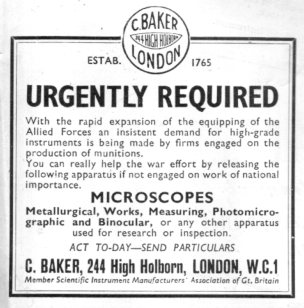
    Baker of High Holburn made a similar announcement, and went a step farther, asking clients in their URGENTLY REQUIRED ad to release scientific equipment to the national war effort.

    Wwii ads493

    On the back back of the October 10, 1942 issue of nature we see the ad for William A. Webb (Skinner Str., London) apologising for being “unable to meet…requirements at the present time, but feel sure you appreciate we are sending out precision balances where the need is greatest.” Then: “later, you will once again be able to get balances…”

    This does give a sense of pause, stopping the reader, finding the outside world, and war, showing itself of a giant scale in small scale in the pages of a scientific journal.

    And what a good show these companies made in their support of the united national effort.   


  • The Reverse Children’s Crusade, 1940. A note, with Videos.

    JF Ptak Science Books    Post 2362

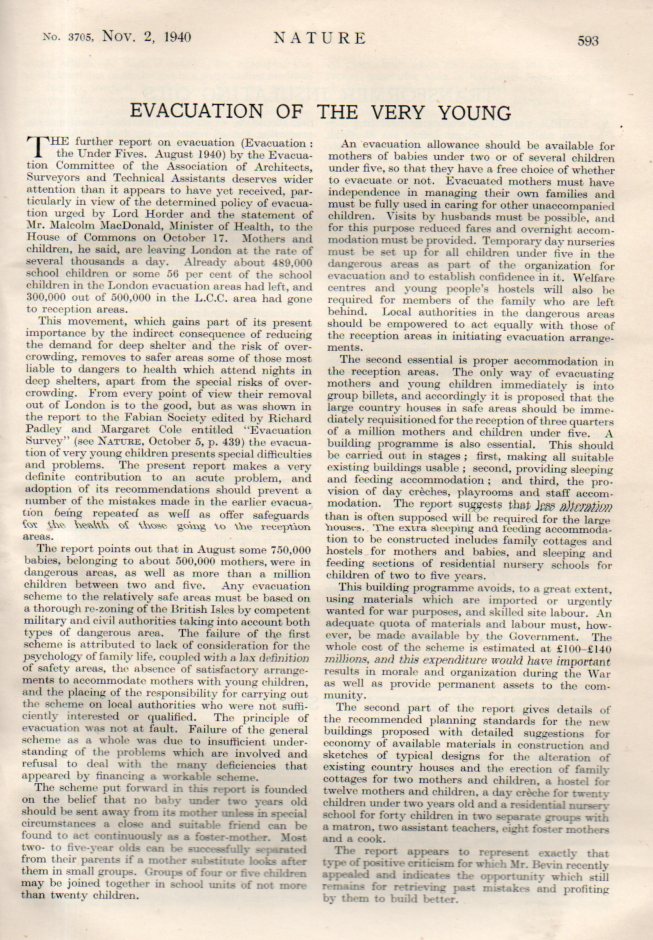
    It is good to remember the early part of the war and the efforts made by the people of Great Britain, and their sacrifices,  This notice appeared in the November 2, 1940 issue of Nature which recounts the evacuation measures of children during the Battle of Britain.  By this point more than half of the school children in the London evacuation areas had been been evacuated, with nearly a million leaving altogether in a total evacuated population of some 3.5 million people.  (At the very beginning of the war there was also an evacuation program for Jewish children from Germany to England–this was the  Kindertransport which brought some 10,000 children to safety.) It was a sort of reverse/anti “Children’s Crusade” (as in the subtitle for Kurt Vonnegut’s Slaughterhouse Five), where rather than an army of children sent to expel or convert Muslims from Jerusalem/Holy Land in the 13th century, the children were sent to safety away from a crusade against their homeland. The major difference besides the existence of their opposition is that this evacuation was real, and the so-called “Children’s Crusade” was not.

    Evacuation474


    The Battle of Britain was fought primarily from 10 July to 31 October 1940, so by the time this report was published the Brits had been able to turn the tide of Hitler’s plan.  (The air strikes wouldn’t really end until the Nazis turned their attention to the Soviet Union in Operation Barbarossa in May 1941.)  And that plan, named Luftschlacht um England, was to overtake and destroy the British capacity in the air, for as long as the English had command of the airspace there would be no way that the Nazis could force an invasion by land/sea (at least in the minds of the Oberkommando der Wehrmacht  and Hitler).  And so the Nazis failed–it was their first major defeat, and, especially, with the turning of attention east, it was a pivotal point of the war

    The numbers of loses: England: 1,023 fighters: 376 bombers, 148 coastal command aircraft  for a total of 1,547 aircraft and  544 pilots and aircrew killed.  There were also 27,450
    civilians killed and 32,138 wounded.  The Germans lost 873 fighters and 1,014
    bombers for a total of 1,887 aircraft and  2,500 pilots


    ·Posted by :

    ·in:


  • Bombs of Fuel Delivery–the Future of War, 1974 (1958)

    JF Ptak Science Books  Quick Post

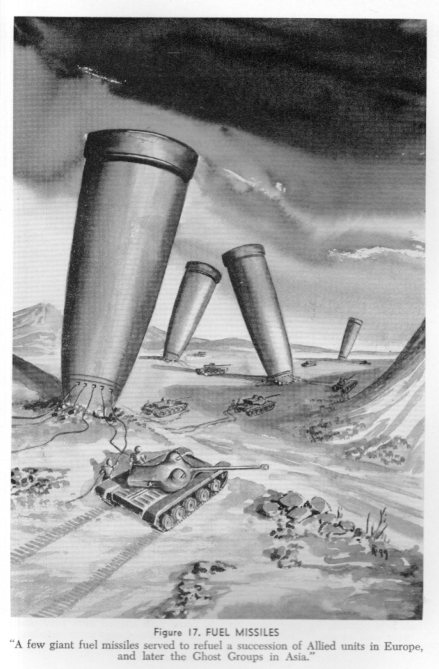
    This is one of hose books that I couldn’t possibly spend any time with, save for skimming the illustrations looking for something unusual. Generally popular books published by Certain Publishing Houses on the future of warfare tend to read like bad sci fi–having not read this one I can’t address that here, though this pic found at the end of the book may offer a little insight to the rest of the book’s content.  The author was a tank commander of high distinction, which might explain at least his hopes for the technological breakthrough of delivering fuel to motorized units in the front line–via “giant fuel missiles”. Evidently these enormous missiles (the width of a tank) and filled with fuel is somehow launched and the projectiles fall gently enough to stand precariously on their own with the top 5% of the length buried a slight bit but somehow enough to support the weight of the missile and the contents.  Remarkable.

    War 1974384

    ·Posted by :

    ·in:

    —

  • Babies, Gas, and War (1943)

    JF Ptak Science Books  Quick Post


    0 blog jan 12 baby gas380
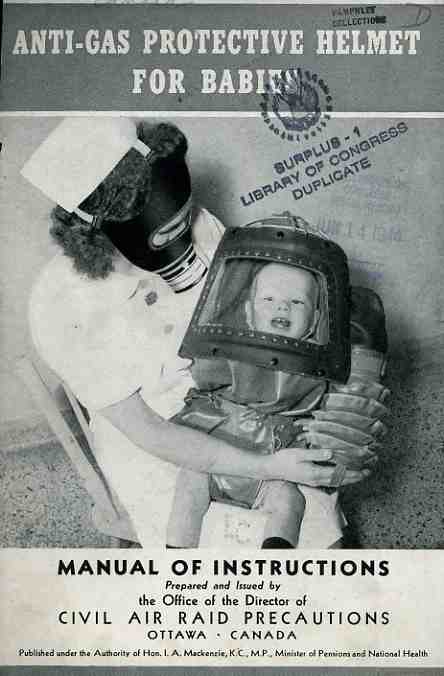
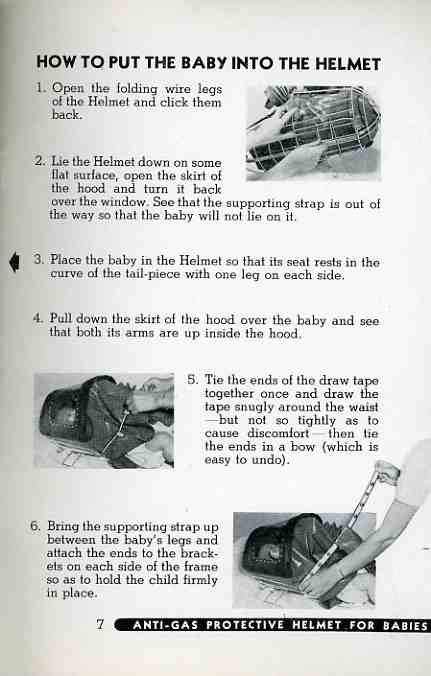
    There’s nothing that shouts “WRONG” with greater voice than images like this.  Like pornography and art, things that are just plain wrong are instantly recognizable, and this is a fine example of that thinking. Anti-Gas Protective Helmet for Babies, Manual of Instructions was prepared for the Office of the Director of Civil Air Raid Precautions of Ottawa, Canada, and published in 1943.  I’m not sure that the image of the nurse in the gas mask isn’t as disturbing, but the two of them together is just too much.  

    I wasn’t aware of the gas attack preparations in Canada–the situation was entirely different in Britain, where everyone was required to own a gas mask, and by 1940 more than 38 million had been distributed to the population.  But the planning was underway in Ottawa in ’43 for the worst, as removed and distant from the war as just about any other place on earth–but the Air Raid Precautions people pulled no punches in their hearts and minds campaign, and I’m sure that it was very effective.  This little pamphlet certainly caught my attention. 

    And it wasn’t as though the United States, the United Kingdom, Japan, and Germany weren’t doing anything about poison/nerve gas during WWII–they were.  There was very little use of CW during the war, though the Japanese military did use it relatively widely against Chinese troop,s guerrillas and civilian populations during several years in the war between Japan and China leading up to the outbreak of WWII.  There were large stockpiles of CW in the U.S, Great Britain, and Germany, though the weapons were allocated for last-ditch doomsday operations should the opposing side start using them first.  

    0 blog jan 12 baby gas381

    ·Posted by :

    ·in:

    —

  • Poland and WWIV

    JF Ptak Science Books   Post 2354

    Fourth WOrld War428

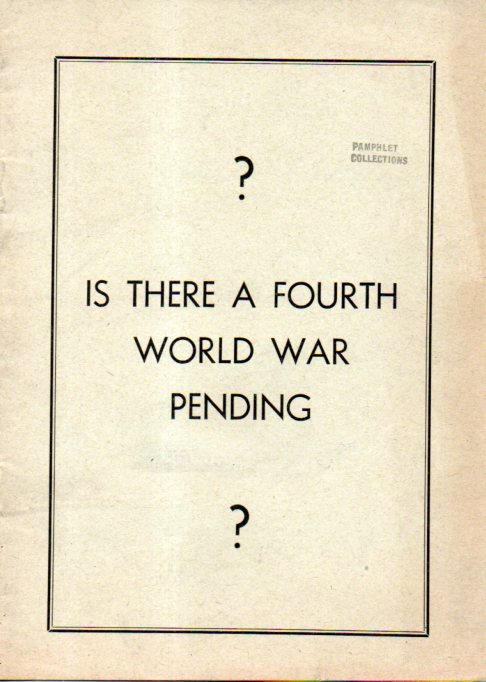
    This pamphlet certainty has entry to the evocative Fantastic and Improbable Pamphlet Covers Collection, though I was a little stumped by not being able to make it reveal itself to me with a short effort.  It was written by J. Kmicic and from what I can see was probably published during WWII, though there is no publishing information and nothing in the text to hang a firm date on. (There is a periodicals reception stamp in it from November 1946 fro the periodicals division of the Library of Congress, but that doesn’t mean it was accessed right after publication, though it does put a limit to how old it isn’t.)  As it turns out the keys to WWIV is Poland. That a very strong and heavily armed Poland would be the cornerstone of a defense of the West in the East, that the further the extent of a strong Polish eastern border reached the greater the play “of our Western culture will extend”.  Kmicic makes the case that it if Poland were stronger then it could have resisted Napoleon (evidently WWI), and the Kaiser (making WWI into WWII) and Hitler (WWII=WWIII).  The WWIV part is murkier because there isn’t a clue so far as I can tell that the author knew what happened to Poland when the Nazis fell and the Soviets moved in.  Had that been the case, the call for having a strong and unified Poland would probably not have been played so heavily.  A “Mighty Poland”, Kmicic writes, means “freedom for all smaller nations of Europe” and therefore “the impossibility of world war”. There are a few things that I’ve missed no doubt in my speed-read, but I was just after the cover, anyway.

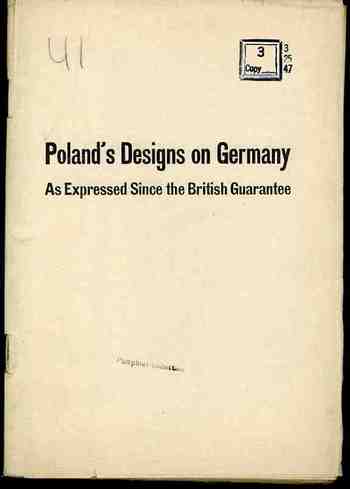
    Hitler and Company tied to sell the idea of an aggressive Polish nation, that the attack launched on 3 September 1939 was a preventative  measure to stop the advance and attack of Poland against Germany.  Not too many people believed it–at least outside of Germany–but Hitler tried it out, anyway. And why not? When most of everything he said was grounded in The Big Lie, why not pile it on?  The great the untruth, the more impossible it is, and the ore you say that you believe it to be the case, the more of a possibility exists for others to believe it, too–because who in their right mind would say something so insane about something else that is equally unbelievable? Therefore, the insane statement much be so.  That’s part of The Big Lie.

    See Polish Designs on Germany, here 

    Blogsept_1_poland476

    And another attempt at winning hearts and minds, this from 1933 (here):

    Nazi Prop surrounded538

    ·Posted by :

    ·in:

    — —

  • The “Where, When, and How” of Attacking Berlin (1943)

    JF Ptak

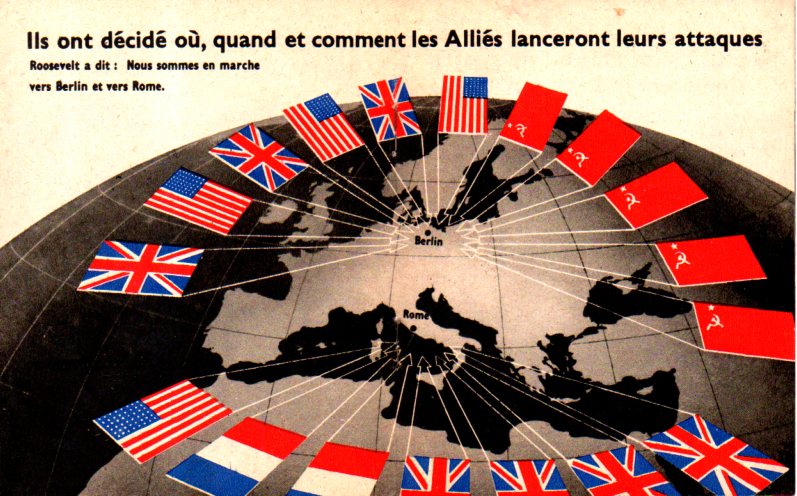
    I found this arresting map in a tiny publication called …Sans Condition, which was published in the first half of 1943. The publication is only 12 pages long but has a number of evocative images of Germany being bombed and lines of German POWs, in general a propaganda piece for French-speaking folk (which was printed god-knows-where) produced deep in the war and at a time when the tide has about turned on the Nazi regime.  

    The title of this post is the title of the map,  “Ils ont decide ou, quand et comment les Allies lanceront leurs attacques”–and you don’t need to know French to know what it says.  

    Map Berlin attacked426

    And the cover, which is basically “Surrender Without Condition”:


  • Graphic: Strength of Nazi Army, The Nation, 1943

    JF Ptak Science Books    Quick Post

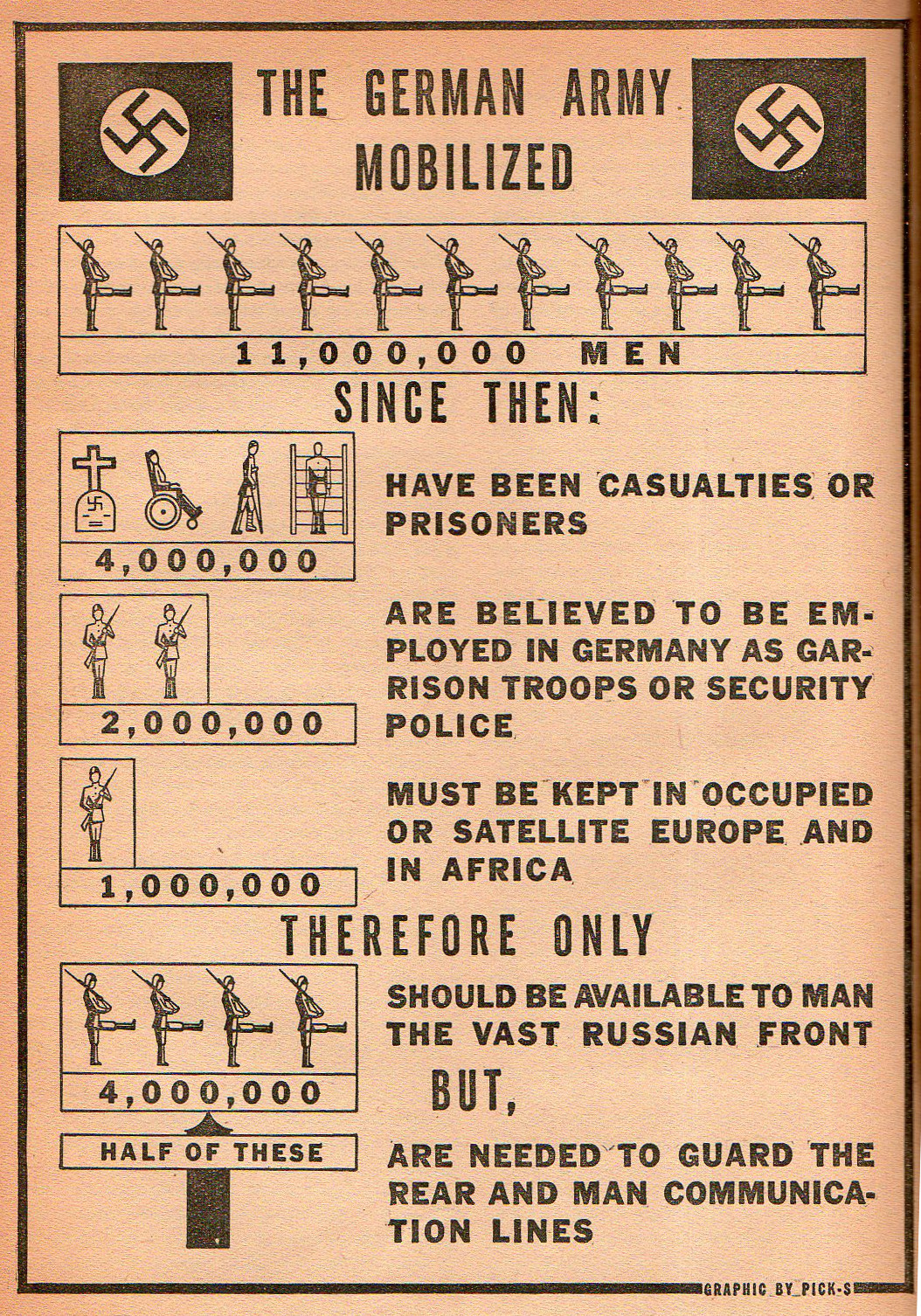
    The U.S. was just beyond its first year in the combat part of WWII when this infographic was made and published in The Nation on January 2, 1943, and no doubt that it was of some considerable interest to portray the Nazi war machine with a little more alacrity. 1942 was a tough year in the history of the war, and the Nazi army was looking large and gray and tough-to-beat. The editors of The Nation sought to put a little more perspective in the viewing of the Wehrmacht in an attempt to show the actual fighting force size. It is an interesting result, though the display itself is actually somewhat intimidating, with the message a little lost in the shadow of the strong banner:

    NATION graph gernman army314