A Daily History of Holes, Dots, Lines, Science, History, Math, Physics, Art, the Unintentional Absurd, Architecture, Maps, Data Visualization, Blank and Missing Things, and so on. |1.6 million words, 7500 images, 4.9 million hits| Press & appearances in The Times, Le Figaro, Mensa, The Economist, The Guardian, Discovery News, Slate, Le Monde, Sci American Blogs, Le Pont, and many other places… 5000+ total posts since 2008.

Category: Militaria

  • “The Negro Soldier” U.S. Army Recruitment Film, 1943

    JF Ptak Science Books   Post 2322
    Negro soldier

    The Negro Soldier  was a film produced by Frank Capra1 for the U.S. Army as part of a recruitment effort for African American soldiers–in addition to the being a small appeasement to the nearly 880,000 who were already serving in 1943. It was also used as an orientation film, and was required viewing by all servicemen.  It was a tricky business for the time, given the racist policies in place, the de facto segregation2, and the unfortunately high incidence of racist feeling among U.S. servicemen.  

    The armed services needed men.  The Army had a similar problem in 1918, though there seems to have been little effort to learn its lessons with segregation and appeasement. In World War I  there were over 400,000 Black soldiers, half of them in France, but fewer than 40,000 of them actually saw combat duty, the rest being left to construction/upkeep and menial tasks, an army of 760,000 trained men being kept from participation because of racial practices. The Negro Soldier was certainly a partial response to this issue and an appeal to social tolerance and an incorporation of the Black soldier into a unified fighting force.

    It was a difficult time for African Americans in films–not to mention in real life– where the vast majority of portrayals of Black people in cinema was a caricature, indecent. This film has none of the trappings of a contemporary movie about Black people, and was received with high acclaim by Langston Hughes among many others. Although the film portrayed Black people in honorable professions and with respect and dignity, it was also a propaganda film for domestic consumption, and showed a fractured history of African American contributions in quick run-throughs of U.S. history, while also failing to mention things like slavery, breezing through the Civil War in about 20 seconds. Again, that’s not what the film was intended to address–it really was supposed to be a “leveler” of sorts, evening the mountainous arena of race relations, attempting to portray the sameness of the races in the fight against Germany.  On the other hand I can help but think about the difference between what was shown in the film and what was happening in real life, and expect men to go and fight for a principle that for them mostly existed in theory.
    Negro soldier preacher

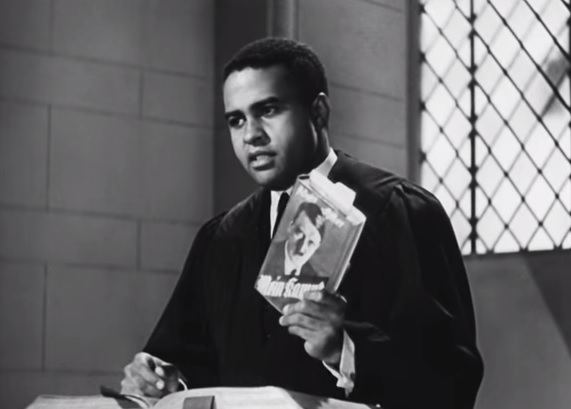
    It is interesting to see this movie still of a minister (the screenwriter Moss)  preaching by using quotes from Mein Kampf; he spells out exactly what is there by Hitler concerning Black people, and it is very bad stuff, calling them half-apes and criminal that they should be allowed to have any position of responsibility….and that the Nazi goal was world domination.

    So although a flawed product it was much better than the average fare, not that there was anything to compare it to for the recruitment of Black troops, because (I believe) there weren’t any others.  In spite of the obvious lack of historical context top place the African American in some sort of context in the history of the U.S., this was probably a very good film, and evidently fulfilled its mission.

    Here’s another interesting propaganda film, the story of a Black farmer in Georgia.  Henry Browne, Farmer was made on what seems to be a pretty low budget in 1942, and presents the ideas of the soldier, the soldier of production, and the soldier of the soil, of which Mr. Browne was the later. The film is sympathetic, though Browne and his family are living pretty close-to-the-cuff, plowing with mule teams, taking their mule-driven wagon into a town (Macon?) highly populated with cars. Of high dignity, the Brownes are fairly poor, in spite of having a fine-looking 40 acres. On their wagon trip to town they visit their son, who is a pilot with the 99th Pursuit Squadron, and we watch them as they watch their son climb into a T6 and take off.  I liked that part quite a bit.  


    Notes:

    1. The screenplay was written by Carlton Moss–who also plays the Black preacher–and directed by Stuart Hiesler.

    2.  The U.S. Navy would officially end segregation in February 1946; the Army followed with Executive Order 9981 in July 1948. 
    ·Posted by :

    ·in:

    —

  • Cover Art for Munitions=Conspiracy=Death; 1944 Pamphlet

    JF Ptak Science Books   Quick Post

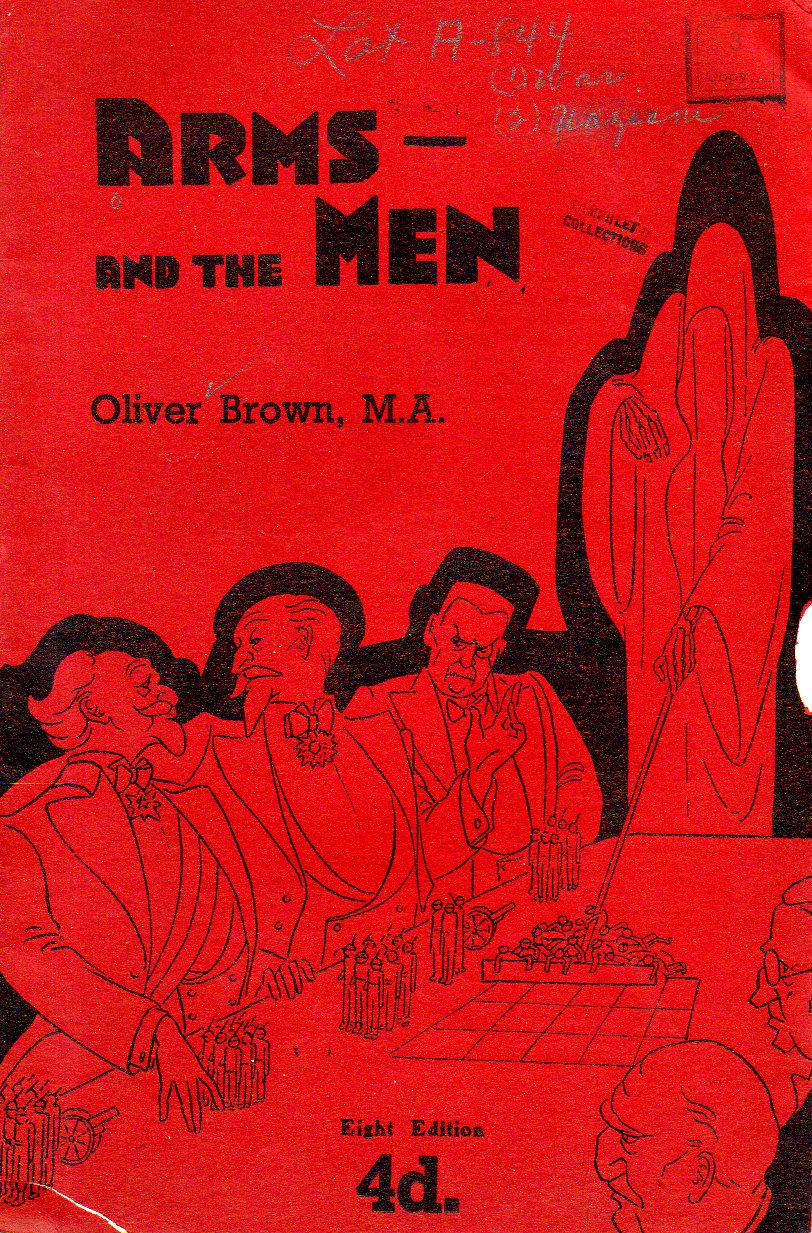
    Arms and the men318

    The cover art of this semi-pacifist pamphlet may well be the most interesting part of the work, so far as I can tell. Mr. Brown didn’t so much write a manifesto about arms merchants and war as collect some bits of news on index cards and then type them up (in no particular order) and publish them, adding bold to more than a third of the text and CAPS for the important stuff. It seems as though this 8th (actually, “Eight Edition” as it says on the cover in a variety of naming editions that I have never seen before) edition was published during the war (a 10th coming in 1946), and I’d say a small fraction of the writing centers on WWII. In any event a lot of it reads like Outsider History, and I can’t spend much time on it–particularly when he drives a stake into Brits for praying for Spitfires, which would not have been a terribly popular insight in 1944.

    So, I’m posting this as an example of striking and effective cover art, and that’s it.  

    Other works by Brown have the same flavor–they also indicate a very busy writer, perhaps, except that these are all short pamphlets of a few dozen pages. Of course decades of work could go into them, but I think not. In any event, here is a sample; Hitlerism in the Highlands, 1948; Stepmother Britain, 1948; Scotland-Nation Or Desert? Second Edition 1948; War for Freedom Or Finance? 1941; Scotland, this Wealthy-and Poor-Country , 1948. Many went into numerous editions with about the same pagination–my guess is that there were small press runs, with bits and pieces added every now and then.  

    Oliver Brown shares the same name as the Brown v Board of Education Oliver Brown, but they are not the same person.  

    ·Posted by :

    ·in:

    —

  • Addition to the Psych Warfare/Surrender Leaflet Colelction

    JF Ptak Science Books  Quick Post

    This is a small addition to one of two larger entries on propaganda leaflets, here.  


    Propag--25753

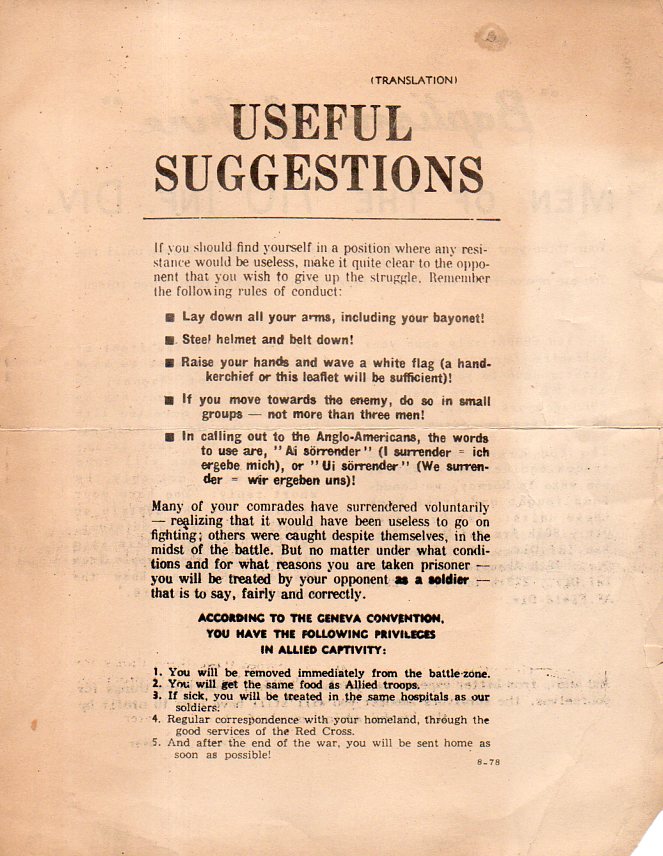
    “Baptism of Fire”, Men of the 710 Inf Div” and on the reverse, “Useful Suggestions”, (“Feuertaufe Männer der 710. I. D.! / Wertvolle Ratschlaege”).  This is a single-sheet (printed on both sides) English transaltion of a leaflet dropped on German soldiers in Norway in 1944/5, made P.W.B/A.F.H.Q. 8th Army. 


    SURRENDER320

    “The 710th Infantry Division (German: 710. Infanteriedivision) was a German Army infantry division in World War II. Formed in May 1941, it served spent the majority of the war in occupation duties in Scandinaviabefore being transferred to the Italian Front in late 1944. It participated in fighting against the Russians in Hungary before it withdrew into Austria and surrendered to the Americans in May 1945.”–Wiki

    ·Posted by :

    ·in:


  • An Extraordinary POW Postcard 1918

    JF Ptak Science Books   Post 2316

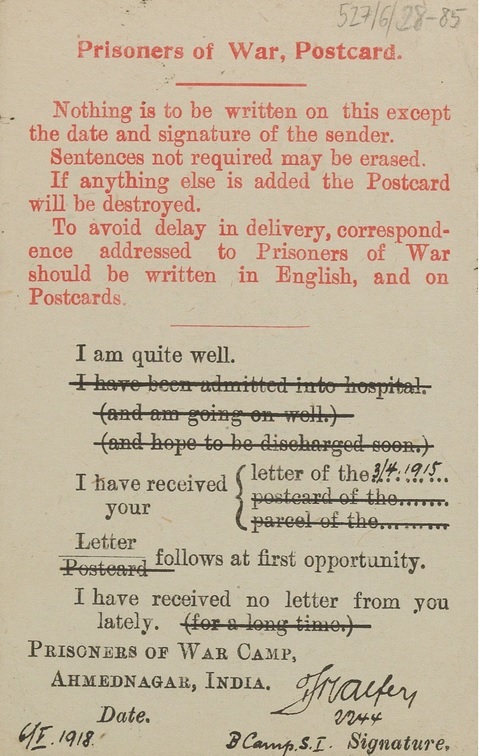
    There is a small collection of WWII propaganda here, mostly Allied-based surrender leaflets and battlefront newspapers. One that I am trying to identify is something simply called “Volksstimme” (“voice of the people”) a very home-made-looking production published in 1944 and which has the feel of being Soviet-produced for German soldiers but which is also extremely anti-Semitic.  As an offshoot of looking for “Volksstimme-ery” things (“Volksstimme” not being a very small handle for a very wide search) I came across a website for the German National Library’s World War I collection, and in one section it displayed this extraordinary postcard:

    WWI POW Postcard

    The German POWs (here based in India) were allowed very limited contact with anyone who had somehow found and written to them.  The instructions were explicit and took up almost as much space on the postcard as the allowed response.  And the response was limited to the POW being well or in hospital, or the status of letters received or not.  It was all attested by an administrative signature, and signed and dated.  And that was it.  

    But, it was at least something.

    “Ahmednagar, a city and fort in India, was the site of one of Great Britain’s prisoner of war camps during World War I. This camp held both prisoners of war and German and Austrian civilians from 1914 and 1918. In contrast, German officers were first sent to Tabora and later usually conveyed to a transitional camp inEgypt or India. The biggest camp was located in Ahmednagar, India, and could accommodate more than 2,000 German prisoners. According to reports from the Red Cross, there were few reasons for complaint. The food was plentiful and housing was acceptable. There were even tennis courts,soccer fields, and billiard tables for the amusement of officers…”–Source

    “Postcard from a British prisoner-of-war camp in India to Gustav Wahl, the Director of the Deutsche Bücherei in Leipzig, 1918”–German National Library, First World War Collection

    [Source: here (http://erster-weltkrieg.dnb.de/WKI/Content/EN/Topics/Kriegsalltag/alltag-kriegsgefangenschaft-en.html)]


  • Invade Europe Now! (And Nazis in New York)

    JF Ptak Science Books     Post 2313

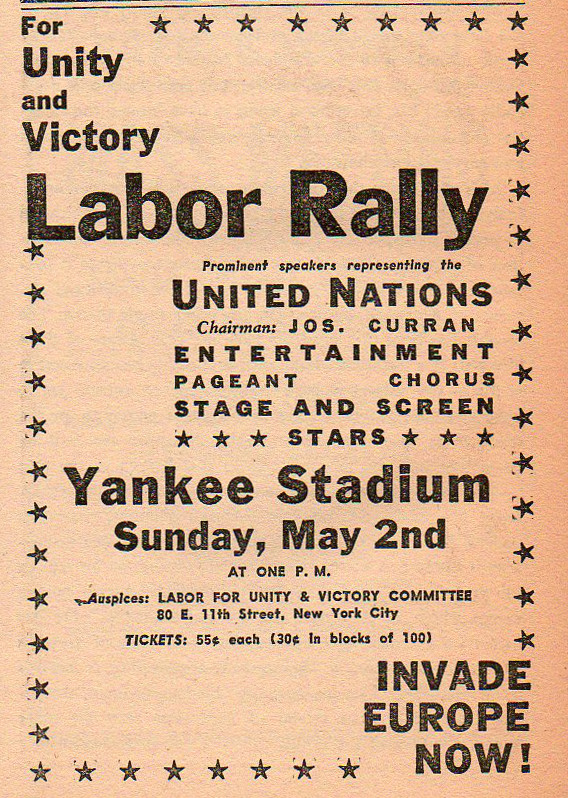
    I found this ad in the April 24, 1943 issue of The Nation, a great magazine already in its 70th year of publication.  I can’t say that I’ve seen a mention of the European invasion like this before, in an ad–certainly everyone was thinking of it, and the issue of where the invasion would take place had been decided (over Mr. Churchill’s desire for the thing to take place in southern Italy), but to see it in a advert like this was surprising.  (It turns out the Paul Robson sang at the event, urging the crowd of 54,000 to fight Fascism “abroad andf at home” (see http://www.bayarearobeson.org/Chronology_3.htm#May%202,%201943)). 

    NATION invade europe now313


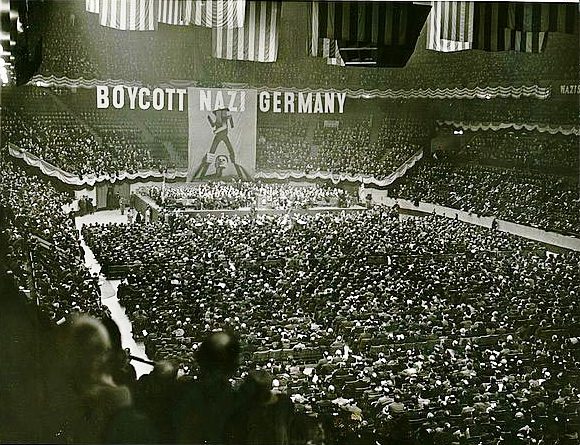
    In searching for images of this event I found something for Madison Square Garden, featuring a packed house for an anti-Nazi even in 1937.  MSG played no particular overt political favorite in the game of renting the facility (free speech and all that), because a year later there was a large meeting of the German American Bund that took places there, with reportedly 20,000 in attendance.  There’s a very unsettling video that I found for this event:

    [Source: http://youtu.be/KPGT7EaCiIY]

    They listened to a lot, not the least of which was the Bund’s leader, Fritz Kuhn, a naturalized American from Germany with a troubled relationship with the Nazi Party, and also with sticky fingers. What brought him to his knees was Fiorello La Gaurdia going after him and with Thomas Dewey prosecuting him for embezzling $14k from the groups general funds to pay for his happy times.  He went to prison in ’43, deported in ’45, and was dead in Germany in ’51.  

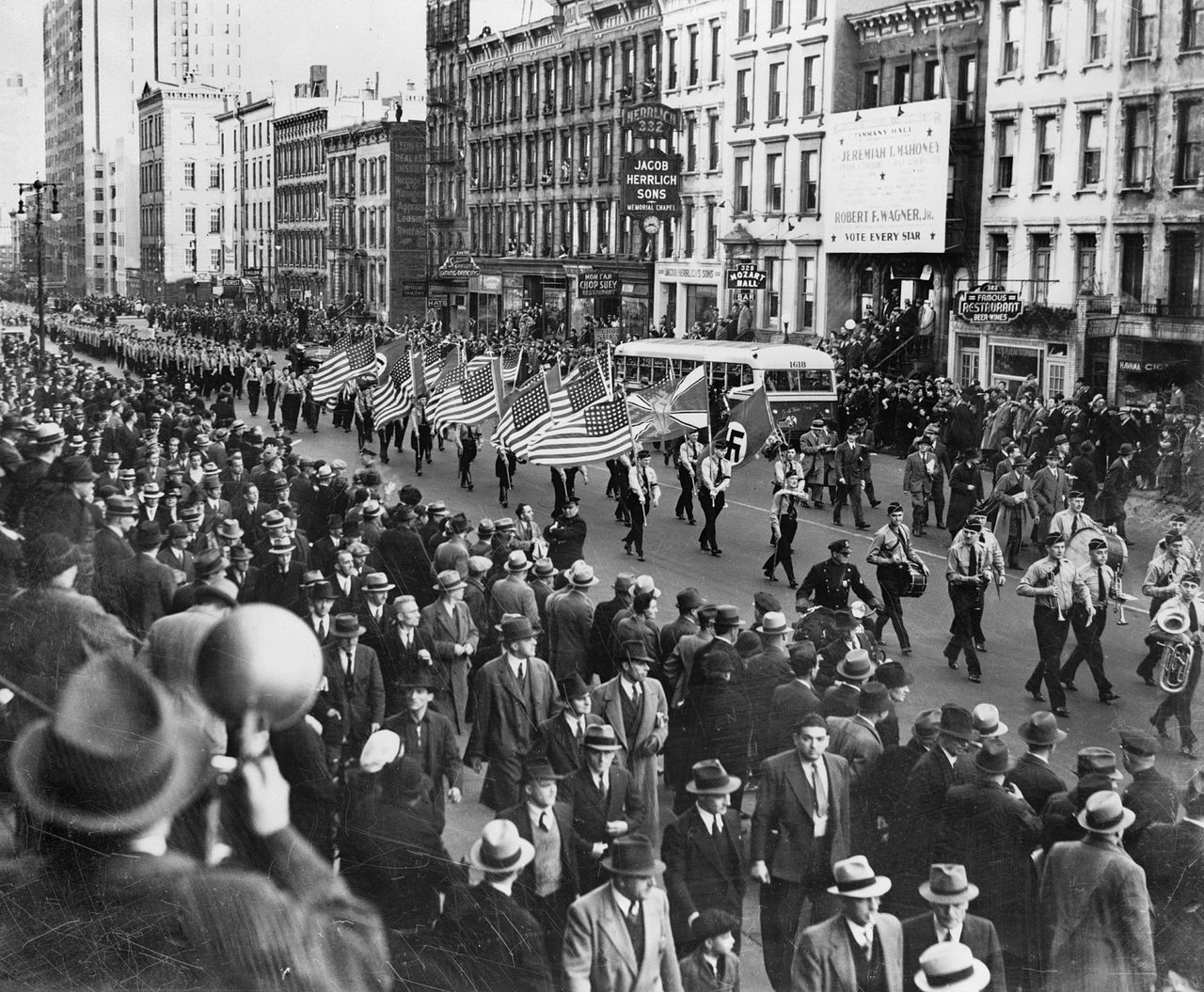
    The Bund paraded down 5th Avenue, too, in October 1939, right after the beginning of the war. From the looks of it the Nazis didn’t come close to even a small fraction of the curious and concerned onlookers.  

    German_American_Bund_NYWTS

    [Source–Wiki images, here]

    For many pro-Nazi groups–including Charles Lindbergh and the America Firsters–the bullshit parade didn’t end until Pearl Harbor, when the U.S. went to war with Germany, and at which point the Hitler admirers had a huge change of heart. Or at least became very quiet and still.

    Here’s an earlier anti-Nazi meeting, which seems to me to have had a much bigger crowd:

    Anti-Nazi rally

    I have my doubts about the 20k mentioned for the 1938 meeting–from what I can tell there were a lot of dark sections and empty chairs…

    ·Posted by :

    ·in:

    —

  • A Rare Technical Report on the V-1, 1945, Published in Newly-Liberated Paris

    JF Ptak Science Books   Post 2304

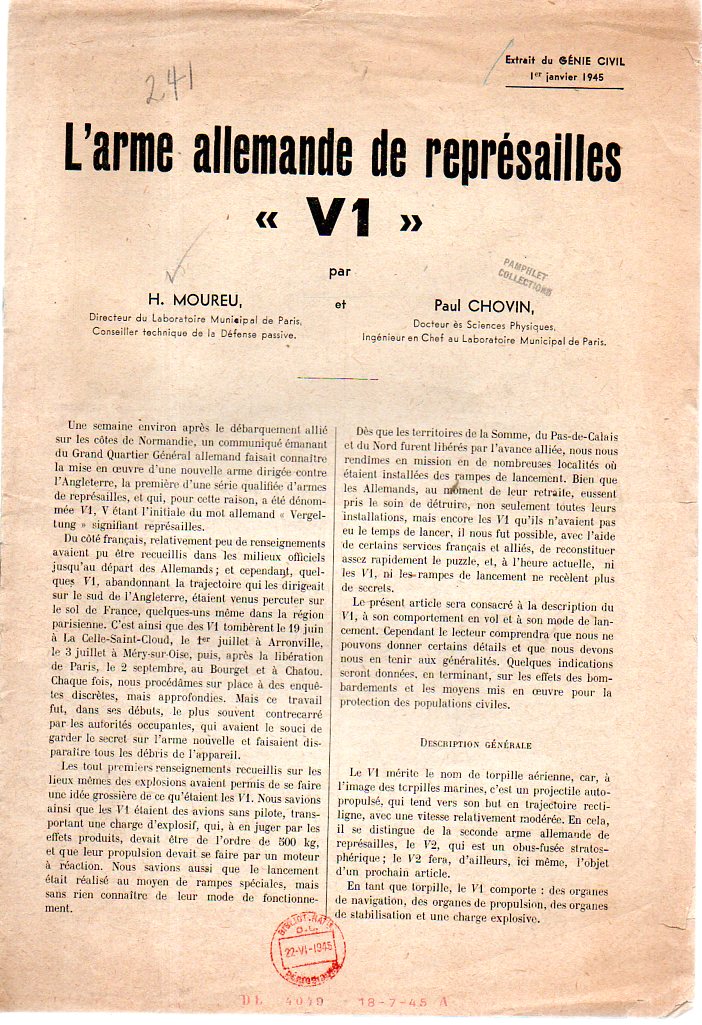
    The eyes of top-ranking Nazis must have popped when they saw this work by Henri Moreau  (1893-1978) and Paul Chovin.  It is a fairly technical paper on the V-1, the progenitor of their supposedly war-ending “secret weapon” the V-2, and to see the data and detail published in a tech journal in the city that was until very recently held in Nazi hands….well, there was very strong irony there.  “L’arme allemande de represailles <<V1>>”, seen here in offprint form, was published in Genie Civil, 1 January 1945–it is eight pages long, and printed in Paris (newly liberated from the German army 25 August 1944) in early 1945.  The offprint itself is a rare thing, with no copies whatsoever located in WorldCat, and nothing floating around on the interwebtubes. I was frankly surprised to find this fairly-well documented piece on the V-1, but no report itself, so I decided to reprint the report in its entirety. Some of the text runs off the side of the scanner, but that is the best I can do in scanning the pamphlet without taking it completely apart. 

    V1519


  • Early Published RADAR Image of NYC, 1946.

    JF Ptak Science Books   Quick Post

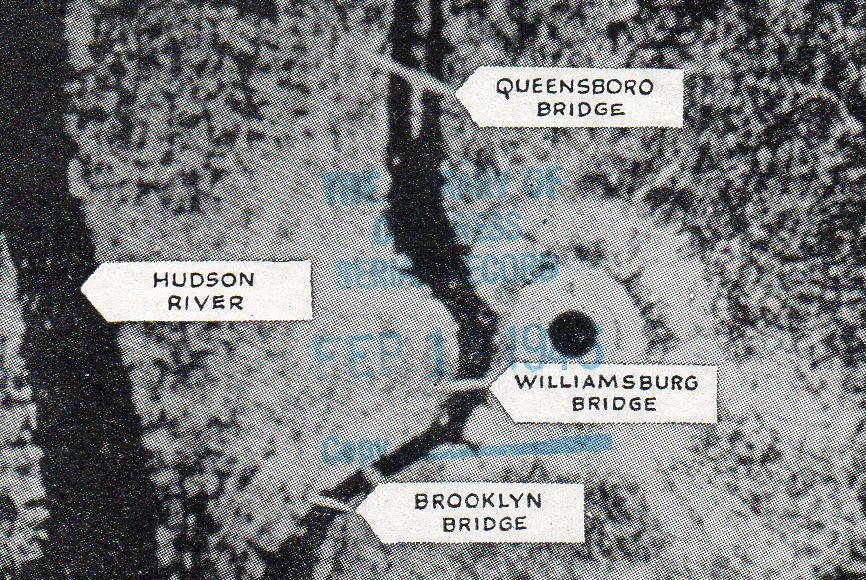
    Radar247

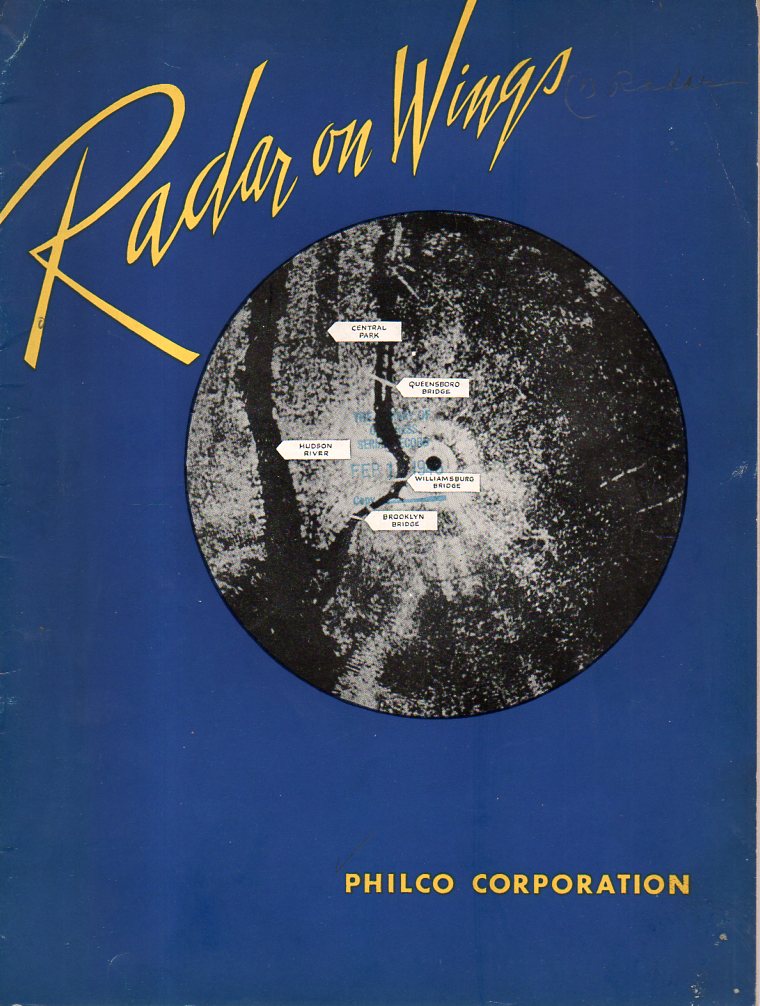
    The history of RADAR (RAdio Deection And Ranging, and something I’ve always written in caps) is absolutely not what I’m thinking about now–that is a long story with lots of twists and turns, complicated, complex–and it ranges depending upon location as for the most part RADAR (from the 1930’s anyway) was developed in secret, kept as a military secret.  And that’s because it was a very important development, with the victor of the Battle of the Beams being the possible victor, period.  

    The image is a detail from the pamphlet below (the covers printed in what looks like U.S.N. blue), made aboard a B-17 at 15,000 feet, and is one of the earliest popular treatments of the vital story of RADAR during WWII.

    Radar246

    The pamphlet was printed by PHILCO Corporation, (and dated January 4, 1946), and has an inserted leaflet stating that this “makes public for the first time the salient facts about the Corporation’s development and production of airborne radar equipment for the United States Army and Navy”.  

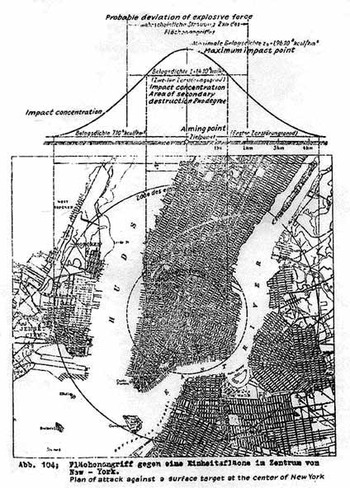
    The image also comes a little too-close-to-home, reminding me of the Eugen Sanger transcontinental bomber, and the image of NYC in the crosshair, 1943:

    Manhattan_bombed_4


    The image is from an earlier posts here, “Bombing Manhattan, 1943…”


  • Near-Dark, No Windows, Filled with Explosives, and Breathing Cordite. 1894

    JF Ptak Science Books   Quick Post

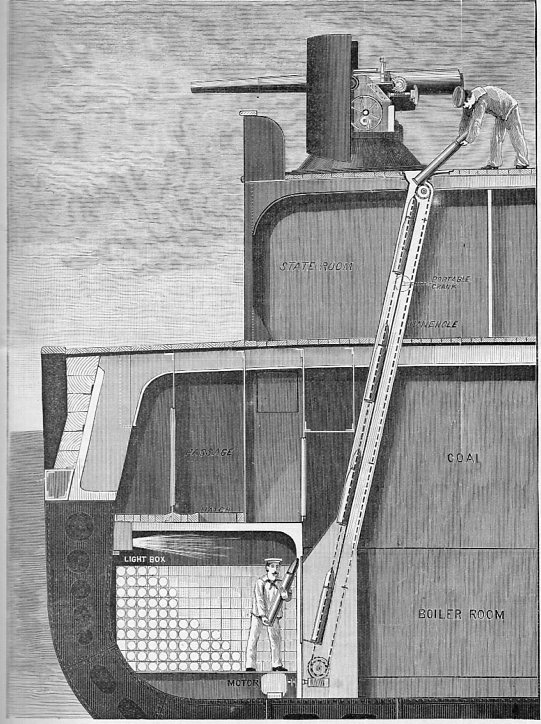
    This is an elementary but still highly useful cross-section illustration, showing the semi-automatic loading system for a U.S. Navy  rapid fire gun as it appeared in Scientific American for September 17, 1894.   I wonder if the sailor sending up the (six inch?) shells in near -dark (except for the “light box”) was breathing in any of the cordite from above?  The weapon was probably the revolutionary six-inch Dashiell rapid firing breech loading gun, which in trials scored 5 aimed hits at a 900-yard target in 55 seconds.  Fast and accurate for 1894.  

    Auto-loading gun244

    ·Posted by :

    ·in:

    —

  • What Victory Looks Like When You Really Can’t Tell (1917)

    expanded Post 317 (2009)

    00blogoct_14somme850_2

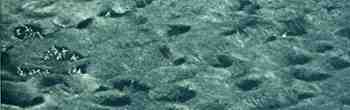
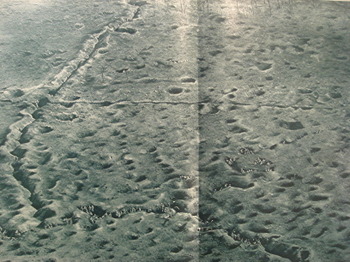
    In a play on the concept of the Powers of Ten, I had a look at a photograph depicting the French victory at the Somme; or was it a British victory?  Or German, via the lure of the others to a semi-victory?  Its hard to say who won, or if there really was a winner.  The Battle, which looks to me to be a sub-war within the war, occurred over the period of July through November 1916.  When the smoke settled, there were some 1.5 million casualties on both sides.It has long been held that the battle really was won by someone, the British, the French; but there was so little that was accomplished by the action that there probably wasn’t a winner, just losers. 

    And big losers, at that: Great Britain, Canada, Australia, New Zealand, Ireland, South Africa and Newfoundland lost 419,654 casualties, with 95,000 killed; the French lost 204,000 casualties and 50,000 killed.  That made a total of 623,000 casualties and 146,000 killed for the allies; Germany lost 465,000 casualties and 164,000 dead.  The advances made along the battle front went a few miles one way and then the other along a 12-mile stretch of battlefield, which four lives were traded for every inch gained along that porous front.

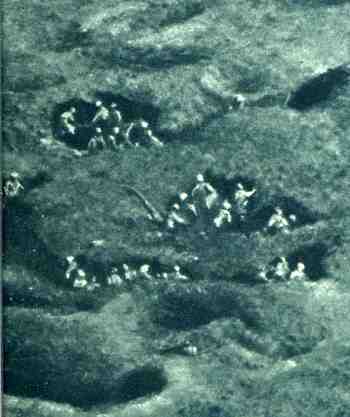
    The first image here (above)  is a very sharp detail from the overall picture published in The Illustrated London News for 6 January 1917, representing about 1% of the entire photo

    The next image places the micro-detail in more context; this detail is itself about 5% of the main image, which is found just below this one.

    00blogoct_14somme849_2

    The overall image from which these two details are removed is below. In turn, this large image is but a small detail of the greater overview of the battlefield, making up perhaps a few percent of the field of operations. 

    I’m trying to get a feel for the enormity of the battle, but I really can’t, not even via powers of ten, manipulating the idea of orders of magnitude.

    In one last try, I hypothesize that the 1.5 million casualties could not be displayed in 10 of these large images.  .

    That wouldn’t look like victory at all. 


    Ballistics_123

    (An “oh, shit” picture if there ever was one.)

    ·Posted by :

    ·in:

    — —

  • New Orleans at the Top of the U.S., 1861

    JF Ptak Science Books  Quick Post

    Mississipi River

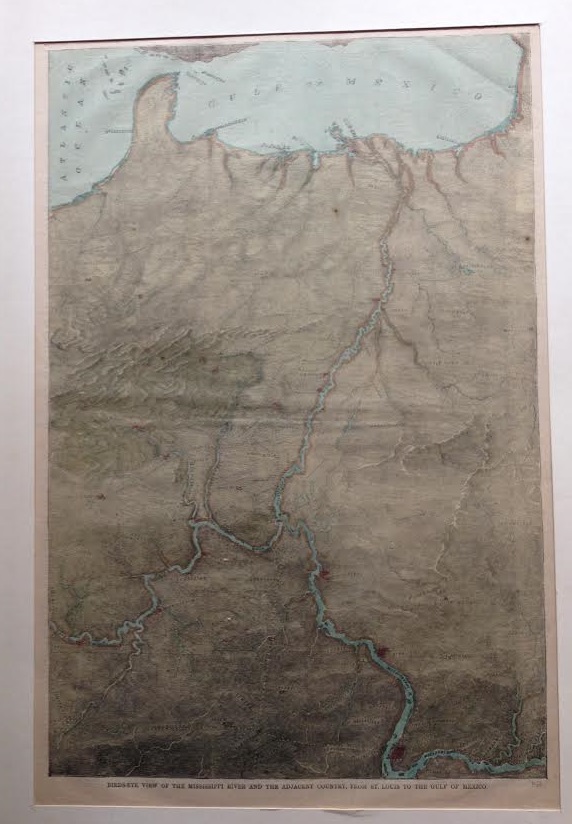
    Maps with unusual perspectives have long been interesting to me, and this map of the Mississippi River certainly fits this category.  Printed in Harper’s Weekly on July 6, 1861, and entitled “Bird’s-eye View of the Mississippi River and the adjacent Country, from St. Louis to the Gulf of Mexico” it displays the river from north-to-south, landing New Orleans at the top of the United States.  I’m not altogether certain why this perspective was used –perhaps it was just to acquaint readers with possible “western” battlefields for the brand-new Civil War, showing the terrain from a different position for the sake of running old geographic info through a news interpretative lens.  

    It displays this middle-ish section of  the country from just east of Knoxville (and almost to the mountains in which I am sitting) and then south to Charleston, and north along that same line to Vincennes and the Wabash River;  then on west to St. Louis and Rolla and south to Galveston. We can easily see the entire Florida peninsula–truncated, owing to the bird’s-eye view part. There are probably dozens of cities shown, all of which are on one railway or another. The terrain is very interestingly cut and also very useful.  And again, New Orleans sits on top of it all, perhaps to emphasize its importance in the future fight for the river and the middle of the country in the three-month-old Civil War.  

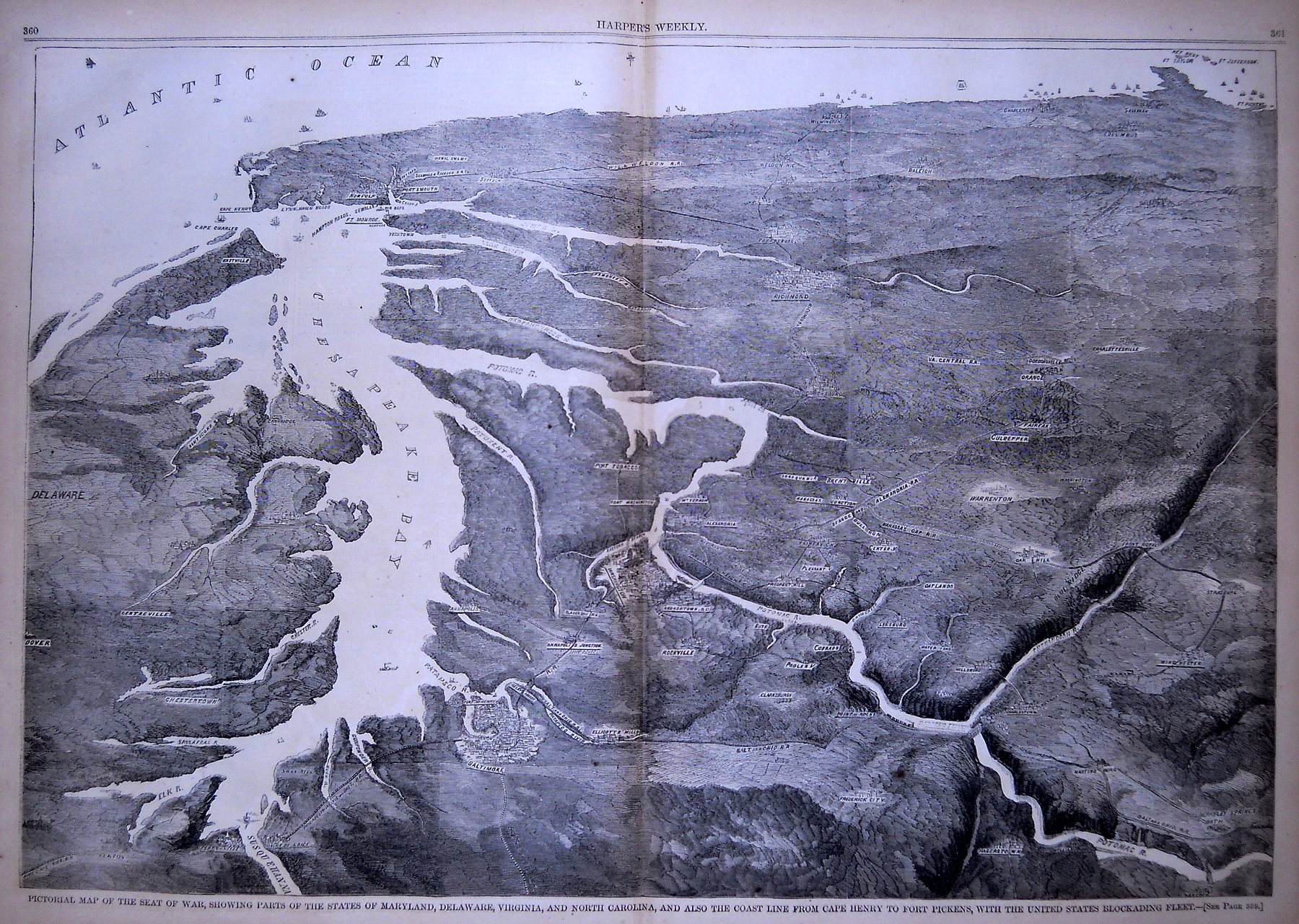
    Harper’s Weekly published several perspectives like this–for example, here’s another very creative and imaginative view of the theater of war looking southeast from high above Baltimore, and surveying the country that leads south and encompassing the entire coastline to just beyond Savannah.  It is a very interesting portrayal of the terrain, especially for the Blue Ridge, and for giving a good idea of what was on the road between Washington and Richmond.  

    Chesapeake[Image source: the Philadelphia Print Shop]