A Daily History of Holes, Dots, Lines, Science, History, Math, Physics, Art, the Unintentional Absurd, Architecture, Maps, Data Visualization, Blank and Missing Things, and so on. |1.6 million words, 7500 images, 4.9 million hits| Press & appearances in The Times, Le Figaro, Mensa, The Economist, The Guardian, Discovery News, Slate, Le Monde, Sci American Blogs, Le Pont, and many other places… 5000+ total posts since 2008.

Category: Militaria

  • Houghton Miflin Suing on Behalf of Hitler and “Mein Kampf” (1939)

    JF Ptak Science Books   Post 2469

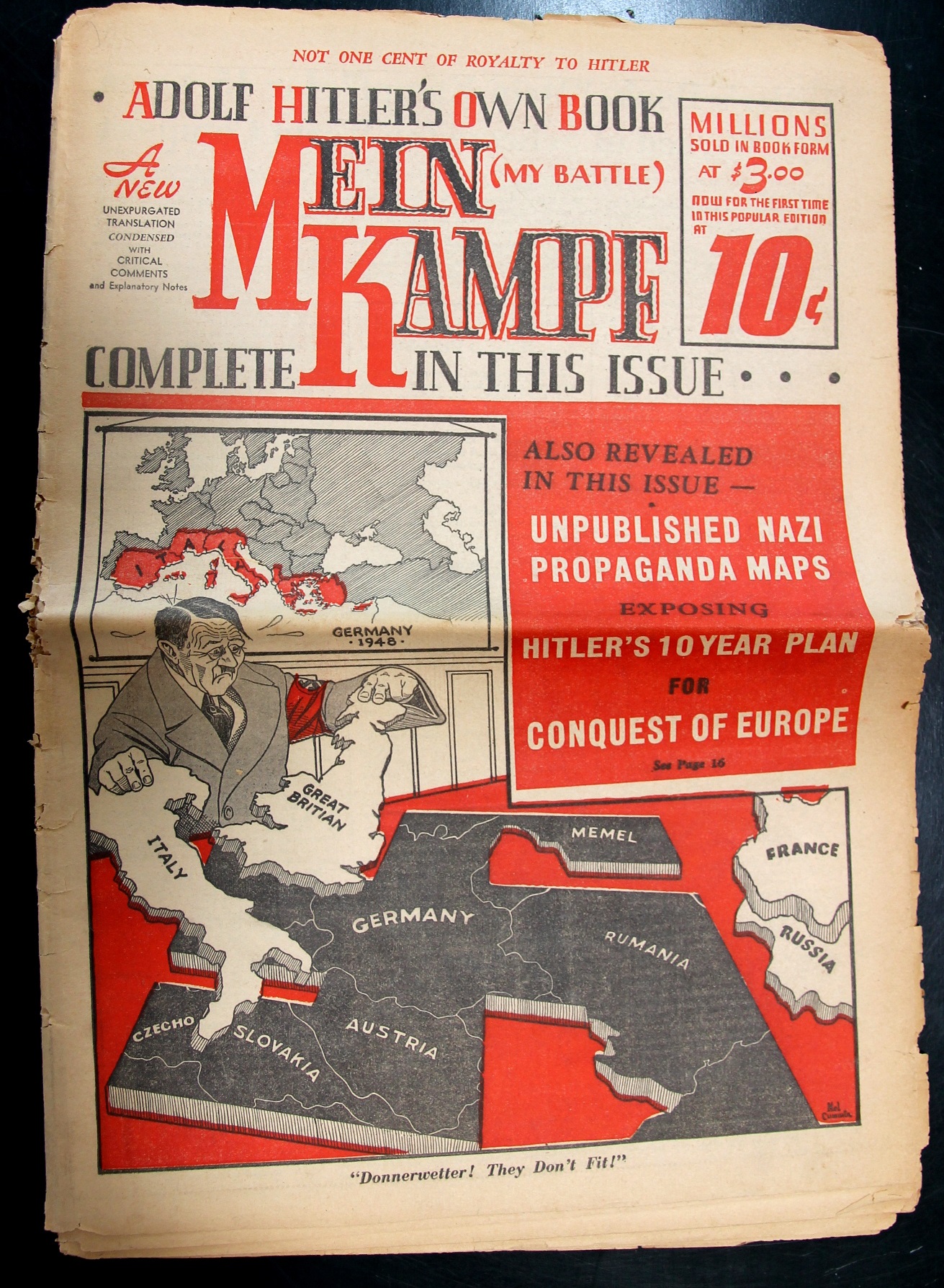
    Mein kampf full

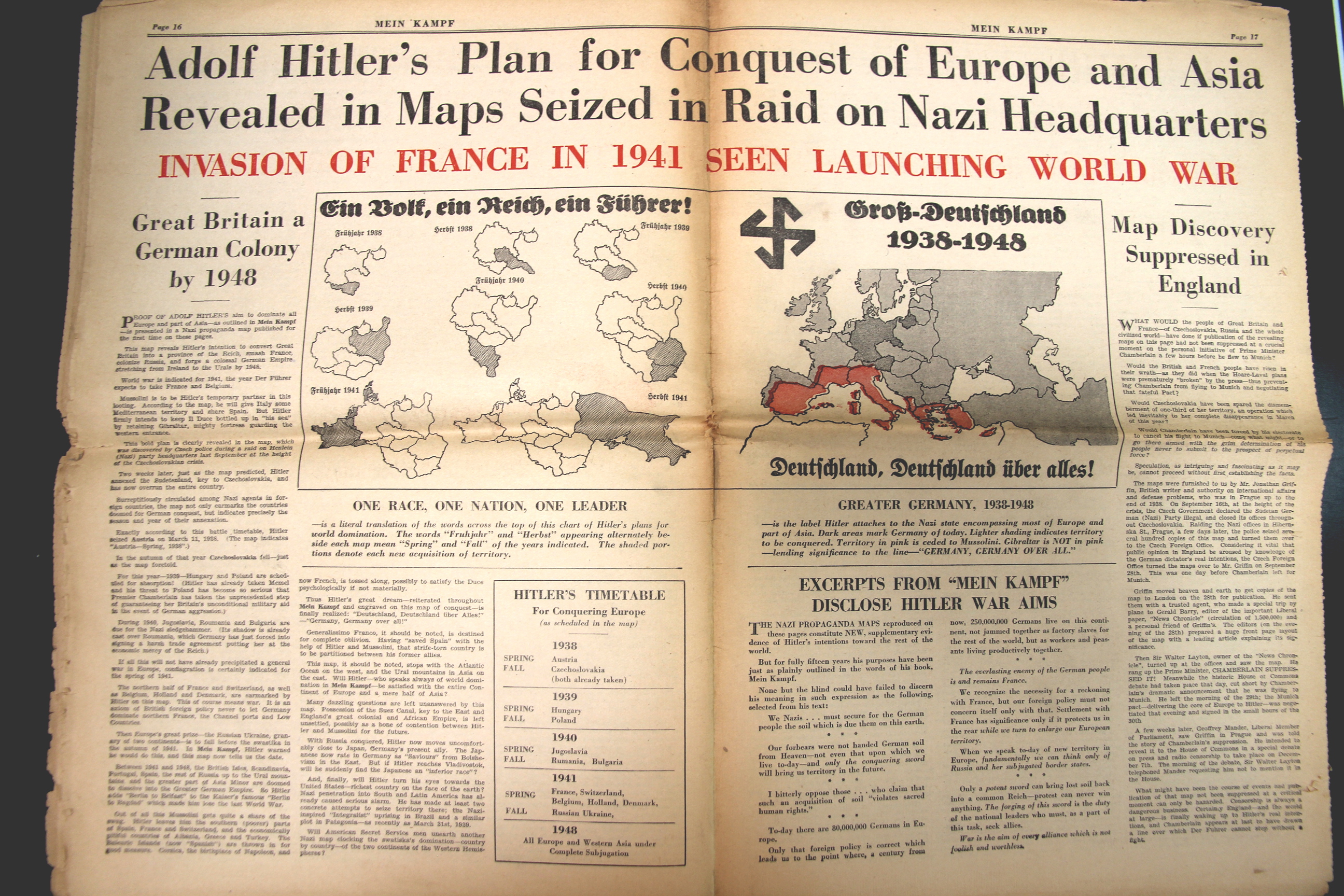
    This “critical” edition of Hitler’s Mein Kampf was published in a 32-page tabloid format, editing in the choice bits, and adding critical commentary and interpretation, whittling Hitler’s 270,000 words down to 70,000, and including sections that were evidently heinous and omitted from other English versions.

    Noram Publishing Company of Greenwich, Connecticut, loudly proclaims “Not One Cent to Hitler” so far as royalties go (and make no mistake he did make a fair amount of money on the book outside of Germany, while making a lot inside Germany). Any profits were to go the refugees of Hitler’s Germany. 

    Interestingly Noram Publishing Company was the creation of journalist and future Senator Alan Cranston and a business associate, Amster Spiro (city editor of William Randolph Hearst’s New York Journal-American). 

    • An interesting account of Cranston’s involvement is in this article by attorney John Aquino. Also see here for an article in the Los Angles Times.

    The problem was that Mein Kampf  was already published in full form in the U.S. by Houghton Miflin (among others), and Noram’s shortcut was interfering with their business. And so Houghton Miflin successfully sued Noram1, forcing the company to destroy the 500,000 copies of their tabloid that hadn’t yet sold (about half of the print run to that point). 

    On the other hand Cranston and Spiro did reach at least a half-million people with their version, which importantly discusses the concept of the Big Lie, with “The Only Lie Worth Telling is the Colossal One”.

    Mein kampf maps

    Notes

    1.  “Houghton Mifflin Co. v. Noram Pub. Co., 28 F. Supp. 676 (S.D.N.Y 1939).U.S. District Court for the Southern District of New York – 28 F. Supp. 676 (S.D.N.Y 1939)
    July 14, 1939

    District Court, S. D. New York.

    July 14, 1939.

    28 F. Supp. 676 (1939)

    HOUGHTON MIFFLIN CO.
    v.
    NORAM PUB. CO., Inc., et al.

    *677 Hines, Rearick, Dorr & Hammond, of New York City (Archie O. Dawson and John D. Mooney, both of New York City, of counsel), for plaintiff.

    Hoguet, Neary & Campbell, of New York City (Walter H. Free, of New York City, of counsel), for defendants.

    CONGER, District Judge.

    This is a motion for a temporary injunction to restrain infringement of the copyright which the plaintiff claims to have of the book “Mein Kampf” (author, Adolf Hitler).”

    ·Posted by :

    ·in:

    —

  • Infographic: the Sizes of Air Forces, 1918-1935

    JF Ptak Science Books  Quick Post

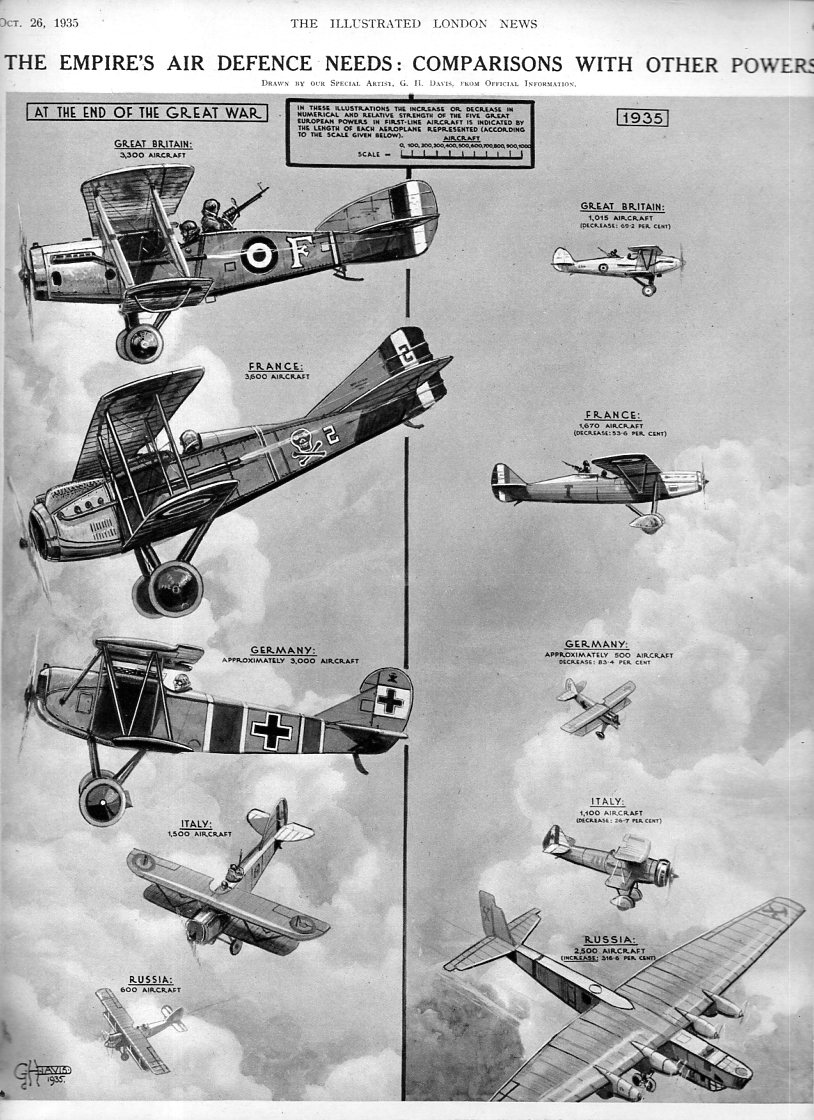
    More work here from the great G.H. Davis–a man whose work has been shared on this blog dozens of times (check this out in the Google search box to the left)–this time showing the changes in air corps from the end of WWII to the middle of the 1930’s. The infographic was published October 26, 1935, in the Illustrated London News, five months after the creation of the Luftwaffe and just a short time longer than that for the renunciation of Versailles.  Hitler was two years in power, and the face of Europe was really about to change…

    Infographic Aviation 1935025


  • What Spending $18,000,000,000 Looks Like–Militarily–in 1918.

    JF Ptak Science Books   Post 2455     Part of the series on the Graphic and Interpretative Display of Information

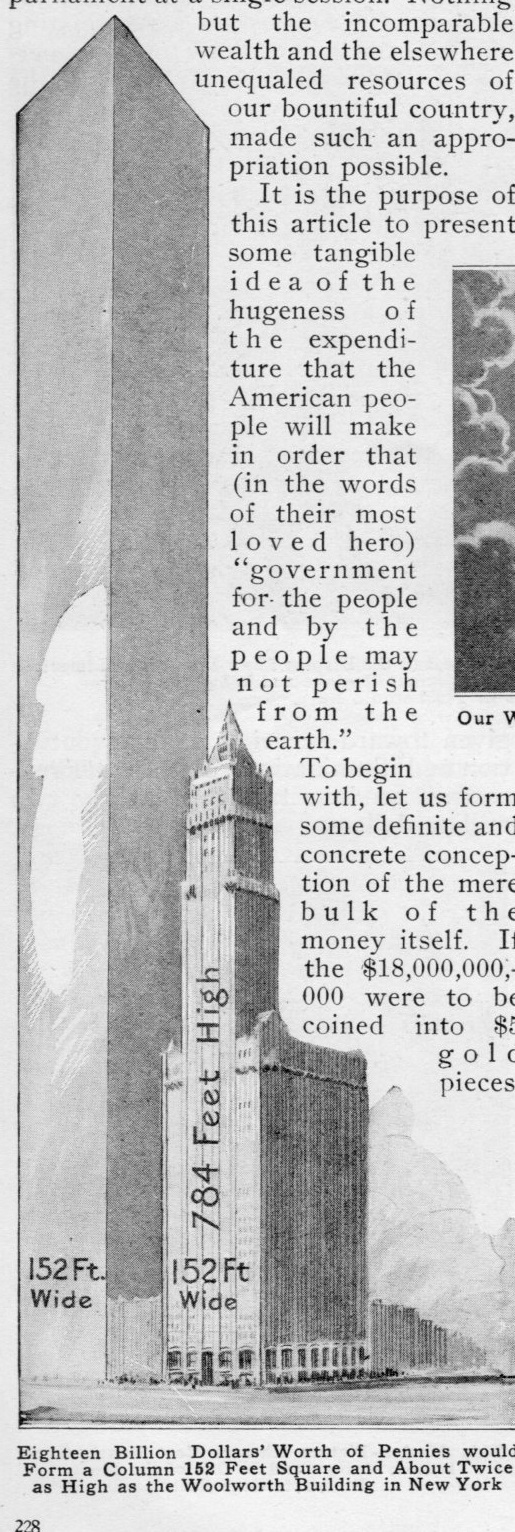
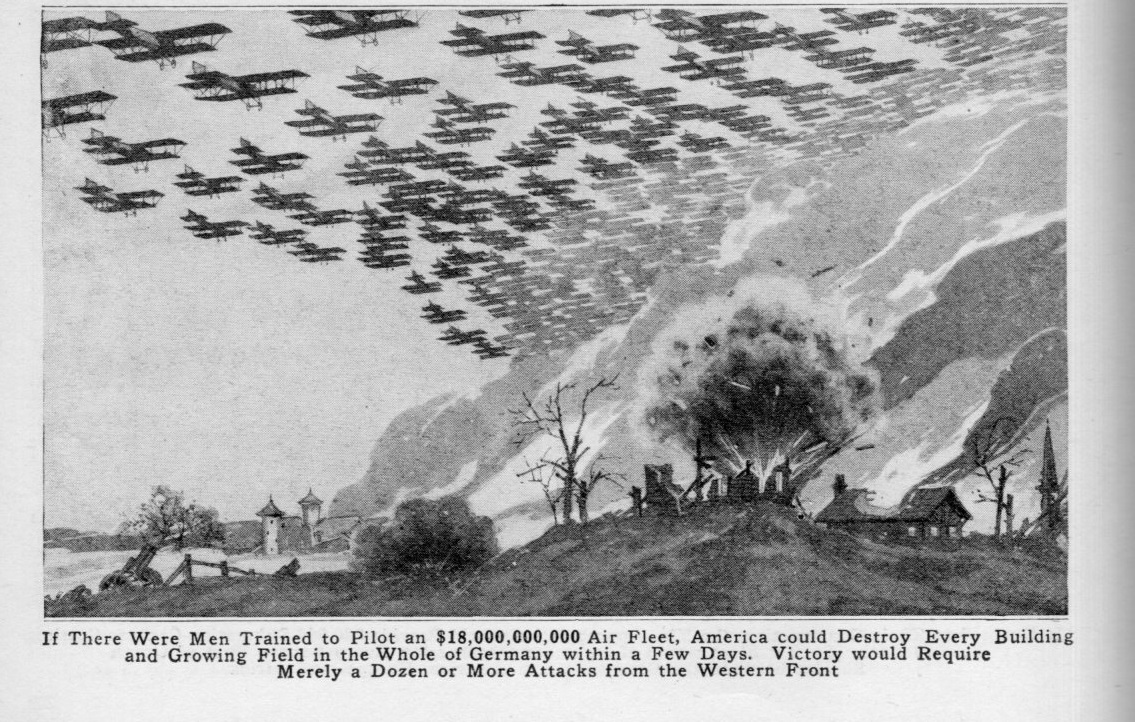
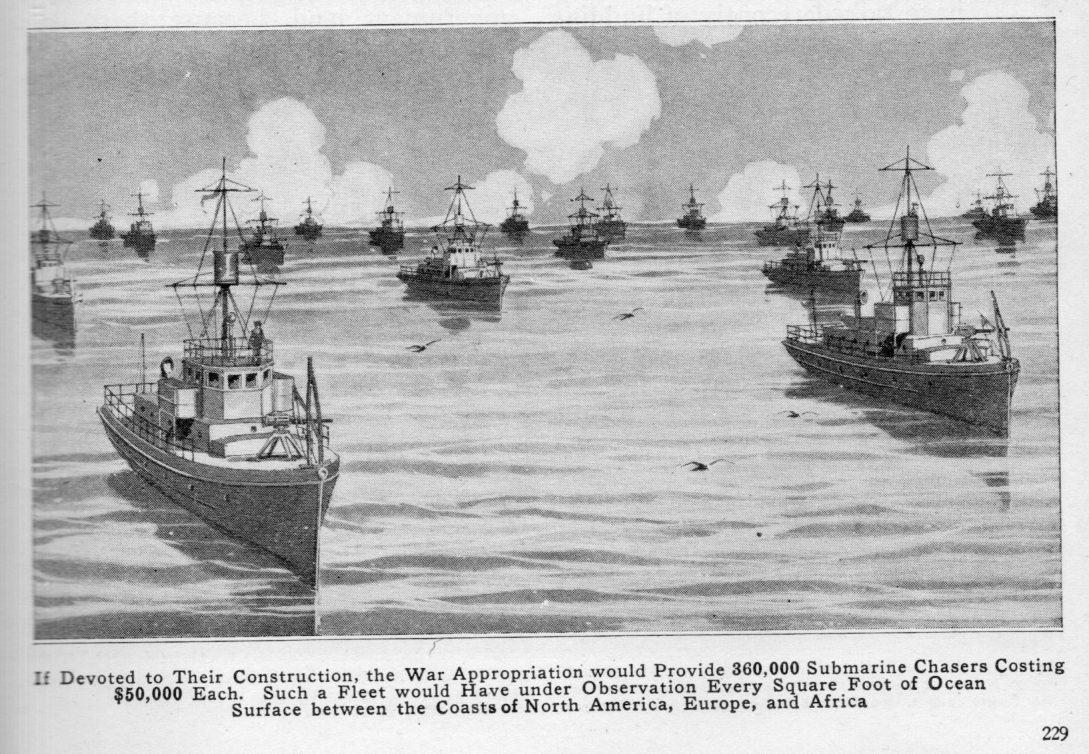
    The February 1918 issue of Popular Mechanics presents an unusual graphic display of quantitative data–what the $18,000,000,000.00 that the just-ended session of Congress for war expenditure would look like if rendered in different forms, and also what it would buy.  The author of “Visualizing the $18,000,000,000 War Fund for for 1918”, Leslie Klug, was trying to put that enormous sum into perspective for the popular reader–the results though may have been a little more mystifying than the sum. For example, he stated that $18bn in $5 gold pieces placed face-to-tail would stretch 3,000 miles; if that amount was rendered in pennies, it would form seven lines of coins from the Earth to the Moon. That penny pile would also be thicker and about twice as high as one of the world’s tallest skyscrapers, the Woolworth Building.  
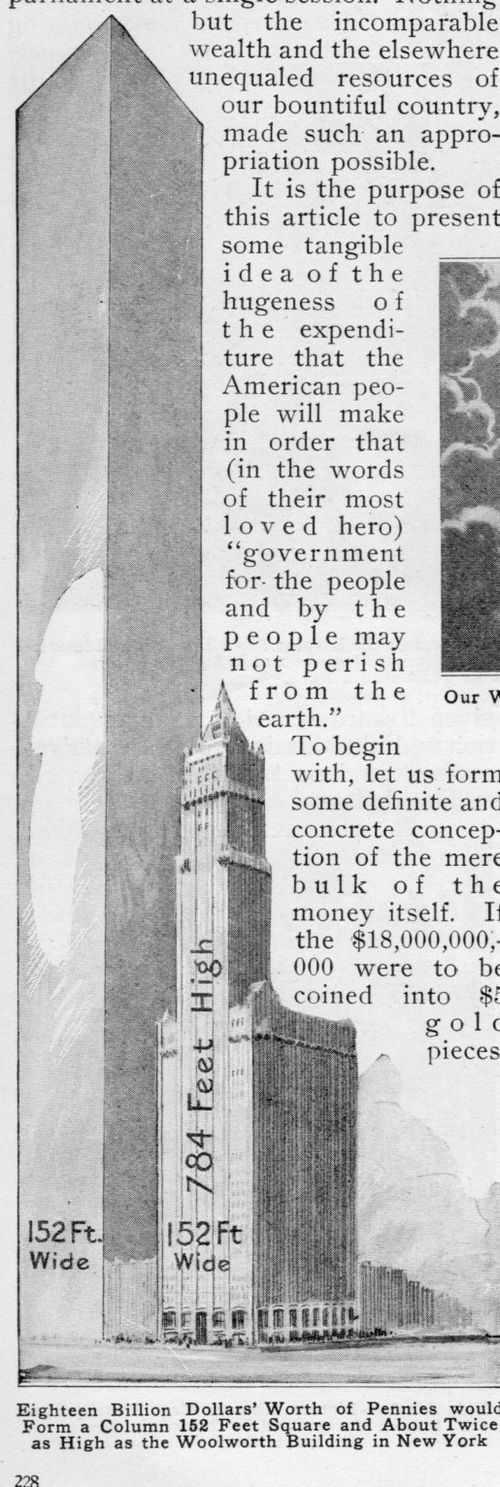
    Billion planes961

    It is doubtful that this would help the Average Person understand $18bn, mainly because there isn’t much to compare a penny skyscraper with.

    The author seems to have replaced one semi-incomprehensible number with its representation in something even more removed from daily life, re-equating the one big sum of $18bn into smaller but more numerous chunks of the same figure.

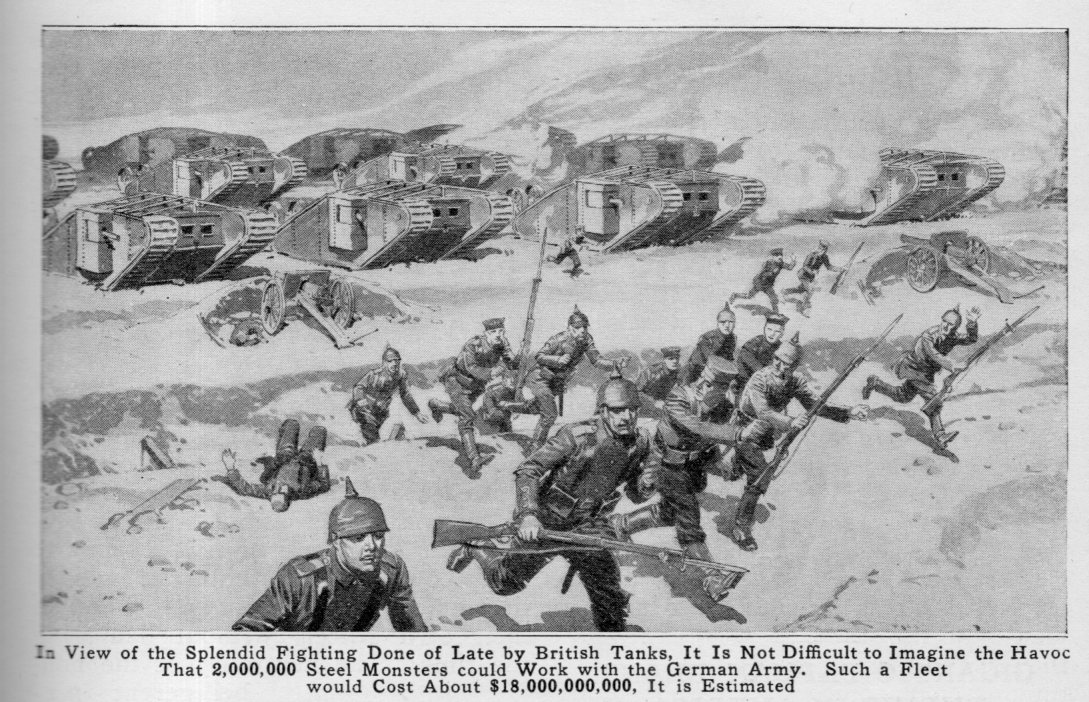
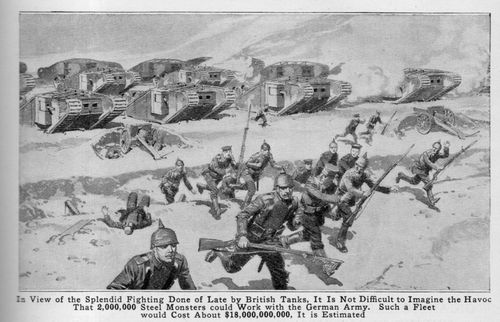
    Klug moves on to a more successful visualization–thinking of what that money would buy in planes and tanks.

    Of course the allocated war money was allocated to fund the entire war effort, including, well, everything, and not to be spent on one thing, like planes.  But Klug does create at least two visual images that  hadn’t occurred to me before–super-massive numbers of planes and tanks.

    “Massive amounts” of tanks in my head has always been represented by the Battle of Kursk, fought in the summer of 1943, where the tide of the war was changed and the German offensive in the East broken. It was also the largest tank battle ever fought. It was an enormous victory for the Soviet Army, and the beginning of the end for the Nazis. 4,000,000 people were involved in the battle (with some 200,000 residents of the city of Kursk killed in the process), along with 70,000 artillery pieces, 14,000 aircraft, and 23,000 tanks.  Klug informs the reader that $18bn would buy 2 million tanks–he can imagine the “havoc” it would cost the Germans, but really doesn’t even try to imagine what 2 million tanks would look like, unlike the penny cables to the Moon  And the illustration really doesn’t do any sort of job in displaying the idea of massive tank production, just a little touch of fear.  The 2 million tanks bit comes a little bit into focus if there was something to compare it with–the Kursk–even though trying to imagine that battle of tanks time 100 its accessibility really just begins to dissolve. 

    When I try to think of 2 million tanks in terms of a single advancing army the impossible numbers become slightly more grounded, but not much. A tightly-packed square mile of tanks numbers about, say, 90,000.  That means that you could have a 22-mile long mobile front of tanks that was also one mile deep.  Ouch.
    Billion planes962

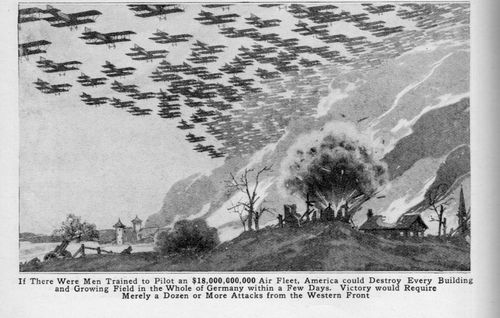
    Planes didn’t do the trick of conveying massiveness, either, though the illustration was a little more evocative of fantastic air power, though Klug doesn’t say how many planes the money would buy. The author does state that such an air power could destroy “every dwelling and planting field” in Germany.  (My guess is there could be 4-6 million aircraft purchased with $18bn.)
    Billion planes960

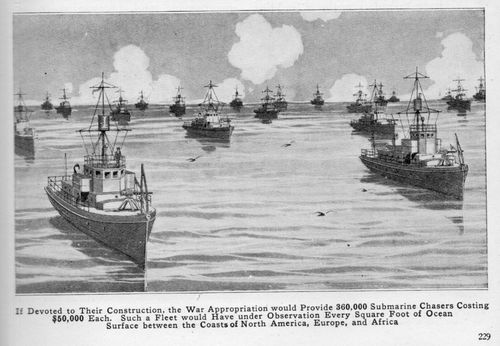
    Perhaps what seems what would be the most accessible of the visualizations comes with the navy, which would receive 360,000 “sub chasers” for the $18bn, a force which (Klug says) would be  capable of covering every square foot of ocean from North America to Europe and beyond–except that the numbers don’t work out.

    The North Atlantic is a big place, something on the order of 41 million square miles, which means that each of the sub chaser would have to cover 118 square miles to cover the ocean, which I think is impossible to do in pre-SONAR days of sub detection, when basically there was optical observation looking for a pipe sticking up out of the water.  I don’t know what the observational power is of a ship looking for a periscope in the ocean, but I know it can’t be the size of D.C. or anywhere near that.  How many ships would it take for this job would be an interesting tea-time question for someone who knows this stuff–but for me, it seems that Klug’s visualization on the naval aspect of  $18bn is wrong.  On the other hand that doesn’t matter at all if you’re doing a little propaganda write-up, like this one.  
    Billion planes963


    In any event that isn’t the way war expenses are handled, though it is a nice exercise in thinking about big numbers.  

  • The U.S. and Not Wanting to Go to War, 1939 & 1940

    JF Ptak Science Books   Post 2450

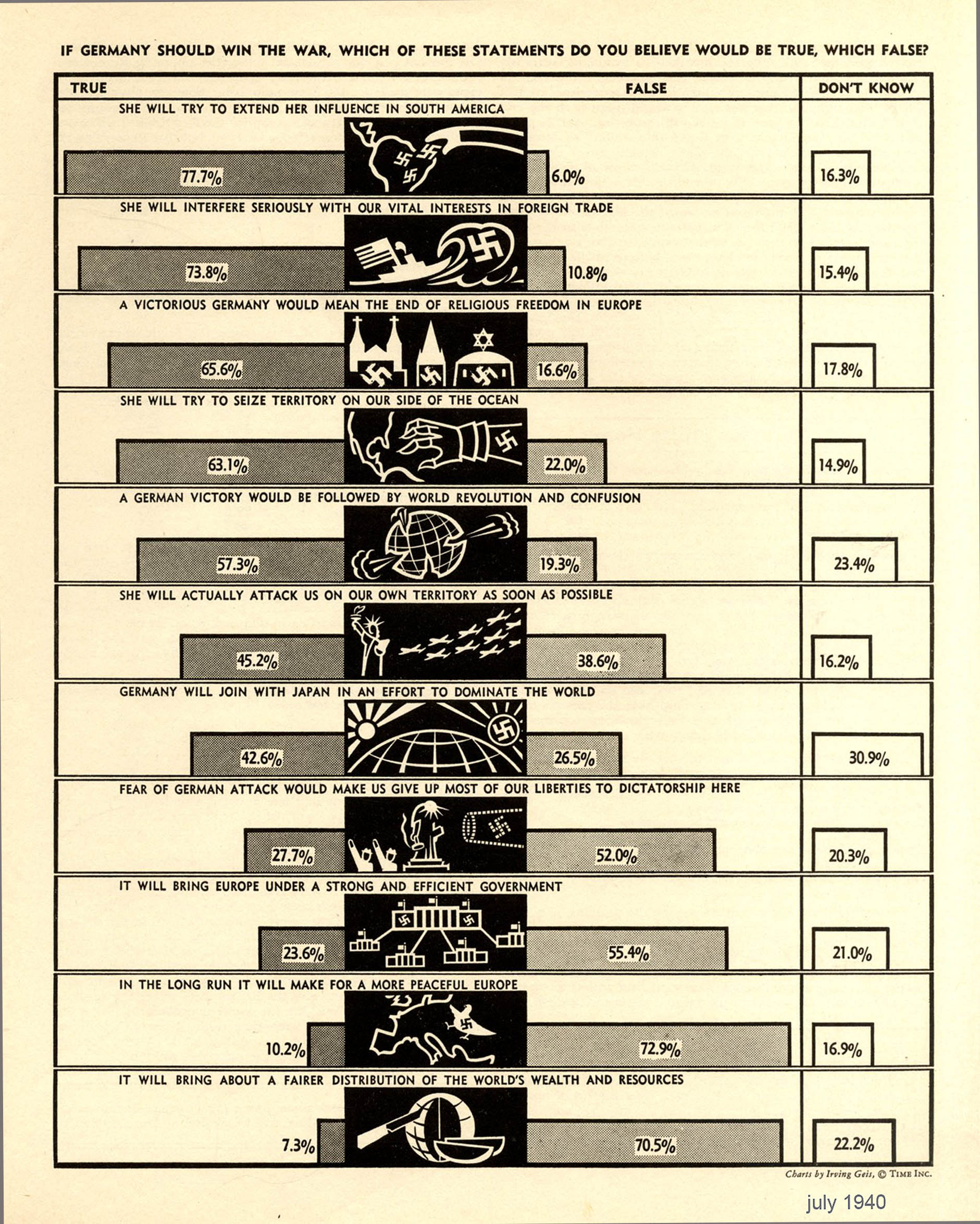
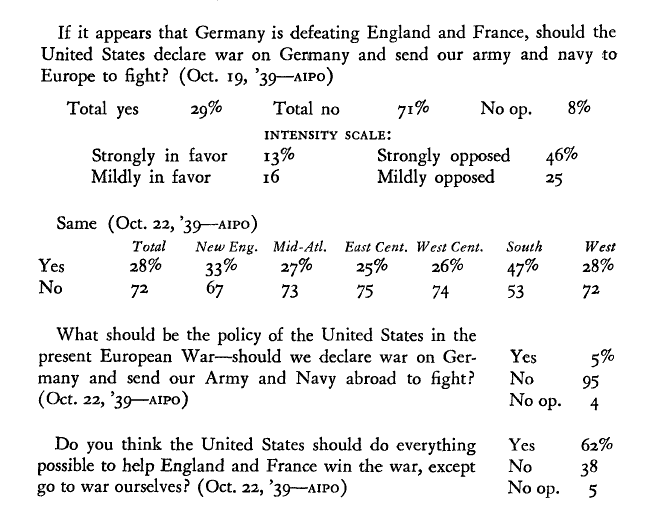
    I found this interesting display of data on opinions of people in the United States regarding the war in Europe in 1939.  The information is fascinating–and combined with further samples from opinion polls included below, contribute to showing the deep opinion that the United States stay out of the war, even to extremes. Everyone probably knows that the U.S. wanted to avoid the war, and to have the European War stay in Europe, and that there were many odd right-wing groups with famous/infamous leaders leading the way to isolation and self-interest, and that the general implications for the U.S.of an overseas war was more economic concern than anything else, but looking at the numbers in representations like those below it is still surprising to see how wide and deep those feelings were.  It can certainly give a greater insight into the problems that Roosevelt faced even with trying to supply war goods to Great Britain.  

    First, the original chart:

    Poll if germany shoul dwin war

    The source for this graphic is the excellent site,Visual Loop (http://visualoop.com/blog/17696/vintage-infodesign-56), who has provided an extended reference for more of  Irving Geis’ (1908-1997) highly stylized and interesting work (via Visual Loop at http://www.fulltable.com/VTS/f/fortune/diag/b.htm). Geis might be recognizable to some as a long-time illustrator for Scientific American among many other journals, and also for the semi-famous How to Lie with Statistics, which was published in 1954.

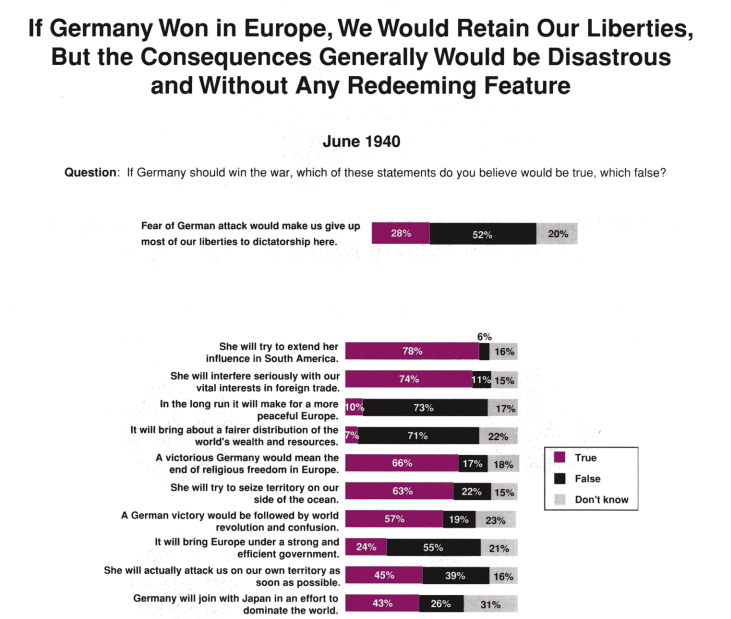
    A similar source of data is found at the Roper Center UConn, with a ton of interesting bits in it, though it does not describe the source of the data. (This article was published in Public Perspective, Dec/January 1998.) One lead led me to this article (below) on the Gallup Fortune Public Opinion Poll in the Public Opinion Quarterly for December 1940, and it may have provided some of the data for the infographic, but I haven’t yet read in closely.

    Here is an interesting sample from Roper:

    Poll if germany won 1940
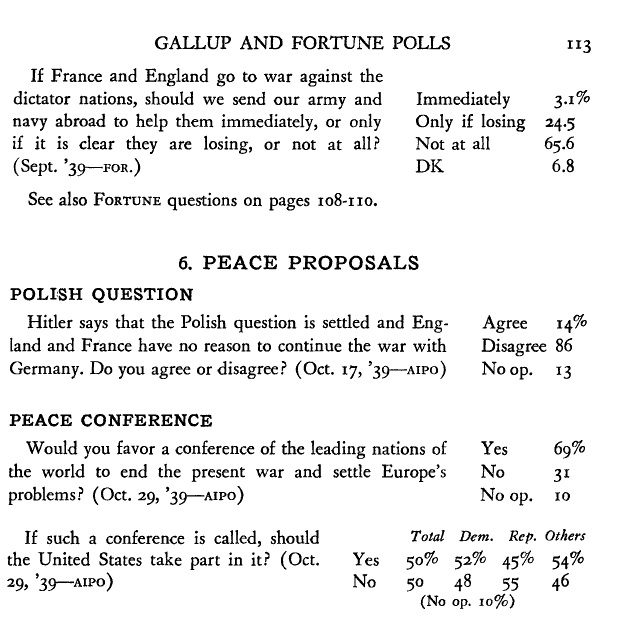
     In any event the Public Opinion Quarterly (“Gallup and Fortune Polls” Vol. 4, No. 1, March 1940 pp. 83-115) piece is interesting on its own, and I’ll no doubt return to it, though tonight I’m just interested in a few bits.

    Data should u.s. fight

    [Gallup and Fortune Polls The Public Opinion Quarterly Vol. 4, No. 1 (Mar., 1940), pp. 83-115]

    Data war and peace

    I’ll come back to this in a bit–for now I would just like to post the links.  


  • What They Wore: the U.S. Soldier, May 1941

    JF Ptak Science Books  Quick Post

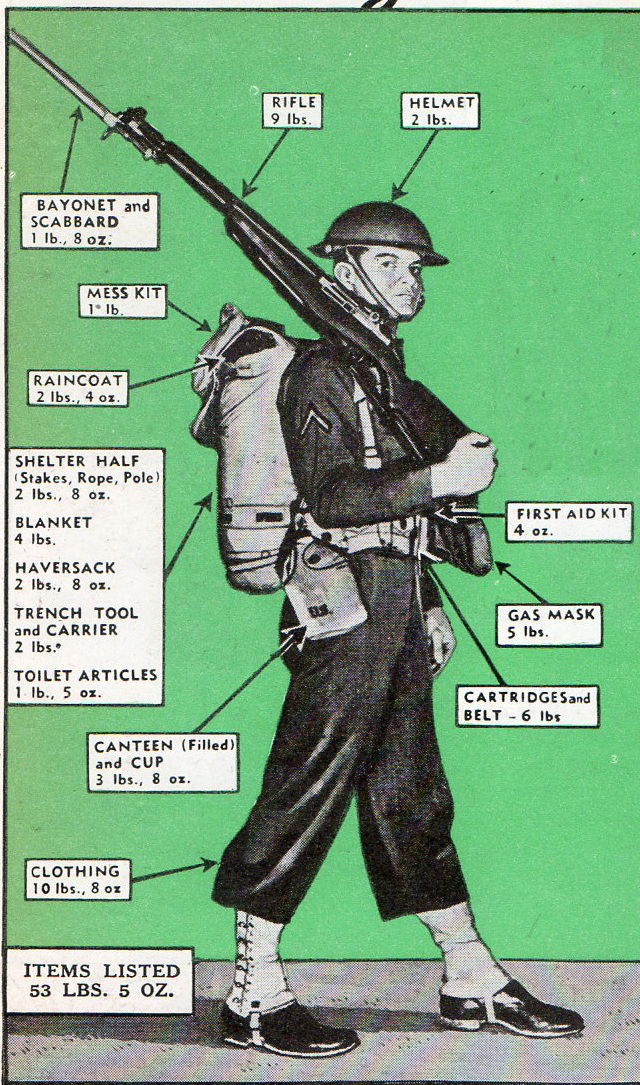
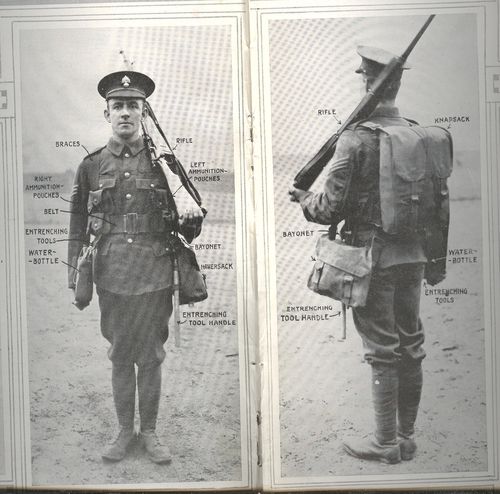
    Earlier in blog I wrote a post (“Things They Took to War, 1915“) about what the soldiers of the U.K. carried into battle.  In many ways it was inspirational and heartbreaking to see what there soldiers marched off with to meet their fate.  I’ve stumbled into another visual record like this, though this time for the U.S. just before our involvement in WWII, appearing in the July 1941 issue of Popular Mechanics.  

    WWII SOLDIER GEAR993

    I reckon that this soldier weighs 148 pounds. which means that his gear amounted to about a third of his body weight.  I suspect that one of the first things these soldiers learned was what they actually needed to carry, and how to make whatever that was to be quiet and non-reflective. Of course this gear would change in about six months, and change again shortly after that.  

    • For example this private was using the M1917 helmet, which would within months be replaced by the steel M-1 helmet–over 22 million of these helmets would be made by September 1945.
    • That’s a lot of helmets. End-to-end in a line they’d stretch from NYC to L.A. and halfway back. On the other hand that number represents about 1/3 of the total war dead in WWII.  

    The outfitted solider of the British Army, 1915:

    Blog jan 30 infantry center btm

     (“Things They Took to War, 1915“) 


  • (Fashionable) Fireproof Bombwear for Air Raids, 1941

    JF Ptak Science Books  Quick Post

    In the heat of the Battle of Britain (September 7,  1940 to May 21, 1941) a contribution was made to the women of the U.K. by Mrs. Frances Ruskin of NYC–well, sort of a contribution, or at least a suggestion of something bearing some resemblance to camaraderie.  “Light and dark colored air raid suites”, with adjustable hoods and deep pockets outfitted with blast plates, and made “fireproof” by a “treatment” from du Pont.  This short note appeared in Popular Mechanics in May, 1941.  

    Fireproof clothing992 detail

    ·Posted by :

    ·in:


  • Pause-Giving Photographs of Artillery Shell Vastness, ca. 1917

    JF Ptak Science Books   Quick Post

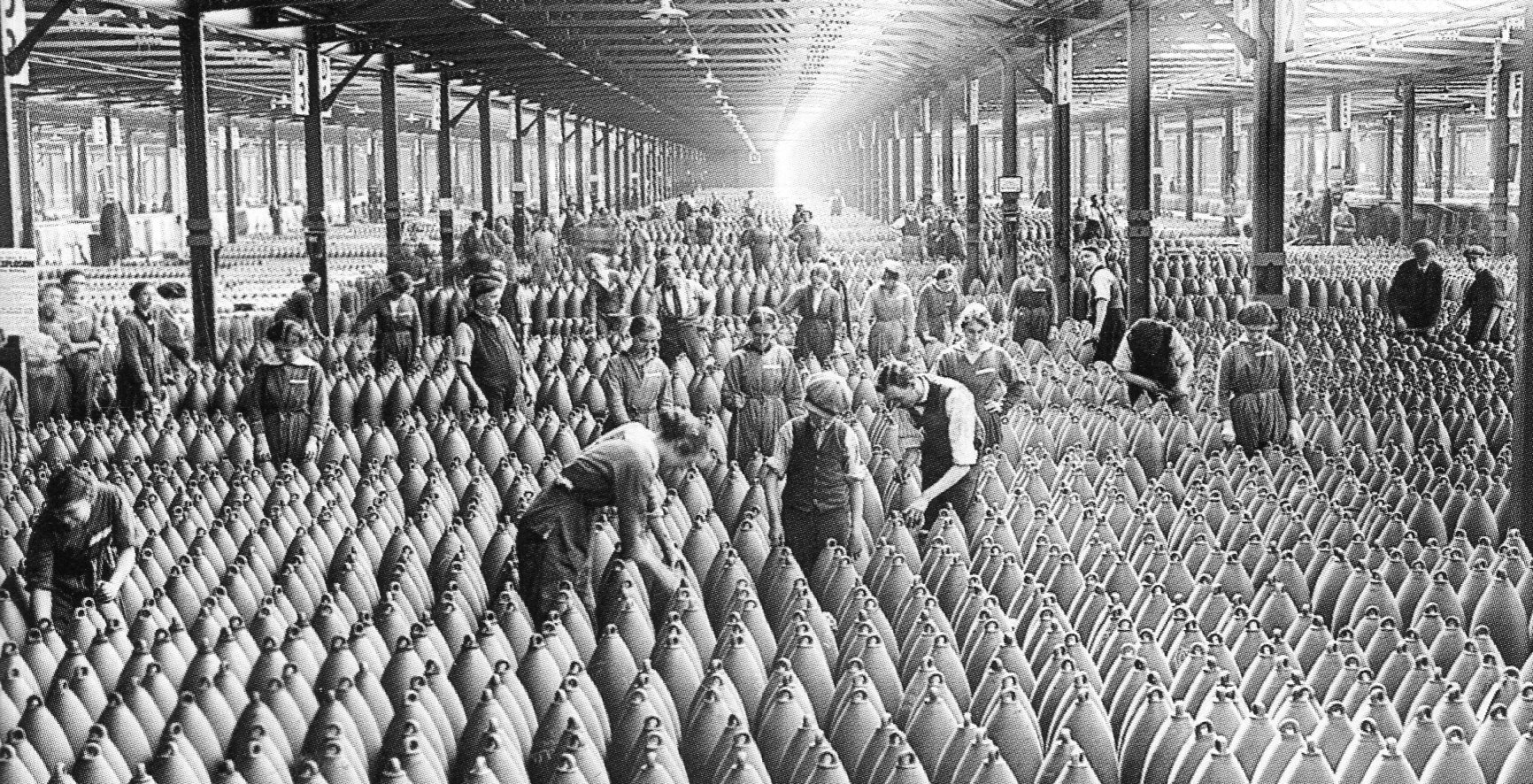
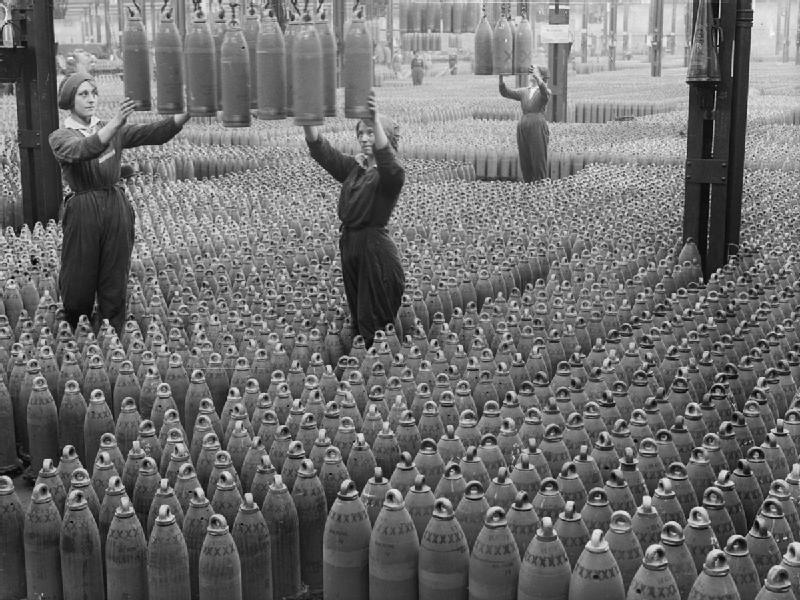
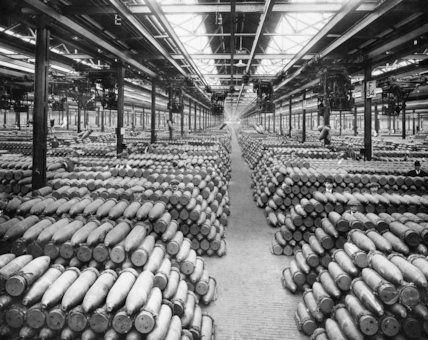
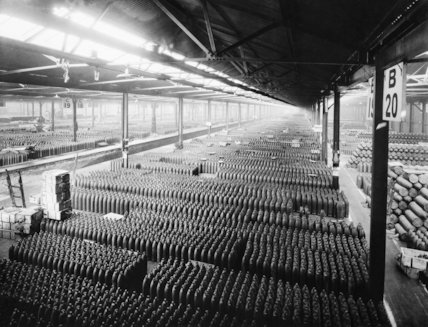
    Shells as far as the eye can see, at the National Filling factory at Chilwell, Nottinghamshire. Even though I enjoy calculating estimates at vast quantities of things (like all of the life that has existed on Earth, from multi-cellular onwards, how many Legos it would take to build a Dyson sphere around our Solar System, what distance the Enterprise has covered under the command of Capt Picard, that sort) I really can’t get a comfortable picture of the vastness of this factory to estimate the number of pounds of explosives under that roof.  

    Given that the factory produced about 19 million shells during WWI, I think it would be a safe guess that some 1 billion pounds of explosives were processed through the factory–and perhaps several billion.  But it is difficult to say what we are looking at in these photos, except to say that the number is “big”.

    WWI shells979[Source” John Hughes-Wilson, The First World War in 100 Objects, Firefly Books, 2014.  

    WWI shells canary girls[“Female munitions workers guide 6 inch howitzer shells being lowered to the floor at the Chilwell ammunition factory in Nottinghamshire, U.K.”–Source: “British official photographer : Nicholls, Horace – This is photograph Q 30040 from the collections of the Imperial War Museums.”]

    WWI shells nottinghamshire

    [Source: http://www.iwmprints.org.uk/image/1100193/milner-e-the-interior-of-the-filled-shell-store-at-the-national-shell-filling-factory-at-chilwell-nottinghamshire-15-may-1917]

    WWI shells long hall

    [Source: http://www.iwmprints.org.uk/image/1100192/milner-e-shells-awaiting-filling-with-explosives-in-a-store-of-the-national-shell-filling-factory-at-chilwell-nottinghamshire-21-november-1916]


  • Underground Airports, 1935-1941

    JF Ptak Science Books  Quick Post

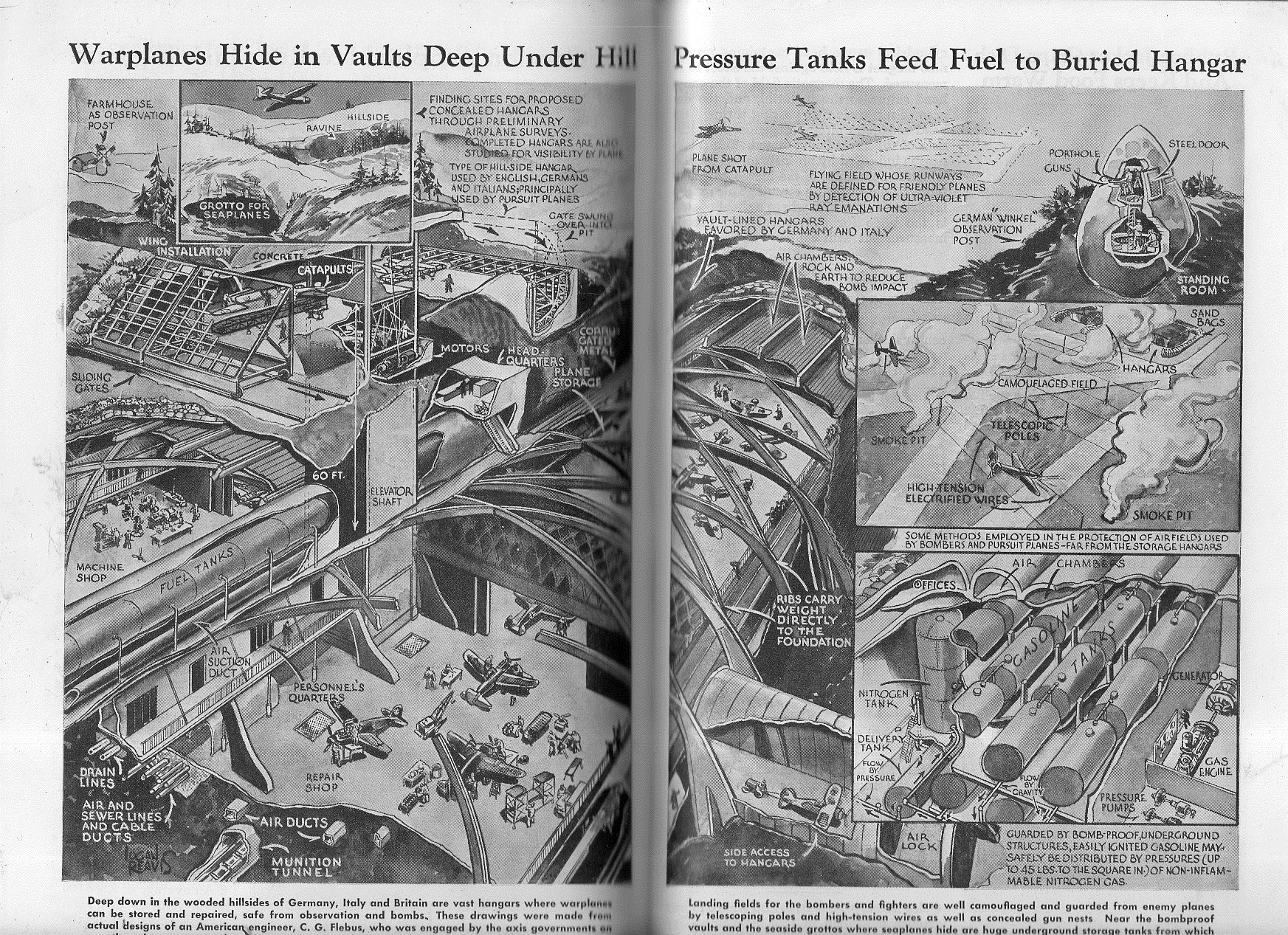
    I’ve seen a number of plans from the 1925-1935 period calling for skyscraper-topped airports, and airports built over a largely cover-ed themes, and over a covered-up Central Park, and floating in NYC harbor, and so on. I have not seen too many future visions of underground airports. This plan appears in Popular Mechanics for June 1941 and advocates a very tightly controlled underground environment for airports.  The war in Europe was nearly two years old at this point, and the bombing war from the air was very advanced. There is little doubt that all sorts of plans were being considered to protect air force complexes from bombing, though something of this scale, dealing with so few number of plans, could hardly have made it further than this public outing.) 

    Cross section under groun air908

    [Image is expandable]

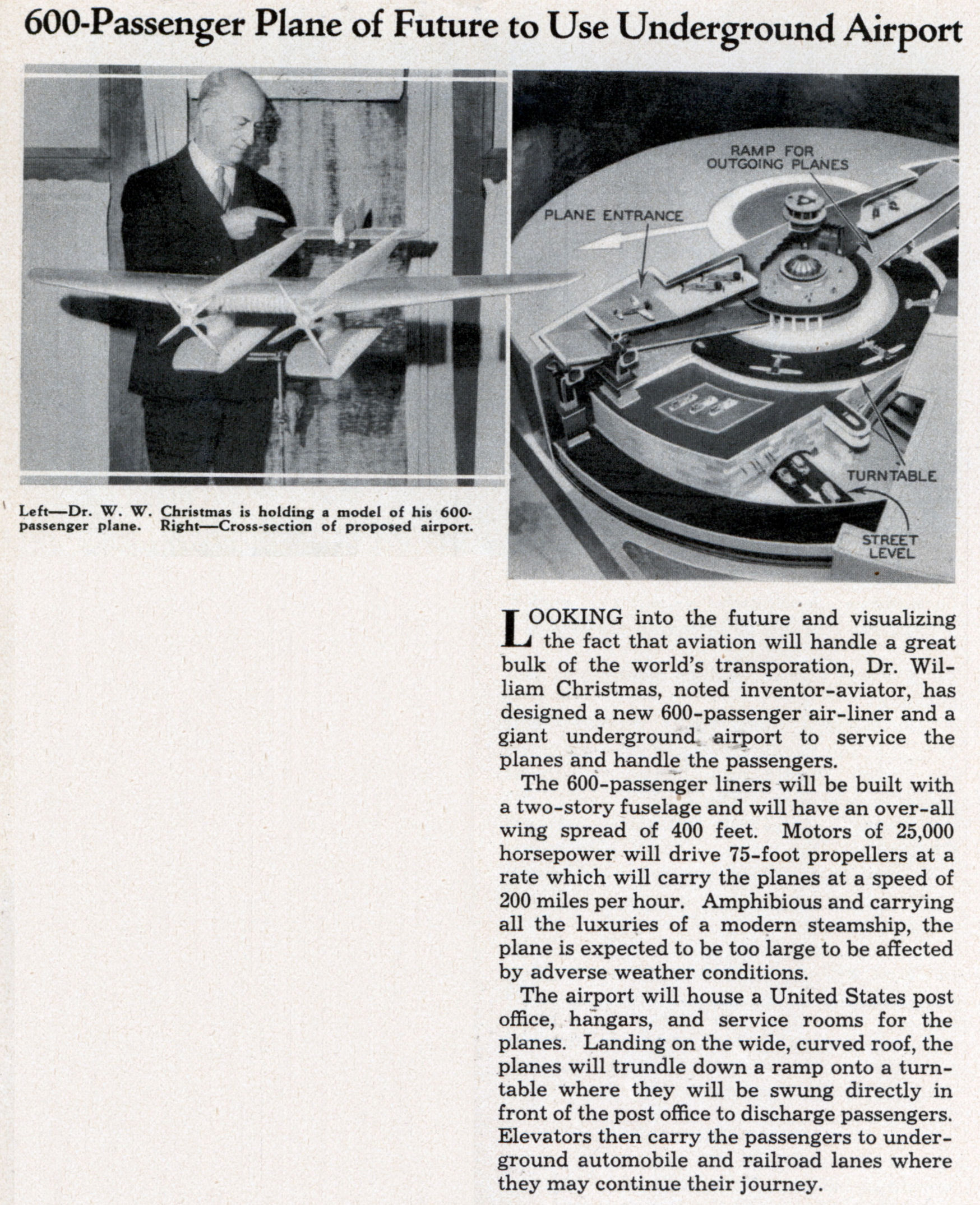
    An earlier and peace-time example of underground tech is found at the great Modern Mechanix blog, and features an April 1935 article in the journal of the same name an effort to remove the airport underground.  Dr. William Christmas is the chief major domo in the piece and he is depicted with his visions of flight of the future,  holding a model of his 400′ 25,000hp plane with 75′ propellers set to cruise at 200 mph.  The monster could not be accommodated by the plans for an underground airport at right, which frankly looks like a hard drive, and which seems like a positively enormous amount of engineering for a spinning platter underground airport with room for eight planes.  

    Underground airport

    [Source:  Modern Mechanix, http://blog.modernmechanix.com/mags/ModernMechanix/4-1935/under_air.jpg]


  • Preparing for the Possibility of the Invasion of the U.K., 1941

    JF Ptak Science Books   Quick Post

    Panic (publish in London in 1941) was a slim pamphlet containing the experiences of two British ambulance drivers working in France during the invasion by the Nazis in 1940.  They reported on their experiences there, which were grim. The major lesson that C. Denis Freeman and Douglas Cooper published was in the one-word title of their work–panic. They found that the French population in general reacted very badly–in a panic–in their response to the invasion. They found “the awful truths” that the population crowded roadways and made it difficult for the French army to maneuver, and also confounded efforts at organized resistance. 

    Panic879

    The lessons were learned in 1940, and I am sure that in the process of writing and publication through the end of 1940 and beginning 1941 that the general fear in the U.K. of a possible invasion by Germany had dissipated.  But the lessons were there to be learned, and Harold Nicholson (the the Minister for Information) declared that the lessons of France could be applied to the U.K.–namely that in the event of invasion that people should “STAY PUT’ and not block the roads.  Simple stuff, really, but mostly “simple” post facto.  

    [My copy was received by the Library of Congress on 8 August 1941, just a little beyond when the pamphlet could have done some better good…]

    ·Posted by :

    ·in:


  • Multiple-Maginot and the “Floating Wall of Fire” (Romania, 1940)

    JF Ptak Science Books    Post 2430

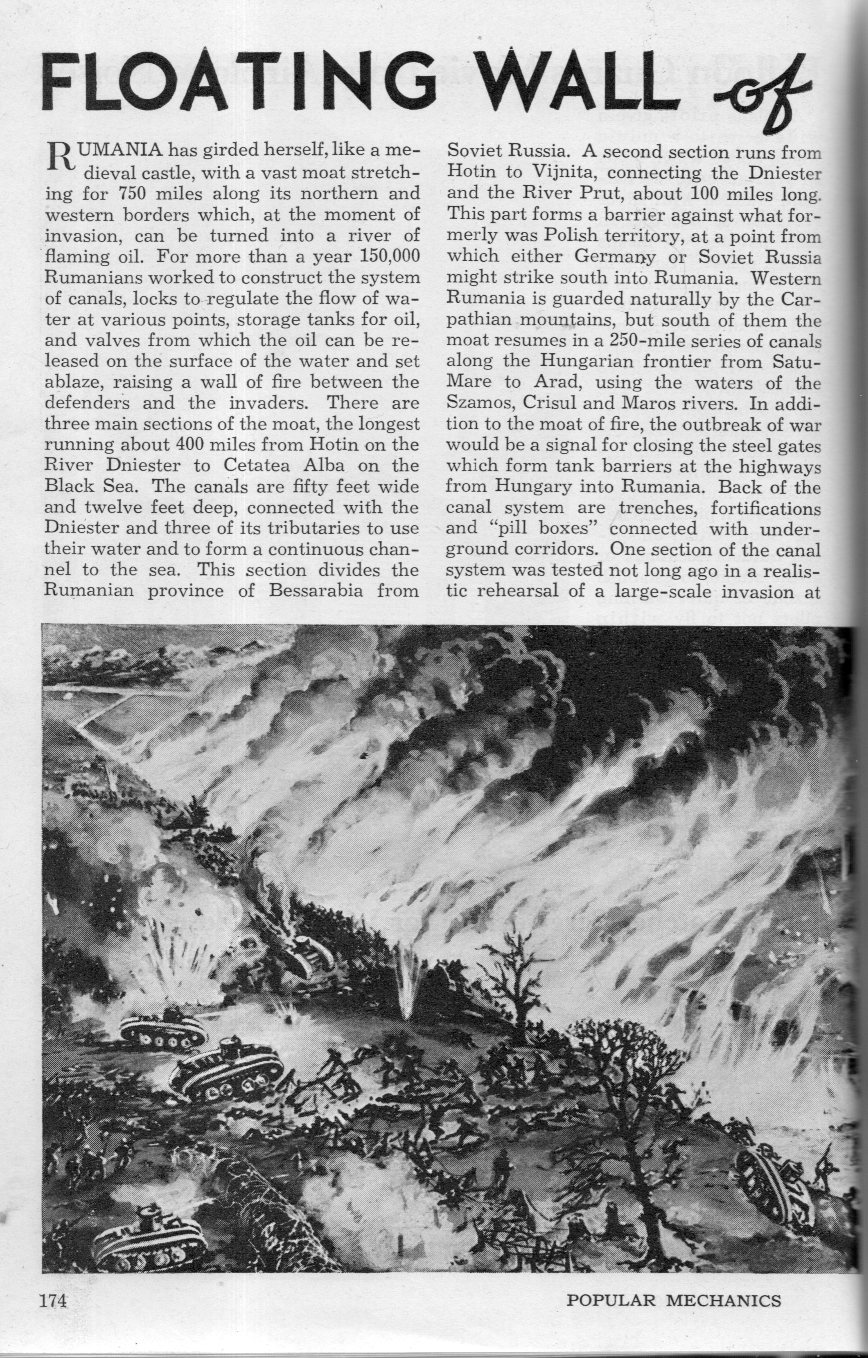
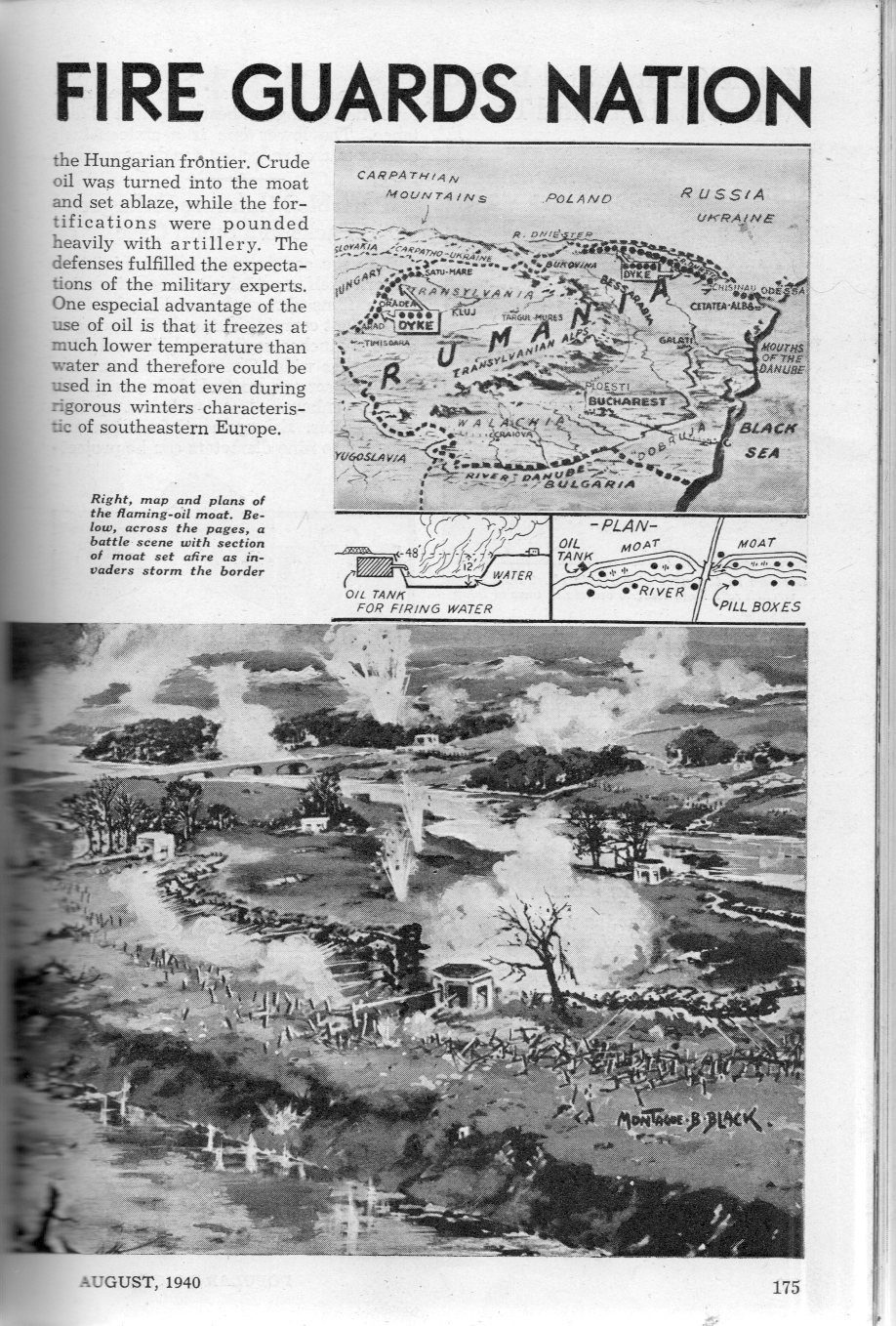
      Fire wall872Fire wall871

    In August 1940 Popular Mechanics reported on another example of cloudy thinking on the coming world of warfare–the “Floating Wall of Fire” of Romanian defensive consideration.  The article tells the story of how Romania “girdled itself, like a medieval castle, with avast moat stretching for 750 miles….which, at the moment of invasion, can be turned into a river of flaming oil”.  The canals which make up this open-pit Maginot line were 50′ wide and 12′ deep, the longest of them running some 400 miles, the combined efforts of the big dig meant top protect the country from invasion from Hungary, Poland, the Soviet Union, Yuoslavia, and Bulgaria–and of course from Germany which at the time could advance from a number of different positions.  There were also hundreds of gun emplacements facing the pit, I guess to fire on whomever if they decided to try and break through/over the moat, which would have been flooded with crude oil and set ablaze when invasion occurred.

    The problem of course was that even a year after the Blitzkrieg in Poland with the combined assault by land/air forces the lesson had not been learned here–unless of course the flames were 20,000′ high.  And obviously the river of fire would last only so long–depending on available amounts of crude oil I wonder how long they determined the wall of fire could be maintained?  A day?  A week?  (I know that from controlled burns of oil spills that in one case some 16,000 barrels of floating oil was burned off in a controlled burn in about four hours–it seems to me that if there was an invasion front that was miles wide and striking at numerous point along a 100-mile front that…well, the problems are obvious.)

    Could anyone have expected an invasion force to arrive and then once confronted by a burning moat turn back and retreat?  

    In spite of fulfilling expectations during a “rehearsal of a large-scale invasion”, it seems very highly dubious that anyone could really have been comfortable with the first line of national defense being fire in a long hole.  

    [It should be mentioned that after the once-neutral-ish Romania settled into its relationship with the Axis that the worst single-mission air losses for the U.S. Army Air Force occurred in the bombing of petroleum facilities in the area of Ploiesti, Romania, on 1 August 1943. In an unsuccessful attempt to damage the flow of petroleum to Axis forces, Operation Tidal Wave targeted this location but with devastatingly bad consequences, with 53 aircraft and 660 servicemen lost in the action.]