A Daily History of Holes, Dots, Lines, Science, History, Math, Physics, Art, the Unintentional Absurd, Architecture, Maps, Data Visualization, Blank and Missing Things, and so on. |1.6 million words, 7500 images, 4.9 million hits| Press & appearances in The Times, Le Figaro, Mensa, The Economist, The Guardian, Discovery News, Slate, Le Monde, Sci American Blogs, Le Pont, and many other places… 5000+ total posts since 2008.

Category: Militaria

  • Help China! (1943)

    JF Ptak Science Books  Quick Post

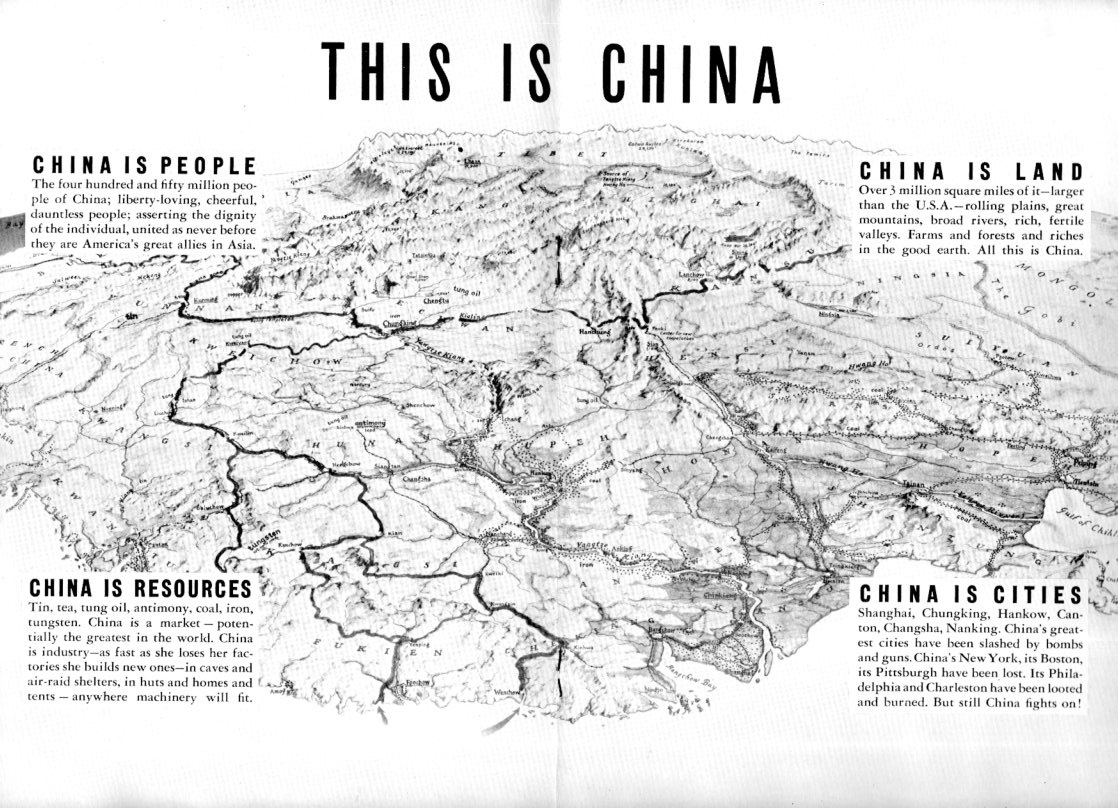
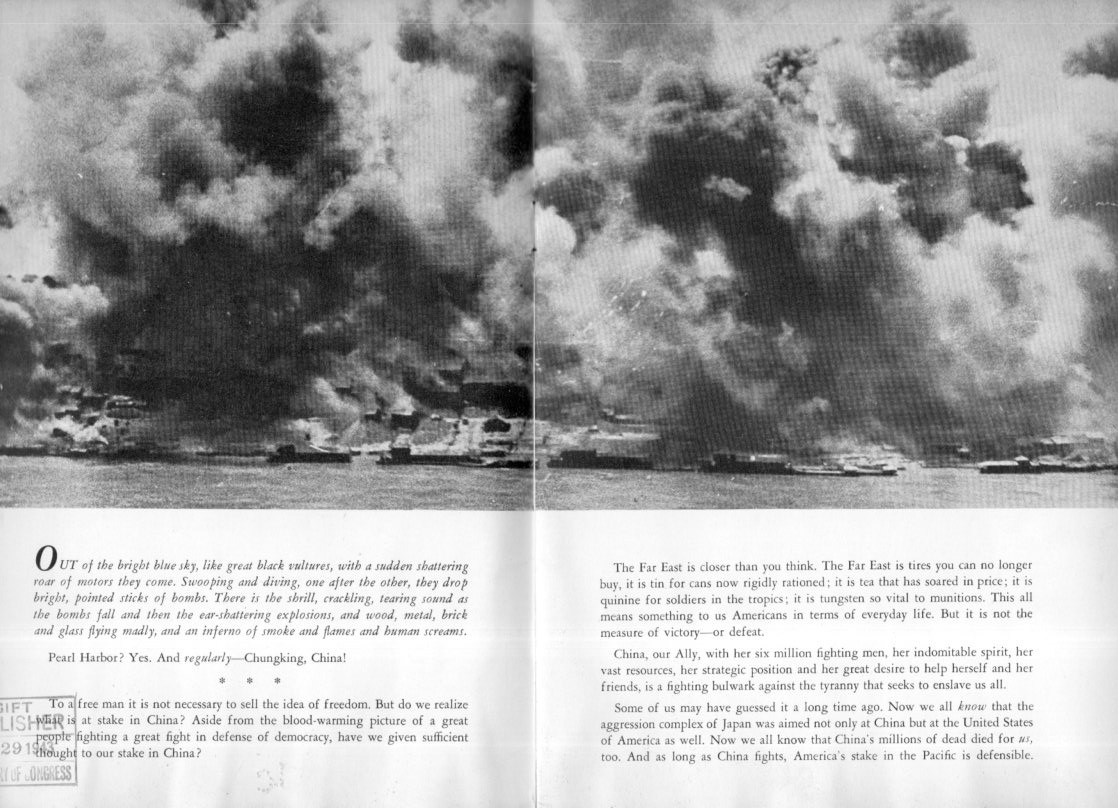
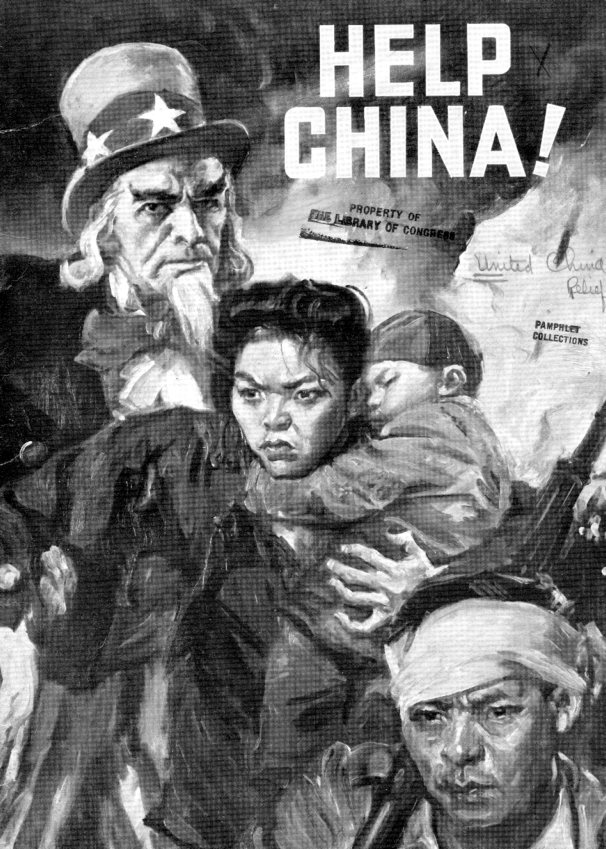
    I was looking through my pamphlet collection of Uncle-Sam-on-the-Cover and noticed this one:

    Help China!129

    This is distant to our relationship with China today, but in 1942/3 China was already embroiled in a war with Japan since 1937 (and actually a good ten years before that of Japanese intervention).  In the Second Sino-Japanese War there were more than a million soldiers killed on each side, more so than that wounded–plus an unbelievable 20+ million Chinese civilians were killed.  

    Uncle Sam looks pretty grim here–the Chinese family is battered, and angry, and resolute.  The artist here is the old hand James Montgomery Flagg, and the appeal and impact is very strong.

    The pamphlet was an attempt at raising money for the desperate situations in China, and reminds the U.S. that China’s role in the war int he Far East was of utmost importance.

    Help China!130

    Help China!131

    [Source:  China, a Brief Study of the Chinese…our Allies and Friends, published by United China Relief, New York City, (1942 or 1943).  20pp, illustrated.]

    ·Posted by :

    ·in:

    —

  • Scarce Report on the Attempted Assassination of Hitler, July 20 1944

    JF Ptak Science Books   Post 2518

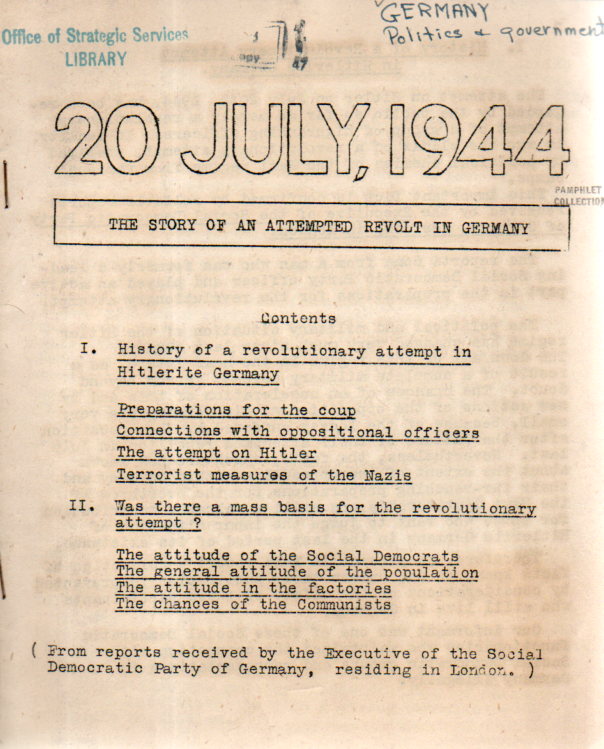
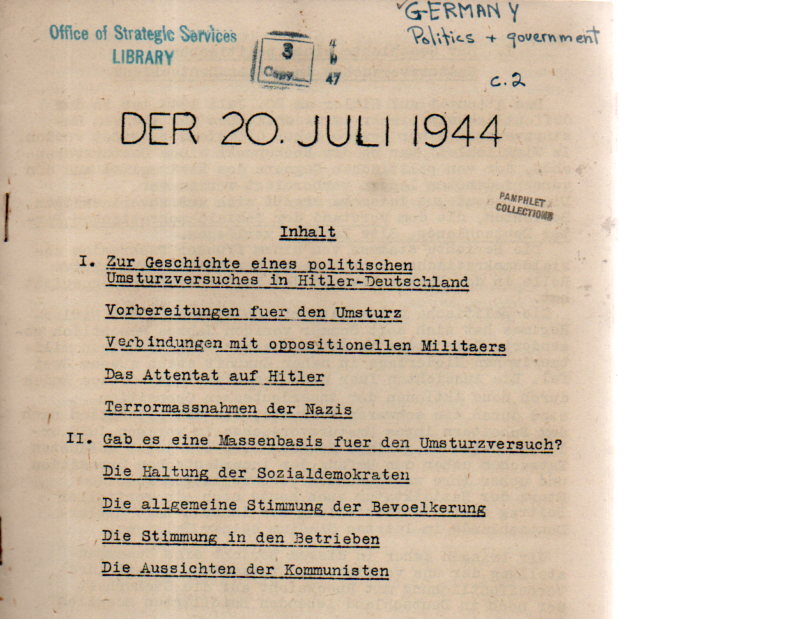
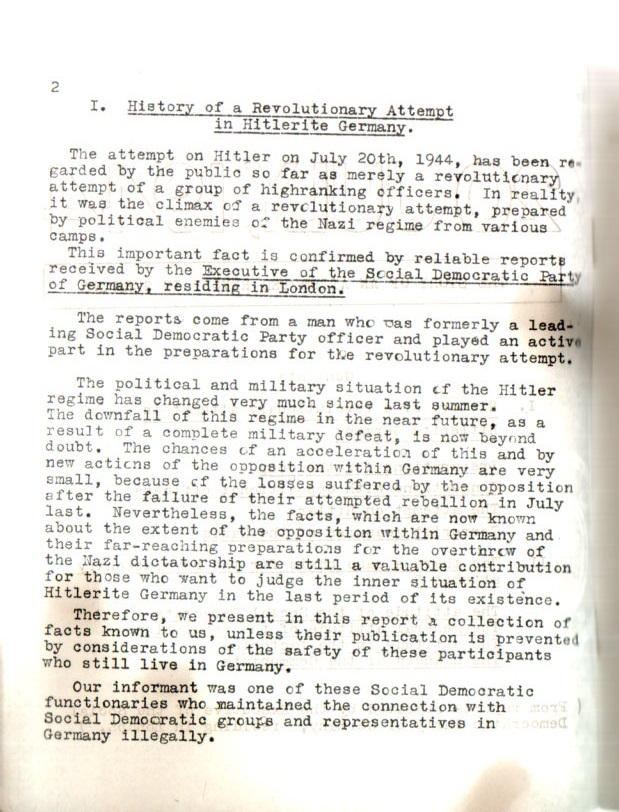
    Hitler 20 July 1044113Here’s a not-often-noticed (and seemingly not reproduced) report on the assassination of Adolf Hitler (and attempted coup)  on 20 July, 1944.  It is recorded as the work of Carl Lindauer (see below) and was published by the Social Democratic Party of Germany “residing in London” in 1944/5.  I’ve reproduced the entire short document below (the original being available at the blog’s bookstore, here.)

    20 July, 1944: The Story of an Attempted Revolt in Germany; (from Reports Received by the Executive of the Social Democratic Party of Germany, Residing in London), by Carl Landauer  German Social Democratic Party, London Representative, 1945

    [Reference: Deutsche National Bibliothek https://portal.dnb.de/opac.htm?method=simpleSearch&cqlMode=true&query=idn%3D1002488478]

    This pamphlet is scarcely-held in libraries–it is in the collections of the London Metropolitan Library, the Bibliothek der Friedrich-Ebert Stitftung, Deutsche National Bibliothek, and perhaps (though this is unclear) in the Library of Congress and perhaps at the Hoover Collection at Stanford.  These two copies (in English and German) were previously in the library of the OSS (the precursor to the CIA) and then in the Library of Congress Pamphlet Collection, until coming here.  

    The German version is not located at all in WorldCat/OCLC.  

    • Apologies for the unevenness in the scans–the original is difficult to get on the scanner without damaging it, so the colors are a little “off”.  

    Hitler 20 July 1044127


    Hitler 20 July 1044114


    ·Posted by :

    ·in:


  • Air Raid Instructions, Westminster, 1941–With Videos

    JF Ptak Science Books  Quick Post

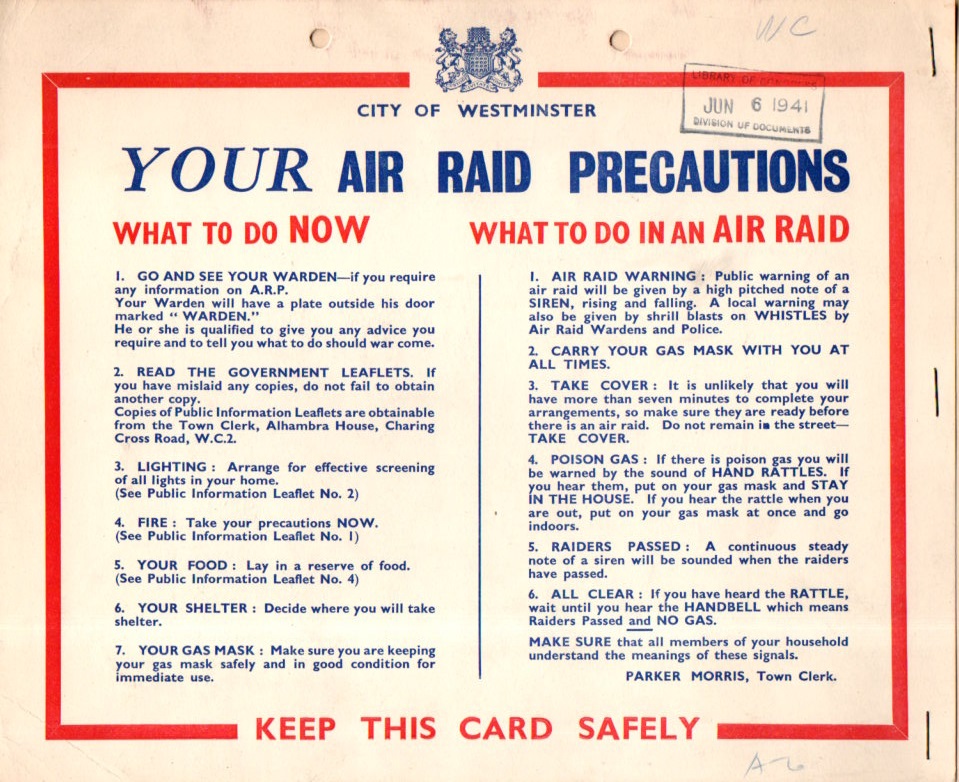
    I recovered this sample Air Raid Precaution poster from a box of WWII material, received by the Library of Congress on the very day that many historians declare to be the very end of the Blitz.  Of course the poster was printed earlier, collected in this case by the OSS and put in a folder and then sent off to the Library of Congress.  

    WWII Air Raid Precaution068

    It is a remarkably level-headed document, clear and concise, very stiff-upper-lip.  And these posters were very necessary, as we can see by the map following: 

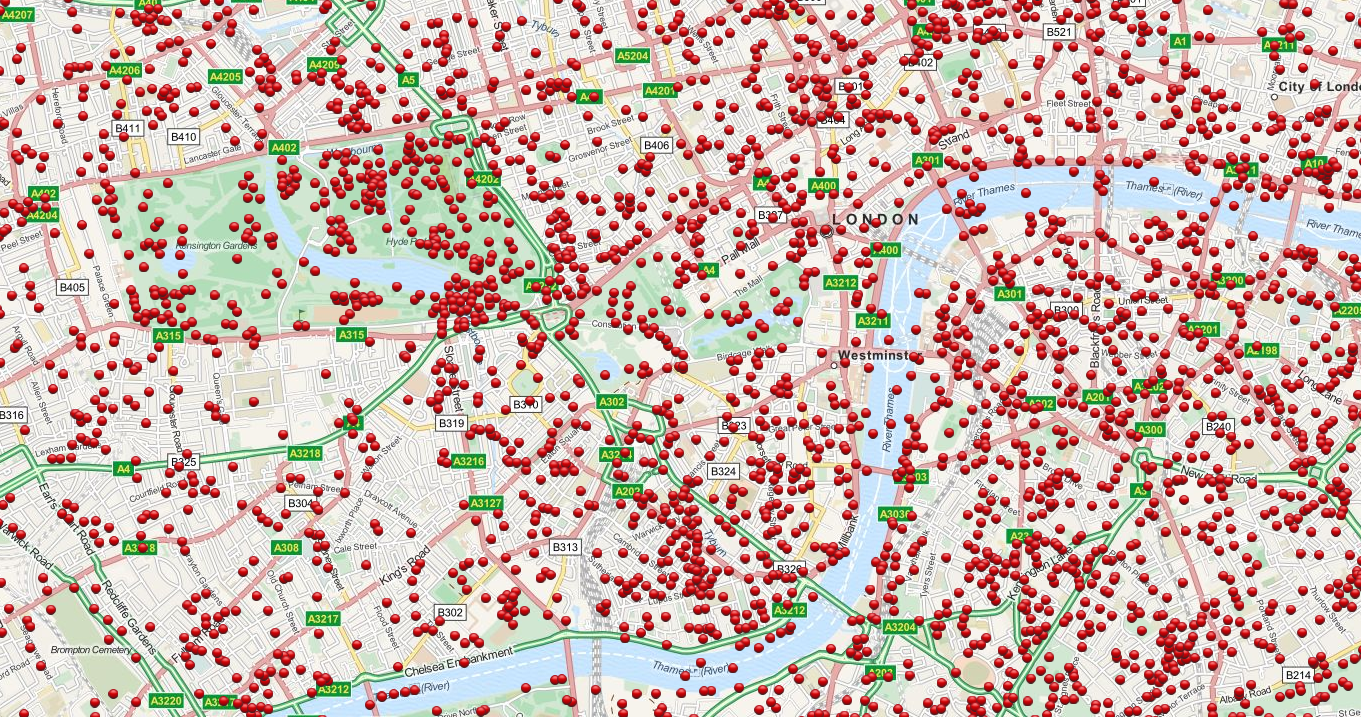
    WWII Bomb Map London

    This incredible story (centered on Westminster) is a detail from an incredible (and interactive) map showing every bombed dropped by the Germans on London during the Blitz  7th October 1940 to 6th June 1941 [Source:  http://bombsight.org/?#14/51.5005/-0.1281]

    The following are instructional newsreels (all found on youtube) about what to do in an air raid (1940), while the second demonstrates the sounds of the air raid sirens discussed in the document above, and the third is a short history of the Blitz:


    Ource: https://www.youtube.com/watch?v=mHep5WA9qqU


  • Curious: *Two* Copies of a Quasi-Unique Work?

    JF Ptak Science Books   Quick Post

    I was cataloging some WWI material today and came across this book–again.  I thought I had placed it in with the early mimeograph/reprographic materials but then there it was, with the WWI pamphlets.  But then it struck me that I had seen it in that mimeo collection–and so I decided to check out my associative memory and, oh weird joy of weirdness, there was another copy of the work. Generally this would be rather uncommon with my stock since so much of it is really fairly obscure and scarce, but this one is exceptionally odd because it seems already to be near-unique.  

    The book is History of the Second Division (Regular) AEF. Text. -AND- History of the Second Division (Regular) AEF, Notes., and reads “Copyright 1936, The Second Division Historical Committee, Major General Preston Brown, Chairman”.  The work stands in two tall (13.5×8″)  volumes, a chunky 282+156pp; each page contains about 550 words, giving the work a length of about 250,000 words.   

    This is evidently an earlier version of a work that would be popularly published in 1937 as the The Second Division, American Expeditionary Force in France, 1917-1919, by J.W. Wright (text) and Oliver L. Spaulding (Notes), as the work above and this share the same copyright number. The authors are not identified in this work, and for its year of publication there are no copies located in the OCLC/Worldcat.  


    ·Posted by :

    ·in:

    —

  • A Map of Judgment: Nuremberg, 1945/6

    JF Ptak Science Books     Post 2510
    Nuremberg049detail


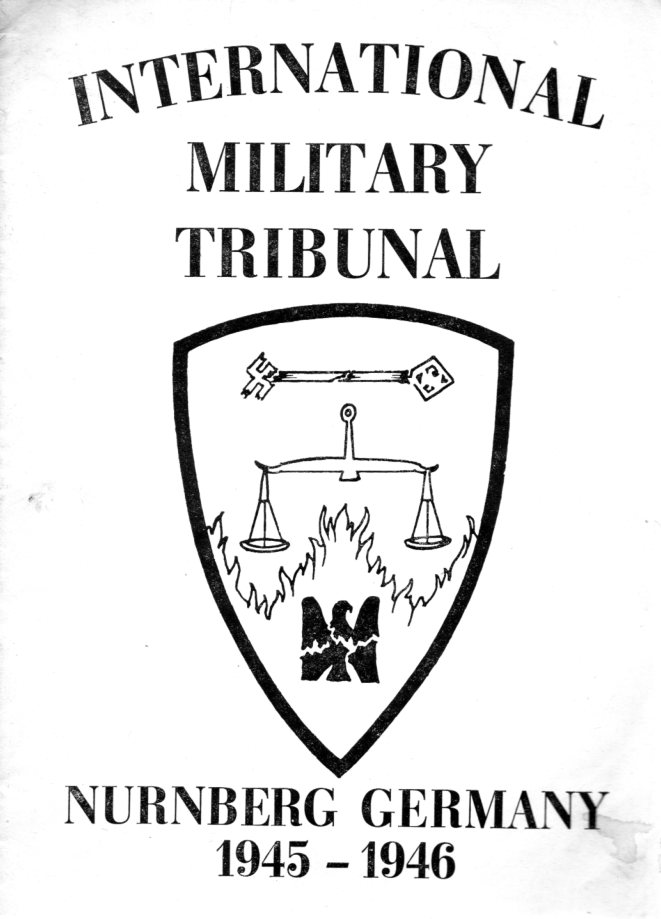
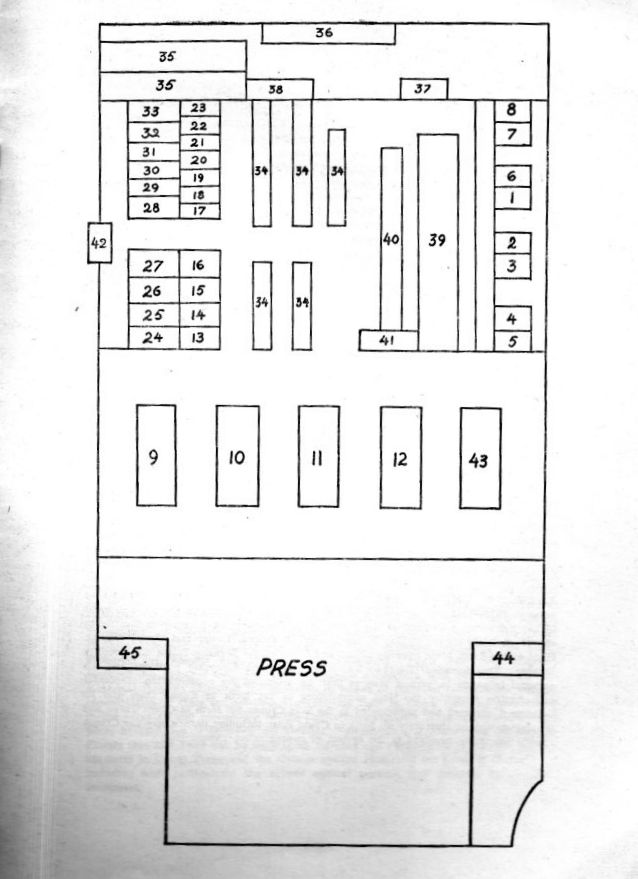
    Nuremberg048In all of the reading that I have done about WWII, I haven’t done that much on the war crimes trials and tribunals afterwards, save for Goering, Schacht, and several of the companies/industries like I.G.Fraben–still, I think I’ve never seen a diagram of the seating arrangement at Nuremberg.  But here one is, in this small pamphlet introducing the International Military Tribunal printed by military order in 1946.  

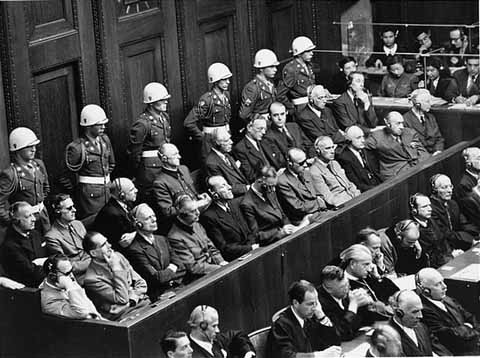
    We have all seen images from the newsreels shown in documentaries, which seems to give the physical auditorium a rather large feel–with this diagram, and seeing how closely the accused Nazis sat next to each other, the proceedings looked as though they took place in a rather not-large space.  


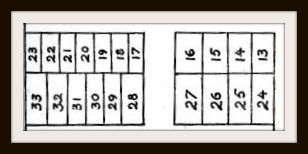
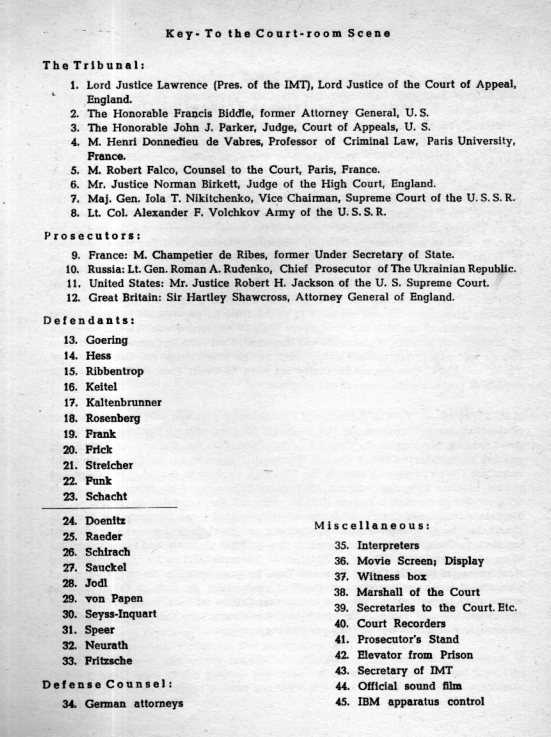
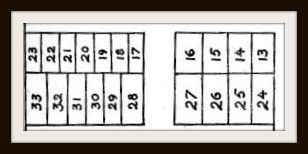
    More to the point though is the detail which I’ve segregated above.  These are seat assignments along benches for  the Nazis being adjudicated for war crimes.  The diagrams make the seating arrangements look segmented, by they are not. (The key to the seating arrangements is reproduced below.)

    There are 21 names associated with those space, 21 of the most infamous names in the Nazi regime; 11 would receive the death penalty; 3 would receive life, 4 would receive various sentences of 10-20 years, and 3 would be found not guilty. 
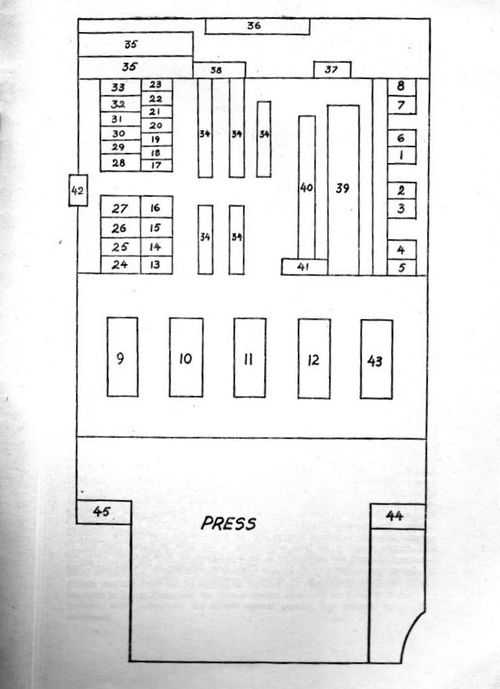
    Nuremberg049

    For the record, and in order as they appear on  the list below:  Goering, death; Hess, life; Ribbentrop, death; Keitel, death; Keltenbrunner, death; Rosenberg, death; Hess, death; Frick, death; Streicher, death; Funk, life; Schacht, noty guilty; Doeniotz, 10 years; Raider, life; von Schirach, 20 years; Saukel, death; Jodl, death; von Papen, not guilty; Seyss, death; Speer, 20 years; Neurath, 15 years; Fritsche, not guilty. 
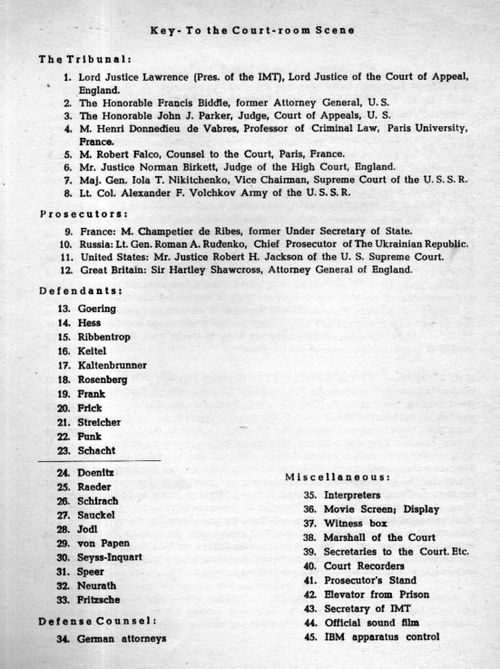
    Nuremberg050

    Here’s a photo of the seated group from above, Goering (#13) is seated at bottom left center, head in hand.  He would soon be dead by his own hand.  
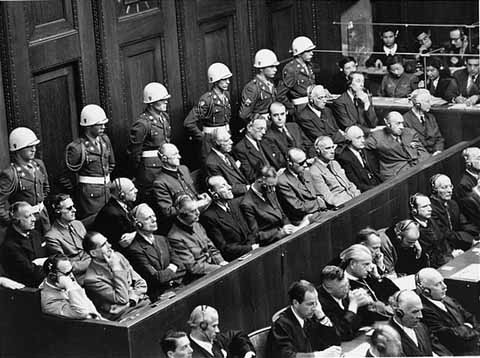
    Nuremberg photo

    [Source:  https://www.jewishvirtuallibrary.org/jsource/Holocaust/nurtrialtoc.html]

    I’ve not had anything to say about the Nuremberg Trials ebcause I think that everyone coming here already knows enough about them to appreciate this “map”.  


  • More Woolwich Heavy Stuff (1879)

    JF Ptak Science Books   Quick Post

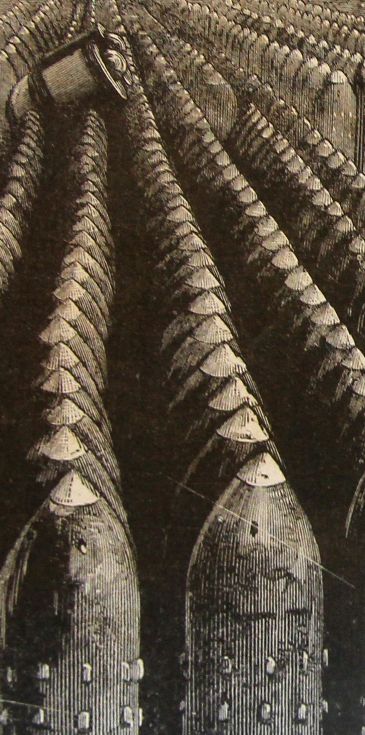
    Woolich shells detail

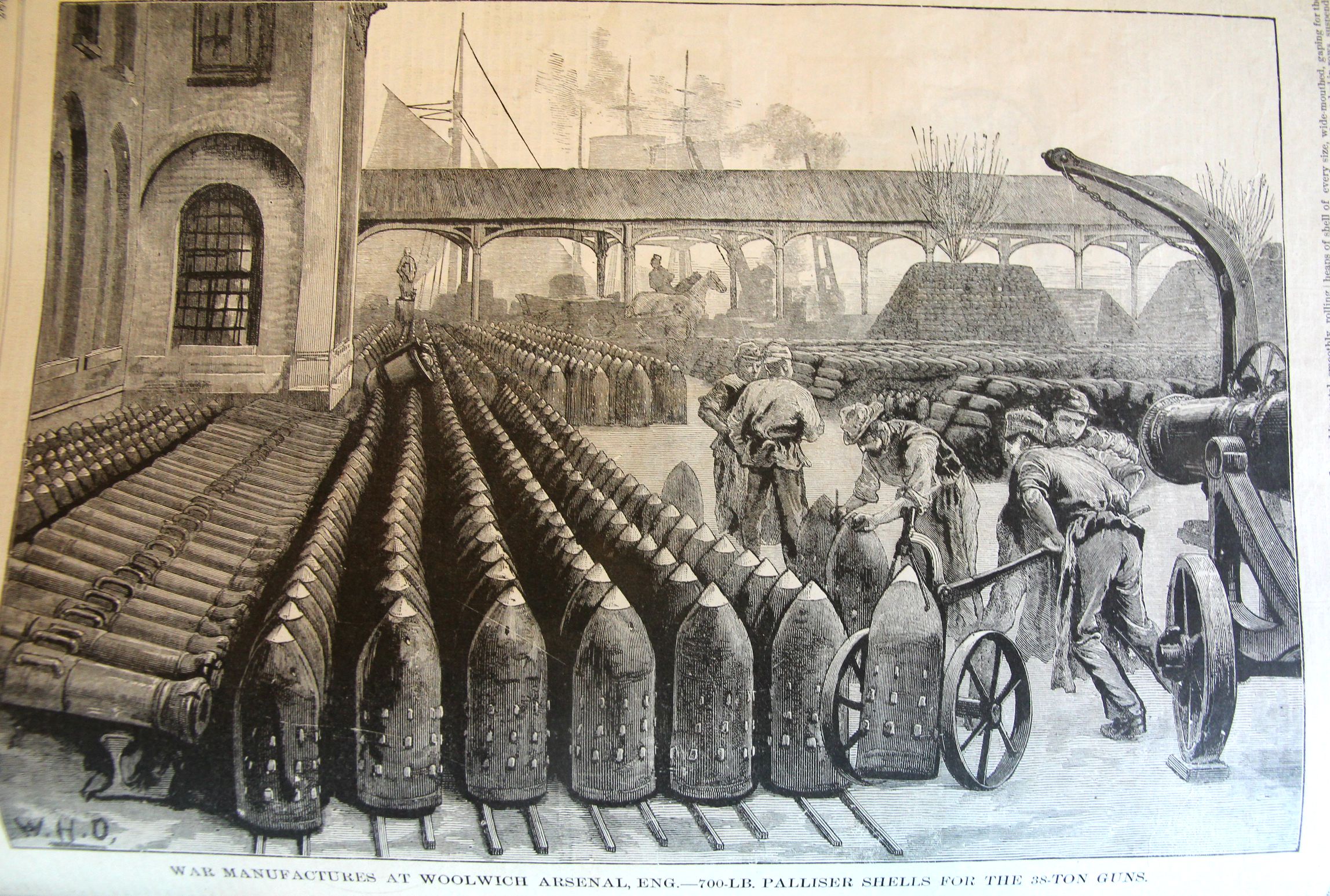
    [Detail of image below: “War Manufactures at Woolwich Arsenal:  700-lb Palliser Shells for the 38-ton Gun“.  Source: Scientific American Supplement, June 1879.]

    I’ve written earlier on this blog on the Woolwich works (“Very, Very Heavy Metal–the Woolich Infant, 1876″) that touches on some very heavy artillery, superior monsters all, with the “Infant” in question being an 80-ton gun. That came to mind seeing this big full-page engraving in Scientific American of Woolwich in 1879 and this stationary parade of potential of  death and destruction (and we’re glad to have them on our side) 700-lb shells.  That’s Sir William Palliser shells, which were manufactured as armor-piercing, and intended to do major damage to armor-plated warships–hyper-damage, actually, considering the 410-pounder in this variety was very highly effective.  This shell was just an absolute brute. 

    This is a detail from:

    Woolwich arsenal 700


    [Apologies for  the waviness–the book is very large and getting it to lay flat was not really a consideration.]


  • Tired, Wounded, and Underground (1917)

    JF Ptak Science Books   Quick Post

    See the WWI Photography section for more images and for an explanation of the source of the photographs.

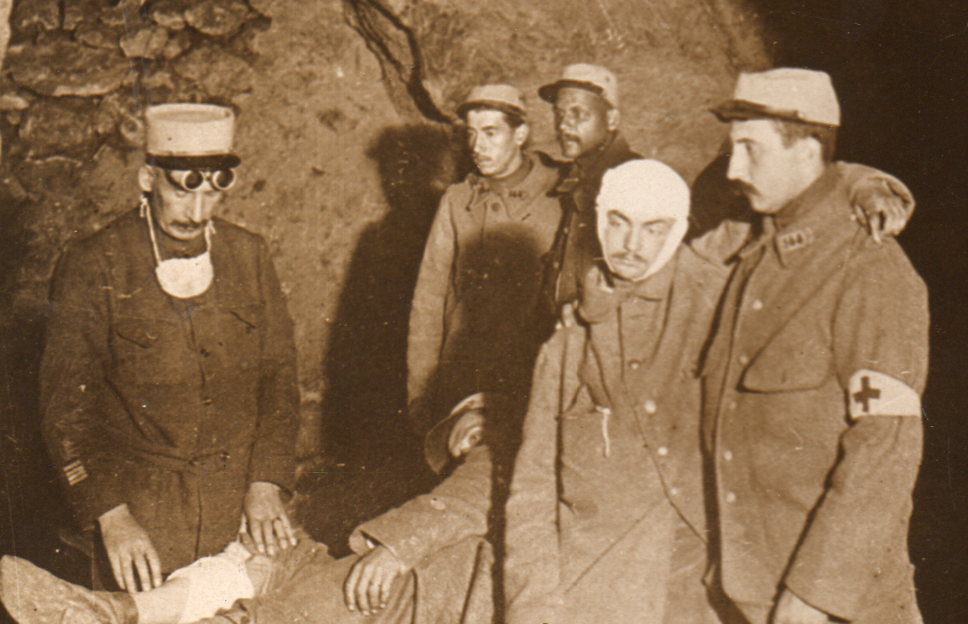
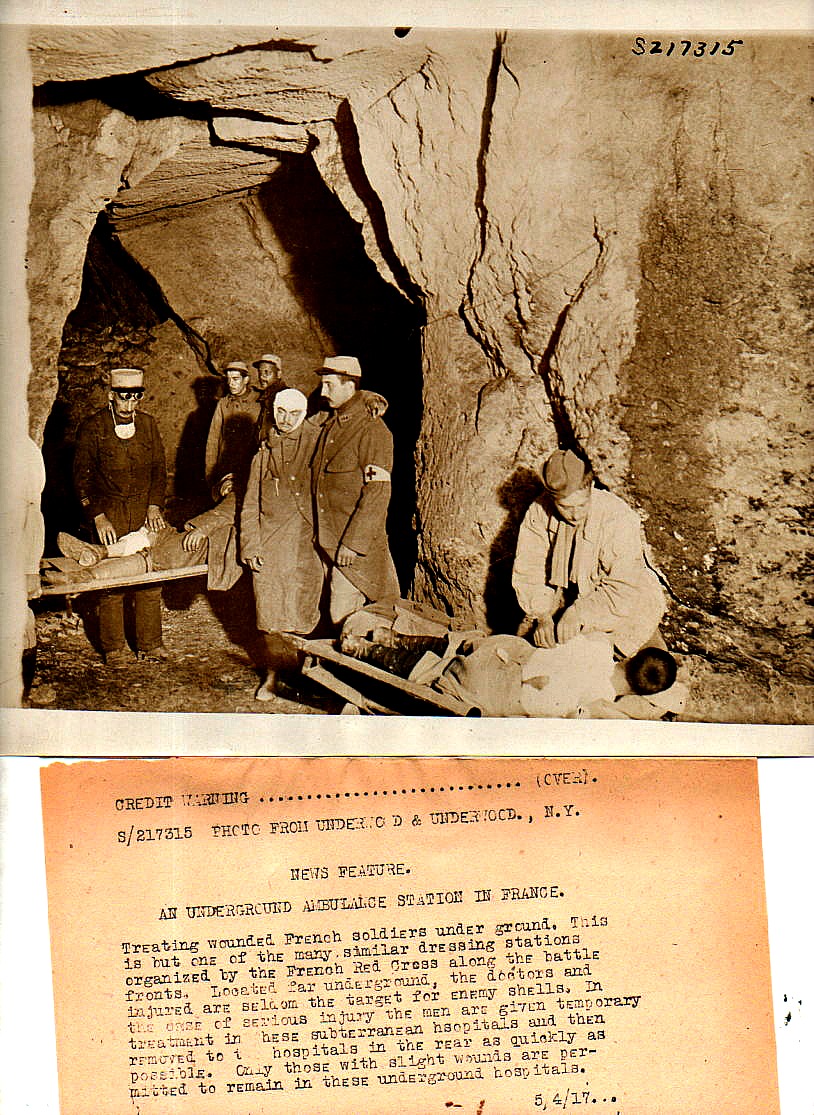
    This is a photograph of an aid station somewhere along the Western Front, 1917. Given the amount of digging going on throughout the course of the war, with the construction of hundreds of thousands of miles of trenches, and then the sapper war to tunnel underneath the tunnels and so on, it is quite possible that this underground shelter was dug out by hand. This is also an insight to the duration of some of those battles–to construct such a station impervious to possibly semi-continuous bombardment meant that the lines of battle were static, with many of the major engagements of hundreds of thousands of soldiers lasting for months, and in some cases, years. 

    The expressions here are difficult, and difficult to actually recognize as anything that isn’t exhaustion. There is a lot of “blankness” in the faces, a deep weariness.  

    WWI Photos--underground  hospital189

    This scene is a detail from the larger and full image (which is also for sale at the blog’s bookstore, here):

    WWI Photos--underground  hospital188

    ·Posted by :

    ·in:

    — —

  • What Did Sailors in the U.S. Navy Make in 1820?

    JF Ptak Science Books  Quick Post

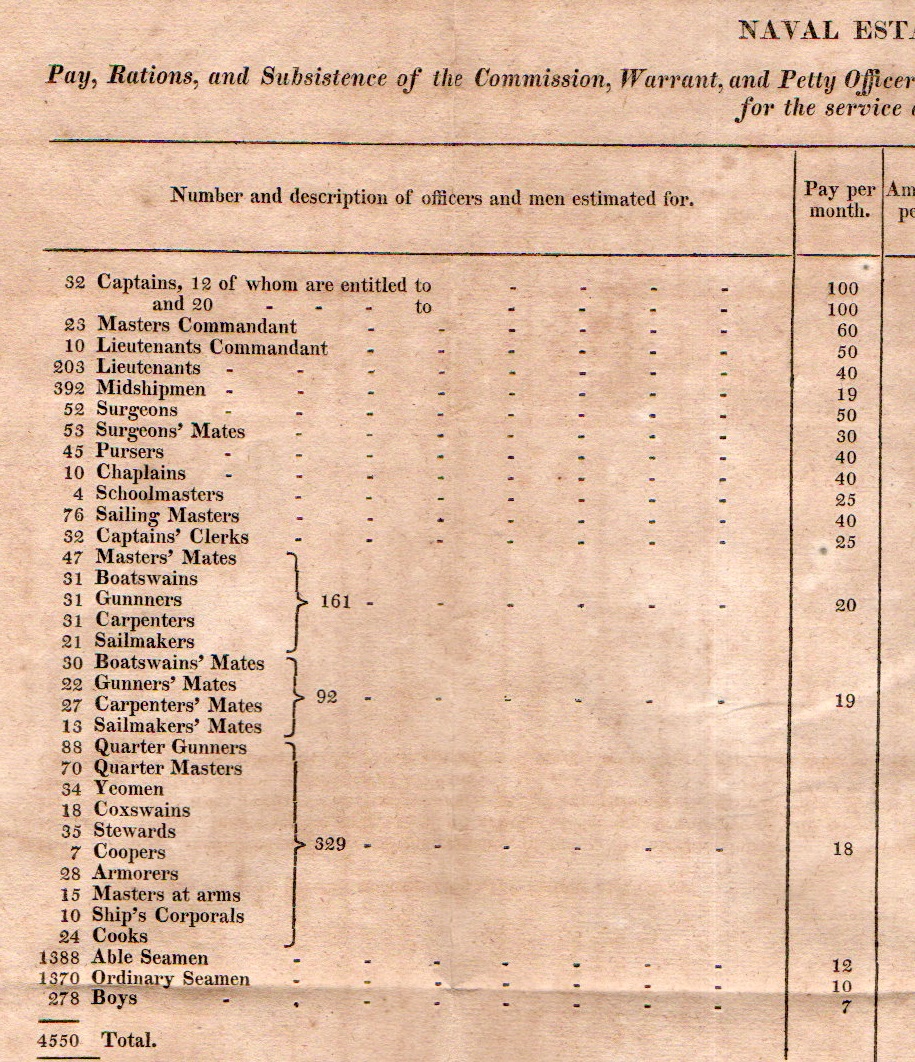
    This is one of those fascinating bits that you come across that in the moment are just thrilling, but overall really doesn’t have anywhere particular to live in your memory.  Still, it was curious to find this data on the positions and pay to the members of the U.S. Navy in 1820 and to see the amount and distribution of pay, and to see the aggregates.

    The pay ranges (for example) from $100/month for (52) Captains, $50/month for ( 52) surgeons, $40/month for (10) chaplains, $20/month for (21) sailmakers, $18/month for (24) cooks, $12/month for (1388) able seamen, $10/month for 1370 ordinary seamen, and $7/month for (278) boys.  

    Naval pay177

    [Source: can’t remember. This is a detail from a  loose, folding sheet from a U.S. government document from 1820, probably looking at the finances of armed forces, or some such.]

    So it looks as though the total pay for U.S. naval personnel in 1820 (excluding “rations”, which I believe included food and housing allotments) was $867, 578.00 (or pretty close to that) for 4,550  sailors/etc., which is about $200 per year per person, on average.  41% of that total outlay went to the 3,158 able and ordinary seamen, who composed 71% of the total naval force.  So it looks like if your removed the pay for “boys” then the highest paid officer made about ten times what the lowest paid seaman made, which by today’s standards is pretty corporate-responsible (a la Ben & Jerry’s).

    I’m not yet finding what a carpenter/laborer would make in salary for that year for comparison, but I will add that here later.  


  • Infographic: the Sizes of Air Forces, 1918-1935

    JF Ptak Science Books  Quick Post

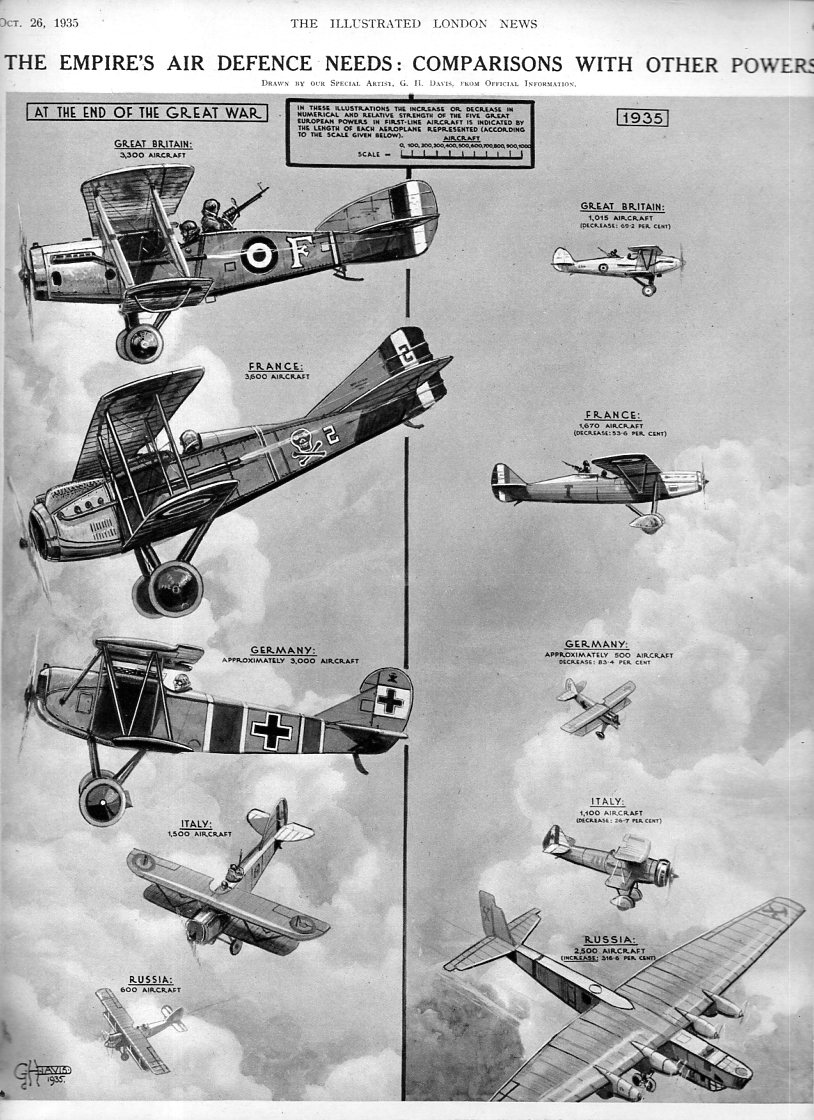
    More work here from the great G.H. Davis–a man whose work has been shared on this blog dozens of times (check this out in the Google search box to the left)–this time showing the changes in air corps from the end of WWII to the middle of the 1930’s. The infographic was published October 26, 1935, in the Illustrated London News, five months after the creation of the Luftwaffe and just a short time longer than that for the renunciation of Versailles.  Hitler was two years in power, and the face of Europe was really about to change…

    Infographic Aviation 1935025


  • Food as a Weapon, 1915

    JF Ptak Science Books   Quick Post

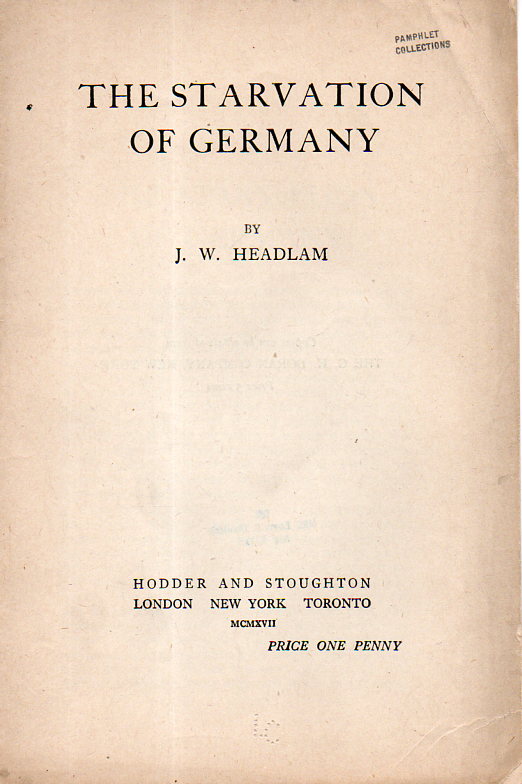
    Starvation of Germany118There are few people I think who can recall the names of any U.S. secretaries of agriculture–the notable exception being Earl Butz, who during his tenure from 1971-1976 was known for being vulgar and profane, a quality which led to his forced resignation. Another notable but less-remembered quote had to do with the thing he was secretary of:  food. He remarked that “food is a weapon”, and although considering the source, the quote was not intended as offensive ordnance. He explained that the best method of fighting the Cold War was to provide food and the means of producing it to countries that might fall under the influence of Communism to secure the birthright for their people. (He perhaps was building on President Eisenhower’s Food for Peace Program that began in 1954.)

    The Starvation of Germany was a piece of British propaganda, an explanation of the blockade being used against Germany to bring it to negotiations to bring an end to the World War.  It is not the end of World War II as I first thought–but the end of World War I.  There were blockades in both, and each being very detrimental to the population of Germany–killings thousands of German citizens–though not enough to convince the Germans to sue for peace.

    One thing that the 1915 pamphlet couldn’t yet mention–that by the end of 1918 between 400,000-725,000 Germans had died of starvation or diseases related to lack of food. 

    ·Posted by :

    ·in:

    —