A Daily History of Holes, Dots, Lines, Science, History, Math, Physics, Art, the Unintentional Absurd, Architecture, Maps, Data Visualization, Blank and Missing Things, and so on. |1.6 million words, 7500 images, 4.9 million hits| Press & appearances in The Times, Le Figaro, Mensa, The Economist, The Guardian, Discovery News, Slate, Le Monde, Sci American Blogs, Le Pont, and many other places… 5000+ total posts since 2008.

Category: Medicine, History of

  • 36 Great Anatomies, 1390-1899: Great Image Base from the NLM

    JF Ptak Science Books   Post 1835

    This table is pulled directly from the National Library of Medicine pages for anatomies on the web–all I did was place the records in a table so that they could be listed chronologically.  The references in the first left-hand column are clickable and will take you directly to the images of the work at the NLM site.  This is just a sampling of anatomies, though it may prove to be highly useful for folks in the science and the arts.  Enjoy. 

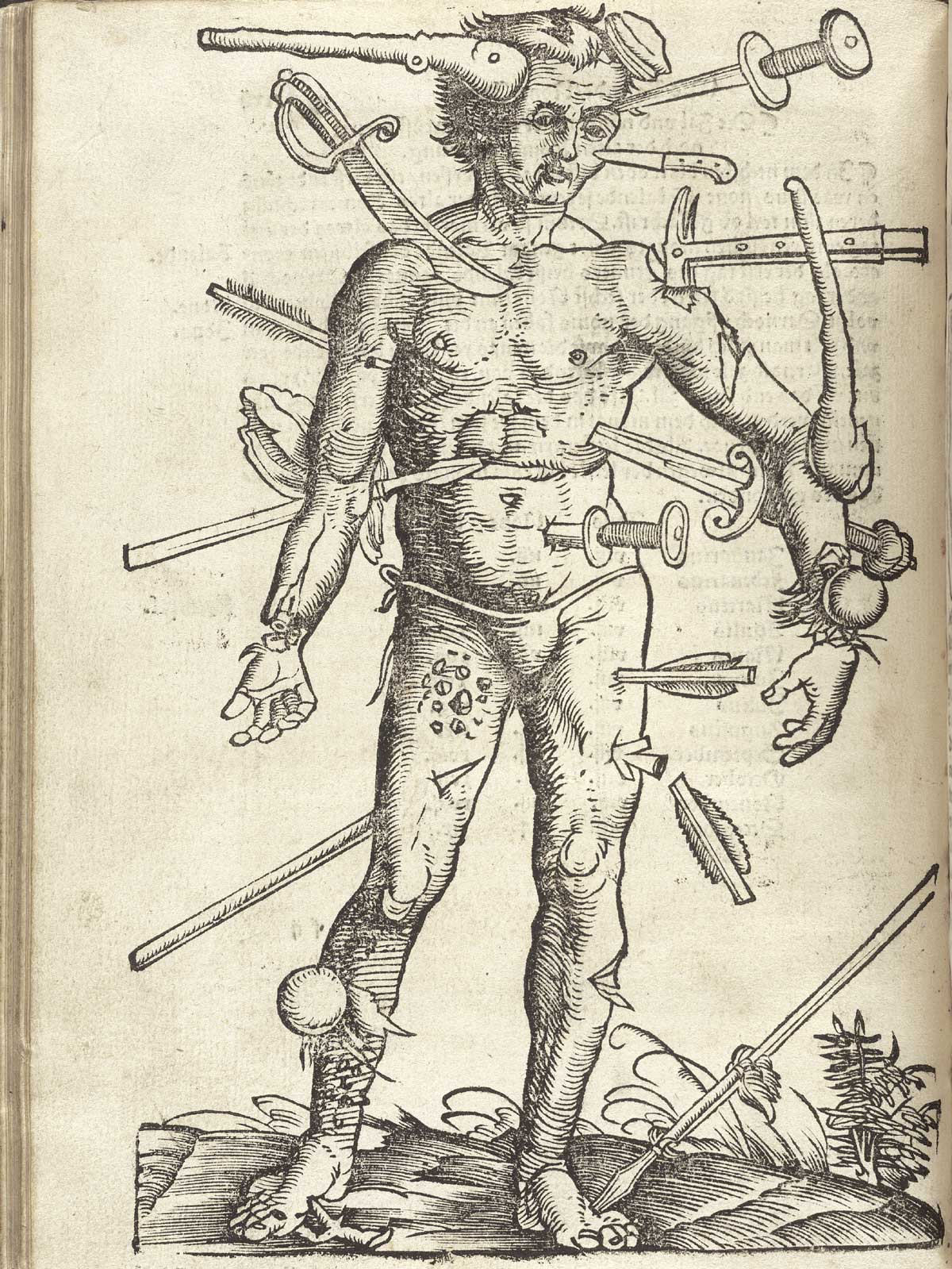
    Medical gersdorff_p21v[Image: Hans Gersdorff, Feldtbůch der Wundartzney : newlich getruckt und gebessert, published in 1528.]

    Chronological list.


  • A History of Blank, Empty and Missing Things: Pain

    JF Ptak Science Books   Post 1816  Part of the History of Blank, Empty and Missing Things series

    Surgery heister563

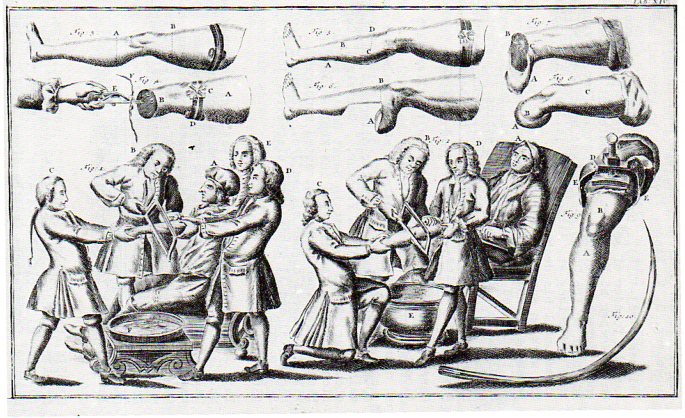
    This curious woodcut is found in Lorenz Heister’s (1683-1758) Chirurgie, in welcher alles, was zur Wundarzney gehöret, nach der neuesten und besten Art, gründlich abgehandelt, und in 38 Kupfertaf, die neuerfundene und dienlichste Instrumente, nebst den bequemsten Handgriffen der chirurgischen Operationen und Bandagen deutlich vorgestellet werden.  Hesiter was a Nuremberger anatomist and botanist, but most importantly here one of Germany’s leading surgeons–and as a matter of fact was the founder of scientific surgery in Germany as well. He studied at Giessen and then at Leyden, where he was taught by great lights such as Ruysch,  Bidloo, Albinus and Boerhaave.  His Chirurgie was first published in 1718 in German, and was soon reprinted many times, and then translated into Dutch, English Italian, Spanish, Latin and French.

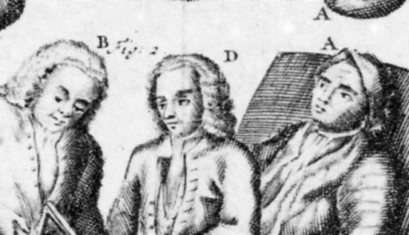
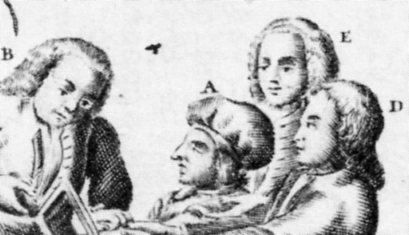
    The thing that gave me pause in the realm of pausible things, the thing that is probably the least likely to be considered “academic”, was the issue of the expression on the faces of the people undergoing amputation in the illustrations of the book.  In the pre-general anaesthesia days of Hester, the man (above in detail and below) is remarkably composed, as is the person undergoing the arm amputation.  It is all quite neat, orderly, non-chaotic and clean. And seemingly painless.

    Surgery heister560The word “anaesthesia” didn’t even exist until 1846 (Oliver Wendell Holmes Sr), when William T.G. Morton made the first successful use of it in the fabulously-named Ether Dome of Massachusetts General Hospital.   I guess the doctors could’ve dumbed these patients up with opium or other narcotics–but the sponge that was soaked in the stuff and inhaled under the nose is not in evidence.  Of course, they might’ve ingested the narcotic, or smoked it, or had it applied, but I can’t find any evidence of this in a quick look through the text.  The patients also could’ve been given diethyl ether (the general form of which is perhaps a Lullian invention of the 13th century, though the “aether” part of it came apart three decades before the Hester book with Frobenius), but again, I’m not sure.  Certainly they were given something and not riding out the operation on their own…we just don’t know that from the book, which no doubt took the high-and-unscary-road to the issue of the cutting end of the amputation. 

    Surgery heister564


  • Drugs Looking for a Need: Heroin, Thorazine and Etc., in Old and New History

    JF Ptak Science Books    Post 1825  

     Follow Me on Pinterest

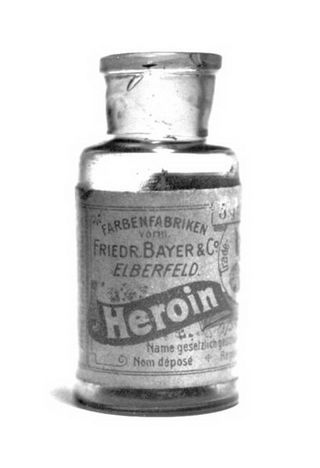
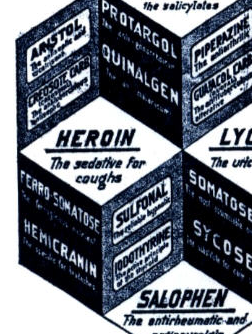
    Ads--heroinLooking at old advertisements for the application of new/improved pharmaceuticals can be an experience in search of an explanation. Certainly we recognize the impact of these drugs today for what they really are, the business-end of their basis unmasked.  But at the time–well, at the time, before revelation, there was hope in the use of them. 

    Opium of course has been used for centuries, but it was synthesized first in 1874 by the English chemist C.R. Alder Wright, though that first application went basically nowhere.  The big push came when it was independently re-synthesized and re-discovered by Fleix Hoffmann who was working at the time for the Aktiengesellschaft Farbenfabriken of Elberfeld, Germany, which is todyay known as Bayer, and which was re-named and marketed under the name, “heroin”. 


    Ads--heroin bayer
    Heroin was sold for nearly two decades as a cough suppressant, a safe replacement for morphine, and also non-addictive.

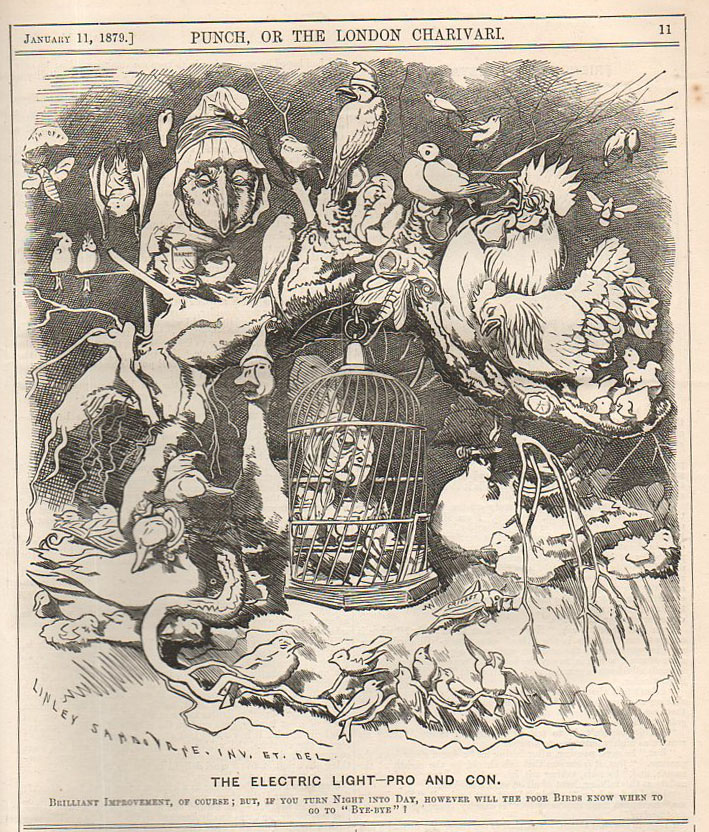
    Narcotics in general however were applied somewhat liberally for complaints of all manner–narcotics not being controlled until 1925, banned by the Single Convention on Narcotics Drugs and the League of Nations (for its signatories, at least).   AS we can see int he detail of this Punch cartoon of 1879, the problems to be brought on by the new applications of electricity (still quite young in its modernistic sense at this time) could be sleeplessness for birds, as the outdoor lights might keep them awake.

    Electricity575

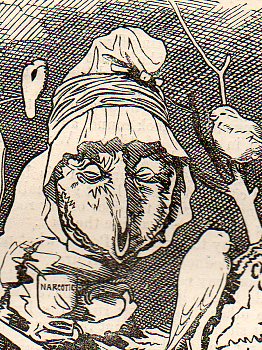
    But in detail, the sleepy old owl might have been dipping a little heavy into one of those bottles with bumps on its sides, its bottle of “narcotics” to help in tracking down sleep:

    Electricity576


  • Telling the Future with Urine and Bones: the Lyricism of Urine Wheels

    JF Ptak Science Books   Post 1820

    For many centuries people have been trying to control the future, seeing into future’s past, using tea leaves, foreheads, palm prints, brain bumps, nose angles, the position of the stars, rolled animal bones and printed interpretations of the creator of the universe.  Some of these have faded into embarrassed obscurity, but only some; some methods are present today, stronger than ever. 

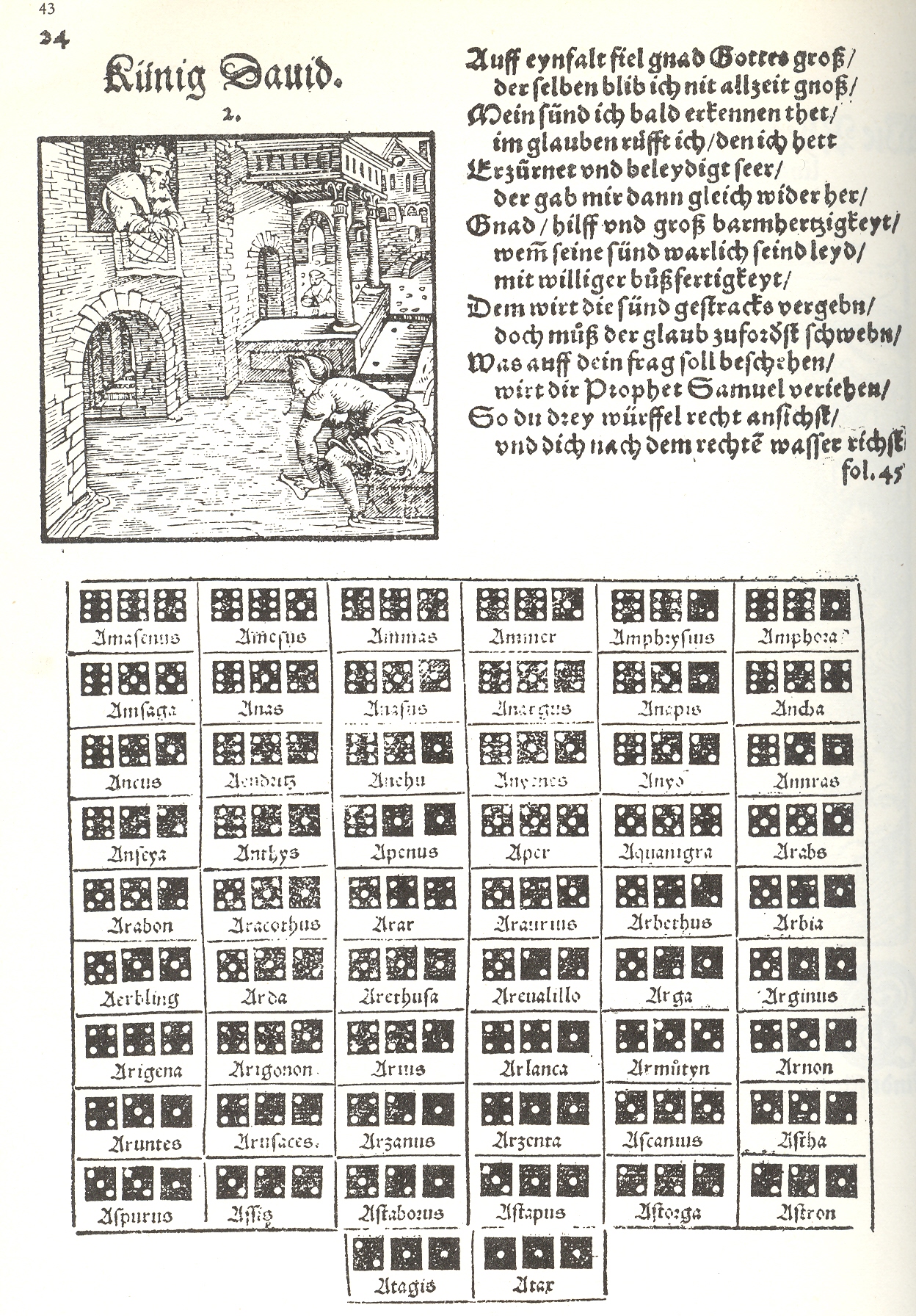
    + blog dice The rolled bones part of this makes the prettiest pictures, I think: for example, this image from Paul Pambst1 (published in 1546) shows some of the dice combinations and what they would correspond to in the revolving paper disks and columns of interpretations in the body of the book, a simple throwing of shaped animal residue somehow laying claim to predictive power.  Not that it is much different from any of the other divination methods. 

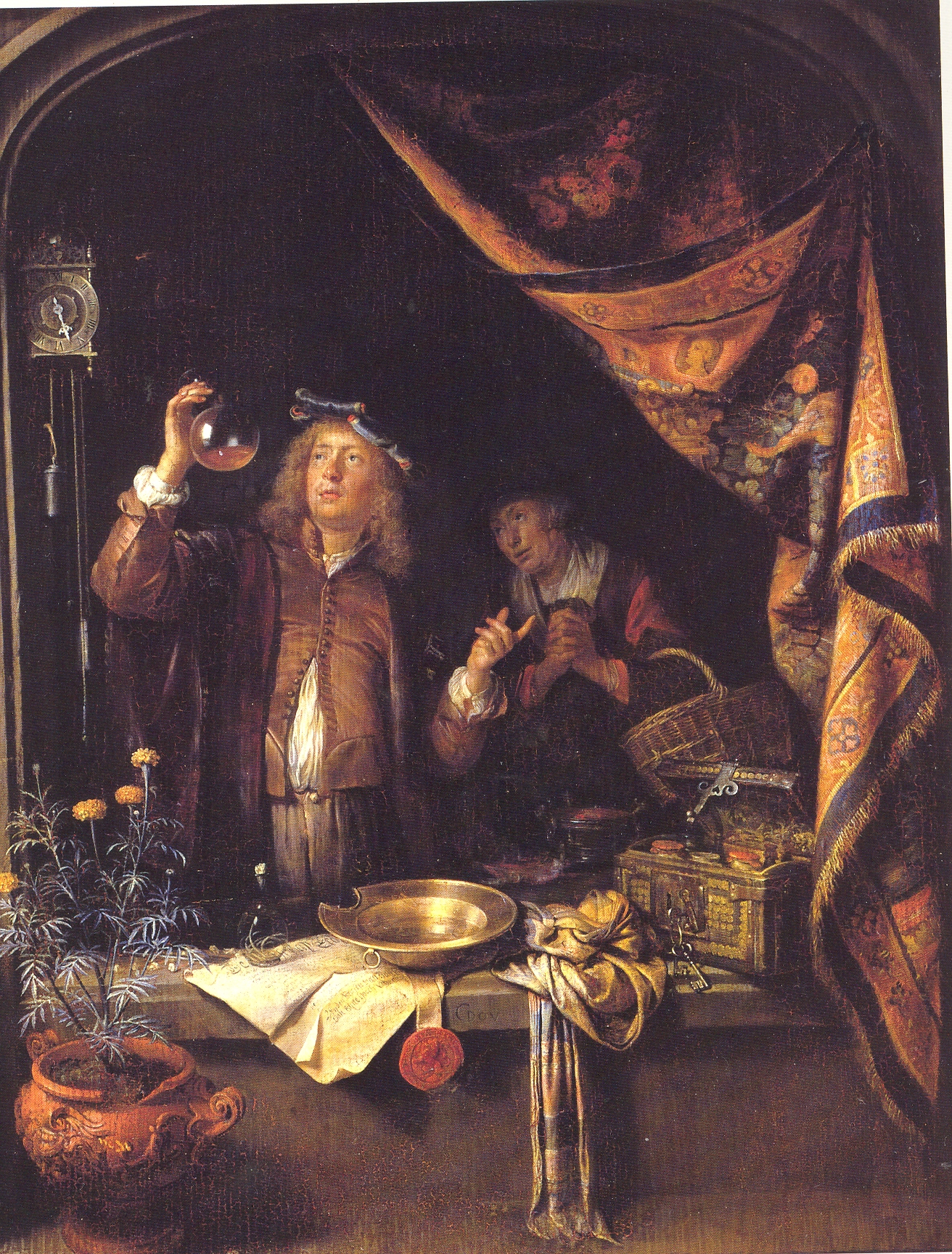
    One such method that had been in strong and continued use for thousands of years and is now mostly relegated to dust is the heated up and swirling inspection of urine.  It was thought for millenia that pee held secrets to what was going on inside the body, and that was mostly true, except that given the state of medical knowledge the only thing that the practioner could do with the sample was hold it up to the light and make good solid guesses on how color/consistency corresponded to the patient.  A reddish tint (as we see here in this painting by Gerrit Dou (1613-1675, and who made an appearance in yesterday’s post) might suggest that the (female) subject was suffering from morbens virginus (uterine hysteria, “a signifying of too much concoction in the body”), which, when the imaginary disease/unease was diagnosed would’ve led to lead consumption and a good bleeding.

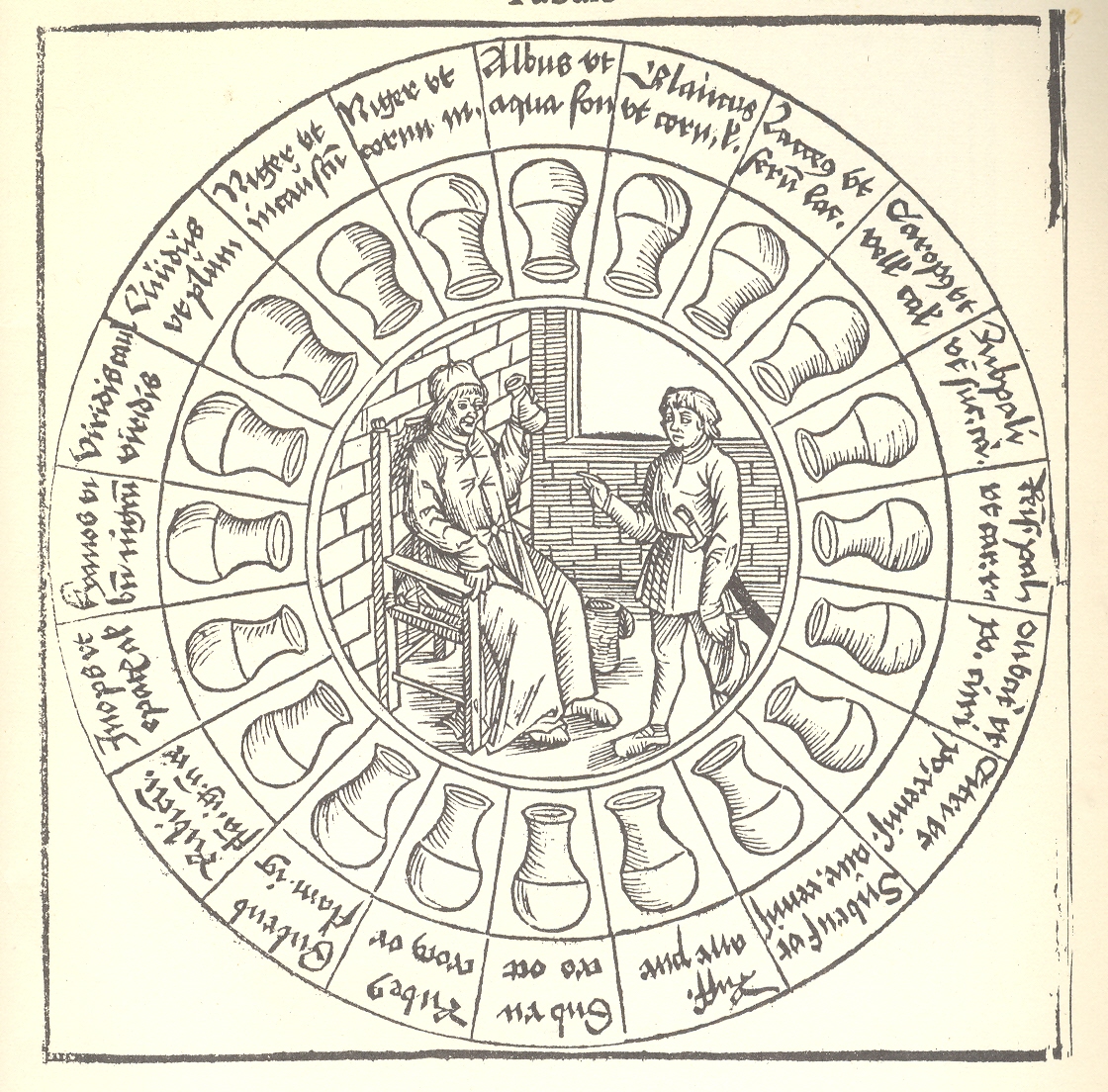
    + blog dou urine  Moving slightly up the alpha from Pambst is Udalr Pinder, whose Epiphanie Medicorum…2 (published in Nurnberg in 1506) is a state-of-the-art disposition on urine inspection, complete with this pee color wheel.  This idea is as interesting as it is entertaining, because at its base is a scientific aspect of trying to establish a common (color) base for discussion of specimens.  The color descriptions (taken in translation from Kirsten Jungersen’s  (MA, classical philologist, visiting scholar, Medical Museion, University of Copenhagen) “The relation between text and colours in medieval urine wheels” (here) are poetic, lyrical. They are also a small insight into common things of the 15th century, the author selecting colors from things that were ubiquitous and known to everyone, and so in this way could be used as a basis for the common understanding of a given color.  + blog pee

    And so here are the glorious colors (complete in “extended reading” below with the Latin above), most of which I’ve never heard as descriptors…and would love to see as an adopted sub-there by Crayola (“Crayola Urine Wheel Colors”):

    “Bluish-grey as camel skin; White as wellwater; Light blue/green/grey as lucid horn; Milky as whey of milk; Slightly pale as a not reduced juice of Meat; Pale yellow as of a not reduced lemon; Wine-red as of animal liver; Black as very dark horn; Ruddy as pure intense gold; Green as green cabbage.”  And of course:

    “Slightly red as a lowered flame of fire”

    and

    “Red as a flame of fire not lowered”

     They’re lovely!

    But of course none of this was actually going to help anyone very much, especially when you moved from uroscopy into urinomancy (not a word one gets to use very often), where instead of trying to diagnose dis-ease the urinomancer would try to diagnose the future.  Often heat was applied to the jar (matula) of urine, which would do, well, I don’t know what.  It certainly looks dramatic, and makes for some excellent opportunities for artists to discern candle-lit color and wonderful reflections (as in Dou). + blog dou urine det Actually, it was in this way that the golden color of urine was determined (poor alchemists!) not to come from gold at all—urine was finally boiled away until its component urea was discovered (in 1773)3. So heat did have a real and important function, but it took hundreds of years to get there properly.

    And so it goes that predicting the future with urine was swept into histories dark places, though somehow bone throwers and astrologers managed to escape this fate. 

    Notes:
      1. Paul Pambst. Loozbuch zu ehren der Roemischen…published in Strassburg in 1546.  The Robert Sabuda website for popup books ahs a very good short essay on this book, here.

    2. Epiphanie Medicorum. Speculum videndi urinas hominum. Clavis aperiendi portas pulsuum. Berillus discernendi causas & differentias febrium.

    3.  H.M. Rouelle first discovered and isolated  1773, and then synthesized by Friedrich Woehler in 1828. This was big and important stuff.
     

    Color Wheel Colors, continued below:


  • Paper Brain Dissection II–1876

    JF Ptak Science Books  Quick Post

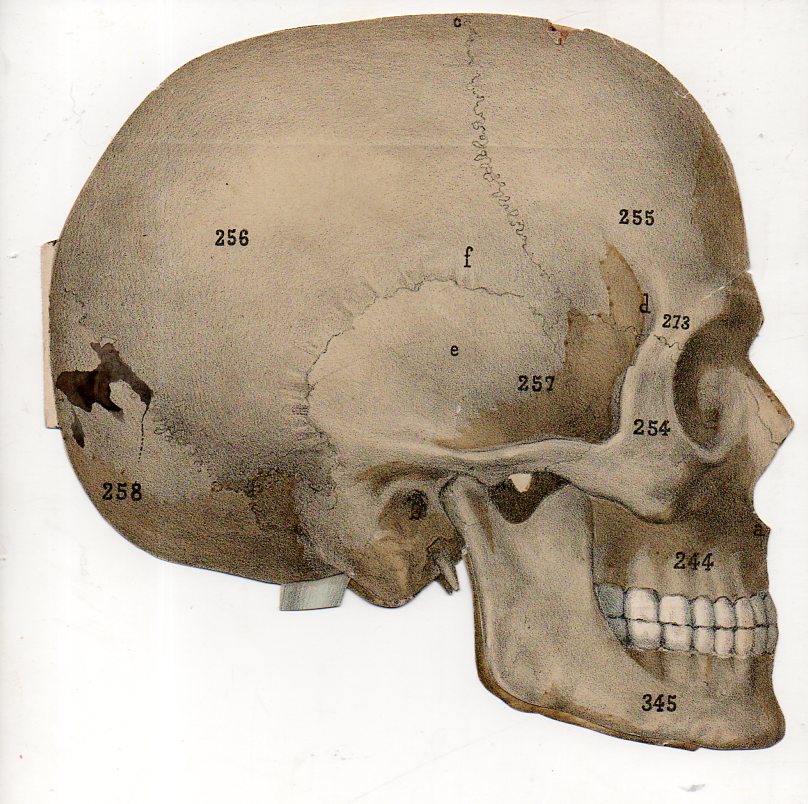
    Earlier in this blog I posted about a lateral dissection of the human brain accomplished via 150-year-old engravings.  The images below come from a series of atlases created by Gustave Joseph Witkowski (1844-1923) called Anatomie Iconoclastique, and include the one I have here on the skull and brain. I think that they are gorgeous works.  (The original, available at our blog bookstore, measures about ten inches at its widest). 

    Skull492

    ·Posted by :

    ·in:

    —

  • “Seven People to Make a Shadow”: Andersonville Prison, 1865

    JF Ptak Science Books    Post 1760

    While reading about the story of Andersonville Prison I was much taken with a passage from the diary of Sgt. David Kennedy (of the 9th Ohio Cavalry), held at that prison, writing on 9 July 1864:

    ‘ Wuld that I was an artist & had the material to paint this camp & all its horrors or the tounge of some eloquent Statesman and had the privilege of expresing my mind to our hon. rulers at Washington, I should gloery to describe this hell on earth where it takes 7 of its occupants to make a shadow.’

    Seven men to make one shadow.  That does pretty much tell the story of Andersonville.  It was known also as Camp Sumter, in Sumter County (Georgia), constructed and then opened in February 1864–quite late in the war–to hold 13,000 Union prisoners.  That was a hoepful sentiment and held little planning, as the site held nearly 32,000 prisoners at one time, filled twice beyoind a capacity that even in the best conditions was too high. The prison was ill-conceived, not well made (except for the stockade fence constructed by slave laborers, which was pieced together so well that a person inside the stockade could not see anything whatsoever of the outside world through an imperfect join in the fence). So the view left to the prisoner was of other prisoners in fetid and deplorable states, lumber of the stockade, the poor Earth and disgusting mud of the central section of the stockade fed by a stream and turned into a disease-breeding swamp, and the sky. 

    The actual photograph (above) and the artist’s rendition, clarification, amplification, below:

    [Source:  Library of Congress. Andersonville prison, Georgia. Group of prisoners.   ca. 1864-1865  “Drawing of prisoners among tents, showing starvation, crowding, poor clothing among prisoners.” 
    From “U. S. Navy. Edisto Island. Morris and Folly Islands. Fort Warren, Mass. Andersonville Prison, Miscellaneous.” photographic album, p 74 ([Andersonville Prison]).

    Of the 45,000 Union soldiers held at the prison in its short life (February 1864-May 1865) nearly one-third of them died, most killed by ill-treatment, malnutrition, exposure, poor sanitary conditions, and starvation. 

    The map below gives a good view of the size of the swamp (“Whole Content of Stockade 25 1/2 acres, including swamp…”)

    [Source: Robert Knox Sneden scrapbook (Mss5:7 Sn237:1), Virginia Historical Society.  In the Robert Knox Sneden diary, 1861-1865 (v. 5, p. 606). 1 map : pen-and-ink and watercolor ; 18 x 14 cm.]


  • Flying Mountains of the Diseased Dead: Offensive Weapons and the Black Death

    JF Ptak Science Books   Post 1740

    It is generally conceded that the introduction of the Plague1 into Europe in 1348 had its very terroristic beginning in the Genoese trade and port city of Caffa, the result of a series of various sieges and bad blood between them and their Mongol hosts.

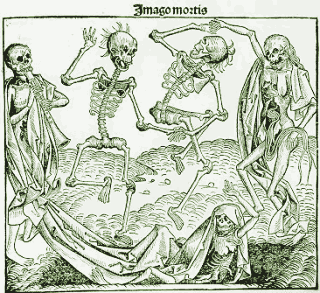
    Holbein-death


    The background to this confrontation is pretty extensive, with sieges laid to Caffa several times over a hundred year period.  The Genoese established themselves at Caffa (which today is the city of Feodosija, Ukraine) via and agreement with the Kahn of the Golden Horde (the remnants of the Mongol Empire of Genghis Khan), which was a seaside link that reached across Russia and into the Far East.  The city was besieged in 1308 due to diplomatic/trade/ethnic etc. unpleasantnesses, and the Genoese wound up firing and evacuating the city, only to be invited back again in 1312 with the acceptance f a new Khan.  A major city developed which by 1343 consisted of two concentric rings of fortress protecting a diverse population of 20,000.  But it was in this year that the second siege began, lasting four years, with the Genoese (having access to the sea and supplies and new military input) finding themselves with a string of victories against the Mongols.
     

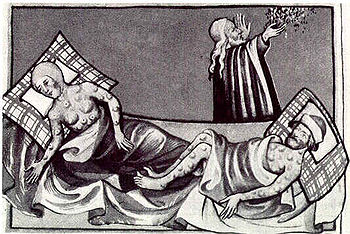
    The Mongols at this time were also laid low with what turned out to be the Black Plague. Anxious to share this disaster with the Genoese, they catapulted their fallen, diseased soldiers over the siege walls and into the Caffa, with devastating effect. The scene was recorded by the contemporary Gabrielem de Mussis  (the account found in Mark Wheelis’(U  Cal Davis) CDC article “Biological Warfare at the 1346 Siege of Caffa”), which begins “In the name of God, Amen. Here begins an account of the disease or mortality which occurred in 1348, put together by Gabrielem de Mussis of Piacenza” and continues: Black death

    “The dying Tartars, stunned and stupefied by the immensity of the disaster brought about by the disease, and realizing that they had no hope of escape, lost interest in the siege. But they ordered corpses to be placed in catapults and lobbed into the city in the hope that the intolerable stench would kill everyone inside. What seemed like mountains of dead were thrown into the city, and the Christians could not hide or flee or escape from them, although they dumped as many of the bodies as they could in the sea. And soon the rotting corpses tainted the air and poisoned the water supply, and the stench was so overwhelming that hardly one in several thousand was in a position to flee the remains of the Tartar army. Moreover one infected man could carry the poison to others, and infect people and places with the disease by look alone. No one knew, or could discover, a means of defense.

    “Thus almost everyone who had been in the East, or in the regions to the south and north, fell victim to sudden death after contracting this pestilential disease, as if struck by a lethal arrow which raised a tumor on their bodies. The scale of the mortality and the form which it took persuaded those who lived, weeping and lamenting, through the bitter events of 1346 to 1348—the Chinese, Indians, Persians, Medes, Kurds, Armenians, Cilicians, Georgians, Mesopotamians, Nubians, Ethiopians, Turks, Egyptians, Arabs, Saracens and Greeks (for almost all the East has been affected)—that the last judgment had come.

    “…As it happened, among those who escaped from Caffa by boat were a few sailors who had been infected with the poisonous disease. Some boats were bound for Genoa, others went to Venice and to other Christian areas. When the sailors reached these places and mixed with the people there, it was as if they had brought evil spirits with them: every city, every settlement, every place was poisoned by the contagious pestilence, and their inhabitants, both men and women, died suddenly. And when one person had contracted the illness, he poisoned his whole family even as he fell and died, so that those preparing to bury his body were seized by death in the same way. Thus death entered through the windows, and as cities and towns were depopulated their inhabitants mourned their dead neighbours.”

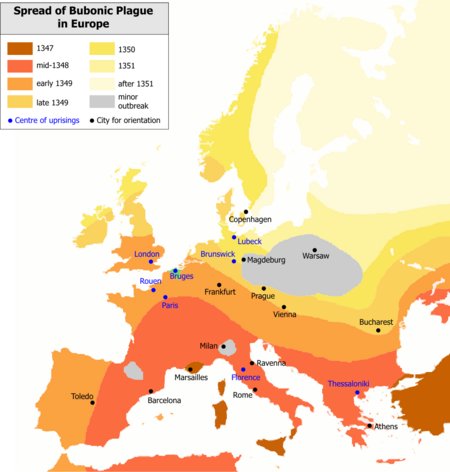
    The end result of the mountains of dead flying plague-ridden corpses was the retreat of the Genoese, who also brought back the disease to (at the very least) southern Europe, with spectacularly bad results, killing millions and millions of people. 

    Black plage map

    1) “The catastrophic pandemic has, generally been considered to have been plague, a zoonotic disease caused by the gram-negative bacterium Yersinia pestis, the principal reservoir for which is wild rodent.”–Wheelis

    Fuller quote, below, in continued reading:


  • The Gift that Keeps on Giving: Radium, in Powder or Suppository

    JF Ptak Science Books  Quick Post

    Radium.  It was for some short period of time a magnificent and harmless thing, soemthing with a life of its own, sort of, in the way that people used to think of electricity. 

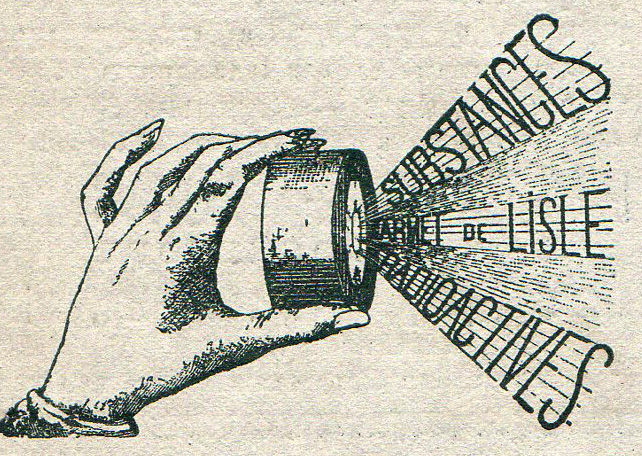
    Adium299

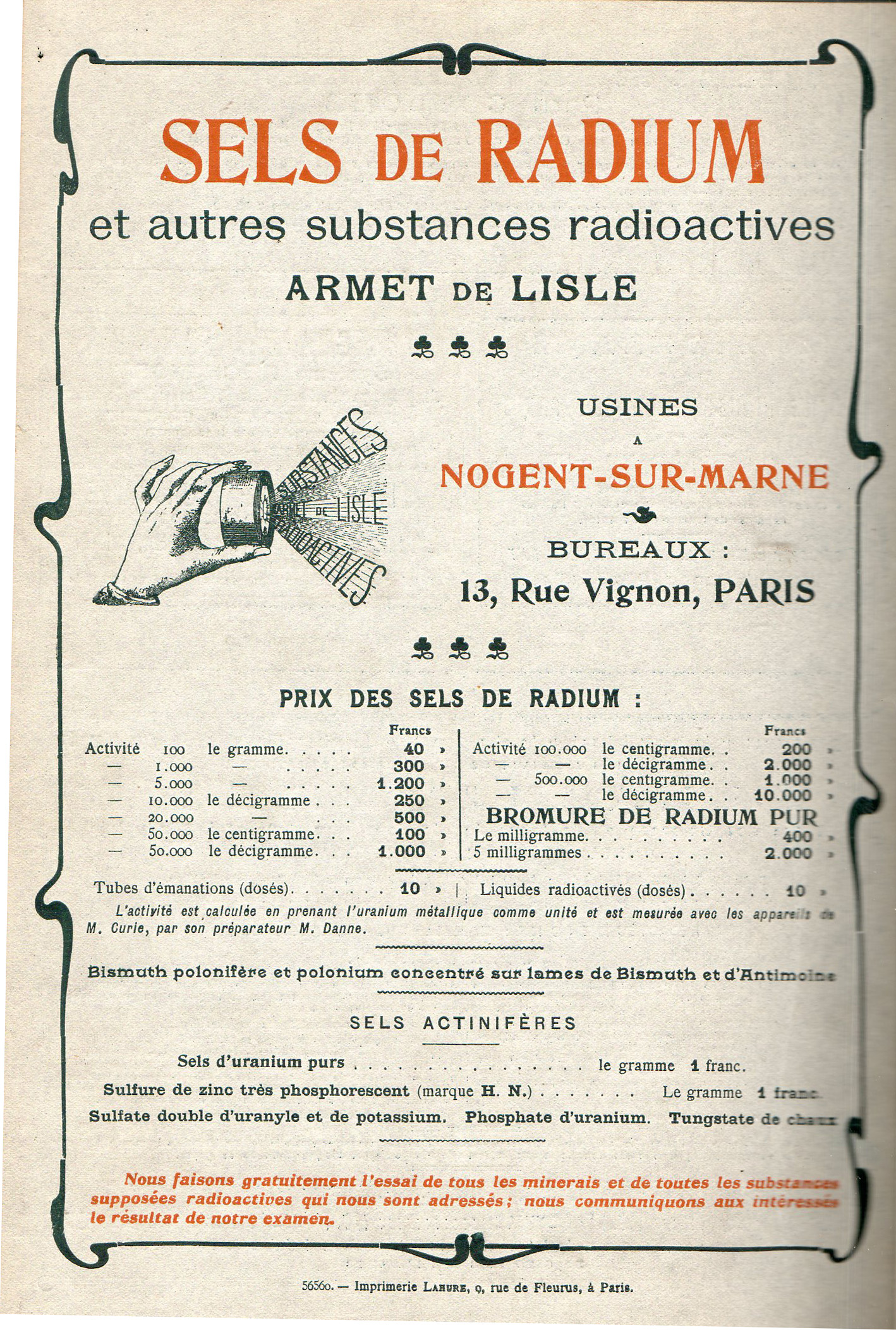
    This is a detail for an advertisement for radium salts, found in the December, 1903 issue of Le Radium.  At this point, just five years after the Curies discovered it and quick-published (in five days) their results in the Comptes Rendus…, the massive biochemical effects of human/radium interaction was not understood. And so the ads for firms like Armet de Lisle, which  was loudly selling Sels de Radium (and other radioactive substances like uranium salt  and uranium phosphate) without any real knowledge of the adverse health effects of its products.  (The Curies and Becquerel had noticed ulcertating reactions to their skin when it was left in contact to radium, and “radium dementia” had been reported beginning about 1900, but it would take quite some time for this radioactive material to be understood as lethal products.)

    Adium298Radium was used (in very small dosages) for the illuminating of instrument panels and dials (in, say, aircraft) and wrist watch faces into the 1960, though the major health factors ground themselves out in the worker who would come into contact with the radium itself. 

    Of course there were other uses for radium as a cure-all, which would have been a completely different story:

    In the early 1900s, real men used radium suppositories

    [which I wrote about here in “Radium Dance”]


  • Eve’s Ovum, “Unused” Sperm & Embryological Sex Wars of the 18th Century–a note

    JF Ptak Science Books Post 1715  [Part of the History of Dots series.] 

    I wanted to land this post (the title of which is nearly as long as the article) on this little island in a wide sea of similar islands in the complicated 18th century history of embryology.  Where we came from and how living things developed really wasn’t very clear at this time, and really wouldn’t be until Karl Ernst von Baer discovered the human ovum in 1827.1

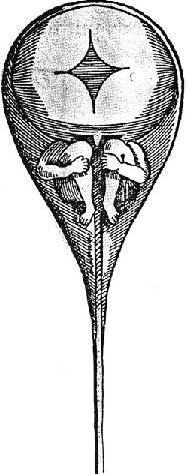
    HomunuclusThe issue of the ovaries as ovens–of homunuclus and palingenesis and epigenesis, the imaginary male-dominant anatomy of reproduction–was pretty much somewhat solved by the beginning of the 19th century.  Or at least the homunculus, the tiny but perfectly formed miniature human traveling along in sperm, was.  This character is pictured here, riding in the squinty-eyed imagination of researcher  Nicholas Hartsoeker2, who desperately wanted to see the thing, I think, and which found itself published in his book Essai Dioptrique  in 1695.  Spermatozoa was discovered earlier by the great Leeuwenhoek (1632-1723) and which was finally confirmed in its fertility hypothesis by Lazzano Spallanzani, who also happened to be an ovist, thinking that each egg contained a pre-formed embryo).

    The woman as a simple baker of a gift of preformed life was a medical belief that helped perpetuate the supposed inferiority of women, and that the woman’s part in the procreative process was a simple oven.  It was a difficult image/belief to resist, persisting well into the 19th century.  But there was another side of this debate as well, and that was that woman didn’t need the male sperm to proceed with the process of conception, with some scientists believing that coition had nothing whatsoever to do with the process.  And so there were battle lines drawn in the primordial embryological sand of the 18th century, each demanding a sex-dominant role in procreation. 

    And if sperm contained a perfect, pre-formed human being, waiting to be planted in the oven of woman, what happens to all of those-pre-forms in the sperm that went “unused”?  I imagine that if you were an 18th century pre-formationist that this would be a tricky and very uncomfortable question. If you could put on special sperm-specs that would allow you to see “ejected” and  “unused” sperm in the same sort of ways in which we can see non-visible light, that, well, you might want to watch your step and avoid smashing a fully-formed human being that had the potential of living for weeks on its own with the benefit of anything else at all. I have to admit that even for me this makes the picture of this Earth not very savory. The author of “A Brief History of Sperm” at SeductionLabs.org points out that at least one English country doctor, James Cooke, thought that this ejecta “might not die”, at all,

    “… but ‘live a latent life, in an insensible or dormant state, like Swallows in Winter, lying quite still like a stopped watch when let down, till [they] are received afresh into some other male Body of the proper kind’.”–from SeductionLabs.org, in its “A Brief History of Sperm“.

    It sounds a little like embryologico-guerrilla warfare.

    In the middle of the sides drawing themselves up for battle, choosing male- or female-dominant mechanics of procreation, or a combination of both, were the supra-ovists, who claimed that in this mess that every human who would ever be born on Earth was already present in the ovum of Eve.  There were some who tried to calculate the figure of how many people that ovum contained, but like the creation timeline of Bishop Wilberforce, the numbers were open to severe self-definign interpretations. 

    It is interesting to note these debates, though, because they weren’t really finally settled until just three generations ago. (Or four if you’re much younger than I.)

    Notes:

    1.  von Baer published his discovery in his Epistola de Ovo Mammalium et Hominis Genesi (Leipzig, 1827), followed by his two-part Ueber die Entwickelungsgeschichte der Thiere  in 1828 and 1837 on the history and evolution of animals.  The original paper did not catch on, immediately, and took some years to be established.  There was actually a paid competition going on in Europe at this time for the purpose of finding the ovum, and although aware of the award and thinking he had found the “prize”, von Baer was not well-doisposed to the idea of the “race”, and so really didn’t participate.  Jean-Louis Prevost (1790-1850) and Jean-Baptiste A. Dumas (1800-1884) also came to the conclusion that the “animacules” in the semen were responsible for fertilization.  The deal wouldn’t be solidified until Oskar Hertwig actually observed the fusion of the male and female material in the ovum of a starfish in 1876. 

    2. Hartsoeker (“heart seeker”) (1665-1725) was a microscopist of high order in addition to being a physicist and a medical doctor, never actually saw this thing in his investigations–he iterated that the little person must be there.  But he never did say that he observed it. 


  • A Bloated Alphabet of Fat Cures: Strychnine Pills, Vibrators and Hope.

    JF Ptak Science Books     Post 1691      Part of the Series on Blank, Empty and Missing Things:  Promises.
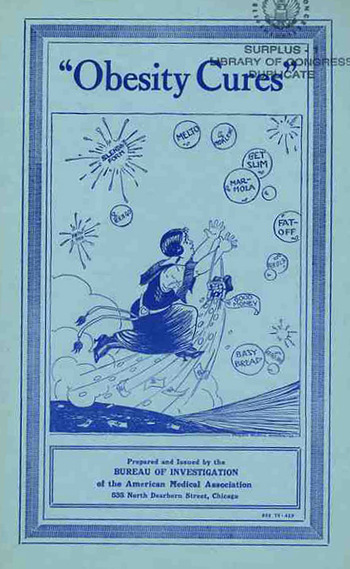
    Blogfatobesity_cures132 Quackery in general has survived in spite of itself over many fields, not the least of which is astrology and creation “science”, cults, religions, and walking-with-the-dead.  In the U.S. in the 1910-1925 period however there was a attempt at investigating the most outrageous frauds in the medical profession by the American Medical Association, and of the many sorts of quacks and frauds-liver cures, neuralgia miracles, electro-vibrator hair restorers and lump removers, anti-droopy happiness pills, cocaine nervous system remedies, and so on–what I’d like to look at right now is concerned with “flesh reduction”, or  fat cures. 


    http://media.vogue.com/files/filecheck/2012/01/12/3-Weegee_15302197753.jpg_article_gallery_slideshow_v2.jpg

    [Photograph of a neon sign, Manhattan, 1941, by Weegee from Naked City.]

    According to the AMA (in a 1934 retrospective) the chief stimulant to the obesity industry was the rise of womens’ fashions.  I think that the reasoning might wind itself around the growth of expendable money in the American rising middle class, where Americans, in general, had more money to spend on the non-essentials than any time in the history of the country.  That leads to more consumables, and that leads to more advertising, and that leads to more idealized images of what people should look like, and that leads to wanting to look like that, and that opens the door to scammers who offer a way to get to the not-actual ideal without effort and for little money.  And so in the ’20’s there was a spike in quack remedies for obesity, as there was little or no control over the content of what was being sold nor the claims about what the product did, medically speaking-there was general protection from fraud, of course, but the medical compliment for establishing what that actually was wasn’t quite yet in place. 

    There is a veritable alphabet (soup) of mondo bizarre cures that the AMA attacked and ripped apart during the 1920’s, publishing the findings of their labs on the ingredients of the cures and the possibilities of whether any of the hundreds (thousands?) of these things worked at all. 

    And what the AMA found was really pretty remarkable–lots of water, sugar, tartar,
    tinctures of useless this and that, desicated liver, seaweed, salt, lemon, and that
    sort of thing, none of which had any value for weight reduction whatsoever.  A
    major ingredient, for some reason, was focus vesiculosus, also known as
    bladderwrack, sea-wrack, kelp-ware and sea-oak–there was no indication of why this
    ingredient was so popular, especially since it was used in some farms as a pig feed
    to make the animals fat.
    Blogfat_slim_chicago133  

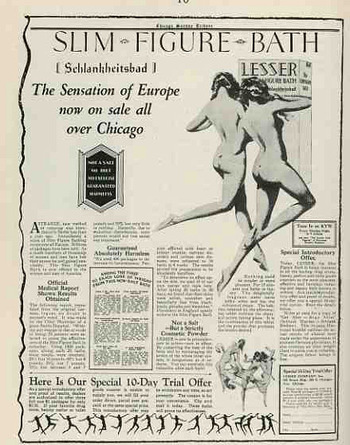
    So, aside from the pig-fattening ingredient for human “flesh reduction”, we’ll have a quick alphabetical tour of some of the outrageous (and bizarrely-named) products and their components promising hope and physical happiness to the woman of 1925. (Let’s note that the following are just locally-applied or ingested cures-there’s an entire universe of external applications and devices that were used to solve the problem of fat.  For example, the Violet Ray Machine claimed that in addition to obesity it would cure “Problems with circulation of the blood, the heart’s action, bumps of the funny-bone, germ infections, weakness, the waste of the body, congestion, impaired physical development, pains and aches, complexion and skin diseases, facial and body blemishes, hair loss, headaches, inflammation of joints, muscles, nerves, Atrophy, circulatory disorders, constipation, deafness, goitre, high blood pressure, arteriosclerosis, insomnia (sleeplessness-Brain Fag), indigestion, dyspepsia, neuritis, nervousness, hysteria, melancholia, neurasthenia, neuralgia, obesity, pain, paralysis, prostate gland problems, scalp diseases, falling hair, dandruff, asthma, anemia, bronchitis, catarrh, hay fever, rose fever, colds and other inflammations of the upper air passages, and, of course, cancer.”  This quote with thanks from the Museum of Quack Meidcal Therapy Devices

    And so to the consumable and applied quack fat cures:

    Absorbit Reducing Paste-one of my favorites.  This was a nighttime sleeping paste
    which was composed of 44% lard as well as beeswax, oil and milk.  After slathering
    yourself in this oily, waxy, milky fat cocoon (the sheets!) you were also supposed
    to ingest an accompanying night aid pill, which was 24% sulphur and 61% sugar.  So
    not only would you be oily milky waxy lardy, you’d also be stinky and, at the end of
    it all, hyper. 

    Allmans Anti Fat Anti Pon (?)).  According to its label, it was a “powerful and
    entirely harmless specific”, which the AMA revealed to be composed of citric acid,
    water and food coloring.  Sounds like Kool Aid. 

    Arbolone tablets.  These guys were made of desiccated thyroid, starch, lime and sugar.

    Basy Bread was a “anti growth” bread which turned out to be just a course wheat bread

    Clark’s Thinning Salts was almost entirely washing soda.

    Dalloff’s Time Pills were made of lavender and bearberry.

    Elfin Fat reducing Gum Drops (continuing its spectacular name by saying it was a
    product of the Pep-Giving Product Co., Inc.), was actually one of the only items
    that might have contributed to weight loss, if only for the fact that in addition to
    consuming its drops made of laxative and sugar you were supposed to adhere to a
    pretty regimented, difficult exercise routine.  Big sweat and potent laxative does
    in fact produce weight loss.  Maybe not a good weight loss, but aa weight loss
    nevertheless. 

    Elimiton (!) was a product made of caffeine and rhubarb.

    Every Woman’s Flesh Reducer promised a new figure with their mixture of Epsom salt
    and camphor.

    Fatsoff, a soap product that you washed with, was not surprisingly made of soap.
    Fayro was another soap and washing flesh reduction “package” that asserted that by
    using their secret flesh reducing salve (i.e., “soap”), you would “open your pores
    to let the blood cells sweat off fat”.  I could just about see the AMA guy who was
    writing their description of this thing slamming his pen and screaming.

    Some other F’s included Fells Reducing Tablets (which were milk), Figurroids (salty
    baking soda), Floradona (sodium thiosulphate, the photographer’s “hypo”), and Folt’s
    Reducing Soap (which was, again, soap). 

    Get Slim was a vile purgative of sugar, tartar and baking soda, plus perfumes.

    Hall’s Tablet Triturates were ginger and a big shake of chalk; Hargreaves Reducing
    Wafers (bread and liquorice).

    J.Z. Obesity tablets–were the same product as Absorbit which was the same as
    Zobeide (minus the ox mucus). 

    LaMar reducing Soap (“to wash away fat”) was soap.

    Marmola, “a thyroid-containing obesity cure” was composed of cornstalk, borax, baking
    soda and tartaric acid, with a special “constipation agent” (?), as well as a lot of
    salt. 

    Morlene would reduce goitersm neck fat, bust size and tumors, somehow, with the
    application of its cleansing elements (soap).

    Neutroid seems to have been the most lethal of the hundreds tested, contaning bad
    dollops of magnesium carbonate and iodol, and was taken internally (where external
    application could prove fatal). 

    Oil of Korein was pretty nasty stuff, containing sassafrass and about 75% petrolatum
    (a semi-solid mixture of hydrocarbons, or petroleum jelly), though it also offered
    some really good advice on foods to avoid if you didn’t want to actually gain
    weight. 

    Phy-thy-rin was a calcium and sugar coated pill of iodine and dried thyroid, with
    plenty of sugar, and liquorice. 

    Rusell’s Anti-Corpulent {reparation was a powdered added to water that would
    effectively produce orange Kool-Aid.

    Sangra Bath Salts was perhaps the most outrageously simple, being just colored bath
    salt.  Slendaform (“just gently rub it in, and watch yourself get thin”), was a
    half-pound jar of oil of turpentine, white vinegar and milk curd.  Slyphine, which
    crowded its ads with tremendous claims to be “Absolutely The Best Weight Reducer
    Ever Discovered” and other very shouty claims (by somehow “attracting surplus
    fat”), was simply borax and talc. 

    Dr. Vincent’s Anti-Stout Pills contained a pretty sounding mixture of aloes, jalap,
    cloves and bladderwrack.

    Mme. Yale’s Fertilizer Tablets-I’m not sure about the real use of “fertilizer”
    here.) was actually one of the earliest of these frauds to be attacked by the
    government, being charged with fraud by “misbranding” in 1909, as federal chemists
    could find no connection between weight loss and its sole ingredients of sugar,
    charcoal and cream of tartar. 

    Lastly, we offer Zobeude, which was just Absorbit Reducing Paste relabled for
    British consumption, though it seems to have contained an added ingredient of
    “purified ox bile”.  We are told in Bruce’s Materia Medica of 1884 that “Purified ox
    bile has the composition of fresh bile, less the mucus .”