A Daily History of Holes, Dots, Lines, Science, History, Math, Physics, Art, the Unintentional Absurd, Architecture, Maps, Data Visualization, Blank and Missing Things, and so on. |1.6 million words, 7500 images, 4.9 million hits| Press & appearances in The Times, Le Figaro, Mensa, The Economist, The Guardian, Discovery News, Slate, Le Monde, Sci American Blogs, Le Pont, and many other places… 5000+ total posts since 2008.

Category: Medicine, History of

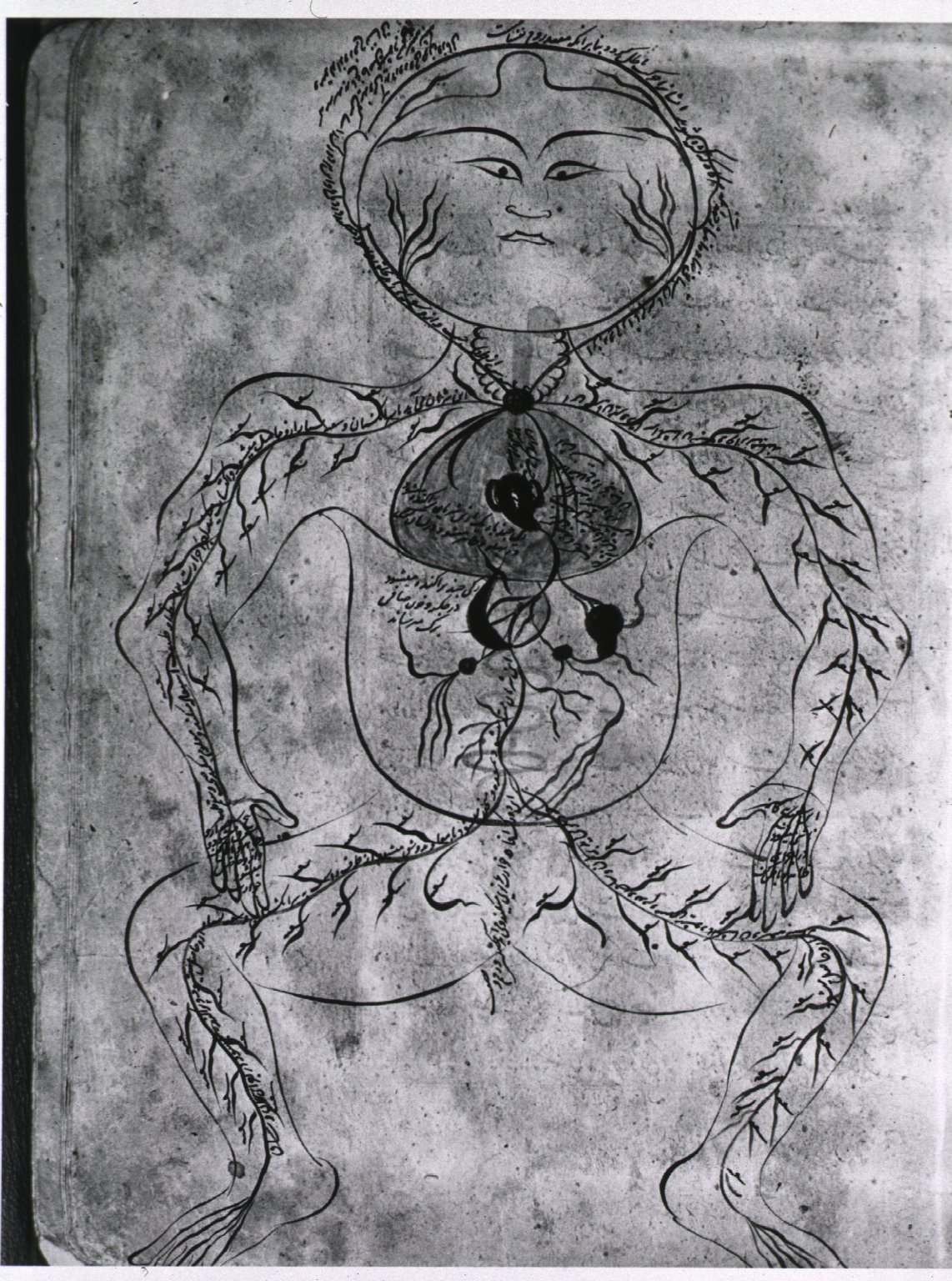
  • A Cardiac Chronology (Beginning): 27 Heart Anatomies, 14th century-1897


    JF Ptak Science Books   Post  1367


     This is the first installment of a chronology of the anatomical representation of the heart, along with a few metaphorical images tossed in.  No commentary yet–just a quick post.  All images are either from the Wellcome Institute or the National Library of Medicine.  (I’m not sure that I’ve seen a timeline of these images before…)


    14th Century

    NLMNLM~1~1~101435831~140121

    Mansur ibn Muhammad ibn Ahmad ibn Yusuf
    Contributor:
    ibn Faqih, author. fl. 14th c.,
    Publication Information:
    [1488]
    Appears In:
    Tashrih al-badan.

    Ca. 1440

     image for id L0034716

    “Woodblock illustration from Zhengtong daozang (Daoist Canon compiled during the Zhengtong reign period [1436-1449] of the Ming Dynasty), depicting the ‘internal topography’ (neijing) of the human body from the front and back view.”

    ·Posted by :

    ·in:


  • Antique pre-Dada Ingredients of the Anatomy of the Senses

    JF Ptak Science Books  Post 1362

    Dadaist senses mouth det503

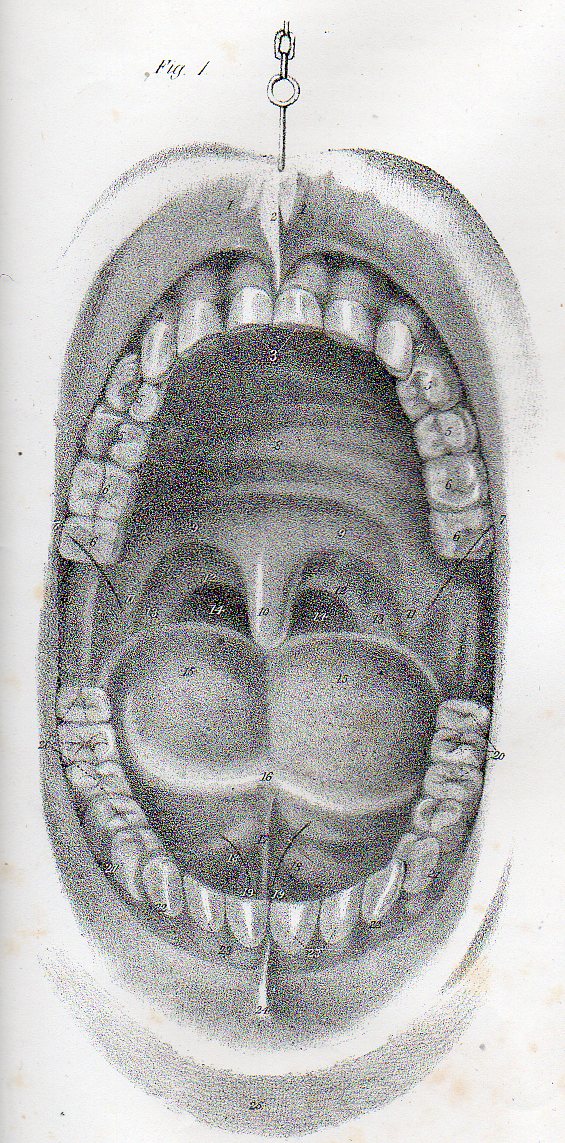
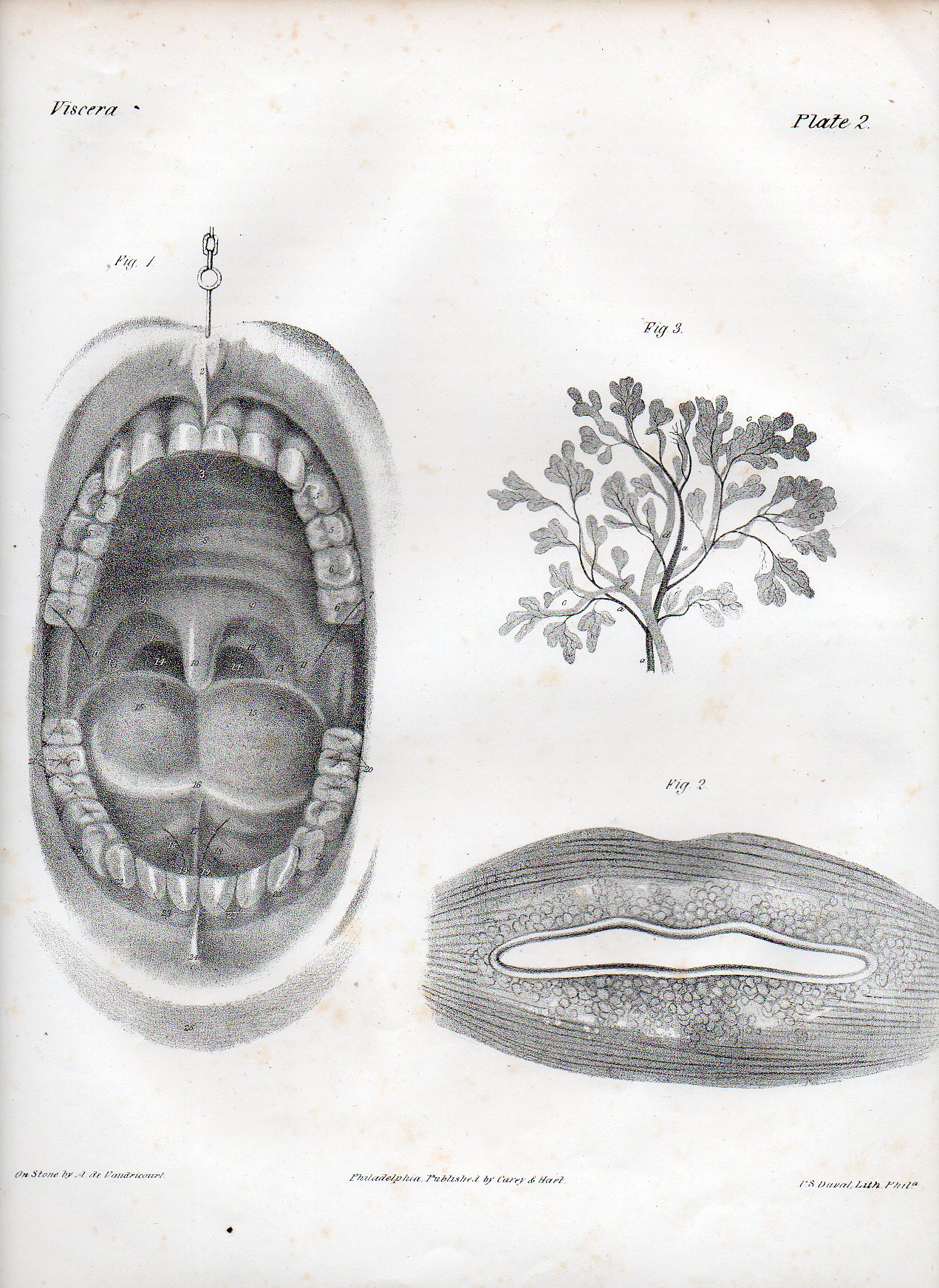
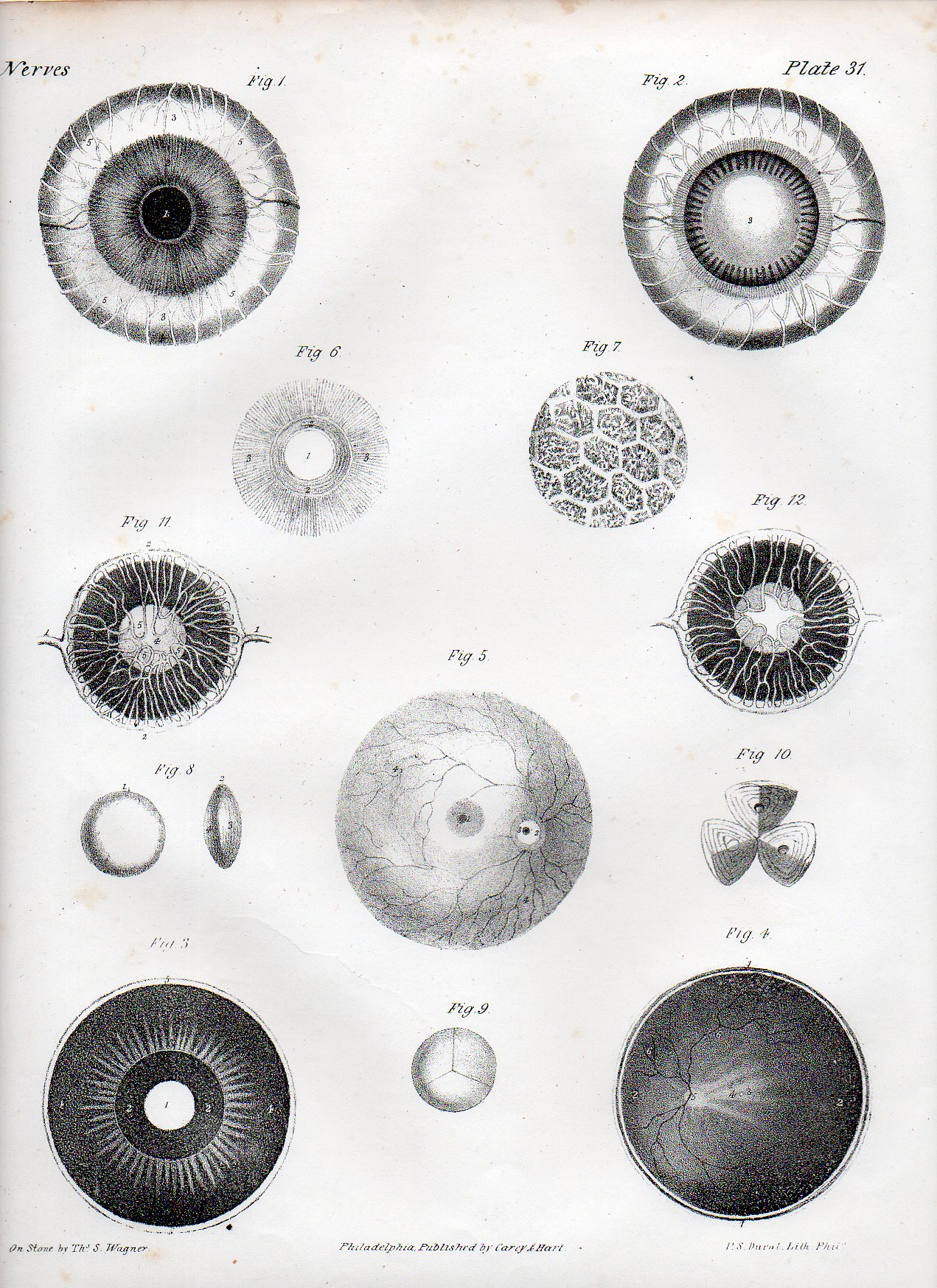
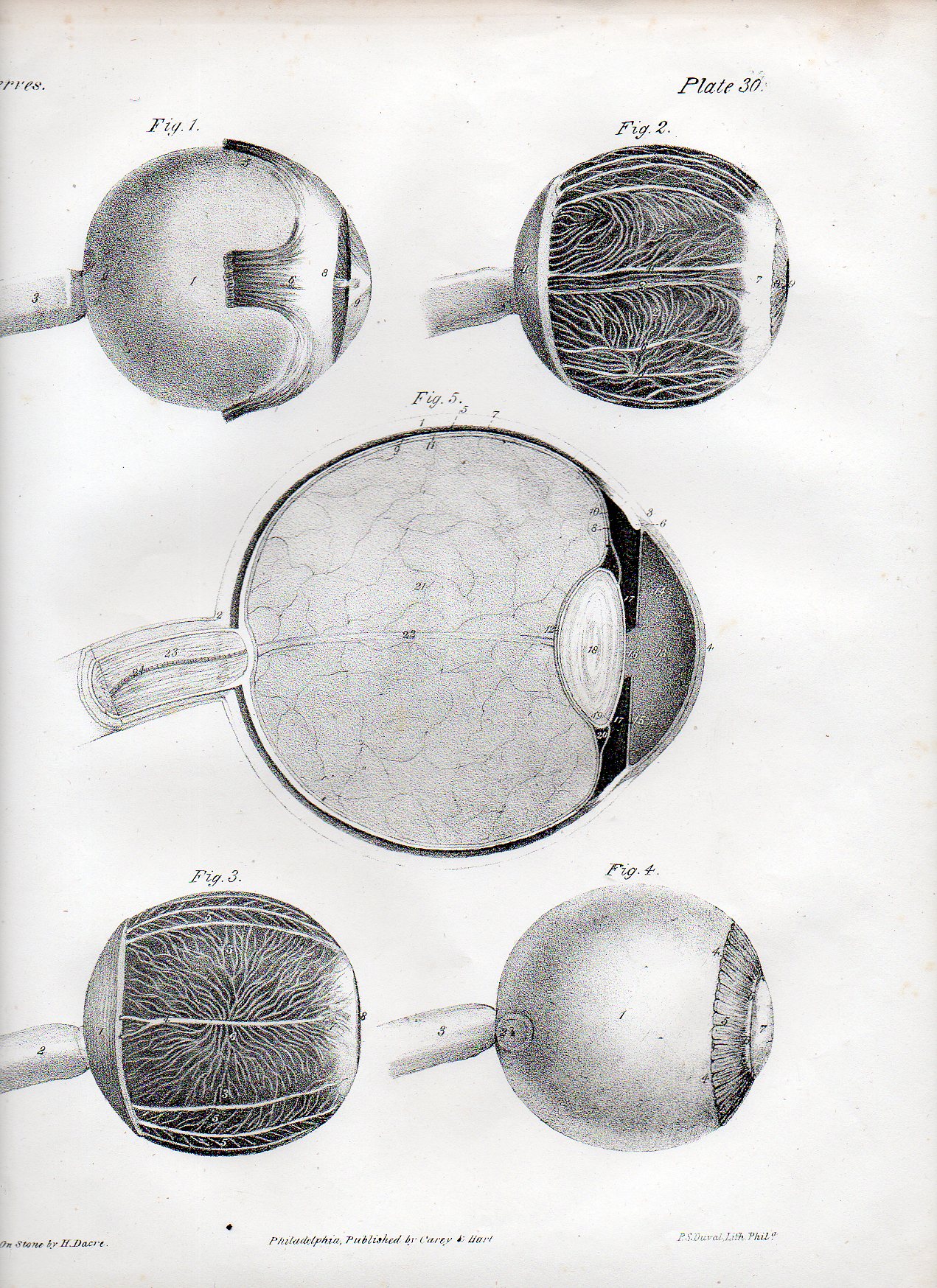
    Some of the strangest, occasionally least-of-their-time scientific illustration seems to come in the area of anatomical illustration–for me, anyway.  When taken out of context, some medical illustration looks positively modern, or post modern, as we can see with the following examples [all o fwhich are available from our blog bookstore].

    The first image is a detail from a series of images by the Irish-born Quain brothers:  Jones Quain (1796-1865),  an anatomist and professor of Anatomy and Physiology at the University of London; and Richard Quain (1800-1887), professor of anatomy in 1832 at the University of London, then surgeon at North London Hospital, and president of the Royal College of Surgeons. The illustrations are from a later and smaller printing of their beautiful 1844 work The Anatomy of the Arteries of the Human Body, with its Applications to Pathology and Operative Surgery, in Lithographic Drawings with Practical Commentaries.  Taken out of context, removed 80 years or so, taken to Germany, and they might be bits and pieces (or entire works for that matter) of a Dadaist exhibition in Berlin in 1925. 

    The full image of the image above is from:

    TASTE

    Dadaist senses mouth502

    SIGHT

    Dadaist senses eye 2507

    Dadaist senses eye506

    And this beautiful detail:

    Dadaist senses eye 4509

    Dadaist senses eye 3508

    SOUND

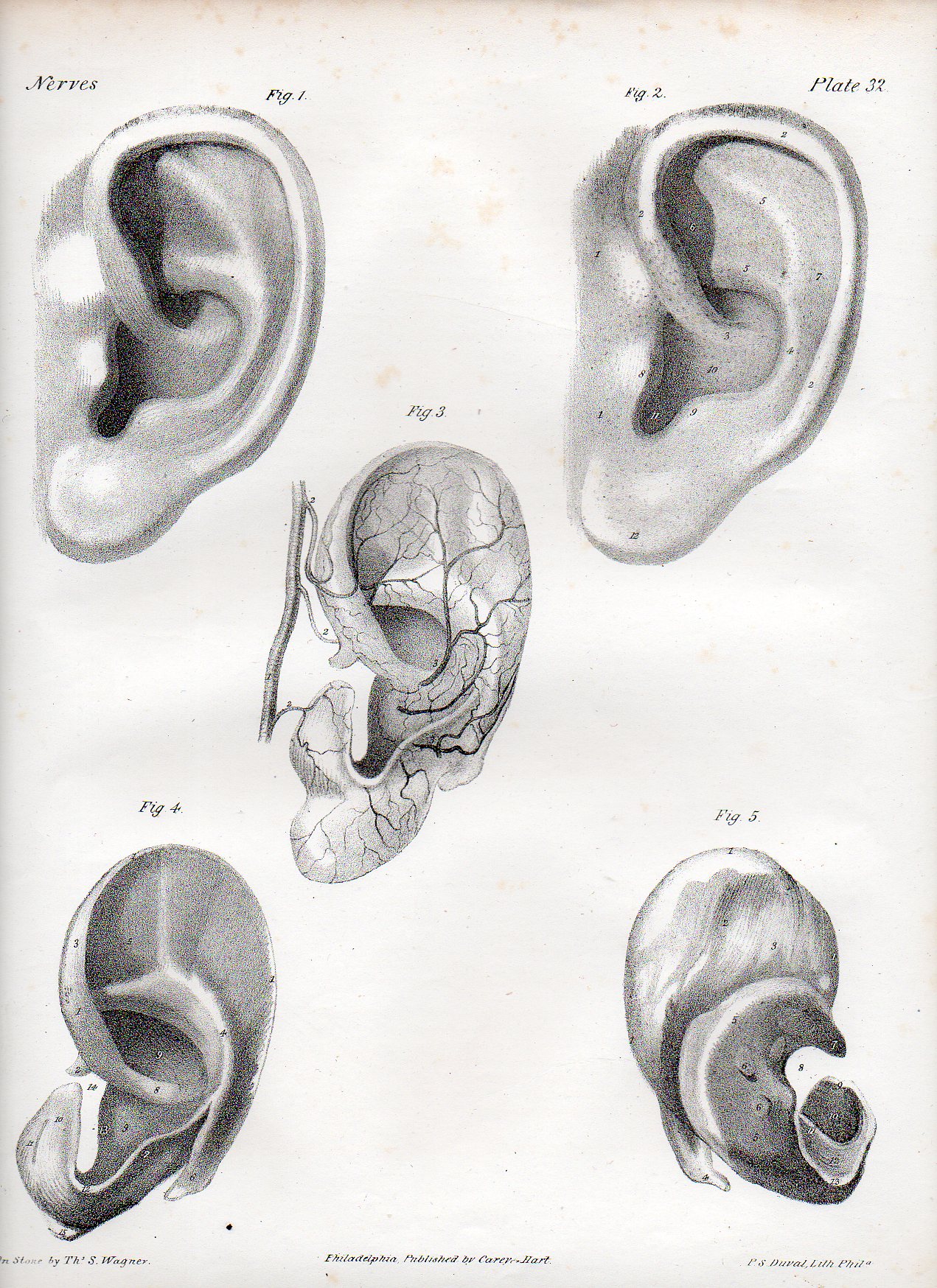
    Dadaist senses ear505


    TOUCH

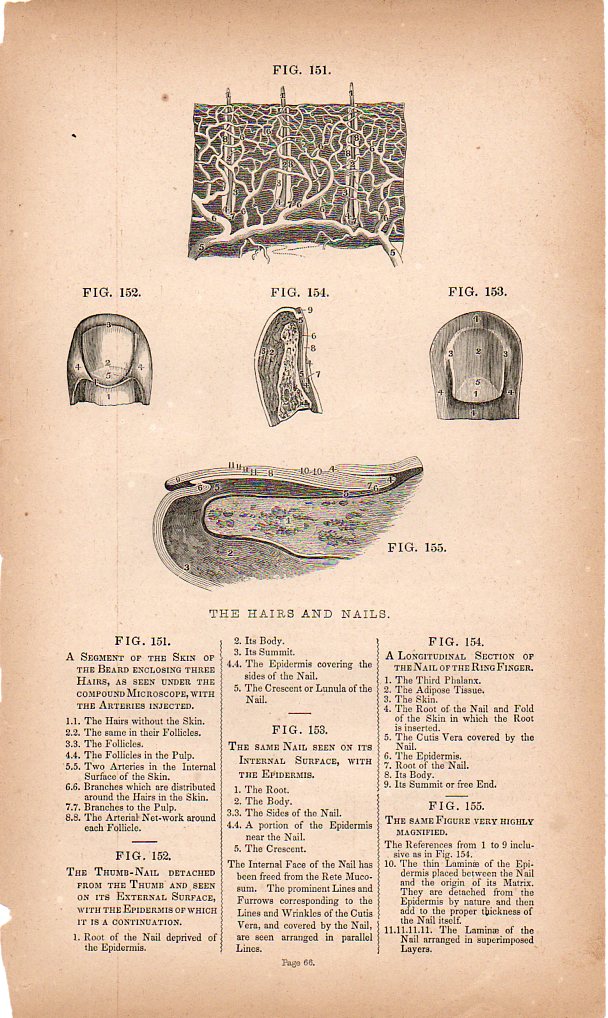
    This remarkable cross-section of the fingertip.

    Dadaist senses touch det501

    Which is a detail from:

    Dadaist senses touch500

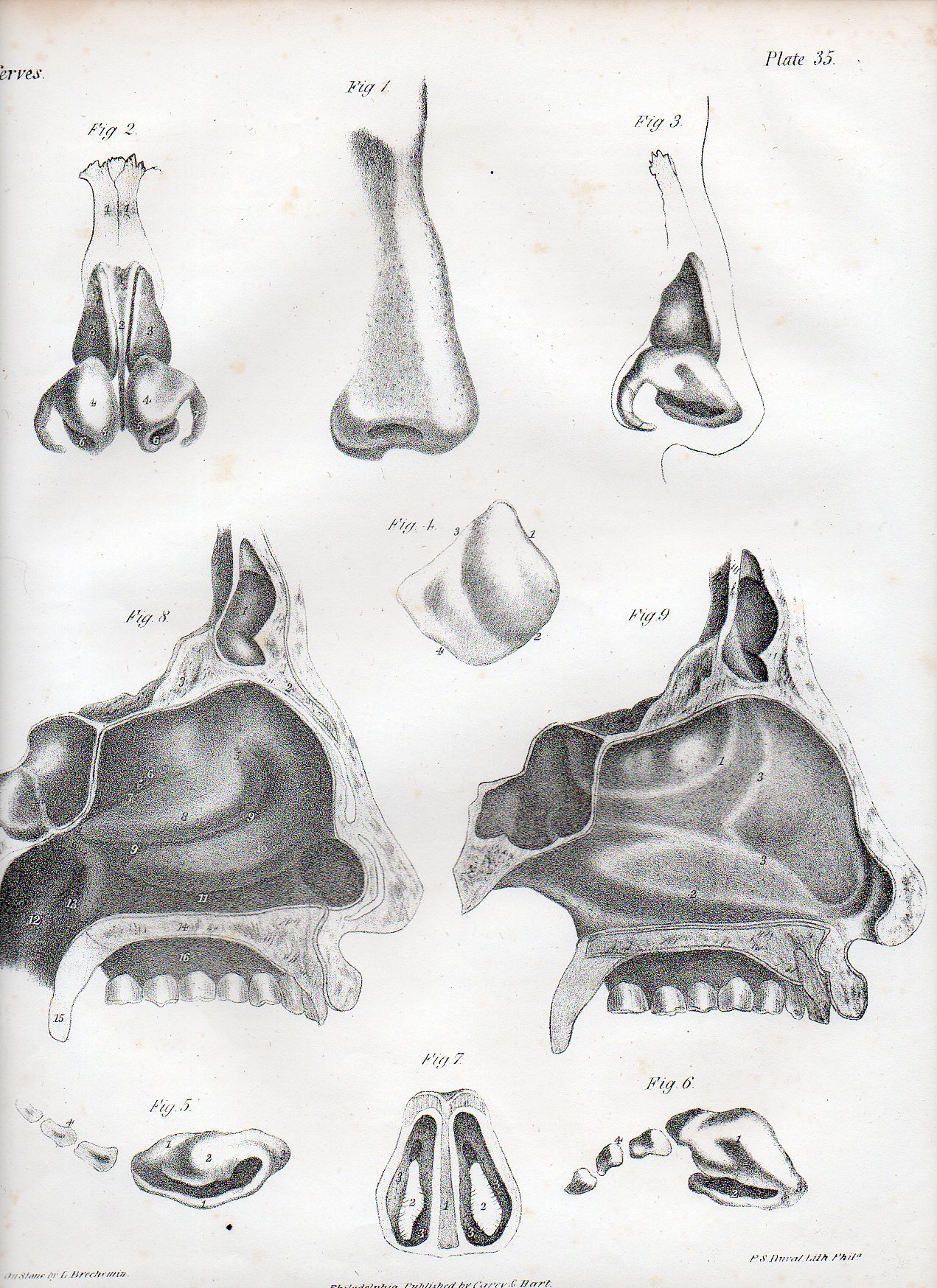
    SMELL

    Dadaist senses nose504

    HEARING

    Dadaist senses ear505


  • Unintentional Dadaist Anatomy: WIlliam Rimmer, 1877

     JF Ptak Science Books  Post 1360

    Blog==June 29--rimmer backdet

     
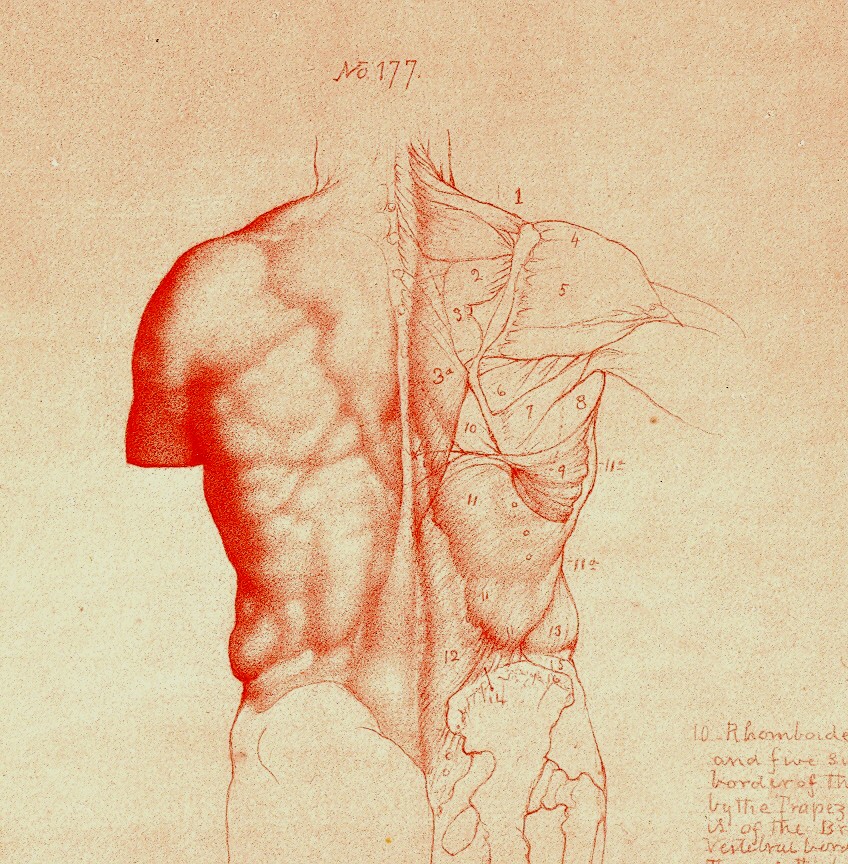
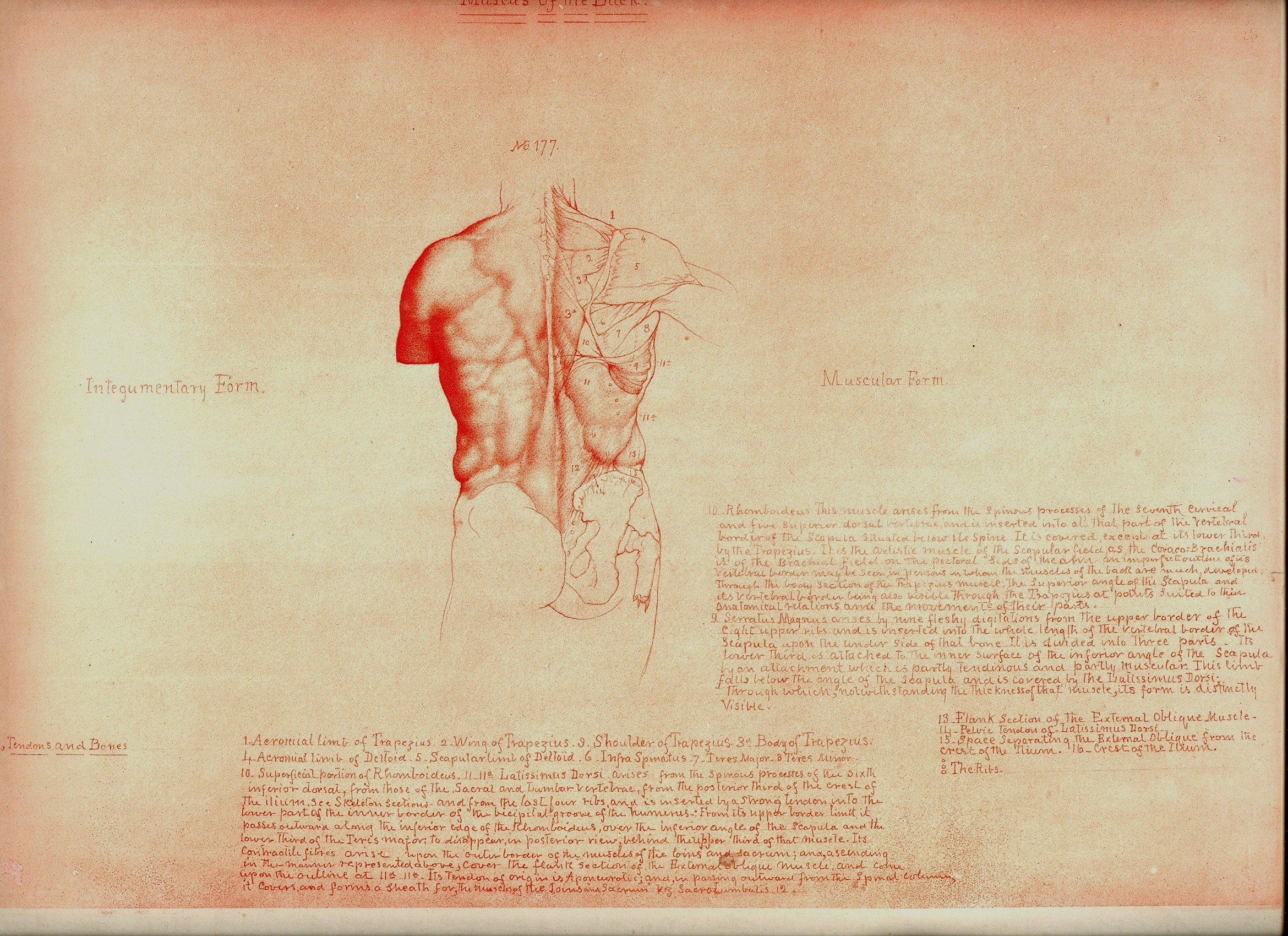
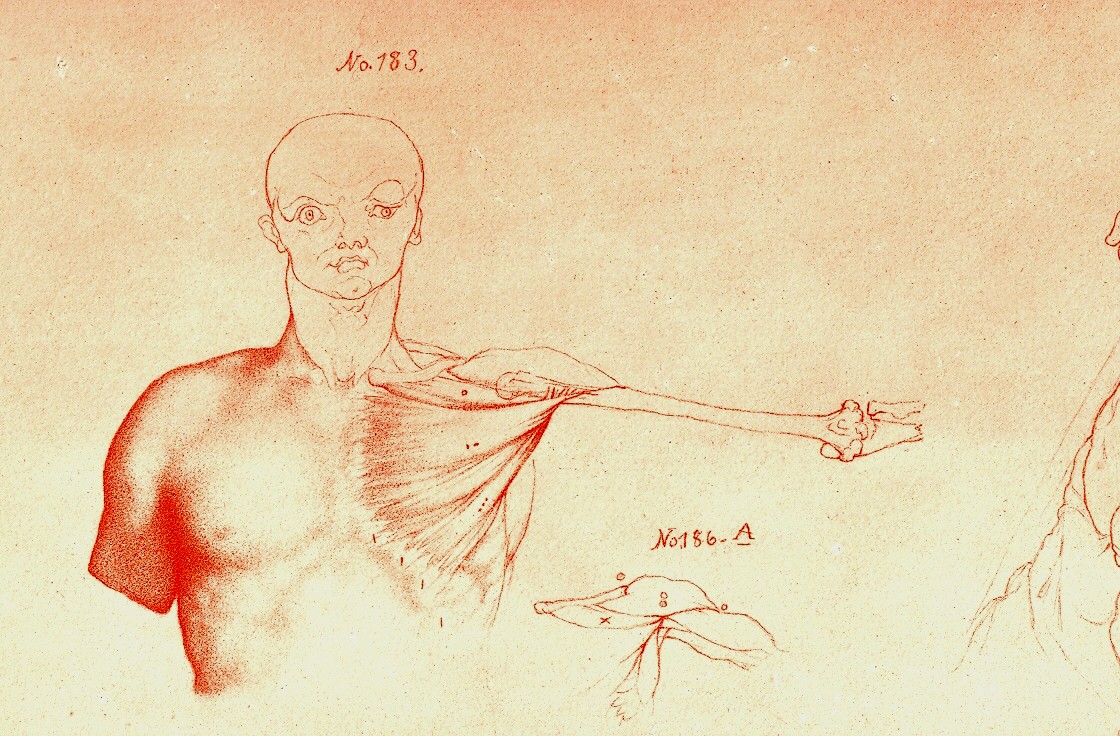
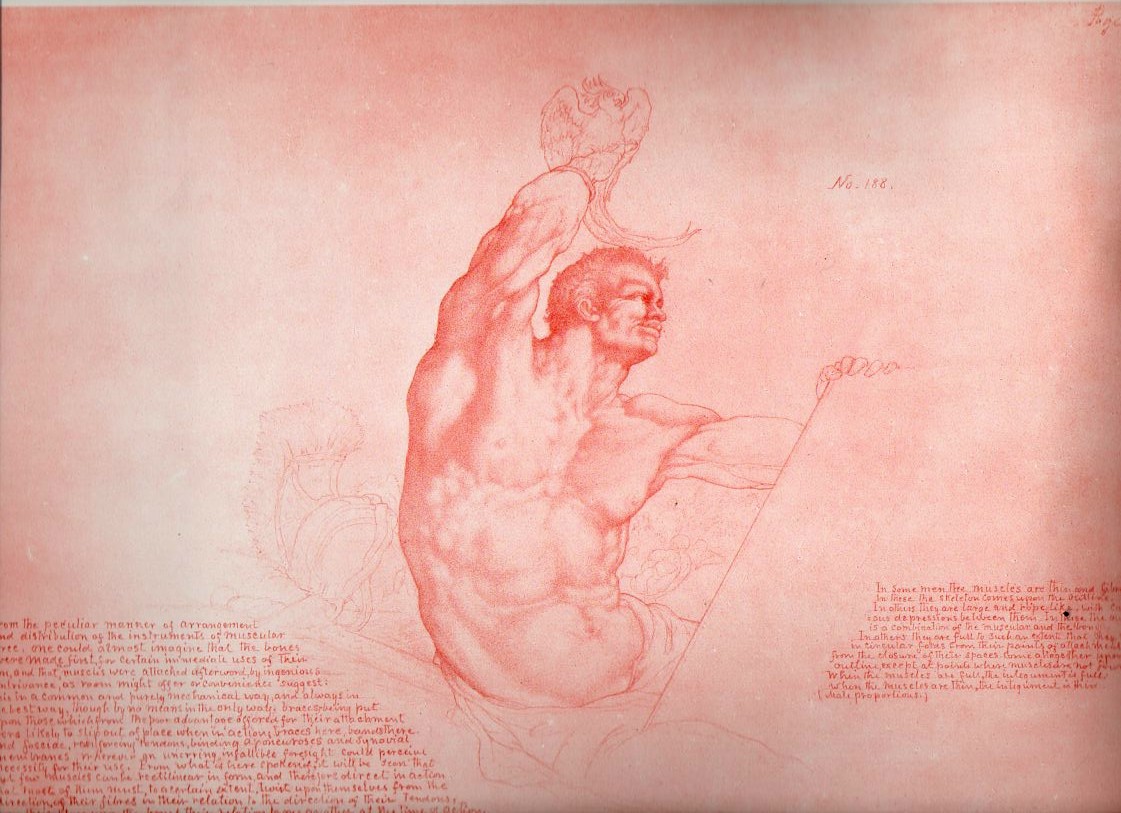
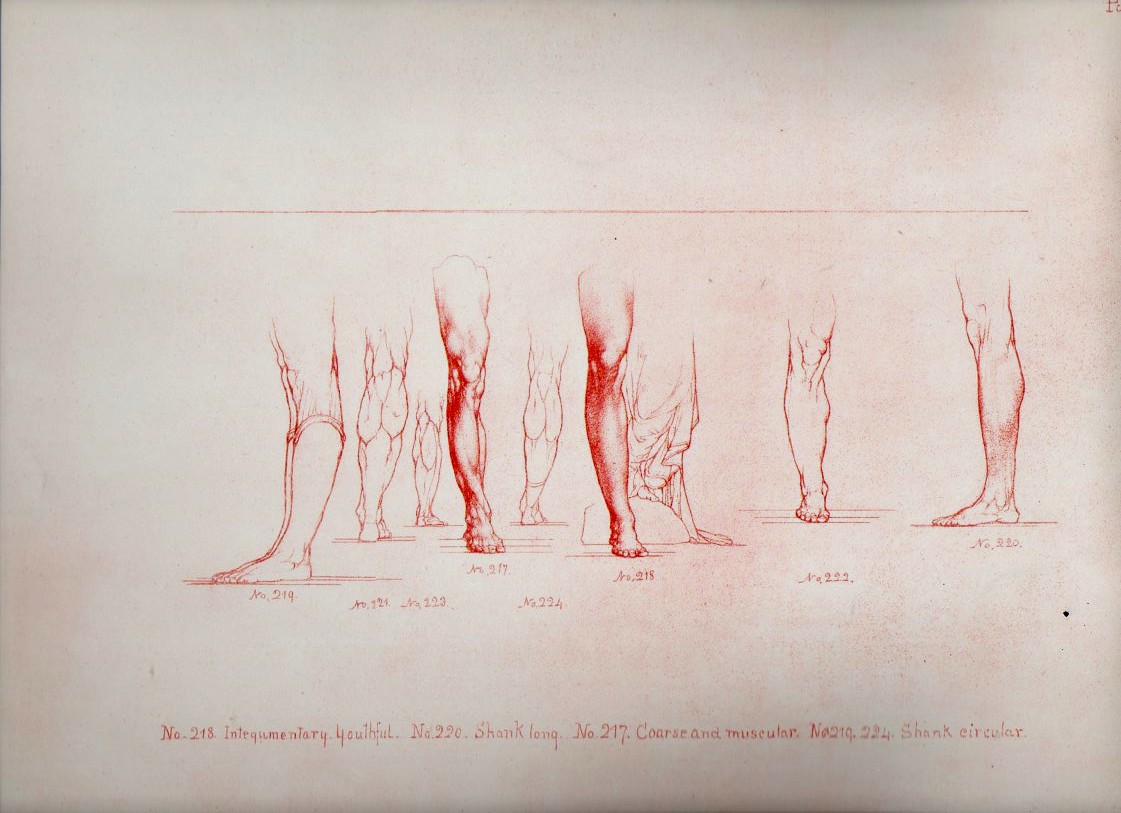
    Looking at old prints sometimes reveals more than just their own history, simple or not:  there are, from time to time, subtle bits of otherness that creeps into the image, if you allow yourself the time to see it.  And sometimes looking at images of the past reveal a little of the future, or the possibility of the future. A great example of this is William Rimmer’s (1816-1879) Art Anatomy, this edition published in 1877 (and about which I wrote earlier in this blog1).

    Blog==June 29--rimmer back

    Blog==June 29--rimmer pecs det

    The work reminds me of at least two touchpoints, one from art, the other literary.  First and foremost, the added elements, the humanist touches and flairs (and I mean Humanist as in the 16th century variety) , the mytholigizing elements, the little designs that are added to the anatomical details

    that run throughout the course of the work,  remind me of the work of the Dadaists that would come forty years later.  As will be seen below, there really isn’t much necessity for all of the added extras, the fabulous add-ons, that Rimmer incorporates in this work.  This part of the work definitely has an antiquarian flavor to it, the major anatomies of the 16th and even into te 17th century having a pronounced artistic flavor to them.

    In a more removed sense, I get a heavy dose of memory of Marcel Proust from the Rimmer images.  In a sense, Rimmer is trying to affect change, an instability, into the most common and stable presentations in art, human anatomy.  There is a strong his history of presenting anatomy in an artistic format–Vesalius is one famous example–where skeletons are posed reading books, or holding their skin or contemplating  a(nother) skull–but not so much past the late 17th century.  Though very few of the “decorated” anatomies have ever taken their artistic license quote so fabulously as Rimmer.  And Proust I think is a Great Destabilizer–he works very hard to push the center of gravity away from where it should be on just about everything.  He drags himself to the proposition at hand, to the memory, to the situation, and though all of his great personal destabilizers–his allegeries, his allegeries to the things that he loves, his allergies to his allergies, his vast catalog of physical complaints, his pale melancholia, his fits, his spectacular memory, his ability to see differently, and on and on, all seemed to coalescence into a colossal ability to see even the smallest detail outside of its small details.  Perhaps this is a stretch, but that is the literary sense-impression I have from Rimmer.

    Notes.

    1. For some reason I never included any of the images available for sale in my blog bookstore–though now I have.

    Rimmer496

    Rimmer495


  • Baroque Weeping Baby Skeletons, the Creation of Man, Genesis and a Tiny Bit of All That.

    JF Ptak Science Books  Post 1357

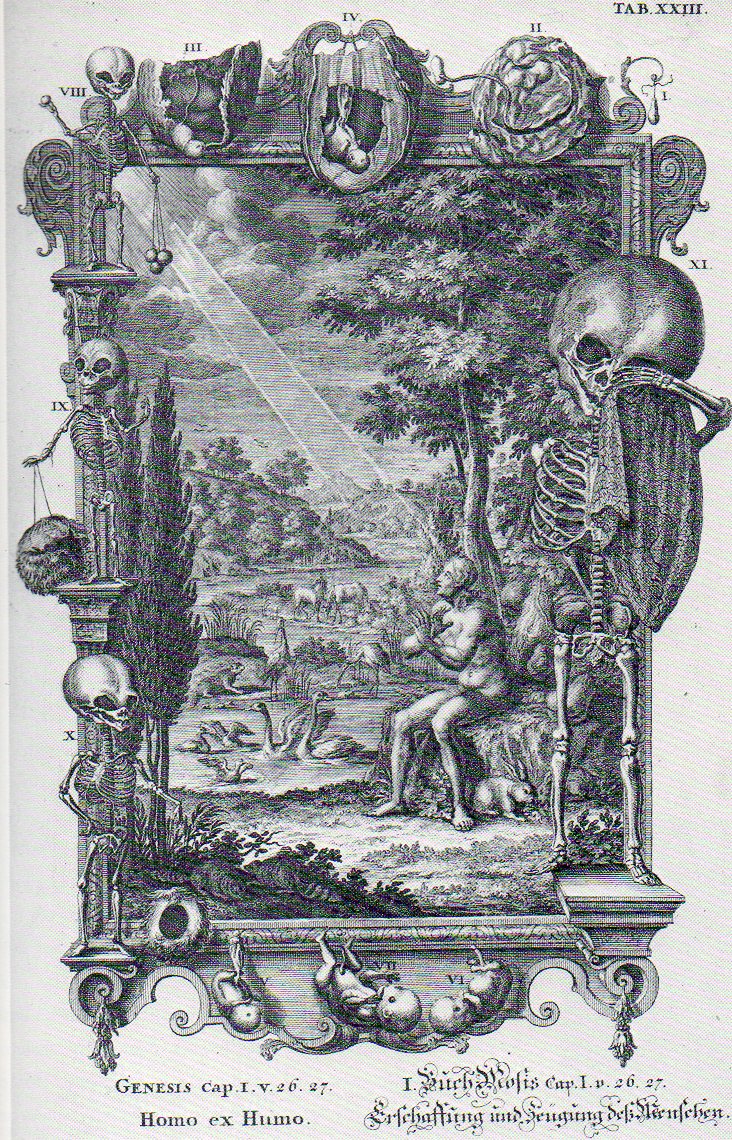
    Jean-Jacques Scheuchzer’s Physique Sacree (published 1732-1737) is an enormous, plumply illustrated thing, an extraordinarily diverse work on the Old Testament and the antique sacred and its relationship to the panoply of natural philosophy.  Its  759 illustrations are usually given overly-encrusted decorated borders by a diverse and at times bizarre selection of themes from biology, geology, astronomy, physics, chemistry, and whatever else seemed to work. It is a production of the High Baroque and high imagination, working within the very definite confines of ecclesiastical squareness and scientific roundness–and somehow the pegs all seem to fit, for Scheuchzer.

    The image that I latched onto [and which is available at 200% if you click through it]  illustrates Genesis I 26, 27:

      Baroque480

    “26: And God said, Let us make man in our image, after our likeness: and let them have dominion over the fish of the sea, and over the fowl of the air, and over the cattle, and over all the earth, and over every creeping thing that creepeth upon the earth.
    27: So God created man in his own image, in the image of God created he him; male and female created he them.”

    Indeed.  We can see the pure holly light (appreciably wide as it gets to its subject than when it started, where it is also degraded)  extending diagonally across the image to a surprised/fearful Adam, who is popped into a landscape of the newly-created.  But it is the border illustration that is most extraordinary to me–it is an 11-segment depiction of the birth process, told almost exclusively in baby skeletons.  The story begins at top-right corner, with perhaps a hint of conception, and then through  developmental stages II (embryonic) and then III/IV (taking us through the third month) and then V through VII (showing perhaps through the seventh month or so), displayed in a top- and bottom-middle display, and not in order.  I really don’t know enough of developmental anatomy to say what is depicted in images VIII through XI, except to note that–of course–they are all skeletons, and the last is weeping. 

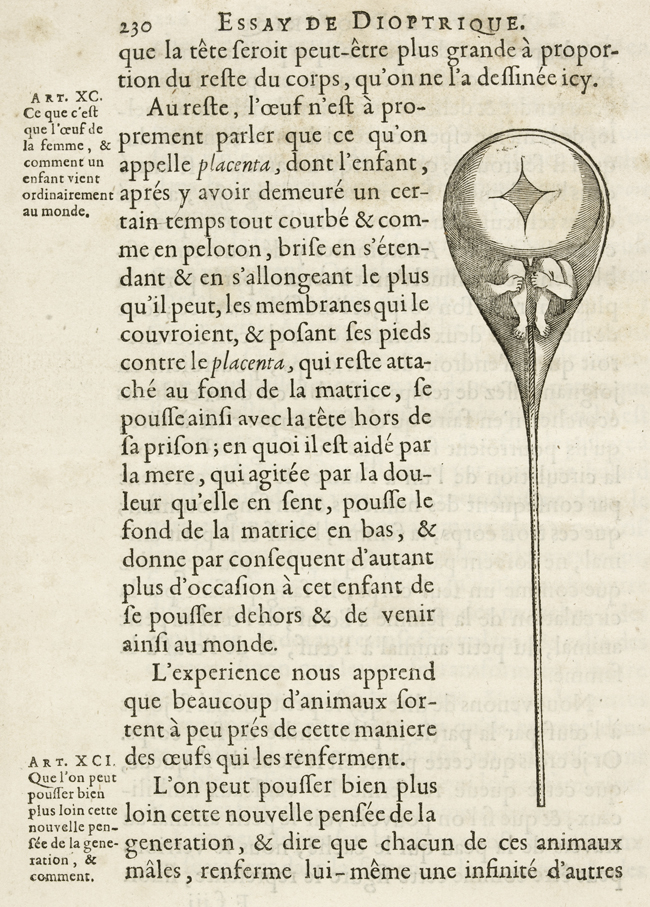
    Spermatozoa seem to be missing in images I and II, or at least Scheuchzer didn’t make an attempt to show them at work, even though he must’ve been aware of their existence, discovered  fifty years earlier (in 1677) by Leeuwenhoeck.  But this discovery certainly didn’t get in the way of maintaining the theory and belief in the homonuclus–the tiny, preformed person carried completely within the sperm and implanted in the woman who served basically as an oven, a receptacle.  Scheuzcher believed on the other hand that the homonuclus was located in the ovaries–still part of the preformationist camp, but getting closer to elevating the importance of woman in embryological development.

     [All that said I don’t know the reason for the weeping skeleton; or, for that matter, what the things are that the two skeletons at upper left are holding.]

    The homunuclus, famously illustrated in Nicolas Hartsoeker’s Essay de Dioptrique in 1694: 

    Ovary Hartsoeker


  • A Note on the History of Bad Beds (Bedlamia 2): the Utica “Crib” and Putting the Insane to Sleep, 1880.

    JF Ptak Science Books  Post 1349

    Following an earlier post that I made here on the History of Bad Chairs (including a contrivance made by Declaration-signer Dr. Benjamin Rush that immobilized the body, dulled the senses and kept the feet of its mental-patient-occupant in cold water for “treatment”) I’d like to start a short series on bad beds.  This part was excited by another historic psychological/shrinkological tool from the arsenal of doctors who treated the insane: an instrument of torturous treatment called the “Utica crib”. 

    It was a device used, obviously, to constrain the person placed in it–so that they could be controlled during the day if drugged and still not controllable, and to be used at night if the patient wouldn’t stay under their covers.  It looks pretty terrible, a squashed baby bed with a prison door for a top.  It comes as one in a long line of bad beds, including psychiatric hospital”tumbling beds”. centrifugal beds, and of course spiked beds of the inquisition, stretching beds form the same, Aushwitz  “beds”, and on and on, devices of torture made from places of rest.

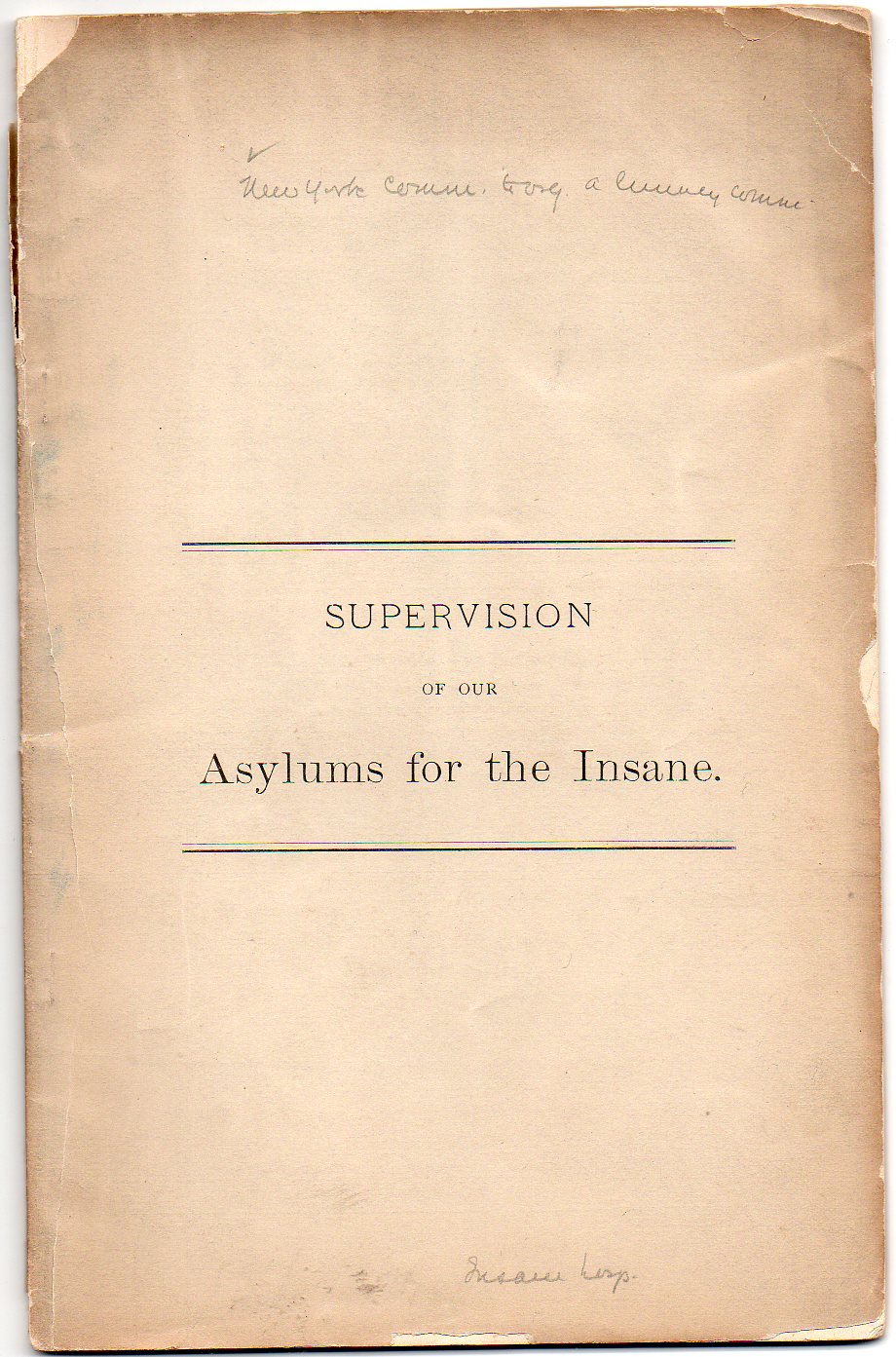
    Insane supervision453 The Utica Bed of the New York State Lunatic Asylum at Utica–if not actually constructed in Utica it was popularized  there–was put into use at about the same time that the facility was opened in 1843.  According to the numerous reports of New York State asylums directors in Supervision of our Asylums for the Insane1, it was about time (in 1880) that folks in control of the state institutions start to deal with their charges in a medical, treatable, fashion; to try and remedy the effects of mental illness rather than just use the asylums to warehouse societal outcasts.  And it was in this paper that the Utica Crib (and other retraining devices) came under very severe criticism. (The original pamphlet is available at our blog bookstore.)

    Edward C. Spitzka makes the point that the institutional that use devices like the Utica Crib–which was supposed to prevent patients from injuring themselves–actually had far more incidences of  patient injurious than those institutions which–with a similar clientelle–didn’t use them at all.  Spitzka made a very compelling case the the Utica Crib and other devices were archaic remnants of an earlier and darker time in the treatment of cases outside mental health, and they they were far more injurious to patients than not having them at all.  They also, he said, demoralized the staff of the hospital and depressed the medical supervision, making a mockery of treatment. All in all, Spitzka’s insights were accurate and prescient. 

    Notes:

    1.  Report of the Proceedings for Establishing a Board of Commissioners in Lunacy for the State of New York, published by Sherwood & Co., NYC, in 1880.  55pp.


  • Phantom in the Opera: Questions about Darwin and Einstein and Music

    JF Ptak  Science Books   Post 1170

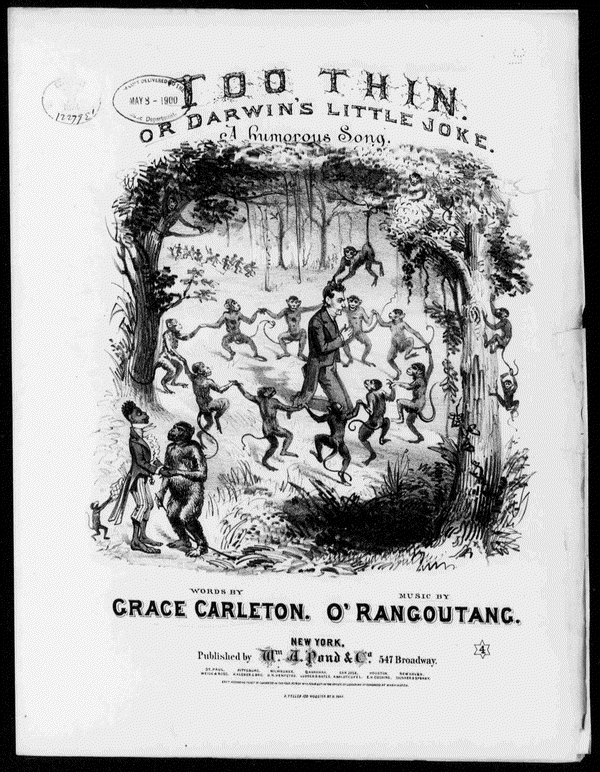
    There are unending missing pieces for me in the works of the greats (literal “phantoms” in the Latin phrase for their collected works, “opera”), one of which came bubbling up reading the excellent piece by Michael Barton (Dispersal of Darwin blog) on Darwin in caricature.  It  put me in mind of Darwin and music, or, really, Darwin caricature in music In the 19th century.  There doesn’t seem to be much to it, at least for the old stuff–there’s plenty of modern music, but it seems that there aren’t very many old notes.  There is this example that I found at the Library of Congress site, though:

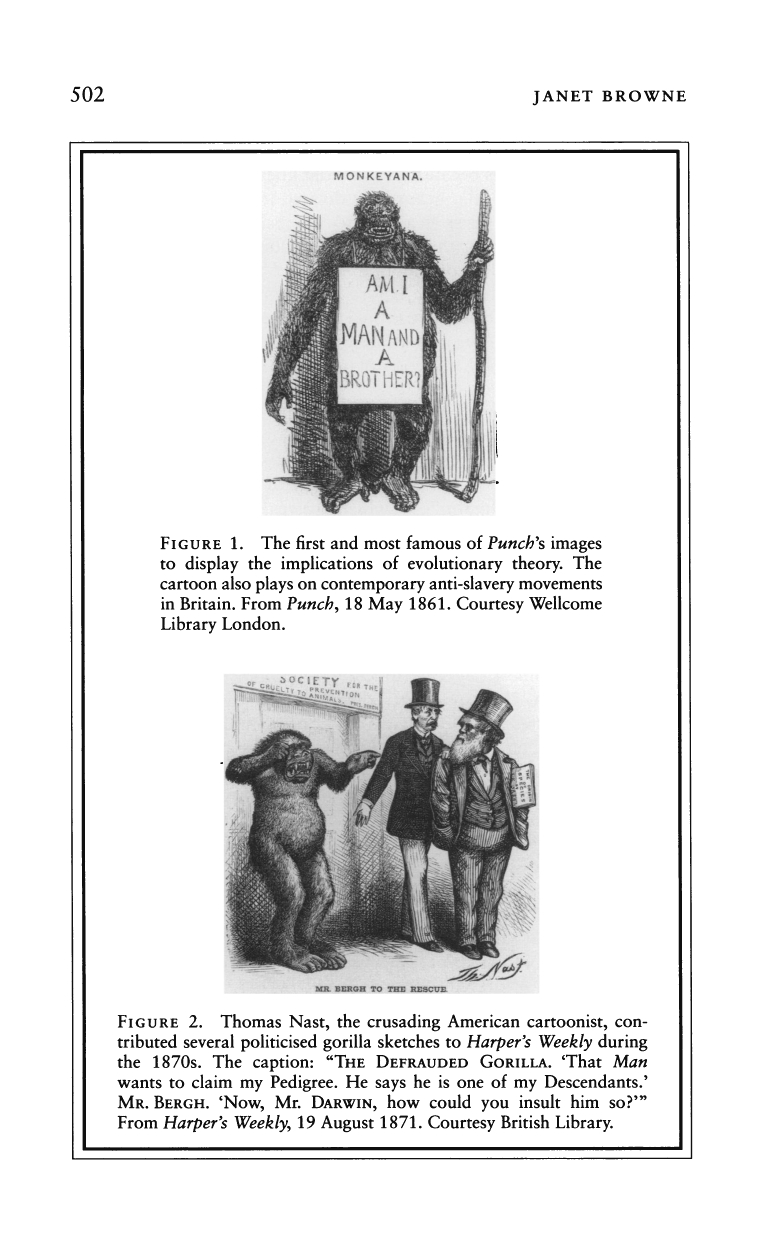
    “Too thin; or, Darwin’s little joke by O’Rangoutang”published in New York by William A. Pond, 1874, which came 13 years after the appearance of the first Darwin caricature (in London’s Punch magazine, 14 May 1861, seen below).

       Darwin sheet music

    This does bring up an interesting issue for me, though it is one frankly that I do not understand, about the relationship between Darwin and music. It is also somewhat related to an interest in Einstein and music, though for different reasons.  With Einstein, it has bothered me a bit that he was seemingly uninterested in any of the new forms of music that appeared in the revolutionary period of 1895-1925.  And, for that matter, Einstein’s artistic tastes were also quite classical and conservative.  Given the enormous changes in the fields of music and art and literature, and that all entered revolutionary periods during this time, and that Einstein brought his own revolution to bear on the world during the same period,  it is a little odd to me that his tastes were so restricted by an earlier time. 

    The issue with Darwin’s relationship to music is different, the tone-deaf Darwin applying his interest in music to the theory of sexual selection in animals and (perhaps) humans.  This idea seems to have first made an appearance in a posthumously-published 1844  (“The Essay of 1844″) work in Francis Darwin’s Foundations of the Origin of Species, published in 1903, but more specifically in his Descent of Man (1871):
               
    “The capacity and love for singing or music, though not a sexual character in man, must not here be passed over. Although the sounds emitted by animals of all kinds serve many purposes, a strong case can be made out, that the vocal organs were primarily used and perfected in relation to the propagation of the species. ” (Darwin, C. (1871) The Descent of Man . John Murray: London p. 587)

    “All these facts with respect to music and impassioned speech become intelligible to a certain extent, if we may assume that musical tones and rhythm were used by our half-human ancestors, during the season of courtship, when animals of all kinds are excited not only by love, but by the strong passions of jealousy, rivalry, and triumph. From the deeply-laid principle of inherited associations, musical notes in this case would be likely to call up vaguely and indefinitely the strong emotions of a long-past age. As we have every reason to suppose that articulate speech is one of the latest, as it certainly is the highest, of the arts acquired by man, and as the instinctive power of producing musical notes and rhythms is developed low down in the animal series, it would be altogether opposed to the principle of evolution, if we were to admit that man’s musical capacity has been developed from the tones used in impassioned speech. We must suppose that the rhythms and cadences or oratory are derived from previously developed musical powers. We can thus understand how it is that music, dancing, song, and poetry are such very ancient arts. We must go even further than this, and, as remarked in a former chapter, believe that musical sounds afforded one of the bases for the development of language.” (Darwin, C. (1871) The Descent of Man . John Murray: London p. 593)       

    As I said, I’m not sure at all about where music lives in the works of Darwin, or, for that matter, where it lived in his head.  It is interesting that music may play some role in the history of humans and animals, though it seems that Darwin had a distanced relationship with music itself.  He would certainly listen–his wife was an excellent player–though it seems as though Darwin didn’t have a musical sinew in his body.  I’m not saying that you have to be able to “bend” a soccer strike like Beckham in order to explain it; I’m just curious about the great man’s relationship to music.  I’m afraid I haven’t anything more than questions on this.

    Two interesting items for consideration:

    Charles Kivy, Charles Darwin and Music, Journal of the American Musicological Society
    Vol. 12, No. 1 (Spring, 1959), pp. 42-48

    Darwin in caricature: A study in the popularisation and dissemination of evolution
    Author: Browne, J. PROCEEDINGS OF THE AMERICAN PHILOSOPHICAL SOCIETY 12/2001 Volume 145 Issue 4 Pages 496 – 509
      

    And the first caricature (I think) from the London Punch

    Darwin punch 18 may 1861


  • A Note on the History of Bad Chairs

    JF Ptak Science Books   Post 1161

    There are all sorts of famous seats:  seats of wisdom, of power, of lameness, of government, of discontent, of honor, of learning, of war; there’s the hot seat, the best and worst seats, a seat on the board, a seat on the bench, a seat at the bar; there are captain’s chairs, endowed chairs, and famous chairs (like architectural gems/mules of Mackintosh, Wright, Saarinen, van der Rohe, Eames, Gehry, LeCorbu) and famous seats (at the original Yankee stadium or a Roman coliseum). 

    The Rush Chair / Restraining Chair

    There’s another side to this–the History of Bad Chairs.  It is certainly easy to spot the grossly offensive examples–chairs for torture, the working chair of Adolf Hitler, the chairs Bluto used to clobber Popeye with, the terrible captain’s chair that belonged to Capt. Kirk, the offensive seating in Anthony Burgess’ Korova Milkbar in A Clockwork Orange, the final aspect of the condemned as they witnessed the bad aspect of St. Peter’s judgment chair, (and for the Red Sox fan, the chair into which Bucky Dent’s home run fell), and so on.   Then of course there’s the electric chair, the battleground of not only the philosophically opposed sides for its use, but its earlier fight as well when it was used as field fodder for the war between Thomas Edison and Nikolai Tesla for the adoption of their opposing electricity delivery systems. 

    But there’s a subcategory for the subcategory of the History of Chairs and the History of Bad Chairs– the unintentionally bad chair.  Benjamin Rush–for all of his good work, for all of his American Founding Fathers heritage and background, for all of his wide humanitarian work–has committed an ignoble applicant to this category.  Actually, his ranks among the leaders for unintended gruesomeness, a consequence of his attempt  to do good, but just gone wrong.

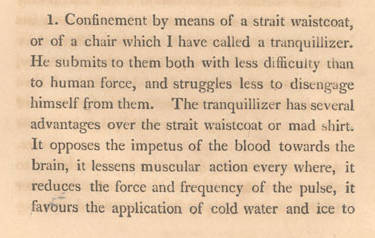
    Rush’s (1745-1813) name is on the Declaration of Independence, and he is also one of the founding fathers of American psychiatry.  A medical doctor, his background is very deep in care and ethical treatment, a social liberal who was against slavery and capital punishment, and who was determined to improve the condition and treatment of the mentally ill.  Unfortunately, in using the tools at hand and operating with a deep understanding of the contemporary knowledge of neurology and mental disorders, Rush sought to treat the severely deranged (or most institutionally uncorrectable) with his own creation–the tranquilizer chair.  Once certain calming measures had been exhausted, Rush described how to retrain combative patients reeking in misbehavior and keep them from ruining their clothing, or harming the handlers, or ruining the furniture of their cell, introducing the use of his immobilizing chair.  (There was an associated “mad shirt”, similar to what we know as a straight jacket, that was also invented and employed by Rush.)
    His invention, ironically,  was very high corporal punishment, what wound up being a torture device for what good it did and the cost it extracted from the person who was to sit in it. 
    + blog 10.25 rush 1

    As we can see Rush also commented that the application of cold water and ice would be facilitated with the tranquilizing chair.

    A practice that continued at least into the deep 19th century was the dunking chair, whose intent was to “shock” the misbehaving “patient” into docility or normalness.  Here we see

    Hydrotherapy

    some poor sot being drenched from above and also being hosed from the side prior to being dunked into a vat of cold water.  No telling how long one might be submerged or how calm the waters must be from bubbly interruptions before being hauled out. 

    Circulating Swing

    On par with these other instruments was the rotating chair, which was supposed in some way to confuse madness into something not-mad–that, or subdue an unruly patient, whichever came first.  

    Then there is the dentist-like chair used in Terry Gilliam’s Brazil, where the subject–Sam Lowry, accused of crimes against a mega-dystopic state–is tortured into a catatonic state, and in that thin wall between being conscious an dnot so lives in a utopian existence in his mind far from the reach of his captors. 

    brazil-torture-cell-1.jpg

    There are of course all sorts of obvious, different chairs in which torture was committed upon people, but I really don’t need to picture them here, everyone knowing what they were, or are:  spiked chairs, garroting chairs, spine compressors…you get the picture.  Nasty, terrible chairs. Intentionally bad.

    Notes:

    In addition to the tranquilizing chair, Rush recommended a host of other approaches to controlling the “raving lunatic”.  The founder of American psychiatry made the following suggestions:

    –Place “noisy” patients into total darkness, (keeping “madmen” for 24 hours or more as required)

    –Cold shower baths, slowly, for 20 minutes to four hours

    –Solitude; keeping the patient alone, in teh dark, with no visits, no speech, nothing; an “indispensible necessary” to securing correct behavior.

    –Bloodletting, with “the quantity of drained blood should be greater than any other organic disease” (page 189), and should “draw 20-40 ounces of blood unless fainting is induced”.

    –“Low diet”, which was actually starvation, having the patient fast for one to three days, and then feeding “just” vegetables, “of the least nutrious value”.

    –Freezing, in addition to cold shower baths, as in placing the patient in the middle of the night outside in freezing cold.  Ice could also be used on the head, but not before the head is completely shaved, as the effect of hair on the brain and madness “we know not”.

    –Blistering, which is not a known process to me, except that blisters be induced on the ankles rather than on the head or neck.

    There was also treatment via purging, emetics, and the employment of small amounts of opium “to waste the excitability” and reduce fatigue to keep the patient awake.


  • Ennui and Renaissance Surgical Tools

    JF Ptak Science Books   Post 1147

            “Jeopardy is jejune now: naïve knight
            finds ogres out-of-date and dragons unheard
            of, while blasé princesses indict
            tilts at terror as downright absurd.”    –“Ennui”, by Sylvia Plath

           “Ennui is the poetic state that occurs just before depression.” made-up Twain quote, seconded by a  made-up  Bierce definition, “Ennui.  Depression without the imagination.”
    Ennui-doctor420
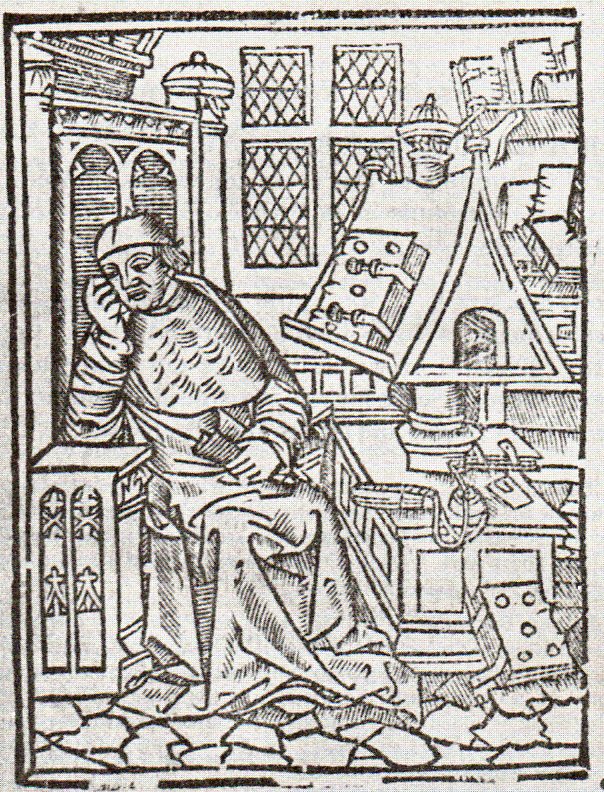
    Ennui seems to have always been in the possession of those who could afford possessions–the laboring classes could only be affected with derangements and sloppiness and laziness, but the wealthy among the people of the earth could have ennui. They could afford to.  And it seems to me that in my own walk-through in the history of illustration–especially relating to the sciences–that those most often depicted with ennui were saints and doctors, two generally mutually-excluding classes.  I’m not so sure why this is the case for the doctor, or surgeon, or barber,  or sawbones–it was not a pretty jog in the centuries leading up to our own.  [Pictured here is a physician with things on/not on his mind, from Andrew Borde’s The Breuiary of Healthe, for all maner of syknesses and diseases…” from 1556, and which turns out to be one of teh first modern books on hygiene.]The working  conditions were exceptionally difficult (in general), the treatments were blood-under-the-nails barbaric, and the survival rate for those under your care was poor. Perhaps it was the tools? They were’nt very glamorous things, either–nor were


    Ennui-surgical tools a419
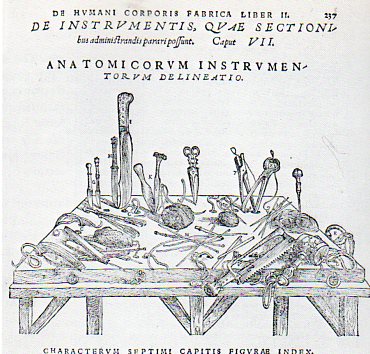
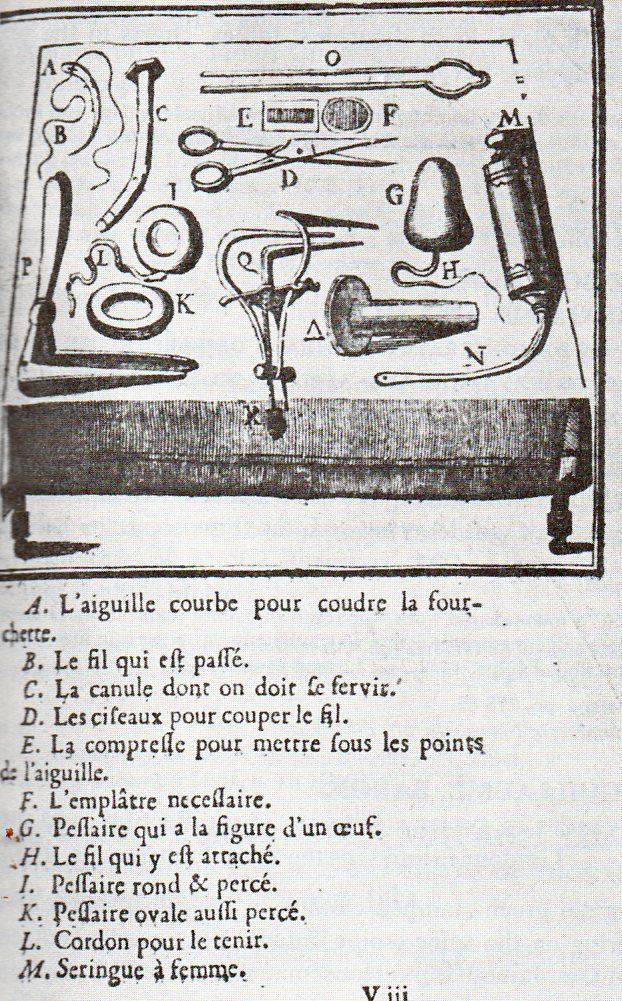
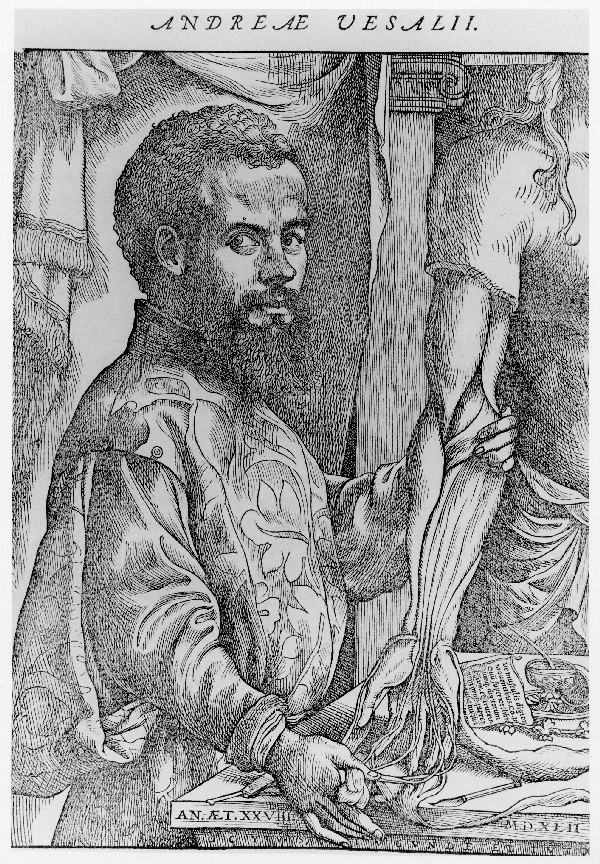
    they necessarily clean. [Image of from Vesalius’  De humani corporus fabrica . 1543, (“On the Fabric of the Human Body”/”On the Construction of the Human Body”).  I prefer “fabric” because of Vesalius’ superb re-discovery of muscle…]  Urgent cleanliness in the surgical amphitheater wouldn’t come along until Sir Joseph Lister in the mid-19th century; so working as a surgeon in a bad hospital with rudimentary tools in bad working conditions and little light could not for a happy existence make.

    Ennui--surgial tools421

    Vesalius [The differences between the two engravings above seem to our modern eye to be quite minute; but for the 160 or so years between the two publication dates, the advancements were considerable, given the time.  This second image is a display of midwifery tools and instruments, which I guess wouldn’t make anyone today feel very comfortable–surviving childbirth for the woman was still a substantial issue, though less so than it had been in the first half of the 16th century. Image: Pierre Dionis, Traite Generale des Accouchements...Paris, 1718.]
    And yet imping his way through all of this is Vesalius1, who managed to accomplish accumulate mounds and piles of good data, organize and interpret it and then have the whole thing illustrated (with 200 of some of the greatest anatomical images ever made) and published all before he was 29 years old.  Perhaps he wasn’t as susceptible to be provoked or drawn into ennui as most professionals of the time, being such a genius and coming from such a royal medical lineage2 as he. Or perhaps he was able to avoid the ennui that came with the brains and the genes.  Ennui didn’t seem a part of this physician’s makeup, even though he was deeply in debt and a man slightly out of place. Maybe he didn’t have time to develop ennui, as he was an extraordinarily busy man who was dead at 50. 

    So, judging by the looks of things on the surgeon’s table, and imagining the stuff that needed fixing and the objects to fix it with, perhaps the physician was led down a path of slowly not being able to do anything…at….all.  Ground to a nub, a stop, a chin-in-hand moment.  Or not.                           
    ______________
    Notes:

    1. Vesalius’ revolutionary treatise on anatomy–which stressed anatomy in relation to physiology–was a clear break with the Galenic tradition, and was one of the first of the modern works on the subject. His book was published the same year as Copernicus’ masterpiece. 

    2. Vesalius’ great-grandfather, grandfather and father were professors of medicine, the last two being the Royal Physician and apothecary to Emperor Maximillian


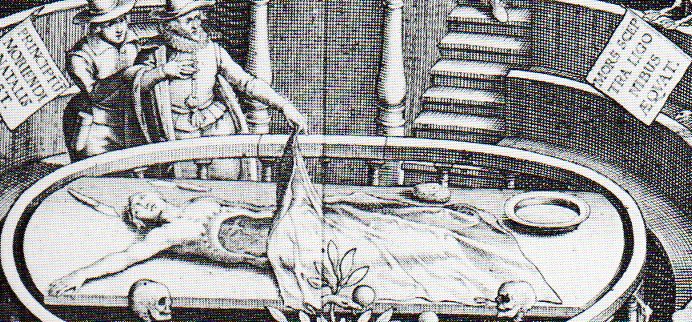
  • Comfortable Bones, the Skeletons of Adam and Eve–Dissecting a Dissecting Theatre Print, 1616

    JF Ptak Science Books  Post 1143

    “You can have it all, my Empire of Dirt”–Mr. Cash  “We are but dust and shadow”–Mr. Horace

    Can there be anything more comforting than for a believer to see the
    skeletons of Adam and Eve, the proof of the origins of all anxiety? 
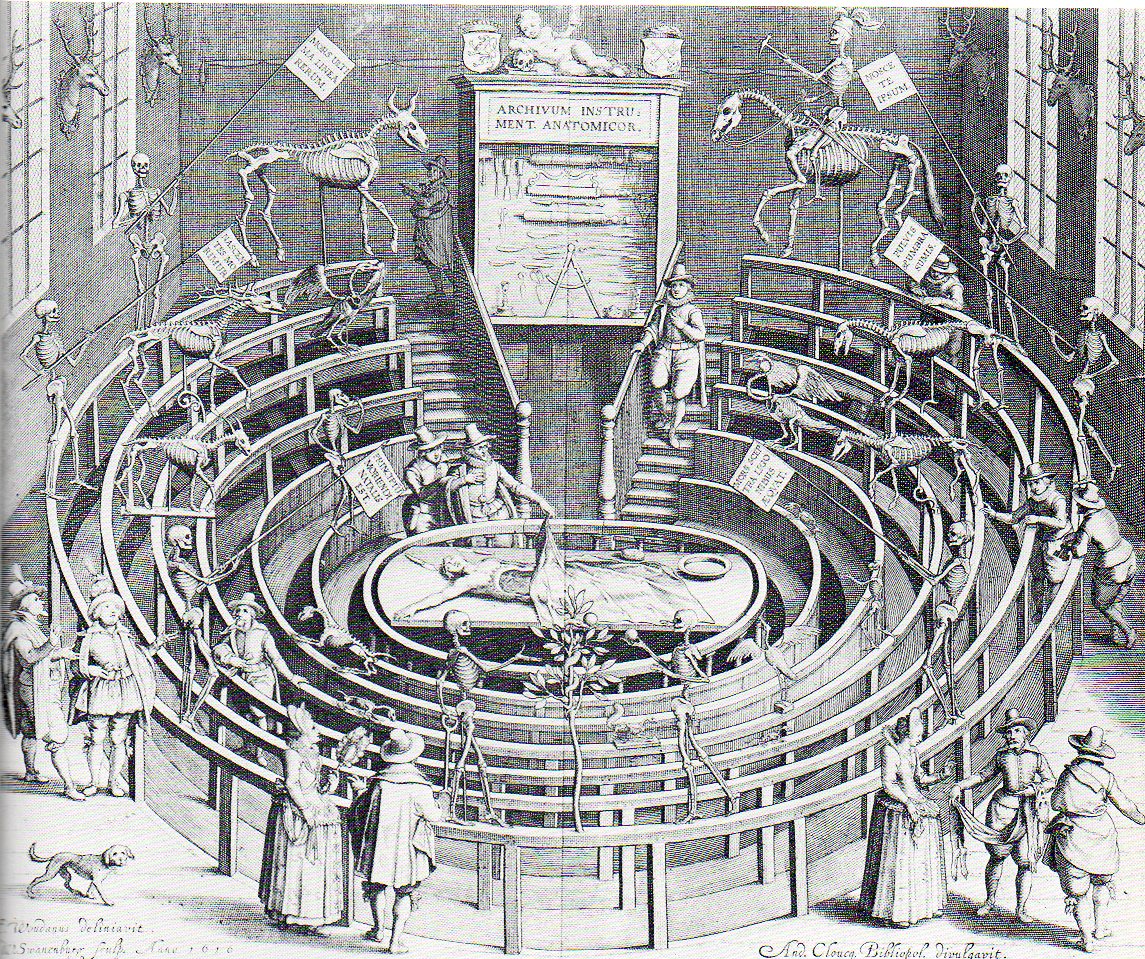
    Probably not.  But their skeletons displayed in this engraving by
    WiIllem Swanenburgh (after

    Adam skeleton det389

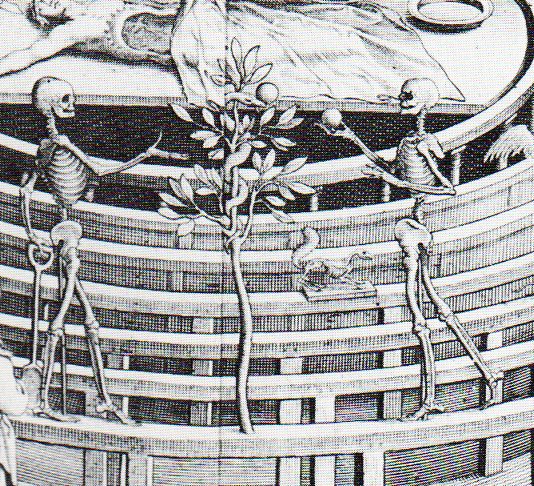
     the painting by J.C. Woudanus) published in 1616 were recognized as pure iconographic ornament.  They decorated the last layer of the dissecting laboratory/pit, an immortal reminder of mortality–perhaps aggressively so, since people were there to watch other people take apart humans and animals and such, which would seem to be a nice reminder of the Big Sleep that awaits all. But no matter, they wer there, Eve with apple, Adam with spade (?), the tree with the forbidden fruit flourishing still around all of the bones, the snake surviving as well.

    Adam skeleton388
    Visitors to the dissecting amphitheatre here in Leiden were treated to a bone museum during the days in which the place was not being used for its main purpose, though we do see here that a cadaver is being semi-privately displayed, a burgher taking a reticent look (cloth held between thumb and index finger?) while the compatriot takes cover behind him. 

    Adam skeleton cadaver393

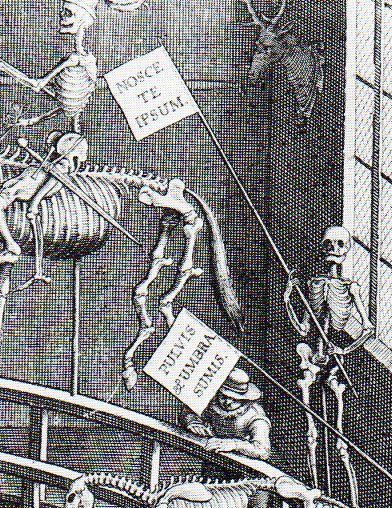
    There are plenty of other onlookers to this scene, though most of them are dead,.  It doesn’t prevent them from holding up sings/banners with messages for the living, though.  


    Adam skeleton signs391

    “Pulvis et umbra sumus” (“we are but dust and shadow”, Horace) hangs just above the head of the man who looks as though he might be anxiously fiddling with a mole.

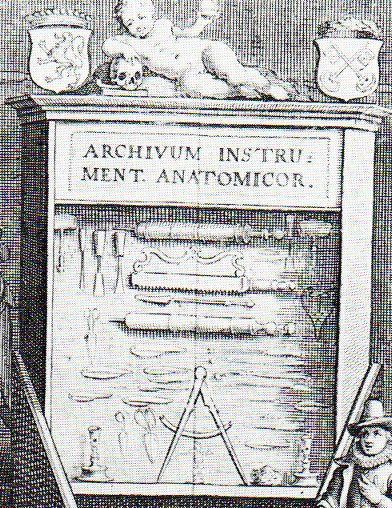
    The tools of the trade hang in an auspicious place, attracting only the attention of two horse skeletons.–scalpels, scissors, maws, a crowbar, a big backsaw-like device, and of course two giant syringes for drawing out “fluids”.

    Adam skeleton tools390 

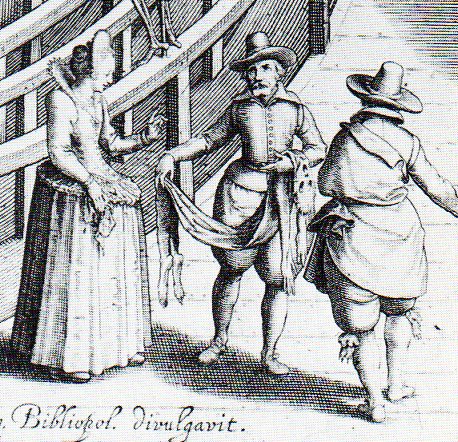
    Lastly, I couldn’t tell what the people were doing in the far right bottom corner until I magnified the image a bit–the man is holding the entire envelope of skin of a human, flayed in one piece.  What is it that they’re saying?  What does one say when offered an armful of skin?  The image of whole-body flayed skin isn’t terribly uncommon in 16th and 17th century anatomy books–except that they’re usually being held by the disectee, and not by a living/walking/talking person. 
    Adam skeleton people392


  • Radioactive Suppository Sex Aids & Radium Toothpaste: Shining Lethal Nonsense

    JF Ptak Science Books  Post 1139

    Radium chemical co385

    “Radium was what was bad and worse
    a shiney and shining curse,
    till we stuck uranium in there,
    to make me have my ‘splodin’ hair…”–Lyrics to the nonexistent song “Satan’s Tooth in Me”, (1946),  by Blending “Loose Tooth” Bender

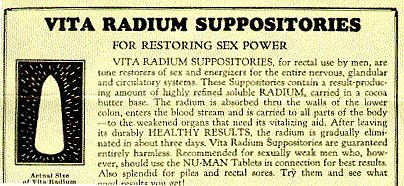
    If this was 15 May 1915, we could all be attending the Illinois State Medical Society’s annual meeting at the Masonic Temple in Springfield, Illinois.And if we went to booth 18, we could’ve bought some fine, newish radium-based products that would be enjoyed drinking or bathing in.  And all for the cause of human progress, the radium-based nonsense promised cures for all sorts of ills:  rheumatism, dandruff, dull teeth, gout, sexual problems, general malaise, and on and on. 


    The exceptionally important discovery by the Curies was made 17 years before this event, with the medically-unknown problems of radium waiting in the wings for another decade or so after this.  In the meantime, there were many companies that took advantage of the unknown qualities of radium (as happened with the use of X-Rays for all sorts of quack applications) using it as a shining addition to dozens of products.

    Many of these companies employed the real stuff, affecting thousands of people, radium-based cure-alls being ingested, injected, applied and bathed-in. For example, there were numerous companies distributing ‘radium water” (such as “Radithor” by William J.A. Bailey’s company), radium suppositories (“in a cocoa butter base”), toothpaste (“Doramad”, distributed by Doramad Radioaktive Zohncreme during WWII, to Germans), cosmetics (“Tho-Radia”), and many different varieties of radium-enriched healing belts (to be worn or slept on).  There were plenty of other products that used the “radium” name but didn’t actually use the substance itself, further selling the idea of its usefulness on the individual level.  There was radium beer, nail clippers, starch, cigars, polish, headache tablets, razor blades, butter and of course, condoms.

    Radium--suppositories

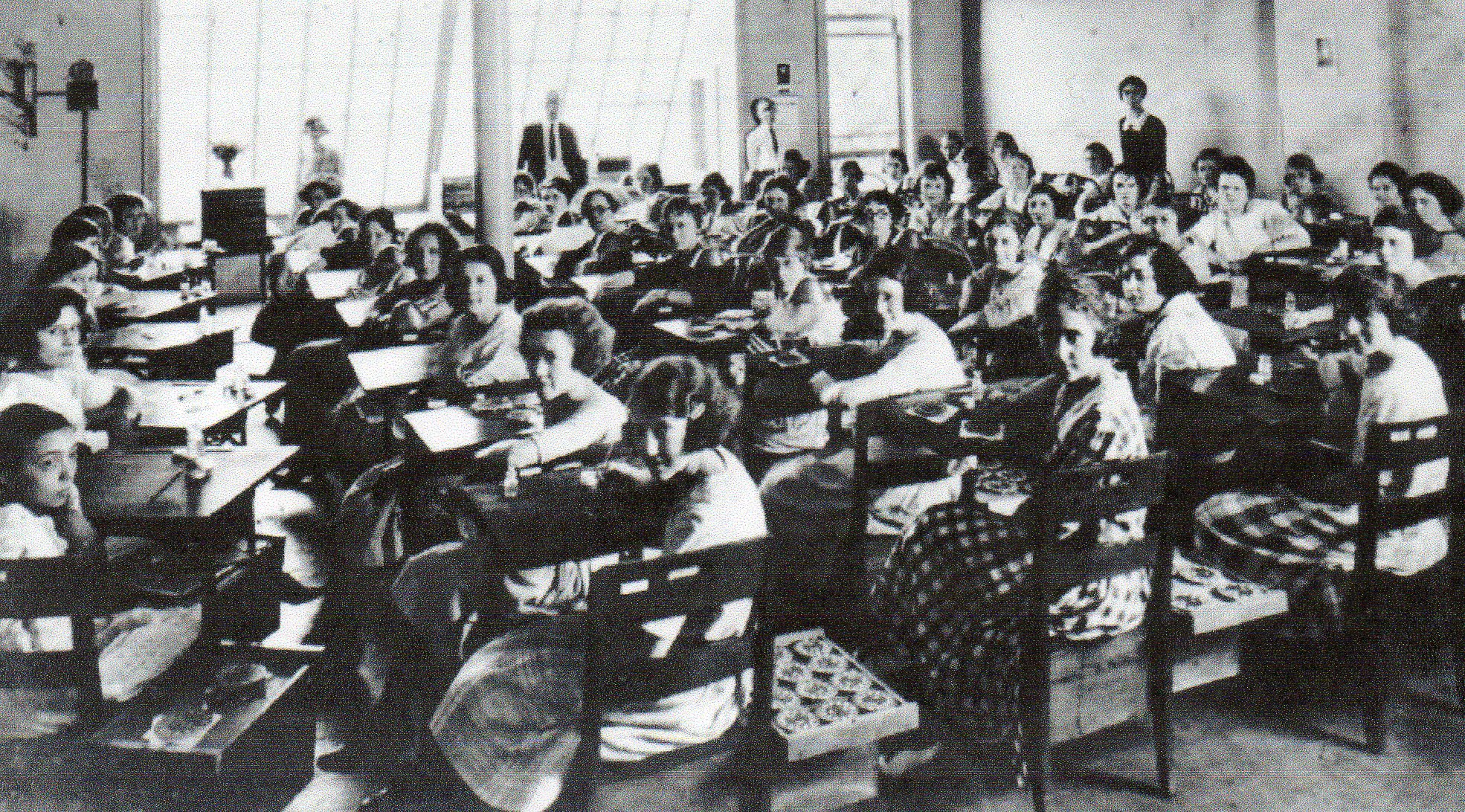
     Perhaps the most famous case of misguided application of radium was in the case of the radium dial painting women, more than 1200 employed by four companies1 during the ‘teens and ‘twenties (and some later) to apply radium-laced paint to make watch face/dials luminous in the dark.  It wasn’t necessarily the radium in the paint that got to so many of these women and killed them–it was the fact that they would generally put their paint brushes on the tips of their tongues to get a better painting point with the camel hairs.  Ingesting the radium paint like that was

    Radium women 2384
    [Image: Oak Ridge Associated Universities, radium dial painters, ca. 1920.]

    the killer.  The manufacturers said, basically, that they “tried” to discourage this behavior, but there was nothing that they could do about it, and so the brush-to-mouth to cancer/necrosis continued until people started dying.  It was then that the whole connection between radium and cancer was discovered.  Of course some of this continued into the ‘forties and ‘fifties, with “safeguards” in place, but, well, something else just needed to be done.  

    I guess that the point of telling this story is that we can shake our heads at this sort of behavior now, but it is assured that entire populations will be shaking their quizzed-up collective noggins with what we practice now (that is deemed to be “safe” or “appropriate”), and all in just a few short decades.  This is always the case.  Its just hard, sometimes, to identify what these practices are while they’re happening, and then have the willingness to do something about it. 

    Notes

    1. The four main companies included Radium Dial Company (with 213 such workers), Waterbury Clock (with 404), US Radium Company (with 73), and Luminous Processes (with 608).