A Daily History of Holes, Dots, Lines, Science, History, Math, Physics, Art, the Unintentional Absurd, Architecture, Maps, Data Visualization, Blank and Missing Things, and so on. |1.6 million words, 7500 images, 4.9 million hits| Press & appearances in The Times, Le Figaro, Mensa, The Economist, The Guardian, Discovery News, Slate, Le Monde, Sci American Blogs, Le Pont, and many other places… 5000+ total posts since 2008.

Category: Medicine, History of

  • A High Achievement in Obstetric Art, 1781

    JF Ptak Science Books   Post 1473

    Anatomy bauldeqocue483

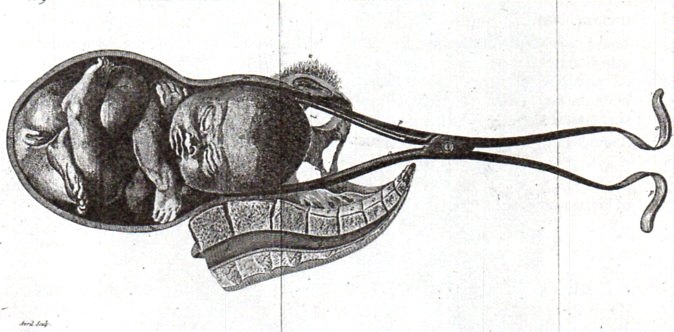
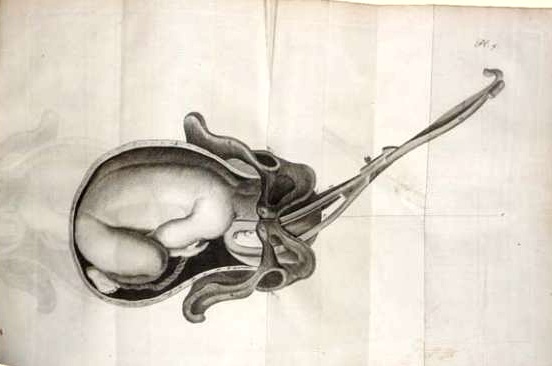
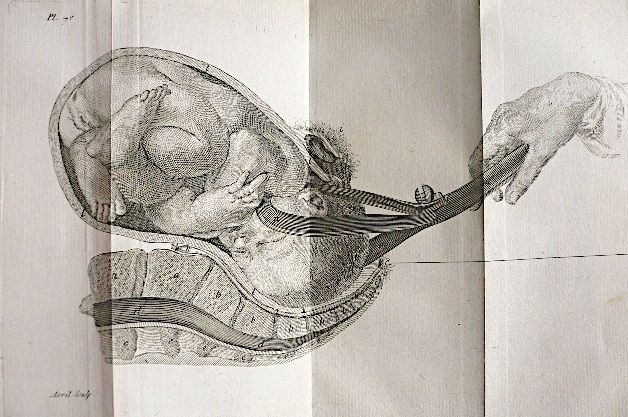
    One of the great thinkers in the history of gynecology was Jean Louis Baudeloque, whose 1781 book L’Art des Accouchemens was perhaps one of the most significant works in the history of obstetrics. This work was important not only for its great clarity and ease of explantion and control of its subject, but also for the exceptional illustrations.  I find them incredible not only for their spectacular detail but also for their control of blank space, a feat not easily accomplished…and I think a somewhat courageous approach to illustration during this era.

      Baudelocque

    For example, in the accompanying engravings (all of which are second generation and so are not nearly as sharp as the originals), we are left with a detailed image of only what was necessary for the explanation in the text, a terribly modern approach to illustration and clarity, so much so that it seems almost impossible that the image was made more than 230 years ago. 

    Baudelocque 2

    Obviously the representation and the subject matter give away the age of the image, but certainly not the design or placement.

    Note:  It should also be pointed out that chief among Baudeloque’s contributions was his teaching career, during which he would instruct upwards of 150 pupils per year (mainly at the Ecole de Sante) in clear and precise terms on his approach to obstetrics, not the least of which was in the use of instruments such as the foreceps and pelvimeter, a distribution of a very useful information base which seemed to have spread exponentially as his students went out into the midwifery field. 


  • Precursor to Zombie-Phone-to-Deadsville: the Telephone Medical Metal Detector “X-Ray”

    JF Ptak ScienStructure513ce Books  Post 1495

    Did President Garfield Die Because of Metal Bed Springs?

    Thomas Edison famously took advantage of a naive reporter, telling the young man that he was working on an invention that would allow a person to telephone dead people–a story that was reported as true, and one which Edison (both thoroughly disgusted and joyful) helped to perpetuate to the day he died by simply not discussing the issue. (This story appears on this blog here.)

    Much earlier, only five years after Alexander Graham Bell first patented and published his invention of the telephone, the device was used by Bell to do some very early electrical medical imaging.  The new President of the United States, James Garfield, had been shot by Charles Guiteau in Baltimore and Potomac Railway Station (on 2 July, 1881, after a lengthy period of semi-abstract stalking and planning) Station in Washington, D.C., receiving fatal wounds in July and which would cause his death later in September.  The problem was that at this point in the history of surgery it was  difficult to locate bullets in the body, becoming more so if the bullet took a non-straight course through the wounded.  Normally, in 1881, a doctor could for example use a device called  a Nelaton probe, a thin porcelain device (as opposed to most other probes, which were metallic) to help locate the embedded bullet.  But given the nature of Garfield’s wounds, this was just not applicable, and the bullet escaped recognition from this and other probes.

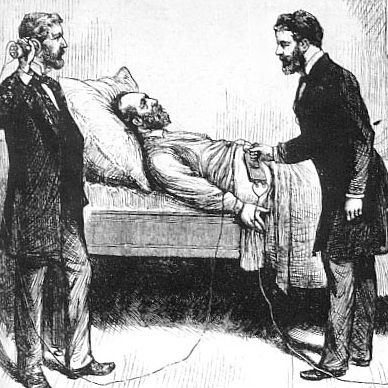
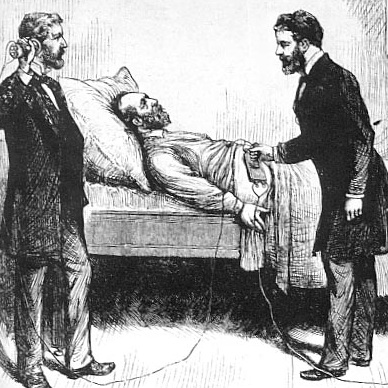
    Bell enters the scene with an electromagnetic invention, the induction balance, which he created to detect interference on a telephone line.  In the process of experimentation Bell recognized that the balance could be disturbed if the metal and battery-fueled probe came into contact with a piece of metal.–basically, the device was a medical metal detector. Bell resolved to use the device on Garfield, passing the probe along the President’s body while another person listened to a telephone ear piece for the telltale “click” of a proximate metallic object.
    Bell telephone garfield
    Bell was not successful with this, or at least not so at this time, and the President died, succumbing to an infection, finally.  But Bell was able to perfect this instrument, something that stayed in use as the principal means of detecting metal objects in the body, and was about as fine an instrument as could be expected, though it was completely eclipsed by the revolutionary machines brought about by Wilhelm Roentgen’s discovery of X-Rays in 1895.  And as it just so happens, the first surgical case in which the x-rays were used was for a case involving a shotgun wound. 

    Finally, one of the reasons why Bell’s instrument didn’t quite work on President Garfield is that Garfield’s bed had a metal box spring, which very well might have played havoc with Bell’s instrument.  Perhaps if there was no metal in examining area, Bell’s device might’ve worked. 

    Notes:

    An earlier and more crude device had been invented by Wilhelm Heinrich Dove (1803-1879, a German physicist and early meteorologist) though I am not sure that it comes into play with Bell’s apparatus at all.

    From Harper’s Weekly, 13 August 1881:

    “The experiments made by Professor Alexander Graham Bell with the view of determining by the aid of the electric current the location of the bullet in the President’s person were of the most interesting nature. The possibility that a time might come when it would be necessary to make incisions at once for the removal of the bullet, without consuming precious time for further consultation, gave to the experiments an importance which added greatly to their interests.”

    “An apparatus known as the induction balance had been used by Professor Bell in analyzing metals. This instrument, modified so as to impart to it the highest degree of sensitiveness, was used in the search for the leaden ball. Its nature is such that it is not easily understood except by electricians. It consists of a battery, two coils of insulated wire, a circuit-breaker, and a telephone. The ends of the primary coil are connected with a battery, and those of the secondary coil are fastened to the posts of the telephone. This latter connection renders audible any faint sound produced by the circuit-breaker, or any change in the pitch of that sound. The coils may be so placed in their relationship to each other that no sound is made by the circuit-breaker. They are then said to be balanced, and the wires are extremely sensitive to the disturbing presence of any other piece of metal. A bullet like that with which the President was shot, before it was flattened, will, when placed within two and one-half inches of the most sensitive point on the pair of coils, cause a faint protest against the disturbance to arise in the telephone. A flattened bullet of the same bulk, when presented with its flat surface toward the coils, will make its presence felt at a distance of nearly five inches. When its sharp edge is turned toward the plane of the coils, no sound is produced beyond the distance of one inch.”

    “With these facts in view, the experiments to locate the position of the bullet in the President’s body were begun. The patient was bolstered up in bed, and he watched the proceedings with mute interest. His physicians stood around. Professor Bell stood with his back toward the President, holding the telephone to his ear, while Mr. Tainton, Professor Bell’s assistant, moved the coils over that portion of the abdomen where the leaden ball was thought to be imbedded. When the sensitive centre of the instrument was immediately over the black and blue spot that appeared shortly after the President was wounded, Professor Bell said, “Stop! there it is.”

    “The experiment was repeated several times — once with Mrs. Garfield listening at the telephone; and she told the President when the coils had been brought to the spot where the presence of the bullet had previously caused the delicate instrument to give forth a singing sound. From these tests it was inferred that in any event the bullet was less than five inches from the surface, and that if it was only slightly flattened, or if its edge was turned obliquely toward the surface, it might be much nearer to the skin. The conclusion reached was that if it should become necessary to remove the bullet at any time, this might be speedily accomplished by two quick cuts with the surgeon’s lancet.”
  • Fantastic Composition & Design: Frozen Anatomy of a Hanged Man

     JF Ptak Science Books   Post 1494

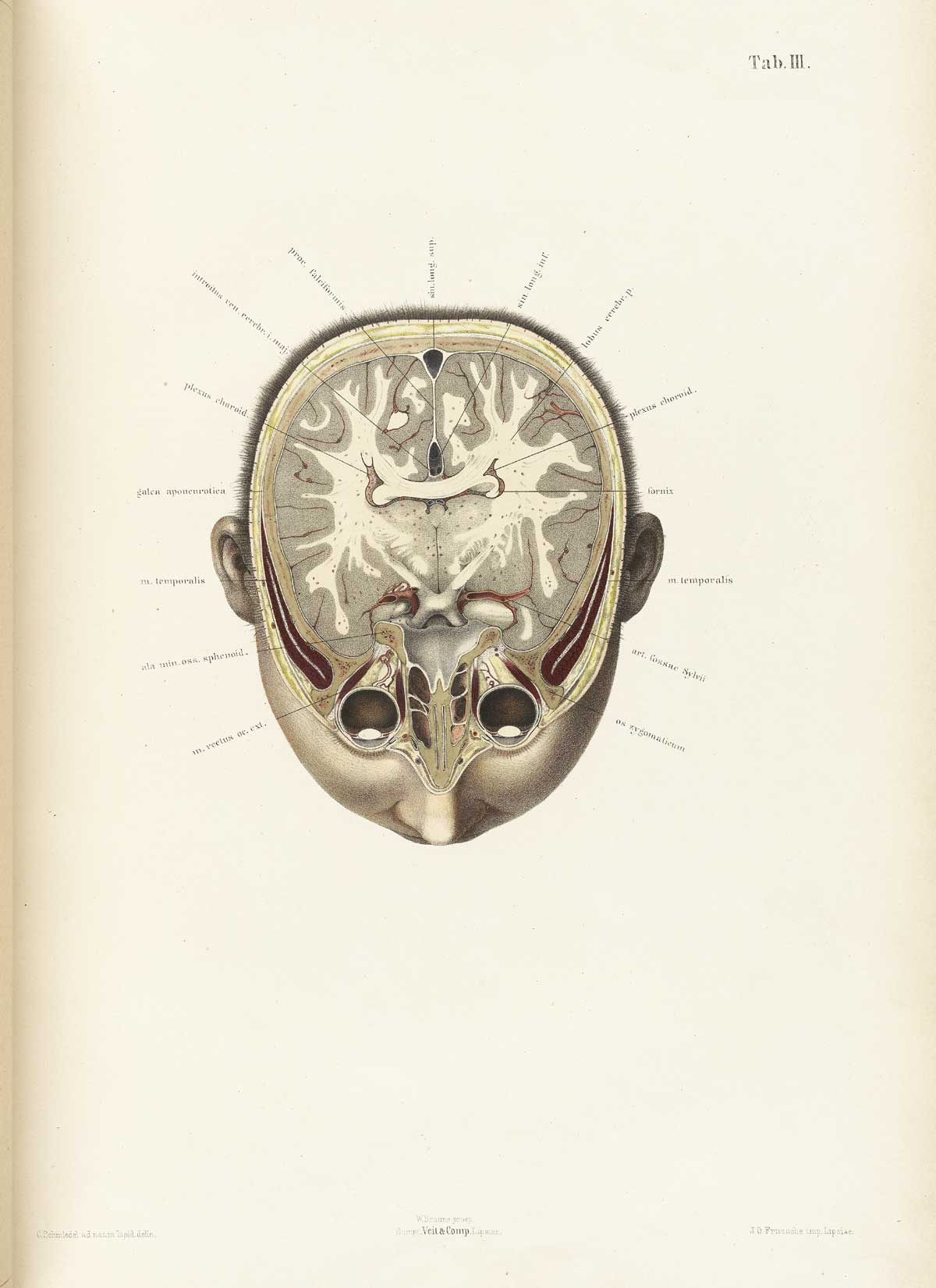
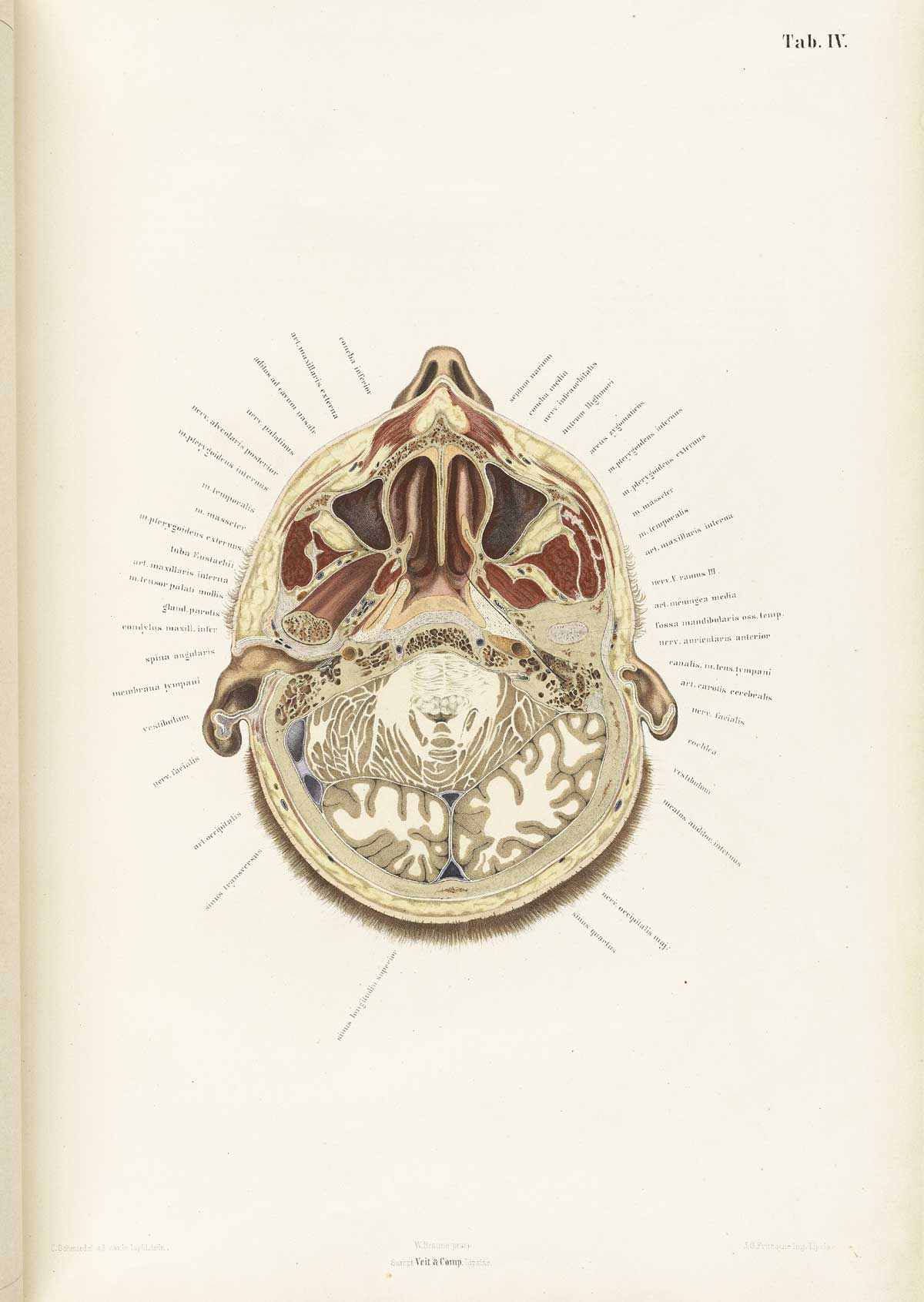
    http://www.nlm.nih.gov/exhibition/historicalanatomies/Images/1200_pixels/braune03.jpg

    Source [National Library of Medicine]:  Braune, Wilhelm. Topographisch-anatomischer Atlas : nach Durchschnitten an gefrornen Cadavern. (Leipzig: Verlag von Veit & Comp., 1867-1872).  And Supplement: Braune, Wilhelm. Die Lage des Uterus und Foetus am Ende der Schwangerschaft. (Leipzig: Verlag von Viet & Comp. , 1872).

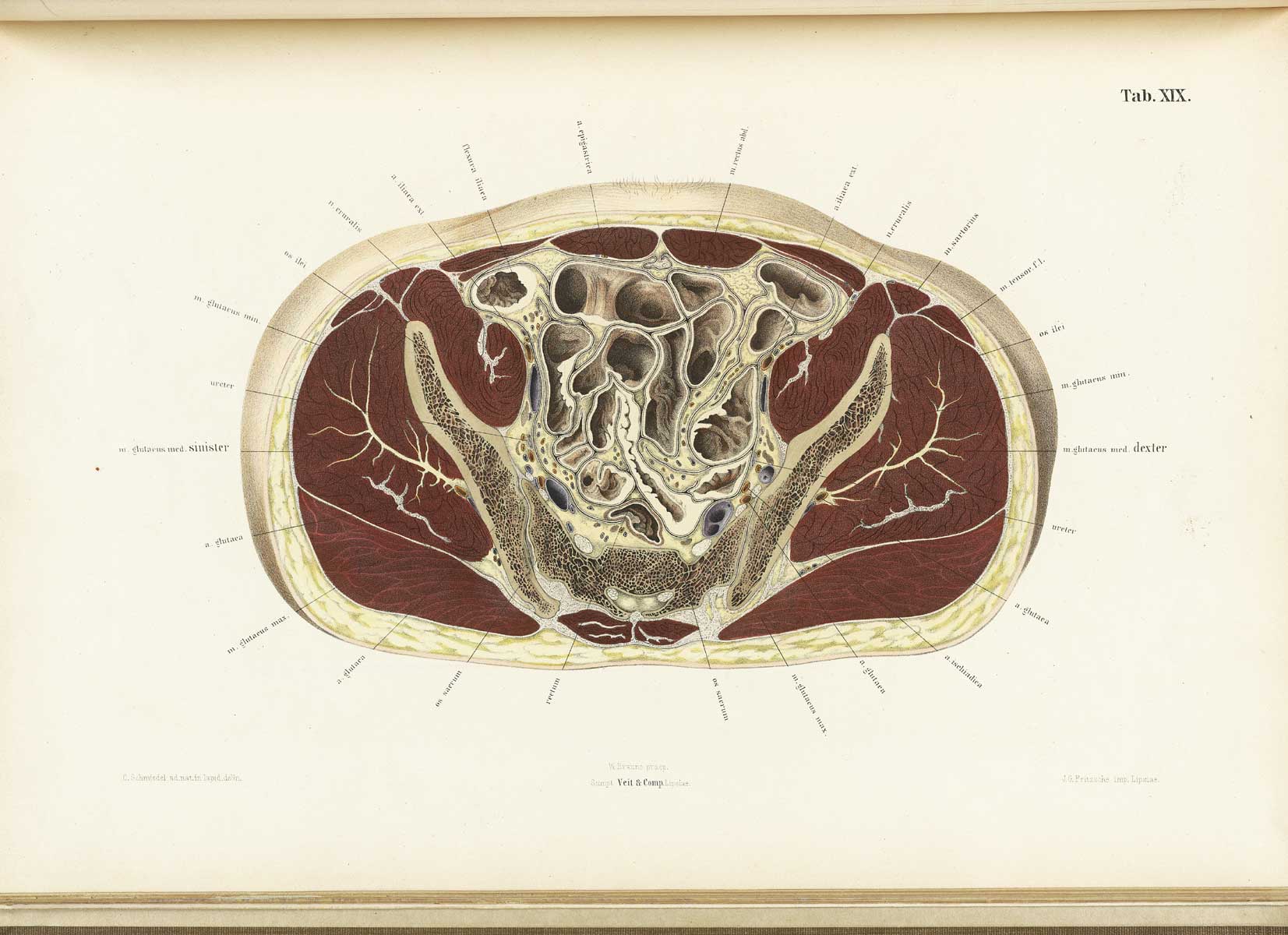
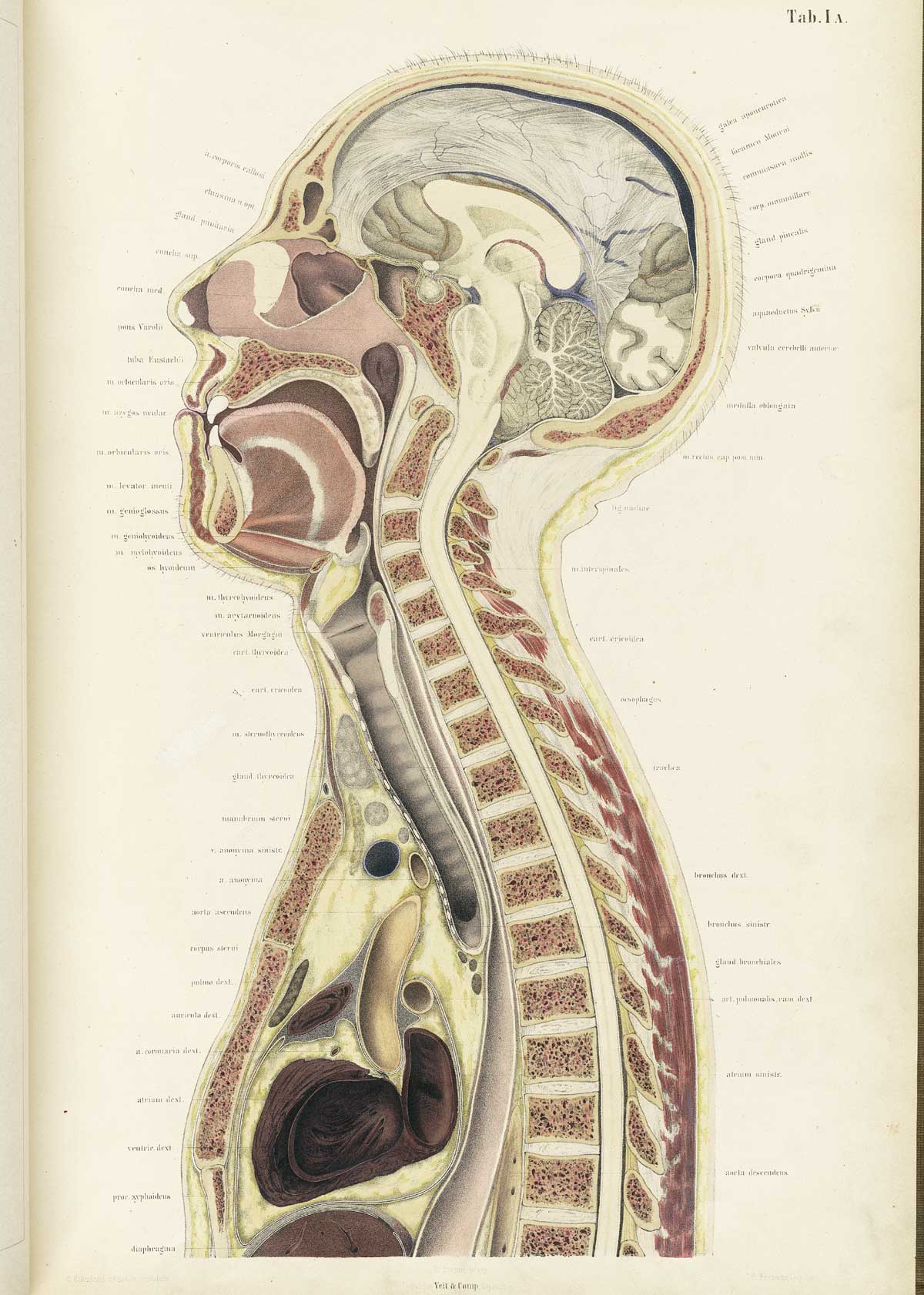
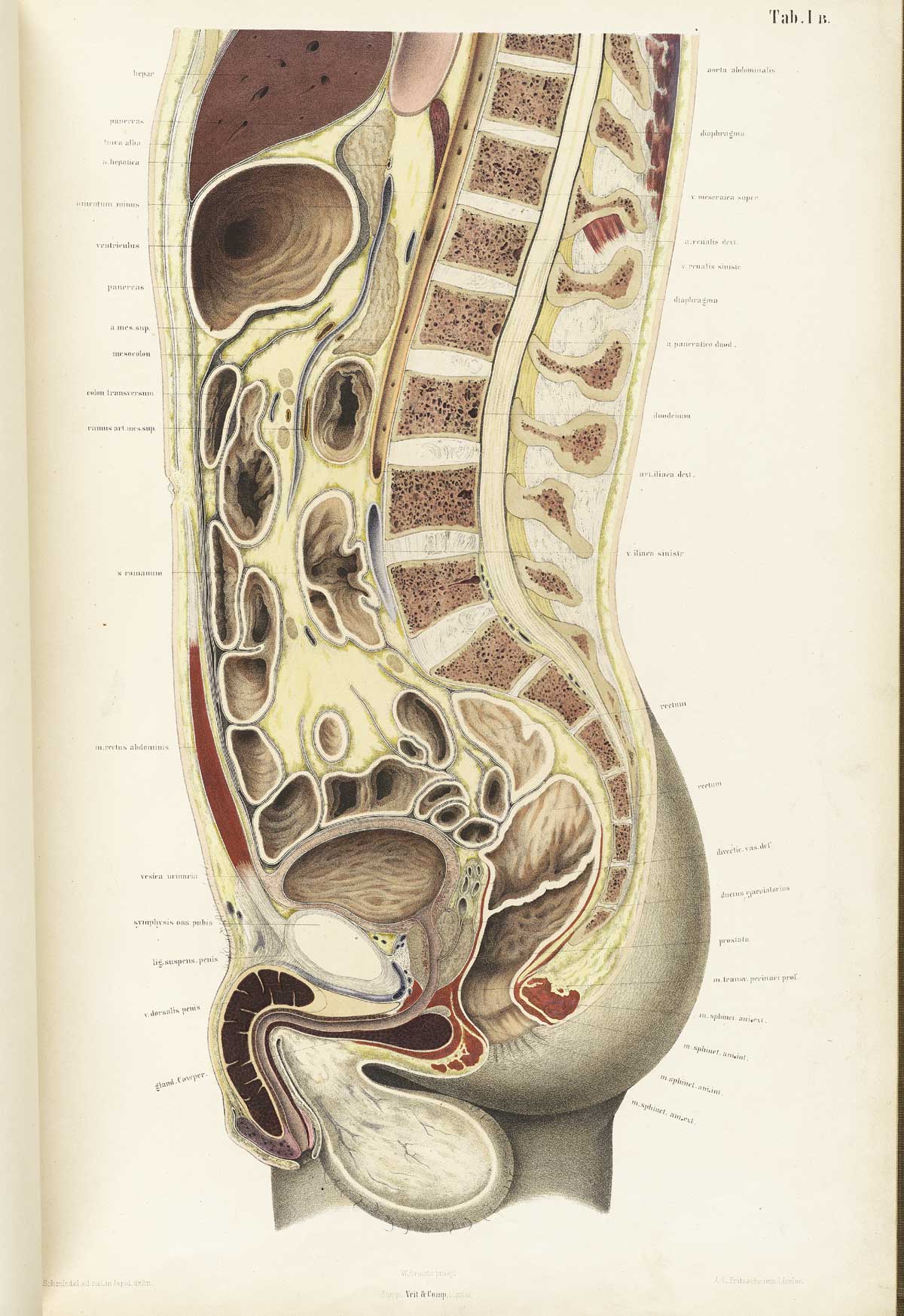
    This extraordinary work is part of an anatomical flap book by Wilhelm Braune (1831-1892), a professor of anatomy at the University of Leipzig.  The image above is a cross-section of the cadaver that was frozen and thinly cut in the similar vein (sorry!) as the more modern Adam & Eve of the Visible Human Project

    Visible human and which  consists of over 30 color lithographs of frozen cross sections of human anatomy.  The male images from the series are described by Braune:

    “[they are] taken from the body of a powerful, well-built, perfectly normal man, aged 21, who had hanged himself. The organs exhibited no pathological abnormalities. The body, which was brought unfrozen, was placed on a horizontal board … In this position, the subject lay untouched in the open air, and at the temperature of about 50 degrees F., for fourteen days. At the end of this time the process of freezing was commenced and completed …”

    http://www.nlm.nih.gov/exhibition/historicalanatomies/Images/1200_pixels/braune04.jpg

    The National Library of Medicine then continues with the description for preparation of the specimens:

    “After sections were cut, thin paper was placed over them and tracings were made of the anatomical features. Similar techniques were used to create the supplement, Die Lage des Uterus und Foetus am Ende der Schwangerschaft, which features large folded plates.  Tables B and C of the Supplement include large flaps showing different views of the lower half of the body, and scans were made of each flap along with the shared upper half (i.e. Table B (view 1), Table B (view 2), etc.).”

    http://www.nlm.nih.gov/exhibition/historicalanatomies/Images/1200_pixels/braune19.jpg

    http://www.nlm.nih.gov/exhibition/historicalanatomies/Images/1200_pixels/braune08.jpg

    Notes:

    Thw work was published in English as: Braune, W. An atlas of topographical anatomy after plane sections of frozen bodies. Trans. by Edward Bellamy. (Philadelphia: Lindsay and Blakiston, 1877)

    http://www.nlm.nih.gov/exhibition/historicalanatomies/Images/1200_pixels/braune01a.jpg

    http://www.nlm.nih.gov/exhibition/historicalanatomies/Images/1200_pixels/braune01b.jpg

    http://www.nlm.nih.gov/exhibition/historicalanatomies/Images/1200_pixels/braune2_B1.jpg


    ·Posted by :

    ·in:

    —

  • The Earliest Art Inspired by the Epochal Discovery of the X-Ray?

    JF Ptak Science Books  Post 1493  [Thanks to Morbid Anatomy for surfacing this fantastic image!]

    Part of this blog’s series on  Blank, Empty and Missing Things:  the Skin.

    The impact of the sciences in (on?) art has been a frequent visitor to this blog–the photographic work of Etienne Marey and the coming of the futurists, the structuring of the fourth dimension, the discovery of the microscopic world, and so on., are fantastically interesting events which at some time bear some responsibility in the history of art.

    The artwork in question appeared in Jugend, Band 1, (February) 1896, and is called “Das Neue Strahlen”, calling directly on the announcement just a few months earlier in 1895 of Roentgen’s “Ueber eine neue Art von Strahlen”. The image depicts a young woman wearing a mask and clearly subjected to x-ray, as we see some parts of her clothing and beneath that the skeleton of her hips and legs, and within her rib cage we see a delicately drawn St. Valentine’s Day-like heart. 

    It seems to me–and this is just working on long memory–that this is an extremely early application of the X-Ray in the art world.  And while the anatomy is nothing new, the getting-to-the-anatomy is:   for the first time in human history, it was possible to see the structure of a body without performing a dissection, and it is this advance that the artist is exhibiting.  It is difficult to appreciate the impact of this advancement now–perhaps it would seem to people in 1895 something like a sudden announcement today that almost all surgery from this point forward is now accomplished with nanobots or a biological robotic element or whatever and which would eliminate virtually all previous complications of cut-and-stitch operations.  Monumental.  It was something like that for Roentgen’s discovery in 1895. 

    In 1895 50-year-old Wilhelm Conrad Röntgen’s ephochal discovery was announced (“Ueber eine neue Art von Strahlen”, “On a New Type of Ray”), which built upon the work of J. Plucker (1801-1868), J. W. Hittorf (1824-1914), C. F. Varley (1828-1883), E. Goldstein (1850-1931), Sir William Crookes (1832-1919), H. Hertz (1857-1894) and the horribly odious Phil Lenard (1862-1947 and who didn’t die soon enough). The experiment revealed as much to humans as did the experiments and inventions of Hooke and Leeuwenhoek on the invisible worlds revealed by their microscopes. Bertha, Roentgen’s wife, sat for 15 minutes while her husband passed his rays through her hand; she ran from the room once she saw the results, revealing her very bones and no doubt a strong sense of the fragility of life, and the strong presence of death.  Many had the a similar reaction to the Kandinsky’s shapes and Malevich’s white circles and red rectangles and Ibsen’s drama and Einstein’s dancing dust and the rogue syncopation of jazz—these newnesses were threatening to all of the established ways of looking at physics, and art, and theatre, and listening to jazz.  It was a new perspective which challenged the firmly established vision of these things, upsetting the nature of comfort and acceptance.    It is probably a very natural reaction to try and protect established memory—but memory is made all of the time, and so should be relatively flexible…at least it is mechanically healthier to allow a little bending than to be rigid and brittle. 

     Notes

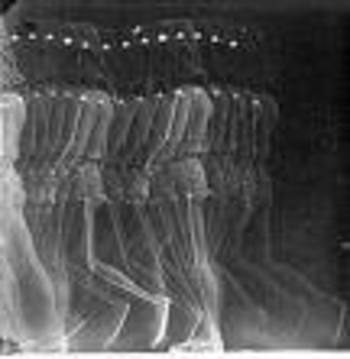
    For example, one of Marey’s sequenced photographs from the 1870’s and which reminds me of  Duchamp’s revolutionary Nude Descending:

    Marey 


  • Electro-LUXurious 11: Medical Electrifying-Liquid Injector, 1862

    JF Ptak Science Books   Quick Post

    This is the fourth in a new series of posts on interesting, early applications of electricity, most of which are taken from the archives of the U.S. Patent Office.

    I’m not sure exactly what Mr. Paige was trying to do with this electrical implement of his–he writes:

    which to my mind means that he is passing a “medicine” over or into some part of the body and while doing so either passes a charge through the liquid or provides a small series of shocks to the affected area so that it hurries the treatment along a little faster, or with more efficacy, or something.  Whether this is a topical application, or a delivery to an open wound, or to an incision is not altogether clear to me. As is generally the case with these things, the inventor is given the luxury in the patent report of not having to say what the thing they have invented actually “does” after describing how it is that the machine will “do” it. 


  • Electro-LUXurious 10: The Wandering Uterus and the Issue of Female Satisfaction

    JF Ptak Science Books   Post 1492

    This is the 10th in a new series of posts on interesting, early applications of electricity, most of which are taken from the archives of the U.S. Patent Office.

    As usual there is no explanation for the intended function or outcome was for these belts, although I think that they occupied two ends of a spectrum.  It seems as though the women’s belt apparatus was meant to address “female hysteria”, which for many centuries was seen as the dementia a woman suffers when she felt the need to fill up her womb with a baby; Plato (in his Timaeus) reckoned that the uterus actually detaches and wanders through the body, causing all manner of havoc, including “hysteria”. 

    Plato, who lived ca. from the mid 4th to mid 3rd century of the common era, commented so:

     “The animal within them is desirous of procreating children, and when remaining unfruitful long beyond its proper time, gets discontented and angry, and wandering in every direction through the body, closes up the passages of the breath, and, by obstructing respiration, drives them to extremity, causing all varieties of disease.”  –Plato, Timaeus, 91c

     (It is odd that Plato starts this book out with Socrates counting to three, but that’s another story I guess.)

    The issue of the physiology of the uterus received modern treatment in modern times, though the philosophical aspects of this and other similar issues managed to rip themselves free of biology and culturally implant themselves without the benefit of factual support, lending their entirely questionable weight to the continued issue of the subjugation of women.  The idea of woman’s “hysteria” as a very wide term into which all classes of medical concern was dumped seeped into the 20th century, and was answered with devices such as this electro-onanistic medical quackery.


     For the men it seemed that the issue of “seminal seepage” and erection control was answered with devices such as this thing, below, a slightly shocking reminder to keep thinking the pure thought:

    And of course a belt like this would not be complete without “complete” treatment, and so is included the following “attachments”, Fig 7 being the one of some considerable interest to the wearer:


    Of course it is entirely possible (likely?) that I have gotten this all wrong, completely wrong, and backwards.

    Note:

    Here’s an interesting book:  Maines, Rachel P. (1998). The Technology of Orgasm: “Hysteria”, the Vibrator, and Women’s Sexual Satisfaction. Baltimore: The Johns Hopkins University Press


  • History of Normalcy Series: Warehousing Epileptic “Defectives”, 1912

    JF Ptak Science Books   Post 1450

    This series is meant to illustrate the very transitory, shadowy and basically non-existent nature of “normal”.

    “It is thus with regard to the disease called Sacred: it appears to me to be nowise more divine nor more sacred than other diseases, but has a natural cause like other affections. . .”–Hippocrates on epilepsy and recognizing it as just another brain disorder devoid of mysticism, about 2400 years ago.

    Epilepsy383 One stop in the history of normalcy is the perception of brain disorders, which is a long and complex history–very long in the case of epilepsy, its epidemiology stretching back thousands of years before Hippocrates.  It particular normalcy for the vast majority of that time was that people who exhibited the results of the disorder were cursed, or touched by the gods as holders of some possible divine inspiration, or touched by the gods as accursed and punished people, or bewitched (I wonder about the number of epileptics put to the flame during the Witch Hunt crazes), and so on.  The first pharmaceutical treatments for the disorder really didn’t come about until Emil Fischer and Bayer introduced phenobarbitol in 1902/04, which was able to calm the seizures of some people with epilepsy.  Until that point, most treatments were generally topical, plus the quack ingestives and various sorts of incantations, spells and prayers. 

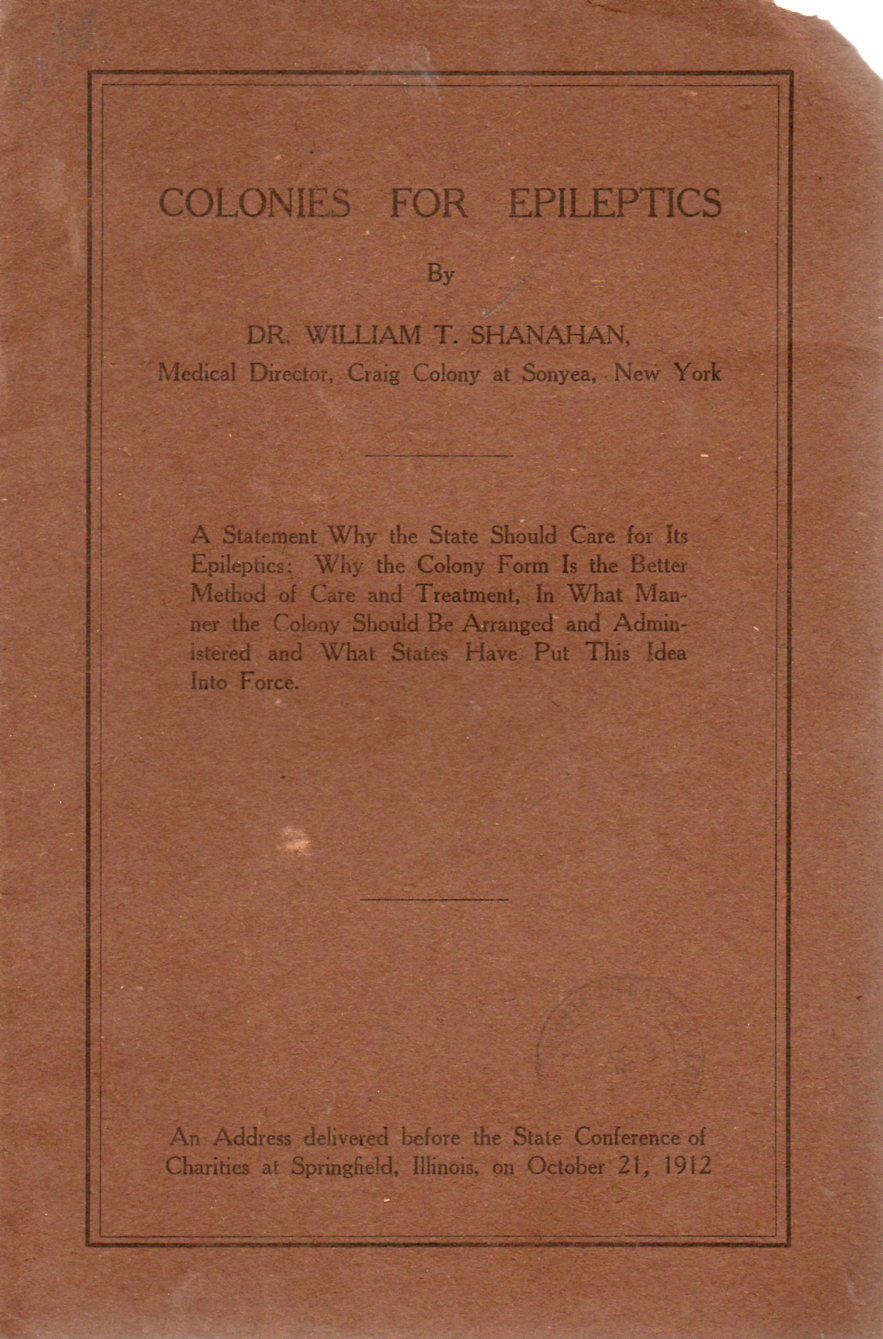
    In Dr. William T. Shanahan’s Colonies for Epiletpics, (the original available for purchase through our blog bookstore) written in 1912, the treatment of epileptics was seculsion, warehousing them in state asylums in the countryside.  Shananhan felt that the epileptic needed “its” own environment, “apart from the the defectives”–and by that he meant apart from the wide classification of people who did not fit the scheme of 1912 normalcy, like “morons, imbeciles, the insane, the sexual addict, the recurring syphlitic [and] the criminally insane…”.  Actually this as a good move in some cases–apart from the vocabulary–as epileptics were stored away in almshouses and prisons along with the criminal element and the hopelessly insane, and at least removed the epileptic from a different sort of horror and disgrace. 

    Dr. Shanahan’s aim was to remove the epileptic from society because they “couldn’t adjust to a life in the ordered community” and that holding a job for them was “impossible”–that plus what he saw as the need to protect society from the epileptic’s “progressive mental deterioration”.   He felt that “the great majority should be committed[to the epileptic colonies] as are the insane”, and also to remove them to these places “from a young age”, to an “institution for defectives”, there separated according to “sex and mental grade”. 

    Overall, though, it was Shanahan’s other aim to provide as “normal” a life for epileptics as could be arrived at, and outside of his trying to save society from them–at a time when the eugenics people were out castrating epileptics–, he was arguing that this method was the best of all possible worlds for people with this disorder.  He does however seem to be totally ignorant of any medical approach to dealing with epilepsy.

    By the way, there’s a very curious imprint on the back cover of this pamphlet showing who printed it and where.  I cannot recll ever having seen such a small thign, placed so centrally, in such an obvious place. Its obvious and present, yet tiny.  Here it is, before magnification:

    Epilepsy384

    And here is what the slug says:

    Epilepsy385
    Its just a very curious thing.


  • The Old is New Department: Refuting Darwin with Commas, Adjectives, and the Creator (1873)

    JF Ptak Science Books    Post 1423

    Darwin refuted296 I wasn’t going to write anything at all about this pamphlet, but the vocabulary was so strong and vehement, and reminded me so much of what we can read in today’s daily press, that I thought to at least pick out some of the choice morsels. 

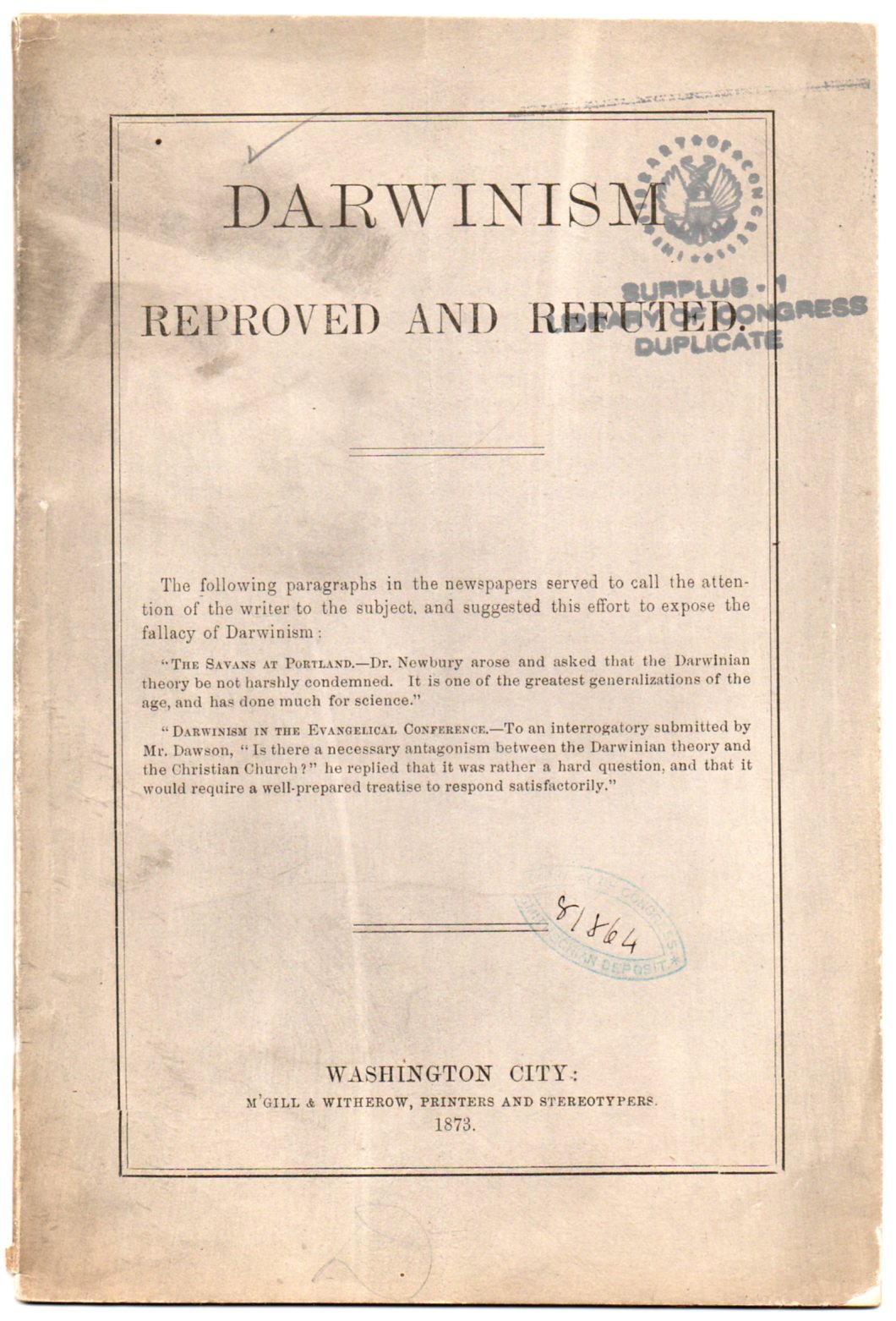
    Darwinism Reproved and Refuted, published in Washington D.C. in 1873, is left without any attribution to the author, the writer not caring to sign his/her name, not even to use as the wood into which some shingle with a weak social sciences/psych/religious Ph.D. could be nailed.  It is just left to the imagination or indignation that the writer didn’t or couldn’t feel confident enough to actually sign their work.  It is also one of hundreds if not thousnads of anti-Darwin vehemence–there is a chance I guess that there were more of these things written than there are visible-to-the-naked-eye stars in the night sky.  (The original pamphlet is available at our blog bookstore.)

    The author has little room for Mr. Darwin’s work1, clearly on a super-rant over The Descent… and on the theory of evolution, using such colorful words in runny purple prose like “\repugnant, revolting, unsophisticated, outrage, deadening influence, peculiar, fallacious, cunning”–and this coming from the first two paragraphs.  Needless to say, even though  the writer was too weak to sign their name, they did have some strong opinions. 

    “Utterly false, radically and fundamentally wrong, futile in the extreme, unreliable, ungrounded, false, short-sighted (in relation to god), ridiculous…” continues the author. The endowments of the Creator stuff doesn’t work its way in until the third page, when the adjectival and adverbial assault was already on it way, all without the assistance of any scientific counterexamples–but then the rest of the work is dedicated to proving the godless nature of Darwin’s work and its escape from scientific reality.

    We find this:  “Evolution is founded on materialism, which is another term for atheism”….”let this doctrine be compared with the Mosaic account of creation, and then the student of nature determine if he will choose for his progenitors Darwin’s pair of ring-tailled [sic] monkeys, or ‘Adam…’ “

    And so that’s what we get to in the refutation:  the Creator.  Old version of a contemporary complaint to get Darwin tossed out of classrooms to protect the youth of America, replacing it with divination.  The author writes:  “In the investigation of nature which is the proper province of the scientist, the most effectual method of studying it, in order to render this subject clearly intelligible to the human mind, is to regard the economy of nature as a form of government, having God for its founder, its Supreme Ruler, and Law-giver.”

    There’s not too much one can do with that, and even though it sounds antique, isn’t necessarily so, because the philosophy exists today, only with fewer commas. 

    Notes:

    1.  By 1873 Darwin already had produced an epochal body of work, including but not limited to On the Origin of Species by Means of Natural Selection, or the Preservation of Favoured Races in the Struggle for Life (1859),  On the various contrivances by which British and foreign orchids are fertilised by insects (1862), On the Movements and Habits of Climbing Plants  (1865), The Variation of Animals and Plants under Domestication (1868), The Descent of Man, and Selection in Relation to Sex (1871), and  The Expression of Emotions in Man and Animals (1873)


  • An Uncomfortable Caricature: Darwin, the Descent, and the ASPCA (1871)

    JF Ptak Science Books  Post 1422

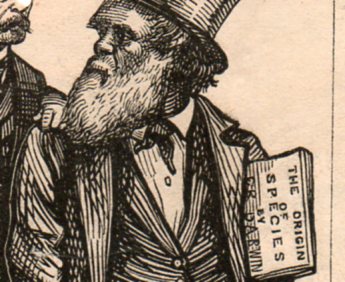
    Darwin cartoon  bergh294

    Poor Mr. Bergh.

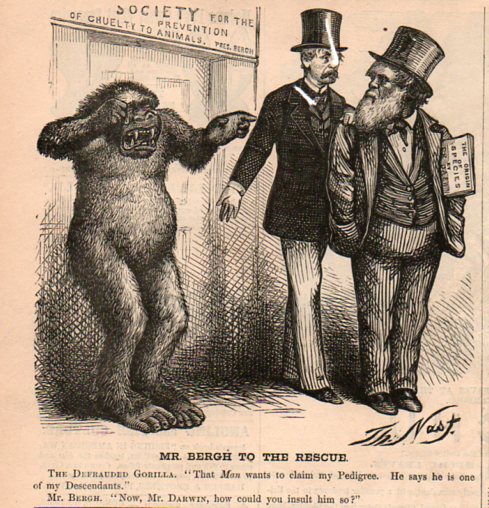
    I wonder what his reaction was to appearing in this 1871 Harper’s Weekly cartoon by the great and indomitable Thomas Nast, linking him in a terrible and probably inscrutable way with the man of the century? 

    Henry Bergh was the founder of the American Society for the Prevention of Cruelty to Animals (mainly I think in response to the treatment of work horses and the campaign for anti-sweating rules), and he is grabbing Darwin’s shoulder to remind the old man that in the shadow of the publication (earlier that same year) of The Descent of Man, and Selection in Relation to Sex (twelve years after the first edition of the Origin, and two years after the appearance of the Origin in its fifth edition) that a great harm was being done to the weeping gorilla.  Weeping because he was upset at being coupled with Darwin, weeping with the insult that someone such as Charles Darwin could be associated with him, with Mr. Bergh gently but firmly pointing out to Darwin that by connecting himself with the gorilla that he was doing a grave injustice to the gorilla.  (The original is available on our blog bookstore.)

    Darwin cartoon  bergh295
    Of course Darwin didn’t use a gorilla in the Descent, but no matter–it was a quick work by Nast and it contained enough of the stuff of some truth to reach publication.  Nast after all usually produced two of these small sketches plus a full-page work every week, and would do so for decades.  He got his point across–and it was a point shared by many, not the least of which/whom was The Times.

    The Times of London gave such an awful review of the book that a review of this review was published in the April edition of the British journal Nature1.   It was Thomas Stebbing who wrote the response to The Times‘ inciteful, hateful attack upon the Descent of Man. The Times saw Darwin’s work as an attack upon society,  accusing him of undermining authority and principles of morality, opening the way to “the most murderous revolutions”.  A “man incurs a grave responsibility when, with the authority of a well-earned reputation, he advances at such a time the disintegrating speculations of this book.” Stebbing’s review of the review is drippingly sarcastic, pointing out obvious errors in specific and the tone of the article in general in the defense of the book. Darwin’s “facile method of observing superficial resemblances” (says The Times) incites Stebbing to issue the following: “they may fancy that truth is worth discovering , even when it seems to involve some contradictions to our pride and some loss of comfort to our finer feelings…” (What a great line!)

    And so Thomas Nast piled on, though I’m not sure if he had a personal opinion on the matter–I prefer to think of Nast as rather forward thinking, at least in terms of more-correct thought on Indians/women/Blacks/the KKK/public education/government corruption, though he did have his failures in regards to the Irish, Catholics in general, the Pope, and some other areas2.  Nast may have just been reporting on public sentiment, or maybe not.  He at least doesn’t depict Darwin in a physically abusive manner like so many others, though Darwin does appear a little on the stubby side. 

    But getting back to Bergh–I have my doubts that he would’ve been entertained by being depicted so.  As I said, he founded the ASPCA, and also founded the American Society for the Prevention of Cruelty to Children.  He inherited a fine family fortune, and put it to good use.  He died at home, 429 5th Avenue (around 38th St and 5th, just a couple of blocks from where the NYPL would be) in 1888.  I hope he didn’t care; I doubt Charles did. 

    NOTES

    1. Nature,  1871, volume 3, 20 April 1871.

    2. He hated Gen. George McClellan so far as I can tell, which gives him an “A” rating in my book.
     

    ·Posted by :

    ·in:

    —

  • The Discovery of the “Obvious”–Joseph Lister and J.N.L. Durand and their Major Discoveries

    JF Ptak Science Books   Post 1400

    Bloglisterwash Sometimes things that we take for granted—the “of course” kinds of things that were seemingly always here because they’re just, well, so obvious—that one needs to take a step back to appreciate their discovery, or invention, and to mind the fact that someone did have to actually bring these things to some sort of birth.Bloglisterdurand
    These two (seeing and touching) would make great entries in our fictional encyclopedia–who was the first person to see (“ah, it was Nem Teff in 8211 BCE, in an area very close to the teeming slum of today’s Bagdahd; he of course was a disciple of the Shenta-kra philosopher Boot Strap, who only four generations earlier came up with the idea of “touching”. What people did to get around before Mr. Strap invented touching and before people could see is a matter for wide conjecture“–Pastor Steng “No Stink” Pallor, writing in the volume “I” of The Great Encyclopedia of Unknown, Non-Existent and Ficticious Things, published in New York City by Phantom Touch Press, 1972.)

    But we’re dealing with new applications of sight and touch here, although by and large these applications had a huge impact on the rest of civilization on their own merits. 

    Take for example the lovely Jean Nicolas Louis Durand.  He was a radical rationalist, an advanced thinker in the field of architecture and one of the most influential instructors and writers on architectural history and theory of first half Bloglisterboullee of the nineteenth century.  Durand also had his wild side, as well, but that took place when he was in his carefree (read: “adventurous”) thirties—this period of enormous and unusually creative work in architectural design also took place during the French Revolution, which was a bad time to be thinking this stuff up, let alone building it.  (Some of the other French visionary architects of this time nearly lost their heads because of their non-revolutionary creativeness, but that’s another story.)

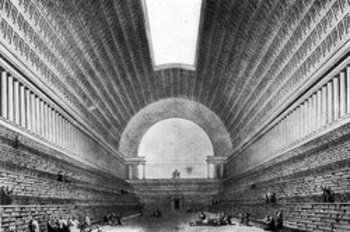
    (This is Boullee’s design of the megamonumental library for the king, 1784)

    Durand came about this intuition naturally and also because he was a draftsman for the great Etienne Boullee, who we mentioned a few posts ago.  (Durand would he execute a series of drawings entitled Rudimenta Operis Magni et Disciplinae, which are probably a pictorial representation of Boullée’s theories.)

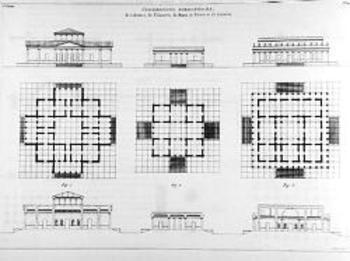
    What Durand introduced however that was so revolutionary and so much his own was this—he was the very first architect to publish a work of comparative architecture in which all of the buildings were drawn on the same scale. 

    That means that previous works—all previous works—of comparative architecture compared one piece of architecture to another on different scales.  That would seem to be a truly bad idea, given the nature of the comparative beast and all, but there you have it.  I really have no explanation for why this was the case, or why it took until Durand’s Recueil et parallele des edifices en tout genre…(1832)  to make it so in the fourth century of the publication of works on architecture, but it did.

    Another example of what would seem to be sublimely obvious was the innovation of a Scottish surgeon in 1867Bloglisterine_2 .  People today I think intuit his surname from exposure to television commercials for a certain mouthwash, but this would be like knowing the importance of Isaac Newton from those figgy cookies—and that just isn’t right.  Joseph Lister (1827-1912) figured out—through exposure to ideas by Ignaz Semmelweiss and Louis Pasteur, among others—that the infections in wounds that caused so many surgical deaths was not caused by the miasma in the air, but by something entirely different. 
    In his article in The Lancet of 21 September 1867 (and in his subsequent publication in book form later that year called Antiseptic Principle of the Practice of Surgery he explained what he thought was the cause—microorganisms that traveled (at least) from the surgeon’s hands onto the wound, and not by something floating around in the air.  He began treating wounds with a solution of carbolic acid (which had been used Bloglisternewton previously to remove the stinking stench from sewerage), and saw immediate results in the prevention of infection and gangrene.  His next big step was to have surgeons wash their hands with the solution and wear gloves during surgery—because, up until then, surgeons went from dinner to intestines without the necessary benefit of having clean hands or wearing gloves.  This seeming minor change in surgical procedure resulted, I think, in saving more lives than any other procedure ever invented.  And it was mainly, really, from washing your hands before putting them into someone else’s body.