A Daily History of Holes, Dots, Lines, Science, History, Math, Physics, Art, the Unintentional Absurd, Architecture, Maps, Data Visualization, Blank and Missing Things, and so on. |1.6 million words, 7500 images, 4.9 million hits| Press & appearances in The Times, Le Figaro, Mensa, The Economist, The Guardian, Discovery News, Slate, Le Monde, Sci American Blogs, Le Pont, and many other places… 5000+ total posts since 2008.

Category: Medicine, History of

  • The Healthy Coal Miner in the Pyramid of Life, or Death? 1912

    JF Ptak Science Books  Post 939

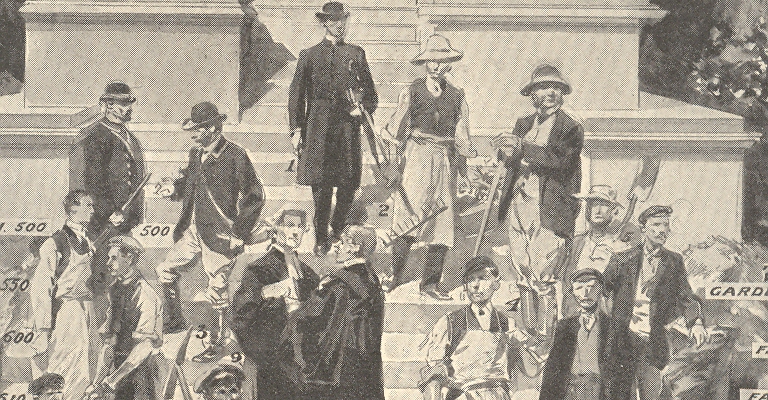
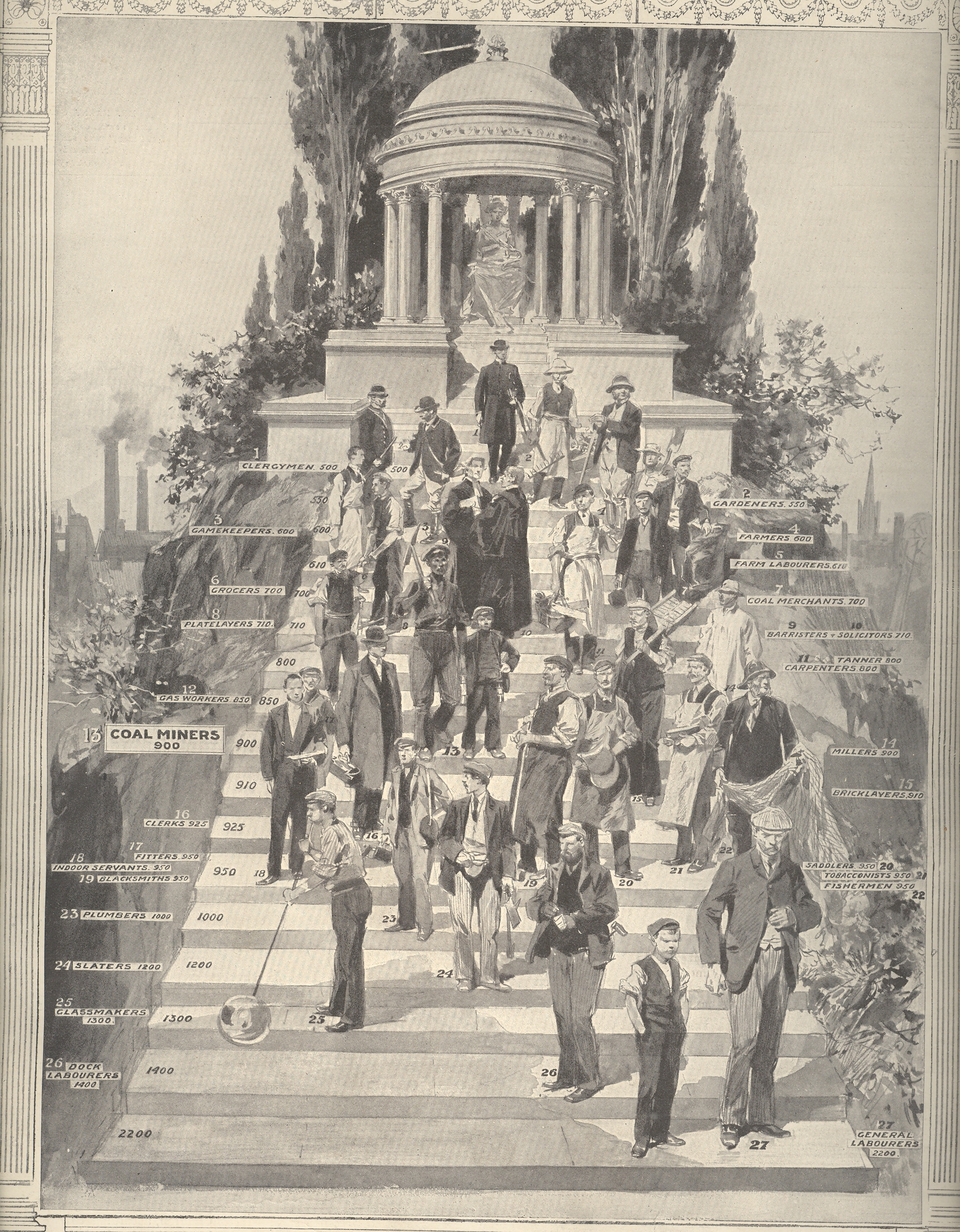
    This pictorial graph shows the places in the temple of Hygeia1 of various British workers, their places on the stairs showing the possibilities of long life, or not.
    2--llife death

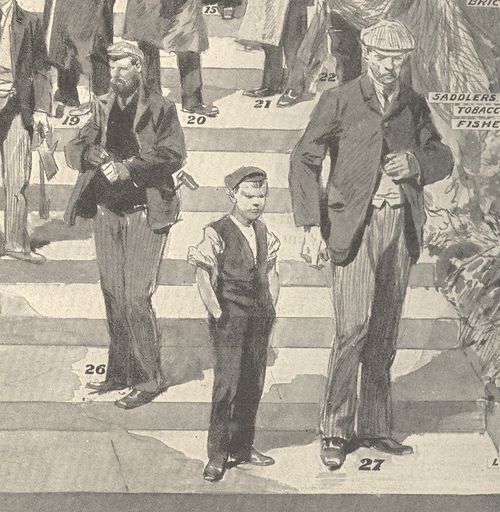
    At the bottom: general laborers, the backbone of the society, ranking well down beyond virtually everyone else save for dock laborers. Unfortunately the scale at left—listing the progression of health, somehow, from 500 at the top to 2200 at the bottom—lists these two groups at 2200 and 1900, respectively., then jumping at third layer from the bottom at 1300 (glassmakers).  That means that in the difference of 1700 between the top and the bottom that 90% of the classes represented were in the 500-1200 category (or a difference of 700 units) while the bottom two classes occupies the 1000 units; 80% of those represented occupy the first 500 units.   I do wish that I knew what these numbers represented. 
    2--death


    2--life
    At the top of the list of health comes the clergy, followed by gardeners, gamekeepers and farmers.  Next are grocers, farm laborers, platelayers, coal merchants and barristers and solicitors. Coming into the bottom steps of the health temple are tanners, carpenters, gas workers, coal miners, millers, clerks, bricklayers, fitters, indoor servants, blacksmiths, plumbers, saddlers, tobacconists, slaters, glassmakers, fishermen, dock laborers and general laborers.  

    It is interesting to note that in 1910 once a person in the U.K. or the U.S. reached the age of 60 their life expectancy was around 75; in 1850 this figure was 72.  Today the life expectancy for this same group is 83 or so. Considering the enormous advances in medicine and medtech since then–in pre-Lister 1850 days there was still no sanitization of surgical instruments, for example—83 seems hardly Kurzweilian. 

    Notes: 

    1.Hygeia was the goddess of good health, and the daughter and attendant of the god Asklepios, a sister of Panakeia (all cure) and Iaso (remedy) and a companion of the Aphrodite.
  • Heart, Head, Heresy and Burning at the Stake: a Cordial Memory of Michael Servetus on St. Valentine’s Day

    JF Ptak Science Books LLC  Post 938

    Harold,
    like the rest of us, had many impressions which saved him the trouble of
    distinct ideas 
    George Eliot.

    A novel is balanced between a few true impressions and
    the multitude of false ones that make up most of what we call life.

    Saul Bellow


    No, this isn’t a story about the great saint but a much
    lesser one.  For centuries the pulse was
    a vaguely understood thing reaching back into the murky medical past as far
    back as Galen.  The association of course
    was with the heart, and the association of the heart was as the great
    controlling center of all function and control of the human body—a theory that reached
    far forward into the 16th century. 

    It is generally established that it was the fabulous work of
    William Harvey (1578-1657) that brought into light the idea of pulmonary circulation,
    but the idea was buried in a vastly-suppressed work by the brilliant and highly
    problematic Michael Servetus (Spanish, 1511-1553).Servetus

    Servetus (physician, cartographer, theologian, writer and
    general all-adept Humanist of a high order) was in trouble with the church for
    many reasons, not the least of which was trying to dislodge the theory of the
    heart as sacred and the seat of wisdom. 
    But he did establish that the heart was an organ, which didn’t sit well
    with very many people, least of all the Calvinist court in Vienna
    which found him guilty on many anti-Humanist grounds, including his
    anti-Trinitarian Christology, which made him a reviled figure to Catholics and
    Protestants.  He was tried and found to
    be dangerously heretical, and sent to the flames.  (There was a practice at the time to burn
    people alive using wet wood, providing a slow, baking environment in which the
    subject was painfully nearly-baked alive before he/she was actually consumed by
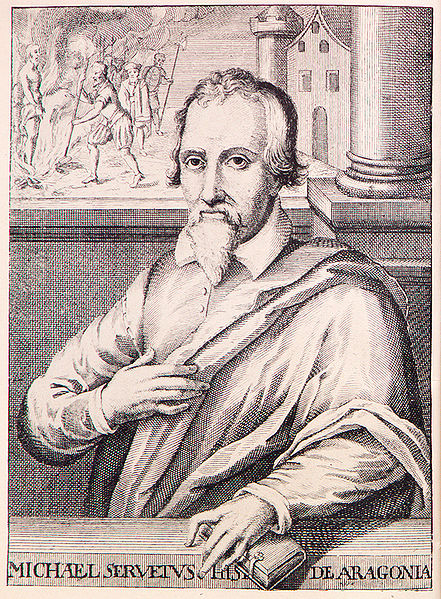
    the flames.  People thought about this….In the engraved portrait of Servetus we see him being burned–along with his books, which are slow burning things, at upper right.  As a matter of fact Servetus’ effigy was burned in some places along with his books, which explains the scarcity of some.)

    Later on, Harvey
    withstood blistering attacks on his correct statements on the circulation of
    the blood (costing him nearly all the patients in his practice), though he at least
    lived to see a brighter day:  Servetus, on the other hand, didn’t, and was
    burned at the stake for his heresies, one of which his attack on the spiritual
    heart. (Plenty of others have paid for their insight and invention and would be
    later celebrated  Semmelweis wasn’t killed but did wind up in an asylum;
    Galileo didn’t wind up in an asylum but did wind up imprisoned; Copernicus
    wound up in neither place, escaping possible clerical criticisms by dying just
    as his revolutionary work was published.  Phillippe Lebon’s ideas for
    illumination by gas were seen as ridiculous, as were the revolutionary ideas of
    Edward Jenner and Luigi Galvani.  Einstein’s 1905 ideas weren’t happily
    received in France
    for a decade, and David Hilbert’s impressions of mathematics in the middle of
    the third decade of the 20th century was that it was “done”. )

    And so I think we might as well remember Servetus today at
    least as often as we do St. Valentine. Or multiple St. Valentine units—the name
    seems to have been canonized in 496 ACE in memory of several people by this
    name.  At least Servetus had an
    association with the heart in a positive way—I don’t know the Valentine/heart
    connection though I suspect that at least one of them had their beating heart
    ripped from their body. 

    Well.  Happy Valentine’s
    Day.


  • Hiding Diseases: Plague and Smallpox

    JF Ptak Science Books LLC Post 936

    “Ring
    around the rosies, a pocket full of posies,

    Ashes,
    ashes, well all fall down.”

    This
    old nursery rhyme has more to do with plague than a skipping-and-falling song, more
    like the Tom Wait’s version of the “Dwarf’s Marching Song” (“Heigh Ho”, see
    below) than anything t0 blog jan 24ars mor424hat could ever be dreampt of in a Disney film. It was the
    mater-of-fact way of dealing with the vast death brought on by the various
    Plagues:  saying a round of rosaries to
    try and invoke divine intervention to keep the disease away from the prayer-mender;
    posies as a fragrant flower to mask the stench of those actually afflicted with
    the disease; and then of course the ashes from the piles of burnt corpses of
    Plague victims, fallen down to death. 

    These
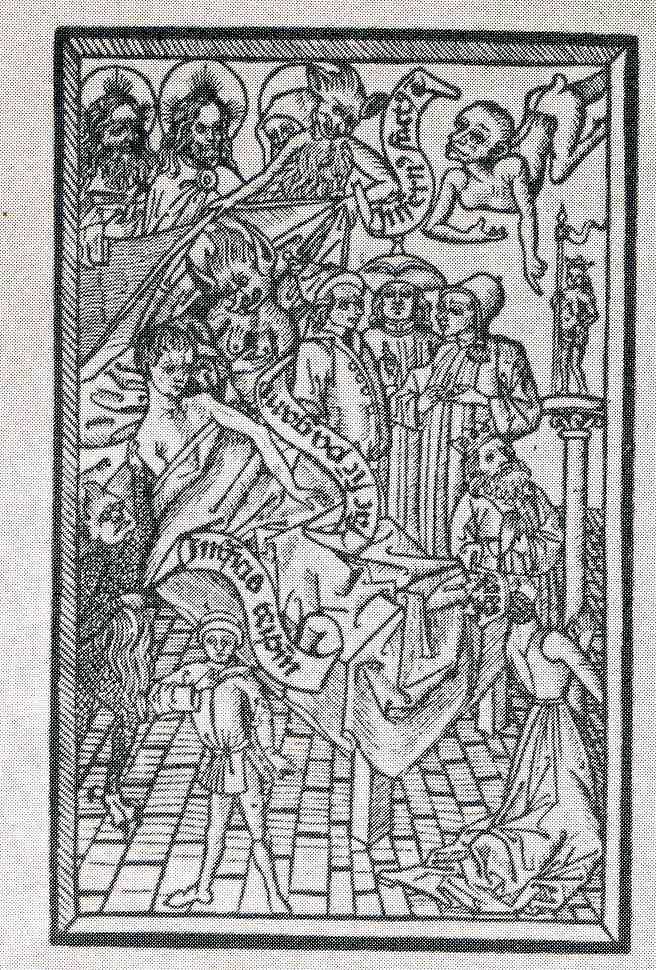
    two images show different aspects of segregating—if not hiding—disease.  The first is a propagandistic portrayal of a
    man dying of the Plague.  This snippet of
    plaguaganda was an ars morendi
    published in the 1460’s, and depicts a not-gruesome portrayal of what was
    generally a very gruesome death.  The
    inflicted lies there in bed, with sheets
    and
    a pillow, looking faint and removed in the retiring Victorian fashion
    (removed 400 years), surrounded by images of his faith/belief. 

    I
    suspect that anyone who knew anything about the Plague knew that this scene
    wouldn’t be truthful, necessarily, but I guess if it could even momentarily confuse
    the viewer into thinking that the visitation of Death could be so composed in
    the face of this horrendous disease, I guess that’s the hope you hang
    onto.  There is a minor battle between
    the possible claimants of the soul of The Sick, but that would be going on
    anyway whether the coming death was relatively peaceful, or not. There wasn’t
    much to be done—as the feeble attempts of preventing the disease would
    indicate, what with choices like urine baths, bleeding, leeching, bell ringing,
    pus-sucking, rotten animal corpse talismans, incense burning being some of the
    preventative choices—so like a belief in Heaven or Nirvana or whatever, the hopeful
    consolation of a possibly decent dying could keep people from running
    amok. 

    1-floating hosp

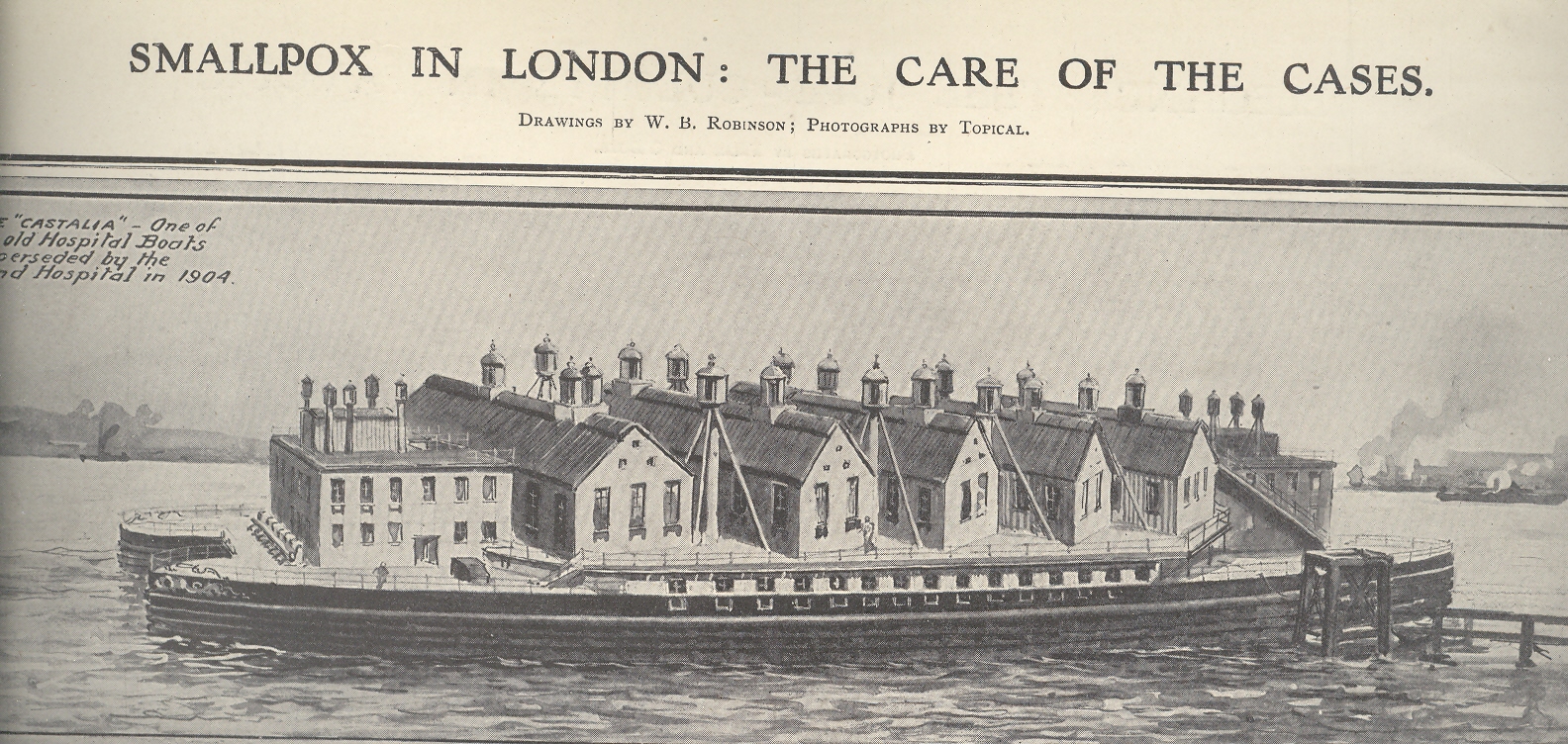
    The
    second shows the hospital hulk Castalia, “one of the old Hospital Boats superseded
    by land hospitals in 1904”, which was more a floating street than a hospital.  It was a complex of five buildings nested on the
    hulk of the double-hulled paddle steamer Castalia—appropriately named, as it refers
    to the Delphian  fountain that Apollo fabricated
    from the nymph “Castalia” and alludes to the possibility of rejuvenation and
    cleanliness, or health, perhaps).  The
    hospital held hundreds of smallpox patients, sent there by the Metropolitan
    Asylum Board in an effort to stem the flow of the disease and infection rates
    from the rest of the population of London.  Smallpox 
    was still a vast killer in mid-/late-Victorian England, and given the information
    available at the time this was a good social inoculation by distance and
    segregation.  (It is interesting to note
    that out-of-service de-masted, defrocked and striped ships of the line were
    used to house prisoners (though generally prisoners of war); in particular,
    those kept in the East River housing American soldiers inflicted vast death
    tolls via maltreatment and urgently hideous living conditions.)  This really doesn’t fit with the
    propagandist/suppressing model of the above, and its removal did prevent the
    contagion from spreading, but, well, it does look like the Asylum Board was trying to hide the sick.

    Notes:


  • Complex Medical Treatise on Horses: Illustrations, 1685

    JF Ptak Science Books  Post 926

    This is a simple image-only post relating the four wood engraved illustrations from the rare Spanish work by Conde (Pedro) Garcia, Verdadera Albeyteria, printed in Madrid in 1685.  They were beautiful works, if not exactly correct, or terribly useful–not in the great traditions of veterinary (& etc.) anatomists like Andres Laguna, Leonardo or Vesalius. Oddly enough, Garcia didn’t seem to draw on the very accomplished work of Carlos Ruini (b. ca. 1530-1598) whose earlier work, Anatomia del cavallo, infermit, et suoi rimedii, was a standard font of anatomical and medicinal information on the horse for 75 years.  But the illustrations are compelling, and beautiful–just not very helpful.

    “…This most noble beast is the most beautiful, the swiftest and of the highest courage of domesticated animals. His long mane and tail adorn and beautify him. He is of a fiery temperament, but good tempered, obedient, docile and well-mannered.”–Conde Garcia.

    All image sources via the Cervantes’ Virtual Library site, here:  http://www.cervantesvirtual.com/obra/verdadera-albeyteria/

    And the bleeding chart:


  • Missing “Dots” and Not Seeing the Discovery of Platelets, 1842

    JF Ptak Science Books LLC  Post 918

    {This post continues some new and unusual cross-categories in this blog, like Missing Things Making Holes; Bombs as Breads.  Today’s bit combines the “Blank, Empty and Missing Things” with “The History of Dots” categories.]

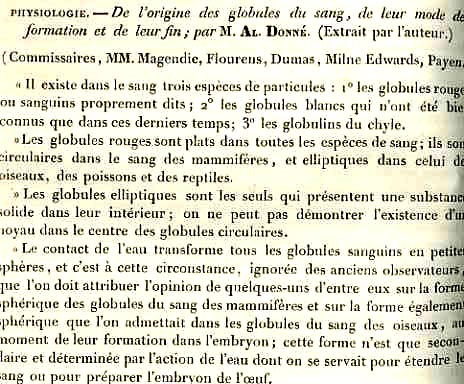
     blog 13 donne703Alfred
    Donne (1801-1878), physician, experimenter, microscopist and
    photographer, is best known for things other than what he should
    probably be best known for:  his discovery of the third element of the
    blood, platelets.  Donne had a wonderful vision, and was among the very
    first on the scene to write about and employ the spectacular invention
    of the daguerreotype in chemistry and microscopy.  As a matter of fact,
    Donne, along with his collaborator Leon Foucault,  produced the very
    first engraved images of photomicrographs for his cytology paper of
    1840. (He was also the first to use electricity in producing a medical
    illustration, and was among the first modern physicians to write on the
    great efficacy of mothers using their own milk in breast feeding their
    children.)  The discovery of platelets paper of 18421–preceding two
    other works published in the same year–does indeed identify the new
    object, but actually fails to make a methodological examination of the
    new body, calling the new units “globulins du chyle” (or small globules, derived
    from plasma).  He also fails to make a drawing of what he saw; so, the
    combination of these two important elements asked the reader to accept
    his findings on faith, the tools of reproduction of his observations
    not being present. 

    And so we remember Donne for some other significant
    things, and less so for his lightly-interpreted and un-illustrated, and missing, “dots”.

    Notes
    1.Donne, Alfred. De l’origine des globules du sang, de leur mode de formation et de leur fin. Comptes rendus de l’Académie des Sciences, Paris, 1842, 14: 366-168. 

    (Overall the history of the
    discovery of platelets is complicated: 
    Leewenhoek (1675) and Henson (1782)  were the first to fully describe the “undefined”
    particles of the blood; Donne’s work was then more fully described by Beale in
    1850, and then again (identified as “small corpuscles” by Zimmerman in 1860 and
    then again by Schultze in 1874 and Laptschinski (also in 1874). William Osler
    then enters the scene in 1880, followed by Giulio Bizzozzero who was the
    first, in the years 1881 -1882, to establish central role of platelets
    not only in physiological haemostasis, but also in thrombosis.  Anyway it is a longish and not-clear-to-me
    history.)


  • The Scarcity of Divine Interactions in the History of Human Epidemics: Valley of Mexico

    JF Ptak Science Books LLC  Post 827  Blog Bookstore

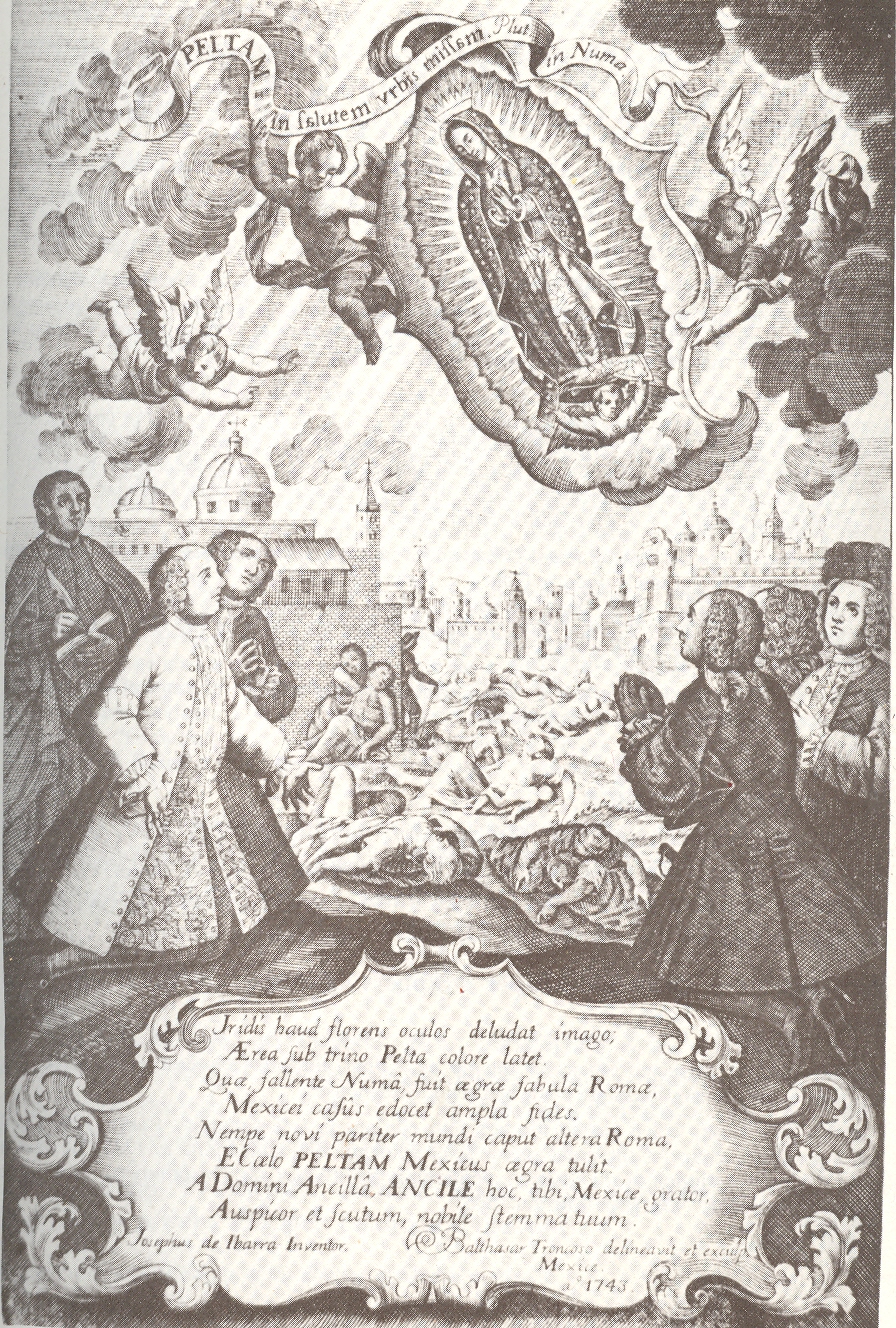
    Images of
    sacred interventions stopping the spread of disease is puzzling, as in this
    powerful and disturbing vision of Our Lady of Guadalupe appearing above the
    city of Mexico
    in 17371.  Mexico City was in the second year of a
    devastating cholera epidemic where 40,000 had perished in that city alone.

    ++ blog nov 9 guadalupe I wonder why Heavenly intercession didn’t
    come earlier?  Of course the people of
    the Valley of Central Mexico could’ve used some
    heaven-sent strong-armed virtuosity many times over the centuries.  In Mexico
    City
    during the Cockuliztli epidemic of 1576 the
    population of the non-Spanish (Native) population fell 50% in just a few
    years.  Over the period of 1545-1548 70%
    of the population of the city nearly died of hemorrhagic fever.  This epidemic was followed by many other
    (major) epidemics (1576-78, 1629-1631, 1736-1741, 1761, and so on) involving
    whooping cough, measles, typhus, smallpox , influenza, cholera, and of course
    famine. Cholera—like this epidemic in Mexico City—according
    to Rodolfo Acuna-Soto’s study2 seems to have been the least of the epidemic
    worries in the Valley
    of Mexico
    over the last
    500 years.  According to Robert McCaa’s
    study of population studies3, 11 authoritative studies on the decline in
    population in Mexico from 1519-1598 show an average and disasterous decrease of
    about 50%4.

    So with the
    dozens of epidemics, the invasion of Europeans, and natural and unnatural
    famines, I would have expected to see more demonstrations of charity from above
    rather than this one skimpy display in the second year of a lower-echelon
    epidemic. 

    1. From Caberra y Quintero Escudo de Armas de Mexico…, printed in Mexico in 1746.  There is much else of interest in this book–which is probably the best and most famous of the local histories of the city–besides the image that I fixated on. 

    2.
    [Rodolfo
    Âcuna-Soto.]
     Forum on Microbial Threats//Global Climate Change and Extreme Weather
    Events
    December 5, 2007
    “The use of Historical data sets in
    Understanding Ecosystems Responses
    to Climate Change and the Importance
    of
    Long-term Monitoring
    Programs…” 

    3. McCaa’s study HERE

    4. Table of colonial disaster 


  • Fat Maps and Underwear-Generated Sterilizations: Eugenics

    JF Ptak Science Books LLC   Post 816   Blog Bookstore

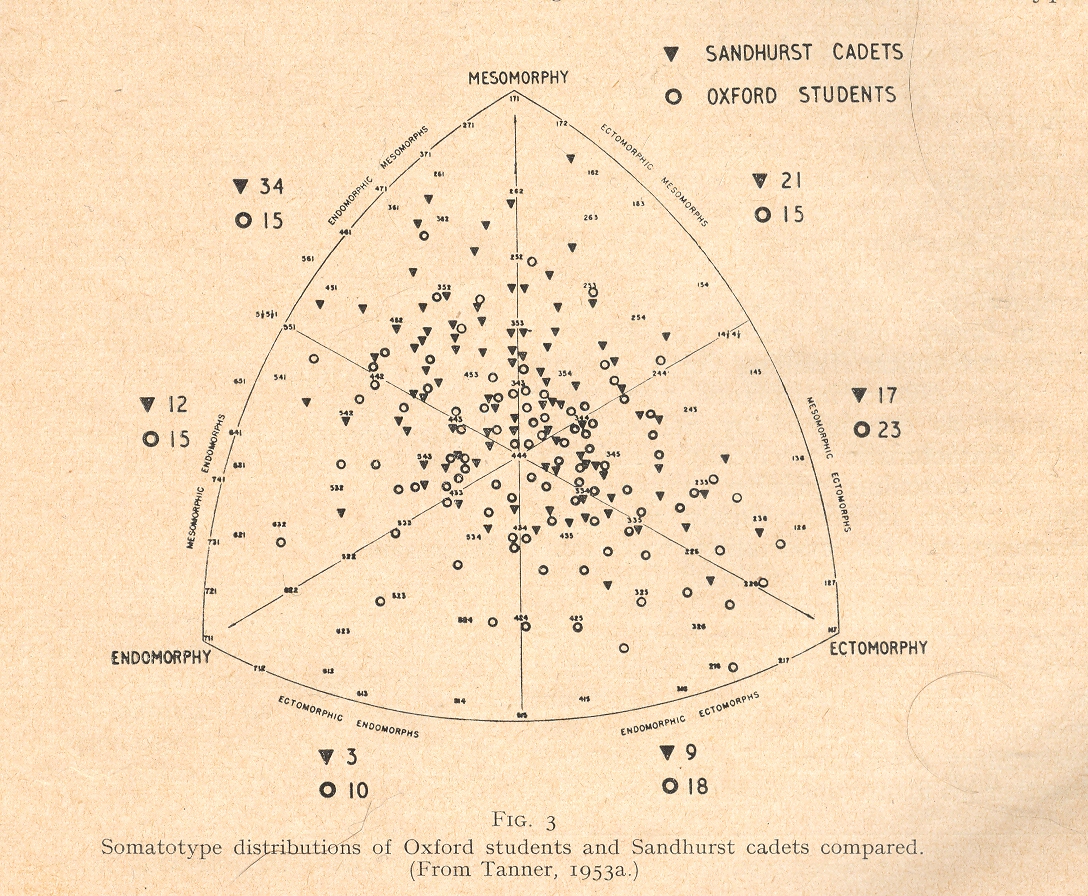
    JM Turner (an M.D. and a Ph.D.) wrote “Physique and Choice of Career” for The Eugenics Review of October 1954.  He reported on the statistical survey correlating body type and profession, one in a considerable line of such statistical drunkenness which found pseudo-scientific results from closeness of fit between fat, muscle and criminality and professions. I really don’t want to get very much into the details of this stFat mapory because it just isn’t worth it–simply put, the doctor was finding correlations between some body types and students at an officers’ training academy and Oxford. The military officers in training were heavier than the Oxford students.  The end.  [Interestingly the author references an earlier study from 1939 which found correlations between body types and different sorts of crimes among 17,000 incarcerated juvenile offenders.   Turner uses the results to support his own but also finds fault with the earlier study, stating that it lacked “any very workable classification of physique…his study was more of a high altitude aerial survey than a detailed map of the ground”. This doesn’t prevent the use of the findings, however.]

    It was this sort of thinking that the sniffy and in-its-own-peculiar-way venerable The Eugenics Review (1909-1968) its influence, a cancerous spittle which found its way all over the globe. Eugenics was seated in the work of the very formidable work of the polymathic Sir Francis Galton (the word coined in his Inquiries into human faculty and its development
    in 1883), and found its way into some deep scientific corners until its
    was generally rejected at about the same time of the journal’s death.

    The influence of eugenics reached far and deep and wide, finding its place even here near
    where I live–deeper here, and later than expected, as it turns out. 
    The Human Betterment League, started in 1947 in Winston-Salem (North
    Carolina) with the influence and money of James G. Hanes (of the Hanes
    hosiery and underwear fortune), instituted a vicious resurgence of
    interest in eugenic sterilization just at the time when this practice
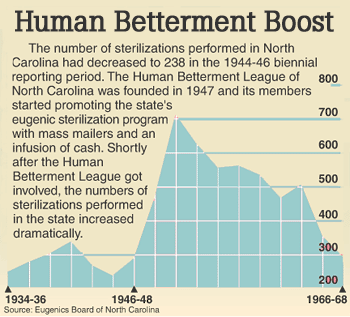
    was beginning to come to its end in other places.  As you can see, eugenic-based sterilization in North Carolina was sliding into  social consciousness and decline just at the beginning the the Human Betterment reign of terror, spiking to over 700 sterilizations in just a few years after its underwear-y inception.  The majority of the victims of this social cleansing, of this cleaning of the gene pool, of this save-us-from-“them” mentality,were black. SOme of these people were classified as “morons” according to standardized testing that many were never before exposed to; some were classified as deviants and defectives ready for sterilization if they chose to have a baby produced by rape.  The road to  racial purity was a wide one for the Betterment  folks; fortunately, it was not a long road, though they were able to force sterilizations of thousands of unfortunate victims and did so until the late 1960’s.  This is a bad story for the history of this state and one which is not frequently discussed, though reparations discussions are underway, cushioned by a very skimpy installment of 250,000 from the state coffers to establish offices and a board and bureaucrats to study the issue.  This is many millions of dollars off the mark, but it does benefit some mid-level manager somewhere in the state capital at Raleigh… 

    Humanbettermentboost

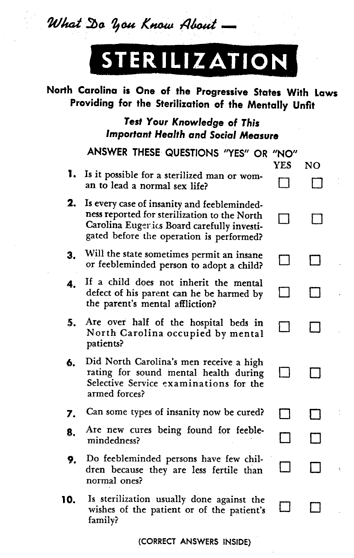
    [Source for sterilization pamphlet and graph: Against Their Will–the North Carolina Sterilization Program.]

    gram]

    Sterilization pamphlet


  • Anatomical Reminders of Passing Time

    JF Ptak Science Books LLC  Post 860 

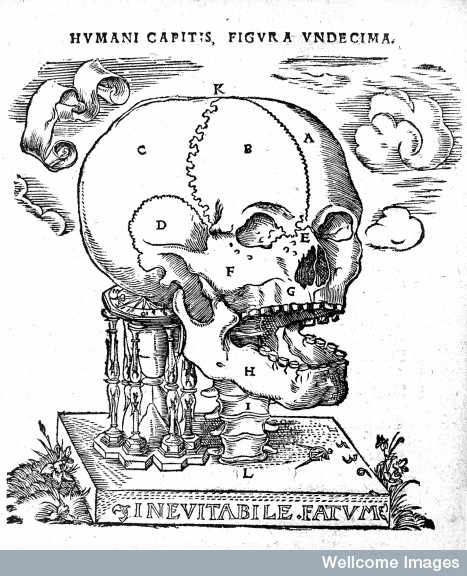
    + dec 2 skull hole  

    I have been
    paying attention recently to anatomical figures studying other anatomical
    figures (a post soon to come).  But in
    the midst of this came this great woodcut reminding us all of our impending and
    ever-looming end of days, and found in Johann Dryander’s (1500–1560) fabulous pre-Vesalian
    anatomy (or pre-1543)
    Anatomiae, hoc est, corporis humani dissectionis pars prior…(published in Marburg by Eucharius Cervicornus in 1537).  One of the reasons for the book’s great importance
    was that it was about the first anatomy to focus and specialize on one part of
    the body, and it was also one of the first few where the anatomist worked on
    his own dissections. 

    You’d
    think that seeing anatomies and dissected bits of body would quickly remind the
    reader of the grave, but this was not quite enough for Dryander’s artist, who
    though to add the depleted hourglass to prop up the gap-mouthed skull—just in
    case you weren’t already paying attention to obvious symbolism. 

    Note:  image from the Wellcome Institute website which also has many other images from the book, including successive images of the dissection of the head. 

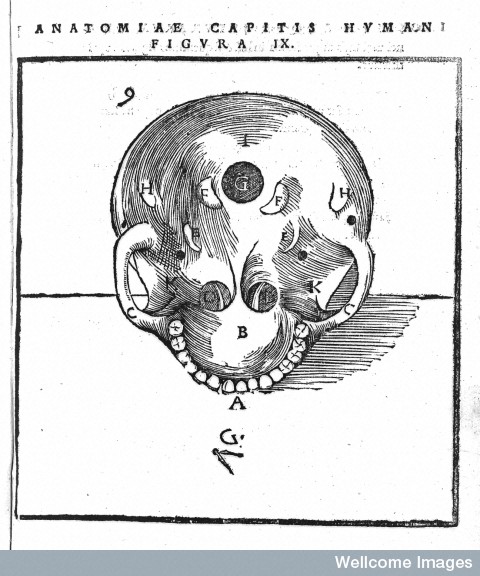
    Oh, here’s another, just an unusual perspective of the skull, seen from the bottom up.

    + dec 2 skull bottom


  • Emerging from Clouds: Artificial Legs and the Foot of God

    JF Ptak Science Books LLC  Post 830

    ++ blog ++ nov 12 pare leg


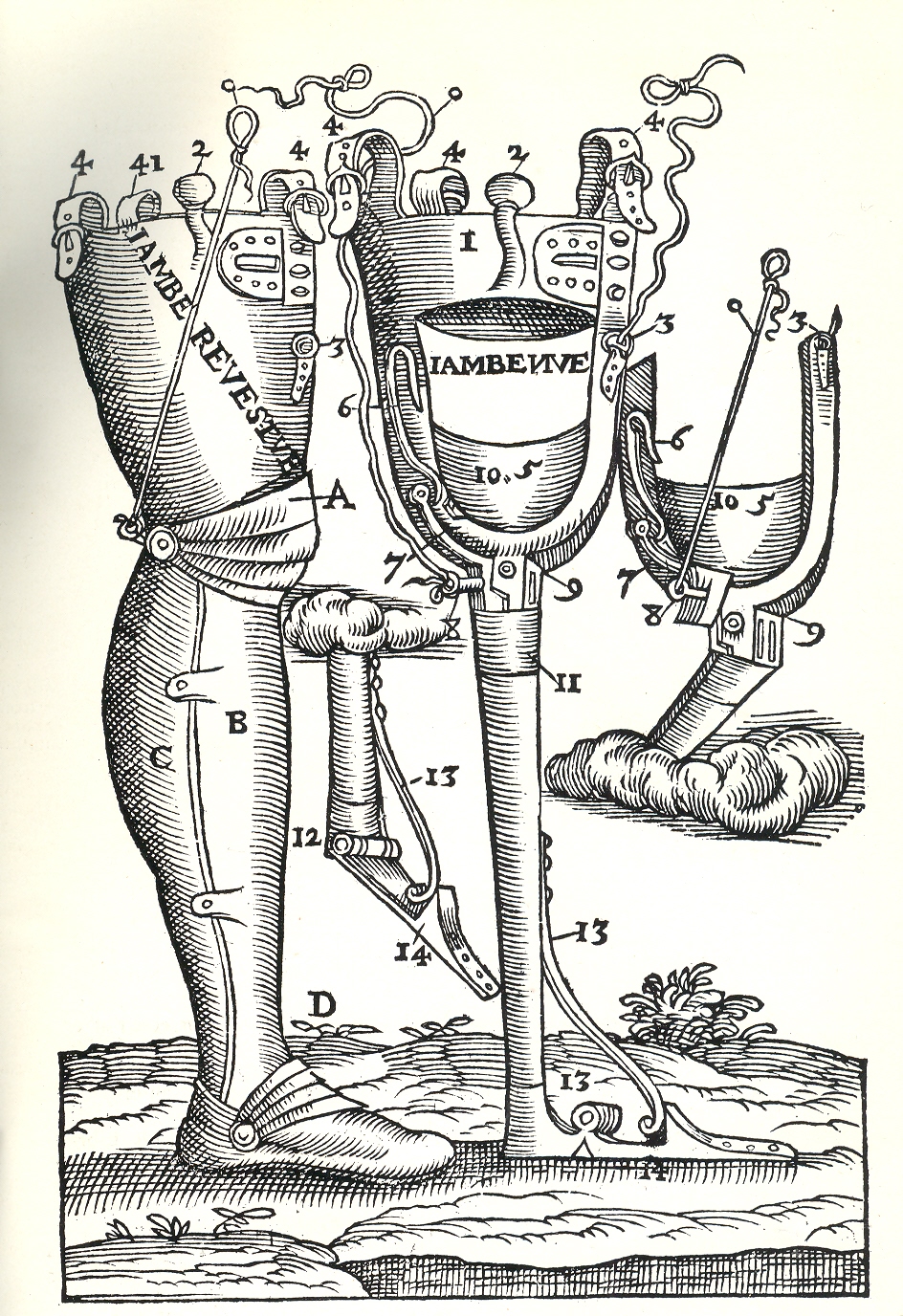
    This busy and still beautifully designed woodcut from
    Amrbose Pare’s Opera Chirurgica… was
    printed in 1594 and holds special fascinations for me.  First of all it is a pioneering work on
    artificial limbs, and secondly, and tritely, I like the floating ribbons and
    ties (some of which seem to come from clouds). 
    First on Pare (1510-1590):  this
    was a revolutionary work of an extraordinary figure (even though there are some
    who suspected that not all of this book was his own work) and was the greatest
    surgeon of his era and the doctor to four kings. He was responsible for the
    invention of numerous surgical instruments; he also re-introduced the ligature 
    into surgical procedures for amputations, wrote on carbon monoxide poisoning,
    introduced the introduction of induced labor, created the reimplantation of
    teeth, was a pioneer of treating battlefield wounds and was one of the first to
    write on medical ethics and jurisprudence, and much else.

     But I’m sorry to say that I am fixated on the artificial
    leg-cloud.   And the floating bits. 

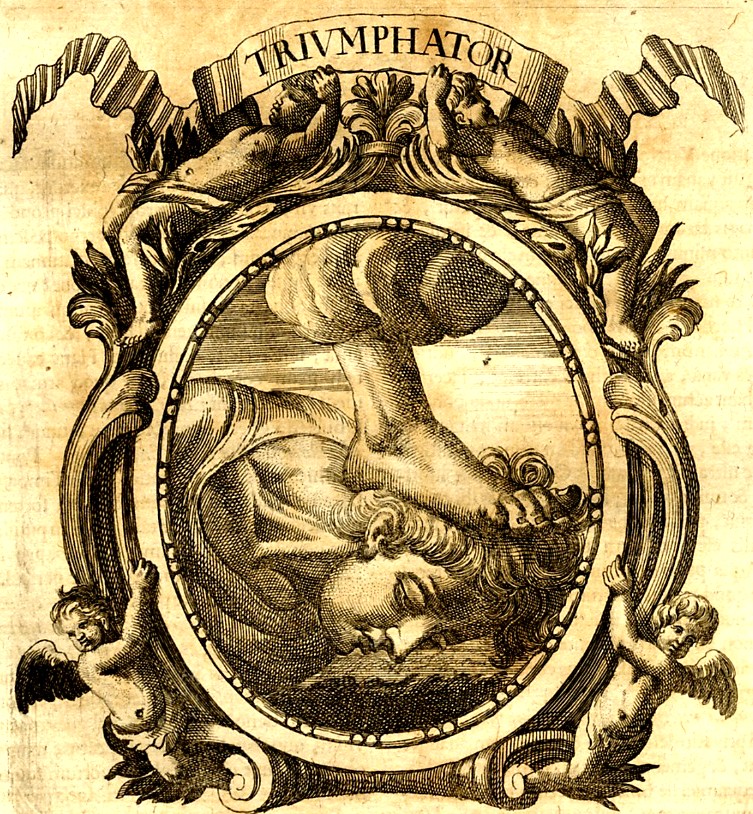
    This brigs me back to a post here from just two days ago on
    Antiquarian Dadaism and the emblems of Scarlattini…and which is probably the
    only chance I’ll ever have to make  for
    connections of feet-from-clouds.  Or near-feet
    from clouds and the foot of God.  In any event, I would like to make it out to be the foot of the creator coming from the clouds to vanquish its squint-eyed and beaten foe.  “Triumphator” classically refers to the triumphal parades in ancient Rome, and I guess that this foot could belong to any victor, but since it is after all coming from the sky, I’d like to give that foot to God. 

    ++ blog nov 9 triumph


    Notes:

    Pare’s Opera is
    available in toto at the National
    Library of Medicine’s superb pages here.


  • History of Blank & Missing Things, #55: Empty Theory from Good Data

    JF Ptak Science Books LLC  Post 801  Blog Bookstore

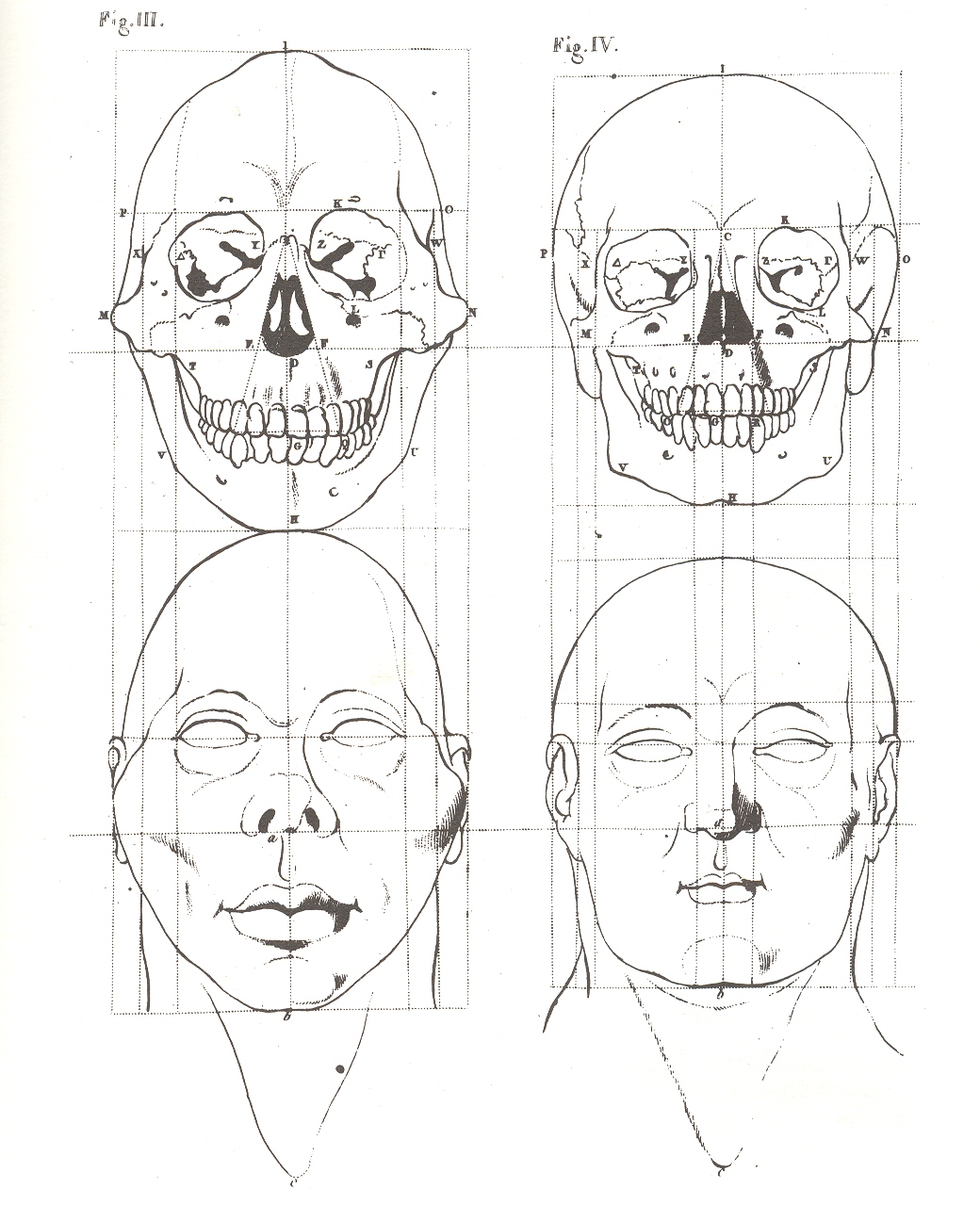
    It is difficult to imagine the impact that Pieter Camper’s intellectual leap had on his fellow anatomists back at the turn of the 19th century with this image1–with a mass of collected data, Camper was able to realistically suggest the facial qualities of a skull.  I’m not sure exactly when this effort was first made, but it seems to my memory that this is a very early effort.  But the mass of Camper’s work generally takes a bad turn turn when it came to representing his findings with theory. + skull

    I wrote about Camper earlier on this blog addressing his  “Bad Ideas of 1778”, in which it seemed as though he was doing anatomic transformations of animals into humans. Camper  (1722-1789) was a determined and excellent observer, which led to him understanding the skull like no other, but who was also lost among the numbers.  He was full of angles and degrees, articulating genetic possibilities by the measure of a face and the sentiments of its accumulated measurements.  He was also in his mind fully capable of judging a person by the physical measurement of their faces, which led to publications like his 1764 Oration on the Origin and Colour of the Blacks, in which he writes:

    “…some attribute peculiar to the quarter of the world; or the specifications of some singular ornament, peculiarity of dress, or of custom…. Thus, an Asiatic is distinguished from an European by colour and dress: the African and American, being somewhat similar in colour and dress, are known by the addition of a crocodile and elephant, a cargo of tobacco, incision of the skin, tatowing [tattooing], plumes of feathers, &c.“

    Which leaves us, well, nowhere.

    He collected some great data, but Camper was able to advance little beyond its diagrammatic representation:  theory was not his calling.

    Notes:
    1  The engraving comes from Camper’s posthumous  Dissertation sur les variétés naturelles qui caractérisent la physiognomie des hommes de divers climats et des différens ages suivi de réflexions sur la Beauté; particulièrement sur celle de la tête; avec une Manière nouvelle de dessiner toute sorte de têtes avec la plus grande exacitude.


    \