A Daily History of Holes, Dots, Lines, Science, History, Math, Physics, Art, the Unintentional Absurd, Architecture, Maps, Data Visualization, Blank and Missing Things, and so on. |1.6 million words, 7500 images, 4.9 million hits| Press & appearances in The Times, Le Figaro, Mensa, The Economist, The Guardian, Discovery News, Slate, Le Monde, Sci American Blogs, Le Pont, and many other places… 5000+ total posts since 2008.
JF Ptak Science Books Quick Post [Also see an earlier post here on Air-Punk & Underwater 19th Century Cyborgs]
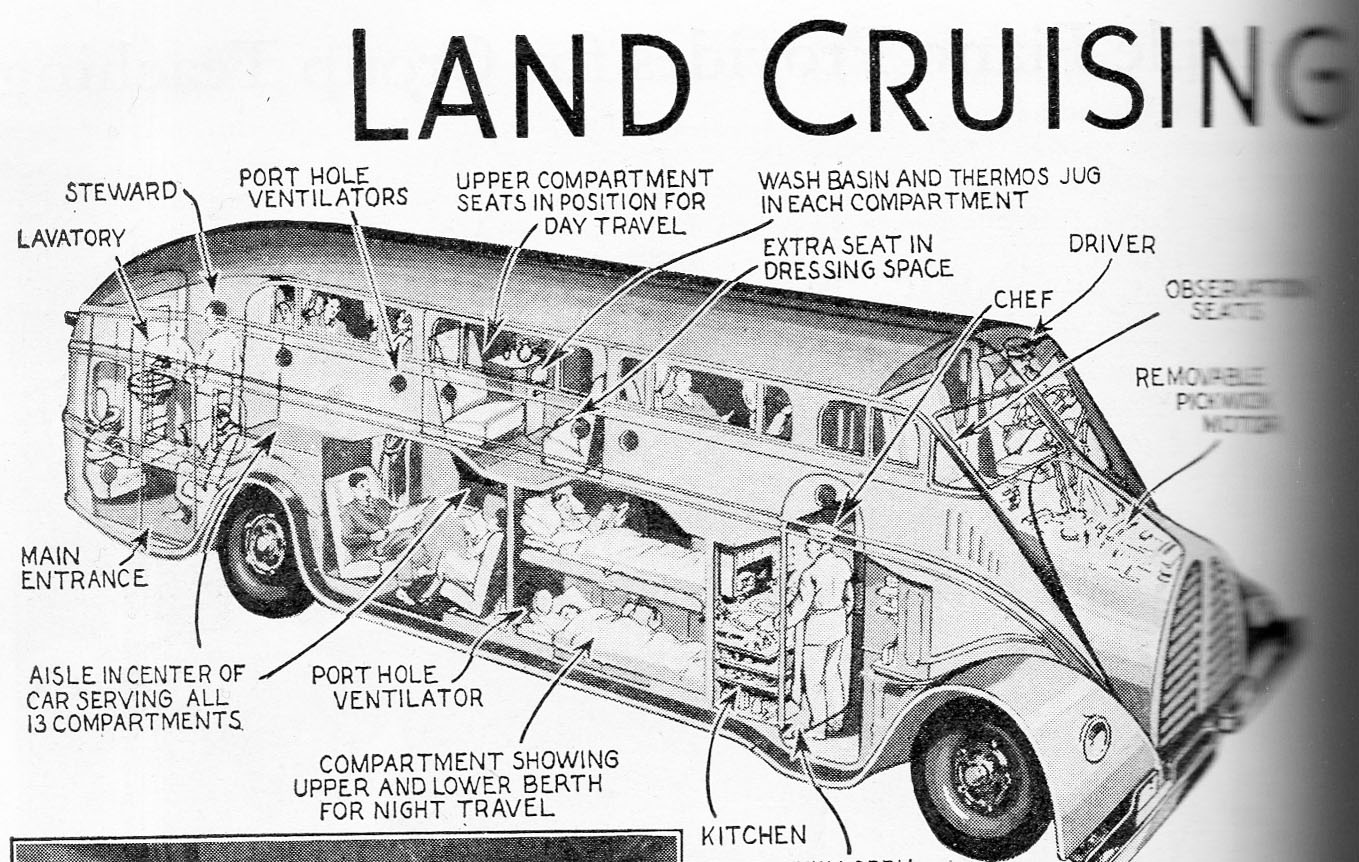
This land-whale of a vehicle, a bus design for “Land Crusing De Luxe”, is left mostly to our imagination so far as specs and stats go. It looks as though it would accommodate perhaps 14 people on a long haul. There were two levels of living space as well as room for two (or four?) in sleeping quarters…perhaps a more luxurious class was seated downstairs. In any event there were three attendants on the bus for its not-many passengers, including a chef, a seward and a driver. (Elsewhere in the article the driver is referred to as a “pilot”.)
I’m sure this would have been a beautiful thing–I picture is red on black, with an ultra-shine. I’m also sur ethat it would have been a delsight.
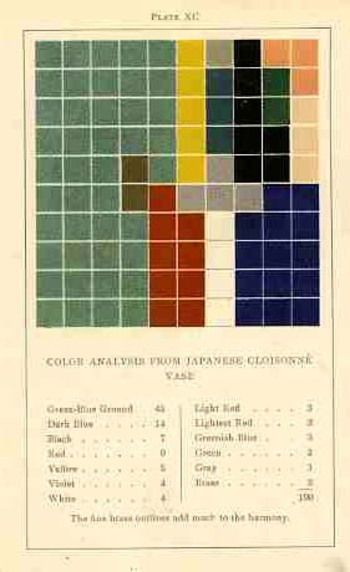
This blog has long hosted a series of posts on “accidental” or “unintended” works of pre-modern modernist art found in displays of information and statistics in the sciences and mathematics, and even occasionally in art and design. One such work–a 1904 triumph of accidental art issuing from an usunal work on color theory–belongs to an aesthetician named Emily Vanderpoel. It is extraordinary in a narrower sense, and that extraordinary might not actually be positive for its original intent–the extra-intent of the book, what has come out of it for me, was something that was unintentionally accomplished by the author. The images that she used to illustrate her color theory ideas–the basis of which are not really omprehensible to me–turn out to be artwork in themselves, a found art, the artistry of the images taking over the original intention for the arrangement of their color. She had introduced (though to no one, not really) a concept of beautifully arranged spatial color, artwork without a subject that could be recognized as any sort of natural object–non-representational art, finding publication several years before what is seen as the first inentional attempt at that genre, by Vassily Kandinsky in 1911. (Images below.) And when one strolls through the history of scientific illustration it becomes easier and easier to find such things, fabulous precursors to non-represnetational art, and Dadism, and Cubism and Surrealism.
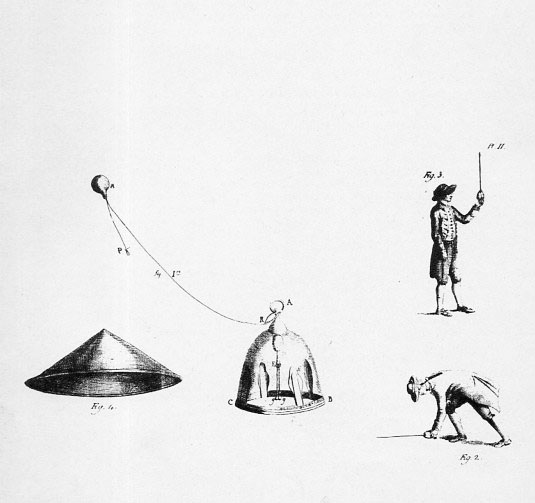
These elements seem to be most populous in the illustrated sections of early encyclopediae, and dictionaries, and even encyclopedic dictionaries, where a number of different elements are displayed on the same page, different and generally unrelated images on the same engraved sheet, references for articles found in different parts of the book.
Here is a good example of that, with unintentional Surrealist images found in the image refernce pages of Horace Benedict de Saussure’s Voyages dans les Alpes….(published in Neuchatel in 1803): [There are a number of other examples that I’ve written about on this blog: here, for example, in “On the Paper Sculpting of Nothing”.]
And then there are examples like Vanderpoel, where the entire image from one sheet is the pre-modernist image in question–to my experience this is the more uncommon occurrence.
Which brings us to today’s installment: the infographic displays found in Francis Walker’s Statistical atlas of the United States based on the results of the ninth census 1870 with contributions from many eminent men of science and several departments of the government, which is the atlas of data to accompany the 9th Census of the United States, published in 1874. This is a beautiful work, and a pioneering challenge. Walker was one of the earliest to produce a statistical atlas, and was perhaps the earliest to display this huge and broad amount of data in so many different ways–it must have seemed a semi-miracle to see the information displayed so, like going froma black & white television to color, or color to infared, and so on. It may well have represented anentirely new way of looking at data.
The first image (above) in this post is from the illustration showing proportions of the white/non-white population, and the following image shows a detail of that, offset against Mark Rothko’s 1959 Black on Maroon.
Francis Walker’s statistical mapping, above, 1873; Mark Rotko,
1959, below:
[Black on Maroon (1959) by Mark Rothko, part of the Seagram mural series, via Tate Modern.]
The first and third images are details from this full-page illustration:
It is easy to see the similarities between the data display and the Rothko, though it would really not be within anyone’s power to identify the Walker diagrams as “art” in the modern sense for another five decades. But it certainly seemed there, ready to be of influence and service, though I’m not aware offhand of artists being influence by these images as they were with, say etienne Marey’s photographs. I’m not sure that these statistics images ever came into the service of art in the beginning of the modern era. And maybe that’s the biggest question here.
Einstein’s Letters of 1939 and 1945 and Szilard’s Petition of 1945
There were certainly a number of cautionary flags waved at the Executive Branch in the period just before the atomic bomb was first used against a Japanese target. As I wrote in an earlier post here, Dwight Eisenhower was adamantly opposed to the use of the bomb on a city, preferring an example to be made of the thing on an unpopulated area; in his memoirs, General Spaatz (who had received the only written communication authorizing the use of the bomb) was privately against using the weapon on a city. As early as 1939 Albert Einstein famously communicated with Franklin Roosevelt his concerns on the possibility of the terrifying nature of a bomb produced by his early efforts and those of Fermi and Szilard and many others. In all Einstein wrote four letters to the President, the first part of the first letter is shown below:
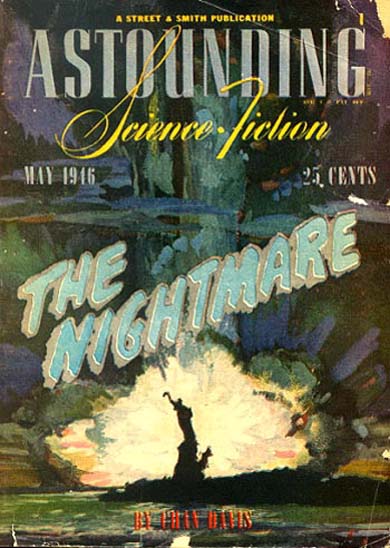
”This is a story of the immediate tomorrow – and of civilization headed down the inescapable road to destruction – down the road that we have, already, selected – and its nightmare end.”
Chandler Davis wrote this nightmare for Astounding Stories in 1946, and the artwork of the deteriorating-before-your-eyes Statue of Liberty fits this blog’s series of Disappearing New York series. Davis is a very interesting man–Ph.D. mathematics from Havard and professor of math at Toronto, a New York-born man who started his sci fi career early (age 20, with the story above) and who iimmigrated to Canada after his relsease from his HUAC-inspired prison term. Davis was probably a born Leftie, a radical, and it evidently never left him.
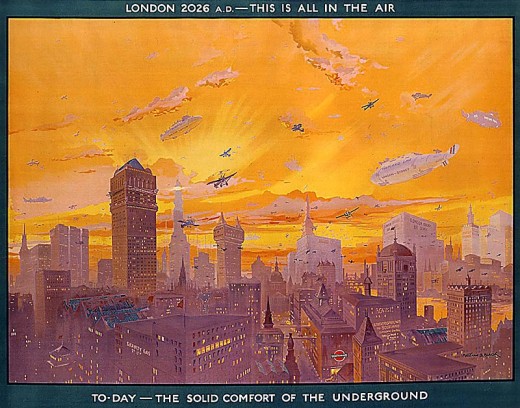
Montague B. Black (b. 1884), an artist and illustrator, pulled the curtain back from the future back there in 1926 to what he thoiught might be the following scene of London in 2026:
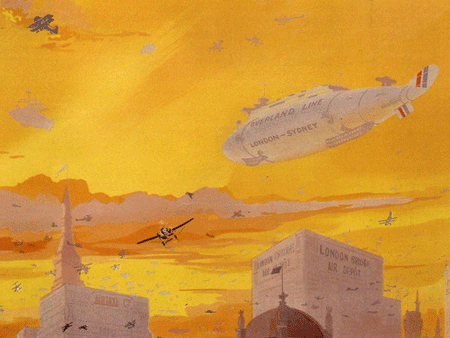
A detail reveals an interesting airship:
The airship (of an undetermined power source) has an ad on the side of it reading “Overland Line, London-Sydney”–and by “overland” the artist is not thinking of the old-time “overland” as in prairie schooners and such, but quite literally “over the land”. We can also see an ad on the side of a building for an “Underground to Scotland, Glasgow 2hrs 45 mins”. There are also named buildings such as the London Bridge Air Depot and the Airtaxi Ltd. The skyscrapers really aren’t all that enormous–I see one or two perhaps in the background that might be a hundred stories or so, but the buildings in the foreground are definitely of modest expectation.
There are however dozens of flying machines in the sky, though with the exception of the three large airships, a hundred years has not paid too many benefits to the other aircraft.
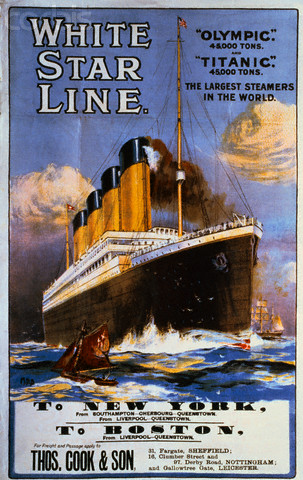
Black did create an interesting poster for the White Star line, featuring a certain famous luxury liner–of course the man was just like anyone else, and could not see into the future for the Titanic, nor could he imagine slightly accelerated designs for aircraft. He did manage to portray a transportation system that would be heavily dependent on air travel. That said, he left plenty of room for speculation on the future of the Underground, as we can see in all of this future-glory that no matter the amount of accomplishments in the sky, trains would still be running underground. Black got those two things right, at least.
JF Ptak Sciene Books Post 1860 (A Thinking-out-Loud Note) Part of the series The History of the Future
“It seems to me, then, that time is merely an extension, though of what it is an extension I do not know. I begin to wonder whether it is an extension of the mind itself.” St. Augustine, Confessions, (26:33)
In Paul Nahin’sTime Machines, Time Travel in Physics, Metaphysics, and Science Fiction (Springer Verlag, 1999), the author Paul Nahin makes a good case for St. Thomas Aquinas (1225-1275 or so) being a very early questioner of the concept of time travel (on pages 161-162). In the Summa Theologica it does seem to me that Aquinas does indeed talk this way, if relating his comments to the ability of God to make changes in the past, present and future.
Hence all things that are in time are present to God from eternity, not only because He has the types of things present within Him, as some say; but because His glance is carried from eternity over all things as they are in their presentiality. Hence it is manifest that contingent things are infallibly known by God, inasmuch as they are subject to the divine sight in their presentiality; yet they are future contingent things in relation to their own causes.1 Summa Theologia, reference below, source here.
It seems as though it is possible for God to make changes in the past and present, but the future is another matter, and an area in which even the creator cannot bring about change. He seems to say that God can cause things to exist or not in the present and the past, but not in the future:
Whereas when we say he will be, we do not as yet suppose anything. Hence, since the existence and non-existence of an angel considered absolutely is subject to the divine power, God can make the existence of an angel not future; but He cannot cause him not to be while he is, or not to have been, after he has been.2
I honestly do not know without doing some research how this sort of thought would have been received by other theologians, where the practices of God are omnipotent and unrestricted. For God not to be able to alter the future limits the logic of God’s actions, and seems to establish a limit in general to a limitless idea.
Perhaps Aquinas is a very early version on the assault of the completeness of the perfect creation of God’s universe, something that would be put to the test in the scientific discoveries of the coming centuries. For example, with Galileo discovering that the night sky was hardly complete and perfect as had been thought, viewing nearly an order of magnitude more stars with his telescope than had (of course) never been seen before. Suddenly, the unchanging sky of the great creation was hardly so, and that it was far more vast than had ever been shown. Same too with the creation of a vacuum by Otto von Guericke with his experiment’s results published in his Experiemnta nova (ut vocantur) Magdeburgica de vacuo spatio (Amsterdam, 1672, and which I wrote about here), something that assaulted the speculation that God could not create nothing, that the existence of a perfect nothingness was not possible.
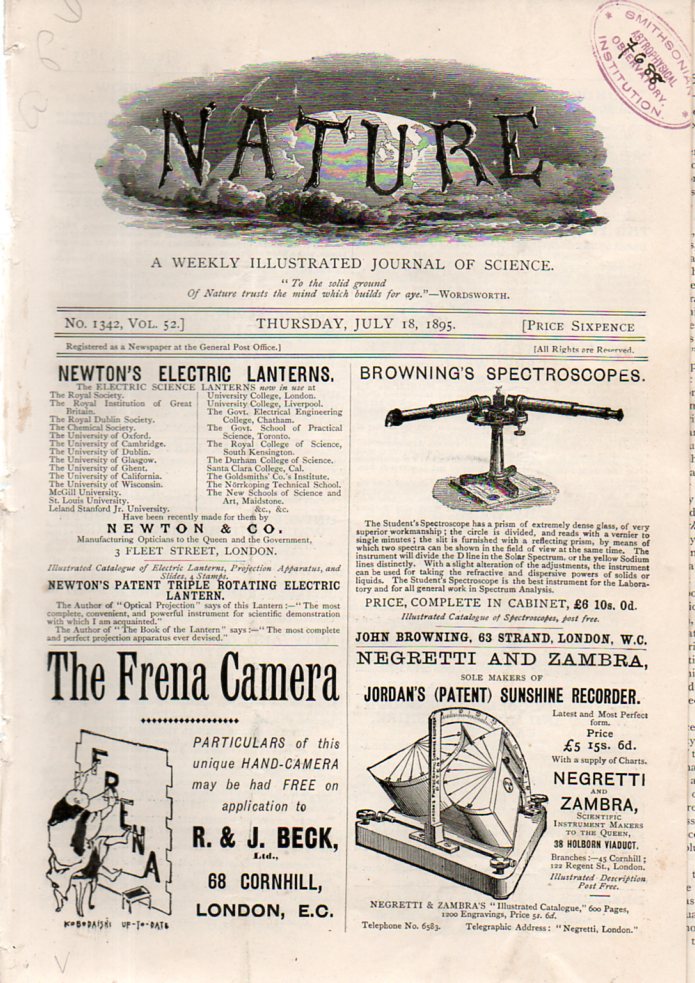
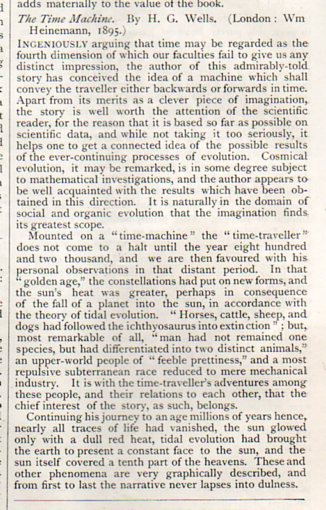
I found this interesting 400-word bit in the 18 July 1895 issue of Nature (A Weekly Illustrated Journal of Science) and of course still very much alive and still a great publishing scientific powerhouse. As Wells’ treatment of time as a fourth dimension was still quite speculative, and his creation of the time machine as we now came from his hands, and as its reception by some literary journals was not very cordial, it is particularly interesting to see the positive review from this science journal. As reported by Paul J. Nahin in Time Machines, Time Travel in Physics, Metaphysics and Science Fiction (published by Springer Verlag in a second edition in 1999, a graceful book of splendid observations with an introduction by Kip Thorne, Cal Tech’s Feynman Professor of Theoretical Physics), Wells’ book was seen as “hocus pocus” and a “fanciful and lively dream” by The Spectator and “bizarre” by the Daily Chronicle.
Nature’s editors says of the book:
“…apart from its merits as a clever piece of imagination, the story is well worth the attention of the scientific reader, for the reason that it is based as far as possible on scientific data…”
“It is naturally in he domain of social and organic evolution that the imagination finds its greatest scope.”
“From first to last the narrative never lapses into dullness.”
And so Wells–who had cleaned up and rewritten an earlier version of this book from 1888–received a happy review from one of the leading scientific magazines of the time. It is not because of a wide interest of Wells in the fourth dimension per se that Wells wrote the book, but rather in rattling Victorian sniffy conceits of his day.
*Time as the fourth dimension is a concept not much older than Well’s idea, one of the earliest publications of the idea appearing ten years earlier (and written anonymously by “S”) in Nature. Charles Hinton, the person we most associate with the introduction of the fourth dimension (or at least so on a popular level) didn’t really establish time as the fourth dimension. (Hinton led a colorful, or at least interesting life–he was a brilliant guy, and also a convicted bigamist who was married to George Boole’s daughter, and creator of an automatic baseball pitching machine. His books on the fourth dimension certainly were influential, and in the estimation of Florence was a contributor to the ideas of the coming modern art movements of the 1890-1910 period.)
And there were certainly many who came before Wells on the subject of the fourth dimension (though not many on the subject of time as the fourth dimension): R.C. Archibald wrote on d’Alembert’s (1754) use of time as a fourth dimension (in the Bulletin of the American Mathematical Society for May 1914); Cayley’s “Analytical Geometry of n-Dimensions (Cambridge Mathematical Journal, 1843); Grassmann’s Die Lineale aus Dehnungslehre (1844); Riemann’s 1854 effort on curved space (translated in 1873 for Nature by W. Kingdom CLifford); Beltrami’s introduction of the pseudosphere in 1868; J.J. Sylvester (again in Nature for 30 December 1869); Hermann von Helmholtz and his curvature for three-dimensional spaces; and Poincare’s work in 1900, among others. There is a rich field of these efforts, beautifully investgated for the general reader by Linda Dalrmple Henderson in her classic The Fourth Dimension and Non-Euclidean Geometry in Modern Art (Princeton 1983).
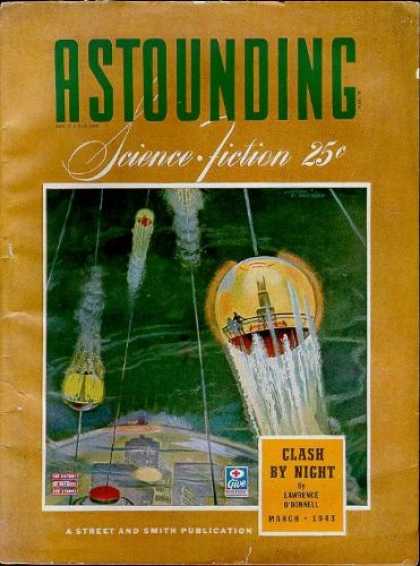
Piecing my way through the great collection at Cover Browser, looking for science fiction pulp covers for images of Enormous-and-Montrously-Huge-Outer-Space-Things, I developed a very small collection of spherical spacecraft and/or “stuff”. They’re quite lovely, I think.
[All of the images I used below I selected from the big and wonderful collection at Cover Browser, here.]
“I have never painted a recent picture.” Man Ray, 1966
“Unconcerned but Not Indifferent”—1976, Man Ray’s epitaph.
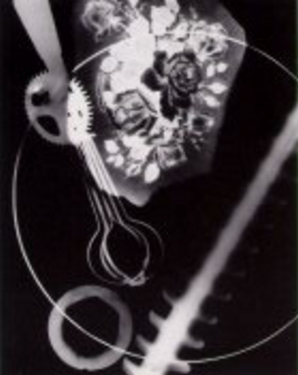
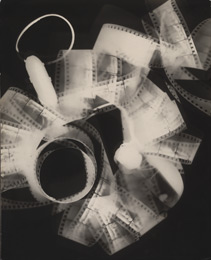
Emmanuel Radnitzky (1890 –1976) removed the “Emm_uel”and the “__dnitzk” from his names to become Man Ray, a South Philly-born, Brooklyn- and Manhattan-bred Parisian ex-Pat artist became (by the early 1920’s) perhaps the most influential of the Dadaist/modernist photographers. No offense to his given name, but “Man Ray” is superior.
And Man Ray was far more than a photographer, as he worked across many different art forms, not the least of which was motion pictures.But what comes to my mind first with his name is his self-titled “rayograph”, a photographic process which was actually a photogram, which was the direct exposure of an object placed upon a photosensitive paper.This is also the earliest form of photography, something employed by Fox Talbot who called it “photogenic drawing”) as early as 1834. (I wrote a little bit about this process in a post “Things That Almost Were But Weren’t”.) But Man Ray’s rayographs stand clear and distinct to me, different even from his contemporaries’ works (including Susan Derges, Max Ernst, Raoul Hausmann, Laszlo Moholy-Nagy and Alexander Rodchenko).
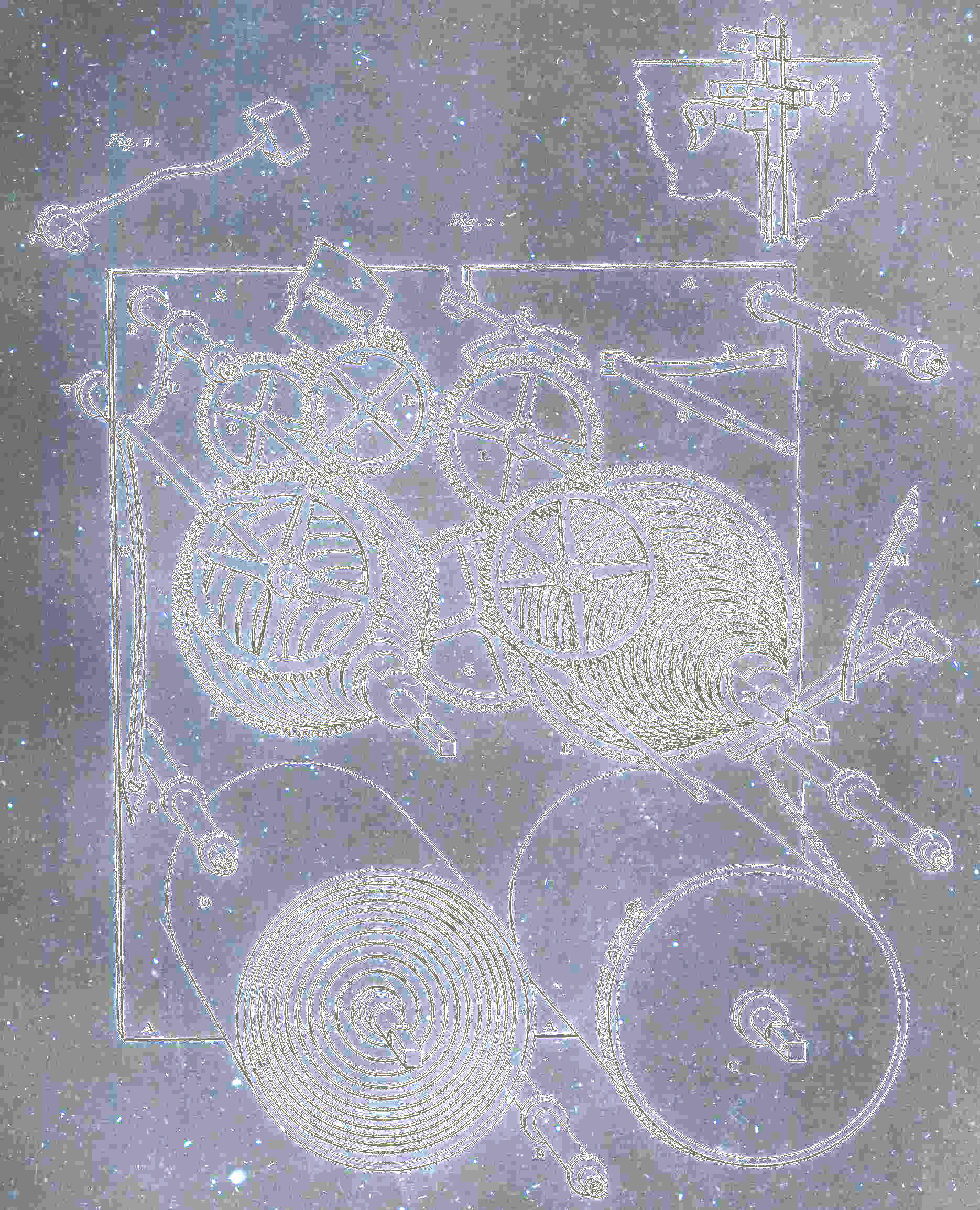
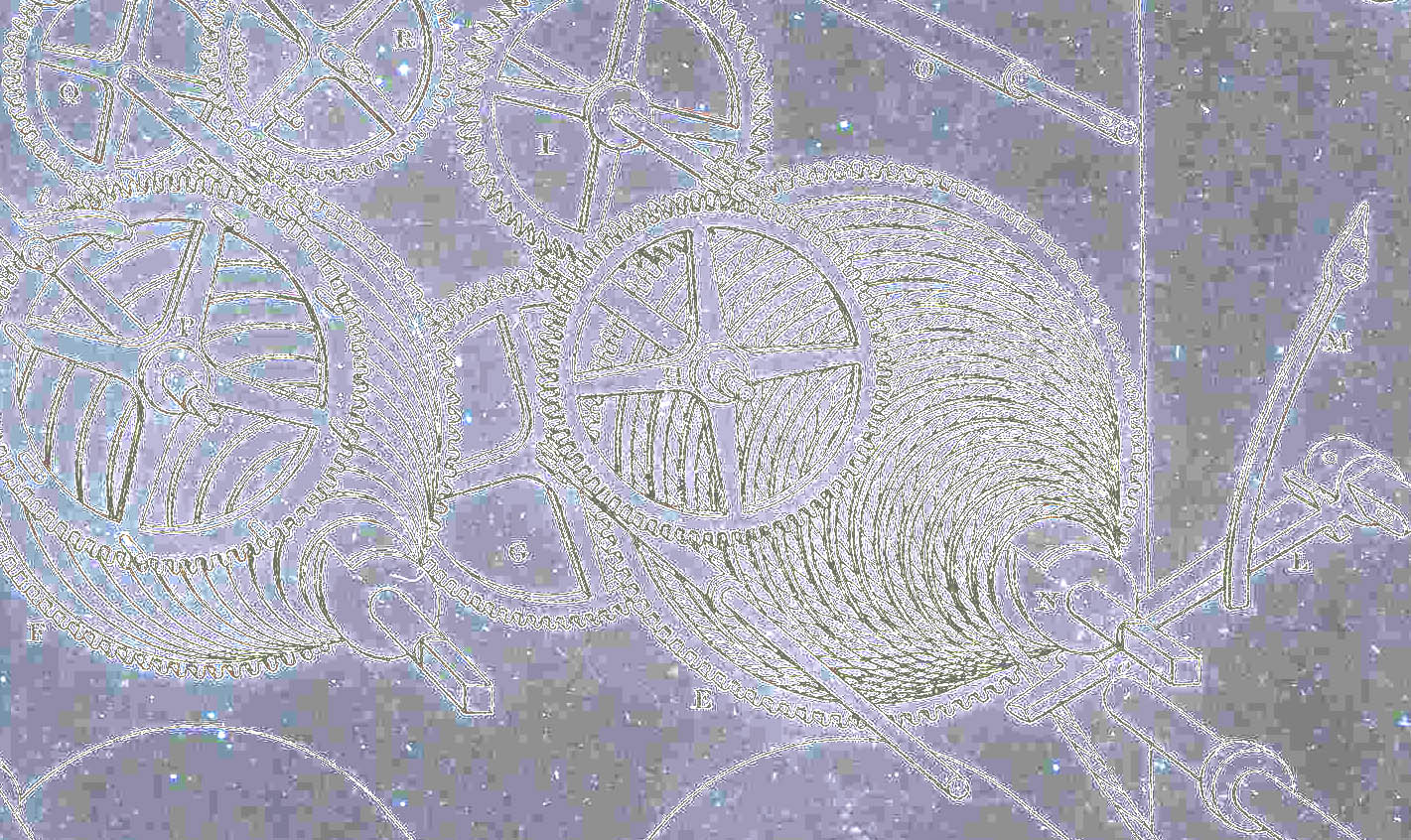
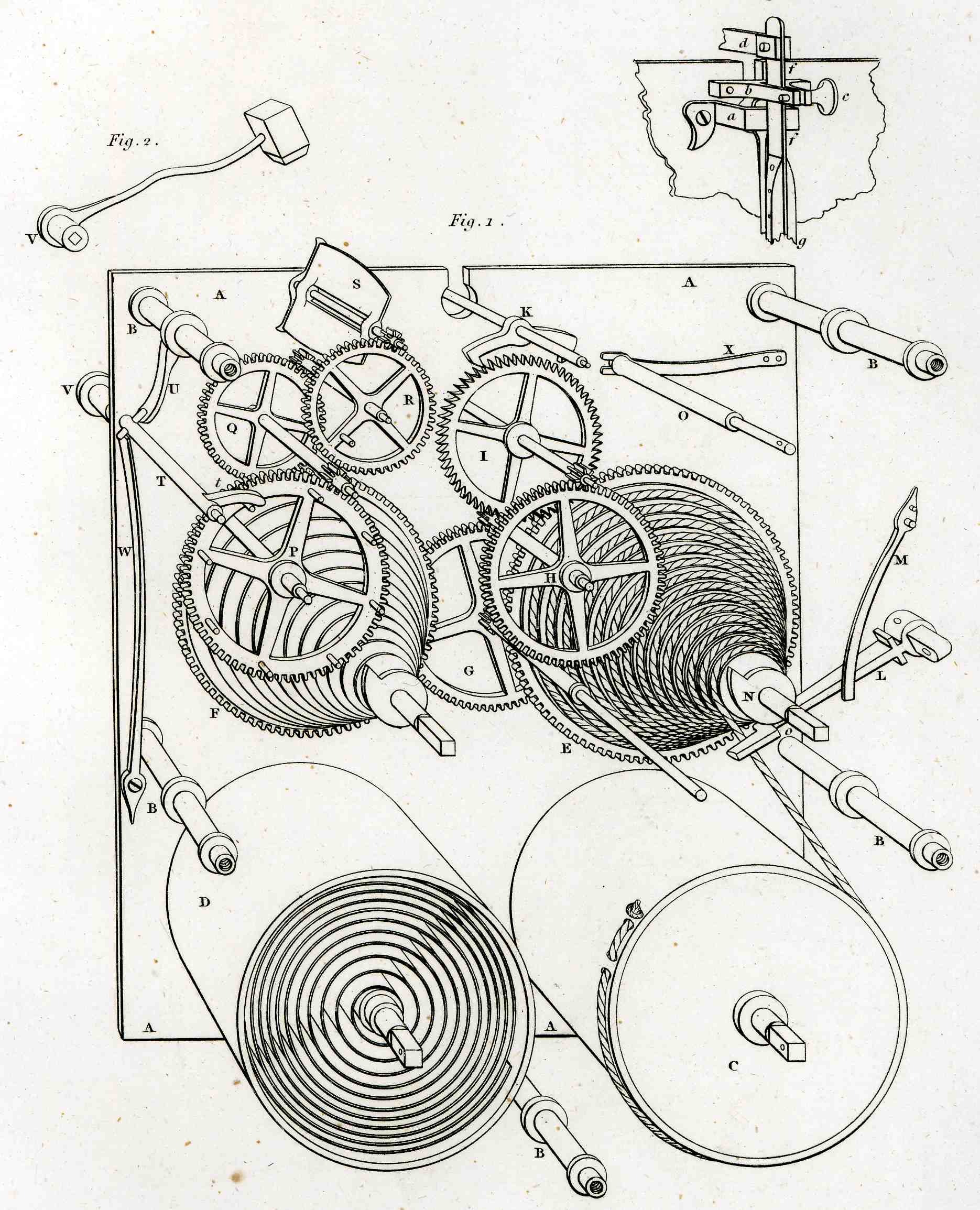
Of course my antiquarian pretender (the image on the above right) to the rayograph isn’t one—it just had the look and feel of one, contained that shock of recognition that I had seen it before, and the palce where I would’ve seen it was with Man Ray.All I did with this engraving—an image of clockworks published in Abraham Rhee’s Encyclopedia of 1810–was to solarize it.So it isn’t even a rayograph, but just looks like one, though Man Ray did work quite a bit with the solarized image.I just like it.
This is the engraving in its “before” (and superior) state:
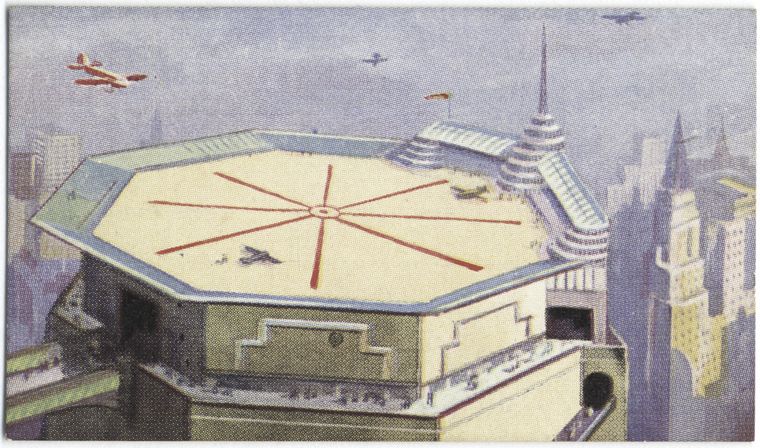
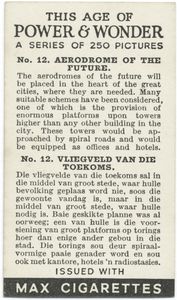
Three wonderful images of the future, brought to the viewer via the tobacco trading cards interests in the 1920’s–a future that could very well have been denied by the user of the product that advertised it. Source: New York Public LIbrary Digital Collections, here.
 These elements seem to be most populous in the illustrated sections of early encyclopediae, and dictionaries, and even encyclopedic dictionaries, where a number of different elements are displayed on the same page, different and generally unrelated images on the same engraved sheet, references for articles found in different parts of the book.