A Daily History of Holes, Dots, Lines, Science, History, Math, Physics, Art, the Unintentional Absurd, Architecture, Maps, Data Visualization, Blank and Missing Things, and so on. |1.6 million words, 7500 images, 4.9 million hits| Press & appearances in The Times, Le Figaro, Mensa, The Economist, The Guardian, Discovery News, Slate, Le Monde, Sci American Blogs, Le Pont, and many other places… 5000+ total posts since 2008.

Category: Art History

  • The History of Goodbye series: The Open Door in Eden

    JF Ptak Science Books   Post 1656   (Part of the History of Goodbye series)

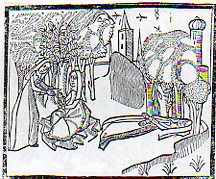
    The idea of there being a door to Eden is an interesting one to me–not just for the view of Eden from the outside looking in, but really for the view of the Un-Eden seen through the open door, looking out. Its a curious thing to imagine what the first view of the rest of creation would have looked like–maybe curiouser to imagine why there was a door or gate there to begin with.  A door in Eden could’ve meant only one thing–the exit.  There wasn’t anyone there to enter Eden, and certainly Adam and Eve weren’t going to go out and come back, so I guess the door was the Ultimate Fail exit portal. Just waiting. (Also there doesn’t seem to be any mention of a door in Genesis, so this would just be further artistic spin on another version of the Fall of Man, a story which spins out from a place far older than the Old Testament.)

    [Image source:  Cornell University collections.]

    The door/gate doesn’t seem to appear very often (to my memory and experience, anyway) but this image–a rather famous one from the great Nuremberg Chronicle (printed in 1493 by Anton Koberger) offers us a little clue, as well as a mystery.  We see the temptation of Adam and Eve on the right, and their expulsion because of their inability to reconcile the threat of pleasure on the left.

    The open door doesn’t really reveal too much, from what I can see.  Those blobs might be smoke, or bushes, or something symbolizing The Dark and Disappointment. There are some bits of the Un-Eden looming above that could be above the walls–like the mountain that look like a person sitting back with a book with a head tilted towards the sky–making the life outside seem as though it might not be so pleasant.
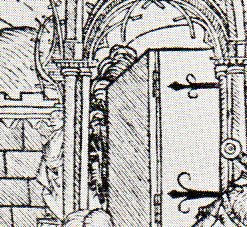
    Adam and eve expulsion984
    And then there’s the mystery of the statue by the door–the statue of a figure holding a book or tablet and clothed in robes, standing on a pedestal by the door, in profile.  As Adam and Eve were the only people, its hard to imagine who that statue might represent, because all of those other people come later. 

    Perhaps it was just a little creative largess from a woodblock cutter practicing or showing of their perspective skills into a piece of the block’s image that is largely hidden.  Perhaps it was the same cutter who gave such great detail and belief to the flowing robes of the angel threatening Adam and Eve with a sword–there is certainly more skill involved there than anywhere else in the print, so much so that it makes me think that there was a truly accomplished hand brought in for that piece of flourish on the anonymously-produced image.

    In any event, a door in the walls of Eden seems to me a curious and taunting device–an exit door without an entrance.

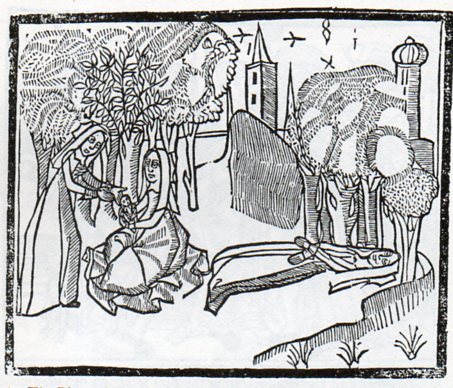
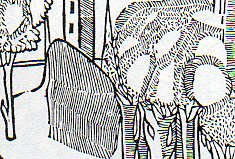
    Here are some open-door/gate/portal examples, below, though none really show anything through the portal:
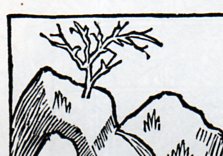
  • Floating River, Lonely Tree: a Little Bit on the Aloofness of Things in Renaissance Illustration

    JF Ptak Science Books   Post 1651
     
    Malory870  

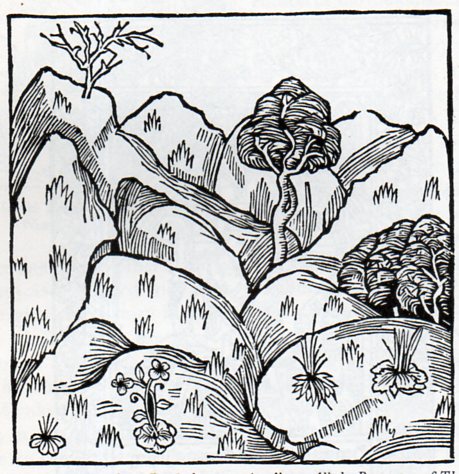
      Sir Thomas Mallory (c. 1405 – 14 March 1471), translated and compiled a collection of mostly 14th century romances regarding King Arthur known and published as the  Le Morte Darthur/Le Morte d’Arthur.  It  was first published by the great William Caxton in 14851and became quite popular,  being reprinted with additions and corrections in 1498 by William Claxton and then again by Wynkyn de Worde (in 1529). It is, in its way, beautifully illustrated, or at least interestingly illustrated–I can’t really say for sure if the woodcuts were done with great care or not.  But their effect is significant, and, whether naive or not or careless or not or simply at the artistic limit of its executor or not, the images do have their own peculiar beauty.  One that struck me in particular was this, 


    Malory869
    the “floating river”, an out-of-perspective element of a very stationary world, a controlled chaos-ness in a static landscape.  I’m not sure what is going on with the trees, if the blankness is a part of reflected light, or if it is a representation of spaciousness between the limbs, or if they are simple wormholes in the woodblock.  Everything in the image seems to have its own sphere, locked into their own environment, existing apart from everything else.

    I see the same issue with many other such works, bits dropped into place in a scene or landscape, all making their way into the viewer’s mind on their own, not really a part of a cohesive whole.  This may have been the intent, or again it may have rubbed up against the outer limit of what the artist (and their tools, and medium, etc.) was able to actually produce.  Here’s another example:

    Lonely tree872:

    Lonely tree871
    Its another lovely, lonesome image of separates from the beautifully-named book by Bartholomaeus Anglicus All the Properytees of Thyings, which was published in Westminster in 1495 (and also known as De proprietatibus rerum, also translated as On the nature of things, or On the properties of things), and which was originally written around 1225).  The book was a bestiary, a marvelous encyclopedia, a collection of all things as known in the 13th century–it would be interesting to represent all that is know today and compact it into a workable, logical, usable (printed !) book of a thousand pages.  The question of organization of knowledge would be the key, of course, and how to make one flow to another complementarily as practicable…it would be an interesting project (for someone else) to try and arrange the basis of human knowledge in a finite space like that.  The author of the book above organized his work as follows, in 19 books:  “god, angels, (including demons),   the human mind, or soul, physiology, of ages (family and domestic life), medicine, the universe and celestial bodies, time, form and matter (elements), air and its forms, water and its forms, earth and its forms including geography, gems, minerals,  and metals, animals, and color, odor, taste and liquids.”  The 2012 variety of categories would be somewhat different.

    Notes:

    1. This period, from say 1494 to 1525, was one of great creativity.  For example: 1494, Pacioli: Everything About Arithmetic, Geometry and Proportion; 1498,  Leonardo da Vinci: Last Supper; 1500, Michelangelo,  Pieta;  1504, Michelangelo: David and Bosch Garden of Earthly Delights; 1505, Leonardo Mona Lisa; 1506, work begun on St. Peter’s Basilica; 1508-1512 Michelangelo paints the Sistine Chapel; 1511, Erasmus, Praise of Folly;  1512: Erasmus, De Copia; 1513, Machiavelli  The Prince; 1516, More, Utopia; 1517, Start of the Reformation.

    Some samples of other bestiaries (compiled by The Medieval Bestiary):

    Hrabanus Maurus : De rerum naturis

    Isidore of Seville : Etymologies

    Lambert of Saint-Omer : Liber floridus

    Brunetto Latini : Li Livres dou Tresor

    Jacob van Maerlant : Der Naturen Bloeme

    Konrad von Megenberg : Das Buch der Natur

    Thomas de Cantimpré : Liber de natura rerum


  • Geography and Geology in Renaissance Art, #1–Rondo Island Earth and Eden

    JF Ptak Science Books   Post 1650   (Part of a series on the History of Blank, Empty and Missing Things.]

    [I wrote earlier in this blog on maps of the Garden of Eden, here.]

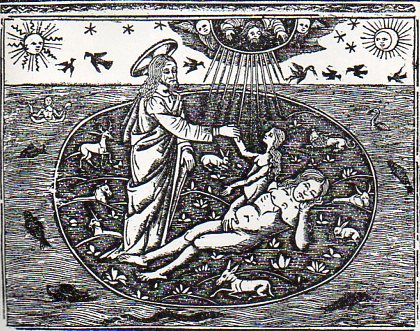
    This island is Island Earth, the chuchified beginnings of humanity, showing the creation of Woman from the rib of a sleeping Adam. I’m not referring to the 500-odd place names in the U.S. identified as “Eden”:  there are cities, towns, and villages named “Eden”, plus valleys, creeks, lakes, schools, shopping centers, malls, plazas, forests, and cemeteries–though I must say the though of an “Eden Cemetery” does sound appealing.  I’m talking about the Eden of Genesis–though Eden hardly makes an appearance anywhere else in the Bible.  Nor for that matter does the Fall of Man.  I’m also not talking about earlier references to Eden-like places, like Heden of the Persians, or the “Islands of the Blessed”/Elysium of the Greeks, or any of the other earlier versions of a paradise (some complete with a tree of knowledge/life guarded by a serpent/dragon) from which the Genesis version must surely have drawn.  This is strictly Old Testament, here.

    It is interesting that this image is a suggestion of the anatomical event, because Adam is shown whole and unmolested–I’ve seen many versions of this image showing Eve actually emerging from an opening in Adam’s side, but the artist here is content enough with the suggestion of the bio-event. 

    Islands977

    [Source: Jac. Phil. Foresti Bergomensis, SUpplementum supplementi chronicarum ab ipso mundi exordio…printed in VEnice, by G. de Rusconibus, 1510.  See the full image in the continue reading section.] 

    Eden seems set adrift in the sea of everything, floating there while the big change comes over Adam. (It is also fun to note that the hallow of the creator is given a three-dimensional affectation–perhaps later we’ll deal with the various shapes of hallos.)  Eden is supposed the perfect circle, held afloat by the great waters.

    Here’s another version, keeping somewhat within the Island Earth concept, but showing Eve emerging from a dourly distracted Adam–definitely this time connected to Adam in some way, though without any open cut.  (This image is from the great Bible of Anton Koberger, 1493. Picture source, here.)

    eve-koberger


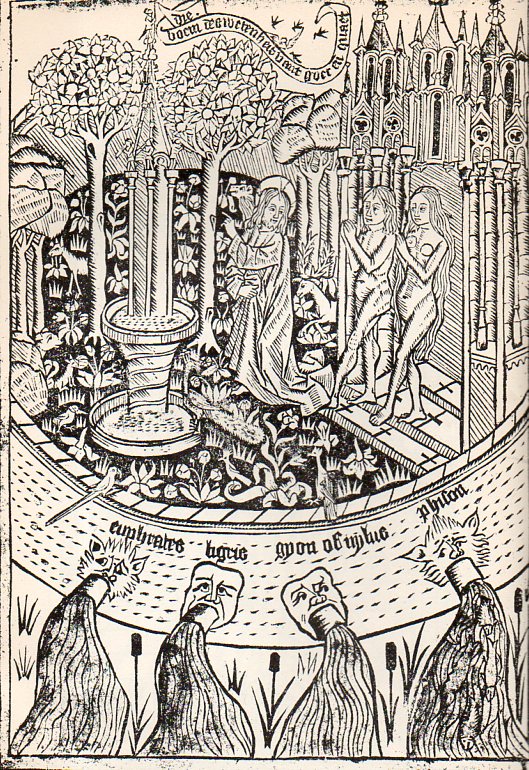
    Here’s nother image of the Garden of Eden as rondo, from Ludolphus de Saxonia (a Dominican for many years and a 14th c figure), Thoeck vanden leven ons heern ihesu christi (1487), which was I think the greatest Dutch achievement in the making of books in their history of early printing,  century, and in general one of the most beautiful woodblock books ever printed:

    Islands978
    Eden is again fortified, this time in stone, with the ornamental drainspouts of the four rivers making their exit in the foreground.  The glory of Eden abounds, but it is temptation that is presented them.

    Another version of Eden, this time in a rectangular configuration, is seen in this 17th c engraving, finding Eden on the map on lower Mesopotamia. 


    원본 크기의 사진을 보려면 클릭하세요


    There are other versions of Round THings that abound in Renaissance images, and we’ll get to them later, along with the depictions of caves, islands, and roads/paths meandering into infinity–those will come in just a little bit. 


  • The History of Blank, Empty & Missing Things–When Everything was Missing

    JF Ptak Science Books   Post 1624   (Part of the series on the History of Blank, Empty and Missing Things.)

    Koberger bw884

    Perhaps “everything” wasn’t missing, but almost everything was.  Certainly the ancients and even the more-moderns, even the scientists of the 16th and into the 17th centuries (until von Guericke in 1672), could not abide the idea of the existence of nothing.  The vacuum, a space in which there was nothing at all, was seen to be an anathema to the creations of the great creator, that the vacuum was antithetical to what was understood to be the nature of nature. (I wrote a post here earlier on when nothing was almost something.)

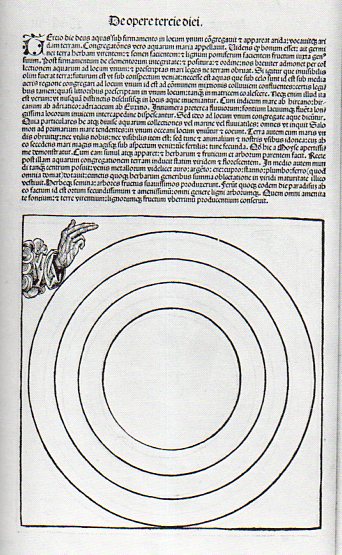
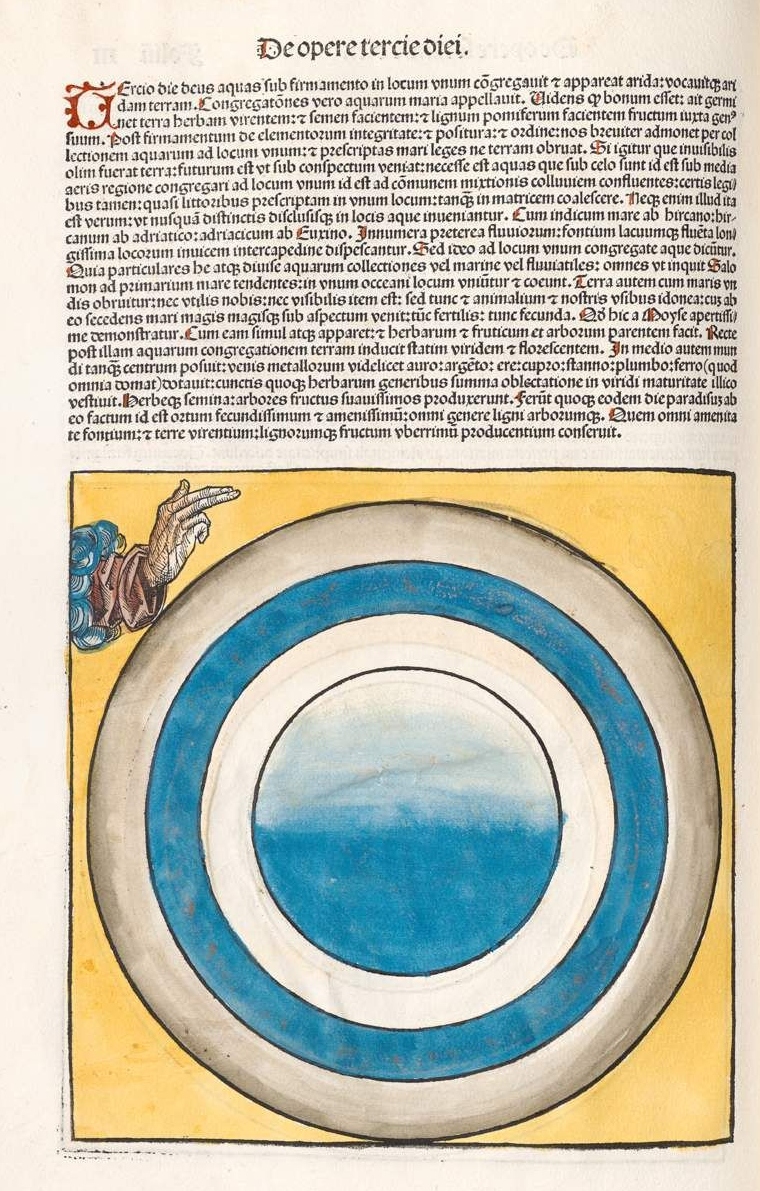
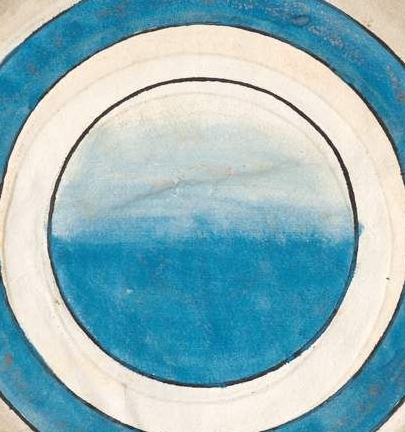
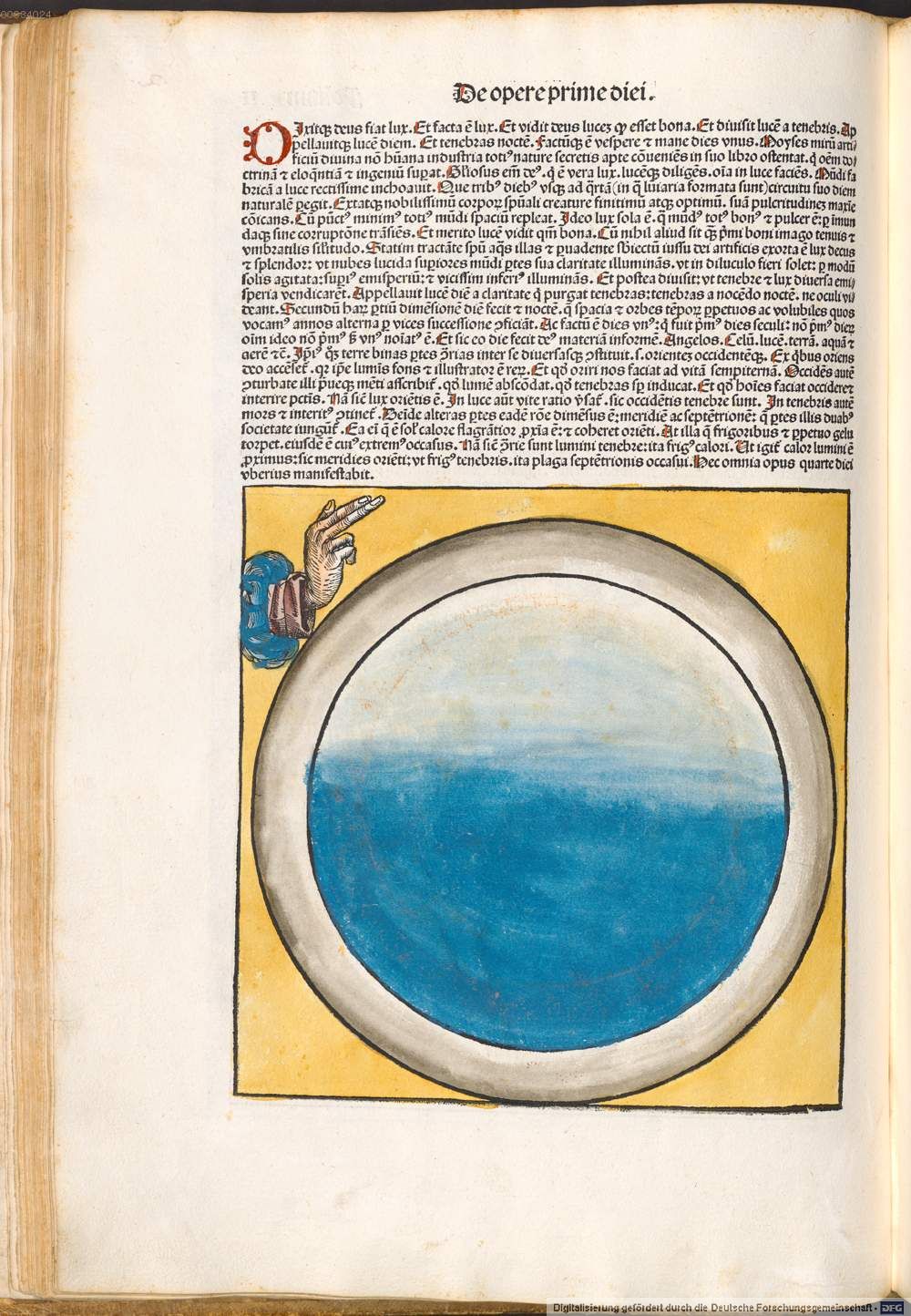
    But what we see here, above, is the third day of creation as presented in one of the most significant books printed in the 15th century, and it is somewhat problematic, because it depicts almost-northing.  That, or almost-everything. 

    The book was written in Latin by Hartmann Schedel (1444-1514, with the German translation by Georg Alt) , with the illustrations under the control of Michael Wohlgemut (1434-1519) and his stepson Wilhelm Pleydenwurff (c. 1450-1494), .and was published in Nuremberg in 1493 by Anton Koberger as Liber Chronicarum–known best to English-pseaking readers as the Nuremberg Chronicles (and to Germans as Die Schedelsche Weltchronik).  It is perhaps one of the greatest illustrated works in the first half-century of movable type printing, using more than 1800 woodcuts to tell the story of the world–according to the Bible, mostly.  (The book deals with the history of world in its seven ages–the first five of which deal with cumuulative history to the birth of Jesus Christ, while the sixth ages handles the history from Christ to the present day, and teh seventh carries along the future history of the world to the Last Judgment.  Not much then is devoted to the 1500 years preceding the publication of Koberger’s book. The author, Schedel, was a very religious man, and considered the work of teh Bible to come from the hand of god and therefore was infallible; on the other hand (so to speak), everything written outside of the Bible was that of humans, and so fallible, and therefore open to interpretation.)

    Here is a colored version of the third day in the creation cycle mythology, which opens itself to much more visual congruence. (“On the third day God gathered together unto one place the waters under the firmament; and the dry land appeared. And God called the dry land Earth; and the gathering together of the waters he called Seas; and God saw that it was good, and said, Let the earth bring forth the green grass, the herb yielding seed, and the fruit trees yielding fruit after their kind.[Genesis 1:9-13.]”)

    Koberger color

    Koberger color b

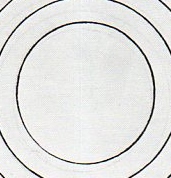
    And the uncolored version, third day:

    Koberger bw det

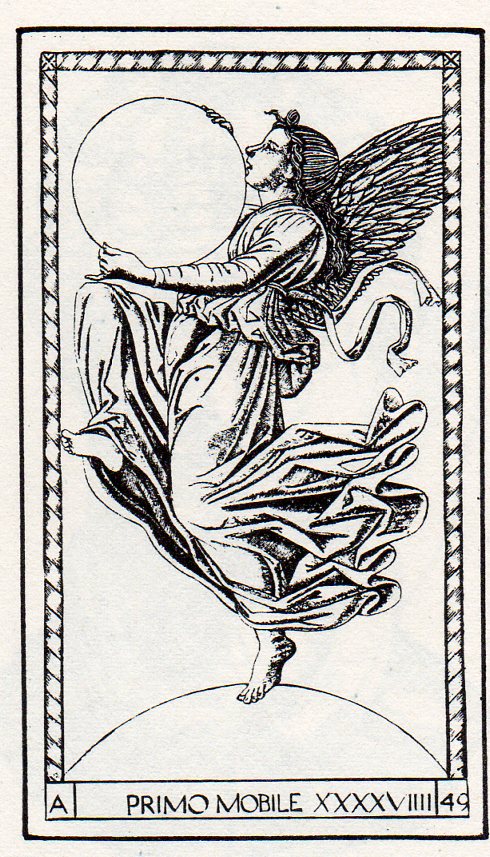
    This sort of “nothingness” is not unique, as we can see in this example from the Mantegna Tarocchi, showing the creator as Primum Mobile, the First Mover, holding what may well be our universe in its hands (and standing on another sphere of nothing, god knows what that might be):


    https://historyofideasblog.com/a/6a00d83542d51e69e20133f47ca205970b-piPerhaps I’m missing the larger picture, and that the circles/spheres are the things created, and that they are contained in the square surrounding them; and that the boundaries marked by the circular lines are not necessarily empty, and that it is the suggested of the circles that is the stuff created, placeholders, contained within the square of the creator’s domain.  Or maybe not. Perhaps the circles are signifiers for the elements–earth at the center, surrounded by water/air/fire. Perhaps the woodcut was just waiting for some color. 

    Notes:

    The English translation of the Nuremberg chronicle used here is from Beloit College (here) which also has a very lovely scholarly treatment of their copy of the Nuremberg Chronicle (here).

    Here’s the rest of the cycle, in color:

    “For he spoke and they were made: He commanded and they were created”  (Psalm 33)., so says the legend (IPSE DIXIT ET FACTA SUNT; IPSE MANDAVIT ET CREATA SUNT Psalm 32) which floats above god enthroned–but it is difficult to see the progress in the un-colored version of day three.  

    http://www.beloit.edu/nuremberg/graphics/Layout%20and%20Design-Full%20Page_lg.jpg

    The first day:

    Korberger 1st day real


  • Half-Missing People of the Renaissance

    JF Ptak Science Books   Post 1621     Blank, Empty and Missing Things series

    The thread on blank, empty and missing things becomes more interesting to me when it approaches the subject of humans and art.  And perspective.  It is a curious thing how over the course of 400 years–beginning say with the adoption of perspective in the work of Paolo Uccello–that the human form (and clothing and surroundings) was more and more realistically portrayed until it was not so, the “undoing” of perspective and realism coming with the Romantics and Impressionists, until realism and the portrayal of the very essence of a recognizable “thing” disappeared as a requirement in art in 1911. 

    But there are interesting forebears to the disappearing human, and some of them are found in the Renaissance.  Of course they’re mostly instructional on how to construct objects in proper perspective and such, but sometimes, well, sometimes they’re not, and the artist is purely suggesting human form.

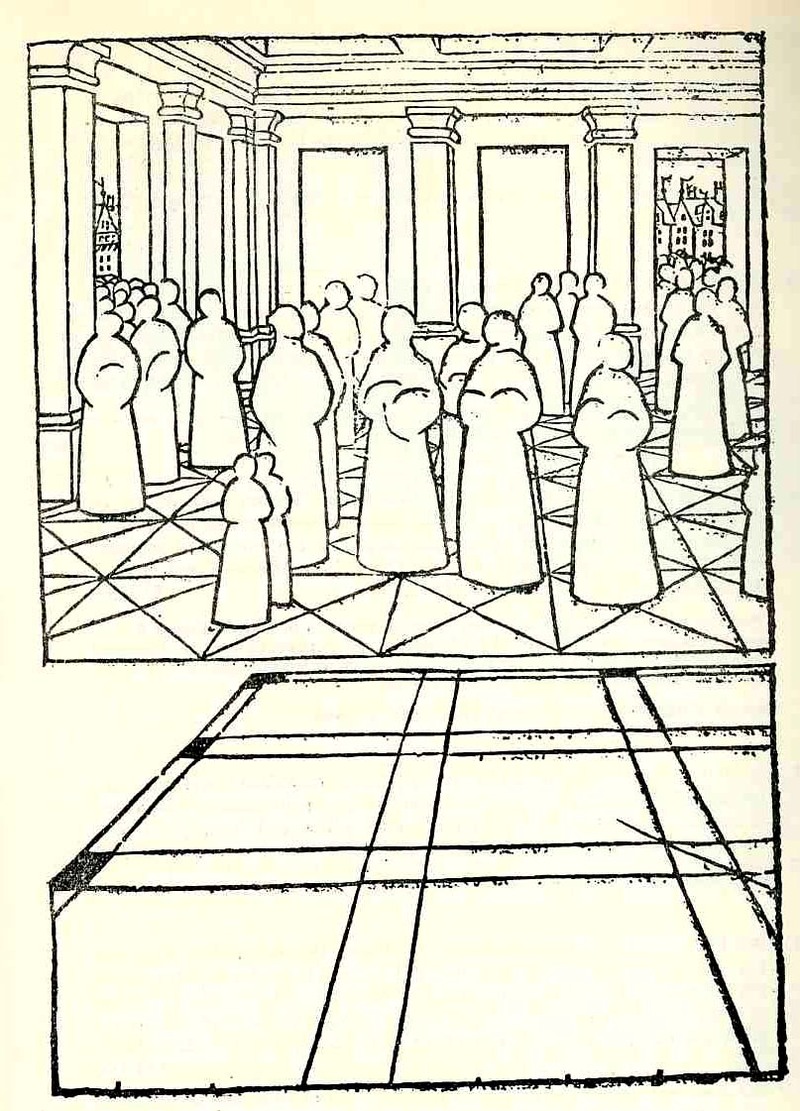
    Take for example the extraordinary work of Jean Pelerin (also called “Viator”) in his De artificiali perpectiva, a very rare woodcut-illustrated book printed n Nurenberg in 1509. In illustrating what he referred to as his “three point perspective” Pelerin removed much of the gothic-tradition bric-a-brac that is so heavily favored in these early books and replaced them with outlines from his rather astonishingly expressive notebooks, and replacing people, individual humans, with what may be the first “almost-entirely-absent” human forms. These roundish, ghost-like figures are just meant to hold the outlines of space, meant to function in the role of a simple comparative unit. This works quite well as an artistic technique—a solicitation tool which I think gives his reduced, “empty” humans an incredible, ethereal look unlike any other in the history of the first 60 or so years of printing.  It is difficult to imagine what the observer of these images back there in 1509 was thinking when they looked at these figures, and perhaps removed them from their textural context—it  would have been a unique visual experience for them

    Photo

     Albrecht Durer’s (1471-1528) drawing of a geometrical man was an amazing–startling, even–object to the early 16th century consciousness. His …Symmetria partium…humanorum corporum (1537) was a masterpiece, and a key piece of revolutionary visionary thinking.

    Photo


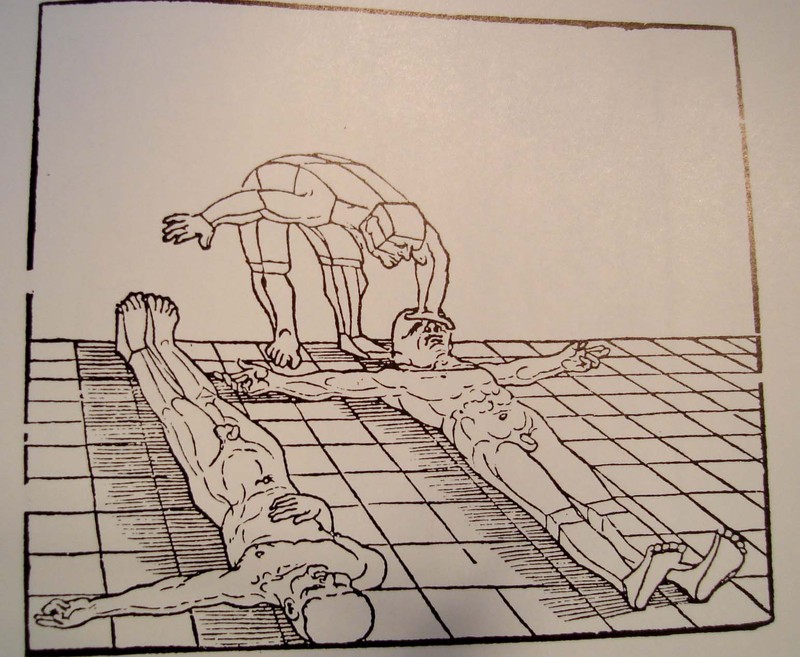
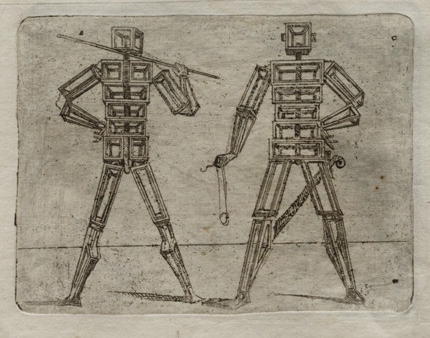
    His Underwysung der Messung (“Treatise on Measuring”) written about 500 years ago (in 1525) set the stage for this next work–it is here that we find some of the most recognizable of Durer’s illustrations of the instruments that he employed to do his perspective work.  Durer–so far as I can tell–created an orthographically rotating human figures in three-dimensional trapezoids, creating incredibly human-like non-human forms.  Supra-human, perhaps; mechanized, calculated, structural. His use of stereometry, the science of measuring volume, was adapted to this study of human form and the relationship between that and movement. 

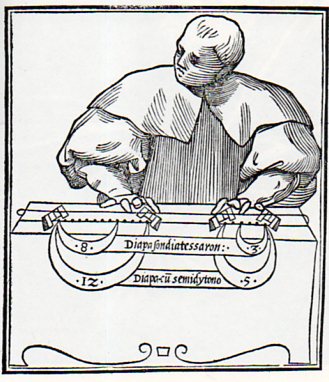
    Lodovico Fogliani, Musica Theoretica (Venice, 1529) which is somewhat reminiscent of a more -blank figure, though when you look at the images in teh book, most of the human figures are more detailed and refined.  This one seems only abotu half-done, with only the suggestion of a face and but little refinement in the clothing.  The subject’s fingers are also pre-robotic, like those fingers on a wooden manikin model if one had existed then.  Of course the figure is just there to depict scales and that’s about it, with just enough of a figure to stand as background to the transmitted info. 

    Blank ogliani878

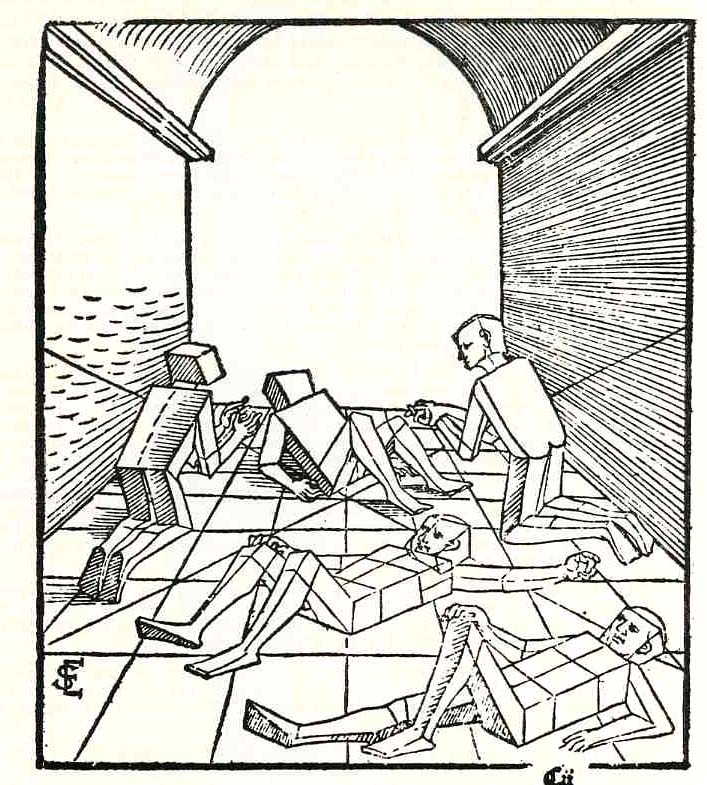
    Just a little while latter Erhard Schoen, in his Unnderweissung der proportzion und stellung der posssen liegent und dtehent, printed in Nurenberg  in 1538, presented another unique way of representing the human form in studying perspective.  He used simplified geometric form to stand in for the curvy humans, replacing them with proportional stacks of boxes which would more easily explain to the younger reader how to represent the human body n space and in proportion to other things.

    Photo

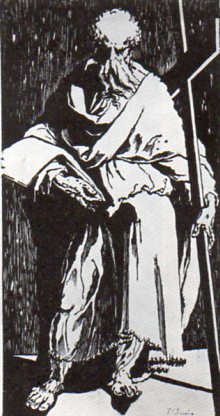
    In the next decade we see  in this woodcut of St. Andrew (or St. Philip) by Domenico Beccafumi (1486-1551) another suggestion of human form, this one though mostly shrouded in deliberate contrast and a had light, removing most of teh detail. 
    Blank domenico879

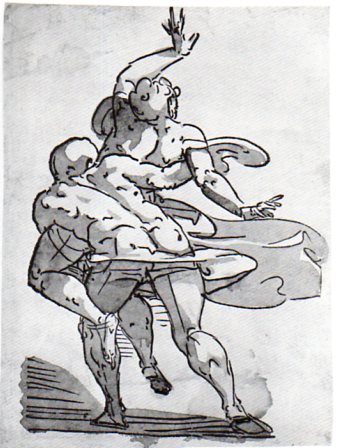
    While at about the same time Luca Cambiaso (d. 1585) produced this  woodcut,  “The  Rape of the Sabines”, which is mostly light with bare shadow, depicting motion and emotion more than detail. This again is hundreds of years before its more modern 19th & 20th century descendants. 

    Blank  cambiasi877

    And also this figure, again by Cambiaso, and recalling the efforts of Durer and Schoen:

    007cambiaso1
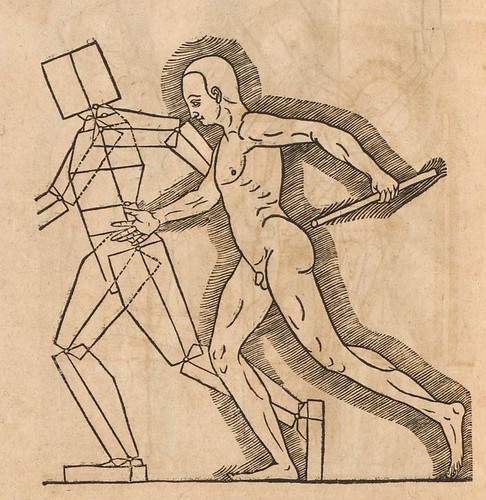
    And in 1564 comes this fantastic effort by Heinrich Lautensack, Des Circkels und Richtscheyts, auch der Perspectiva und Proportion der Menscher, which is beautifully described at the Bibliodyssey site, here.  
    Perspectiva (Lautensack) 1564 f

    Coming outside the confines of the Renaissance but just too fantastic to not include (although I could just simply change the title of this post to accommodate all)  is Giovanni Battista Braccelli’s fabu-landscapes of the human condition, published in his Bizzarie di Varie Figure in 1624. 

    (My thanks again to Bibliodyssey for surfacing Braccelli for me, and also to The Rare Book Room for posting all of the images in that rare work, and of course to the Library of Congress/Lessing J. Rosenwald pages, who made the images available for downloading, here.)

    Braccelli 5
    And a little later after this last–and again well outside of the Renaissance–the idea of the missing man, an image I just couldn’t resist:

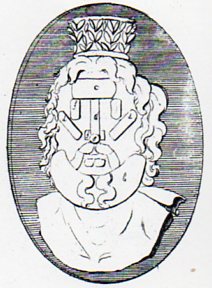
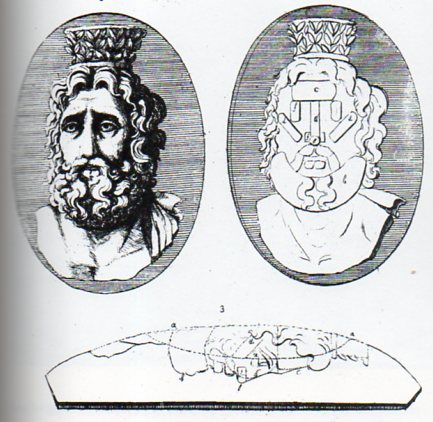
    Blank stafford882 which is a detail from

    Blank stafford881
    which is from the instructional by Laurent Natter, Traite de la methode antique (1754).  The engraving is one of a series that shows the technical process of a antique method of constructing antique cameos and coins, and in this case how the gem would be produced by modern methods. 


  • Finding Surrealism in Antiquity–Unintentional Bizarreness in Plato

    JF Ptak Science Books   Quick Post

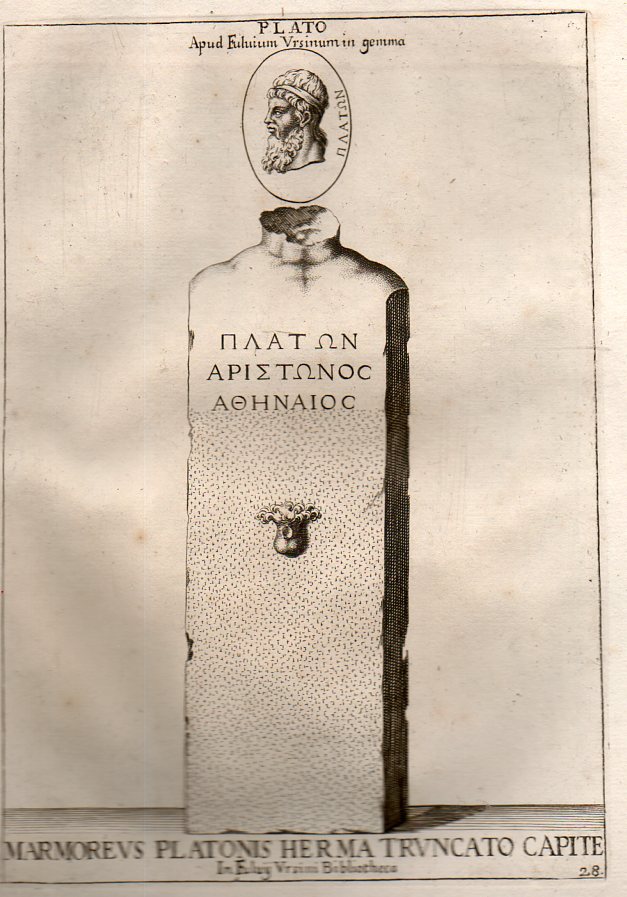
    I was grazing through a new find, Veterum Illustrium Philosophorum, Poetarum, Rhetorum et Oratorum Imagines …by Josseph Petri Bellorii, a lovely work illustrating great thinkers of antiquity, and printed in Rome in 1739.  And among the busts and statues of Pythagoras and Euclide and Socrates and so on, the holy thinks and philosophers and orators and poets, I found this unusual non-statue of Plato. “Marmoreus Platonis Herma Truncato Capite” reads the legend of the not-completed statue, and it describes the work on many levels.  Of course, the eye is drawn instantly to the center–and, well, there you have it.  The surviving bit, half-survived.

    Lato968

    Decapitated, indeed.  There’s a lot that could be done with “Herma”, but I think the best is to take it for the root of hermeneutics–the study of the theory of interpretation–which comes from the god Hermes1, the messenger to the mortals and inventor of fire.  Certainly the statue as it stands is open to discussion.

    As it turns out fully 10% of the images in this book were like this one, which means I guess that finding fitfully/partially-completed statues like this of Plato was much more common than I realized. Or imagined. 

    I wonder what Plato would’ve done with this one.

    Notes:

    1.  Hermes also had a son, Hermaphroditius, with Aphrodite, a person created with a nymph, Salmacis, creating a person endowed with the traits of both sexes. 


  • When Data was Dada: Max Ernst, Dada, Graphs, and the Display of Non-Existent Information

    JF Ptak Science Books   Quick Post  (Part of the series on the History of Blank, Empty and Missing Things.)

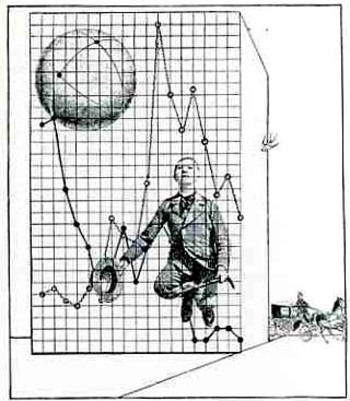
    This quasi/faux statistical/graphical modern art image by Max Ernst is found in the journal Mecano (issue no. 3 “Rouge”), which was the principal Dada publication vehicle, and issued by the artist Theo van Doesburg (in the Netherlands).  It arrived in 1922, just 10 years after the publication of Marinetti’s “Manifesto tecnico dellBlogernst030a letteratura futurista” and a year before Marcel Duchamp retired from painting, and just another two years before Andre Breton nailed down the meaning of Surrealisme (and again like a particle collision changed the direction of some of modern art). 
    The Dada Movement is generally thought to have started by WWI escapes in the neutral haven of Zurich (where the war was escapable for the duration), at the Cafe Voltaire, in 1916, the word “dada” being found as is generally believed by Tristan Tzara.)   I am trying hard to form some sort of memory for other Dadist, Futurist, Symbolist or other modern movements from the ‘teens and ‘twenties to use a graph such as this in the artwork but I cannot think of any.

    (By the way, also appearing in this issue of Mecano were Man Ray, R. Hausmann, Hans Arp, Kurt Schwitters, and others.) 


  • Geometrical Design in 1930’s Soviet Book Dustjacket Design

    JF Ptak Science Books   Quick Post

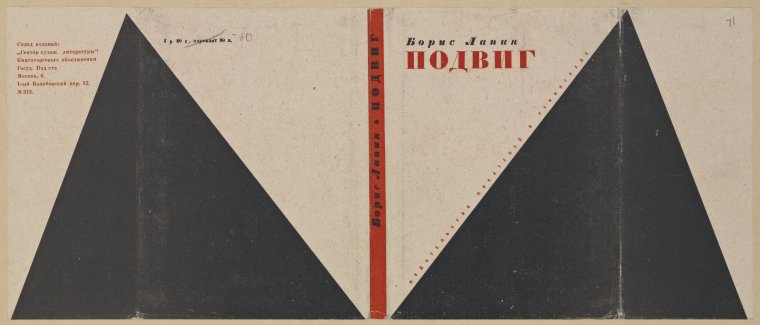
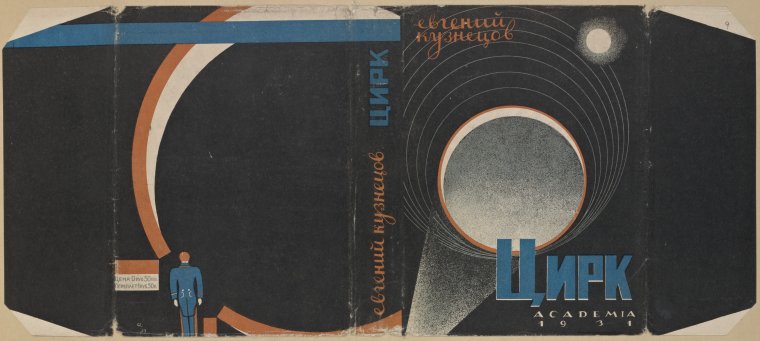
    Russian dj art

    [Kuznetsov, E. Tsirk. [Circus.] Moscow: Academia, 1931; Cover design by N. Akimov.; 8 v., [655] leaves of plates : col. ill. ; 32 x 57 cm.]

    I found this dustjacket art of Soviet-era books (all from the 1930’s save one)  in the New York Public Library collections (here) and was struck by the geometrical objects in many of the designs. They have a sense of warmth to me, somehow, like softer work coming from the tail end of the Constructivist period, having elements of Dada but really just having some of the hard edge of Constructivism without the scorching/awakening images that might have been embedded in the geometrical design. 

    Russian dj triangle

    ·Posted by :

    ·in:

    —

  • Classifying Human Failures, 1487

    JF Ptak Science Books  Quick Post

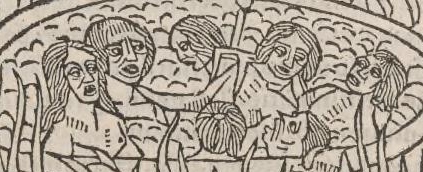
    Penitence hell c

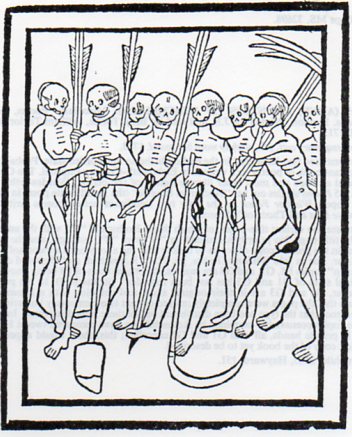
    This image was one of the promises to the readers of the Eruditorum Poenitentiale (printed in Paris by Antoine Cailhaut in 1487), a book of penitence, a manual for seeking forgiveness and avoiding sin, showing what end awaited those who would disappoint the Creator.  The work was a devotional of frailty, a register of sin, an insistent call to the things that could and will go wrong throughout the course of a human life, and what the costs of those shortcomings would be.  [Images from Bibliotechque St.Genevieve, here.]
    Penitence926

    ·Posted by :

    ·in:

    —

  • History of Lines: Clouds

     JF Ptak Science Books  Post 1629  (On Clouds and Not-Clouds, Part I)

    “…and they drew all manner if things–everything that begins with an M—‘

        ‘Why with an M?’ said Alice

       ‘Why not?’, said the March Hare.” –Lewis Carroll,  from “A Mad Tea Party”, in Alice’s Adventures in   Wonderland.

    Why not, indeed?  I’ve long had an interest in clouds, and since this blog is ostensibly on the surfacing or definition of Cloud Bones, I though to spend a little time on the origins of the depictions of printed clouds in art. Not being an expert by any means on the history of art, it just seems to me that after long exposure clouds are not well-represented in woodcuts, wood engravings and other early engravings, or at least not so well depicted as their landsmen in paintings.  There seems to be no shortage of effort to reveal gorgeous clouds  through the early Renaissance–but the doesn’t seem to apply very often to their representation in prints.

    And that of course is when the detail of the sky is depicted at all. It seems that more often than not, in woodcuts printed from say 1460 through 1550, that the sky is left blank, like this image from Ovid (Accipe Studiose Lector P. Ouidij Metamorphosin...printed in Venice in 1509:

    Clouds no couds livy913

    “You could not see a cloud, because
    No cloud was in the sky:
    No birds were flying overhead —
    There were no birds to fly”.–Lewis Carroll, Through the Looking Glass. 

    I could go on with many examples of the blank sky–the white, blank, settled nothingness–but exhibiting variations of nothing at this point isn’t necessary.  But illustrating clouds is.

    And for the most part, clouds don’t look very much like themselves in prints, not really, not for more than a hundred years.  For example, Martin Schoengauer‘s spectacular  The Temptation of St. Anthony, which was printed in 1470/5, has a beautiful, fluid circularity to it, full of an earthy roundness even as the saint is pursued by demons.  But the sky in the background is populated with nothing but dashes to suggest clouds. 

    http://thewholegardenwillbow.files.wordpress.com/2008/11/schongauer-martin-anthony103.jpg

    Perhaps clouds would have taken away from the moment; but if that were the case, why bother with the dashes?

    There are considerable exceptions to this practice, with Durer and Altdorfer coming quickly to mind–but in my experience, the oddly-formed cloud seems to be the majority rule in the woodcut.  

    At this time there were of course many depictions of skies with no clouds in paintings, bare suggestions of themselves, even in some of the most famous works–Botticelli’s Birth of Venus and Michelangelo’s Fall of Man in the Sistine Chapel are fair examples.  But once you move away from the golden Sienese skies of the14th century1, clouds are given full and beautiful shapes from early periods. (Giotto’s Christ’s Entering Jerusalem, 1305/6; Simone Martin The Road to Calvary, 1340; Duccio’s Christ Entering Jerusalem, 1308-1311; Fra Angelico’s The Dposition, 1436; Masaccio’s The Tribute Money, 1424; Lippi’s Annunciation, a perfect cloud treatise, 1442, and on and on. Other examples are found in continued reading below.)

    Clouds in prints are a different matter–I’m not sure if it was just too technically difficult to create clouds in wood, or if there was some sort of languishing Byzantine sensibility inherent in woodblocks that was not so in oil. I’m really not so sure about this, and as much as anything else I’m thinking out loud about this lack of cloud definition.  I don’t have an answer for it.  But I do want to share the beginning of a timeline for undefined clouds as they appeared (or not) over the course of about one hundred years,  from 1485 to about the end of the 16th century.   As I mentioned clouds appeared beautifully in paintings from earlier periods, and there doesn’t really seem to be a substandard-cloud complement in the painting world as there was in the print world.  Of course, in western philosophy and science, clouds were pretty much left alone from inquiry, even by a series of the great natural history classifiers–they wouldn’t really be given a fully taxonomic appreciation until 1803 by Luke Howard (which I wrote about in this blog earlier, here).

    A Timeline of Clouds in Prints, 1485-1596

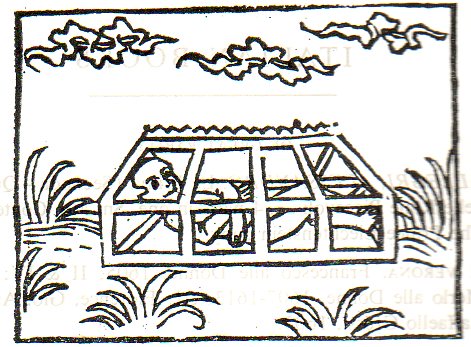
    Franciscus de Retza, De Generatione Christi, sive Defensorium Castiatis Beatae Virginis Mariae, a beautiful work in Gothic type–a picture book, really, with two illustrations of magnets.  Printed in 1485, this image depicts Isidorus in a magnetic coffin which is floating in the air:

    Clouds 1485908

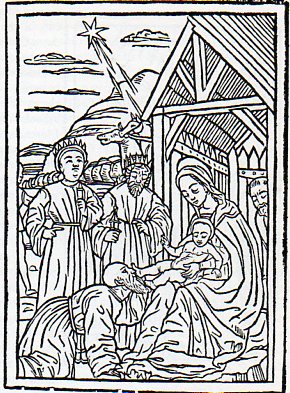
    “The Adoration of the Magi”, from Legenda Sanctorum Trium Regum, printed in Modena in 1490:

    Clouds 1490 adoration magi912
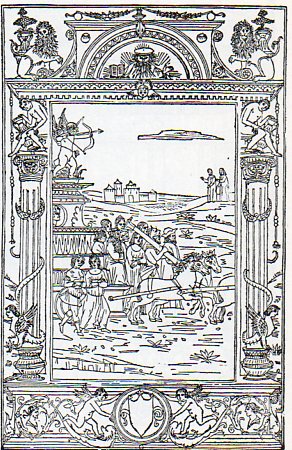
    The Triumph of Love, 1492/3:

    Clouds 1492 triumph love911