A Daily History of Holes, Dots, Lines, Science, History, Math, Physics, Art, the Unintentional Absurd, Architecture, Maps, Data Visualization, Blank and Missing Things, and so on. |1.6 million words, 7500 images, 4.9 million hits| Press & appearances in The Times, Le Figaro, Mensa, The Economist, The Guardian, Discovery News, Slate, Le Monde, Sci American Blogs, Le Pont, and many other places… 5000+ total posts since 2008.

Category: Anticipation, History of

  • A Great National Moment Hidden in a Single-Sentence Description (1814)

    JF Ptak Science Books    Post 2624

    I was working my way through a stack of volumes of  William Cobbett’s Political Register containing reporting for the war years for the War of 1812–this magazine/newspaper was  a weekly journal of news and interpretation by an American-sympathizing radical journalist reformer Brit.  Looking for one event in particular, I came across it in an official report of September 19, 1814, dated from Washington City, in the November 14, 1814 issue of the  Register, Nestled in the “official reports” section is this summation of the action of September 13, 1814, in the city of Baltimore, which was under siege by a large British fleet, which was “successfully resisted by the steady and well-directed fire of the fort and batteries opposed to it”.

    Here’s the snippet:
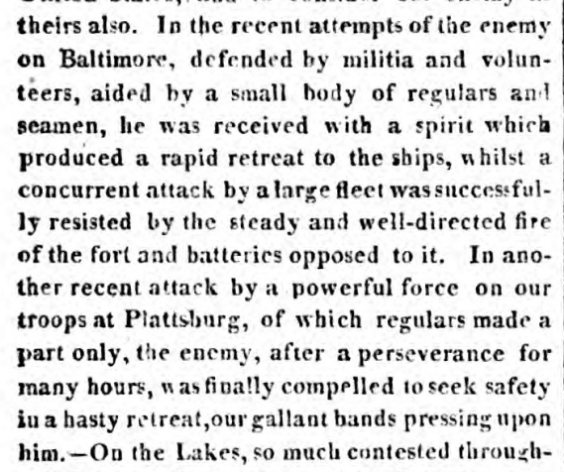
    Cobbett Ft McHenry

    • Source: William Cobbett, Cobbett’s Political Register, London, printed for the author and sold by Richard Bagshaw in Covent Garden, volume 26, November 5, 1814.  

    Much of the critical bombardment of the fort occurred at night, and for one observer–an official U.S. representative then being held in custody by the British on board a ship in the harbor–the outcome of the battle would not be known until the first light of day.  What he saw that morning by dawn’s early light was what he had seen in the evening, hailed at the twilight’s last gleaming,–a U.S. flag (a “star-spangled banner”) flown above the fort, meaning that the fort had survived, the defense maintained, with a victory in hand. 

    The fort was Fort McHenry, and the U.S. representative here of course was Francis Scott Key, who turned his experience into a national witnessing, presenting it in a poem later to to music that would become the national anthem.  

    There was no mistaking the victory described here at Baltimore (and also the mention of the major victory at Plattsburg), though there was not much flavor to the reporting. But here it is, a great national moment, appearing as a single sentence with four commas. Given the scanty capabilities of overseas reporting perhaps these were the scant public facts that were presented to the British people buying Cobbett’s two-penny weekly (much scorned by the wealthy/well-do-do and much read by the actual working class), so the emotive significance of the event was lost to detail and translation. The impact of the victory was certainly felt very quickly in the U.S. 

    This is one reason why it is so interesting to read the original reports and publications of historical social and scientific events.



  • Targeting Communism in Cover Art, 1930’s

    JF Ptak Science Books  Quick Post

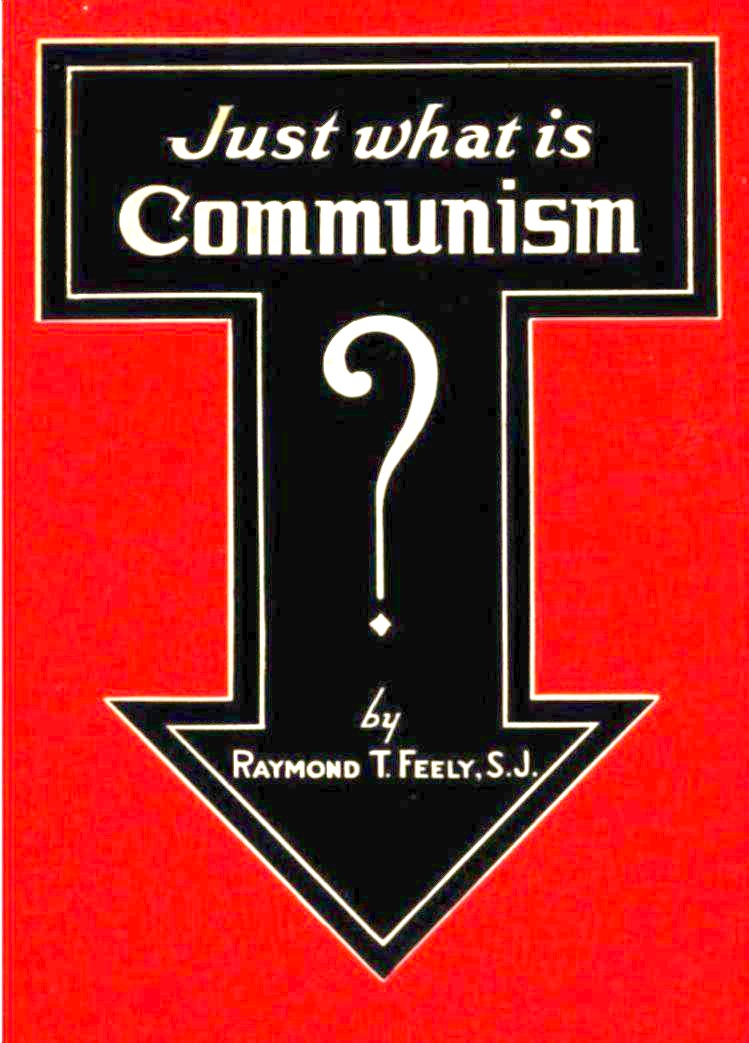
    This is just a quick picture-post sharing the cover art for anti-Communist works by the Jesuit priest, Raymond Feely.  Fr. Feely was not a fan of the Communists, who he felt amidst all other things raised the importance of the state to a religion and beatification of the State, and that of course just would not do. He wrote these in the mid-1930’s before the bestial stuff of Joseph Stalin had come out popularly in the West, and also before the Great Terror enveloped the U.S.S.R. There was still some interest in Stalin’s brand of Communism in the U.S., though that was the left-over mythological and chromed-over trumpian gilted Communism that people thought existed earlier, but actually didn’t.

    Anyway, Feely had no use for that, and wrote about it–you can pretty much tell by the cover art what he thought of Communism.  

    Communism Today or Red535


    JustWhatIsCommunism1935_0000


  • A High-Renaissance “Tank”, 1623

    JF Ptak Science Books   Post 2623

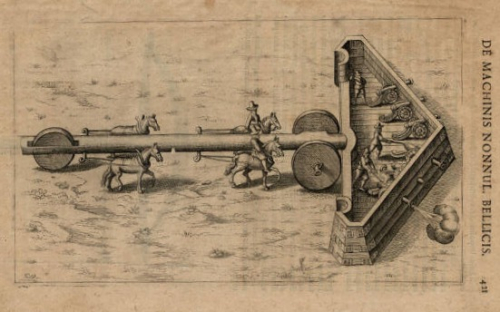
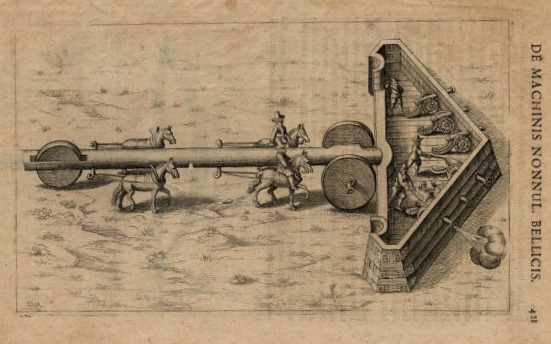
    A Possible-reality from the visionary Robert Fludd

    Fludd tank e

    [Source:  University of Utah, http://content.lib.utah.edu/cdm/compoundobject/collection/naturae/id/1587/show/1265/rec/1]


    Fludd
    Robert Fludd’s (1574-1637), title page for his  Utriusque Cosmi . . . Historia (1617) features this complicated astrological wheel with a Vitruvian-man-like image at the vortex of the imaged pulls and pushes of the cosmos.  In addition to everything else, real and imagined, Rosicrucianism and astrology and puffy-birds, Fludd, who was  an English physician, delved deeply into the real stuff of the world in this book in addition to all of the other make-believe–optics, the musical intervals, perspective drawing, hydraulic engineering, construction of lifting machines, military engineering and many other interesting, physical science topics.  But this drawing, right there on the title page, reveals Fludd’s real interests and shows what governs what he does.  Everything else, the math and and the physics, services this need.  Of course the image is beautiful, which is why it is here, but it is also a deeply personal, exploitative, cover-all for the things that Fludd wanted to find. 

    But there is a lot of other interesting, and potentially-applicable, real-world stuff and proposals in the book as we can see in the exotic and wonder-full image of the high-Renaissance “tank” that leads this short post.  I’m not so sure that this thing would actually move–I assume that it has wheels or something in the front part to help it move along, otherwise that weapon would go nowhere.  Even if it was assumed to be mobile, I wonder about whether four horses is enough to move along something that size plus six canon and at least three men.  Even with 5’/6′ wheels, it seems not so likely that this would roll across a battlefield.  All that said, this did exist in the realm of possibility, and Fludd had much else.  Since I’ve been doing research on the first battlefield appearances of tanks, this one particular image caught my attention.  


  • “Two Disastrous Failures” for the German Army, January 1945

    JF Ptak Science Books   Quick Post

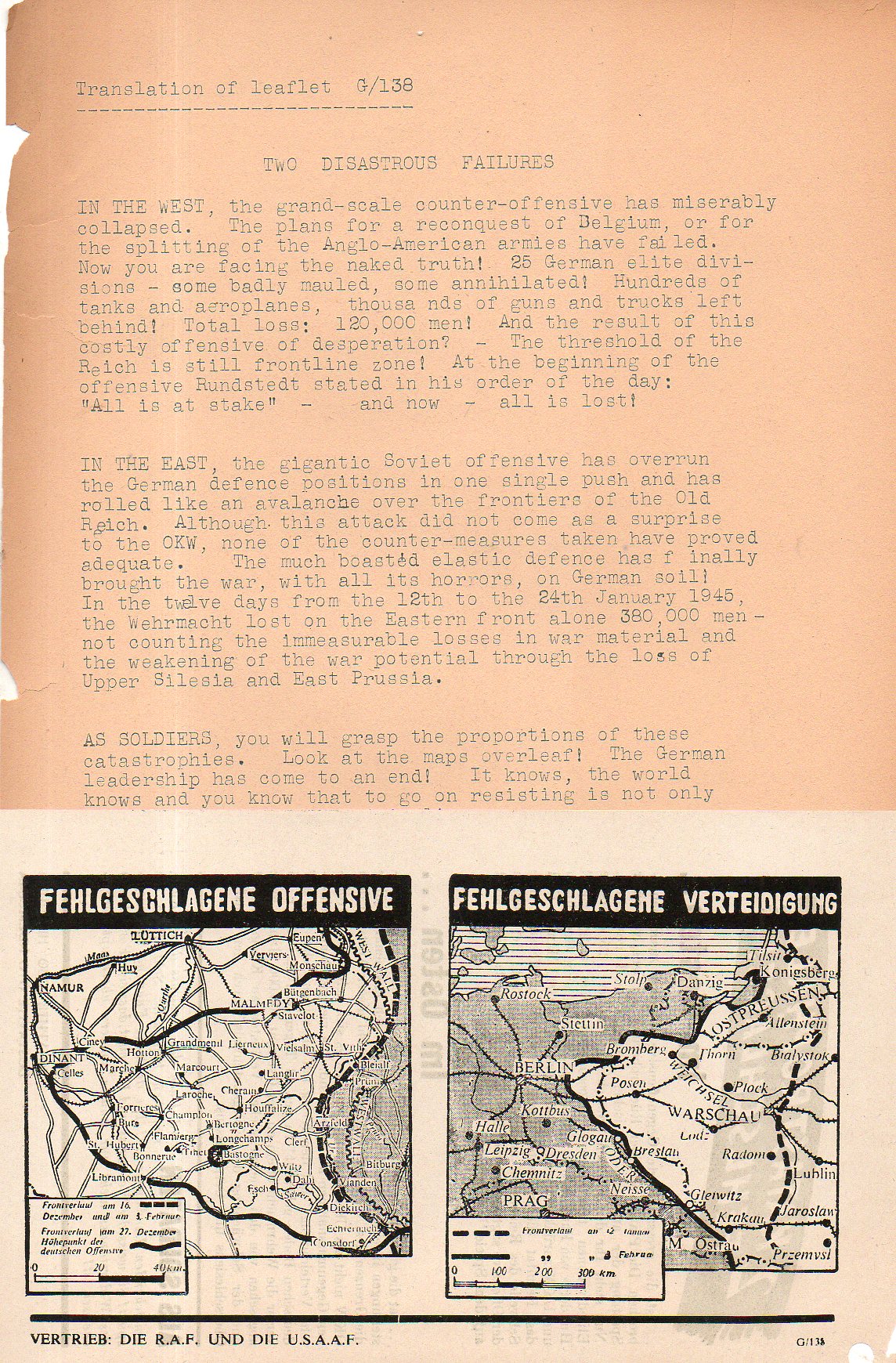
    This leaflet was dropped on German forces by the R.A.F. and the U.S.A.A.F. soon after the breakout of the Battle of the Bulge/Ardennes in the end of January 1945, which is one of the two failures that this propaganda sheet screamed about. It is a little odd though that in the map it would show the German offensive at its worst for the U.S. troops, with the bulge extending far west and Bastogne being surrounded. Yet the leaflet told of the German losses of its failed offensive (“Operation Watch on the Rhine”) though it did not show the progress of the month-long battle on the map, which should have shown the battle line back to its more-or-less original position by 25 January.  In describing the catastrophe of the German position in the east (leading with the loss of “380,000 soldiers”) the date of 24 January is mentioned, which supports the late January estimate for a printing date. This was of course the Vistula-Oder Offensive. which saw the Soviet Army advance more than 300 miles in a month, right to the Oder, only 40-odd miles from Berlin.  In that campaign the German Army Group A was just about killed–of the 450,000 soldiers in retreat along this long and disastrous front during the month of January, the overwhelming majority were casualties, including nearly 300,000 killed. The wounded and other survivors became POWs.  The bottom line of course was that the winter of 1945 for the German soldier was bitter and deadly, and was leading nowhere except defeat–there was no doubt what lay ahead after seeing that map of the Eastern Front. 

    Leaflet two disasterous failures468


  • Odd View of Manhattan, as Seen Under a Flirting Flying Cop, 1898

    JF Ptak Science Books  Quick Post

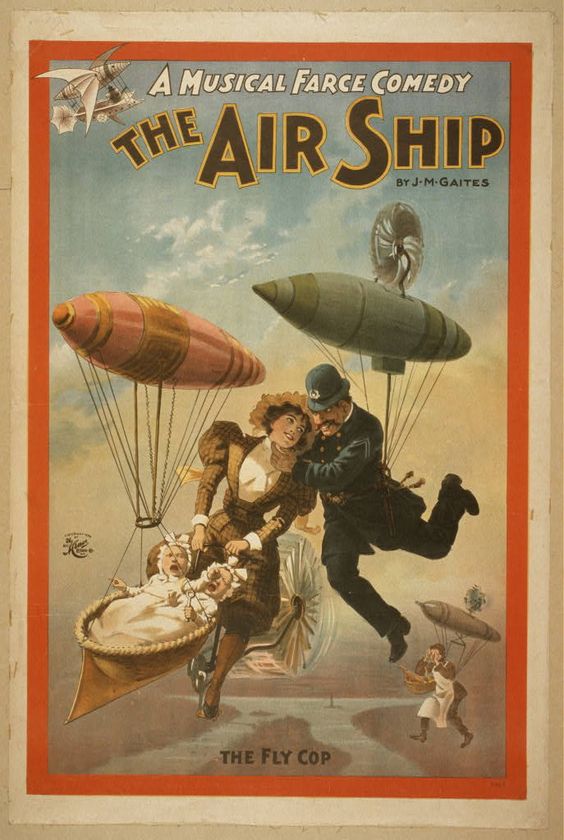
    I’ve been looking at early flying machines–real and imagined–and came upon this at the Library of Congress. There is very little information provided there, and I can’t find anything useful online, so I’m going with this being a poster for J.M. Gaites’ “musical farce comedy” The Air Ship, which was copyrighted in 1898.  The cover shows a “Fly Cop” making a rather forward advance on a young woman with babies in a basket fashioned as a part of the stern of a delicate self-propelled flying machine. The cop is attached to a min-dirigible that has a small fan for its propulsion, as does the remorseful-looking butcher bringing up the rear to the scene. And the whole thing takes place high over Manhattan, looking to be well north of midtown, and probably 3k feet high.  Looking south over the island we see the rivers (and a hint of the Brooklyn Bridge) and then in the harbor a suggestion of the Statue of Liberty.  


    Airships over NYC

    Source: Pinterest account for the Library of Congress  / Flying Machines


  • An Earthquake–Not! Adventures in Advertising, 1869

    JF Ptak Science Books   Quick Post

    Earthquake ad details 1869464


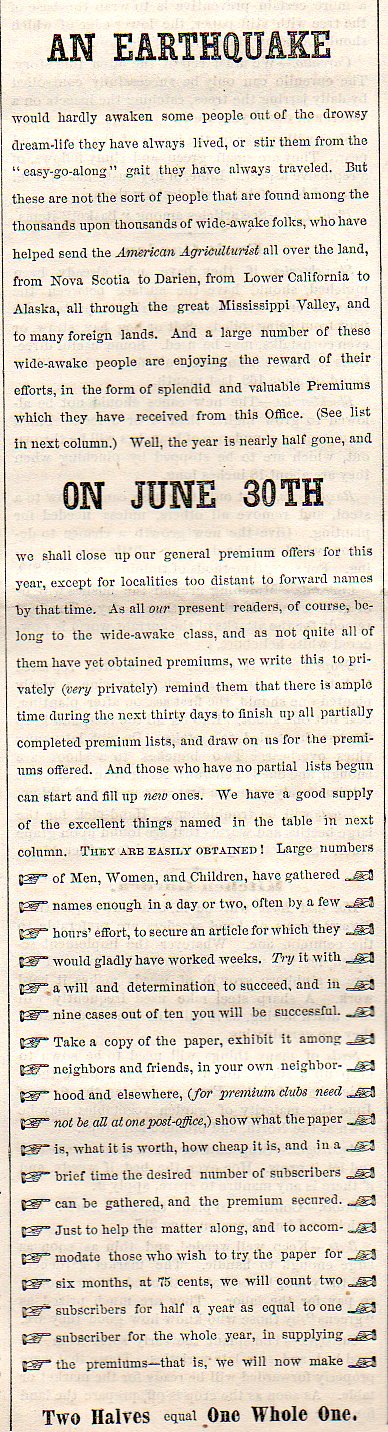
    Earthquake ad 1869464In 1869 there weren’t yet catchy tunes or jingles to help you remember the name of a product that you didn’t need though purchased because of some subliminal twitch, and there weren’t many images of a well-turned ankle stretched over the bottom rung of a farm-intended three-horse equalizer, and the colorfully pulsating repetitive splash imagery wasn’t close yet to being part of The Daily Life of the Average Person–what certainly did exist was the misleading/phony bait-and-switch lede, which today I guess would be called “click bait”.   Here’s a great example of that, not-so-deeply-nestled in the back pages of the June 1869 issue of American Agriculturalist. The column seems to announce AN EARTHQUAKE perhaps on JUNE 30TH–but all it is is an advertisement for becoming a subscriber, and it turns out to be that the journal is a very useful farmer’s friend.  The ad did however try to grab the attention of the passing reader–and it was still working, 147 years later.  


  • A Grant Wood Landscape in a Renaissance Painting

    JF Ptak Science Books   Quick Post

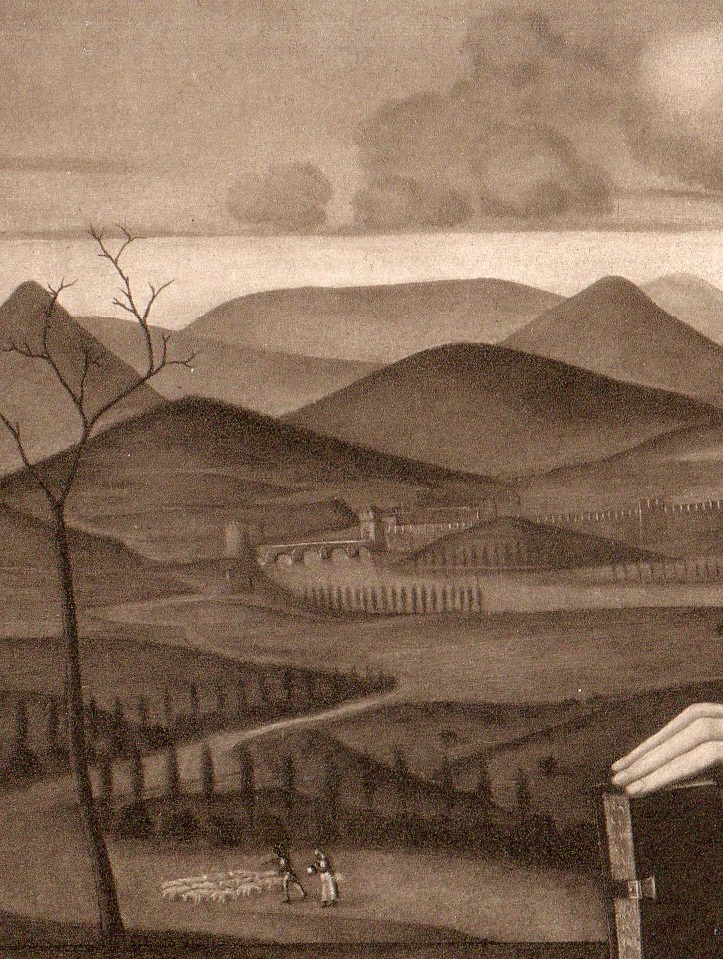
    This landscape brings to mind a certain style if not a particular artist, someone working  a lonely, cool-if-not-cold landscape, and although the terrain is certainly representational nothing on the hills seem to be, save for the tree in the foreground. It seems a little in the school of Grant Wood, or 1930’s, or something along those lines.


    Bellini_3_414


    The image is a detail, and when you pull back a little, there is more a suggestion of time and place:

    Bellini414


    When I look at the scene in context, it becomes very confusing, because it is sitting in the background of a painting by Giovanni Bellini, which was painted ca. 1500. There is no doubt that this is a Renaissance painting–but for me, seeing this grab of a modernity 400 + years into the future, I wonder what it was that moved Bellini in this way.  


    Bellini413

    [Source:  a catalog for the sale of the paintings collected by the Bourgeois brothers (which is also a good band name), Catalogue des Tableaux Anciens et Modernes composant la Collection Bourgeois Freres .printed in Cologne, 1904, painting number 3. ]


  • A Slab of Nothing Suggesting Something

    JF Ptak Science Books   Quick Post 

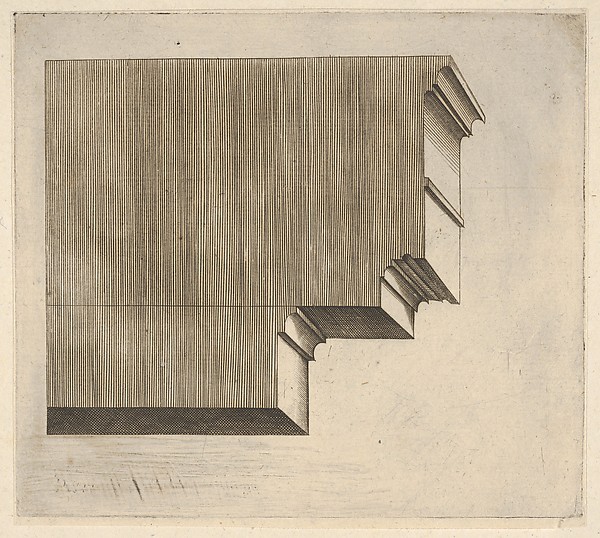
    There is hardly anything that is nothing, or a hardly-nothing that is nothing, because the more of a suggestion that in something exists nothing than we are forced to consider the nothingness which of course defeats the cause of identifying that something as a nothing.  The image below is a good example of the greater expanse of a supposed nothingness–it is a simple cross section of a doric entablature (“a horizontal, continuous lintel on a classical building supported by columns or a wall, comprising the architrave, frieze, and cornice”) or more simply put, the stuff between the pediment and the column.  In this case we see the anatomy of the entablature more so than anything else, most of the decoration and design pretty much left aside.  We are left with a map of lines, a picture of stability, firmness, and a cold comfort, somehow.  

    I just like the engraving.  

    Doric entabalur

    Master G.A. (Italian, active ca. 1535) Doric entablature 

    [Source:  Metropolitan Museum of Art, http://metmuseum.org/art/collection/search/415345?sortBy=Relevance&ft=doric+entablature&pg=1&rpp=20&pos=1]


  • What Do I Do With 40,000 Dreams?

    JF Ptak Science Books   Quick Post

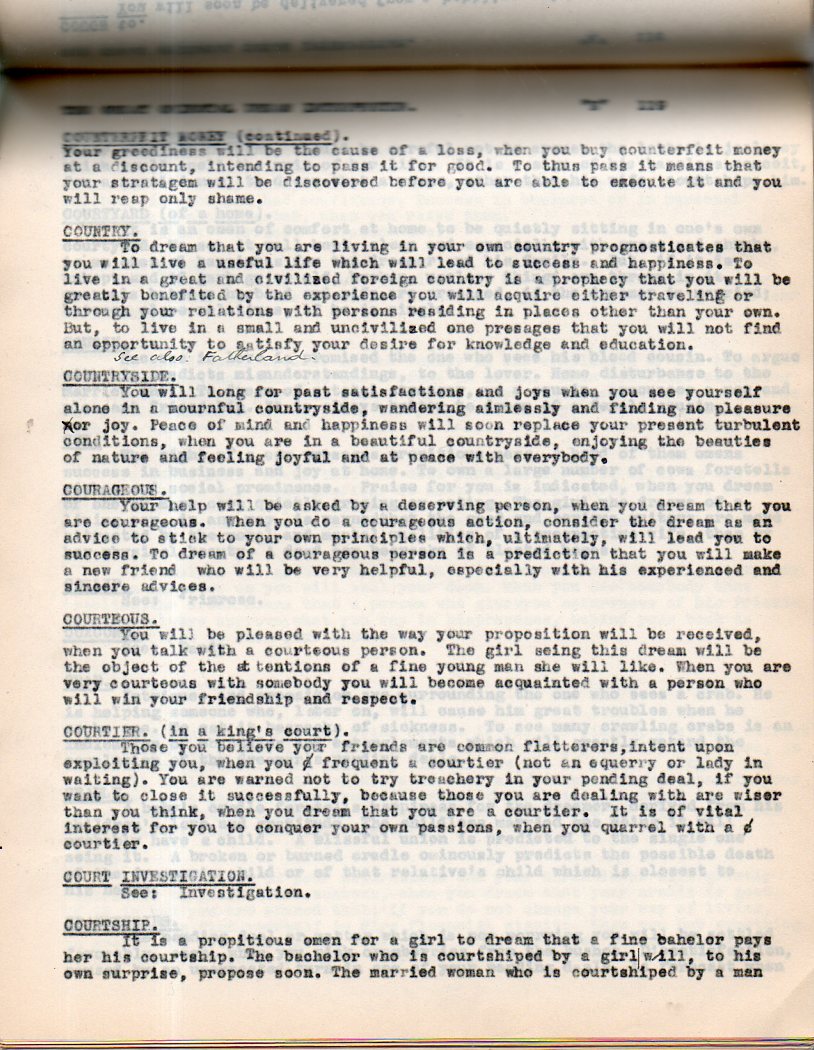
    Dreams398I have on my desk a carbon copy of a manuscript sent to the copyright office and then on to the Library of Congress, where it went into (I guess) a dead-end collection called the “Pamphlets Collection” (which is not THE pamphlet collection, something that would no doubt contain many millions of items), and then after a number of decades that collection came to me.  In any event, that is why I have it–but now, after having discovered it after owning this material for 17 years, I wonder what it is I do with it.

    The work is by Yohanna Ibn al Farmouzi, The Great Oriental Dream Interpreter, a Practical Encyclopedia of Dream Interpretations, and copyrighted in 1936  (by John Pana-Fermos, which is Al Farmouzi, Americanized). The subhead reads: “Based upon the study of over 40,000 dreams, extending over a period of forty-six years” with an index of 2,644 keywords (but then confusingly moves on to say “the interpretations of Eleven Thousand Dreams”).  In any event, whatever it is that is going on in the manuscript is orderly, neat, fairly well-written, and big.  The typescript is 498 pages long, and I estimate contains about 250,000 words, which is a substantial thing.  

    All that said, it is one man’s work on dream interpretation, which means that the reader depends on his insight to lead a conversation on a LOT of different topics.  Perhaps it is of interest simply for its extensive index/categorizer of dream elements, which runs 15 single-space pages of four columns.  

    Mr. Pana-Fermos did publish pieces of this work–one part is a 1000-dream analyzer of 50pp, and another is a love-dream bit.  But there is nothing it seems to match this massive work. 

    I’m just not sure where it should go.  No doubt it would be very interesting to some set of people.  


      Dreams399


  • Jane Austen and the Evasion of Submarines

    JF Ptak Science Books  Quick Post

     “The little zigzags of embarrassment.”– J. Austen Emma I. xv. 282, 1816

    Zig zag027

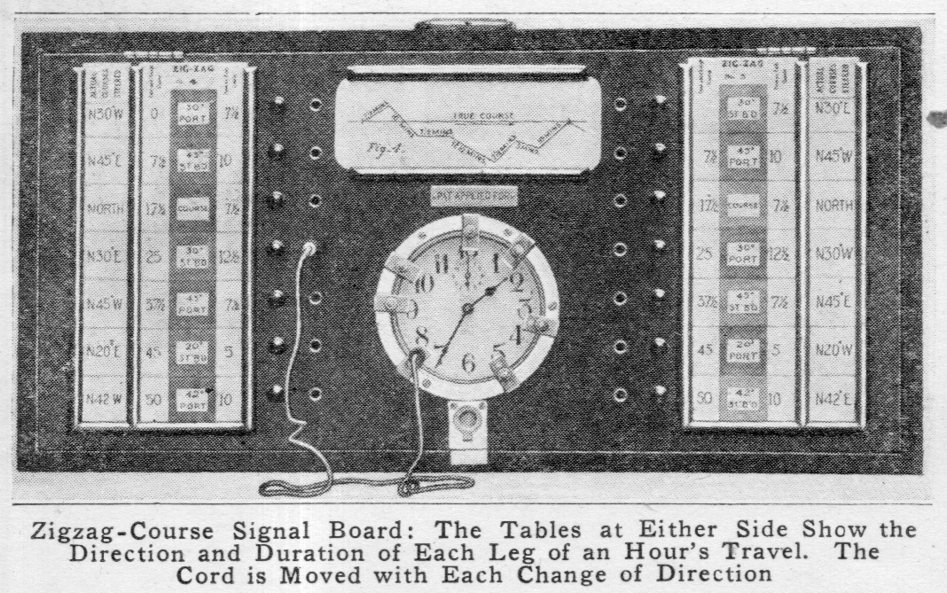
    Well, these be not zigzags of embarrassment, but zigzags of necessity, and the means for keeping track of them.  And too there’s nothing in Jane Austen to relate to submarines and their evasion except for an appearance of the word “zigzag”, which is actually a fairly old word in English (coming from the French “sigsak”), reaching down into the very early 18th century.  It is older than the word “submarine” as it is used to describe an underwater vessel, and curiously in light of Ms. Austen it appears in print very close to the date of Emma, in 18281. And so the course of a ship could be documented for those in control of her, keeping track of the true destination in spite of all the zigs and zgas made to confuse and elude a German sub.  This is another example of an empire controlled with string, as we have previously seen here in the use of long collections of string that kept track of the British rail. String isn’t as simple as it seems.  

    • This short article appeared in Popular Mechanics, March, 1918, page 484.