A Daily History of Holes, Dots, Lines, Science, History, Math, Physics, Art, the Unintentional Absurd, Architecture, Maps, Data Visualization, Blank and Missing Things, and so on. |1.6 million words, 7500 images, 4.9 million hits| Press & appearances in The Times, Le Figaro, Mensa, The Economist, The Guardian, Discovery News, Slate, Le Monde, Sci American Blogs, Le Pont, and many other places… 5000+ total posts since 2008.

Category: Absurdist, Unintentional

  • World Trade Center as Optical Canvas, 1973.

    JF Ptak Science Books  Post 1047

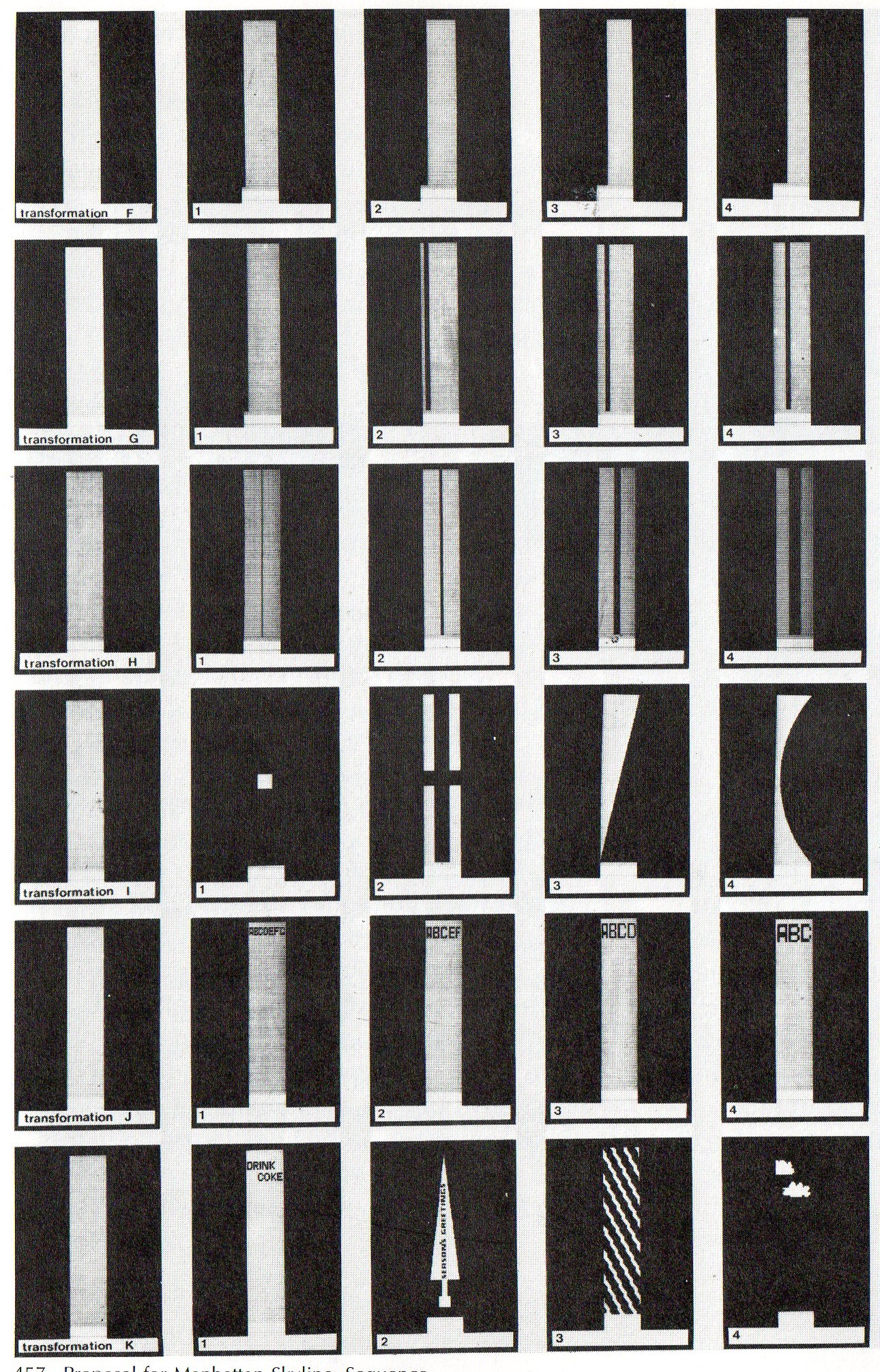
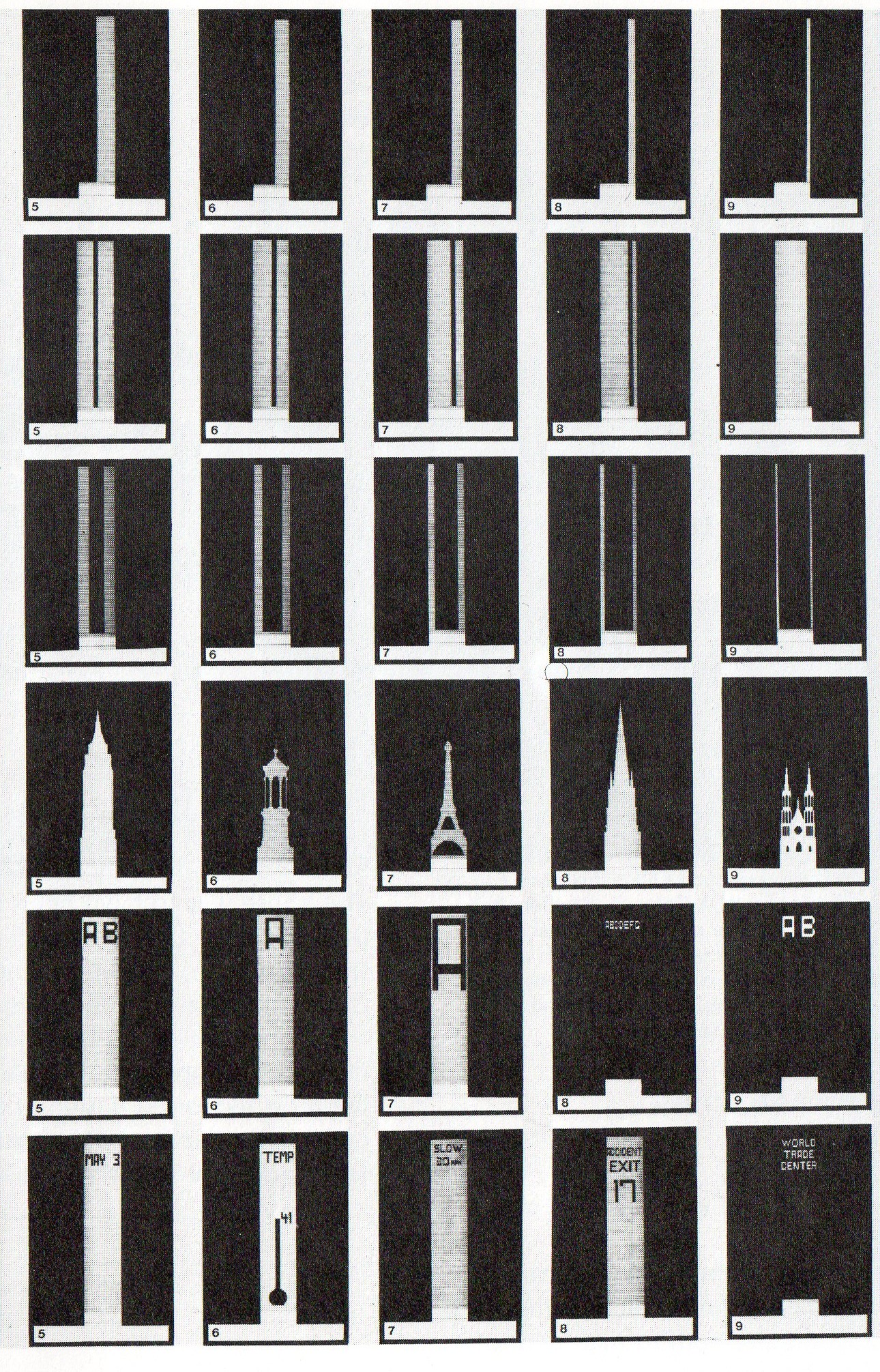
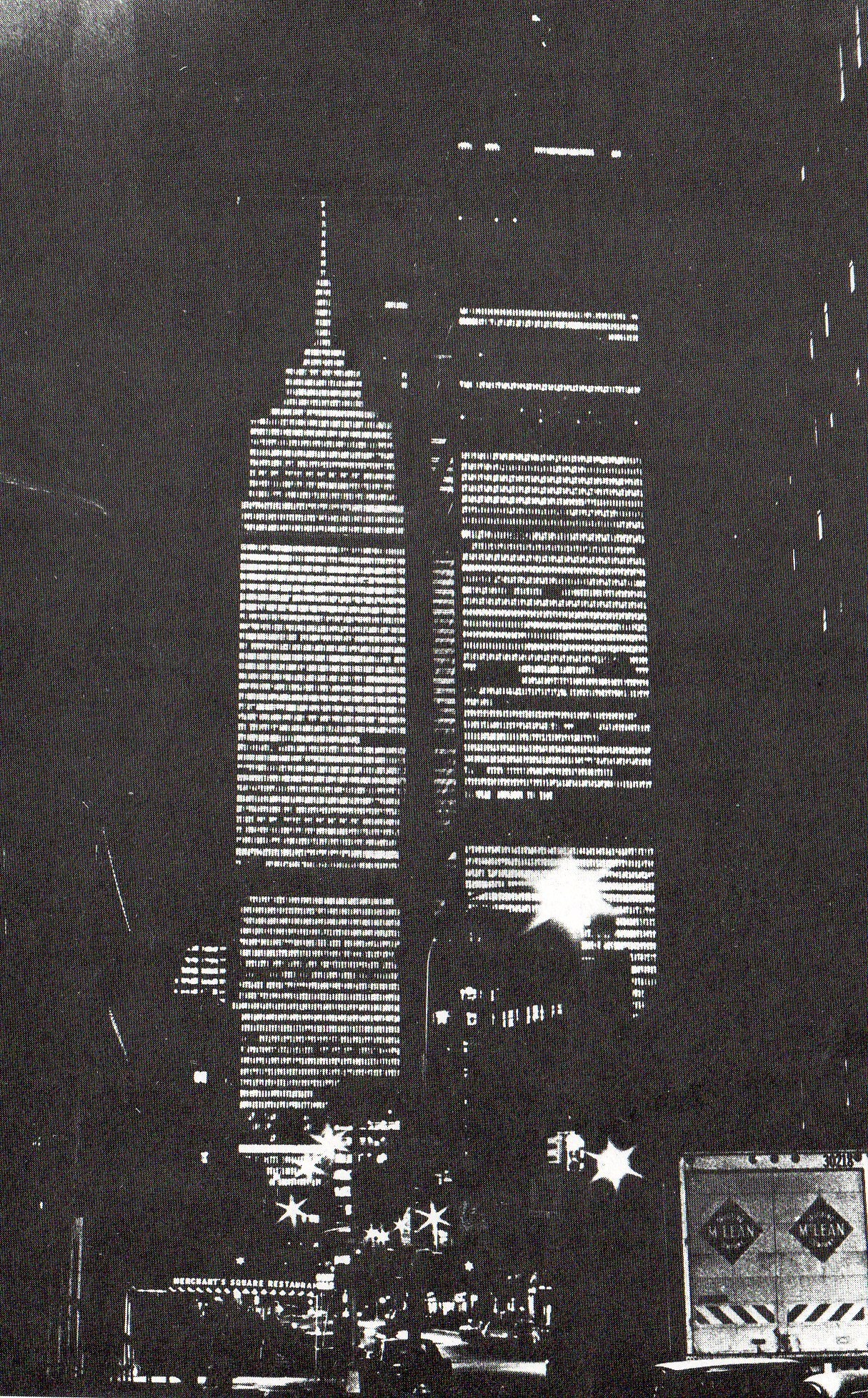
    Allan Wexler (b. 1949), a conceptual artist, came up with a splendid idea for using the newly-completed WTC as a canvas for optical art.  The buildings–which were far from being universally admired in its early life–would be used to illustrate the outlines of other famous nearby structures, the lighting being coordinated with the offices to leave slights on or off (whatever was appropriate) to construct the massive 100-story -tall displays. 

    00--WTC 3027

    [Source: Unbuilt America, McGraw Hill. 1976, edited by Alison Sky and Michele Stone.]

    Tall structures have certainly been used as billboards in the past–the Eiffel Tower, for example long displayed electrically-lighted ads for Citroen)–but using the interior sources of illumination in a building as part of an exterior artistic display is very uncommon. (Architect Richard Haas has created faux surfaces using images of buildings, and perhaps none more famous than his idea to paint the full-scale  shadows of the Chrysler Building and the Empire State Building right there on the facade of the WTC towers.)   It was a lovely idea, really, but the whole of it was struck down during the great gas crunch and economic crisis of that year.  It would’ve been a great cooperative effort to produce monumental works of art but conspiring elements of uncontrollable economic problems and controllable painterly ones kept the project from happening. 

    00--WTC 1025
    00--WTC 2026


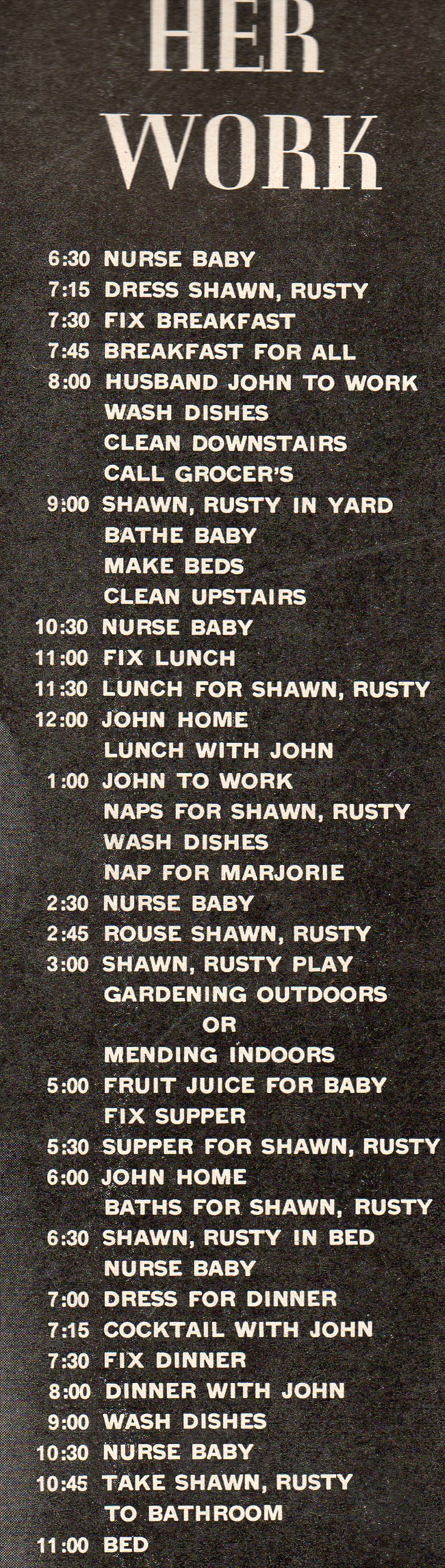
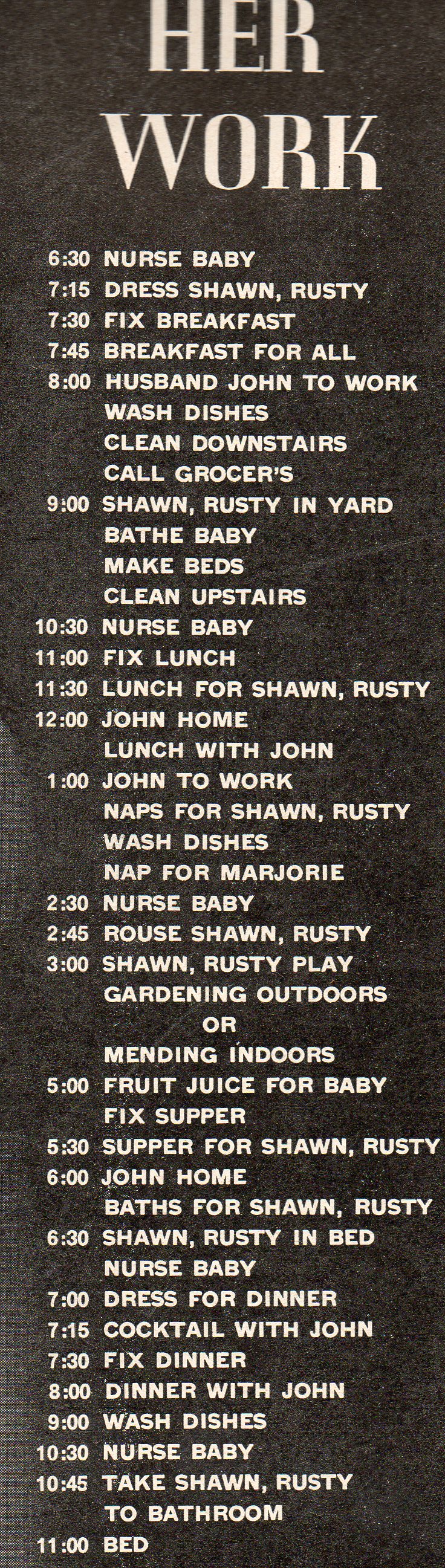
  • “Her Work” Visualizing the100-Hour Work Week of the 1947 Housewife.

    JF Ptak Science Books  Post 1047           Part of our History of Women Series

    “Like most busy young housewives, however, she gives little thought to
    the future–to satisfactory ways of spending the important years after
    her children have grown up and left home.” [See below.]
      
    00 marjorie

    0000 woman chores list024

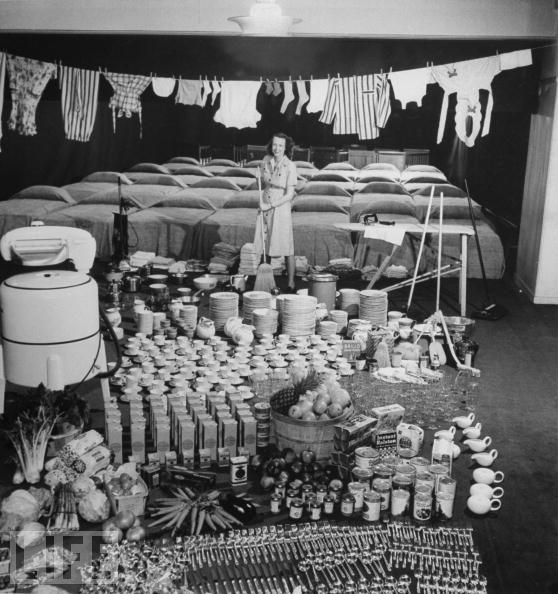
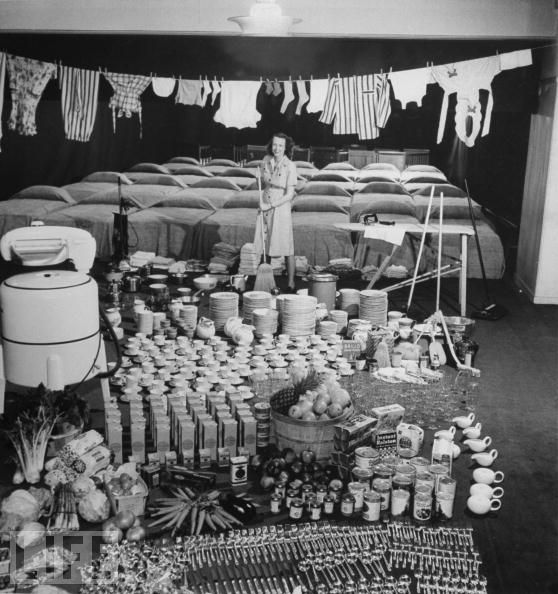
    This photo by Nina Leen [“Housewife Marjorie McWeeney amid symbolic display of her week’s housework” in “Woman’s Dilemma,” Life, June 16, 1947, p. 105] depicts part of the housewife-y stuff of attention in the course of her 100-long-week.  The remarkable part of the photo is that  all of this was displayed in a window display at Bloomingdales.

    Part of Ms. McWeeney’s average work week included “35 beds to be made, 750 items of glass & china, 400 pieces of silverware to wash, 174 lbs. of food to prepare, some of 250 pieces of laundry.on a line, & a ringer washing machine”–that plus paying attention to her children during  the 70+ hours a week in which they are awake.

    In the listing of Ms. McWeeney’s routine (“Her Work”) I see no evidence of Mr. McWeeney’s contribution to the daily chores. We see that he spends 15 minutes eating his breakfast before leaving for work at 8; returns home at 12 or a one-hour lunch before bolting at 1; and then returns at 6 for cocktails at 7:15 and then an hour long dinner at 8.  Perhaps he was helping bathe the kids before cocktails, perhaps not.  I can’t find evidence for Mrs. McWeeney’s present telephone number, so perhaps we’ll never know. But my sneaking suspicion is that Ms. McWeeney ran the house and kids solo, as was the general custom of the day, basically.

    Notes:

    From the LIFE magazine issue:

    “A nice husband, three fine children keep her busy 100 hours a week.

    “Mrs. John McWeeney of Rye, N.Y. has a big, good-looking husband who works in a nut and bolt company, and three children, Shawn, a grave little 4-year-old; John, called “Rusty,” almost 2, and baby Mark, 4 months old. She lives in a bright new seven-room house that has a safe backyard for Shawn and Rusty to play in and a number of modern machines to help her with her household chores. She uses a diaperservice and she can afford a cleaning woman once a week who does the heavy laundry.

    ” But even under these better than average circumstances Marjorie McWeeney’s hours are long and her work demanding. She must keep an eye on her children during their 70 waking hours a week and also watch over them when they are supposed to be in bed but may actually be popping down the stairs to ask for water or an extra goodnight kiss.

    “The picture [above] shows the household tasks that Marjorie must accomplish every week. She has a crib and four beds to make up each day, totaling 35 complete bed-makings a week. She has hundreds of knives, forks and utensils to wash, food to buy and prepare for a healthy family of five and a whole house to dust and sweep. . . .

    “Actually Marjorie’s chores are much lighter than they would have been a few generations ago. She cleans with machinery propelled by electricity, she uses food prepared in canneries, she buys clothes factory-made to fit every member of the family. But her jobs, though relieved of old-time drudgery, have none of the creative satisfactions of home baking, home preserving, home dressmaking. And, because her family unit is small with no aunts or cousins in the household, all the time she saves from housework must go into supervision of her children. Unless she makes special arrangements with a baby-sitter, she has no relief from child care.

    “Many women in Marjorie’s position feel that this is a life of drudgery, that it is not good for Marjorie, a graduate of a junior college, to stay with small children long, continuous hours. Marjorie herself has no desire to work outside. Because as an individual she likes the job that she does, she has no problem right now. Like most busy young housewives, however, she gives little thought to
    the future–to satisfactory ways of spending the important years after
    her children have grown up and left home.”

  • The Theory of Multiple Creations: a Modest Proposal for Creationists

    JF Ptak  Science Books   Post 1070

    For a little while I was collecting antique maps featuring the location of Eden–almost none of the maps showed Eden in the same place, and as a matter of fact, the Garden’s location was quite dynamic through the history of its cartographic representation.  The it occurred to me that instead of these maps being mostly incorrect or inaccurate or widely interpreted, perhaps they were all correct. 

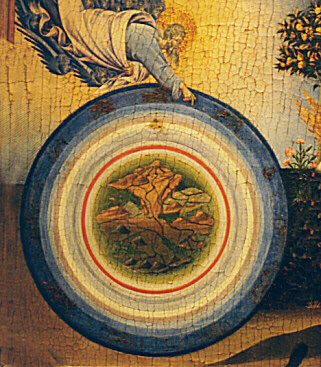
    Dante_primum_mobile It seems that one problem in the encyclopedia of problems that comprise the entirety of creation scienze is the distribution of the races–a difficult thing to achieve in an excruciatingly short period of geological time and from one location.  There were some 18th century thinkers (like Candolle, for example) who solved problems like this sort of population distribution and sporadic speciation with concepts of multiple points of origin.

    If there were multiple Edens then perhaps the issue of population differences over impossibly short periods of time would make the entire Eden idea less logically compromised.

    If this was the case, why stop here?  Why not an idea of multiple creations, occurring over periods of unspecified time and in unspecified ways and numbers?  Then we could have some very interesting philosophical issues of creation magnitudes, durations, locations, and of course size.  Perhaps there were micro/mini .025 second creations occurring spontaneously over the course of time.  Perhaps an “essential creation” which gave birth to regional and minor creations.  Perhaps there is an as-yet geological strata that could be specified in terms of layers of past creations rather than simple geological explanations.  Astrophysical theories could be bolstered by Multiple Creation Theory (MCT), identifying Dark Matter as vestigaliana of creations large and small.

    I mean, if you’re going to believe in Creationism and creation scienze and intelligent design, why stop there?  If you’re going to believe in a simple, single creation theory, how much more intellectually burdensome would it be to believe in more-than-one creations?                
    I wonder if there is a Lobachevskian or Bolyiaian approach to this issue, a creation version of non-Euclidean geometry?
                           
    In for a penny, in for a pound, I say.

    ·Posted by :

    ·in:


  • Thinking about the History of Pockets and Pocketbooks

    JF Ptak Science Books   Post 1067

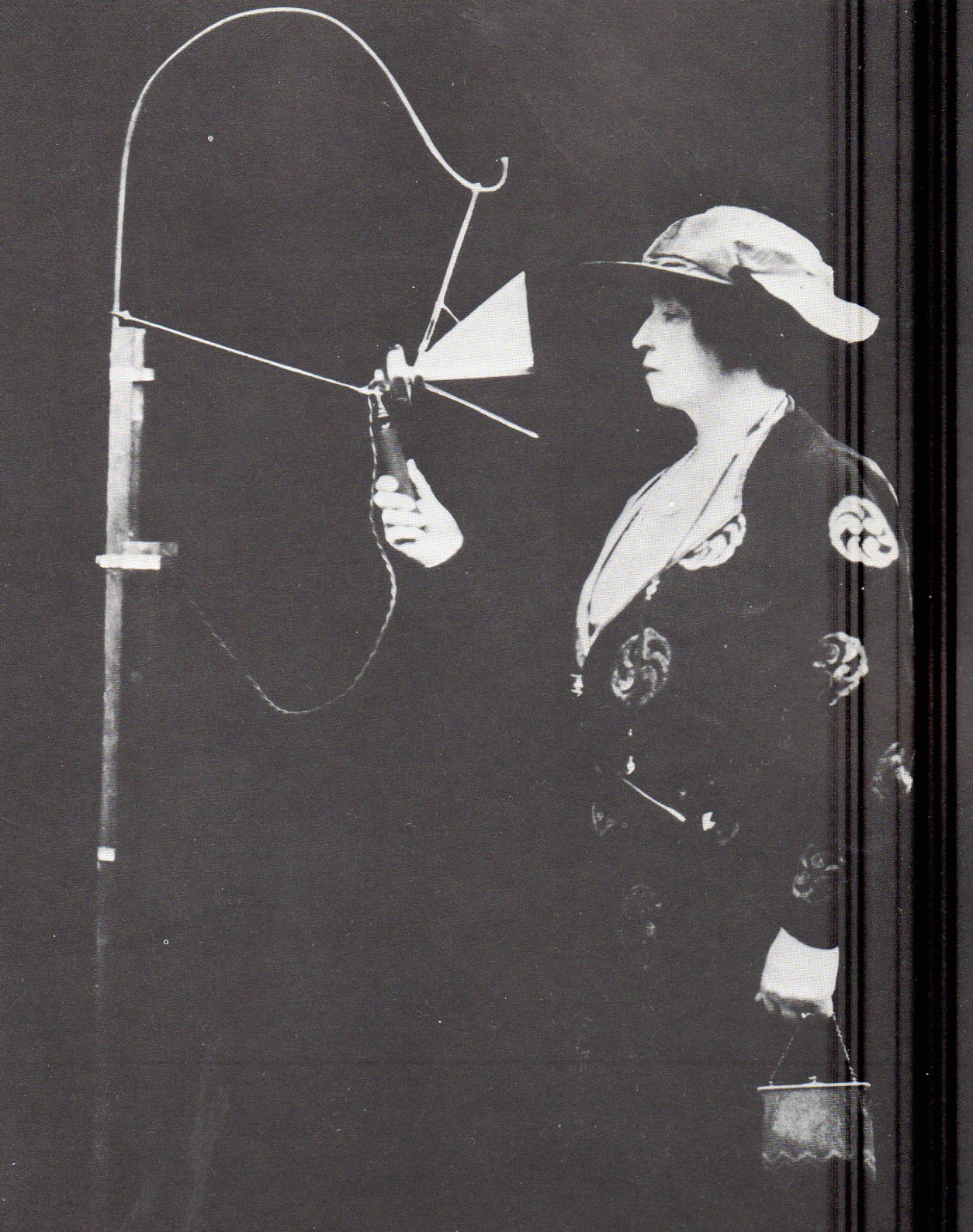
    I’ve known about this photo for a long time—a picture of a
    willed, powerful woman stepping up to an (early, interesting)  microphone to perform:  that would be Dame Nellie Melba, the prima donna from Australia, singing at the Chelmsford Marconi works on 15 June 1920 in the first-ever-advertised broadcast entertainment.   Weirdly, 
    what has always struck me about this is the handbag. The pocketbook.  Why didn’t she put it down to sing? 


    Pocketbook161

    Its not a big question, really, especially if you look at
    the pocketbook as just a pocket that you hold—an irony in itself, a displayed
    thing holding concealed things.

    The pocket, or handbag, or purse or pouch goes back a long
    way, thousands of years.  But for this
    scant view of the history of the pocketbook the action begins in the 14th
    century or so, when pouches with drawstrings were used to haul this and that,
    attached to the exterior girdle of the clothing of men and women alike.  These exterior pockets were switched to the
    interior in the 16th and 17th century (or so) given the
    new and voluminous articles and layers of clothing that were in fashion—there
    was so much material that the girdle or belt could be worn under the clothing
    with the pouches attached to them there. 
    Of course if you didn’t have a lot of clothing to wear—like these guys
    in Brueghel’s “Two Elders” , you’d be
    wearing your pouches still on the outside, this in the manner of K Street bike
    messengers. 

    And so by the end of the 18 th c fashion was flayed with the
    curse and rumor of revolution—people wore less layered and puffy clothing, and the
    pouches returned again, though aided in a short while by the invention of what we  know and recognize today as the modern
    pocket.  The pocket would at first be a
    simple slit in the clothing to get to the hanging, girdle/belted dangling
    pocket, and then after Something Happened the pouch would be attached to the slit.
    Voila.

    The pocketbook that we think of today came into being in the
    mid/late 19th century—just a few decades really before this photo
    was made—and that article of necessity hasn’t looked back since.  It seems to me that the pocketbook of the 19th
    century might’ve been an advertising platform too for marketing marriagability—the
    bags were often finely decorated/embroidered, which would show in effect a
    particular domesticity skill.  And then
    of course the bags just held stuff, too. 
    It would be interesting to see a collection of the preserved contents of
    handbooks by the decade for 150 years or so—just the contents spilled into a
    bag and preserved, a version of “the Things They Carried With Them”. 

    I have no idea about the evolution of the interior pockets
    of pockets in pocketbooks.


  • Jigsaw Puzzle Girl/Women of Popularity and Unpopularity

    JF Ptak Science Books   Post 1062

    A little while ago I wrote a post called What
    Goes Into Making Human Robot Girls, 1941
    , which was a look at one of  a series
    of
    intolerably heavy eight-page pamphlets cementing the structure of female
    social
    intercourse at the hands of the magazine The
    Ladies’ Home Journal
    . 

    Blog jan 13 Puzzle cvr

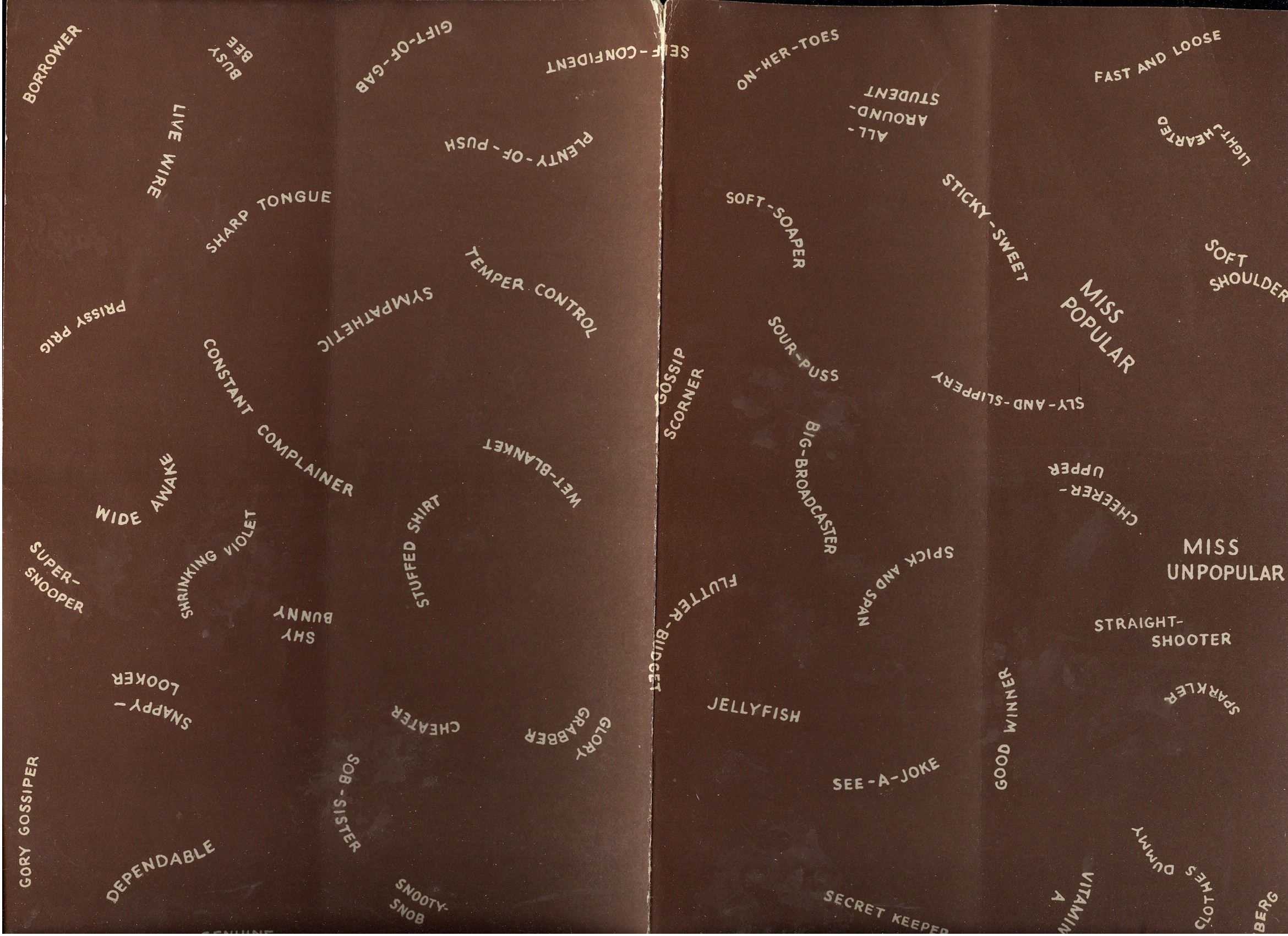
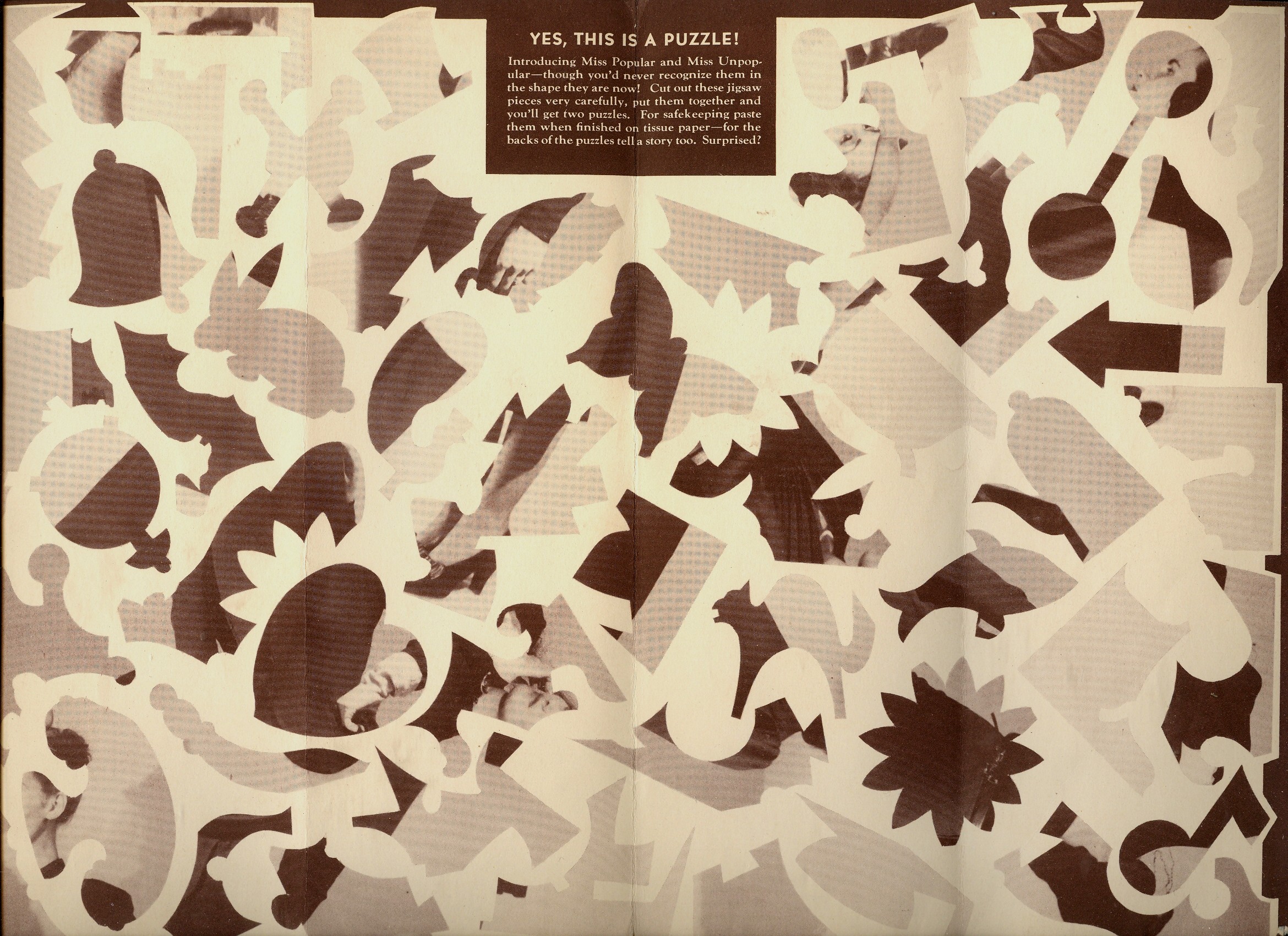
    Continuing on this thread of “constructing” females come this publication—hardly a pamphlet per se, just a folded 11×8 inch
    sheet of heavy
    stock—from that same series.  It was offered without a title, presenting itself as a do-it-yourself cut-out  puzzle. The puzzle
    pieces
    are parts of two women, “Miss Popular” and “Miss Unpopular”: the reader
    was to
    take the publication, cut out the pieces, and reassemble them into
    hidden role
    models, with phrases describing each on the back of each puzzle piece,
    all done with the with lost irony and  questionable metaphor.

    The twisted printing makes the description conform to the puzzle piece on the other side of the paper.  The descriptions for the Popular Girl are as follows:

    live wire, plenty of push, wide
    awake, snappy
    looker, dependable, genuine, secret keeper, on-her-toes, spick and span,
    light
    hearted, all-around-student, straight-shooter, gossip scorner,
    sympathetic,
    cheerer-upper, sparkle
    r.

    Blog jan 13 Puzzle pzl

    Miss
    Unpopular’s
    phrases/descriptors
    :

    glory grabber, sour puss,
    cheater, sob-sister,
    snooty-snob, wet-blanket, borrower, prissy prig, sharp tongue, gory
    gossiper,
    clothes dummy, iceberg, sly and slippery, jellyfish, sticky-sweet, soft
    soaper

    (?) and, of course, fast and loose.

    And
    so girls—or young women—picking up this publication in 1941 were
    expected to
    cut this thing up and piece together the proper (paper) role model using
    the
    reinforcing traits of meager acceptance printed on the back of the
    puzzle
    piece. Once together Miss Popular and Unpopular look pretty much the same, though in general Miss Unpopular seems a little darker than necessary, scorched I guess with her selfish sins. 

    And so double-click for a big image, save it to your desktop, print out and cut up your own Popularity Girl.  Or not.


  • The Message is the Medium–Children and Bombs, London, 1943

    JF Ptak Science Books  Post 1035

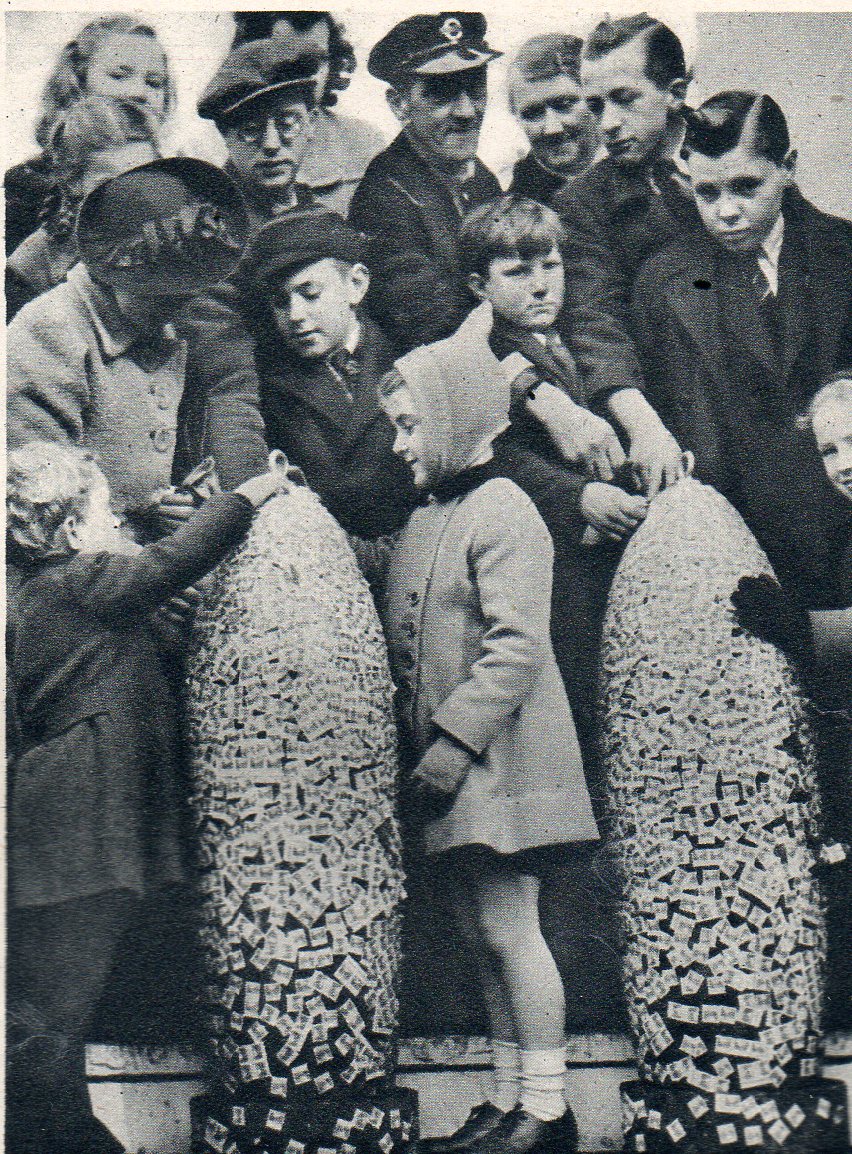
    I have no doubt that the history of decorating “bombs” reaches far back into dim history–decorating launched explosives I guess must be as old as the medium itself, though I’ve gotta say that the earliest photographs of decorated bombs goes back only to WWI.  In “reading” the Illustrated London News for the WWII years I found this image of children in Trafalgar Square fixing savings stamps to 500-pound bomb shells, part of a significant mile-long parade and will-to-win display–the “Wings for Victory” campaign– illustrating the Empire’s aeronautical might hat took place in London on 8 March 1943 and published a week later in the ILN.

    Children bomb003
    The “Wings for Victory” campaign targeted raising 150 million pounds; by this point more than 50 millions had been raised via monies being placed in War Bonds, Savings Bonds, Saving Certificates and Defense Bonds. My guess is that you’d get a sticker saying that you had invested x-pounds–these were the stickers placed on the bombs by the kids, I think. 

    It was pointed out in the accompanying text that the bombs would “at the end of the week…be dropped on Germany”.


  • History of Lines: Circles, Vortices or Tree Rings?

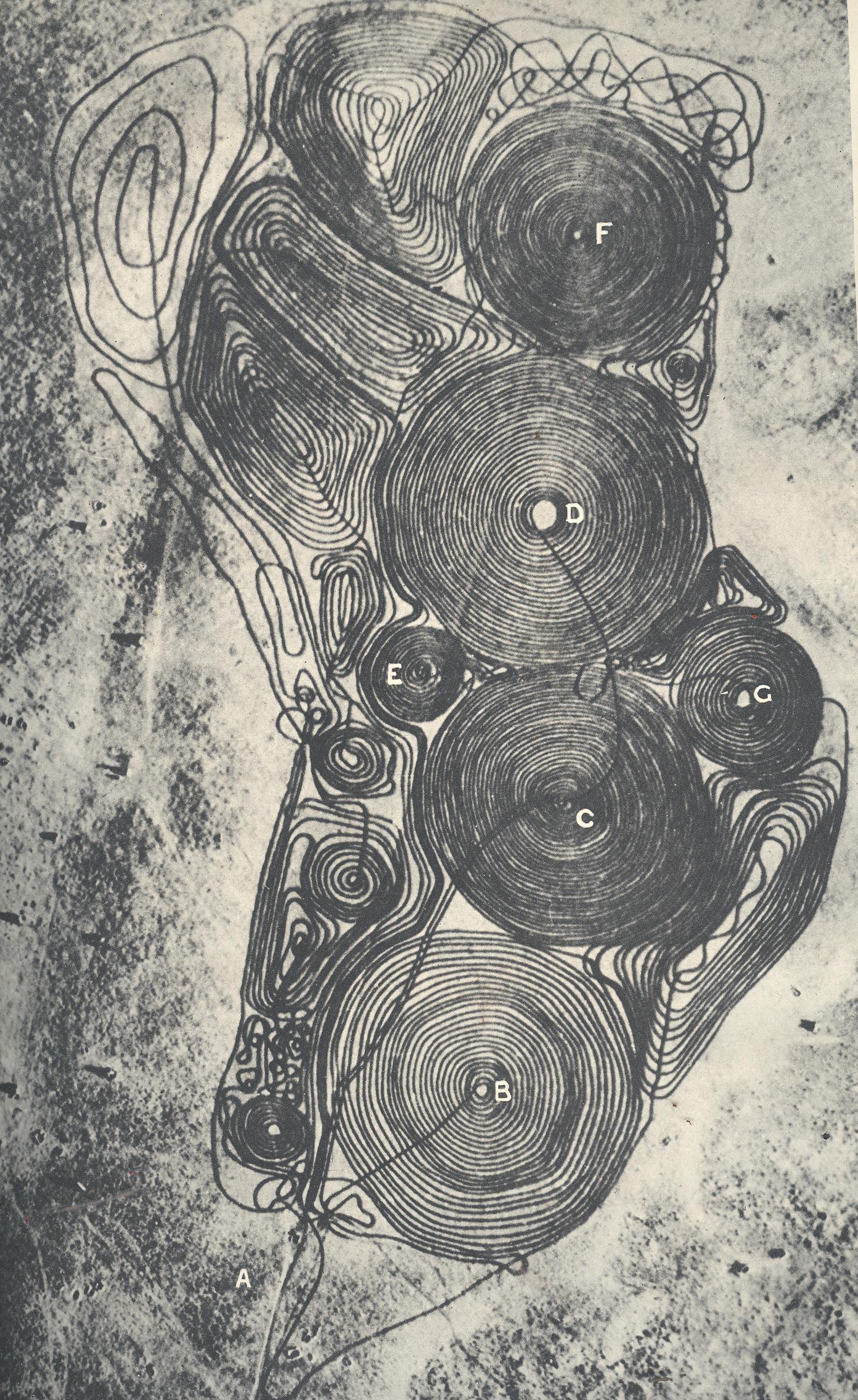
    JF Ptak Science Books   Post 1030Descartesunivab

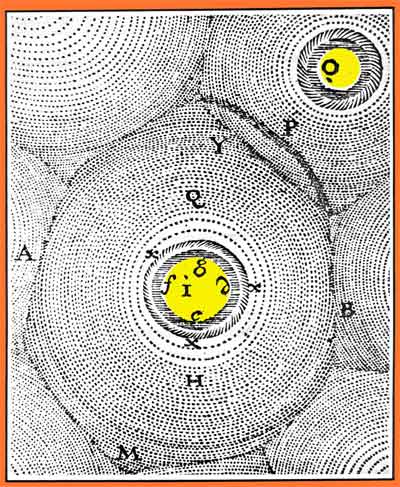
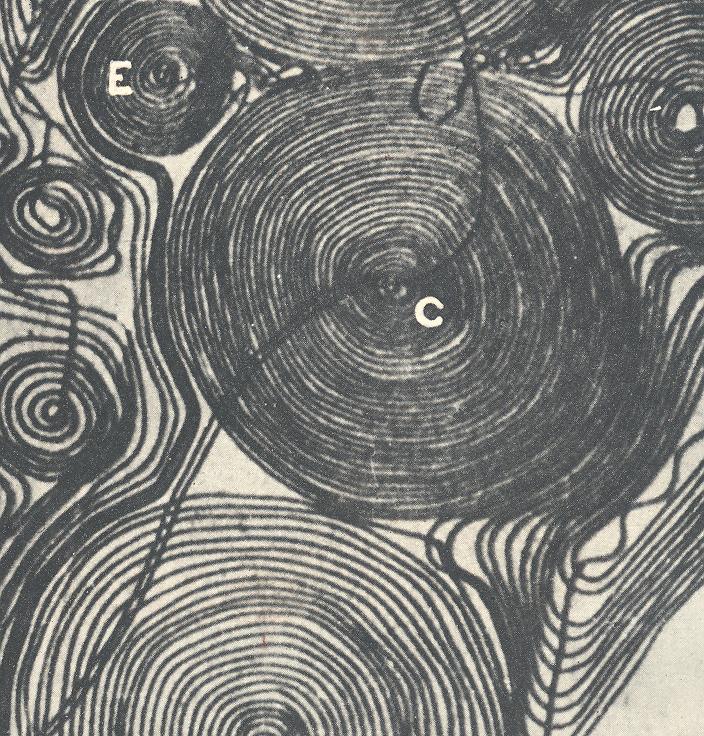
    I thought at first that the detail of the photograph below looked liked Cartesian vortices, as seen in one of these engravings from his (Rene Descarte) Principes de la
    Philosophie
    (1644, basically a treatise on planetary motions).
    :

    1--may 14 circles det

    Well, no, of course, these are not vortex representations writ large in the
    desert of Tunisia by Nazi German plows. They come close, though.  We’re
    looking at a photograph of what is supposed to be an airfield which has
    been beautifully plowed under by German sappers, done so to prevent the
    airfields being used by British forces subsequent to its abandonment by
    retreating German forces.  Looking more closely at the photos though I’m
    not sure what this really is–it just doesn’t look quite right.   On
    the other hand I don’t see offhand what might be gained if this was
    simply a retouched photo used for propaganda

    1--may 14 circles 

    Source:  Illustrated London News, 6 Feb 1943.


  • History of Dots Series: Dots of 1947

    JF Ptak Science Books   Post 1027

    {Another in the History of Dots series.]

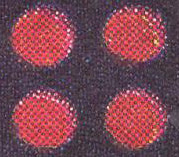
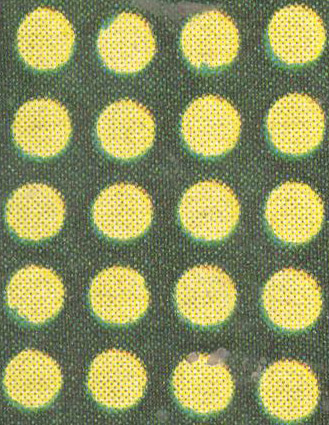
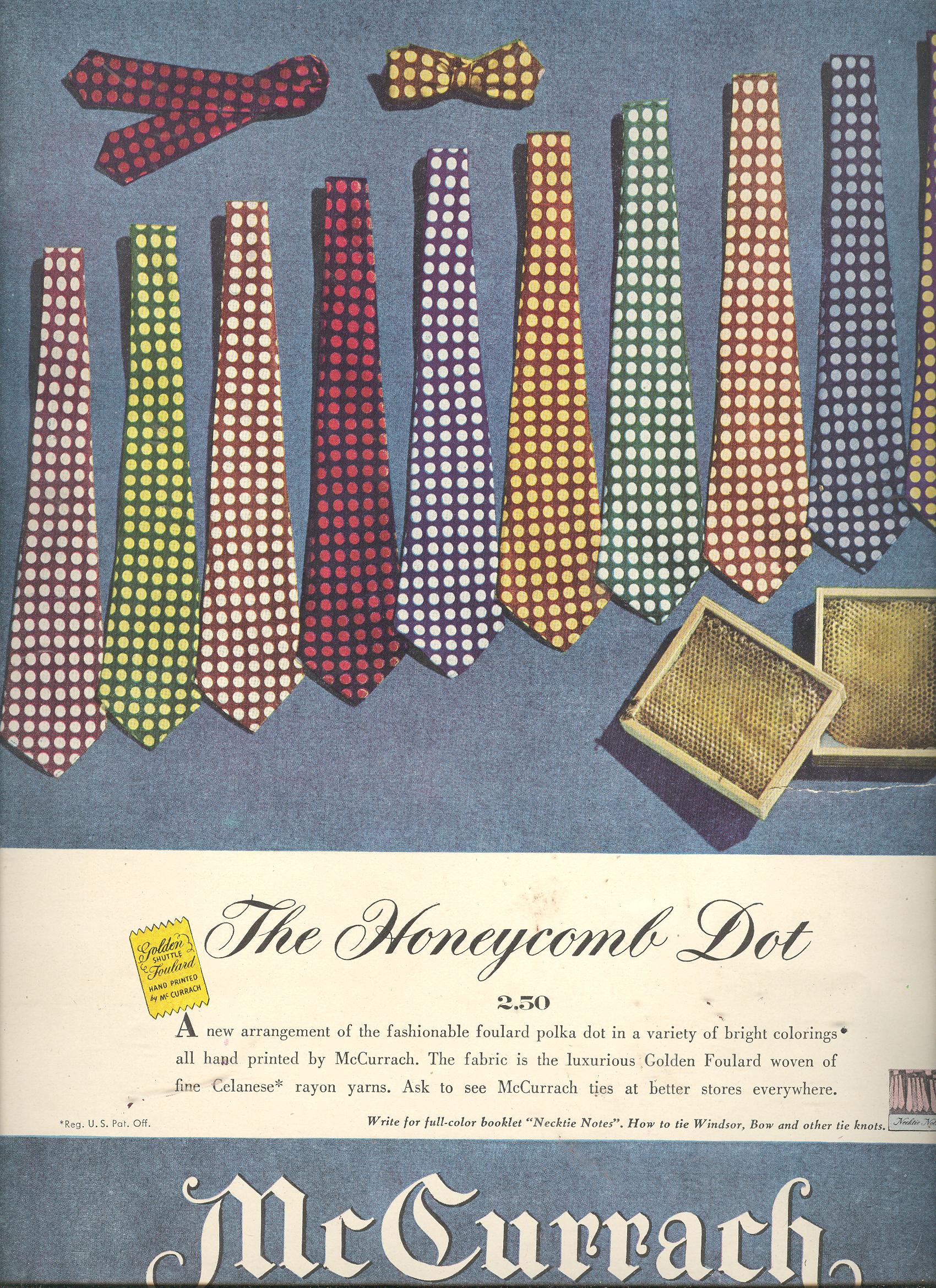
    The molecular chemistry of dots of 1947 is a beautiful thing, worthy of a powers-of-ten episode, though I can only do a gigantically scaled down version of it (a powers-of-two maybe) given pixelation and its dot-defeating and necessary tendency to relieve roundness and introduce squares everywhere. 

    1--may 13 tie dots det 1 

    1--may 13 tie dots det 2

    1--may 13 tie dots det 3

    1--may 13 tie dots det

    1--may 13 tie dots


  • The History of Lines: Nijinsky’s Secret Shoes (The Most Magnificent Shoe Illustration in the History of Shoe Illustration.)

    JF Ptak Science Books

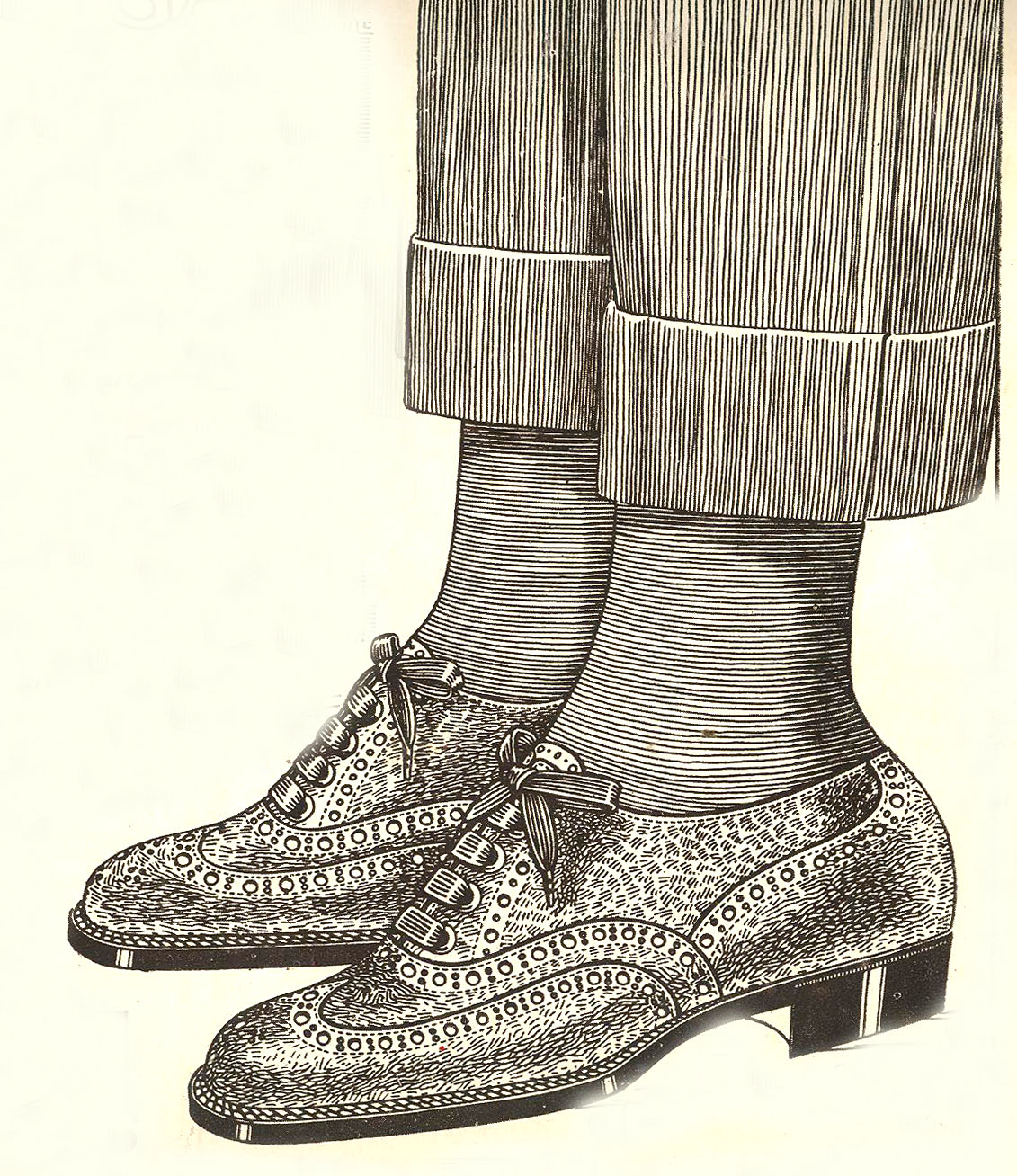
    There are two possible origins of this
    beautiful and quixotic image.

    1--may 11 shoe det

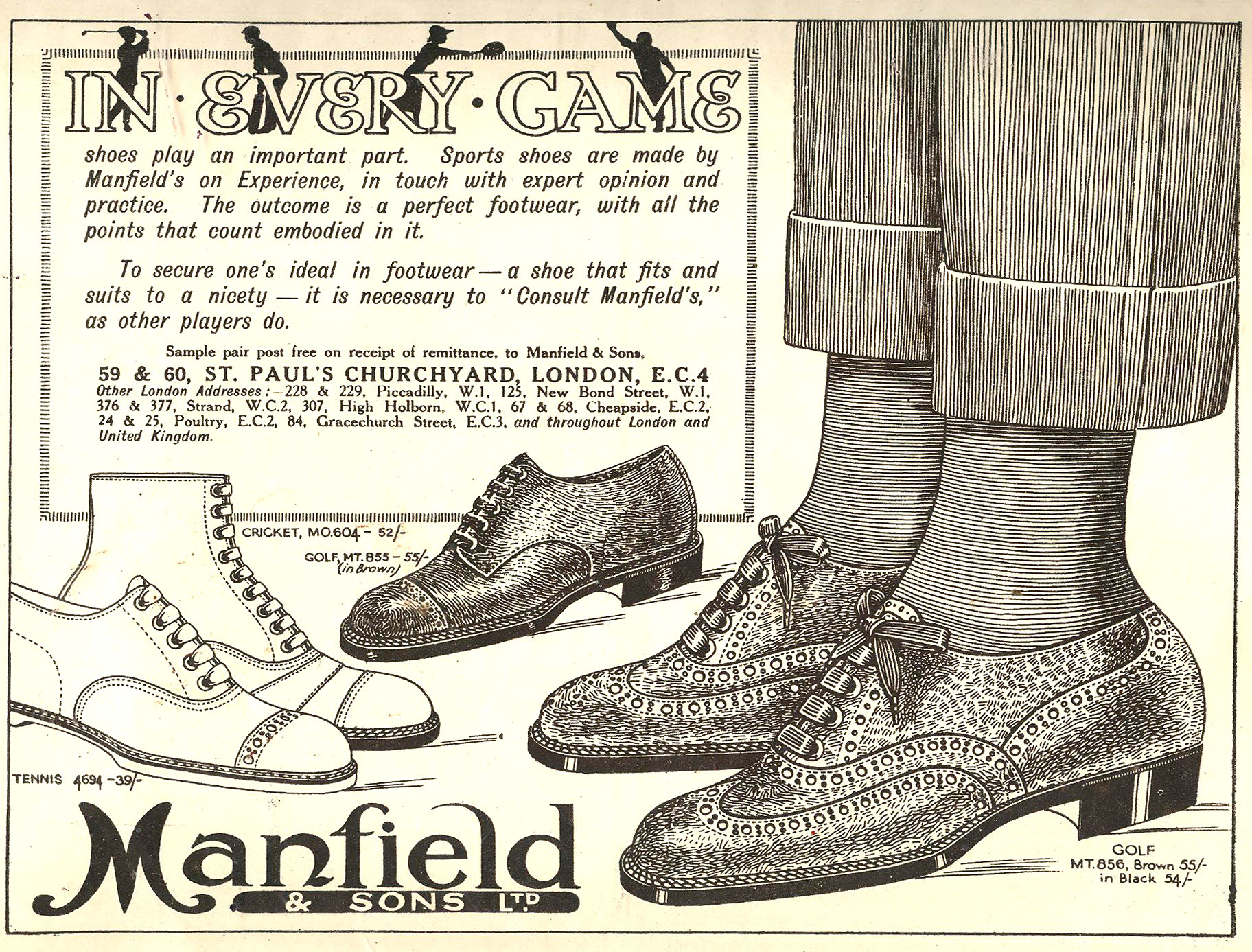
    1)  It is simply an unusual and perhaps hypnotic (?) sales
    illustration for a maker (improbably named Manfield & Sons) of sports shoes–in this case, for golf. There
    is no explanation for its exalted and mysterious overuse of lines or its
    art brut approach. 

    2) It is the sympathetic artwork of shoe adoration by the great dancer, Vaslav Nijinsky (1890-1950), used by his wife and sold to manufacturers to help pay for his decades-long “hospitalization” for schizophrenia. Nijinsky was perhaps the greatest dancer of the first half of the 20th century, a shocking talent who danced for only a dozen years or so before the rest of his not-so-dormant mind caught up to him around 1919.  At that point he was in and out of facilities to care for his metal disease until his death in 1946. 

    (Sigmund Freud was presented with the opportunity to help the mega-star; he declined, because he didn’t “do” schizophrenics.  Freud I think only “did ” people whose illness, treatment and eventual curing could fit snugly within the confines of his own stretchy/made-up vocabulary and diagnostic language.)

    Nijinsky would dance only one time after the beginning of his series of internments that began in 1919–he wound up living in Hungary during WWII, and when the country was “liberated”* by the Soviet Army in 1945, he and the troops did folk dances in the street for celebration. 
    And that was it, so far as any knows.

    1--may 11 shoe

    Truth be told:  the answer of course in #1, though it is difficult to imagine a guy preening his way through this 1920 edition of the Illustrated London New, coming upon this ad, and being overcome by the staggering beauty of the image, deciding in his head (and perhaps even out loud), “I need those shoes”.  

    The stuff I wrote about Nijinsky is all true, unfortunately–all except the shoe illustration part.

    Mark Twain once said that golf “was a good walk spoiled”–and that was without the benefit of having seen these shoes.

    *”Liberated” is the word I see used in regard to the Soviets removing the Nazis from Hungary.  The German dictatorship was simply replaced by a Soviet dictatorship.  The Soviets stayed longer.


  • Fat as (1) Medicine or (2) Jump Rope? [Adventures in Fat Series #4]

    JF Ptak Science Books

    {See also the post Art Made of Fat]

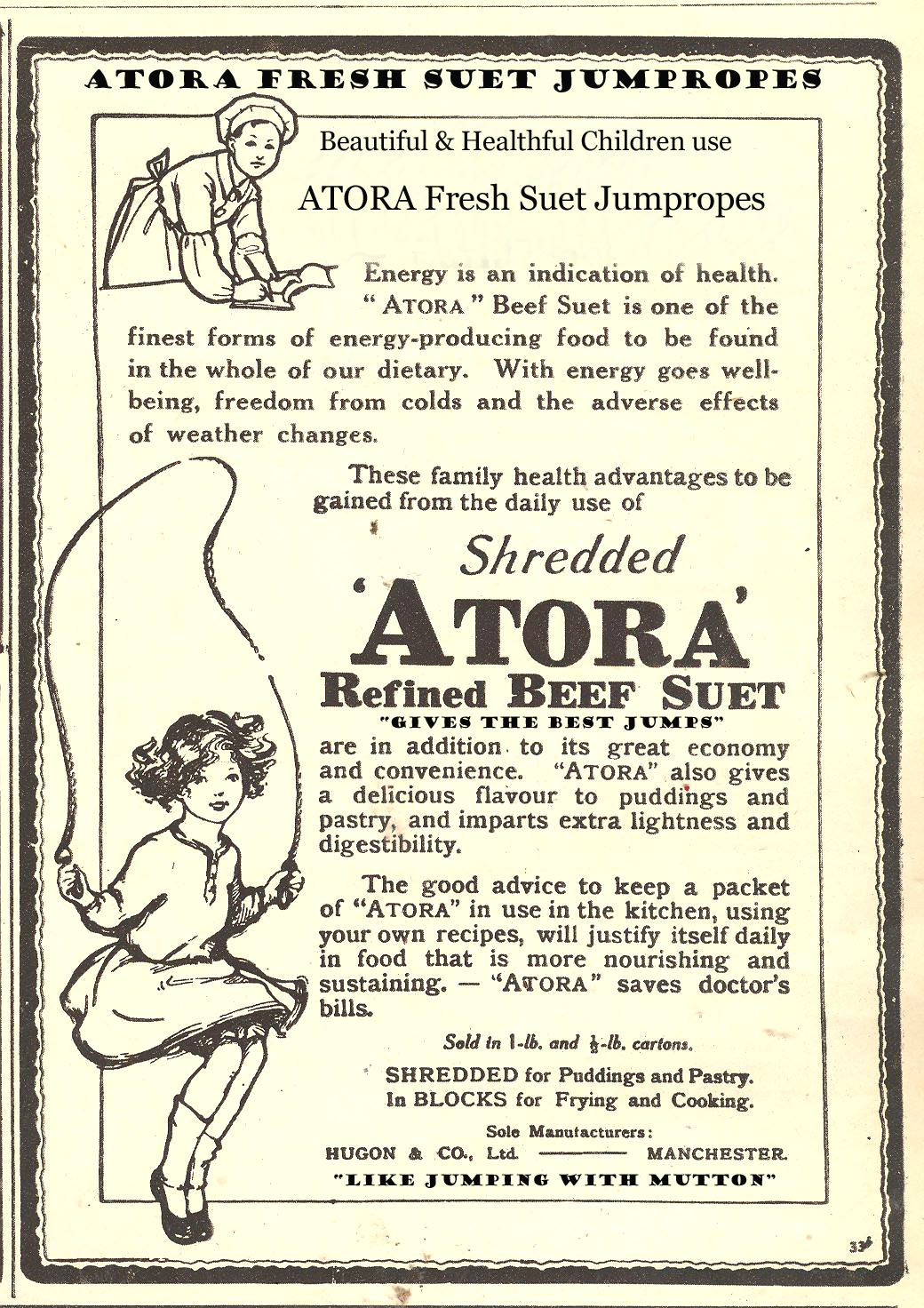
    Well, given the choice of having to use fat, or rather rendered fat–suet–as either (1) a medicine or (2) solidified enough to use as a jump rope, I think I’d have to select option #2.  At least I wouldn’t have to eat it. 

    But the fact of the matter is that in “real life”, in the history of human life and the care of humans, suet was in fact used as an invigorating energy producer to be added to the daily diet.  Or was it by the spoonful?  I’m not sure, though I do see that it was available “Shredded” or as a “block”.

    I do admit to adding the jump rope text to this 1920 ad–but the rest of it is real. 

    1--may 11 suet copy

    ·Posted by :

    ·in:

    —