A Daily History of Holes, Dots, Lines, Science, History, Math, Physics, Art, the Unintentional Absurd, Architecture, Maps, Data Visualization, Blank and Missing Things, and so on. |1.6 million words, 7500 images, 4.9 million hits| Press & appearances in The Times, Le Figaro, Mensa, The Economist, The Guardian, Discovery News, Slate, Le Monde, Sci American Blogs, Le Pont, and many other places… 5000+ total posts since 2008.

Category: Absurdist, Unintentional

  • Welcome (Again!) Jezebel Readers! (On the History of Women)

    I’m happy to report that one of this blog’s “History of Women” bits has  been posted on one of  the top-25-popular websites, Jezebel.  I thought that this was the ninth post from here that they’ve shared, but I can only find six. Jezebel is a wide, varied site with considerable interest.  Have a look and have fun!

    The
    Hidden, Mysterious Kisses In Vintage Comics


    Over on John F. Ptak’s site, there’s a post about what

    kisses looked like in the Golden Age of Comics.
    Hint: Lipless and faceless!  Views: 3,8413,841 views on this post, 60 new visitors 
    Comments: 62


    Girlie
    Shooting Gallery Is A Terrible Party-Game Idea


    An innocent Life magazine photo of dinner guests aiming
    harmless toy rifles — so nostalgic, so quaint! Actually, no. Not at all.
    More » Views:5,4115,411 views on this post, 87 new visitors Comments: 30


    The
    Average Housewife’s Workweek: Staggering Since 1947


    “35 beds to be made, 750 items of glass/china and 400 pieces of
    silverware to wash, 174 lbs. of food to prepare, some 250 pieces of
    laundry” — it added

    up to some 100 hours of joy per week. [PtakScienceBooks] Views:3,508 Comments: 69

     
    Click here
 to read A History Of
 Fainting Spells, Headaches, And Sexual Indifference


    A
    History Of Fainting Spells, Headaches, And Sexual Indifference


    “The manual is a codex of denial, submission, ignorance, boredom,
    tiredness, exasperation and triviality so far as sexuality is concerned
    for women—there is no hint of pride, or of enjoyment.” It’s a vintage
    medical hard sell!Views: 4,9654,965 views on this post, 240 new visitors Comments: 23 


    Giant
    Woman Sets Hemline Record!


    We’re not arguing with the

    claim that this image demonstrates “what must be the female record
    for the most distance between the ankle and the hemline.” But the nifty
    hemline chart has us sold.

    Views: 5,1635,163 views on this post, 74 new visitors Comments: 4


    Click here to read "Did You Give Him A
 
Chance To Impress You?"


    “Did
    You Give Him A Chance To Impress You?”


    Writer John Ptak has
    posted 1940s Ladies

    Home Journal piece that instructs young women on date conduct.
    The response of Ptak’s 17-year-old daughter? “It was simply beyond
    listening to…and certainly not anywhere near worthy of a response.”Views:3,9893,989 views on this post, 14 new visitors Comments: 34


  • History of Dots #29: Making Things Abstract and Concrete at the Same Time

    JF Ptak Science Books   Post 1078

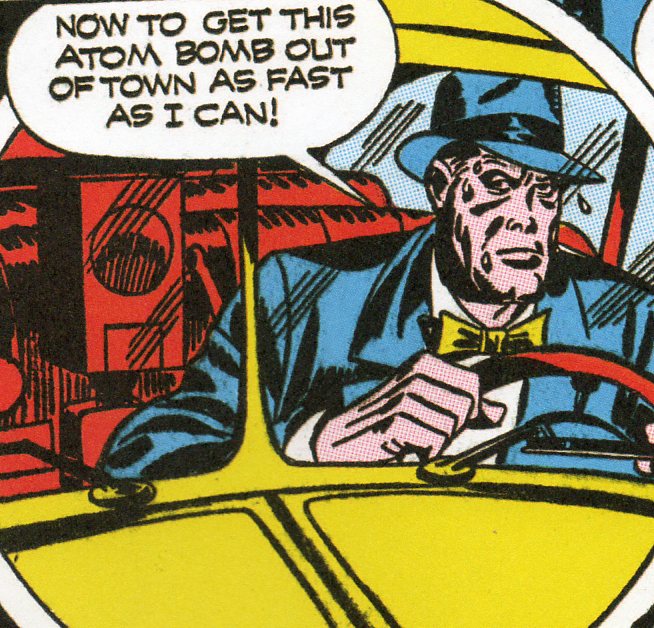
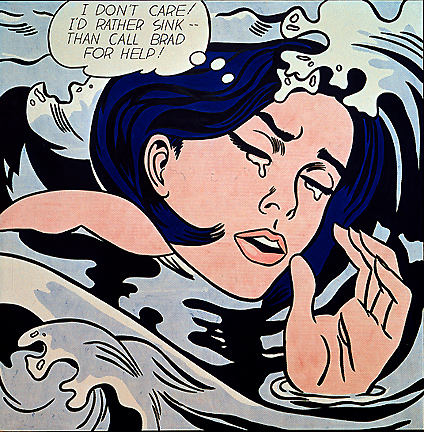
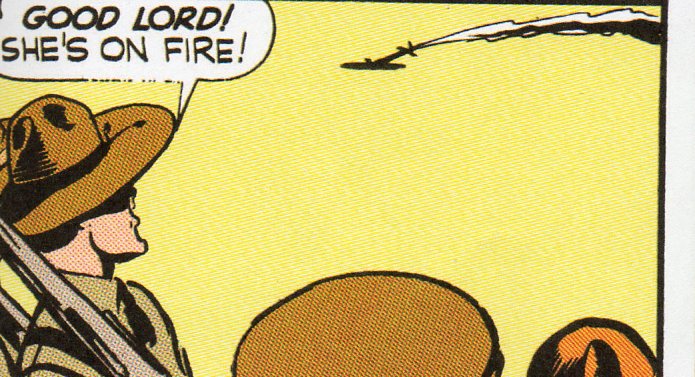
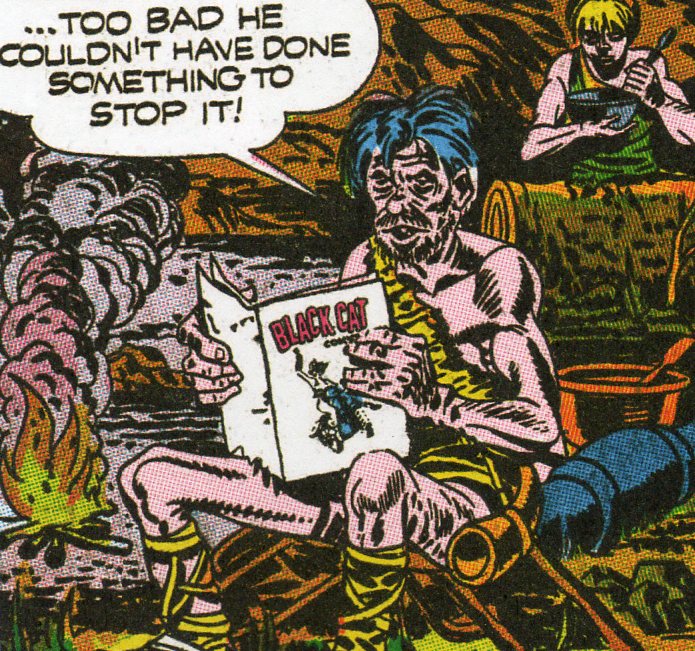
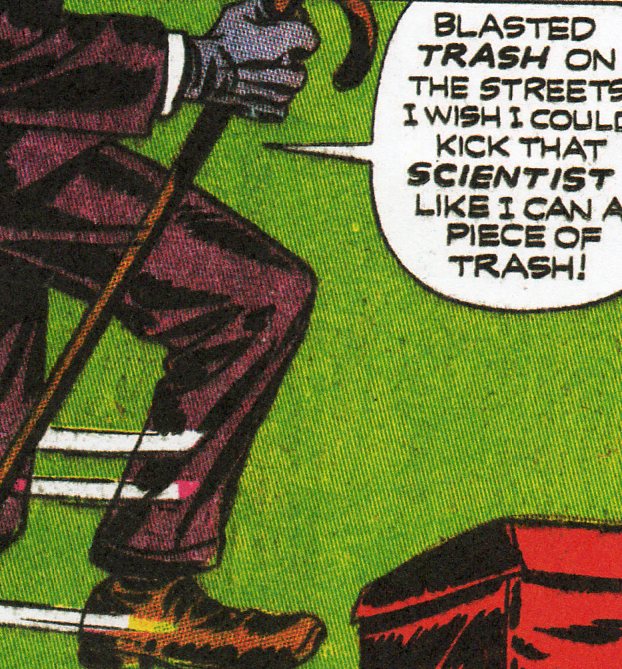
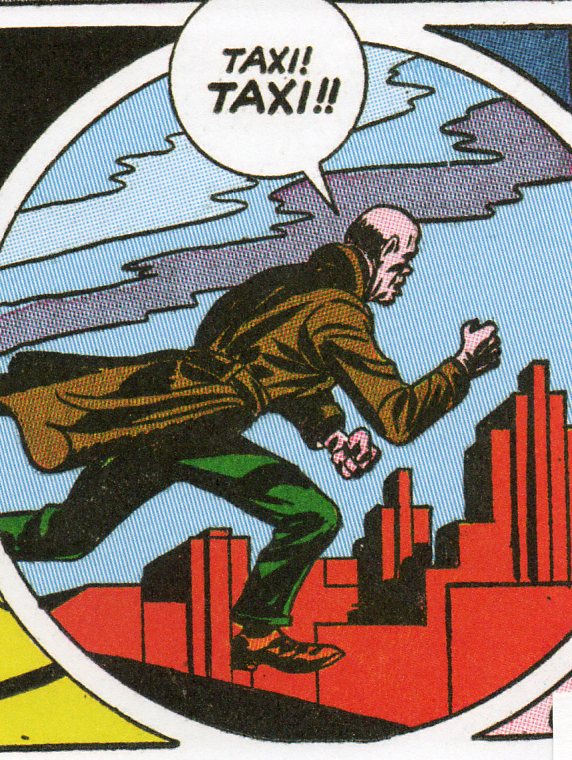
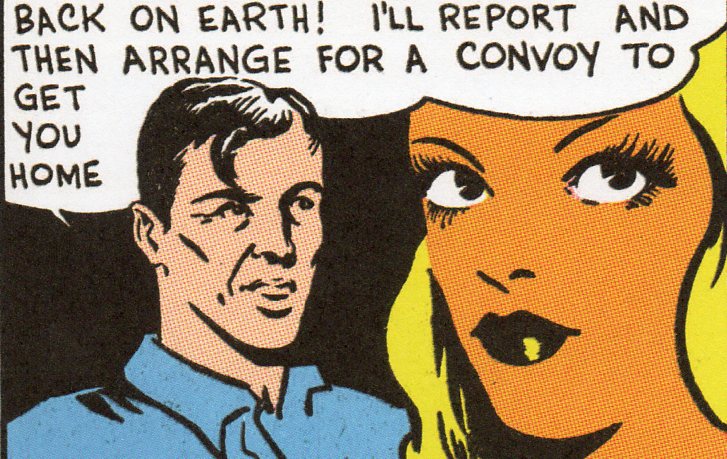
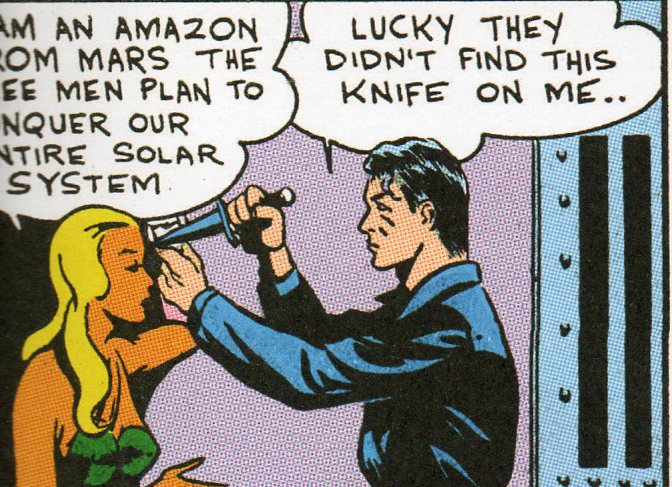
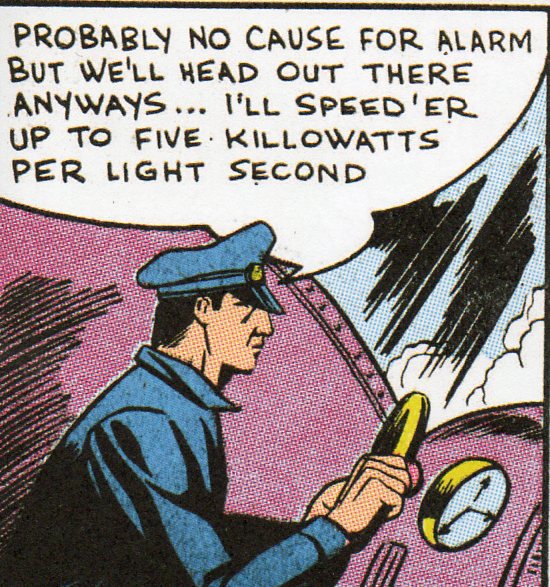
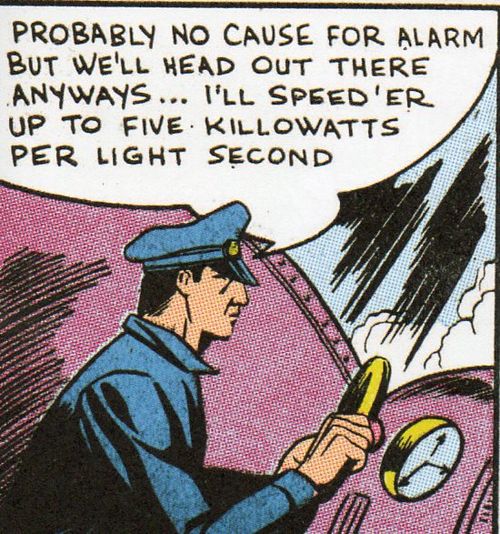
    [History of Dots series #29//Note: all images below except for Lichtenstein’s “Drowning Girl” are from Simon & Kirby comic books.]

    How are deep abstractions visualized?  Science and art were becoming
    more densely abstract at about the same time, the new modern age for
    both beginning 1905-19301 or thereabouts, when so many of the
    revolutionary advancements were made.
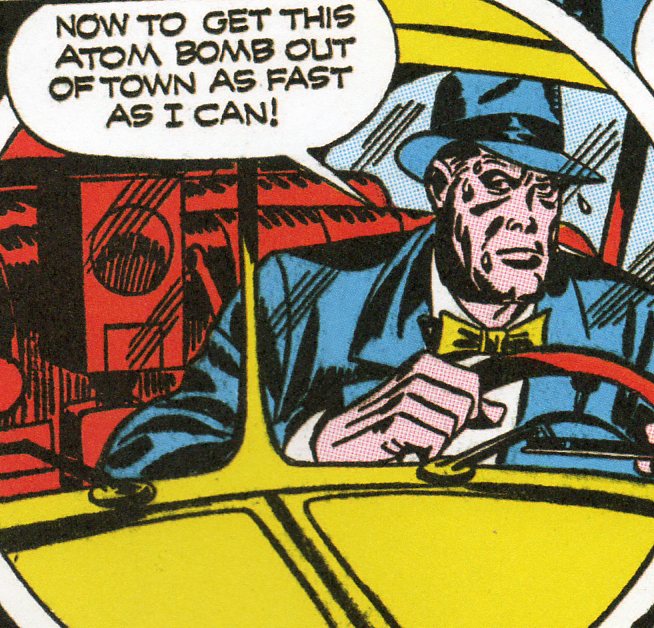
    Non sequitor193

     The representational world of art was slipping and disappearing (with the beginning of Cubism(s), Dadaism, De Stijl, Abstract and so on), replaced by forms and shades and colors, the subject of the art becoming less and less recognizable  as “things” until, finally, the recognition of the general stuff of nature (except for color) was gone.  Light, the interaction of molecules, the motion of atoms, were all becoming less comfortable as visual images and were being represented in terms of mathematics 

    How do we get to Roy Lichtenstein from here? I think that it is via abstraction and his connection to  the found non sequitor2 of the speech balloons in comic book images.  Lichtenstein’s style is very heavily derived from comic books and strips, except that he painted his images based on Ben-Day dots, strong lines and ultra-vibrant primary
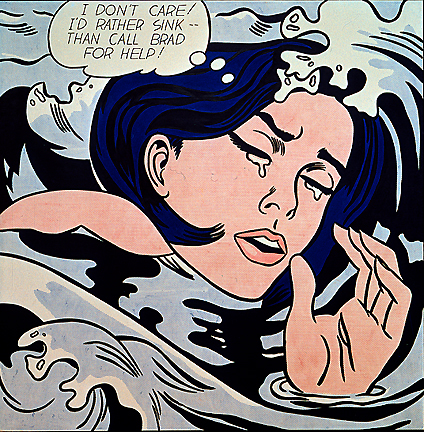
    Lichtenstein_drowning_girl colors of Golden Age era comics.  And I must say that his work–in images and in captions–seem much less non sequitor than the enormous amount of these things that you can pull out at random from the history of comic books–that is, one can still see where the frames that he was painting came from in the sequence of the comic book story.  It seems more interesting to me if the one frame being depicted could mean absolutely anything, and that the story line was completely obliterated, sop that this one frame out of context really had no context at all.

    Lichtenstein’s style came about around the time that he started teaching at Rutgers, and in short order–in less than five years–he had a solo show at Leo Castelli Gallery (1962). His work was instantly recognizable, a true Popular Art, almost everyone having some sense of recognition for the origin of his artwork.  Beyond that, and whether his art was seen as art, is another story3.
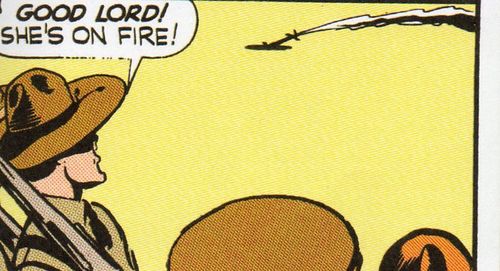
    Non sequitor191

    But what I’m trying to get at here is this: did  Roy Lichtenstein create a template of  an abstract dialogic equivalent in a concrete, non-abstract way of the non-representational creation of Kandinsky and Braque and Mondrian?  Are the Ben-day dots that are the foundations of Lichtenstein’s style–and the images that can be simply found in comics from the Golden Age–the very concrete bits that compose a very concrete, non-abstract image-with-text that is totally recognizable but without any apparent meaning?  Just decades after dots–the compositions that were normally used to visually introduce ideas in physics and astronomy and chemistry and biology–were abandoned as the visual signifiers of enigmatic and increasingly-abstract domains, they were adopted as the foundation stones for an art that moved in the opposite direction from abstraction, except that its message was anything if not abstract.    

    I think that it is in this way that images of Schroedinger’s cat should’ve been illustrated using the Ben-day dot method, plucked from the pages of a Golden Era comic, all basic red, yellow and black, the uncertain image never at rest, always with the possibility of being the same and not the same, its great and simple representation having not necessarily anything at all to do with its message, a concrete thing that is totally abstract.
    ____________

    Notes

    1. You could break this period out a bit, expanding it from, say the pre-Impressionists (1860 or so) to the period just after Abstract art and the introduction of the new quantum theory (again, say 1930). Epochal changes took place across the sciences, medicine, the arts, literature….virtually everything. I cannot think of any period in intellectual history that approaches this 70-year period. Actually, the gargantuan changes can be shaved down to the period of Einstein’s living memory beginning with the stunning discovery of Roentgen’s x-rays in 1895 to the invention of non-representational painting in 1911. But for the larger piece, the longer time reference, we have Roentgen, Poincare, Boltzmann, Planck,  Strindberg,  Schoenberg, Cezanne, Seurat, Picasso, Braque, Leger, Joyce, Woolf, Malevich, Duchamp,  Kandinsky, Klee, Bohr, Heisenberg, and. Einstein–to name just a few–of the folks making monumental changes in their field. 

    2. By “non sequitor” I simply mean to say that the image, or text, or both, when pulled out of context, when removed from the story line, are almost entirely without reference to what happened before the panel or what would happen next.

    3.  Maybe Lichtenstein is art, maybe not.  Another art, Art Spiegelman,  commented that “Lichtenstein did no more or less for comics than Andy Warhol did for soup”.  Maybe so. :ichtenstein did say this about his own art:”I think my work is different from comic strips- but I wouldn’t call it transformation; I don’t think that whatever is meant by it is important to art”.http://en.wikipedia.org/wiki/Roy_Lichtenstein#cite_note-rlf-Coplans-1

    This might all seem terribly wrong, and maybe–worse yet–it might seem like nothing at all.  Perhaps if it were nothing it would be more appropriate, in keeping with what Lichtenstein said about his own work, what seems to me to be an inscrutable nothingness: “”The closer my work is to the original, the more threatening and critical the content. However, my work is entirely transformed in that my purpose and perception are entirely different. I think my paintings are critically transformed, but it would be difficult to prove it by any rational line of argument”.
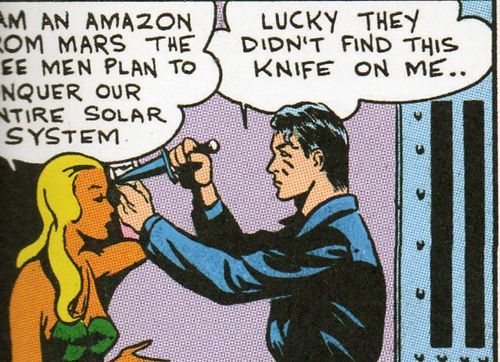
    Non sequitor192 


    Non sequitor194
    Non sequitor195

    Non sequitor196

    Non sequitor197 Non sequitor198


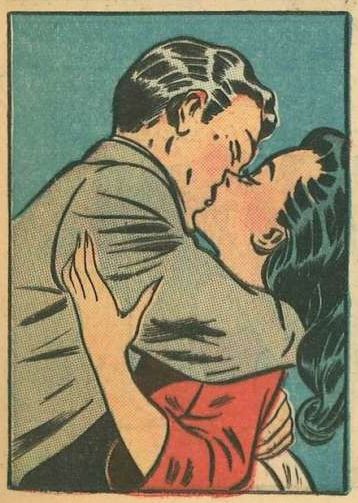
  • A History of Blank, Empty & Missing Things: Lipless Kissing in the Golden Age of Comics

    JF Ptak Science Books   Post 1077

    [A History of Blank, Empty & Missing Things, #78]

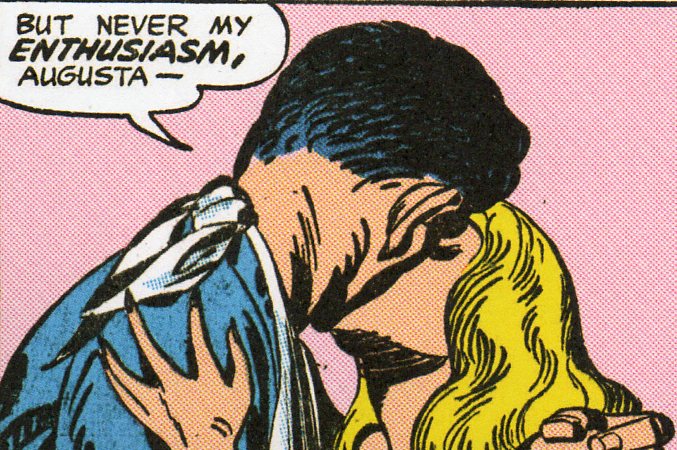
    Kiss 185
    The indefatigable team of Joe Simon and Jack Kirby (Joseph H. Simon, born 1913 and still going and Jacob Kurtzberg,1917-1994, respectively) produced some of the enduring heroes and ideas of the Golden Age of Comics. In capacities as comic book writers, artists, editors and publishers they knocked the bottom out of the creativity bin, affecting all manner and aspects of that industry, as well as  introducing the genres of horror and modern romance comics.

    And as necessary as it is scary, the nearly unrecognizable forensic pathology of the kiss in pink (above):

    Kiss--pink kiss det

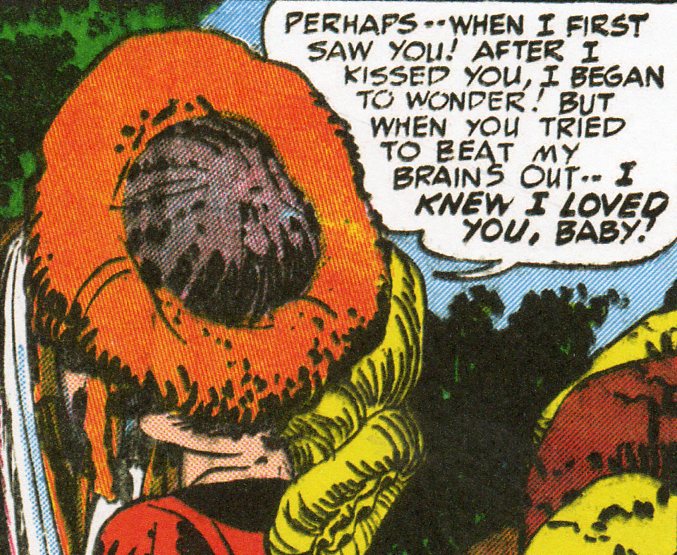
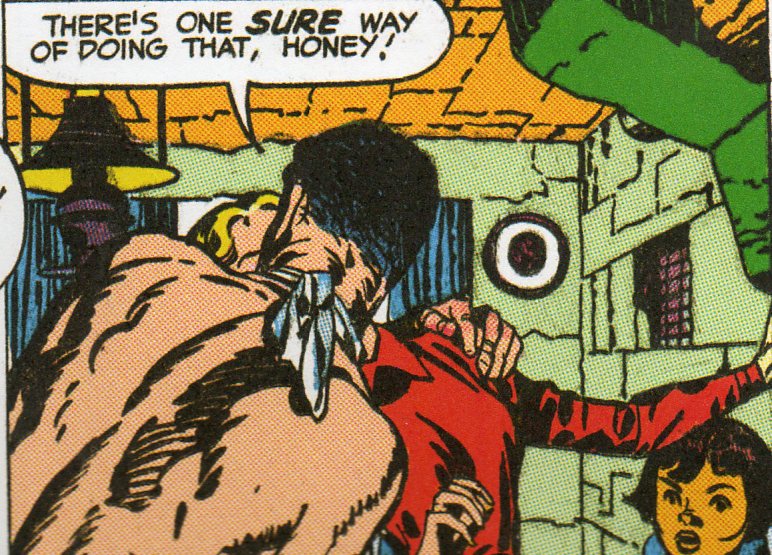
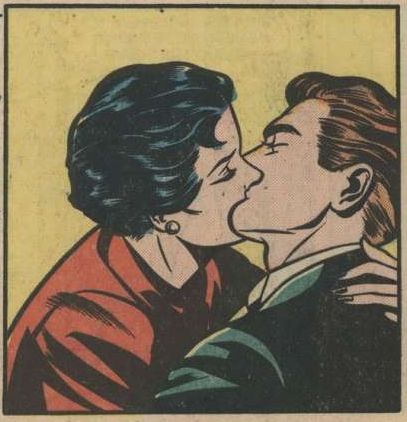
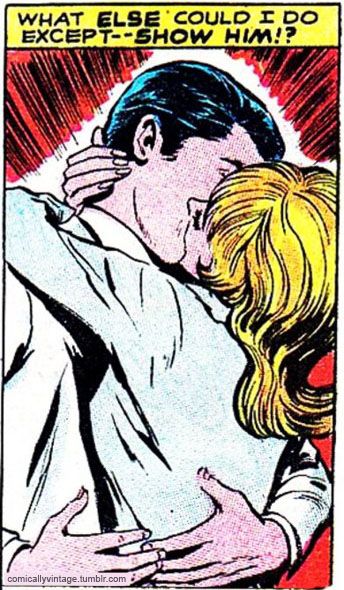
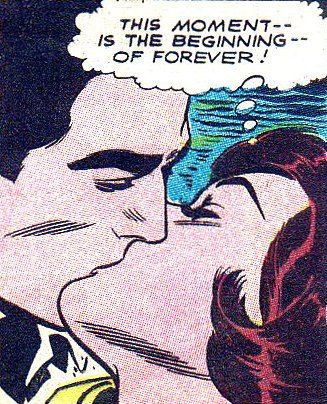
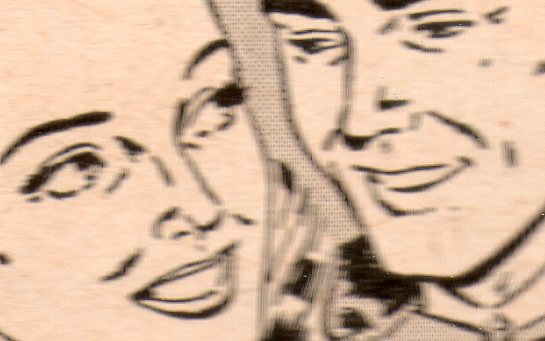
    I was initially drawn to their harsh colors,  blocky characters and un-magnificent dialog looking for wonderbits of non sequitor images and thought/word balloons populated with broken english.  They’re marvelous and easy to find, though I did get distracted by the unexpected part that I’m posting about right now–the missing, blank kiss.  Since they started the romance comics angles there’s plenty of 1940’s kisses to be found, but what I found was that although the kissing aspect wasn’t missing, the act of kissing was.  There’s plenty of heads smashed together that don’t leave a lot of room for faces, and in general it might be the sensitivities of the Golden Age’s age that cast away the kiss itself, their characters rushing face first into bad screen kisses. 

    Kiss 186

    There’s nothing wrong with this, and perhaps the kids never really noticed this, rushing to get ahead to the end of the confusing romantic interests.

    Kiss 187


    Kissing--comic book kiss

    Kissing--what else could I do

    Kissing--begining of forever

    There is a hint of a lip in this one, below, though it wasn’t supposed to be a passionate cheek kiss.

    Kissing in teal

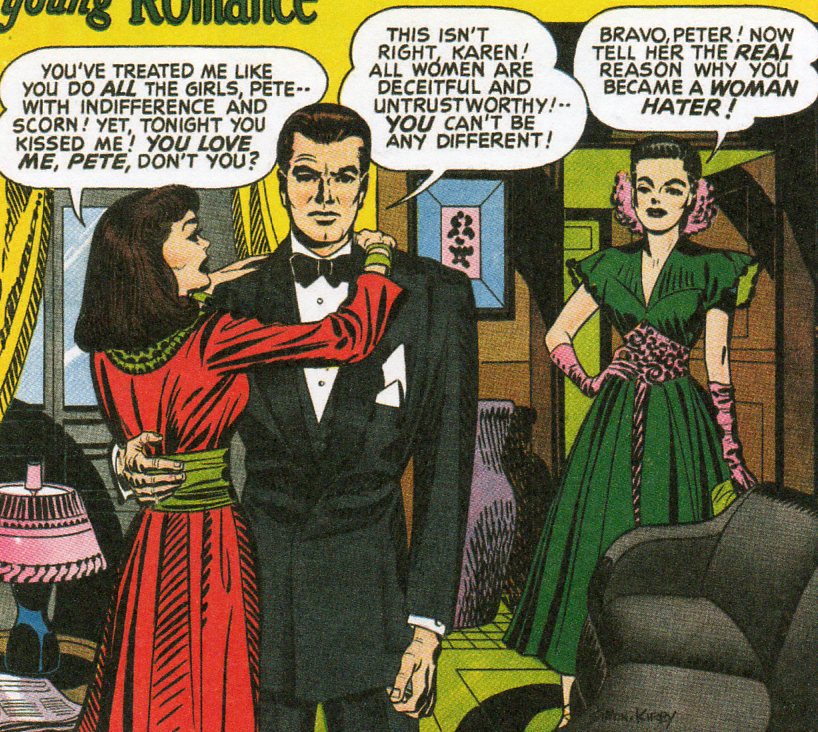
    This one has more to do with anti-kissing than anything else; I’m sorry that I don’t know what the “real reason” was….

    Kiss 189
      

  • History of Dots 27: Killing Bacteria–Human Experimentation with Conscientious Objectors, 1955

    JF Ptak Science Books  1073

    Medical and scientific experimentation on humans has a long and painful history.  In the early days it seemed much more acceptable to perform tests on people while they were alive more so than to cut up and autopsy their bodies when they were dead. 

    Human experimentation174

    William Beaumont–the “father of gastric physiology” –was also perhaps a very early leader in the field of bioethics.  Beaumont’s most famous series of experiments1 were performed on a living subject, but only with the patient’s full knowledge of the procedure and consent (and also with te ability to terminate the procedures).  (Part of the defense of the Nazi concentration camp doctor-monsters brought Beaumont into their courtroom as an example of early American compliance to their bestialities, but purposely failed to mention the pertinent rights of Beaumont’s patients, whereas their thousands and thousands of human subjects were in concentration camps and were treated without regard to any moral, ethical or humanitarian consequences.)  Claude Bernard–one of the 19th century’s leading experimental medical researchers and physiologists–reported in his monumental 1865  Study of Experimental Medicine… that a physician must  “… perform an experiment on man whenever it can save his life, cure him or gain him some personal benefit.”  Hopkins’ great William Osler (in 1907)  was entirely on board with the Bernard appraisal of the duties of the physician, saying that any new procedure or pharmaceutical must be used on humans before general release.         

    Then of course three’s the other side of the coin: the STD experimentation in the infamous Tuskegee case (1932), the widespread studies of the U.S. Army’s Chemical Warfare Service, the Cornell Medical School’s wincingly bad study that gave the name to the placebo effect, th e1942 Chicago malaria studies on inmates, the long series of atomic and nuclear weapons tests with passive involvement of sailors and soldiers, and on and on, back into dim history. (The experiments by the Nazi doctors and their Japanese Unit 731 counterparts  deserve their own categories.)

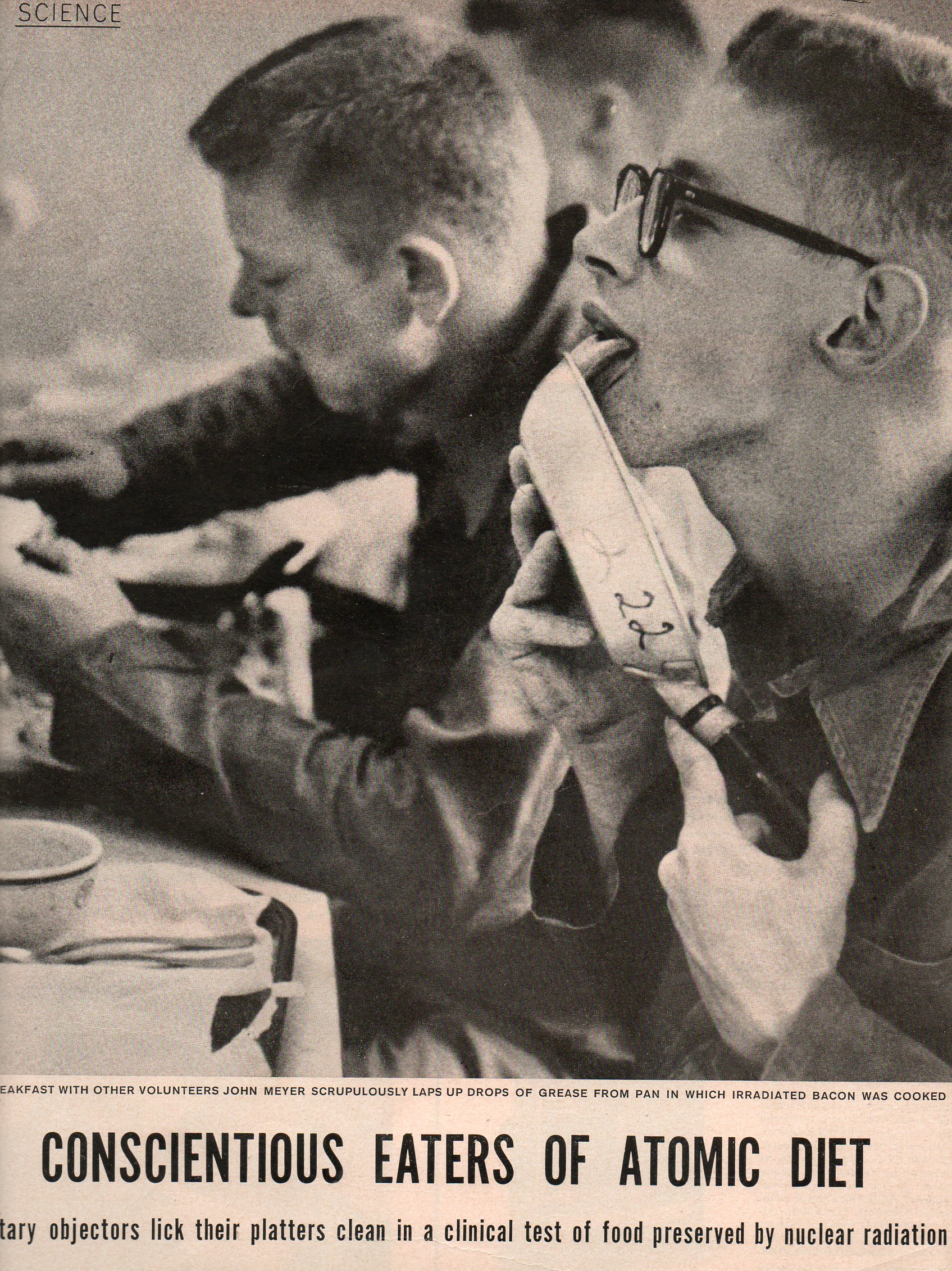
    This photo from Life magazine on the story (“Conscientious Eaters of an Atomic Diet”) of 1955 must be among the most wholesome general cover stories in the history of the idea of human experimentation.  These young conscientious objectors2 declared (for whatever reason, ethic, moral or religious) their inability to serve in the armed forces, and were sent to a different task to replace military service.  Their exchange would be to test the effects of nuclear radiation on food products. (This was the process of using radiation to kill bacteria and insects and whatever other living badie in food that might cause disease or illness of cause the food to spoil.  The long-term result for the military could be enormous, allowing for more inexpensive and less difficult ways to keep food for longer periods of time for troops, and could also keep troops healthier by eliminating certain food-borne illness that could spread from one person to another.)

    Still, what was being asked of these young men was far beyond the “debt” implied by their CO status. The effects of this sort of exposure were still not well known, and these men were absolutely being place in harm’s way, and for the cameras of Life.  The ideas of “Radiation sickness” and “Acute Radiation Syndrome”–created by the two atomic bombs detonated in Japan in August 1945–were only about ten years old at the point where these young men were licking the irradiated grease form their plates. (As a matter of fact there was no immediate medical research team in place to study the biological effects of the bombs in those two cities; after a few weeks and by the end of August there was a organization in place, headed by Colonel Ashly Oughterson.) These men weren’t going to suffer any radiation poisoning from the process (the ionizing radiation used by irradiators “was not strong enough to
    disintegrate the nucleus of even one atom of a food molecule”) , but the effects of irradiating food at this point were still not known.

    Notes:

    1. Published in his 1838 Experiments and Observations on the Gastric Juice, and the Physiology of Digestion.

    2. The business of conscientious objection to military service is milennia old; in the United States it goes back easily to the Revolutionary War.  It becomes a little less defined in the Civil War, where a CO or anyone else faced with military service could purchase a stay of service for $300 or provide someone in his place.   (In the CSA the same could be done but for a little more–$500.)    The whole business got considerably tightened up by WWI, and in WWII–when there was a spike in declarations by Cos–the code for declaration of objection to military service was considerably clarified, though not making it any less painful experience for the CO to endure.      In 1948 the worldwide  issue of the right to “conscience” was addressed by the United Nations General Assembly  in Article 18 of the Universal Declaration of Human Rights, part of which reads:  “Everyone has the right to freedom of thought, conscience and religion; this right includes freedom to change his religion or belief, and freedom…”
         
    During WWII the CO declaration form/questionnaire DSS 47 asked these ten questions:

    1. Describe the nature of your belief which is the basis of your claim.
    2. Explain how, when, and from whom or from what source you received the training and acquired the belief which is the basis of your claim.
    3. Give the name and present address of the individual upon whom you rely most for religious guidance.
    4. Under what circumstances, if any, do you believe in the use of force?
    5. Describe the actions and behavior in your life which in your opinion most conspicuously demonstrate the consistency and depth of your religious convictions.
    6. Have you ever given public expression, written or oral, to the views herein expressed as the basis for your claim made above? If so, specify when and where.
    7. Have you ever been a member of any military organization or establishment? If so, state the name and address of same and give reasons why you became a member.
    8. Are you a member of a religious sect or organization?
    9. Describe carefully the creed or official statements of said religious sect or organization as it relates to participation in war.
    10. Describe your relationships with and activities in all organizations with which you are or have been affiliated other than religious or military.

    For human experimentation, see also:

    Hoerni B. [Medical ethics. Evolution century after century] Hist Sci Med. 2003 Jul-Sep;37(3):331-8.

    Lyon J. Experimenting with humans. Part I: History and context. Second Opin. 1987;6:63-89

    Numbers RL. William Beaumont and the ethics of human experimentation.  J Hist Biol. 1979 Spring;12(1):113-35.

    For more on radiation studies at Hiroshima and Nagasaki:

    Archives: Atomic Bomb Casualty Commission. Issues in Science
    and Technology. Spring 1997. FindArticles.com. 21 Apr. 2008. http://findarticles.com/p/articles/mi_qa3622/is_199704/ai_n8759128.

    Atomic bombings of Hiroshima and Nagasaki. (2008, Apr 19). In Wikipedia,
    The Free Encyclopedia
    . 21 Apr. 2008.

    ABCC Collection at John P.
    McGovern Historical Collections and Research Center (Houston
    Academy of Medicine-Texas Medical Center Library
    ).

    Radiation
    Effects Research Foundation
    Home website in English and Japanese


  • The Theory of Multiple Creations: a Modest Proposal for Creationists

    JF Ptak  Science Books   Post 1070

    For a little while I was collecting antique maps featuring the location of Eden–almost none of the maps showed Eden in the same place, and as a matter of fact, the Garden’s location was quite dynamic through the history of its cartographic representation.  The it occurred to me that instead of these maps being mostly incorrect or inaccurate or widely interpreted, perhaps they were all correct. 

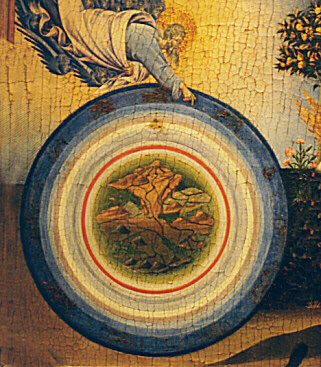
    Dante_primum_mobile It seems that one problem in the encyclopedia of problems that comprise the entirety of creation scienze is the distribution of the races–a difficult thing to achieve in an excruciatingly short period of geological time and from one location.  There were some 18th century thinkers (like Candolle, for example) who solved problems like this sort of population distribution and sporadic speciation with concepts of multiple points of origin.

    If there were multiple Edens then perhaps the issue of population differences over impossibly short periods of time would make the entire Eden idea less logically compromised.

    If this was the case, why stop here?  Why not an idea of multiple creations, occurring over periods of unspecified time and in unspecified ways and numbers?  Then we could have some very interesting philosophical issues of creation magnitudes, durations, locations, and of course size.  Perhaps there were micro/mini .025 second creations occurring spontaneously over the course of time.  Perhaps an “essential creation” which gave birth to regional and minor creations.  Perhaps there is an as-yet geological strata that could be specified in terms of layers of past creations rather than simple geological explanations.  Astrophysical theories could be bolstered by Multiple Creation Theory (MCT), identifying Dark Matter as vestigaliana of creations large and small.

    I mean, if you’re going to believe in Creationism and creation scienze and intelligent design, why stop there?  If you’re going to believe in a simple, single creation theory, how much more intellectually burdensome would it be to believe in more-than-one creations?                
    I wonder if there is a Lobachevskian or Bolyiaian approach to this issue, a creation version of non-Euclidean geometry?
                           
    In for a penny, in for a pound, I say.

    ·Posted by :

    ·in:


  • Thinking about the History of Pockets and Pocketbooks

    JF Ptak Science Books   Post 1067

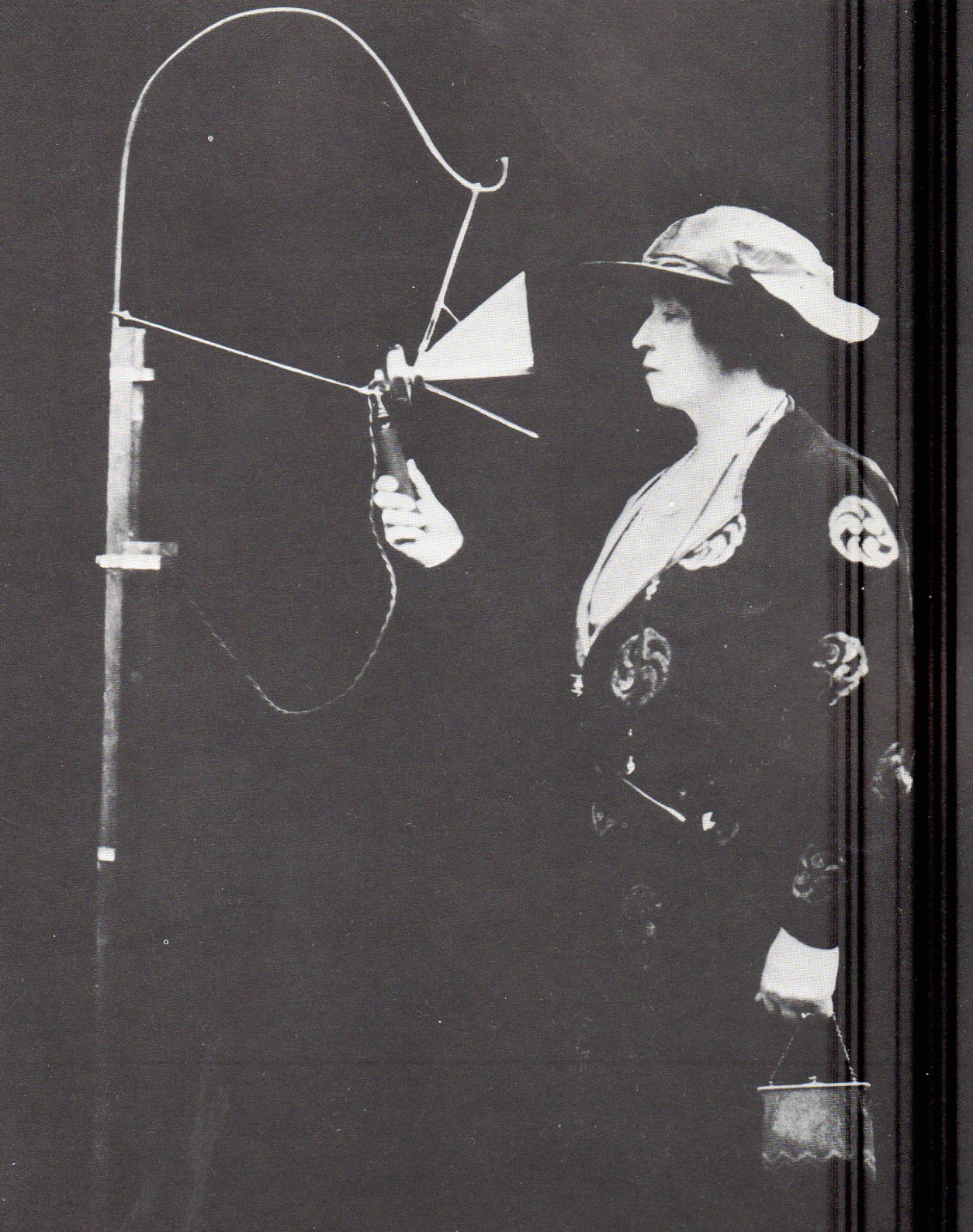
    I’ve known about this photo for a long time—a picture of a
    willed, powerful woman stepping up to an (early, interesting)  microphone to perform:  that would be Dame Nellie Melba, the prima donna from Australia, singing at the Chelmsford Marconi works on 15 June 1920 in the first-ever-advertised broadcast entertainment.   Weirdly, 
    what has always struck me about this is the handbag. The pocketbook.  Why didn’t she put it down to sing? 


    Pocketbook161

    Its not a big question, really, especially if you look at
    the pocketbook as just a pocket that you hold—an irony in itself, a displayed
    thing holding concealed things.

    The pocket, or handbag, or purse or pouch goes back a long
    way, thousands of years.  But for this
    scant view of the history of the pocketbook the action begins in the 14th
    century or so, when pouches with drawstrings were used to haul this and that,
    attached to the exterior girdle of the clothing of men and women alike.  These exterior pockets were switched to the
    interior in the 16th and 17th century (or so) given the
    new and voluminous articles and layers of clothing that were in fashion—there
    was so much material that the girdle or belt could be worn under the clothing
    with the pouches attached to them there. 
    Of course if you didn’t have a lot of clothing to wear—like these guys
    in Brueghel’s “Two Elders” , you’d be
    wearing your pouches still on the outside, this in the manner of K Street bike
    messengers. 

    And so by the end of the 18 th c fashion was flayed with the
    curse and rumor of revolution—people wore less layered and puffy clothing, and the
    pouches returned again, though aided in a short while by the invention of what we  know and recognize today as the modern
    pocket.  The pocket would at first be a
    simple slit in the clothing to get to the hanging, girdle/belted dangling
    pocket, and then after Something Happened the pouch would be attached to the slit.
    Voila.

    The pocketbook that we think of today came into being in the
    mid/late 19th century—just a few decades really before this photo
    was made—and that article of necessity hasn’t looked back since.  It seems to me that the pocketbook of the 19th
    century might’ve been an advertising platform too for marketing marriagability—the
    bags were often finely decorated/embroidered, which would show in effect a
    particular domesticity skill.  And then
    of course the bags just held stuff, too. 
    It would be interesting to see a collection of the preserved contents of
    handbooks by the decade for 150 years or so—just the contents spilled into a
    bag and preserved, a version of “the Things They Carried With Them”. 
    I have no idea about the evolution of the interior pockets
    of pockets in pocketbooks.

  • Jigsaw Puzzle Girl/Women of Popularity and Unpopularity

    JF Ptak Science Books   Post 1062

    A little while ago I wrote a post called What
    Goes Into Making Human Robot Girls, 1941
    , which was a look at one of  a series
    of
    intolerably heavy eight-page pamphlets cementing the structure of female
    social
    intercourse at the hands of the magazine The
    Ladies’ Home Journal
    . 

    Blog jan 13 Puzzle cvr

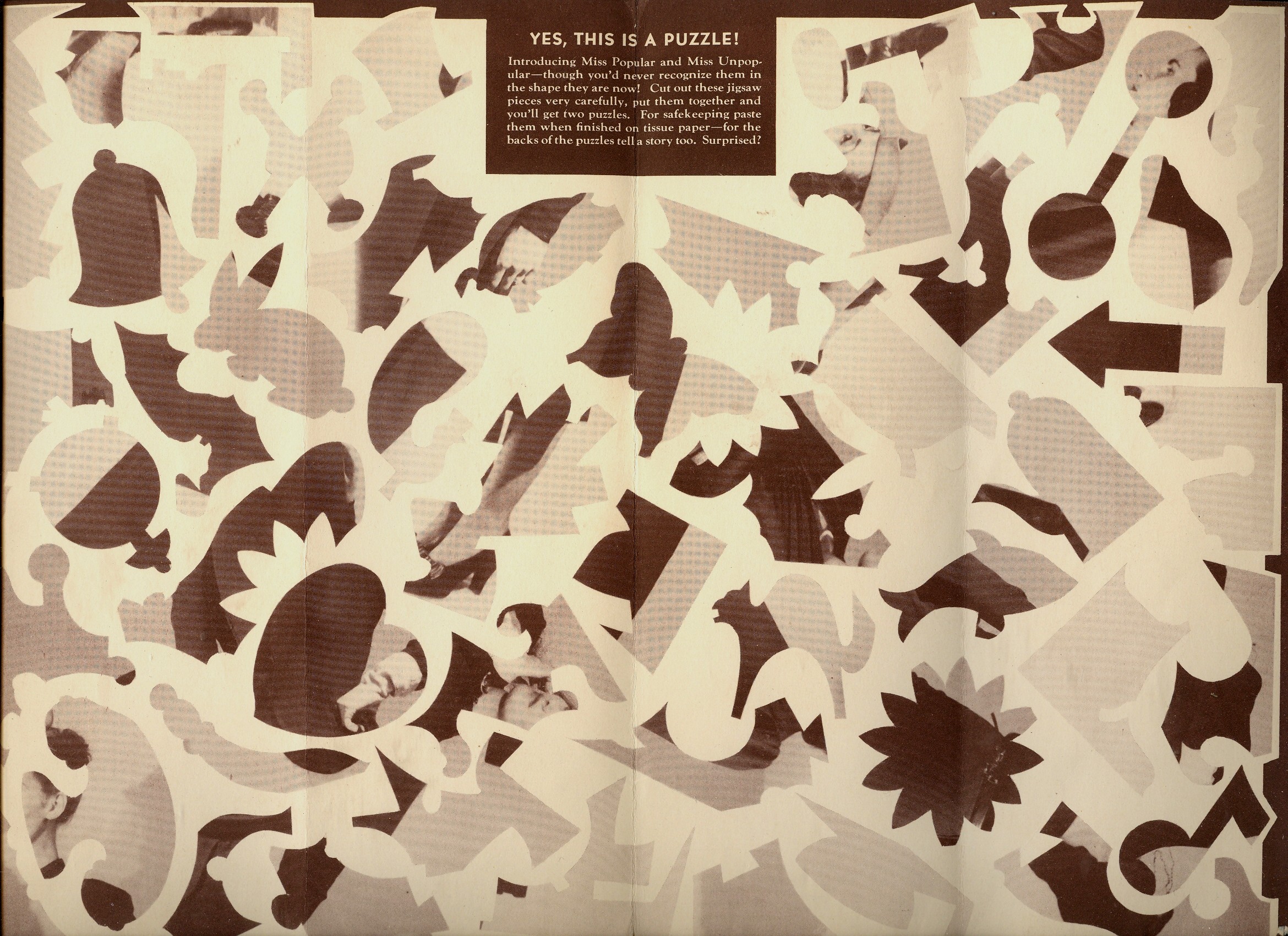
    Continuing on this thread of “constructing” females come this publication—hardly a pamphlet per se, just a folded 11×8 inch
    sheet of heavy
    stock—from that same series.  It was offered without a title, presenting itself as a do-it-yourself cut-out  puzzle. The puzzle
    pieces
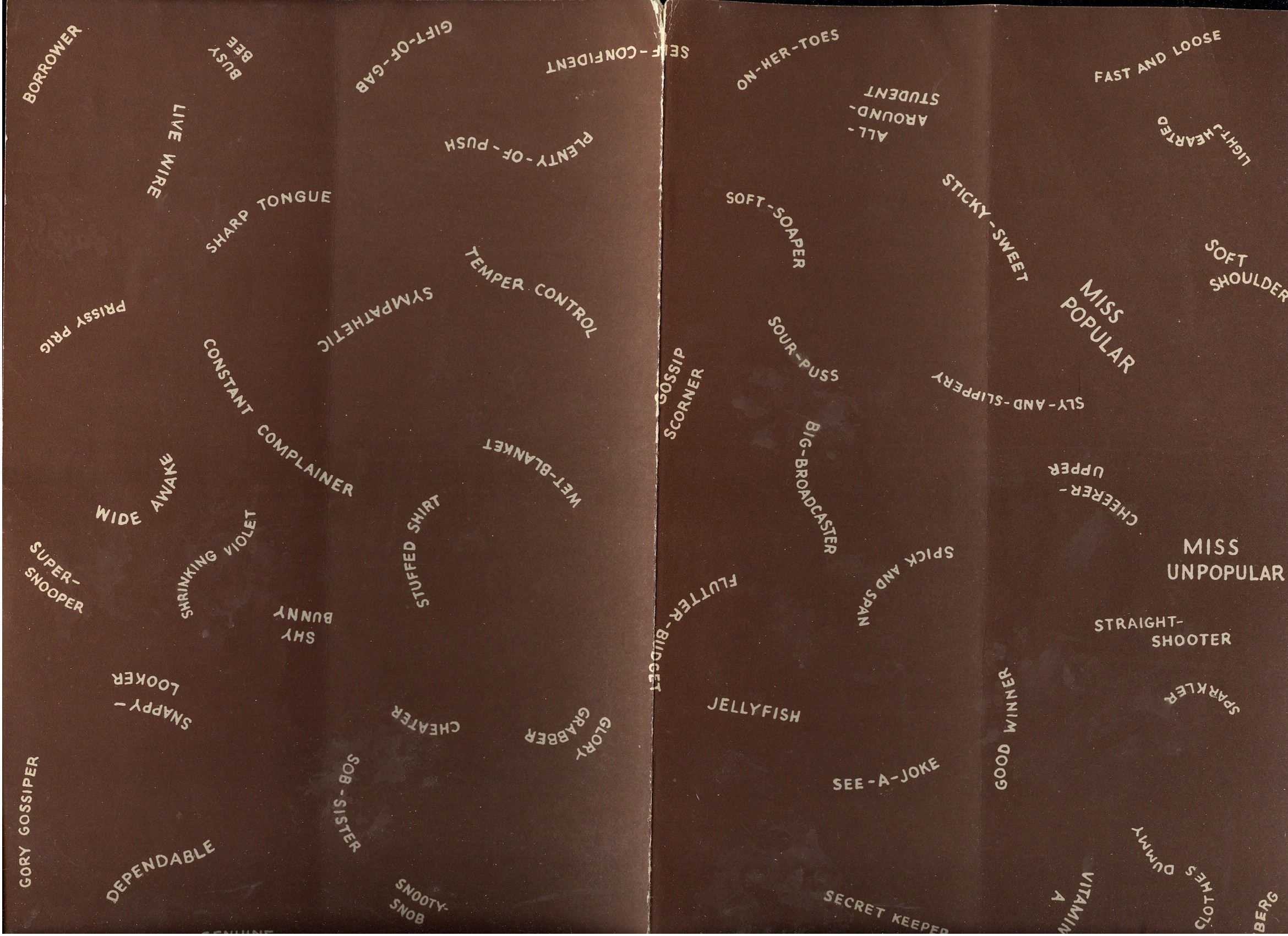
    are parts of two women, “Miss Popular” and “Miss Unpopular”: the reader
    was to
    take the publication, cut out the pieces, and reassemble them into
    hidden role
    models, with phrases describing each on the back of each puzzle piece,
    all done with the with lost irony and  questionable metaphor.

    The twisted printing makes the description conform to the puzzle piece on the other side of the paper.  The descriptions for the Popular Girl are as follows:

    live wire, plenty of push, wide
    awake, snappy
    looker, dependable, genuine, secret keeper, on-her-toes, spick and span,
    light
    hearted, all-around-student, straight-shooter, gossip scorner,
    sympathetic,
    cheerer-upper, sparkle
    r.

    Blog jan 13 Puzzle pzl

    Miss
    Unpopular’s
    phrases/descriptors
    :

    glory grabber, sour puss,
    cheater, sob-sister,
    snooty-snob, wet-blanket, borrower, prissy prig, sharp tongue, gory
    gossiper,
    clothes dummy, iceberg, sly and slippery, jellyfish, sticky-sweet, soft
    soaper

    (?) and, of course, fast and loose.

    And
    so girls—or young women—picking up this publication in 1941 were
    expected to
    cut this thing up and piece together the proper (paper) role model using
    the
    reinforcing traits of meager acceptance printed on the back of the
    puzzle
    piece. Once together Miss Popular and Unpopular look pretty much the same, though in general Miss Unpopular seems a little darker than necessary, scorched I guess with her selfish sins. 

    And so double-click for a big image, save it to your desktop, print out and cut up your own Popularity Girl.  Or not.


  • Found Comix: Female Trouble, 1947 (“When Tears of Shame Smell!”)

    JF Ptak Science Books Post 1062

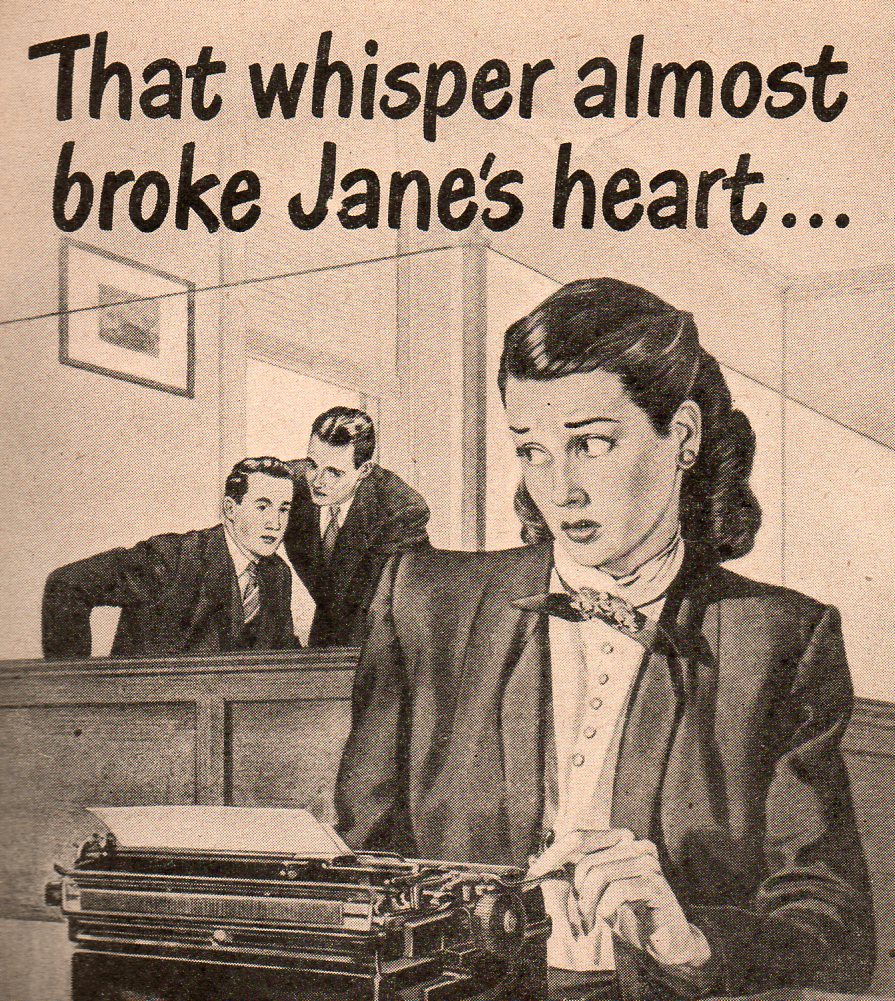
    Female Trouble---Whispered BO 1b147

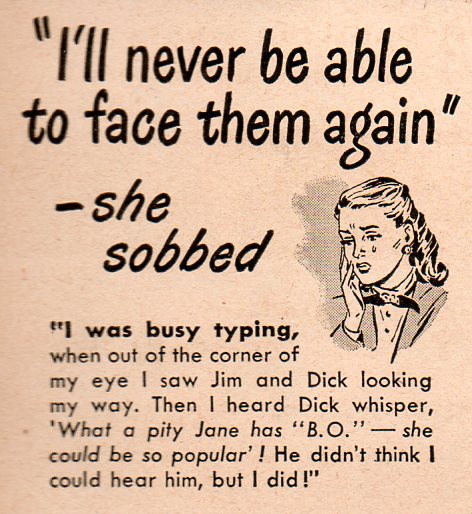
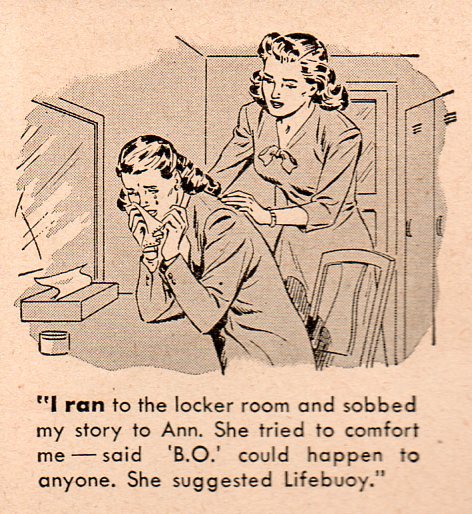
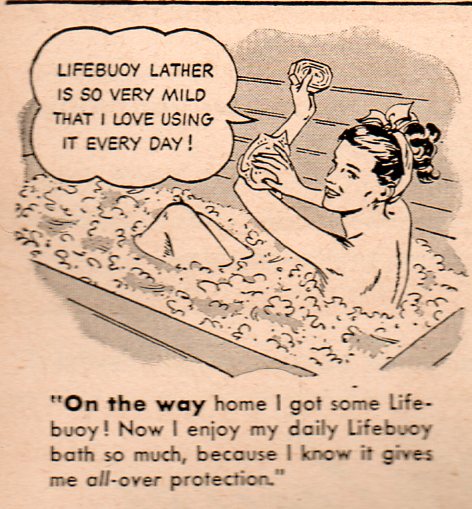
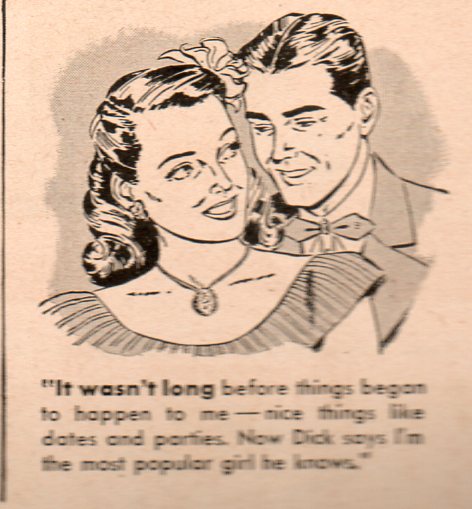
    I’ve posted a few found comix elsewhere on this blog (for example, this magnificent Italian contribution on surviving fire bombs, here), and I guess that I should have been paying more attention to these other bits of comix-driven advertisement marginalia that flits in and out of the pages of mass market weekly journals–they turn out to be pretty interesting and revealing entities.   In today’s case it is LIFE magazine for 9 June 1947, and if subtle, rueful self-awareness images like this were an automobile, this submission would be a jaguar.  It is the blatant story of a private and personal life ruined by whispers of BO, where a woman named Jane is paralyzed by the sly look and not-so-silent pronouncement of sniffy displeasure by a man named Dick.  The woman would scrub up and then somehow land that self-same Dick in the end with her newly perfumed Lifebuoy body, but only after filling bathtubs with her BO-laden tears.  But what a terrible story to tell about such a fragile existence extinguished, all to sell a bar of soap through a comic book tale on the edges of the back pages of a picture magazine.


    Female Trouble---Whispered BO 1146
    Female Trouble---Whispered BO 2148


    Female Trouble---Whispered BO 3149
    Female Trouble---Whispered BO 4150 

    Female Trouble---Whispered BO 5151
    Female Trouble---Whispered BO 5 b152


  • Little Horizon/Big Sky

    JF Ptak Science Books LLC   (Image Post)

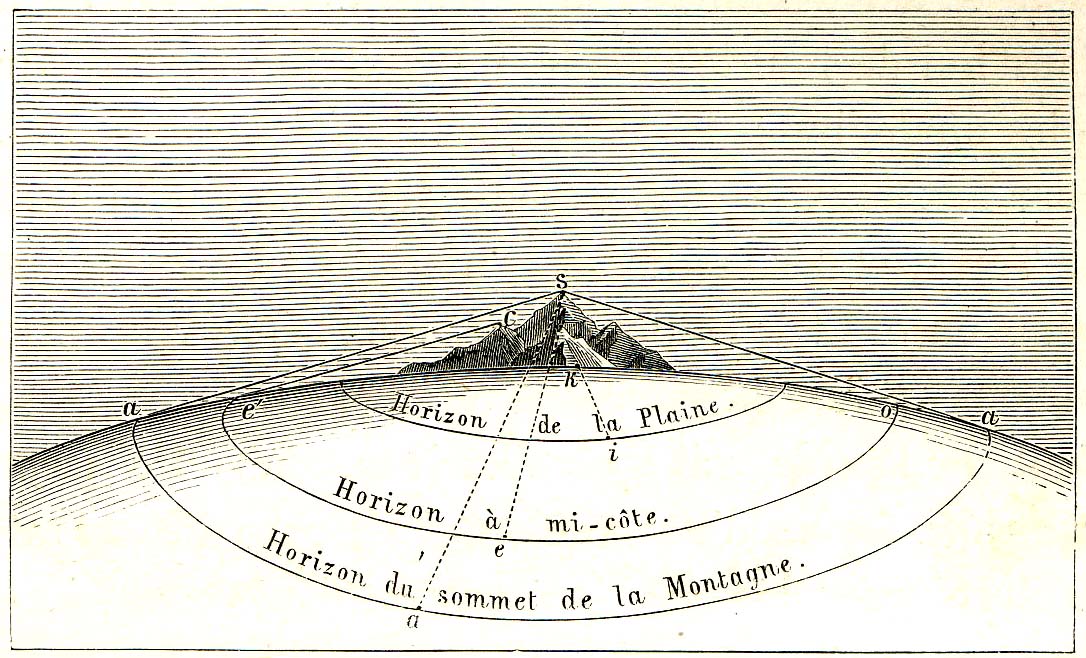
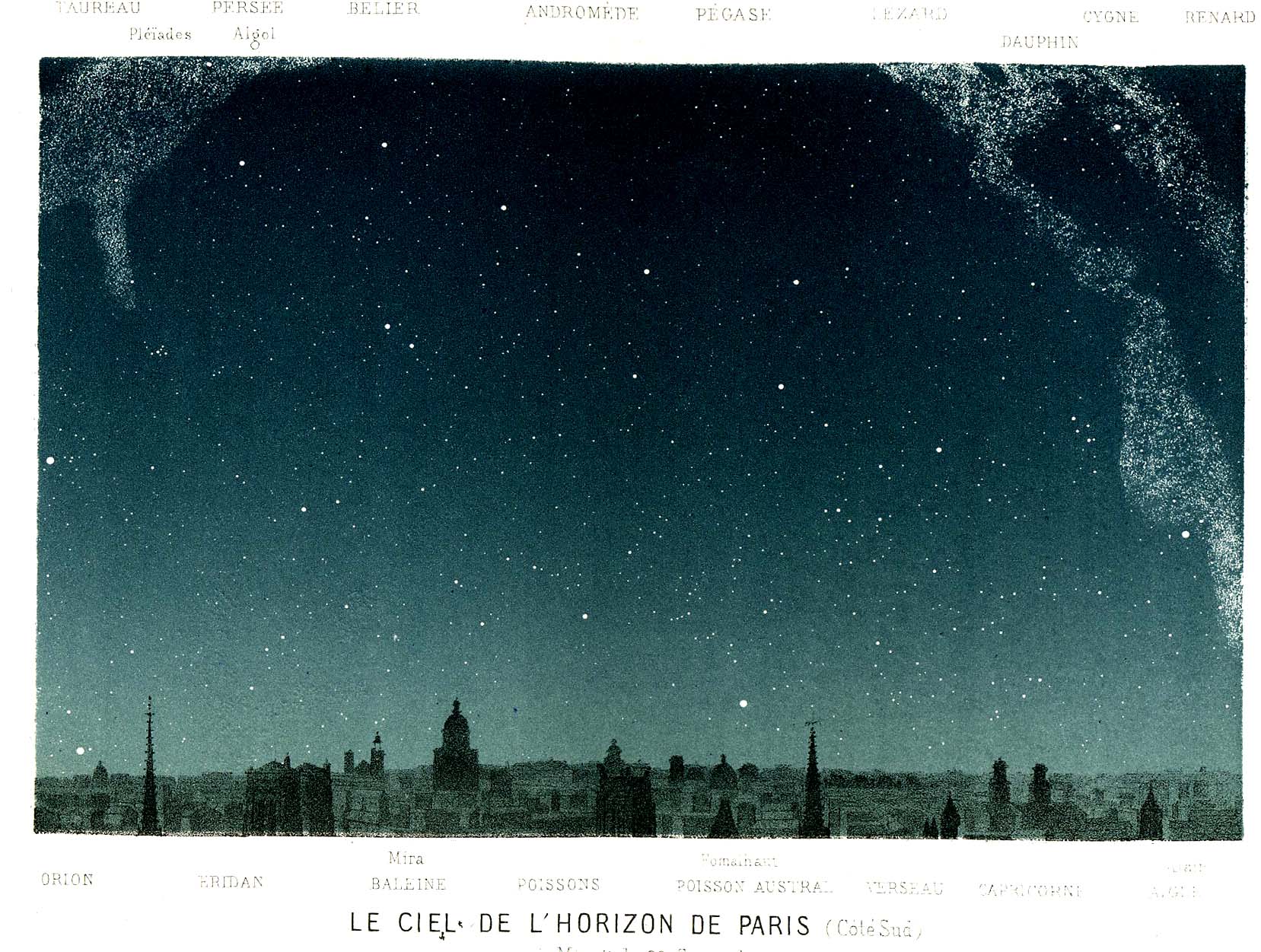
    I’ve always been attracted to antique prints showing distant horizons engulfed by a big (and preferably blank) sky, though in a pinch  of a human landscape made miniscule by an enormous starry sky will do just fine.  In any event the images below are unusual for their depictions of Big Sky–a hard thing to translate on a little piece of paper. 

    File1315 


    File1318

    ·Posted by :

    ·in:


  • The Color Green in the History of Squares

    JF Ptak Science Books

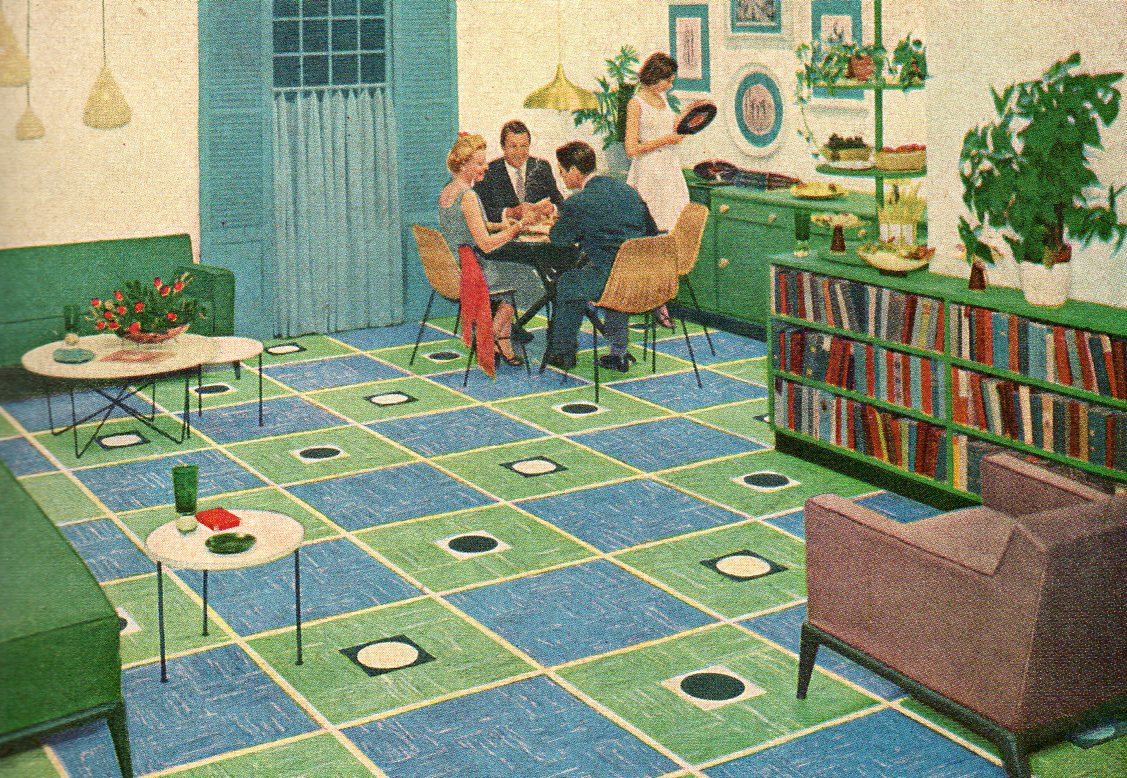
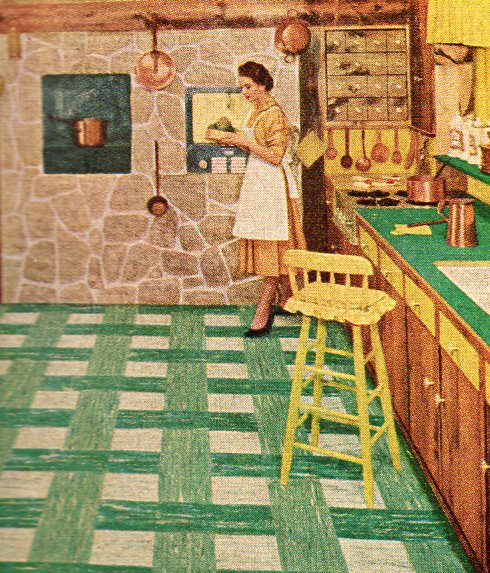
    Squares 1130 There is an invisible thread running through this blog on the history of squares, starting with Euclid and winding its way through Mondrian, Klee and Malevich and Boullee, atom bomb resistant countries, pixels, perfect, Times, magic, and so on.  I don’t think that I’ve ever touched on what might be my own solitary and perhaps-wrong observation on the preponderance of green squares in 1950’s linoleum flooring.  As I said, this might be because of my own faulty receptors–and even if I’m slightly correct the color I think doesn’t mean or imply anything in particular.  Perhaps the abundance of green comes from a left-over paint or dye that a manufacturer decided to bump into flooring; or perhaps green just looked better to the readers of LIFE magazine than other colors.  Be that as it may, there is some loose strand of memory that gets activated every time I see green squares in flooring of the 1950’s, and I just wanted to say that I noticed it. 

    Squares 2131