A Daily History of Holes, Dots, Lines, Science, History, Math, Physics, Art, the Unintentional Absurd, Architecture, Maps, Data Visualization, Blank and Missing Things, and so on. |1.6 million words, 7500 images, 4.9 million hits| Press & appearances in The Times, Le Figaro, Mensa, The Economist, The Guardian, Discovery News, Slate, Le Monde, Sci American Blogs, Le Pont, and many other places… 5000+ total posts since 2008.

Category: Absurdist, Unintentional

  • The Origin of Shadows and Directions of Vanishing Points

    JF Ptak Science Books  Quick Post

    Dubreuil origins of shadows det 1_edited-1

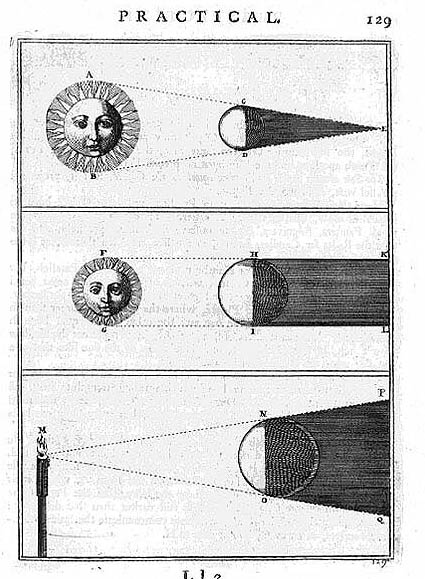
     Shadows must come from somewhere, and it is that “somewhere” that this beautifully-titled chapter addresses.

    Dubreuil origins of shadows det 1

    In another unusually-titled piece, we find a “shadow-maker” embedded within  patented “cloud creator”, as so

    this taken from the 25 May 1892 patent granted to Steele MacKaye, though his apparatus was only for generating special effects for the theatre.  Still, the title of the patent was pretty catchy, as was the “shadow-maker” part, which is evidently the only time that phrase is used in U.S. patents through 1900. 


  • Have a Very Meaty Christmas and Other Christmas Advert Disasters

    JF Ptak Science Books  Quick Post

    Wrong is wrong, and sometimes there’s not much more than can be said…


    Photo


    Santa Meat

    ·Posted by :

    ·in:

    —

  • Daily Dose from Dr. Odd: The Geo-Cube Durer Plastic Man of 1942

    JF Ptak Science Books     Daily Dose from Dr. Odd

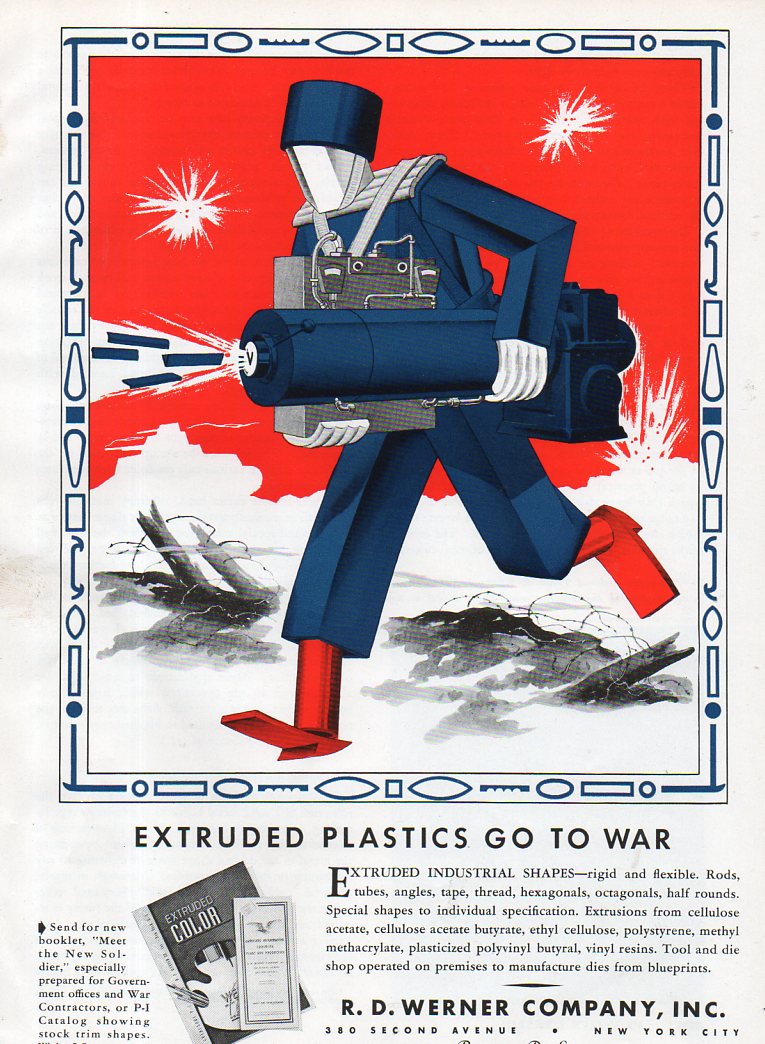
    Plastic war899
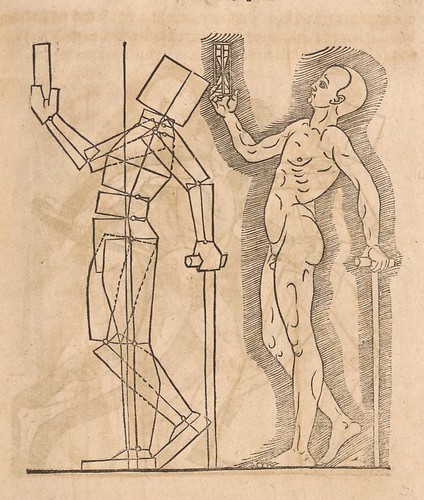
    This puts me in mind of the work of Albrecht Durer’s (1471-1528) revolutionary drawing
    of a geometrical man, compartmentalizing the body into distinct
    chunks–these and other woodcuts appeared in his Symmetria partium…humanorum corporum
    and must have been an amazing, startling site for the new reader to
    such things in 1537.

    . 

    Perspectiva (Lautensack) 1564 e

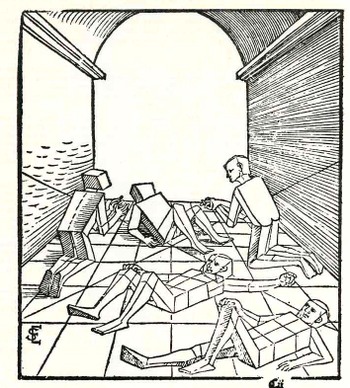
    To me this looks like visionary thinking in trying
    to understand the motions of living beings with no actual way of
    capturing the image in motion.  There’s also Erhard Schoen who published Unnderweissung der proportzion unnd stellung der possen, liegent und stehent…,which showed that the human form was reducible to connected but discrete Euclidean solids. This must’ve been an intriguing concept in the 16th century, this associate of form and function and the geometry of substance, all wrapped around the still-developing European re-discovery of perspective.  (A post on this subject appeared earlier in this blog here.)

    I really just like the red background of the Plastic Durer Man.

    Blogmissing_peopl_2e077_2


  • Outsider SciFi Comic Noir in Color: the Very Disturbing “Stardust” of Fletcher Hanks

    JF Ptak Science Books    Post 1935
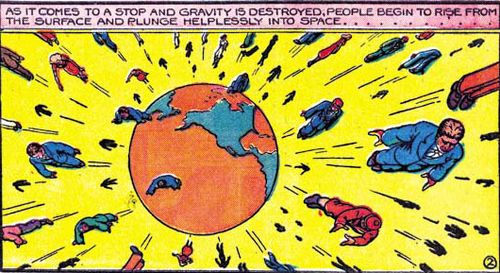
    Stardust earth detail[Source: J Blog, here.]

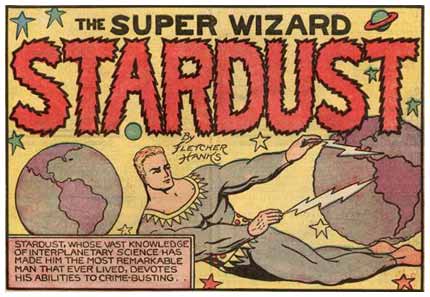
    The Golden Age comic creations of Fletcher Hanks (1887-1976) have an Eraserhead, biological badness feel to them, for me.  They are extraordinary and interesting without being necessarily good, or even enjoyable.  They are definitely a high order of something, but what that is, exactly, I don’t know.  OF his many accomplishments is a comic hero named Stardust, a scary god-like superhero of brutal intent, something that appears on Earth one day to fight crimes like a very grim crime-fighting undertaker. There isn’t much emotion or feeling outside of some amount of fear and loathing–even when heads are being torn off and flung deep into space, there’s not much concern.

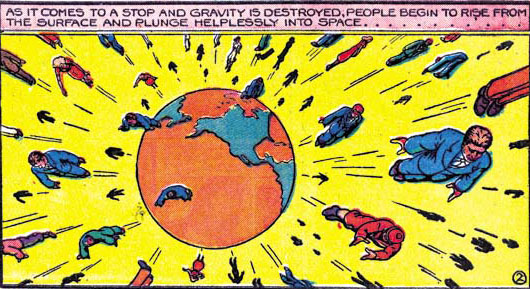
    The work is disturbing and maybe brilliantly crude. The use of color is grating and has in some very bizarre way a feeling of high-contrast noir black & white quality–it is very off-putting, as in the image above, with a yellow space and oddly-colored non-spinning Earth that a criminal mastermind has masterminded in order for humans to float into space

    Stardust him/it/self is also a pail of wriggling trouble–he is a living thing of some sort, a god-ish type creature, that can change matter with thought, and can fly through air and space on brain/ether waves, can manipulate shapes of any object and turn into a star, among other things.  Stardust is also disproportionate to what we think of as properly proportioned, and can bloodlessly rip off a head or stuff a man-monkey into a small place with brute force when it seems a deforming ray would do.  Stardust also makes a rather bizarre appearance with a duplicate/extra Earth–a sub-category for this blog and the thing which brought my attention to Stardust in the first place:
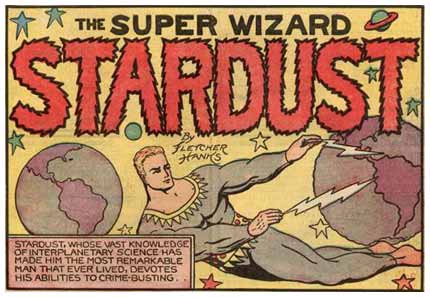
    Stardust double earth[Source: Lambiek Comiclopedia, here.]

    Even the name “Stardust” just feels wrong, like the strip on the whole. 

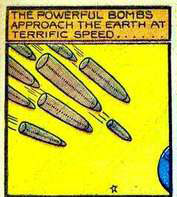
    The Stardust adventure has it all so far as upset and disturbance goes–even the composition. For example, this panel showing the impending impact of explosive shells finding their mark on Earth, closely cropped in a silent stillness, making their way through yellow space to an Earth that is just barely included in the scene…and of course the one quickly drawn star.  It is definitely a very distinctive mind thinking this stuff up–and as others have pointed out, that thinking was probably done on a drunken stretch of deadline.
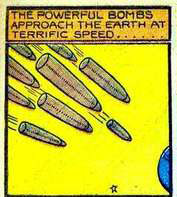
    Stardust bombs det
    [Source here, single panel detail from full page below.]

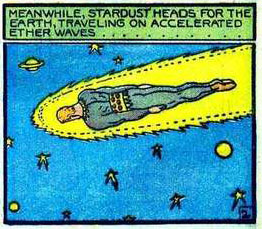
    Here’s Stardust on his “accelerated ether waves” making his way through a blue space–I’d voe to know why Hanks saw the need from the dashed line inside the ether-fire:
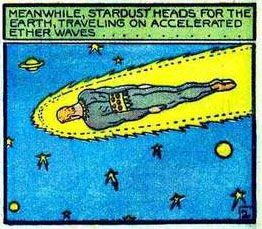
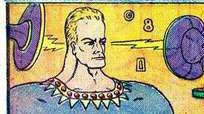
    Stardust flying detA portrait of Stardust–other people have mentioned Henry Darger in relation to Hanks, and its a relation that I do not see most of the time, except for images like the following, which have a very high-scented montage cleanliness to it:
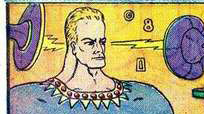
    Stardust portrait

    Perhaps it is just the color theory aspect that puts people in mind of Darger.

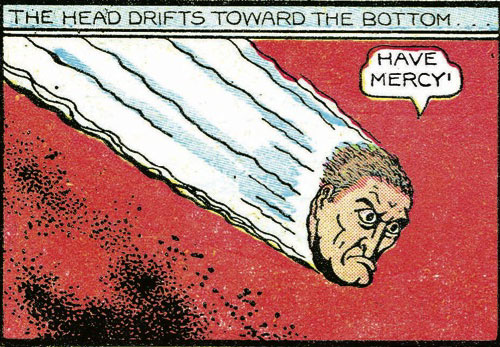
    The odd thing is that Stardust is mostly a mask-like character, and the villains–even when their head is detached and rocketing through space–have more approachable and believable faces:
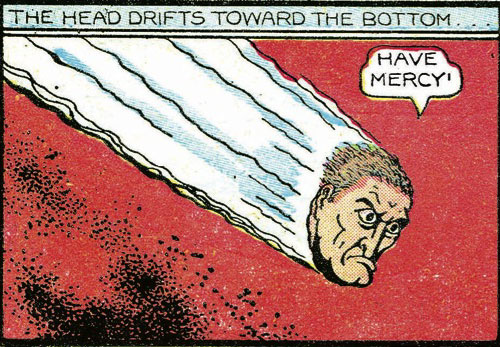
    Stardust head i-shall-destroy-all-the-civilized-planets2
    [Source: Pop Matters, here.]

    “Have Mercy” indeed.  The embedded and troubled brilliance of Mr. Hanks did not. In roaming the internet for Mr. Hanks I’ve found some comparisons for him and William Burroughs, which is another connection I just do not see. At the base of it all Burroughs seems a  comic in a very dark sense; Hanks just seems very dark, in a hurried but very different way.

    Here’s a very interesting read on Hanks and his publisher: Graphic NYC.


  • Inside Looking Out, Part II: From Inside the Eye, Nostril and NYC.

    JF Ptak Science Books  [Extending Post 1813]

    Machbook

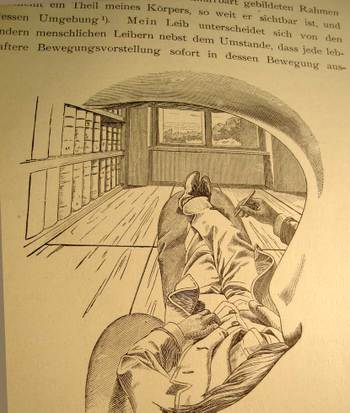
    I cannot think of another illustration by a scientist or philosopher who attempts to explain their own, literal, view of the world and then offer what this looks like to the reader from inside his own head, looking out through his own eye.  That’s exactly what Ernst Mach is doing right here on page 15 of his influential book Die Analyse der Empfindungen,  the fourth German edition (“The Analysis of Sensations and the Relation of the Physical to the Psychical”, published in Jena in 1903).

    There is nothing in this world for Mach that is not admissible to the human brain that is not empirically verifiable–that is, the world is nothing but awash in sensation and that sensation itself forms part of the experience of, well, experience. I’ve actually never been interested in the philosophy of science, and this is one of the reasons why.  Nevertheless I boldly break through my own prejudices to enjoy this phenomenally original image, drawn from the inside of Mach’s working mind, looking out through his eye socket, over his mustache, under his eyebrow, around his nose, out across his body and then leaping into the rest of the world.  I think he does make his point about the essential.

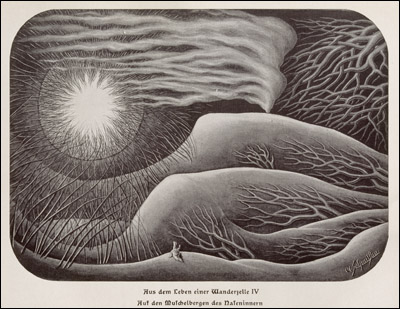
    Another interesting perspective is achieved by the one-and-only Fritz Kahn in 1926 with his imagery of viewing the world from deep within a human nostril. 

    Kahn, fritz nostrill
    This is a different sort of interpretation (from his Das Leben des Menschen/”The Life of Man”, printed in Stuttgart in 1931, volume 5, and found at the National Library of Medicine site section “Dream Anatomies” here https://www.nlm.nih.gov/dreamanatomy/da_g_IV-A-06.html) from the Machian view,  Dr. Kahn’s (1888-1968, a gynecologist and a renowned popular science communicator) being more of a landscape with the solar apogee of the nostril opening to the outside world. 

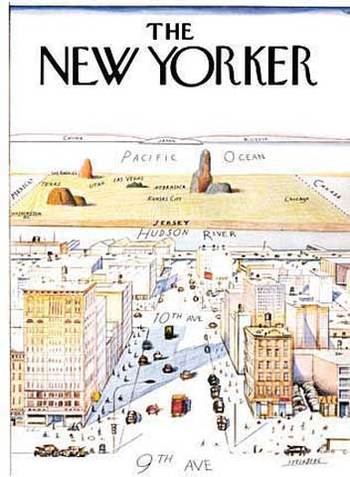
    Steinberg_352

    And similar in a way to the Mach’s internal view of the outside world is this classic Saul Steinberg New Yorker cartoon of the world view of the New Yorker (and of course this includes only Manhattan). I know some number of people who have transposed their bodies much like Herr Mach into the Steinberg map–except that their worldview ends basically at the Hudson River (Mach’s feet) with the rest of the world being the sliver out there beyond the river (Mach’s window) until you go 359 degrees around the world to get back to the East River (and back inside Mach’s noggin).  It is an unusual world view to have, but someone has to have it so that we can at least identify it so. 

    I just like the picture. 

    Notes 


  • Patenting the Artificial: Moustaches, Bark and Ideas

    JF Ptak Science Books   Post 1928

                An Alphabet of the Artificial as Seen in Patent Drawings

                      ”
    I…can wet my Cheekes with artificial Teares.”–3 Henry VI, iii, ii, 184.

    Using “artificial” as the word preceding a concept makes for some pretty interesting thought, especially if you remove it a bit from what the expected outcome is supposed to be.  So: creation. Intelligence. Harmomics. Society. Language. Consciousness. Person.  With the word “artificial” in front of these, they become captivating ideas both inside and outside of the realms of possibility.  (“Artificial creation” can have a definite hard sci-fi edge to it beyond genetic algorithms and trying to cook primordial chemical elements into the stuff of life in controlled environments; the “artificial person” more than just the person ficta of the law, although “artificial personality” wrapped around that gets to be very interesting as well.  The “Artificial society”has some Superman aspects to it from my 25-cent comics day, though the von Neumann/Ulam/Conway simplified paper grid cell creations are fr more interesting; artificial consciousness has a nice film-feel to it beyond machine/synthesis and cognitive robotics, where consciousness has somehow been identified and was controllable to a walking-around state. And so on.)

    What I’ve pulled together below is a small sampling of patented items using the word “artificial” in its title, and presented them in a (near-complete) alphabet of artificial creations.

    There is no patent on “artificial ideas” itself, though the idea of taking real issues like “artificial harmonics” and turning into something wholly unrelated to its intended use might be considered so. In any event, it would be an interesting thing to try to patent.

    A

    ·Posted by :

    ·in:

    — —

  • Mall-Mortuary Faces on Robot Patent Drawings, 1936-1976

    JF Ptak Science Books   Post 1927

    There is something that I’ve found in my time grazing through U.S.patent drawings–for the most part, if the device has a face, or is being worn/employed by some human with a face, chances are that this face will indeed have some high invasion of “Creep Factor” elements.  It is just so.  I’ve encountered this many times, and I think that it is possible that in these hundreds of samples that I have come across that these inventors (a) could not draw, (b) could not draw well, or (c) chose not to (a) and/or (b). It is too much to expect that these creepy faces are an expression of humor–that would be too much of a conspiratorial element for anyone to absorb.  It is just remarkable that these faces are time after time just so off, and soft-creepy, like a puffed-up rougey death mask found in a mall mortuateria.


    1936

    1938

    1938


  • Paintings Looking for their Subjects

    JF Ptak Science Books    Quick Post

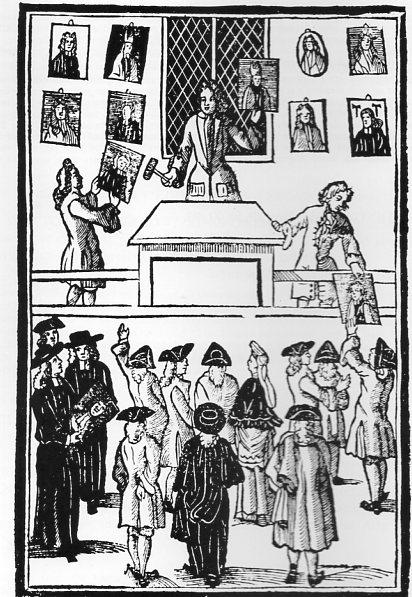
    I think that this blog needs a (Jorge Luis) Borgesian category for the easily-to-multi-interpret things that move across the Blog Desk. Such is the case for this pamphlet printed in 1710, An Auction of State Pictures, Containing
    a Most Curious Collection of Original Low-Church Faces: Drawn Exactly
    to the Life by a High-Church Limner
    , which carries this beautiful woodcut as the only illustration for its slim twenty pages.

    Arch skyscraper881

    The pamphlet is a wonderful satirical farce, a political diatribe against the enemies of a Dr. Henry Sacheverell who set against the cleric for the sermons he preached against the Whig ministry of the Earl of Sunderland.  Its not necessary to be drawn into the intricacies of early 18th century English religico-polisci–just that the enemies of Sacheverell were dispatched by describing them as portraits being sold at this imaginary sale–unflattering portraits with unflattering descriptions. All anonymous they were, but to anyone having any knowledge of the scene their identities were clear enough. 

    I think that the creation of an imaginary auction to tread on the disguised portraits of enemies was a brilliant idea.

    Evidently, there is a description of what happens on the sales floor of this “auction”, which appears to one of the earliest descriptions of an art auction scene–and the action of the auctioneer is pretty much that which you can find today.


  • Anatomy of Maps–Dissections in Geography

    JF Ptak Science Books   Quick Post

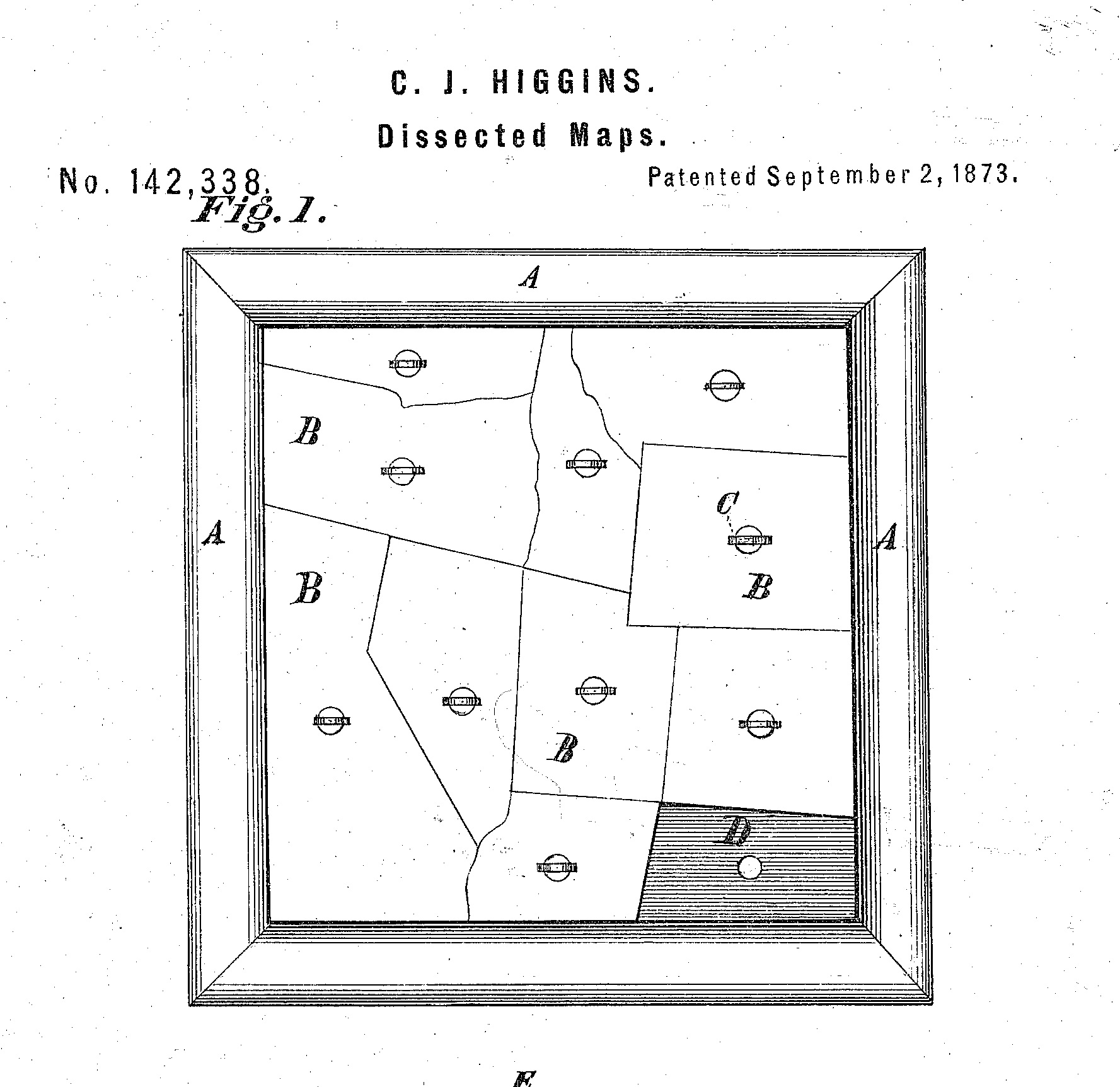
    This is an odd entry for the History of Blank, Empty and Missing Things category as it relates both to making things missing and finding them again.  In this instance the topic is maps and puzzles, where both actions of making things blank and restoring them are intentional. The first item on display–a sample from a “dissected” map patent from 1873, shows both an unusual “blank map” (a template simply waiting for a face) and the ability to remove part of the whole or the entire thing itself–and then of course replace/return the pieces.  But I must admit the original image (below) had that appeal of being mostly an unintentionally absurd item, a blank jigsaw in a frame. 

    Maps dissectedSource:  Google Patents  http://www.google.com/patents/US142338?dq=puzzle


  • On the History of the Weight of Unknown Things

    JF Ptak Science Books LLC  Post 1922

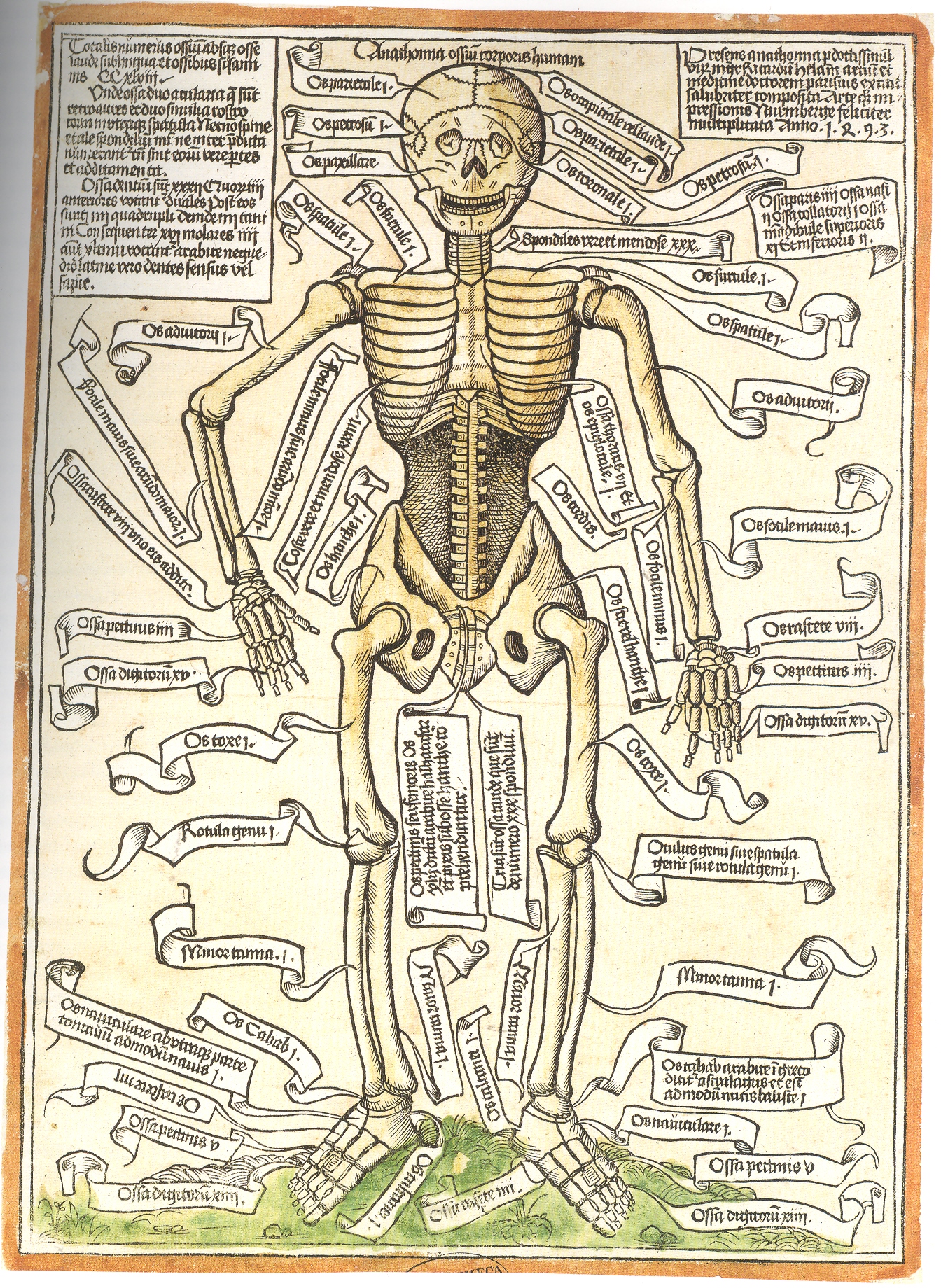
    Blog--may 5 skeleton

    Much of human intellectual history has been dedicated to looking inside, seeing
    the unseen, the stuff underneath, the invisible, the clouded, the inscrutable, the
    things-behind-something-else.   If you could somehow weigh all of the stuff that
    we know that is “visible” versus all of the other stuff that is not, I think that
    the scales would fly over instantly into the world of the unseen. Some of this
    material though does not have a measure:  for
    example, numbers are part of the unseen world, ideas made of nothing, points
    and lines in an imaginary series of planes and dimensions, and so have no mass
    themselves. Everything that is alive on and in our bodies, on our skin, in our
    water and food, and which were all basically unknown until the invention if the
    microscope, have little weight in and of themselves, but when  you add the whole biota together…well, then
    you’ve got a whole weighty lot of nothing  Then there’s the stars unseen beyond the six
    or eight thousand that we can see without a telescope, the rest of the universe
    waiting, discovered only 400-odd years ago, a very weight affair (and that’s not counting the dark matter). 
    I know that this is sort of a horrible argument, a beery and inelegant way
    to describe the path of human knowledge, but it strikes a (dis)chord with me. 

    What is the history of the unknown, anyway? Its seems like an infinite volume in Borges’ infinite library. After all, at any given point in time it would not be possible to know what the things unknown in your universe were, though you could guess at the absence of things by the changes they brought to the known stuff around you.  And to go back and write a history of the unknown would probably show an expansion of the topic rather than its collapse. However, if we are dealing in a Borgesian vocabulary we could establish that The Unknown at some point in the future becomes finite, and that a human-techno-cyborg race was closing in on the concept of the unknowable unknown having somehow established its parameters, and that at some point in the prickly future, the end of the unknown was in sight. As a matter of fact, it could be stipulated that the concept of the Unknown would cease to be in existence on 26 March 3012.  Then it would become time for a special assortment of people to work together to create the unknown, even as galactic brain churned in the background producing all of the possible works of literature/art/music, filling up the gap between the known and the unknown. 

    Creating unknowables in a time of the Post-Unknown would be, um, problematic.