A Daily History of Holes, Dots, Lines, Science, History, Math, Physics, Art, the Unintentional Absurd, Architecture, Maps, Data Visualization, Blank and Missing Things, and so on. |1.6 million words, 7500 images, 4.9 million hits| Press & appearances in The Times, Le Figaro, Mensa, The Economist, The Guardian, Discovery News, Slate, Le Monde, Sci American Blogs, Le Pont, and many other places… 5000+ total posts since 2008.

Category: Absurdist, Unintentional

  • Pale Horse and the Lake of Fire: a Map of End Times

    JF Ptak Science Books
    Blog--jun 13 end of the world


    There are, in my experience, very few antiquarian images
    depicting the end of the world in which we see the entire globe exploding or in
    pieces or in flames. This sort of image gets more play in the 20th
    century, especially after 8 August 1945, but prior to that it is really very
    scarce.  I own a few images that appear
    in the 17th and 19th centuries, and another from 1929 (Das Weltbild which show a “giant ice
    ball” colliding into and completely destroying the earth). .  Then there is this new find, S.L. Lacy’s The End of the World, (necessarily) self-published
    in West Point, Virginia, in 1941.  It is a short and stocky, and bound in orange
    wrappers—its spine title (The End of the
    World
    ) begs the casual reader to pull it from the shelf. It’s a simple
    book—studying the Bible prophecies and revelations on the end of all things—and
    it annoys and is insulting but doesn’t disappoint.

     I started to breeze through the book (back-to-front as always) and opened the
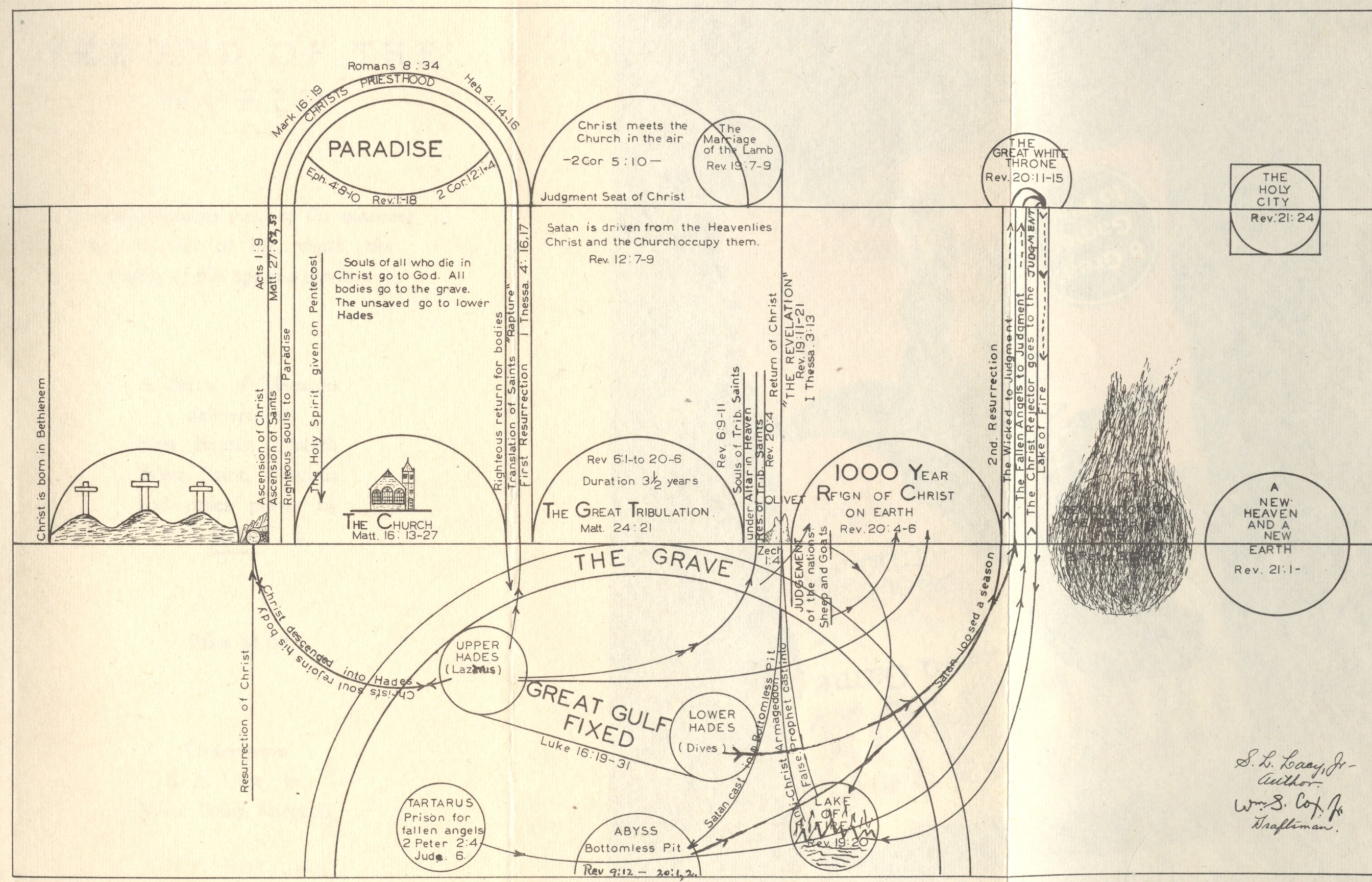
    book to Chapter XIII, finding this delicious chapter heading:  “The Chronological Order of Final Things”,
    this being a full page pre-PowerPoint summation of the time-shrinking fireball
    that is rolling inexorably towards us all. 
    To say that one is able to put a period at the end of the world’s flow
    of time, that someone is able to identify the point in the future where the
    future is no more, is “presumptive”–this in the most understated
    fashion as to offend even the highest of high-Victorians’ sense of restrained
    propriety.  Wrapped in a comfortable
    Christian chrysalis of pre- and post-apocalyptic religious certitude, Mr. Lacy
    delivers his interpretation of biblical prophecy for the coming of the end,
    hustling it to the front of the religious line of things to come.

    It seems that in 1941 the end was beginning, and Lacy saw
    all of the images implied by prophecy that were necessary to announce the
    glorious final days of broad retribution. This includes the list if the ten
    things indicating “the sign of The Times”, one of which (Number 5)
    was “The Automobile” and another (Number 7) was “Increased
    Knowledge and Travel” (announced by Nathum 2: 3,4 and old dependable
    Daniel. 12:4, respectively.  There’s
    nothing that doesn’t fit into Daniel’s visions or revelations, though Mr. Cash
    has certainly made a lovely song of them.) 
    When everything fits perfectly into a predictive model with no possibility
    of falsification (or of proof or disproof), then the model has no validity
    outside of a belief system in itself. Very tidy.
    Blog--jun 13 end of the world det

    It is an annoying, cloying minor treatise, promising little
    more than The Lake of Fire awaiting almost all of us, even the sleeping dead,
    who would be scraped from their graves to be spit into this burning
    tragedy. 

    Lacy does a lot of inspired interpretation and
    philosophizing, much of which he doesn’t seem to bother separating from
    biblical quotations—I don’t think it is intentional, just bad writing.  A random
    find in Lacy’s thinking dislodges the following  nugget:

    “Satan is in the atmosphere above the earth, with access to
    heaven and earth with a circumscribed power over the atmospheric elements and
    the earth including the inhabitants”. 

     Oh dear.

    But enough of this nonsense. What brought me to this work is
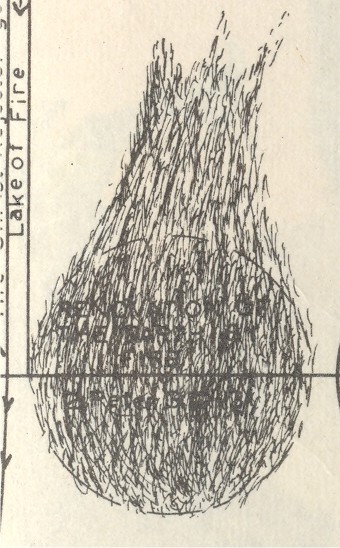
    the folding schematic map at the front of the book.  It is a slightly complex jumble of
    semi-circles and circular reasoning, and I have no interest in straightening
    out this jumbled linguine. What has my interest is the dissolving Earth part of
    the diagram, a part of the dead earth that comes between Calvary 
    and Heaven-on-Earth.  What makes this
    image different from the others though is that the Earth reappears—different from
    its former self having been vanquished and cleansed by all consuming fire, but
    the Earth nevertheless.  Or something
    like it.  Or nothing like it. 


  • Questions Answered with Guts, Wax, Bumps and Glory: Fortune Telling Patent Devices

    JF Ptak Science Books   Post 1956
    Follow Me on Pinterest


    [All images via the lovely and easy to maneuver Google Patents here]

    Fortune telling and divination is mostly the subject of the pretty patents (below), a quick penny-ante for the fulfillment of the instant treatment of possibility. reckoning via mechanical means,easing folks out of the necessity to think about What May Come, and also, possibly, relieving some of them of the possibilities of worry should the fortunes agree with their hopes.  And desires. Opposite, for the opposite. 

    This thinking goes back a long way into dark and dusty time, though it becomes interesting (to me, anyway) when it gets wrapped up in Renaissance magic and science. 

    I’m not sure what it reveals except for what people might have wanted to believe in during different periods of time.

    Anyway, the patent drawings are pretty.

    The ways of telling fortunes are broad and numerous and may have been dictated by the stuff that was readily available at hand; a veritable alphabet can be quickly summoned to deal with the most common of the sort:

    Alectromancy (telling the future by relatively brainless modern dinosaur roosters pecking at the ground for stuff);

    Astrology
    (thinking that the motions of stars that are light years away from the
    observer in a vast sea of space and their annotation on an
    infinitesimally small speck of universe dust called “Earth” can somehow
    interact with living organisms that are 1030000 the amount of space that can be affected by the light from the stars that are 1/1,000,000,000 of the age of those stars);


  • Daily Dose from Dr. Odd: Diving Archery Water Sports

    JF Ptak Science Books   Quick Post  Part of the series Daily Dose from Dr. Odd  

    Follow Me on Pinterest

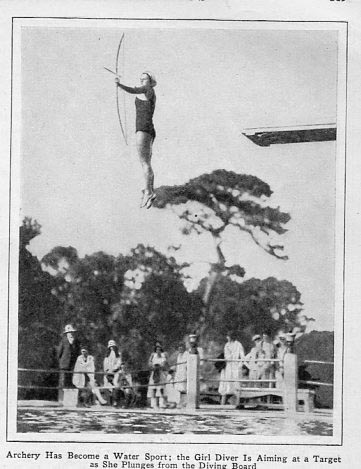
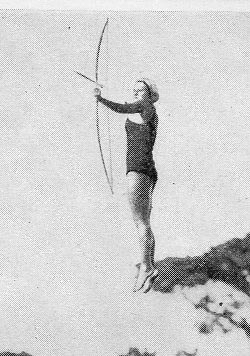
    What could possibly go wrong?  from Popular Mechanics, November 1930.


    Dr odd diving arrows049


    Dr odd diving arrows047
    Dr odd diving arrows048


  • An Antiquarian “A Hole is to Dig”: On Beautiful Blunders in the Antique Classroom

    JF Ptak Science Books   Post 1951
    Follow Me on Pinterest 

    The series, “The Book-Lover’s Library”, edited by Henry Wheatley, included this work by the editor:  Literary Blunders, a Chapter in the History of Human Error, which was published by Elliot Stock in London in 1893.  Its chapter headings are inviting: “Blunders in General”, “Blunders of authors”,  “Blunders of Translators”, “Bibliographical Blunders”, “Lists of Errata”, “Misprints”, “Foreigners’ English”, and what turns out to be of the highest interest, to me: “Schoolboys’ Blunders”.  Now admittedly some of the humor in recounting errors comes down a very long nose, and with a dryness exceeding the terms to describe “dry”–but the chapter on the blunders of children comes to us with a good nature, and is genuinely entertaining, and delightful. 

    It reminds me at once of Maurice Sendak (with Ruth Krauss in A Hole is to Dig) and Ambrose Bierce (Devil’s Dictionary), and even a little bit of lemon-flavored Menckenosia (The American Language), though the author assures us that the examples he charitably shares are true, and in spite of some of their high and unintentional wit are all the work of children.  This would make make the selection a sort of Borgesian/Biercian Sendakian insight of child’s-play and blunder, a beautiful mix of occasional deep insight and naive assertion of quick-thought. 

    Here are some examples:

    “What s Faith?–The quality by which we are enabled to believe that which we know is untrue.”


  • Pancakes for the Sluttiest Lie-a-Beds: a 393-Word Religio-Culinary Post

    J FPtak Science Books  Quick Post on a Moment Frozen in time, an Engraved Snapshot

    Pancake940

    “As fit as a pancake for Shrove Tuesday”–All’s Well that Ends Well

    Shrove Tuesday, or Fat Tuesday, or Mardi Gras was a celebration of absolution going back to Roman times, of confessing and cleansing the soul of sins–and also famous for being the day before Lent and the sacrifices as practioners of faiths lean-in towards the Easter holiday.  In some Presbyterian places it was a season good time, an issuing of Merry Shroventide. 

    “It was customary to present the first pancake to the greatest slut or lie-a-bed of the party…”  The Book of  Days, page 237

    The pancake is one of the oldest human cereal foods, stretching back to prehistoric times.  The food appears in Greek poetry about 2500 years ago, and makes its first appearance in English in about 1440.  It is an old food, and cultures around the world have varied approaches to its construction and components, many of which have the pull of hundreds of years worth of history.

    “Pancakes are eat by greedy gut, and Hob and Madge run for the slut”–Poor Robbin’s Almanac 1677

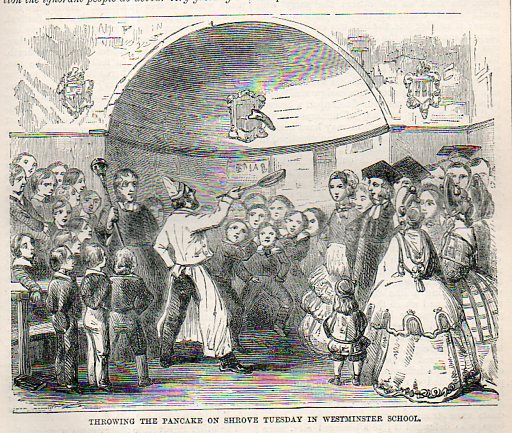
    There have been pancake races and pancake displays and pancake throwing that reach back into the 15th century.  I must say though that in these many years of print collecting that I cannot recall seeing a very old print of flying pancakes.  Which is why I’ve included the scan (above) of the image above, which is a relatively old wood engraving found in R. Chambers The Book of Days, a Miscellany of Popular Antiquities in Connection with the Calendar…and printed in London in 1863.  Its  cheery and judgmental crowd observing the cook’s effort to throw a pancake as high in the air as possible and then catch the thing again in the pan.  Pancakes on dubious display, all waiting to be eaten before start of the fasting season before Easter. 

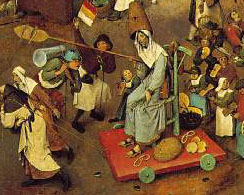
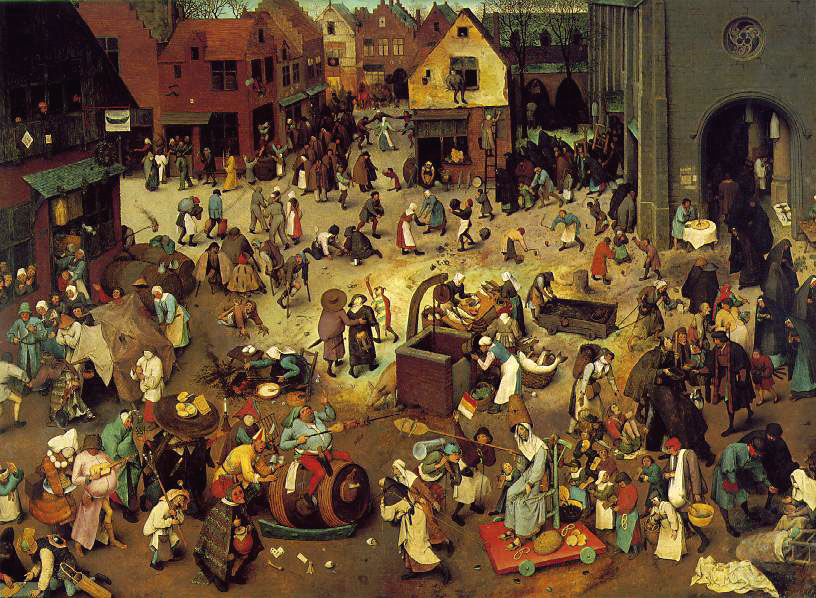
    And just for good measure, we’ll toss in this beautiful work by Pieter Bruegel the Elder, The Fight between Carnival and Lent, which was painted in 1559 and shows the opposing forces on the edge of the Lenten/non-Lenten world, each side abounding with its demands for attention.  In particular though is the food on the little trolley of the woman leading the Lenten contingent, where we definitely see bagels, and probably see pancakes. 

    Brugel detail

    Burgel carnival and lent

    ·Posted by :

    ·in:


  • A Hole in the Mirror–Part of the History of Holes series

    JF Ptak Science Books  Quick Post in the History of Holes series

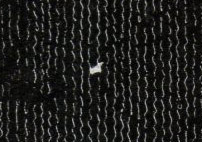
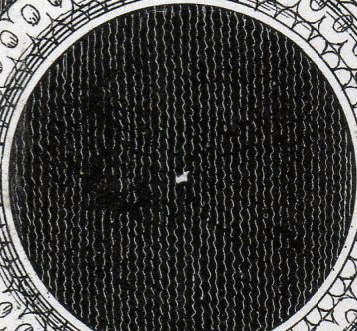
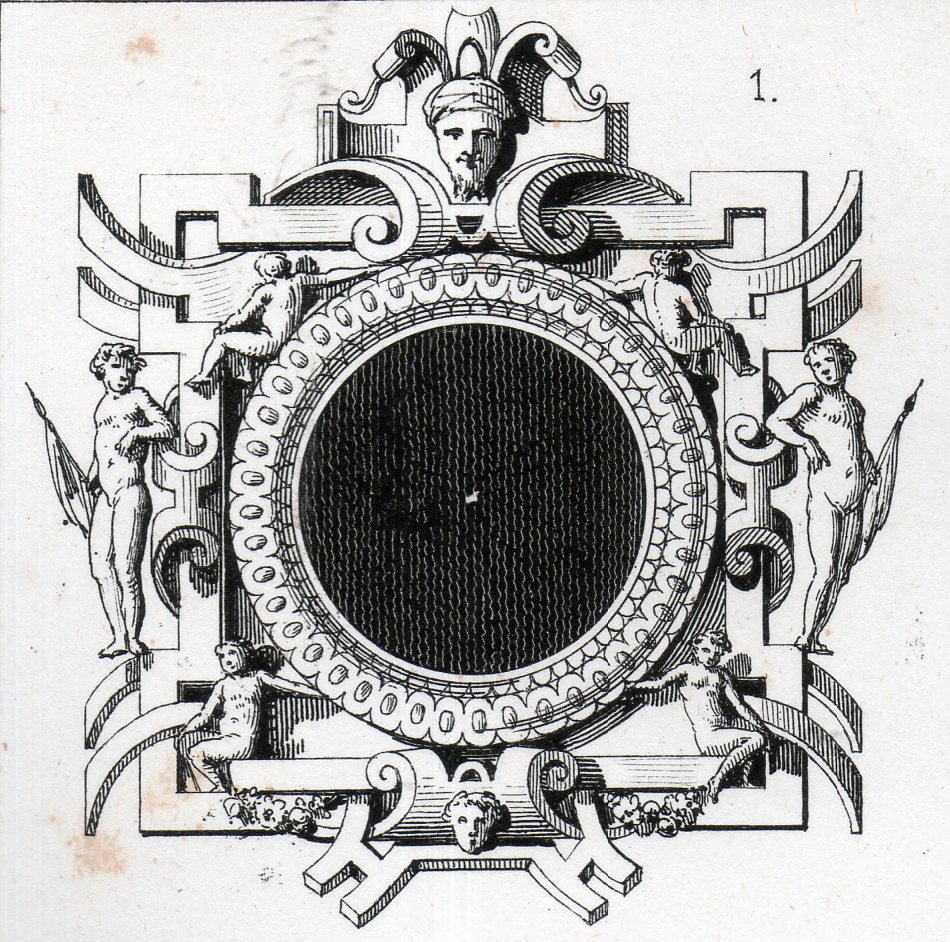
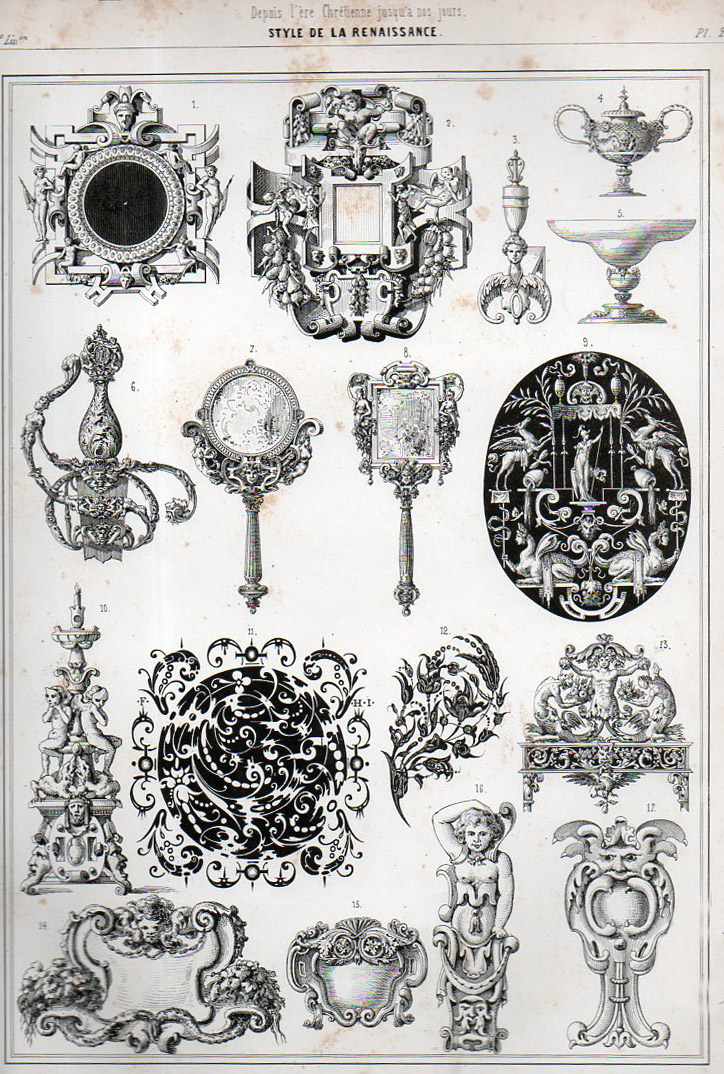
    While looking through D. Guilmard’s La Connaissance des Styles de l’Ornementation (published around 1860)–a work that is a sort of early clip-art assembly of aspects of bits and details of historical ornamentation from the Gothic to Louis XVI– I found several engravings of mirrors with some unusual detail.  For some reason the Renaissance mirrors nearly all had a small white dot–a hole–in the center of their jet-black mirror surface.  I imagine that this was a simple printing error, but I liked the idea of this spec of a mistake right in the middle of a dark field, in effect making a hole in the mirror, looking something like a light leak. It makes for an intriguing series of images.


    Mirror a

    Mirror b

    Mirror c

    Mirror936

    Which is a detail (about 2×2 inches in life) from the full sheet, below

    Mirror e938


  • How Much Did Athanasius Kircher’s IQ Weigh? The Polymathic Genius Alphabet

    JF Ptak Science Books   Quick PostKircher

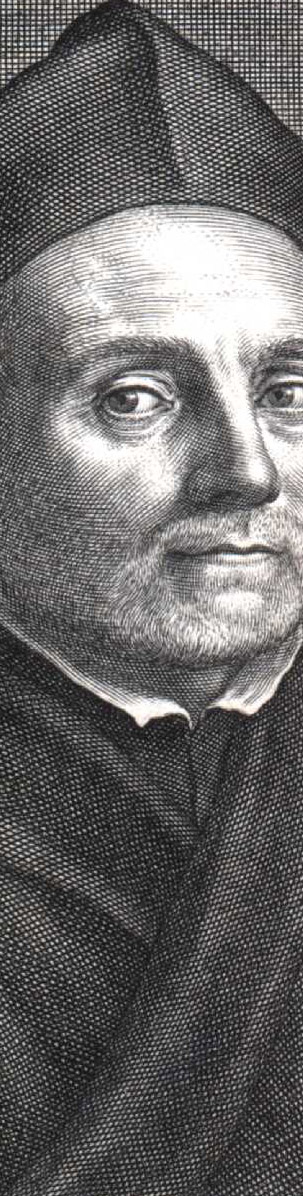
    It has been said elsewhere along the aethery intertubes in discussions of the intellectual value of the great and problematic Jesuit scientist/experimentalist/visionary/encyclopedist Athanasius Kircher that he may be the greatest polymath who has ever lived.  He certainly was a genius, and worked across a wide and occasionally invisible spectrum, inventing/describing/discovering/fabricating. The great semi-mystifying polymath  Kircher (1602-1680) lived
    for a long time and filled his life with ideas and words,  producing
    dozens of books during his time on Earth, some of which were never
    published even though written, some manuscripts lost forever. His was a
    massive output of extraordinary breadth, most of which was original to
    him, and a lot of which was original to others and not credited, as was
    often the case with some scholarship at this time in history.   He
    wasted little time what I can see, writing on a spectacular range of
    subjects, enlightening people, confusing people, generating great
    theories and some bad ideas

    He was often correct, and occasionally toweringly smart–but certainly not all of the time, and probably not enough of the time to earn him such high-altitude praise.

    But even with the great and lofty things he has accomplished, I am pretty certain that he would not make the first rank in the alphabet of great polymaths–not only are there other polymaths in general who are more, um, polymathical, there are also more “K” polymaths who would push him out of his alpha-order.

    Here’s one example of an alphabet of great polymaths:  Aristotle/Agricola, Boyle/Bartholin/Babbage, Carnot/Chandrasekhar, Descartes/Davy, Euler, Faraday, Gauss/Gilbert, Helmholtz/Huygens/Herschel, Jevons, Kepler/Klein, Leonardo/Lavoisier, Maxwell/Malppighi, Newton, Poincare/Priestly/Pasteur, Quetelet, Sommerfeld, Thomson, von Neumann/Vesalius, Young, Zeno. 

    Well.  There’s certainly a lot of room for debate on this quick list–perhaps it would be more interesting to assign chess pieces to these same names; and if this was so, I would have Fr. Kircher be a pawn.

    And so:  are there more dots on Kircher or squares behind him? 

    Kircher squares


  • Borges in Reverse–Diary Absolutists of Everything.

    JF Ptak Science Books  Quick Post in the Series on the History of Need.

    There are diarists who record everything that happens and everything that they do during the course of a day. The diary entry is not a simple line or two of waking and seeing the morning sky–it is one that records the number of brushstrokes of the toothbrush, the amount of water used in drinking, the amount of time the tea steeps, the sound of the spoon on the saucer, how the cookie crumbles, and so on–and this all in the first half-hour of being awake. 

    By necessity then people like this would be trapped in their own terrifying need to record their actions; having an adventurous day imperils their sense of balance and the ability to record the event. The course of the day is lost to the record of time, and it is as if whatever happened that wasn’t recorded never happened at all.

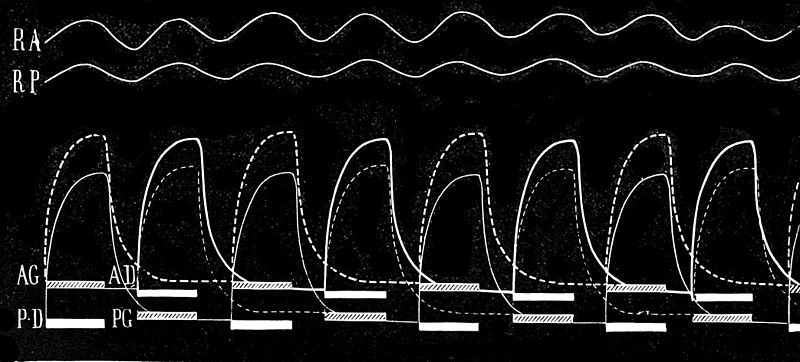
    Marey paces of horse
    The less that is done, the better, insofaras it would be easier to record and capture. On the other hand, though, that allows for more time to be spent on the diary description of the moment–not only the number of toothbrush strokes, but also the reflection of whatever appeared in the sink bottom, or what besides the face was seen in the mirror, or how many rice krispies were in the bowl, and so on.

    In such cases, going outside and becoming a witness to the rest of the world’s event would be impossible–even a stolen glance through a venetian blind could dictate a 30-minute entry.  The less to record that there is, the more recording of the lesser events could be made.  As with Dr. Zeno, there really never is nothing to not record. 

    Its a scary thought, a life lived in an anti-Borgesian library like that, getting pulled closer and tighter into nothing.  Well, its that, or it is a more zen-like observation of the world around you.  Either way, the diarist is tied to a bad destiny. 

    There are probably many variations on this theme:  people who must record everything that they purposefully look at during the day, or record everything that they hear but cannot see.  I imagine that there is someone who can look at  a notebook of drawn footsteps to see how their feet were placed in relation t the earth for every waking minute since 1965. 

    Its a crushing amount of nothingness.  Unless of course that nothing was everything. 

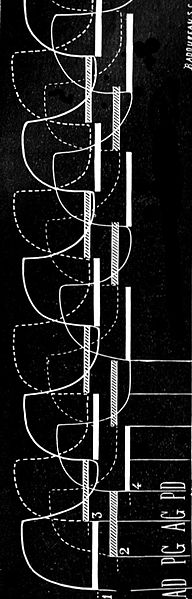
    Marey paces o fhorse vertical
    [These images are really early and very impressive efforts by Etienne Marey in recording the pace of a horse, as seen in (Etienne Marey), “The Paces of the Horse”, in Popular Science Monthly, December 1874–they have nothing to do with human locomotion.


  • Movable Maginot: a Feast of Morbidly Techno-Gigantism

    JF Ptak Science Books LLC   Post 959, extended.     Daily Dose from Dr. Odd
    Follow Me on Pinterest


    Nothing
    quite exceeds like excess said Mr. Wilde (and others) , and he/they could be no
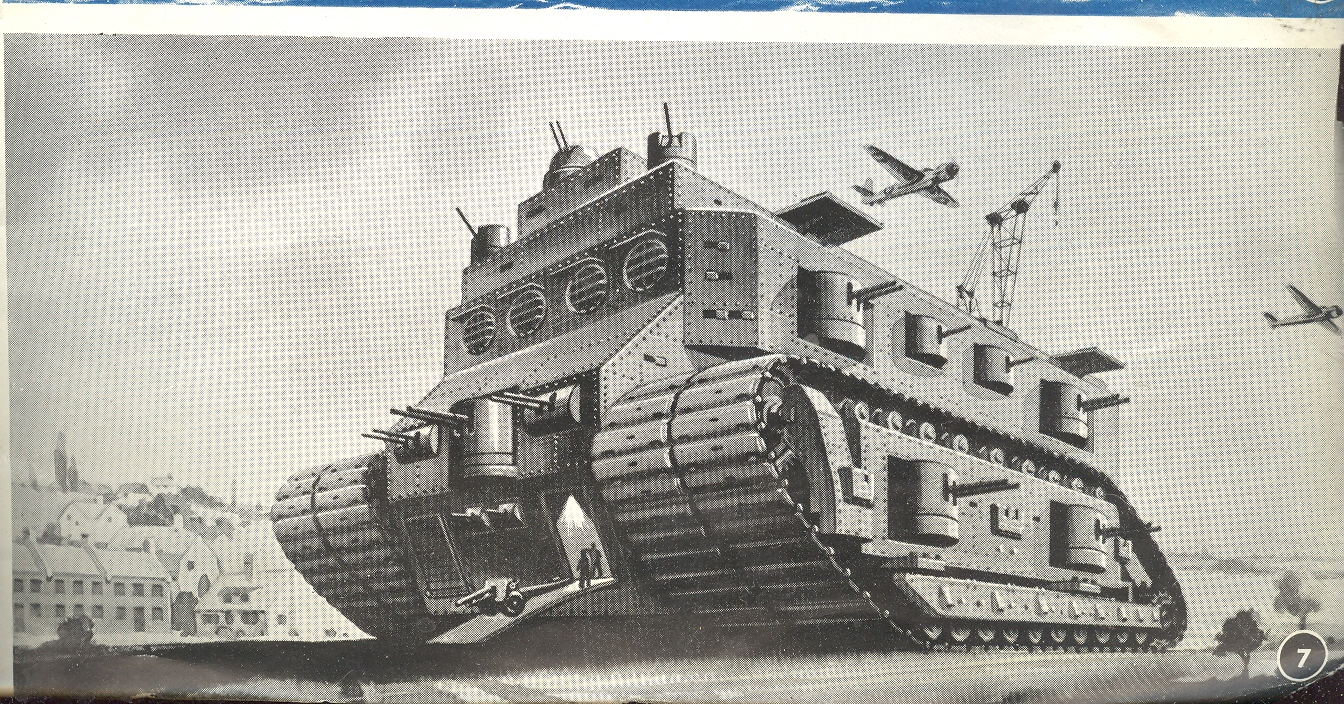
    more correct when looking at this picture of a Movable Maginot Line—it is a
    mobile fort, complete with plane launching capacity, two dozen long canons, a
    crane, and a host of other stuff.  


    000--win--land tank


    It
    looks as though it has ample room for all sorts of materiel though leaving
    little room for, perhaps, an engine.  I
    just can’t see where it might be…perhaps it is near the
    not-room-enough-for-it-either ammunition compartment.  Maybe they were in a smaller armed cart being
    pulled by the mothership?  I reckon that
    this beast was 66 feet high, 100 feet long and 60 feet wide, which is a very
    big, heavy near-cube. Good luck with driving the thing in anything that was
    less than perfect conditions.  A big
    profile like this, filled with guns and canons or not, also makes for a big
    target profile—a tall, broad target with flat/non-inclined sides. ( I should
    also point out that there are two 10’ loudspeakers mounted on the front of the
    fort to instill fear in the people that the thing was approaching with loud
    noise.  The author points out that the
    Nazis used noise against the French with their “screaming dive bombers”, and so
    the fort would use the same tactics against the Nazis in the moveable fort—not
    that the sound of the engines and the attendant noise wouldn’t’ve been enough
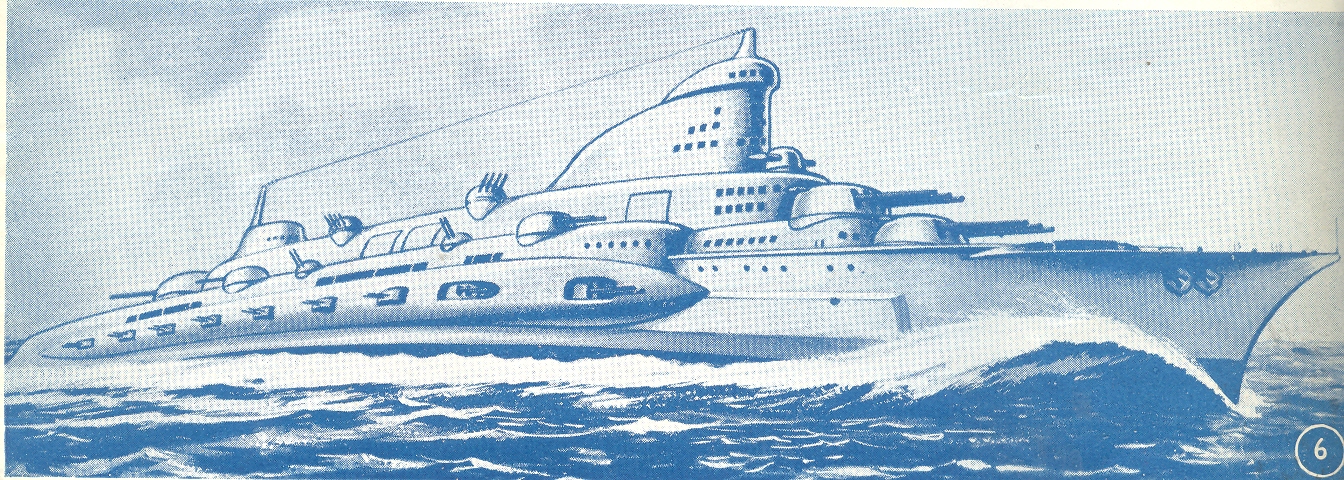
    of a fear factor in themselves…)000--win--tubular ship

    But
    the image of such a monster, sensical or not, was enough for the purposes of
    the pamphlet in which it appeared.  The Brains to Win was a piece of British
    spirit/hope propaganda issued at about the time of the Battle of Britain in
    1940, and it listed the sorts of technological breakthroughs that were going to
    push the nation over the top to victory. 
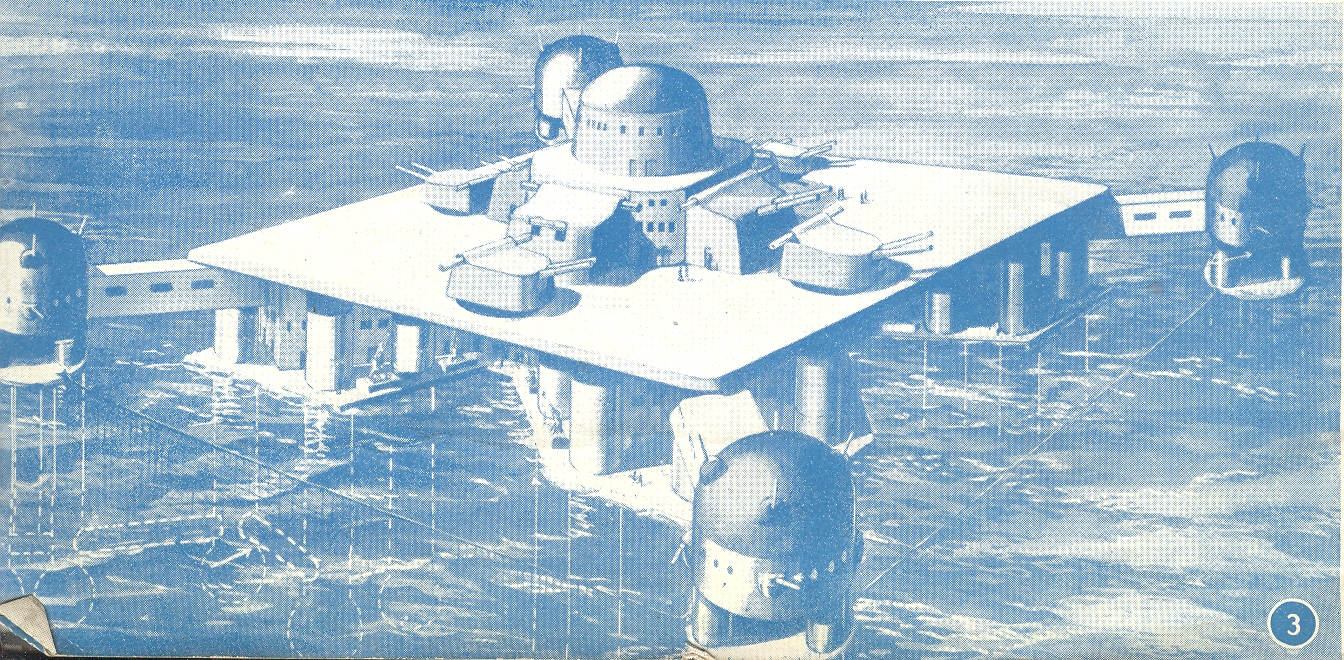
    Some of the stuff was real, some not—like the moving fort/Howl’s Castle
    above, and the floating fort, below.


    000--win--floating airport


    I’m
    not sure where a floating fort would make sense, especially one of that size.
    (Iterating the figures on deck into distance, it looks as though the deck on
    the floating platform was 150 or 200’ square. 
    It would’ve looked like a big target from above.) Given the time and
    expense and material  needed for such a
    thing, it seems that it would’ve been cheaper to make a moveable fortress not
    quite so big, with less of a profile, and more mobile—I think that this was
    called a “destroyer” or “battleship”.  

    But
    no matter, I’m just poking fun at some of the future vision that became archaic
    the moment it was drawn, punk retro-future. 
    All the pamphlet was trying to point out in its 32 pages was that
    overall the Brits were smarter than the Germans and that would be the balance
    for victory in the war.  “Hitler will get
    some very unpleasant surprises before this is over” the author very politely
    pointed out, no doubt with one eyebrow raised.  The scientists agreed.

    And
    they were right, which is all that matters.


  • Standing on Your Stagnant Nerve-Juice Nostril Tube? The Daily Dose from Dr. Odd

    JF Ptak Science Books     Daily Dose from Dr. Odd  
    Follow Me on Pinterest

    This cure-all from G. Anston looks simple, but the hydraulics of his nerve juice pumper is actually a little involved, or more involved than it needed to be given the fact that the machine didn’t actually do anything productive.  That said, Anston was  setting out to “move fluids” and cause all manner of cure-alls for “air stagnation” in the body, without the trouble of losing any time except for sticking those tubes into your nostrils.  I do not know why the artist has the subject standing on  #44 (the nerve-waste elimination tube) which was basically the tail-pipe of the cure-waste that was supposed to be flushed from a window.  It seems as though stopping the exit of the stagnated brain-air and nerve-fluid effluvia might’ve made the subject’s head pop off a little, which would be problematical. 


    [Source:  Google Patents, here.]