A Daily History of Holes, Dots, Lines, Science, History, Math, Physics, Art, the Unintentional Absurd, Architecture, Maps, Data Visualization, Blank and Missing Things, and so on. |1.6 million words, 7500 images, 4.9 million hits| Press & appearances in The Times, Le Figaro, Mensa, The Economist, The Guardian, Discovery News, Slate, Le Monde, Sci American Blogs, Le Pont, and many other places… 5000+ total posts since 2008.

Category: Absurdist, Unintentional

  • On the Scarcity of Human Lines in Renaissance Art, 1522

    JF Ptak Science Books LLC   Post 2055
      0 blog feb 20 line611det


    “My car gets forty rods to the hogshead, and that’s the way I likes it!” –Grandpa (Abe) Simpson, from The Simpsons  (That’s about 500 gallons to the mile.)

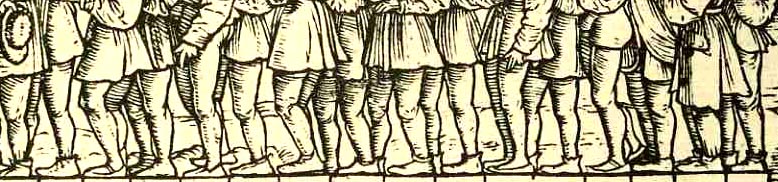
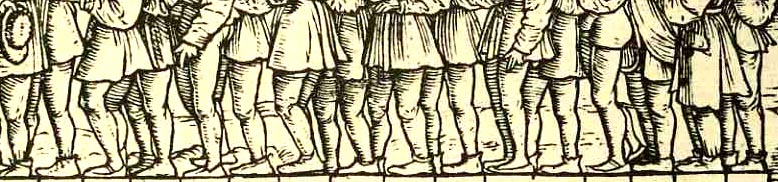
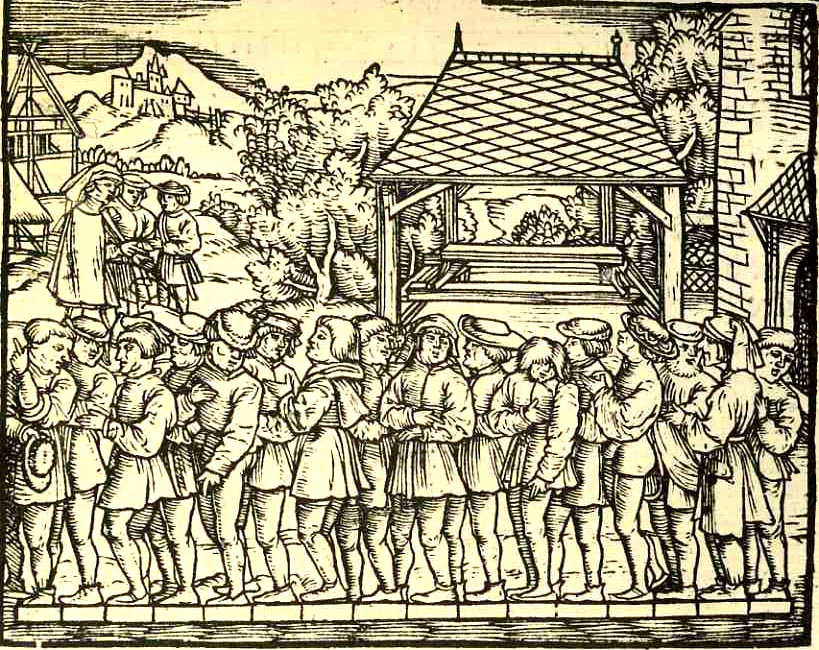
    A line, a connection of two points in space, is about as basic an imaginary thing as we have here on earth.  Humans have used these creations to build all sorts of straight things, from roads to building to ships to literature to mathematics and on and on.  What doesn’t happen very often, at least not in Western art in the last 500 years or so, is for people to be represented in art in a straight line that is not a processional (including military, religious, political venues), or that is not along a bench next to a table, or not supported by another artificial structure like a fortress wall (to give their waiting or standing a form to accommodate).   That weakens the line field considerably–after all, what else is there to line up for?  They’re not queuing up for a sale at Gimbels, and they’re not waiting patiently for a place on the bus.  There’s just not that much to form a line for, evidently. 
    0 blog feb 20 line611

     There is, on the other hand, this (above and below), what I take to be
    rare representation of my odd requirements:  a delightful woodcut from
    Jacob Koebel’s 1522 Von Ursprung der Teilung, Mass und Messung dess Ertrichs, der Ecker, Wyngarten, Krautgarten und anderer Velder…,
    an early surveying handbook (probably the first ever printed in
    Germany) that could be used to measure and set out (as stated in its
    title) herb gardens, vineyards, farms and the like.

    I’m not 100% sure of this, but I think what is going oin in this image is the measruing of a rod (or “rute” in German), which is about 5.5 meters or 16 feet; and what we have in the picture is 16 men being positioned over a measuring device and beign overseen by the powers that be, at rear. On the other hand, maybe not:  the English rod was 16.5 feet, while the rod measurement for Saxony, Rhineland, Bavaria and Baden were different as well; Sweden also came in at 16 feet to the rod.  The other big question was:  how long was a “foot”? Since that measure also chnaged (varing between 23.51 cm in Wesel and 40.83 cm in Trier and  31.387 cm up north in the RHineland)  the measurement of anything with variable units of measure seems to have been problematic, or at least in a post-facto measure.  [The whole issue of “absolute” units of measurement is another post for another time (and a much bigger and moire compelx story).] For right now I’m content to have found this pretty image, which in the end was probably the work of the author Koebel (1470-1533), who seems to have been a jack-of-all-trades; and while he was concerned with property and measurement, he also showed his flair with charm, as this group of men atest. 

    ·Posted by :

    ·in:


  • Warhol, Paint-by-Numbers, and Nothing

    JF Ptak Science Books    Blog Bookstore

    I wonder if Mr. Billy Collins has ever approached the
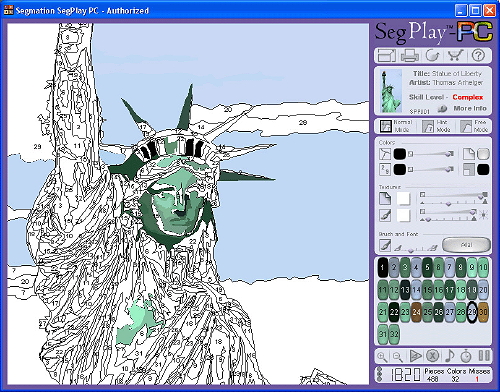
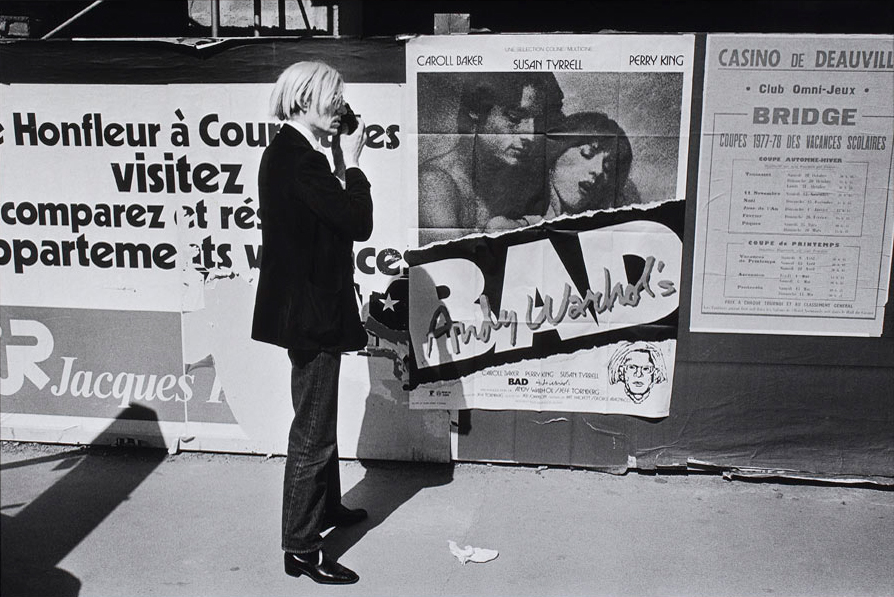
    ineffable connection between paint-by-number art and Andy Warhol?  It seems that paint-by-number (PBN) came from
    nearly nowhere, a near state of being nowhere and nothing, just after WWII, to
    the point of selling millions of sets by 1952. 

    Paint by number 1

    It was an astonishing thing, really, how the PBN craze took over America.  And it just so happens that 1952 was the
    first one-man show for Andy Warhol, and was also the beginnings of the Pop Art
    movement, which seems to me a rush to the most common denominator trough the commoditization
    of consumerism and popular culture, creating art out of visible
    nothingness.   Warhol in particular
    trained his sites on images that were already twisted around people’s neurons
    and living in their memories.  Art was
    made from images injected into the heads of consumer buying units, a delightful
    confusion of imagination and the already imagined, a reaction to a familiar sub
    rosa
    advertised image.

    Perhaps Warhol’s art was part of a larger whole, an
    illustrator to a bigger point, a performance unintended to stand alone.  But that is what happened, the art separated
    from the wider message, and soared to great acclaim. 

    Paint by number 2

     Warhol seems more like a paint-by-number color memorist,
    filling in the blanks of an already-mostly-formed memory burned into the long
    term memory via years of advertising and severe repetition.  Nearly the entire broadcast industry was
    created to support this memory-making process: 
    Seinfeld, Spongebob, The Office, Your Show of Shows, and all the rest,
    created not necessarily for your pleasure but as a series of  interchangeable 11-minute-long placeholders
    to hold the viewer/listener to the point where they would be exposed to 180
    seconds of product identification.  It is
    the repetitious memory formation that the folks depended upon so that when you
    go down the supermarket aisle looking for an 89-cent can of tomato squeezings
    called “soup” that the 799 exposures to the Campbell Soup Company’s product
    line will direct you their way, a primitive bit of biological programming.  And for all of the trimmings and
    philosophical-critical digressions, Warhol capitalized on creating art on vast
    shared memories, coloring in a shared image, reaching into the minds of
    millions for something that everyone could see and understand—and not have to
    think about, not lose one neuron in interpretation, and enjoy it like an comfy
    old slipper. 


    Paint by number 3

    Where Warhol succeeds and PBN fails is at the art/appreciation
    point—few people took the PBN seriously as an art form, mainly because it wasn’t
    presented as such, except for those who somehow took the thing too seriously.
    Warhol took his creations seriously from the very beginning—and perhaps there
    was really nothing more than the defense of his art that was the art
    itself.  It just seems to me that, in the
    history of art, it tool 1500 years or so for linear perspective to be
    rediscovered, another 500-odd years beyond that to bend and mystify nature in
    the form of Impressionism, and another 30 years to lose all recognizable
    natural forms all together.  And then after
    Braque and Duchamp and Kandinsky and the Blaue Reiter, and the Fauvism,
    Suprematism, Vorticism, Dadaism, Deco, De Stijl, Surrelaism, Concrete art,
    Abstract Impressionism, and on and on, that after all of this since Nude
    Descending, that we are lead to Pop Art and silkscreens of soup cans.  It just seems to me to be more about the
    packaging than the package, which might just well be a wrapped bit of
    nothing. 

    ·Posted by :

    ·in:


  • Richmond’s Libby Prison in Chicago

    JF Ptak Science Books   Post 2082
     
    Follow Me on Pinterest

    Confectionary connections to interesting bumps in history wind their ways along many unusual paths.  One such story is that of physician/scientist/collector Hans Sloane (1660-1753) and his introduction of chocolate into England (as a result of a field expedition he took to Jamaica)–his involvement with chocolate was minor compared to everything else he did in his life, but the introduction of chocolate to coffee houses in London was not.  In any event it was his massive and superior collection of natural history samples, archaeological artifacts, and much else, that became the basis for the British Museum–the collections purchased from his estate for 20,000 pounds at the time of his death. 

    Another example of a weirder candyland adventure is that of Charles Gunther (1837-1920), who was the driving force of moving the infamous Confederate Libby Prison to Chicago in 1893 to house his own collections of Civil War memorabilia and other interesting and Mondo Bizarro things. (He claimed to have–on exhibition–the original skin of the serpent from the Garden of Eden, complete in some sort of original frame decked out in Egyptian gibberishglyphics.) Here’s an ad that appeared in the Confederate Veteran‘s first year of publication in 1893:

    Libby436

    I wouldn’t use the term “great” here–and I’m pretty sure that the word is being misused here in 1893 as well.

    The prison was actually a converted tobacco factory, the buildings of which were constructed from 1845-1852, and located in central Richmond at Main and 25th Streets. Poor Luther Libby–a Mainer–came into possessions of the buildings for his business, which was subsequently seized by the Confederate government at the beginning of the war and converted into a hospital/officer’s prison before it became the symbol of mistreatment and deprivation and harshness.  (Mr. Libby had nothing to do with the prison per se–he was just the last person with his name on the buildings.  He outlived the prison-with-his-name-on-it by 15 years–12 years if you count the use of the building to house Confederate leadership after the end of the war.)

    Gunther collected big stuff, the biggest being the prison. He purchased it and had it dismantled, shipped up to Chicago, and then reassembled (with the help and advice of the prestigious architecture/design firm of Burnham and Root) where it operated as a museum from 1889-1895. Sensing a brighter future for the property, Gunther dismantled the building selling off chunks of it as souvenirs, and built a convention center on the site, filling the need for meeting space from the burning of the Chicago Coliseum in 1897.

    This post could have gone another way very easily, winding up in the Things Out of Place Department–Libby in Chicago, the Statue of Liberty in Paris, London Bridge in Arizona, a duplicate Earth in the sky above the Earth,and so on–perhaps this on another day. 

    On the Libby Prison relics from Chicagohistory.org 


  • Enormous Title of Visionary Work Utterly Defeats Library Cataloguer

    JF Ptak Science Books  Post 2076   Outsider Logic  Daily Dose from Dr. Odd


    Follow Me on Pinterest

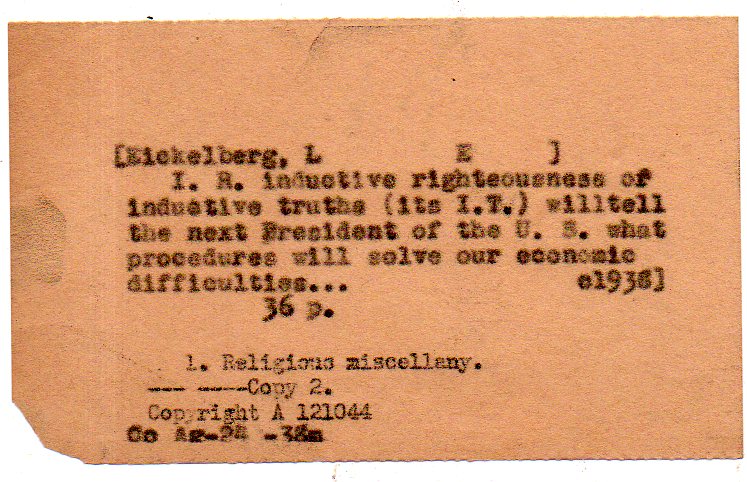
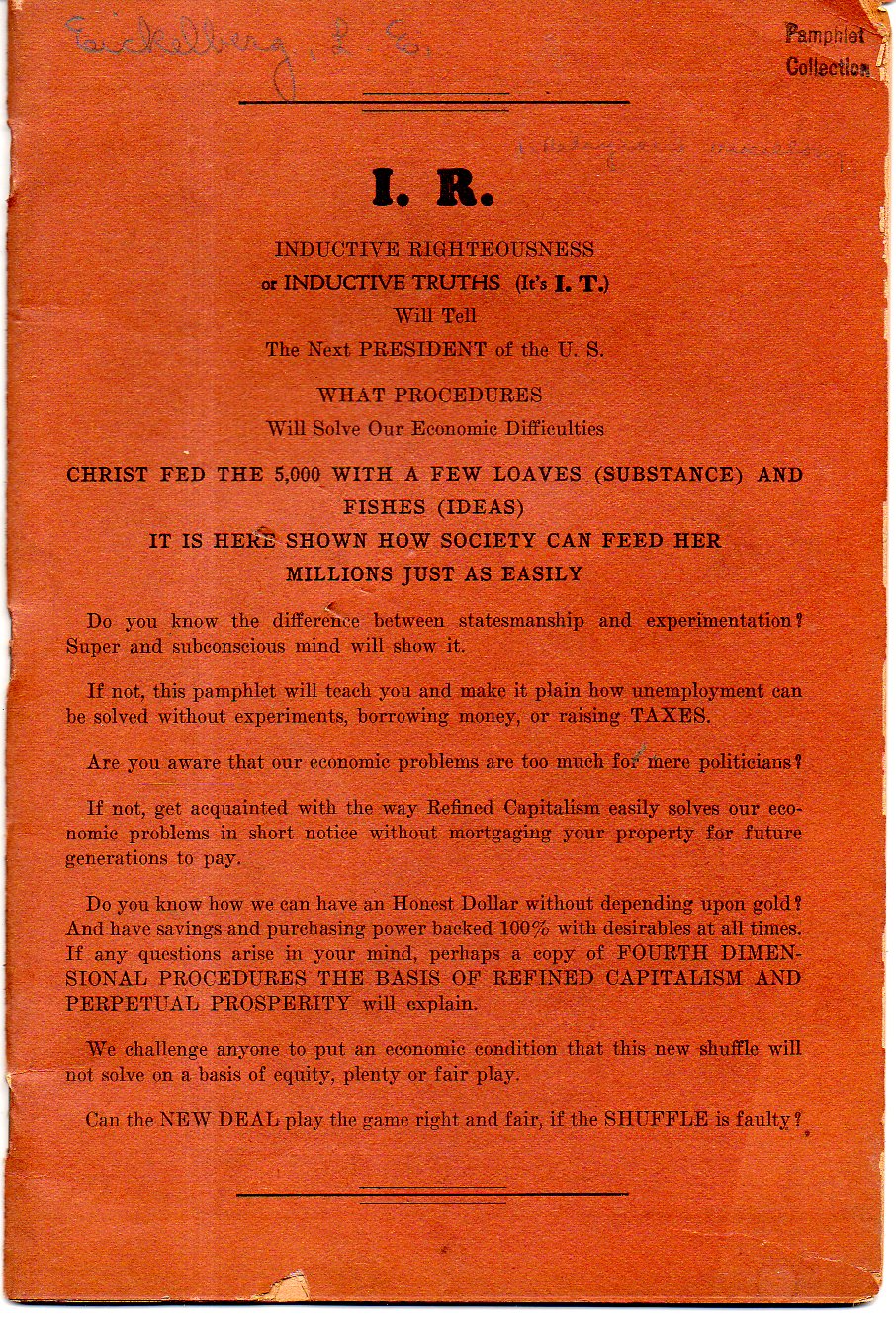
     There appeared on this blog last week a post regarding a library cataloguer who was not threatened or defeated by a work with an enormous and meandering title. The good librarian got right to it, recorded the deed, and moved on. Today’s installment of card catalog magic presents a Library of Congress librarian who decided that enough-was-enough, and that there was simply too-much-title to record, and so simply left the rest of it to dots and to the imagination.

    Title--gigantic424
    Now for the pamphlet itself and the rest of the title:

    Title--gigantic423
    The author of this 1938 pamphlet simply started to write on the cover and continued through the rest of the work, and ended on the back cover.  There was no title page, no chapter headings, just a collection of ideas with lots of lists and seemingly nowhere to go.  For a short work (36 pages) the author could’ve dedicated another quire to some blank space, which really doesn’t exist in the pamphlet but which is surprisingly helpful even if the message you are trying to deliver is somewhat, well, outre.  There is a lot of very compressed talk about multi-dimensional spirit and conscience and bank deposits and replacing the dollar and tax collection with “circulation of values”, and so on, deep into itself and a closed system of interpretation of the existence of the universe, harmony of spirit, and economic interpretations of “radio bulbs” and the (often misspelled) fourtth [sic] dimension.  The writing is exhausting and enumerated, and even though by its colossal subject matter and the complex brevity it should be a reliably porous document, it is fairly rigid and brittle. It is a visionary work that somehow worked its way into print, and I’m happy for that, and even it is impossible to keep up with its runaway logic it is still a good ride.

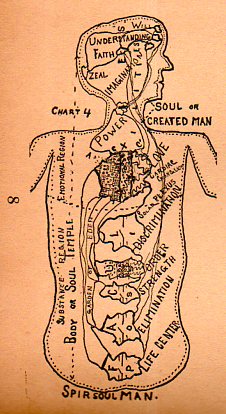
    The author’s representation of a semi-vitruvian spiritual anatomy of humans, called Spirisoulman:

    Title--gigantic426
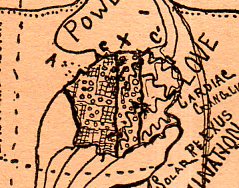
    A detail of the fabulously-decorated heart region:

    Title--gigantic427
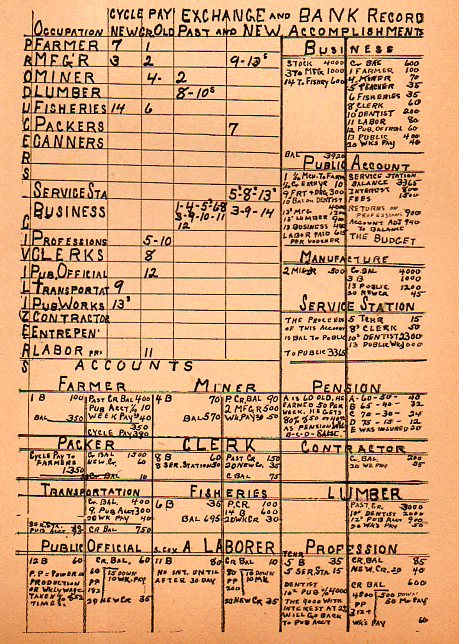
    And of course part of the plan for universal economics which somehow wraps up the theory of in I.R., or the Inductive Rightousness of Inductive Truths:

    Title--gigantic428
    Early on in the history of printed books there was a practice of extended title pages, where there would be the title, and then “support literature” further explaining the title to sometimes some great detail, occasionally winging its way into a title 200 words long.  But that was pretty much before the 18th century and mostly before the 17th and mostly a not-common practice.  The gigantic title in the 20th century seems to be mostly relegated to the less-traveled-road variety of public thinking.

    And the card catalog for the undefeated librarian mentioned above:


    Card catalog409 


  • Found Literary and Visual art in Telegraphy

    JF Ptak Science Books    Daily Dose from Dr. Odd   Follow Me on Pinterest

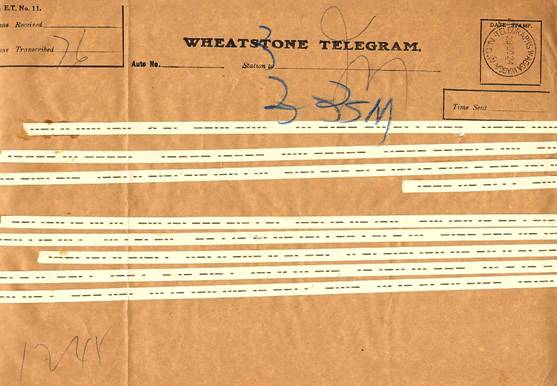
    Wheatstone telegram
    Source:  Cyber Heroes of the Past, here.

    Just yesterday I wrote a quick post on the history of holes and the development of telegraphy–actually, of Charles Wheatstone’s inventions, which relates to the item above. The telegram has a look of great found techno-nerd beauty, and the text is wonderful in a disjointed semi-unintentionally-absurd kind of way.

    The text reads (according to this wonderful site on the history of communication), identifies the telegram being sent from Wagga Wagga, NSW, Australia in 1924, with the Morse Code transliterated as follows:

    “Black pickles contractors Junee X Glass broken Paul Blamey Please send measurements your price fixing including cartige we take risk also state value of salvage
    X Sandy”

    Generally, much of the traffic in telegraphy was generated by business, and this is, I am pretty sure, one of those, with a few cipher words thrown in to save space/time/money for transmital–but when it stands separately, it is a phrase of some wonder. 

    ·Posted by :

    ·in:


  • A Top 1% Card Catalog Title Entry. Seriously.

    JF Ptak Science Books  Daily Dose from Dr. Odd 

    Follow Me on Pinterest


    Card catalog409 
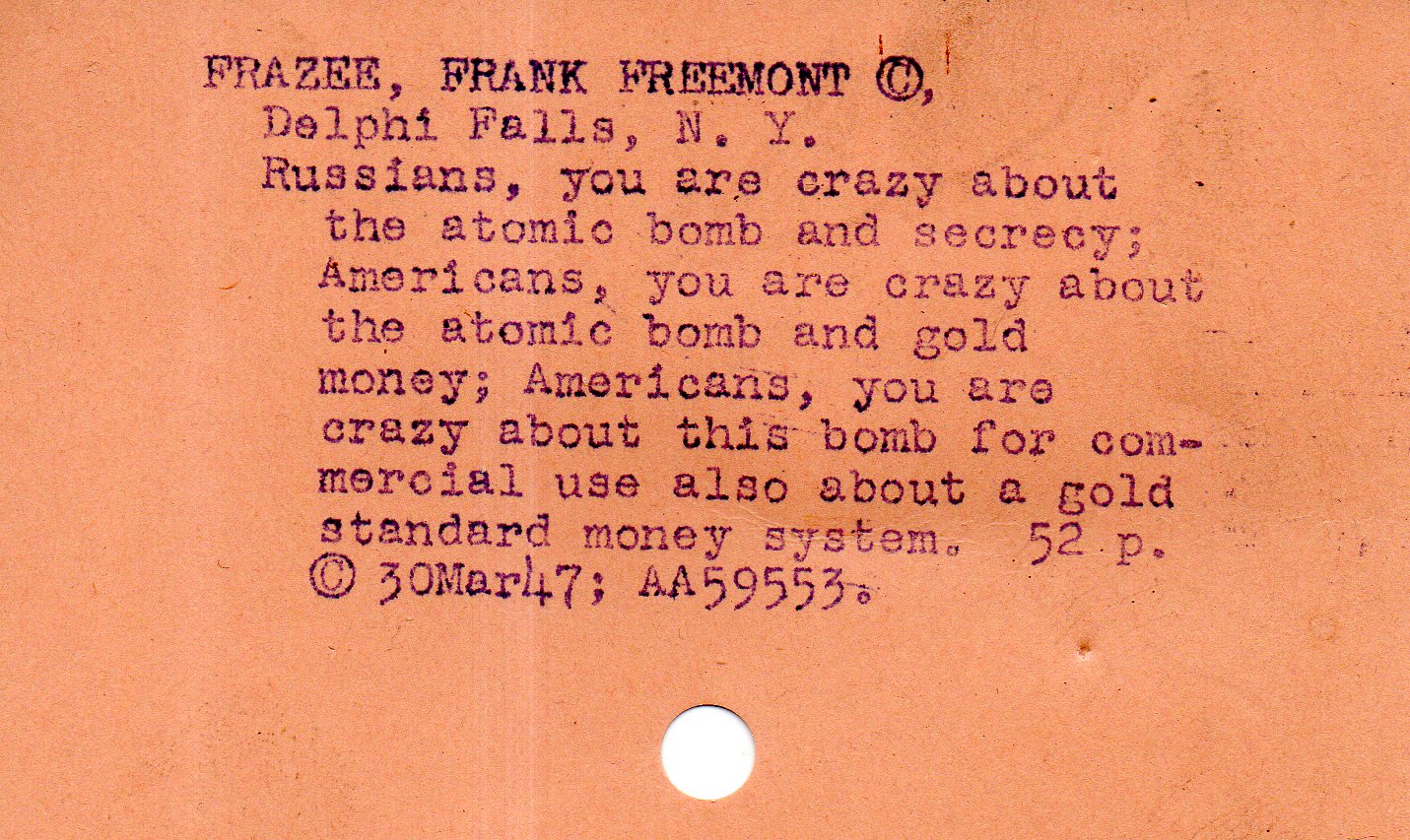
    Triple-F (Frank Freemnont Frazee) came up with an all-time-great-title entry when he wrote his pamphlet about _____ back in 1947.  I have a copy of it, purchased in a 90,000-item collection from the Library of Congress–something called “The Pamphlet Collection”, housed in 1,500 blue document boxes from 1952, all of which were categorized in a Borgesian nightmare way, according to nothing. Therefore the “General” box might have had General Electric pamphlets, or something about General Malaise, or Boston General, or General Rules of Parking in Providence (R.I.), and so on.  So, although categorized and alphabetized, it was all useless.  Among this beautiful mess were a thousand or so pamphlets like Mr. Frazee’s–incredibly titled, about stuff visible and invisible, complaints, claims, praises, warnings, sufferings, advanced supra-backwards premonitions, and so on.  My Frazee copy happened also to be the U.S. Copyright Deposit copy (or one of them, rather) that was sent to the Library of Congress to be housed forever (or until I got them), along with a carbon copy of the card catalog entry. 

    The card is a work of art. (More about this pamphlet here.)

    Dr Odd series069


  • Listing Illnesses and their Causes of Inmates of the New Orleans Insane Asylum

    JF Ptak Science Books   Post 2072

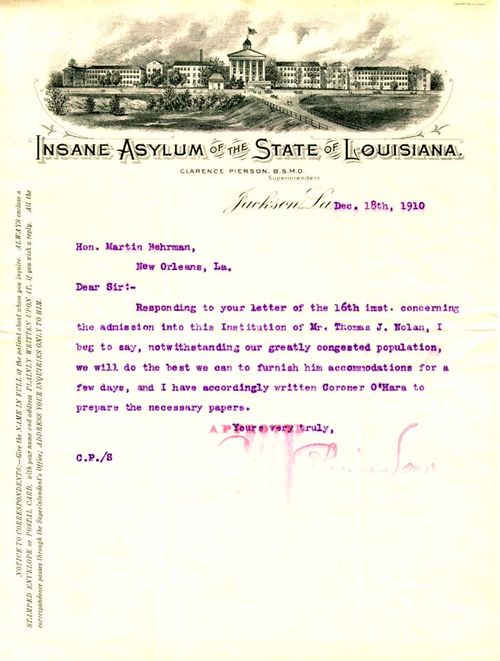
    Following a posting from a few days ago listing the causes of admittance of children to an insane asylum in Powick, U.K. from 1854-1900 comes this find–a rather extraordinary find, regarding the causes for admission as an insane person to the City Insane Asylum of New Orleans. This site has an incredible (and indelible) record of  the patients admitted from 1882 through 1916 (“Orleans Parish (La.) Civil Sheriff Register of patients transported to the State Insane Asylum, 1882-1917”), including the reasons for confinement, as well as the causes of the debility, plus the age of the person and their occupation. 

    Insane asylum NO

    Following the link will get you to the year-by-year index of admittance–there is no standardized set of instructions or rules to identify the illness or supposed illness, so the way that the physician factored the mental disabilities of the patient was open to some wide interpretation.Some of the reasons for admittance included stupidity, alcoholism, idiocy, epilepsy (still about the leading “cause” for admission), imbecility, insanity, dementia praeox,hysteria, “delusional about Italians”, religious mania, and so on.

    “Responsibility for insane patients (particularly the
    indigent insane) housed in the City Insane Asylum (or in various
    hospitals after the city facility closed) fell to the City Physician,
    who was to visit patients at least once a day and to discharge those
    patients who had sufficiently recovered. He also identified those
    inmates who had remained in the asylum “over the time prescribed by law”
    and reported their names to the sheriff of Orleans Parish, who arranged
    their transfer to the State Asylum at Jackson, La.
    “–Source

    The major subset of the diagnosed diseases and illness was the “-mania”. Aside from a general mania, there was an alpabetization of the competing manias, including religious-, chronic- , kelpto- , furious- , erato- , raving- , homicidal- , acute- , indcenidary- , puerpueral- , mono- , recurring- , delusional- , suicidal-, and a few others. 

    Insane asylum SIA  LA
    It is the “causes” of these challenges that seem to be the most viciously interesting part of this record.  Stuff that sent people into maniacal flights or rages or depressions and other anti-social behavior included but was not limited to alcohol, syphilis, weak mindedness, heredity, drugs-in-excess, old age, “womb trouble”, “attack of gripe”, “poverty and want”, jealousy, sunstroke, onanism, menopausia, hallucinations, masturbation, “mental worry”, “family troubles”, tobacco, softening of the brain, and so on.

    There is room for someone here to go through the 30-odd years of entries to see what were the most/least common causes of mental instability–it would be an interesting list to see someone else generate. 


  • Inventing Aged Tone in New Violins, 1903

    JF Ptak Sciecne Books  Quick Post

    First page clipping of GB 190303723 (A)

    Patent
    #190303723  issued in Great Britain to R.H. Payne and T. Broadbent,
    February 17, 1903. It really doesn’t have anything to do with creating
    patina/lustre in the tone of a new violin via artificial means, but it
    does have that scent to it, and sometimes that all anything needs to do,
    provide the aroma of an interesting idea.

    ·Posted by :

    ·in:

    —

  • The Written Test of the Dead and the Bump Map of Crime

    JF Ptak Science Books   Post 2062 
    Follow Me on Pinterest

    Thanks to the always-fascinating book by Jan Bondeson, Buried Alive, the Terrifying History of our Most Primal Fear (W.W. Norton, 2001), which excited this interest in Dr. Severin Icard. 

    The determination of the occurrence of death was a major medical feature of the 19th century, the French in particular waging a fight for how this to be so.  Briefly
    put, for centuries even before Pliny death was described as the absence
    of an audible heart—the crux of the sentence being the word “audible”,
    so that the end of life was dependent upon being a physician’s/person’s
    capacity to hear the heart beating.  This might be very
    problematic if the person listening for that heartbeat had faulty
    hearing from defect or age, as the listener would place his/her ear on
    the chest of the patient to determine if the heart was functioning or
    not.  The stethoscope wasn’t invented until 1816 by Rene
    Laennec–who produced a monaural device much like a primitive hearing
    horn made of solid wood—which was a vast improvement over no stethoscope
    at all, by again was very crude compared to early 20th century devices.  It
    was much more preferred by most doctors (though there were contingents
    who distrusted the instrument and wouldn’t use it and still others who
    thought it an insult to their person insinuating defective hearing
    capacity) compared to the ancient hairy-ear-on-chest method.  It was also, in a small way, a kind of auditory x-ray.

    There were other ways to make the sometimes very difficult determination of actual death.  Some methods seem extreme, and a little barbaric, and at the very least, “odd”, but they were also effective to some degree.  For example, Leon Collongues believed that he could hear the capillary functions of a possibly-dead person’s fingers if placed in his ear; Jules Antoine Josat
    invented a nipple-pincher (“pince-mamelon”) life-rejuvenation device,
    operating on the assumption that a deeply sedated person could not
    resist a strong pinch of the nipple and would have to wake up if alive; the tongue-pulling idea of Dr. J.-V. Laborde; Christian August Struwe’s electrical device that delivered a dual shock to the eye
    and lip that was supposed to result in a twitch in the supposed-departed’s eye or lip; the tobacco enema of Antoine Louis; Barnett’s scalding death cure, which recommended burning the skin of the
    arm to see if it blistered (no blister/no life); and so on, deep into the fearsome, troubled and death-filled night.

    There was one death test, though, that went beyond the others, if only because it employed a “written test”.  This was the invention of Dr. Severin Icard, who devised a putrefaction test where the words “I am really dead” on a piece of paper written in acetate of lead would be placed under the note of the “deceased” where the words would appear if they came into contact with putrefaction gas dioxide of sulphur.  So, the “breath” of the dead would force the letters to announce their death.  Unfortunately the test was not fool-proof and the not-dead could sometimes produce dead results, which would be highly unfortunate in the premature burial kind of way…which is somewhat ironic, because that is how many of these dead tests came into being. 

    I should point out that Icard had another outre idea for the physical determination and identification of criminals.  He proposed that a substance be injected into an unidentified part of a felon to identify the person as a criminal.  the injection would produce a visible bump or lump on the person, somewhere; multiples were also possible, as were the locations of the bumps, so that a trained eye could determine the crimes committed by the Bump Map of Crime on the victim. 


    [Source: Journal of the American Medical Association, volume LVII, July-December 1911.]


  • Nonsense and the Fourth Dimension, 1899

    JF Ptak Science Books   Post 2059 
     
    Follow Me on Pinterest

    Burgess, gelett
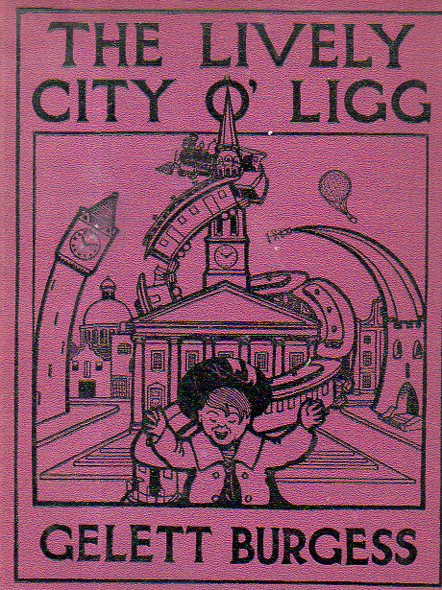
    Gelett Burgess (1866-1951, a Boston high-ground MIT grad poet/critic/all-around lit figure who wrote a lot and created an important Little Magazine called The Lark) continued his work in humor and nonsense and future-vision with his The Lively City O’Ligg, a Cycle of Modern Fairy Tales for City Children,  in 1899.  There’s a lot in this squarish book to suggest itself as a sort of farcical-absurdist tomorrow’s retro-vision fiction–its only his second book, and not the work he is most famous for, and it was written for the amusement of kids, but really for kids of all ages, and very funny. (Full text here via Internet Archive and prettier edition here via Hathi Trust.)

    Burgess387
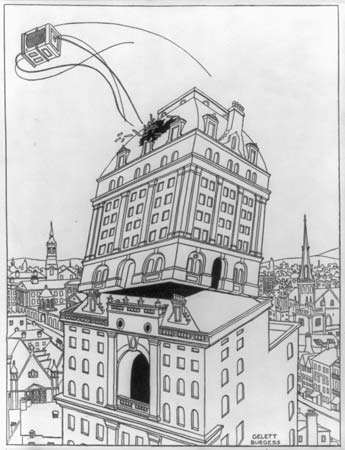
    And it has great illustrations. For example, the front cover artwork (for the edition here) suggests a dimension of space/landscape and how it changes as a moving body viewing that scene approaches the speed of light–this is Burgess’ art, and it is amazingly prescient of the modern art that was fast approaching in the next decade or so, only Burgess’ name isn’t very commonly associated with the precursors of displaying the fourth dimension in art. [He is there, though with early associations with Stieglitz at 291 and Max Weber.  When I think of these early names it is generally of the more-obscure but very early W. Stringham in his “Regular Figures in n-Dimensional Space”, published in 1880, followed by the great Jouffret in his geometries of four-space (published in the 1900-1905 or so), and then of course Charles Howard Hinton and the hyperspace philosophy of Claude Bragdon, followed by H.P. Manning’s Geometry of Four Dimensions in 1914.  But in between Jouffret and Manning there is also the artwork of Picasso and Braque and Metzinger Gleizes and Le Fauccionier and Gris and Kupka and Duchamp, all of whom addressed this issue of space and time and the fourth dimensions in their work, seminal pieces all and created between 1909-1912.  Burgess himself came to the attention of the Stieglitz group by 1910 or so and was given an exhibition of his watercolors at 291 in 1911.)

    The image illustrating the chapter three, “The Three Elevators” (above), just shows one of them bursting through the roof of an “immense building in the City of o’Ligg” “Twenty-seven stories high (!)”. (At the time the world’s tallest building wasn’t in O’Ligg but in NYC: in 1890, it was the New York World Building, New York City (309 feet, from 16 to 26 stories, but that is another story; closer to the time of the Burgess book it was the
    Manhattan Life Insurance Building, again in New York City which was 18 stories and 348 feet high. So the Burgess building was a big one by world standards in 1899–and of course there would be no tall structures like this without steel framing, or elevators, or for that matter fool-proof elevator emergency brakes. In any event the elevator spikes through the roof of the o’Ligg building, looking for all the world like one of the aliens from Wells’ War of the Worlds, which was published a year earlier than this book, in 1898. (I should say the appearance was suggested by the first edition of Wells’ 1898 book, as it was not illustrated.)

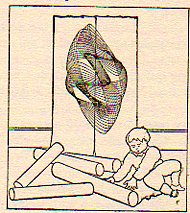
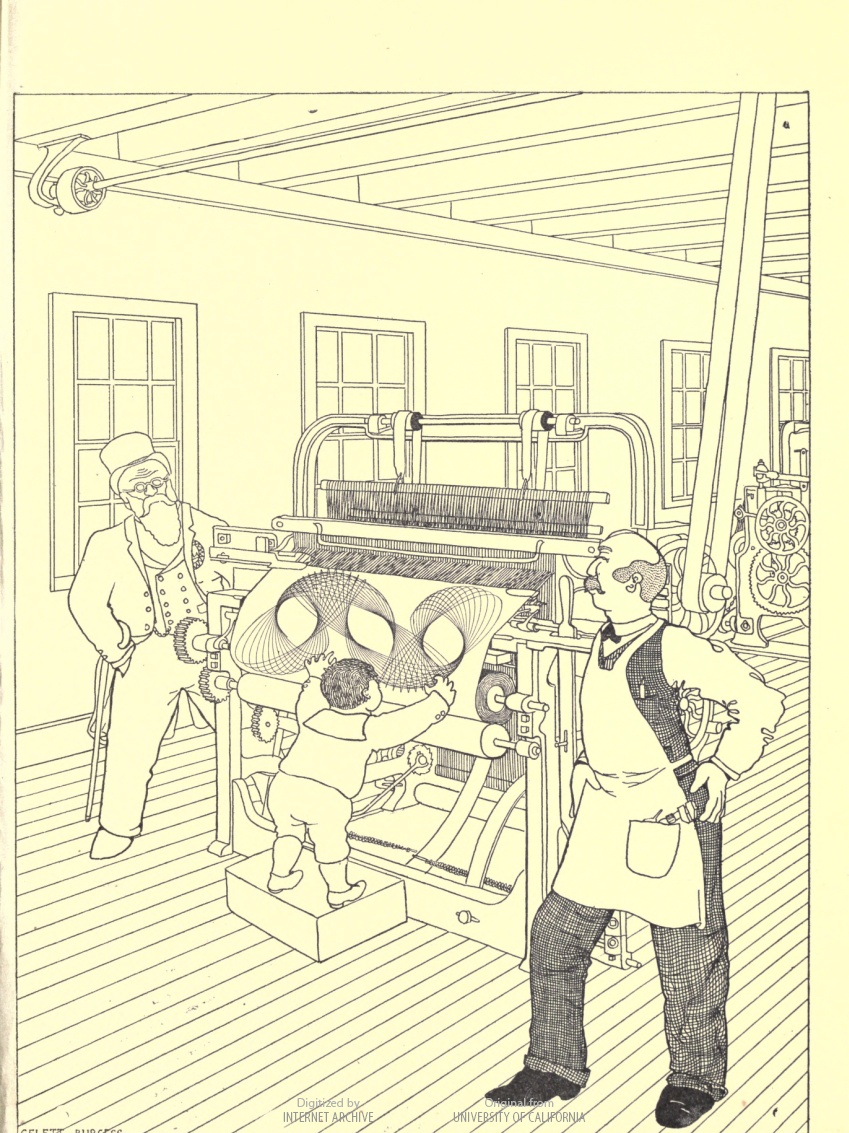
    Another surprising example of found-modern art occurs in the final chapter, “The Eccentric Loom”, when loom No. 7–like the other machines and implements in these stories–has a mind of its own and produces “something queer”, a “crazy design” producing an “insane tapestry”.  The loom is “either crazy”, or “it is a mighty clever machine; altogether too clever for me”.  But the design as an intentional piece of art for 1899 is pretty extraordinary–and the underlying premise, that the machine might be producing the art on its own, is exceptional and early.                           

    Burgess loom388

    To put the artwork in a more machine-creative-context, here’s teh Burgess image that starts off the “Insane Loom” chapter:

    BURGESS LOOM B

    There’s much more in the Burgess book to discuss, particularly in the anthropomorphization of objects, as in the chapters dealing with a sleepwalking house, the boldness of a balloon, the laziness of o’Ligg lampposts, a flying stable, runaway chairs, and the like1. It is very enjoyable to watch Burgess breathe life into these objects, and give them personalities and lives.  But it is a true joy to see him present some of the objects as the “artist” and not just the tool, as we see here in the opening paragraph of the chapter “The Blind Camera”:

    "THERE were many Cameras living in the Ligg Photo- 
    graphic Parlours, artists who looked down with scorn upon 
    all other machines, not only upon the manufacturing 
    or working members of the community, but upon such 
    aristocrats as the Bicycles and Balloons as well. The 
    musical instruments they recognized as artists, it is true, 
    but it was the Cameras' opinion that most musical instru- 
    ments were a bit mad. Even the Very Grand Pianos 
    often got out of tune ; and, besides, they were all totally 
    blind, from the Penny Whistles to the Church Organs. 
    The Cameras themselves were deaf and dumb, but they 
    never thought of that, as they had the best eyes of all 
    the objects in the City o' Ligg, except the Telescopes, 
    and the Telescopes didn't count ; they were not artists- 
    they were merely elaborate tools."


    Perhaps our future Robot Overlords (a phrase taken from Mr. Eugene Krabs in
    Spongebob
    Squarepants) will one day in the future look backwards and find
    the beginning recognitions of the creative souls of machines in the work of
    Mr. Burgess.