A Daily History of Holes, Dots, Lines, Science, History, Math, Physics, Art, the Unintentional Absurd, Architecture, Maps, Data Visualization, Blank and Missing Things, and so on. |1.6 million words, 7500 images, 4.9 million hits| Press & appearances in The Times, Le Figaro, Mensa, The Economist, The Guardian, Discovery News, Slate, Le Monde, Sci American Blogs, Le Pont, and many other places… 5000+ total posts since 2008.

Category: Absurdist, Unintentional

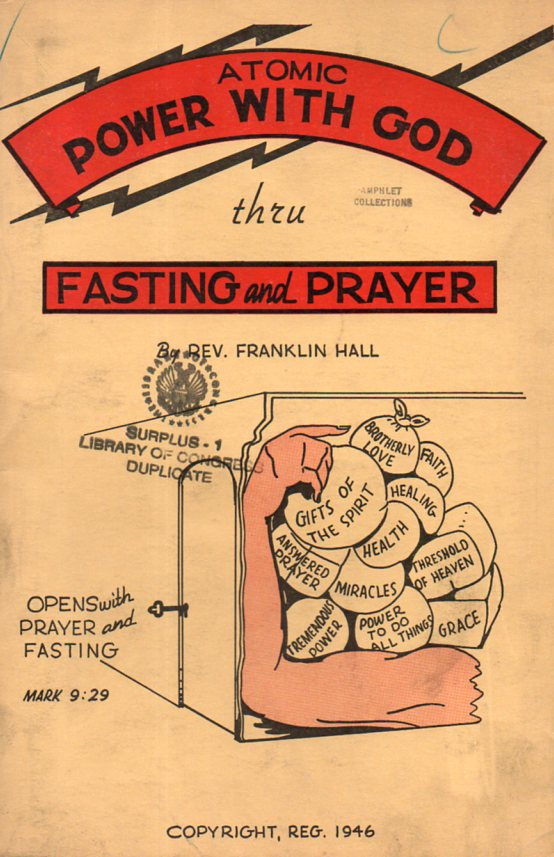
  • The Bomb God, 1946

    JF Ptak Science Books   Quick Post

    This wonderful, semi-impossible sulphur-laden pamphlet emerged from the bottom of one of the “Naive Surreal” boxes today in the warehouse:

      God Atom287When God Splits the Atom (1956) offers a not-so-friendly piece of advice:  “its later than you think”.  We are told that God delivered the atom and the atomic bomb and the end of the war and the beginning of the United Nations.  None of that will save us from the burning ring of fire, and the U.N. will fail, and so on, down to the firey pit if there is no repentence and acceptance of the higher power.  The cover pretty much tells the entire story. 

     There are a few other God-and-athe-atomic-bomb posts on this blog, like, well, this one:

    Atomic power with god628(Found here.)

    And this one (from Miss Atomic Bomb: the A-Bomb in Popular Culture–Comics, Cakes and the Will of God):

    Atomic bomb thankgod

    And of course on the other end of this:

    Atomic_bomb_end_of_world

    And that’s pretty much that.

    The idea and imagery of the atomic bomb was instantly re-purposed and used to identify and sell food and comfort, and was employed for hotel names, cakes, dart games, watches, restaurants, patience games, and so on–God was just one of a series in a long line of a-bomb apps.


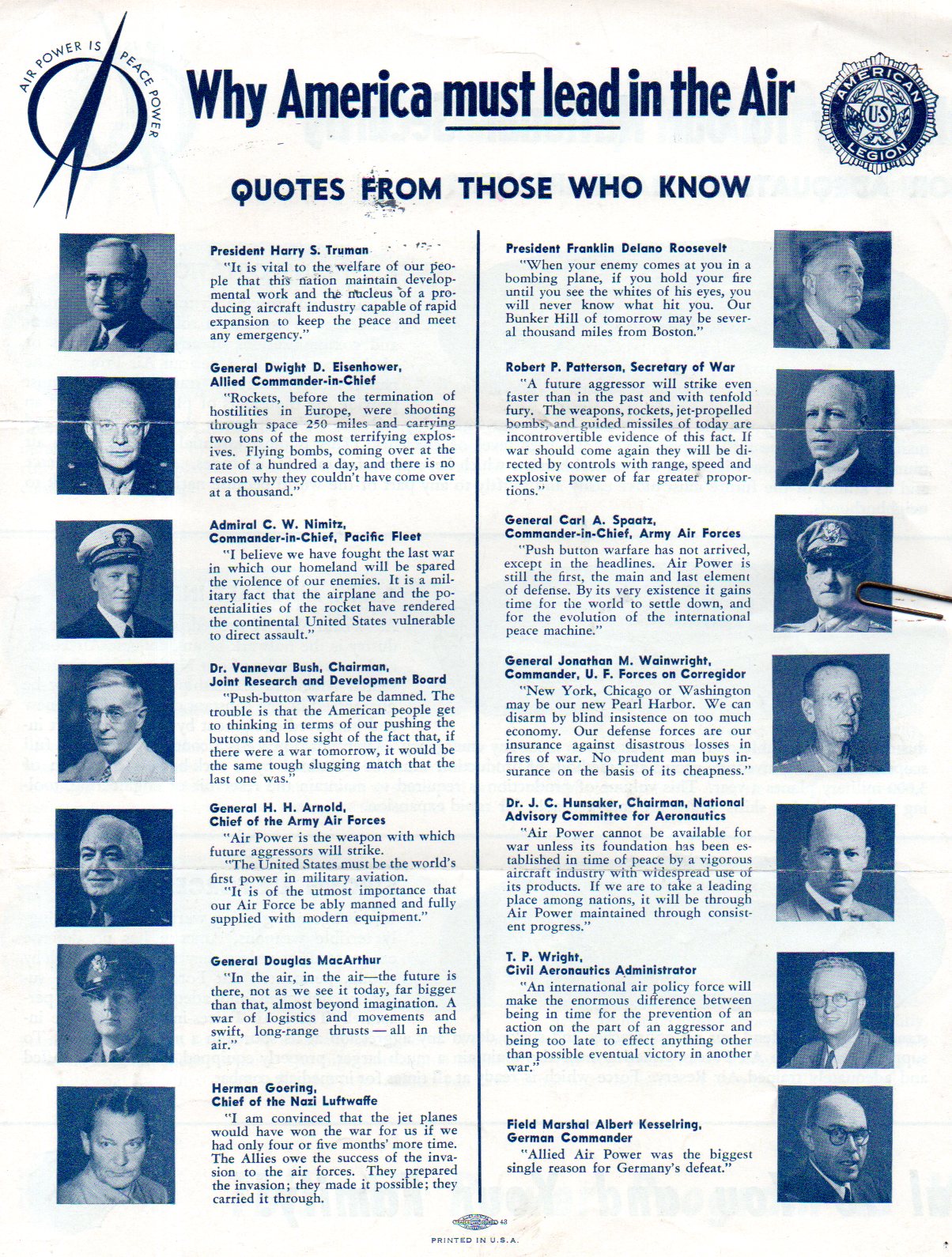
  • Selling U.S. Airpower with Hermann Goering

    JF Ptak Science Books  Quick Post

    I know it makes a certain amount of sense to try and sell an idea by using the words of your defeated enemy and how they were defeated by the very thing you’re trying to “sell”.  But, still: at the bottom of the list (The American Legion Program on Adequate Air Power for National Security, 1947) of pictures and opinions of Truman, Eisenhower, Nimitz, Bush, Arnold, and MacArthur, comes Goering.  The soft, badly-placed, I-helped-to-kill-my-air-force Hermann Goering.  It just doesn’t look right–particularly since this is the portrait of him as a skinny Goering, the Goering waiting to be executed, the Goering who lost all of that weight at Nuremberg while on trial before he swallowed a pill and killed himself.  On the other side, in the opposite column, is Roosevelt, Patterson, Spaatz, Wainwright, Hansaker, and Wright–president, secretary of state, commander-in-chief of the USAAF, commander of U.S. forces at Corrigador, chairman of NACA–and then Field Marshall (Generalfeldmarschalls) Albert Kesselring. Kesselring was a major leader, was highly respected, and very successful,  and also sentenced to death at Nuremberg for war crimes (though his sentence was commuted which found him relseased in 1952). 

    This was a good and necessary argument–using Goering and Kesselring, well, was not such a good idea, or at least using their portraits in a line of American heroes to make the point was not a good move.

    Airforce270


  • The Agony and Beauty of Bad & Incredible Title Pages

    JF Ptak Science Books   Post 2022  Books with Unusual Title Pages series

    Follow Me on Pinterest


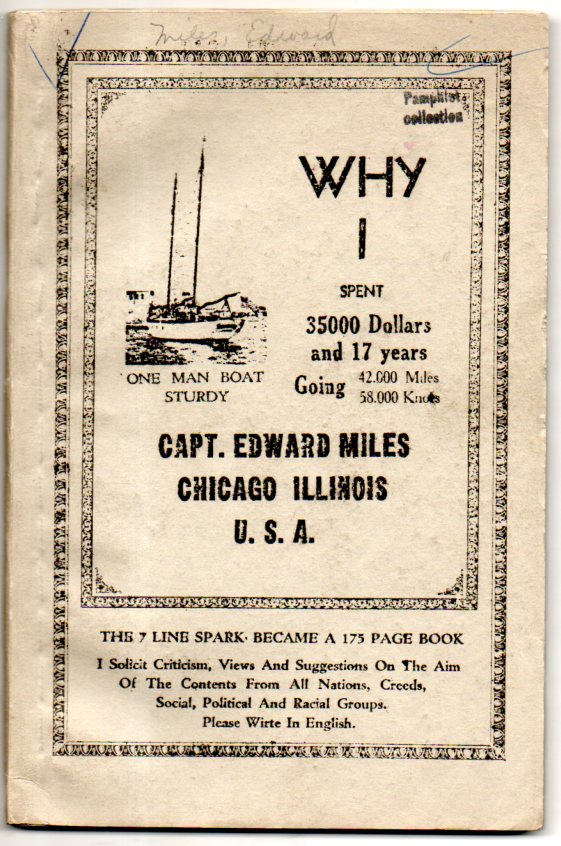
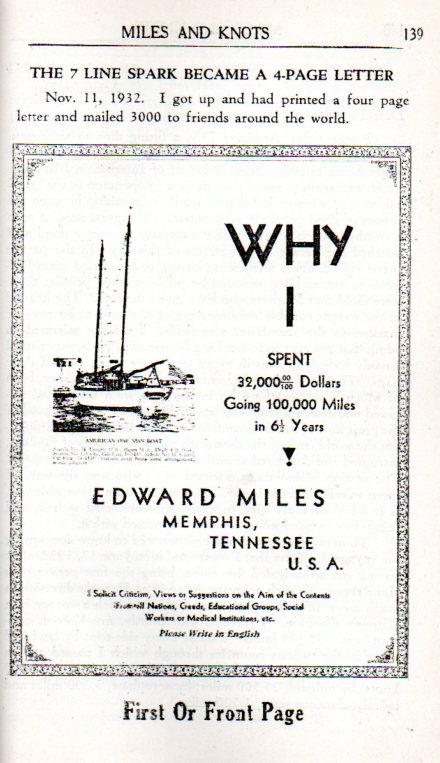
    Simply put, this is easily a first-percentile title and title-page design, the work of a man who set out to discover the world for/by himself and wound up taking a very long inner journey of Some Outsider-y Influence, and then felt the need to share it:
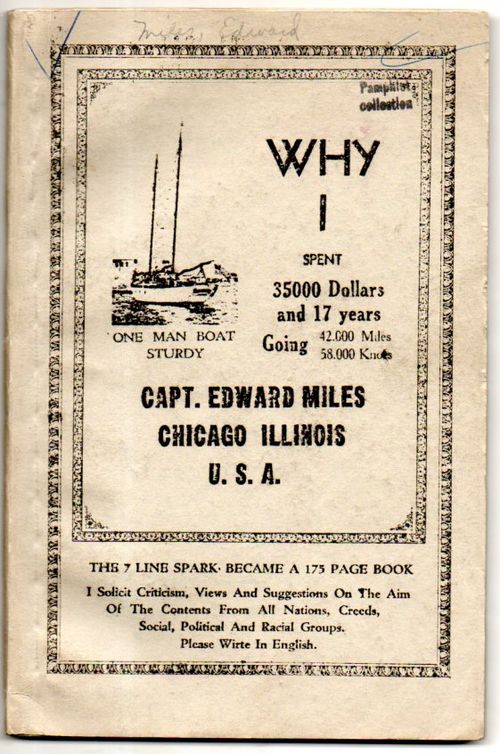
    Outsider Edward Miles257
    That is a lot of unnecessary information to share, particularly on the cover of your book.

    This is a very good example of the combination of two main threads of odd title pages that have been slowly accumulating in a series of posts on this blog (a good example of which can be seen in the post “Little Bizarredness:  Bland Hyper-oddness in Published Works”,  here) about books with “simply difficult” title pages: (a) those that are swift and contra-subtle, wispy cloudy bits that lack a cohesion and make them a little impenetrable, and (b) those that are bold and straightforward and mostly nonsensical. Here we have a composite, the elusive “(c)” category, which is a combination of a+b (where a+b=a+b, only)–both light and dense, simple and complex, all adding up to a little bit of bold almost-nothing.

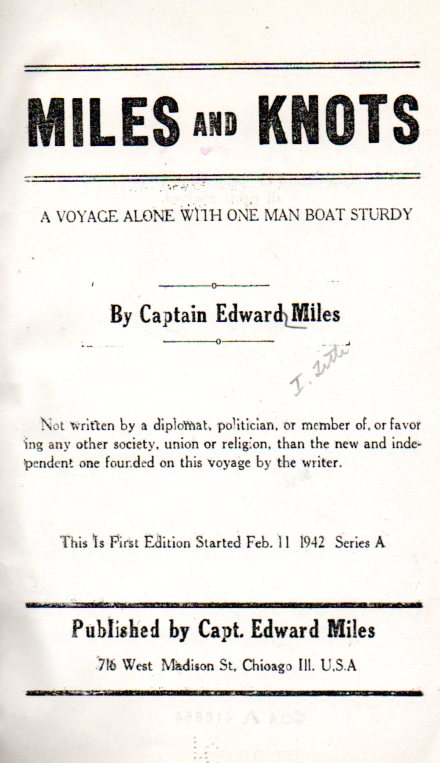
    When we open the pamphlet we see that Capt. Miles tries again with the title page of the book, changing the title on the cover but with high accomplishment is able to retain the overall largesse of mystery about what the book is about:
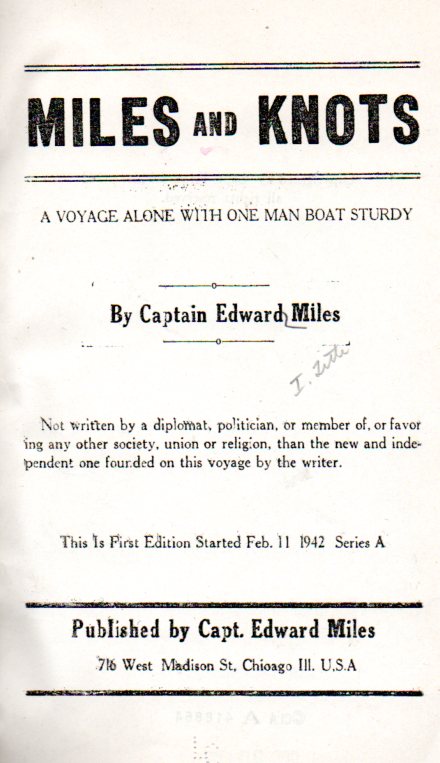
    Outsider Edward Miles258
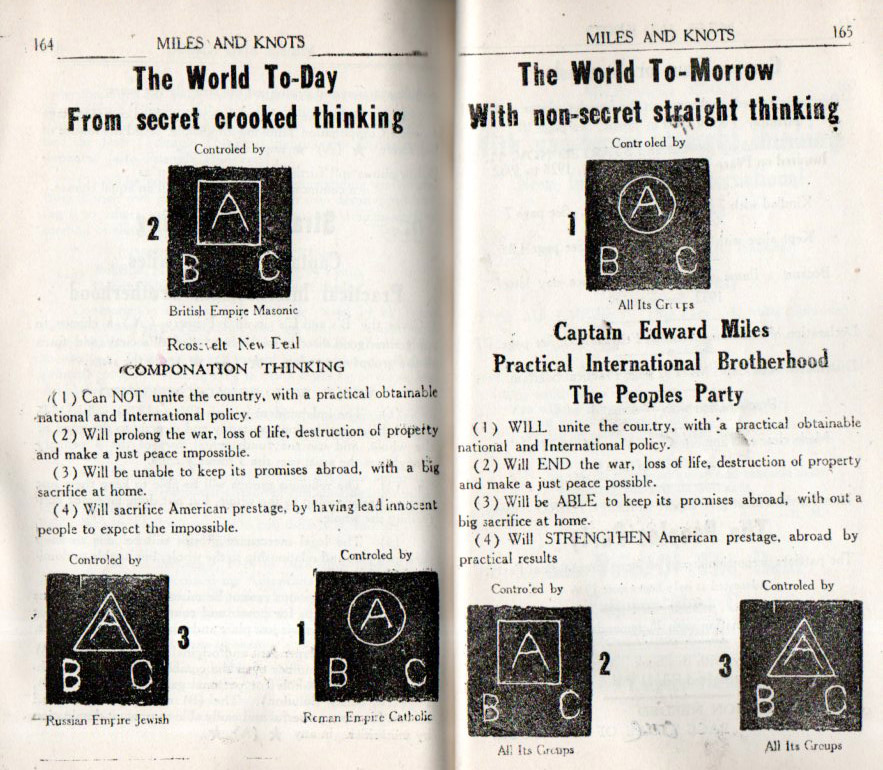
    Evidently Capt. Miles did make a grand expedition, and he was away for a long time, and he did build himself an absolutely beautiful boat–and brought back with him the idea of some sort of international straight- and not bent-thinking ferocious logical thinking political party. His was the Peoples Party (I’m not so sure why he chose this name when it was taken by several other groups already), the “patriot’s preportional [sic] part of the New International Party” (“a recorded reality”), that “with non-secret straight  thinking New Independent International Political Party the Third Party within All Nations will collectively end all empires” and so on.  He also referred to his political party by yet another name:  “Miles International Practical Brotherhood”. Its hard to take the “practical” part of this seriously, especially when Miles’ own political party gets referred to by so many different names.

    Cap’t. Miles excuses himself right at the beginning for his grammatical and spelling errors, which is a good thing because there are so very many of them, as he “had little of the artifica [sic] education (schooling)”.  He does recount his voyage but it is riddled with internal Socratic monologues that lead the reader to question many things, not the least of which is the simplest of questions:  “why?”

    In any event Cap’t Miles does drag teh reader through 175 pages of poorly written and badly spelled oddnessment.  His outre design capacity and presentation though makes this a fine example of outsider thinking. 

    Deep in the book Miles takes a deep breath and dips into the snipe-like “(d)” category, which is a very rare occurrence of reproducing the title page of a book deep within the text and not getting the title correct, which is a peculiarly beautiful agony:
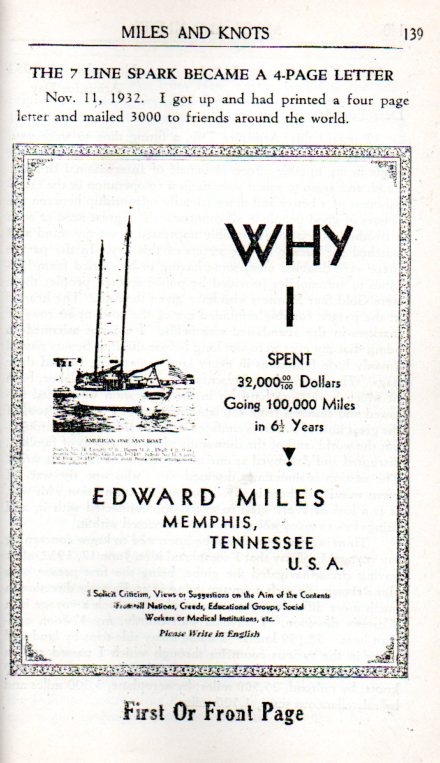
    Outsider Edward Miles259

    Evidently there is no distinction between the ‘first” page and the ‘front” page, both of which are different, anyway.

    There are also bits like this half-page announcement laced throughout the book, looking like salty sprinkles in a foamy Guinness:
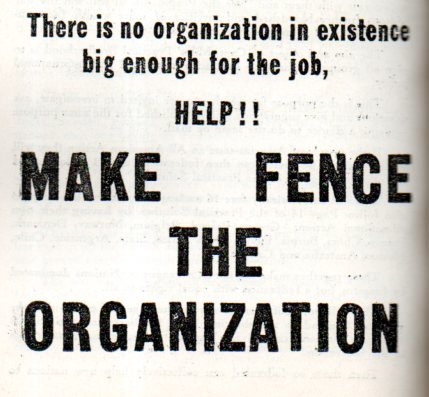
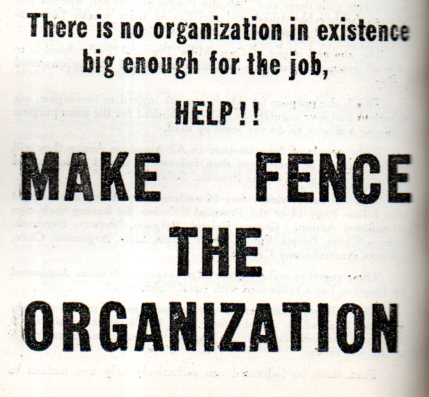
    Outsider Edward Miles261

    And just when you think that you’re through the book and its brilliant cloudiness you find this:
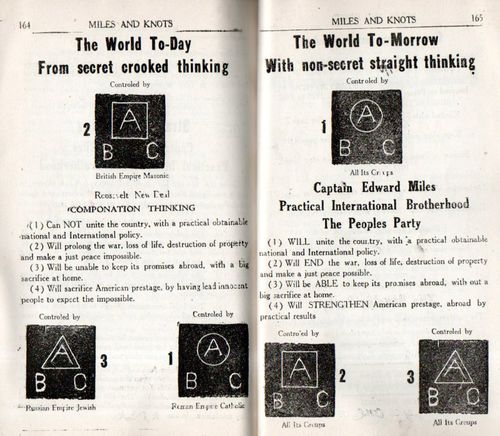
    Outsider Edward Miles260

    It is all really quite breathtaking, in a way. 

    The book–whatever its title–was written and published by Capt. Edward Miles and issued in 1942 as a first edition “Series A”–no doubt this was supposed to be the first of many such installments.  I’m trying not to imagine the disappointment that Miles must’ve felt when there was no need for more.  I guess he could’ve blamed it on the war…

    My copy is the copyright deposit copy, no doubt sent by Miles as part of the process to secure a copyright for his work in the United States.  I can find only one library in the world (via the OCLC)  with a copy of this book–the hometown Newbury, in Chicago–the record for which states that their copy was “number 105 of the first edition”. Perhaps Miles numbered the pamphlets as they went out, and perhaps the numbering was truthful. In any event, this is not the solo-lonely outcome of big and lonesome high-seas thinking, and at least one other copy exists 515 miles from here.

    I think this is one of those works that is best appreciated at a distance, and that a reading of it would only ruin things by the accumulation of painful and what looks like embarrassing detail. Looking at the large font aspect of the book is good enough to allow this work to be treated as a kind of artwork which would only be obscured by weed-prone narrative. 

    Bottom line:  the man did build a beautiful boat.


  • Ice Hooves and Blank People, 1555

    JF Ptak Science Books  Quick Post   Blank, Empty and Missing Things series

    Follow Me on Pinterest


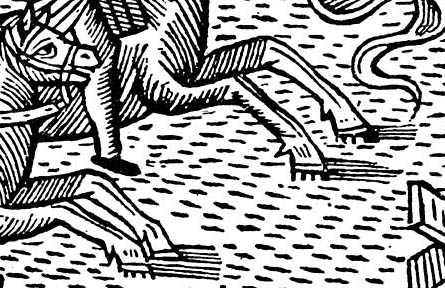
    Magnus--ice hooves and blank peopledetail blank
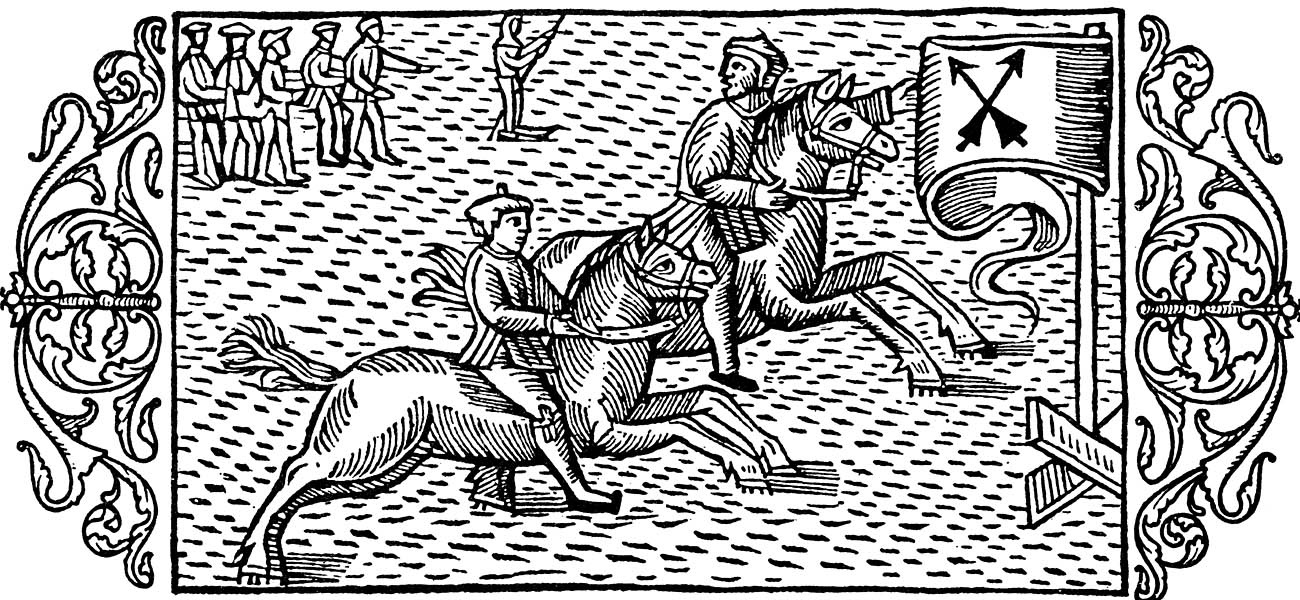
    This image may be unusual to the modern eye but not so for Nordic vision in the mid-16th century.  The appeal comes in the detail, which at least in a crafty title description seems a little odd, even though I have no doubt that it was all very sensible to the people of the time.

    The scene is from Olaus Magnus (Swedish historian and geographer, born. at Skeninge, Sweden, 1490; and died at Rome, 1558) who wrote the legendary and Renaissance-high-point Historia delle genti et della natura delle cose setentrionale1… in 1555.   Among many dozens of generally fabulous images we find this horse race on ice–naturally, in order for this to happen, the horses need to be specially outfitted with crampons, which is a good thing to do if you absolutely have to take your horse out on an iced-over river.  Still, it just seems entirely anithetical to riding a horse.

    Magnus--ice hooves and blank people detail hooves

    Magnus--ice hooves and blank people
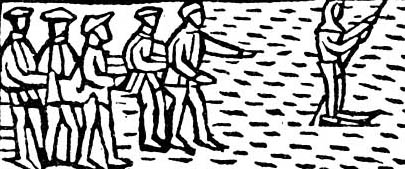
    The first image is one in a developing series on this blog concentrating on blank and empty things–in this case, the detail of faces in the small crowd in the background is the issue.  It is interesting to note that the group holds on to one another to form a line for stability while moving across the ice without any special footgear–the leader however is more prepared, and pushes along the ice with a staff while wearing bone skates. 

    Notes

    1.  The full and rather lengthy title of Historia de gentibus septentrionalibus… is translated as  “Olaus Magnus Gothus’, the Upsala Archbishops’, history of the nordic people’s different manners and camps, also about the wonderful differences in customs, holy practices, superstitions, bodily exercises, government and food keeping; further on war, buildings and wonderful aids; further on metals and different kinds of animals, that live in these neighbourhoods “.


  • The Electronic Beds of Electronic Dreams, 1945

    JF Ptak Science Books  Post 2019   (expanding an earlier post)

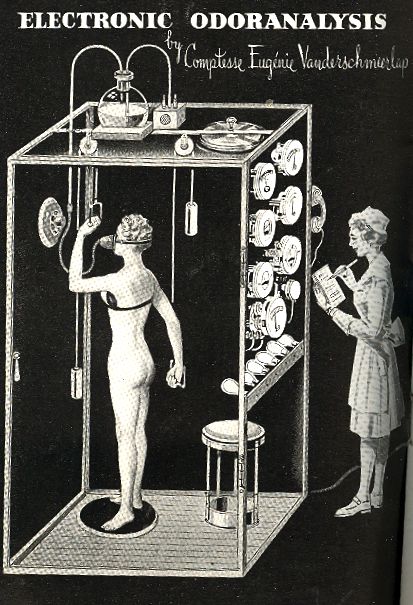
    Electronic odoranalysis

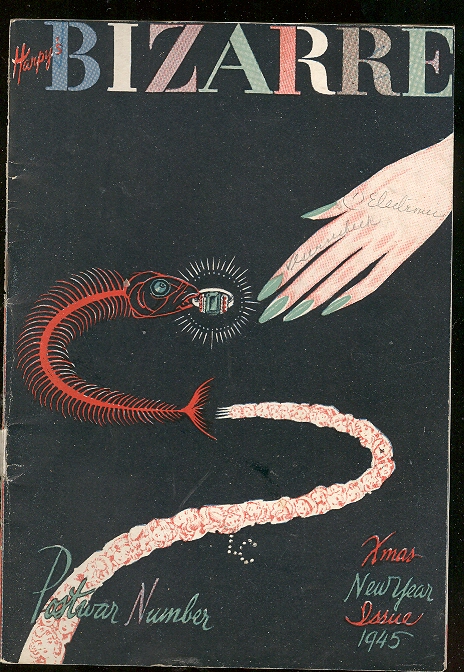
    I am very attracted to the innocence and softly bizarre category of my store’s Outsider Logic Collection, like this little pamphlet that was published in  New York in 1944.   The pamphlets in this category are odd but still understandable, and the “what the ____!” response to the subtle ones isn’t quite so high and the exclamation points not so many as in the cases of the Outsider Logic titles.  Bizarre is different from that, certainly not hiding behind any lesser or ambiguous title–it stretches the category a bit as it is intended to be a parody of the more-popular magazines and their advertising sponsors, but it is really quite a bit different from a simple humous and pun-laden trip into dead-end future visions.  It was copyright by the very far-reaching Hugo Gernsback, who in 1926 started the first magazine dedicated to the genre of science fiction (Amazing Stories) and for whom the World Science Fiction Society’s annual award for Science Fiction Achievement is named (the “Hugo”).  Gernsback evidently had a taste for cheeky parody, producing similar magazines to this called Quip, Forecast, Jolliers, Tame and Newspeep–it seems though that Bizarre may have ultimately morphed into Forecast.Blog--may 11--odd 002

    I guess that this was deeply weird for mass-production publication, and it was probably funny–now it is just weird, odd, and somewhat discomforting–a successful and intentional reach for being part of the Uninentional Outsider right from the start.

    Most of the magazine is dedicated to imaginary electronic delights–analog electronics (though it is still fairly early to be having such dreams and using the word “electronics”, as it was just barely two decades old at this point).  One of the oddest of these inventions of the near future was the Electronic Odoranalyzer, which was necessary for reasons I couldn’t discern. (I’d like to assume that odors are calculated and calibrated and a scent is chosen specifically for them, or it.)  

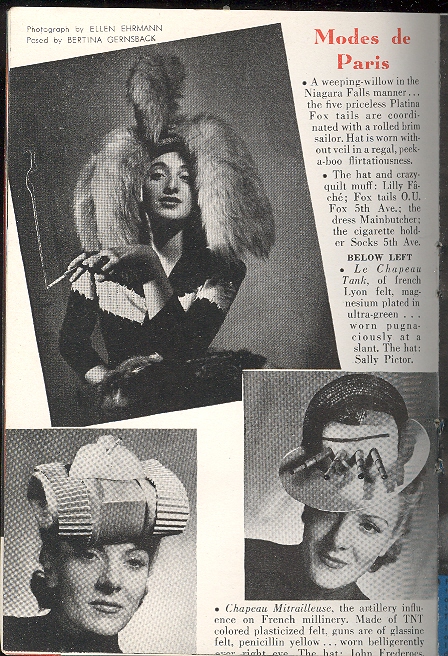
    The advertising was unusual as well:  there were hats you could potnetially purchase of weeping willow Platina fox tails; some hats had tanks (as with the Le Chapeau Tank hat, modeled for the magazine and “worn pugnaciously at a slant”), and other hats had simple canons (as with the French Mitrailsuese).  While wearing your tank hat you could also theoretically relax to your favorite tunes in style with a $125,000 radio–it was made for war profiteers who couldn’t find banks enough to hold their cash and was billed as too expensive to steal.Blog--may 11--odd 006

    Then there’s the EBC–the Electronic Bed Company–with their magnificent new product, an invention “by the great sage of Hackensack” so spectacular  as to make ordinary sleeping obsolete.  The bed was an air-conditioned, self-washing, self-adjusting, self covering, fiberglass-cushioned, telephone-capable, air pillowed, air conditioned masterpiece that looked like it was about ready for anything but sleep, which I guess would make it revolutionary.


  • “Hog Bond”, a Found-Poem in a 1960 FBI Deposition

    JF Ptak Science Books   Quick Post  

    The very first thing I saw on the new Digital Public Library of America website (here) was a randomly-selected timeline–I selected 1960 and then clicked on the first thing I saw. It was a deposition of a Mr. Johnny Bryant of Savannah, Georgia, on a case involving hogs in some way, and made on 23 May 1960. It is a single-page typed document made to the F.B.I., and it has a certain Surreal style to it wrapped around a problematic content.  The following is the document after running it through our Poem-O-tizer–it is the entire text with different spacing.  It makes its own case as, well, something. 

    Hog Bond

    I

    First, it was this man
    come down to see me

    about some hogs was
    running out,

    so he told me to come and
    go to the Court House with him to see Judge Harbison.

    So I got in my car and
    drove ahead and so he drove to the Court House

     
    Robert frank ParadeHoboken 1955

    II.

    When I got to the Court
    House Yard,

    I saw two policemen in the
    yard, so I ask him

    where is Mr. Harbison,

    so he said

    never mind that.

    You are going to jail.

    So I went to jail.

    I said OK.

    I will go to jail.

    So I went to jail. 

    Monday morning, Benjamin
    Warner got me out on a $200 bond.

    That Tuesday I came back
    to see the judge about getting

    a warrant

    for the hogs,

    so he said he couldn’t do it,

    so I told him if he
    couldn’t do it I wouldn’t own the hogs.

    ·Posted by :

    ·in:


  • The Paper Microscope: Cities in Stone

    JF Ptak Science Books   Post 2016

    Follow Me on Pinterest


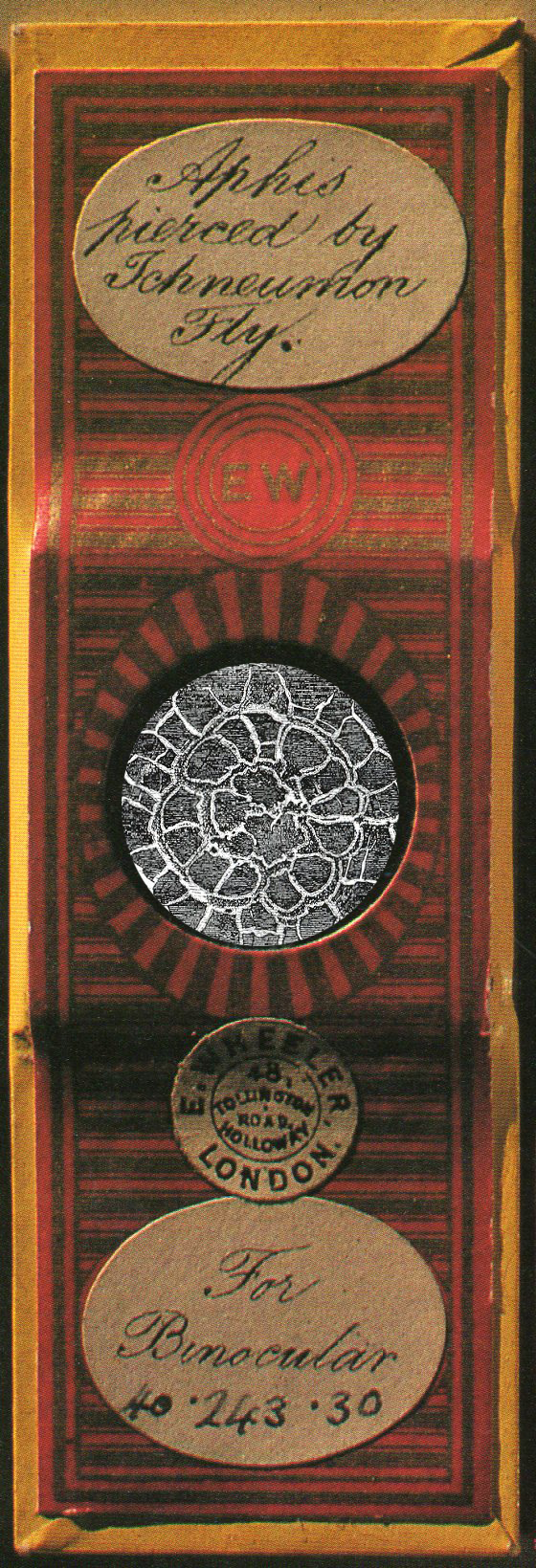
    This is a  Paper Microscope presentation of an 18th century image, presented in the form of an amalgamated 19th century microscope slide:

    Microscope slide243_edited-3
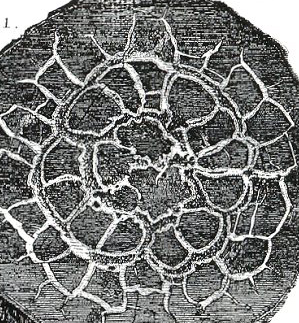
    The presentation of the specimen is the detail as follows, from an engraving from 1788:

    Hutton rock city detail
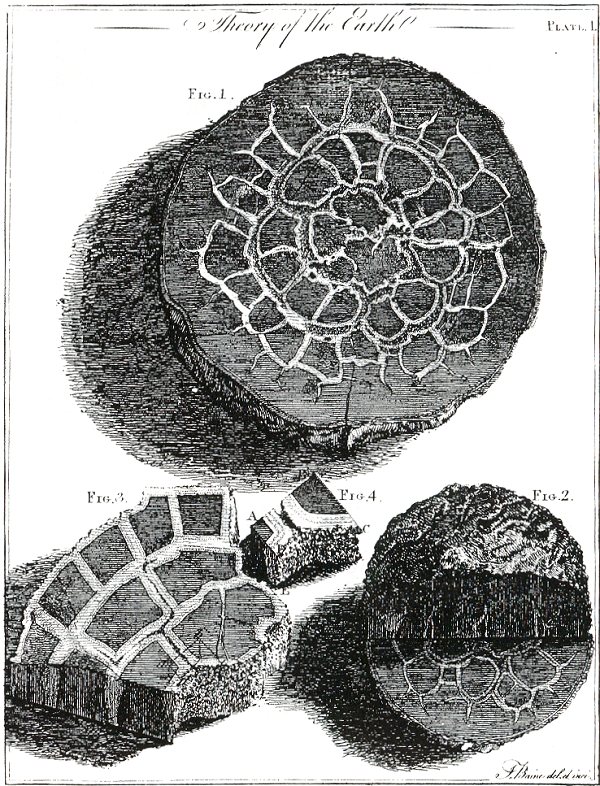
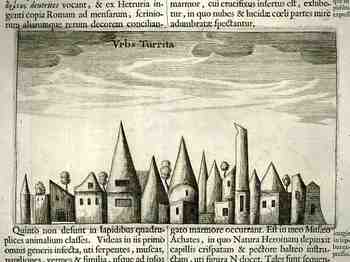
    James Hutton explained this cross-section in iron-stone as a function of the internal heat of the Earth, “by means of fusion, or by congelation from a  state  of simple fluidity and expansion” as he wrote in 1788 (in the Transactions of the Royal Society of Edinburgh)–now he may be explaining why this rock looks the way it does and getting at the root of his uniformitarianism, but what I see is a city plan. 

    Hutton rock city
    Seeing things in stone like this was not terribly unusual, though seeing maps may well have been.  One of our favorite Jesuits, the problematic Athanasius Kircher, saw cities in stone–except Fr. Kircher saw profiles of buildings more so than maps.  Let’s make no mistake about it:  Hutton did not see city maps, though Kircher did see buildings in his stones…and more. 

    For example exhibited an image of  St. Jerome (in no less a place than the cave of the Nativity in  Bethlehem!) that he found in agate. His Mundus Subterraneus (1661) is a home to a wide range of these objects: quadrupeds of all shapes and descriptions, human full-length portraits, hands with jewels, and even the Virgin Mary and child. As spectacular as these are there is always more: the magnificent cityscape (reproduced here) and the sublime discoveries of a full set of the alphabet and a series of 15 geometrical drawings, all naturally impressed in stone.

    1blog_oc_t_9_not_here_kircher_793

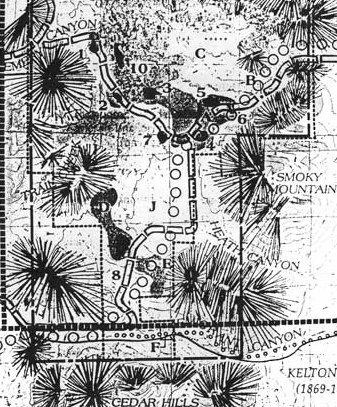
     Then down in Arizona, near Silver City, there is another city in stone, the City of Rocks, a real collection of rocks but not a real city, these being the remnants of an ancinet volcano, place-keepers for the stuff that wasn’t there any longer, a hint of a great hulking mass, a sort of plan in their own way:

    City o frocks detail


  • Outsider Thinking–Space Friction, 1944

    JF Ptak Science Books   Quick Post

    Follow Me on Pinterest

    “Ist der Weltraum absolut leer, oder nicht?” (“Is outer space absolutely empty, or not?”)

    Outsider weltraume 234
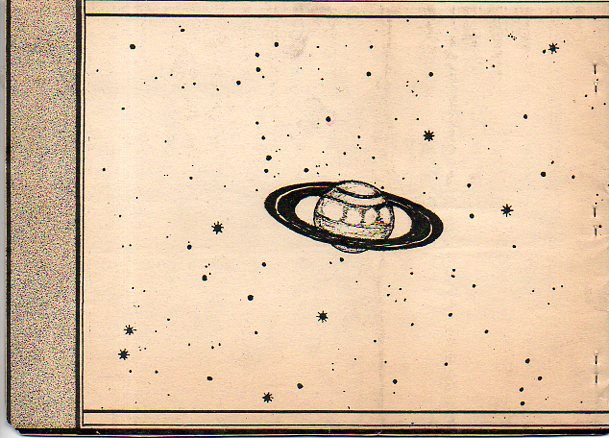
    Carl Kutter challenged Isaac Newton on the 1st law of motion.  Or at least that is what it looks like to me, the story presented in a slim but attractively designed pamphlet, published in Basel in 1944. Die Weltraumreibung presents the issue of “space friction”, and I frankly could not make my way through that much of it–not even to the point of understanding whay Halley’s Comet is illustrated on the front cover. But the design is interesting, and the issue was certainly very highly unexpected.

    Outsider weltraume 235

    This site is interesting:  http://tvtropes.org/pmwiki/pmwiki.php/Main/SpaceFriction 


  • Dance as the Godless Spasm More Dangerous than Hitler (1946)

    JF Ptak Science Books    Daily Dose from Dr. Odd

    Follow Me on Pinterest

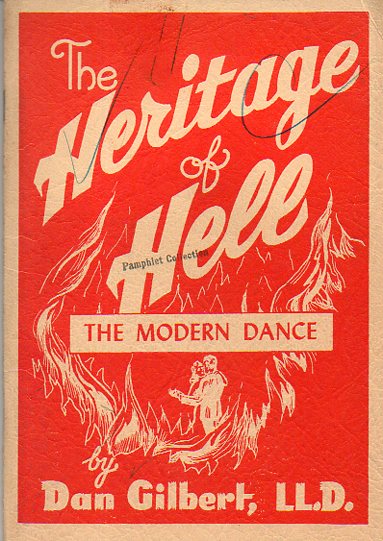
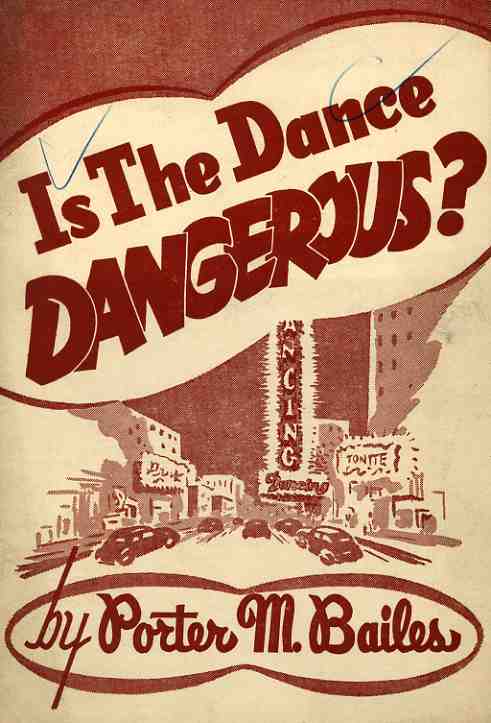
    Hitler was dead in 1946, but dance–the devil’s reach of hellfire and something worse than Hitler, according to the author of this pamphlet–wasn’t.

    Dance Hell222

    The author, Dan Gilbert LL.D., wrote a very _______ summation of modern dance, which was an assault on morals (well, Christian morals) and decency.  He does actually make the case that  dance music (jitterbug, swing, and jazz) was more dangerous than Hitler and was “Hitlerizing” American youth to its utter destruction.  “Jitterbug dens” preached a “faster jitterbuggery” (which was “conceived in the brothel to stimulate lust and vice”) which led youth into the Underworld.  The children of America were being lost to “razzy jazzy spasm bands” which would “strouse uncontrollable sex desire” and “infect youth with the disease of immorality” then to  “produce(s) a state of emotional and nervous derangement, which is scientifically indistinguishable from intoxication induced by stimulants or narcotics”. And on and on.

    These are just a few of the very choice morsels found in Gilbert’s 42-page diatribe, picked out by me rather quickly, plucked from the text with toothpicks–I just didn’t want to spend very much time with this book at all.  That said, I’m sure that there are tastier items than these, salted through a text of salt.

    I don’t know why Gilbert became this deeply interested in dance/death/Hell in the year following the end of WWII–after years of destruction, it seems hard for me to imagine to wake up, look out the window, and see the next assault on the U.S. coming in the form of dance.  He did carry on some about the “jitterbug insanity” of “improvisation”, and how dancers would abandon the appropriate and constrained methods of dance to simply move according to feeling and need.  This was the root of it all–happy feet. 

    An earlier post on this blog addressed a direct relative to this pamphlet:

    0 blog jan 20 dance danger391


  • BioPunk: Human Robots, 1900-1923

    JF Ptak Science Books  Quick Post #425

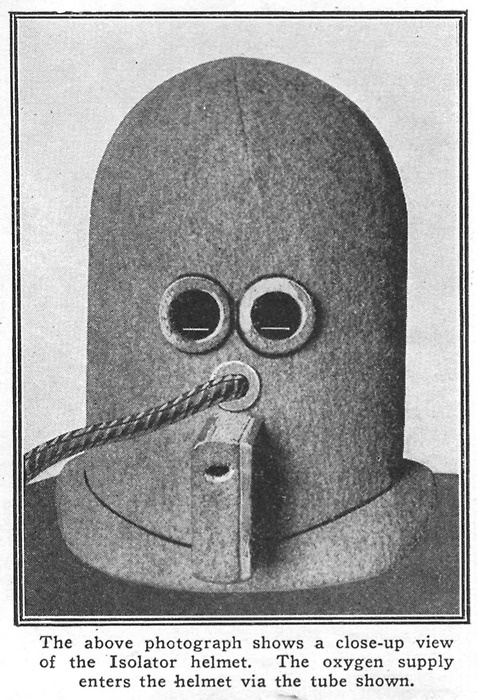
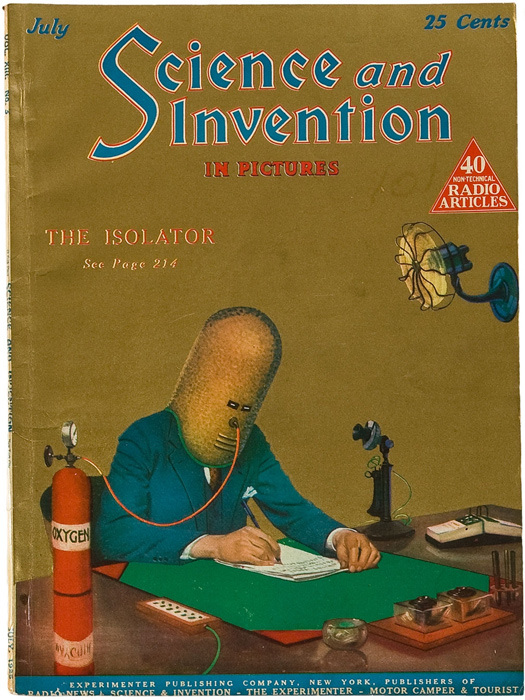
    I found this extraordinary image via collection of Finkiyaya on Pinterest, which is an interesting source for the unusual relating to the uncommon.  There is no attribution, but help came from correspondent Jeffrey Weston, who advised that the helmut belongs to none other than the ferociously active publisher/editor/thinker and creator of the term “science fiction”, Hugo Gernsback.  This was supposed to deliver a more powerful thinking and concentration experience to the user by delivering a flow of O2 , shutting off sound and auditory distraction, and by making the wearer focus their vision through a kind of horizontal pinhole slit. Gernsback I am sure did not use one of these things while working on his dozens of simultaneous projects, but he thought that it might help the rest of us–in today’s world, perhaps all we need to do to achieve this iolsation is turn off the electronics and sit at a clean desk.  In any event, the mask removed a fair amount of the human experience from thinking, and probably focused a LOT of attention on not-hearing and trying to see through those tiny slits. 

    Sub,arine helmet[Source: Pinterest account of Finkiyaya, here]

    [I wonder if Wilhelm Reich read about this as he was fiddling around with his “orgone accumulator” (read: “box”).   Even the crown prince of American Black Comedy, William Burroughs, could not wrestle this Reichian thing outside its impossible cellulosity of weird. As odd as Gernsback’s thing is, Reich’s goes on-beyond-zero with his, thinking that his siting-coffin collects/regulates an etherless ethery thing called orgone which was the seat of many and remarkable things, not the least of which was a controller of cancer and the weather.  It sounds sort of like a water-cycle thing but for a thing that influences thought and consciousness and biological systems as well as our ocean of air–that’s a long pull for a box with a chair in it.]

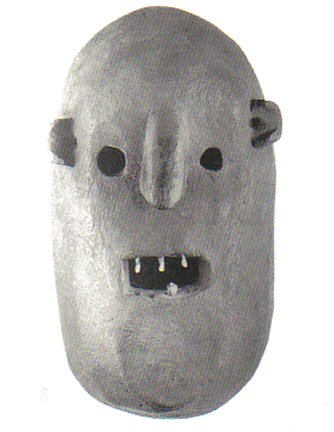
    Now three’s plenty in this helmet to suggest itself to the history of masks, but that is an enormous diversion, because I was really just looking for complements in the mechanical helmet world.  I could not resist though including this magnificent mask made by someone of the Sukuma ethnic group of Tanzania:

    Sukuma_mask_TAA

    It is interesting to note hwo the Isolator mask eprforms up to its name, isoalting human qualities to a high degree, muhc like the Sukuma mask.  There is a real encapsulating experience going on with these helmets and suits, looking far more robotic and alien than anything else. 

    And a last visit to Gernsback:

    BioPunk Isolator
    [Source: LaughingSquid, here.]

    And another (source here):

    Gernsback isolator

    How could any of this possibly go wrong?