A Daily History of Holes, Dots, Lines, Science, History, Math, Physics, Art, the Unintentional Absurd, Architecture, Maps, Data Visualization, Blank and Missing Things, and so on. |1.6 million words, 7500 images, 4.9 million hits| Press & appearances in The Times, Le Figaro, Mensa, The Economist, The Guardian, Discovery News, Slate, Le Monde, Sci American Blogs, Le Pont, and many other places… 5000+ total posts since 2008.

Category: Absurdist, Unintentional

  • Semper Vigilis–Bearing Witness in a Found Photo Image, 1880

    JF Ptak Science Books   Quick Post

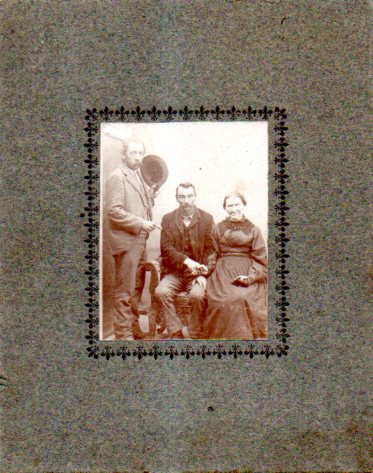
    Found photo marriage014The intention of this pose is not clear.

    Certainly there is some sort of recognition of being vigilant, of bearing witness, of some sort of fidelity, but of what sort?  The second, standing man is clearly showing respect and directing the viewer’s attention to the hand-holding of the seated couple.  Is this a mother and son, long reunited, after years apart? Or is this a married/marrying pair, age difference be damned?  In whatever case, it is the standing man and observer who seems to exhibit any sort of emotion besides dread or confusion.

    It is hard to identify what Standing Man might be feeling.  Perhaps the scenario that adds all of this aspects up properly is that this is a police identification photo, and that the two seated people are a tag-team for some sort of crime, arrested together, with the arresting officer pointing them out, not the hands–in-fidelity.  This might make the most sense of all.

    Found photo marriage015

    ·Posted by :

    ·in:


  • The War of Astronomies, Condensing Caloric, and the Creation of the Universe via Truth (1847)

    JF Ptak Science Books   Post 2151

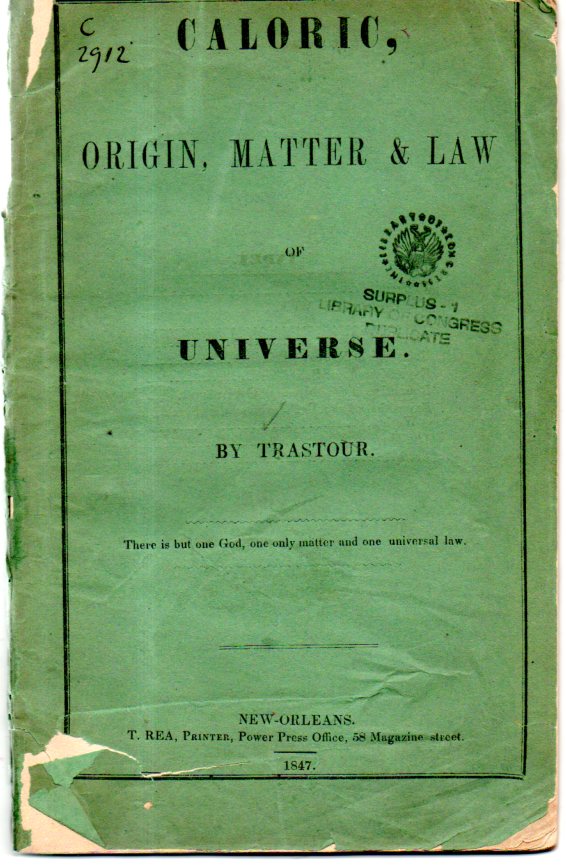
    Trastour006Pierre E. Trastour published this remarkable pamphlet in 1847, in New Orleans, a fragment of what was supposed to be an astounding and magnificent work of science that dispensed with commonly-held understanding of math and physics and astronomy.  It was a manuscript Trastour was working on in his engineering travels in South and Central America, something of his great pride.  The section that was published, which was translated from the French, did not meet his approval–or so it was said, as some time later he decided that the work was badly translated and interpreted, and sought out to destroy whatever copies he could find as well as all of the copies that remained of this edition. He found them unacceptable. 

    His ideas regarding the physical world are, well, quite independent. He addresses “caloric” as the cohesive element of the universe, right on the title page, and then works down from there. My issue is not with caloric per se–I don’t intend to have fun with this idea simply because it is obsolete, a remnant of scientific research. Trastour wraps caloric around a lot of adventurous thinking about the nature of gravity and the ridiculousness of Newton. And Kepler. And much else.  Caloric is a simple bystander to the rest of this Idea-omat and is used like a club to make the rest of his theory (or from what I can tell of it) work.

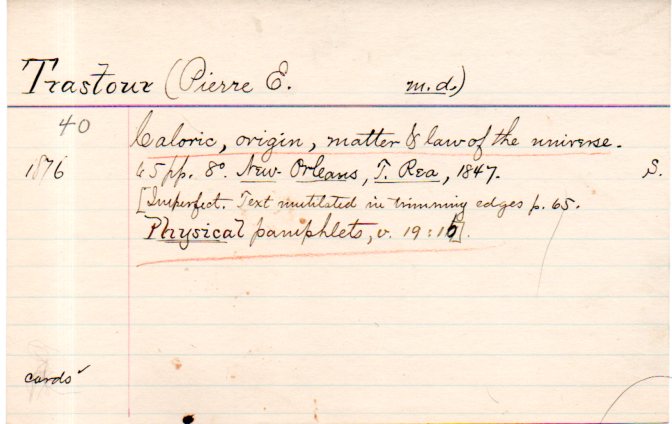
    • And for those who are curious, this copy was the Library of Congress copy, and included the original hand-written card for the card catalog, itself a pretty thing:

    Trastour007

    Caloric itself has a place in the history of thermodynamics (mostly) as a gas, going from object to object as the transference of heat. It has a fairly strong history for 70 years or so, from the 1770’s into the 1830’s/’40’s, and found interest in the works of the highest ranks of science in Lavoisier and Laplace and Black and others. It runs into modernity beginning with Rumford around the turn of the century (1799) and then dissipates with the work of Joule and Helmholtz and Clausius and many others, until it is mostly gone by mid-century.  Caloric hung for a while in bits and pieces, though it is now remembered if at all for the “calorie” and for a line of ovens and stoves.

    Trastour so far as I can tell doesn’t have a seat at the history of science table–he doesn’t seem to bump into anything interesting, though he does manage to say some outstandingly bad things about some of the biggest minds at that banquet.  Here’s an example of Trastour on Newton, appearing in The Round Table Review in 1865:

     Trastour has little use for Newton, and doesn’t seem to actually ever name the Principia anywhere. The chapter headings in the 1847 work are as follows:  “Creation of the Universe”, “Refutation of Newton’s Principle”, “Expositions of Principles”, “Refutation of the System of Copernicus”, Exposition of the Planetary World” (singular in the original), and “Truth”.

    Trastour proclaims in point #205 “One Only God, creator of all, from which all things come…” and “One Only Matter, Universal and Infinite, caloric, the primordial element, which has formed bu its different states  of condensation the heavens, the earth and all things in nature”. And so on, quickly deducing the non-existence of gravity and replacing it with the “peculiar manifestations” of the equilibriums established by caloric in bringing spinning bodies together. 

    In the end, for Trastour, it all comes down to three principles:  love of God, love of mankind, and marriage.  And “celibacy of thought” (“Whoever sets up the principle of celibacy, that immortal revolt of earthly ambitions against the divine thought, is not in the way of truth, and opens the road to disgrace and misfortune” (page 65, last paragraph of the work). That last has a bit of the sense of Precious Bodily Fluids from General Jack D. Ripper. 

    In a review of Trastour’s work some years later, the author (signed “R”) of the piece starts the article off in a way in which I thought he was going to do some serious damage to Trastour’s theories.  “I did not know the world contained one other dissenter from Newton’s theory” R said, leading me to believe that the writer was going to have-at Trastour. But I read it to quickly, missing the “other” part, because as it turns out the piece is in support of Trastour and his world-altering ideas, and winds up being quite a hagiographic peon, which was surprising.

    (The Round Table: A Saturday Review of Politics Finance, Literature …, Volume 7, 1865)

    I do very much like the title of the article, though. 

    Trastour returns to his cosmogony in 1875, writing in English this time, producing a booklet called The New Astronomy, which is 67 pages long compared to the original 65 of caloric.  It is a different work–it jsut so happens that it is about the same length of his refuted first attempt, and it is also “a preface” to a greater work to come that never does.  At the end of the book he does write on of the most glorious sentences probably ever written about caloric–well, if not the most glorious, it is at least probably the longest:

    [Source: Google Books]

    ·Posted by :

    ·in:


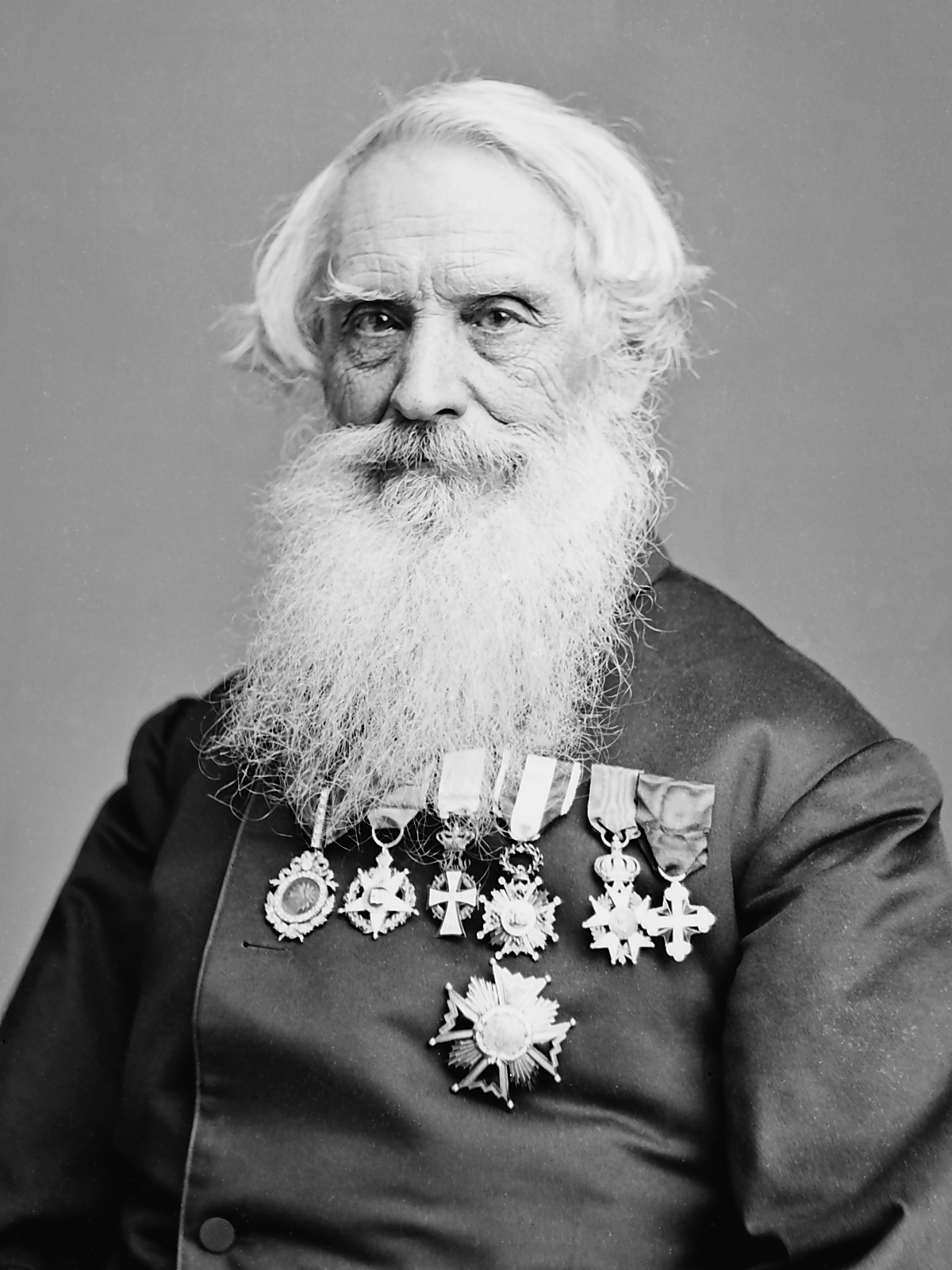
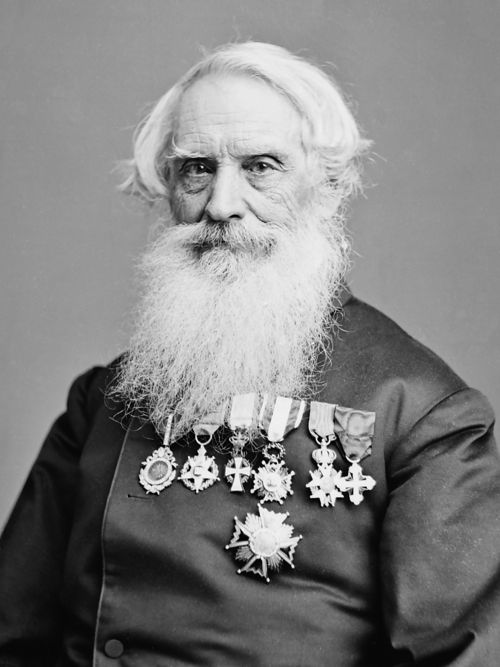
  • The Slavery-is-not-a-Sin, Anti-Catholic Diatribist, Samuel Morse

    JF Ptak Science Books   Post 2136 
    Follow Me on Pinterest

    In what could be a very long thread, this installment in the Just Because You’re Smart Doesn’t Make You Smart series takes place on the ethically/morally suspect creator of the single-wire electrical telegraph, Samuel F.B. Morse. 
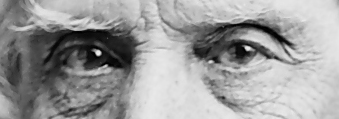
    Samuel_Morse det

    Some of this could have been learned at a young age via his “militant” Congregationalist minister father, who created “a household temper…of the deepest animosity against other faiths”1.  And then again, perhaps not–but even weighing the spirit of the times in which he lived (1791-1872), Morse had a particularly long-lived, deep, and very public hatred of the Catholic Church and “Popery”, finding it a creeping abomination that was setting out to destroy the United States via the churches propagandist agents in the Jesuits and through mass immigration.

    Morse’s book on this subject, Foreign Conspiracy Against the Liberties of the United States (1835), became a much-reprinted guidebook for Catholic-haters and immigration conspiracy types, curling itself around the impending priest-ridden despotism of the Vatican and (whatever was left of) the Holy Alliance.

    “Surely American Protestants, freemen, have discernment enough to discover beneath them the cloven foot of this subtle foreign heresy. They will see that Popery is now, what it has ever been, a system of the darkest political intrigue and despotism, cloaking itself to avoid attack under the sacred name of religion. They will be deeply impressed with the truth, that Popery is a political as well as a religious system; that in this respect it differs totally from all other sects, from all other forms of religion in the country.”2

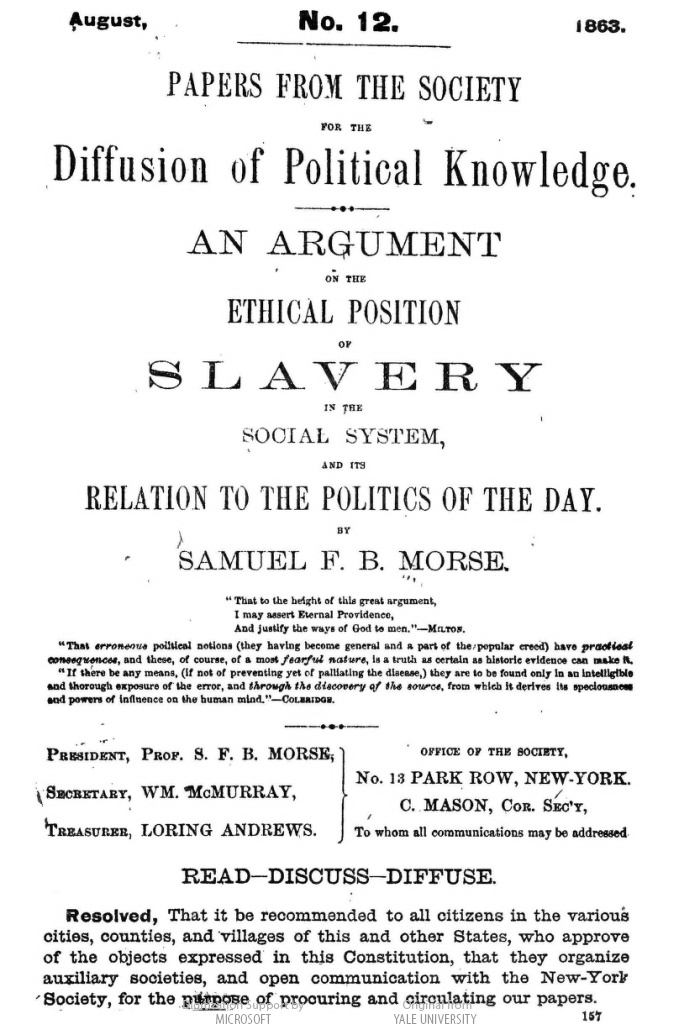
    Morse also found slavery to be an ordained right and a creation of God for right, wise, benevolent and disciplinary purposes,3  writing about it publicly in his pamphlet An Argument on the Ethical Position of Slavery in the Social System, and its relation to the Politics of the Day4 in the middle of the Civil War, 1863.

    “Slavery or the servile relation is proved to be one of the indispensable regulators of the social system, divinely ordained for the discipline of the human race in this world, and that it is in perfect harmony … with the great declared object of the Savior’s mission to earth.” (Morse, Ethical Position of Slavery, 1863, page 10.)

    “My creed on the subject of slavery is short. Slavery per se is not sin. It is a social condition ordained from the beginning of the world for the wisest purposes, benevolent and disciplinary, by Divine Wisdom. The mere holding of slaves, therefore, is a condition having per se nothing of moral character in it, any more than the being a parent, or employer, or ruler.” (Morse, Ethical…, page 13.)
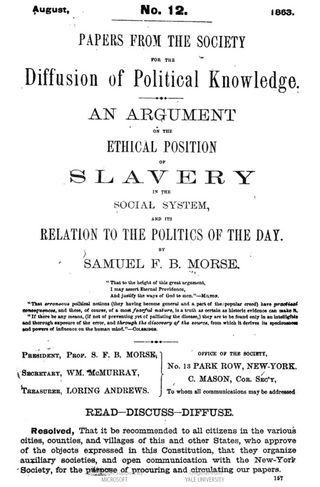
    Morse slavery(Via Yale University Library; also the Yale Slavery treatment of Morse, here.)

    The Yale website also goes on to point out that Morse thought it sacrilegious to oppose slavery and support Abolition (citing Samuel F.B. Morse, Letters and Journals, ed. E. L. Morse, Boston: Houghton Mifflin Company, 1914, 2:416):

    “Conscience in this matter has moved some Christians quite as strongly to view Abolitionism as a sin of the deepest dye, as it has other Christian minds to view Slavery as a sin . . . Who is to decide in a conflict of consciences? If the Bible is to be the umpire, as I hold it to be, then it is the Abolitionist that is denounced as worthy of excommunication; it is the Abolitionist from whom we are commanded to withdraw ourselves, while not a syllable of reproof do I find in the sacred volume administered to those who maintain, in the spirit of the gospel, the relation of Masters and Slaves”

     This goes on and on, a distribe with Scriptural and distanced-moral support, on into a cold dark night of extraordinary egotism and ethical despotism.  And it is a fine example of people with some great abilities and high intelligence could be correct in some things and wrong in so many others. 

    Notes:

    1.Gustavus Myers, A History of Bigotry in the United States, Random House, 1943, p. 160.

    2. Wikipedia article on SFB Morse.

    3.. Edward Lind Morse, editor, Samuel Finley Breese Morse, His Letters and Journals, vol 2, pp 19, 46-8, 531.

    4. An Argument on the Ethical Position of Slavery in the Social System, and its relation to the Politics of the Day (New York, Papers from the Society for the Diffusion of Political Knowledge, no. 12, 1863)
    Samuel_Morse

    ·Posted by :

    ·in:

    —

  • A Parade of Zeros, 1583: Found-Dadaist Art

    JF Ptak Science Books  Quick Post

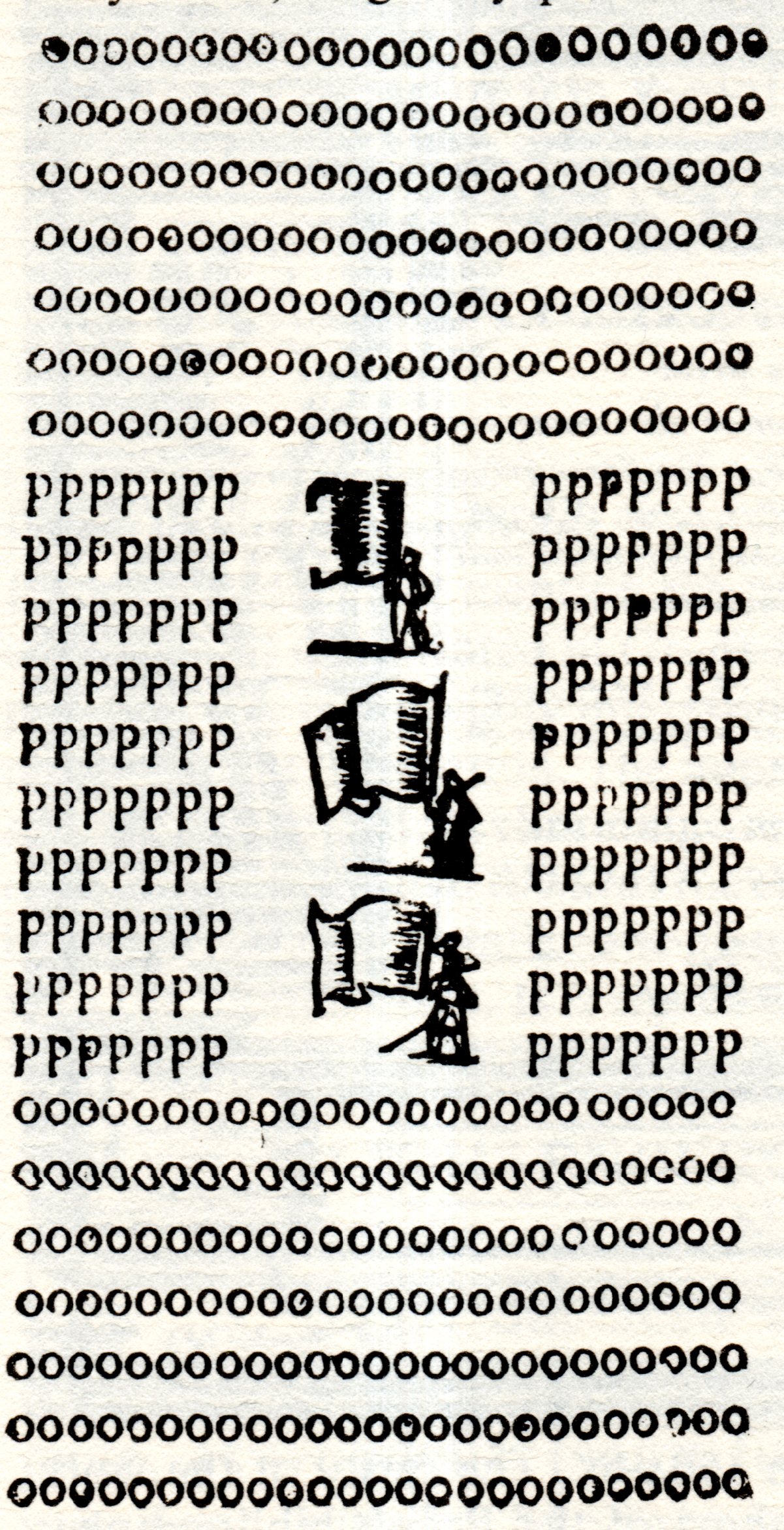
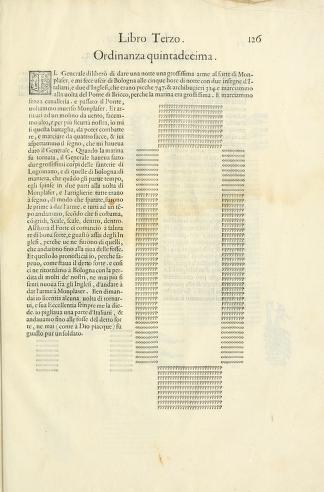
    Interesting bits of unintentional art–in some of these cases, unintentional, or found, Dadaist art–can be found in unexpected places.  Here, in this parade of zeros, we find such a case, and the place it is taken is from Girolamo Maggi’s book on fortification , printed in Venice in 1583. Aside from the crowded images like the Maturation of Zeros, I like the Embigenment of Empty Space approaches as much. 

    Troop detail823[Source]

    These are beautiful images, in spite of their deadly origin. 

    Troop movement7


  • The Similarity of a 16th c Cactus and a 19th c Futuristic NYC

    JF Ptak Science Books  Quick Post  
    Follow Me on Pinterest


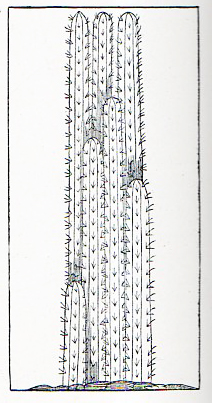
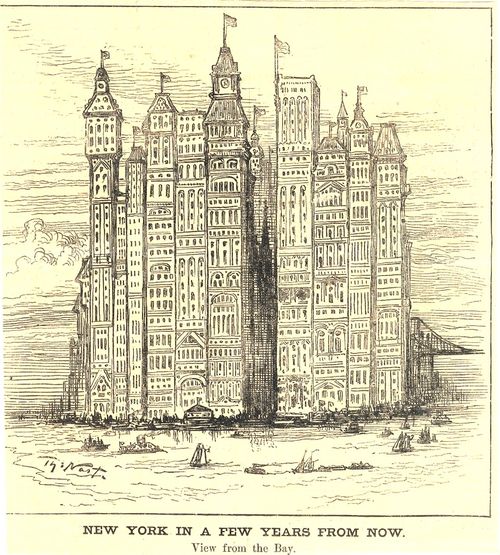
    Cactus818The future is everywhere and nowhere, hidden and obvious, localized and distant; and sometimes it is there when it really isn’t, and vice versa.  This image of the future is the last of these descriptions, though perhaps not even that, because it is a peep at a peep into the future, a reference to a reference.

    First, the cactus, seen here, from G.B. Ramusio’s (1485-1557)  Navigationi et Viaggi, printed in Venice in 1565 (and finally in three volumes, links to which are below).  Ramusio was a geographer and largely a scholar/reader/armchair-traveler, who collected travel accounts of explorers and published them together–the first such effort of its kind. 

    The second image works better if you squint somewhat while looking at the cactus–it comes from the great and slightly problematic Thomas Nast, the Harper’s Weekly social/graphic warrior.  The image appeared in 1881, and depicts New York City in the near future, he result of newly-advanced building techniques, including the elevator (and importantly!) the elevator safety brake, which allowed the construction of buildings to great and fabulous heights.  Nast saw a little bit of overeager sky-scraping in it, and pictured variegated but probably dark future from the architectural commotion. 

    Nast skyscrapper

    I’m well aware of this being an enormous stretch, but I couldn’t think of anything else to get these two images together on a single post.  (Original article here for the Nast.)

    Notes:

    Full text for the Ramusio volumes from the Internet Archives site:


  • The Mile-High Half-Vertical-Airport, 1935

    JF Ptak Science Books    Post 2134 
    Follow Me on Pinterest


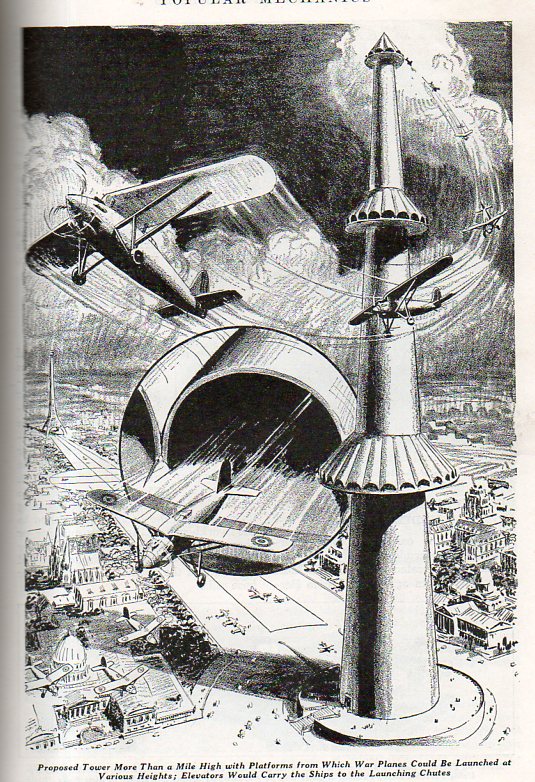
    Airport vertical794[Source: Popular Mechanics, June 1935, p 891.]

    In the history of Mile High Things I doubt there are many entries for airports–or half-airports.  This if not highly questionable structure inverted the horizontal concept of airport into something else, or at least changed the take-off into quite something different while leaving the landing strips the same. (This is the “half-vertical” part of the title to this post; “half-vertical” doesn’t mean “horizontal”, though I like that idea.) The new method of getting a plane into the air was straightforwardly breathtaking:  haul the plane up one mile in an elevator and drop it through one of the “launching chutes”. After everything is said and done, this is one idea that really didn’t need to be three-dimensional.

    There was a ride something like this on Coney Island that was very popular for years, a parachute ride where folks were hoisted skyward in a seat on a parachute and then dropped–a much better idea than this mile-high monster.

    Here are a few other examples of Mile-High/Long Bits that are posts in this blog:


  • Great Book Titles: The Does/Don’ts of Septic Tanks, Charm, and Gold.

    JF Ptak Science Books   Quick Post  Part of the series on Unusual, Obtuse, and Outsider Book Titles 
    Follow Me on Pinterest

    At some point I think I would like to post an exhibition of some of the collection of the vastly/quietly weird/surreal/Outsidery titles from my BizzaroLand Today! pamphlet collection.  Sometimes the titles are just incredibly weird, or wrong, or they’re not titles at all but something else, or they’re unintentionally absurdist of dadaist or Surreal, or they are just Outside what we might come to expect in the world of logic and its extensions.  Sometimes the titles are just odd and the work is real; sometimes not. Sometimes they’re just terrifically understated or heartbreakingly simple, and even useful, like this example (from Clymer, New York, 1945):

    Book titles septic742


  • Atlas of Dead Ideas. Q: When is Israel Not So? A: When it is Great Britain (1929)

    JF Ptak Science Books   Quick Post   Daily Dose from Dr. Odd 
    Follow Me on Pinterest

    Anglo-saxon739There was a Bible-studying group headquartered in Haverhill, Massachusetts whose inspiration/idea  interpreting the true nature of what was “Israel” according to bits and pieces in the Old Testament, and which found something to be radically different from what was seen to be  the case.  The pamphlet documents that the place we think of as Israel is not really so, and that the country best fitted to these OT statements was actually Great Britain.  There are many reasons for this and they get mistily presented in the pamphlet Restoration of Kingdom Administration the Anglo Saxon Responsibility (published by the Anglo-Saxon Federation of America in 1929), but it is rather too much and tedious and tiresome to get into the milky details, except to say that Israel as was currently recognized could not be so unless they adopt the Christian faith.  And so on. 

    The address of the organization put it on Merrimack Street in Haverhill, a block away from the river–the four story building now has it middle floor obscured by some teal 1950’s architectralolypse facing, and the bottom floor is now a dollar store (with redundant signs) with a sandwich board out front (captured by the Google car) reading “Design Perfume on Sale Beauty Supply”.  I’m sure the store is necessary and fills a need, but it is a long way and many years from redefining the concept of Israel. 


  • The Expandable Waistcoat & Blank Book Patents of A. Einstein & S. Clemens

    JF Ptak Science Books   Quick Post  
    Follow Me on Pinterest 

    Albert Einstein was many things–including a designer of clothing, and a patented one at that. He applied for and was granted a patent in 1936 (not an unbusy period in which he must’ve been noodling this thought around in his head, that blouse thing along with gravitational lensing, that pesky quantum mechanics, and the EPR paradox and all that) for an expanding waistcoat. 

    Well.  Einstein had his hand in other patents, including a rather famous one regarding a refrigerator with no moving parts (along with the great Leo Szilard, the “Einstein-Szilard electromagnetic pump), as well as part interest in gyroscompasses and a hearing aid, and better yet a “light intensity self-adjusting camera” with an “electric eye”.  And the “ornamental blouse”. I suspect that it was all in fun, except that once the thinking had been done, it was thought to take it to the next logical step. 

    ·Posted by :

    ·in:

    —

  • Belly Barrows and Lard Balloons

    JF Ptak Science Books   Quick Post    
    Follow Me on Pinterest

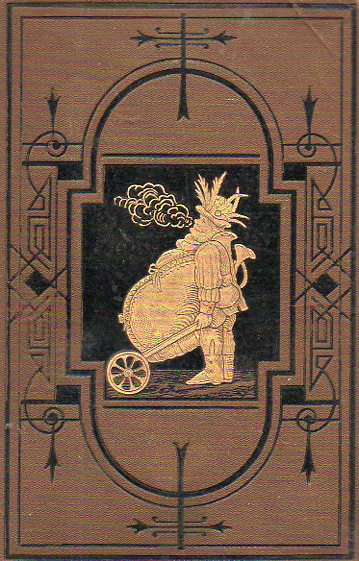
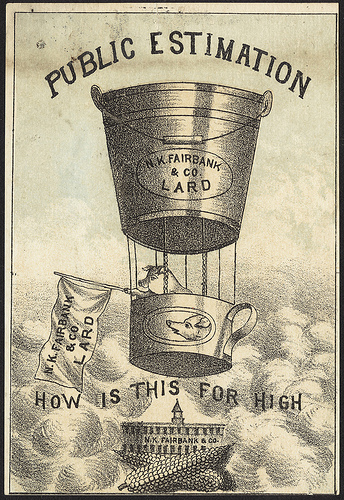
    There is no good reason to include these images in this blog on the history of science and general ideas–except that they are rather extraordinary, and highly unusual, even in the genres of caricature and grotesque.

    Belly690
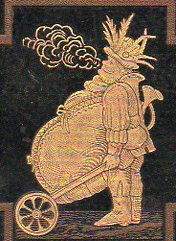
    The first is the book cover image for Thomas Wright’s A History of Caricature and Grotesque in Literature and Art (published in London by Chatto and Windus in 1873) and is a peculiar rendition of largesse and self-greed.

    Belly689
    Another never-seen-it-before image popped up today–this one an illustration for a  swaddling-meat peddler’s trade card, entitled “The three graces of N. K. Fairbank & Co.’s lard – purity,
    weight, sweetness”, printed in the late 19th century.  The image cannot be contained by the card’s size (12x8cm):

    Belly lard
    The floating lard aside, the image is disturbing and heart breaking.  The pig has every indication of kindness and quiet enjoyment, flying a small flag in his gondola of floating fat, being taken away to points probably-known.  The image was found via Bibliodyssey, and the image used is from the collection at the Boston Public Library Print Department.  (Interesting to note that the entry at Boston lists the following:  “Subject: Swine; Corn; Oil & fats; Animals in human situations”).


    ·Posted by :

    ·in: