A Daily History of Holes, Dots, Lines, Science, History, Math, Physics, Art, the Unintentional Absurd, Architecture, Maps, Data Visualization, Blank and Missing Things, and so on. |1.6 million words, 7500 images, 4.9 million hits| Press & appearances in The Times, Le Figaro, Mensa, The Economist, The Guardian, Discovery News, Slate, Le Monde, Sci American Blogs, Le Pont, and many other places… 5000+ total posts since 2008.

Category: Absurdist, Unintentional

  • 1950’s Atomic-Spawn Monsters “As Evil Atom-Age Scientists…”

    JF Ptak Science Books   Post 2245

    I’m unsure of how I came to post this–maybe it is all the result of the one still from The Werewolf from 1956 with its dynamite phrase:

    Evil as atom-age scientists

    I guess the “atom scientists” were evil because the monsters depicted in these movies were a result of atomic/radiation somethings gone-wrong. Thus: evil. Of course some of these scientists were Commies, and some just Brand-X Evil (a good band name).  All-in-all though there’s really nothing in any of these films that comes remotely close to the horror of The Bomb.

    Here’s a few more examples of quick/bad/cheap Atomic Movie Weirdnesses brought about by the bliss of evility inherent in some “atom-scientists”: 

    The Beginning of the End (1957) Republic

    Evidently this film–“starring” Peter Graves–defines what might be the bottom of thehole-filled-hole filled with bad sci fi films. Poorly acted, badly written, with very little direction and astonishingly bad special effects, this film had nothing going for it. From what I’ve seen of it it moves beyond the so-bad-its-good category to so-bad-it-really-is-bad category.  Gigantism pops up again here, with scientists producing mega-foods via “radiation”–unfortunately the foods are eaten by grasshoppers, and then other stuff happens.  


    Atomic horror--Beginningoftheend


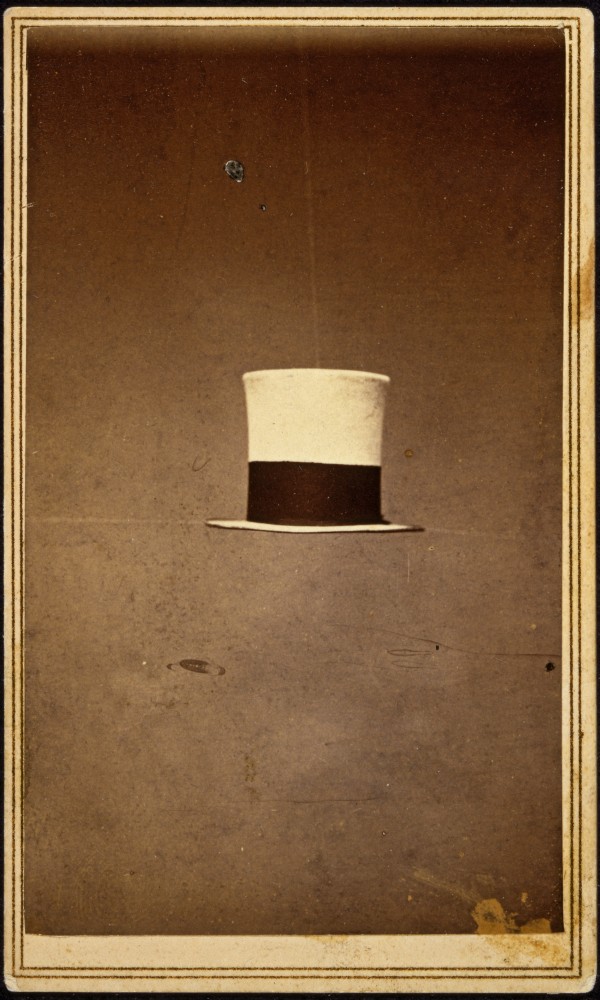
  • On Obviousness–a Very Obvious and Empty Not-Magritte’s Hat

    JF Ptak Science Books  Quick Post

    ABsurdist HAt

    [Source: “Eli W. Buel (American, active ca. 1870) Top Hat, ca. 1870, albumen print carte-de-visite, museum purchase, George Eastman House”, here.]

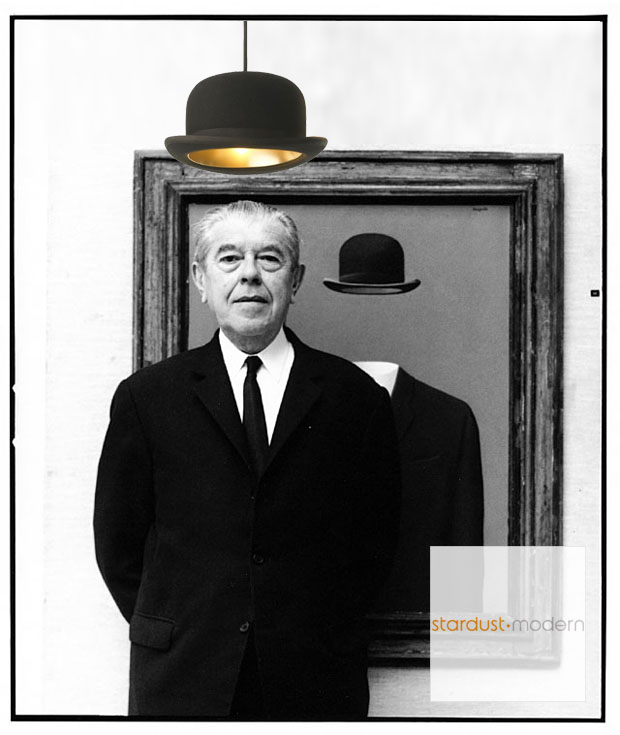
     This is a great example of “everyday objects shriek aloud” as Magritte said somewhere along the path of his life.  I thought about him right away seeing this much earlier vision of a floating hat and that it fit somehow into a Melville (“I would prefer not to”) Duchamp (“This is not a pipe”) and Magritte continuum:

    Magrittwe[Source:  Stardust Modern Design]


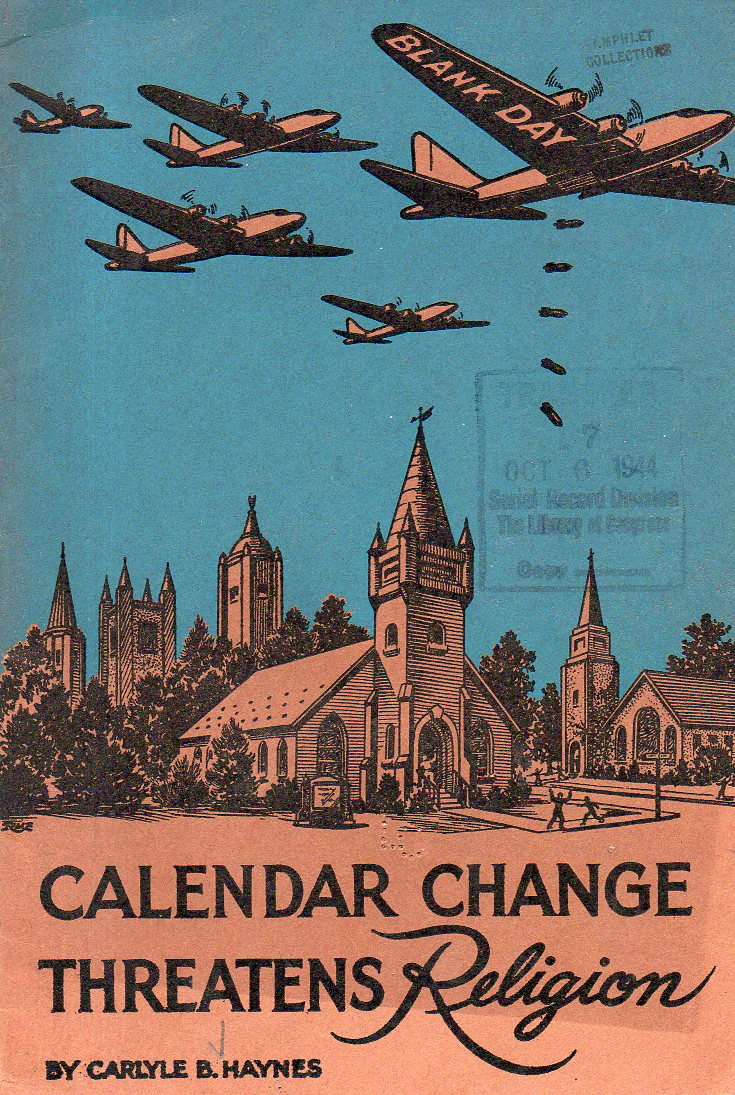
  • The Blank Day Bombing of Sunday–an Odd Moment in the History of Calendars

    JF Ptak Science Books  2241

    Calendar Day079

    It was a secret mystery as to what might be hidden in this pamphlet with the striking and unusual cover…I had a hard time imaging what the work was about, and never did really come close.  It turns out that the bombers dropping their payload on a skyline of churches from an impossibly low altitude in a Seussian-blue sky were dropping “missed Sundays” on churches.  

    Carlyle B. Haynes, the author of the work, was warning religious people about a movement at work to change the calendar of the world–in effect, it would “even out” the months, and the quarters of the year, so something more, well, “efficient”(?)  And to get there it would entail “kicking out” the last day of the year of 1943–a Sunday, the “blank day”.  The fear here was that Sundays from then on into infinity or as long as this new calendar was being used would be upset, and that Sundays would no longer be so, the calendar upsetting a calendrical system that “stretched back to Creation”.  

    It seems that the main fear would be that the “true Sunday” would be somewhere else in the calendar, that Sunday would actually be Monday or any other day in the week, and thus an attack on religion, in general, by a “wandering” religious day. 

    Mr. Haynes wrote a number of pamphlets on religion (including another work similar to the above called World Calendar Versus World Religion), and seems to have had long evangelical roots.  But in knowing a little bit about the history of recording and keeping time, and dates, and the calendar, and the history of the seven day week and the long international history of the observance of the seventh day for religious purposes, I am having a hard time understanding exactly what Mr. Haynes was trying to say in this work.  

    ·Posted by :

    ·in:


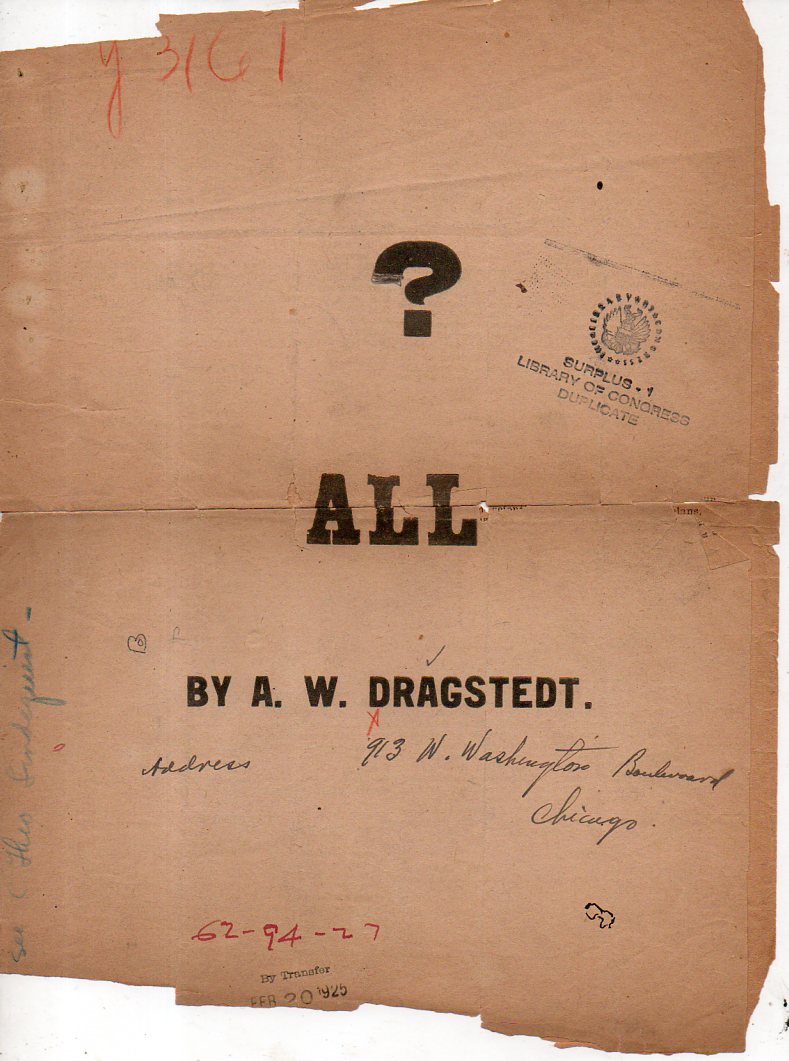
  • The Floating Aristotelian Hobo Poet Laureate of West Madison Blvd, 1925

    JF Ptak Science Books  Post 2228

    It seems that this odd and strangely beautiful pamphlet, ?All, by A.W. Dragstedt, is a fascinating surviving relic of a largely ephemeral world.  Mr. Dragstedt was the secretary of the Kingdom of Hobos of the United States, and for years was largely and necessarily on-the-move, though he seems to have settled into Chicago a bit when he served in official HoboWorld capacities.  The penned address on the incredible front cover (“913 W. Washington Blvd, Chicago”, today the home of the improbably-named “Sushi Pink” restaurant) was one of the addresses identified for the Hobo College in which he worked–that according to Roger Bruins, in his book on King of the Hobos, The Damndest Radical (1987).  This means that Dragstedt–also known to some as the Poet Laureate of West Madison (Blvd)1 and the “Hobo Intellectual”2–probably wrote this while staying there, at the Hobo College, in 1925. THis opens up a new field to me–printed Hoboiana, published works by working Hobos3.  

    Hobo--dragstedt053

    Aside from its unusual composition and design, the work is an unwieldy but semi-non-poetic Aristotelian pronouncement on the constitution of man and the cosmos, and pretty mysterious. Well, “Aristotelian” goes a bit to far, but in a way it is accurate, because the author considers the essence of matter and being and time and space and is an observer of his world, and seems for himself anyway to have drawn a conclusion from it all, though it is difficult for me to say exactly what that is.  Since the document is only a folded piece of paper, and the cover and back-page ad covers half of it, I’ve reproduced the two pages of print below.  

    It must have been a considerable effort to make something like this happen, even if you did occupy a powerful position in a floating world.  

    ·Posted by :

    ·in:


  • Bombing and the End of the World: the Physics of 1932 And All That

    JF Ptak Science Books 

    1932 in my book turns out to be one of the most collectively epochal years in the history of science.  Certainly others stand out for individual achievements, like 1905 (Einstein’s four papers over two volume of the Annalen), 1687 (Principia), but there are other yeas with fabulous achievements by numerous people.

    Mar 7 airmen det


    1543 is one.  That year witnessed the published of Copernicus’ De revolutionibus and Andreas Vesalius’ De humani corporis fabrica, two giant achievements for the outer and inner worlds, one challenging the structure of the universe and the other the Galenic tradition of physiology and anatomy. (To a lesser extent is Peter Ramus’ Animadversions on Aristotle which was a very sustained and elegant attack on the ancient-precept Aristotle an physics.)

    1859 saw the publication of On the Origin of Species…JC Maxwell’s work on the kinetic theory of gases, Riemann’s hypothesis, and the spectacular invention of the spectroscope of Kirchhoff and Bunsen (that turned much of the invisible universe visible).

    Mar 7 airmen det 2


    1939 (nuclear fission, chain reaction, neutron stars, magnetic moments, penicillin (advancement), Vitamin K, FM) and 1948 (nuclear structure, QED, transistor, Big Bang) also come quickly to mind.

    1932, though is really quite something, seeing a sweeping array of discoveries in the large and small.  Carl Anderson identified the positron while James Chadwick discovered the neutron; also, the Joliot-Curies’ made their monumental discoveries in radiation.1 Iwanenko described the neutron as a constituent f the nucleus, while Heisenberg described the nucleus as composed of protons and neutrons.  Knoll and Ruska built the electron microscope, allowing a vision of the interior parts of the interiors of the smallest things, offering images almost as spectacularly new as Hooke’s two centuries earlier.  Looking up and out, in the same year, Lev Landau postulated the existence of neutron stars while Karl Jansky invented radio astronomy. There was also the perfection of the “Polaroid” process by Ed Land, and the isolation of ascorbic acid (Vit C, by  Charles Glen King, and the beginning of a long war between him and Szent-Gyorgyi on priority of discovery).  (In the non-sciences, there was the addition of Franklin Roosevelt and Adolf Hitler to their national agendas. It was also a banner year for literature: Death in the Afternoon, Ernest Hemingway; Light in August, William Faulkner; 1919, John Dos Passos; The Thin Man, Dashiell Hammett; Tobacco Road, Erskine Caldwell; Young Lonigan, James Farrell; Little House in the Big Woods, Laura Ingalls Wilder; and Brave New World, by Aldous Huxley…)

    Mar 7 airmen 

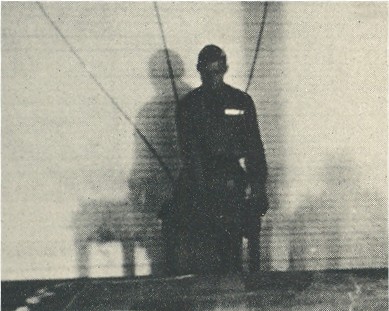
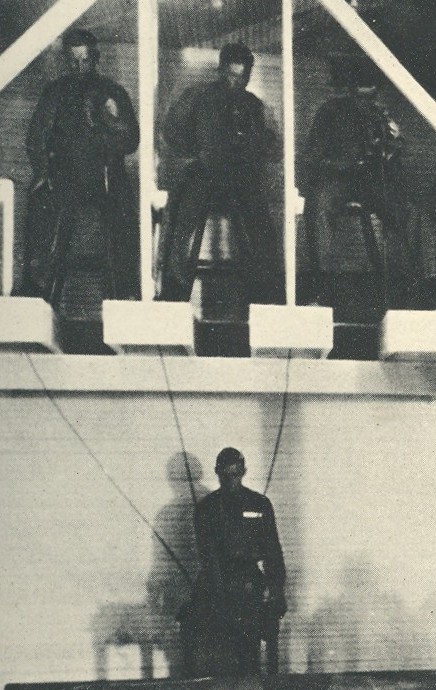
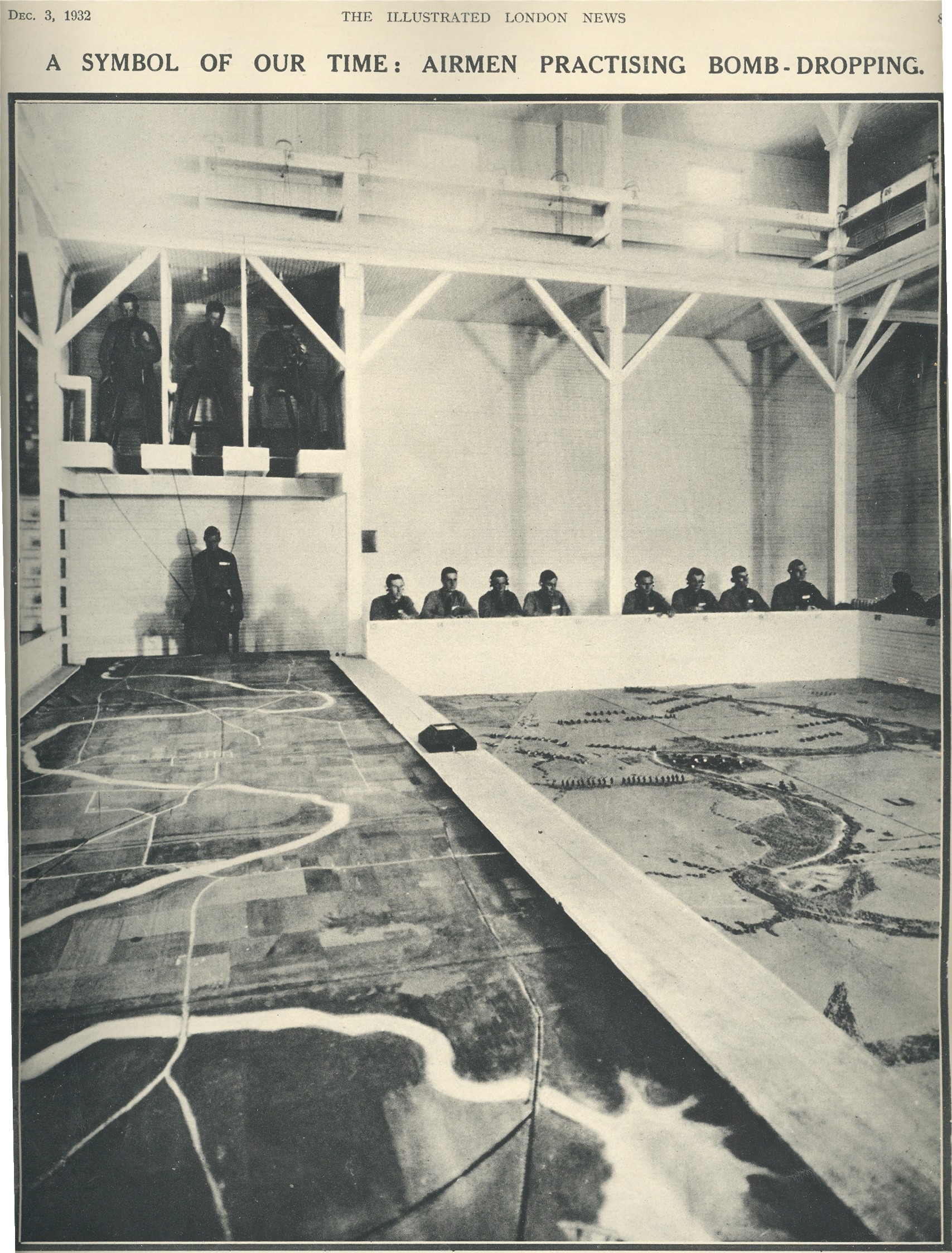
     The thread of thinking about all of this came to mind looking at this image of a bombing instruction room for aviation in England in 1932.  The image is also a great one; the aviator at far left looks like a marionette; the three men above responding to his piloting maneuvers as he concentrates on the endless panoramas of landforms that advances before him on a horizontal diorama.  It is a fabulous analog flight simulator constructed at a time of great change in aviation


    Wonder stories

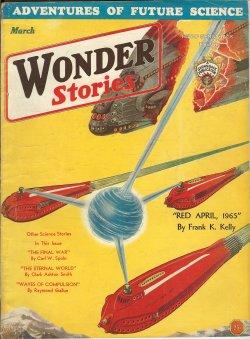
    1932 is also the year of the publication of Carl W. Spohr’s classic future-vision/speculative fiction apocalyptic-atom bomb end-of-the-world two-parter (so many hyphens!) that appeared in Wonder Stories.2 The story begins with a relatively simple series of catastrophic bombings that lead to a sort of détente, a kind of mutually assured destruction, which is then upset when the combatants discover and construct the atomic bomb.   MAD breaks down, and the ensuing massive exchanges result in a  devastated world.   Pretty prescient stuff, all-in-all, even so far as the policy goes—especially so when you wrap this sci-fi story around the elements of 1932—Chadwick, Anderson, Joliot-Curie—that made all of this stuff possible just 13 years later.

    Notes

    1 The Joliot-Curie discovery was called “one of the most important discoveries of the century… the consequences of the discovery of artificial radioactivity are immense” from Segrè, From X-rays to Quarks, 198-199).  

    2.  Part one appeared in the March issue, which also carried stories like“Red April, 1965” by Frank K. Kelly; “The Eternal World” by Clark Ashton Smith; “Waves of Compulsion” by Raymond Gallun; “Mutiny on Mercury” by Clifford D. Simak; “The Time Stream” by John Taine (Eric Temple Bell), and others.  Pretty good bumper crop of sci-fi writers in itself.

    ·Posted by :

    ·in:

    —

  • Crazy Eyes in Advertising

    JF Ptak Science Books

    Mercedescrazy

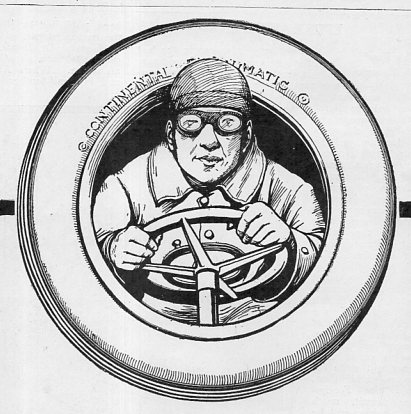
    I must say that when I first saw this advertisement for Mercedes (1924?, in the Illustrirte Zeitung from Leipzig) that I couldn’t really remember seeing someone looking quite this crazy/dedicated while trying to sell something, to anyone. This is particularly so when you take a look at a similar design for Continental Tyres, except that this ad appeared 14 years or so earlier, in 1910 (and in The Illustrated London News for May 14):   

    Crazy driver not043

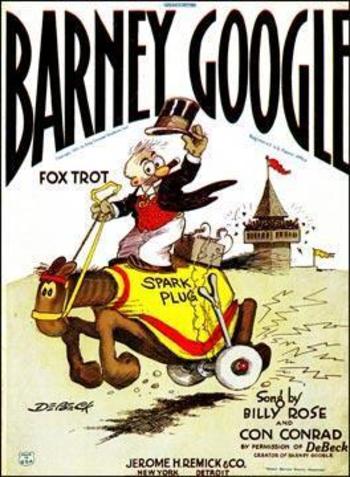
    Then I wondered about insane/laser eyes in general, and couldn’t come up much there, either.  Barney Google certainly had “goo goo googly eyes” but they weren’t necessarily crazy/insane.

    Classics_barney_google_sheetmusic

    Superman on the other hand did have laser eyes, and sometimes he was (made to be) crazy–still not quite up to the Mercedes guy, and he wasn’t trying to sell anything but himself and the comic that he was in.   I think that the Mercedes Man might be in his own category, and I’m not so sure how successful this ad campaign could’ve been, especially in the Weimar/Schacht era in hyper-inflated Germany.  

    Crazyeyesblank

    ·Posted by :

    ·in:


  • Stalin’s Repugnant Haiku: Poetry Using Stalin’s Borrowed Library Book Titles (1926)

    JF Ptak Science Books    Post 2216  History of Blank, Empty, and Missing Things series

    I don’t mean this post to be snarky or irreverent, really, because we’re dealing with one of the most fantastically murderous people in the history of humans.  Since the seven book titles that I have been able to find so far are so, well, unusual, that pulling the individual words out and alphabetizing them might prove to be an insight into the mind of grown-up Soso, Joseph Stalin.  I found the titles while researching Stalin’s report card from when he was a child, and found “Stalin’s Library Card”, by David Wojahn, a poem in seven parts that treats each of the books borrowed by Stalin in 1926, when he was 47 years old. 

    Stalin in 1926 had been General Secretary of the CPSU for two years, in spite of several years of bickering and argument with the stroke-ridden Lenin, who for some years before his death (in 1924) grew more stratigraphically dissatisfied with Stalin and warned the resat of the leadership against him.  After maneuvering against Zinoview, and Kaneneov, and Trotsky, and Bukharin and all of the people below them, Stalin was by this time solidifying his power.  Purges, manufactured famines, internal deportations of millions, executions, imprisonment, and stupid decisions at the beginning of the German invasion of the USSR in WWII, Stalin had his had in causing the death of many millions of people.  

    What did he have in mind in 1926 with these books1? Well, I think we know. There are 36 words used in the titles, including six repetetives, leaving 30 unique words.  There’s certainly enough for haiku if you wanted the taint, and a poem like that could be one that would be difficult to unremember, not (in spirit but of course not in equivalence) unlike the unremembered masses who were forced into “non-personhood” by Stalin, who when he finally died was left out of the very next printing of the Great Soviet Encyclopedia as the Vast Un-nameable. 

    I’m cataloging this entry in the History of Blank, Empty, and Missing Things series because Stalin caused so muuch of that to happen to so many people, to nearly an entire country.  And then he became missing, himself.  


  • Lowering the Mediterranean, 1930 (!)

    JF Ptak Science Books (continuing an earlier post) 

    A Monumental and Potentially Fantastically Bad Idea: Draining the Mediterranean

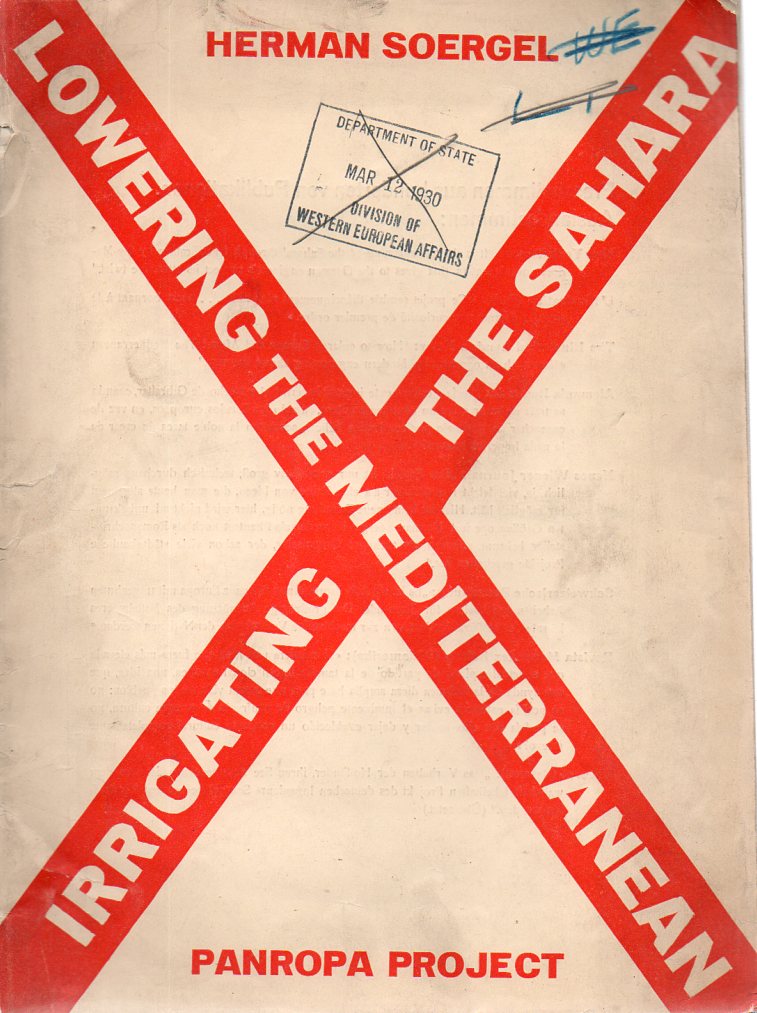
      Soergel403 [Image source: private collection.]

    “Simply the thing I am shall make me live.”–from Jorge Luis Borges, “Shakespeare’s Memory”

       
    It would be a Purgatory, or worse, to suddenly wake up one morning with another person’s memory–worse yet than to have wished it, only to find that you didn’t want it at all.  This evidently works out with memories high and low, though it is tempting to want to wish to see what the inspiration looked like for one idea located in a particular memory.  Or maybe not.  But I am curious about when and here the author of the pamphlet above got his idea, and what it looked like to him–did he hear or see or smell something that prompted the inspiration for this reverse-monumental jolt?

     It is interesting to pursue a loose thought like this to its not-necessarily logical end.  Such is the case with the self-styled Paneuropic ideas of Hermann Soergel (1885-1952), the author of the above. Soergel was a Bauhaus architect and author of a number of works on design and far more ethereal, floating-castle ideas. His most spectacular contribution—incubated in the mid-1920’s and still clinging by its fingertips as an idea among some current thinkers—was to put a dam across the straights of Gibraltar.  The dam would generate electricity of course, but most importantly to Soergel, it would also empty an enormous amount of water from the Mediterranean leaving vast new expanses of land to be developed and colonized over generations into the future.  The water of course would have to go somewhere, and that somewhere was the Sahara Desert, somehow in its wake creating farmable and productive lands. Soergel was creating a certain, very wide, fantastical future of uncertain monumental prospects.
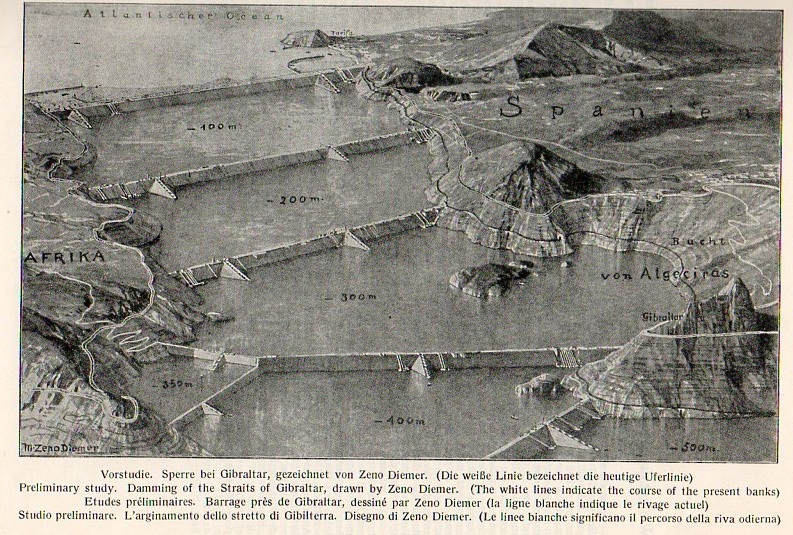
    Soergel405
    A “brief outline” of the idea was published in this four-language pamphlet, Lowering the Mediterranean Irrigating the Sahara (Panropa Project), which was published by J.M. Gebhardt in Leipzig in the very bumpy year of 1929. (The Weimar years in Germany were already into deep bumpiness; the rest of the world would follow suit in October of that year.)  To be fair, Soergel didn’t plan on emptying the entire Mediterranean, just a bunch of it–at least enough to be able to rename it.

    [Here’s a map of the new Mediterranean, or the Mediterranean that would be made to go away.  As you can see at this point Sicily and Italy become enormous, and the Greek Islands are combined to form one large land mass–this last bit alone is enough to form total and complete reisstance to this idea. Also at this stage perhaps 150 or so miles of new lands have been reclaimed from the sea all along its former borders–more so in Turkey.  There is no mention as yet of any new islands that are formed in the sea water’s wake.]
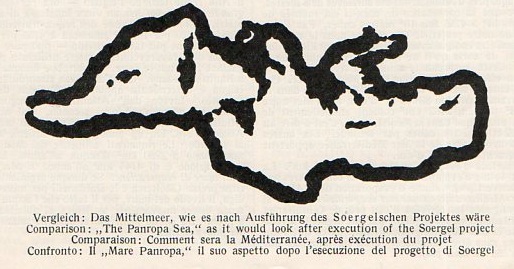
    Soergel404

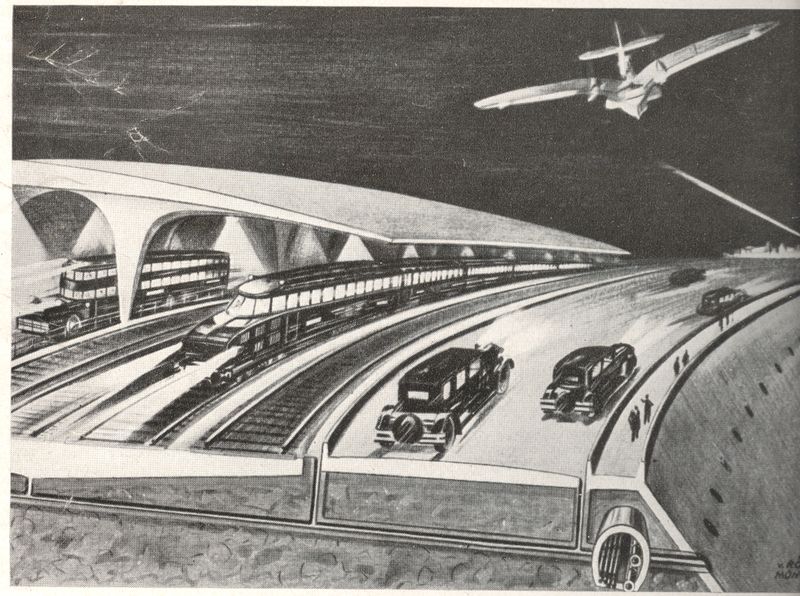
    The master plan at work was that the world would be divided into three economic spheres in the future, all beginning with the letter “A”:  American, Asia, and the new land to be created by Soergel, “Atlantropa”, which was the former Europe expanded into the new dry beds of the Mediterranean and North Africa.  And also of course Egypt, which would be covered with “thousands” of canals and become semi-submerged by the new borders of the meandering sea.  This would be the way for Europa to compete with the rest of the world in the future. 

    [I should point out that the image above comes from the Illustrierte Zeitung (Leipzig) for August 1931, and is a drawing by an artist named “AS. Christ” depicting a cross section of one of the bridge/dams of Soergel’s Panropa’s ideas.]

    Perhaps it is actually three steps to get from the idea of damming up the straits of Gibraltar to the osmosis of Shakespeare’s memories into someone else’s brain—a squinting acquiescence of the middle touch being the brilliant Jorge Luis Borges.  You see it was in the Argentine master’s last published story, “Shakespeare’s Memory”, that we meet Herr Soergel (as Hermann Sorgel) again.  But so far as I can remember Soergel exists only as a fictional character, with no reference to his real-life self.  In this wonderful story, Soergel inherits the memories of William Shakespeare—these bits come to him slowly but surely, until they start to conflict with his own memory, and things get difficult.  The man with Shakespeare’s memories winds up phoning strangers on the telephone, giving them away at random, until Soergel is left with his own mind again.  Superior as Bill’s memories were, they still weren’t Hermann’s, who wanted his own life back in the end. 

    And so from the titanic, pan-europic technodream of Bauhausian Hermann Soergel to the dead brains and living memories of William Shakespeare, all through the fingers of the beautiful Jorge Luis Borges.  
    ==Blog July 21==shakespeares memorie

    I’m sorry to report that at the end of it all, near the end of the pamphlet, Soergel releases his opinion on the political importance of his project.  And yes, his aim was to form an alliance between the new PanAmerica (of the “three Americas” with the new Pan-European African Union to thwart “the yellow peril” which “arises from the racial antipathy of India, China and Japan.  Soergel writes that “the fate of occidental civilization…will be settled on the Mediterranean”.  

    After it is all said and done, perhaps the best reiew of the work by Soergel is provided by the graphic designer who put the Big Red X on the cover of his work.  It fits. 

    Some of the works by Soergel include the following:

       Atlantropa. Fretz & Wasmuth, Zurich / Piloty & Löhle, Munich 1932

    Vorwort zu: Wayne W. Parrish : Technokratie – die neue Heilslehre , Piper, München 1933

    Die drei großen A, Amerika, Atlantropa, Asien , 1938. The three large A, , Atlantropa, Asia, 1938

    Atlantropa-ABC. Atlantropa ABC. Kraft, Raum, Brot. Kraft, Raum, Brot. Erläuterungen zum Atlantropa-Projekt , Arnd,Leipzig 1942 

    Some works about  Soergel: 

    Alexander Gall: The Atlantropa project. Die Geschichte einer gescheiterten Vision. The story of a failed vision. Herman Sörgel und die Absenkung des Mittelmeers .

    Herman Sörgel and the lowering of the MEditerranean . Campus, Frankfurt am Main 1998. 

    Wolfgang Voigt: Atlantropa. Wolfgang Voigt: Atlantropa. Weltbauen am Mittelmeer. Building the Mediterranean world.Ein Architektentraum der Moderne . An architects dream of modernity. Dölling und Galitz. Hamburg  1998.



  • A Cosmological Map of the Descending Dead (1855) & a Surprise Death-Cosmo Guest Image

    JF Ptak Science Books   Post 2234

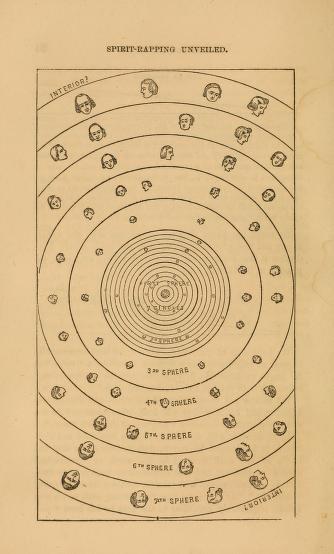
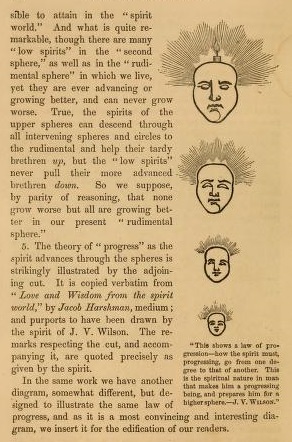
    Oh my! The book Spirit-Rapping Unveiled (1855, see below for the long and potentially boring and extensive title1) in the midst of much dizzying introductions and elucidations, refutations and condemnation, praise and pain, is this almost one-of-a-kind map, showing the descent of the dead onto the Earth. 

    Spirit wrappins universe

    [Source: https://archive.org/stream/spiritrappingunv00matt#page/n3/mode/2up]

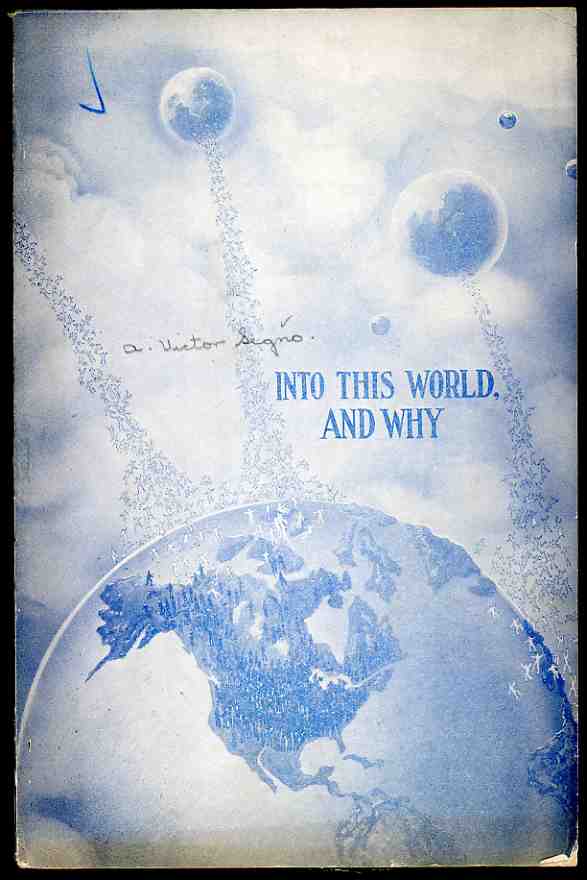
    I say “almost” because there is also this highly unlikely image-though-not-map which I wrote about in a 2008 post with the hyperbolic title “Extra-Earth Humano-Alien Souls From Outer Space Repopulate Earth-Hell!!(??), in which the title accurately tells the contents of its text and the front cover depicts the descending alien dead: 

    So there are at least two such map/images depicting Earth-bound dead descenders, and both are magnificent in their own _________  way.  

    The text of Spirit-Rapping explains the deathly cosmogram: 

    “In accordance with the theory already described and illustrated, it is assumed by our modern necromancers that the spirits of the dead descend to the earth or ” rudimental sphere” at pleasure, and thus communicate from time to time, and in various ways, with certain favored mortals called ” mediums.” At the same time they belong each to his own sphere, respectively, according to the time he has been ” progressing,” and his head is large or small according to the sphere to which he has attained. Indeed the earth, seen in the center of the cut, is a small affair compared with the heads of some of the sixth and seventh sphere progressives.” —from page 21

    WHo would/could or want to say more?  

    Spiritrappingunv00matt_0024


  • A Beautiful, Complex Mess Illustrating the Entire Development of Human Society (1926)

    JF Ptak Science Books   Quick Post   Outsider Logic series

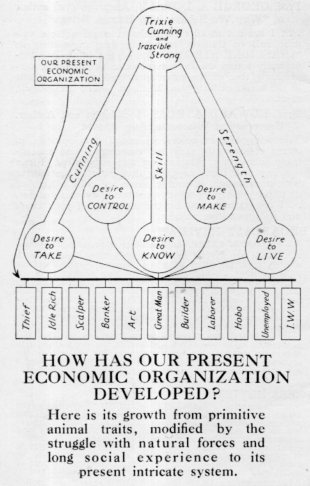
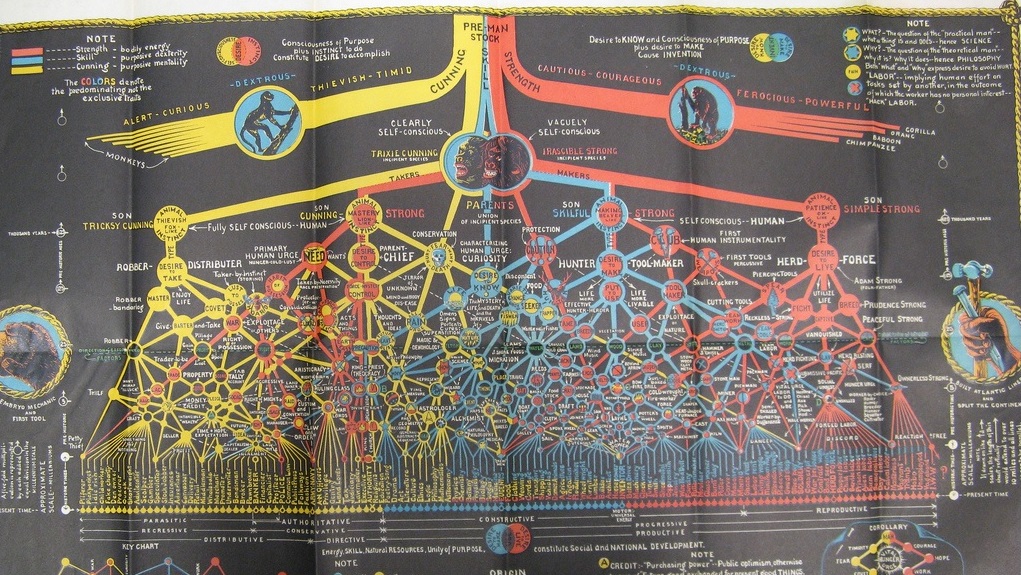
     I’m not sure what is going on or not going on in these diagrams/charts from the unusually-titled proto-outider-humorist  Concerning Irascible Strong and Trixie-Cunning, and their sons: Cunning-Strong, Skilful-Strong, Simple-Strong, Tricksy-Cunning, and their descendants, by William H. Smyth (and printed in 1926).  It is a lot of title to live up to.  Or down to.  In any event, the meaning behind it all is a mystery to me, but the mystery behind not wanting to know what it was all about is not a mystery at all–after all, isn’t a plate of spaghetti prettier as a mess than it is all straightened out? 

    Trixie chart029

     I suspect that this was intentional as an intended mess of confusion, but I really don’t need to know if this was a humorous work or not. But Mr. Smyth did produce a very involved display of something or other:

    Trixie

     [Source for graph images: here (Flickr account for Johnxlibris]