A Daily History of Holes, Dots, Lines, Science, History, Math, Physics, Art, the Unintentional Absurd, Architecture, Maps, Data Visualization, Blank and Missing Things, and so on. |1.6 million words, 7500 images, 4.9 million hits| Press & appearances in The Times, Le Figaro, Mensa, The Economist, The Guardian, Discovery News, Slate, Le Monde, Sci American Blogs, Le Pont, and many other places… 5000+ total posts since 2008.

Category: Absurdist, Unintentional

  • Socialism, Civilization, and Fertilizer…and Nazis (1945)

    JF Ptak Science Books  Quick Post

    Fertilizer019

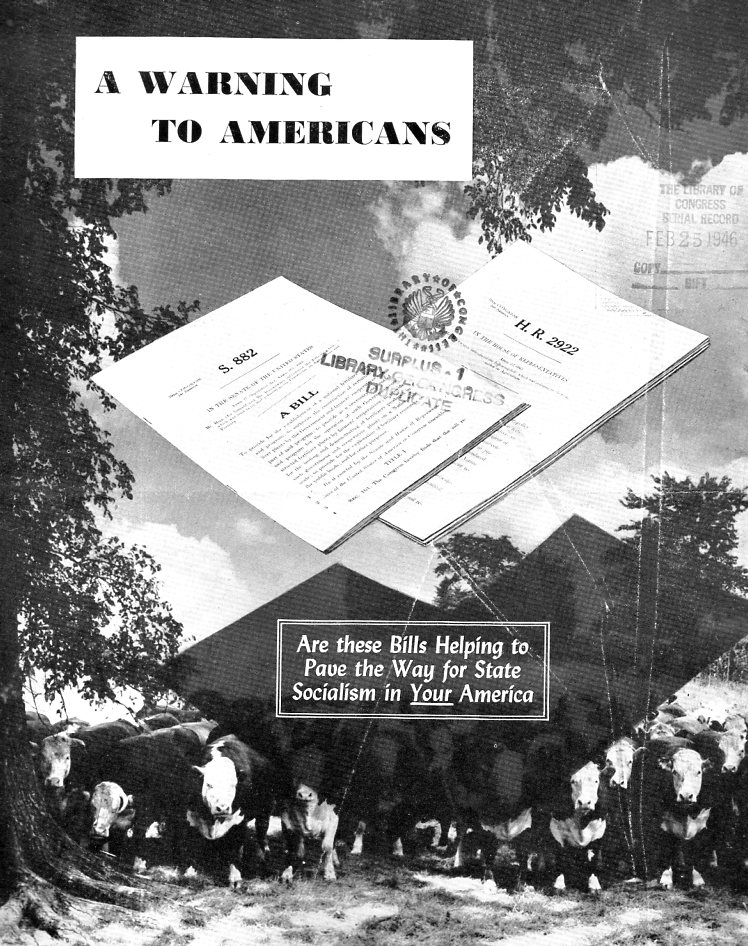
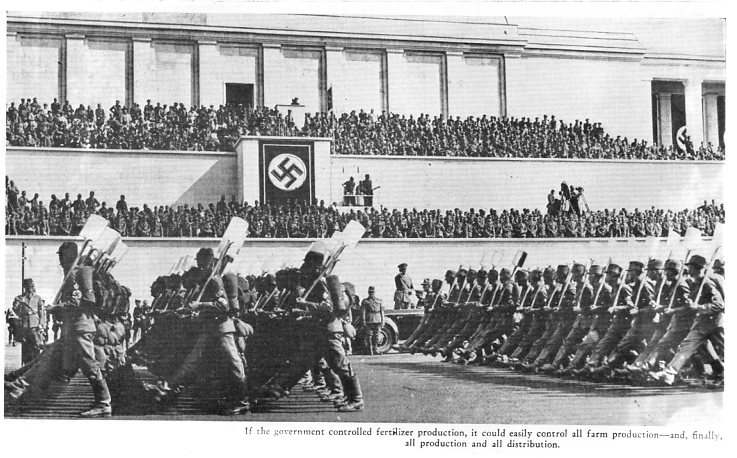
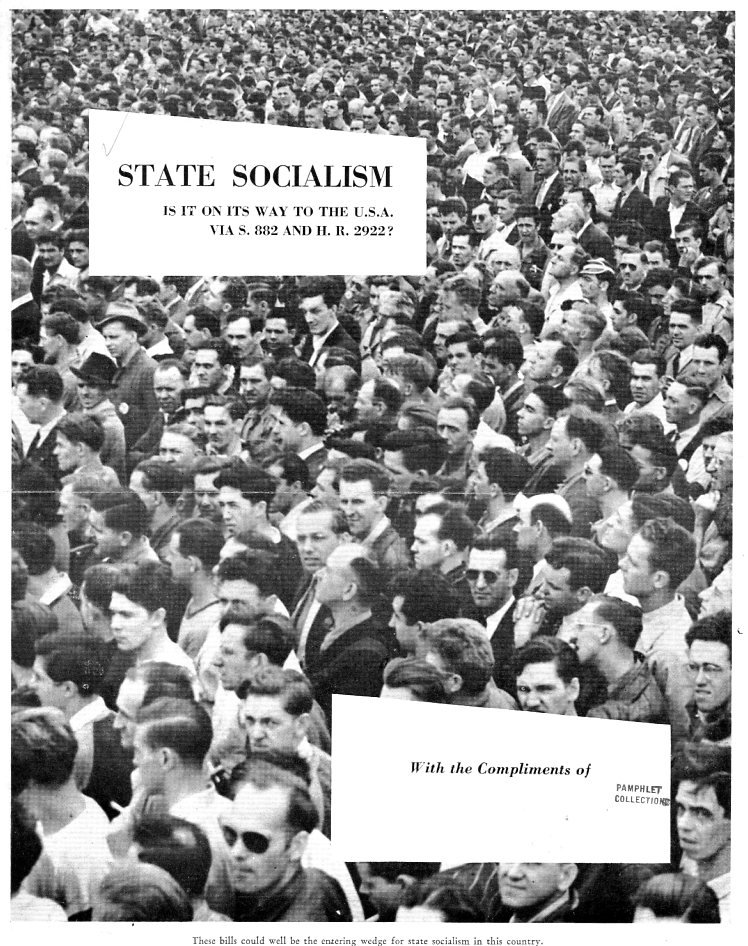
    Such is the state of American society as seen in this brochure (published in 1945), except that the order of concern in the title may be inverted.  A Warning to Americans that “State Socialism” is on its way, coming in forms of not-really-identified Senate Bill 882 and H.R. 2922, which were efforts by Alabama Senators Hill and Bankhead and Virginia congressman Flannagan to introduce federal projects in producing and creating reserves of phosphate and potash.  Seeing at how very heavily and importantly fertilizer is established in the pages of his pamphlet I can only assume that the unnamed source for it was a major producer of U.S. fertilizer which did not care for the introduction of a federal hand and so portrayed it as a wash of socialism.

    Fertilizer020

    Actually it was worse than that.  After establishing that fertilizer really helped to win WWII, and how important it was in agriculture, and then repeating how essential it is to all aspects of life, and then repeating that, the author(s)  seemed to ramp  up the hyperbole a notch:

    Fertilizer021One thing is for certain–the pamphlet is a pretty potent piece of lobbying. 


  • Another Rooftop Airport/Helipad, 1945

    JF Ptak Science Books   Quick Post

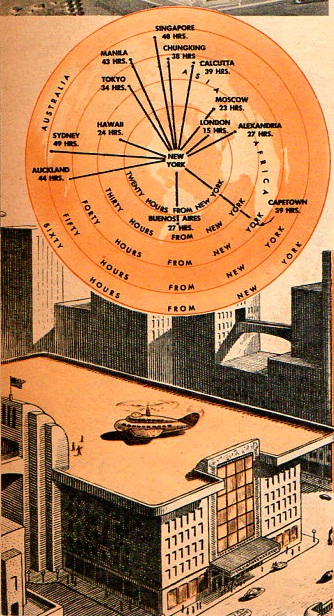
    There have been several posts to this blog regarding unusual airport construction–covering part of the Thames, floating in the NYC bay, on top of numerous/differential rooftops, floating and/or moored in the ocean, on top giant airplanes, landing and launched from dirigibles, and so on (including a vertical airport where the aircraft are dropped in tubes).  The example I have just found this morning is a mild twist on this topic, as it is a helipad–a futuristic one, judging from the Harley Earle/Buck Rogers-style design.  

    See, for example:

    • Floating and Airborne Airports: https://historyofideasblog.com/thesciencebookstore/2015/03/floating-and-airborne-airports.html
    • Underground Airports 1935-1941: https://historyofideasblog.com/thesciencebookstore/2015/04/underground-airports.html
    • Rooftop, Elevated, Floating Inner-City Airports  https://historyofideasblog.com/thesciencebookstore/2010/08/elevated-rooftop-innercity-circular-airports-1919.html

     (There are other examples scattered around the blog–just check out “airports” in the Google search box for more.) 

     There is also a time/distance map of air travel originating from NYC:

    Airport helipad rooftop014

     [Source: Popular Mechanics, February, 1945]


  • Hitler, the Booze Weapon, and a Bizarre Prohibition Myopia, 1943

    JF Ptak Science Books   Post 2464

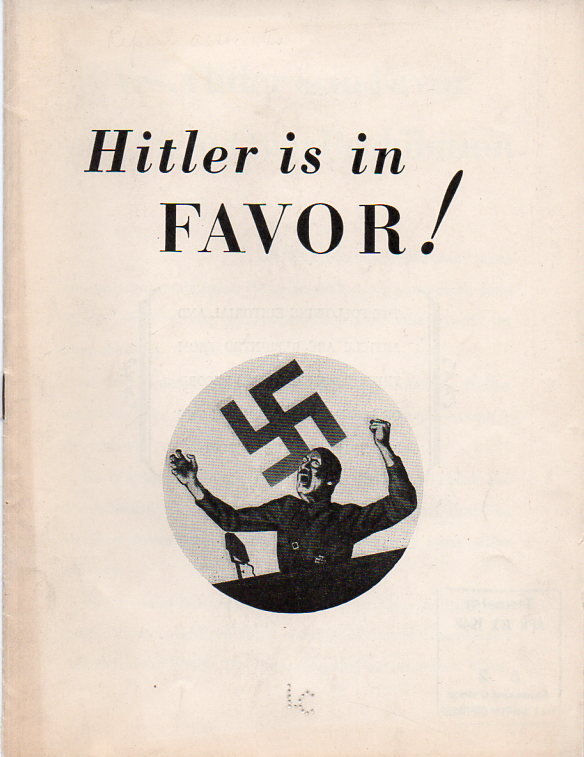
    Until today I had never considered the idea of alcohol as a propagandistic weapon in war until I read Hitler is in Favor (1943), a slim pamphlet that turns out to be an anti-anti-Prohibition statement from the Repeal Associates (of Washington D.C.). The statement “Hitler is in favor” seemed more an interogatory or than a declarative, and the issue of what he was in favor of seemed to be pretty open-ended.  Alcohol was not on the suspect list.  
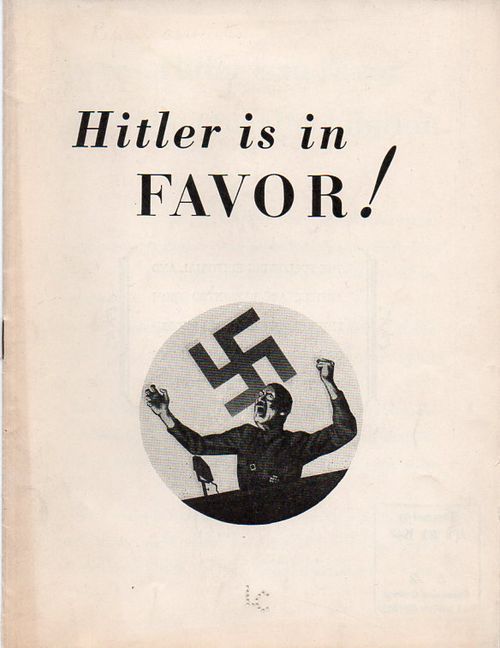
    Hitler is in favor!984

    From what I can tell the pamphlet is a declaration against an earlier pamphlet written by R(overt) Hercod (b. 1876), who was a prominent international figure on the prohibition scene, general secretary  of the International Bureau Against Alcoholism (Laussane, Switzerland), and also active in organizations like the Swiss Total Abstinence Federation and other such groups. He wrote (necessarily) on the evils of alcohol and the need for the reintroduction of prohibition, while recognizing that Hitler was against alcohol, and trying to distance his views from those.

    This however is not achieved in high relief. 

    For example in 1939 Hercod observes in a pamphlet purchased and distributed by the Board of Temperance of the Methodist Church that “(Hitler) knew Prohibition was a good issue for starting up trouble” by trying to cause a wider division between wet/dry forces in the U.S., which I’ve never heard of before as a tool in the Nazi propaganda toolbox.  

    Things get more problematic for the Hercod pamphlet, as the author of Hitler is in Favor points out the “Dr. Hercod has a kind word for Nazi sterilization law, although agreeing that it cannot have much effect in bringing about temperance”.  This sterilization law must have been a subset of other sterilization laws in Germany, this one being the sterilization of “serious cases” of alcoholics which could prove to be a “danger…for the race”. 

    Hercod identifies the German government in 1938 and 1939 as “benevolent”, at least in regards to its participation in organizations like the International Temperance Union, which seems to be an extreme example of single-issue politics.

    Another positive influence seen by Hercod is in Hitler Youth, where even though they “are not required o take a pledge of abstinence…they are expected to abstain from alcohol and tobacco…”

    Then this nugget:  “As to the future of alcohol in German, Dr. Hercod does not believe such a drastic step as prohibition is in the offing”.  

    The sterilization part is a very sobering insistence that this weird intellectual effort is not without its fair share of bizarre, real-life implications, and that there was an overall positive if not foggy interpretation of National Socialism, with everything weighed in terms of prohibition.

    But then the stiffener comes at close of the pamphlet–an incredible statement made in 1939 that no doubt demanded the consumption of an obscuring potion by the writer. The anonymous author notes that Hercod relates “how active German Jews were in temperance movements) in 1939, but then “without promulgation, so far as we know of any special decree to this effect, the Jews disappeared from the temperance societies (when the authorities took control of these societies) where they had often occupied an important place”.  

    In the pursuit of an alcohol-free world Hercod overlooks the Nazi plan for the Jewish-free world.  Being in neighboring Switzerland it seems impossible that Hercod could have missed the previous six years of bitter race laws instituted in Germany (including the Nuremberg Race Laws of 1935), but it seems as though he did.  He also does not seem to have been affected by the Austrian Anschluss, either. Or any of the other Hitler stuff that wasn’t playing out so nicely in 1939.  (I can only assume that all this was written before September, 1939, but…)

    And so that is the end of the tour of this very brief but deeply troubling nine-page pamphlet.  It is  difficult to understand the thinking that makes such extreme disgusting myopia possible, though I think it is helpful to surface such a brew as this to appreciate a part of the low wavelength thinking that contributes to making monstrous social licensing possible. 

  • Outsider Hoover Logic: Were J.Edgar and Herbert Super Commies?

    JF Ptak Science Books   Quick Post

    Hoover insanity940

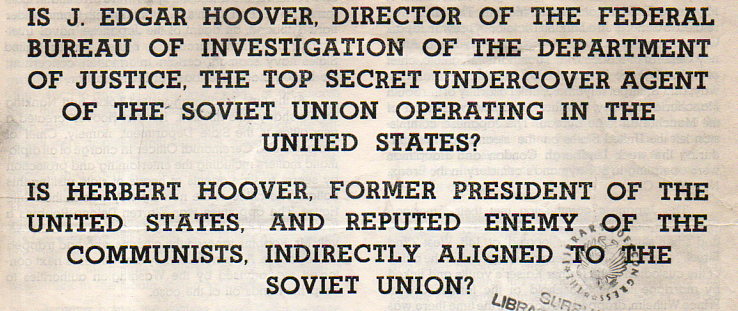
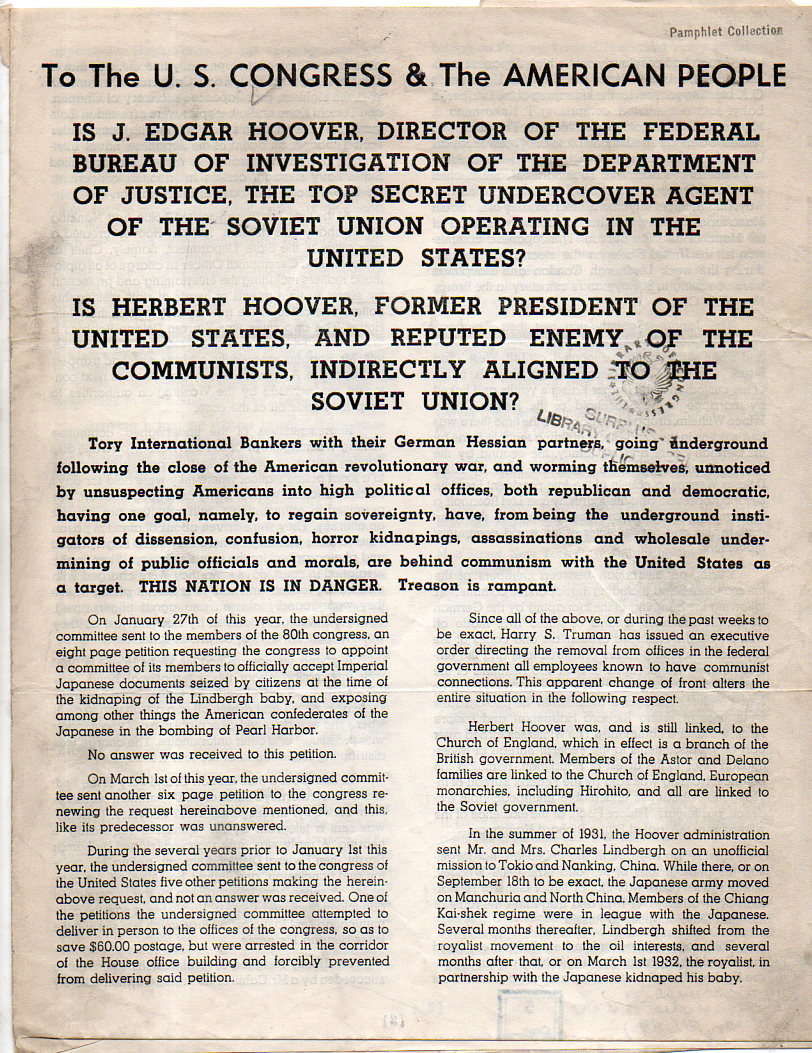
    There are so very many names and addresses and number and connections and plans and schemes and possibilities and roundabouts and subversions and plots and twists and turns in this document, so many possibilities and impossibilities that the sheer weight of them is enough to make this eight-page work weigh about 20 pounds.  It is an incredible piece of outsider-y thinking with so many moving and mis-directed/re-directed parts that it gives one a headache to think about unraveling its massive mess.  But the opening salvo, the questions about the dueling-but-partnered-Hoovers being special Communist agents is quite enough to get the point across about what the document is or isn’t about–in the end the secret and not-so-secret connections makes the thing about everything and so nothing.    

    The end.

    And the full first page (which is also the cover):

    Hoover insanity939


  • A History of Blank, Empty & Missing Things: Lipless Kissing in the Golden Age of Comics (Part 2)

    JF Ptak Science Books   Post 1077 (from 2010, expanded)

    [A History of Blank, Empty & Missing Things, #78]

    Kiss 185
    The indefatigable team of Joe Simon and Jack Kirby (Joseph H. Simon, born 1913 and still going and Jacob Kurtzberg,1917-1994, respectively) produced some of the enduring heroes and ideas of the Golden Age of Comics. In capacities as comic book writers, artists, editors and publishers they knocked the bottom out of the creativity bin, affecting all manner and aspects of that industry, as well as  introducing the genres of horror and modern romance comics.

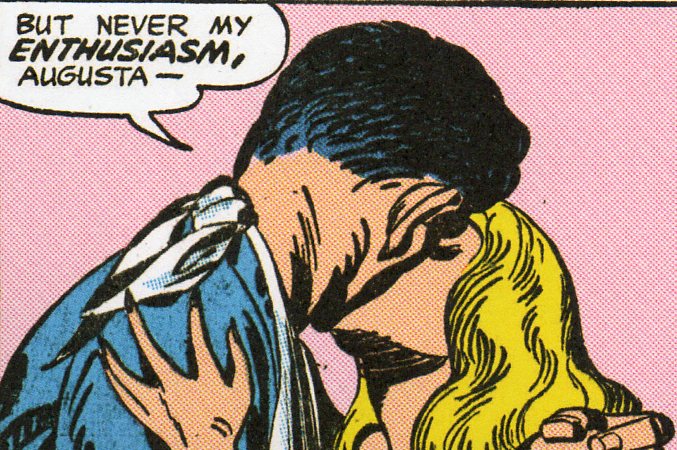
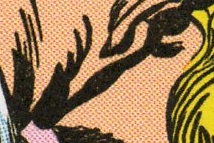
    And as necessary as it is scary, the nearly unrecognizable forensic pathology of the kiss in pink (above):

    Kiss--pink kiss det

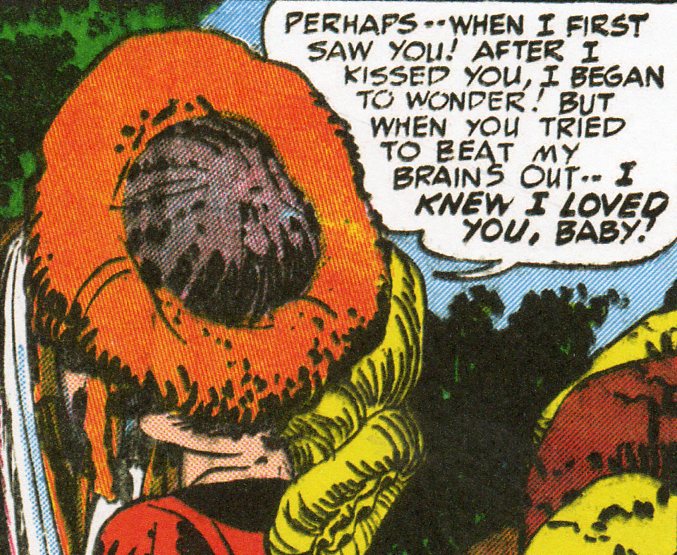
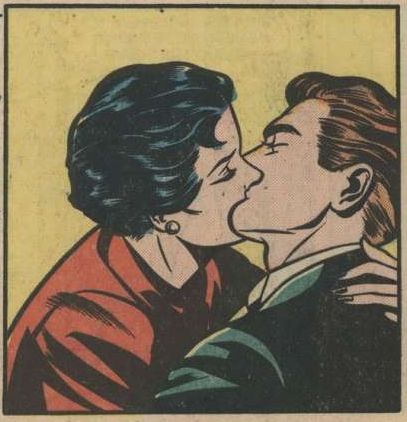
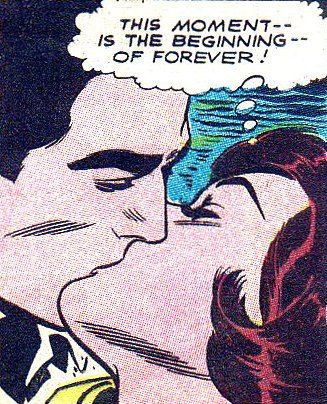
    I was initially drawn to their harsh colors,  blocky characters and un-magnificent dialog looking for wonderbits of non sequitor images and thought/word balloons populated with broken english.  They’re marvelous and easy to find, though I did get distracted by the unexpected part that I’m posting about right now–the missing, blank kiss.  Since they started the romance comics angles there’s plenty of 1940’s kisses to be found, but what I found was that although the kissing aspect wasn’t missing, the act of kissing was.  There’s plenty of heads smashed together that don’t leave a lot of room for faces, and in general it might be the sensitivities of the Golden Age’s age that cast away the kiss itself, their characters rushing face first into bad screen kisses. 

    Kiss 186

    There’s nothing wrong with this, and perhaps the kids never really noticed this, rushing to get ahead to the end of the confusing romantic interests.

    Kiss 187


    Kissing--comic book kiss

    Kissing--what else could I do

    Kissing--begining of forever

    There is a hint of a lip in this one, below, though it wasn’t supposed to be a passionate cheek kiss.

    Kissing in teal

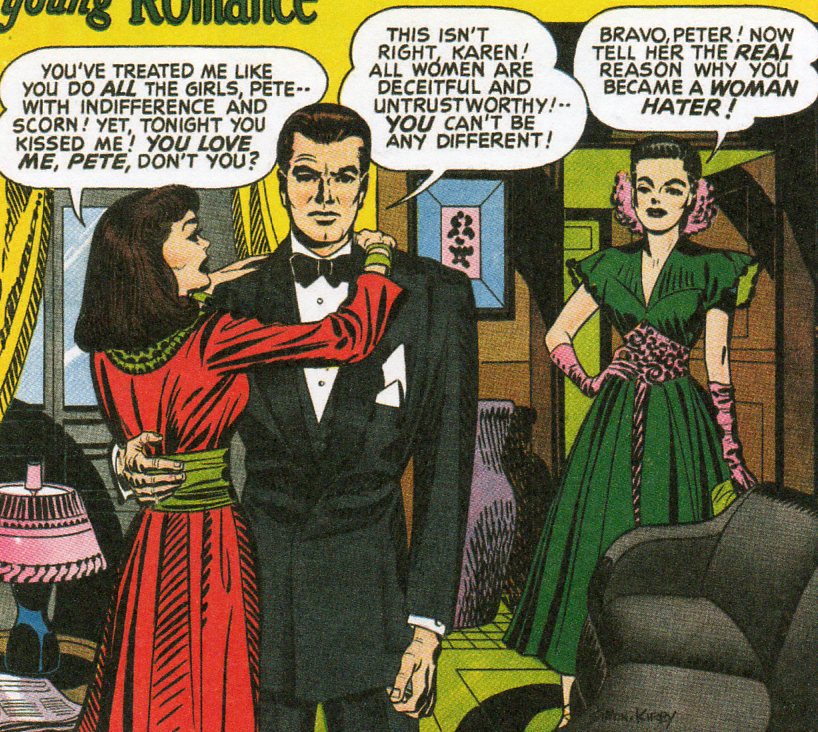
    This one has more to do with anti-kissing than anything else; I’m sorry that I don’t know what the “real reason” was….

    Kiss 189
      

    ·Posted by :

    ·in:

    —

  • A Prison for the Dead–a Trial for the Departed, 897

    JF Ptak Science Books   Post 2438

    Biographies and histories and other sorts of lit can essentially place a dead person on trial, to a degree, but generally not so far in that there are legal ramifications. As much as can be written and presented against a person their body will not be dug up and place in prison, though this does have a certain Borges/Chinese Hell Scroll quality to it. If it was the case that people could be dug up and brought to the legal bar, I guess that everyone would opt out for cremation, unless that was made illegal. It seems half-a-miracle that with the threat of eternal damnation in the minds of billions of people, that there is no threat to the consequences of ill-spent life in death.

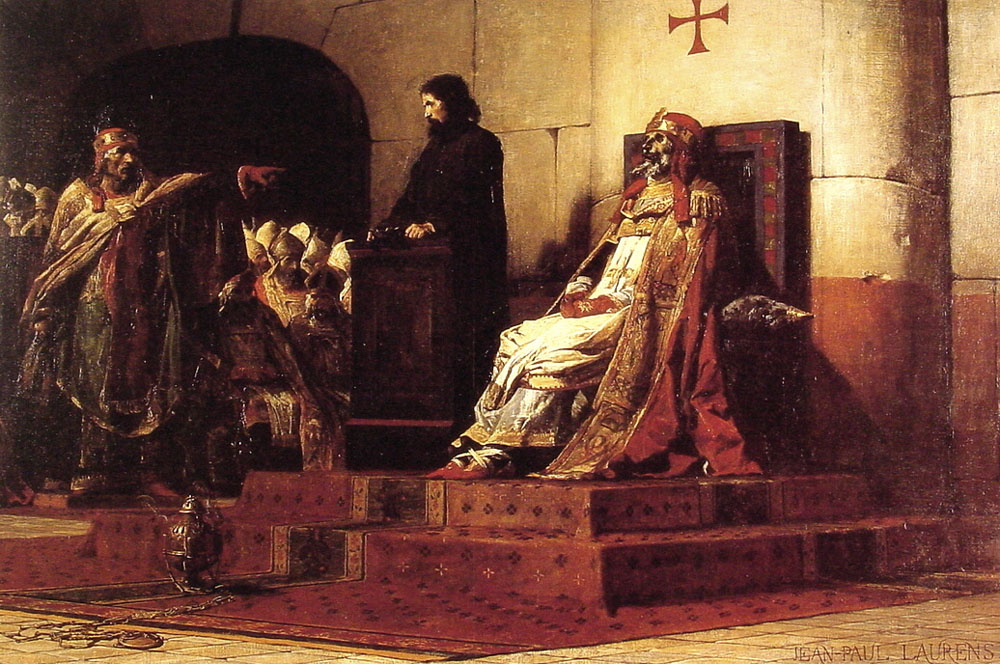
    Cadaver synodDepiction of the synod by Jean-Paul Laurens, 1870. Source: Wikicommons.

    There is a very famous case of this, however, and at a very high level.

    The weird and fanatical–and fatal–issue of the Cadaver Synod of 897 is the case in point. A probably-unbalanced Pope Stephen VI decided upon retribution of his predecessor Pope Formosus, and for various reasons (examined in many place, but a decent article on the matter is found in Wiki, here) had his positively-dead corpse exhumed and brought in for trial. The poor dead pontiff was dressed up in pope-finery and placed on a throne, and was heaped with insult and perfidy at the end of which came a guilty verdict. His appointments as pope were annulled, plus other stuff, and he was taken to the Tiber and tossed in, though it would have been more interesting for the pope to have been imprisoned. 

    It was an action that made Pope Stephen very seriously unpopular, which led relatively quickly to his being deposed, and then imprisoned, and then to being strangled to death in prison, all of which happened in less than a year’s time.

    A new synod was called the debunked and refuted the Cadaver Synod, and the finding and records of which were overturned and burned. Formosus’ body was evidently recovered (and recovered enough to have been reported doing miraculous/miracle-making things) and returned to its original place of burial.

    Also the possibility of bringing dead people to court was discarded.

    Given the Human Condition it might be possible that there would be more dead people in prison than in the ground–depending on the possible payoff of dead litigation.  Given the new fascination with zombies, I guess that dead prisons are possible, at least in tv land. 


  • The Drunken Sale of a Sober Wife, with Pig Jobbers and a Bloody Battle

    JF Ptak Science Books    Quick Post

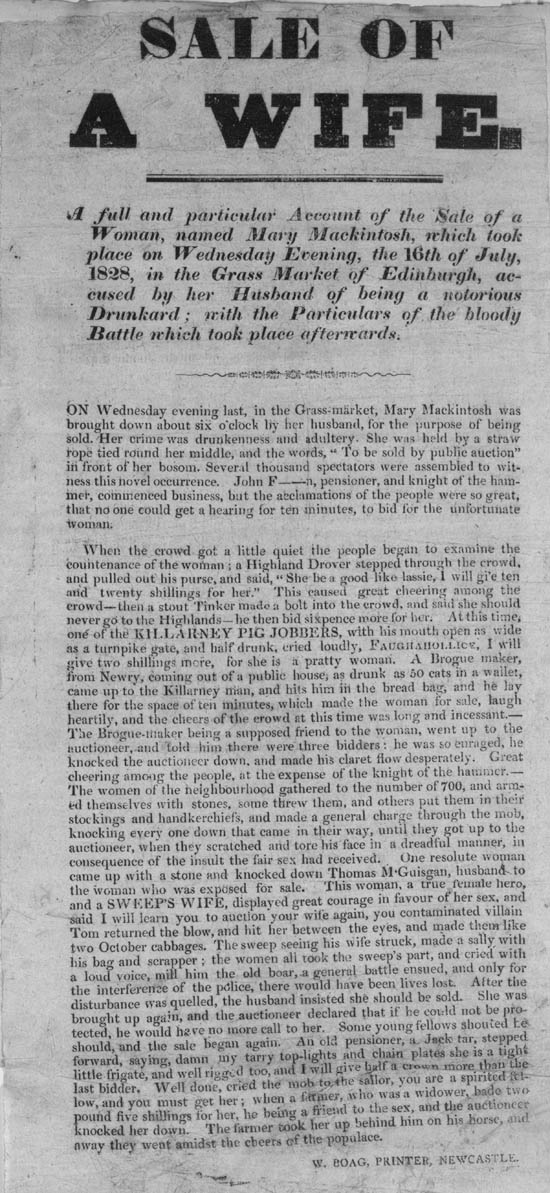
    The title of the broadside is constrained though it does give a little bit of a pull and hint about the juicy tenders to follow, all brought to you from the National Library of Scotland:

    ‘A full and particular Account of the Sale of a Woman, named Mary Mackintosh, which took place on Wednesday Evening, the 16th of July, 1828, in the Grass Market of Edinburgh, accused by her Husband of being a notorious Drunkard; with the Particulars of the bloody Battle which took place afterwards.’

    Unfortunately it was legal to sell your possessions and your wife, though it seems as though this was an activity of the “lower classes” and a much frowned-upon activity by most.  

    And here are one set of the details that you could purchase for a penny, with much colorful language and alliteration to come:

    “When, the crowd got a little quiet the people began to examine the
    countenance of the woman ; a Highland Drover stepped through the crowd,
    and pulled out his purse, and Said, ” She be a good like lassie,’l will gi’e ten
    and twenty shillings for her.” This caused great cheering among the
    crowd?then a stout Tinker made a bolt into the crowd, and said she should
    never go to the Highlands?he then bid sixpence more for her. At this time,
    one of the KlLLARNEY PIG JOBBERS, with his mouth open as wide
    as a turnpike gate, and half drunk, eried loudly, FAUGHAHOLLICE , I will
    give two shillings more, for she is a pratty woman. A Brogue maker,
    from Newry, coining out of a public house; as drunk as 5O cats in a wallet,
    came up to the Killarney man, and hits him in the bread bag,”

    Broadside wife seller

    Full transcription http://digital.nls.uk/broadsides/broadside.cfm/id/15971/transcript/1

    Source:  National Library of Scotland  http://deriv.nls.uk/dcn3/7441/74414096.3.jpg


  • A Black-on-Black Detail in a Sea of Hats Panorama, 1912

    JF Ptak Science Books   Quick Post

    In my long exposure to antiquarian prints I’ve long paid attention to images with a lot of black in the engraving or etching or woodcut–nighttime, caves, underwater, windlowless low-light interiors, and so on.  It is a definite challenge to accomplish these images, as well as a high use of ink–in any event, my eye is set for black details in black images in black prints. And so it came to be that I noticed this very small detail in the backdrop for the photo-copying of this fine panorama below, found at the Prints and Photographs Division of the Library of Congress (here). 

    Black on black of Boxing Day

    It is basically invisible to inspection in the version of the full print, below, but in the 80 mb examples it pops right out. (It certainly occupies less than 1% of the image space, but up-close it takes on a bit of its own life and legacy.) 

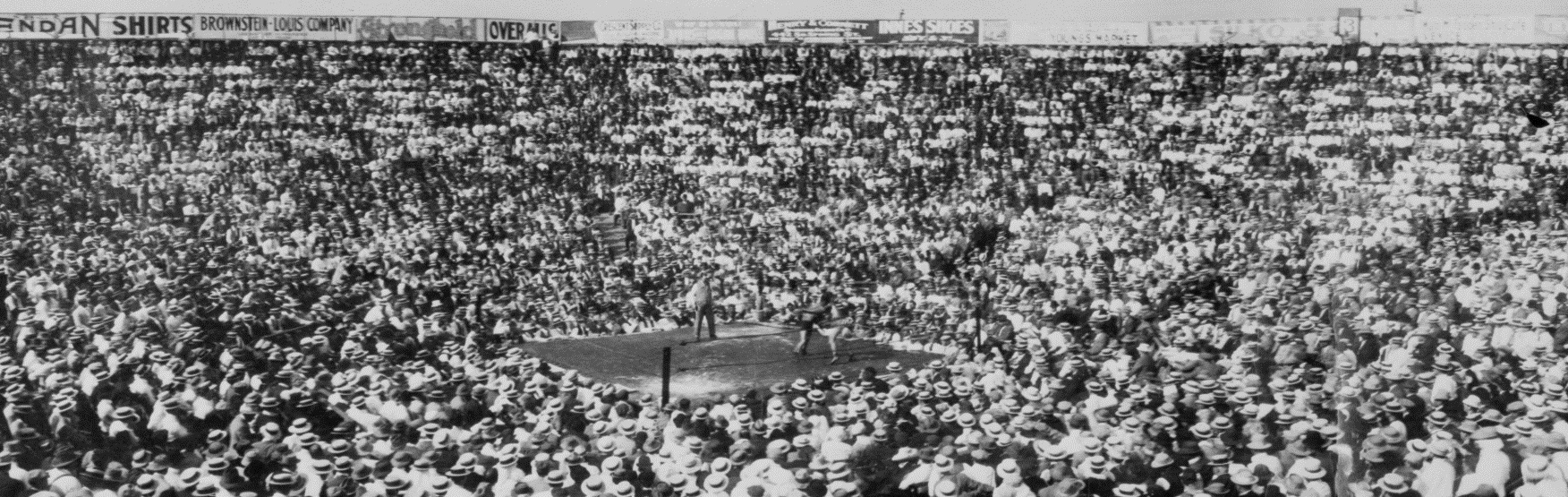
    The full photograph (45″ long)  shows a boxing match between Wolgast and Rivers at the Vernon Arena in 1912:

    Boxing sea of hats

    I was originally attracted to the photo by the hats, but the black blotch on black won out.  

    Panorama boxing vernon arena detail A

    For a wonderful essay on Black on Black art, see Public Domain review, here.  

    • Title: Vernon Arena, Wolgast – Rivers boxing match
    • Related Names: 
         Prince, Geo. (George), 1848- , copyright claimant
    • Date Created/Published: c1912.
    • Medium: 1 photographic print : gelatin silver ; 8 x 45.5 in.

  • Multiple-Maginot and the “Floating Wall of Fire” (Romania, 1940)

    JF Ptak Science Books    Post 2430

      Fire wall872Fire wall871

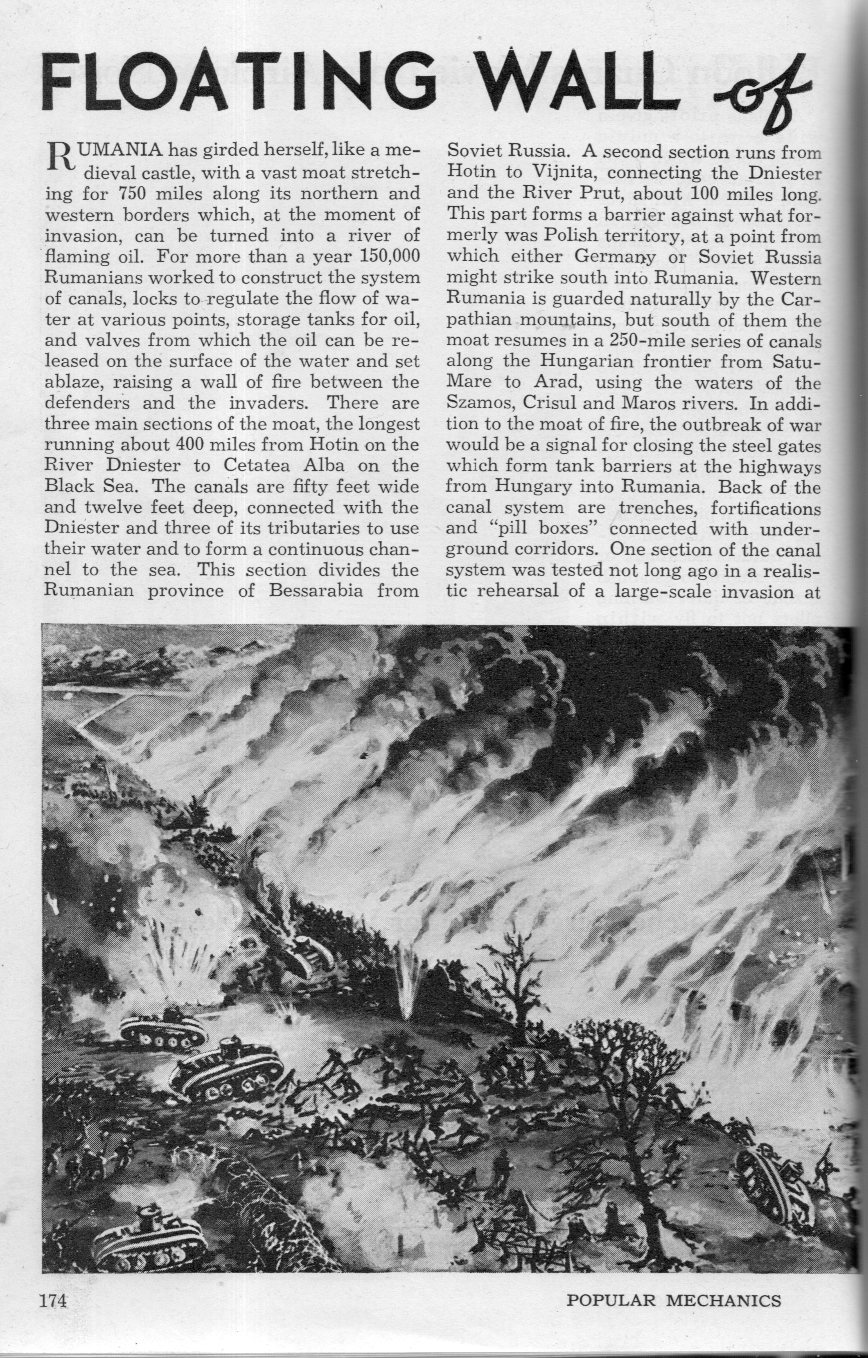
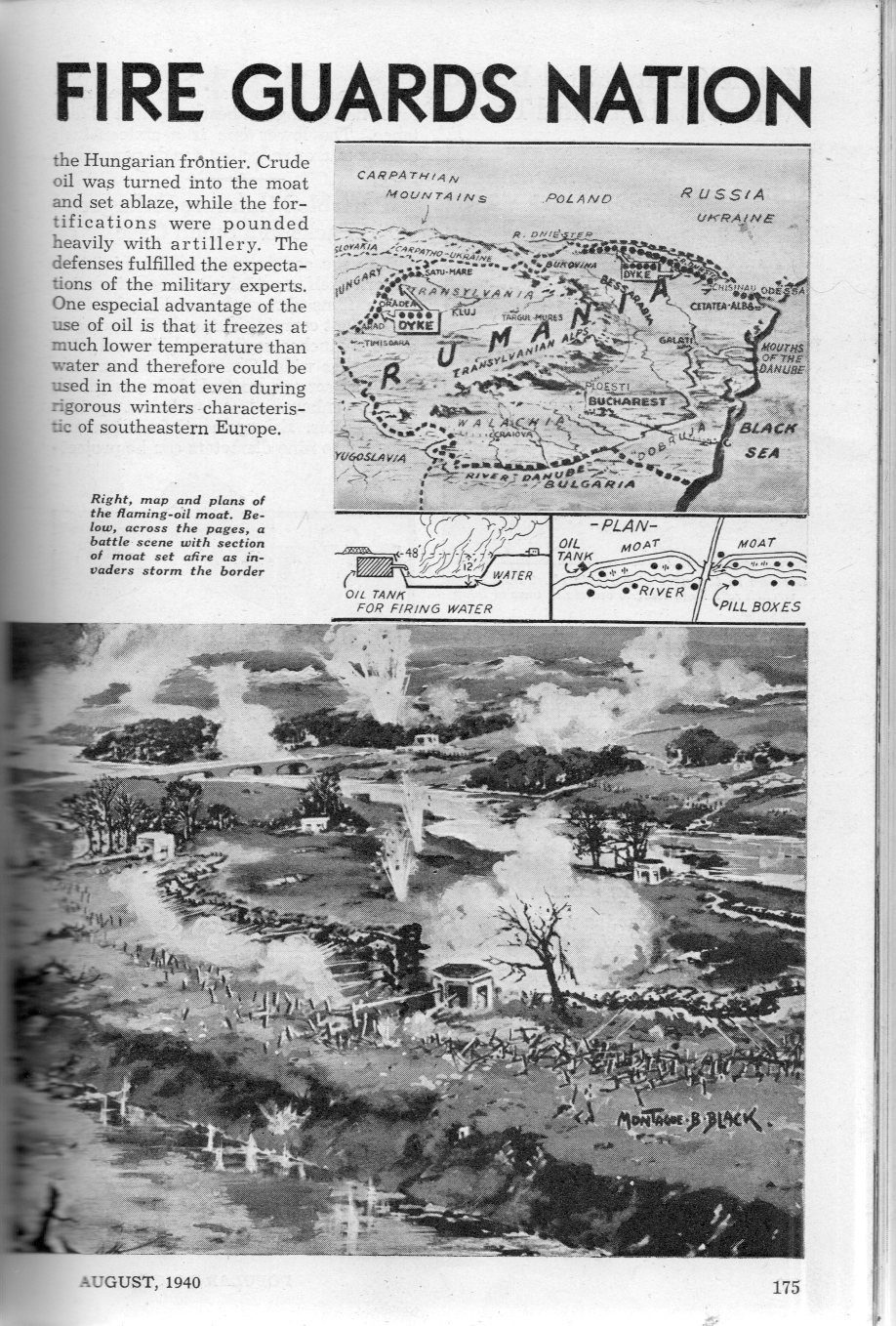
    In August 1940 Popular Mechanics reported on another example of cloudy thinking on the coming world of warfare–the “Floating Wall of Fire” of Romanian defensive consideration.  The article tells the story of how Romania “girdled itself, like a medieval castle, with avast moat stretching for 750 miles….which, at the moment of invasion, can be turned into a river of flaming oil”.  The canals which make up this open-pit Maginot line were 50′ wide and 12′ deep, the longest of them running some 400 miles, the combined efforts of the big dig meant top protect the country from invasion from Hungary, Poland, the Soviet Union, Yuoslavia, and Bulgaria–and of course from Germany which at the time could advance from a number of different positions.  There were also hundreds of gun emplacements facing the pit, I guess to fire on whomever if they decided to try and break through/over the moat, which would have been flooded with crude oil and set ablaze when invasion occurred.

    The problem of course was that even a year after the Blitzkrieg in Poland with the combined assault by land/air forces the lesson had not been learned here–unless of course the flames were 20,000′ high.  And obviously the river of fire would last only so long–depending on available amounts of crude oil I wonder how long they determined the wall of fire could be maintained?  A day?  A week?  (I know that from controlled burns of oil spills that in one case some 16,000 barrels of floating oil was burned off in a controlled burn in about four hours–it seems to me that if there was an invasion front that was miles wide and striking at numerous point along a 100-mile front that…well, the problems are obvious.)

    Could anyone have expected an invasion force to arrive and then once confronted by a burning moat turn back and retreat?  

    In spite of fulfilling expectations during a “rehearsal of a large-scale invasion”, it seems very highly dubious that anyone could really have been comfortable with the first line of national defense being fire in a long hole.  

    [It should be mentioned that after the once-neutral-ish Romania settled into its relationship with the Axis that the worst single-mission air losses for the U.S. Army Air Force occurred in the bombing of petroleum facilities in the area of Ploiesti, Romania, on 1 August 1943. In an unsuccessful attempt to damage the flow of petroleum to Axis forces, Operation Tidal Wave targeted this location but with devastatingly bad consequences, with 53 aircraft and 660 servicemen lost in the action.]  


  • The Outsider’s Outsider PoliSci Insider (1910)

    JF Ptak Science Books   Post 2429     Outsider Logic series

    Outsider  classic drama859 detail

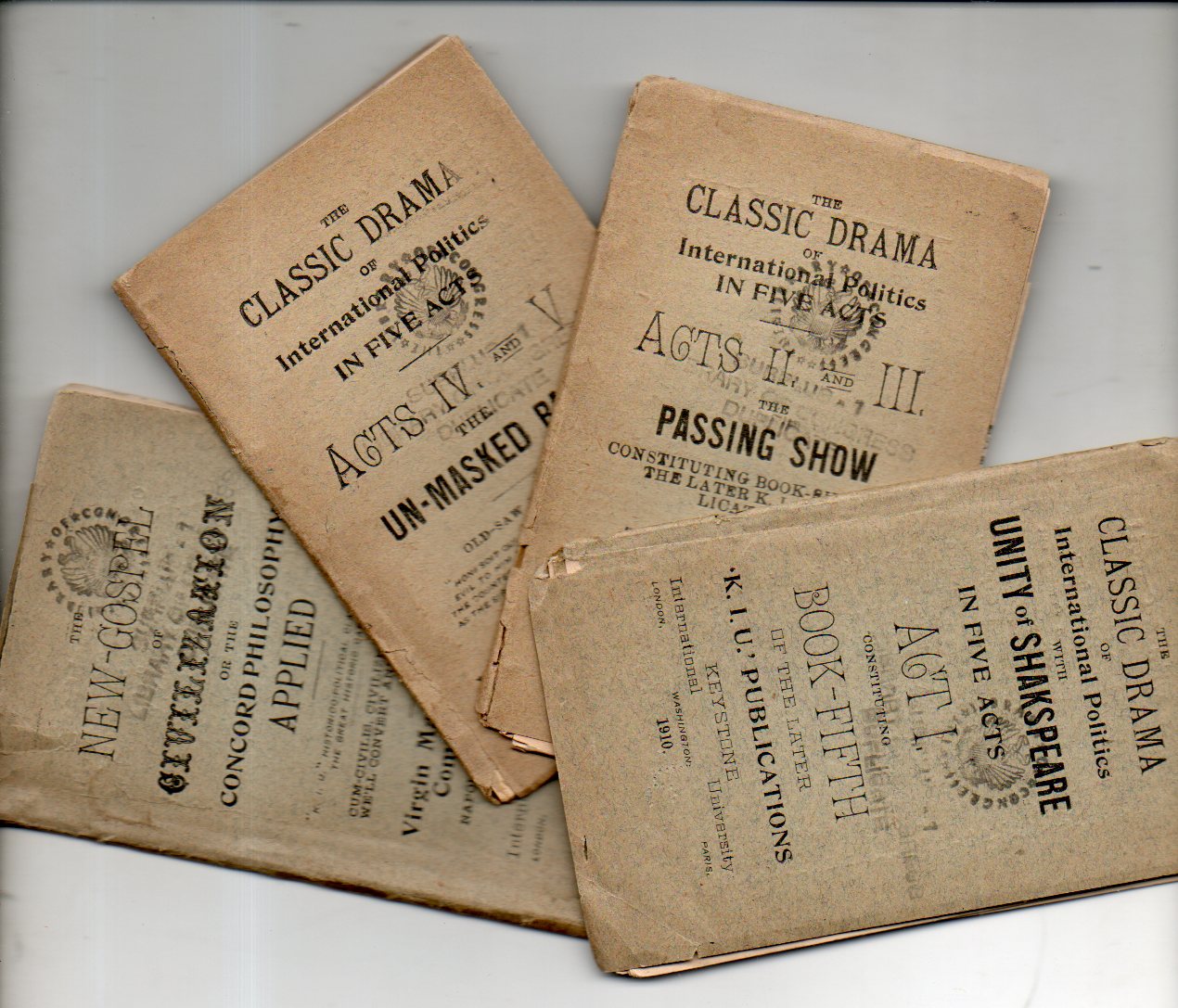
    There is a new find in my collection of Outsider Texts: The Classic Drama of International Studies with Unity of Shakespeare in Five Acts, written anonymously by the Keystone International University in 1910.  

    It is impenetrable. Well, it is impenetrable as a whole going from page to page, and maybe from sentence to sentence, but within sentences is where there is some sense and the series’ most penetrable aspects; but at the end of a “chapter” somehow the words you’ve read have all gone away into some brittle aphasic two-dimensional soup.

    The work is complete in three pamphlets covering five parts which constitute two parts (but not three) of the fifth and sixth book “of the later K.I.U. Publications”, all of this happens before we open the covers of these little five-inch-tall publications–they are packed and are already confusing, and it only gets more so from there.  Every chance interaction with the text is baffling, though it does seem to be about the Teddy Roosevelt administration/Babylon, I think, a satirical Old Testament-laden prophetic-something–in rhyme.  

    My guess is that the anonymous author of this three-part series (paginated from page 122-192) may have been the university itself (?) in spite of the proclamation of it being in London, Washington, and Paris. I can find in a not-deep investigation no evidence of the university, nor can I find any copies of these pamphlets on the web, nor is there any trace of them whatsoever in WorldCat. 

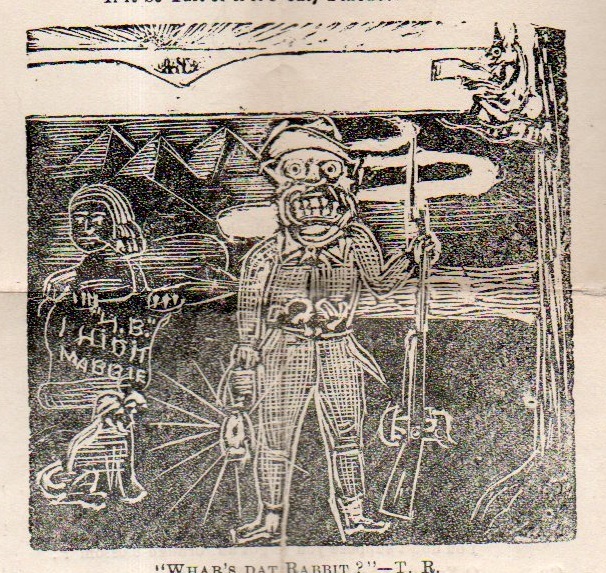
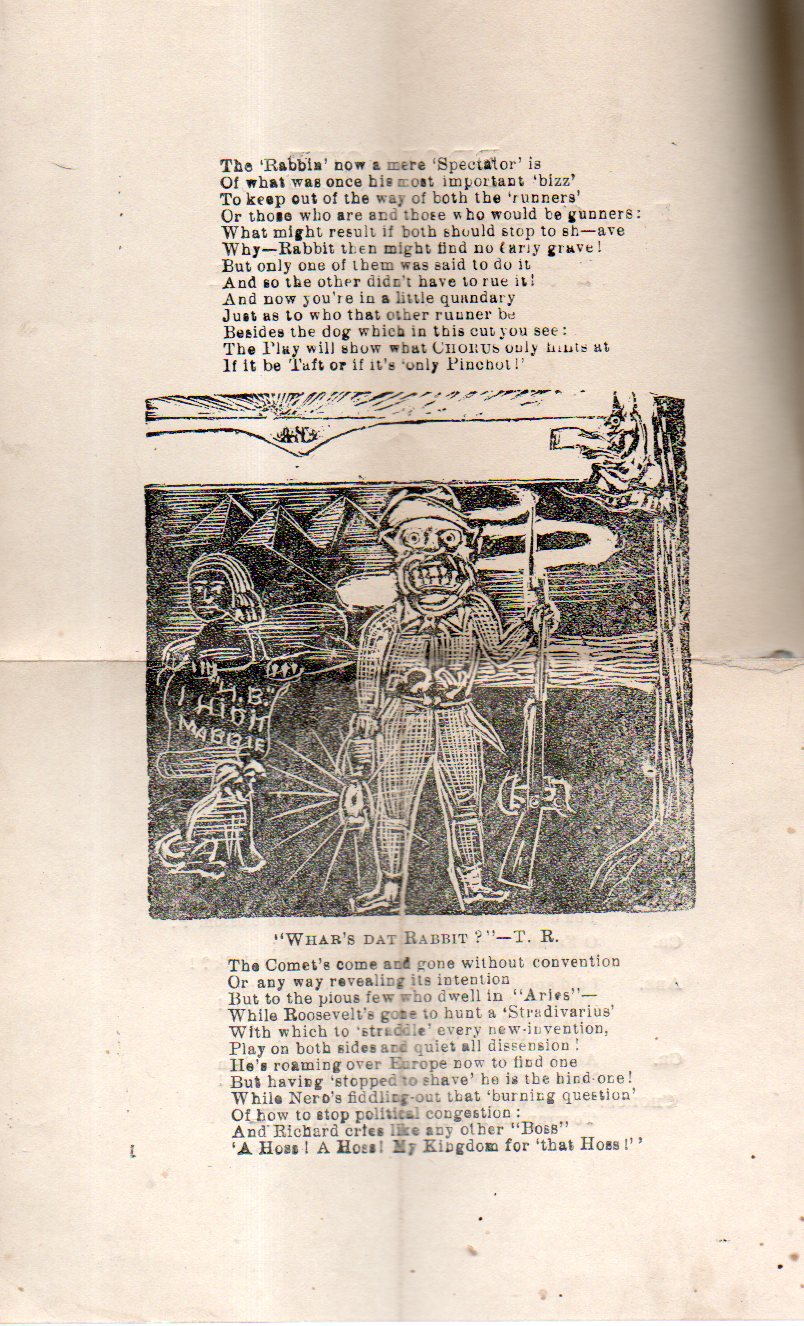
    I just like these personal logical systems–or at least I like the idea of them, even though many are just impossible to read.  There is a surprise, though, in one:  a political “cartoon” of suits, a very odd representation of Theodore Roosevelt and I-don’t-know-what-else.  

    Outsider  classic drama859

    The illustration makes everything worthwhile…or maybe it doesn’t. There is a high creep factor to it, though it was carefully prepared as a woodblock or cut of some sort.  

    I wasn’t going to spend this much time on this adventure in words and just publish the artwork, but I got sucked in a little to see if there was anything there, but the entrance is also the exit, and as soon as you’re in you’re out.  As my brother-in-law would say: “It is what it is” though maybe it wasn’t what it was.

    Outsider  classic drama861